

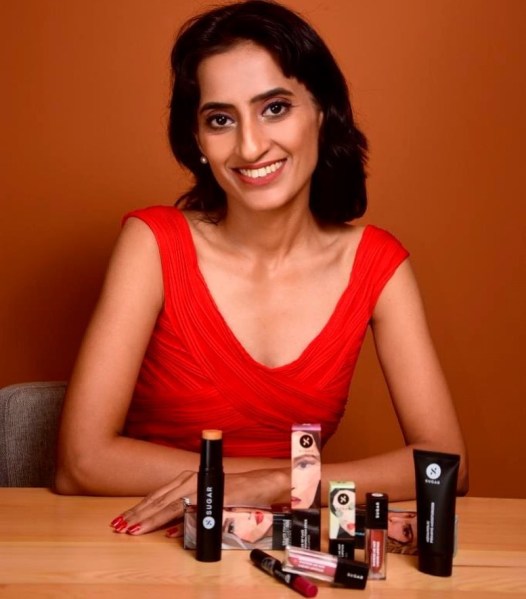
When Vineeta Singh and her partner, Kaushik Mukherjee started fab Bag in 2012, it was their second entrepreneurial venture. It was a monthly makeup and beauty subscription for women in which a subscriber would receive a bag of 4 to 5 beauty products every month. These products would be selected from various brands based on the customer’s preferences and skin type. It was in 2015 that they made another attempt and began Sugar Cosmetics. With Fab Bag, Vineeta realized that a lot of the foreign and local makeup brands were not suited for Indian skin tones. This is how they set up Sugar cosmetics with the aim of providing affordable and compatible products catered to Indian complexion. This meant a lot of their products could be used by consumers even if they had to use public transport for long distances to go to work. In 2022, it has established its place in India’s beauty industry, competing with famous brands like L’Oreal and Lakme.
For the initial two years, Sugar stayed as an online-only brand, after which, it started to move into offline retail. Today, this Mumbai-based D2C (Direct to Customer) brand has over 2500 outlets in over 120 cities across India. In five years, it has managed to cross Rs.100 crore revenue, with the company witnessing its biggest leap in success right after the COVID-19 lockdown.
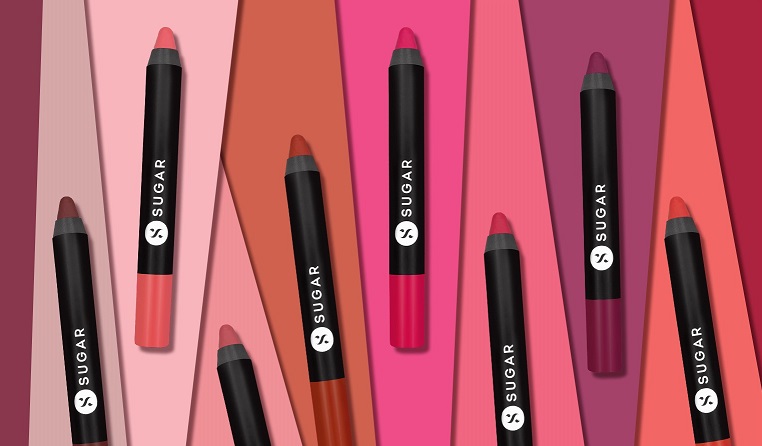
According to Abhay Pandey, general partner at A91 Partners and one of the backers of the cosmetic company, what really helped this brand was its perfectly timed beginning when India was witnessing two major trends- a rapidly growing beauty business and increasing internet usage by consumers. By launching as a digital-only start-up, they were able to gain a set of loyal consumers. These consumers, mostly millennials, felt empowered by the consumer-oriented products of the company. The founders began Sugar based on three core ideas – listening to consumers, staying away from discounting and focusing on content for consumers. This is the strategy they have always stuck to and it has proved very useful for them. The company sells basic makeup products like foundation cream, concealer, eyeliner, lip-liners, mascara, lipsticks, as well as skin-care products and makeup kits. Lipsticks and Lip crayons contribute to 65% of their revenue, with best-selling brands like ‘Matte as Hell’, ‘Nothing Else Matters’, and ‘Seal the Show’.

The COVID-19 situation saw the company depend strongly on social media marketing to survive and strengthen its relationship with consumers. Sugar had always managed an omnichannel presence even before the lockdown. They collaborated with a lot of YouTube and Instagram influencers when they started to attract millennials and urban Indian women to their products. When COVID-19 hit, it was not the easiest time, with many companies being forced to shut down their operations. Sugar also saw a complete halt in sales during the lockdown in the months of April and May. Warehouses and retail outlets were shut down. However, they started to get an increasing amount of sales from June onwards as the retail team at Sugar figured out how to make the entire sales online. They made full use of their app which was launched in 2020, and their social media presence to continue with customer engagement. Their app has been downloaded 100,000 times and they boast a huge online presence, with 2 million followers on Instagram. According to Vineeta Singh, content was and is one of their main focus points. They aim to build a brand with great influencer and social media marketing.
While their products are manufactured across USA, Germany, India and South Korea, and they have distributors in America, Sugar Cosmetics remains focused on the Indian market.

 Eduindex
You must be logged in to post a comment.