Stress in Everyday Life

Stress is a body reaction to any demands or changes in its internal and external environment. Whenever there is a change in the external environment such as temperature, pollutants, humidity and working conditions, it leads to stress. In these days of competition when a person makes up his mind to surpass what has been achieved by others, leading to an imbalance between demands and resources, it causes psycho-social stress. It is a part and parcel of everyday life.

Stress has a different meaning, depending on the stage of life you are in. The loss of a toy or a reprimand from the parents might create a stress shock in a child. An adolescent who fails in the examination may feel as if everything has been lost and life has no further meaning. In an adult the loss of his or her companion, job or professional failure may appear as if there is nothing more to be achieved.

Such signs appear in the attitude and behaviour of the individual, as muscle tension in various parts of the body, palpitation and high blood pressure, indigestion and hyperacidity. Ultimately the result is self-destructive behaviour such as eating and drinking too much, smoking excessively, relying on tranquilisers. There are other signs of stress such as trembling, shaking, nervous blinking, dryness of throat and mouth and difficulty in swallowing.

The professional under stress behaves as if he is a perfectionist. It leads to depression, lethargy and weakness. Periodic mood shifts also indicate the stress status of the students, executives and professionals.

In a study sponsored by World Health Organisation and carried out by Harvard School of Public Health, the global burden of diseases and injury indicated that stress diseases and accidents are going to be the major killers in 2020.

The heart disease and depression – both stress diseases-are going to rank first and second in 2020. Road traffic accidents are going to be the third largest killers. These accidents are also an indicator of psychosocial stress in a fast-moving society. Other stress diseases like ulcers, hypertension and sleeplessness have assumed epidemic proportions in modern societies.

A person under stress reacts in different ways and the common ones are flight, fight and flee depending upon the nature of the stress and capabilities of the person. The three responses can be elegantly chosen to cope with the stress so that stress does not damage the system and become distress.

When a stress crosses the limit, peculiar to an individual, it lowers his performance capacity. Frequent crossings of the limit may result in chronic fatigue in which a person feels lethargic, disinterested and is not easily motivated to achieve anything. This may make the person mentally undecided, confused and accident prone as well. Sudden exposure to un-nerving stress may also result in a loss of memory. Diet, massage, food supplements, herbal medicines, hobbies, relaxation techniques and dance movements are excellent stress busters.
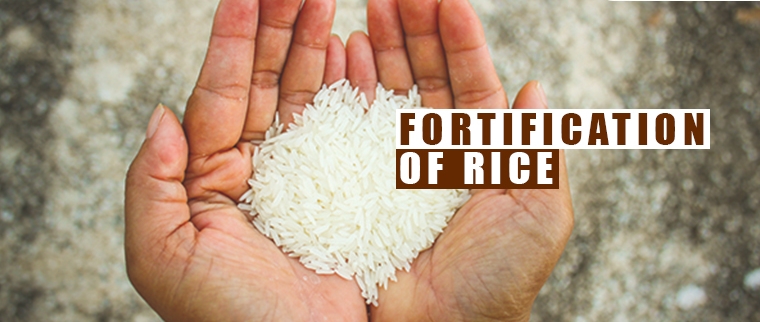
Rice Fortification – A Competent way to combat Anemia

Image taken from NITI Aayog

Introduction

India has made impressive progress in reducing stunting and anemia among children over the last decade. However, anemia still impacts more than one in two children and women. The WHO has declared anemia among women and children as a “severe” public health problem, demanding immediate attention. Rice fortification is an effective, preventive and cost-efficient complementary strategy to address the nutrition problem within a short period. However, ensuring access to and affordability of healthy and diverse diets would be the key to a sustainable long-term strategy.

Current Situation

Recent statistics indicate rise in anemia levels amongst among women and children in 16 and 18 of 22 States/UTs respectively (NFHS-5). Iron deficiency-anemia is the biggest cause of disability for the past 10 years and contributed 20 per cent direct and 50 per cent associated maternal deaths in India. Its economic burden is equivalent to about 4 per cent of GDP. Apart from iron, deficiency in micronutrient like vitamin B12, vitamin A, folate and zinc also contribute to rising anemia levels. Evidence suggests vitamin B12 deficiency impacts one in six pre-school children and one in three adolescents; folate deficiency in one in three school-aged children and one in four adolescents.

What is Food Fortification?

Fortification is the practice of deliberately increasing the content of one or more micronutrients (i.e., vitamins and minerals) in a food or condiment to improve the nutritional quality of the food supply and provide a public health benefit with minimal risk to health. Fortification is the addition of key vitamins and minerals such as iron, iodine, zinc, Vitamin A & D to staple foods such as rice, milk and salt to improve their nutritional content. These nutrients may or may not have been originally present in the food before processing.

Fortification of Rice

According to the Food Ministry, fortification of rice is a cost-effective and complementary strategy to increase vitamin and mineral content in diets. According to FSSAI norms, 1 kg fortified rice will contain iron (28 mg-42.5 mg), folic acid (75-125 microgram) and Vitamin B-12 (0.75-1.25 microgram). In addition, rice may also be fortified with micronutrients, singly or in combination, with zinc, Vitamin A, Vitamin B1, Vitamin B2, Vitamin B3 and Vitamin B6. Fortifying rice involves grinding broken rice into powder, mixing it with nutrients, and then shaping it into rice-like kernels using an extrusion process. These fortified kernels are then mixed with normal rice in a 1:100 ratio and distributed for consumption.

Need for Fortification

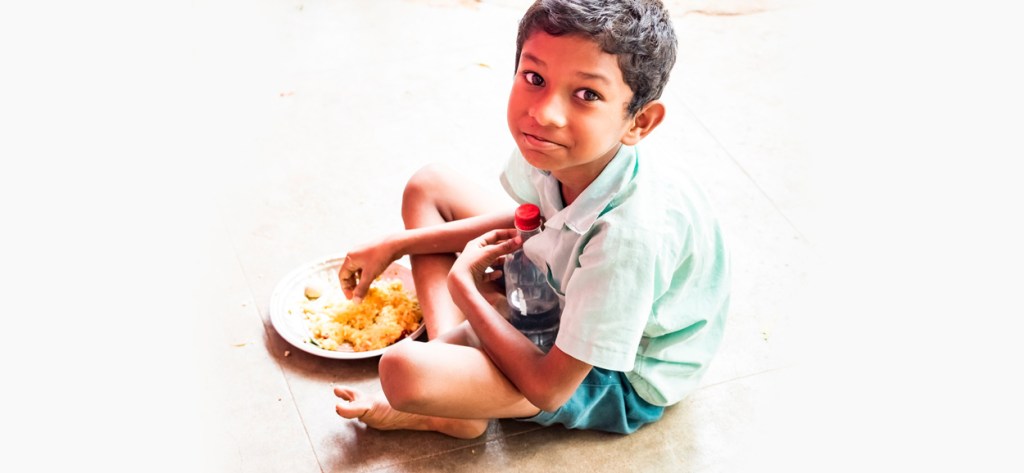
India has very high levels of malnutrition among women and children. According to the Food Ministry, every second woman in the country is anemic and every third child is stunted. India has slipped to 101st position in the Global Hunger Index (GHI) of 116 countries, from its 2020 position of 94th. The deficiency of micronutrients or micronutrient malnutrition, also known as “hidden hunger”, is a serious health risk. Rice is one of India’s staple foods, consumed by about two-thirds of the population. Per capita rice consumption in India is 6.8 kg per month. Therefore, fortifying rice with micronutrients is an option to supplement the diet of the poor.

Conclusion

Rice fortification is the most viable and welcome, preventive and complementary intervention to solve the problem of anemia in a short period of time. Historically, India has tested this idea of fortification by mandating iodized salt in 1962. Interestingly, CNNS Report 2016-18, subtly hinted the success of universal fortification of salt by revealing iodine to be the only exception to micronutrient deficiencies in the tested sample.

References

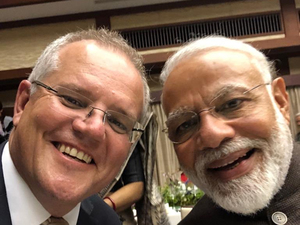
“Watershed Moment”, Says PM Modi As India, Australia Sign Mega Trade Pact

The economic cooperation and trade agreement signed between India and Australia will enable the two countries to fully leverage the existing opportunities, besides facilitating the exchange of students, professionals and tourists, Prime Minister Narendra Modi said today.

The India-Australia Economic Cooperation and Trade Agreement (IndAus ECTA) was signed by Commerce and Industry Minister Piyush Goyal and his Australian counterpart Dan Tehan in the presence of Prime Minister Modi and Australian Prime Minister Scott Morrison in a virtual ceremony.

PM Modi said signing of the pact in such a short span of time reflects the depth of the mutual confidence between the countries.

He also underlined the huge potential that exists in the two economies to fulfil each other’s needs, adding that this agreement will enable the countries to fully leverage these opportunities.

“This is a watershed moment for our bilateral relations…On the basis of this agreement, together, we will be able to increase the resilience of supply chains, and also contribute to the stability of the Indo-Pacific region,” PM Modi noted.

This agreement, he said, will also facilitate the exchange of students, professionals, and tourists between the two nations.

Terming the signing of the pact as another milestone in the growing relationship between India and Australia, Prime Minister Morrison said the agreement further develops on the promise of the relationship.

Apart from increased trade and economic cooperation, he said, the agreement will further deepen the “warm and close ties” between the people of the two countries by expanding work, study and travel opportunities.

The Australian Prime Minister said the agreement would create enormous trade diversification opportunities for domestic producers and service providers bound for India, valued at up to USD 14.8 billion each year.

“This agreement opens a big door into the world’s fastest growing major economy for Australian farmers, manufacturers, producers and so many more,” he said, adding by unlocking the huge market of around 1.4 billion consumers in India, “we are strengthening the economy and growing jobs right here at home”.

Further, he said the agreement is great news for lobster fishers in Tasmania, wine producers in South Australia, macadamia farmers in Queensland, critical minerals miners in Western Australia, lamb farmers from New South Wales, wool producers from Victoria and metallic ore producers from the Northern Territory.

Maguire must silence the boo boys with better Man Utd performances

The Man Utd captain was booed while on international duty and while he has been widely backed by his peers he needs to up his performances.

Ralf Rangnick has been pretty straight when it comes to answering journalists’ questions in press conferences during his four months at Manchester United. 

But there was one question on Friday lunchtime, at the club’s Carrington training base, that the German manager did not have an explanation for. 

He, along with many others, could not understand why Harry Maguire was booed while playing for England over the international break. 

A Metamaterial that make use of Origami

Image by Drishti IAS

Introduction

A car that dashes against an obstacle suffer damage, first to its fenders. To be useful, materials need to maintain a constant Poisson ratio under pressure when they crumble under pressure. However, they are prone not to do so, and the Poisson ratio varies as they deform. There is a keen interest to develop materials that can be sandwiched in the fender system which will absorb the shock and prevent the interiors from being damaged. Origami metamaterials that crumple rather than tear, and take the impact, can play an important role in such situations.

What is Metamaterials?

Metamaterials are nano-engineered media with designed properties beyond those available in nature with applications in all aspects of materials science. A metamaterial is any material engineered to have a property that is not found in naturally occurring materials. They are made from assemblies of multiple elements fashioned from composite materials such as metals and plastics. Some examples of available metamaterials are negative-index metamaterials, chiral metamaterials, plasmonic metamaterials, photonic metamaterials, etc.

What is Origami Metamaterials?

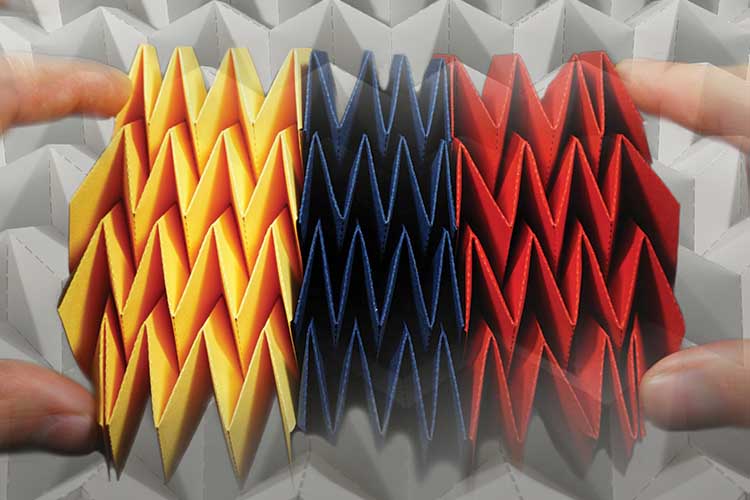
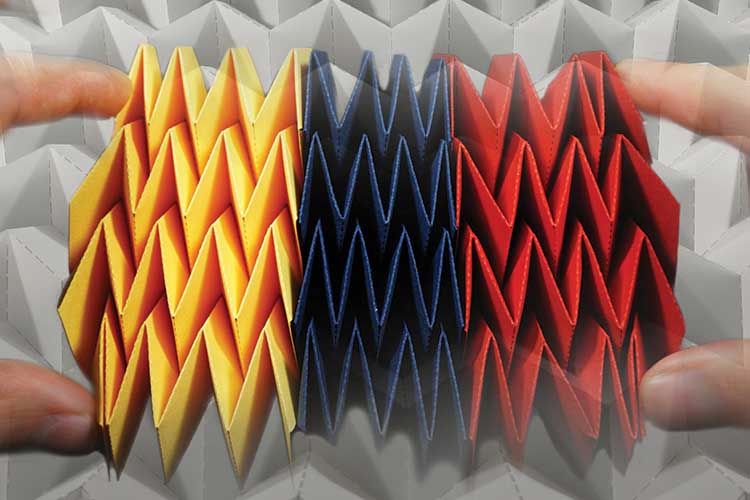
Origami Metamaterials combine the Japanese art of paper folding (origami) and the existing material of choice and fold it to obtain desired properties. Researchers of IIT Madras have developed a special class of origami metamaterials that show a constant value of Poisson Ratio when subjected to stress. These are manufactured by joining panels along their edges to form ‘creases’ about which the structure locally ‘folds’ or rotates about. The benefit is that the observed property does not depend on whether it is made from a sheet of paper, polymer, or metal.  The material the researchers have developed has a nearly constant Poisson function in the range –of 0.5 to 1.2 over a finite stretch of up to 3.0 with a minimum of 1.1.

Properties of Metamaterials

They are smart materials that have a wide range of properties and can be so different from each other that there isn’t a definition for them. Some of the properties it possess are

  • Unusual Electromagnetic Properties
  • Negative Refractive Index
  • Acoustic Control
  • Invisibility
  • Negative Electrical Permittivity
  • Magnetic Permeability
  • Artificial Origin.

Application of Metamaterials

Metamaterials hold attention due to various applications it can provide. Some of its application includes

  • Optical Filtering
  • Medical Devices
  • Remote Aerospace Operations
  • Sensor Detectors
  • Solar Power Management
  • Antenna Lenses

Conclusion

Origami metamaterials can provide a platform for the design of systems with a wide range of thermal expansion coefficients. Experiments and simulations are combined to demonstrate that by tuning the geometrical parameters of the origami structure and the arrangement of plates and creases, an extremely broad range of thermal expansion coefficients can be obtained that will provide a wide variety of applications.

References

An Ultimate Guide to Health Day

Image taken from VectorStock

Introduction

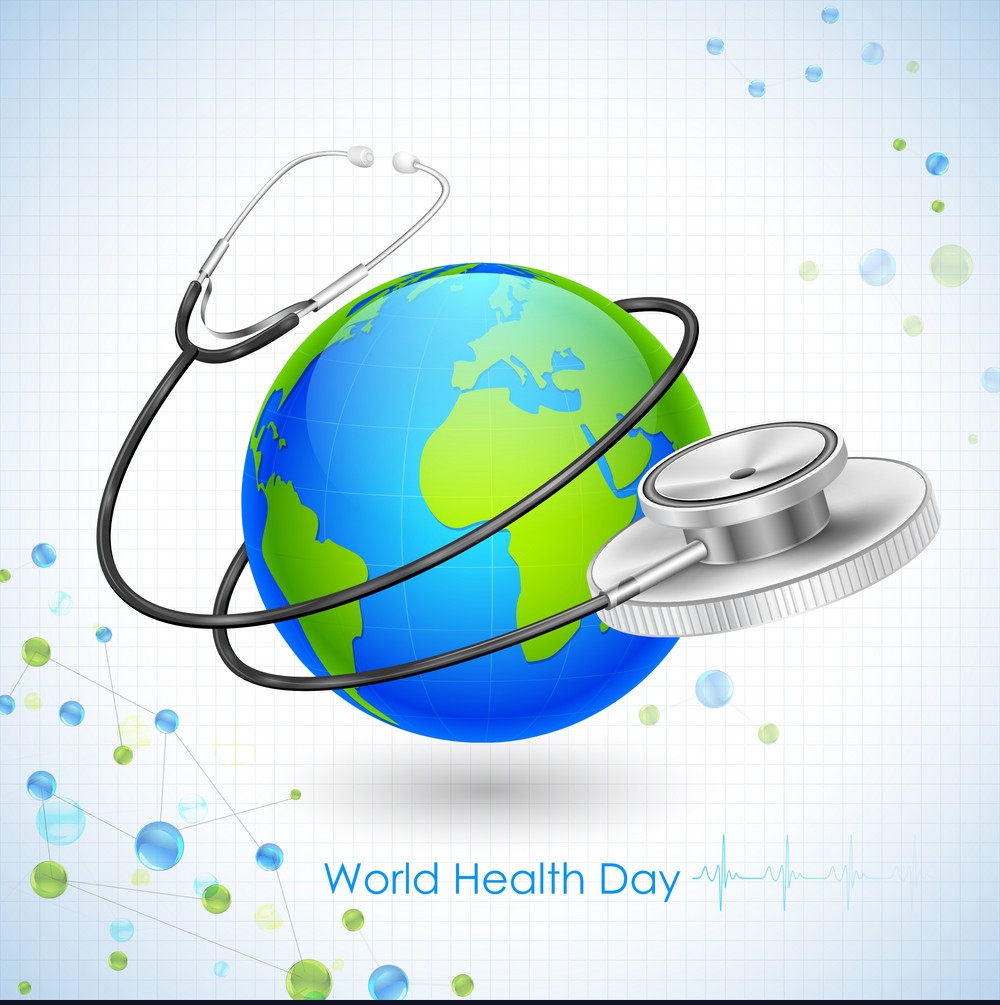
The World Health Organization (WHO) was established on 7 April 1948. Realizing the significance of health for victorious life all over the world, World Health Day is celebrated every year on 7 April to commemorate the anniversary of the founding of the World Health Organization (WHO). The Canadian Ice Hockey Player Maxime Lagace once rightly said, “A life without good health is like a river without water”. While we appreciate such words of wisdom, we rarely understand the true meaning of such words since we rarely try to follow them in our lives. Human health is being adversely affected due to a hectic lifestyle, work and stress. World Health Day is celebrated every year to create awareness of the importance of health.

Aim behind Celebration

The main aim behind the celebration is to improve the level of health of people around the whole world. The idea is that every human being must get superior and essential health facilities at an economical rate. Millions of people around the world are prey to many terrible diseases. Hence, discussions and awareness on the topics like prevention of diseases and proper arrangement of the medical facilities etc. are also included as the main objective of Health Day. Awareness campaigns are organized at the district and block levels on this day to prevent vector-borne diseases.

Theme

Each year for this date, a theme is chosen that accentuates an area of priority concern for WHO. In the face of the current pandemic, a polluted planet, and an increasing incidence of diseases, the theme for World Health Day 2022 is Our Planet, Our Health. This call from PAHO, the WHO, and partners, presents a unique opportunity for a green and healthy recovery from the COVID-19 pandemic, that puts the health of individuals and the planet at the center of the action and fosters a movement to create societies focused on well-being.

Why this Theme?

 An estimated one million premature deaths per year are attributable to known avoidable environmental risks. Air pollution, contaminated water, inadequate sanitation including solid waste management, risks related to certain hazardous chemicals, and negative impacts of climate change are the most pressing environmental public health threats in the Region. These threats to public health are compounded by weak governance practices and potential inequities in health as well as by limited leadership, expertise, and resources in the health sector. This theme of Our Planet, Our Health should be a herculean reminder to us that the resolution of many of these issues is beyond the exclusive purview of the health sector and, as a consequence, an effective response will demand the whole- of- government and whole- of- society approaches.  

Conclusion

Today everyone’s jobs are such that they need to sit in front of a laptop for hours. Even after returning home, they are stuck to television screens or mobile phones. Children are seen watching TV or phones for a long time. This is the root cause of various diseases. People these days are so engrossed in their work that they have taken their health as secondary and rarely give attention until become sick. Everyone should give equal concern to their health and environment. Every human being should maintain a proper balance between physical and mental health. Children should take part in outdoor sports like cricket, football, and badminton instead of sitting at home for physical health. They should also be involved in planting trees, keeping our surroundings clean, and properly disposing of the materials to avoid environmental risks to our health. As, until our Earth is not healthy we can’t be healthy. World Health Day is celebrated to highlight the importance and create awareness of making our health a priority.

Reference