Ladakh, a cold desert at an altitude of 3,000-3,500 metres above sea level, has a low average annual rainfall rate of 50 mm. Glaciers have always been the only source of water. Agriculture is completely dependent on glacier melt unlike the rest of river/monsoon fed India. But over the years with the increasing effects of climate change, rainfall and snowfall patterns have been changing, resulting in severe shortage and drought situations. Given the severe winter conditions, the window for farming is usually limited to one harvest season.
It is located between the natural glacier above and the village below. The one closer to the village and lowest in altitude melts first, providing water during April/May, the crucial sowing season. Further layers of ice above melt with increasing temperature thus ensuring continuous supply to the fields. Thus, farmers have been able to manage two crops instead of one. It costs about ` 1,50,000 and above to create one.
Fondly called the “glacier man”, Mr. Norphel has designed over 15 artificial glaciers in and around Leh since 1987. In recognition of his pioneering effort, he was conferred the Padma Shri by President Pranab Mukherjee, in 2015.
There are a few basic steps followed in creating the artificial glacier.
River or stream water at higher altitudes is diverted to a shaded area of the hill, facing north, where the winter sun is blocked by a ridge or a mountain range. At the start of winter/November, the diverted water is made to flow onto the sloping hill face through distribution channels. Stone embankments are built at regular intervals which impede the flow of water, making shallow pools and freeze, forming a cascade of ice along the slope. Ice formation continues for 3-4 months resulting in a large accumulation of ice which is referred to as an “artificial glacier”.
International Women’s Day is a global day celebrating women’s social, economic, cultural, and political achievements. The day also marks a call to action for accelerating gender parity. Significant activity is witnessed worldwide as groups come together to celebrate women’s achievements or rally for women’s equality. Marked annually on March 8th, International Women’s Day (IWD) is one of the most important days of the year to celebrate women’s achievements, raise awareness about women’s equality, lobby for accelerated gender parity, and fundraise for female-focused charities.
Theme for 2022
The campaign theme for International Women’s Day 2022 is “Gender Equality Today for a sustainable tomorrow”. Whether deliberate or unconscious, the bias makes it difficult for women to move ahead. Knowing that bias exists isn’t enough. Action is needed to level the playing field.
History of Celebrating this day
The roots of International Women’s Day lie in the mobilization of women in the early decades of the 20th century for better pay and voting rights. In India, the republic’s founders placed trust in universal adult franchise, the Constitution made the promise of equality to all citizens, irrespective of gender or caste. But the journey of Indian women since Independence has been a struggle to grasp that equality, against the formidable weight of culture, patriarchy and economic deprivation ranged against them. To mark March 8 is to reckon with the present in the light of this history. In the here and now, there are reasons for both despair and hope.
Aim for Celebration
The purpose of the International Women’s Day website is to support the supporters, and in doing so it provides a platform to help forge positive change for women.
Three central beliefs underpin and guide the purpose and provisions of the International Women’s Day include
identifying, celebrating, and increasing the visibility of women’s achievements can help forge equality.
strategic collaborations based on a foundation of shared purpose, trust, and appreciation can impact positive change for women.
worldwide awareness-raising via meaningful narratives, resources and activity can help combat gender bias and discrimination to accelerate gender parity.
Conclusion
All days must belong to women — not just one day in a calendar year. There is little in that aspiration to quarrel with. But it is not an argument against marking and celebrating International Women’s Day. True, like all remembrances, it is prone to be turned into an empty token or made palatable, pink, and powerless. But the day exists as a reminder that gender equality is a work in slow progress. And to recall that the vast majority of women in India, whose labor and skills keep institutions running, from the home.
Humans have always looked at the heavens and wondered about the nature of the objects seen in the night sky. With the development of rockets and the advances in electronics and other technologies in the 20th century, it became possible to send machines and animals and then people above Earth’s atmosphere into outer space. Space exploration, investigation, by means of crewed and uncrewed spacecraft, of the reaches of the universe beyond Earth’s atmosphere and the use of the information so gained to increase knowledge of the cosmos and benefit humanity.
What is this Mission?
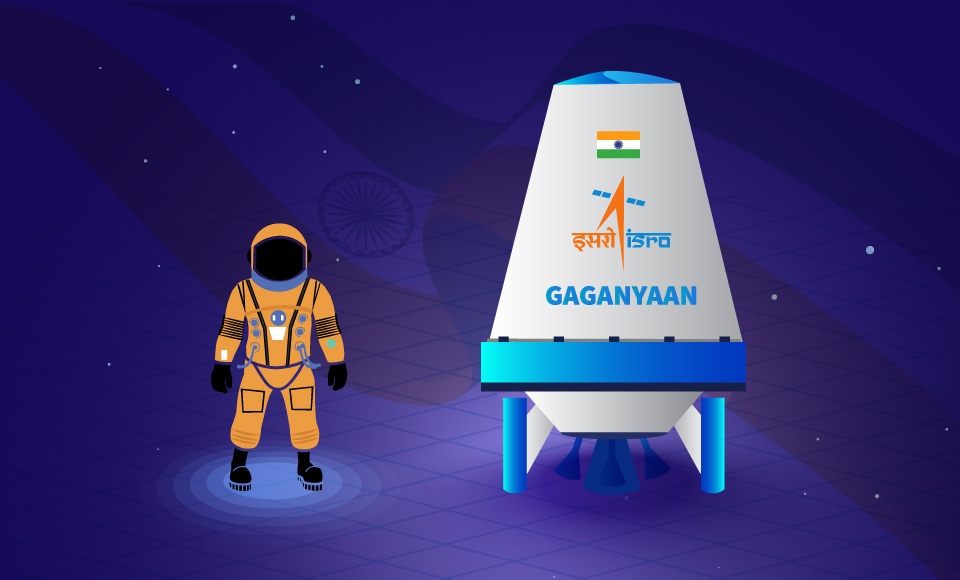
The word ‘Gaganyaan’ is derived from Sanskrit, meaning ‘sky-vehicle’. The Gaganyaan Programme envisages undertaking the demonstration of indigenous capability to undertake human spaceflight to Low Earth Orbit (LEO). As part of this program, two unmanned missions and one manned mission will be carried out. ISRO is planning to launch the first uncrewed mission under Gaganyaan in 2022, following which is the second unmanned mission. “Vyommitra” will carry a robot and this will then be followed by the manned mission. The uncrewed missions are for technology demonstration, and safety and reliability verification and will aim to study the performance of systems before the crewed flight. The robot will mimic the space crew activities set for the human flight mission to assess all the possible challenges before the final mission.
New Technologies required for this Mission
The major new technologies required for Gaganyaan programme are as follows:
Human rated launch vehicle
Crew escape systems
Habitable orbital module
Life support system
Crew selection and training and associated crew management activities.
Execution of this Program
The Gaganyaan Programme is going to be a major National effort. The overall programme co-ordination, systems engineering and implementation will be carried out by ISRO. Further, the human rated launch vehicle, crew escape system, Orbital module and essential infrastructure will be realized by ISRO utilizing the in-house expertise and with participation of Industry, Academia and National agencies. The private players in the country have developed significant expertise in niche areas, and this will be effectively utilized in the programme.
Agencies Collaborating with ISRO for this Mission
Major collaborating partners for Gaganyaan include
Indian Armed Forces
Defence Research Development Organization
Indian maritime agencies – Indian Navy, Indian Coast Guard, Shipping Corporation of India, National Institute of Oceanography, National Institute of Ocean Technology
Indian Meteorological Department
CSIR Labs
Academic Institutes
Industry Partners.
Benefits of this Mission
The Human spaceflight programme has both tangible and intangible benefits for the nation, which includes:
Progress towards a sustained and affordable human and robotic program to explore the solar system and beyond.
Advanced technology capability for undertaking human space exploration, sample return missions, and scientific exploration.
Future capability to actively collaborate in global space station development & to carry out scientific experiments of interest to the nation.
Create a broad framework for wider Academia-Industry partnership in taking up development activities for national development.
Conclusion
The Gaganyaan mission could propel India to the center of human space exploration. The manned missions will push India is further in exploration beyond Earth’s orbit as countries are eager to control the next space race, which has the potential to trigger major changes in the global order.
Whether it is education or work, every one of us strives to be productive. It gives us a sense of accomplishment and meaning in life. It helps us achieve our goals. However, being focused on your work and staying away from the many distractions around us like the internet and social media is not always easy. There are a lot of us who feel that we could have done more than we did after leaving work. If you are looking for ways to improve your productivity and efficiency, here are a few hacks you could make use of:
Plan your Day in Advance
Write down everything you need to do in a day the night before or the morning. This helps you get a good idea of what you have to do every day, at what time, and for how long. Making a schedule of the day also prevents you from missing out on any of your tasks or appointments, making you alert enough to not waste any of your time accidentally. Start by writing down your morning routine and then move on to all the tasks you have to do in a day (meetings, submissions, working hours, doctors’ appointments, etc).
Wake Up Early
This is something a lot of us find difficult to do, but practicing waking up early and making it a routine can be very beneficial. Start the day early with a fresh, energized mind and body. You can get a lot of your work done because of the head start you get in the morning. Working early in the morning also means fewer distractions. A productive start to your day makes you feel positive and you carry that momentum for the rest of the day.
Prioritize your Tasks
When you have planned your schedule for the day in the morning, take some time to write down the three most important tasks of the day. We may have several jobs to complete, but not all of them will have the same priority. To ensure that we use our limited time and energy to complete them, note down the three tasks with the greatest outcomes or significance in detail. For example: – Instead of writing down –“Review literature source”, make it- “Review the literature sources on the topic Preserving Indian culture and submit the report before 5 pm”.
Take Regular Breaks
Just because you have a daily schedule and a prioritized to-do list does not mean you can easily work non-stop for hours. You may have noticed that you are usually able to remain fully concentrated on your work for a maximum of 90 minutes. The best way to manage time for work is by giving yourself regular breaks between tasks. There is a popular technique called the Pomodoro technique in which work is divided into time intervals of 25 minutes with a 5-minute break in between. After 4 such consecutive intervals, there is a longer break of 20 or 30 minutes. Taking breaks helps us re-focus and re-energize, improving our productivity.
Learn to Say No
Being helpful and enthusiastic with your co-workers and boss is good, but it could lead to you having to handle a large number of tasks and responsibilities. These may be more than you can handle. Do not be hesitant to say no to people who are trying to place too many responsibilities on your shoulder. If it is your boss explain to them professionally how you would have to delay some of your other work or show them your task list. Such extra work can reduce the quality of your work and cause a lot of stress.
Avoid Multitasking
Juggling a lot of tasks at once may look like a good idea as you get to save time doing multiple jobs done. But it is not always as efficient as you think. When you multitask, you do not get to put your full attention to anything. None of the tasks you completed will be a job well done. So, it is better to focus on one task at a time and complete it to perfection.
Manage your Work Environment
The environment in which we work can have a major effect on our productivity. Messy desks, noise and other distractions can waste a lot of our time. Make sure your tables and shelves are organized, and your desks and chairs are comfortable enough for your work. You get more time for work if you are not spending a portion of it searching for something at your table.
World Homeopathy Day is celebrated each year on April 10 to pay tribute to homeopathy and its contribution to the world of medicine. The day is celebrated in the form of celebrating Dr. Christian Friedrich Samuel Hahnemann’s birth anniversary, a German physician and founding father of this branch of medicine. On this day, Dr. Christian Friedrich Samuel Hahnemann was born in Paris in the year 1755. This year is the 266th anniversary of his birthday. In the year of 2021 the theme of the day in India is, “Homeopathy- Roadmap for Integrative Medicine”
Aim of Celebration
The primary aim of World Homeopathy Day is to raise public knowledge about this alternative medical system to make it much more available to a wider range of individuals. The global homeopathic fraternity strives to unite to develop, improve and modernize the medical system to serve a greater number of people. Apart from honoring the man who founded this crucial branch of medicine, the day also gives people an opportunity to understand the glorious history of the branch of medicine and the countless miracles homeopathy has been able to pull off in the last few centuries.
What is Homeopathy?
Homeopathy or homeopathy is a pseudoscientific system of alternative medicine. Its practitioners, called homeopaths, believe that a substance that causes symptoms of a disease in healthy people can cure similar symptoms in sick people; this doctrine is called similia similibus curentur, or “like cures like”. Homeopathy is a medical system based on the belief that the body can cure itself. Those who practice it use tiny amounts of natural substances, like plants and minerals. They believe these stimulate the healing process. It was developed in the late 1700s in Germany. It’s common in many European countries, but it’s not quite as popular in the United States.
How Does it work?
Homeopathic doctors (who also are called “homeopaths”) weaken these ingredients by adding water or alcohol. Then they shake the mixture as part of a process called “potentization.” They believe this step transfers the healing essence. Homeopaths also believe that the lower the dose, the more powerful the medicine. In fact, many of these remedies no longer contain any molecules of the original substance. They come in a variety of forms, like sugar pellets, liquid drops, creams, gels, and tablets. During your appointment, a homeopath will ask several questions about your mental, emotional, and physical health. They’ll prescribe the remedy that best matches all of your symptoms. Then they’ll tailor the treatment for you.
Benefits of Homeopathy
Homeopathy is a holistic science, which renders cure and healing, rather than mere alleviation of disease, and takes into consideration the minutest details of the ailing person. The benefits which it includes are
Homeopathy is Safe
Homeopathy is Effective and Fast Acting
Homeopathy is a Scientific and Natural Medicine
Homeopathy Helps Build Resistance
Homeopathy for All Life’s Stages.
Conclusion
Celebrating this day will make more and more people aware of the benefits of homeopathic medicine which is universally known for curing the disease by dismantling its origin completely and leaving no chance for its revival in the human body. The day also allows the governments and policymakers to sit back and think about steps that can broadly promote the branch of medicine and help build its infrastructure.












 Eduindex
You must be logged in to post a comment.