

Introduction
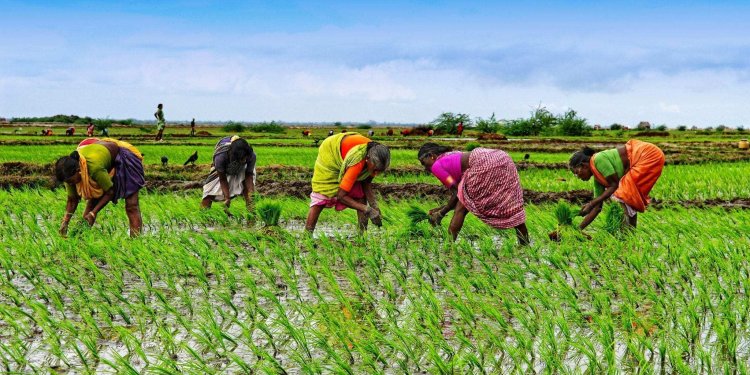
As a process driven largely by suicide and partly by the out-migration of men from rural areas is more a problem than women empowerment in the true sense. The feminization of agriculture here is not a result of women’s social or economic empowerment. Instead, women’s growing participation in agriculture appears to be strongly related to several indicators of poverty. Women’s growing contribution of labor in agriculture adds to the already heavy work burdens of most rural women, thereby further undermining their well-being, and suggests that the feminization of agriculture may better be described as the feminization of agrarian distress.
What is Feminization of Agriculture?
Feminization of Agriculture refers to the measurable increase of women’s participation in the agricultural sector, particularly in the developing world. The phenomenon started during the 1960s with increasing shares over time. In the 1990s, during liberalization, the phenomenon became more pronounced and negative effects appeared in the rural female population. Afterward, agricultural markets became gendered institutions, affecting men and women differently. In 2009 World Bank, FAO & IFAD found that over 80 percent of rural smallholder farmers worldwide were women, this was caused by men migrating to find work in other sectors. Out of all the women in the labor sector, the UN found 45-80% of them to be working in agriculture.
Feminizing the Agriculture
Migration results in “Feminizing Agriculture”, which means women get increasingly absorbed in agricultural and allied activities. According to Census 2011, there has been a 24 percent increase in the number of female agricultural laborers between 2001 and 2011, from 49.5 million to 61.6 million. Nearly 98 million Indian women have agricultural jobs, but around 63 percent of them are agricultural laborers, dependent on the farms of others, according to Census 2011. In addition to this, the mechanization of agriculture has also resulted in the confinement of women to traditional roles such as winnowing, harvesting, sowing seeds, and rearing livestock, which are low-paying. This clubbed with the burden of household chores, and a lower wage rate than men, contributes to further economic disparity.
Marginalization of Landless Women
Women in rural areas, who do not own land, usually engage in agricultural labor activities. NCRB defines a farmer/cultivator as one whose profession is farming and includes those who cultivate their own land/leased land/other’s land with or without the assistance of agricultural laborers. While counting farming suicides, cases of people who have landed on their names are considered farmers, according to several studies undertaken. There remains ambiguity in the definition and classification of farmers, which further affects the recognition of the female face in agriculture.
Conclusion
The larger problem also pertains to land ownership versus land control, as merely granting joint titles (which some states have) doesn’t necessarily mean that control of the property would be vested with the female. One example of such power appropriation emanates from the concept of “sarpanchpatis” or proxies of elected women sarpanches in gram panchayats. Though there is a 33 percent for women at the panchayat level, it is men who often exercise control. The draft Land Reform Policy (2013) of the Union government recognized the need to grant land ownership rights to rural women and redistribute land to all landless poor. However, the implementation of land reforms in India has remained tardy. Consider the Bhoodan movement started by Vinobha Bhave, which received over 16 million hectares from the rich for redistribution to the poor. Of this, only about 9 million hectares were redistributed. While reorganizing land rights for rural women may be an arduous and long-drawn task, alternative economic opportunities through schemes like the Mahatma Gandhi National Rural Employment Guarantee Act and National Rural Livelihood Mission must be strengthened to empower women in the agriculture sector.


 Eduindex
You must be logged in to post a comment.