World NO TOBACCO DAY

World NO TOBACCO DAY is observed every year on 31st May.

Every year, the World Health Organization honors governments, organizations and individuals for their efforts and contributions to curbing tobacco use.

This day raises awareness about the damage caused by consuming tobacco. Consuming tobacco kills over 80 lakh people across the world every year. Besides the human cost, consuming tobacco also causes the environment to degrade. 

The WHO member countries agreed to observe World No-Tobacco Day on May 31 in 1987. Since then, this day is marked each year with a relevant theme.

 In 1987, the WHO’s World Health Assembly passed Resolution WHA40. 38, calling for 7 April 1988 to be “a world no-smoking day”. The objective of the day was to urge tobacco users worldwide to abstain from using tobacco products for 24 hours, an action they hoped would provide assistance for those trying to quit.

Theme for year 2022 is…………….“Protect The Environment”.

As per WHO, “The harmful impact of the tobacco industry on the environment is vast and growing adding unnecessary pressure to our planet’s already scarce resources and fragile ecosystems.”

Tobacco consumption is one of the factors that are believed to adversely impact the efforts to achieve the UN–adopted sustainable development agenda by 2030, which aims to reduce tobacco-related deaths by one-third by that time.

Tobacco consumption can lead to lung cancer, which mostly hits those with a substantial cigarette smoking history. Around 80-90% of people are diagnosed with lung cancer have a history of tobacco smoking. Tobacco is the leading cause of death for men and the second leading cause when both men and women are included.

World No Tobacco Day – Key messages

  • Tobacco harms the environment
  • Make the tobacco industry clean the mess.
  • Quit tobacco to save our planet.
  • Help tobacco farmers switch to sustainable farming.
The Mughal Empire

Back in 8th century, The Umayyad Caliphate had conquered Sindh, which we call the present day Pakistan. However, India was too distant to control and subsequent Caliphs were unable to exercise control over it and expand further.

Then in 11th century Mohammad of Ghazni invaded India and established a permenant Turkic regime there after taking Lahore in 1030. After the collapse of his empire, various dynasties ruled northern India and the dynasty is called Delhi Sultanate. although, no one was very successful for a very long time.

the last of this dynasty was the Lodhi dynasty. However in 1526, a Timurid prince named Zahir-ud-din-Muhammad Babur was left with nothing to loose and no options left in the central Asia, decided to invade India. Babur was the fifth generation descendant of Tamerlane and the 13th generation descendent of Genghis khan. Like many other Timurid princess, he claimed the entirety of Timur’s Empire. however he was barely able to control/ rule Fergana valley. he was pushed South from there by the rise of Uzbeks until he established his seat of power in Kabul. With the Safavids to the west and Uzbeks to the north he had nowhere to go but east. and that east is nothing but India.

In 1526, he faced the ruling Lodi Dynasty at Panipat. He defeated them over the 4years and he conquered almost all of Northern India after facing other local Hindu and Muslim rulers.

The dynasty he founded came to be known as the Mughals which is the Persian word for Mongol. Although, the dynasty itself held strong ties to timur and called themselves the Gurkani Dynasty. Babur died in 1530 at the age of 46years.

That’s when Humayun came into picture who is the son of Babur.

Humayun was not a very capable leader and on top of that he indulged a little too much in wine and opium. His incapableness led to invasion of many surrounding rulers. One Afghan noble named Sher Shah Suri- he over threw Humayun in 1539. Later Sher Shah Suri died in a battle in 1545 and his empire was divided up.

Humayun asked Safavids for help and started conquering the divided empire. By 1555, both Delhi and Lahore were under his control. But, unfortunately he died by falling from stairs in 1556.

Jalal-ud=din Muhammad Akbar a mere 12 year old was installed as the next ruler of Mughal Empire. Regents ruled and stabilized the empire on the young Shahan shah’s behalf for the very first five years of his reign. By 1551 he was ready to take charge.

He expanded the empire further by conquering Gujarat, Bihar and parts of Bengal. However at this point, the Mughals had a bit of legitimacy problem. They were a foreign Muslim Dynasty ruling over a realm where less than 5% of the population who followed the same faith as them.

Babur and Humayun were the followers of Sufi Islam and that was continued the same by Akbar. Although, over the years, he began a struggle to reconcile Islam and the various Indian religions, He invited scholars of various religions to have a open discussion in the Ibadat- khana. He also invited Jesuits from the portuguese enclave at Goa.

He was also the one who translated Mahabharata into persian, so his people could read it and understand Hinduism a bit better.

The Mughals designed a system of Bureaucracy called the Mansabdari system which was reformed by Akbar. Akbar was described as the Greatest Mughal ruler out of many. In fact Akbar means ” THEGREAT” and was a title given to him. He died in 1605

Jahangir-heir of Akbar took the throne. He tried to expand the empire but it had pretty much reached its limits.

The other rulers include Shah Jahan, Aurangazeb and this will be explained in another post.

UPSC ANNOUNCES 2021 FINAL RESULTS- Check the list of top 10 toppers this year

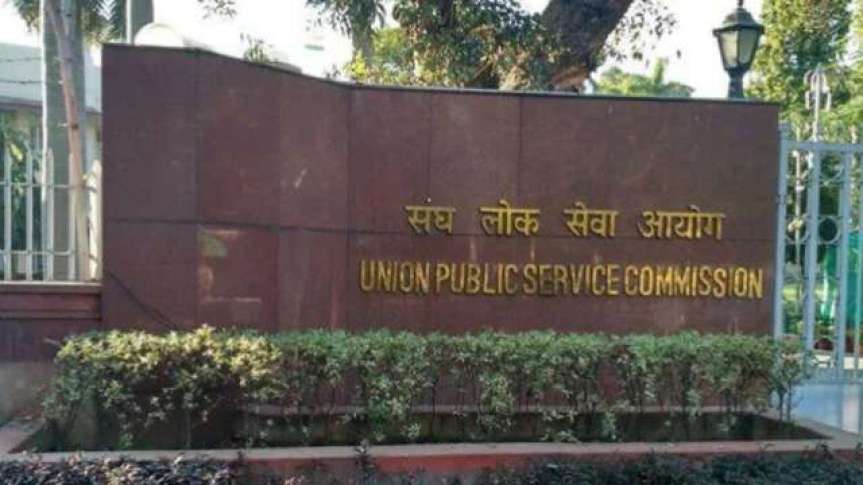
UPSC announces the final results of the exam on 30 May 2022 in its official website https://www.upsc.gov.in/ . 685 candidates have qualified in UPSC CSE 2021. Candidates who passed this year. Of these 244 candidates were from General Category, 73 were from Economic Backward Classes, 203 were from OBC [ Other Backward Classes ], 105 were from SC, and 60 were from ST.

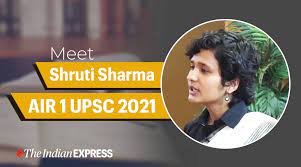
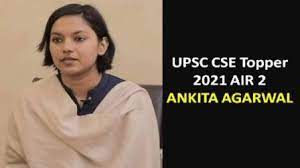
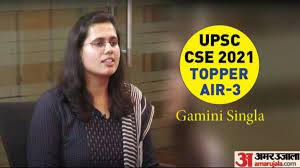
This time 3 All India Ranks were occupied by girls. Shruti Sharma secured AIR [ All India Rank ]1 this year. Along with her, Ankita Agrawal secured AIR 2 and Gamini Singla secured AIR 3. Shruti Sharma belongs to Bijnor city of UP, Ankita Agrawal belongs to Kolkata, West Bengal and Gamini Singla belongs to Anandpur Sahib city of Punjab. Candidates should note that the marks will be available on the website within 15 days from the date of declaration of result.

“I was hoping that i would clear the UPSC examination but I was not expecting to Top,” Shruti shared with reports.

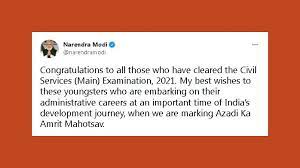
“Congratulations to all those who have cleared the Civil Services (Main) Examination, 2021. My best wishes to these youngsters who are embarking on their administrative careers at an important time of India’s development journey, when we are marking Azadi Ka Amrit Mahotsav.” wrote PM Modi on Twitter [https://twitter.com/narendramodi].

The examination is conducted annually in three stages – prelims, main and interview (personality test) – to select officers for Indian Administrative Service (IAS), Indian Foreign Service (IFS), Indian Police Service (IPS) and other posts.

Civil Services (Main) Examination, 2021 result was announced on March 17. Those who cleared the main examination were called for the interview round (personality test). The personality test was held from April 5 to May 26, 2022.

UPSC CSE final result is based on candidates’ performance in mains and interview rounds. Results of 80 candidates are provisional and that of one is kept withheld.

TOP 10 TOPPERS’S LIST 2021

  1. Shruti Sharma
  2. Ankita Agrawal
  3. Gamini Singha
  4. Aishwarya Verma
  5. Utkarsh Dwivedi
  6. Yaksh Chawdhary
  7. Samyak . S . Jain
  8. Ishita Rathi
  9. Pritam Kumar
  10. Harkirat Singh Randhawa

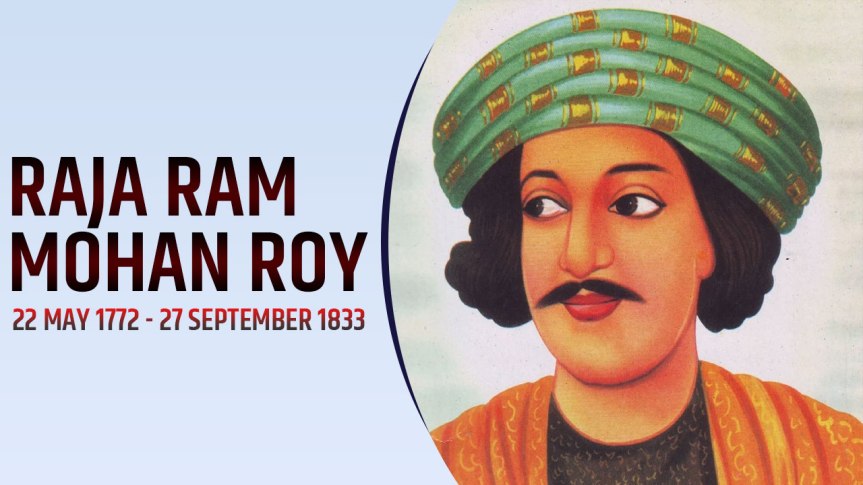
Raja Ram Mohan Roy

Raja Ram Mohan Roy was the father of Modern India’s Renaissance and a tireless social reformer who inaugurated the age of enlightenment and liberal reformist modernisation in India.

Life:

  • Raja Ram Mohan Roy was born on 22nd May 1772 in Bengal. His early education included the study of Persian and Arabic at Patna where he read the Quran, the works of Sufi mystic poets and the Arabic translation of the works of Plato and Aristotle.
  • From 1803 to 1814, he worked for East India Company as the personal diwan first of Woodforde and then of Digby.
  • In 1814, he resigned from his job and moved to Calcutta in order to devote his life to religious, social and political reforms.
  • In November 1830, he sailed for England to be present there to counteract the possible nullification of the Act banning Sati.
  • Ram Mohan Roy was given the title of ‘Raja’ by the titular Mughal Emperor of Delhi, Akbar II whose grievances the former was to present before the British king.
  • In his address, entitled ‘Inaugurator of the Modern Age in India,’ Tagore referred to Ram Mohan as ‘a luminous star in the firmament of Indian history’.

Ideology:

  • Ram Mohan Roy was greatly influenced by western modern thought and stressed on rationalism and modern scientific approach.
  • He believed that religious orthodoxies have become causes of injury and detrimental to social life and sources of trouble and bewilderment to the people, instead of tending to the amelioration of the condition of society.
  • He believed in social equality of all human beings and thus was a strong opposer of the caste system.
  • Ram Mohan was attracted to Islamic monotheism. He said that monotheism is also the fundamental message of Vedanta.
  • His idea of a single, unitarian god was a corrective to the polytheism of orthodox Hinduism and to Christian trinitarianism. He believed that monotheism supported one universal model for humanity.
  • Raja Ram Mohan Roy believed that unless women were freed from unhuman forms of oppression like illiteracy, child marriage, sati, purdah, Hindu society can not progress.
  • He characterised sati as the violation of every humane and social feeling and as symptomatic of the moral debasement of a race.

Contributions

Religious reforms:

  • Raja Ram Mohan Roy’s first published work Tuhfat-ul-Muwahhiddin (a gift to deists) published in 1803 exposed irrational religious beliefs and corrupt practices of the Hindus as the belief in revelations, prophets, miracles etc.
  • In 1814, he founded Atmiya Sabha in Calcutta to campaign against idolatry, caste rigidities, meaningless rituals and other social ills.
  • He criticized the ritualism of Christianity and rejected Christ as the incarnation of God. In Precepts of Jesus (1820), he tried to separate the moral and philosophical message of the New Testament, which he praised, from its miracle stories.

Social reforms:

  • Raja Ram Mohan Roy conceived reformist religious associations as instruments of social and political transformation.
    • He founded the Atmiya Sabha in 1815, the Calcutta Unitarian Association in 1821, and the Brahmo Sabha in 1828 which later became the Brahmo Samaj.
    • He campaigned against the caste system, untouchability, superstitions and use of intoxicants.
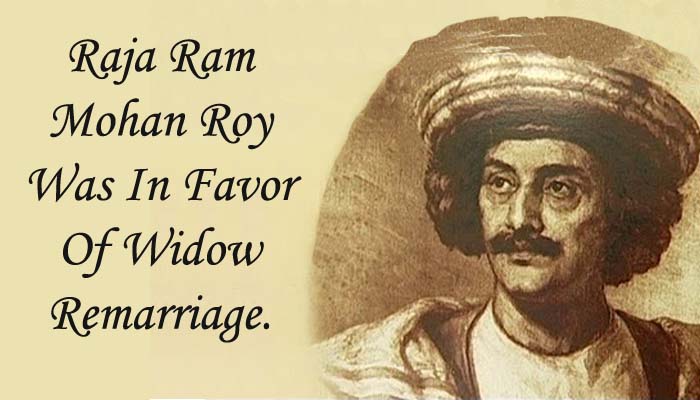
    • He was well known for his pioneering thought and action on the emancipation of women and especially on the abolition of sati and widow remarriage.
    • He attacked child marriage, illiteracy of women and the degraded state of widows and demanded the right of inheritance and property for women.

Educational reforms:

  • He supported David Hare’s efforts to the Hindu College in 1817, while Roy’s English school taught mechanics and Voltaire’s philosophy.
  • In 1825, he established Vedanta college where courses in both Indian learning and Western social and physical sciences were offered.

Economic and Political Reforms:

  • Civil liberties: Roy was impressed and admired the British system of constitutional government for the civil liberties it gave to the people. He wanted to extend the benefits of that system of government to Indian people.

Press freedom: 

Through his writings and activities, he supported the movement for free press in India. When press censorship was relaxed by Lord Hastings in 1819, Ram Mohan found three journals- The Brahmanical Magazine (1821); The Bengali weekly, Samvad Kaumudi (1821); and the Persian weekly, Mirat-ul-Akbar.

DIFFERENT KINDS OF BAIL

Bail, in law, means procurement of release from prison of a person awaiting trial or an appeal by the deposit of security to ensure his submission at the required time to legal authority. The monetary value of the security, known also as the bail, or, more accurately, the bail bond, is set by the court having jurisdiction over the prisoner. The security may be cash, the papers giving title to property, or the bond of private persons of means or of a professional bondsman or bonding company. Failure of the person released on bail to surrender himself/herself at the appointed time results in forfeiture of the security. Courts have greater discretion to grant or deny bail in the case of persons under criminal arrest. 

KINDS OF BAIL

1. Bail for Bailable Offence 

According to Criminal Procedure Code, if the offence alleged is bailable, then the accused is entitled for bail as a matter of rights either before the police or when presented before the Magistrate Court. In bailable offences bail is a right and not a favour. In such offences there is no question of any discretion in granting bail.

 2. Bail for Non-bailable Offence 

Criminal Procedure Code empowers two authorities to consider the question of bail, namely (1) a court and (2) an officer-in-charge of the police station who has arrested or detained without warrant a person accused or suspected of the commission of a non bailable offence.

Before exercising his power, a station officer should satisfy himself that release on bail of such accused would not prejudice the prosecution or affect investigation in any manner. In case of an offence punishable with death or imprisonment for life, station police officer cannot release a person on bail, if there appears reasonable grounds for believing that he has been guilty of such offence. If it appears to the Court that that there are not reasonable grounds for believing that the accused has committed a non-bailable offence, but that there are sufficient grounds for further inquiry into his guilt, then the accused (pending enquiry) can be released on bail. 

3. Anticipatory Bail 

Anticipatory Bail granted to a person in anticipation and apprehending arrest. It may be granted under a few circumstances: 

1. A special case is made out that would suggest that there are ample grounds to assume that the applicant may be detained for unreasonable grounds. 

2. The allegations were made with a false intent or to cause the claimant to be injured/humiliated and arrested. 

3. The arguments against the claimant are ambiguous or generic. 

4. The name of the accused is not mentioned in the FIR. 

5. The applicant satisfies the Court that he is from a respectable family, has deep roots in society, and is not likely to abscond from or avoid the Court’s proceedings or to hinder the investigation in any way.

4. Mandatory Bail or Statutory Bail 

Under Section 167, magistrate can either allow for police custody or judicial custody for a period of 15 days. However, the accused can also be sent to judicial custody for a period of 90 days or 60 days.

Section 167(2) further provides that if at the end of the period (60 or 90 days) of judicial custody, if the investigation is not completed by the police, the court shall release the person “if he fulfill bail conditions”.

Thus, a magistrate according to law or a statute (section 167 of CRPC) cannot authorise a person’s judicial remand beyond the 60-or 90-day limit. 

Education – passionate studies |5 simple ways

Education is an essential thing in our daily life. According to the growth of society, education must be provided to every citizen. The new world is mysterious, all things that exist had to be known to every people education ensures that. So whatever we want to be we should know about that.

Findings of great peoples, Technological know-how, awareness of the environment, History, etc are the main components of education. An educated person must show good character they were intelligent and efficient. They can build up our economy in a good manner

Nowadays students are struggling with exam results. They were worried about the marks they got. Parents also wanted marks from children. However, studying with understanding makes a perfect education. There are a few tips for good studies.

1. Awareness Of The Chapters

The student must have a correct idea of the chapters including the basic needs. It will increase our energy to study new things.

2. Making The Day For Studies

Mornings are a good time for making good decisions they may whisper through our ears for an entire day. Put a goal for the day in the mornings and we will begin to work toward that.

3. Visualization

When we were teaching or studying, try to imagine the concepts as well it will lead to an incredible memory of the topics.

4. Setting Our Mind

Setting our minds before studies is the best way to attain knowledge. When we think that we are free from anything, nothing can disturb us from our goals. Set our minds to study and make differences

5. Concluding Sentences

When we are willing to study a paragraph, make the important keywords from that. It will help you to study shortly and easily .

All about Civil Services Exam

UPSC has declared the final result for Civil Services 2021 in which Shruti Sharma, Ankita Agarwal and Gamini Singla have secured the first, second and third rank respectively.

Civil Services Examination (CSE) is one of the examinations conducted by the Union Public Service Commission to recruit suitable candidates into civil services of India including IAS, IPS, IFS, and other allied services.

The prescribed UPSC exam eligibility criteria are that the candidate should be a graduate and must have attained 21 years of age. There is also an upper age limit and a number of attempts restriction based on the candidate’s category. Generally, the upper age limit is 32 years, but the commission gives age relaxation for OBC, SC, ST and PH candidates.

The UPSC exam is held in three stages. The three stages are Prelims, Mains and Interview/personality test. The prelims exam consists of two papers of objective type questions. Paper 1 is GS paper Paper 2 is CSAT (Qualifying in nature- 33%). The mains exam consists of nine descriptive type papers. The last stage consists of an interview round with the UPSC board. Candidates should clear each round in order to qualify for the subsequent round. Final merit is based on combined marks obtained in Mains and Interview.

In Mains there is one Essay Paper, 4 GS papers and 2 Papers for Optional Subject (all of 250 marks) which a candidate has to select from a prescribed list according to his/her interest. Some of the optional subjects are – Agriculture, Animal Husbandry and Veterinary Science, Anthropology, Botany, Chemistry, Civil Engineering, Commerce and Accountancy, Economics Electrical Engineering, Geography, Geology, History, Law, Management, Mathematics, Political Science and International Relations, Public Administration, Sociology etc.

  • PAPER-I: Essay: 
  • PAPER-II: General Studies-I: Indian Heritage and Culture, History and Geography of the World and Society. 
  • PAPER-III: General Studies- II: Governance, Constitution, Polity, Social Justice and International Relations. 
  • PAPER-IV: General Studies-III: Technology, Economic Development, Biodiversity, Environment, Security and Disaster Management. 
  • PAPER-V: General Studies- IV: Ethics, Integrity, and Aptitude 
  • Paper-VI and VII: Optional Paper-I and Optional Paper-II

There are to more papers which are qualifying in nature.

All about PMGKAY

The word PMGKAY may sound confused if we don’t know the full meaning of it. But after listening to the name itself the desi people will know what is that and what’s that mean at least to 20%. To know 100% let’s dig a bit deep into it.

PMGKAY stands for Pradhan Mantri Garib Kalyan Yojana, is a part of Pradhan Mantri Garib Kalyan Package, to help the poor fight the battle against COVID-19.

Its nodal Ministry is the Ministry of Finance.

This scheme was a temporary one and was announced for a period of 3 months i.e., (April, May and June 2020) to cover, 80 crore ration cardholders. Later it was extended till November 2020.

However, The scheme has been rolled out again for two months (May and June 2021) as the country’s healthcare infrastructure has reached its capacity and several states have taken steps like complete lockdown, night curfew to contain the spread of the disease.

  • The PM Garib Kalyan Yojana has benefitted BPL families during the pandemic time of COVID-19 and helped them overcome their losses.
  • Free food grains and LPG cylinders were provided to BPL families during the pandemic period.
  • Free food grains and LPG cylinders were provided to BPL families during the pandemic period.
  • An additional 25% of the undisclosed income is invested in the scheme which can be refunded after four years, without any interest.

The scheme aimed at providing each person who is covered under the National Food security act,2013 with an additional 5 kg grains (wheat or rice) for free, in addition to the 5 kg of subsidized food grain already provided through the Public distribution System.

Name of the schemePMGKY
Full-FormPradhan Mantri Garib Kalyan Yojana
Date of launch17th December 2016
Government MinistryMinistry of Finance

Daylight Saving Time (DST)

Daylight Saving Time (DST) is the practice of setting the clocks forward one hour from standard time during the summer months, and back again in the fall, in order to make better use of natural daylight. The purpose of doing so is that people will have one more hour of daylight in the afternoon and evening during the warmer season of the year.

The daylight saving time is followed in over 70 countries on various dates. In the Northern Hemisphere, Daylight Saving Time usually starts in March-April and ends in September-November. India does not follow daylight saving time; countries near the Equator do not experience high variations in daytime hours between seasons. It is mainly preferred in countries located around the Arctic Circle, as they experience large variation in daylight in the course of the year.

Several countries, including Australia, Great Britain, Germany, and the United States, adopted summer Daylight Saving Time during World War I to conserve fuel by reducing the need for artificial light.

A century ago, when DST was introduced, more daylight did mean less use of artificial light. But modern society uses so many energy-consuming appliances all day long that the amount of energy saved is negligible.

DST clock shifts sometimes complicate timekeeping and can disrupt travel, billing, record keeping, medical devices, and sleep patterns. Computer software generally adjusts clocks automatically.

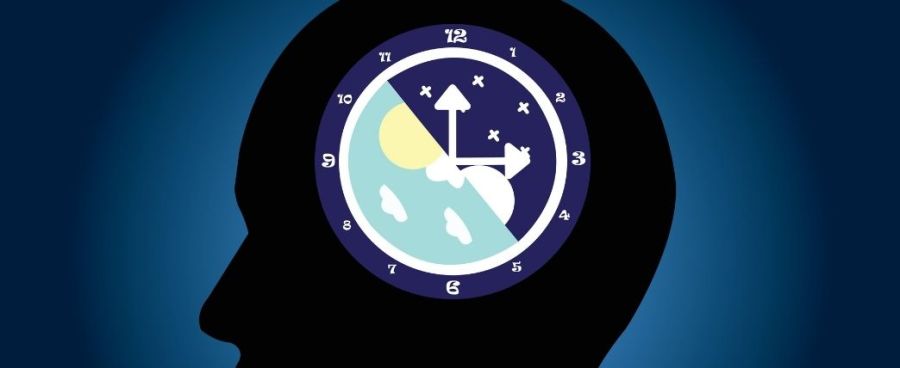
There is also a disadvantage of DST which includes disruption of the body clock or circadian rhythm.

  • Circadian rhythm is the 24-hour cycle that tells our bodies when to sleep, rise, and eat—regulating many physiological processes.
  • Internal body clock is affected by environmental cues, like sunlight and temperature, and determines whether one feels wide-awake and energized or tired.

WHAT IS FULGAR LIFESTYLE?

FRUGAL LIFESTYLE

Person who do not spend money on himself to save money, has a frugal lifestyle. If done properly, you’ll be able to prioritize the things that matter to you most. You’ll prioritize spending money on those things that matter and cut back on spending in other areas. Luckily, frugality can mean very different things to different people.

Frugal Living Tips To Save A Ton Of Money

  • Stretch your food budget:
  1. Plan your meals in advance. Grow your own herbs and vegetables.
  2. Opt for less-expensive cuts of meat.
  3. Buy store brands and generic labels.
  • Take low-cost experiences:
    You don’t have to spend a lot of money to create Instagramable moments that you’ll enjoy.
  • Frugal entertainment tips:
  1. Take advantage of free days at museums and national parks.
  2. Have a family game night.
  3. Check out books, movies, magazines and DVDs from your local library.
  4. Use credit card rewards to score free flights, car rentals and hotel stays.
  • Find savings on household expenses:
    Save on your cell phone bill with automatic payments. Get free TV with a digital antenna. Use YouTube tutorials to be your own handyman. Refresh your cabinets with new paint and hardware.
  • Consolidate Debt:
    Paying interest on debt makes it hard to buy the things you really want.
  • Use freebies and coupons to save when shopping:
    Stick to a list and take other steps to avoid impulse buying. Hit up thrift stores. Browse in-person and online garage sales. Download a free coupon app. Stock up on nonperishable items when they’re on sale.
  • Embrace DIY projects:
    Create your own beauty products, like deodorant, face masks and dry shampoo. Make household cleaning products, like stain remover, window cleaner and laundry detergent, at home. Pull out a needle and thread to repair and tailor your clothing.
BENEFITS OF FRUGALITY

  • More Freedom To Pursue Your Passions
  • Earlier Retirement
  • Financial Contentment
  • More Money For Saving And Investing
  • Less Financial Stress

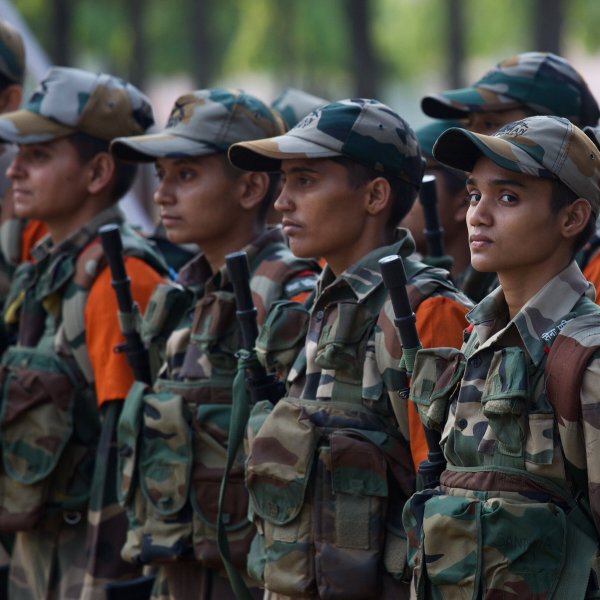
Representation of Women in Armed Forces

Recently, Captain Abhilasha Barak, created history by becoming the first woman officer to join the Army Aviation Corps as a Combat Aviator (pilot).

Captain Barak has been assigned to the second flight of the 2072 Army Aviation Squadron that operates the Dhruv Advanced Light Helicopter (ALH). While women officers in the Indian Air Force and the Indian Navy have been flying helicopters for long, the Indian Army paved the way for women pilots in 2021 by starting the ‘Army Aviation course’.

Army Aviation Corps is the component of the Indian Army which was established on 1st November, 1986, headed by a director-general at the Army headquarters in New Delhi.

It was inducted into ‘Operation Pawan’ which was a crucial test for the newly formed corps.

The Army Aviation Corps of the Indian Army primarily carries out the evacuation of the injured troops during operations or health emergencies in the high-altitude areas.

State of Women’s Representation in the Military

  • The Army, Air Force and Navy began inducting women as short-service commission (SSC) officers in 1992. This was the first time when women were allowed to join the military outside the medical stream.
  • One of the turning points for women in the military came in 2015 when Indian Air Force (IAF) decided to induct them into the fighter stream.
  • In 2020, the Supreme Court (SC) ordered the central government to grant permanent commission (PC) to women officers in the Army’s non-combat support units on par with their male counterparts.
  • In early 2021, the Indian Navy deployed four women officers on warships after a gap of almost 25 years.
  • There are 9,118 women currently serving the army, navy and air force.
  • According to 2019 figures, women comprise only 3.8% of the world’s second-largest army – compared to 13% of the air force and 6% of the navy.

Significance

  • Gender is not a Hindrance: As long as an applicant is qualified for a position, one’s gender is arbitrary. In modern high technology battlefield technical expertise and decision-making skills are increasingly more valuable than simple brute strength.
  • Military Readiness: Allowing a mixed gender force keeps the military strong. The armed forces are severely troubled by falling retention and recruitment rates. This can be addressed by allowing women in the combat role.
  • Effectiveness: The blanket restriction for women limits the ability of commanders in theatre to pick the most capable person for the job.
  • Tradition: Training will be required to facilitate the integration of women into combat units. Cultures change over time and the masculine subculture can evolve too.
  • Global Scenario: When women officially became eligible for combat positions in the American military in 2013, it was widely hailed as another step towards the equality of sexes. In 2018, the UK military lifted a ban on women serving in close combat ground roles, clearing the way for them to serve in elite special forces.

The United States, Israel, North Korea, France, Germany, Netherlands, Australia and Canada are among the global militaries that employ women in front-line combat positions.

It is the right of every woman to pursue a career of her choice and reach the top since Equality is a constitutional guarantee.

Biodiversity – Types and causes of loss

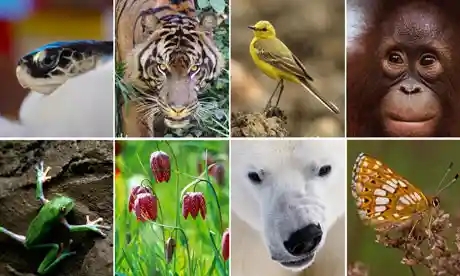
Diversity at all the levels of the biological organisation ca be classified into-

(i) Genetic diversity: A single species might show high diversity at the genetic level over its distributional range. India has more than 50,000 genetically different strains of rice and 1,000 varieties of mango. 

genetic diversity

(ii) Species diversity: The diversity at the species level; for example, the Western Ghats have a greater amphibian species diversity than the Eastern Ghats. 

Species Diversity

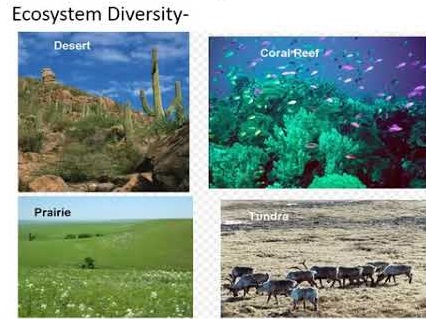
(iii) Ecological diversity: At the ecosystem level, India, for instance, with its deserts, rain forests, mangroves, coral reefs, wetlands, estuaries, and alpine meadows, has a greater ecosystem diversity than a Scandinavian country like Norway. 

Ecological diversity

Patterns of Biodiversity

  1. Latitudinal gradients: Species diversity decreases as we move away from the equator toward the poles. A forest in a tropical region like Equador has up to 10 times as many species of vascular plants as a forest of equal area in a temperate region like the Midwest of the USA.

What is so special about tropics that might account for their greater biological diversity?

(a) Speciation is generally a function of time, unlike temperate regions subjected to frequent glaciations in the past, tropical latitudes have remained relatively undisturbed for millions of years and thus, had a long evolutionary time for species diversification, 

(b) Tropical environments, unlike temperate ones, are less seasonal, relatively more constant and predictable. Such constant environments promote niche specialisation and lead to a greater species diversity

(c) There is more solar energy available in the tropics, which contributes to higher productivity; this in turn might contribute indirectly to greater diversity.

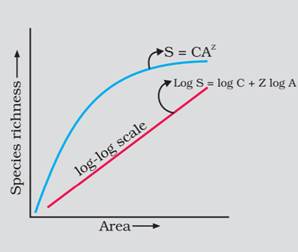
  1. Species-Area relationships: Within a region species richness increases with increasing explored area, but only up to a limit. The relation between species richness and area for a wide variety of taxa is a rectangular hyperbola.

log S = log C + Z log A,     where,

S= Species richness 

A= Area 

Z = slope of the line (regression coefficient) 

C = Y-intercept

Causes of biodiversity losses 

The accelerated rates of species extinctions that the world is facing now are largely due to human activities. There are four major causes ( ‘The Evil Quartet’ )

(i) Habitat loss and fragmentation

(ii) Over-exploitation

(iii) Alien species invasions: When alien species are introduced unintentionally or deliberately for whatever purpose, some of them turn invasive, and cause decline or extinction of indigenous species

(iv) Co-extinctions: When a species becomes extinct, the plant and animal species associated with it in an obligatory way also become extinct. 

Does the continents used to be together?

It started during the time of world war-II, some scientists identified that the ocean floor had unique features like ridges, trenches etc. This led to the discovery of the term Tectonics – is the scientific study of forces (convection currents in the mantle) and processes (collisions of the lithospheric plates, folding, faulting, volcanism) that control the structure of the Earth’s crust and its evolution through time.

Along with the concept of Tectonics came into the picture- THE CONTINENTAL DRIFT THEORY

Continental drift refers to the movement of the continents relative to each other.

To be a little specific, this continental drift theory was given by Alfred Wegener in 1920’s

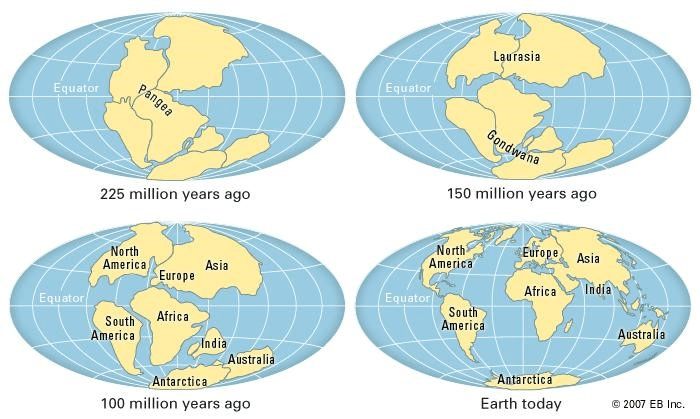
  • According to Continental Drift Theory there existed one big landmass which he called Pangaea which was covered by one big ocean called Panthalassa.
  • A sea called Tethys divided the Pangaea into two huge landmasses: Laurentia (Laurasia) to the north and Gondwanaland to the south of Tethys.
  • Drift started around 200 million years ago (Mesozoic Era, Triassic Period, Late Triassic Epoch), and the continents began to break up and drift away from one another.
drift of continents over time

EVIDENCES

Wegener, trained as an astronomer, used biology, botany, and geology, described Pangaea and continental drift. For example, fossils of the ancient reptile mosasaurs are only found in southern Africa and South America. Mosasaurs, a freshwater reptile only one meter (3.3 feet) long, could not have swum the Atlantic Ocean. The presence of mosasaurs suggests a single habitat with many lakes and rivers.

Wegener also studied plant fossils from the frigid Arctic archipelago of Svalbard, Norway. These plants were not the hardy specimens adapted to survive in the Arctic climate. These fossils were of tropical plants, which are adapted to a much warmer, more humid environment. The presence of these fossils suggests Svalbard once had a tropical climate.

Finally, Wegener studied the stratigraphy of different rocks and mountain ranges. The east coast of South America and the west coast of Africa seem to fit together like pieces of a jigsaw puzzle, and Wegener discovered their rock layers “fit” just as clearly. South America and Africa were not the only continents with similar geology. Wegener discovered that the Appalachian Mountains of the eastern United States, for instance, were geologically related to the Caledonian Mountains of Scotland.

Surrogacy

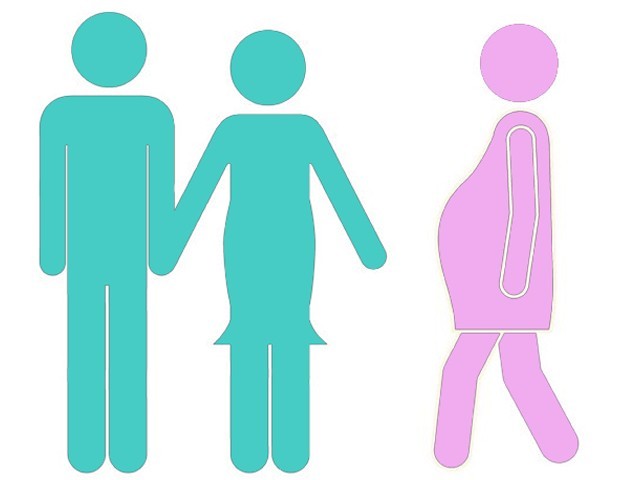
Recently, a petition was filed before Delhi High Court, challenging the exclusion of a single man and a woman having a child from surrogacy and demanding commercial surrogacy’s decriminalisation.

The Petitioner argued that the personal decision of a single person about the birth of a baby through surrogacy,a is a facet of the right to privacy guaranteed under Article 21 of the Constitution. Thus, the right of privacy of every citizen or person to be free from unwarranted governmental intrusion into matters fundamentally affecting a decision to bear or beget a child through surrogacy cannot be taken away.

What is Surrogacy?

About:

  • Surrogacy is an arrangement in which a woman (the surrogate) agrees to carry and give birth to a child on behalf of another person or couple (the intended parent/s).
  • A surrogate, sometimes also called a gestational carrier, is a woman who conceives, carries and gives birth to a child for another person or couple (intended parent/s).

Altruistic surrogacy:

  • It involves no monetary compensation to the surrogate mother other than the medical expenses and insurance coverage during the pregnancy.

Commercial surrogacy:

  • It includes surrogacy or related procedures undertaken for a monetary benefit or reward (in cash or kind) exceeding the basic medical expenses and insurance coverage.

Surrogacy (Regulation) Act, 2021

Provisions:

  • Under the Surrogacy (Regulation) Act, 2021, a woman who is a widow or a divorcee between the age of 35 to 45 years or a couple, defined as a legally married woman and man, can avail of surrogacy if they have a medical condition necessitating this option.
  • It also bans commercial surrogacy, which is punishable with a jail term of 10 years and a fine of up to Rs 10 lakhs.
  • The law allows only altruistic surrogacy where no money exchanges hands and where a surrogate mother is genetically related to those seeking a child.

Challenges:

The exploitation of the Surrogate and the Child:

  • One could argue that the state must stop the exploitation of poor women under surrogacy and protect the child’s right to be born. However, the current Act fails to balance these two interests.

Denies Legitimate income to Surrogates:

  • Banning commercial surrogacy also denies a legitimate source of income of the surrogates, further limiting the number of women willingly to surrogate.
  • Overall, this step indirectly denies children to the couples choosing to embrace parenthood.

Emotional Complications:

  • In altruistic surrogacy, a friend or relative as a surrogate mother may lead to emotional complications not only for the intending parents but also for the surrogate child as there is great deal of risking the relationship in the course of surrogacy period and post birth.
  • Altruistic surrogacy also limits the option of the intending couple in choosing a surrogate mother as very limited relatives will be ready to undergo the process.

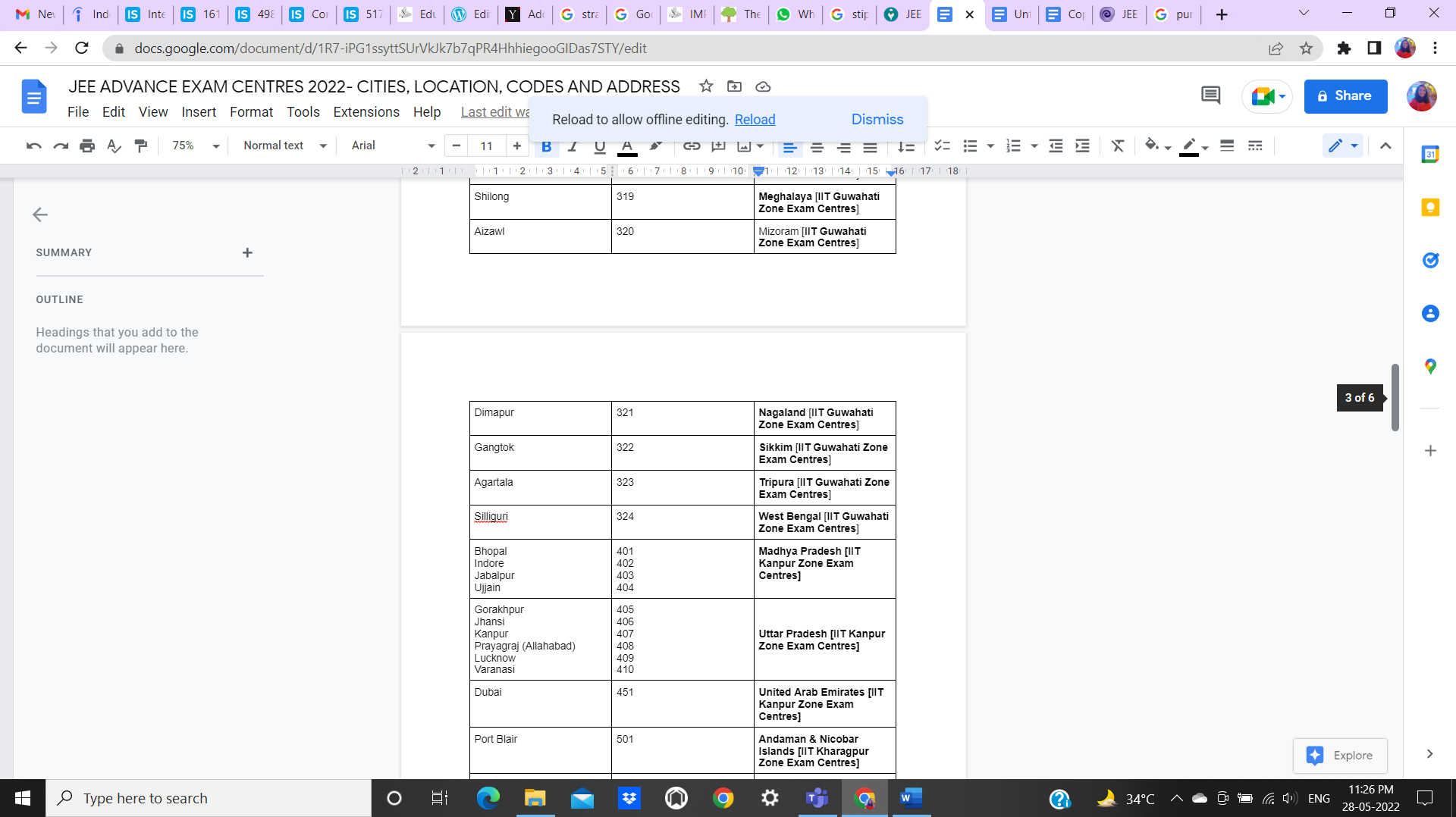
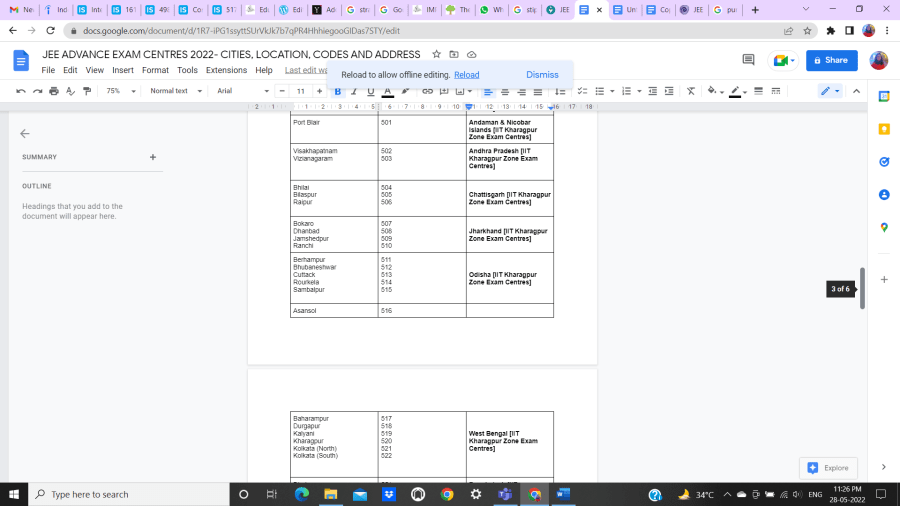
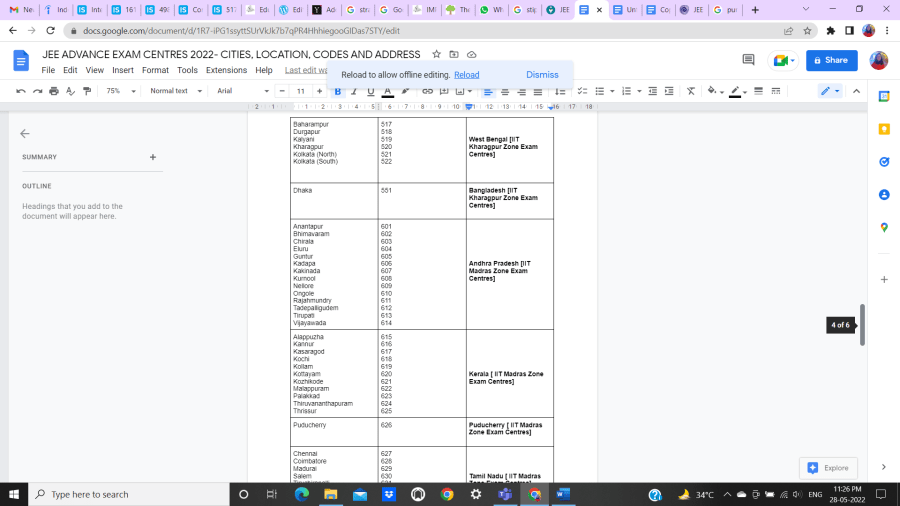
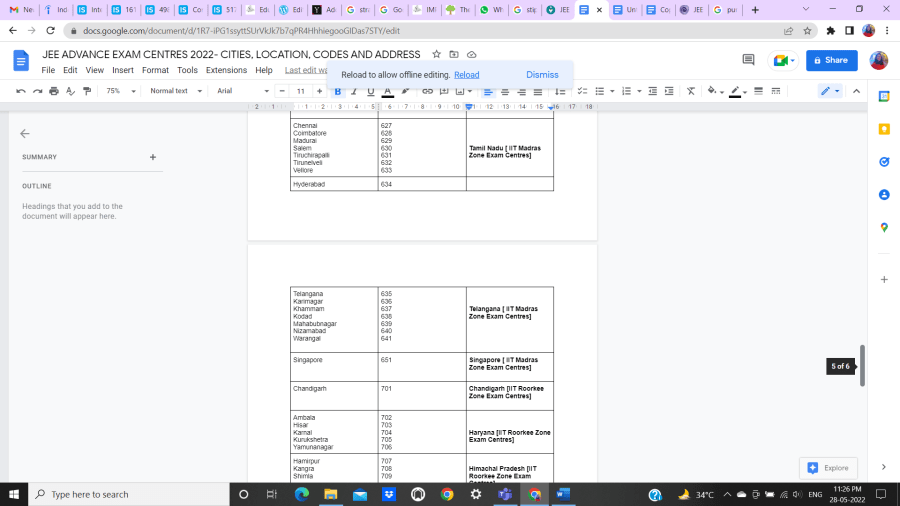
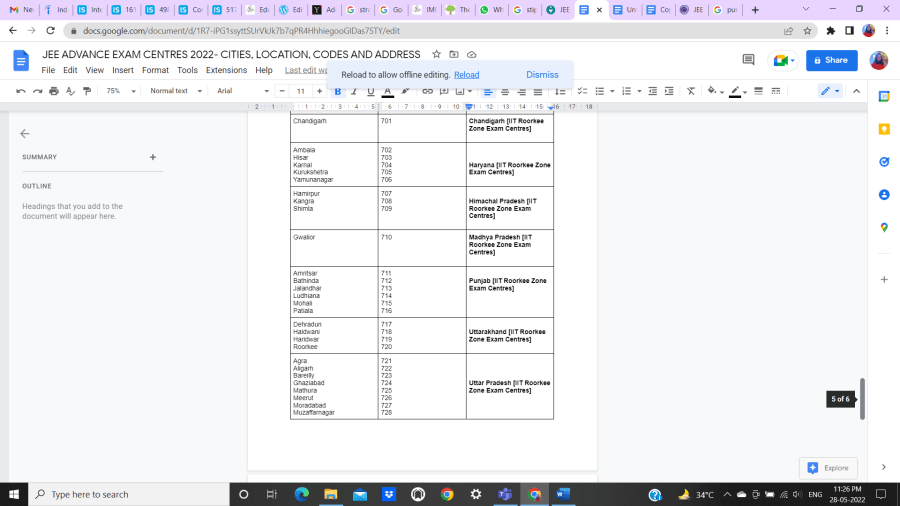
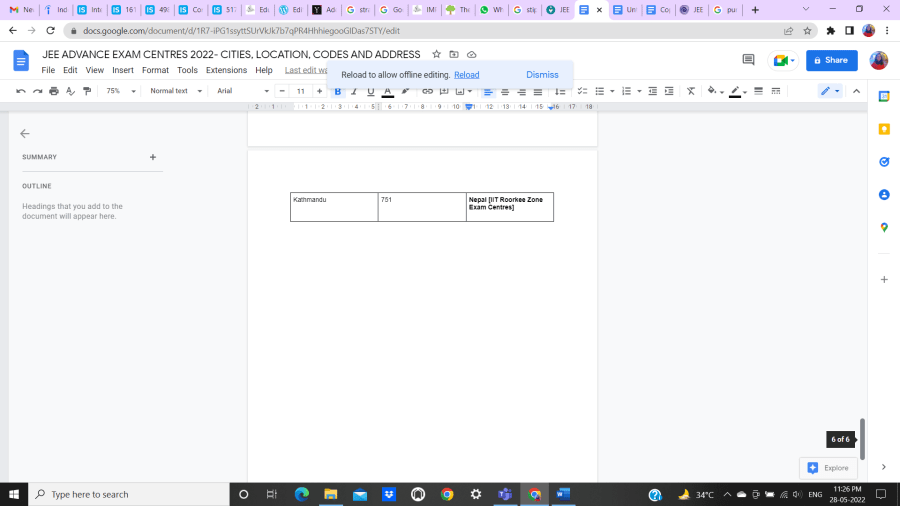
JEE ADVANCE EXAM CENTRES 2022- CITIES, LOCATION, CODES AND ADDRESS

The Indian Institute of Technology Bombay has released the list of JEE Advanced 2022 Exam centres as well as the brochure. The centres are a list of all the cities where the authorities will administer the exam. JEE Advanced COVID-19 instructions are also available for candidates taking the exam.

JEE Advanced exam centres 2022 will be divided into 7 zones – IIT Bombay Zone, IIT Delhi Zone, IIT Guwahati Zone, IIT Kanpur Zone, IIT Bhubaneswar Zone, IIT Madras (Hyderabad) Zone and IIT Roorkee Zone. The list of JEE Advanced exam centres 2022 will be released along with the official brochure. The following tables can be referred to check JEE Advanced 2022 exam centres list.

Candidates can check the details regarding the allotted exam centre in the JEE Advanced 2022 admit card. JEE Advanced 2022 exam date is August 28.

JEE ADVANCED EXAM Centres List is given below:-

JEE Advanced (formerly known as IIT JEE) is the second phase of the JEE examination and is usually conducted after the JEE Main exam. It is an important test for engineering aspirants (especially for those who are seeking admission in premier engineering institutes such as IITs). JEE Advanced is a computer-based exam and is usually conducted by seven different Indian IITs (IIT Kharagpur, IIT Bombay, IIT Roorkee, IIT Madras, IIT Kanpur, IIT Delhi and IIT Guwahati) on a rotational basis.

Candidates can appear JEE Advanced only for two consecutive times. IITs under the guidance of Joint Admission Board (JAB) on rational basis will conduct the JEE Advance. only 10000 candidates get success to get seat in 23 different IITs. As the number of IITs increasing, seats in IITs also increasing. Depending on the rank secured in JEE Advanced candidates get admission in the IITs depending on the list of IITs from top to bottom.

A total of 1,41,699 candidates appeared in both paper 1 and 2 of the JEE (Advanced) Exam 2021. As many as 41,862 candidates have qualified the JEE-(Advanced) 2021, of which 6,452 are girls.