

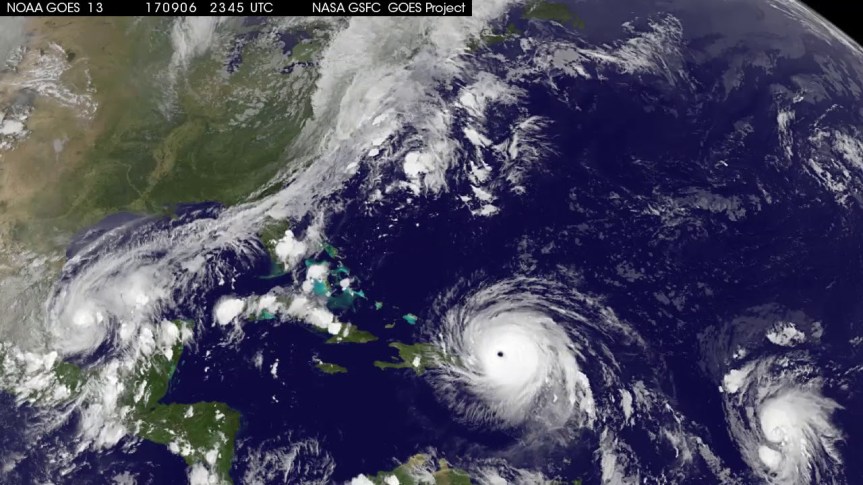
Have you ever wondered how do scientists decides the name for cyclones? Read the whole article to learn it.
Weather forecasters give each tropical cyclone a name to avoid confusion. Each year, tropical cyclones receive names in alphabetical order. Women and men’s names are alternated. The name list is proposed by the National Meteorological and Hydrological Services (NMHSs) of WMO Members of a specific region, and approved by the respective tropical cyclone regional bodies at their annual/bi-annual sessions.
HISTORICAL BACKGROUND
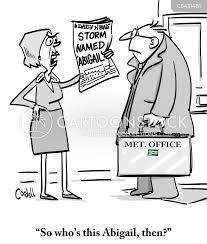
The practice of naming storms (tropical cyclones) began years ago in order to help in the quick identification of storms in warning messages because names are presumed to be far easier to remember than numbers and technical terms. In the beginning, storms were named arbitrarily. An Atlantic storm that ripped off the mast of a boat named Antje became known as Antje’s hurricane. Then the mid-1900’s saw the start of the practice of using feminine names for storms.
In the pursuit of a more organized and efficient naming system, meteorologists later decided to identify storms using names from a list arranged alphabetically. Thus, a storm with a name which begins with A, like Anne, would be the first storm to occur in the year. By the end of the 1900’s, forecasters started using male names for those forming in the Southern Hemisphere.
Since 1953, Atlantic tropical storms have been named from lists originated by the National Hurricane Centre. The original name lists featured only women’s names. In 1979, men’s names were introduced and they alternate with the women’s names.
Six lists are used in rotation. Thus, the 2019 list will be used again in 2025. The names of tropical cyclones over the north Indian Ocean is however not repeated. Once used, it will cease to be used again.
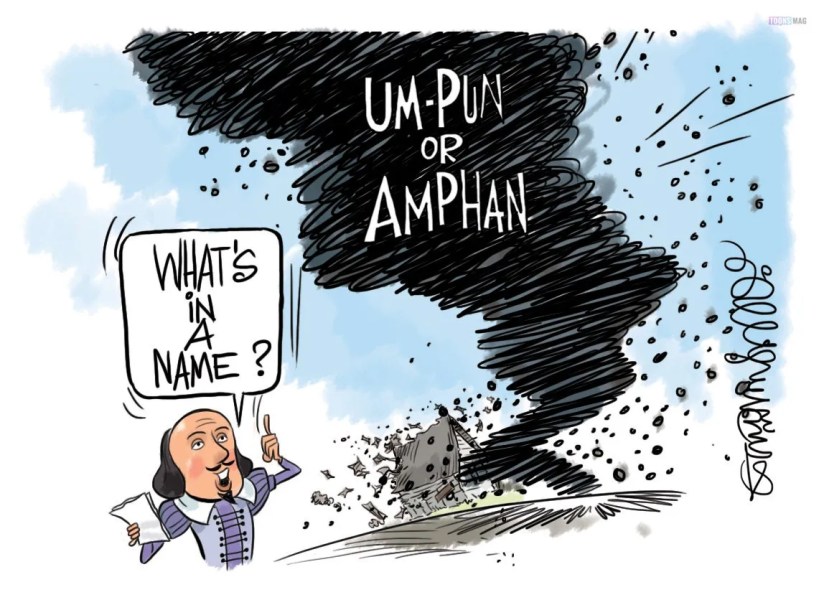
Why are cyclones given a name ?
Naming of Tropical Cyclones (TCs) helps the scientific community, disaster managers, media and general masses to
- identify each individual cyclone.
- use of short, distinctive given names in written as well as spoken communications is quicker and less subject to error than the older more cumbersome latitude-longitude identification methods.
- create awareness of its development.
- remove confusion in case of simultaneous occurrence of TCs over a region
- rapidly and effectively disseminate warnings to much wider audience
These advantages are especially important in exchanging detailed storm information between hundreds of widely scattered stations, coastal bases, and ships at sea.
Criteria for name selection
- The proposed name should be neutral to (a) politics and political figures (b) religious believes, (c) cultures and (d) gender
- Name should be chosen in such a way that it does not hurt the sentiments of any group of population over the globe
- It should not be very rude and cruel in nature
- It should be short, easy to pronounce and should not be offensive to any member
- The maximum length of the name will be eight letters
- The proposed name should be provided along with its pronunciation and voice over
Protocol to Select a name for a cyclone
For north Indian Ocean including Bay of Bengal and Arabian Sea, the RSMC, New Delhi assigns the name to tropical cyclones following a standard procedure.

The naming of the tropical cyclones over the north Indian Ocean commenced from September 2004. This list contained names proposed by then eight member countries of WMO/ESCAP PTC, viz., Bangladesh, India, Maldives, Myanmar, Oman, Pakistan, Sri Lanka and Thailand. A new list containing 169 names has been made available in 2020.
Source : Regional Specialised Meteorological Centre, New Delhi and World Meteorological Organisation

 Eduindex
You must be logged in to post a comment.