

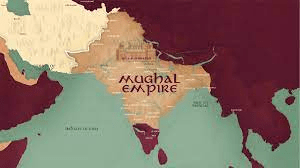
So, the Mughals were the Muslims who created an empire in India that held power for roughly 200 years between the early 16th and early 18th centuries. Although technically the Mughal empire didn’t come to an end until after the Indian rebellion against the British in 1857.
The Mughals were not the first Muslims in India, those would have been merchants and they werent even the first muslims to rule significant parts of India. The first muslim rulers, and the honor goes to Delhi sultanates which began in 1206 in Northern India. The Delhi Sultanates didn’t last very long, and it was replaced by a bunch of regional kingdoms and one of them the Lodi Sultanate had the misfortune of falling to the founder of the Mughal dynasty, Babur in 1526.
At the height of its power the Mughal empire controlled an estimated one quarter of the Earth’s economy. It’s massive population is over 150million people which is double that of European continent at the time, this colossal state had very unlikely origins. One year after CHRISTOPHER COLOMBUS discovered the new world and failed to find a quicker route to India, a 11year old soon to be fugitive on the other side of the planet named Zaheer Alden who in later simply known as Babur meaning tiger had just inherited his fathers tiny kingdom of Ferghana(modern day Uzbekistan). over the next few years he desperately tries to survive his family, both his paternal and maternal uncles controlled armies with a goal of ending his life.
On his father’s side Babur was descended from the turco Mongol war world Tamerlane and Genghis Khan on his mothers side. Throughout his teen years he repeatedly captured and lost control of the old timur at capital of Samarkand and his home of Ferghana. after decades of his disunited family butchering each other, the weakened remnants of the once mighty Timurid Empire was swept aside by the Turkic’s and the Iranians(Safavid empire).
After left with nothing, but his mother, a bunch of trust worthy individuals and another bunch of enemies, Babur took a refuge in the mountains of Afghanistan and slowly expanded his small bunch of followers into an army seizing control of the strategically important city of Kabul in 1504. Babur maintained friendly relations with Safavid shahs of Iran from where he obtained his first fire arms, canons and more. His ultimate aim to retake Samarkand failed and his ambitions to control have turned to Central Asia of which it was ruled by wealthy Delhi Sultanates.
At the battle of Panipat(1st battle in 1526),fought between the Timurids under Babur and Ibrahim Lodi. In 1526, the Mughal forces of Babur, the Timurid ruler of Kabulistan, defeated the much larger ruling army of Ibrahim Lodi ,Sultan of Delhi. A much smaller timid army used matchlock firearms and canon behind an entrenched barricade of 700carts, defeat a much larger traditional Indian Army, 1000 elephants at the vanguard.
In the following year, Babur defeated a confederation of Rajput states solidifying his control over northern India. Babur did not get to enjoy his life long dream of establishing a great empire for very long. at the age of 47 he died of a sudden illness for which some suspected it as poisoning and other as natural death.

 Eduindex
You must be logged in to post a comment.