All about Civil Services Exam

UPSC has declared the final result for Civil Services 2021 in which Shruti Sharma, Ankita Agarwal and Gamini Singla have secured the first, second and third rank respectively.
Civil Services Examination (CSE) is one of the examinations conducted by the Union Public Service Commission to recruit suitable candidates into civil services of India including IAS, IPS, IFS, and other allied services.

The prescribed UPSC exam eligibility criteria are that the candidate should be a graduate and must have attained 21 years of age. There is also an upper age limit and a number of attempts restriction based on the candidate’s category. Generally, the upper age limit is 32 years, but the commission gives age relaxation for OBC, SC, ST and PH candidates.

The UPSC exam is held in three stages. The three stages are Prelims, Mains and Interview/personality test. The prelims exam consists of two papers of objective type questions. Paper 1 is GS paper Paper 2 is CSAT (Qualifying in nature- 33%). The mains exam consists of nine descriptive type papers. The last stage consists of an interview round with the UPSC board. Candidates should clear each round in order to qualify for the subsequent round. Final merit is based on combined marks obtained in Mains and Interview.

In Mains there is one Essay Paper, 4 GS papers and 2 Papers for Optional Subject (all of 250 marks) which a candidate has to select from a prescribed list according to his/her interest. Some of the optional subjects are – Agriculture, Animal Husbandry and Veterinary Science, Anthropology, Botany, Chemistry, Civil Engineering, Commerce and Accountancy, Economics Electrical Engineering, Geography, Geology, History, Law, Management, Mathematics, Political Science and International Relations, Public Administration, Sociology etc.

  • PAPER-I: Essay: 
  • PAPER-II: General Studies-I: Indian Heritage and Culture, History and Geography of the World and Society. 
  • PAPER-III: General Studies- II: Governance, Constitution, Polity, Social Justice and International Relations. 
  • PAPER-IV: General Studies-III: Technology, Economic Development, Biodiversity, Environment, Security and Disaster Management. 
  • PAPER-V: General Studies- IV: Ethics, Integrity, and Aptitude 
  • Paper-VI and VII: Optional Paper-I and Optional Paper-II

There are to more papers which are qualifying in nature.
All about PMGKAY

The word PMGKAY may sound confused if we don’t know the full meaning of it. But after listening to the name itself the desi people will know what is that and what’s that mean at least to 20%. To know 100% let’s dig a bit deep into it.

PMGKAY stands for Pradhan Mantri Garib Kalyan Yojana, is a part of Pradhan Mantri Garib Kalyan Package, to help the poor fight the battle against COVID-19.

Its nodal Ministry is the Ministry of Finance.

This scheme was a temporary one and was announced for a period of 3 months i.e., (April, May and June 2020) to cover, 80 crore ration cardholders. Later it was extended till November 2020.

However, The scheme has been rolled out again for two months (May and June 2021) as the country’s healthcare infrastructure has reached its capacity and several states have taken steps like complete lockdown, night curfew to contain the spread of the disease.

  • The PM Garib Kalyan Yojana has benefitted BPL families during the pandemic time of COVID-19 and helped them overcome their losses.
  • Free food grains and LPG cylinders were provided to BPL families during the pandemic period.
  • Free food grains and LPG cylinders were provided to BPL families during the pandemic period.
  • An additional 25% of the undisclosed income is invested in the scheme which can be refunded after four years, without any interest.

The scheme aimed at providing each person who is covered under the National Food security act,2013 with an additional 5 kg grains (wheat or rice) for free, in addition to the 5 kg of subsidized food grain already provided through the Public distribution System.

Name of the schemePMGKY
Full-FormPradhan Mantri Garib Kalyan Yojana
Date of launch17th December 2016
Government MinistryMinistry of Finance

Daylight Saving Time (DST)

Daylight Saving Time (DST) is the practice of setting the clocks forward one hour from standard time during the summer months, and back again in the fall, in order to make better use of natural daylight. The purpose of doing so is that people will have one more hour of daylight in the afternoon and evening during the warmer season of the year.

The daylight saving time is followed in over 70 countries on various dates. In the Northern Hemisphere, Daylight Saving Time usually starts in March-April and ends in September-November. India does not follow daylight saving time; countries near the Equator do not experience high variations in daytime hours between seasons. It is mainly preferred in countries located around the Arctic Circle, as they experience large variation in daylight in the course of the year.

Several countries, including Australia, Great Britain, Germany, and the United States, adopted summer Daylight Saving Time during World War I to conserve fuel by reducing the need for artificial light.

A century ago, when DST was introduced, more daylight did mean less use of artificial light. But modern society uses so many energy-consuming appliances all day long that the amount of energy saved is negligible.

DST clock shifts sometimes complicate timekeeping and can disrupt travel, billing, record keeping, medical devices, and sleep patterns. Computer software generally adjusts clocks automatically.

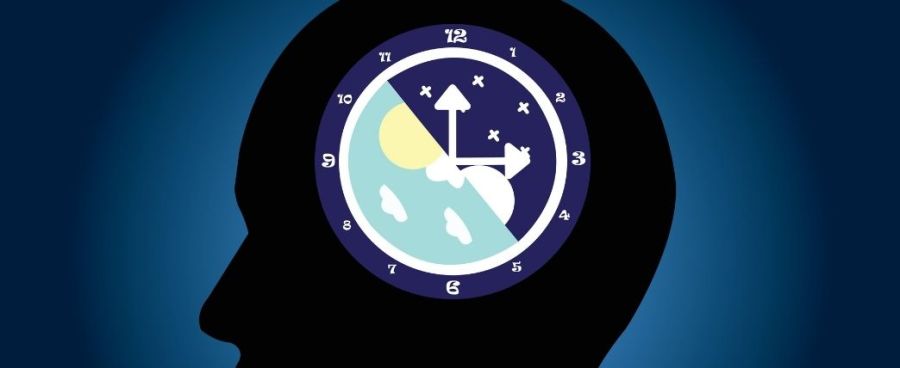
There is also a disadvantage of DST which includes disruption of the body clock or circadian rhythm.

  • Circadian rhythm is the 24-hour cycle that tells our bodies when to sleep, rise, and eat—regulating many physiological processes.
  • Internal body clock is affected by environmental cues, like sunlight and temperature, and determines whether one feels wide-awake and energized or tired.