

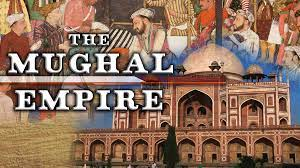
Back in 8th century, The Umayyad Caliphate had conquered Sindh, which we call the present day Pakistan. However, India was too distant to control and subsequent Caliphs were unable to exercise control over it and expand further.
Then in 11th century Mohammad of Ghazni invaded India and established a permenant Turkic regime there after taking Lahore in 1030. After the collapse of his empire, various dynasties ruled northern India and the dynasty is called Delhi Sultanate. although, no one was very successful for a very long time.
the last of this dynasty was the Lodhi dynasty. However in 1526, a Timurid prince named Zahir-ud-din-Muhammad Babur was left with nothing to loose and no options left in the central Asia, decided to invade India. Babur was the fifth generation descendant of Tamerlane and the 13th generation descendent of Genghis khan. Like many other Timurid princess, he claimed the entirety of Timur’s Empire. however he was barely able to control/ rule Fergana valley. he was pushed South from there by the rise of Uzbeks until he established his seat of power in Kabul. With the Safavids to the west and Uzbeks to the north he had nowhere to go but east. and that east is nothing but India.
In 1526, he faced the ruling Lodi Dynasty at Panipat. He defeated them over the 4years and he conquered almost all of Northern India after facing other local Hindu and Muslim rulers.
The dynasty he founded came to be known as the Mughals which is the Persian word for Mongol. Although, the dynasty itself held strong ties to timur and called themselves the Gurkani Dynasty. Babur died in 1530 at the age of 46years.
That’s when Humayun came into picture who is the son of Babur.
Humayun was not a very capable leader and on top of that he indulged a little too much in wine and opium. His incapableness led to invasion of many surrounding rulers. One Afghan noble named Sher Shah Suri- he over threw Humayun in 1539. Later Sher Shah Suri died in a battle in 1545 and his empire was divided up.
Humayun asked Safavids for help and started conquering the divided empire. By 1555, both Delhi and Lahore were under his control. But, unfortunately he died by falling from stairs in 1556.
Jalal-ud=din Muhammad Akbar a mere 12 year old was installed as the next ruler of Mughal Empire. Regents ruled and stabilized the empire on the young Shahan shah’s behalf for the very first five years of his reign. By 1551 he was ready to take charge.
He expanded the empire further by conquering Gujarat, Bihar and parts of Bengal. However at this point, the Mughals had a bit of legitimacy problem. They were a foreign Muslim Dynasty ruling over a realm where less than 5% of the population who followed the same faith as them.
Babur and Humayun were the followers of Sufi Islam and that was continued the same by Akbar. Although, over the years, he began a struggle to reconcile Islam and the various Indian religions, He invited scholars of various religions to have a open discussion in the Ibadat- khana. He also invited Jesuits from the portuguese enclave at Goa.
He was also the one who translated Mahabharata into persian, so his people could read it and understand Hinduism a bit better.
The Mughals designed a system of Bureaucracy called the Mansabdari system which was reformed by Akbar. Akbar was described as the Greatest Mughal ruler out of many. In fact Akbar means ” THEGREAT” and was a title given to him. He died in 1605
Jahangir-heir of Akbar took the throne. He tried to expand the empire but it had pretty much reached its limits.
The other rulers include Shah Jahan, Aurangazeb and this will be explained in another post.

 Eduindex
You must be logged in to post a comment.