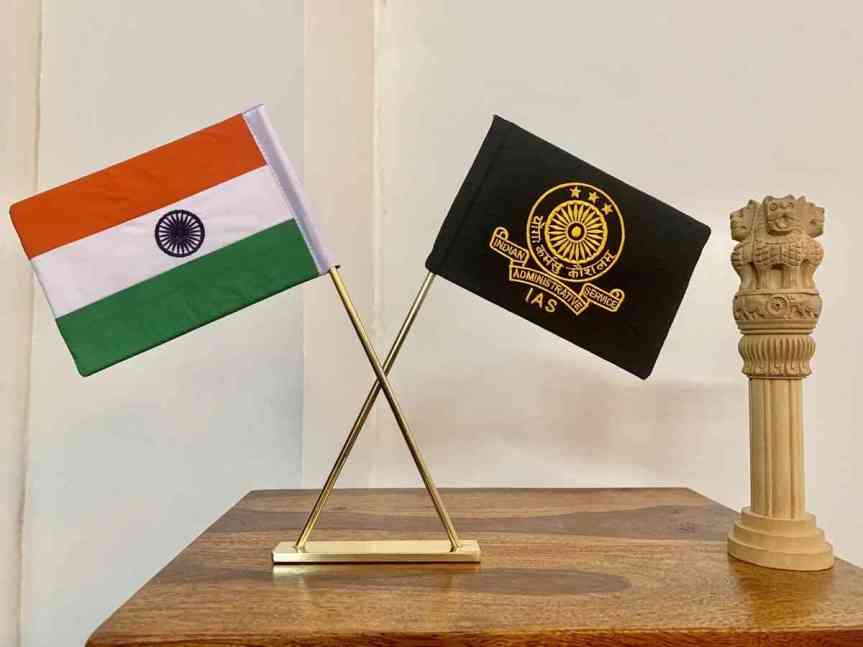
Service Profile of an IAS Officer

Indian Administrative Service (IAS), the premier service of the Government of India was constituted in 1946. Prior to that Indian imperial Service (1893-1946) was in force. As on 1.1.2013, sanctioned strength of IAS was 6217, comprising of 4313 posts to the filled by direct recruits and 1904 posts to be filled by promotion /appointment of State Civil Services officers/ Non-State Civil Service officers. The civil services have been a hallmark of governance in India. The Constitution provides that without depriving the States of their right to form their own Civil Services, there shall be an All India service recruited on an All- India basis with common qualifications, with uniform scale of pay and the members of which alone could be appointed to these strategic posts throughout the Union.”
No wonder Sardar Vallabhbhai Patel, one of the eminent leaders of the freedom struggle, referred to the. ICS as ‘the steel frame. Of the ‘country. The civil services, therefore, represent the essential spirit of our nation — unity in diversity.

Recruitment

UPSC – Civil Services Exam

At present there are three modes of recruitment to IAS viz

(i) Through Civil Services Examination conducted by UPSC every year;

(ii) Through promotion of State Civil Service officers to IAS

(iii) Through selection of non – State Civil Service officers.

Roughly 66 (1/3)% posts are meant for Direct Recruitment and 33 (1/3%) are
meant for promotion quota.

Training
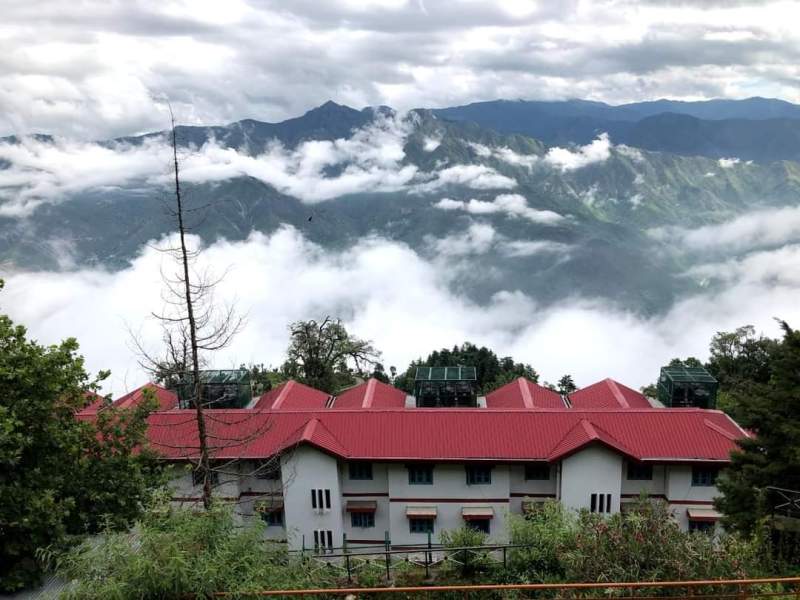
LBSNAA

Both Direct Recruit as well as promotee IAS officers are imparted probationary training at Lal Bahadur Shastri National Academy of Administration (LBSNAA). After completion of successful probation, they are confirmed. Also, there is a Provision for mandatory Mid-career Training for IAS officers spread across the entire service span.

Functions of IAS officer

IAS officer is responsible for the maintenance of law and order, revenue administration and general administration in the area under him. His functions broadly include:


(i) Collection of revenue and function as Courts in revenue matters;
(ii) Maintenance of law and order;
(iii) Function as Executive Magistrate;
(iv) Function as Chief Development Officer (CDO)/District Development Commissioner;
(v) Supervision of implementation of policies of State Government and Central Government;
(vi) To travel to places to oversee the implementation of policies;
(vii) Supervision of expenditure of public funds as per norms of financial propriety;
(viii) In the process of policy formulation and decision making, IAS officers at various levels like Joint Secretary, Deputy Secretary etc. make their “contributions and the give final shape to policies;
(ix) To ‘handle the daily affairs ‘of the government, including framing and implementation of policy in ‘consultation with the minister-in-charge of the concerned Ministry.

Source : DoPT website

NFT’s – All you need to know

Nowadays, NFT’s are in trend. You must be hearing the word ‘NFT’ on social medias, newspapers, news channels and various other sources. But what exactly is an ‘NFT’?

Today, we’ll discuss about NFT’s and understand what they exactly are and what’s going on around them that has created a great hype among the people.

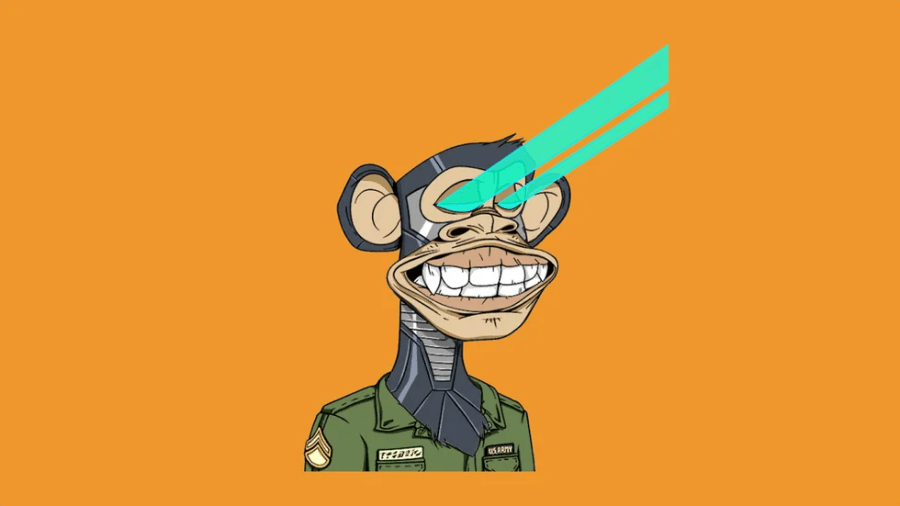
Example of an NFT(Source- Google Images)

The term “NFT” stands for Non-Fungible Tokens. In layman language, NFT is a possession which is unique and one of its kind. If we go deep into the concept of NFT’s then basically they are digital assets that one possess. Each NFT has a specific identification code that distinguishes it from the other.

A NFT works upon the blockchain technology which is the same that is used in cryptocurrencies. It can be sold and traded on various online platforms like Binance NFT Marketplace, crypto.com, WazirX NFT Marketplace etc.

A NFT can be literally anything( manual drawings, graphics, art, animations, music, even real estate). Most of the NFT’s are based upon the cryptocurrency Ethereum(ETH). So now after reading all this, you might be getting an idea about what exactly an NFT is but here comes the main question that “WHY NFT?” So to answer this question, let’s take a simple example. Suppose you have a book and you customized the book with a cover of your own and bordered the pages using tapes. So now, it is one of its kind. And now, if you want to sell that book to a buyer for example at Rs. 500 and if the buyer wants to own the book then there has to be a way to prove that he/she owns it. We considered a physical book as an example but what if it’s an image or a video or a music file that is unique and only one of it’s kind. Then, how do you prove the ownership of that one unique piece? This is done by creating an NFT. That is how NFT’s work.

They are a legitimate way to transfer the ownership of a digital item in such a way that your ownership remains on record and is proven. It cannot be edited or modified. If we consider an image(of a monkey let’s say) then you can find numerous images all over the internet that are openly accessible for downloading and using without any copyright issues. And on the other hand, if I create an image and post it online then there is no legit way to prove that I’m the owner of that thing. Also if I list it for sale online on multiple image selling platforms, then too there is no legitimate proof that I’m the owner and I’m ready to transfer the ownership to someone, whosoever is ready to pay me for my work.

I’d rather create an NFT of the same image and then post it online on certified NFT Marketplaces for sale. This will ensure the ownership of the NFT and also prove it’s uniqueness. If anyone tries to copy my work then I can easily claim a copyright by showing that I’m the valid owner of this NFT.

Bored Ape NFT’s

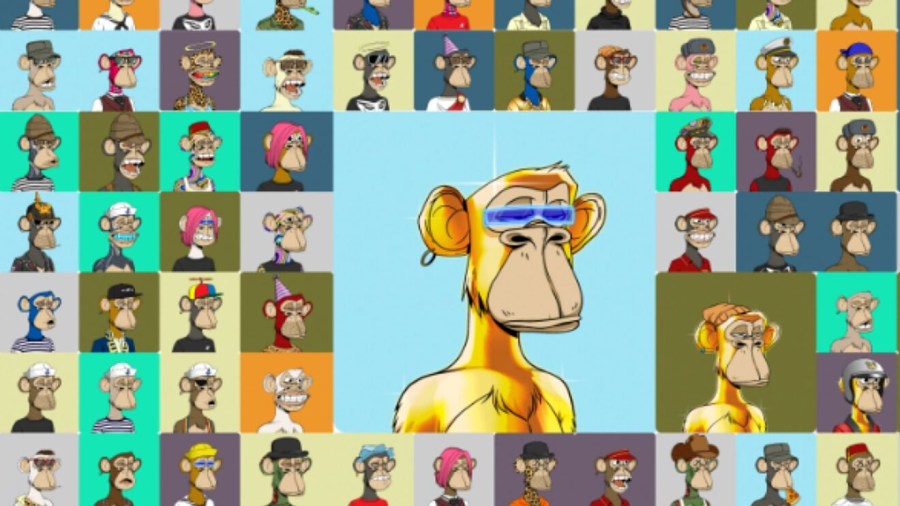
The above is an image of the collection of the famous “Bored Ape NFTs”. These NFT’s are very expensive and some of the owners of these NFT’s are celebrities like Eminem, Serena Williams, Shaquille O’Neal, Justin Bieber etc.

At last, we come to a conclusion that NFTs are the real game changer and blockchain technology is going to change the entire world because now technology has a way by which you can define ‘Ownership’. In the coming years, NFT Marketplace is going to boom and investors seeking towards investing on NFT’s can definitely consider investing by doing the required research before exploring the NFT Marketplace.

Yasin Malik gets life term in terror funding case

The National Investigation Agency (NIA) had sought death penalty before the Delhi court for Malik, who had earlier pleaded guilty to all the charges, including those under the stringent Unlawful Activities Prevention Act (UAPA).

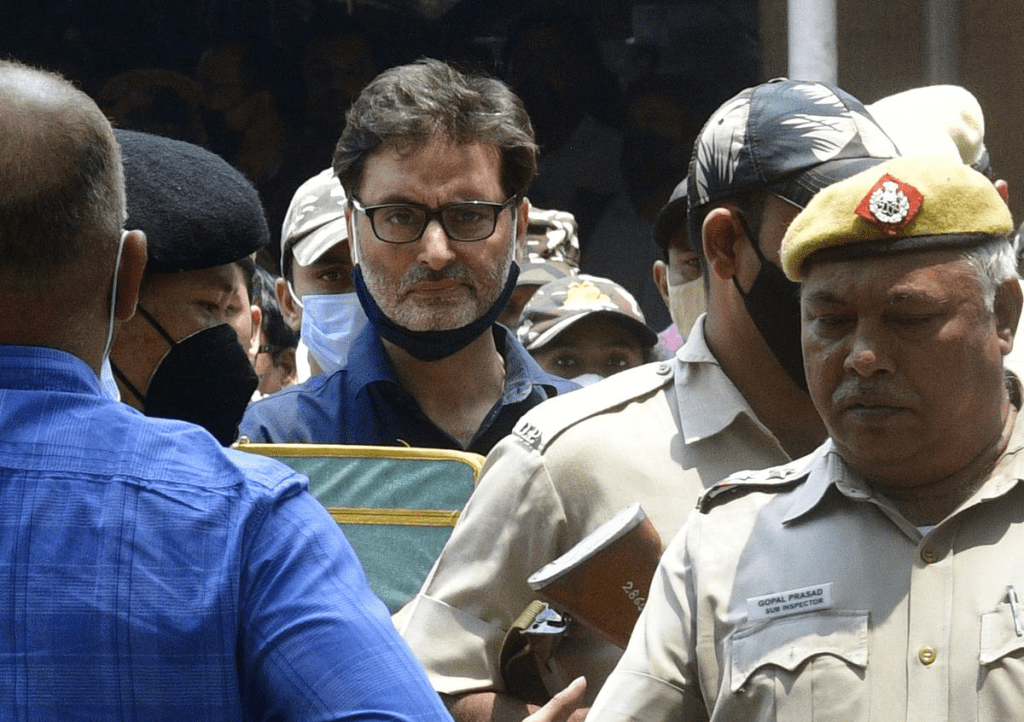
KLF Leader Yasin Malik being produced amid heavy security at the Patiala House Courts in New Delhi on Wednesday. 

The first rulers of Ancient India

During the entire period of before Independence, India was either ruled by kings or else by the Britishers. There will definitely be some questions regarding the ruling of kings like, when? who? how? why?

In ancient India, one animal was treated as both god and weapon, for one king these beasts were the shock troops of an army and is organized as before or since. Riding a juggernaut these soldiers carved out one of the largest empires in history.

The Mauryan Dynasty

“THE MAURYANS”- The warriors of Elephant

In the war for India a great army of soldiers and Elephants has proven unstoppable. But in the year 260BC they faced their worst enemy. no matter what, Victory lies first in reaching the battlefield intact a battle all its own. The outcome will decide the fate of a kingdom.

The Mauryan Empire was a geographically extensive Iron age Historical power based in Magadha, Ancient India. It was founded in 322BCE by its king ChandraGupta Maurya. This empire was the largest to have ever existed in the Indian subcontinent expanding over 5million square kilometers at its zenith under Ashoka- The great

The capital of Mauryan Empire was Pataliputra which is recent times is called as Patna

History of Mauryan Empire

The foundation of Mauryan empire is ruled for 137years, and was a unique incident in Indian history, given the fact that it was founded shortly after the death of Alexander- The great who led many victorious campaigns in North-West India during 327BC- 325BC

The founding of the Dynasty

Was founded by ChandraGupta Maurya with the advice of his counsellor Chanakya by over throwing the Nanda Dynasty and built one of the largest empires ever on the aindian Subcontinent.

Conquest of Magadha: Historians believed that it was Chanakya or popularly known as Kautilya who provoked ChandraGupta to take over Magadha throne.

Apart from all the controversies that it was the Chanakyas doing out of grudge against nanda dynasty, it was Mauryan empire and ChandraGupta Maurya as the main person to create one of the worlds largest empires in the World and in Indian subcontinent.

ChandraGupta Maurya (321-297 BC)

  • The classical greek writers described Chandragupta as a man of humble origin
  • he was born orphaned and abandoned and is raised as a son by another Pastoral family was recognized and taught by Chanakya- The author of Arthashastra
  • ChandraGupta left everything and became a Jain monk
  • His reign was well recognized as “Economic prosperity”, reforms and expansion of Infrastructure like irrigation, roads and mines.
  • Religions like Buddhism, Jainism and Ajivika gained prominence along with Brahmanism

Bindhusara(297-272BC)

  • He was 22years old when his father ChandraGupta Maurya stepped out of the throne.
  • He extended the empire which he inherited from his father to South India which is now known as Karnataka
  • He maintained friendly relations with the Hellenic west and brought 16new states under Mauryan empire
  • He, almost conquered the entire Indian peninsula and is populary known as the king who conquered the Land between 2 seas.
  • His reign lasted for 28years and he died in 270BCE.

Ashoka- The great(268-232BC)

  • The throne was succeeded by Bindusara son- Ashoka-The great.
  • As a young prince Ashoka was a magnificent commander who crushed revolts in Ujjainand Thakshasila and was given charges of the viceroyship of Ujjain.
  • He was aggressive and ambitious monarch who re-asserted the empires superiority in southern and western parts of India
  • the pivotal event of his life came when he conquered Kalinga in 261BCE and this became a part of Mauryan empire.
  • He died in 232BCE. His death divided the empire into western and eastern halves and 50years of succession of weaker kings

Ashoka’s first son- Mahendra went on to spread Buddhism across the world. His other son Kunal Maurya was blind and didn’t get a chance to ascend the throne.

slowly, the mauryans started loosing their territories and in 180BCE, the last kind Brihadratha was killed by his general Pushyamitra shunga in a military parade, which gave rise or birth to Shunga empire.

Arrival of Dutch in India

The Dutch are the people of Holland (now the Netherlands). The Dutch arrived in India shortly after the Portuguese. The Dutch have long been experts in sea trading. The Dutch government granted the United East India Company of the Netherlands license to trade in the East Indies, including India, in 1602. Dutch India was more of a geographical location than a political authority. In comparison to the Portuguese and the English, the Dutch had the shortest presence in India of all the European colonial powers.

Dutch history in India
The Dutch East India Company was founded in 1602 and signified the Dutch entrance in India. They arrived in Andhra Pradesh’s Masulipatam (now Machilipatnam). From 1605 to 1825, they occupied the Indian subcontinent. Given the growing demand for Indian spices from Asia in Europe, the Dutch arrived to India with the intention of trading. The establishment of the Dutch East India Company marked the beginning of the modern multinational company (MNC). Following a pact between the Zamorin of Calicut and the Dutch chief, Steven Van der Hagen, Dutch trading in India began on November 11, 1604. The goal was to force the Portuguese off the Malabar Coast, but this was never achieved. The Dutch, on the other hand, soon built commercial facilities in various parts of India and traded cotton, textiles, silk, Indigo, and Golconda diamonds. In 1661, the Dutch conquered the Portuguese and took control of all of Malabar. They had now mastered the pepper trade and made tremendous profits selling pepper, which was known in Europe as “Black Gold.” In the 17th century, nothing could stop the Dutch from capturing Pondicherry from the French in 1693. In the East Indies, the Dutch became a large producer of sugar and coffee, as well as a big exporter of spices and textiles. During their time in India, the Dutch tried their hand at currency manufacture as well. They established mints in Cochin, Masulipatam, Nagapatam Pondicherry, and Pulicat as their trade grew. Furthermore, the Pulicat mint issued a gold pagoda with an image of Lord Venkateswara (god Vishnu). The Dutch minted coins that were all based on local coinages.

The Decline of Dutch power The Dutch East India Company began to fade in the mid-eighteenth century. It was characterised by poor corporate practices, corruption, and political upheaval. Martanda Verma, the formidable monarch of Travancore, defeated the Dutch in 1741 and reclaimed control of Malabar. The fourth Anglo-Dutch war, in which the British navy sunk Dutch ships and seized trading ports, resulted to their bankruptcy in 1799. Finally, the Anglo-Dutch Treaty of 1825 ended the Dutch dominance in India by transferring all Dutch assets to the British.

Arrival of Dutch in India

The Dutch are the people of Holland (now the Netherlands). The Dutch arrived in India shortly after the Portuguese. The Dutch have long been experts in sea trading. The Dutch government granted the United East India Company of the Netherlands license to trade in the East Indies, including India, in 1602. Dutch India was more of a geographical location than a political authority. In comparison to the Portuguese and the English, the Dutch had the shortest presence in India of all the European colonial powers.

Dutch history in India
The Dutch East India Company was founded in 1602 and signified the Dutch entrance in India. They arrived in Andhra Pradesh’s Masulipatam (now Machilipatnam). From 1605 to 1825, they occupied the Indian subcontinent. Given the growing demand for Indian spices from Asia in Europe, the Dutch arrived to India with the intention of trading. The establishment of the Dutch East India Company marked the beginning of the modern multinational company (MNC). Following a pact between the Zamorin of Calicut and the Dutch chief, Steven Van der Hagen, Dutch trading in India began on November 11, 1604. The goal was to force the Portuguese off the Malabar Coast, but this was never achieved. The Dutch, on the other hand, soon built commercial facilities in various parts of India and traded cotton, textiles, silk, Indigo, and Golconda diamonds. In 1661, the Dutch conquered the Portuguese and took control of all of Malabar. They had now mastered the pepper trade and made tremendous profits selling pepper, which was known in Europe as “Black Gold.” In the 17th century, nothing could stop the Dutch from capturing Pondicherry from the French in 1693. In the East Indies, the Dutch became a large producer of sugar and coffee, as well as a big exporter of spices and textiles. During their time in India, the Dutch tried their hand at currency manufacture as well. They established mints in Cochin, Masulipatam, Nagapatam Pondicherry, and Pulicat as their trade grew. Furthermore, the Pulicat mint issued a gold pagoda with an image of Lord Venkateswara (god Vishnu). The Dutch minted coins that were all based on local coinages.

The Decline of Dutch power The Dutch East India Company began to fade in the mid-eighteenth century. It was characterised by poor corporate practices, corruption, and political upheaval. Martanda Verma, the formidable monarch of Travancore, defeated the Dutch in 1741 and reclaimed control of Malabar. The fourth Anglo-Dutch war, in which the British navy sunk Dutch ships and seized trading ports, resulted to their bankruptcy in 1799. Finally, the Anglo-Dutch Treaty of 1825 ended the Dutch dominance in India by transferring all Dutch assets to the British.

World Bee Day

About Bees

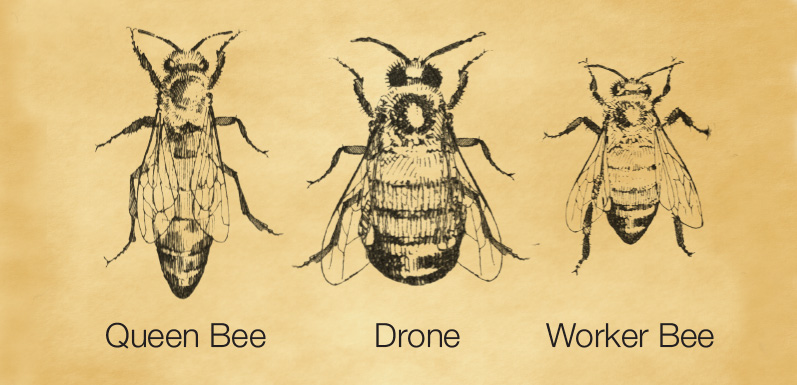
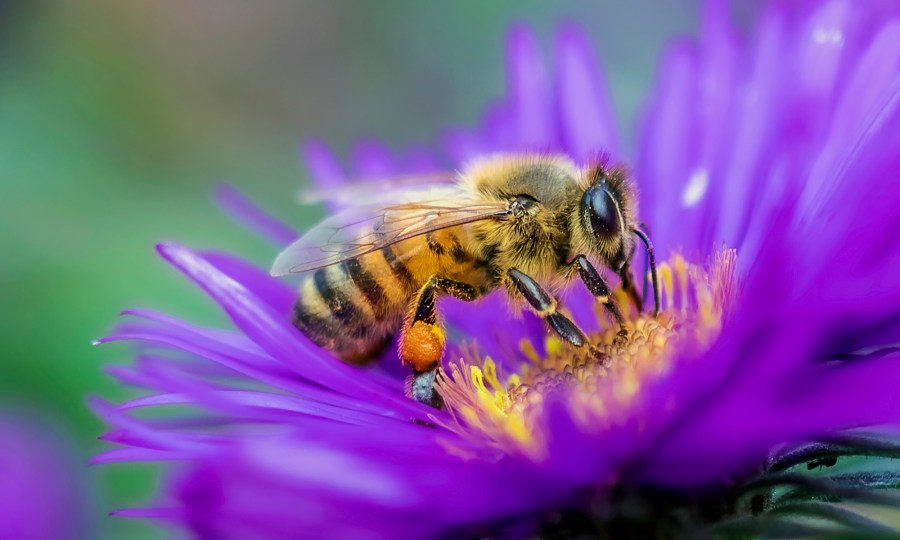
There are almost 20,000 different species of bees in the world. Bees live in colonies and in each colony, there are three types of bees, the queen bee, the worker bee, and the drone. The worker and the queen bee both are females, but only the queen bee can reproduce. All drones are male.

Types of Bees

World Bee Day is celebrated annually on 20th of May. The day marks the birth anniversary of Anton Jansa, a pioneer of modern apiculture. Anton Jansa hailed from a family of beekeepers in Slovenia, where beekeeping is an important agricultural activity with a long-standing tradition. His book ‘Discussion on Bee-keeping’ was also published in German.

Theme for 2022:Bee Engaged: Celebrating the diversity of bees and beekeeping systems.

World bee day – 20 May

Significance of Beekeeping?

Pollinators: Bees are some of the most important pollinators, ensuring food security, sustainable agriculture, and biodiversity.

Contribute to the Mitigation of Climate Change: the protection of bees and the beekeeping sector can help reduce poverty and hunger and preserve a healthy environment and biodiversity.

Sustainable Agriculture and Creating Rural Jobs: By pollinating, they increase agricultural production, thus maintaining diversity and variety in the fields and provide millions of people with jobs.

Status of the Apiculture in India

India is the sixth major natural honey exporting country.

The major export destinations are the USA, Saudi Arab, Canada, and Qatar.

The Indian apiculture market size is expected to reach a value of Rs 33,128 million by 2024, expanding at a CAGR of nearly 12% by 2024.

Related Initiatives

Sweet Revolution

Assistance for Setting up of Processing Units

Adopting Scientific Techniques

PSYCHOLOGY

Psychology has become one of the most popular and important subjects nowadays. It is the study of the mind and behavior, according to the American Psychological Association. The discipline of psychology is broadly divisible into two parts: a large profession of practitioners and a smaller but growing science of mind, brain, and social behavior. The […]

PSYCHOLOGY — Site Title

Carbon Farming

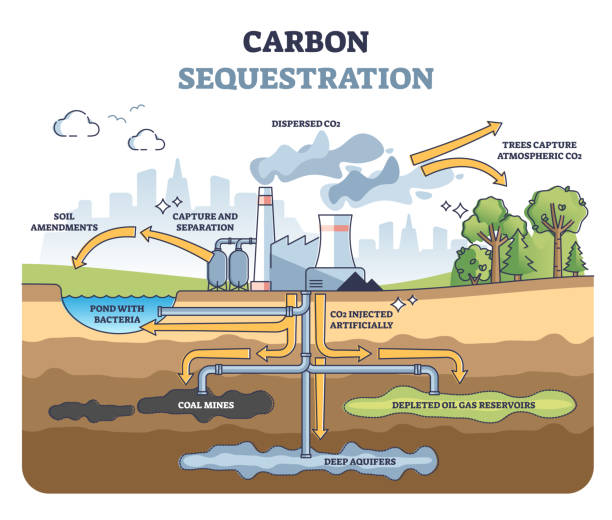
Carbon farming (also known as carbon sequestration) is a system of agricultural management that helps the land store more carbon and reduce the amount of Greenhouse Gases (GHGs) that it releases into the atmosphere. Carbon farming explicitly recognises that it is solar energy that drives farm ecosystem dynamics and that carbon is the carrier of that energy within the farm system.

Agriculture covers more than half of Earth’s terrestrial surface and contributes roughly one-third of global GHG emissions.

According to the Third Biennial Update Report submitted by the Government of India in early 2021 to the UNFCCC, the agriculture sector contributes 14% of the total GHG emissions.

Carbon Farming: a Viable Option

  • Climate Friendly: Carbon farming promises a bold new agricultural business model – one that fights climate change, creates jobs, and saves farms that might otherwise be unprofitable.
  • Optimising Carbon Capture: It is a whole farm approach to optimising carbon capture on working landscapes by implementing practices known to improve the rate at which CO2 is removed from the atmosphere and stored in plant material and/or soil organic matter.
  • Carbon farming can incentivise our farmers to introduce regenerative practices in their agricultural processes helping them shift their focus from improving yields to functioning ecosystems and sequestering carbon that can be sold or traded in carbon markets.
  • Farmer Friendly: It not only improves the health of soil but can also result in improved quality, organic and chemical-free food along with boosted/secondary income from carbon credits for the marginalised farmers.
  • Growth in Carbon Market: The total value of the global carbon markets grew by 20% in 2020 — the fourth consecutive year of record growth — and is well on its way in raising a critical mass of investors.

Carbon thus can effectively prove to be the ‘cash crop’ of the future for farmers

In India, Meghalaya is currently working on a blueprint of a ‘carbon farming’ Act to create a prototype of sustainable agriculture model for the entire North-East region. Sikkim became the first State in the world to become fully organic in 2016.

Steps can be Taken to Encourage Carbon Farming?

Soil is one of the most untapped and underutilised defences against climate change and acts as an efficient carbon sink.

Legal Backing for Carbon Farming: An extensive and pioneering carbon farming Act with a robust transition plan can effectively demonstrate the idea of creating a carbon sink on working land.

Carbon Credits and Carbon Banks: The farmers can be rewarded through globally tradable carbon credits. Carbon banks can also be created that would buy and sell carbon credits from farmers. Paying farmers to restore carbon-depleted soils offers a great opportunity for a natural climate solution and to stabilise global warming below 2°C.

Gaming as a career option in India

Gaming is not seen just as a hobby or a timepass but can be considered as a great career option and is becoming a part of skill development, social interactions via joining specific gaming communities etc.

India has witnessed a strong growth in the gaming sector in the past few years. Even before the lockdown time of 2019, several gamers from India have come up and have been recognized even worldwide. Also, the pandemic gave people a boost as many people started playing during the pandemic just for timepass and streaming on online streaming platforms like YouTube , Twitch etc.

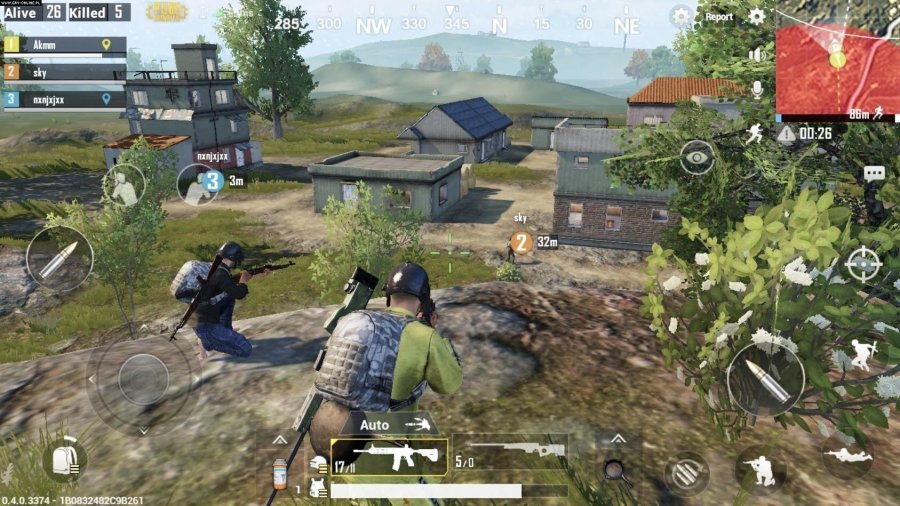
The gaming fanbase in India got a boost after the launch of most popular mobile game PUBG(PlayerUnknown’s Battlegrounds) which is a mobile version of the paid game available on Steam(a platform to buy, play, create and discuss about PC Games). The game being released in 2017, had received a huge amount of fanbase and there were millions of players playing the game even in the initial stages of the game launch.

PUBG Mobile Gameplay (Source- Google Images)

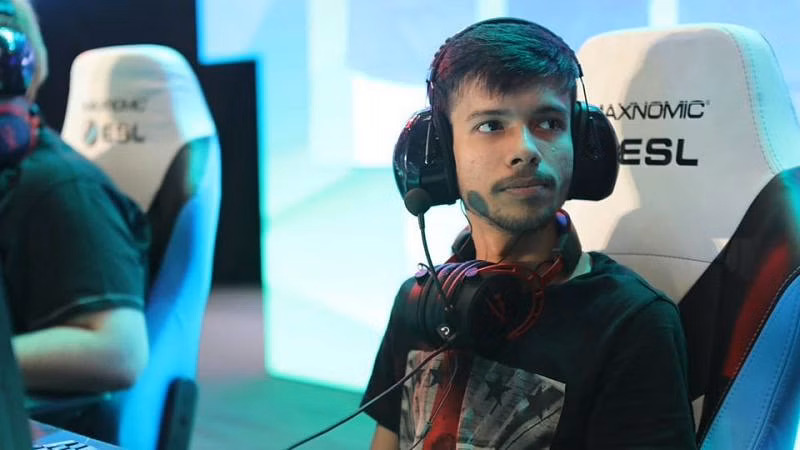
During the pandemic time, several gamers started streaming the game on YouTube and got popular while grinding the game and showcasing their skills. This was seen as a sudden evolution of the mobile gaming industry in India. With internet and mobile devices being easily accessible, several people started playing the game. All these mobile and PC gaming come under the category of “E-Sports”. Several Internationally recognized E-Sports companies analyzed the potential of the Indian players and started investing upon them, making their teams and even spending lakhs and crores upon them by providing them the best things such as their own offices, high end devices and accessories for better competitive gaming.

Today, we have several Indian players who’re participating into multiple E-sports events and representing our country while doing so. Online PC multiplayer games like Valorant, Counter Strike, Fortnite, PUBG, Apex Legends etc. are the most popular competitive games around the web.

Valorant

Also, colleges and schools also conduct these events in their fest where students from different colleges(or schools) come to participate and the winner receives a good amount of cash prize.

The entire scenario regarding Gaming has been changed over the past few years. Parents are also supportive as they themselves are seeing the rapid growth of the gaming industry and are realizing that it can be considered as a great career option. Also, International tournaments offer great prizes including cash, Goodies, accessories etc. With the rise in technology, several upgrades are being made in the devices used for gaming(Laptops, PC’s, Mobiles). Companies manufacturing these devices are adding major upgrades each year for the user to perform smooth gaming. Also, if you go online or to the offline market for buying a device dedicated especially for gaming, there are a variety of options to explore. Tech giants like HP, Dell, Asus, Acer etc. are developing gaming laptops day by day and one can even get a good gaming beast at a reasonable price.

Furthermore, gaming has risen to become one of the most lucrative industries in the world, not only generating a great billion dollar revenue but also giving career and job opportunities to people all around the world. If we dive deep into the gaming field, then there is a vast variety of options to explore in this field as a career. Some of them are:

  1. Player
  2. Game Designer
  3. Game Developer
  4. Sound Designer and Audio Engineer
  5. Commentor and Anchor

Therefore, the final conclusion is if you’re someone who is passionate about gaming and if you are considering it as a career option then you can absolutely go with it. There are certain gaming communities all over the world on Discord App( An app that has certain communities, covering all the domains). Beginners can use it to connect with other gamers and build a gaming squad for playing. Also, one can apply for different E-sports club and with suitable research, they can get a great funding from investors. All you need to start with is a gaming device and a good internet connection for stable FPS(Frames Per Second) and ping rendering for seamless gaming experience.

Is India becoming the center of attraction to the countries around?

Recently, when we look back and check once, we can see many countries delegates like Prime Minister, President, one or the other is visiting India. Boris Johnson, Prime Minister of United Kingdom also planned to visit, but due to pandemic the plan was cancelled. The point here is them not visiting us. The point is why they are visiting us? And why such Global powers are showing Interest on us.

Also, recently India and Us held a 2+2 Ministerial Dialogue, which shows the importance of India for US.

Every country, it maybe USA, Japan, Russia, France, Asia-European Union are trying to be or maintain relationship with India. It can be friendship or enmity, showing interest have any reason behind.

when we look back, India’s prestige is increasing world wide, It’s not that it is popular in ancient times, the growth and popularity of India started long back from Indus Valley Civilization itself. The IVC people used to have trade relationship with Mesopotamia and Egypt.

Its like the International relation that India have with other countries started long back but increased during the 16th century when European countries started to reach India.

In post Independent India, the then Prime Minister Jawaharlal Nehru linked Indian foreign policy with principles of Panchsheel and Non-alignment.

In late 1940’s India supported Indonesian colonial war to end the Dutch rule. This is why India manages to make a different place on world stage.

one of the major positive that’s attracting the other countries is

  • India’s demographic advantage
  • India’s strategic location
  • Economic factor
  • close cultural and religious ties.
  • Indian Philosophies

India’s demographic advantage. we have higher number of youth population. Around 62.5%of Indian population belong to the working age group of 15- 59years.

India’s strategic location. As India is covered with water on 3 sides. one side is Pacific ocean, Bay of Bengal, Indian Ocean- can have a route from Mediterranean sea. there is a logic behind this. More than 80% of total maritime oil trade takes place through the 3 narrow passages located in Indian Ocean.

As it’s role as a peace provider. India’s increased defense capabilities helped India in launching the SAGAR i.e., Security and Growth For All.

Economic factor. In an estimate by world economic league, India with 6.8trillion USD will become the 3rd largest economy by 2031.

Also, India is providing development assistance to countries like Nepal, Bhutan, SriLanka, Latin America and Africa. apart from this, India was there when the countries need a help during the time of pandemic, natural disasters etc.

This is the reason why every country is having that respect towards India, as its maintaining friendly cordial relationships with the fellow countries.

ENGLISH LANGUAGE

COMPREHENSION OF GIVEN PASSAGES

Word ‘comprehension’ means the ability to understand what you listen to or what you read.
The most essential requirement for understanding the passage is to know the meaning of the words used in it.

Types of comprehensive passage
  • Factual passage: A factual passage contains 300 to 350 words. It is a detailed description in which some information is added along with a detailed description of physical attributes. A good factual passage describes the reader to compare or contrast the relevant information regarding facts, data, etc.
  • Discursive passage: A discursive passage contains a text which is either argumentative or interpretative or persuasive in nature. They may also include opinions or feedback.
Requisite skills of Comprehensive passage

To develop a better level of comprehension one requires certain skills:

  • Logical ability
  • The ability to infer
  • Analytical ability
  • Reasoning ability
  • Ability to understand the main motive or the idea of the author.
  • Reading speed
  • Vocabulary power
  • Remembering some important information from the paragraph otherwise, we need to refer the paragraph again and again which will consume more time.

PRECISE WRITING

Precis Writing is a summary. It is an exercise of compression. A precis writing is a gist of any passage in as few words as possible.

Guidelines for precise writing

  • Closely read the passage, and identify the central idea of the passage. It is vital to identify the general idea of the passage and incorporate it in one’s précis.
  • Look-out for the total number of words. If the number is not provided, quickly calculate the number using approximations.
  • In order to understand the passage clearly, make sure that you read the passage closely, and give it a couple of reads before you start writing the précis.
  • Highlight the most important points in the passage, and make notes. Leave out all non-essential information from the précis.
  • Provide an apt heading to your précis.
  • Note making is an essential task for writing précis. You should try to arrange the points in most logical order, and ensure the order of thought is the same as the original.
  • The three grammatical rules you need to follow while writing a précis are: write it in third person, indirect form and appropriate past tense.
  • It is advisable to provide designations of officials rather than names and titles. In case the official designation is not provided, you can use the personal name. Kindly be consistent with the pattern you adopt.
  • Make sure you review your rough draft, remove the chinks and ensure that you have made no language related errors.
  • Before writing your précis, make sure you have a glance over the original to make sure you have not missed anything.
  • Finally, a wise policy would be to count the words of your precis and put them down in a bracket at the end.
QUALITIES OF GOOD PRECIS
  • Objectivity:
     Objectivity means how you are presenting your facts and views without it being biasing your feelings or personal opinions. In stricter terms, precis writing should be a summary of the passage or text given to you. It should not include your personal idea or opinions.
  • Clarity:
    A precis is the crisp formation of the passage and it should be as crisp and clear as possible. Clarity is essentially getting your ideas loud and clear without writing it in depth. It should convey what the writer is trying to say. 
  • Coherence:
    It clearly means that ideas and views that you have presented should be logical and the interconnection of the ideas should be proper. 
  • Correctness:
    There are many mistakes that you should avoid while writing a precis. Many such mistakes include mistakes in figures and dates, the spelling of words, punctuation mistakes, structure and grammar mistakes, and many more. 
  • Conciseness:
    Conciseness means that the precis should contain all the information required while not mentioning it in depth. It should not be too long either too short and both of these should not have any impact while writing a precis.
  • Completeness:
     It should include as many things as possible and more importantly the facts. In fact, a good one should be able to produce all the facts while being short. A short precis does not mean avoiding important facts. Also, the important thing that you should remember is it should be a summary and not a short description of the passage.

Points to Avoid for Precis Writing

  • Do not elaborate a lot on a single point.
  • Do not use your own interpretation, criticism,  or assumption about the text.
  • Do not copy sentences from the original text or use abbreviations.
  • Do not break the flow of events and keep the text well connected.

USAGE AND VOCABULARY

Usage is the act of using something. Vocabulary is all about words — the words in a language or a special set of words you are trying to learn.

SHORT ESSAYS

An essay is typically a short, non-fiction piece of writing.

Guidelines for short essays
  • Each short essay should be a short essay of approximately 500 words, about 2 typewritten double-spaced pages in length. 
  • You must write in full sentences and use proper grammar, punctuation, and spelling. 
  • Your essay should answer the assigned question, drawing on the relevant reading assignment. 
  • It is very important to deal with what the author says about the question, not simply with what you think.  (However, you may contrast your own opinion with the author’s, offer a critique of her argument, etc.  But this requires that you start by setting out the author’s position.)
  • Even though you are dealing with the author’s view about the question, you need to express it in your own words. 
  • Extended quotations of the text are inappropriate in an assignment of this length, and even short quotations require your analysis (e.g., you will need to explain what the sentence you have quoted means, how it bears on the question, etc.).
  • Misrepresenting the words or ideas of others as your own is plagiarism. 
  • You will not receive credit for any essays that contain plagiarism,.
  • Moreover, it is course policy that plagiarism will result in a failing grade for the course and the possibility of further administrative sanctions. 
  • If you are completely unsure of what the author is claiming or how it bears on the question you have been asked to answer, you should write a brief essay on what the author seems to be claiming, why it does not make sense to you, and what two questions you might ask the author to help you understand his view.
  • Short essays are due at the beginning of lecture. 
  •  No late reading responses will be accepted.  Of the 4 reading responses assigned, your lowest grade will be dropped from the average. 

10 Animes to watch

The term anime is a Japanese colloquialism used as an abbreviation for the term “animation.” Generally in Japan, the word anime (written アニメ) is synonymous with animation of any kind from anywhere. Internationally, however, anime is typically referred to as animation that is produced from Japan. The distinction between anime and cartoons is more cultural than it is technical.

Anime itself dates back over a hundred years. The first confirmed example was produced in 1917 titled Namakura Gatana with a run time of only four minutes.

Here is a list of 10 animes you will enjoy watching

1. Death Note

Genres: ♟️ Psychological, 🔮 Supernatural, 🕵️ Mystery, 🤯 Thriller

The story follows Light Yagami, a high school student who stumbles across a mysterious otherworldly notebook: the “Death Note”, which belonged to the Shinigami Ryuk, and grants its user the power to kill anyone whose name and face he knows. The series centers around Light’s subsequent attempts to use the Death Note to change the world into a utopian society without crime and the subsequent efforts of L, a reclusive international criminal profiler, to apprehend him and end his reign of terror.

2. Attack on Titan : Shingeki no Kyojin

Genres: 👊 Action, 🎭 Drama, 🧞 Fantasy, 🕵️ Mystery

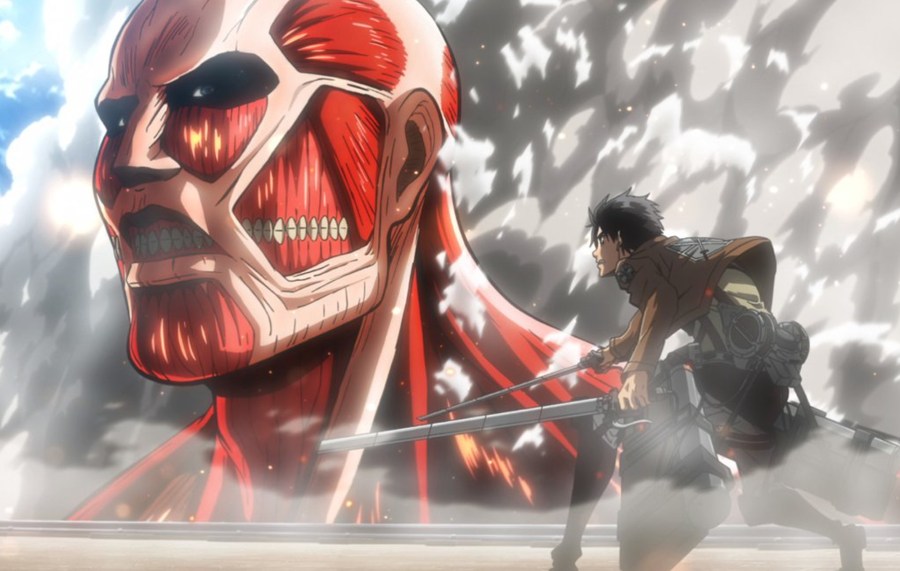
Attack on Titan is set in a world where humanity lives inside cities surrounded by enormous Walls that protect them from Titans, gigantic humanoid creatures who devour humans seemingly without reason. The story centres around Eren Jaeger and his childhood friends Mikasa Ackermann and Armin Arlelt whose lives are changed forever after the appearance of a Colossal Titan, which brings about the destruction of their home town. Vowing revenge and to reclaim the world from the Titans, Eren, Mikasa, and Armin join the Scout Regiment, an elite group of soldiers who fight Titans outside the Walls.

3. My Hero Academia

Genres: 🐵 Animation, Action, 🌋 Adventure, 🤣 Comedy, ✨ Fantasy, 🤖 Sci-Fi

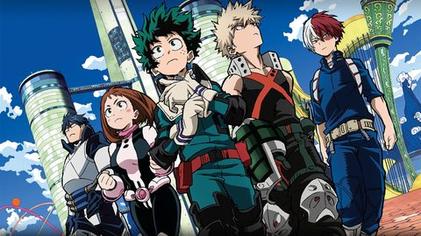
The story follows Izuku Midoriya, a boy born without superpowers in a world where they are the norm, but who still dreams of becoming a superhero himself. He is scouted by the world’s greatest hero, who shares his powers with Izuku after recognizing his value and later enrolls him in a high school for heroes in training.

4. Bleach

Genres: 👊 Action 👒 Adventure 🔮 Supernatural

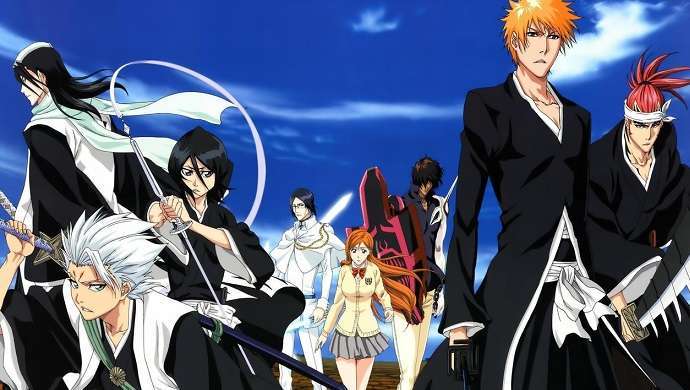
High school student Kurosaki Ichigo is unlike any ordinary kid. Why? Because he can see ghosts. Ever since a young age, he’s been able to see spirits from the afterlife. Ichigo’s life completely changes one day when he and his two sisters are attacked by an evil, hungry and tormented spirit known as a Hollow.

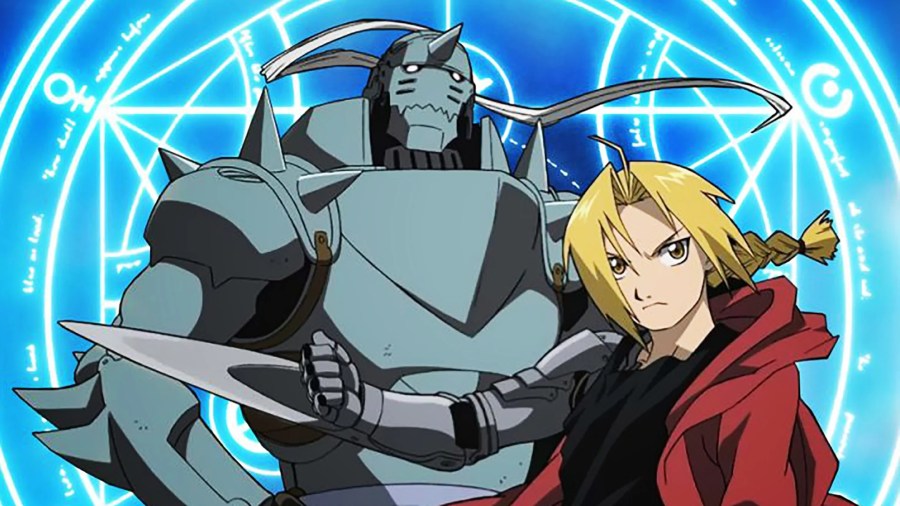
5. Fullmetal Alchemist : Brotherhood

Genres: 👊 Action, 👒 Adventure, 🤣 Comedy, 🎭 Drama, 🧞 Fantasy

Abandoned by their father as kids, two young brothers, Edward and Alphonse Elric lived with their mother in a small town called Resembool. After losing their mother to a terminal illness, they try to resurrect her using alchemy – a science which allows you to transform physical matter from one form to another.

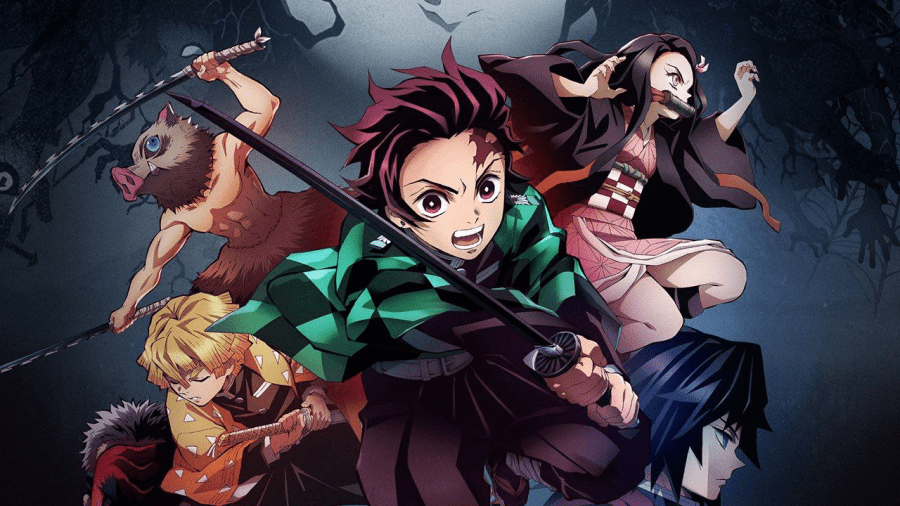
6. Demon Slayer

Genres: 👊 Action 👒 Adventure 🎭 Drama 🧞 Fantasy 🔮 Supernatural

Demon Slayer’s plot follows the epic saga of Tanjirou Kamado, a kind-hearted teen who, upon returning home one day, finds his entire family slaughtered by invading demons. Worst of all, he finds that his sister, Nezuko, has been turned into a bloodthirsty demon herself.

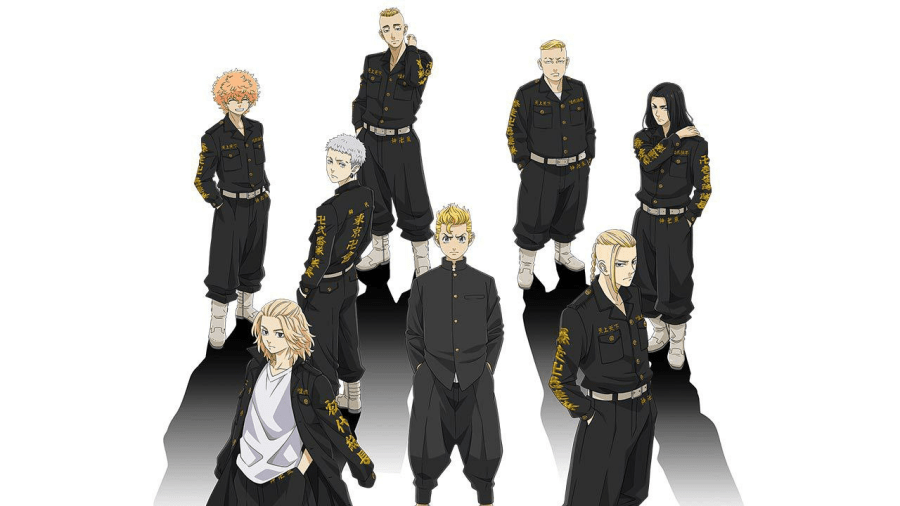
7. Tokyo Revengers

Genres: 👊 Action, 🎭 Drama, 💕 Romance,🔮 Supernatural

Hanagaki Takemichi lives an unsatisfying life right up until his death. Waking up 12 years in the past, he reckons with the eventual fate of his friends and tries to prevent an unfortunate future.

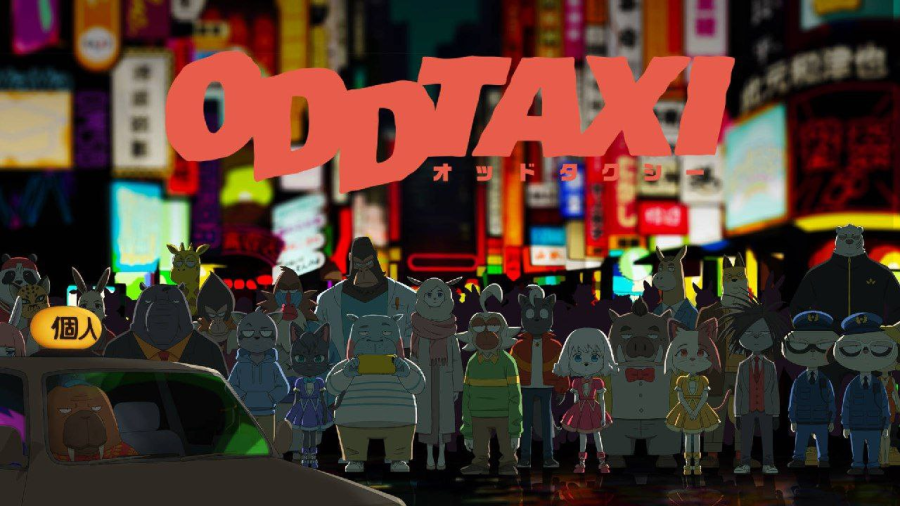
8. Odd Taxi

Genres: 🎭 Drama 🕵️ Mystery ♟️ Psychological

‌In a city which should be familiar, there is the feeling of something a little different. Kotokawa is a taxi driver who lives an ordinary life, taxing some quirky customers around. A slightly eccentric stranger who has no relatives nor any relations with other people, Kotokawa’s hobby is to listen to Rakugo on the radio before going to bed. For the time being, the only people he can consider as friends are his family doctor Gouriki, and his high school classmate Kakihana. Kabasawa, a college student who wants a buzz, Shirakawa, a nurse who’s hiding something, comedian group Homo Sapiens, who isn’t selling well, the city hoodlum Dobu, and the rookie idol group Mystery Kiss—the conversations with these people, which should not have meant much, lead to a girl who disappeared.

9. Haikyuu

Genres: 🤣 Comedy, 🎭 Drama, 🏀 Sport

Hinata Shouyou, a short middle school student, gained a sudden love of volleyball after watching a national championship match on TV. Determined to become like the championship’s star player, a short boy nicknamed “the small giant”, Shouyou joined his school’s volleyball club.

10. Jujutsu Kaisen

Genres: 👊 Action 🤣 Comedy 🎭 Drama 🔮 Supernatural

The story follows high school student Yuji Itadori as he joins a secret organization of Jujutsu Sorcerers in order to kill a powerful Curse named Ryomen Sukuna, of whom Yuji becomes the host.

Climate change??? Is it really happening??

Ok……. let’s talk about climate change. What it is? how it is happening? Is it because of humans? Does with have anything to do in this????. let’s know………

First of all…what is climate change???

Climate change is nothing but the change in climate. Ummmm…….sounds a bit odd and confusing but let’s see. “The change in climate means whatever we are seeing daily or sensing or experiencing is changing gradually”.

There maybe many reasons for this change in climatic conditions.

We started breaking CO2 records in 1950, and we haven’t stopped since. So, what maybe the reason????????

green house effect

Well Scientists say there is a 95% chance that human activity is the cause. We have been burning more and more fossil fuels like oil and coal which release CO2, to power our homes, factories, airplanes and cars. Not only this, there is a lot more of us i.e., the global population has tripled in the past 70years and we are consuming more products from animals that release another pollutant called Methane.

All these gases are released into the air, and when sunlight get’s into the Earth’s atmosphere, some of the heat gets trapped and the planet gets warmer. This is called as “Greenhouse Effect“.

The concern is not about the Earth getting warmer. It’s actually the warmest temperature on Earth since the last ice age, since 10,000years ago.

The UN says that right now our World is about 1 degree hotter than the Pre-Industrial times i.e., around 1800’s. It’s ok if the heat increases by 1.5 to 2 within a century or so. But, the problem is the “SPEED”. The change is heat is happening so fast that the temperature is increasing rapidly within 10-15 years which is not ok. And if we don’t slow down the heat/warming-this would mean CATASTROPHE within our life time and we are already experiencing it.

Some of the effects we can see because of global warming are

  • Global rise in temperature
  • Ocean warming
  • Melting of Glaciers and ice sheets.
  • Decrease on snow cover
  • Sea level rise.

So, to overcome or reduce all this, back in 2016, world leaders signed “PARIS AGREEMENT”. The big pledge they took is to cap temperatures rising by 1.5 degrees or maximum 2, before the year 2100.So, countries set their own targets on how much CO2 they should emit. But the problem is, even after the agreement, the level of CO2 is increasing rapidly.

But, one thing to be proud of is some countries like, India, Morocco, Gambia have massive renewable energy projects.

The advice is….. It’s our turn to change all the things that’s happening because of us, to change our ways and shake things up…..or else, climate change is going to do it for us

Vikram Batra-Ye Dil Mange More


Vikram Batra belongs to a Hindu
family in Palampur, Himachal Pradesh. He was a son of a government school
principal. He joined the Air Wing of the National Cadet Corps in his college.
From his college life, he was interested in serving the nation. He cleared the
exam of NCC, get the C certificate. After participating in the Republic day
parade, he shared his thought with their parents that he wants to join the
Indian Army.


1n 1995, he pursuing MA at
Punjab University and start the preparation for Combined Defense Service Exam.
In 1996, he joined Indian Military Academy(IMA). In 1997, after concluding
training in IMA, he was commissioned as a lieutenant into the 13 JAK RIF. 

In 1998, after undergoing many
training and postings, he finally posted to Sopore, Baramulla District, J&K
.He had many encounters with militants over there. In one operation, Batra was
leading the platoon and had killed all the militants before the morning. In
1999, Batra completed his commando course at Belgaum, Karnataka.


In 1999, it was Holi time.
Vikram Batra enjoying his vacation with his fiancée Dimple Cheema. In a
conversation, Dimple said to Vikram Batra that he has to be careful about war.
Then Batra smiled and replied-“I’ll either come back after raising the
Indian flag in victory or return wrapped in it. But I’ll come back for
sure.”


He returned to his troop from
his hometown. After few days,13 JAK RIF reached Dras on  6 June 1999. The 18 Grenadiers failed to
capture the peak of Tololing. But 2 RAJ RIF 
captured the peak on June 13, 1999. After the success of that mission, Vikaram
Batra and his platoon were ordered to march from Dras to Tooling. Another
mission was planned to capture point 5140, which was assigned to the 13 JAK
RIF. Under the command of Lt. Col. Yogesh Kumar Joshi,13 JAK RIF found that the
enemy covered some major areas from top to bottom of point 5140. Joshi decided
to attack from the east and south sides by two teams, lead by Lt. Sanjeev Singh
Jamwal, and Lt. Vikram Batra. Both choose their winning signal, Jamwal chooses
“Oh! Yeah, yeah, yeah!” and Batra chooses “Ye Dil Mange
More!”.


Artillery fire was used for
covering support of these two assault companies while climbing point 5140. Both
the companies reached their destination on 20 June. Jamwals company had first
captured their objective. It was difficult for Batra to covered the enemy from
the rear side of the hill, but Batra did that impossible task with his 5 team
members and killed 3 enemies single-handedly in close combat. He was injured
but never stopped there, rather lead his troops and captured their objective by
sharing his slogan”Ye Dil Mange More!”.


He was promoted as Captain
after capturing point 5140. After the great success of 13 JAK RIF, the troop
moved to Mushkoh Valley under the command of 79 Mountain Bridge. The next task
was to captured point 4875 in the Mushkoh Valley. It was the dangerous mission
ever for 13 JAK RIF till now. They had to protect around 30-40km of the
National Highway from Dras to Malayan. The Pakistani soldiers easily observed
the moment and position of our soldiers, saw the gun positions, army camps from
that peak.  


On 4 July, the war began. The A
and C Coys started their operation of capturing point 4875. But in the
meanwhile, Batra was suffered from fatigue and fever.  Although its day time, these two troops were
consolidated their hold on point 4875 after heavy bombarding and machine-gun
attacks, and artillery fire. On 5 July, Pakistani enemies attacked with heavy
fire and accuracy from their position in north point 4875. Area Flat was
captured by 13 JAK RIF on 5 July, that was the key objective of that mission,
without that point Indian Army never succeed in their mission. Unfortunately
within a few hours Pakistani enemies counter-attacked our soldiers and climbed
faster to capture the peak. Captain N.A.Nagappa was lead a troop to fight
against those enemies to acquire the peak. But suddenly he was badly injured.
Pakistani soldiers were climbing faster as Nagappa was injured.


Batra observing all those
things lying on the bed went to Mr.Joshi and insisted to let him go. As the
team of Nagappa needed reinforcement, Vikram Batra and his team were ready to
capture the peak 4875 and determined for this in any situation and
circumstances. All the members of 13 JAK RIF wanted to join Batra for the honor
of their battalion despite the orders of their seniors.


Batra began to climb with 25
members of D Coy at night. When the troop neared the top, they had to climb
vertically, where the visibility was almost zero due to heavy fog. Batra found
a machine gun of Pakistani soldiers and destroyed it with a grenade. Batra
finally located the machine gun post of enemies, but unfortunately, no option
was left without a direct frontal assault in daylight. Under heavy fire from
enemies’ machine guns and grenade launchers, Batra killed 5 Pakistani soldiers
with his AK-47. Batra saw one of his men was shot in this process. With heavy
firing, Batra said his teammate Sub. Raghunath Singh evacuates that injured
soldier. He also said to Singh, “You have a family and children to go back
to, I am not even married”.Batra had continuously given his maximum effort
to drag the soldier to a safe place, suddenly a bullet hit his chest from a
very close distance, and after few seconds another on his head from an RPG.
Batra lies down on that battleground.


He was aware of the great
danger of his mission, but instead of all those things, he was never afraid of
death. Vikram Batra was awarded Indian’s highest military honor, the Param Vir
Chakra. His supreme sacrifices for his country will always be memorable.