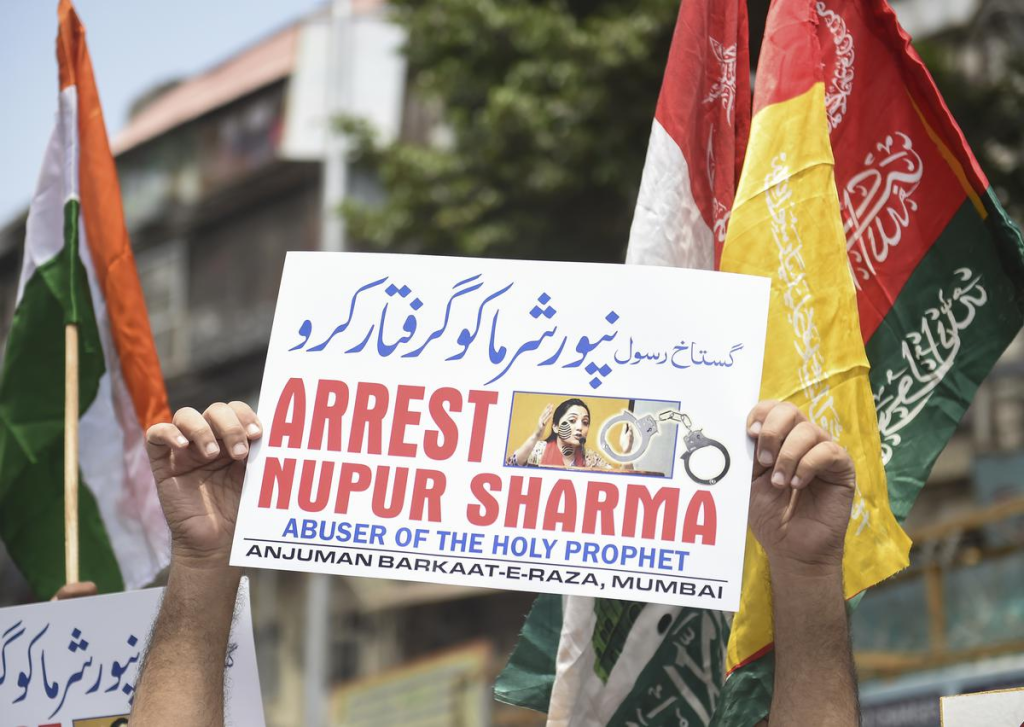
India’s strong response came while several countries, including India’s crucial Gulf partner, the United Arab Emirates (UAE), and security partners Oman and Jordan condemned the remarks.
India on Monday hit out at the Organisation of Islamic Cooperation (OIC) after it condemned the derogatory comments made by two former BJP leaders on Prophet Muhammed and Islam.
On May 20, 1498, Vasco da Gama arrived in Calicut, establishing a sea route connecting Europe and East Asia. Following this, India became a focal point for European trade, as well as the scope of European ambitions to gain control of the Spice Islands trade monopoly, resulting in numerous naval conflicts. The British East India Company arrived in India to conduct business, primarily in spices. They also traded silk, cotton, indigo dye, tea, and opium, among other things.
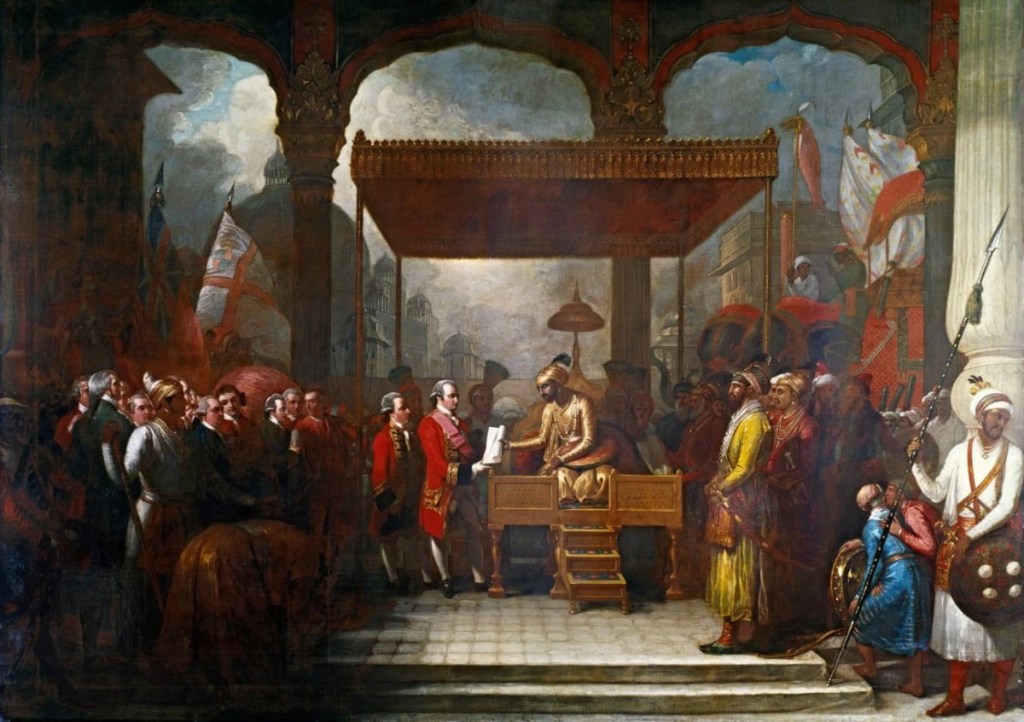
John Watts and George White created the British Joint Stock Company, or East India Company, in 1600 AD to seek trade with South and South-East Asian nations. The majority of the shares in these joint-stock companies were owned by British merchants and nobles. The British government had no direct relationship with the East India Company. Initially, the British enter the Indian subcontinent as spice dealers. Prior to the modern era, spices were the principal means of preserving meat in Europe. The subcontinent was then dragged into the Empire by force, thanks to more modern and effective weapons. “The sun never sets on the British Empire,” as the saying goes. It would have been more true to argue that the British Empire was primarily made up of regions that were occupied and controlled under force. On August 24, 1608 AD, the British arrived in the Indian Subcontinent at the port of Surat for the purpose of trade, but it was not until 7 years later that they received a royal order (i.e. Farman) to construct a factory in Surat under the command of Sir Thomas Roe (Ambassador of James I). Following this, the Vijaynagara Empire granted the East India Company permission to build a second factory in Massulipatnam. The British gradually surpassed the other European commercial companies, and their trading operations in India grew dramatically over time. Numerous trading posts sprang up around India’s east and west coastlines, and significant English settlements grew up around the presidential capitals of Calcutta, Bombay, and Madras. Silk, Indigo Dye, Cotton, Tea, and Opium were their main commodities. By establishing a facility in Kolkata 20 years later, the Company had expanded its footprint to the East of India. During their time as a trade corporation, they recognized that the entire Indian Subcontinent was divided into regional kingdoms in fact, therefore they began to consider how to consolidate all of the resources. The East India Company began interfering in Indian politics in the 1750s. When one of the Company’s military officials, Robert Clive, beat the armies of the Nawab of Bengal, Siraj-ud-daulah, in the Battle of Plassey in 1757, the Company’s fortunes rose and it transformed from a commercial endeavor to a ruling enterprise. After the First War Independence in 1857, also known as the Revolt of 1857, the East India Company’s reign finally came to an end in 1858. Following the breakup of the East India Company in India, the British Crown assumed direct authority of the country, ushering in the British Raj.
On May 20, 1498, Vasco da Gama arrived in Calicut, establishing a sea route connecting Europe and East Asia. Following this, India became a focal point for European trade, as well as the scope of European ambitions to gain control of the Spice Islands trade monopoly, resulting in numerous naval conflicts. The British East India Company arrived in India to conduct business, primarily in spices. They also traded silk, cotton, indigo dye, tea, and opium, among other things.
John Watts and George White created the British Joint Stock Company, or East India Company, in 1600 AD to seek trade with South and South-East Asian nations. The majority of the shares in these joint-stock companies were owned by British merchants and nobles. The British government had no direct relationship with the East India Company. Initially, the British enter the Indian subcontinent as spice dealers. Prior to the modern era, spices were the principal means of preserving meat in Europe. The subcontinent was then dragged into the Empire by force, thanks to more modern and effective weapons. “The sun never sets on the British Empire,” as the saying goes. It would have been more true to argue that the British Empire was primarily made up of regions that were occupied and controlled under force. On August 24, 1608 AD, the British arrived in the Indian Subcontinent at the port of Surat for the purpose of trade, but it was not until 7 years later that they received a royal order (i.e. Farman) to construct a factory in Surat under the command of Sir Thomas Roe (Ambassador of James I). Following this, the Vijaynagara Empire granted the East India Company permission to build a second factory in Massulipatnam. The British gradually surpassed the other European commercial companies, and their trading operations in India grew dramatically over time. Numerous trading posts sprang up around India’s east and west coastlines, and significant English settlements grew up around the presidential capitals of Calcutta, Bombay, and Madras. Silk, Indigo Dye, Cotton, Tea, and Opium were their main commodities. By establishing a facility in Kolkata 20 years later, the Company had expanded its footprint to the East of India. During their time as a trade corporation, they recognized that the entire Indian Subcontinent was divided into regional kingdoms in fact, therefore they began to consider how to consolidate all of the resources. The East India Company began interfering in Indian politics in the 1750s. When one of the Company’s military officials, Robert Clive, beat the armies of the Nawab of Bengal, Siraj-ud-daulah, in the Battle of Plassey in 1757, the Company’s fortunes rose and it transformed from a commercial endeavor to a ruling enterprise. After the First War Independence in 1857, also known as the Revolt of 1857, the East India Company’s reign finally came to an end in 1858. Following the breakup of the East India Company in India, the British Crown assumed direct authority of the country, ushering in the British Raj.
Football is one of the greatest sports of all time. It takes us into a fantasy of excitement and sometimes it hurts. Modern football originated in England in the 19th century. The game was a 120-yard pitch containing 2 goal posts in two equal half. the winner was decided by the goals.
There are two teams, each team contains 11 players including a goalkeeper. Today’s football is much improved by great players like Pele, Maradona, Cruyff, etc. The sport involves so much of emotional moments that broke so many hearts. The Munich air disaster, the Murder of Andres Escobar, and The death of Emiliano sala are some of the dark days of football.
Munich air disaster 1958
The Munich disaster occurred on 6 February 1958 in West Germany. players of the British club Manchester United were flying from Munich. the flight crashed after the third attempt to take off from a slushy runway.23 passengers died after that and 21 survived. that was one of the saddest days in football.
The Munich air crash, Germany
Andres Escobar’sdeath
Andres Escobar was a Colombian international player who played for Colombia in many championships including the world cup. The Colombian was played for like Athletico Nacional BSC young boys and the Colombian national team.
Escobar was murdered aftermath of the 1994 world cup for scoring their own goal in the world cup competition which leads them to knock out from that tournament. the incident degraded the image of the country.
Emiliano Sala’s death
The Argentine footballer Emiliano sala passed away on January 21, 2019. The young superstar was an emerging player who played for the French club Nantes. the separation of Emiliano sala was a heartbreaking moment for the football world. Sala was overcome by toxic gases from the unlicensed aircraft before dying in a plane crash.
There has been regular contact between India and Turkey since medieval times. The Ottoman Empire even sent expeditions to allied kingdoms such as the Zamorin and the Gujarat Sultanate to help them fight against the Portuguese colonization.
The first visit of India’s First Prime Minister *Jawaharlal Nehru * to Turkey was in the year 1960. Bilateral relations have been strengthened by the exchange of visits of leaders of both countries in recent times. These include visits by the then Turkish PM Recep Tayyip Erdogan to India in 2008 and the then Turkish President Abdullah Gul to India in 2010. Prime Minister Shri Narendra Modi attended the G20 Summit held in Antalya on 15-16 November 2015 on the margins of the Summit, Prime Minister had bilateral talks with President Erdogan. PM Modi and President Erdogan held talks in Hangzhou on 5 September 2016 on the sidelines of the G20 Summit. The two leaders interacted with each other on the sidelines of BRICs Plus meeting in Johannesburg on 25-27 July 2018 and met on the sidelines of G-20 in Osaka on 29 July 2019. EAM Sushma Swaraj made a transit halt at Erzurum on 19 February 2019.
Economic relations:
India-Turkey economic and commercial cooperation constitutes an important dimension of the bilateral relationship. The Bilateral Trade Agreement between India and Turkey was signed in 1973. Institutional arrangements in terms of Joint Committee for Economic and Technical Cooperation (JCETC) signed in 1983 and a Joint Business Council (JBC) between Federation of Indian Chambers of Commerce and Industry (FICCI) and Foreign Economic Relations Board of Turkey (DEIK) was set up in 1996. On 6 April 2015, Confederation of Indian Industry (CII) signed an MoU with the Union of Chambers and Commodity Exchanges of Turkey (TOBB) to promote bilateral trade and economic cooperation. CII also signed a MOU with DEIK in March 2018. A cooperating agreement between FICCI and TOBB was also signed for establishing India-Turkey Working Committee and Investment Forums. On 6 August 2015, State Bank of India and Turkey’s Akbank entered into a cooperation agreement to support bilateral trade and investments. An India Business Forum (IBF) was launched in Istanbul by the Ambassador in December 2018 which holds quarterly meetings.
Cultural Relations:
India and Turkey share a historical cultural overlap. Cultural exchanges have grown in recent years, especially after the revival of CEP in 2017. Cultural performances, film shows, exhibitions, seminars, outreach to universities are being organized regularly. A Festival of India in Turkey, India by the Bosporus, was held in March-April 2019 showcasing Indian dance, music, food and fashion in major cities in Turkey.




 Eduindex
You must be logged in to post a comment.