Bajaj Auto shares rose in early trade on Friday but were back in the red territory ahead of the two-wheeler maker’s new electric vehicle production line launch due later in the day. On Thursday, the firm also announced that its board would consider a buyback of shares next week.
Shares of the company gained 2.2 percent in early trade but soon dropped 2.7 percent from that level to the day’s low of Rs 3,857. At 11:18 am, the stock was trading 0.4 percent lower at Rs 3,860.50 on BSE.
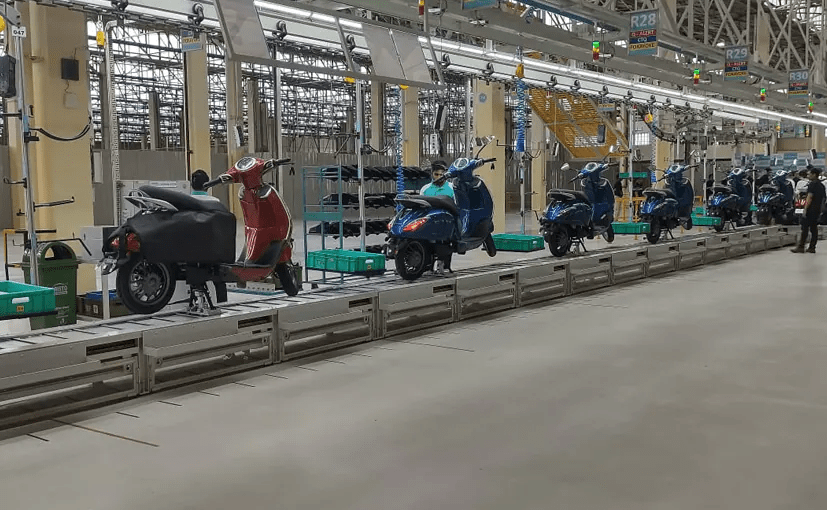
Chetak EV will be produced at the factory where the Chetak IC scooter was manufactured till 2005. Bajaj Auto has a booking backlog of approximately 16,000 Chetak EVs due to the supply crunch. The new EV factory will have a capacity of 400 units per day initially. Meanwhile, EV production will continue at Chakan simultaneously for some time.
Bajaj Auto shares rose in early trade on Friday but were back in the red territory ahead of the two-wheeler maker’s new electric vehicle production line launch due later in the day. On Thursday, the firm also announced that its board would consider a buyback of shares next week.
Shares of the company gained 2.2 percent in early trade but soon dropped 2.7 percent from that level to the day’s low of Rs 3,857. At 11:18 am, the stock was trading 0.4 percent lower at Rs 3,860.50 on BSE.
Chetak EV will be produced at the factory where the Chetak IC scooter was manufactured till 2005. Bajaj Auto has a booking backlog of approximately 16,000 Chetak EVs due to the supply crunch. The new EV factory will have a capacity of 400 units per day initially. Meanwhile, EV production will continue at Chakan simultaneously for some time.
In the forests of South India harvesters climb tress as tall as 50feet to hand pick these clove buds. When exported half of the pound of these dried cloves cost $30. That’s 10times as much as cumin. But as they focus on keeping their balance, harvesters must also be careful not to break the buds. If they do, the value of the clove drops significantly and that’s just where the risk begins.
To harvest the cloves correctly, workers put their lives on the line. So, what makes cloves worth the risks? Why are they so expensive?
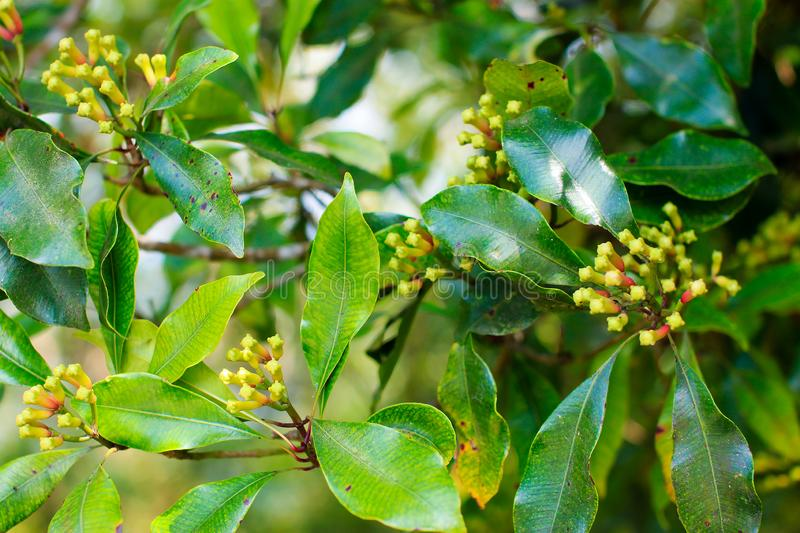
Clove leaves and buds
Cloves and flower buds of cloves trees that haven’t blossomed yet, When dried, they are commonly used as a spice. A clove’s flavor is complex with a pinch of sweetness, bitterness and heat. The oil found in cloves has medicinal properties, that makes the spice valuable outside of just cooking. Cloves with the round head/crown still intact have the most oil. But to get cloves with the highest possible oil content, highly skilled labors are needed at every stage.
To get to the top of the trees, harvesters rely on ladder and some rope which is tied to the tree on three sides to secure it from falling and covers the bottom of the ladder with mud, so that it doesn’t move when the people navigates/hops on the tall trees. While climbing the person who climbs must make sure that they doesn’t break the branches and at the same time while picking on the clove buds, there should be a clear idea on picking the right bud(well grown) and also avoid plucking the new growing bud.
The workers nearly makes around $30 a day(on an average).
Once the cloves are picked from tree, harvesters carefully remove the individual buds from the stalks and leaves. they shift and sort each bud according to its size, age and whether it has top or not. It’s best if the circular crown of the clove where it would otherwise flower is still intact. This improves the spices taste and aroma. There is a machinery available for segregating the cloves/ sorting them. But for being on safe side many farmers prefer to handpick them to avoid the damage of buds which are most important.
The highest quality cloves were picked at the right time, just before they turned into pink flowers. They are large and plump and still have the crown. Second quality cloves also still have their tops, but they are small in size compared to the high quality one’s and these are small because, either they are picked too early or too late. The third quality are the one with the top having either flowered or broken off.
After the sorting process, the cloves are allowed to dry under the sun. High quality cloves take 3 days to dry under good sunlight. if the sunlight is too less then the quality of the clove drops. Instead of the golden brown, it becomes black and loses its most valuable properties i.e., its oil content.
First quality cloves are the most valuable and have the highest oil content. Clove oil is mostly made up of the compound “Eugenol” which is not only responsible for the cloves familiar aroma, but also for its medicinal benefits. Researchers have noted “Eugenol has antimicrobial, anti-inflammatory and anti-oxidant properties“. So, the demand for the cloves go beyond their culinary uses.
“Kanyakumari cloves are known for their high oil content and strong aroma. In fact these cloves were awarded a Geographical Indication tag(GI) in 2021“.
The Bay of Bengal Initiative for Multi-Sectoral Technical and Economic Cooperation (BIMSTEC) is a multilateral regional organisation established with the aim of accelerating shared growth and cooperation between littoral and adjacent countries in the Bay of Bengal region. It is interregional organisation connecting South Asia and Southeast Asia. It has 7 member countries in total – Five are from South Asia, namely India, Bangladesh, Nepal, Bhutan, Srilanka and 2 are from Southeast Asia , namely Myanmar and Thailand.
It was founded on 6th June 1997 as BIST-EC (Bangladesh, India, Sri-Lanka and Thailand Economic Cooperation) with the adoption of Bangkok declaration. It became BIMST-EC (Bangladesh, India, Myanmar, Sri Lanka and Thailand Economic Cooperation) with the entry of Myanmar on 22nd December 1997. Nepal entered as Observer country in December, 1998. And later on , it was named in its current form when Nepal and Bhutan became members in 2004. BIMSTEC headquarters is located in Dhaka , Bangladesh. Its principle is to maintain sovereign equality, territorial integrity, political independence, no interference in internal affairs , peaceful coexistence and mutual beliefs. It is an addition not substitute to any existing bilateral , multilateral or regional ties.
It is a sector driven organization. Each member-countries serve as a lead for a sector : trade,investment and development (Bangladesh ); Environment and climate change (Bhutan); Security,including counter terrorism,tourism,transport and communication (India); agriculture and food Security (Myanmar); people-to-people contacts (Nepal); science,technology and innovation (SriLanka) ; and connectivity (Thailand).
In terms of connectivity, Bimstec has three major projects that could transform the movement of goods and vehicles through the countries in the grouping. 1. Kaladan Multimodal Project – It seeks to link India and Myanmar. The project envisages connecting Kolkata to Sittwe port in Myanmar, and then Mizoram by river and road. India and Myanmar had signed a framework agreement in 2008 for the implementation of this project. It’s yet to be finished. 2. Asian Trilateral Highway – It will connect India and Thailand through Myanmar. The highway will run from Moreh in Manipur to Mae Sot in Thailand via Myanmar. It is expected to be completed by 2023. 3. Bangladesh-Bhutan-India-Nepal (BBIN) Motor Vehicles Agreement – the agreement was signed on 15th June 2015 for seamless movement of goods and vehicles.The BBIN project suffered a setback in 2017 when Bhutan temporarily opted out of it after being unable to get parliamentary approval for the
There are some issues hampering the progressive development of BIMSTEC : 1. Lack of cordial bilateral relations between its member states. Eg., India-Nepal, India-Sri Lanka, and Bangladesh-Myanmar ties are not good, due to political, economic, and social reasons. 2. Uncertainties over SAARC impact the development of BIMSTEC. Eg., BIMSTEC members Nepal and Sri Lanka want a revival of the SAARC summit. 3. Thegrowing influence of China in South Asia. Eg., popular Bangladeshi scholar supported admitting China as a partner in BIMSTEC. However, India will not welcome this idea. 4. Apathy towards holding regular annual summits. Eg., while most of the regional organisation (SCO, ASEAN, G20) were able to meet at a high political level even during the Pandemic, BIMSTEC leaders failed to meet.
the 5th BIMSTEC summit was hosted by Srilanka in hybrid mode on 30th March,2022. Our Prime Minister Narendra Modi announced a contribution of $1 million towards BIMSTEC’s operational costs and another $3 million to revive the organization’s center for weather and forecast at Noida, India. He stressed the need to give priority to regional security.
In the 25 years of its existence BIMSTEC hasn’t achieved much. That could be changing now with India’s heightened interest in the grouping, as a vehicle for the achievement of its strategic interests.
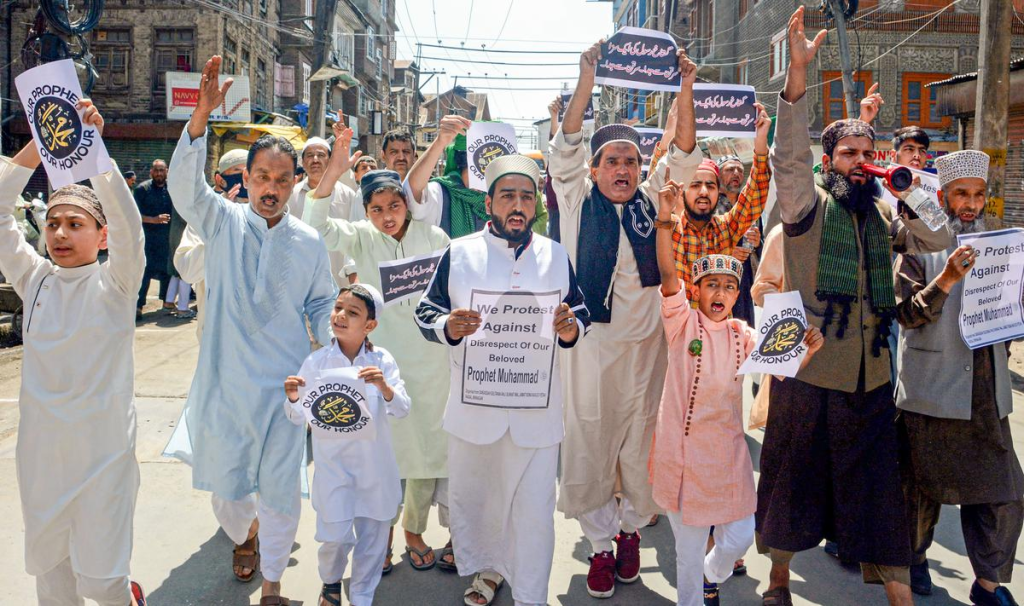
Protesters raise slogans against the controversial remarks by two now-suspended BJP leaders against Prophet Mohammad in Srinagar.
Tension mounted in Jammu’s Bhaderwah and some areas of Kishtwar prompting authorities to impose a curfew while parts of Kashmir observed a shutdown over the controversial remarks against Prophet Muhammad by two now-suspended BJP leaders, Nupur Sharma and Naveen Jindal. In Jharkhand, some policemen were injured in Ranchi while trying to control an irate mob after protests erupted with hundreds of people demanding the arrest of Ms. Sharma.
A teej festival is celebrated by rajasthani people but mostly in parts like bundi and jaipur with much excitement in people.The women are adorned in fancy traditional attire,the sky is lotted with kites of variegated colors and aroma of delicious teej fingers in air.This year teej is celebrated on 30 August 2022.
This festival is celebrated because it is primarily dedicated to Parvati and her union with Shiva.Woman often fast in celebration of teej .It is traditionally observed by woman to celebrate monsoons during months of shravan and bhadrapada of hindu calendar.They often pray to Parvati & Shiva during teej.
Teej festival of rajasthan is grand view and you ought not to miss if you are in pink City.A royal procession of teej mata on an antique palanquin called teej swari,winds through lanes of the city.There is whole fanfare of dancers and brand players who accompany the processions.
It is three day celebration and each day has its own significance.On first day,”Dan Khana Di”, married woman enjoy meal prepared by their husband’s.All the ladies gather at the place and take part in following fan-filled activities. Swinging and singing– The first picture that comes to everyone’s mind is of the ladies swaying on a tree swing. Beautiful swings adorned with flowers are hung on the tree in their garden where women take their turn and sing songs about the eternal love of Lord Shiva and Goddess . Hands on Heena- Customized Jaipur One night before Teej, women put intricate designs of henna on their hands and feet. It is a part of Teej Shringar, the whole makeup thing which girls and married women do on the occasion. The married women hide their husband’s name in the design and ask them to reveal it in a playful game. ka -po-che
The festival is not all about women. Guys sure have their share of fun too. On the occasion of Teej festival in Jaipur, boys gather on their roofs and participate in a kite-flying competition. The whole sky can be seen dotted with colorful kites. You can hear them screaming Kai-po-che when someone manages to dock their rival’s kite. It is so much fun watching. Royal Rajasthan flava.
Hence, the teej festival is regarded as festival of women that brings joys and strengthen the bond between women, husband as well as her family.




 Eduindex
You must be logged in to post a comment.