SHATTERING MILLION HEARTS 💔

You will always be missed Sidhu💔

Punjabi Singer, writer, rapper Sidhu moosewala AKA Shubhdeep singh sidhu on 29th may 2022 left us with grief breaking millions of hearts shatter world wide. Sidhu who debuted on 2017 with his track “so high” brought Punjabi industry to a next level on international level by generating buzz in holly wood via collaborating with many international artists like “Steel bangles, Morrison, A.R. Parsley and many more also he was in talks in collaboration with one of the top artist of holly wood ‘Drake’ but unfortunately destiny had other plans. On afternoon he was travelling in a car with his 2 friends where he was followed by the shooters where shooters fired numerous rounds on him on his body as a result making him dead on the spot.

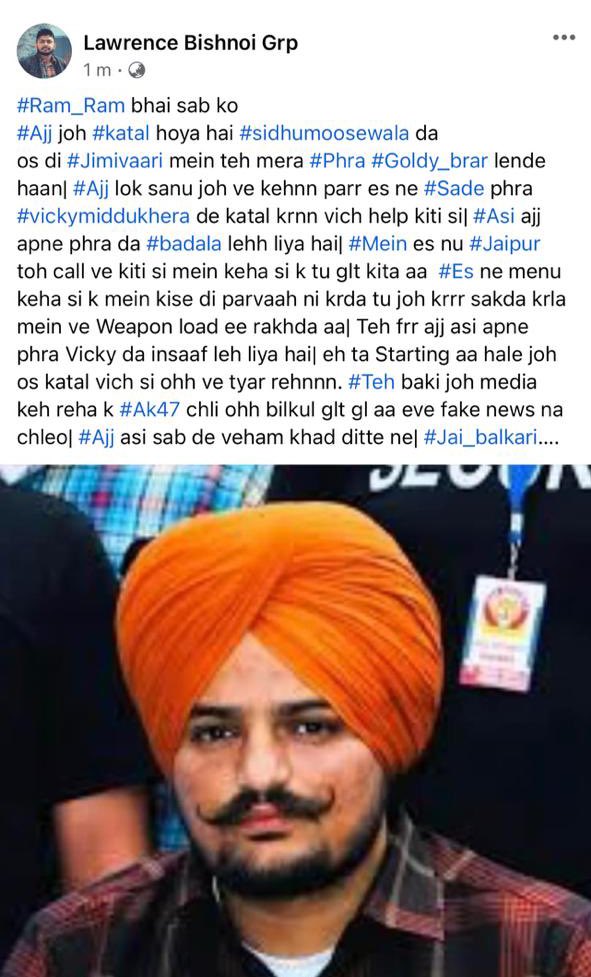
Punjab based gangster Lawrence bishnoi and Goldy brar currently living in Canada took the responsibility of the murder via a Facebook post and they further stated that his murder was planned and they took revenge of one of his gang member “Vicky Middhukhera” who was killed last year

This post was posted by goldy brar on Facebook on 29th may 2022

Sidhu was heart and soul of Punjab music industry and killing him has changed the music industry for worst. Sidhu has written his name with golden letters in books of history.

Rest in Peace Sidhu Moosewala 💔

You’re Definitely in a better place now

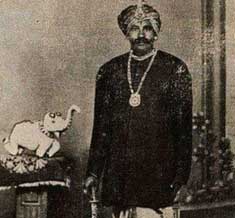
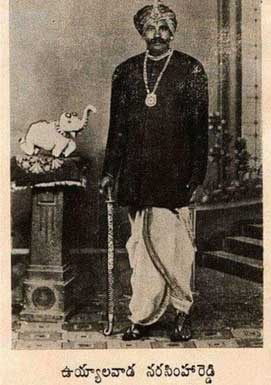
India’s first freedom fighter Narasimha Reddy.

Uyyalawada Narasimha Reddy was an Indian freedom fighter and he was born in Rupanagudi village, on 24 November 1806.

The father of Narasimha Reddy was related to the Palegar family of Uyyalawada in Koilakuntla taluk who had married two daughters of the Palegar of Nossam. He had three sons, of whom Narasimha was the youngest son of the Palegar of Nossam, Seethamma. He married a woman named Siddhamma at the age of 6 .
The British East India Company’s preface to the Chennai Presidency of the 1803 endless agreement, which had first been legislated in Bengal Presidency ten times preliminarily, replaced the agricultural socio- profitable status quo with a further egalitarian arrangement where anyone could cultivate handed that they paid a fixed sum to the East India Company for the honor of doing so.
The Palegars and other advanced- status people who preferred the old agricultural system” represented the decadent social order”, were in numerous cases” arrivistes” and” were also the heirs at law of a social system in which colorful orders of Hindu society were integrated through periods”. These people were ousted of their lands, which were also redistributed, but the primary purpose of the changes was to increase product rather than to restructure the social order. In some cases, it coincided with a discipline because among the dispossessed were those who had lately been involved in fighting the East India Company in the Palegar Wars. Some entered pensions in lieu of the lost lands but at inconsistent rates.


The changes, which included the preface of the ryotwari system and other attempts to maximize profit, deprived vill helmsmen and other advanced- status people of their part as profit collectors and position as lodgers, while also impacting on lower- status tillers by depleting their crops and leaving them impoverished. The East India Company were economically exploiting the people and that those who were dependent on the traditional work were no longer had a means of making a living. As the old order collapsed into disarray, the formerly-authoritative Palegars, including Narasimha Reddy, came the focus of attention from victims, whose pleas fell on deaf cognizance. The Palegars saw a chance to rally peasant opposition both for genuine social reasons.
Narasimha Reddy’s own expostulations too was grounded on their issues. Compared to the Palegar of Nossam, the pension awarded to his family upon their acquisition was paltry and the authorities refused to increase it by redistributing some of the Nossam moneybags when that ultimate family came defunct in 1821. At the same time, some of his cousins were facing proffers for farther reductions in their land rights, including by a reform of the vill policing system.


WAR AGAINT BRITISH EMPIRE
Effects came to a head in 1846 when the Company authorities assumed land rights preliminarily held by colorful people who had failed in the townlets of Goodladurty, Koilakuntla and Nossum. Encouraged by the disgruntlement of others, Reddy came the statuette for an insurrection.
An fortified group, originally comprising those ousted of inam lands around Koilakuntla, was led by Reddy’s Right- hand man Vadde Obanna in July 1846. The Amusement Collector for the area Lord Cochrane, believed that Reddy had material support from fellow pensioners in Bhagyanagar and Kurnool, whose land rights had also been appropriated. The group soon attracted support from the peasantry and was reported by Company authorities to have rampaged in Koilkuntla, taking back the pillaged storeroom there and escaping the police before killing several officers at Mittapally. They also despoiled Rudravaram before moving to an area near to Almore, pursued by the East India Company forces who also girdled them.
A battle between Obanna’s 5000-strong band of revolutionists and a much lower British contingent also took place, with around 200 of the revolutionary being killed and others captured before they were suitable to break out in the direction of Kothakota, Giddalur where Reddy’s family were positioned. He with his family moved to Nallamala Hills . The British offered impulses for information regarding the whereabouts of the revolutionists, who were again girdled amidst reports that uneasiness was now growing in other townlets of the area. In a farther skirmish between the revolutionists and the British, who had transferred for mounts, 40 – 50 revolutionists were killed and 90 were captured, including Reddy. Although there was no substantiation of Obanna’s prisoner, he most conceivably was also a interned along with his leader.
clearances were issued for the arrest of nearly,000 of the revolutionists, of which 412 were released without charge. A farther 273 were bailed and 112 were condemned. Reddy, too, was condemned and in his case entered the death penalty. On 22 February 1847, he was executed in Koilkuntla in front of a crowd of over 2000 people. Reddy’s head on the stronghold wall in public view until 1877.


LEGACY
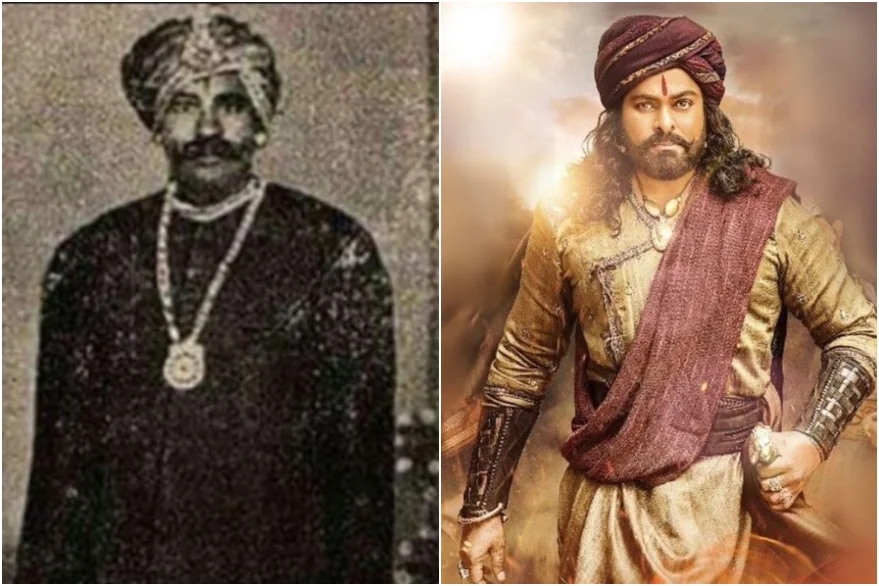
On 2 October 2019 , a film based on the life of Narsimha Reddy’s life named Sye Raa Narasimha Reddy was released . On 25 March 2021 Kurnool Airport at Orvakal was named as Uyyalawada Reddy Airport .

Ipl revenue more than Epl?

After the 15th edition of IPL concluded in 2022 with the recently formed Gujarat elephants, led by Hardik Pandya, securing palm, the Board of Control for Cricket in India( BCCI) chairman Sourav Ganguly has said, “ The IPL generates further profit than the English Premier League”.


The English Premiere League or the Premiere League is considered the most viewed football event in the world. The Premier League, is the top position of the English football league system. queried by 20 clubs, it operates on a system of creation and deportation with the English Football League.
still, Ganguly’s statement comes at a time when media companies are are fighting for the elusive media rights to the IPL, the world’s richest sports league, anticipated to cost up to$ 6 billion. Ganguly further stated that he feels proud to see that the game of justice has been evolving in India. He also comment “ I have seen the game evolve, where players like me earned a many hundreds and now have the eventuality of earning crores. This game is run by the suckers, by the people of this country, and by the BCCI, which was formed by justice suckers. This sport is strong and will continue to evolve.”
The IPL generates further profit than the English Premier League. It makes me feel happy and proud that the sport I love has evolved to come so strong,” Ganguly said at India Leadership Council Event while speaking to Deepak Lamba, CEO, Worldwide Media, President, Times Strategic results Limited. The IPL 2022 was held in a much larger scale than the former seasons.

How IPL made cricketers and BCCI one of the richest in global sport ?
The Indian Premier League( IPL) in a span of just 15 times has managed to come one of the biggest sporting leagues in the world. The initial edition of the IPL was played in 2008 and there has been no looking back ever since as the T20 league continues to witness a massive growth in its fashionability across the globe. IPL is arguably the biggest T20 league in the world and has the stylish players from across the globe playing their trade in the competition.
The Indian Premiere league has created millionaires out of youthful cricketers and made BCCI as one of the richest governing bodies in the world of global sport.
Aruguably, the high- octane, big- hitting carnivalesque event provides a must- see product, driving broadcast subscriptions by the millions and pulling in huge advertising profit.
IPL brigades admit a share of the TV rights and backing plutocrat, and around 10 to 15 percent of ticket deals.
They can also induce their own profit through economic shirt or other auspices.

Profit Creators
The BCCI earned$ 533 million from the IPL in 2020, treasurer Arun Dhumal told Indian media, but its finances are marked in secretiveness.
In its 15th time, the BCCI is anticipated to earn fresh profit of ₹ crore per time( ₹,715 crore for 10 times) from the new brigades besides ₹ 444 crore which it has entered from VIVO as a reassessment figure.
When the event expanded to 10 brigades this time from the original eight, the transaction for the rights to enjoy the new votes drew transnational stab including the Glazer family, who enjoy Manchester United.
They were eventually beaten out by Indian mogul Sanjiv Goenka’s RPSG empire, who paid the BCCI$ 930 million to form the Lucknow Super Giants.
The alternate new ballot, the Gujarat Titans, bring the global adventure fund CVC Capital$ 690 million. The brigades spent nearly$ 75 million in the February player transaction, with Mumbai Indians retaining gate- keeper- batsman Ishan Kishan for$ 2 million and Punjab lords paying England’s Liam Livingstone$1.52 million for his services.

Broadcast rights are the BCCI’s biggest plutocrat- incentive. Star India, possessed by Disney, paid$2.55 billion for a five- time TV and digital rights deal that expires at the end of this season.

Agnipath Scheme

The government unveiled its new Agnipath scheme for recruiting soldiers below the rank of commissioned officers into the three services of the armed forces on 14th June, 2022.Under the new scheme, around 45,000 to 50,000 soldiers will be recruited annually and most will leave the service in just four years. Of the total annual recruits, only 25 per cent will be allowed to continue for another 15 years under permanent commission.

Format of the Scheme :

Aspirants between the ages of 17.5 years and 21 years will be eligible to apply. The scheme is only applicable to personnel below officer ranks. Recruitment will be done twice a year through rallies.The recruitment will be done on “all India, all class” recruitment to the services (from any caste, region, class or religious background). Currently, recruitment is based on ‘regiment system’ based on region and caste bases. There will be a training period of 6 months and deployment for three and a half years. Recruits will get starting salary of Rs 30,000, along with additional benefits which will go up to Rs 40,000 by the end of the four-year service.During this period, 30 per cent of their salary will be set aside under a Seva Nidhi programme, and the government will contribute an equal amount every month, and it will also accrue interest. At the end of the four-year period, each soldier will get Rs 11.71 lakh as a lump sum amount, which will be tax-free. For 25% of soldiers, who are re-selected, the initial four-year period will not be considered for retirement benefits.

Benefits :

• Make the armed forces much leaner and younger: For India’s over 13-lakh strong armed forces, the current average age profile is 32 years. It is envisaged it will come down by about 4-5 years by implementation of this scheme
• Reduce the defence pension bill: The government has either allocated or paid more than Rs. 3.3 lakh crore in defence pension since 2020.As per Army calculations, the savings for the government in this ‘Tour of Duty model’ of recruitment from just one sepoy would be around 11.5 cr (the army initially proposed a 3-year service model).
• Create “future-ready” soldiers: A youthful armed forces will allow them to be easily trained for new technologies.
• Increased employment opportunities and higher skilled workforce: Apart from job opportunities in the army, recruits because of the skills and experience acquired during the four-year service such soldiers will get employment in various fields.The central government will likely give preference to Agniveers in regular employment after their four years stint.

Concerns regarding the scheme:

• Present benefits and security of jobs will be lost: Recruits will not get permanent jobs or promised pension and health benefits even after retirement.
• Doubt about training: 6 months of short training may not be enough to trust them with the same kind of tasks that current troops can be trusted with.
• Erosion of loyalty: “All India, all class” recruitment to the services may lead to the erosion of the loyalty that a soldier has for his regiment.

The Agnipath Scheme will be the only route for recruitment into the military. Personnel recruited under this system are to be called Agniveers , which will be a new military rank. The introduction of the scheme has been criticised for lack of consultation and public debate. The Communist Party of India stated that it strongly disapproved the ‘Agnipath’ scheme that does disservice to India’s national interests. Professional armed forces cannot be raised by recruiting ‘soldiers on contract’ for a period of four years. This scheme, to save pension money, severely compromises the quality and efficiency of our professional armed forces. Samajwadi Party president Akhilesh Yadav called the scheme, “negligent” and potentially “fatal” for the country’s future. Rashtriya Loktantrik Party (RLP) chief said that the people returning after four years of service would cause gang wars in the country. The scheme is scheduled to be implemented from September 2022.This scheme will bypass many things including long tenures, pension and other benefits which were there in old system. Opposition parties in India have criticized and expressed concerns about the consequences of the new scheme. They have asked the scheme to be put on hold and that the scheme be discussed in the Parliament.On 16 June 2022, violent protests erupted in several states in India where the army aspirants angry with the new scheme called for its rollback and damaged public property. By 17 June, 12 trains were set on fire, and the movement of 300 trains were affected. 214 trains were cancelled, 11 trains were diverted and 90 were terminated short of their destination. On 18 June, protesters in Bihar called a strike against the scheme. They clashed with the police and set fire on several vehicles since morning in Bihar. Train services were stopped in Bihar till 8 PM, on 18 June. They will be stopped again from 4AM onwards on 19 June. More than 350 trains were cancelled across India as the violence continued in several states. In Kerala a large protest march was held in Thiruvananthapuram and Kozhikode, against the scheme. The protesters said their strikes would continue till the Centre rolls back its decision and ensured justice.

Sources: The Indian Express and Wikipedia

why is sandalwood and it’s oil so expensive?

Sandalwood is one of the most expensive woods in the world. But its really one portion of sandalwood log that makes it so valuable. To get it, the workers tirelessly chop away the lighter outer layer of sapwood, until they are left with the dark inner core that makes a kilogram of Indian sandalwood cost $200 today.

This is where the sandalwood uniqueness come from. And when its distilled it’s used in all kinds of products I.e., from bath soaps to luxury brand perfumes.

 So, the main question is what makes sandalwood aroma so special? And why the wood is so expensive?

Native to south India, Santalum album or Indian sandalwood was used for hundreds of years before becoming a go to scent for expensive perfumes.

Today it’s also used for wood carvings and medicines and it is even considered a sacred tree in several religions. Once distilled,sandalwood’s sweet, woodsy aroma retains it’s scent for decades.

Hollow heart wood logs are classified as jajpokel I.e., one od the 28 classes of indian sandalwood. Factories can purchase pure heartwood like jajpokel or raw sandalwood logs. But If they buy the raw wood, they will need to break down each log themselves.although machine helps split the sandalwood into more manageable pieces, stripping the logs down to their heartwood core requires the effort of several employees.

In some trees, pure heartwood is easy to extract, because it forms in one circle at the center. In other trees, the heartwood mixes together with sapwood, which impacts the final value of the oil.

A machine breaks down the strips of wood into chips and these are shifted to another area to grab if there are any usable heartwood. Then the pieces are shifted into another machine which makes the wood into powder form. Now distillation can begin. The process is long and it starts injecting steam  into distillation stills. After the oil is extracted, it is left with a large pile of matter which emits a mild smell of sandalwood. This leftover powder is again used in preparation of incense sticks, a dhoop or a common form of incense in india.

During the final stages, workers separate the oil from water and purify it until they are left with a totally clean tank of sandalwood oil.

For distilling one metric ton of oil it takes around one week for normal workforce.

The oil later is sent for testing in labs for the quality checks. Later after the checking is done, it is sent to factories where it will be used to make soaps and other items.

One 10gram bottle of sandalwood oil costs around  5500 rupees or about $74.

Out of 10 sandalwood species, Indian sandalwood and australian sandalwood have the largest commercial value. The difference is the Indian species has higher level of alpha and beta santalol, the components in sandalwood responsible for its lasting scent.

India used to dominate the market for sandalwood oil and oil based products. In recent days, the Indian and Australian sandalwood species has gained significant ground in the market.

Since 2018, the species are considered vulnerable- one level above endangered. Another factor that limits supply and increases the price is  inherent the way the tree grows. Older trees tend to yield more oil which makes them more preferable for oil production

The Growers  will wait around 20years  for the tree to mature.

Caste: the historical facet peculiar to India

The caste system, the joint family system and the village system of life are often regarded as the three basic pillars of the historical Indian social system. The caste system as a form of stratification is peculiar to India. The caste system is an inseparable aspect of the Indian society. It is peculiarly Indian in origin and development. Caste is closely connected to Hindu philosophy and religion, customs and traditions, marriage and family, morals and manners, food and dress habits, occupations and hobbies. The caste system is believed to have divine origin and sanctions. The caste stratification of the Indian society has had its origin in the Chaturvarna system. According to the Chaturvana doctrine, the Hindu society was divided into four main varnas namely: the Brahmins, the Kshatriyas, the Vaishyas and the Shudras. The caste system owes its origin to the varna system.

Definition of Caste as given by some prominent sociologists:

MacIver and Page: “When status is wholly predetermined so that men are born to their lot without any hope of changing it, then the class takes the extreme form of caste.”

C. H. Cooley: “When a class is somewhat strictly hereditary, we may call it caste.”

D. N. Majumdar and T. N. Madan have said that caste is a ‘closed group’.

Perspectives on caste system in India:

The perspectives on the study of caste system include Indological or ideological, social anthropological and sociological perspectives. The Indological or ideological perspective takes its cue from the scriptures about the origin, purpose and future of the caste system, whereas the cultural perspective of the social anthropologist looks the origin and growth of caste system, its development, and the process of change in its structure or social structural arrangements as well as in the cultural system also view caste system not only as unique phenomenon found in India, but also in ancient Egypt, medieval Europe, etc. But the sociological perspective views caste system as a phenomenon of social inequality. Society, especially, Hindu social system has certain structural aspects, which distribute members in different social positions. It shows concerns with growth of the caste system. Many sociologists put forward their theory of caste with respect to Indian society. Some prominent sociologists in this regard are, G. H. Ghurye, Louis Dumont and M. N. Srinivas.

G. H. Ghurye theory of caste:

G. H. Ghurye is regarded as the father of Indian sociology. His understanding of caste in India can be considered historical, Indological as well as comparative. In his book, “Caste and race in India” he agrees with Sir Herbert Risley that “Caste is a product of race that came to India along with the Aryans”. According to him caste originated from race and occupation stabilized it. Ghurye explains caste system in India based on six distinctive characteristics:

1. Segmental division of society: Under caste system, society is divided into several small social groups called castes. Additionally, there are multiple divisions and subdivisions of caste system.

2. Hierarchy: According to Ghurye, caste is hierarchical. Theoretically, Brahmins occupy the top position ad Shudras occupy the bottom. The castes can be graded and arranged into a hierarchy on the basis of their social precedence.

3. Civil and religious disabilities and privileges: This reflects the rigidity of the caste system. In a caste system, there is an unequal distribution of disabilities and privileges among its members. While the higher castes enjoy all the privileges, the lower castes suffer from various types of disabilities.

4. Lack of unrestricted choice of occupation: The occupations in caste system are fixed by heredity and generally members are not allowed to change their traditional occupations. The higher caste members maintain their supremacy in their jobs and do not allow other caste group to join in the same occupation.

5. Restriction on food, drinks and social intercourse: Restriction on feeding and social intercourse are still prevalent in Indian society. There are two types of food I.e., Kacha (cooked) food and Pakka (raw) food upon which certain restrictions are imposed with regard to sharing.

6. Endogamy: Every caste insists that its members should marry within their own caste group.

Louis Dumont theory of caste:

Louis Dumont was a French Sociologist and Indologist. His understanding of caste lays emphasis on attributes of caste that is why; he is put in the category of those following the attributional approach to the caste system. Dumont says that caste is not a form of stratification but a special form of inequality, whose essence has to be deciphered by sociologists. Dumont identifies hierarchy as the essence of caste system. According to Dumont, Caste divides the whole Indian society into a larger number of hereditary groups, distinguished from each other and connected through three characteristics:

1. Separation on the basis of rules of caste and marriage,

2. Division of labor, and

3. Gradation of status.

He also put forward the concept of ‘pure’ and ‘impure’ which was widely seen in the Caste ridden society. The Brahmins were assigned with priestly functions, occupied the top rank in the social hierarchy and were considered “pure” as compared to other castes. The untouchables being “impure”, were segregated outside the village and were not allowed to drink water from the same wells from which the Brahmins did so. Besides this, they did not have any access to Hindu temples and suffered from various disabilities.

M. N. Srinivas theory of caste:

M. N. Srinivas was one of the first-generation Indian sociologists in post-Independence period. Srinivas approach to study of caste is attributional I.e., analyses caste through its attributes. He assigned certain attributes to the caste system. These are:

1. Hierarchy

2. Occupational differentiation

3. Pollution and Purity

4. Caste Panchayats and assemblies

5. Endogamy

Besides caste, Srinivas looks for yet another source or manifestation of tradition. He found it in the notion of ‘dominant caste’. He had defined dominant caste in terms of six attributes placed in conjunction:

Sizeable amount of arable land,

Strength of numbers,

High place in the local hierarchy,

Western education,

Urban sources of income and

Jobs in the administration

Of the above attributes of the dominant caste, the following two are important:

Numerical strength, and

Economic power through ownership of land

He also introduced the concept of “Brahmanisation” wherein the lower caste people imitate the lifestyle and habits of the Brahmins. This concept was further changed to “Sanskritisation”.

These are a few theories of caste system that prevailed before the rise of modern India owing to the revolutions undergone during the British rule.


Surtsey – The Young Volcanic Island

Surtsey Island

Most islands on Earth are older than millions of years, but Surtsey island is younger than some of the people reading this article. Surtsey is located near the southern coast of Iceland. It emerged from the Atlantic Ocean in a fiery eruption, which began 130 meters below see level in November 1963. During the next three and one-half years its volcanic core built up an island of one square mile area.  Since then, wave erosion has caused the island to steadily diminish in size: as of 2012, its surface area was half a square mile. Icelandic government has made it strictly off limit to the public, with only one tiny a small prefabricated hut used as research station. Tourists can’t set a foot on the island, but anyone can admire it from afar during a boat ride. Although it doesn’t show a direct threat to life and health, casual visitors can jeopardize the purity of one of the most important experiments in the history of the mankind. Because of which the island was able to thrive naturally and organically develop its own ecosystem, consisting of plants, birds, insects and seals. Surtsey has been producing unique long-term information on the colonization process of new land by plant and animal life.

Formation of the Island

The volcanic activities started on the sea floor few days before it became visible on the surface. The eruption site is 430 feet below sea level, and at this depth volcanic emissions and explosions would be suppressed and dissipated by the water pressure and density. Gradually, as repeated flows built up a mound of material that approached sea level, the explosions could no longer be contained, and activity broke the surface.

The eruptions took place at three separate vents along a northeast by southwest trending fissure. Over the weeks, explosions were continuous, and after just a few days the new island was formed. As the eruptions continued, they became concentrated at one vent along the crack and began to build the island into a more circular shape. The violent explosions caused by lava and sea water created a loose pile of volcanic rock, which was eroded swiftly by North Atlantic storms during the winter, reducing the island size to the half.

Beginning of Life and research on the Island

It was intensively studied by volcanologists during its eruption, and afterwards by botanists and other biologists as life forms gradually colonized the originally barren island. Since they began studying the island in 1964, scientists have observed, the first bacteria colonized it in only a few hours after the onset of the volcanic pumice over the water, the arrival of seeds carried by ocean currents, the appearance of molds and fungi, followed in 1965 by the first vascular plant, of which there were 10 species by the end of the first decade. By 2004, they numbered 60 together with 75 bryophytes, 71 lichens and 24 fungi. Eighty-nine species of birds have been recorded on Surtsey, 57 of which breed elsewhere in Iceland. The island is also home to 335 species of invertebrates. Spiders, worms, flies, and various types of beetles are also, among its main inhabitants.  Continuing their research, scientists expect to shed light on the theory of the origin of life on Earth, which still hides many mysteries.

Human footprints on the Island

The only substantial human interference over the island is in the form of a small hut made of natural materials, used by researchers while staying on the island. The hut has a few bunk beds and a solar power source to drive an emergency radio. There is also an abandoned lighthouse foundation. On a couple of occasions, few trespassers came in rowboats and planted potatoes and tomatoes on the island, which were immediately uprooted.

Future of the Island

Although erosion has caused it to reduce in size and might continue to do so, however, the good news is, its core is covered with harder lava, thus, this island is unlikely to disappear entirely in the near future. Additionally, because of its continuing protection, Surtsey will continue to provide invaluable data on primary succession and biological colonization long into the future. 

Indian Farming – Protest Against Farmers Act

Indian Farmers Act Protest 2020 – 2021

In the years of 2020 to 2021, there was a battle raging over just how free market India’s economy should become. In September 2020 the Parliament of India had passed three farm acts. India has seen largest farmer protest of the modern history, where, tens of thousands of farmers across the country were demanding, that the government should revoke this series of reforms that will change India’s agricultural sector.

Agriculture and allied sectors by far are the largest employer in India providing employment to more than 50% of the population and accounting for 17.5% of Gross Domestic Product (GDP). India is the world’s largest producer of many fresh fruits, spices, jute, oil seeds and food staples like, rice or wheat. For decades, the government has shielded farmers from the free market by providing price supports on some crops, running wholesale markets where farmers can sell their goods on Minimum Selling Price (MSP), and rounding up buyers to guarantee sales. But when, the government planned to take a step back, with the hopes that the free market will boost an industry that has stagnated over time, farmers fear they’ll get the raw end of the deal, even if the free market helps the overall economy.

History of Agriculture in India

Agriculture has been an integral part of the Indian Economy, both in before and after Independence periods of India. In the Colonial British Era, agriculture was the only means of subsistence, as more than 85% of the Indian population was dependent on agriculture. Majority Indian peasants lived in poor conditions, due to scarcity of agricultural resources, dependency on unpredictable Monsoons for irrigation, Zamindari System and the taxes imposed by British Raj. This period is marked by several farmer protests in different parts of the country.

After independence, India adopted significant policy reforms in the National Five Year Plans, focusing on the goal of food grain self-sufficiency. It began with Several land reforms, adopting superior yielding, disease resistant crop varieties in combination with better farming knowledge and mechanization to improve productivity. A well-planned irrigation infrastructure was developed, that included a network of major and minor canals from rivers, groundwater well-based systems, tanks, and other rainwater harvesting projects for agricultural activities. This ushered in India’s Green Revolution. The states of Punjab and Haryana, led India’s green revolution and earned the distinction of being the country’s breadbasket.

The Farm Acts

  1. Farmers’ Produce Trade and Commerce (Promotion and Facilitation) Act, 2020
    1. expands the scope of trade areas of farmers’ produce from select areas to “any place of production, collection, aggregation”.
    1. allows electronic trading and e-commerce of scheduled farmers’ produce.
    1. prohibits state governments from levying any market fee, cess, or levy on farmers, traders, and electronic trading platforms for the trade of farmers’ produce conducted in an ‘outside trade area’.
  2. Farmers (Empowerment and Protection) Agreement on Price Assurance and Farm Services Act, 2020
    1. provides a legal framework for farmers to enter into pre-arranged contracts with buyers including mention of pricing.
    1. defines a dispute resolution mechanism.
  3. Essential Commodities (Amendment) Act, 2020
    1. removes foodstuff such as cereals, pulses, potato, onions, edible oilseeds, and oils, from the list of essential commodities, removing stockholding limits on agricultural items produced by Horticulture techniques except under “extraordinary circumstances”
    1. requires that imposition of any stock limit on agricultural produce only occur if there is a steep price rise.

Farmers Protest

Soon after the acts were introduced, unions began holding local protests, mostly in Punjab and Haryana. The methods of protest were Gherao, Dharna, Raasta roko, Demonstration, Suicide. A movement named Dili Chalo began, in which tens of thousands of farming union members marched towards the nation’s capital. The Indian government ordered the police and law enforcement of various states to stop the protesters using water cannons, batons, and tear gas to prevent the farmer unions from entering into Delhi. Various domestic and international NGOs supported the protesters by providing temporary shelters, food and healthcare services. Numerous deaths and fatalities were caused during the protest. All talks between farmers and central government to agree on common grounds remain inconclusive. The Supreme Court of India put a stay on the implementation of the farm laws in January 2021. Farmer leaders cheered and welcomed the stay order

End of the Protests

In late November 2021 the Modi administrators finally repealed the All three farm bills. Hundreds of farmers danced and celebrated the victory, they began removing roadblocks and dismantling thousands of makeshift homes along major highways. The protest was finally declared to be over and the farmers started returning to their homes happily.

Let’s Know About Interior Designing…

“We shape our buildings, thereafter they shape us”.

Interior Designing is the Art and Science of enhancing the interiors of the building to achieve a healthier and more aesthetically pleasing environment for the people using the space.

The person who plans, researches, coordinates and manages such enhancement projects, is an interior designer.

It is an art of creating aesthetically functional spaces pleasing with the client’s choice integration and understanding including the person’s creativity. It is basically underlying the layout of one’s personal choice and preferences of designing and decorating one’s home as per his/her needs and taste.

But for this, interior designers must be highly skilled and professional in their work and adhere to the norms and regulations of their professionalism.

It is essential for interior designers to acquire a deep experience with colors, understand their psychological effects and learn and apply the meaning of each color in different locations and situations in order to create suitable combinations for each place.

Specialties of interior designing includes:

  • Residential
  • Commercial
  • Self-employment
  • Sports
  • Traffic building
  • others

Interior Designing is a professional course requiring a professional experience and required degree to continue with the passion and the work. A formal education program, particularly one accredited by or developed by a professional organization of interior designers, can provide training that meets a minimum standard of excellence and therefore gives a student an education of high standards.

The interior designing requires a wide range of working conditions and golden employment opportunities. Some work on regular basis i.e., some may have a permanent job, enjoying all the perks of professionalism, while others usually work on a contract or per-job basis.

In some cases, licensed professionals review the work and sign it before submitting the design for approval by clients or construction permitting.

Not forgetting some of the famous early interior decorators, here we have name of some:

  • Sibyl Colefax
  • Dorothy Draper
  • Syrie Maugham
  • Elsie De Wolfe

And, last but not the least the foremost important principles of interior designing:

  • Balance
  • Unity
  • Rhythm
  • Emphasis
  • Contrast
  • Scale and proportion
  • Details

The essence of interior designing will always be about people and how they live. It is about the realities what makes for an attractive, civilized, meaningful environment, not about fashion or what’s in or what’s out. This is not an easy job.

“The details are not details. They make design.”

Let's Know About Interior Designing…

“We shape our buildings, thereafter they shape us”.

Interior Designing is the Art and Science of enhancing the interiors of the building to achieve a healthier and more aesthetically pleasing environment for the people using the space.

The person who plans, researches, coordinates and manages such enhancement projects, is an interior designer.

It is an art of creating aesthetically functional spaces pleasing with the client’s choice integration and understanding including the person’s creativity. It is basically underlying the layout of one’s personal choice and preferences of designing and decorating one’s home as per his/her needs and taste.

But for this, interior designers must be highly skilled and professional in their work and adhere to the norms and regulations of their professionalism.

It is essential for interior designers to acquire a deep experience with colors, understand their psychological effects and learn and apply the meaning of each color in different locations and situations in order to create suitable combinations for each place.

Specialties of interior designing includes:

  • Residential
  • Commercial
  • Self-employment
  • Sports
  • Traffic building
  • others

Interior Designing is a professional course requiring a professional experience and required degree to continue with the passion and the work. A formal education program, particularly one accredited by or developed by a professional organization of interior designers, can provide training that meets a minimum standard of excellence and therefore gives a student an education of high standards.

The interior designing requires a wide range of working conditions and golden employment opportunities. Some work on regular basis i.e., some may have a permanent job, enjoying all the perks of professionalism, while others usually work on a contract or per-job basis.

In some cases, licensed professionals review the work and sign it before submitting the design for approval by clients or construction permitting.

Not forgetting some of the famous early interior decorators, here we have name of some:

  • Sibyl Colefax
  • Dorothy Draper
  • Syrie Maugham
  • Elsie De Wolfe

And, last but not the least the foremost important principles of interior designing:

  • Balance
  • Unity
  • Rhythm
  • Emphasis
  • Contrast
  • Scale and proportion
  • Details

The essence of interior designing will always be about people and how they live. It is about the realities what makes for an attractive, civilized, meaningful environment, not about fashion or what’s in or what’s out. This is not an easy job.

“The details are not details. They make design.”

North Sentinel Island – The Mysterious Place on Earth

North Sentinel Island

In the modern era, where technology is expanding at an unprecedented pace and people are exploring the possibility of Lunar inhabitation and leveraging Artificial Intelligence to perform tasks using machines that actually require human intelligence, it seems impossible to accept the fact that there is a place where people live in the Paleolithic era? What may seem strange to us, is the truth of the Sentinelese tribe, residing in the Bay of Bengal on the remote island of North Sentinel, is that they have not only avoided any contact with the outer world but stand as a warrior for their island if anyone tries to enter it.

A thick forest-like umbrella that prevents the world from knowing or gathering any information about this island. The funny part is that some don’t even know how many people actually call the island their home.

North Sentinel Island has many interesting facts to know about. No wonders, if you haven’t heard of North Sentinel Island, not many individuals are aware of it. North Sentinel Island is one of the largest islands amongst the cluster of islands within the Bay of Bengal and is part of the Andaman and Nicobar Islands (India).

Geography

The North Sentinel Island is approximately the same size as New York’s Manhattan Island, about 59.6 km2. The 2004 Indian Ocean earthquake tilted the tectonic plate under the island, lifting it by one to two meters. Large tracts of the surrounding coral reefs were exposed and became permanently dry land or shallow lagoons, extending all the island’s boundaries—by as much as one kilometer on the west and south sides. It is surrounded by coral reefs, and lacks natural harbors. The entire island, other than the shore, is forested. There is a narrow, white-sand beach encircling the island, behind which the ground rises 20 meters.

Flora and Fauna

The island is largely covered in tropical and subtropical moist broadleaf forest. Due to the lack of surveys, the exact composition of the terrestrial flora and fauna remain unknown. Maurice Vidal Portman in his 1880s expedition to the island, reported an open, “park-like” jungle with numerous groves of bulletwood and Malabar silk-cotton trees.

Indian boars are apparently found on the island and serves as a major food source for the Sentinelese, with reports by Portman referring to a “huge heap” of pig skulls near a Sentinelese village. North Sentinel Island, is also considered a globally Important Bird Area (IBA) by BirdLife International, as despite the lack of surveys, the pristine habitat likely supports a diversity of birdlife.

A large coral reef is known to circle the island, and mangroves are also known to fringe its banks. Sea turtles also, occur near the island and likely to be a part of diet for the Sentinelese. Sharks and Dolphins were also sighted on a survey near the island.

Sentinelese Tribe

Sentinelese are believed to owning this tiny island for almost 60,000 years. Their language is totally unknown and it doesn’t hold any similarity with other tribes in the Andaman Island. The most interesting fact about these human beings are that they have not yet discovered how to create fire!! Which means, they are still living in Stone age, representing the past of human race. The Sentinelese are among the last of the isolated communities left in the world who live without any communication with globalized civilization. Their exact population is still unknown; it is believed to be between 50 and 500.

Fascinating facts

  • The Sentinelese are one among the few tribes in the entire world that have been truly isolated.
  • Visiting the North Sentinel Island is prohibited by the Indian government.
  • The Sentinelese tribe survived the 2004 Indian Ocean earthquake.
  • There is no data regarding the actual population of the island.
  • Anthropologists and researchers consider that the Sentinelese are descendants of Africa, resulting in theories that the island was settled by vacationers from the west coast of Africa.
  • Sentinelese language is not known by anyone outside of their community.
  • The lifestyle of the tribes is very unique. They still collect food in the forest for hunting. They also use coastal water as a way of seafood.
  •  They make boats that are too narrow and described as “too narrow to fit two feet”.
  • Weapons and tools used by the Sentinelese are mostly made of stone and animal bones. 
  • The Indian navy, which repeatedly patrols the Andaman Island chain, has an official coverage known as “eyes on, hands-off.” Military members watch the island to make sure that no outsiders enterprise to its shores whereas they staying away from the Sentinelese people.
  • Sentinelese are known for killing any guests visiting them. On several previous expeditions and rescue operations, they have killed all the people visiting them.
  • Sentinelese don’t accept gifts from outsiders; however, they have developed great liking for coconuts, though, they don’t know how to grow them on their own. On several previous occasions they have accepted coconuts as gifts.