

What is Poverty?
Poverty is the state of one who lacks a usual or socially acceptable amount of money or material possessions. Poverty is said to exist when people lack the means to satisfy their basic needs.
When a person is unable to get minimum basic necessities of life this situation is known as poverty. When parents are not in a condition to send their children to school or a situation where sick people cannot afford treatment and families do not have proper clean water, sanitation facilities, and regular jobs.
Poverty, according to the World Bank, is a severe lack of well-being that has various aspects. Low earnings and the inability to obtain the essential commodities and services required for a dignified existence are examples.
Poverty also includes poor health and education, a lack of access to safe drinking water and sanitation, a lack of physical security, a lack of voice, and a lack of capacity and chance to improve one’s life.
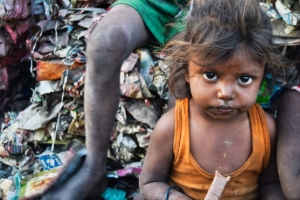
Causes of Poverty:
Poverty is a consequence of the uneven distribution of material resources and wealth on a global scale and within nations. Sociologists see it as a social condition of societies with an unequal and inequitable distribution of income and wealth, of the de-industrialization of Western societies, and the exploitative effects of global capitalism
Poverty is not an equal opportunity social condition. Around the world and within the U.S., women, children, and people of color are far more likely to experience poverty than are white men.
Sociologists recognize Poverty into few different types:
• Absolute poverty is what most people probably think of when they think of poverty, especially if they think about it at the global level. It is defined as the total lack of resources and means required to meet the most basic standards of living. It is characterized by a lack of access to food, clothing, and shelter. The characteristics of this type of poverty are the same from place to place.
• Relative poverty is defined differently from place to place because it depends on the social and economic contexts in which one lives. Relative poverty exists when one lacks the means and resources required to meet a minimum level of living standards that are considered normal in the society or community where one lives.
• Income poverty is the type of poverty measured by the federal government in the U.S. and documented by the U.S. Census.
• Cyclical poverty is a condition in which poverty is widespread but limited in its duration. This type of poverty is typically linked to specific events that disrupt a society, like war, an economic crash or recession, or natural phenomena or disasters that disrupt the distribution of food and other resources.
• Collective poverty is a lack of basic resources that are so widespread that it afflicts an entire society or subgroup of people within that society. This form of poverty persists over periods of time stretching across generations.
• Concentrated collective poverty occurs when the kind of collective poverty described above is suffered by specific subgroups within a society, or localized in particular communities or regions that are devoid of industry, good-paying jobs, and that lack access to fresh and healthy food.
• Case poverty occurs when a person or family is unable to secure resources required to meet their basic needs despite the fact that resources are not scarce and those around them are generally living well.
• Asset poverty is more common and widespread that income poverty and other forms. It exists when a person or household does not have enough wealth assets (in the form of property, investments, or money saved) to survive for three months if necessary.
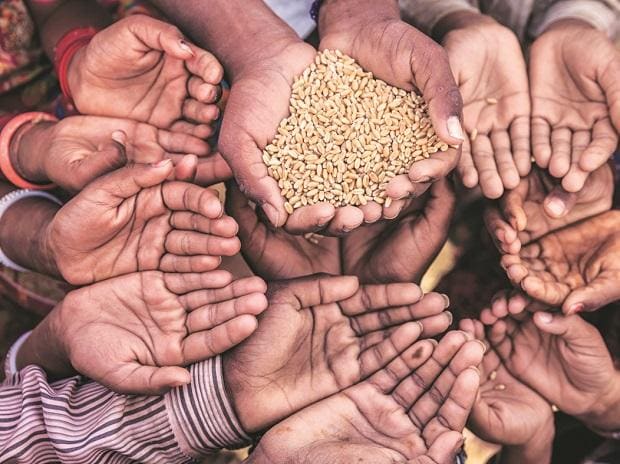
HUNGER:
Rises in the costs of living make poor people less able to afford items. Poor people spend a greater portion of their budgets on food than wealthy people. As a result, poor households and those near the poverty threshold can be particularly vulnerable to increases in food prices. For example, in late 2007 increases in the price of grains led to food riots in some countries. The World Bank warned that 100 million people were at risk of sinking deeper into poverty. Threats to the supply of food may also be caused by drought and the water crisis. Intensive farming often leads to a vicious cycle of exhaustion of soil fertility and decline of agricultural yields. Approximately 40% of the world’s agricultural land is seriously degraded. In Africa, if current trends of soil degradation continue, the continent might be able to feed just 25% of its population by 2025, according to United Nations University’s Ghana-based Institute for Natural Resources in Africa. Every year nearly 11 million children living in poverty die before their fifth birthday. 1.02 billion people go to bed hungry every night. According to the Global Hunger Index, Sub-Saharan Africa had the highest child malnutrition rate of the world’s regions over the 2001–2006 period.

 Eduindex
You must be logged in to post a comment.