

What is Irrigation?
Irrigation is the process of applying water to the crops artificially to fulfil their water requirements. Nutrients may also be provided to the crops through irrigation. The various sources of water for irrigation are wells, ponds, lakes, canals, tube-wells and even dams. Irrigation offers moisture required for growth and development, germination and other related functions.
The frequency, rate, amount and time of irrigation are different for different crops and also vary according to the types of soil and seasons. The types of irrigation systems are practised based on the different types of soils, climates, crops and resources.
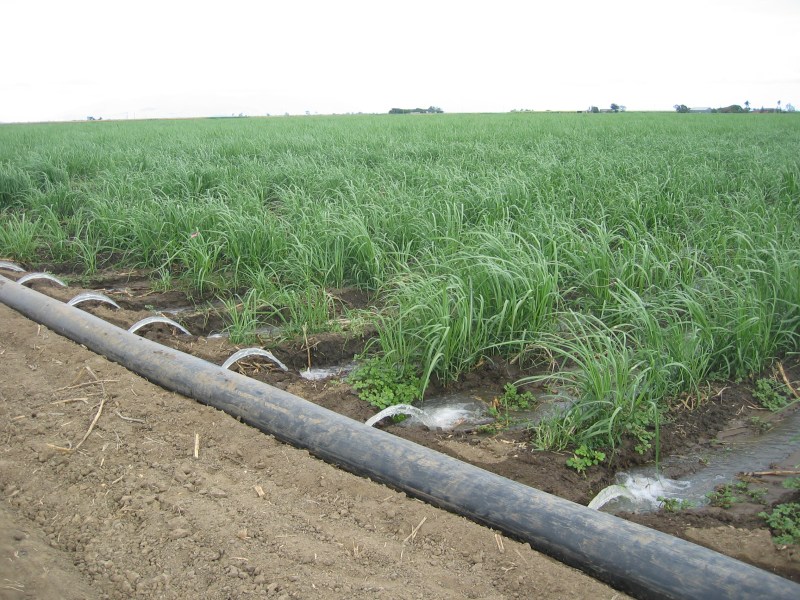
Methods of Irrigation:
Irrigation can be carried out by two different methods:
• Traditional Methods
• Modern Methods
Traditional Methods of Irrigation
In this method, irrigation is done manually. Here, a farmer pulls out water from wells or canals by himself or using cattle and carries to farming fields. This method can vary in different regions.
The main advantage of this method is that it is cheap. But its efficiency is poor because of the uneven distribution of water. Also, the chances of water loss are very high.
Some examples of the traditional system are pulley system, lever system, chain pump. Among these, the pump system is the most common and used widely.
Modern Methods of Irrigation
The modern method compensates the disadvantages of traditional methods and thus helps in the proper way of water usage.
The modern method involves two systems:
• Sprinkler system
• Drip system
SPRINKLER SYSTEM:
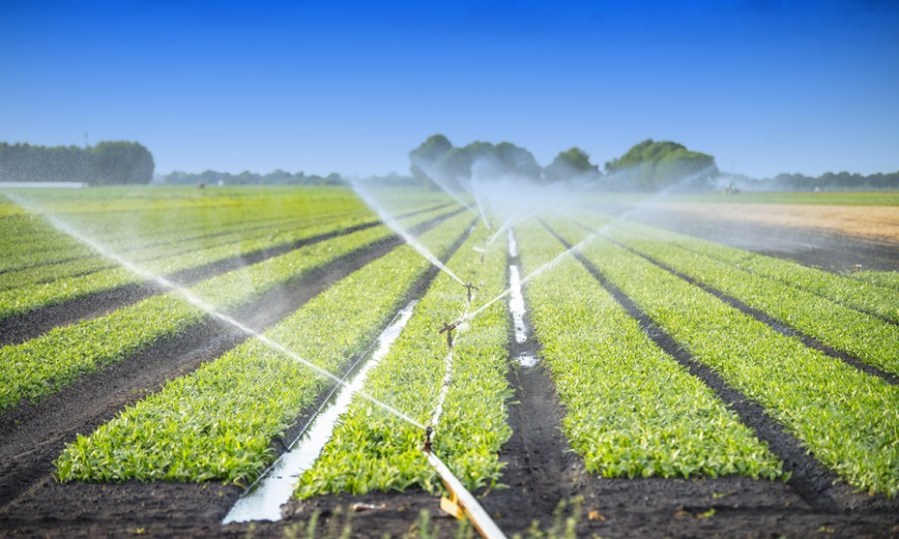
A sprinkler system, as its name suggests, sprinkles water over the crop and helps in an even distribution of water. This method is much advisable in areas facing water scarcity.
Here a pump is connected to pipes which generate pressure and water is sprinkled through nozzles of pipes.
DRIP SYSTEM:
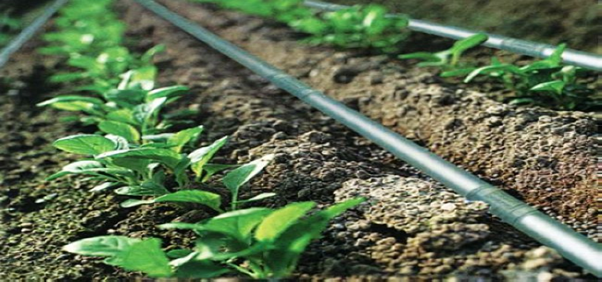
In the drip system, water supply is done drop by drop exactly at roots using a hose or pipe. This method can also be used in regions where water availability is less.
FEW OTHER TYPES OF IRRIGATION ARE:
Localized Irrigation
Water is scattered throughout the land under low pressure. A piped network, that passes throughout the soil, is used for water distribution so that all the plant gets water effectively.
Center Pivot Irrigation
Water is scattered throughout the land by a machine of sprinklers that move on wheeled towers in 360 degrees pattern or a circle that would move around the land and sprinkle water all over the soil and it is really efficient and effective and this procedure or system is well recommended in a lot of countries but mostly used in the USA.
Surface Irrigation
Water is scattered equally throughout the land with the help of gravitational pull and it doesn’t require a machine to take care of it. This consists of a vast amount of irrigation methods in which water is scattered, the things you need to have before you introduce the irrigation water to the basins are by siphons, gated pipe. This system is best suited for areas that have a parallel slope or flat surface and a moderate fine-textured soil type. This helps the surface to have water spread through it evenly as it moves down across the basin.
There are three types of surface irrigation:
• Basin irrigation
• Furrow irrigation
• Flood irrigation
• Bay/border strip irrigation
Lateral Move Irrigation
Water is scattered throughout the land evenly through a series of pipes or water lines, they can either be controlled by hands which could be less effective compared to a man-made machine for sprinkling water all over the land. The sprinkles move only a recommended distance on the field and for the next land, the Reconnection of the water hose is required to cover the next distance. Compared to the other irrigation systems, lateral move irrigation system tends to be way cheaper but requires a lot of labor or manpower.
Sub-Irrigation
In this process, the surrounding water table is raised to scatter water evenly across the land. Methods like pumping stations, canals, gates, ditches, and a few other systems are used to raise the water table. This irrigation method is one of the most effective for scattering water throughout the areas with a high water table.
Manual Irrigation
Water is scattered across evenly around the field with the help of manual power such as labors and watering cans. This system is very labor concentrated.
Each of these methods is useful in its own specific way and it depends on how you are using it and what you are using it on. The lade matters as sometimes the best irrigation system might seem to have flaws in it. Make sure you determine the soil you are using and check whether you have a good supply reservoir filled with water around you which would make it easier for you to take care of your plants.

 Eduindex
You must be logged in to post a comment.