Why Chainlink is Critical for the Future of Smart Contracts

  As the blockchain industry continues to grow, smart contracts have emerged as one of its most promising applications. These self-executing contracts allow for secure and automated transactions between parties, without the need for intermediaries. However, for smart contracts to reach their full potential, they must be able to connect to real-world data sources and external systems. This is where Chainlink comes in. If you are interested in bitcoin trading, then you can start your trading journey by (Official App)

Chainlink is a decentralized oracle network that provides reliable, tamper-proof inputs and outputs for smart contracts. In other words, it acts as a bridge between smart contracts and the outside world, enabling them to access real-world data and execute accordingly. In this article, we will explore why Chainlink is critical for the future of smart contracts, how it works, and what benefits it offers.

Photo by RODNAE Productions on Pexels.com

What is Chainlink?

Chainlink is a decentralized oracle network that provides secure and reliable inputs and outputs for smart contracts. Oracles are essential for smart contracts because they enable them to access data outside of the blockchain, such as stock prices, weather reports, and sports scores. Without oracles, smart contracts would be limited to executing only within the blockchain, which would significantly reduce their usefulness.

Chainlink is unique in that it is a decentralized oracle network, meaning that it is not controlled by a single entity or authority. Instead, it uses a network of nodes to provide inputs and outputs for smart contracts. These nodes are run by independent operators, who are incentivized to provide accurate data by receiving payment in LINK, Chainlink’s native cryptocurrency.

How Does Chainlink Work?

Chainlink works by connecting smart contracts to real-world data sources and external systems. It does this by using a three-step process:

  • Aggregation: Chainlink aggregates data from multiple sources to ensure accuracy and reliability. This helps to mitigate the risk of a single point of failure or a single source of data being compromised.
  • Validation: Chainlink validates the data using multiple nodes to ensure that it is accurate and tamper-proof. If a node provides inaccurate data or fails to respond, it is penalized by losing LINK.
  • Delivery: Chainlink delivers the data to the smart contract in a format that it can understand and execute accordingly. This enables the smart contract to execute autonomously and securely, without the need for intermediaries.

Why is Chainlink Critical for the Future of Smart Contracts?

Chainlink is critical for the future of smart contracts because it enables them to access real-world data and external systems. Without Chainlink, smart contracts would be limited to executing only within the blockchain, which would significantly reduce their usefulness.

Chainlink also offers several other benefits for smart contracts, including:

  • Security: Chainlink’s decentralized oracle network provides a high level of security for smart contracts. By using multiple nodes to validate data, Chainlink helps to mitigate the risk of a single point of failure or a single source of data being compromised.
  • Reliability: Chainlink’s aggregation process ensures that data is accurate and reliable. This helps to ensure that smart contracts execute correctly and as intended.
  • Flexibility: Chainlink can connect smart contracts to a wide range of data sources and external systems, making them more versatile and adaptable to real-world use cases.
  • Cost-effectiveness: Chainlink’s decentralized oracle network reduces the cost of accessing real-world data for smart contracts. This is because it eliminates the need for intermediaries and reduces the risk of data tampering.

Use Cases for Chainlink

Chainlink has a wide range of use cases in various industries. Some of the most promising use cases include:

Finance

Chainlink can be used in the finance industry to connect smart contracts to financial data sources, such as stock prices and interest rates. This can enable the creation of decentralized financial products, such as prediction markets, insurance products, and decentralized exchanges.

Supply Chain

Chainlink can be used in the supply chain industry to provide real-time data on shipments, inventory levels, and other key metrics. This can enable more efficient and transparent supply chain management, as well as reduce the risk of fraud and counterfeiting.

Gaming

Chainlink can be used in the gaming industry to provide real-time data on in-game events, such as scores, achievements, and rewards. This can enable the creation of more immersive and interactive games, as well as provide players with more control over their in-game assets.

Insurance

Chainlink can be used in the insurance industry to provide real-time data on weather events, traffic patterns, and other key metrics. This can enable more accurate and automated insurance products, such as parametric insurance and microinsurance.

Conclusion

Chainlink is critical for the future of smart contracts because it enables them to access real-world data and external systems. It offers several benefits, including security, reliability, flexibility, and cost-effectiveness. With its decentralized oracle network and wide range of use cases, Chainlink has the potential to revolutionize various industries, from finance to gaming to insurance. As blockchain technology continues to evolve, Chainlink will undoubtedly play a vital role in its development and adoption.

FAQs

What is the LINK token?

The LINK token is Chainlink’s native cryptocurrency. It is used to incentivize node operators to provide accurate data and penalize them for providing inaccurate data. It can also be used to pay for data feeds and other services on the Chainlink network.

How is Chainlink different from other oracles?

Chainlink is unique in that it is a decentralized oracle network, meaning that it is not controlled by a single entity or authority. This helps to ensure that the data provided to smart contracts is accurate and tamper-proof.

What are some examples of companies using Chainlink?

Several companies are currently using Chainlink, including SWIFT, Google, Oracle, and Web3 Foundation.

How can businesses integrate Chainlink into their operations?

Businesses can integrate Chainlink into their operations by using the Chainlink API or partnering with a Chainlink node operator. They can also develop their own Chainlink nodes if they have the necessary technical expertise.


What is Chainlink and How Does it Work? A Comprehensive Guide

  In the world of blockchain, smart contracts are becoming increasingly popular. These self-executing contracts allow for trustless transactions to take place without the need for intermediaries. However, one of the main challenges with smart contracts is accessing real-world data. That’s where Chainlink comes in. You can go for crypto trading and investment by Register Today and logging into Bitcoin smarter.

Chainlink is a decentralized oracle network that connects smart contracts to real-world data and events. In this comprehensive guide, we’ll explore what Chainlink is, how it works, and its many use cases.

What is Chainlink?

Chainlink is a decentralized oracle network that provides smart contracts with secure access to off-chain data. In simpler terms, it’s a bridge between blockchain and the real world.

Chainlink was founded in 2017 by Sergey Nazarov and Steve Ellis. Its native cryptocurrency, LINK, is used to incentivize the network’s nodes to provide accurate and reliable data.

Photo by Karolina Grabowska on Pexels.com

How Does Chainlink Work?

Chainlink works by using a decentralized network of nodes to retrieve data from various sources, such as APIs, websites, and other blockchains. These nodes are called oracles, and they are responsible for retrieving and validating the data before sending it back to the smart contract.

Here’s a step-by-step breakdown of how Chainlink works:

  • A smart contract requests data from Chainlink by creating a job.
  • The job is then assigned to one or more oracles.
  • The oracles retrieve the data from various sources.
  • The oracles validate the data to ensure its accuracy and reliability.
  • The oracles then send the data back to the smart contract.
  • The smart contract can then execute based on the received data.

Chainlink’s decentralized network ensures that the data provided to smart contracts is secure, reliable, and tamper-proof. It also allows for customization, as smart contract creators can choose which nodes to use and which data sources to access.

Why is Chainlink Important?

Chainlink is important because it solves a critical problem in the world of smart contracts. Smart contracts are only as good as the data they rely on, and Chainlink provides a reliable and secure way to access real-world data.

Without Chainlink, smart contracts would be limited to on-chain data only, which severely limits their potential use cases. With Chainlink, smart contracts can access data from virtually any source, opening up a world of possibilities.

Use Cases for Chainlink

Chainlink has many potential use cases across various industries. Here are just a few examples:

Finance

Chainlink can be used to provide secure and reliable price feeds for financial applications, such as decentralized exchanges and derivatives platforms. It can also be used to access credit scores and other financial data for lending platforms.

Gaming

Chainlink can be used to provide verifiable randomness for gaming applications, such as lotteries and online casinos. It can also be used to provide real-world data for sports betting platforms.

Supply Chain Management

Chainlink can be used to provide real-time tracking of goods and materials throughout the supply chain. This can help prevent fraud and ensure that products are authentic and ethically sourced.

Insurance

Chainlink can be used to provide real-world data for insurance applications, such as weather data for crop insurance and flight data for travel insurance.

Conclusion

Chainlink is a critical component of the blockchain ecosystem, providing reliable and secure access to real-world data for smart contracts. Its decentralized network and customizable options make it a powerful solution with many potential use cases.

Whether you’re a developer looking to integrate Chainlink into your application or a user curious about its potential, understanding what Chainlink is and how it works is essential. With this comprehensive guide, you’re now equipped with the knowledge to explore the world of Chainlink and its many possibilities.

FAQs about Chainlink

What is the difference between Chainlink and other oracle solutions?

Chainlink differs from other oracle solutions in several ways. First, it’s decentralized, which means that there’s no single point of failure. This makes it more secure and reliable than centralized solutions.

Second, Chainlink provides a wide range of customization options. Smart contract creators can choose which data sources to access and which nodes to use. This allows for greater flexibility and can result in more accurate and relevant data.

What is the LINK token used for?

The LINK token is used to incentivize nodes to provide accurate and reliable data. Nodes are paid in LINK tokens for their services, and smart contract creators must pay in LINK tokens to use the Chainlink network.

How does Chainlink ensure the security of its network?

Chainlink uses a combination of cryptographic protocols, secure hardware, and tamper-resistant software to ensure the security of its network. Nodes are required to stake LINK tokens as collateral, which incentivizes them to behave honestly.

Is Chainlink easy to use?

Chainlink can be complex for non-technical users, but there are tools and resources available to make it easier. The Chainlink documentation provides detailed instructions on how to use the network, and there are third-party tools available to simplify the process.

Understanding the Benefits of Chainlink for Decentralized Finance

  Blockchain technology has revolutionized the world of finance by creating a decentralized system that removes the need for intermediaries, reduces costs, and increases efficiency. One of the most exciting innovations in the blockchain space is decentralized finance (DeFi), which has seen explosive growth in recent years. In DeFi, smart contracts automate financial transactions, allowing for more transparent, secure, and accessible financial services. However, one major challenge for DeFi is the lack of reliable and secure data feeds, which are essential for executing smart contracts. This is where Chainlink comes in – a decentralized oracle network that provides a secure and reliable bridge between smart contracts and external data sources. In this article, we will explore the benefits of Chainlink for DeFi. If are you interested in bitcoins trading then Join Immediate Edge Trading Platform.

Photo by Anna Tarazevich on Pexels.com

What is Chainlink?

Chainlink is a decentralized oracle network that connects smart contracts with external data sources, such as price feeds, weather reports, sports scores, and more. In other words, it acts as a bridge between on-chain and off-chain data, allowing smart contracts to access and use information from the real world. Chainlink was founded in 2017 by Sergey Nazarov and Steve Ellis, and it has since become one of the most popular oracle networks in the blockchain space.

How does Chainlink work?

Chainlink works by connecting smart contracts with decentralized oracles, which are nodes that retrieve and verify data from off-chain sources. These oracles are incentivized to provide accurate and timely data through a system of staking and reputation. When a smart contract needs to access external data, it sends a request to the Chainlink network, which then selects a set of oracles based on their reputation and availability. The oracles retrieve the data from the external sources, verify its accuracy, and then send it back to the smart contract. This process ensures that the data used by smart contracts is reliable and tamper-proof.

Benefits of Chainlink for DeFi

Reliable Data Sources

One of the biggest challenges for DeFi is the lack of reliable and secure data feeds. Smart contracts rely on accurate and up-to-date information to execute financial transactions, such as trading, lending, and insurance. Chainlink solves this problem by providing a network of decentralized oracles that retrieve and verify data from multiple sources, ensuring that the data used by smart contracts is accurate and tamper-proof.

Decentralized Oracle Network

Chainlink’s decentralized oracle network is one of its key strengths. Unlike centralized oracles, which are controlled by a single entity and can be subject to manipulation or censorship, Chainlink’s oracles are distributed across multiple nodes, making it highly resistant to attacks and failures. This also ensures that there is no single point of failure, which makes the network more reliable and secure.

High Level of Security

Security is paramount in DeFi, as the value of assets at stake is often significant. Chainlink’s oracle network uses a combination of cryptographic techniques and economic incentives to ensure that data used by smart contracts is secure. The system uses a reputation-based model, where oracles with a good track record are rewarded, while those that provide inaccurate data are penalized. Additionally, the system uses advanced cryptography to ensure that the data is not tampered with or manipulated during transmission.

Flexibility and Customization

Chainlink is highly customizable, allowing developers to create their own oracle networks and customize them to their specific needs. This flexibility means that developers can design their own data sources and customize the parameters of their smart contracts to fit their requirements. This allows for more complex and sophisticated smart contracts, which can perform a wide range of functions.

Cross-Chain Interoperability

One of the most exciting features of Chainlink is its ability to work across different blockchain networks. This means that developers can create smart contracts that interact with multiple blockchains, which increases the flexibility and scope of DeFi applications. Additionally, Chainlink can integrate with traditional financial systems, providing a bridge between the old and new financial worlds.

Use Cases for Chainlink in DeFi

Chainlink has a wide range of use cases in DeFi, including:

Decentralized Exchanges (DEXs)

Decentralized exchanges (DEXs) rely on accurate and up-to-date price feeds to execute trades. Chainlink provides a reliable and secure source of price data, which ensures that trades are executed at the correct price.

Insurance

Insurance is an important application of DeFi, but it requires accurate and reliable data to assess risk and calculate premiums. Chainlink provides a secure and tamper-proof source of data, which can be used to create innovative insurance products.

Lending and Borrowing

Lending and borrowing are key functions of DeFi, but they require accurate and up-to-date information to assess creditworthiness and calculate interest rates. Chainlink provides a reliable source of data, which can be used to create sophisticated lending and borrowing platforms.

Prediction Markets

Prediction markets rely on accurate and timely data to make predictions about future events. Chainlink provides a secure and reliable source of data, which can be used to create prediction markets for a wide range of events.

Gaming

Gaming is an emerging application of DeFi, but it requires secure and tamper-proof data to ensure fairness and prevent cheating. Chainlink provides a reliable and secure source of data, which can be used to create innovative gaming platforms.

Challenges and Criticisms of Chainlink

While Chainlink has many benefits, it is not without its challenges and criticisms. Some of the key challenges include:

  • Centralization: While Chainlink is decentralized in theory, the reality is that a few large nodes control a significant portion of the network. This could potentially lead to centralization and reduce the security and reliability of the network.
  • Complexity: Chainlink is a complex system that requires significant technical expertise to understand and use. This could limit its adoption and make it less accessible to developers with limited experience.
  • Cost: Chainlink’s decentralized oracle network can be expensive to use, particularly for small-scale applications. This could limit its adoption and make it less accessible to developers with limited resources.

Conclusion

Chainlink is an important innovation in the DeFi space, providing a secure and reliable source of data for smart contracts. Its decentralized oracle network and reputation-based model ensure that the data used by smart contracts is accurate and tamper-proof, while its flexibility and customization allow for sophisticated and complex applications. While there are challenges and criticisms, Chainlink has the potential to transform the DeFi landscape and create new opportunities for financial innovation.

FAQs

What is Chainlink?

Chainlink is a decentralized oracle network that connects smart contracts with external data sources, allowing for more reliable and secure financial transactions in DeFi.

How does Chainlink ensure the security of its data feeds?

Chainlink uses a reputation-based model and advanced cryptography to ensure that the data used by smart contracts is secure and tamper-proof.

What are some of the use cases for Chainlink in DeFi?

Chainlink has many use cases in DeFi, including decentralized exchanges, insurance, lending and borrowing, prediction markets, and gaming.

What are some of the challenges facing Chainlink?

Chainlink faces challenges with centralization, complexity, and cost, which could limit its adoption and accessibility.

How does Chainlink compare to other oracle networks in the blockchain space?

Chainlink is one of the most popular and widely used oracle networks in the blockchain space, but there are other competing oracle networks, such as Band Protocol and API3.

Everything You Need to Know About Ethereum

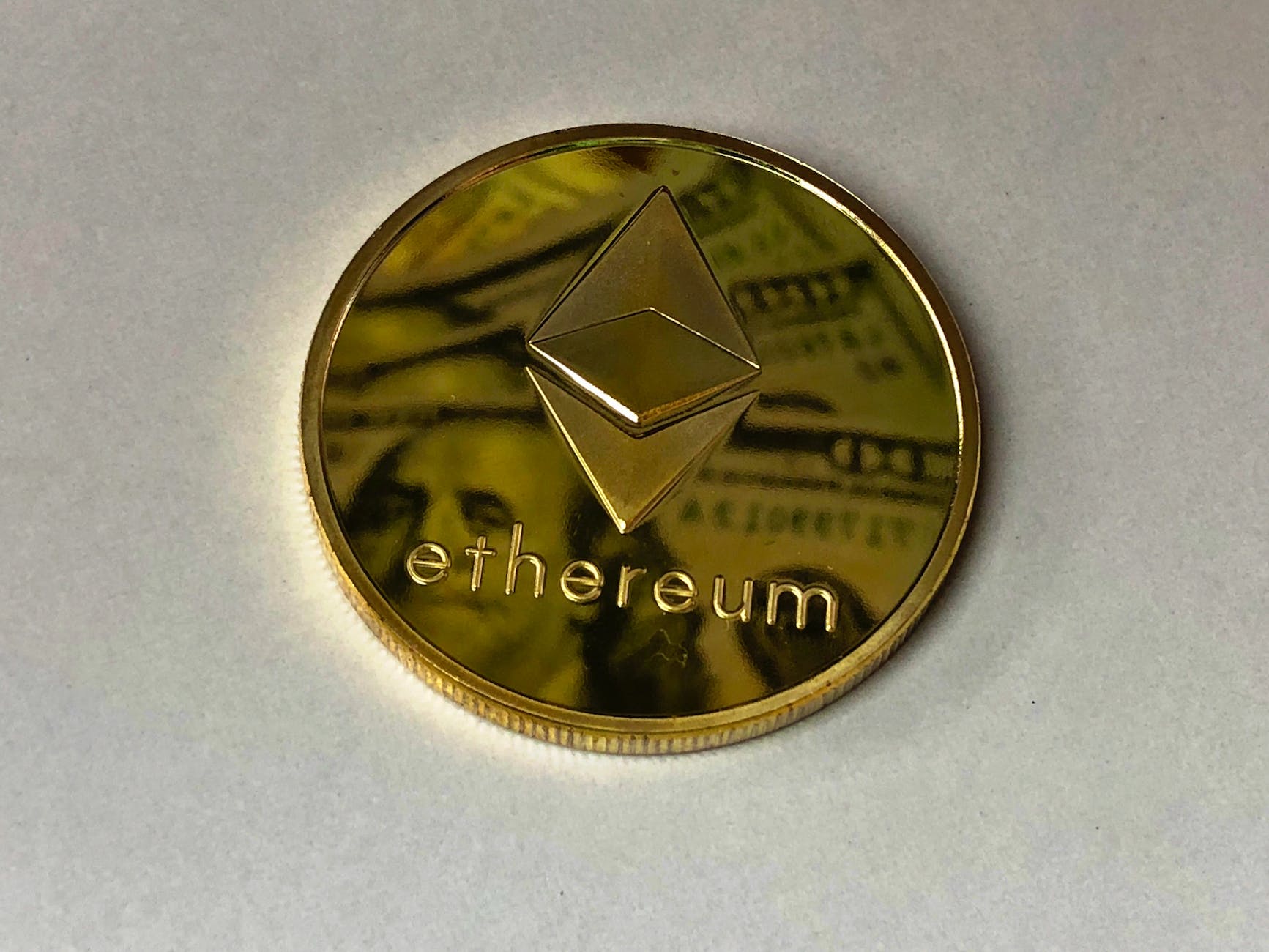
  Ethereum is a decentralized platform in the crypto world which has recently introduced the MERGE in the trade market. If you do not have much idea on Ethereum and other related cryptocurrencies then you can keep an eye on the following article to know more. Click to sign up & start trading ethereum. Learn more.

Photo by David McBee on Pexels.com

The Entire Background on Ethereum

Ethereum is an open-source, publicly accessible, and decentralized blockchain platform that is designed to support the development and deployment of decentralized applications, or dApps. This essay will provide a comprehensive overview of Ethereum, including its historical context, underlying technology, potential applications, and future potential. By delving into these critical aspects of the platform, readers will gain a deeper understanding of the unique features and capabilities of Ethereum, as well as the broader implications of this emerging technology for the world of blockchain and decentralized applications.

Ethereum’s Past

Vitalik Buterin, inspired by Bitcoin’s blockchain technology, introduced Ethereum in 2013. He saw a network capable of hosting both a digital money and a network of decentralized programmes. In 2014, the Ethereum platform was created after its creators successfully crowd funded $18 million. 

Ethereum’s Decentralized Technology

Ethereum is a blockchain-based distributed application (dApp) platform. Ethereum is a platform that allows developers to construct smart contracts and decentralised apps on top of its blockchain, whereas Bitcoin is mostly used as a digital money. They get rid of the need for middlemen like banks, brokers, and attorneys.

Proof of Stake (PoS), the consensus method used by Ethereum’s blockchain, is more energy-efficient than Bitcoin’s Proof of Work (PoW). In contrast to PoW, which relies on processing power, PoS enables validators to produce and verify new blocks on the blockchain depending on the number of coins they own. Since validators stake their bitcoin and stand to lose it if they engage in harmful activity, they have an incentive to keep the network secure.

Potential Applications of Ethereum

Ethereum’s blockchain is used to power dApps, or decentralized apps. Trust and security-critical use cases are well-suited to these open-source, transparent, and tamper-proof solutions. The most popular applications of Ethereum include:

Ethereum is the backbone of the DeFi movement, which seeks to build a global, borderless, decentralized financial system. 

With Ethereum, developers may create games that run on the blockchain and provide players the ability to purchase, sell, and trade virtual items. These items are kept on the distributed ledger and may be utilized in a wide variety of video games and app stores.

Ethereum’s identity tools may be used to build private, secure, and user-managed digital ID systems. These decentralised methods of identity verification remove the requirement for third parties like governments or companies.

Blockchain technology, such as Ethereum’s, makes it possible to construct an immutable log of a product’s travels through the supply chain. Businesses and customers alike will benefit from being able to verify the legitimacy and provenance of goods.

Ethereum may be used to build ad-hoc, censorship-resistant social networks without the need for a governing body or third-party moderators. Using these systems, individuals are in charge of their own information and may safeguard their own privacy.

What’s Next for Ethereum

The outlook for Ethereum is bright, owing in large part to the dedicated development team that is continuously striving to enhance the platform and introduce new features. Among the most eagerly anticipated updates is Ethereum 2.0, which promises to replace the existing Proof of Work (PoW) consensus mechanism with Proof of Stake (PoS), as well as incorporate novel features like sharding to improve the network’s scalability. As a result of these improvements, Ethereum is poised to become more robust and faster, capable of handling a greater volume of transactions and supporting a broader range of decentralized applications. These developments hold great potential for advancing the state of the art in blockchain technology and driving further innovation in the space. 

One of Ethereum’s primary benefits is that it can run smart contracts, which is a kind of computer programme. This implies that decentralized apps (including online marketplaces, voting systems, and more) may be built on the Ethereum blockchain and utilized for a wide range of purposes. A smart contract is a computer-generated agreement that is pre-set to go into effect under certain circumstances. The trust and openness it affords are unparalleled in the world of legal transactions.

Ethereum also has the added advantage of having speedier transaction times. In contrast to Bitcoin, where a transaction might take up to 10 minutes to complete, Ethereum transactions normally only take a few seconds. Due to the use of a distinct consensus technique called Proof of Stake, Ethereum is able to process transactions far more quickly.

Conclusion

Ethereum is a groundbreaking platform that has significantly advanced the cryptocurrency industry. Smart contract execution and reduced transaction times are only two ways in which it has the potential to transform the way we do business online. The hazards and difficulties associated with this new technology, however, must be overcome. Users may make well-informed judgments on whether or not to use Ethereum if they have a thorough grasp of the advantages and disadvantages of this cryptocurrency. Ethereum is a major development in the field of decentralized technology and has the potential to drastically alter the way we interact with one another in the digital sphere.

How are NFTs different from traditional assets?

  NFTs differ from traditional assets because they represent digital titles rather than physical objects. While a traditional asset such as a stock certificate represents ownership of a company, an NFT represents ownership of the right to control that specific digital asset. Websites like Create Account offer trading features like artificial intelligence, trading bots, market analysis, live customer and much more for bitcoin traders.   The NFT is not the physical object itself but rather its title. Regardless of how often an NFT is traded, its title or ownership will not be affected unless there is a change in its underlying rights.

Photo by RODNAE Productions on Pexels.com

NFTs can change hands frequently without affecting their underlying value because they are not tied to physical objects that could wear out with use or be stolen/damaged by others. It can also make it easier to prove that you own an item because you have its digital proof on the blockchain rather than relying on now-ancient paper documents.

It means that once an NFT is ‘sold’, no one else has the right to sell it, trade it, or give it away. It prevents their value from going down in the case of downturns. One of the most popular applications for NFTs is collectables like card games; however, more applications for ownership rights and trading will follow as developers gain more experience with blockchain technology.

This freedom is also facilitated by the fact that each NFT is unique and can contain various information, such as its price/market value, supply and demand figures, and growth rate. In addition, every NFT has a verifiable identity that people on the blockchain can create. The data associated with it at the time of creation will remain unchanged on the blockchain. No one can change the original copy of that data; people could overwrite only an identical copy of the same data (if any) through forgery.

Are NFTS similar to cryptocurrencies?

What NFTs are not is a cryptocurrency or a digital currency. While many technologies associated with cryptocurrencies are compatible with NFTs, they are not identical. Cryptocurrencies are virtual currencies that use blockchain technology to ensure security and transparency. 

One of the reasons why NFTs can be used almost interchangeably is because they do not require any external third party to confirm the ownership of an item or rights over it. It makes them better suited for applications where a third party is needed or where there are a lot of trust issues (like in contracts). In addition, it means that users can use each NFT for a specific purpose, and no one else can use it similarly. Comparatively, cryptocurrencies like Bitcoin do not have this attribute; instead, all of them have a unique value attributed to them.

The uniqueness of NFTs: 

This uniqueness also makes NFTs resistant to fractional reserve banking as they cannot be created at zero cost, as explained here. Any NFT associated with a particular asset will only contain enough currency or value to cover the needs of its creator and any other owners at its launch date. Each NFT will have a much smaller circulation than that of cryptocurrencies. 

This lack of fractional reserve banking in using NFTs is also why their value is (currently) more stable. Cryptocurrencies, by comparison, continue to see wild price swings even after a decade in use.

Aside from this, there is another significant difference between NFTs and cryptocurrencies: ownership over an asset (NFT) cannot be transferred without the new owner changing every node on the blockchain network. Instead, it uses self-executing intelligent contracts – computer protocols that ensure transparency and trust between two parties while interacting.

Authenticity and preservation:

Blockchains support NFTs because they can make it possible for anyone to authenticate the authenticity of an item without having to rely on a third party. It also makes it easier to preserve the value of a particular item as the user can quickly transfer it from one owner to another.

With their ability to cut costs, eliminate third-party interference, and enhance security practices and their value preservation, NFTs will impact the financial, gaming and other industries in the foreseeable future. Furthermore, when you own an NFT, you do not need to trust the issuer or anyone else that it is safe. You are its sole owner; no one can change this unless you decide to alter the associated data. All of this makes using NFTs a significant improvement on traditional assets that users could lose – or damage by others – without your knowledge or consent.

Additionally, because no party has rights over any assets issued in the NFT standard, they have a limited supply in circulation (the ‘minting’ is hard-wired into every asset), and they cannot be counterfeited; meaning that each one is sure to hold its value as long as there are buyers who need it.

An Overview of the Rapidly Growing DeFi Ecosystem

  The DeFi (Decentralized Finance) ecosystem is a rapidly growing sector in the world of finance. DeFi refers to a new financial system built on top of Bitcoin Loophole  Technology, which operates without intermediaries or centralized control. DeFi has gained significant traction over the past few years, with the total value locked in DeFi protocols reaching an all-time high of over $80 billion in January 2021.

The Benefits of DeFi

Photo by RODNAE Productions on Pexels.com

Subtitle: Decentralization

One of the key benefits of DeFi is that it is built on decentralized networks, meaning that it operates on a peer-to-peer (P2P) basis without intermediaries. This makes DeFi more transparent, secure, and resistant to censorship or fraud, compared to traditional financial systems. Decentralization also means that DeFi users have control over their own financial assets, without the need for intermediaries such as banks or other financial institutions.

Accessibility

Another advantage of DeFi is its accessibility. Unlike traditional financial systems, which often require extensive documentation and can be difficult to access for people without bank accounts, DeFi is accessible to anyone with an internet connection. This makes DeFi a valuable tool for people in countries with underdeveloped financial systems, or for those who are unbanked or underbanked.

Innovation

DeFi is also driving innovation in the world of finance. DeFi protocols are being developed at an incredible pace, offering new financial products and services that were previously not possible. For example, DeFi protocols now offer P2P lending and borrowing, yield farming, stablecoins, and prediction markets, among other services. The DeFi ecosystem is also constantly evolving, with new protocols and products being developed all the time.

The Risks of DeFi

Security

While DeFi offers many benefits, it also comes with its own set of risks. One of the main risks is security. Because DeFi protocols operate on blockchain technology, they are vulnerable to hacking and other forms of cyberattacks. This can result in the loss of funds for DeFi users. To mitigate these risks, it is important for DeFi users to educate themselves on the security measures that are in place, such as multi-signature wallets and smart contract auditing.

Volatility

Another risk associated with DeFi is volatility. Because many DeFi protocols are built on cryptocurrencies, the value of these assets can be highly volatile. This can result in substantial losses for DeFi users if they are not properly hedged against the risks of volatility. To mitigate this risk, it is important for DeFi users to understand the nature of the assets they are holding and to have a solid risk management strategy in place.

Regulation

Regulation is another risk for the DeFi ecosystem. While DeFi operates on decentralized networks, it is still subject to the laws and regulations of the countries in which it operates. This can result in challenges for DeFi protocols and for users, who may be required to comply with various regulations and reporting requirements. To mitigate these risks, it is important for DeFi protocols to understand the regulatory environment in which they operate and to work closely with regulators to ensure that they are in compliance.

Conclusion

The DeFi ecosystem is a rapidly growing sector in the world of finance, offering many benefits such as decentralization, accessibility, and innovation. However, it also comes with its own set of risks, such as security, volatility, and regulation. To mitigate these risks, it is important for DeFi users to educate themselves on the security measures that are in place and to have a solid risk management strategy in place. This includes understanding the nature of the assets they are holding and being aware of the regulatory environment in which they operate. As the DeFi ecosystem continues to grow and evolve, it will be important for users to stay informed and to stay up-to-date with the latest developments in the sector. With the right knowledge and preparation, DeFi has the potential to revolutionize the world of finance and provide new and innovative financial services to people all over the world.