Salute to Rani Chennamma of Princely State Kittur: Presently Part of Karnataka State

 For the independence of the country from the British rulers, from time to time, many people fought and sacrificed their lives. Unfortunately, in the school history books, a few family’s names are highlighted as if, for them, India got her independence. In this article, I am presenting the case of Rani Chennamma, who bravely fought against British rule, but her great sacrifice was not highlighted in our history books across the country. 

Indians will not forget the valour of Queen/Rani Chennamma.  She was born on October 23, 1778, in Kakati village in the present Belagavi district of Karnataka in the Lingayat community and received training in horse riding, sword fighting, and archery from a young age. At the age of 15, her marriage was performed with King/Raja Mallasarja of the Desai family, who ruled the princely state until 1816.  Chennamma’s husband died in 1816, leaving her with a son and a state full of volatility. Later on, in 1824, her son died. Rani Chennamma was left with the State of Kittur and the great task of maintaining its independence from the British. Following the death of her husband and son, Rani Chennamma adopted Shivalingappa in 1824 and made him heir to the throne. This irked the East India Company, who ordered Shivalingappa’s expulsion. The State of Kittur came under the administration of the Dharwad collectorate in charge of St John Thackeray, of which Mr. Chaplain was the Commissioner; both of them did not recognise the new ruler and notified Kittur to accept British control. Because Lord Dalhousie the Governor General of India, introduced a policy called ‘The Doctrine of Lapse’   to annex the independent Indian States from 1848 in case the ruler of an independent princely state died childless. In 1823, Rani Chennamma sent a letter to Mountstuart Elphinstone, Lieutenant-Governor of the Bombay province, pleading her case, but the request was turned down, and war broke out. Rani Chennamma retaliated and killed a British official to protect and safeguard her homeland. She was trained in martial arts and military tactics and was a formidable leader. She led her army into battle, using guerrilla warfare tactics to surprise the British forces. The war lasted several days, but ultimately, the British could succeed due to their superior firepower. In the first war, during October 1824, British forces lost heavily, and St John Thackeray, collector and political agent, was killed in the war.  Two British officers, Sir Walter Elliot and Mr Stevenson, were also taken as hostages. Rani Chennamma released them with an understanding with the Chaplain that the war would be terminated, but the Commissioner Chaplain continued the war with more forces. During the second war, the sub-collector of Solapur, Munro, nephew of Thomas Munro, was killed. Rani Chennamma fought fiercely with the aid of her deputy, Sangolli Rayanna, but was ultimately captured and imprisoned at Bailhongal Fort, where she died on February 21, 1829, due to her health condition. Despite her capture and imprisonment in Bailhongal Fort (Belagavi, Karnataka), Rani Chennamma’s spirit remained unbroken.

 She became a symbol of courage and defiance. In 2007, the Indian Government honoured her by issuing a postage stamp. It is pertinent to mention that many Kannada folk songs  (Lavanis)  are recited that fondly remember Rani Chennamma as a protector and guardian. 

Regarding ‘Lavani’, it may be mentioned that it is a vibrant and expressive folk song with its roots in the cultural heritage of Maharashtra but has also found a place in certain parts of Karnataka. The word ‘Lavani’ is derived from the Marathi term “Lavanya,” which means beauty.

My salute to such a great Rani. She was a genius Rani endowed with much prowess, and her bravery is a source of inspiration irrespective of gender.

Prof Shankar Chatterjee, Hyderabad

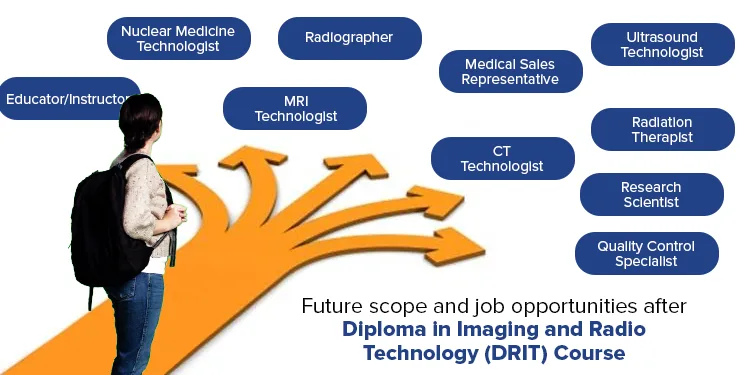
Future scope and job opportunities after Diploma in Imaging and Radio Technology (DRIT) course

Diploma in Imaging and Radio Technology (DRIT) course

Choosing a fascinating  career in Imaging and Radio Technology can open up so many opportunities in various fields of the healthcare sector. After this course you can also join as well as in research, academic, and various corporate industries.There are various Best paramedical colleges which provide best placement opportunities after the Diploma in Imaging and Radio Technology (DRIT) course.

After this diploma there are also job opportunities in the government sector too. You can join AIIMS, PGI, and other government hospitals and healthcare centres. You can also serve in various community centres and other district hospitals on attractive salary packages.

1.Radiographer: Radiographer famously known as radio technologists. After the DRIT course you can also become a Radiographer and it is one of the most demanding paramedical jobs in the medical sector. They are experts in handling various instruments in Radiology centres. They take out clear images of the patient’s body. They also control and ensure safety of patients while taking out images with dangerous rays coming out from machines which are very dangerous to the human body. They minimise the exposure of dangerous rays and patient body contact.

2. MRI Technologist: MRI technologists are the experts of operating magnetic resonance imaging (MRI) scanners. They create clear images of patients’ different body parts so the abnormalities inside the patient’s body could be identified and diagnosed with the proper medical treatment. MRI Technicians produce detailed images of mainly every internal structure in the human body like the organs, bones, muscles and blood vessels. With the help of these images Medical consultants identify the abnormality in the patient body to provide treatment. MRI technicians play a very important role in diagnosing various medical conditions of the patients.

3. CT Technologist: A CT technologist is mindful of helping patients and working hardware to perform radiologic exams. They plan and calibrate the CT filtering hardware. The technologist clarifies the preparation to the understanding, positions them for the check and makes a difference so they stay calm amid the method. After the strategy, the technologist assesses the picture closely to make beyond any doubt it’s clear.

In expansion to CT and CAT filters, a technologist may moreover perform ultrasounds, X-rays or mammograms, and they can run extra symptomatic tests.

4. Ultrasound Technologist: 

Ultrasound professionals are trained in creating images mainly called ultrasounds or sonograms. Sonography is done with the help of  high-frequency sound waves to create pictures of the human body’s organs and tissues. A sonographer is responsible for checking parts of your body with various equipment and  tries to create a clear image. In this process high sound waves are sent in the body and on behalf of their echoes the image formation is done by the Sonographer experts. The echoes shape a picture of the interior of your body on the sonographer’s computer screen.

5. Nuclear Medicine Technologist: A nuclear medicine technologist conducts nuclear imaging tests.He also assists doctors with making medical diagnoses of the patient. Under the supervision of physicians, they provide radioactive drugs, known as radiopharmaceuticals, to the patients. They also use imaging equipment to identify how radioactive elements respond and react with a patient’s organs and tissues. Physicians use the results of those tests to diagnose the disease and treat disease such as cancer.

6. Radiation Therapist: Radiation therapists provide radiation treatment to patients who are facing life-threatening conditions like cancer and other serious diseases. Providing medical knowledge with deep understanding of the equipment that are used to provide balanced radiation treatment, radiation therapists play a very important role in the treatment and supporting patients. They also provide mental support to the patient’s as they face a diagnosis that will likely be one of the most important events of their lives.

7. Research Scientist: DRIT graduates can pursue careers in medical research. Research scientists are one of the most responsible  and reputed job designations in the medical field. Research scientists are responsible for the investigation of various projects and identify the errors or other issues. They research, formulate, and at last execute the research that they have done. They are responsible and they conduct in-house research and presentations. Research scientists also perform laboratory-based experiments and trials and work in many fields of medical science. They plan and conduct various different experiments that become topics of research papers and reports. They collect samples and work out other types of field research and monitor their experiments by recording and analysing the data. 

8. Educator/Instructor: After completing you can study further and also become a teacher. By becoming a teacher you have a good opportunity to share your knowledge and experience with other aspiring candidates who are new in this field. Your experience and knowledge can embark on their future.

9. Medical Sales Representative: After the DRIT course you can work as a medical representative at any pharma company or medical instrument manufacturing company and promote the products.

10. Quality Control Specialist: Quality control specialists are the ones who work with various government and private imaging centres.  Quality control specialists confirm that imaging objects meet regulatory standards and perform well. Quality control specialists work for healthcare facilities, equipment manufacturers, diagnostic and imaging centres etc.

Responsibilities of Radiographers.

  • Has Clinical, Ethical, and legal responsibility, Performs Procedure in event of accident, radiographer and Patient.

  • Performs General Preliminaries to examination , patient on stretcher , Anaesthetizes Patient

  • Maintains Hygiene in X-Ray department 

  • Maintains Drugs in X-Ray department, Preparation of Patient Purgatives, Prevention of Intestine gas.

  • Checks Diabetic Patient, Infant, Mobile X-Ray set , Precaution in Patient.

This course provides you better knowledge and skills to work in all of the fields given above. There are various job opportunities in the government and private sector. These courses are available in various best paramedical colleges in delhi.  You can join this course and embark your career and secure your future.