Biography of Ala-ud-din Khalji

 Ala-ud-din Khalji, often referred to as Ala-ud-din Khalji or Alauddin Khilji, was a prominent ruler of the Khalji dynasty in medieval India. His reign, from 1296 CE to 1316 CE, marked a significant period in Indian history characterized by military conquests, administrative reforms, and cultural developments. Here’s a detailed biography of Ala-ud-din Khalji:

Early Life and Rise to Power

  • Background:

    • Ala-ud-din Khalji was born as Juna Muhammad Khilji around 1266 CE in the Khalji tribe, which was of Turkish-Afghan origin. His father, Shihab-ud-din Mas’ud, was a prominent officer in the Delhi Sultanate.
    • He entered the court of Sultan Jalal-ud-din Firuz Khalji and rose to prominence through his military skills and administrative acumen.
  • Seizure of Power:

    • In 1296 CE, Ala-ud-din orchestrated a coup against Sultan Jalal-ud-din Firuz Khalji and seized power. He ascended the throne as the second ruler of the Khalji dynasty.

Military Campaigns and Conquests

  • Expansion of Territories:
    • Ala-ud-din Khalji’s reign was marked by extensive military campaigns aimed at expanding the boundaries of the Delhi Sultanate. He conducted successful expeditions into southern India, Gujarat, Rajasthan, and parts of Central India.
    • His generals, particularly Malik Kafur, played a crucial role in these conquests, securing vast territories and consolidating Khalji authority over much of the Indian subcontinent.

Administrative Reforms

  • Centralized Administration:

    • Ala-ud-din implemented several administrative reforms to strengthen centralized control and governance. He reorganized the administrative divisions and appointed loyal officers to key positions.
    • The introduction of the “dagh” (branding) system ensured that all horses in the army were registered, enhancing military efficiency and control.
  • Revenue Reforms:

    • He introduced the system of “diwani” to streamline revenue collection and administration. This system involved the state’s direct control over revenue collection, reducing the power of local intermediaries.
    • Ala-ud-din also conducted extensive land surveys to assess agricultural productivity and levy taxes accordingly.
  • Market Regulation:

    • To stabilize prices and ensure provisioning for the army and population during times of scarcity, Ala-ud-din regulated the market through price controls and state-controlled grain storage.

Cultural and Architectural Contributions

  • Public Works:

    • Ala-ud-din patronized various architectural projects, including mosques, palaces, and fortifications. The construction of the Alai Darwaza in Delhi, which remains a prominent architectural marvel, is attributed to him.
  • Promotion of Literature and Culture:

    • Despite his military focus, Ala-ud-din Khalji supported scholars and poets at his court. He was known for his patronage of Persian literature and culture, which flourished during his reign.

Conflict with the Mongols and Legacy

  • Military Challenges:

    • Ala-ud-din faced significant threats from the Mongol invasions during his reign. He successfully repelled several Mongol incursions, strengthening the defenses of the Delhi Sultanate.
  • Legacy:

    • Ala-ud-din Khalji is remembered as a powerful and authoritarian ruler who expanded the Delhi Sultanate to its greatest extent. His administrative reforms and military achievements laid the groundwork for future sultanates and empires in India.
    • Despite his accomplishments, his reign was also marked by brutality and authoritarianism, especially in his efforts to centralize power and control over his territories.

Death and Succession

  • Death:

    • Ala-ud-din Khalji died in 1316 CE. Following his death, the Delhi Sultanate faced a period of instability and succession disputes.
  • Succession:

    • His death led to a power struggle among his successors, contributing to the eventual decline of the Khalji dynasty and paving the way for the Tughlaq dynasty to ascend to power.

Ala-ud-din Khalji’s reign left a lasting impact on the political, administrative, and cultural landscape of medieval India. His policies, though controversial, shaped the trajectory of the Delhi Sultanate and influenced subsequent dynasties in the Indian subcontinent.

Biography of Chandra Gupta Maurya

 Chandragupta Maurya was the founder of the Maurya Empire in ancient India and one of the most influential rulers in Indian history. He established the first large-scale empire in India, unifying much of the subcontinent under his reign. Chandragupta’s rise from humble beginnings to the founder of a vast and powerful empire is a remarkable tale of ambition, strategy, and statesmanship. He ruled from approximately 321 BCE to 297 BCE and laid the foundation for a dynasty that would dominate the Indian subcontinent for nearly 150 years.

Early Life and Background

  • Birth and Family:

    • Chandragupta was born around 340 BCE in the region that is now modern-day Bihar, India. His early life is shrouded in mystery and legend, with varying accounts about his origins.
    • According to some sources, he was born into a humble family, possibly a Nanda dynasty kshatriya or a low-caste Mura, a Shudra woman. Some Jain texts mention that he belonged to the Moriya tribe, while other accounts suggest royal lineage from the Magadha region.
  • Early Struggles and Exile:

    • Chandragupta’s early years were marked by hardship. He was said to have been a destitute orphan who, after being discovered by Chanakya, a Brahmin scholar and strategist, was given an education and training in statecraft and military tactics.
    • Chanakya, who had been insulted by Dhana Nanda, the last ruler of the Nanda dynasty, sought to overthrow him. He saw potential in Chandragupta and mentored him to become a leader capable of challenging Nanda rule.

Rise to Power

  • Formation of the Maurya Empire:

    • With the guidance of Chanakya, Chandragupta began to gather support and resources to challenge the Nanda Empire. Through a series of strategic alliances and battles, he managed to overthrow Dhana Nanda around 321 BCE.
    • Chandragupta established the Maurya Empire, with its capital at Pataliputra (modern-day Patna). This marked the beginning of a new era in Indian history, characterized by centralized administration and a focus on economic and political consolidation.
  • Conquest and Expansion:

    • Chandragupta’s empire expanded rapidly, encompassing large parts of northern and central India. His military campaigns extended his control over regions including present-day Bihar, Bengal, eastern Pakistan, and parts of Afghanistan.
    • One of his significant achievements was the conquest of the northwestern territories from the successors of Alexander the Great, notably the satrapies left behind after Alexander’s withdrawal from India.

Administrative Reforms and Governance

  • Administrative Structure:

    • Chandragupta’s rule was marked by significant administrative reforms that established a strong central government. His empire was divided into provinces, each governed by a viceroy or governor responsible for maintaining law and order, collecting taxes, and overseeing trade.
    • The central administration was supported by an efficient bureaucracy, including various departments such as revenue, military, and trade, which ensured effective governance and stability.
  • Economic Policies:

    • Under Chandragupta’s reign, the Maurya Empire became economically prosperous. He implemented policies to promote agriculture, trade, and commerce, which helped to boost the empire’s wealth.
    • He also standardized weights and measures, introduced a uniform currency, and developed infrastructure, including roads and irrigation systems, which facilitated trade and communication across the empire.

Relationship with Chanakya

  • Mentorship of Chanakya:
    • Chanakya, also known as Kautilya or Vishnugupta, played a pivotal role in Chandragupta’s rise to power and in the administration of the Maurya Empire. He is traditionally credited with writing the “Arthashastra,” a treatise on statecraft, economics, and military strategy.
    • The relationship between Chandragupta and Chanakya was one of mutual respect and collaboration. Chanakya’s wisdom and political acumen were instrumental in shaping Chandragupta’s policies and the overall governance of the empire.

Diplomatic Relations

  • Treaty with Seleucus I:
    • In 305 BCE, Chandragupta engaged in a conflict with Seleucus I Nicator, one of Alexander the Great’s generals and the founder of the Seleucid Empire. The war ended with a treaty that was favorable to Chandragupta, who gained control over territories in the northwestern regions.
    • As part of the treaty, Seleucus married his daughter to Chandragupta and sent an ambassador, Megasthenes, to the Maurya court. Megasthenes’ accounts of the Maurya Empire, especially the “Indica,” provide valuable historical insights into the period.

Later Life and Conversion to Jainism

  • Abdication and Conversion:

    • In his later years, Chandragupta abdicated the throne in favor of his son, Bindusara. Around 297 BCE, influenced by the Jain monk Bhadrabahu, he embraced Jainism, renounced his royal life, and became a monk.
    • He is said to have migrated southward to Karnataka, where he spent his final years as an ascetic in Shravanabelagola. According to Jain tradition, Chandragupta performed the ritual of Sallekhana (fasting to death), a practice in Jainism where one voluntarily embraces death by abstaining from food and water.
  • Death:

    • Chandragupta Maurya died in 297 BCE in Shravanabelagola. His legacy as a unifier and a strong administrator set the stage for the continued expansion and prosperity of the Maurya Empire under his successors.

Legacy and Historical Significance

  • Foundation of the Maurya Empire:

    • Chandragupta’s establishment of the Maurya Empire created the first pan-Indian empire, which played a crucial role in shaping the political and cultural landscape of ancient India.
    • His empire provided stability and fostered economic growth, cultural development, and the spread of ideas and trade across the subcontinent.
  • Impact on Indian Civilization:

    • Chandragupta’s reign laid the groundwork for subsequent rulers, including his grandson Ashoka, who would further expand and consolidate the empire.
    • His policies and administrative systems influenced the governance and political structures of later Indian kingdoms and empires.
  • Cultural Contributions:

    • The Maurya Empire became a melting pot of cultures, ideas, and religions, contributing to the rich tapestry of Indian civilization. The art, architecture, and literature of the period reflected a blend of indigenous and foreign influences.

Further Reading and References

  • Books and Biographies:

    • “Chandragupta Maurya and His Times” by Radhakumud Mookerji.
    • “The Mauryas: A Study in Imperial Government” by Romila Thapar.
    • “The Greeks in Bactria and India” by W.W. Tarn.
  • Historical Sources:

    • The “Arthashastra” attributed to Chanakya provides insights into the political and economic systems of the Maurya period.
    • “Indica” by Megasthenes, a Greek ambassador, offers an external perspective on the Maurya Empire and its administration.

Chandragupta Maurya’s life and achievements continue to be a subject of fascination and study. His ability to unify a diverse and vast region, his strategic acumen, and his forward-thinking governance established a legacy that profoundly influenced the course of Indian history.

Biography of Emperor Ashoka

 Emperor Ashoka, also known as Ashoka the Great, was one of India’s most celebrated monarchs and a pivotal figure in ancient Indian history. As the third emperor of the Maurya Dynasty, he ruled over a vast empire that encompassed much of the Indian subcontinent. Ashoka is particularly renowned for his remarkable transformation from a ruthless conqueror to a benevolent ruler and for his promotion of Buddhism. His reign is often regarded as a golden age in Indian history, characterized by significant cultural, political, and religious advancements.

Early Life and Ascension to the Throne

  • Birth and Family Background:

    • Ashoka was born around 304 BCE to Emperor Bindusara, the second Mauryan emperor, and Subhadrangi, a queen of Brahmin descent. He was the grandson of Chandragupta Maurya, the founder of the Maurya Empire.
    • As one of many sons of Bindusara, Ashoka’s early life was marked by intense competition among his siblings for succession to the throne.
  • Education and Early Career:

    • Ashoka received a thorough education in statecraft, military strategy, and the arts. He was also trained in administration and governance.
    • Demonstrating exceptional military and administrative skills, Ashoka was appointed as the governor of Ujjain and later Taxila, two key regions in the Mauryan Empire.
  • Struggle for Power:

    • Following the death of Bindusara around 273 BCE, a power struggle ensued among his sons. Ashoka emerged victorious, reportedly after a bloody conflict that saw the elimination of his rivals.
    • Ashoka was crowned as the emperor in 268 BCE, becoming the third ruler of the Maurya Dynasty.

Expansion and Consolidation of the Empire

  • Military Campaigns:

    • Ashoka initially pursued an aggressive policy of expansion, significantly enlarging the Mauryan Empire. His conquests extended the empire’s boundaries to include most of present-day India, Pakistan, Afghanistan, and parts of Iran and Bangladesh.
    • The most notable campaign was the conquest of Kalinga (modern-day Odisha) in 261 BCE. This war was particularly brutal, resulting in massive casualties and widespread destruction.
  • Transformation After Kalinga:

    • The devastation of the Kalinga War had a profound impact on Ashoka. Witnessing the death and suffering caused by his military ambitions led to a deep sense of remorse and a dramatic change in his outlook.
    • Ashoka’s conversion to Buddhism marked a turning point in his reign. He renounced violence and embraced a policy of non-violence (ahimsa), compassion, and welfare for his subjects.

Promotion of Buddhism and Dhamma

  • Conversion to Buddhism:

    • Ashoka became a devout follower of Buddhism and adopted its principles as the guiding philosophy of his rule.
    • He became a patron of Buddhism, supporting the construction of stupas (Buddhist reliquary mounds), viharas (monasteries), and other religious institutions. He also supported the spread of Buddhism beyond India.
  • Ashoka’s Edicts:

    • Ashoka’s transformation and his policies were communicated through a series of inscriptions known as the Edicts of Ashoka. These edicts were inscribed on rocks, pillars, and cave walls across his empire in various languages, including Prakrit and Greek.
    • The edicts outlined his vision of Dhamma (moral law) and emphasized values such as compassion, tolerance, truthfulness, and respect for all living beings. They also called for religious tolerance and the welfare of his subjects.
  • Public Welfare and Administration:

    • Ashoka focused on the welfare of his people, initiating various public works and social welfare projects. These included the construction of hospitals, roads, wells, and rest houses for travelers.
    • He appointed officials called Dhamma Mahamatras to oversee the implementation of his policies and ensure the welfare of the people.

Legacy and Impact

  • Cultural and Religious Contributions:

    • Ashoka’s support for Buddhism led to its spread throughout India and beyond, reaching regions such as Central Asia, Southeast Asia, and Sri Lanka. His efforts played a crucial role in transforming Buddhism into a major world religion.
    • The art and architecture of the Mauryan period, including the iconic Ashoka Pillars and stupas, reflect his patronage of Buddhist culture and his commitment to Dhamma.
  • Political and Administrative Reforms:

    • Ashoka’s reign is noted for its emphasis on justice, ethical governance, and the welfare of the state. His policies set a precedent for future rulers in India and provided a model of governance that balanced power with moral responsibility.
    • His administrative reforms included efforts to curb corruption and ensure efficient management of the vast empire.
  • Symbol of National Unity:

    • Ashoka’s lion capital, which originally adorned one of his pillars, has been adopted as the national emblem of India. The Dharmachakra (Wheel of Dharma) from the same pillar is featured on the Indian national flag.
  • Philosophical and Ethical Legacy:

    • Ashoka’s commitment to non-violence and ethical governance has made him a symbol of moral leadership. His reign is often cited as an example of how power can be used to promote peace and welfare rather than conquest and oppression.

Death and Historical Significance

  • Death:

    • Ashoka died around 232 BCE, after ruling for approximately 36 years. His death marked the beginning of the decline of the Maurya Empire, which eventually fragmented and fell apart within fifty years.
  • Historical Rediscovery:

    • Ashoka’s contributions were largely forgotten until the discovery of his edicts and other archaeological evidence in the 19th century. These findings have since re-established his reputation as one of India’s greatest emperors and a key figure in world history.

Further Reading and References

  • Books and Biographies:

    • “Ashoka and the Decline of the Mauryas” by Romila Thapar.
    • “The Edicts of King Ashoka: An English Rendering” by Ven S. Dhammika.
    • “Ashoka: The Search for India’s Lost Emperor” by Charles Allen.
  • Documentaries and Films:

    • Various documentaries and films, such as “Asoka” (2001) directed by Santosh Sivan, explore his life and legacy.

Ashoka’s remarkable journey from a conqueror to a champion of peace and his enduring legacy as a promoter of Buddhism and ethical governance make him a pivotal figure in both Indian and world history. His reign is celebrated as a period of profound transformation and cultural flourishing, influencing the course of history for centuries to come.

Biography of Jamsetji Nusserwanji Tata

 Jamsetji Nusserwanji Tata, often regarded as the “Father of Indian Industry,” was a pioneering industrialist who laid the foundation for several key industries in India. He was the founder of the Tata Group, India’s largest and most respected conglomerate. His visionary ideas and entrepreneurial spirit played a critical role in shaping modern India’s industrial landscape. Born on March 3, 1839, in Navsari, Gujarat, he passed away on May 19, 1904, in Bad Nauheim, Germany.

Early Life and Education

  • Birth and Family Background:

    • Jamsetji Tata was born on March 3, 1839, into a Parsi family in Navsari, a small town in Gujarat. His father, Nusserwanji Tata, was a small-time trader who later moved the family to Bombay (now Mumbai) to expand his business.
    • The Tata family belonged to the Zoroastrian faith, and their community values of integrity, philanthropy, and hard work greatly influenced Jamsetji’s upbringing.
  • Education:

    • Tata attended the Elphinstone College in Bombay, where he graduated with a degree in liberal arts in 1858. His education exposed him to Western ideas and commerce, which played a significant role in shaping his future business endeavors.

Early Career and Business Ventures

  • First Job and Early Experiences:

    • After completing his education, Tata joined his father’s trading firm. His initial work involved traveling extensively within India and abroad, gaining invaluable exposure to various industries and business practices.
    • He took over his father’s trading business and gradually expanded it, importing goods such as cotton and opium, which were in high demand in Britain and China, respectively.
  • Start of the Industrial Journey:

    • In 1868, at the age of 29, Jamsetji Tata founded a trading company with a capital of ₹21,000. His vision extended beyond mere trade; he aimed to build an industrial empire that would contribute to India’s economic self-reliance.

Major Industrial Ventures

Textile Industry

  • Empress Mills:

    • In 1874, Jamsetji established the Empress Mills in Nagpur, one of the first textile mills in India. He chose Nagpur due to its proximity to cotton-growing regions, thus ensuring a steady supply of raw materials.
    • The mill introduced innovative labor practices, such as providing housing and healthcare for workers, which were revolutionary at the time. This emphasis on worker welfare reflected Tata’s belief in balancing profitability with social responsibility.
  • Swadeshi Movement:

    • Tata’s emphasis on the Swadeshi (self-reliance) movement was evident in his drive to create an Indian-owned and operated industry that could compete globally. His textile mills were known for their high-quality products and became a source of national pride.

Steel Industry

  • Dream of Steel Production:

    • One of Jamsetji Tata’s most ambitious dreams was to build a steel plant that would make India self-sufficient in steel production. He believed that a robust steel industry was essential for India’s industrial growth and independence.
    • Tata undertook extensive research and traveled abroad to study the latest technologies in steel manufacturing. He sought the advice of leading experts and even recruited geologists to find suitable sites for iron ore mining.
  • Foundation of Tata Steel:

    • Although Tata did not live to see the fruition of his dream, his vision laid the groundwork for the establishment of Tata Iron and Steel Company (TISCO), now known as Tata Steel, in 1907. His successors carried forward his vision, and Tata Steel became one of the largest steel producers in the world.

Hydro-Electric Power

  • Vision for Sustainable Energy:
    • Tata envisioned the importance of electricity for industrialization and aimed to harness hydroelectric power to supply clean and sustainable energy.
    • He initiated the project to build a hydroelectric power station in the Western Ghats, which eventually led to the establishment of Tata Power, one of India’s largest private sector power companies.

Education and Research

  • Tata Institute of Science:

    • Jamsetji Tata was a strong advocate for education and scientific research. He proposed the creation of a research institute that would advance science and technology in India.
    • In 1898, Tata set aside land and funds for the establishment of the Indian Institute of Science (IISc) in Bangalore, which has since become one of India’s premier institutions for research and higher education.
  • Scholarships and Philanthropy:

    • Tata also established scholarships for Indian students to study abroad, believing that exposure to global knowledge and practices was essential for India’s progress.
    • His philanthropic efforts extended to various social causes, including healthcare and the welfare of underprivileged communities.

Personal Life

  • Marriage and Family:

    • Jamsetji Tata married Hirabai Daboo, and they had two sons, Dorabji Tata and Ratanji Tata, who continued his legacy and expanded the Tata Group.
  • Character and Values:

    • Tata was known for his humility, integrity, and deep sense of social responsibility. His vision was not just to create wealth but to contribute to the development of society and improve the lives of people.

Death and Legacy

  • Death:

    • Jamsetji Tata passed away on May 19, 1904, in Bad Nauheim, Germany. Although he did not live to see many of his dreams realized, his vision and pioneering spirit laid the foundation for India’s industrialization.
  • Legacy:

    • Jamsetji Tata’s legacy is immense, and he is remembered as a visionary leader who foresaw the need for industrial self-sufficiency and sustainable development. His emphasis on social welfare, innovation, and ethical business practices set a benchmark for future generations.
    • The Tata Group, under the leadership of his descendants and successors, has grown into a global conglomerate with businesses spanning various sectors, including steel, automobiles, information technology, and hospitality.

Further Reading and References

  • Books and Biographies:

    • “Jamsetji Tata: A Life” by Bakhtiar K. Dadabhoy.
    • “The Tata Group: From Torchbearers to Trailblazers” by Shashank Shah.
  • Institutions and Tributes:

    • Several institutions, scholarships, and awards have been established in his name to honor his contributions to industry, education, and philanthropy.

Jamsetji Tata’s life and work continue to inspire entrepreneurs and industrialists around the world. His legacy as a builder of modern India and a champion of industrial and social progress remains unparalleled.

Biography of Subhash Chandra Bose

 Subhash Chandra Bose, commonly known as Netaji, was a prominent Indian nationalist leader who played a crucial role in India’s struggle for independence from British rule. Known for his radical approach and charismatic leadership, Bose was instrumental in galvanizing Indian support for the cause of freedom, both domestically and internationally. Born on January 23, 1897, he was presumed to have died in a plane crash on August 18, 1945, although the circumstances of his death remain a subject of controversy.

Early Life and Education

  • Birth and Family Background:

    • Subhash Chandra Bose was born on January 23, 1897, in Cuttack, then part of the Bengal Presidency in British India (now in Odisha).
    • His father, Janakinath Bose, was a prominent lawyer, and his mother, Prabhavati Devi, was a devout and supportive homemaker. Bose was the ninth of fourteen children.
  • Education:

    • Bose showed academic promise from a young age, excelling in his studies. He attended the prestigious Presidency College in Calcutta and later studied at the Scottish Church College, where he graduated with a degree in philosophy.
    • He went on to study in England, attending Fitzwilliam College, Cambridge, and passed the Indian Civil Services (ICS) examination in 1920. However, he resigned from the ICS in 1921, driven by his desire to contribute to the struggle for Indian independence.

Entry into Politics

  • Influence of Nationalist Movements:

    • Inspired by leaders like Swami Vivekananda and Mahatma Gandhi, Bose became actively involved in the Indian nationalist movement.
    • He joined the Indian National Congress and quickly rose through its ranks due to his intellect, oratory skills, and organizational abilities.
  • Association with Chittaranjan Das:

    • Bose became a close associate of Chittaranjan Das, a leading nationalist and advocate of radical action against British rule. Das became Bose’s political mentor, and together they worked on various initiatives to promote Indian self-rule.

Role in the Indian National Congress

  • Leadership and Ideology:

    • Subhash Chandra Bose was known for his radical approach and his belief in the use of force if necessary to achieve independence, which often put him at odds with the more moderate leaders within the Indian National Congress, including Mahatma Gandhi.
    • He was elected President of the Indian National Congress twice, in 1938 and 1939, but his vision for India’s future and his methods led to disagreements with the party’s leadership.
  • Conflict with Gandhi:

    • Bose’s vision of an aggressive stance against British rule contrasted with Gandhi’s philosophy of non-violent resistance. This ideological clash eventually led to Bose’s resignation from the Congress presidency and his formation of the Forward Bloc, a faction within the Congress aimed at uniting various left-wing groups.

Formation of the Indian National Army (INA)

  • Escape to Germany:

    • Facing British surveillance and detention, Bose escaped from India in 1941, first traveling to Germany to seek support for India’s independence.
    • In Germany, he formed the Free India Legion, composed of Indian prisoners of war and expatriates, to fight against British forces.
  • Journey to Japan and INA Leadership:

    • Bose later traveled to Japan, where he took command of the Indian National Army (INA), originally founded by Captain Mohan Singh and supported by the Japanese government.
    • As the leader of the INA, Bose sought to liberate India from British rule by forging alliances with Axis powers during World War II. The INA comprised Indian soldiers captured by Japanese forces during the war and volunteers from the Indian expatriate community.
  • Military Campaigns:

    • Under Bose’s leadership, the INA participated in several military campaigns, including the famous march towards Imphal and Kohima in 1944. Despite initial successes, the INA ultimately faced setbacks due to logistical challenges, lack of support, and the superior strength of Allied forces.

Azad Hind Government

  • Provisional Government:

    • Bose established the Provisional Government of Free India (Azad Hind) in 1943, which aimed to function as the legitimate government of India in exile.
    • The Azad Hind government was recognized by several Axis powers and controlled parts of northeastern India and the Andaman and Nicobar Islands during its brief existence.
  • Legacy and Contributions:

    • Bose’s efforts to gain international support for India’s independence and his leadership of the INA left a lasting impact on the freedom movement. His vision of a free and united India inspired countless Indians to join the struggle for independence.

Controversial Death

  • Plane Crash:
    • Subhash Chandra Bose’s death remains one of the most controversial and debated aspects of his life. He is believed to have died in a plane crash in Taiwan on August 18, 1945, while attempting to reach Japan.
    • However, the circumstances of his death have been shrouded in mystery, and various theories suggest that he may have survived and lived in hiding. Multiple commissions of inquiry have been set up by the Indian government to investigate his death, but none have conclusively resolved the mystery.

Legacy and Impact

  • National Hero:

    • Subhash Chandra Bose is revered as a national hero in India. His vision for a free India and his uncompromising stance against colonial rule have made him an enduring symbol of patriotism and courage.
    • His slogan “Jai Hind” (Victory to India) became a rallying cry for Indian nationalists and is now a patriotic salutation used widely in India.
  • Influence on Indian Independence:

    • Bose’s efforts in mobilizing Indian expatriates and seeking international support for India’s independence contributed to the weakening of British colonial rule and bolstered the broader freedom struggle.
    • His legacy continues to inspire political and social movements in India, and he is celebrated for his dedication to the cause of Indian independence.
  • Commemoration:

    • Subhash Chandra Bose’s birthday, January 23, is celebrated as Netaji Subhash Chandra Bose Jayanti in India. Numerous institutions, roads, and public places are named in his honor.

Further Reading and References

  • Books and Biographies:

    • “His Majesty’s Opponent: Subhas Chandra Bose and India’s Struggle against Empire” by Sugata Bose.
    • “The Forgotten Army: India’s Armed Struggle for Independence, 1942-1945” by Peter Ward Fay.
    • “Netaji Subhas Chandra Bose: The Springing Tiger” by Hugh Toye.
  • Documentaries and Films:

    • Various documentaries and films, such as “Netaji Subhas Chandra Bose: The Forgotten Hero” by Shyam Benegal, highlight his life and contributions to the Indian independence movement.

Subhash Chandra Bose’s life and legacy continue to inspire generations of Indians and symbolize the relentless struggle for freedom and justice. His unwavering dedication to India’s independence and his bold actions against colonial rule have made him a towering figure in Indian history.

Biography of Indira Gandhi

 Indira Gandhi was an Indian politician and central figure in Indian politics for much of the 20th century. She served as the Prime Minister of India and was the first and, to date, the only woman to hold the office. Known for her strong leadership and decisive actions, Indira Gandhi’s tenure was marked by significant political and economic changes in India. Born on November 19, 1917, she was assassinated on October 31, 1984.

Early Life and Education

  • Birth and Family Background:

    • Indira Priyadarshini Gandhi was born on November 19, 1917, in Allahabad, British India, to Jawaharlal Nehru, India’s first Prime Minister, and Kamala Nehru.
    • She was part of the Nehru-Gandhi family, a prominent political family in India.
  • Education:

    • Indira was educated at a variety of schools, including institutions in Switzerland and the UK. She studied at Visva-Bharati University in India, followed by studies at the University of Oxford in England.
    • Her exposure to different cultures and political ideologies during her formative years significantly influenced her worldview and leadership style.

Political Career

Early Involvement in Politics

  • Influence of Nehru:

    • Being the daughter of Jawaharlal Nehru, Indira was deeply influenced by the Indian independence movement and was actively involved in the Indian National Congress from a young age.
    • During the 1930s and 1940s, she became more involved in political activities and was a key supporter of her father during his tenure as Prime Minister.
  • Political Apprenticeship:

    • Indira Gandhi served as her father’s confidante and advisor, gaining valuable political experience. She became a member of the Congress Working Committee and was elected as the President of the Indian National Congress in 1959.

Prime Minister of India

  • First Term (1966-1977):

    • After the death of Prime Minister Lal Bahadur Shastri in 1966, Indira Gandhi was elected as the Prime Minister of India.
    • Her tenure was marked by significant events and policies:
      • Green Revolution: She spearheaded the Green Revolution, which led to significant increases in agricultural production and helped alleviate food shortages.
      • 1971 Indo-Pak War: Gandhi played a pivotal role in the Indo-Pakistan War of 1971, which resulted in the creation of Bangladesh. Her leadership during the war earned her significant domestic and international acclaim.
      • Nationalization Policies: She nationalized major banks and other key industries, which was part of her broader strategy to increase state control over the economy.
  • State of Emergency (1975-1977):

    • In 1975, faced with political unrest and economic challenges, Indira Gandhi declared a state of emergency. During this period, civil liberties were suspended, and political opponents were imprisoned.
    • The Emergency is often seen as a dark period in Indian democracy, marked by allegations of human rights abuses and curtailment of political freedoms. It significantly tarnished her image and led to widespread criticism.
  • Fall from Power:

    • The excesses of the Emergency led to her party’s defeat in the 1977 general elections. Gandhi lost her seat and the Janata Party came to power.

Return to Power and Later Years

  • Second Term (1980-1984):

    • Indira Gandhi made a political comeback in 1980, winning the general elections and once again becoming Prime Minister.
    • Her second term was marked by economic challenges and increasing political unrest, particularly in Punjab and other parts of India.
  • Operation Blue Star:

    • In 1984, Gandhi ordered the military operation to remove Sikh militants from the Golden Temple in Amritsar, which led to significant loss of life and was highly controversial. This operation deeply alienated many Sikhs.

Assassination

  • Assassination:
    • On October 31, 1984, Indira Gandhi was assassinated by her Sikh bodyguards in retaliation for Operation Blue Star. Her assassination led to widespread anti-Sikh riots across India, resulting in the loss of thousands of lives.

Legacy and Impact

  • Economic and Political Reforms:

    • Indira Gandhi’s tenure saw significant economic reforms, including the nationalization of banks and the promotion of the Green Revolution.
    • Her policies helped lay the groundwork for India’s self-sufficiency in food production.
  • Controversial Leadership:

    • While she is admired for her decisive leadership and efforts to modernize India, her imposition of the Emergency remains a contentious part of her legacy.
  • Influence on Indian Politics:

    • Indira Gandhi’s influence on Indian politics was profound and lasting. Her leadership style and political strategies continue to be studied and debated.
  • Dynastic Politics:

    • Her tenure reinforced the Nehru-Gandhi family’s role in Indian politics, a legacy that continues through her descendants, including her son Rajiv Gandhi, who also served as Prime Minister, and her grandchildren Rahul Gandhi and Priyanka Gandhi.

Personal Life

  • Marriage and Family:
    • Indira Gandhi was married to Feroze Gandhi, a prominent politician. They had two sons, Rajiv Gandhi and Sanjay Gandhi. Her family remained deeply involved in Indian politics.

Further Reading and References

  • Books and Biographies:

    • “Indira: The Life of Indira Nehru Gandhi” by Katherine Frank.
    • “Indira Gandhi: A Biography” by Pupul Jayakar.
  • Documentaries and Films:

    • Various documentaries and films have been made about her life, highlighting her political journey and personal challenges.

Indira Gandhi’s life and career encapsulate a period of significant transformation and turbulence in Indian history. Her complex legacy continues to evoke strong opinions and debate in contemporary Indian society.

Biography of Ram Charan Singh

 Ram Charan Singh is an eminent Indian-American business consultant, author, and speaker known for his extensive work in the field of business strategy and leadership. Born in Uttar Pradesh, India, he has risen to prominence as one of the most influential consultants in the corporate world, providing guidance to CEOs and top executives across the globe. His pragmatic approach to business strategy and management has earned him recognition and respect in the industry.

Early Life and Education

  • Birth and Family Background:

    • Ram Charan Singh was born in the town of Tappal in the Aligarh district of Uttar Pradesh, India. His exact birth date is not widely documented, but he was born into a family of modest means. His father ran a shoe shop in their hometown.
  • Education:

    • Despite limited resources, Charan excelled academically and pursued his early education in local schools. He went on to earn a degree in engineering from Banaras Hindu University (BHU), one of India’s premier educational institutions.
    • He later obtained an MBA from Harvard Business School, where he also earned a Doctorate of Business Administration (DBA). His academic journey at Harvard laid the foundation for his future career in business consulting.

Career

Early Career

  • Teaching at Harvard:

    • After completing his education, Charan began his career as a faculty member at Harvard Business School, where he taught for several years. His experience as an educator helped him develop a deep understanding of business theory and practice.
  • Consulting:

    • Charan left academia to pursue a career in business consulting. He initially worked with management consulting firms before establishing his own consultancy practice. His focus on practical, results-oriented business strategies quickly garnered him a reputation for delivering tangible outcomes.

Consulting Career

  • Global Influence:

    • Over the years, Ram Charan has become a trusted advisor to top CEOs and executives of some of the world’s largest corporations, including General Electric, Bank of America, Verizon, and Toyota. His clients often seek his advice on leadership, growth strategies, and organizational transformation.
    • He is known for his hands-on approach, often immersing himself in the day-to-day operations of the companies he advises to gain a deeper understanding of their challenges and opportunities.
  • Expertise in Leadership and Strategy:

    • Charan’s expertise lies in leadership development, corporate governance, and business strategy. He emphasizes the importance of execution and aligning strategy with the organization’s goals.
    • His insights have helped numerous companies navigate complex business environments and achieve sustained growth.

Writing and Publications

  • Prolific Author:

    • Ram Charan is a prolific author, having written over 25 books on business and leadership. His books are known for their practical advice and clear, actionable strategies.
    • Some of his notable works include:
      • “Execution: The Discipline of Getting Things Done” (co-authored with Larry Bossidy): This book emphasizes the importance of execution in business success and has become a bestseller.
      • “The Leadership Pipeline: How to Build the Leadership Powered Company” (co-authored with Stephen Drotter and James Noel): A guide on developing leaders at every level of an organization.
      • “What the CEO Wants You to Know”: A book that distills the essence of what successful CEOs focus on in their companies.
  • Contributions to Business Literature:

    • His books have been translated into multiple languages and are widely used in business schools and corporate training programs around the world. Charan’s writings often highlight the critical role of leadership, execution, and strategic thinking in achieving business success.

Personal Philosophy and Approach

  • Practical Solutions:
    • Charan is known for his down-to-earth approach and his ability to simplify complex business problems. He advocates for practical solutions that can be implemented quickly and effectively.
  • Focus on Results:
    • His philosophy centers around the idea that success in business is driven by execution and results, rather than just strategy or vision. He encourages leaders to focus on measurable outcomes and to create a culture of accountability within their organizations.

Awards and Recognition

  • Honors and Accolades:
    • Ram Charan has received numerous awards for his contributions to business and management. He has been recognized as one of the most influential consultants in the world by several industry publications.
    • His work has been featured in prominent business journals, and he has been invited to speak at major conferences and corporate events worldwide.

Personal Life

  • Private and Focused:
    • Charan is known to be a private individual who dedicates most of his time to his work. He is deeply committed to helping businesses succeed and continues to be actively involved in consulting and writing.
    • Despite his global success, he remains connected to his roots in India and often visits his hometown.

Legacy and Impact

  • Transformational Leader:
    • Ram Charan’s work has had a profound impact on the business world, helping countless companies navigate challenges and achieve significant growth. His focus on execution and practical solutions has set a standard for business consulting and leadership development.
  • Continued Influence:
    • Even as he continues to work with top executives, Charan’s legacy as a thought leader in business strategy and leadership continues to grow. His books and teachings remain highly relevant, influencing the next generation of business leaders and managers.

Further Reading and References:

  • “Execution: The Discipline of Getting Things Done” by Ram Charan and Larry Bossidy.
  • “The Leadership Pipeline: How to Build the Leadership Powered Company” by Ram Charan, Stephen Drotter, and James Noel.
  • Articles and interviews with Ram Charan available on major business and management websites.

Ram Charan Singh’s contributions to business strategy and leadership have made him a respected figure in the corporate world, and his work continues to inspire and guide business leaders globally.

Biography of Ram Vilash Paswan

 Ram Vilas Paswan was an Indian politician and a significant figure in Indian politics, particularly known for his work in social justice and his long tenure in the Indian Parliament. He was a key leader in Bihar and served in various ministerial roles in the Indian government. Paswan was the founder of the Lok Janshakti Party (LJP) and was known for his ability to work across party lines, serving in several different coalition governments. He was born on July 5, 1946, and passed away on October 8, 2020.

Early Life and Education

  • Birth and Family Background:

    • Ram Vilas Paswan was born on July 5, 1946, in Shaharbanni village, which is now in the Khagaria district of Bihar, India.
    • He came from a Dalit family, a fact that deeply influenced his commitment to social justice and the upliftment of marginalized communities throughout his career.
  • Education:

    • Paswan pursued his early education locally and later obtained a Bachelor of Laws (LL.B) degree and a Master of Arts (M.A) in Political Science from Kosi College in Khagaria and Patna University.

Political Career

Entry into Politics

  • Early Involvement:
    • Ram Vilas Paswan entered politics in the 1960s and became associated with the Samyukta Socialist Party. He was influenced by the socialist ideology of leaders like Ram Manohar Lohia.
    • In 1969, he was elected to the Bihar Legislative Assembly for the first time, marking the beginning of a long and illustrious political career.

Rise in National Politics

  • Member of Parliament:

    • Paswan was first elected to the Lok Sabha (the lower house of India’s Parliament) in 1977, representing the Hajipur constituency in Bihar. He won with a record margin, which got him listed in the Guinness World Records.
    • He subsequently won the Hajipur seat multiple times and became one of the longest-serving members of Parliament.
  • Ministerial Roles:

    • Over his career, Paswan held various ministerial portfolios, including:
      • Minister of Labour and Welfare
      • Minister of Railways
      • Minister of Communications
      • Minister of Chemicals and Fertilizers
      • Minister of Consumer Affairs, Food and Public Distribution
  • Key Contributions:

    • As Minister of Railways (1996-1998), Paswan focused on enhancing the safety and efficiency of the Indian Railways.
    • As Minister of Consumer Affairs, Food and Public Distribution (2004-2014, 2014-2020), he played a crucial role in implementing policies related to food security and consumer rights. His efforts were pivotal in the implementation of the National Food Security Act, which aimed to provide subsidized food grains to millions of Indians.

Founding the Lok Janshakti Party

  • LJP Formation:

    • In 2000, Ram Vilas Paswan founded the Lok Janshakti Party (LJP) with a focus on social justice, particularly for Dalits and marginalized communities. The LJP became a key player in Bihar politics and allied with various national parties over the years.
  • Political Alliances:

    • Known for his pragmatic approach to politics, Paswan allied with several different political parties, including the Janata Dal, Indian National Congress, and Bharatiya Janata Party (BJP). His ability to navigate diverse political landscapes earned him the nickname “mausam vigyani” (weather forecaster) for his skill in predicting political trends and aligning with winning coalitions.

Personal Life

  • Marriage and Family:
    • Ram Vilas Paswan was married twice. His first marriage was to Raj Kumari Devi, with whom he had two daughters. After their separation, he married Reena Sharma in 1983, and they had two children, including Chirag Paswan, who is also a prominent politician and the current leader of the Lok Janshakti Party.

Death and Legacy

  • Death:

    • Paswan passed away on October 8, 2020, at the age of 74, after undergoing heart surgery in a hospital in New Delhi. His death marked the end of a significant chapter in Indian politics, especially for the Dalit community and those advocating for social justice.
  • Legacy:

    • Ram Vilas Paswan is remembered as a champion for the underprivileged and a seasoned politician who played a crucial role in Indian politics for over five decades.
    • His ability to build consensus and his contributions to social justice and welfare policies left a lasting impact on the Indian political landscape.

Further Reading and References:

  • “The Political Biography of Ram Vilas Paswan” by Raj Kumar Singh.
  • “Social Justice and Indian Politics” – a collection of essays and articles that explore the contributions of leaders like Ram Vilas Paswan.

Ram Vilas Paswan’s life and career exemplify a commitment to public service and social justice, making him a notable figure in India’s political history.

Biography of Lalu Prasad Yadav

 Lalu Prasad Yadav is an Indian politician and a prominent figure in the political landscape of Bihar. Known for his charismatic personality and grassroots appeal, he has played a significant role in shaping the politics of the state. Lalu Prasad Yadav has been the Chief Minister of Bihar and a Union Minister, and he is the founder of the Rashtriya Janata Dal (RJD).

Early Life and Education

  • Birth: Lalu Prasad Yadav was born on June 11, 1948, in Phulwaria, a small village in the Gopalganj district of Bihar, India.
  • Family Background: He was born into a family of poor farmers. His father, Kundan Rai, was a farmer, and his mother, Marachhiya Devi, was a homemaker.
  • Education: Despite economic hardships, Lalu pursued education and completed his Bachelor of Laws and Master of Arts degrees from Patna University. During his university days, he became actively involved in student politics, which laid the foundation for his future political career.

Political Career

Early Political Involvement

  • Student Politics: Lalu Prasad Yadav started his political journey in student politics and became the President of the Patna University Students’ Union in 1973. He was actively involved in the student movements led by Jayaprakash Narayan during the 1970s.
  • Janata Party: He joined the Janata Party in 1977 and was elected to the 6th Lok Sabha (lower house of India’s Parliament) from the Chapra constituency. His early political career was marked by his strong opposition to the Emergency imposed by Prime Minister Indira Gandhi.

Chief Minister of Bihar

  • First Term: Lalu Prasad Yadav became the Chief Minister of Bihar in 1990. His tenure was characterized by significant political changes and a focus on social justice and empowerment of marginalized communities. He championed the cause of backward classes and minorities.
  • Second Term: He was re-elected in 1995, but his tenure was marred by allegations of corruption and mismanagement. The infamous “Fodder Scam” emerged during his time as Chief Minister, leading to significant legal troubles.

Founder of Rashtriya Janata Dal (RJD)

  • Formation of RJD: In 1997, amid increasing legal and political challenges, Lalu Prasad Yadav formed the Rashtriya Janata Dal (RJD) after breaking away from the Janata Dal. The RJD has since been a key political force in Bihar.
  • Leadership: Lalu continued to exert considerable influence in Bihar politics through his party, focusing on issues of social justice and advocating for the rights of backward classes and minorities.

Union Minister

  • Minister of Railways: Lalu Prasad Yadav served as the Minister of Railways from 2004 to 2009 in the UPA government led by Manmohan Singh. During his tenure, he was credited with turning around the financial fortunes of Indian Railways, transforming it from a loss-making entity to a profit-generating enterprise. His management style and reforms received widespread attention and praise, both domestically and internationally.

Legal Troubles and Controversies

  • Fodder Scam: The Fodder Scam, involving the embezzlement of funds intended for cattle fodder in Bihar, led to significant legal issues for Lalu Prasad Yadav. He was convicted in multiple cases related to the scam, resulting in imprisonment and disqualification from holding political office.
  • Legal Battles: Despite his legal troubles, Lalu remained a significant political figure, with his family continuing to play a prominent role in Bihar politics. His son, Tejashwi Yadav, has emerged as a key leader of the RJD.

Personal Life

  • Marriage and Family: Lalu Prasad Yadav is married to Rabri Devi, who also served as the Chief Minister of Bihar. The couple has nine children, and several of their children are active in politics. Tejashwi Yadav, their son, is a prominent political leader and has served as the Deputy Chief Minister of Bihar.

Legacy and Impact

  • Champion of Social Justice: Lalu Prasad Yadav is often hailed as a champion of social justice, particularly for his efforts to uplift the backward classes and marginalized communities in Bihar.
  • Political Influence: Despite his legal challenges, he remains an influential figure in Indian politics, known for his rustic charm, wit, and strong connection with the masses.
  • Controversial Figure: His career has been marked by both significant achievements and controversies, making him a polarizing figure in Indian politics.

Further Reading and References:

  • “Lalu Prasad Yadav: The Making of a Social Justice Leader” by Sankarshan Thakur.
  • “Gopalganj to Raisina: My Political Journey” by Lalu Prasad Yadav.

Lalu Prasad Yadav’s life and career reflect the complex interplay of politics, social justice, and personal challenges in modern India. His legacy continues to shape the political landscape of Bihar and influence national discourse on social justice and governance.

Eduindex News

Eduindex is an online news portal that provides a wide range of content focused on education, research, and academic activities. The website, accessible at www.eduindex.org, serves as a comprehensive platform for educational news, articles, research papers, and other scholarly content.

Key Features and Services

  1. Educational News and Updates:

    • Eduindex offers the latest news and updates on various aspects of education, including policy changes, technological advancements in teaching, and global educational trends.
  2. Research and Scholarly Articles:

    • The portal features a vast collection of research articles, papers, and journals across different academic disciplines. It provides a platform for researchers, scholars, and educators to publish and share their work.
  3. Academic Resources:

    • Eduindex provides access to a variety of academic resources such as study materials, guides, and tools that cater to students, educators, and researchers.
  4. Events and Conferences:

    • The website also lists information about upcoming academic events, conferences, seminars, and workshops that are relevant to the educational community.
  5. Opportunities and Careers:

    • Eduindex highlights career opportunities, scholarships, and grants for students and professionals in the education sector. It also offers insights into different academic programs and courses.
  6. Community and Networking:

    • The platform fosters a community of educators, researchers, and students, encouraging collaboration and knowledge sharing. It provides forums and discussion boards for users to interact and exchange ideas.

Focus Areas

  • Higher Education: Coverage of news and developments in universities, colleges, and other higher education institutions.
  • Research and Innovation: Emphasis on breakthroughs and advancements in various fields of study.
  • Educational Technology: Insights into how technology is shaping the future of education and learning.
  • Policy and Administration: Updates on educational policies, reforms, and governance.

Vision and Mission

Eduindex aims to bridge the gap between academia and the general public by making scholarly knowledge more accessible and comprehensible. The portal’s mission is to promote educational excellence and innovation through the dissemination of high-quality content and the support of academic endeavors.

User Engagement

Eduindex encourages user engagement by allowing educators, researchers, and students to contribute articles, participate in discussions, and share their insights. This participatory approach helps build a vibrant and dynamic educational community.

Conclusion

Eduindex stands out as a valuable resource for anyone involved in the field of education. Whether you are a student seeking study materials, a researcher looking for the latest academic papers, or an educator interested in new teaching strategies, Eduindex provides a wealth of information and resources to support your educational journey.

Biography of Srila Prabhupada

 Srila Prabhupada was an Indian spiritual leader and the founder of the International Society for Krishna Consciousness (ISKCON), commonly known as the Hare Krishna Movement. His full name is Abhay Charanaravinda Bhaktivedanta Swami Prabhupada, and he was born on September 1, 1896, in Calcutta (now Kolkata), India. He passed away on November 14, 1977, in Vrindavan, India. Srila Prabhupada’s life and teachings have had a profound impact on the global spread of the Vaishnavism tradition and the practice of Bhakti yoga.

Early Life and Education

Prabhupada was born into a pious Hindu family and was given the name Abhay Charan De. From a young age, he displayed a keen interest in spirituality and devotion to Krishna. He was educated at the Scottish Church College in Calcutta, where he studied English, philosophy, and science.

Meeting His Guru

In 1922, Prabhupada met his spiritual master, Bhaktisiddhanta Sarasvati Thakura, who was the leader of the Gaudiya Math, a prominent Vaishnava organization. Bhaktisiddhanta Sarasvati urged him to spread the teachings of Lord Krishna in the English-speaking world. This meeting profoundly influenced Prabhupada’s life, setting him on a path of deep spiritual practice and devotion.

Early Career and Spiritual Dedication

After completing his education, Prabhupada married and became a businessman, working in the pharmaceutical industry. Despite his professional obligations, he maintained a rigorous spiritual practice and was deeply involved in the activities of the Gaudiya Math. In 1950, he took a vow of renunciation and became a sannyasi, dedicating himself entirely to spiritual life.

Founding ISKCON and Global Mission

In 1965, at the age of 69, Prabhupada traveled to the United States with the aim of spreading Krishna consciousness. He arrived in New York City with just a few dollars and began his mission by chanting in public places and delivering lectures on the Bhagavad-gita and other Vedic scriptures.

In 1966, he founded the International Society for Krishna Consciousness (ISKCON) in New York City. ISKCON quickly gained followers, particularly among the countercultural youth of the 1960s. Prabhupada’s teachings emphasized the chanting of the Hare Krishna mantra, devotion to Krishna, and the practice of Bhakti yoga.

Literary Contributions

Prabhupada was a prolific writer and translator. His most significant literary works include translations and commentaries on the Bhagavad-gita, the Srimad Bhagavatam, and the Chaitanya Charitamrita. His books have been translated into numerous languages and have introduced millions to the teachings of Krishna consciousness.

Legacy and Impact

Under Prabhupada’s guidance, ISKCON grew into a global movement with hundreds of temples, schools, farms, and restaurants around the world. His teachings emphasized living a life centered around devotion to God, compassion for all living beings, and the importance of spiritual education.

Prabhupada’s legacy continues through the work of his disciples and the ongoing activities of ISKCON. His life is a testament to the power of dedication, spiritual conviction, and the ability to inspire and transform lives across different cultures and backgrounds.

Further Readings:

  • “Srila Prabhupada-lilamrita” by Satsvarupa dasa Goswami
  • “The Journey of Self-Discovery” by A.C. Bhaktivedanta Swami Prabhupada

His life remains an inspiration to many who seek to live a life of devotion, service, and spiritual awakening.

Every third Indian has Fatty liver; Predates Diabetes, Metabolic disorders

 Every third Indian has fatty liver, which predates Type 2 Diabetes and other metabolic disorders, said Union Minister Dr Jitendra Singh who is himself a nationally renowned Diabetologist.

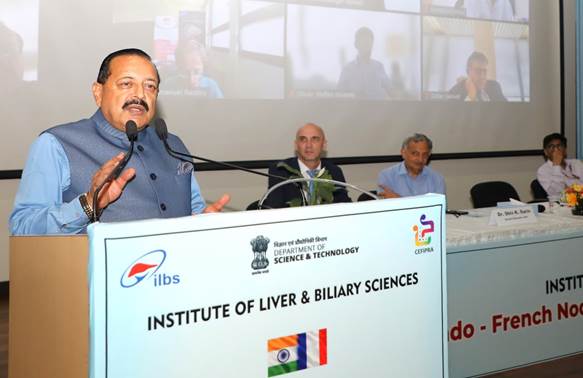
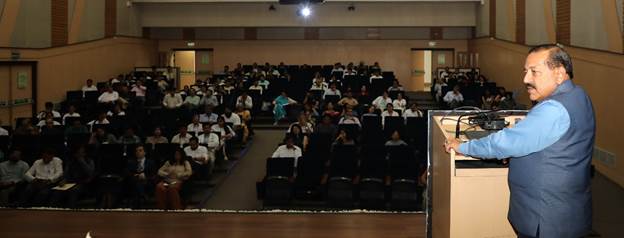
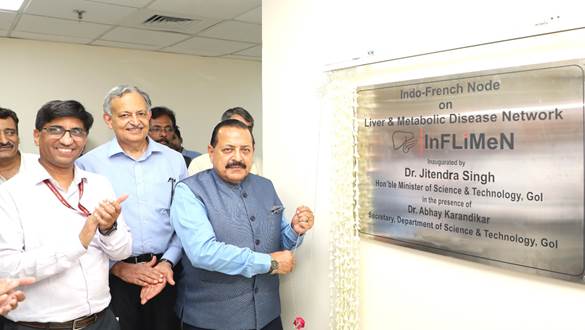
Union Minister Dr. Jitendra Singh launched Indo-French Liver and Metabolic Disease Network (InFLiMeN) a virtual node to prevent and cure metabolic liver diseases at Institute of Liver and Biliary Sciences today in New Delhi.

Addressing the launch programme Dr. Jitendra Singh highlighted that the Indo-French Node, InFLiMeN, aims to address key issues related to a common metabolic liver disorder, non-alcoholic fatty liver disease (NAFLD), which can progress to cirrhosis and primary liver cancer eventually. It predates diabetes, hypertension, heart disease and many other diseases. As an endocrinologist myself, I understand the nuances of fatty liver and its relation with diabetes and other metabolic disorders.

Union Minister Dr. Jitendra Singh along with Dr. Shiv Kumar Sarin, Director ILBS and Prof. Abhay Karandikar, Secretary DST

Union Minister of State (Independent Charge) for Science and Technology, Minister of State (Independent Charge) for Earth Sciences, MoS PMO, Department of Atomic Energy and Department of Space and MoS Personnel, Public Grievances and Pensions Dr. Jitendra Singh said, “Both the Indian subcontinent and Europe are attributable to changes in lifestyle, diet and importantly metabolic syndromes such as diabetes and obesity which have contributed to a significant rise in NAFLD.” The Minister shared that nearly 1 in 3 Indians has fatty liver. While in the West, most NAFLD is associated with obesity, intriguingly in the Indian subcontinent, NAFLD occurs in about 20% of non-obese patients.

Emphasizing the vitality of this initiative, the science and technology minister said, “There is a considerable burden of alcoholic liver disease (ALD) in India and France.” He further added that both NAFLD and ALD exhibit a very similar progression from steatosis to steatohepatitis, cirrhosis and HCC.

Highlighting India’s progress in the last decade in the health sector, Dr. Jitendra Singh said, “India became a global leader not just in curative healthcare but also in preventive healthcare.”. There is an urgent need to develop simple, low-cost diagnostic tests for the detection of different stages of fatty liver and their progression to severe, full-blown diseases. The approaches and algorithms should suit the Indian context, low-priced, and have a point of care.

Dr. Jitendra Singh advised that a joint multi-disciplinary collaborative program like InFLiMeN is urgently needed to understand the development, progression and possible management of liver diseases using a comprehensive omics approach for biomarker discovery.

Emphasizing on the co-operation and collaboration of both the Government and Private sector to provide best services to citizens and promote ease of healthy living. He also highlighted the government’s initiatives and policies aimed at supporting and improving the healthcare system. He said, “A large population in India is affected by metabolic disorders and we need India specific interventions as our phenotype is different.” We need Indian Solutions for Indian problems, he added.

The Minister highlighted the need of generous funding for cutting-edge science. Expressed his belief that the virtual node, would become a real node within a short span. He also assured that his departments would help the node in all possible manner. He also appreciated Prof. Abhay Karandikar, Secretary, DST along with the department and Indo-French Centre for the Promotion of Advanced Research (CEFIPERA) for taking this novel approach proposed by ILBS.

The Minister congratulated Dr. Shiv Kumar Sarin and his team along with the French collaborators. He also directed them to find remedies for the metabolic disorders in a low cost and high output manner. 11 French and 17 Indian doctors work jointly in this node.

*****

Annual defence production hits record high of approx. Rs 1.27 lakh crore in Financial Year 2023-24

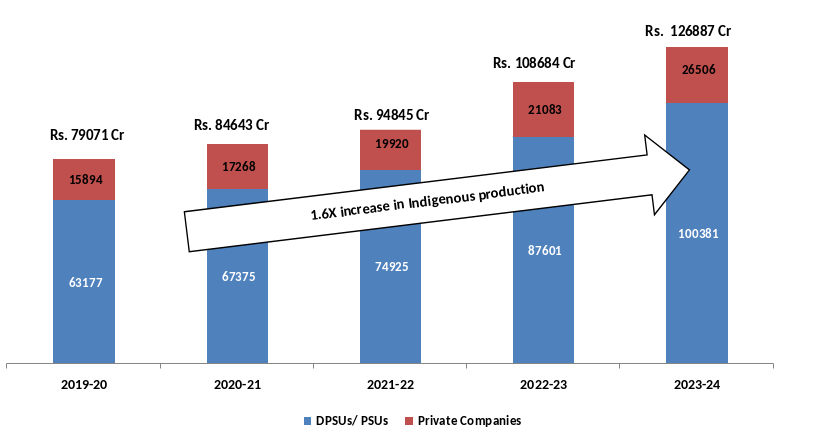
 Ministry of Defence has achieved the highest-ever growth in indigenous defence production in value terms during Financial Year (FY) 2023-24, on the back of successful implementation of the policies and initiatives of the Government, led by Prime Minister Shri Narendra Modi, focusing on achieving ‘Aatmanirbharta’. As per the data received from all Defence Public Sector undertakings (DPSUs), other PSUs manufacturing defence items and private companies, the value of defence production in the country has gone up to a record-high figure i.e., Rs 1,26,887 crore, reflecting a growth of 16.7% over the defence production of the previous financial year. The value of defence production in FY 2022-23 was Rs 1,08,684 crore.

Acknowledging the achievement through a post on X, Raksha Mantri Shri Rajnath Singh stated that the ‘Make in India’ programme is crossing new milestones, year after year, under the leadership of Prime Minister Shri Narendra Modi. He voiced the Government’s unwavering resolve to develop India as a leading global defence manufacturing hub.

Of the total value of production (VoP) in 2023-24, about 79.2% has been contributed by DPSUs/other PSUs and 20.8% by the private sector. The data shows that in terms of absolute value, both DPSUs/PSUs and private sector have recorded a steady growth in defence production. Shri Rajnath Singh congratulated the industry, including DPSUs, other PSUs manufacturing defence items and the private industry for taking the defence production at an all-time high.

The feat has been achieved due to the policy reforms/initiatives and ease of doing business brought in by the Government in the last 10 years with focus on attaining self-reliance. The indigenisation efforts have been pursued aggressively on a sustained basis, that resulted in the highest ever VoP. Moreover, the spiralling defence exports have contributed tremendously to the overall growth in the indigenous defence production. It may be recalled that defence exports touched a record-high of Rs 21,083 crore in FY 2023-24, reflecting a growth of 32.5% over the last fiscal when the figure was Rs 15,920 crore.

In the last five years (since 2019-20), the value of defence production has been increasing steadily, and grown by over 60%. Following are the year-wise details:

         ***

Department of Drinking Water and Sanitation joins forces with National STOP Diarrhoea Campaign

 The Department of Drinking Water and Sanitation (DDWS), Ministry of Jal Shakti, has joined hands with the National STOP Diarrhoea Campaign, launched on 24th June 2024 by Union Health Minister Shri J.P. Nadda, alongside Union Ministers of State, senior officials Union Government, various States/UTs and development partner representatives.

Union Minister of Jal Shakti, Shri C.R. Paatil, emphasized the importance of this collaboration: “The synergy between the rural sanitation mission and the National STOP Diarrhoea Campaign underscores our unwavering dedication to public health. Through these concerted efforts, we are not only aiming to reduce childhood mortality but also fostering a culture of health and hygiene across rural India.”

Secretary (DDWS) Ms. Vini Mahajan, expressed her commitment, stating, “This initiative is a critical step towards safeguarding the health of our children and communities. By integrating our efforts with the National STOP Diarrhoea Campaign, we aim to ensure that no child succumbs to preventable diseases like diarrhoea. Our focus on clean water and sanitation is pivotal to achieving this goal.”

The National STOP Diarrhoea Campaign aims for zero child deaths from diarrhoea through a comprehensive, multi-sectoral approach over a two-month period.

Key focus areas include:

  • Strengthening Health Infrastructure: Ensuring maintenance of health facilities and availability of essential medical supplies (ORS, Zinc), especially in rural areas.
  • Improving Access to Clean Water and Sanitation: Implementing quality control measures and sustainable practices for safe drinking water and sanitation.
  • Enhancing Nutritional Programs: Tackling malnutrition to prevent diarrhoeal diseases.
  • Promoting Hygiene Education: Providing necessary facilities in schools and educating children on hygiene.


Complementing this initiative, DDWS has launched an awareness campaign on ‘Safe Water and Sanitation’ in rural areas from 1st July to 31st August 2024, ‘Swachh Gaon, Shudh Jal- Behtar Kal’. This campaign is designed to raise awareness and promote the use of safe water and sanitation practices at the village and panchayat level.

This effort will contribute to the National STOP Diarrhoea Campaign’s goal of reducing childhood mortality due to diarrhoea and improving overall public health in rural India by also advocating for sustaining and achieving the Open Defecation Free Plus Model status in all villages in India towards a Sampoorna Swasth & Swachh Bharat.


Key Campaign Activities:

  • Community Engagement: Village Water and Sanitation Committees, Pani Samitis, and local bodies will lead efforts to ensure community participation and ownership.
  • Water Quality Testing: Regular testing through Field Test Kits will be conducted, with results displayed in AWC, schools, healthcare facilities, and community centres.
  • Sensitization Workshops: District water and sanitation missions will train local communities, government officials, and other stakeholders on water management, sanitation, and hygiene promotion.
  • Leakage Detection and Repair Drives: Inspection and repair of water supply systems to prevent contamination and save water.
  • Public Awareness Campaigns: Awareness drives on the importance of water hygiene, safe sanitation practice for cleanliness and utilization of IHHL/CSC, and the prevention of waterborne diseases.
  • Special Focus on Vulnerable Groups: Targeting children under five and the elderly to reduce the incidence of diarrhoea and other waterborne diseases.
  • Educational Initiatives: Workshops and training sessions for young mothers and adolescent girls on proper sanitation and hygiene practices, including the safe disposal of child feces and handwashing techniques.


Phased out Implementation:

  • Weeks 1 & 2: Launch of the campaign, convergence meetings, water quality testing, and sensitization workshops.
  • Weeks 3 & 4: Leakage detection and repair drives, public awareness campaigns, and cleanliness drives for village cleanliness and for ensuring handwashing facility with soap in Institutions.
  • Weeks 5 & 6: Residual chlorine testing, public awareness campaigns, and inspection of water quality in schools and anganwadi centres with special drives of greywater management and dysfunctional toilets at institutions.
  • Weeks 7 & 8: Engagement with local communities, promotion of rainwater harvesting, and special drives for Individual Household Latrine (IHHL) Community Sanitary Complex (CSC) construction and door to door pamphlet distribution on safe water for health.


*****

Conformity to Bureau of Indian Standards (BIS) Mandatory for Stainless Steel and Aluminium Utensils

 In a significant move to enhance kitchen safety, quality, and efficiency, the Government of India has mandated conformity to the Bureau of Indian Standards (BIS) for stainless steel and aluminium utensils. According to the Quality Control Order issued by the Department for Promotion of Industry and Internal Trade (DPIIT), Ministry of Commerce and Industry, on March 14, 2024, the ISI mark would be compulsory for such utensils. Non-compliance is punishable, emphasising the government’s commitment to consumer safety and product integrity.

Recently, the BIS has developed a range of standards covering essential kitchen items. These standards reflect the BIS’s commitment to ensuring that all kitchen utensils meet stringent criteria and adhere to the quality and safety benchmarks. By introducing these standards, the BIS aims to uphold cultural diversity in culinary practices while promoting superior product performance and consumer safety.

Stainless Steel Utensils: Durability and Elegance

Stainless steel utensils have long been favoured in kitchens worldwide for their durability, versatility, and sleek appearance. Comprising an alloy of steel with chromium and other metals such as nickel, molybdenum, and manganese, stainless steel is renowned for its enhanced corrosion resistance and robust mechanical properties. The BIS has codified these attributes in the Indian Standard IS 14756:2022, which specifies the requirements for various types of utensils used in cooking, serving, dining, and storage.

The IS 14756:2022 standard encompasses:

  • Material Requirements: Ensuring the safe composition of materials used in manufacturing.
  • Shapes and Dimensions: Providing uniformity and practicality in utensil design.
  • Workmanship and Finish: Mandating high-quality craftsmanship and aesthetic appeal.
  • Performance Parameters: Including tests
  •  like the staining test, mechanical shock test, thermal shock test, dry heat test, coating thickness test, nominal capacity test, flame stability test, and specific tests for utensils with tempered glass lids.

Aluminium Utensils: Lightweight and Efficient

Aluminium utensils are another cornerstone of both household and professional kitchens, valued for their lightweight nature, excellent heat conductivity, affordability, and durability. The BIS has developed the Indian Standard IS 1660:2024, which outlines the specifications for wrought and cast aluminium utensils up to 30 litres in capacity including hard anodized and non-stick unreinforced plastic coating. This standard ensures that aluminium utensils meet the highest material quality and performance standards.

Key elements of the IS 1660:2024 standard include:

  • General Requirements: Covering the overall quality and thickness of materials used.
  • Classification and Material Grades: Ensuring the use of appropriate grades as per IS 21 for wrought utensils and IS 617 for cast utensils.
  • Fabrication and Design: Detailing the shapes, dimensions, and workmanship needed for high-quality utensils.
  • Performance Tests: Including specific tests for aluminium lunch boxes to ensure durability and safety.

Similar to stainless steel utensils, aluminium utensils are also subjected to the mandatory certification as per the Quality Control Order dated March 14, 2024. This ensures that no person can manufacture, import, sell, distribute, store, hire, lease, or exhibit for sale any aluminium utensils that do not meet the BIS standards and bear the BIS Standard Mark. Violations of this mandate are subject to legal penalties, reinforcing the importance of compliance in safeguarding public health and maintaining trust in kitchenware products.

Ensuring Quality and Consumer Confidence

The BIS’s stringent standards for stainless steel and aluminium utensils represent a significant step towards ensuring that kitchenware used in homes and professional settings across India meets the highest safety and quality criteria. By implementing rigorous testing and certification processes, the BIS helps protect consumers from substandard products and ensures that utensils are both safe to use and built to last.

These measures enhance consumer confidence and encourage manufacturers to adhere to best practices in production, leading to overall improvements in the industry. The BIS Standard Mark serves as a reliable indicator of quality, guiding consumers in making informed choices and fostering a culture of excellence and safety in kitchenware.

***