



By Shashikant Nishant Sharma
The caste system in India has been a defining feature of its society for centuries. Rooted in ancient traditions, the caste system categorizes individuals into distinct social groups based on their birth, determining their occupation, social status, and even personal relationships. While some proponents argue that it provides a sense of identity and order, a critical examination of the caste system reveals its inherent flaws, perpetuation of discrimination, and hindrance to social progress.
Social Inequality and Discrimination:
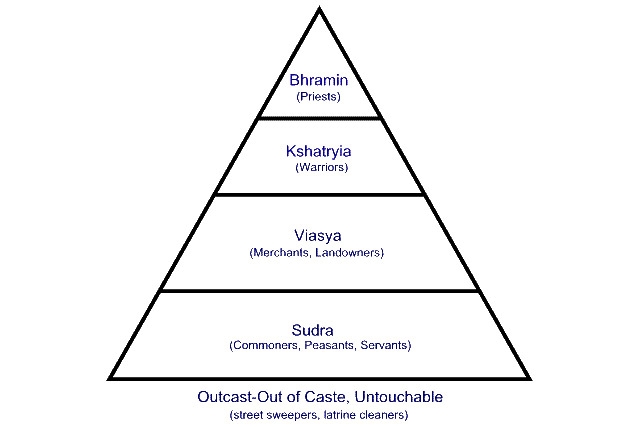
The caste system reinforces a rigid social hierarchy that categorizes individuals into four main varnas (castes) – Brahmins (priests), Kshatriyas (warriors and rulers), Vaishyas (merchants and farmers), and Shudras (laborers). Additionally, there are numerous subcastes and Dalits (formerly known as untouchables) who are marginalized and subjected to severe discrimination. This system institutionalizes inequality and denies equal opportunities, social mobility, and basic human rights to those born into lower castes.
Occupational Limitations:
One of the key features of the caste system is the hereditary nature of occupations. Individuals are expected to follow the occupation associated with their caste, regardless of their interests, skills, or aspirations. This restricts social and economic progress, preventing individuals from pursuing professions of their choice and contributing to a lack of innovation and entrepreneurship within society.
Discrimination against Dalits:
The Dalits, historically regarded as the lowest caste, face extreme social exclusion, violence, and economic marginalization. They are subjected to inhumane treatment, denied access to public spaces, and suffer from limited opportunities for education and employment. Despite legal protections and affirmative action policies, discrimination against Dalits continues to persist, perpetuating a cycle of oppression and injustice.
Inter-caste Marriages and Social Stigma:
The caste system maintains a strong influence on personal relationships, particularly marriage. Inter-caste marriages are often met with opposition, leading to social stigma, ostracization, and sometimes even violence. This rigid enforcement of caste boundaries hampers the development of a cohesive and inclusive society and curtails the freedom of individuals to choose their life partners based on love and compatibility.
Impediment to National Unity and Progress:
The caste system fragments Indian society along caste lines, leading to division and social unrest. The caste-based politics that emerge from this system further exacerbate these divisions, hindering collective progress. Instead of focusing on issues such as poverty, education, and healthcare, political leaders often exploit caste-based identities for electoral gains, impeding the nation’s overall development.
The caste system in India, while deeply ingrained in the country’s social fabric, poses significant challenges to equality, justice, and progress. Its perpetuation leads to social inequality, discrimination, and the denial of basic human rights. Addressing the caste system’s deep-rooted issues requires concerted efforts from society, policymakers, and educational institutions to promote inclusivity, eradicate discrimination, and create a more equitable and just society for all. Only by challenging and dismantling the caste system can India realize its full potential as a diverse and united nation.
References
Bidner, C., & Eswaran, M. (2015). A gender-based theory of the origin of the caste system of India. Journal of Development Economics, 114, 142-158.
Dehalwar, K., & Sharma, S. N. (2024). Politics in the Name of Women’s Reservation. Contemporary Voice of Dalit, 2455328X241262562.
Dehalwar, K., & Sharma, S. N. (2024). Social Injustice Inflicted by Spatial Changes in Vernacular Settings: An Analysis of Published Literature.
Ogbu, J. U. (2020). The consequences of the American caste system. The school achievement of minority children, 19-56.
Olcott, M. (1944). The caste system of India. American Sociological Review, 648-657.
Srinivas, M. N. (2017). Mobility in the caste system. In Structure and change in Indian society (pp. 189-200). Routledge.
Stevenson, H. N. C. (1954). Status evaluation in the Hindu caste system. The Journal of the Royal Anthropological Institute of Great Britain and Ireland, 84(1/2), 45-65.

 Eduindex
You must be logged in to post a comment.