



By Shashikant Nishant Sharma
Indian knowledge systems offer a unique, complex, and holistic approach to understanding the world, but are criticized for being patriarchal, detached from practical applications, and at risk of cultural appropriation.
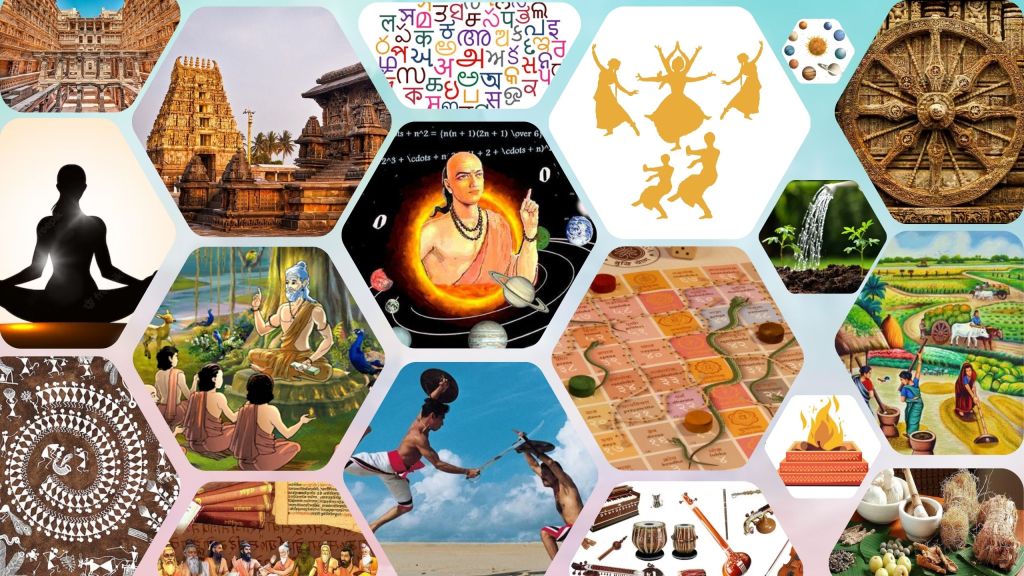
Indian knowledge systems are an amalgamation of diverse, ancient, and intricate philosophical, spiritual, and scientific traditions that have been developed and refined over several millennia. These knowledge systems encompass a broad range of subjects, including metaphysics, ethics, linguistics, mathematics, astronomy, medicine, and yoga. They are deeply rooted in the Indian way of life, culture, and spirituality and have shaped the Indian society, economy, and governance for centuries. Indian knowledge systems are characterized by their holistic and integrative approach, which emphasizes the interconnectedness and interdependence of various aspects of existence. They are also notable for their emphasis on experiential and intuitive knowledge, as opposed to a purely empirical or rationalist approach. Indian knowledge systems have also contributed significantly to the world’s intellectual and cultural heritage, influencing several fields of knowledge and thought, including mathematics, science, literature, and philosophy.
Despite their rich and diverse heritage, Indian knowledge systems have faced challenges in the modern era, including marginalization, misrepresentation, and neglect. However, recent years have seen a renewed interest in these systems, both within India and abroad, as scholars and practitioners seek to rediscover, revive, and reinterpret them for contemporary contexts. This resurgence has led to a growing recognition of the relevance and value of Indian knowledge systems in addressing contemporary challenges, such as sustainability, health, education, and governance, and promoting cross-cultural dialogue and understanding.
Indian knowledge systems, with their rich and diverse heritage, have made significant contributions to the world’s intellectual and cultural heritage. They offer a unique and holistic approach to understanding the world, emphasizing the interconnectedness and interdependence of various aspects of existence. However, there are several criticisms of Indian knowledge systems that should be considered.
Firstly, Indian knowledge systems are often criticized for being too complex and abstract, making them difficult to understand and apply. This complexity is attributed to the system’s emphasis on metaphysical and spiritual concepts that are not easily accessible to the average person. As a result, there is a risk of these systems being perceived as esoteric and inaccessible to modern society.
Secondly, Indian knowledge systems have been criticized for their patriarchal and hierarchical nature, which can lead to the marginalization of certain groups, including women and lower castes. This criticism stems from the fact that these systems have been developed and maintained by male scholars and practitioners, often reflecting patriarchal values and norms.
Thirdly, there is a concern that the study and practice of Indian knowledge systems are often detached from practical applications and modern realities, leading to a lack of relevance and applicability. There is a need for the integration of traditional knowledge systems with modern scientific and technological advancements to ensure their continued relevance and effectiveness.
Finally, there is a risk of cultural appropriation and misrepresentation of Indian knowledge systems, as they become popularized and commercialized in the global market. There is a need for responsible engagement and representation of these systems, ensuring that they are not reduced to superficial or exoticized stereotypes.
In conclusion, while Indian knowledge systems offer a unique and holistic approach to understanding the world, there are several criticisms that should be considered. These criticisms highlight the need for ongoing engagement, critical reflection, and responsible representation of these systems in contemporary contexts.
References
Brodt, S. B. (2001). A systems perspective on the conservation and erosion of indigenous agricultural knowledge in central India. Human Ecology, 29, 99-120.
Dehalwar, K., & Sharma, S. N. (2024). Social Injustice Inflicted by Spatial Changes in Vernacular Settings: An Analysis of Published Literature.
Farooquee, N. A., Majila, B. S., & Kala, C. P. (2004). Indigenous knowledge systems and sustainable management of natural resources in a high altitude society in Kumaun Himalaya, India. Journal of Human Ecology, 16(1), 33-42.
Pollock, S. (2002). Introduction: Working papers on Sanskrit Knowledge-Systems on the eve of colonialism. Journal of Indian Philosophy, 30(5), 431-439.
Puri, S. K. (2007). Integrating scientific with indigenous knowledge: Constructing knowledge alliances for land management in India. MIS quarterly, 355-379.
Rao, S. S. (2006). Indigenous knowledge organization: An Indian scenario. International Journal of Information Management, 26(3), 224-233.
Sharma, S. N. The Usefulness of Animal Husbandry for Improving Livelihoods.

 Eduindex
You must be logged in to post a comment.