Goals Don’t Replace Systems - And Vice Versa

People who claim that setting goals are a bad thing are out of their minds. They probably set some goals in the past, failed, and never set a goal again.

I know there’s a lot of confusion about goals and systems these days. I’ve contributed to the confusion as well.

A lot of us share the idea that you either have a system or set goals.

But thinking “this or that” is not helpful because it limits our beliefs. I know this because I used to think that way too. But then, I learned that many things in life could be this and that.

So in this article, I’ll explain why goals and systems complement each other, and why I have both.

But first, let’s start with the definitions.

  • goal tells you where you’re going tomorrow
  • system tells you what to do today

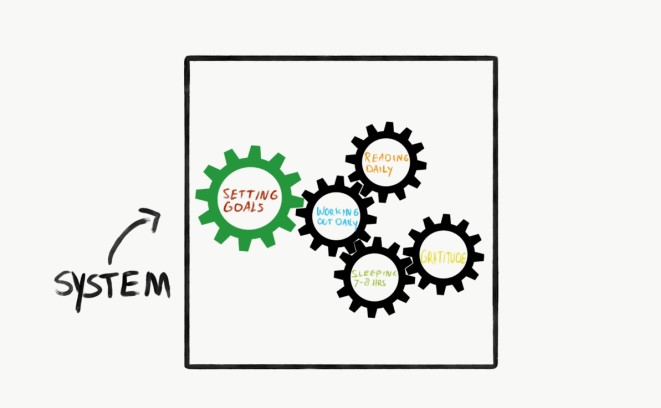
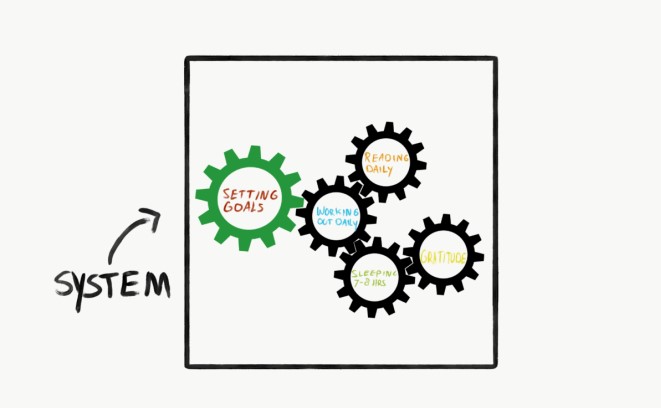
Makes sense? There is a clear difference. A system is a collection of tasks and strategies that help you to function. And setting goals can be part of that system.

1. Why you need goals

Every time I read about people who claim you shouldn’t set goals, I get upset. It’s possibly the worst advice one could receive.

When someone is telling you not to set goals, they are essentially saying you should stop moving forward.

Goals are inherent to human nature. We thrive on progress. We need something to strive for. If we don’t have a vision of what our future could look like, why would we do anything at all?

It’s the classic question that philosophers and scientists have examined since the start of modern civilization. Over and over again, we’ve learned that we need goals to grow.

Let’s stop and think about that for a second. Why are we alive? I say we’re here to live a useful life. That’s what makes us happy; as a result, it makes our life good.

However, setting goals is not an easy skill. In the past, I would set goals that I had zero control over.

“I want to make a million bucks,” you might think.

Alright, great. But here’s the thing, you don’t control the rewards you get. What do you control? Your effort. So, it’s better to set goals that are related to your effort.

  • How many books are you going to read?
  • What degrees will you get?
  • How many potential mentors will you reach out to?
  • How many articles/books/videos/songs will you create?
  • How much of your money are you going to invest?

You see, these types of questions are related to goals that you can influence. That’s the way to go.

2. Why you need systems

Systems have different meanings to people. For example, Scott Adams, the author of How to Fail at Almost Everything and Still Win Big, did a great job explaining how systems work for him. He doesn’t set goals and only has systems. That’s not how I look at it.

Once we set goals, we know that we have to put in the work to achieve them. That’s when systems come into play.

It comes down to this: What do I need to do EVERY DAY to achieve the goals I desire?

Let’s say you want to become financially independent by age 50. You might think:

  • I need to save at least 30% of my income
  • I need to increase my income yearly
  • I need to be mentally strong so that I can do my job
  • I need to be in good shape, so I don’t get ill and have high energy
  • I need to learn every day, so I get better at my job
  • I need to look at my goals every day to remind myself of where I’m going
  • I need to reflect on the past to learn and be grateful for where I am

Alright, congratulations. You have created a system. When you do the above things, you will make progress, no matter what.

One thing we must be aware of is that we keep an open mind: Goals and systems change all the time. Don’t fixate on one thing for a long time. Change your goals and systems as your priorities change.

3. Why you need higher goals

We’ve established that we need both goals and systems to live a good life. Here’s what I’ve learned over the past few years.

Set higher goals!

No, you don’t need to make 10 million bucks. That’s just your superficial brain speaking for you.

Set the bar higher for yourself.

  • Become the best at your job.
  • Become stronger, fitter, and smarter than ever
  • Have divine relationships

Go beyond where you currently are. I like how Jordan Peterson puts it in his immensely popular book, 12 Rules For Life:

“You should never give up the better that resides within for the security you already have.”

Yes, why would you deserve anything but the best? Because you’re afraid of losing what you have? That’s not a good reason to live a timid and mediocre life.

When we aim low, we deserve to receive low. When we aim high, we might fail, but we still have a better life than people who aim low. Because of the failure of someone who aims high is much more profound than the life of someone who aims low.

“Yeah, but I don’t need much.”

Well, that sounds like a pretty high aim for me. It’s funny to me that people pretend like “being content” is easy.

Being grateful and content is the highest aim in life.

You know what’s low? Complaining, being ungrateful, consumerism, anger, doing nothing, etc.

Aim high. Live a life of contribution. Dedicate yourself to knowledge and self-study. Help yourself, your family, and your community. That’s the highest goal one can set.

So, do yourself a favor, sit down for 10 minutes, and think about this:

  • What are your goals for this week?
  • What are your goals for this month?
  • What are your goals for this year?
  • What are your goals for next year?
  • What are your 3-year goals?
  • What are your 5-year goals?

I guarantee that you will feel ecstatic about life after you’ve done this little exercise. Go!

I’ve also published a podcast episode, where I talk about 2 books that I recommend reading about goals and systems. 
7 Productivity Apps That Shave 10 Hours Off Your Week

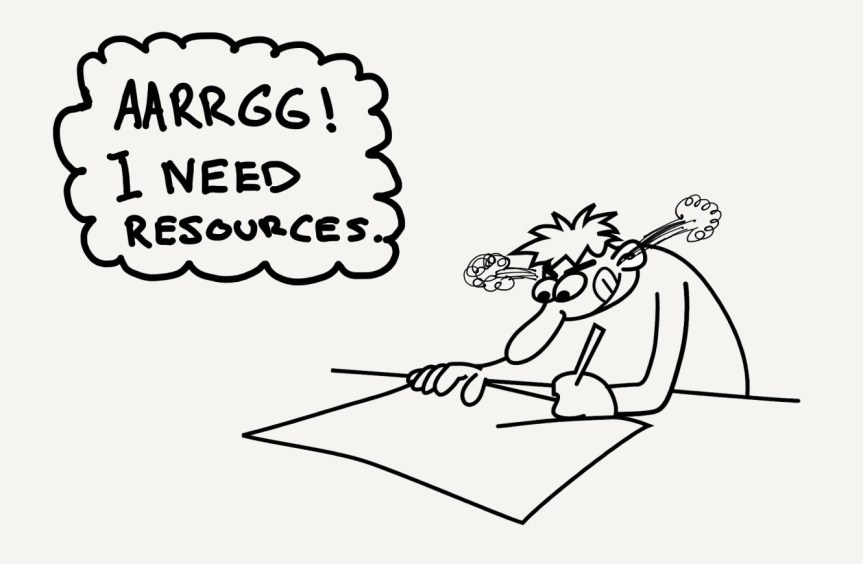
I need tools and resources

My general opinion about productivity apps, tools, and resources is this: It doesn’t matter. I say that because most people hide behind their apps. We’re always looking for the ONE app that will turn us into a productivity monster.

Or we believe that tools or other resources will help us do better work. YouTuber and filmmaker Casey Neistat makes this point very clear, he says:

“The gear never matters. Tell a great story really well, and people will forgive whatever gear you shoot it on.”

When it comes to writing, Stephen King has a similar approach. Whenever he’s asked about tools, he doesn’t even answer. If you want to become a better writer, he says:

“You learn best by reading a lot and writing a lot, and the most valuable lessons of all are the ones you teach yourself.”

I’m sure you know there’s only one way to get things done: Put your head down and work hard. But often, we still think these type of thoughts:

  • “A new laptop makes me more productive.”
  • “This app helps me to get more done.”
  • “The newest DSLR camera makes me a better photographer.”

These are all reasons we procrastinate. Now, of course, tools matter. But they are not the determining factor. You are.

It’s not about the resources you have; it’s about what you do with them. Life is about resourcefulness. And that’s the point people like Casey Neistat and Stephen King want to make.

What you’ll find next is a list of 7 of my favorite apps and how I use them. When you use the tools in the right way, you can easily save 10 hours per week.

1. Grammarly

If you’re reading this, you’re probably a knowledge worker. And a knowledge worker’s primary weapon is her words.

I strongly believe that if you want to become a better communicator, it all starts on paper. Learn how to think and write well, and you will ultimately become better at speaking, sales, copywriting, programming, doing interviews, leading, etc.

The very words you use are EVERYTHING in how you conduct yourself. Especially in an increasingly digital world where people shy away from face-to-face contact.

And Grammarly is the best productivity app to help you with communicating. Most people think a grammar checker is only for writers.

But I mainly use Grammar’s browser extension for daily use. I use it for writing emails in Gmail, responding to comments, or any other site I have to write something.

I also edit my articles with Grammarly (they also have an MS Office add-on). It checks for passive voice, grammatical, spelling, and punctuation mistakes.

All in all, this app saves me about 30 minutes a day in sheer brainpower. With Grammarly, I can just focus on writing and communicating my message; they do the rest.

2. Blinkist

Reading improves focus, productivity, creativity, and it reduces stress. The benefits are so great that it makes you think everybody should be reading books like crazy.

Nope.

23% of Americans have not read a single book in the past year. And the number of books people read per year are also not pretty. Only 28% reads more than 11 books per year.

And I get it. Reading takes time. Plus, one of my main challenges is to select which books I’m going to read.

In the past, I’ve often bought books, and quit them half-way through because they were not useful or interesting. That costs me time and money. That’s frustrating, especially because you can only read so many books every year.

If you’re like me, your reading list grows faster than you cross off books, and that’s a problem. Why? You want to read the RIGHT books. You want to read books that make you grow; personally, professionally, financially.

And I’ve finally found a solution to the question of: “What book should I read next?”

Blinkist creates quality summaries of non-fiction books. Every day I read one book summary, and if I want to learn more, I get the actual book. If not, I just eliminate the book from my reading list.

You have to be realistic; you just can’t read all the books in the world. And it’s important to figure out how you decide which books you’re going to read.

Also, I don’t rely on reviews to select books because a book that’s useless to you can be valuable to me.

3. Trello

  • “What should I do next?”
  • “I’m bored.”

You should eliminate those two thoughts from your head. Why? Because they plant the seeds of something that’s called: WASTING TIME.

I use this productivity app as a backlog of tasks that I have to do. If you don’t know Trello; it’s a versatile project management tool that can be used in many ways.

With Trello you can create ‘boards’ for every project you have. And on every board, you can list all the actions you have to complete for that project.

Every week I take some time to update my projects. That helps me to improve my focus, so I know what I have to do.

Whenever I don’t know what to do, I open Trello: There’s ALWAYS something to do.

4. Feedly / Medium

Browsing blogs remains one of the main sources of wasting time for most of us. I have a simple tip for you: Stop clicking on articles you see in your social feeds.

Most people open Facebook, Twitter, or even news sites, and they click on anything thing that looks slightly interesting.

DON’T.

Instead, make a list of 5–10 blogs/authors you love to read. Then, add them to Feedly or follow the bloggers/publications on Medium. Every day, only read your articles through Feedly and Medium.

This saves at least 1 hour of mindless browsing per week.

5. Office 365 / Google Docs

I still meet a lot of entrepreneurs and freelancers who don’t work in the cloud. If you’re one of them, you’re wasting a lot of time.

Just the few minutes it takes to open files from folders, save them on external drives, or share your documents with others, adds up quickly.

A few minutes here and there become a few hours a week, and hundreds of hours per year.

I use Office 365 because I like to work offline too (plus, I’m a little old school — I’m used to Office). But Google Docs also works well.

Let’s keep this short: If you’re not working in the cloud, it’s time to move there.

I save about 1 hour per week by having easy access to all my documents (on all my devices) in the cloud. I only focus on working and sharing documents, spreadsheets, and presentations.

I don’t want to think about anything else that’s involved with productivity. And that’s what these productivity apps are great at.

6. The Free Calendar App On Your Phone

Forget about to-do lists, fancy productivity apps, or anything else that promises you to get shit done.

There’s only one thing that helps you to get things done: Your calendar.

It’s so obvious that most of us ignore it. We prefer fancy looking to-do lists with all colors of the rainbow, and that make sounds when you check off an item.

The research is clear: To-do lists don’t work. And yet, most people stick to them.

Ditch the to-do list and use your calendar as your number one productivity tool. Take some time to plan your week. Ask: When will I do what? Then, schedule it in your calendar. I do this exercise every day.

I promise that it will save you at least 15 minutes a day of updating your to-do list.

7. Tomighty

I love working with the Pomodoro method. Research shows that it improves focus and the quality of your output.

Whenever I don’t use an app like Tomighty, I just waste hours every day. This app can easily save you one hour per DAY.

How? When you work in intervals, you get more done in less time because of the improved focus.

In total, these 7 productivity apps will shave at least 10 hours off your week. And with practice, you can even double your time savings.

As you might have noticed, productivity is all about eliminating time-wasting activities, and improving your focus.

In that way you get the RIGHT things done, and you ultimately save a lot of hours every week.

Start living more consciously of your time and productivity: Save your time for other, more important, things.

If you do that, you can use those precious hours with your family, friends, spouse. Or you can spend the time to improve your skills.

Because at the end of the ride, when you’re on your deathbed, you won’t think about all apps, tools, or resources you used. No, you’ll reflect on all the great things you did with them.

So what are you waiting for? You have the tools you need to be successful. Only thing left is this: Go out and DO things with the resources you have.

Manage Your Personal Energy To Improve The Quality Of Life

Many things in life always sound better in theory.

  • “I’m going to save my money, buy real estate, and live off the rent money.”
  • “I’m going to start a blog, sell courses, and live off the passive income.”
  • “I’m going to open a yoga school and only work a few hours a day.”

Alright, that’s great. I’ve talked about putting in the work many times before. I’m not going to do that again. We know that by know.

So let’s assume you are putting in the work. And to be honest, I’m pretty sure you’re taking your career seriously. Why else would you read these types of articles, right?

However, we also want to live a good life. I believe that life is meant to be enjoyed. Richard Koch, the author of the seminal book The 80/20 Principle, said it best:

“Do the things that you like doing. Make them your job. Make your job them.”

Let’s be honest here. If you’re currently not enjoying your life, and you’re not waking up every morning with a sense of excitement, you need to do something about it.

You deserve to live a good life. The people in your life deserve that as well. In fact, we all deserve that. No one wants to live or work with a pessimist.

And in this article, I want to share one idea with you that has made a tremendous impact on the quality of my life. In his book, Richard Koch talks about how 20% of activities result in 80% of our happiness.

It’s a term, originated from the economist Vilfredo Pareto, that was coined by Joseph Juran. Pareto found that 80% of the land in most countries was owned by 20% of the population.

But that idea goes beyond wealth distribution. Richard Koch applied it to everything, from business to happiness. And not everything has to be distributed 80/20. Some things are distributed 90/10 or even 99/1. The point is that cause and effect is not a 50/50 relationship.

For example, 100% of my happiness comes from only one measure: My personal energy.

Understanding the impact of mood on happiness

I’ve been thinking about this concept for a long time. I always want to know how and why things happen. So I ask myself things like:

  • Why am I in a good mood today?
  • Why am I in a shitty mood today?
  • Why am I happy in this moment?
  • Why am I stressed right now?

To answer those questions, I keep a journal. If you’re a regular reader of my blog, you know I’m a big advocate of journaling. I also wrote an article about my journaling system.

And recently, I finally discovered a pattern. How I feel is determined by my personal energy.

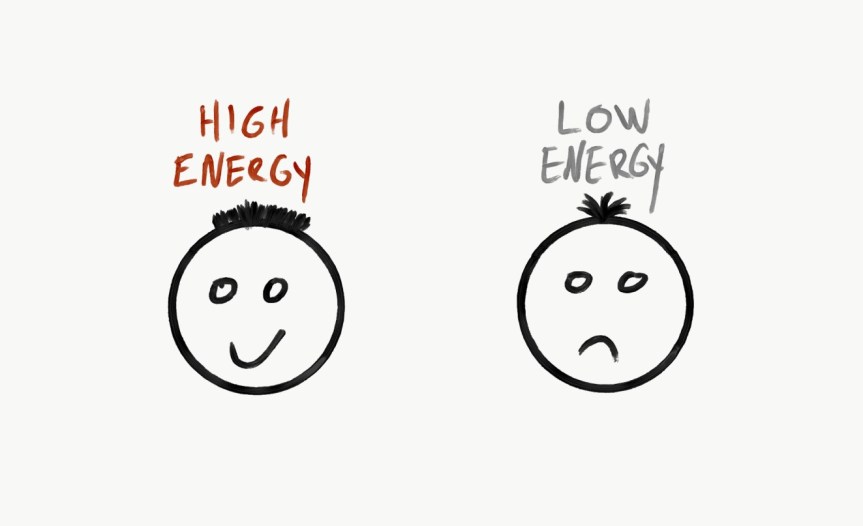
  • High energy? Good mood, feeling confident, looking forward to the future, chest up, smiling, enjoying myself, and doing whatever I like.
  • Low energy? Bad mood, sad, afraid of the future, timid, shying away from eye contact, worrying, etc, etc.

Now, you might think that’s pretty obvious. But no one ever taught me to manage my energy. Not in school, not at work, and not in business. But managing it has made a big impact on the quality of my life.

“So how do you manage your personal energy?”

In practice, it looks like this. Ask yourself:

  1. “What activities destroy my mood and drain my energy?”
  2. ”What activities make me feel good and give energy?”

Before the childish folks go out and say, “I love partying and spending all my money,” I want to say that if you want to be smartass—go and do that somewhere else.

Here’s an example of what I mean. I think writing is a hard and tedious activity. I don’t enjoy it at all, to be honest.

However, after I do it, I feel good about myself, and it gives me a lot of energy. So that makes it worth it to me. So it’s not about avoiding hard things. It’s about looking at the results activities have on your mood.

Here are two other things I’ve learned about managing your personal energy.

  • Identify 20% of the activities that bring you the most results for every aspect of your life.
    Look at your relationships, business, health, money. Then, focus on doing more of the activities that improve those aspects.
  • Continuously re-evaluate.
    Get feedback. Journal. And always ask yourself whether you’re on the right track. Life is not static. You must adjust your course manually. There’s no autopilot. So always take time every day to reflect and look forward.
  • You don’t have to be in a good mood all the time.
    That’s not realistic. I aim for being in a good mood 95% of the time. Also, you can be in a good mood and go through difficulty. Life is tough. So It’s better to be in a good mood to make it easier.

Look, life is long. And if you play it right, you can do most of the things you always wanted. You just need to have patience and manage your energy so you can ENJOY the things you do.

Start now by asking yourself: “What’s the one thing I can do today to improve my mood?”

Ask yourself the same question tomorrow.

And the day after that.

And so forth.

How Running Changed My Life

Running has truly changed my life. I never thought that because I never understood running as a form of exercise.

When physical harm is looming, our natural response is to run. It’s human nature — we either fight or flee. Most of us choose to flee— I would surely run if a wild animal would charge at me. But I also found that our fear mechanism kicks in when we face emotional challenges.

During the first two weeks this year, my grandmother passed away, I broke up with my girlfriend, and I started to dislike my job in London because of office politics. Everything seemed to work against me.

My life felt stuck. So I decided to run. It was my natural response. I just wanted to getaway. I laced my shoes and started running — by the time I came back, I felt tired and energized at the same time. I knew I was on to something.

I’ve always exercised since I was little. I played basketball through high school. In my adult years, I’ve practiced different sports — I tried kickboxing, tennis, squash. But I never got excited about those things.

So I did what most people do when they don’t want to get fat — go to the gym. In a way, going to the gym is lazy. You hop in your car, do some light to moderate exercise while you have a chat with a friend or someone you know from the gym. I’ve been doing that for the past ten years for 2 or 3 times a week.

Once in a while, I would get hyped about running. However, I always picked up running for the wrong reasons. I used running as a reason to buy new Nike’s and compression clothes. Or I decided to run to lose weight or become more healthy.

Other times, I went for a run on Sunday morning to get rid of the alcohol from the previous night out. My running stints never lasted longer than 2–3 weeks. I would lose interest in running. I just didn’t understand it.
Why would anyone go through the pain of running? Especially when the weather is bad. Who does that? I’d rather go to the gym with my friends, talk, and pick up some weights.

But I found that pain is precisely the reason I started to run again. When my life was not what I wanted it to be, I was upset. I felt like punching a stranger on the subway. But instead of getting busted by a British police officer, I decided to run when I arrived home one day after work.
It was a cold January day, and I only ran for 3 miles in a time that I am too ashamed to mention. But my time is not what’s important — during that run I finally got it.

My stamina was synonymous with my life at the time — it was bad, but I knew it would be better if I kept running. If I would fight against the wind, rain, cold, and my thoughts of giving up, I would eventually improve my stamina and be a better runner.

My life has improved at the same rate that my running pace and stamina has improved. But running has the most impact on my productivity, mood, creativity, and overall livelihood. Scientific research backs all of this.

Dr. John Ratey wrote a book about the effect of exercise on our brain, called Spark. He says:

“Cognitive flexibility is an important executive function that reflects our ability to shift thinking and to produce a steady flow of creative thoughts and answers as opposed to a regurgitation of the usual responses. The trait correlates with high-performance levels in intellectually demanding jobs. So if you have an important afternoon brainstorming session scheduled, going for a short, intense run during lunchtime is a smart idea.”

Every time life became difficult I would give up. When I wanted to travel the world after college, I decided that I did not have money — so I told myself I should save money. Years passed, and that round-the-world trip never happened — I was scared to be away from home for a long time.

Now, when life is difficult, my response is different — I love the pain and struggle instead of shy away from it. I owe this to running.
And the best thing about running is that is easy to start. You just go. You decide when, where, and how fast.

To me, running is exactly like life. It’s hard, you do not always want to do it, summers are better than winters, and you feel better when you have new shoes. But it’s worth it. After the pain comes happiness, both in life and in running. That’s why my life is moving forward again — I’ve never stopped running for a day. You should try it too.

6 Lessons I Learned From 4 Years In College

Is college worth the investment of your time and money? And what do you even learn in college?

When it comes to learning—I like to learn by doing. So from that point of view, going to college wouldn’t be necessary for me. But I did go. For six years.

Most of my friends and peers who are like me never went to college. They just did things. But weirdly enough, I did not only go to college, but I also loved it.

I spent four years getting a bachelor’s degree in business, and another two years to get a Master’s degree in marketing from another university. 

People often ask me:

  • “Should I go to college?”
  • “Should I drop out?”
  • “Should my kid go to college?”
  • “Do you need a degree to get a job?”

I don’t think I’m in a position to answer any of those questions. It all depends on what you want to do in life.

The only thing I can do is share with you what I’ve learned from those six years in college. Because there are some valuable things I’ve learned that I probably wouldn’t know if I didn’t go to college.

So here are the 6 biggest lessons I’ve learned in college.

1. Learning Should Be Fun

Most of my professors were quite boring. And that often made learning a boring affair.

But fortunately, I also had many enthusiastic professors. That made me learn an important lesson: Learning is not boring. People are.

The school doesn’t have to be boring as long as the teachers are passionate about what they teach.

Why not make it more fun for students? I never get it when teachers think they are police offers. Teachers should teach, not the police.

2. The More You Learn, The Less You Know

During my time in college, I learned mostly from professors, books, and my fellow students. As a business student, you often work together on assignments. And that’s how I learned the most useful things I know.

But the funny thing was that every year I felt like I had fewer answers to everything.

“Judge a man by his questions rather than by his answers.” ― Voltaire

That’s the beauty of education. Idiots think they know everything. But the more you learn, the less certain you are of things.

Some people go to college and they become even bigger idiots because they think they have a degree.

But going to college has NOTHING to do with being smart. We’re all in the same boat: We know nothing.

3. “Thinking” Is A Skill

I would say that I’ve forgotten about 95% of the stuff I learned. But I don’t care.

I don’t get why people HAVE to study something they enjoy. If you think that you should only study subjects that you love, you’re completely missing the point of college.

The most valuable thing you learn in college is the ability to think.

As long as you study SOMETHING, you train your brain to think. And that’s priceless. Thomas Edison put it best:

“Five percent of the people think; ten percent of the people think they think; and the other eighty-five percent would rather die than think.”

We live in a world where resourceful people thrive. How do you become resourceful? Exercise that brain of yours. Learn how to think.

4. Finishing Something Is HARD

College was hard. People who say they went through college with ease are full of shit.

It’s not easy to learn full time for at least 4 years. And teachers often try to make it hard on you as well. And they should.

In college, you learn that finishing something is hard—it takes real blood, sweat, and tears.

But you know what? Once you finish something that you started, you’ll be proud of yourself.

5. Experience Is Never A Waste Of Time Or Money

People often regret that they chose a wrong degree. Or sometimes you feel like you wasted your time and money on education that you didn’t pursue further with a career in that direction.

But how else do you expect to know yourself? Everything you do in life is an experiment.

If something doesn’t work out, just try something else. Maybe you switched majors, classes, or even degrees. So what? As long as you don’t give up it’s all good.

“All life is an experiment. The more experiments you make the better.” — Ralph Waldo Emerson

6. There Are People Who Are Drastically Different From You

When you grow up in one area, you think that’s life. You are exposed to the same people, same opinions, thoughts, culture, etc.

That’s a very limited life.

But once you go to college, you often meet people from different countries, with different ideas and cultures.

That’s a great way to learn about people and the world. In a way, it’s like traveling the world. But when you go to college, the world comes to you.

During my time in college, I worked with people from South-Africa, China, South-Korea, Romania, Germany, America, Canada, Brazil, India. That’s what I can recall. I was probably exposed to even more people from different countries.

It gives you a better perspective of the world and the people who live in it. One thing you’ll learn is that, in a way, we’re all the same — and yet, we’re so different.

That’s not only the beauty of college but also of life.

So, if you have the chance; go to college. If not; try to learn in a different way.

As I said, I don’t know much, but there’s one thing I’m confident about: Education never ends. So whether you’re in college or not, just keep on keep on learning.

I Quit: It’s Okay To Think About Quitting

“I quit.” That’s what I think three or four times a month.

To be honest, the thought of quitting whatever I’m doing in my life has been on my mind as long as I remember. When I was in high school, I wanted to quit and just find a job. When I played basketball, I wanted to quit.

When I started a business, I wanted to quit and get a job. When I got a job, I wanted to quit and get back to my business.

I can go on and on until I reach the present. I know, it sounds like an existential crisis that people in the first world only have. But that’s not what’s going on.

You’ll never find me crying about stuff like missing out on parties, not being able to get my hands on a ‘one-of-a-kind’ t-shirt (you hype beasts out there), or a dead battery.

But no matter how much I love what I do, the thoughts of quitting and just walking away show up in my mind every time things get hard. And in the past, those thoughts cost me many nights of sleep.

About two years ago I had enough. I wanted to quit thinking.

So I started becoming aware of my thoughts instead of always acting on every single thought I had.

“You don’t control me,” I would say to myself like a weirdo. But it works. I’m much calmer, patient, and happier because of it. However, when I want to quit, I still listen to it because sometimes it is a sign. 

But more often, it’s just fear. And I refuse to surrender to it. And so should you.

Don’t Quit When It Gets Hard

I’m all about quitting things that are not worth it. Sometimes, you’re doing things that don’t contribute anything to your life. For example, I’ve left jobs, clients, and even friends in the past.

However, I’m firmly against quitting when things get hard. And unfortunately, that’s exactly the reason most of us quit.

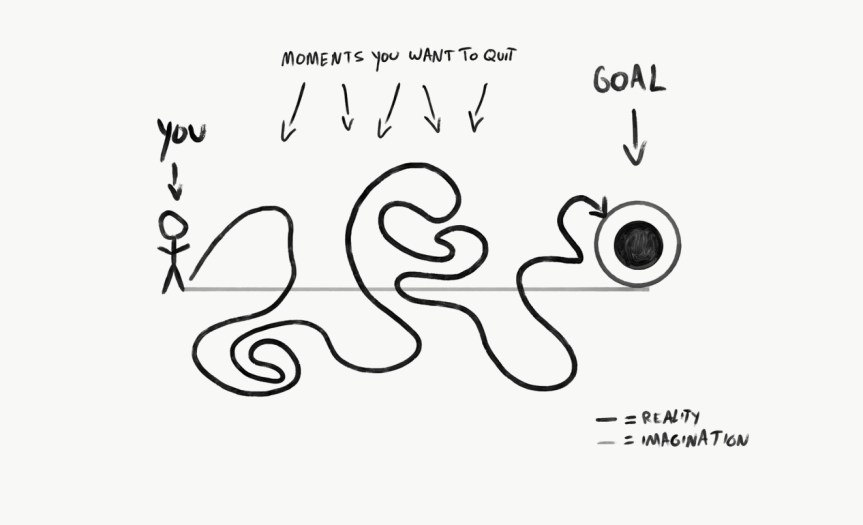
Look, achieving goals never happens in a linear way.

We believe there’s a straight line from where you are to where you want to be. Let’s say your goal is to start a business so you can have more freedom in your life. That was my goal since I was 17.

I still remember how I came up with that goal. I started working several jobs since I was 15. I worked in kitchens, stores, and call centers. And I quickly realized, there’s only one person who benefits from all this: The one at the top.

So from an early age, I set my mind to working for myself. I thought I could just start working for myself from the beginning.

But that’s not how it worked out for me. I had to take a lot of detours. I worked for many other people in between. I also started businesses that failed. And I’m still no way near where I want to be.

But understanding that life is not linear helps us to change the way we think.

It took me years to figure out how you can work for yourself successfully. Along the way, I’ve thought about quitting many times.

Now, I realize that’s a good thing. If you never feel like quitting, that means life is too easy, and you need to take action in your life.

Everybody plays tough and pretends they can easily handle life. I don’t believe that. No one knows what they’re doing. Some people are just better at dealing with their fear than others.

Because when you get over your fear, good things happen. Unfortunately, there’s nothing I can say to make things easier for you. Life is not easy. No matter what you do, it’s time to stop watching Netflix every night and browsing webshops for the newest clothes.

Don’t put your life off. It takes a while to figure things out. But that doesn’t mean you should quit. I’ve learned that if you haven’t reached your goals yet, or haven’t found a way to be successful, it doesn’t mean you’re a loser.

It means you haven’t found out how to win yet. If you keep going, you will find out.

But if you quit, you won’t. So don’t.

How To Figure Out The Next Big Move In Your Life Journey

Life is complex. One day you’re happy, working on your daily tasks, and the next day you wake up, thinking: “What the fuck should I do with my life?”

Am I right? We’ve all been there. When one of my readers responded to an article last week, I asked her: “How’s it going?”

She said: “Am doing well. Been interesting times figuring out which direction to go to next in my life journey.”

Last week I talked to a friend who was in the same position. And everyone will face the same challenge one way or the other over the course of a long career.

I’ve been there many times as well. No one is immune to being confused. Let’s face it — there are literally a million things you can do with your life.

And most of us realize that we can’t do everything we want. We also have to understand that anything that’s worth it in life is hard to obtain.

Great health, wealth, and happiness don’t happen by themselves. If you want good things to happen, you must take massive action.

But what type of action? What should you do?

I want to share 2 strategies with you that I’ve personally used in the past to figure out my next big move.

1. Burn Your Bridges

“Education is all a matter of building bridges.”
— Ralph Ellison

Look, I can’t tell you to want to do with your life. No one should decide that other than you.

But I can tell you about ways that help you to make a decision. People are lazy by nature. If it was up to us, we would protect the status quo, sit at home, and eat cookies all day.

We must realize that without a reason, we will never change.

“But what if I don’t have a reason?”

Force a reason.

I always wanted to live and work abroad for a while. And year after year went by without me taking action.

So in 2014, I got fed up with my indecisiveness. I canceled the lease of my apartment, handed over all my responsibilities at our family business, and FORCED myself to do something.

Lo and behold, I did. A few weeks later I was on my way to London with an awesome job offer in my pocket from an IT research firm.

You can’t expect good things to happen when you’re living a cushy life. You need a spark. Sometimes that happens from the outside (a family loss, being fired, dumped, etc).

But if nothing happens, you have to create the spark by burning your bridges.

Instead of wanting to change, you must change.

You can also burn the bridges in your mind. To grow, we must say goodbye to old beliefs.

2. Do Nothing

“Not all those who wander are lost.”
― J.R.R. Tolkien

I don’t mean ‘eat cookies all day.’ No, I mean don’t try to force anything. It’s the exact opposite strategy of burning your bridges.

“Darius, you’re contradicting yourself.”

So? Life is full of contradictions. Get used to it.

Look at your life. Have you tried burning your bridges? Didn’t work out? Try a different strategy.

I never get why people get all hung up on opposing strategies. Life is dynamic and requires you to adapt all the time.

When I came back to The Netherlands after working abroad for 1,5 years, I didn’t exactly know what I wanted to do. I still had my business, so I didn’t have to worry about money.

But I also wasn’t satisfied. I wanted to do something that mattered. But because I didn’t know what, I just didn’t force anything. I knew I needed a different strategy this time.

So I did my job, spent time with my friends and family, worked out a lot, and just enjoyed my life.

I just stopped worrying and thinking about my next move. That’s very liberating.

And after six months or so, I figured it out. I can tell you how I did it, but that’s not going to help you because you have to figure out how YOU are going to do it.

And that’s the most important thing about figuring out your next move. It’s called ‘figuring it out’ for a reason. It’s not called ‘here’s your life path served on a platter.’

Just be okay with that. It’s about the journey anyway. You better enjoy every step along the way. Especially the difficult ones.

How To Be A Kind Human Being

If you want to live a happy life and achieve all your goals, there’s one essential trait you can’t go without: Being kind.

Franklin D. Roosevelt put it well: “Human kindness has never weakened the stamina or softened the fiber of a free people. A nation does not have to be cruel to be tough.”

And yet, cruel people are everywhere. You see it in the workplace, relationships, families, and on the street.

One thing I find is that many of us mistake kindness for weakness. But who says you can’t be kind and firm and the same time? Many think it’s one or the other.

When we study successful people, billionaires, and athletes, we always talk about their work ethic, creativity, and leadership. Those things are essential, and we can learn a lot from them. But one thing that gets less attention is kindness.

That’s why this article and the following observations are about kindness. Kindness has the ability, more than anything else, to improve your life instantly.

You Don’t Have To Prove Yourself

Yes, you’re awesome. But you don’t have to take every opportunity to prove it to others.

Every time you correct someone, try to make a point when people already get it, or behave in another annoying way, you’re engaging in a pissing contest.

Go ahead and piss all you want. No one’s going to like you any better other than yourself. And we all know that ‘me, myself, and I’ is not a good strategy.

Show Humility

You might have achieved a lot in your life, but don’t let it get to your head. Even if you’re at the top of the world, there’s no reason to rub it in other people’s faces. Be humble. Be kind.

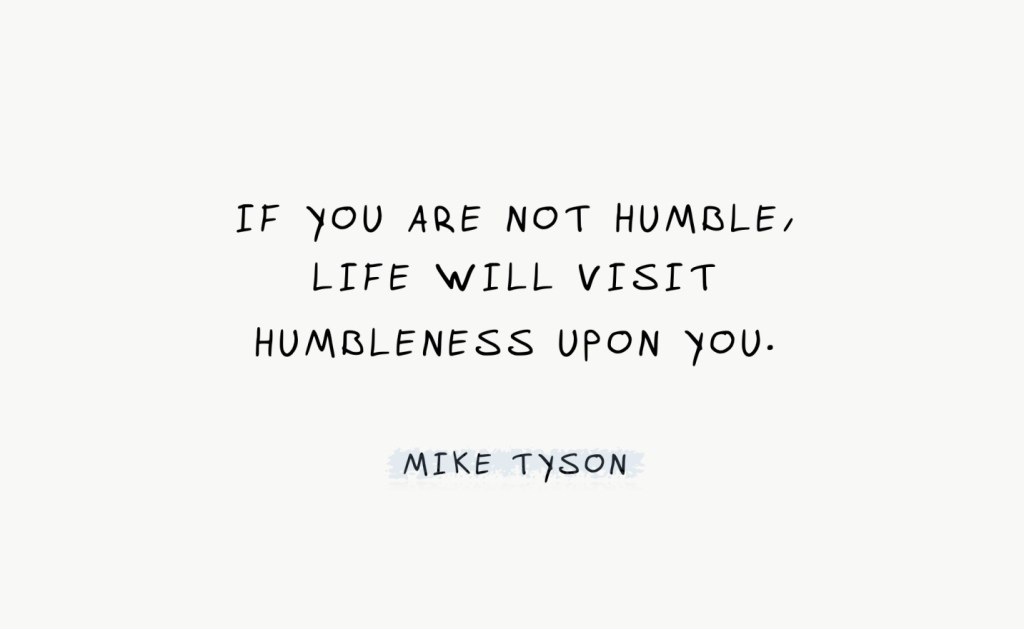
Mike Tyson put it best: “If you are not humble, life will visit humbleness upon you.”

You Don’t Always Have To Share Your Opinion

People always want to give their views about everything. And that’s cool, there’s nothing wrong with sharing your thoughts.

But most of the time it’s unwanted. Every time you say “I would do this, or I would say that”, stop for a minute and think whether you’re actually helping the other person or whether you are stroking your ego.

It’s fine to share how you would handle something, but the truth is: They are not you. So stop giving advice that no one is waiting for.

People are different, and that means everyone looks at the world differently. Recognize that instead of trying to change that. Just be there for people.

Be Open To Others

We were all born naked, crying, and pooping. If someone looks different, talks different, has less money, or whatever, it’s not a reason to judge them. Instead, be open to them.

It’s unfair to not give people a chance before they even try.

Don’t Take Everything Personally

We get offended too quickly. We say things like: “She didn’t call me back.” “He didn’t say thank you.”

Every time you say that he or she should have done this or that, you’re taking things personally.

Have you ever stopped for a second, and thought that the other person maybe didn’t do it to hurt your feelings? They’re only people—like you.

Understand That You’re Not The Centre Of The Universe

Let’s be honest, we only care about ourselves. But that doesn’t mean the world revolves around us.

We have a tendency to make everything about ourselves. In conflicts, we say things like: “How is that my fault?”

Well, it’s not your fault. Why do you even think that? Oh wait, you think the world is about you — that’s why.

Life is not a zero-sum game. It’s not you against the world. Work together and find a solution. That’s the kind thing to do.

Don’t Criticize What You Can’t Understand

Bob Dylan said that in 1964. What has changed? Not much: People still criticize the things they don’t understand.

I get it — criticism can be good. But most of the time it’s pointless. Because not everything is for everyone. Some people don’t get you, and they probably never will. And that’s fine.

Criticism is only good if it actually helps someone or some cause. Often, it does the opposite. It divides people instead of bringing them together.

If you don’t understand something — try. That’s all people expect from you, just try to be kind.

Show Compassion

We all have our own challenges. To you, someone else’s problems might seem like nothing. But sometimes we stop seeing that other people struggle.

If you can’t see that it’s not easy for people, you’re not compassionate. Kindness means empathy for all — even if you can’t relate to it.

Don’t Hold A Grudge

Let’s say that someone does something unpleasant to you. Or maybe someone says something hurtful. Is that person now a bad person for ever?

Do you see how stupid that sounds? Get over yourself and forgive people. Look ahead and realize that every day is a new day.

Show Interest In Others

People are so falsely interested in each other, it’s mindboggling. Many people are only interested in others for one reason: Comparing themselves.

Why else would you always check other people’s Facebook or LinkedIn? Or ask someone, who’s down, how they are? Some people use others as benchmarks. There’s no kindness in that.

Real interest takes real questions. If you truly care about others, you care about what’s going on in other people’s lives.

Listen To Others

How often do you ask a question and you start thinking about something else? Most of us think about what we want to say, or we think of the next question we want to ask.

Most interactions we have are just a superficial exchange of meaningless questions. Break through the surface and have real conversations. Care.

But you can’t do that without listening carefully. Listen to what people struggle with, what they love, how they talk. Try to understand who they are.

“Kindness in words creates confidence. Kindness in thinking creates profoundness. Kindness in giving creates love.”  — Lao Tzu

There you have it — my observations about kindness. One word of caution: I’m no kindness expert. I’m also not Mother Theresa.

But at least, I try. You can try it if you want as well —being kind is free.

Stop Trying To Be Realistic

We always try to think in “realistic” terms about everything:

  • “It can’t be done.”
  • “What? Do you want to build an airplane? You’re crazy.”
  • “You’ll never make it.”
  • “Everyone fails and so will you.”
  • “1,000 songs in your pocket? You must be kidding, right?”
  • “An electrical car with a range of 300 miles? What’s next? A time machine?”
  • “You want to be an artist? It’s safer to get a job.”
  • “Why would you travel the world?”

What does it take when everyone tells you that you’re wrong? Delusion. At least, a little of it.

Everything that is not ordinary is crazy. Well, that’s what people tell you. 

And if you don’t want to live an ordinary life, you have to be stubborn and stupid. Because it’s normal to live an ordinary life. That doesn’t take any courage.

You don’t need guts to get a normal job, buy a house, and do the usual stuff.

Most people are realistic. And you know what, they’re right. You should be normal, it’s the right thing to do.

  • It’s not realistic to be the first one to build an airplane
  • It’s not realistic to travel the world and earn money
  • It’s not realistic to build an electric car
  • It’s not realistic to live your dream
  • It’s not realistic to write a novel
  • It’s not realistic to make art

But what’s the fun of living a life when you know the outcome already? If you never try, you never have to deal with the hurt of failure—I’ll gives you that.

“Yeah, but an extraordinary life is not for everybody. I have bills to pay. I’m not lucky.”

I realize that you have shit going on in your life. But doesn’t everybody?

I’ve never met a ‘perfect’ person. Have you?

Rich people have problems. Poor people have problems.

But is that a reason to not do something? Life is also not a contest of “my problems are worse than yours.” If it’s the attention that you want, get a dog.

THERE IS ALWAYS A REASON TO NOT LIVE THE LIFE YOU WANT.

The truth is: You’re trying to be realistic.

And I’m telling you: DON’T. Think outside the box. Think of flying cars. Unconventional living. Space travel. Whatever.

Be crazy, weird, delusional, out of your mind, or whatever term people use for not ordinary. Do extraordinary things.

“People do not decide to become extraordinary. They decide to accomplish extraordinary things.” —Sir Edmund Hillary

Because once you decide to be realistic, your life will play out like a movie you’ve seen a dozen times. Is it still worth it to sit through it? Yeah, sure. But it’s not extraordinary.

Next time people call you crazy or think you’re weird, just realize that you’re on the right path. It’s not a reason to stop, it’s every reason to keep going.

Go. Go. Go.

Take A Vacation: It Boosts Your Productivity And Reduces Stress

You recharge your phone when it runs out of juice. You refill your gas tank when you’re running on empty.

But sometimes, you forget to do the same for your most precious possession: Your body (and the brain that’s inside of it).

Whether you love what you do, are in between jobs, or have a job you hate: You’re working. ‘Living’ is also a job. A pretty tough one, actually.

Just the act of getting up in the morning can be a daunting task. And I’m not even talking about all the responsibilities we have.

So, why do you make your life even more challenging by not taking a vacation to recharge? I’m not talking about your weekends that are packed with activities or holidays where you do more work than relax.

No, that type of “free time” doesn’t serve a purpose. I’m talking about resting with a very specific reason: To recharge your battery so you can keep working hard.

To me, life is about working hard. Voltaire said it best:

“The further I advance in age, the more I find work necessary. It becomes in the long run the greatest of pleasures, and takes the place of the illusions of life.”

Rest reduces stress. It improves creativity and productivity.

Scientific research shows that a vacation decreases perceived job stress and burnout. Now, that’s a pretty solid benefit of taking a few days off. But there’s more.

As you may know, I’m always interested in productivity. In the case of resting or a vacation, my question is:

Will I get more things done when I get back?

The answer is yes, but there’s one major thing to keep in mind.

But let’s back up a bit: What does it mean to get more done? Getting things done has nothing to do with time—if you work more hours, you don’t necessarily get more done.

In fact, research shows that working more hours in general means less productivity.

Why? Well, we often waste time if we have more of it. It’s simple: If I say to you, you have a year to write an article. What would you do? Procrastinate, right?

But what if I tell you that you only have 2 hours? You immediately think, how can I write this article ASAP!

So in a way, having more days off, and fewer days to work forces you to be more effective with your time.

Research shows that a vacation in itself won’t make you more productive, but when you have more days off, you have a strong desire to get more things done in less time.

And that’s a win-win situation for everybody: You, your business, or your job.

You take off a few days, recharge, spend time with your family or friends, and when you come back, you’re more productive.

Sounds great. But wait, there’s a caveat.

When your vacation is stressful, the positive benefits go away. Have you ever watched National Lampoon’s Vacation with Chevy Chase? That’s how my family holidays were. Not good.

So keep the stress at a minimum on your holiday. Otherwise, you’ve wasted a perfect opportunity to relax and boost your overall productivity.

Here are a few tips that might help.

1. If You’re A Planner, PLAN

One of my friends loves to plan everything. He loves itineraries and minute by minute plans of the day when he is on vacation. I’m the opposite.

When we went on a trip a few years back, he said, “I’m going copy your style and just go with the flow.” I said, “perfect.”

On the first morning, I slept until 10 AM. It turned out he woke up early, got nervous because he didn’t have a schedule, and spent the whole morning creating one.

Don’t try to be someone you’re not. If you like to plan your holiday, just do it. But try to stay flexible: You’re on a holiday.

2. Make A Daily Movie

It’s creative, and it’s a great memory for later. Plus, focusing on the act of filming will force your attention on something specific. In that way, you will be more in the moment, and you’ll worry less about stuff back home.

Just don’t film ALL day. Otherwise, you won’t be present at all.

All you need is a smartphone. Just film stuff with your phone and edit it right on your phone. If you’re more into video, bring a proper camera and a laptop.

3. Read A LOT

Bill Gates is famous for his voracious reading habit. He is also known for his ‘Think Week’ where does nothing else but read and think.

Recently, he published an article with 5 books that he’s reading this summer. Take a look if you’re looking for some inspiration.

I like to read for hours on my holidays. Reading slows downtime, makes you think, and is good for your brain.

4. Get Bored

One of my favorite strategies for finding new ideas is to get bored out of my mind. It sounds easier than it is because of distractions.

In the past, I would do everything to NOT get bored: Watch TV, go out, browse Facebook, etc. But did you know that you can use boredom to your advantage?

Instead of giving in to distractions, just give in to the boredom and see it leads your mind to. In fact, one of my favorite artists of all time, Andy Warhol, embraced boredom. You can tell by the boring films he made or the references he made in The Philosophy Of Andy Warhol about getting bored.

Whenever I hit a creative wall, I just do nothing. Literally, nothing. Try it sometime. It’s a great strategy; maybe you come up with the next best thing in your industry.

It’s never a good time to take a break.

  • “I just need to finish this project.”
  • “My boss will never accept it.”
  • “People will think I’m lazy.”
  • “I don’t have time.”
  • “Money never sleeps.”

Yeah, yeah, I’ve been there too. But what would you rather: Continue to work without resting and burn the fuck out? Or take some rest before you’re tired? Yup, life is long — so play the long game.

On that note, I might not be tired yet, but it’s time for me to take a break. So I will see you again when I come back on August 1 with a new article.

Until then — take it easy, because I definitely will.

P.s. For years I couldn’t afford to go on holiday. If you’re in the same position, have a staycation. The above tips still apply.

Stop Chasing Opportunities

Do you believe that more opportunities equal more chances of success? I sure did.

And since we all want to feel important in this world, we think that the way to achieve that is to chase every single opportunity out there.

I hear it often: “This is a big opportunity for me.”

But that idea is broken. Chasing opportunities is a bad strategy. It’s more practical to chase skills and PREPARE for opportunities.

That’s a small tweak in your mindset, but it changes everything. Abraham Lincoln put it best:

“I will prepare and some day my chance will come.”

We’re always desperately looking for the next big opportunity. The next big business idea, technology to adopt, a holiday to plan, house to buy, person to seduce, promotion to acquire.

What are you pursuing in your life?

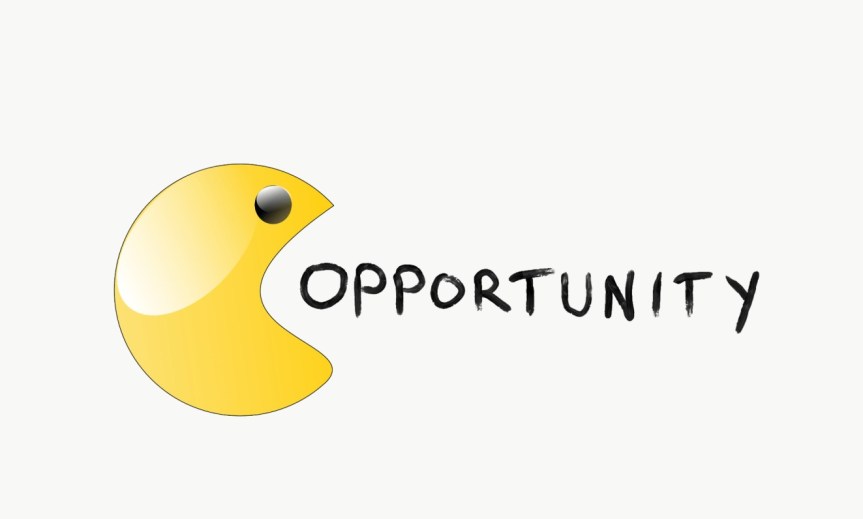
Are you all over the place? Trying to make the best of everything? Chasing every single opportunity on your path? If you do that, this is you:

You’re just fooling yourself. You want it all, but you lack the courage to say no. So you say yes, and you put yourself in an impossible situation.

Many priorities equal NO focus

I must be honest — I’m talking to myself here. For most of my life, I’ve been moving from one opportunity to the other. That changed about two years ago when I decided to only focus on growing Vartex, my family business, and my blog.

And that went well. I said no to everything else. But I was tempted by opportunities in the last few months. Consulting, coaching, speaking, writing more books, starting other businesses, creating YouTube videos — things I either did or considered.

But all it did was confuse me. I had too many priorities and zero focus. It was time for me to rethink my opportunities.

However, it’s never a matter of finding opportunities. Everyone has opportunities. So it’s not about how many opportunities you have, it’s about how many opportunities you eliminate from your life. And that’s not easy.

I decided to only focus on my business, blog, online courses, and podcasting. Just four things. They’re all very closely related. And I say no to every other opportunity.

Opportunities are not only external

Most opportunities come from within. Every time you think: “Should I pursue this?” You’re evaluating an opportunity.

And that requires a lot of brainpower. So make your life easy, and DECIDE.

Decide what you want to focus on in your career.

What do you want to excel at? And do exactly that. Nothing else.

“How many things should I focus on?”

That’s a tough one. It depends on where you are in life. At the beginning of your career, I would pick one to make things easy. Just pick one skill and give it all your attention.

But having just one skill in life will not get you far. When I look at people who are doing well in life, they often have combined several skills to get a competitive advantage.

You also don’t want to be a jack of all trades. Otherwise, you’re okay at many things, but never exceptional at a few.

“How do I know when opportunity knocks?”

When you know that it requires hard work to actualize the opportunity. Thomas Edison put it nicely:

“Opportunity is missed by most people because it is dressed in overalls and looks like work.”

At the end of the day, an opportunity is just a chance of making something good happen. An opportunity alone means nothing. Give ten people the same opportunity, and you’ll get ten different outcomes.

Opportunity = More Work (which is not always a good thing)

Because you don’t want to work yourself to death, it’s best to pick your opportunities wisely. How? I ask myself two questions.

  1. What am I good at? This question helps you pick opportunities that align with your strengths
  2. What type of work do I enjoy? I don’t like to pursue opportunities just because I think it will make me money. Or just because other people are doing something. Those are lousy reasons to do something.

And when you answer those questions honestly, you always get a handful of career opportunities. No one is good at 107 skills. And no one enjoys doing everything in the world.

Remember that drawing from earlier? You’re chasing all opportunities, but you end up confused.

Now, when you decide to pursue a few good opportunities that knock on your door, you get this:

Look, life is full of opportunity. You just have to figure out which opportunities you’re going after. And yes, that’s a hard thing to figure out. You also don’t control the opportunities that come your way.

What do you control? How prepared you are. So stop chasing everything like a happy dog in the park on a summer day. Just keep things simple, work on your skills, character, and become better at a few things every single day.

And when opportunity knocks, don’t be afraid of the work, grab it by the head and give it EVERYTHING YOU GOT.

If There’s No Light At The End Of The Tunnel: QUIT

Don’t you think life is weird sometimes? Take quitting.

Most of us believe that it’s wrong to quit. That it’s for losers. And that quitting equals failure.

The ‘never quit’ attitude is a good thing. Especially when we pursue hard things. I don’t think you should ever quit just because you can’t handle something.

However, quitting is also a smart strategy. Sometimes quitting is even the better option.

Seth Godin wrote a book about quitting. It’s called The DipAnd it’s very good. He says:

“Persistent people are able to visualize the idea of light at the end of the tunnel when others can’t see it. At the same time, the smartest people are realistic about not imagining light when there isn’t any.”

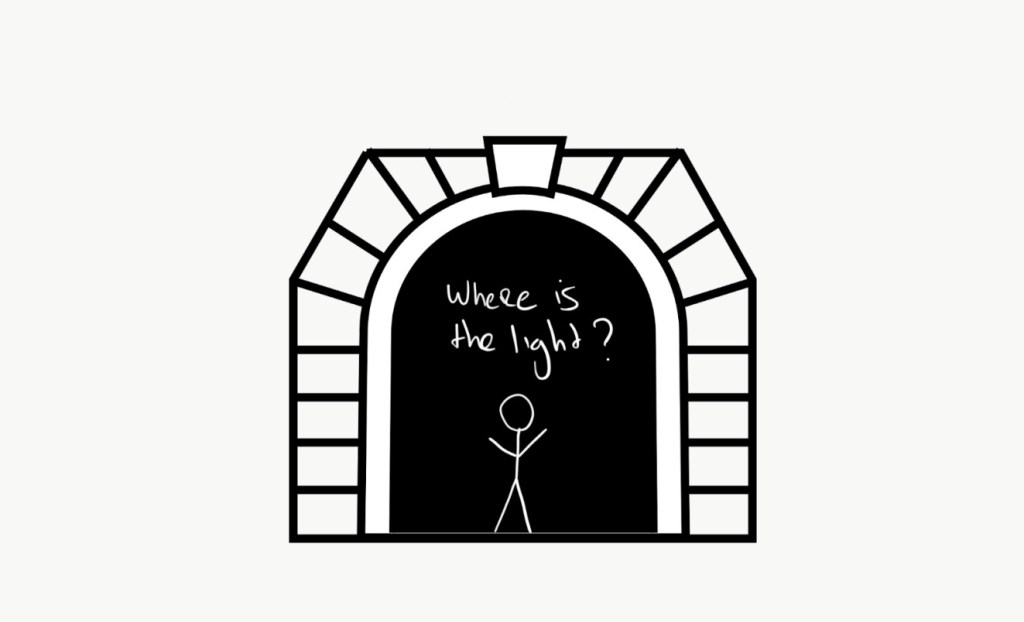
Sometimes you’re in a tunnel where there is no light to be found at all. So no matter how hard you work and persistent you are, you will never achieve anything.

Dead-end jobs, businesses, projects, relationships, behavior. We’ve all been there.

Quitting is not easy.

Be honest, how many times did you have the guts to quit? Because I’ll tell you this, quitting is one of the most difficult things I’ve ever done.

When I got a corporate job a few years ago, I was fed up with owning a business. I was burnt out, didn’t see the results I wanted, and felt overwhelmed. So I decided to quit my business and get a corporate job.

But I just couldn’t fully quit entrepreneurship. So I was stuck in the middle of a corporate job and not letting go of my business. I worked the corporate job during the days, and in the evenings and weekends, I worked for myself.

That made my life even more stressful. And after a year I had the same feeling as before I got the job. I was on a dead end.

I didn’t have the desire to climb the corporate ladder. And I also didn’t have the energy to grow my business. I realized that the path I was on lead to nowhere.

I knew what I had to do. I struggled with it daily in my mind. And it took months to get my act together and hand in my resignation. I did that with tears in my eyes. Quitting is not in my DNA.

If you can’t climb the ladder you’re on: Quit and pick a different ladder.

Let’s say you work at a corporation and you want to climb that ladder. I don’t think it’s a bad thing at all. You just need commitment. But I get why a lot of people don’t like it because there’s a lot of politics involved.

Look, I’m also not good at that stuff, but that doesn’t mean corporations are evil. They are only a reflection of society. And not everyone can become a CEO or board member. It’s simply a game of numbers. It’s not personal.

Mark McCormack, author of What They Don’t Teach You at Harvard Business School, said it best:

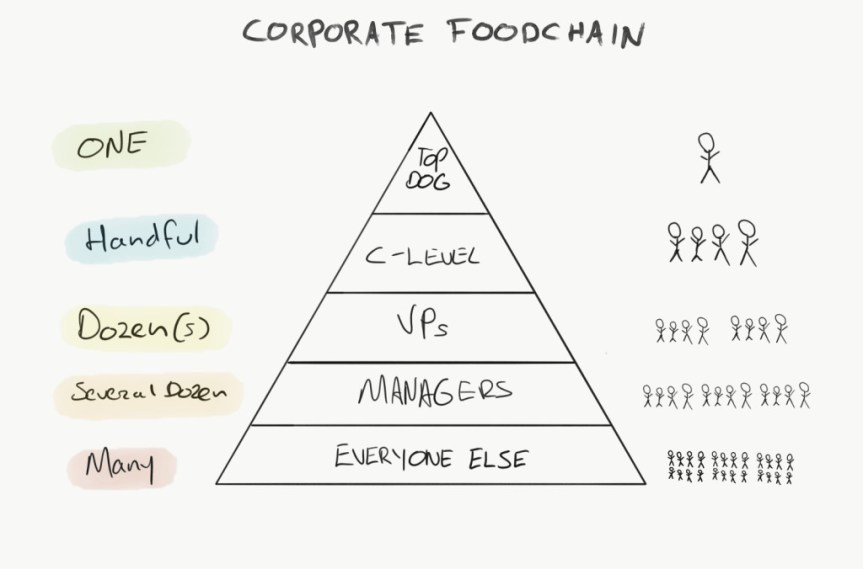
“Darwinism influences almost any pyramid-shaped structure, and the corporation is not only not an exception, it is probably the best example. There are simply not as many presidents as vice-presidents, there aren’t as many vice-presidents as there are managers, and so on.”

That book is from 1984. And yet, a lot of people don’t get the concept. The corporate food chain looks like this:

Many things are like that. If you don’t want to play that game, just get out.

In The Dip, Seth Godin argues that you should only strive for becoming the top dog. Everything else is not worth it.

In other words: Only try to climb the corporate ladder if you’re in it to win. Otherwise, it’s better to quit.

You make a bigger impact when you’re #1.

Seth Godin says:

“We reward the product or the song or the organization or the employee that is number one. The rewards are heavily skewed, so much so that it’s typical for to get ten times the benefit of #10, and a hundred times the benefit of #100.”

I must say, I don’t like the way Seth puts this. You can easily interpret that it’s all about the rewards. In other words: Ca$h money, fame, status, etc.

I don’t care about that shit. If I would, I would be doing a lot of other things instead of writing a bunch of free blog posts. I agree with Seth’s message, but for a different reason.

To me, being is good for only one reason: You get to make a bigger impact.

LeBron James. Richard Branson. Oprah Winfrey.

They are #1s in their fields. They also make the biggest impact. They help and inspire the most people.

Plus, they set the bar. They push the limits of what is possible. And others will either follow or move past them.

Don’t settle for mediocrity.

When it comes to quitting, there’s only one question you want to ask yourself:

“Is there light at the end of the tunnel I’m in?”

  • Are people responding to my blogs, videos, music?
  • Is there mutual respect in my relationship?
  • Are people buying my products?
  • Can I climb the ladder in my organization without playing politics? (In case you think this is not possible, read What They Don’t Teach You at Harvard Business School.)

If your answer is no, it’s time to quit. Find a different crowd. Move to a new company. Rediscover love.

Whatever you do, find a different tunnel. And keep doing that until you find one where there is light. And once you see one ray of light, cling to it and don’t quit before you reach the end (or top).

For now, just quit already.

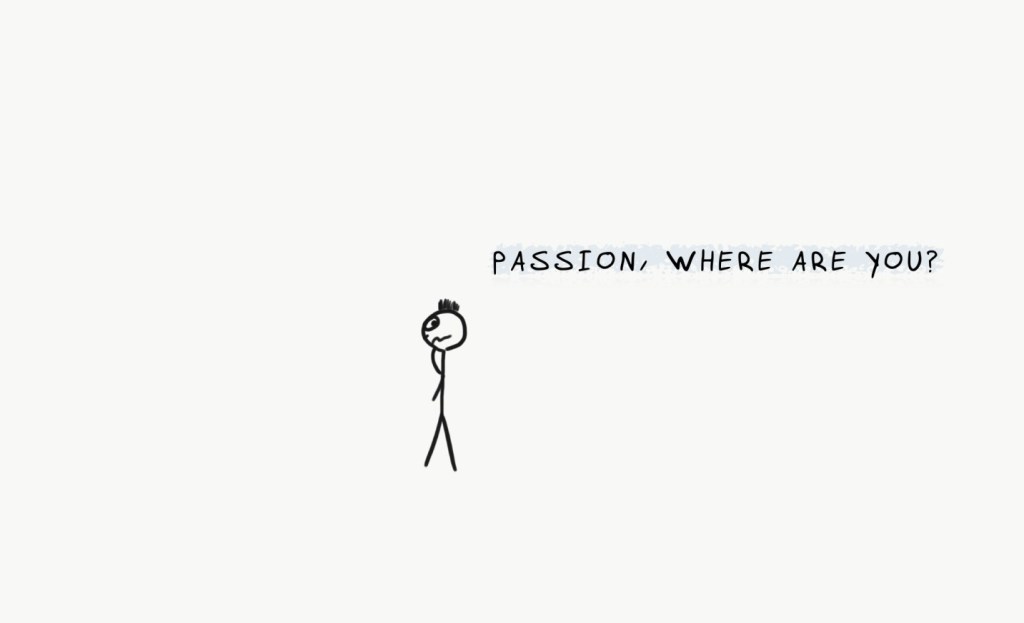
Instead Of Trying To Find Your Passion, Let Your Passion Find You

We collectively believe in a lot of myths. One of them is that your life only makes sense if you do what you love. That might be true, but the pursuit of your passion can be equally satisfying, which is something we often overlook.

Casey Neistat is an awesome YouTuber and entrepreneur. In his vlogs, he often talks about how much he loves his work (most recently here). And he advocates the belief of “find a job that you love and you don’t have to work for a day in your life.”

He’s not the only one who believes that. Many artists, athletes, entrepreneurs believe the same.

Steve Jobs even said:

“You’ve got to find what you love. And that is as true for your work as it is for your lovers. Your work is going to fill a large part of your life, and the only way to be truly satisfied is to do what you believe is great work. And the only way to do great work is to love what you do. If you haven’t found it yet, keep looking.”

I agree. However, it seems like many of us put too much pressure on ourselves to find our passion.

  • Without passion, we are not complete.
  • Without passion, our life has no meaning.

Really? It sounds like we’re giving ‘passion’ too much attention these days. It’s important, yes, but it’s not a magical solution that will make all your problems disappear.

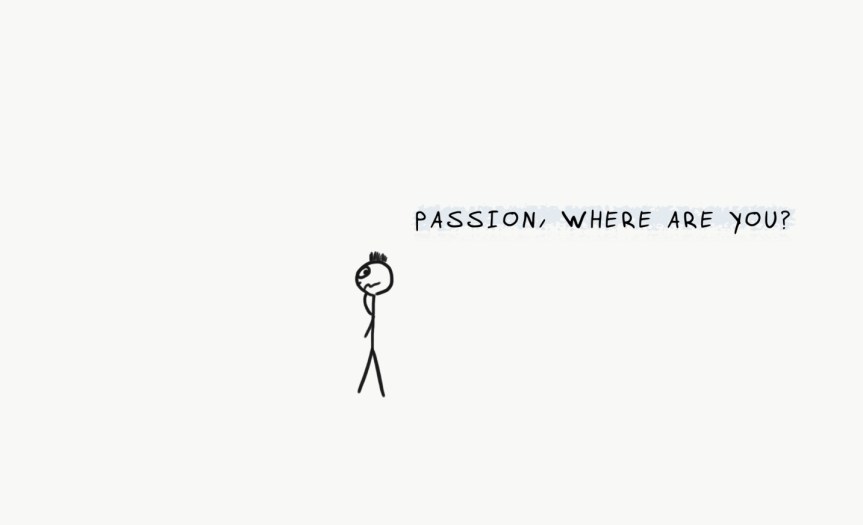
Some people say: “If only I would find my passion.”

And I think: Then what? Let’s say you find your passion.

But if you’re an idiot, you will be an idiot with a passion. And if you’re a miserable complainer, you’ll be a miserable complainer with a passion.

Don’t expect that your life will be 10X better when you love what you’re doing. Life is still LIFE. You have to wake up, make money, struggle, and deal with all the other things that life brings with it.

People ask me: How did you find your passion?

I’m one of those people who didn’t exactly know what they wanted to do when they grew up. There were many things I thought about doing.

But was I miserable before I started doing what I do now? Fuck no.

I have to admit, I’ve been an idiot and I’ve made stupid decisions in the past, but I’ve also been a hard worker, got two degrees from college, read tons of books, traveled, started and failed a few businesses, and always made the best out of bad situations.

And then one moment in 2015, I thought: Why not write about the stuff that I’ve learned along the way? My mentors and people who were close to me told me I should do this stuff a few years ago. I didn’t think about it at the time. But last year it just happened. Like a eureka moment.

Don’t get me wrong: It’s awesome to wake up every day and look forward to working on the stuff you love to do. But it’s not the ultimate key to happiness.

“So how is that information useful for me?”

For the past year, I’ve been researching how others can stimulate the process of ‘finding your passion.’ But I’ve never found any research that has a sound answer to that question.

No research says ‘do XYZ’ and that will result in YOUR PASSION.

The only research that comes close is from neuroscience and eureka moments. You know super awesome insights that appear out of nowhere. And finding your passion is often the same: It’s just an insight.

In The Eureka Factor, John Kounios and Mark Beeman explain how insights arise and what scientific research says about stimulating them. They write:

“Though insights often come as a surprise, sometimes we can sense that an idea is present, lurking just below the threshold of awareness, ready to emerge. This puzzling phenomenon has a strange subjective quality. It feels like an idea is about to burst into your consciousness, almost as though you’re about to sneeze.”

Instead of putting pressure on yourself, you need something else that will trigger that final step of getting a eureka moment. Kounious and Beeman continue:

“Cognitive psychologists call this experience “intuition,” meaning an awareness of the presence of information in the unconscious mind — a new idea, solution, or perspective — without awareness of the information itself, at least until it pops into consciousness.”

You don’t know your passion because you’re not aware of it. That’s all. Don’t make things more complicated than they are. And don’t try to force it to come out of you. It’s not a pimple that you HAVE to pop.

“But how can I stimulate my brain to get more insights?”

  1. Expose yourself to different things. Read about stuff you’ve never considered. Travel. Hang out with different people. The more you broaden your mind, the more information you get. Kounious and Beeman show that eureka moments are often a blend of different ideas that you’re exposed to.
  2. Manage stress and anxiety. Chronic stress and anxiety prevent your mind to think clearly, focus, and relax. Those are key ingredients of getting new insights. So before you think about finding your passion, deal with stress and anxiety first if you’re having a lot of it.

I think those two things are critical steps that most of us skip. We dive into the practical things like keeping a notebook next to your bed.

But the thing is: You need input if you want to output.

Instead of consciously thinking about your passion, let your passion come to you. It’s somewhere inside of you, hiding because it’s afraid to expose itself.

You just have to trust that someday it will seemingly appear out of nowhere. When that day comes, make a happy dance, celebrate, whatever, but the next day, wake up and start working.

Just like you’re doing now.

The Danger Of Thinking Big

We live in interesting times. Technology has made a lot of things possible that we couldn’t think of, just a few years ago.

We all crave innovation, change, and improvement. That’s why ideas, creativity, and knowledge are one of the most important resources in the world.

New apps and services pop up every single day. And it seems like every single one of them is a success.

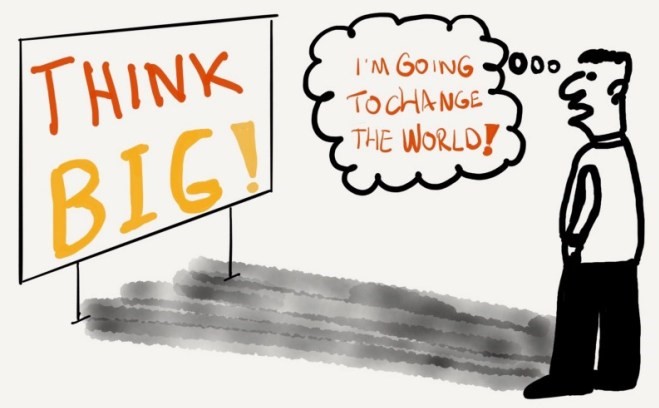
I often hear people, with big ideas, say: “How difficult is it to come up with a new app? You just need to think big and have a great idea.”

And then they continue: “You hire a freelance developer. Release it. Sell it. And BOOM. Relax on a beach.”

But let’s be real, it’s hard to achieve success. And yet, people think that as long as they have a great idea, they can achieve anything they want.

And it’s not just talking. We genuinely believe that we can become anything we want. We look up to people like Mark Zuckerberg, and we say: “You know he started Facebook from his dorm room, right? And now he’s a billionaire.”

“Or how about the founder of Snapchat, Evan Spiegel? He became a billionaire at age 24. Must be easy.”

A Big Idea Does Not Guarantee Success

I’m not going to tell you that you can’t do something—we already have enough people who do that.

But on the other side of that, we have “thinking big.” However, thinking big can turn around and bite you in the ass. It’s delusional to believe that you can change the world before you’ve worked yourself into a place that makes it possible for you to do so.

We often set out to achieve big things that are unique. Things like, “I want to be the first person who did X.” Or, “I want to be the youngest person who did Y.”

Are we a “genius” now because we have these big ideas?

In his new book, Ego Is The Enemy, Ryan Holiday writes about the dangers of thinking big:

“There is a real danger in believing it when people use the word “genius” — and it’s even more dangerous when we let hubris tell ourselves we are one. The same goes for any label that comes along with a career: are we suddenly a “filmmaker,” “writer,” “investor,” “entrepreneur,” or “executive” because we’ve accomplished one thing? These labels put you at odds not just with reality, but with the real strategy that made you successful in the first place. From that place, we might think that success in the future is just the natural next part of the story — when really it’s rooted in work, creativity, persistence and luck.”

  • Are you an entrepreneur if you have one good idea?
  • Are you a writer if you published two articles?
  • Are you a filmmaker when you create a YouTube video?

When you start thinking like that, you might feel like you’ve already achieved success. The biggest reward for most people is that they can call themselves a “founder,” “owner,” “writer,” or any other title that looks good.

But you’re not your Twitter or LinkedIn bio. No one cares about that stuff — but why do we pursue appearances? It’s often our ego speaking for us.

Look, I’m all about thinking big, but I’m also about being practical.

Because there’s still a difference between doing and dreaming. It doesn’t matter how big your dreams are — if you lose sight of what matters, you might never achieve those big dreams in the end.

Start With Tiny Steps

We live in a sum-sum world, not a zero-sum world. So it’s in everyone’s interest that we have people who set out to change the world. And sure, why can’t you change the world? It doesn’t require any special talent to change the world. It requires hard work and determination.

Thomas Edison put it best:

“There is no substitute for hard work.”

But success is not about a glorious vision. It’s about you, working on your goal—even when no one’s watching. With an emphasis on working because dreaming alone won’t get you anywhere.

In Ego Is The Enemy, Ryan Holiday writes about how we are often our own worst enemy when we think big. He draws lessons from different successful people who have made it big now but didn’t think big before they reached a level of success.

Ryan Holiday writes:

“A few years ago, one of the founders of Google gave a talk in which he said that the way he judges prospective companies and entrepreneurs is by asking them “if they’re going to change the world.” Which is fine, except that’s not how Google started. (Larry Page and Sergey Brin were two Stanford PhDs working on their dissertations.) It’s not how YouTube started. (Its founders weren’t trying to reinvent TV; they were trying to share funny video clips.) It’s not how most true wealth was created, in fact.”

Investor Paul Graham (who funded Airbnb, Reddit, Dropbox, and others), even says:

“The way to do really big things seems to be to start with deceptively small things.”

So, if thinking big isn’t a great strategy, what is?

When I study people who are called “successful”, I don’t see hubris. I see hard work. It’s always about doing the work — not about dreaming big.

People who say that dreaming big, visualization, and hoping for big things to happen is a good strategy, always have something to sell. If that stuff worked, everyone was a millionaire, philanthropist, or a world leader.

Unfortunately, you can’t build anything on your good intentions.

As Henry Ford once said:

“You can’t build a reputation on what you’re going to do.”

Similarly, you can’t get any results by dreaming big and not putting in the work on a daily basis. Because at the end of the day, results matter the most, not words.

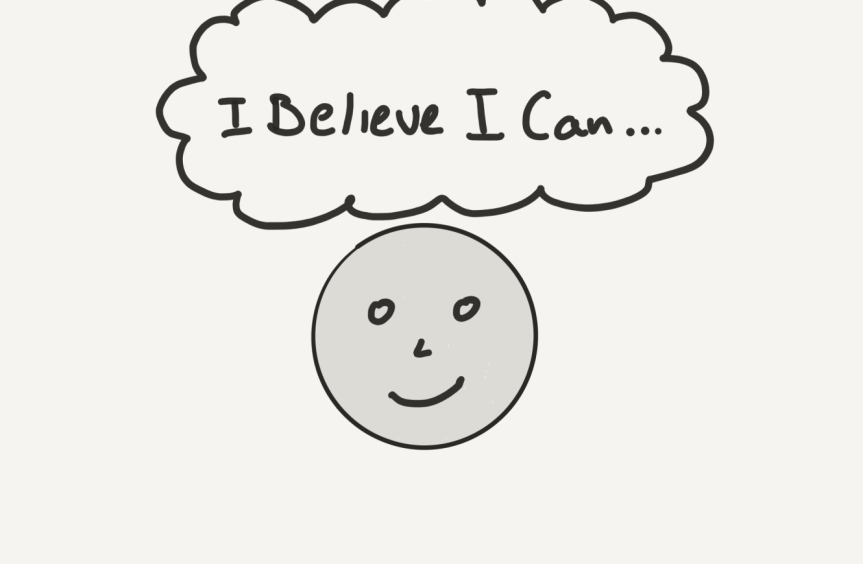
If You Can Believe It, You Can Achieve It

Belief creates the actual fact.

I know what you’re thinking. “This guy probably read a motivational quote on social media and now he’s telling us that nothing is impossible. Yeah right.”

I think the world has no shortage of motivational articles, books, videos, or Facebook posts.

You don’t need a bigger dose of #mondaymotivation. You know why? That type of motivation is not practical. It doesn’t do anything. It’s not useful. It’s the same as drinking Red Bull. It fades quickly.

Belief, on the other hand, is a tool that’s extremely useful. And it’s underutilized by many.

The problem is that most of us lack belief. And when I talk about belief, I talk about it from a practical point of view.

I’m not talking about hope or faith. I don’t believe that you can “hope” for the best, sit back and wait until good things happen to you.

Hope is not a strategy for life. I prefer to look at facts and make conclusions like a pragmatist.

Like it or not, but everything that’s floating in that head of yours is there because you believe it.

  • “Life sucks.”
  • “I’m not good at my job.”
  • “I can never find my dream job.”
  • “No one loves me.”
  • “I will never become successful.”

See? It’s all there because you believe those things. William James, one of the primary figures associated with pragmatism, put it best:

“Belief will help create the fact.”

Belief is a practical instrument that you can use to shape reality.

Have you ever considered that you decide what you believe? Not your friends, colleagues, family, or even the media.

You observe things, and then decide what you believe. That’s why belief creates facts.

No, life is not an R. Kelly song. You can’t fly, no matter how hard you believe it.

A pragmatist always keeps it real.

  • You will never become a respectable leader without putting in the work.
  • Your life will never change unless you take action.

But that’s not the point. You know this. There’s no outcome without action.

It comes down to one thing: Do you believe that you can, or can’t live the life you want?

It’s as simple as that. But it’s something that you truly have to believe.

It’s one thing to say that you believe something. It’s a whole different thing to actually believe.

Let me highlight that by sharing a personal story. For most of my life, I lived in fear. It all started at school. People told me:

“If you don’t get good grades, you will not be accepted to a good university, and without a good degree, you will never get a job, and you will become a bum who dies alone.”

After hearing that, my seventeen-year-old brain went into a full-fledged panic mode. I started believing that stupid story.

Who wants to become a bum and die alone?

That’s a metaphor for not believing in yourself. Because somehow, that’s always the alternative.

If you do something that’s uncommon, or maybe a little risky, the common argument is that you become homeless.

I meet a lot of people who say they’ve made important life decisions based on fear.

  • Do you hate your job, but are you afraid to look for something else because you might lose your house?
  • Do you want to leave your spouse, but are you afraid you’ll die alone?
  • Do you study yourself to death because you’re afraid of what your parents will say when you quit?
  • Do you never expose your work to the world because you’re afraid people will throw rocks at you because you suck?

Will that really happen? Or is that just your mind acting up? Probably the latter.

I always wanted to become a writer. Back in school, I wrote poems for my girlfriend. It was kind of pathetic, but hey, she enjoyed my weird poems. But all jokes aside, I loved to read and enjoyed putting my thoughts on paper.

But no, every adult in my life was trying to scare me to death. “You can’t make a living as a writer.” They were probably right. It’s not easy to make a living by writing.

So what? Everything that’s worth it is hard. I didn’t realize that back then.

So I gave up my goal. I decided to pick the safe road and pursue a degree in business. I don’t regret that decision because I’ve learned many useful things.

But the whole experience turned me into a fearful creature. Because after that whole scare-fest in school, I eventually stopped believing in myself.

I stopped writing and reading. And that’s a pure waste of time that I could’ve used for practicing my skills.

You can achieve anything (as long as you believe in it).

What’s something you once believed in but stopped believing because of fear? I think we’ve all been there. If you’re not careful, you’ll always stay there.

For me, it wasn’t until two or three years ago that I figured out belief is an instrument that can help you to achieve your goals.

Somehow I started reading about pragmatism (which is a way of thinking).

And it completely changed my own way of thinking. I realized that not believing in yourself is useless. So I decided to believe that I could live the life I wanted.

Granted, I’m not fully paying the bills by writing yet. I run a business and do consult. But I do make some money with my blog. And that’s pretty good to know for the seventeen-year-old version of me.

Believing in yourself is very simple. You can do it too. Just understand that belief is an instrument. That idea is not new or anything. It’s been around for hundreds of years. People just have different names for it.

I don’t care how you call it. But guess what happened since I’ve been using belief as an instrument? Most things I believed are facts now. And the other stuff I believe will one day become a fact.

How am I so certain?

Because my mind can conceive it. And if your mind can conceive it, you can achieve it.

That’s not a motivational quote. That’s a fact.

Do you believe it?