
Nazca Lines

What Are the Nazca Lines?

There are three basic types of Nazca Lines: straight lines, geometric designs and pictorial representations.

There are more than 800 straight lines on the coastal plain, some of which are 30 miles (48 km) long. Additionally, there are over 300 geometric designs, which include basic shapes such as triangles, rectangles, and trapezoids, as well as spirals, arrows, zig-zags and wavy lines.

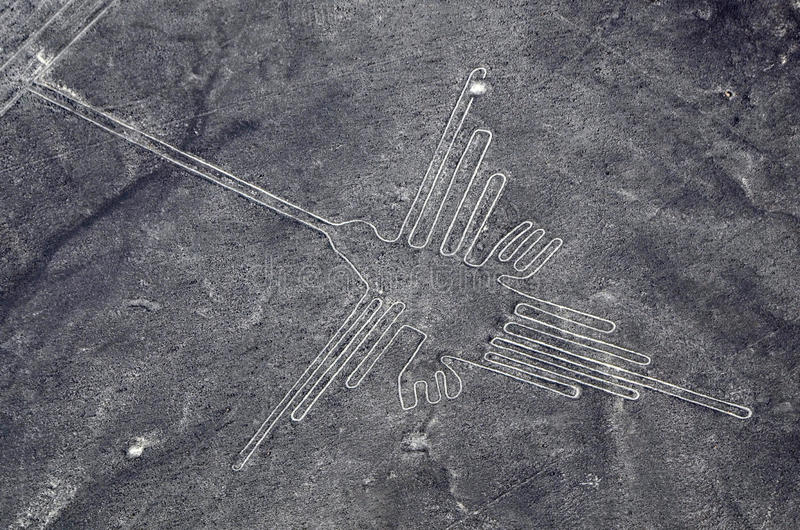
The Nazca Lines are perhaps best known for the representations of about 70 animals and plants, some of which measure up to 1,200 feet (370 meters) long. Examples include a spider, hummingbird, cactus plant, monkey, whale, llama, duck, flower, tree, lizard and dog. The Nazca people also created other forms, such as a humanoid figure (nicknamed “The Astronaut”), hands and some unidentifiable depictions.

How the Nazca Lines Were Created

Anthropologists believe the Nazca culture, which began around 100 B.C. and flourished from A.D. 1 to 700, created the majority of the Nazca Lines. The Chavin and Paracas cultures, which predate the Nazca, may have also created some of the geoglyphs.

The Nazca Lines are located in the desert plains of the Rio Grande de Nasca river basin, an archaeological site that spans more than 75,000 hectares and is one of the driest places on Earth.

The desert floor is covered in a layer of iron oxide-coated pebbles of a deep rust color. The ancient peoples created their designs by removing the top 12 to 15 inches of rock, revealing the lighter-colored sand below. They likely began with small-scale models and carefully increased the models’ proportions to create the large designs.
Purpose of the Nazca Lines

More recent research suggested that the Nazca Lines’ purpose was related to water, a valuable commodity in the arid lands of the Peruvian coastal plain. The geoglyphs weren’t used as an irrigation system or a guide to find water, but rather as part of a ritual to the gods—an effort to bring much-needed rain.

Some scholars point to the animal depictions—some of which are symbols for rain, water or fertility and have been found at other ancient Peruvian sites and on pottery—as evidence of this theory.

In 2015, researchers presenting at the 80th annual meeting of the Society for American Archeology argued that the purpose of the Nazca Lines changed over time. Initially, pilgrims heading to Peruvian temple complexes used the geoglyphs as ritual processional routes. Later groups, as part of a religious rite, smashed ceramic pots on the ground at the point of intersection between lines.

Floating Gold

What is floating gold or Ambergris?

Grey amber, which is called Ambergris, is also commonly called whale vomit. An average sperm whale eats several thousand squid beaks every day. Sometimes, a beak makes it into the whale’s stomach, where it becomes ambergris through a complex process, so that the whale may eventually excrete it. In general, it is a solid waxy substance that floats on water surfaces or sometimes settles on beaches.

Ambergris is valuable or not?

The excretion is so valuable that it is often referred to as “floating gold.” According to estimates given by Mumbai Police, 1 kg of ambergris is worth Rs 1 crore internationally. Ancient Egyptians used it as incense. The reason for its high cost is its widespread use in the perfume market, especially when creating fragrances like musk. It is believed to be in great demand in countries with large perfume markets, like Dubai. It is also believed to be used in some traditional medicines.

Ambergris is only produced in the guts of sperm whales, which vomit the substance occasionally. Scientists think sperm whales produce ambergris to coat hard and sharp objects they ingest so they don’t damage the whales’ intestines. Such sharp objects found inside ambergris include teeth from giant squids. 

As a result, the scent allegedly lasts longer, as the ambrein molecule, when exposed to activated oxygen, releases more volatile, lighter fragrance compounds.

What are the laws on Ambergris?

In India, the sale of Ambergris is not permitted under the Wildlife Protection Act because the sperm whale is an endangered species that was declared endangered in 1970.

Ambergris has historically been a target for smugglers due to its high value, particularly in coastal areas. The Gujarat coastline has been used for such smuggling several times. Sperm whales are a protected species, so they cannot be hunted.

However, it is currently perfectly legal in the UK and other countries in the European Union to collect a lump of ambergris from the beaches and sell it, either at auction or on sites such as eBay.

The EU maintains strict protections for whale and dolphin species and prohibits the sale of whale products internationally.  The Convention on International Trade in Endangered Species (CITES) treats ambergris differently since it is considered an excretion, like urine or feces and is thus considered a by-product and does not need to be covered under the Convention. The EU is currently happy to support this definition.

Conclusion:

Times have changed. The whale is no longer considered just another marketable commodity in most countries. They symbolize, rightly, the fundamental challenge of our time – whether we will be able to live in harmony with the environment and turn away from unrestrained exploitation. Instead of killing whales for commercial profit, sustainable alternatives such as whale watching are becoming increasingly popular.

The IWC itself needs to move with the times. It is clearly under pressure from a few countries which, for their own motives, want to increase their kill of whales. It seems possible, even likely, that whales will once again be killed in increasing numbers unless the IWC can evolve to meet this new challenge. It is time for a fresh debate on the effective conservation of whales in the 21st century.