Child Labour- Destruction of Children’s Life

Overview 

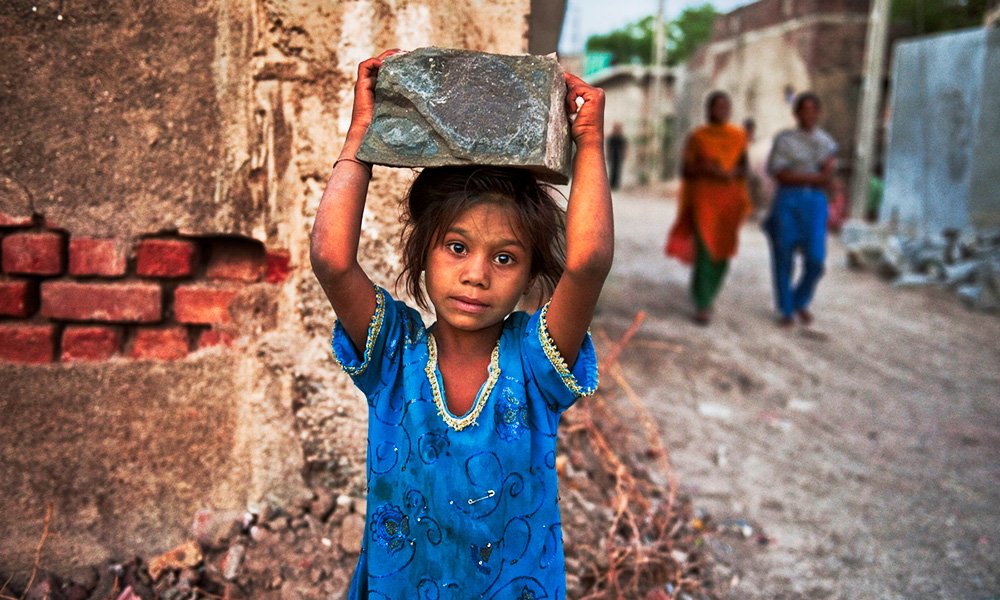
Child Labour is basically exploitation or destruction of children through any form of work that deprives children of their childhood, and are tend to work for someone even if they do not wish to. It interferes with their ability to attend regular school, and is mentally, physically, socially and morally harmful. Such exploitation is prohibited by legislation worldwide,[4][5] although these laws do not consider all work by children as child labour; exceptions include work by child artists, family duties, supervised training, etc.,. Child labour is not a recent problem, it has been from the past era. Child labour forms an intrinsic part of pre-industrial economies. In pre-industrial societies, there is rarely a concept of childhood in the modern sense. Children often begin to actively participate in activities such as child rearing, hunting and farming as soon as they are competent. In many societies, children as young as 13 are seen as adults and engage in the same activities as adults. In the previous centuries, children were tend to a little bit of Industry work, and for them there was no childhood term.  

Situations in different centuries- 

Early 20th century 

In the early 20th century, thousands of boys were employed in glass making industries. Glass making was a dangerous and tough job especially without the current technologies. The process of making glass includes intense heat to melt glass (3133 °F). When the boys are at work, they are exposed to this heat. This could cause eye trouble, lung ailments, heat exhaustion, cuts, and burns. Since workers were paid by the piece, they had to work productively for hours without a break. An estimated 1.7 million children under the age of fifteen were employed in American industry by 1900. 

21st century 

Child labour is still common in many parts of the world. Estimates for child labour vary. It ranges between 250 and 304 million, if children aged 5–17 involved in any economic activity are counted. If light occasional work is excluded, ILO estimates there were 153 million child labourers aged 5–14 worldwide in 2008. This is about 20 million less than ILO estimate for child labourers in 2004. Some 60 percent of the child labour was involved in agricultural activities such as farming, dairy, fisheries and forestry. Another 25% of child labourers were in service activities such as retail, hawking goods, restaurants, load and transfer of goods, storage, picking and recycling trash, polishing shoes, domestic help, and other services. The remaining 15% laboured in assembly and manufacturing in informal economy, home-based enterprises, factories, mines, packaging salt, operating machinery, and such operations. Two out of three child workers work alongside their parents, in unpaid family work situations. Some children work as guides for tourists, sometimes combined with bringing in business for shops and restaurants. Child labour predominantly occurs in the rural areas (70%) and informal urban sector (26%). 

Causes of Child labour 

The major causes are stated below- 

  1. Poverty 

            ‘Poverty is certainly the greatest single force driving children into the                      workplace.’ When families cannot afford to meet their basic needs like food, water,  education or health care, they have no choice but to send their children to work to supplement the household income. Poverty is considered as one of the most important causes of child labour as it is linked to other driving factors including: low literacy and numeracy rates, lack of decent work opportunities, natural disasters and climate change, conflicts and mass displacement. Poverty and child labour form a vicious cycle, without tackling one, we cannot eradicate the other. 

  1. Lack of access to quality education 

‘The availability and quality of schooling is among the most important factors.’ School needs to be a welcoming environment, with appropriate class sizes, a curriculum designed for the local context, and affordable for rural communities. Getting children into school and out of harmful work is one thing but keeping them there a means creating quality education accessible for all. 

  1. Poor access to decent work 

‘Children who were involved in child labour often lack the basic educational grounding which would enable them to acquire skills and to improve their prospects for a decent adult working life.’ If young people cannot access work which is safe, with social protection, fair pay, equality for men and women and which provides a space for workers to express their opinions, they often have no choice but to do work which is hazardous. When children above the minimum working age are doing hazardous work, this is also considered child labour. 

  1. Limited understanding of child labour 

‘The view that work is good for the character-building and skill development of children.’ When families do not understand the dangers of child labour, and how these impact on the health, safety, well-being and future of their child, they are more likely to send their children to work. Some cultural beliefs and social norms can also be drivers of child labour. 

  1. Natural disasters & climate change 

‘In rural areas, farmers who see their crops destroyed on account of climate changes have no other choice but to send their children out to work.’ The effects of natural disasters and climate change is one which is becoming of increasing concern. Rural families who depend on reliable seasons for farming are particularly vulnerable to altered patterns of rainfall, soil erosion, or extreme weather. When crops are destroyed or farming land is ruined, families struggle to make a living and are more likely to send their children to work in neighbouring farms. 

  1. Conflicts & mass migration 

‘There is a strong correlation between child labour and situations of conflict and disaster’ According to the ILO children make up more than half of the total number of people displaced by war. These children are particularly vulnerable to forms of exploitation, including child labour, due to an increase in economic shocks, a breakdown of social support, education and basic services, and disruption of child protection services. The incidence of child labour in countries affected by conflict is almost twice as high as the global average. Children are also vulnerable to becoming involved in armed conflict, this is considered one of the Worst Forms of Child Labour

  1. Fighting child labour 

SDG Goal 8.7 calls for the elimination of all forms of child labour by 2025. With 152 million children involved in child labour worldwide, we still have a long way to go. Programmes and policies which take into account the voices of the communities where child labour occurs, and the root causes, can advance real and sustainable progress in the fight against child labour. 

What needs to be done to stop child labour in India? 

Much more has to be done in the political landscape to stop exploitative child labour in India: the laws against child labour must be further tightened and more strictly enforced. In addition, it is important to combat extreme poverty, a root cause of child labour. Addressing poverty and inequality  is crucial to end child labour in India. 

Access to education is also vital to break the vicious cycle of poverty and child labour. As children complete higher levels of education, they are more likely to find decent work in adulthood and can use their income to care for themselves and their families without relying on child labour. Although education is compulsory and free in India for children up to the age of 14, widespread poverty forces families to prioritize putting  food on the table over sending their children to school.  As a result, many children attend school irregularly or not at all because they have to work instead. 

All about Cyber Crime

Overview 

Cyber Crime is an illegal activity or crime which involves computer and a computer network. It can a also be a crime wherein a computer is targeted either to retrieve an information or for other harmful purposes. Cyber Crime can harm someone’s security and Financial Health.  There are many privacy concerns surrounding Cybercrime when confidential information is intercepted or disclosed, lawfully or otherwise. Internationally, both governmental and non-state actors engage in cybercrimes, including espionage, financial theft, and other cross-border crimes. Cybercrimes crossing international borders and involving the actions of at least one nation-state are sometimes referred to as cyberwarfare. Warren Buffet describes Cybercrime as the “number one problem with mankind”  and “poses real risks to humanity. Most, but not all, cybercrime is committed by cybercriminals or hackers who want to make money.  Cybercrime is carried out by individuals or organizations. Some cybercriminals are organized, use advanced techniques and are highly technically skilled. Others are novice hackers. Rarely, cybercrime aims to damage computers for reasons other than profit. These could be political or personal.  

Types of Cybercrime 

1. Phishing: using fake email messages to get personal information from internet users; 

2. Misusing personal information (identity theft); 

3. Hacking: shutting down or misusing websites or computer networks; 

4. spreading hate and inciting terrorism; 

5. distributing child pornography; 

6. grooming: making sexual advances to minors. 

Nowadays, all digital devices (including computers, tablets, and smartphones) are connected to the internet. And, hence the devices are more prone to cyber crime. 

Categories of Cyber Crime 

Cyber crime falls under two main categories- 

  1. Criminal activity that targets 
  1. Criminal activity that uses computers to commit other crimes. 

Cybercrime that targets computers often involves viruses and other types of malwares. 

Cybercriminals may infect computers with viruses and malware to damage devices or stop them working. They may also use malware to delete or steal data. 

Cybercrime that stops users using a machine or network, or prevents a business providing a software service to its customers, is called a Denial-of-Service (DoS) attack. 

Cybercrime that uses computers to commit other crimes may involve using computers or networks to spread malware, illegal information or illegal images. 

Sometimes cybercriminals conduct both categories of cybercrime at once. They may target computers with viruses first. Then, use them to spread malware to other machines or throughout a network. 

Cybercriminals may also carry out what is known as a Distributed-Denial-of-Service (DDos) attack. This is similar to a DoS attack but cybercriminals use numerous compromised computers to carry it out. 

How to protect yourself from cyber crime 

Now you have learned about cyber crimes, so let’s also know how to stay protected from it. Here are some points to consider- 

  • Keep software and operating system updated– ensures that you benefit from the latest security patches to protect your computer. 
  • Use antivirus and keep it updated– Using anti-virus or a comprehensive internet security solution like Kaspersky Total Security, Mc Afee, Quick heal, and other antivirus softwares are a smart way to protect your system from attacks. Anti-virus software allows you to scan, detect and remove threats before they become a problem. Having this protection in place helps to protect your computer and your data from cybercrime, giving you piece of mind. If you use anti-virus software, make sure you keep it updated to get the best level of protection. 
  • Use strong passwords–  Be sure to use strong passwords that people will not guess and do not record them anywhere. Or use a reputable password manager to generate strong passwords randomly to make this easier. 
  • Never open attachments in spam emails– A classic way that computers get infected by malware attacks and other forms of cybercrime is via email attachments in spam emails. Never open an attachment from a sender you do not know. 
  • Do not click on links in spam emails or untrusted websites- Another way people become victims of cybercrime is by clicking on links in spam emails or other messages, or unfamiliar websites. Avoid doing this to stay safe online. 
  • Do not give out personal information unless secure- Never give out personal data over the phone or via email unless you are completely sure the line or email is secure. Make certain that you are speaking to the person you think you are.  
  • Contact companies directly about suspicious requests- If you get asked for data from a company who has called you, hang up. Call them back using the number on their official website to ensure you are speaking to them and not a cybercriminal. 
  • Be mindful of which website URLs you visit- Keep an eye on the URLs you are clicking on. Do they look legitimate? Avoid clicking on links with unfamiliar or spammy looking URLs. If your internet security product includes functionality to secure online transactions, ensure it is enabled before carrying out financial transactions online. 
  • Keep an eye on your bank statements- Our tips should help you avoid falling foul of cybercrime. However, if all else fails, spotting that you have become a victim of cybercrime quickly is important. Keep an eye on your bank statements and query any unfamiliar transactions with the bank. The bank can investigate whether they are fraudulent. 

Governments Role 

Government is also working to minimize such crimes taking place everyday, as the no. of such cases are increasing day-by-day. Government has also  created a separate branch for this named Cyber Cell. 

How can you file a complaint in cyber cell?  

Few simple steps are as follows- 

  1. The very first step to file a cyber-crime complaint is to register a written complaint with the cyber-crime cell of the city are currently in. 
  1. When filing the cyber crime complaint, you need to provide your name, contact details, and address for mailing. You need to address the written complaint to the Head of the Cyber Crime Cell of the city where you are filing the cyber crime complaint. 
  1. In case you are a victim of online harassment, a legal counsel can be approached to assist you with reporting it to the police station. Additionally, you may be asked to provide certain documents with the complaint. This would, however, depend on the nature of the crime. 
  1.  Register a Cyber Crime FIR: If you do not have access to any of the cyber cells in India, you can file a First Information Report (FIR) at the local police station. In case your complaint is not accepted there, you can approach the Commissioner or the city’s Judicial Magistrate
  1. Certain cyber crime offenses come under the Indian Penal Code. You can register a cyber crime FIR at the nearest local police station to report them. 
  1. Most of the cyber crimes that are covered under the Indian Penal Code are classified as cognizable offenses. A cognizable offense is the one in which a warrant is not required for an arrest or investigation. 
  1. Zero FIR offers some solace to victims of cases that require immediate attention/investigation as it avoids wasting time in enlisting the offense on police records. 

Education Policy from 1968-2020

OVERWIEW
It has been a major step for our education sector. The policy that we were following before was the National Policy on Education (NPE) formulated by the Government of India to promote and regulate education in India. The policy covered elementary education to higher education in both rural and urban India. The first NPE was promulgated by the Government of India by Prime Minister Indira Gandhi in 1968, the second by Prime Minister Rajiv Gandhi in 1986, and the third by Prime Minister Narendra Modi in 2020.
THE EDUCATION POLICIES
In 1968
The government of Prime Minister Indira Gandhi announced the first National Policy on Education in 1968, which called for a “radical restructuring” and proposed equal educational opportunities in order to achieve national integration and greater cultural and economic development. The policy called for fulfilling compulsory education for all children up to the age of 14, as stipulated by the Constitution of India and specialized training and qualification of teachers. The policy called for a focus on the learning of regional languages, outlining the “three-language formula” to be implemented in secondary education – the instruction of the English language, the official language of the state where the school was based, and Hindi. Language education was seen as essential to reduce the gulf between the intelligentsia and the masses. Although the decision to adopt Hindi as the national language had proven controversial, the policy called for the use and learning of Hindi to be encouraged uniformly to promote a common language for all Indians. The policy also encouraged the teaching of the ancient Sanskrit language, which was considered an essential part of India’s culture and heritage. The NPE of 1968 called for education spending to increase to six percent of the national income.
In 1986
The government led by Rajiv Gandhi introduced a new National Policy on Education. The main points of this policy was that, it was called for “special emphasis on the removal of disparities and to equalize educational opportunity,” especially for Indian women, Scheduled Tribes (ST) and the Scheduled Caste (SC) communities; to achieve such social integration, the policy called for expanding scholarships, adult education, recruiting more teachers from the SCs, incentives for poor families to send their children to school regularly, the development of new institutions, and providing housing and services. The NPE called for a “child-centred approach” in primary education and launched “Operation Blackboard” to improve primary schools nationwide; the policy expanded the open university system with the Indira Gandhi National Open University, which had been created in 1985; the policy also called for the creation of the “rural university” model, based on the philosophy of Mahatma Gandhi, to promote economic and social development at the grassroots level in rural India; 1986-education policy expected to spend 6% of GDP on education.
2020
In 2019, the Ministry of Human Resource Development released a Draft New Education Policy 2019, which was followed by a number of public consultations. The Draft NEP discusses reducing curriculum content to enhance essential learning, critical thinking and more holistic experiential, discussion-based and analysis-based learning. It also talks about a revision of the curriculum and pedagogical structure from a 10+2 system to a 5+3+3+4 system design in an effort to optimize learning for students based on the cognitive development of children.
On 29 July 2020, the cabinet approved a new National Education Policy with an aim to introduce several changes to the existing Indian education system.
RECENT EDUCATION POLICY 2020 BRIEF
Another major step taken in the History of India becoming a global superpower was awaited with the change in the Education Policy. In 2019, Modi Government released a draft which stated about changing the Education Policy. It was approved by the Union Cabinet at a meeting presided by Prime Minister Narendra Modi on Wednesday, 29th July 2020. The new education system aims at bringing in transformation reforms in the education system of schools and higher education. Replacing the 34-year old education system is another major move in the direction of strengthening India as a global power. The new NEP also includes the renaming of the HRD Ministry back to the Education Ministry. Promoting the spirit of “Ek Bharat Shreshtha Bharat”, Prime Minister Narendra Modi tweeted, “Aspects such as widening the availability of scholarships, strengthening infrastructure for Open and Distance Learning, Online Education, and increasing the usage of technology have received great attention in the NEP. These are vital reforms for the education sector.”
Key Points-
~All higher education institutes excluding the medical and law colleges will be governed by a single regulator.
~MPhil courses will now be terminated.
~Board exams will now be more application and knowledge-based.
~Both the public and private higher education institutes will be governed under the same norms.
~To promote and give more emphasis on the regional language/mother-tongue, instruction medium up to class 5 will be in local/home languages.
~All entrance exams for higher education institutes and universities will be held commonly.
~School curriculum to focus more on core concepts.
~Vocational education will also be imparted from 6th grade onwards.
10+2 study cultures discontinue and new structure of 5+3+3+4 will be followed, subjecting to the respective age group of 3-8, 8-11, 11-14, and 14-18 years.
These were all the changes in detail that were proposed and introduced in the New Education Policy 2020.

Animal abuse

Overview
Animal Cruelty also called animal abuse, cruelty to animals or animal neglect is a range of behaviors harmful to animals, from neglect to malicious killing. Intentional cruelty can run the gamut from knowingly depriving an animal of food, water, shelter, socialization, or veterinary care to maliciously torturing, maiming, mutilating, or killing an animal. They face a lot of mishappenings and still they fight for themselves. There is no humanity left within human beings. They act Insane. They do not pity the animals. The way animals are treated is just so pathetic and disturbing. For no reason, they are beaten up, they are being raped, and they are were killed then. Many suffer through this daily, and in the end, they give up and lose their lives.
The animals whose abuse is most often reported are dogs, cats, horses, and livestock. Undercover investigations have revealed that animal abuse abounds in the factory farm industry. But because of the weak protections afforded to livestock under state cruelty laws, only the most shocking cases are reported, and few are ever prosecuted.
What our role was, and what are we actually doing?
Instead of providing them love, care, and help we fail to even consider them living organisms. We disrespect them and make them feel that they are not part of society as living organisms.
In recent times, there has been a rise in the number of such cases. Cases have been reported from every part of India. There was a recent case from the streets of Ludhiana, where a dog was beaten to death by a security guard, the dog’s mistake was that he was less strong than human beings. He fought for his life for two days and he couldn’t survive after that. There is not just one case but a thousand no. Of cases, and some which we don’t even know. We see no action taken against the people who make animal abuse happen.
Statistics
Humans hurt, maimed, killed, and even raped almost 5 lakh animals between 2010 and 2020, according to the latest report on violence against animals in India.
The report, published by the Federation of Indian Animal Protection Organizations (FIAPO) and All Creatures Great and Small (ACGS), says that in the said period a total of 4,93,910 animals became victims of crimes committed by humans.
The report says these include over 2,300 gruesome and intentional acts of violence that led to the animal’s death or irreparable harm.
As per the report, out of the 1,000-assault cases recorded against the animals, 82 cases were of sexual abuse, 266 cases of cold-blooded murder, and over 400 cases were of violent attacks of beating, kicking, torturing, throwing acid or boiling water, maiming a part of the body, attacking with a knife or a blunt object.
According to the report, the year 2019 saw the highest number of cases of crimes against animals (700 cases). Additionally, almost 4,230 dogs were killed by mass culling drives across the country in the past five years alone.
“Because they are animals, people tend to underplay the violence by calling it cruelty. But it’s more than cruelty. It’s physical abuse; it’s psychological abuse; it’s rape; it’s murder. Severe crimes against animals must be treated as a felony,” Varda Mehrotra, executive director, FIAPO, said.

DISCRIMINATION- NOT GOOD FOR DIVERSE COUNTRIES.

What is Discrimination?
People in India are discriminated against based on caste, religion, sex, color, and whatnot. Some people hear so much from a society that they cannot survive or come out of it.
It has been seen in different places on different accounts.
I have seen in my school where one of my friends was discriminated against based on color. She wasn’t provided with equal opportunities like us. Even fellow students treated her as if she is not normal like us. They used to talk about her, about her family.
People are discriminated against on different terms, whether caste, religion, gender, or whatnot? They just need something to discriminate against others. During the British rule Indians were discriminated against. They were not treated equally, all of their rights were taken away.
Stress and Health
Discrimination is a public health issue. According to the 2015 Stress in America Survey, people who say they have faced discrimination rate their stress levels higher, on average, than those who say they have not experienced discrimination. That’s true across racial and ethnic groups.
Chronic stress can lead to a wide variety of physical and mental health problems. Indeed, perceived discrimination has been linked to issues including anxiety, depression, obesity, high blood pressure, and substance abuse.1
Discrimination can be damaging even if you haven’t been the target of overt acts of bias. Regardless of your personal experiences, it can be stressful just being a member of a group that is often discriminated against, such as racial minorities or individuals who identify as lesbian, gay, bisexual, or transgender (LGBT).
Who are the most vulnerable to discrimination?
Bisexuals, Gays, Lesbians, Transgenders, People living under Minority, Lower class, and Backward classes people are most vulnerable to discrimination.
What do we need to do?
People who are dark in complexion are beautiful too. Who says they aren’t? And most importantly, who gives them the right to speak unnecessarily about anyone.
Actually, we are the only one who permits and allows them. If we start taking our stands against this, we start taking actions, we start raising our voice no one would be able to speak about us unnecessarily.
No one will even think about saying bad things about everyone.
Discrimination, big, and small
Laws are in place to protect people from discrimination in housing and employment.
The Fair Housing Act prohibits discrimination in the sale, rental, and financing of dwellings based on race, color, national origin, religion, sex, familial status, and disability. The Civil Rights Act, the Age Discrimination in Employment Act, and the Americans with Disabilities Act prohibits discrimination in employment based on race, color, sex, ethnic origin, age, and disabilities.
Unfortunately, discrimination still occurs. According to Stress in America Survey results, issues related to employment are the most commonly reported experiences of major discrimination across ethnic groups.
Dealing with discrimination
Finding healthy ways to deal with discrimination is important, for your physical health and your mental well-being.
Focus on your strengths. Focusing on your core values, beliefs, and perceived strengths can motivate people to succeed, and may even buffer the negative effects of bias. Overcoming hardship can also make people more resilient and better able to face future challenges.
Seek support systems. One problem with discrimination is that people can internalize others’ negative beliefs, even when they’re false. You may start to believe you’re not good enough. But family and friends can remind you of your worth and help you reframe those faulty beliefs.
Family and friends can also help counteract the toll that microaggressions and other examples of daily discrimination can take. In a world that regularly invalidates your experiences and feelings, members of your support network can reassure you that you’re not imagining those experiences of discrimination. Still, it’s sometimes painful to talk about discrimination. It can be helpful to ask friends and family how they handle such events.

Your family and friends can also be helpful if you feel you’ve been the victim of discrimination in areas such as housing, employment, or education. Often, people don’t report such experiences to agencies or supervisors. I lack reporting because people often doubt themselves: Was I actually discriminated against, or am I being oversensitive? Will I be judged negatively if I push the issue? Your support network can provide a reality check and a sounding board to help you decide if your claims are valid and worth pursuing.
Get involved. Support doesn’t have to come from people in your family or circle of friends. You can get involved with like-minded groups and organizations, whether locally or online. It can help to know other people have had similar experiences to yours. And connecting with those people might help you figure out how to address situations and respond to experiences of discrimination in ways you haven’t thought of.

a truth on how women are treated

Overview
Have you ever thought of what do women go through every single day? It’s not about what you see them going through it’s about things that she can never express. It’s about seeing it yourself and accepting them. It is about recognizing them, considering them, and appreciating them. Men do a lot to their part, but neither man can take women’s position nor women can take men’s position. Both have a separate role to play. In the ancient times, women were not even considered to be the part of the society, they were just seen as a caretaker of the households and nothing else. They have discriminated then also and now also in some backward areas and somewhere in the cities too. Poor Women were always seen with a thought that they will never be able to do something other than household and that’s why she doesn’t even get an opportunity to do anything. They are not appreciated for the work they are doing daily, finding it to be their day-to-day responsibility. Instead, they are treated like she is meant to do it. This does not happen everywhere but, happens in most places.
She is sometimes seen as a machine, and when she is seen taking a rest or taking time for herself she is questioned that, have you completed all the work?
What problems do they face due to this?
It is human nature that when you don’t get an appreciation for the work you have done and the efforts you have put in to successfully complete it, you feel disheartened or not doing it again. Similarly, it happens with women. As, they work so hard to keep his family, friends happy and satisfied with so much effort and she doesn’t even get acknowledged or appreciated for it. Then she starts feeling lonely and unwilling to take up more things. She feels as if she has a daily basis job to do where there are no incentives and recommendations. She starts feeling underconfident, anxious and becomes the victim of depression. It makes them feel that they could not be a good house maker. And, this happens with each and every woman at a certain point in time.
The solution to this problem
Start acknowledging their efforts. Appreciate each and everything whether it is small or big. You can also be a part of her efforts to provide her more support and to tell her that you are there to help her every time single time. This way it will help you to bond and the work she is doing alone and taking more time will be reduced.

Mental health- need of an hour

“What mental health needs is more sunlight, more candor, and more unashamed conversation.” Glenn Close 

As said by Glenn Close, Mental Health is something which grows on and effects the functioning of your mind and body, if not taken care at the correct time. Mental health refers to cognitive, behavioral, and emotional well-being. It is all about how people think, feel, and behave. People sometimes use the term “mental health” to mean the absence of a mental disorder. Mental Health refers to your emotional and psychological wellbeing. Having good mental health helps you lead a relatively happy and healthy life. It helps you demonstrate resilience and the ability to cope in the face of life’s adversities. It adversely effects your daily life and affects the working of mind and body. Your mental health can be influenced by a variety of factors, including life events or even your genetics.  

Causes of Mental Health  

In the recent years, it has been observed that the number of mental health cases are increasing day-by-day. The leading cause of disability is Depression, and the second leading cause is Suicide. Mental health problems can have a wide range of causes. It’s likely that for many people there is a complicated combination of factors – although different people may be more deeply affected by certain things than others. 

For example, the following factors could potentially result in a period of poor mental health: 

  • childhood abuse, trauma, or neglect 
  • social isolation or loneliness 
  • experiencing discrimination and stigma 
  • social disadvantage, poverty or debt 
  • bereavement (losing someone close to you) 
  • severe or long-term stress 
  • having a long-term physical health condition 
  • unemployment or losing your job 
  • homelessness or poor housing 
  • being a long-term career for someone 
  • drug and alcohol misuse 
  • domestic violence, bullying or other abuse as an adult 
  • significant trauma as an adult, such as military combat, being involved in a serious incident in which you feared for your life, or being the victim of a violent crime 
  • physical causes – for example, a head injury or a neurological condition such as epilepsy can have an impact on your behavior and mood. (It’s important to rule out potential physical causes before seeking further treatment for a mental health problem). 

Although lifestyle factors including work, diet, drugs and lack of sleep can all affect your mental health, if you experience a mental health problem there are usually other factors as well.  

These days the Mental Health is not that good, as there is so much going on everywhere and it effects the us mentally in someway or the other. 

Mental Health Disorder 

The Diagnostic and Statistical Manual of Mental Disorders, Fifth Edition (DSM-5) helps mental health professionals diagnose mental illnesses. There are many types of mental health disorders. In fact, almost 300 different conditions are listed in DSM-5. The disorders listed are- Bipolar Disorder, Persistent Depressive Disorder, Generalized anxiety disorder, Major depressive disorder, obsessive-compulsive disorder, etc. 

Coping with Mental Disorder  

The symptoms of many mental illnesses may get worse if they’re left untreated. Reach out for psychological help if you or someone you know may have a mental illness. If you’re unsure where to start, visit your primary care doctor. They can help with the initial diagnosis and provide a referral to a psychiatrist. It’s important to know that you can still have a full and happy life with a mental illness. Working with a therapist and other members of your mental health team will help you learn healthy ways to manage your condition. 

Mental Health Treatment  

Treatment for mental health disorders is not one size fits all, and it does not offer a cure. Instead, treatment aims to reduce symptoms, address underlying causes, and make the condition manageable. You and your doctor will work together to find a plan. It may be a combination of treatments because some people have better results with a multi-angle approach.

The unknown story of Jwala gutta

Overview  

Jwala Gutta is born and bought in Wardha, Maharashtra. Born on 7th September 1983, she was an ace shuttler. Jwala is a left-handed Badminton player, and began her career in late 1990’s. She represented India in International events, both mixed and woman’s double. She has a total of 316 match wins in both the disciplines- the most by any Indian – and peaked at no. 6 in the world ranking. Gutta has won medals at numerous tournaments on the BWF circuit including a silver at the 2009 Super series Masters Finals and a bronze at the 2011 World Championships. 

Early Life 

Jwala was born on 7 September 1983 in Wardha, Maharashtra and brought up in Hyderabad, Andhra Pradesh, India, to a Telugu Indian father and a Chinese mother. Jwala’s father, Kranti Gutta, hailed from a family of freedom fighters and Leftists. Her mother language r, Yelen Gutta, was born in Tianjin, and is a granddaughter of a Gandhian named Tseng. Yelen first came to India in 1977 with her grandfather to visit the Sevagram ashram, where she translated Gandhi’s autobiography and other works into Chinese. 

Career 

Jwala was inclined to play tennis, but later on she shifted to Badminton at the insistence of her mother. She was introduced to the Nation coach S.M Arif, by his father at the age of four. She was told to take up gymnastics or swimming for a few years before training. Jwala later started the training with Arif, at Lal Bahadur Shastri Stadium. 

Jwala started playing badminton at the age of six years, and her biggest achievement was winning the Under-13 Girls Mini National Badminton Championship held at Thrissur, Kerala. During the same period, she also won the Women’s Doubles Junior National Championship and the Senior National Badminton Championship, both in partnership with Shruti Kurien. 

Her main journey of Badminton started nearly in 2002, and in the early phase she was paired with Shruti Kurien for women’s double competition. The duo reached the semi-final round of their second international tournament itself, the India Asia Satellite tournament 2002. They also reached the semi-final round of the same tournament in the year 2004, and finished runner-up at the Le Volant d’Or Tournament, known as Toulouse Open the same year.  

In 2010 Commonwealth games Jwala was paired up Ashwini Ponnappa from Bangalore. She and Ponnappa then went on to win the sensational gold medal in the women’s doubles at the New Delhi Commonwealth Games making history of winning the first gold medal for India in the event. They beat much higher ranked Singaporean pair of Shinta Mulia Sari and Yao Lei in the finals 21–15, 21–19 in front of the cheering home crowd and set the stadium ablaze with their win. In 2011, they came up with one of their finest performances when the pair etched their names in history books becoming the first Indian pair to ensure a medal at the World Badminton Championships. The pair defeated 12th seeds Vita Marrisa and Nadya Melati of Indonesia 17–21, 21–10, 21–17 to storm into the women’s doubles semifinal before losing out to the Chinese fifth seeds in the semi-finals in London, thereby winning a bronze in the Badminton World Championship. She played women’s doubles as well as mixed doubles at the 2012 London Olympics becoming the first and the only Indian to qualify in two events in the entire history of the game. Gutta pairing with Ashwini Ponappa lost their opening women’s doubles match against the Japanese duo of Mizuki Fuji and Reika Kakiiwa. They then went on to beat the much higher ranked Cheng wen- hsing and Chein Yu-Chin of Chinese Taipei 25–23, 16–21, 21–18 to register their first win in the group stages.  

In January 2013, Gutta announced her comeback to the game and partnered Prajakta Sawant since Ponnappa was partnering with Pradnya Gadre and had committed to continue her partnership with Gadre so went on play with Sawant, who at that time was going through a battle against national coach Pullela Gopichand.  Indian Badminton League (IBL) was announced the same year. In 2014 Gutta and Ashwini won the bronze medal at Asian Championships in April defeating 3rd seeded Thai pair of Kunchala Voravichitchaikul and Duanganong Aroonkesorn 21–11, 21–18 en route losing out to Chinese twins Luo Ying and Luo Yu at the semi-final stage. Gutta and Ashwini kicked started 2015 with a semi-final appearance at 2015 India Open Grand Prix Gold held at Lucknow. They next appeared in the prestigious All England Open reached the 2nd round losing out to the top seeds Tian Qing and Zhao Yunlei in straight games. The pair of Gutta and Ponnappa also re-entered the Top-20 rankings after All England. Gutta began her 2016 with the Premier Badminton League, where she represented Hyderabad Hunters alongside Lee Chong Wei and Parupalli Kashyap. She played in the mixed doubles alongside Indonesian Markis Kido and Danish Carsten Mogensen. The team couldn’t qualify for the knock-out stage, finishing fifth in the standings. 

In May, Gutta was part of the Indian team for the 2016 Thomas & Uber Cup held at Kunshan, China. The Indian women’s team was put into Group- D alongside Japan, Germany and Australia. The India team beat Germany and Australia 5–0 before losing out to Japan to finish second in the group. In the quarter-finals they came back from a 0–1 deficit after Saina Nehwal lost the first singles to beat Thailand 3–1. Gutta and Ponnappa won their match in straight sets to secure a semifinal berth and the team’s second consecutive bronze medal. The Indian team was however beaten by eventual champions China in the semifinal stage.

Journey of the Flying Sikh

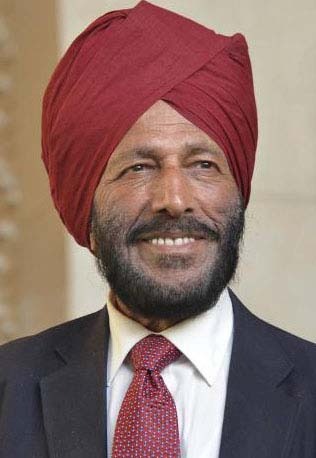
Flying Sikh Milkha Singh dies of Covid

Overview and Early Life 

Milkha Singh, a legend in the history of Sports and Athletics was an Indian track and field sprinter born on 20th November, 1929. He was born in a Sikh family in Govindpura, a village 10 km from Muzaffargarh city in Punjab Province. He had 14 other siblings, eight of them died during the partition of India. Milkha was orphaned during the partition, when his parents were killed by a Muslim mobs in violence. He witnessed the killings. 

After seeing the deadly situation in Punjab, he decided to escape and came to Delhi, India in 1947 and lived with the family of his married sister for a short period of time. He was imprisoned in Tihar Jail for travelling in Train without ticket. His sister, Ishvar helped him in getting released. He spent his further some time at Refugee Camp , at Purana Quila and at a resettlement colony in Shahdara, both in Delhi.  

Milkha was discontented with his life and decided to become a dacoit, but was instead persuaded by his brother, Malkhan, to attempt to the recruitment to the Indian Army. He successfully gained entrance on his fourth attempt, in 1951, and while stationed at the Electrical Mechanical Engineering Centre in Secunderbad he was introduced to athletics. He had run the 10 km distance to and from school as a child and was selected by the army for special training in athletics after finishing sixth in a compulsory cross-country run for new recruits.  Singh has acknowledged how the army introduced him to sport, saying that “I came from a remote village, I didn’t know what running was, or the Olympics”.  

International Career      

He was introduced to athletics and sports when he was recruited in Indian Army, at the Electrical Mechanical Engineering Centre in Secundarbad. He represented India in the 200 and 400 m competitions held in Olympics at Melbourne in 1956. In 1958, Singh set records for the 200m and 400m in the National Games of India, held at Cuttack,  and also won gold medals in the same events at the Asian Games. He then won a gold medal in the 400m (440 yards at this time) competition at the 1958 British Empire and Commonwealth Games  with a time of 46.6 seconds. This latter achievement made him the first gold medalist at the Commonwealth Games from independent India. Before Vikas Gowda won the gold in 2014, Milkha was the only Indian male to have won an individual athletics gold medal at those Games. 

Jawaharlal Nehru tried to convince Milkha Singh to set aside his memories of his past during the Partition era, to focus on the to race successfully in 1960 against Abdul Khaliq in Pakistan, where a post-race comment by the then General Ayub Khan led to him acquiring the nickname of The Flying Sikh. At the 1962 Asian Games, held in Jakarta, Singh won gold in the 400m and in the 4 x 400m relay. He attended the 1964 Olympic Games in Tokyo, where he was entered to compete in the 400m, the 4 x 100m relay  and the 4 x 400m relay. He did not take part in either the 400m or the 4 x 100m relay and the Indian team of Milkha Singh, Makhan Singh, Amrit Pal and Ajmer Singh were eliminated when they finished fourth in the heat stages of the 4 x 400m. 

There have been claims that Singh won 77 of his 80 races, but these are spurious. The number of races in which he participated is not verified, nor is the number of victories, but he lost a 400m race at the 1964 National Games in Calcutta to Makhan Singh and he did not finish first in any of his four races at the 1960 Olympic Games or the aforementioned qualification races at the 1956 Olympics. 

Singh’s time in the 1960 Olympics 400m final, which was run on a cinder track, set a national record that stood until 1998 when Paramjit Singh exceeded it on a synthetic track and with fully automatic timing that recorded 45.70 seconds. Although Singh’s Olympic result of 45.6 seconds had been hand-timed, an electronic system at those Games had determined his record to be 45.73. 

Later Life  

Milkha was promoted from the rank of sepoy to junior commissioned officer in recognition of his successes in the 1958 Asian Games.  He subsequently became Director of Sports in Punjab Ministry of Education, a post he retired from in 1998. 

Milkha was awarded the Padma Shri, India’s fourth-highest civilian award, following his success in 1958. In 2001, he turned down an offer of the Arjuna Award from the Indian government, arguing that it was intended to recognize young sports people and not those such as him. He also thought that the Award was being inappropriately given to people who had little notable involvement as active sports people at all. He said that “I have been clubbed with sportspersons who are nowhere near the level that I had achieved” and that the award had become devalued. While sharing his wealth of experience in a college in Goa on 25 August 2014, he also said, “The awards nowadays are distributed like ‘prasad’ in a temple. Why should one be honored when he or she has not achieved the benchmark for the award? I rejected the Arjuna I was offered after I received the Padma Shri. It was like being offered an SSC [secondary school] certificate after securing a Masters degree.” 

All of Singh’s medals have been donated to the nation. They were displayed at the Jawaharlal Nehru Stadium in New Delhi and later moved to a sports museum in Patiala, where a pair of running shoes that he wore in Rome are also displayed. In 2012, he donated the Adidas shoes that he had worn in the 1960 400m final to be sold in a charity auction organized by actor Rahul Bose. 

Milkha was admitted to the intensive care unit at Fortis Hospital in Mohali on 24 May 2021 with pneumonia caused by COVID-19. His condition was, for a while, described as stable, but he died on 18 June 2021 at 11:30 PM IST. His wife, Nirmal Kaur, had died a few days earlier on 13 June 2021, also due to COVID-19.  

Rapes- deathbed for women

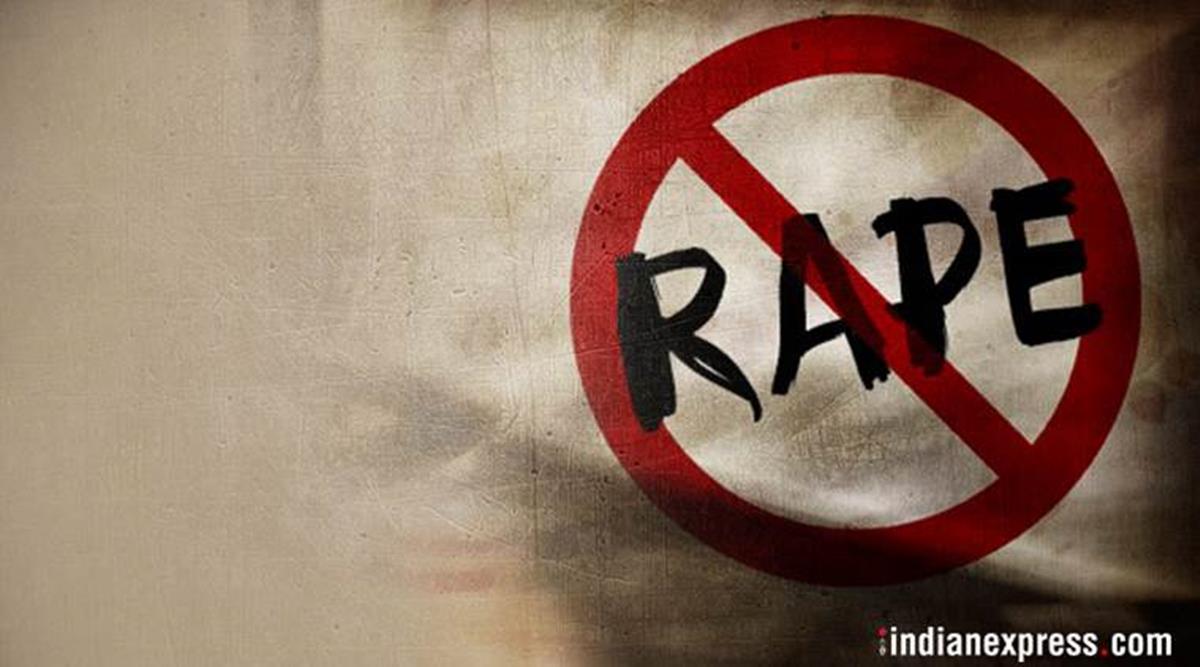
We live in a society where it is believed to worship Goddess or you may also say Women, as it is said that, women are like a Goddess. But as we look into today’s situation we can observe that in a society where women are believed to be Goddess are exploited, insulted, raped, discriminated against, and sexually harassed. Is this a manner in which we are worshiping a Women/Goddess? It is actually very disturbing and unacceptable. The rape cases in India are increasing at a very high rate. In 2018, 101,151 rape cases were recorded. Now here comes understanding what rape is, Rape is a type of sexual assault usually involving sexual intercourse or other forms of sexual penetration without the person’s consent.

Now the question arises, what is the major cause of Rapes in India?

Wearing short dresses which means, inviting people to take such huge steps as rape, and harassment, late-night parties, or coming late from work alone at night or even in the daytime are the major reason for Rapes in India according to the thinking of some people.

But the major reason behind this is the thinking of the people. It is just a matter of thinking and mentality of the people or the way people approach or look towards women.
It makes me disturb whenever I hear about a girl or a female suffering from this again, whether it be Dr. Priyanka Reddy Nirbhaya or any girl going through this. Now I would like to ask this question to the ones who said that Rape takes place when a girl wears short dresses, so why would a newborn baby girl or an old woman to be raped? Like seriously, the answer to this question from people’s point of view is that they were wearing appealing clothes! What is meant by this? It is how people think and their mentality.

This society is becoming a Rapist Society day-by-day with the rape culture.

There is a need to have a strong and effective law and system to eliminate this. Although the Government is taking certain measures to stop rapes, it is not enough to eliminate them. What we need is more strong, firm, and effective steps to eliminate it, and it will be a big challenge for everyone in society because it’s not that easy to stop. Eventually, it will take time. And if we didn’t start now, then it will be too late. Till then more Dr. Priyanka Reddy and Nirbhaya will be killed.

What punishment do rapists get here in India? The punishment for rape is given in section 376 of the Indian Penal Code. Except in cases provided under subsection 2 of the same section, the punishment will be rigorous imprisonment which is not less than 7 years, which may be extended to life imprisonment and fine.

A man guilty of rape in the United Kingdom is liable on conviction to life imprisonment or for a shorter term. It is a statutory offense in England and Wales, created by section 1 of the Sexual Offenses Act 2003.

Capital punishment of rape is a legal penalty in the United Arab Emirates. Under Emirati law, multiple crimes carry the death penalty, and executions are carried through either a firing squad, hanging, or stoning.

For women, rapes are like facing death. After the rape, most of the girls are killed or burned, but if left alive by any chance then she has to live with what happened to her is more difficult than death. There should be more powerful laws, and systems to stop rapes, as well as strict punishments for the culprit.

Unpredictable journey

Overview
Life is so unpredictable, no one knows what’s going to happen next. No one knows for much time you are here and what will be the reason for death and everything else. Life is unpredictable. When something unexpected does occur in your life, good or bad, it’s OK if it throws you off your game. If it’s favorable, bask in the excitement and joy at this unexpected event brought you. We have to enjoy the good things that happen and give them the time they deserve.
Similarly considering today’s situation all around no one even imagined that something big would happen and would change the entire life. Not only a particular place, or a country but every creature on this planet is suffering from one or the other thing. The whole world is facing this Coronavirus pandemic. India and several other countries are facing economic slowdown and several other problems. Each individual has been into something or the other, which in return affects their physical and mental health.
Whenever I interact with people, I always come to know about a lot of problems they face.
Problems Faced
Life is a journey, and the challenges you face, are obstacles that you have to overcome. They are what allow you to expand yourself, become more inclusive and more compassionate.
Every other person is suffering from a disease or serious mental health issues such as anxiety, and depression, etc.
In a book, I read that a little stress is necessary but the one with a lot of stress is not good for life. It may affect you in any way. It can impact your health, it can cause you a mental problem, and many other problems.
The major challenges we face in life can be the loss of something, or someone, Failure, Setbacks, Feeling lost, or out of control, etc. Remember all the problems you face are not problems, they are challenges that you have to overcome and become stronger and better.
Ways to a Good Healthy Life
It’s important to keep yourself healthy. Mental Health is equally important as being physically healthy. It has been seen that most people neglect Mental Health problems, which in turn becomes a lifetime depression or maybe sometimes it takes people’s life.
Life is short, as anything can happen anytime and you don’t have any clue what’s going to happen in the future. And, each and every person here has a purpose in life. It is certainly important to find that the purpose for which you are here. It might take some time to find it out, but it is necessary.
It is just that doing what makes you and your inner feel happy and makes you refreshing.
As said life is unpredictable and short and most importantly, you are here to find your meaning, your purpose for life.
And making yourself happy will provide you with lots of positivity and strength to do more and make you a strong and better person in life. You have to be who you are and do excel in whatever field you are in and remember you are here for a purpose which you have to find and fulfill no matter what.

UNEMPLOYMENT- AFFECTS PEOPLE AND ECONOMY

Employment is the state of having paid for the work you do after a certain period of time. Unemployment is a state where a person is willing to be employed but is unable to find a job. Furthermore, it is those people in the workforce or pool of people who are available for work but do not have an appropriate job. The employment rate stood at 39.4% in 2019-2020 in India, simultaneously the unemployment rate in 2019-2020 was 3.4%. Although the rate of employment is a little higher than the rate of unemployment, yet unemployment is a major problem in the Country. Every other person here is facing unemployment. 

Unemployment is nothing but a stage where a person willing and available for work doesn’t get a job that he/she requires after a certain point in time.

Unemployment directly influences the labor market which in turn influences economic activities. The labor market in India continues to be under stress primarily because of the fall in the employment rate in rural India and the continued low employment rate in urban India, the Centre for Monitoring Indian Economy said, suggesting an urgent need to create more jobs. “The falling employment rate in rural India and the continued low employment rate in urban India are the weaknesses in India’s labor market recovery process,” CMIE said in its weekly analysis. According to the Centre for Monitoring Indian Economy (CMIE), an economics and business think-tank, as of 2018, unemployment in India had risen to 31 million individuals looking for jobs. The lowest unemployment rate in India was 3.4% (July 2017) but has now risen to 7.1%.

Chart: Unemployment Falls as India Eases Lockdown | Statista

In India, it is a complex problem with numerous overlapping and intertwined causes; however, it is possible to identify several key causes. The following are listed as identified causes:- Caste System- it is a major factor in generating unemployment. In some areas, certain kinds of work are prohibited for members of particular castes; Increased Population Growth- As the country’s population is increasing substantially, the country’s economic growth cannot keep up with the population growth, this leads to a larger share of society being unemployed; Slow Economic Growth Because the Indian economy is relatively underdeveloped, economic growth is considerably slower than it might otherwise be. This means that as the population increases, the economy cannot keep up with demands for employment and an increasing share of people are unable to find work. The result is insufficient levels of employment nationwide; Loss of Small-Scale/Cottage Industries- Industrial development has made cottage and small-scale industries considerably less economically attractive. The result is that the cottage and small-scale industries have significantly declined, and artisans have become unemployed as a result; These may be identified causes of Unemployment in India.

The maximum amount of unemployment lies in the rural areas, as people there are not that educated and they get difficulty in finding a job. Although the Government has launched some of the schemes to provide employment to all there was not much difference. The programs launched by Government for providing more employment opportunities to rural areas are listed below-

1. Mahatma Gandhi National Rural Employment Guarantee Act 2005 (MNREGA)- It provides 100-day employment to an unemployed person in a year.

2. Sampoorna Rojgar Yojana- The primary objective of the scheme is to provide killed and local employment and thereby improve skill levels in all rural and urban areas.

3. Aajeevika- National Rural Livelihood Programme- It was launched by the Ministry of Rural Development (MoRD). NRLM has set out with an agenda to cover 7 crore households, across 600 districts, 6000 blocks, 2.5 lakh Gram Panchayats and 6 lakh villages in the country through Self Help Groups (SHGs).

These programs were helpful to some extent only. We need some more powerful policies and jobs that can improve this scenario and eliminate unemployment in the country.

CLIMATE CHANGE – A CONCERN FOR ALL

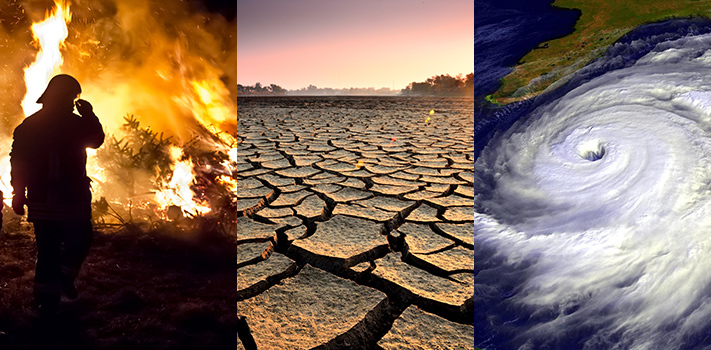
One of the biggest problems that the whole world is facing right now is Climate Change. It has affected everything and everyone from Nature to Plants Animals, Natural, and Man-Made Things, and Living things most importantly. Although this Climate Change is created by us, i.e., Human Beings, due to the activities to do and we take climate change for granted, we take it so lightly and do not know its consequences. Climate Change includes both Global Warming driven by human emissions of greenhouse gases and resulting in large-scale shifts in weather patterns. In simple words, it means a change in temperature and rainfall.
A report by NASA stated that Earth’s surface is warming and many of the warmest years on record have happened in the past 20 years. 
Human Activity is the main cause of climate change. The way we do the activities, we never look at the factors that can affect other things by what we do. 
Increasing pollution and global warming are the major cause of climatic change which human beings have evolved. It has eventually increased so much that we cannot stop it easily. To stop this, we need to take many brave steps and be aware of everything around us. Other factors that cause climatic change and increase in the Earth’s temperature are listed below:-
       ~ Burning of fossil fuels
       ~ Cutting down rainforests
       ~ Release of greenhouse gases produced through human activity 
       ~ Depletion of quality of air
       ~ Ozone layer depletion and so on.
Global Warming is the major cause of climate change. Now, what global warming is? Global warming is the long-term heating of Earth’s climate system observed since the pre-industrial period (between 1850 and 1900) due to human activities, primarily fossil fuel burning, which increases heat-trapping greenhouse gas levels in Earth’s atmosphere. The term is frequently used interchangeably with the term climate change, though the latter refers to both human- and naturally produced warming and its effects on our planet. It is most commonly measured as the average increase in Earth’s global surface temperature.
Climatic conditions like changes in temperature and rainfall also may influence the transmission pattern of many diseases, such as water-related or water-borne diseases such as diarrhea, and vector-borne infections such as malaria. Also, climate change may affect the patterns of food production, which in turn can have health impacts. Climatic changes also affect living organisms’ daily lives, whether human beings, animals, flora, and fauna. It affects the farmer when there is heavy rain or no rain, animals have to migrate if it is raining, and many die due to the temperature rise and so on.
Everything has its causes, effects, and solutions. So here are some solutions to reverse climate change- Refrigerant Management: which means refrigerators, air conditioners contain chlorofluorocarbons (CFCs) and hydrochlorofluorocarbons (HCFCs) which were the key culprits in depleting the Ozone layer; Wind Turbines: Fossil fuels sidelined zero-emission wind energy during the mid-twentieth century.  

Lionel Messi threatens to leave Barcelona

After dozens of titles, hundreds of goals and countless records, Lionel Messi’s spectacular career at Barcelona could be coming to an abrupt end. There has been a controversy about Lionel Messi leaving his childhood football club. There is a lot of reasons that has been stated behind this, but there has not been any clarity on what is the actual reason to leave the Barcelona club. Messi joined the club when he was 14 years old. He has helped the club to 10 league titles and four Champions Leagues, scooping a record six Ballons d’Or for his personal contributions along the way. Articles says that the departure of the player is uncertain, but his lawyers have sent a fax outlining the desire to depart. Back in July, it was understood that Messi did not want to leave Barcelona, but it is true that the Argentina international has spoken in the past of potentially joining another club. 

Messi is soon expected to reveal the reasons and clarity for leaving Barcelona in the upcoming days. 

Ronald Koeman said, if Argentine striker Lionel Messi decides to leave, then he is not sure as to who will score goals for the club. Messi’s contract is set to end this season. “For my part and the club, let’s hope he stays with us”, he added. Rafael Nadal, a tennis player also breaks his silence on the contract leak controversy and said, “Messi is one of the best in the history of the game and if the club is willing to pay him what he wants – there is no problem. “In the end there is a player who is undoubtedly one of the best in history and he charges what the club has been willing to pay him. From there, there is no debate I think,” Nadal as quoted by Tennis World USA. 

Lionel Messi has confirmed for now that he will remain at Barcelona for another season having previously stated his intentions to leave the club. Messi’s decision, however, seems forced more than out of choice. In an Interview with Goal.com, Messi said, “I wasn’t happy and wanted to leave. I haven’t been allowed this in any way and I will stay at the club so as not to get into a legal dispute”. A 2-1 loss against Celta Vigo at Camp Nou on Sunday meant Barcelona will not win the LaLiga title this year but seems like the loss would hurt the Catalans more – as it could be the end of Lionel Messi at the Spanish club. In what seems to be the clearest hint ever, Barcelona manager Ronald Koeman has said that it would be impossible to play with Messi and he still hopes the Argentine does not leave Camp Nou.  

“We hope he will not leave because he is still the best player in the world and he has shown today. It is impossible to play without him,” Koeman told a post-match interview with Marca.

Importance of Training and Internships

Education is not just about learning and acquiring knowledge bookish knowledge, it also includes training yourself to face the outside world, and also applying your knowledge physically to the outside field. So, as to keep in mind what actual education means, we can say that Training and Internship are an integral part of it.   

What basically training is, and why is it important? Training is teaching, developing skills, polishing skills to acquire a particular target or a task. It has the ability to improve one capabilities, capacities, performances, and productivity. It is the fundamental block of acquiring professional skills and knowledge in order to compete with the outside world. Training is basically a task-oriented activity aimed at improving performance in current or future jobs. Talking about why is it important, here are some points-  

1. It helps the trainee cope with the technical challenges in the environment, I.e., training helps the trainee be up to date about the technologies and related information and helps in acquiring such skills.  

2. Due to modern inventions, new technologies, and diversification of most of the organizations have become very complex, due to which there is a lack of coordination. To cope up with such situations and organizations, training has become an initial part of the process.  

3. It helps and gives experience in dealing with human relations. It provides us the core idea of what is to be done, and these days, most companies look for someone who has a certain experience in dealing with human problems.  

4. It provides the trainee with a great understanding of their responsibilities and the knowledge and skill required to do that job.  

5. Training is to develop specific and useful knowledge, skills, and techniques. It is intended to prepare people to carry out predetermined tasks in well-defined job contexts.  

Training alone does not make a person skillful, but internships are also part of it. Now talking about what is Internship, and why is it important? An internship is basically executing the skills and knowledge acquired by students or trainees in the past. It is a form of experiential learning and integration of knowledge gained in classrooms and physical application and skill development in a professional setting. It can be paid or unpaid depending upon the preferences, tasks, requirements, and many other factors. The unpaid internships are meant mainly for experience on how to work with different organizations, how to deal with public problems, how to manage things, how to take up responsibilities or to satisfy requirements for the qualifications. It can be said that it provides you with the reality of whether the field that you are working in is your interest or not? It gives you a clear idea about what you have and what you want. In addition, an internship can be used to build a professional network that can assist with letters of recommendation or lead to future employment opportunities. Also, it benefits the employer who was working as a part-time intern and now wants to work as full-time interns, as they will be already familiar with the working of the organization.  

Why are Internships important? They are important because –  

1. They provide real-time experience and exposure which is necessary for your working career. Also, it allows students to harness the skill, knowledge, and theoretical practice they learned in university.  

2. The experiences we go through are what shapes us. Your internship will not only encourage personal development, but also a greater understanding of self. To know yourself is to know your goals and how to best achieve them. It provides you with a fair idea of how you have to learn from your experiences.  

3. It enables you to connect with other people in professional terms. It helps to make a professional network, which leads to an exchange of information, knowledge, and services, etc. Sure, you can attend a networking event, but it would not provide you with such knowledge, connections, and experience and you would be limiting yourself.   

4. If you are really worried about how to develop your CV, or how to make it more effective, trust me the best way to do it is to take up an internship, it will not only make your CV better, but it will also reflect how responsible you are, and also you can manage things well.  

5. Sometimes, after graduating maybe you don’t get jobs, or doing a job immediately is not beneficial. Internships can help you overcome this problem. If you have never worked full-time before, the change may be difficult or overwhelming. In a working environment, not every boss is tolerant of mistakes. So, you can get a basic idea on how to work and you can know your mistakes through it and learn from them.  

So this what thing is important about Training and Internships. Both are an integral part of the process of learning.   

I would like to end this by quoting the lines of Eva Chen, director of fashion, Instagram  

“My advice for young people is, study what you love and intern in what you want to do. And I think it’s okay to pivot as many times as you need to.”