CHHATTISGARH

Chhattisgarh is a state located in the region of Central India. Formerly part of Madhya Pradesh, it was granted statehood on November 1, 2000. It is the 9th-largest state in India, with an area of 135,192 km2 . As of 2020, it has a population of roughly 29.4 million, making it the 17th most populated state in the country.

The state was formed by the partition of ten Chhattisgarhi and six Gondi-speaking districts in the southeast of Madhya Pradesh. Its capital city is Raipur. It borders 7 states – Uttar Pradesh to the north, Madhya Pradesh to the northwest, Maharashtra to the southwest, Jharkhand to the northeast, Odisha to the east, and Telangana and Andhra to the south. Currently, it comprises 28 districts.

Chhattisgarh is one of the fastest-developing states in India. Its Gross State Domestic Product (GSDP) is ₹3.63 lakh crore , with a per capita GSDP of ₹102,762 . A resource-rich state, Chhattisgarh provides electricity, coal, and steel to the rest of the nation

CULTURE –
The state hosts many religious sects such as Satnampanth, Kabirpanth, Ramnami Samaj and others. Champaran is a small town with religious significance as the birthplace of the saint Vallabhacharya, increasingly important as a pilgrimage site for the Gujarati community.

Chhattisgarh has a significant role in the life of the Lord Rama. Lord Rama along with his wife Sita and his younger brother Lakshmana had started his Vanvas (exile) in the Bastar, then known as Dandakarayna. They lived more than 10 of their 14 years of Vanvas in different places of Chhattisgarh. One of the remarkable places is Shivrinarayan which is nearby Bilaspur district of Chhattisgarh. Shivrinarayan was named after an old lady Shabari. When Ram visited Shabari she said “I do not have anything to offer other than my heart, but here are some berry fruits. May it please you, my Lord.” Saying so, Shabari offered the fruits she had meticulously collected to Rama. When Rama was tasting them, Lakshmana raised the concern that Shabari had already tasted them and therefore unworthy of eating. To this Rama said that of the many types of food he had tasted, “nothing could equal these berry fruits, offered with such devotion. You taste them, then alone will you know. Whomsoever offers a fruit, leaf, flower or some water with love, I partake it with great joy.”

The Odia culture is prominent in the eastern parts of Chhattisgarh bordering Odisha.

CRAFTS –
Chhattisgarh is known for “Kosa silk” and “Dhokra or Bell metal art”. Besides saris and salwar suits, the fabric is used to create lehengas, stoles, shawls and menswear including jackets, shirts, achkans and sherwanis. Works by the internationally renowned sculptor, Sushil Sakhuja’s Dhokra Nandi, are available at the government’s Shabari Chhattisgarh State Emporium, Raipur.

CUISINE –
The State of Chhattisgarh is known as the rice bowl of India and has a rich tradition of food culture.

TOURISM –
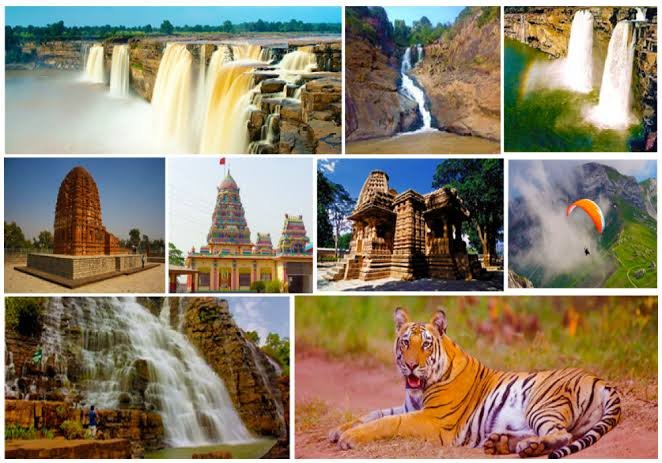
Chhattisgarh, situated in the heart of India, is endowed with a rich cultural heritage and attractive natural diversity. The state is full of ancient monuments, rare wildlife, exquisitely carved temples, Buddhist sites, palaces, waterfalls, caves, rock paintings, and hill plateaus.

Mainpat is mini Shimla of Chhattisgarh.

There are many waterfalls, hot springs, caves, temples, dams and national parks, tiger reserves and wildlife sanctuaries in Chhattisgarh.

India’s first man-made jungle safari is also situated in Raipur.
HARYANA

Haryana is a state in India located in the northern part of the country. It was carved out of the former state of East Punjab on 1 November 1966 on a linguistic basis. It is ranked 22nd in terms of area, with less than 1.4% of India’s land area. Chandigarh is the state capital, Faridabad in National Capital Region (NCR) is the most populous city of the state, and Gurgaon is a leading financial hub of the NCR, with major Fortune 500 companies located in it. Haryana has 6 administrative divisions, 22 districts, 72 sub-divisions, 93 revenue tehsils, 50 sub-tehsils, 140 community development blocks, 154 cities and towns, 6,848 villages, and 6,222 villages panchayats.

Music Edit
Main article: Music of Haryana
Haryana has its own unique traditional folk music, folk dances, saang (folk theatre), cinema, belief system such as Jathera (ancestral worship), and arts such as Phulkari and Shisha embroidery.

Folk theatre and dances Edit
Folk music and dances of Haryana are based on satisfying cultural needs of primarily agrarian and martial natures of Haryanavi tribes.

Haryanvi musical folk theatre main types are Saang, Rasa lila and Ragini. The Saang and Ragini form of theatre was popularised by Lakhmi Chand.

Haryanvi folk dances and music have fast energetic movements. Three popular categories of dance are: festive-seasonal, devotional, and ceremonial-recreational. The festive-seasonal dances and songs are Gogaji/Gugga, Holi, Phaag, Sawan, Teej. The devotional dances and songs are Chaupaiya, Holi, Manjira, Ras Leela, Raginis). The ceremonial-recreational dances and songs are of following types: legendary bravery (Kissa and Ragini of male warriors and female Satis), love and romance (Been and its variant Nāginī dance, and Ragini), ceremonial (Dhamal Dance, Ghoomar, Jhoomar (male), Khoria, Loor, and Ragini).

Folk music and songs Edit
Haryanvi folk music is based on day to day themes and injecting earthly humour enlivens the feel of the songs. Haryanvi music takes two main forms: “Classical folk music” and “Desi Folk music” (Country Music of Haryana), and sung in the form of ballads and love, valor and bravery, harvest, happiness and pangs of parting of lovers.

Classical Haryanvi folk music Edit
Classical Haryanvi folk music is based on Indian classical music. Hindustani classical ragas, learnt in gharana parampara of guru–shishya tradition, are used to sing songs of heroic bravery about the bravery of Alha and Udal, Jaimal and Patta of Maharana Udai Singh II), Brahmas worship and festive seasonal songs (such as Teej, Holi and Phaag songs of Phalgun month near Holi). Bravery songs are sung in high pitch.

ARUNACHAL PRADESH

The land of dawn-lit mountains

Arunachal Pradesh is an Indian state in Northeast India. It was formed from the erstwhile North-East Frontier Agency (NEFA) region, and became a state on 20 February 1987. It borders the states of Assam and Nagaland to the south. It shares international borders with Bhutan in the west, Myanmar in the east, and a disputed border with China in the north at the McMahon Line. Itanagar is the state capital of Arunachal Pradesh. Arunachal Pradesh is the largest of the Seven Sister States of Northeast India by area. Arunachal Pradesh shares a 1,129 km border with China’s Tibet Autonomous Region.

Arunachal Pradesh, meaning ‘the land of the rising sun’ is a state comprising of 24 districts with 26 major tribes including various sub tribes. It is equally rich and diverse in both cultural and ecological aspects, however for a long time much of the world remained elusive to this richness because of the state’s remote location.
An exploration of the cultural roots of Arunachal Pradesh therefore, takes us on a fascinating anthropological journey.

PEOPLE –
A place brimming with tremendous anthropological richness, Arunachal Pradesh is home to several groups of indigenous people. Broadly speaking there are three cultural groups; first being Monpas and Sherdukpen of Tawang and West Kameng districts who are followers of the tradition of Mahayana Buddhism. The second group comprising of Apatanis, Adis, Galos, Mishmis, Nyishis, Tagins, Akas etc worship the Sun and Moon God while the third group including Noctes, Wanchos and Khampti (tribal communities of TLCN – Tirap, Longding, Changlang, Namsai) follow basic Vaishnavism and Buddhism respectively and are ruled by a hereditary chief. Additionally there are the Galo, Nyishi, Tagin, Apatani and Adi communities who are commonly known as Tani clans due to their connection with Abotani (abu/abo-father, tani-tribes) – from whom the mythical heritage of mankind’s origin is associated.

LANGUAGE –
The people’s languages are mostly derived from Tibeto-Burman language with more than 50 dialects spoken by specific tribes. The Tani clans have similarities within each other’s social languages. Assamese is spoken by most people since prolonged influence of the Ahom dynasty era. Hindi and English are currently the most widely spoken languages for people across the state, besides their own tribe’s language.

CULTURE AND TRADITION –
living in close proximity with nature since centuries, people were depended on Mother Nature for everything. From traditional handicrafts, fishing and hunting tools etc – the people developed many unique skills over the years and even today many of these skills are passed down. Apong (rice/millet wine) is the prominent drink induced by the people, especially in festivals. People used to drink it to honor the spirit guardians. Dance is an important element of the people’s heritage and traditional dancing along with priest/priestess chants, war dance and ritual dance with Buddhist connection etc are mostly performed by men. Ponu is performed in groups by both men and women for the celebration of joyous and fortunate events in the future. A rich oral collection of folklores and chants, usually in a ballad tone, have been passed down from centuries about the historical events, myths, power of spirits and calling of deities.

The ESSENCE OF INCREDIBLE INDIA

Andhra Pradesh is a state in the south-eastern coastal region of India. It is the seventh-largest state by area covering an area of 162,975 km^2 and tenth-most populous state with 49,386,799 inhabitants. It is bordered by Telangana to the north-west, Chhattisgarh to the north, Odisha to the north-east, Tamil Nadu to the south, Karnataka to the west and the Bay of Bengal to the east. It has the second longest coastline in India after Gujarat, of about 974 km. Andhra Pradesh is the first state to be formed on a linguistic basis in India on 1 October 1953. The state was once a major Buddhist pilgrimage site in the country and a Buddhist learning center which can be seen in many sites in the state in the form of ruins, chaityas and stupas. It is also known as the land of the world-famous diamond Koh-i-Noor and many other globally known diamonds due to their source in its Kollur Mine. It is also known as the “rice bowl of India” for being a major producer of rice in India. Its official language is Telugu; one of the classical languages of India, the fourth most spoken language in India and the 11th-most spoken language in the world.

CULTURE –


Kuchipudi, the cultural dance recognized as the official dance form of the state of Andhra Pradesh, originated in the village of Kuchipudi in Krishna district. It entered the Guinness World Records for performing Mahabrinda Natyam with a total of 6,117 dancers in Vijayawada.

Andhra Pradesh has thirteen geographical indications in categories of agricultural handicrafts, foodstuff and textiles as per Geographical Indications of Goods (Registration and Protection) Act, 1999. It increased to fifteen with the addition of Banaganapalle Mangoes and Bandar laddu. The other GI tagged goods are, Bobbili Veena, Budithi Bell and Brass Craft, Dharmavaram Handloom Pattu Sarees and Paavadas, Guntur Sannam, Kondapalli Toys, Machilipatnam Kalamkari, Mangalagiri Sarees and Fabrics, Srikalahasti Kalamkari, Tirupati Laddu, Uppada Jamdani Sari and Venkatagiri Sari.

ARTS AND CRAFTS –
Kondapalli Toys at a house in Vijayawada
Machilipatnam and Srikalahasti Kalamkari are the two unique textile art forms practised in India. There are also other notable handicrafts present in the state, like the soft limestone idol carvings of Durgi. Etikoppaka in Visakhapatnam district is notable for its lac industry, producing lacquered wooden.

The state has many museums, which features a varied collection of ancient sculptures, paintings, idols, weapons, cutlery, and inscriptions, and religious artifacts such as the Amaravati Archaeological Museum, Visakha Museum and Telugu Cultural Museum in Visakhapatnam displays the history of the pre-independence and the Victoria Jubilee Museum in Vijayawada with a large collection of artifacts.

CUISINE –
Telugu people’s traditional sweet Pootharekulu originated from Atreyapuram village of East Godavari district.

TOURISM –
Undavalli Caves, is a monolithic example of Indian rock-cut architecture and one of the finest testimonials to ancient viswakarma sthapathis.
The state has several beaches in its coastal districts such as Rushikonda, Mypadu, Suryalanka etc.; caves such as, Borra Caves, Indian rock-cut architecture depicting Undavalli Caves and the country’s second longest caves- the Belum Caves. The valleys and hills include, Araku Valley, Horsley Hills, Papi Hills etc. Arma Konda peak located in Visakhapatnam district is the highest peak in Eastern Ghats.

The state is home to various religious pilgrim destinations such as, Tirumala Temple, Simhachalam Temple, Annavaram temple, Srisailam temple, Kanaka Durga Temple, Amaravati, Srikalahasti, Shahi Jamia Masjid in Adoni, Gunadala Church in Vijayawada, Buddhist centres at Amaravati, and Nagarjuna Konda.

KERALA , GOD’S OWN COUNTRY

Kerala is a state on the Malabar Coast of India. It was formed on 1 November 1956, following the passage of the States Reorganisation Act, by combining Malayalam-speaking regions of the erstwhile regions of Cochin, Malabar, South Canara, and Travancore. Spread over 38,863 km ^2, Kerala is the twenty-first largest Indian state by area. It is bordered by Karnataka to the north and northeast, Tamil Nadu to the east and south, and the Lakshadweep Sea[16] to the west. With 33 million inhabitants as per the 2011 census, Kerala is the thirteenth-largest Indian state by population. It is divided into 14 districts with the capital being Thiruvananthapuram. Malayalam is the most widely spoken language and is also the official language of the state.


CULTURE –

The culture of Kerala is composite and cosmopolitan in nature and it is an integral part of Indian culture. It is a synthesis of Aryan, Dravidian, Arab, and European cultures, developed over millennia, under influences from other parts of India and abroad. It is defined by its antiquity and the organic continuity sustained by the Malayali people. It was elaborated through centuries of contact with neighbouring and overseas cultures. However, the geographical insularity of Kerala from the rest of the country has resulted in the development of a distinctive lifestyle, art, architecture, language, literature and social institutions. Over 10,000 festivals are celebrated in the state every year. The Malayalam calendar, a solar sidereal calendar started from 825 CE in Kerala, finds common usage in planning agricultural and religious activities. Malayalam, one of the classical languages in India, is Kerala’s official language. Over a dozen other scheduled and unscheduled languages are also spoken. Kerala has the greatest consumption of alcohol in India.

MUSIC –
The development of classical music in Kerala is attributed to the contributions it received from the traditional performance arts associated with the temple culture of Kerala. The development of the indigenous classical music form, Sopana Sangeetham, illustrates the rich contribution that temple culture has made to the arts of Kerala. Carnatic music dominates Keralite traditional music. This was the result of Swathi Thirunal Rama Varma’s popularisation of the genre in the 19th century. Raga-based renditions known as sopanam accompany kathakali performances. Melam; including the paandi and panchari variants, is a more percussive style of music: it is performed at Kshetram-centered festivals using the chenda. Panchavadyam is a form of percussion ensemble, in which artists use five types of percussion instrument. Kerala’s visual arts range from traditional murals to the works of Raja Ravi Varma, the state’s most renowned painter. Most of the castes and communities in Kerala have rich collections of folk songs and ballads associated with a variety of themes; Vadakkan Pattukal (Northern Ballads), Thekkan pattukal (Southern Ballads), Vanchi pattukal (Boat Songs), Mappila Pattukal (Muslim songs) and Pallipattukal (Church songs) are a few of them.

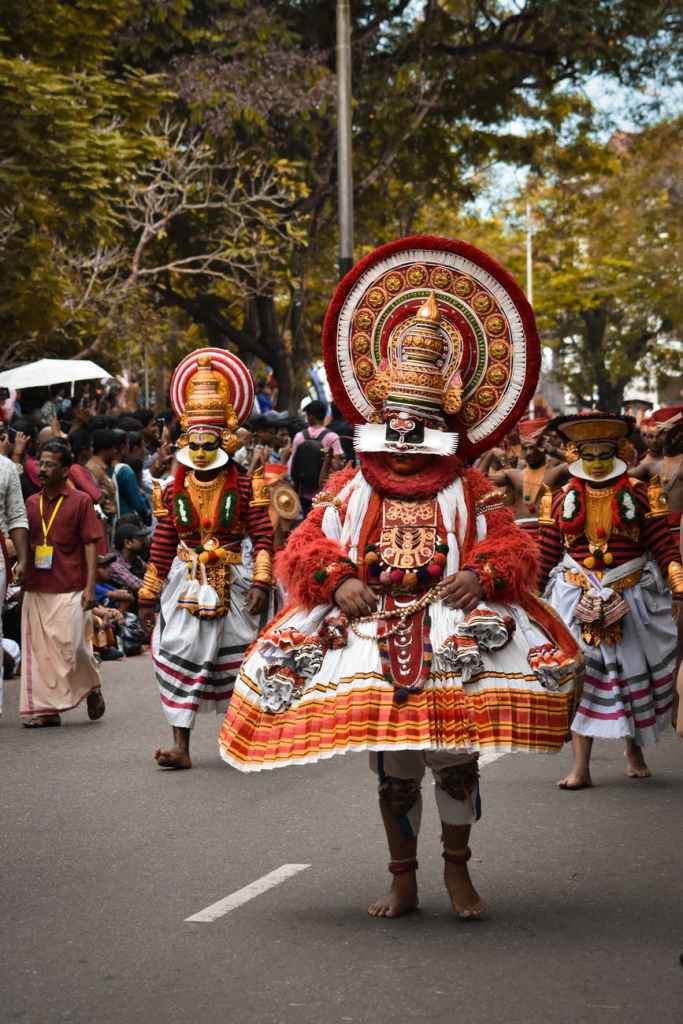
DANCE – Kerala is home to a number of performance arts. These include five classical dance forms: Kathakali, Mohiniyattam, Koodiyattom, Thullal and Krishnanattam, which originated and developed in the temple theatres during the classical period under the patronage of royal houses. Kerala natanam, Thirayattam, Kaliyattam, Theyyam, Koothu and Padayani are other dance forms associated with the temple culture of the region. Some traditional dance forms such as Oppana and Duffmuttu were popular among the Muslims of the state, while Margamkali and Parichamuttukali are popular among the Syrian Christians and Chavittu nadakom is popular among the Latin Christians.

TOURISM –
Kerala’s culture and traditions, coupled with its varied demographics, have made the state one of the most popular tourist destinations in India. In 2012, National Geographic’s Traveller magazine named Kerala as one of the “ten paradises of the world” and “50 must see destinations of a lifetime”. Travel and Leisure also described Kerala as “One of the 100 great trips for the 21st century”. In 2012, it overtook the Taj Mahal to be the number one travel destination in Google’s search trends for India. CNN Travel listed Kerala amongst its ’19 best places to visit in 2019′.

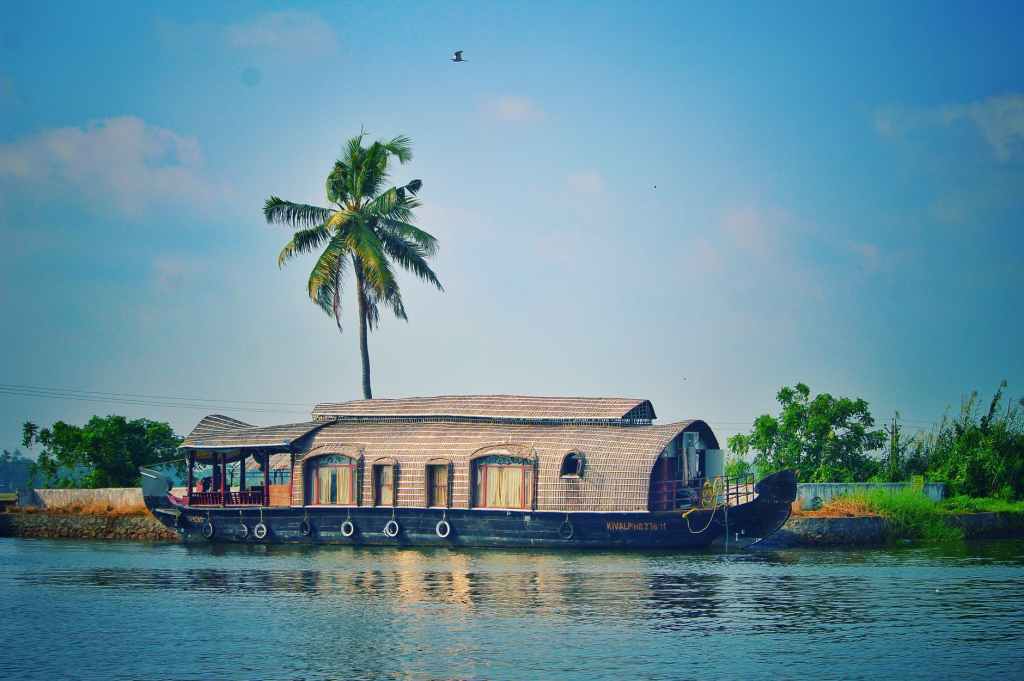
Kerala’s beaches, backwaters, lakes, mountain ranges, waterfalls, ancient ports, palaces, religious institutions and wildlife sanctuaries are major attractions for both domestic and international tourists. The city of Kochi ranks first in the total number of international and domestic tourists in Kerala. Until the early 1980s, Kerala was a relatively unknown destination compared to other states in the country. In 1986 the government of Kerala declared tourism an important industry and it was the first state in India to do so. Marketing campaigns launched by the Kerala Tourism Development Corporation, the government agency that oversees the tourism prospects of the state, resulted in the growth of the tourism industry.

ONE STATE MANY WORLDS


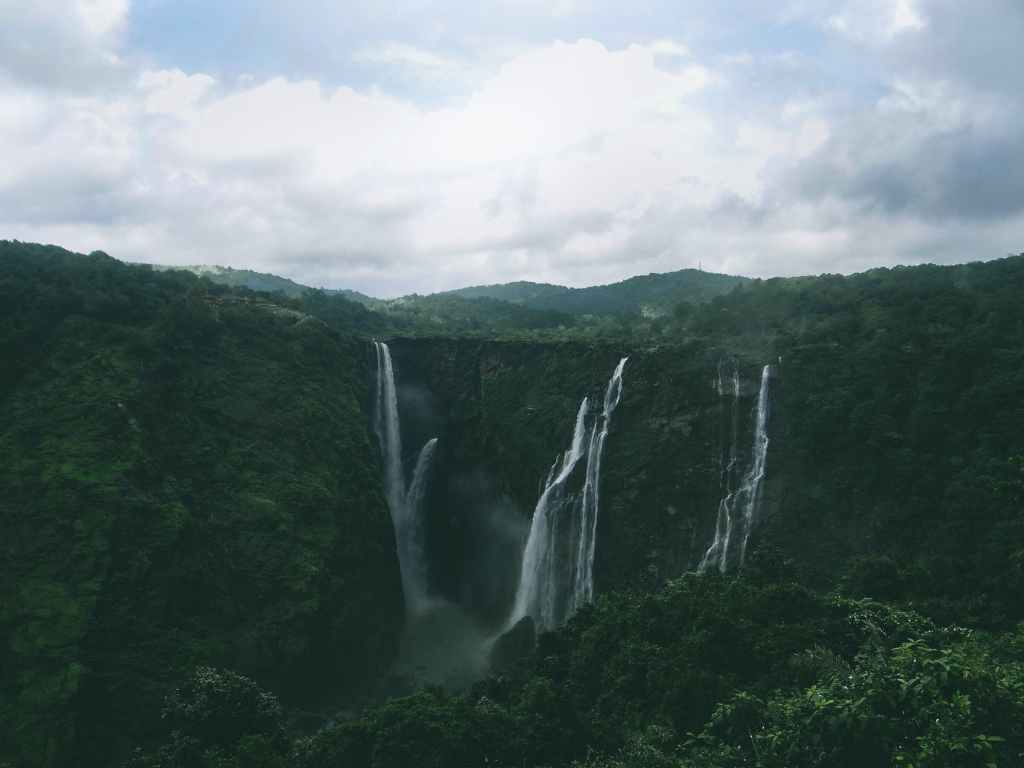
Karnataka is a state in southwest India with Arabian Sea coastlines. The capital, Bengaluru (formerly Bangalore), is a high-tech hub known for its shopping and nightlife. To the southwest, Mysore is home to lavish temples including Mysore Palace, former seat of the region’s maharajas. Hampi, once the medieval Vijayanagara empire’s capital, contains ruins of Hindu temples, elephant stables and a stone chariot.

Originally known as the princely State of Mysore, Karnataka was formed on 1st November 1956 and is located in the South-Western region of India. Close to the Arabian Sea and the Laccadive Sea, Karnataka is known for its beautiful yet unpopulated beaches and rich culture.

Karnataka is the largest state in South India and sixth largest in India. The state is in the south western region of India. It was formed on 1 November 1956, with the passage of the States Reorganisation Act. Originally known as the State of Mysore , it was renamed Karnataka in 1973. The state corresponds to the Carnatic region. Its capital and largest city is Bangalore.

Karnataka is bordered by the Arabian Sea to the west, Goa to the northwest, Maharashtra to the north, Telangana to the northeast, Andhra Pradesh to the east, Tamil Nadu to the southeast, and Kerala to the south. It is the only southern state to have land borders with all of the other 4 southern Indian sister states. The state covers an area of 191,976 square kilometres , or 5.83 percent of the total geographical area of India. It is the sixth largest Indian state by area. With 61,130,704 inhabitants at the 2011 census, Karnataka is the eighth largest state by population, comprising 31 districts. Kannada, one of the classical languages of India, is the most widely spoken and official language of the state. Other minority languages spoken include Urdu, Konkani, Marathi, Tulu, Tamil, Telugu, Malayalam, Kodava and Beary. Karnataka also contains some of the only villages in India where Sanskrit is primarily spoken

The economy of Karnataka is the fourth-largest of any Indian state with ₹16.99 trillion in gross domestic product and a per capita GDP of ₹231,000 . Karnataka has the nineteenth highest ranking among Indian states in Human Development Index.

The diverse linguistic and religious ethnicities that are native to Karnataka, combined with their long histories, have contributed immensely to the varied cultural heritage of the state. Apart from Kannadigas, Karnataka is home to Tuluvas, Kodavas and Konkanis. Minor populations of Tibetan Buddhists and tribes like the Soligas, Yeravas, Todas and Siddhis also live in Karnataka. The traditional folk arts cover the entire gamut of music, dance, drama, storytelling by itinerant troupes, etc. Yakshagana of Malnad and coastal Karnataka, a classical dance drama, is one of the major theatrical forms of Karnataka. Contemporary theatre culture in Karnataka remains vibrant with organisations like Ninasam, Ranga Shankara, Rangayana and Prabhat Kalavidaru continuing to build on the foundations laid by Gubbi Veeranna, T. P. Kailasam, B. V. Karanth, K V Subbanna, Prasanna and others. Veeragase, Kamsale, Kolata and Dollu Kunitha are popular dance forms. The Mysore style of Bharatanatya, nurtured and popularised by the likes of the legendary Jatti Tayamma, continues to hold sway in Karnataka, and Bangalore also enjoys an eminent place as one of the foremost centres of Bharatanatya.

Karnataka also has a special place in the world of Indian classical music, with both Karnataka (Carnatic) and Hindustani styles finding place in the state, and Karnataka has produced a number of stalwarts in both styles. The Haridasa movement of the sixteenth century contributed significantly to the development of Karnataka (Carnatic) music as a performing art form. Purandara Dasa, one of the most revered Haridasas, is known as the Karnataka Sangeeta Pitamaha (‘Father of Karnataka a.k.a. Carnatic music’). Celebrated Hindustani musicians like Gangubai Hangal, Mallikarjun Mansur, Bhimsen Joshi, Basavaraja Rajaguru, Sawai Gandharva and several others hail from Karnataka, and some of them have been recipients of the Kalidas Samman, Padma Bhushan and Padma Vibhushan awards. Noted Carnatic musicians include Violin T. Chowdiah, Veena Sheshanna, Mysore Vasudevachar, Doreswamy Iyengar and Thitte Krishna Iyengar.

Gamaka is another classical music genre based on Carnatic music that is practised in Karnataka. Kannada Bhavageete is a genre of popular music that draws inspiration from the expressionist poetry of modern poets. The Mysore school of painting has produced painters like Sundarayya, Tanjavur Kondayya, B. Venkatappa and Keshavayya. Chitrakala Parishat is an organisation in Karnataka dedicated to promoting painting, mainly in the Mysore painting style.

Saree is the traditional dress of women in Karnataka. Women in Kodagu have a distinct style of wearing the saree, different from the rest of Karnataka. Dhoti, known as Panche in Karnataka, is the traditional attire of men. Shirt, Trousers and Salwar kameez are widely worn in Urban areas. Mysore Peta is the traditional headgear of southern Karnataka, while the pagadi or pataga (similar to the Rajasthani turban) is preferred in the northern areas of the state.

Rice and Ragi form the staple food in South Karnataka, whereas Jolada rotti, Sorghum is staple to North Karnataka. Bisi bele bath, Jolada rotti, Ragi mudde, Uppittu, Benne Dose, Masala Dose and Maddur Vade are some of the popular food items in Karnataka. Among sweets, Mysore Pak, Karadantu of Gokak and Amingad, Belgaavi Kunda and Dharwad pedha are popular. Apart from this, coastal Karnataka and Kodagu have distinctive cuisines of their own. Udupi cuisine of coastal Karnataka is popular all over India.

Kannada is the official language of the state of Karnataka, as the native language of 66.5% of its population as of 2011 and is one of the classical languages of India. Other linguistic minorities in the state were Urdu , Telugu , Tamil , Marathi , Hindi , Tulu , Konkani , Malayalam and Kodava Takk .

Kannada played a crucial role in the creation of Karnataka: linguistic demographics played a major role in defining the new state in 1956. Tulu, Konkani and Kodava are other minor native languages that share a long history in the state. Urdu is spoken widely by the Muslim population. Less widely spoken languages include Beary bashe and certain languages such as Sankethi. Some of the regional languages in Karnataka are Tulu, Kodava, Konkani and Beary.

Kannada features a rich and ancient body of literature including religious and secular genre, covering topics as diverse as Jainism (such as Puranas), Lingayatism (such as Vachanas), Vaishnavism (such as Haridasa Sahitya) and modern literature.

VIBRANT GUJARAT

Gujarat is a state on the western coast of India with a coastline of 1,600 km – most of which lies on the Kathiawar peninsula – and a population of 60.4 million. It is the fifth-largest Indian state by area and the ninth-largest state by population. Gujarat is bordered by Rajasthan to the northeast, Dadra and Nagar Haveli and Daman and Diu to the south, Maharashtra to the southeast, Madhya Pradesh to the east, and the Arabian Sea and the Pakistani province of Sindh to the west. Its capital city is Gandhinagar, while its largest city is Ahmedabad. The Gujarati people of India are indigenous to the state, and their language Gujarati, is the state’s official language. The economy of Gujarat is the fifth-largest in India, with a gross state domestic product GSDP of ₹18.5 trillion and has the country’s 11th-highest GSDP per capita of ₹216,000 . Gujarat ranks 21st among Indian states in human development index. The state traditionally has low unemployment and is widely considered one of the most industrially developed states of India and a manufacturing hub.

The state encompasses some sites of the ancient Indus Valley Civilisation, such as Lothal, Dholavira and Gola Dhoro. Lothal is believed to be one of the world’s first seaports. Gujarat’s coastal cities, chiefly Bharuch and Khambhat, served as ports and trading centres in the Maurya and Gupta empires, and during the succession of royal Saka dynasties from the Western Satraps era.[citation needed] Along with Bihar, Mizoram and Nagaland, Gujarat is one of four Indian states to prohibit the sale of alcohol. The Gir Forest National Park in Gujarat is home to the only wild population of the Asiatic lion in the world

Gujarati food is primarily vegetarian. The typical Gujarati thali consists of rotli or bhakhari or thepala or rotlo, dal or kadhi, khichdi, Bhat and shak. Athanu (Indian pickle) and chhundo are used as condiments. The four major regions of Gujarat all bring their own styles to Gujarati food. Many Gujarati dishes are distinctively sweet, salty, and spicy at the same time. In the Saurashtra region, chhash (buttermilk) is believed to be a must-have in their daily food.

Gujarati folk music, known as Sugam Sangeet, is a hereditary profession of the Barot, Gadhvi and Charan communities. The omnipresent instruments in Gujarati folk music include wind instruments, such as turi, bungal, and pava, string instruments, such as the ravan hattho, ektaro, and jantar and percussion instruments, such as the manjira and zanz pot drum.

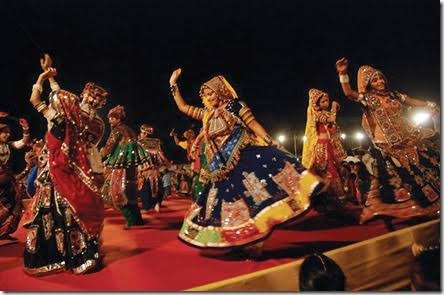
The folk traditions of Gujarat include bhavai and raas-garba. Bhavai is a folk theatre; it is partly entertainment and partly ritual, and is dedicated to Amba. The raas-garba is a folk dance done as a celebration of Navratri by Gujarati people. The folk costume of this dance is chaniya choli for women and kedia for men. Different styles and steps of garba include dodhiyu, simple five, simple seven, popatiyu, trikoniya (hand movement which forms an imagery triangle), lehree, tran taali, butterfly, hudo, two claps and many more. Sheri garba is one of the oldest form of garba where all the women wear red patola sari and sing along while dancing. It is a very graceful form of garba. Makar Sankranti is a festival where people of Gujarat fly kites. In Gujarat, from December through to Makar Sankranti, people start enjoying kite flying. Undhiyu, a special dish made of various vegetables, is a must-have of Gujarati people on Makar Sankranti. Surat is especially well known for the strong string which is made by applying glass powder on the row thread to provide it a cutting edge.

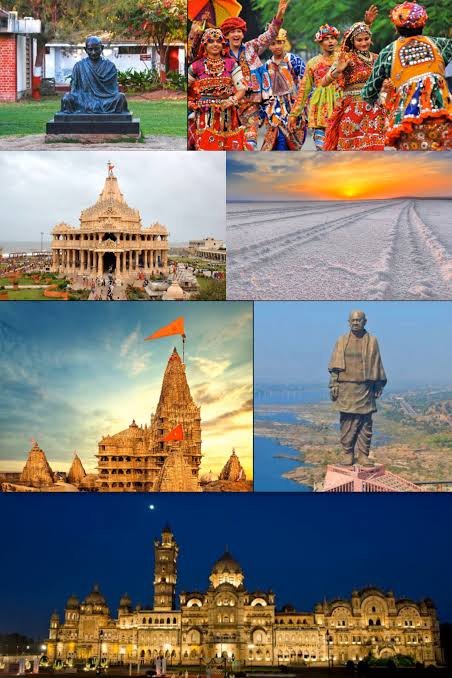
Gujarat’s natural environment includes the Great Rann of Kutch and the hills of Saputara, and it is the sole home of pure Asiatic lions in the world. During the historic reigns of the sultans, Hindu craftsmanship blended with Islamic architecture, giving rise to the Indo-Saracenic style. Many structures in the state are built in this fashion. It is also the birthplace of Mahatma Gandhi and Sardar Vallabhbhai Patel, great iconic figures of India’s Independence movement. Amitabh Bachchan is currently the brand ambassador of Gujarat Tourism.

Gujarat has a variety of museums on different genres that are run by the state’s Department of Museums located at the principal state museum, Baroda Museum & Picture Gallery in Vadodara, which is also the location of the Maharaja Fateh Singh Museum. The Kirti Mandir, Porbandar, Sabarmati Ashram, and Kaba Gandhi No Delo are museums related to Mahatma Gandhi, the former being the place of his birth and the latter two where he lived in his lifetime. Kaba Gandhi No Delo in Rajkot exhibits part of a rare collection of photographs relating to the life of Mahatma Gandhi. Sabarmati Ashram is the place where Gandhi initiated the Dandi March. On 12 March 1930 he vowed that he would not return to the Ashram until India won independence.

THE SOUL OF INCREDIBLE INDIA – ODISHA

Odisha , formerly Orissa , is an Indian state located in Eastern India. It is the 8th largest state by area, and the 11th largest by population. The state has the third largest population of Scheduled Tribes in India. It neighbours the states of West Bengal and Jharkhand to the north, Chhattisgarh to the west, Andhra Pradesh to the south, and a very negligible border with Telangana to the southwest. Odisha has a coastline of 485 kilometres along the Bay of Bengal. The region is also known as Utkala and is mentioned in India’s national anthem, “Jana Gana Mana”. The language of Odisha is Odia, which is one of the Classical Languages of India.

The ancient kingdom of Kalinga, which was invaded by the Mauryan emperor Ashoka (which was again won back from them by king Kharavela) in 261 BCE resulting in the Kalinga War (The lethal war with Kalinga transformed the vengeful Emperor Ashoka into a stable and peaceful emperor, and he became a patron of Buddhism), coincides with the borders of modern-day Odisha. The modern boundaries of Odisha were demarcated by the British Indian government when Orissa Province was established on 1 April 1936, consisting of the Odia-speaking districts of Bihar and Orissa Province. The first of April is celebrated as Utkala Dibasa. Cuttack was made the capital of the region by Anantavarman Chodaganga in c. 1135, after which the city was used as the capital by many rulers, through the British era until 1948. Thereafter, Bhubaneswar became the capital of Odisha.

The economy of Odisha is the 16th-largest state economy in India with ₹5.33 lakh crore in gross domestic product and a per capita GDP of ₹116,614 . Odisha ranks 32nd among Indian states in human development index.

CUISINE –
Odisha has a culinary tradition spanning centuries. The kitchen of the Shri Jagannath Temple, Puri is reputed to be the largest in the world, with 1,000 chefs, working around 752 wood-burning clay hearths called chulas, to feed over 10,000 people each day.

The syrupy dessert Pahala rasagola made in Odisha is known throughout the world. Chhenapoda is another major Odisha sweet cuisine, which originated in Nayagarh. Dalma (a mix of dal and selected vegetables) is widely known cuisine, better served with ghee.

The “Odisha Rasagola” was awarded a GI tag 29 July 2019 after a long battle about the origin of the famous sweet with West Bengal.

DANCE –
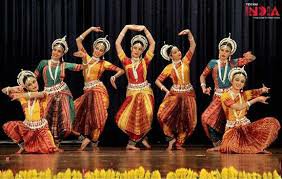
Odissi dance and music are classical art forms. Odissi is the oldest surviving dance form in India on the basis of archaeological evidence. Odissi has a long, unbroken tradition of 2,000 years, and finds mention in the Natyashastra of Bharatamuni, possibly written c. 200 BC. However, the dance form nearly became extinct during the British period, only to be revived after India’s independence by a few gurus.

The variety of dances includes Ghumura Dance, Chhau dance, Jhumair, Mahari dance, Dalkhai and Gotipua.

TOURISM –
The Lingaraja Temple at Bhubaneswar has a 150-foot high deula while the Jagannath Temple, Puri is about 200 feet high and dominates the skyline. Only a portion of the Konark Sun Temple at Konark in Puri district, the largest of the temples of the “Holy Golden Triangle” exists today, and it is still staggering in size. It stands out as a masterpiece in Odisha architecture. Sarala Temple, regarded as one of the most spiritually elevated expressions of Shaktism is in Jagatsinghpur district. It is also one of the holiest places in Odisha and a major tourist attraction. Maa Tarini Temple situated in Kendujhar district is also a famous pilgrimage destination. Every day thousands of coconuts are given to Maa Tarini by devotees for fulfilling their wishes.

Odisha’ s varying topography – from the wooded Eastern Ghats to the fertile river basin – has proven ideal for evolution of compact and unique ecosystems. This creates treasure troves of flora and fauna that are inviting to many migratory species of birds and reptiles. Bhitarkanika National Park in Kendrapada district is famous for its second largest mangrove ecosystem. The bird sanctuary in Chilika Lake (Asia’s largest brackish water lake). The tiger reserve and waterfalls in Simlipal National Park, Mayurbhanj district are integral parts of eco-tourism in Odisha, arranged by Odisha Tourism.

Daringbadi is a hill station in the Kandhamal district. It is known as “Kashmir of Odisha”, for its climatic similarity. Chandipur, in Baleswar district is a calm and serene site, is mostly unexplored by tourists. The unique specialty of this beach is the ebb tides that recede up to 4 km and tend to disappear rhythmically.

In the western part of Odisha, Hirakud Dam in Sambalpur district is the longest earthen dam in the World. It also forms the biggest artificial lake in Asia. The Debrigarh Wildlife Sanctuary is situated near Hirakud Dam. Samaleswari Temple is a Hindu temple in Sambalpur city, dedicated to the goddess known as ‘Samaleswari’, the presiding deity of Sambalpur, is a strong religious force in western part of Odisha and Chhattisgarh state. The Leaning Temple of Huma is located near Sambalpur. The temple is dedicated to the Hindu god Lord Bimaleshwar. Sri Sri Harishankar Devasthana, is a temple on the slopes of Gandhamardhan hills, Balangir district. It is popular for its scenes of nature and connection to two Hindu lords, Vishnu and Shiva. On the opposite side of the Gandhamardhan hills is the temple of Sri Nrusinghanath, is situated at the foothills of Gandhamardhan Hill near Paikmal, Bargarh district.

In the southern part of Odisha, The Taratarini Temple on the Kumari hills at the bank of the Rushikulya river near Berhampur city in Ganjam district. Here worshiped as the Breast Shrine (Sthana Peetha) and manifestations of Adi Shakti. The Tara Tarini Shakti Peetha is one of the oldest pilgrimage centers of the Mother Goddess and is one of four major ancient Tantra Peetha and Shakti Peethas in India. Deomali is a mountain peak of the Eastern Ghats. It is located in Koraput district. This peak with an elevation of about 1,672 m, is the highest peak in Odisha.

The share of foreign tourists’ arrival in the state is below one percent of total foreign tourist arrivals at all India level.

AWESOME ASSAM

Assam is is a state in northeastern India, south of the eastern Himalayas along the Brahmaputra and Barak River valleys. Assam covers an area of 78,438 km^2. The state is bordered by Bhutan and Arunachal Pradesh to the north; Nagaland and Manipur to the east; Meghalaya, Tripura, Mizoram and Bangladesh to the south; and West Bengal to the west via the Siliguri Corridor, a 22 kilometres wide strip of land that connects the state to the rest of India. Assamese is the official and most commonly spoken language of the state, followed by Bengali, which is official in the Barak Valley and Bodo which is official in Bodoland Territorial Region.

Assam is known for Assam tea and Assam silk. The state was the first site for oil drilling in Asia. Assam is home to the one-horned Indian rhinoceros, along with the wild water buffalo, pygmy hog, tiger and various species of Asiatic birds, and provides one of the last wild habitats for the Asian elephant. The Assamese economy is aided by wildlife tourism to Kaziranga National Park and Manas National Park, which are World Heritage Sites. Dibru-Saikhowa National Park is famed for its feral horses. Sal tree forests are found in the state which, as a result of abundant rainfall, look green all year round. Assam receives more rainfall than most parts of India; this rain feeds the Brahmaputra River, whose tributaries and oxbow lakes provide the region with a hydro-geomorphic environment.

Assamese Culture is traditionally a hybrid one developed due to assimilation of ethno-cultural groups of Austric, Dravidian, Tibeto-Burman and Tai origin in the past. Therefore, both local elements or the local elements in Sanskritised forms are distinctly found.

The modern culture has been influenced by events in the British and the post-British era. The language was standardised by American Baptist Missionaries such as Nathan Brown, Dr. Miles Bronson and local pundits such as Hemchandra Barua with the form available in the Sibsagar (Sivasagar) District (the ex-nerve centre of the Ahom Kingdom).[citation needed]

Increasing efforts of standardisation in the 20th century alienated the localised forms present in different areas and with the less-assimilated ethno-cultural groups (many source-cultures). However, Assamese culture in its hybrid form and nature is one of the richest, still developing and in true sense is a ‘cultural system’ with sub-systems. Many source-cultures of the Assamese cultural-system are still surviving either as sub-systems or as sister entities, e.g. the; Bodo or Karbi or Mishing. It is important to keep the broader system closer to its roots and at the same time focus on development of the sub-systems.

Some of the common and unique cultural traits in the region are peoples’ respect towards areca-nut and betel leaves, symbolic (gamosa, arnai, etc.), traditional silk garments (e.g. mekhela chador, traditional dress of Assamese women) and towards forefathers and elderly. Moreover, great hospitality and bamboo culture are common.

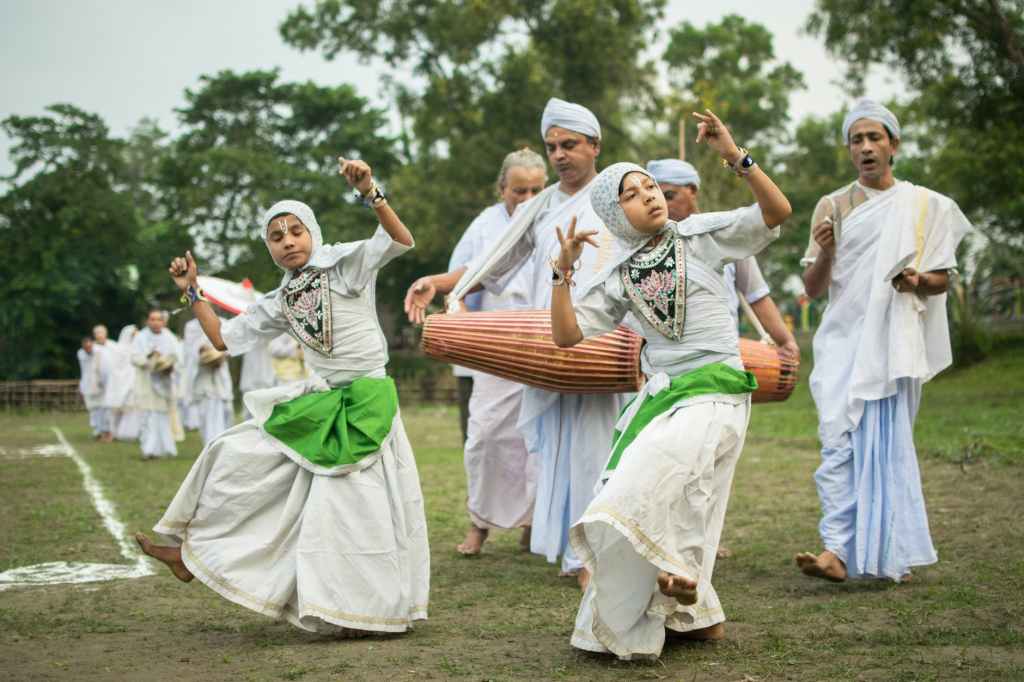
Bihu is the most popular folk dance of Assam. Bihu dances are performed by young boys and girls during the Bihu festivities which represent youthful passion, reproductive urge, and joy.It is characterized by brisk dance steps, and rapid hand movement. Dancers wear traditionally colorful Assamese clothing.


PARADISE ON EARTH

A new State comprising three distinct religions of Jammu, Kashmir and Ladakh was formed with Maharaja Gulab Singh as its founder ruler. It was established on 14 May 1954.

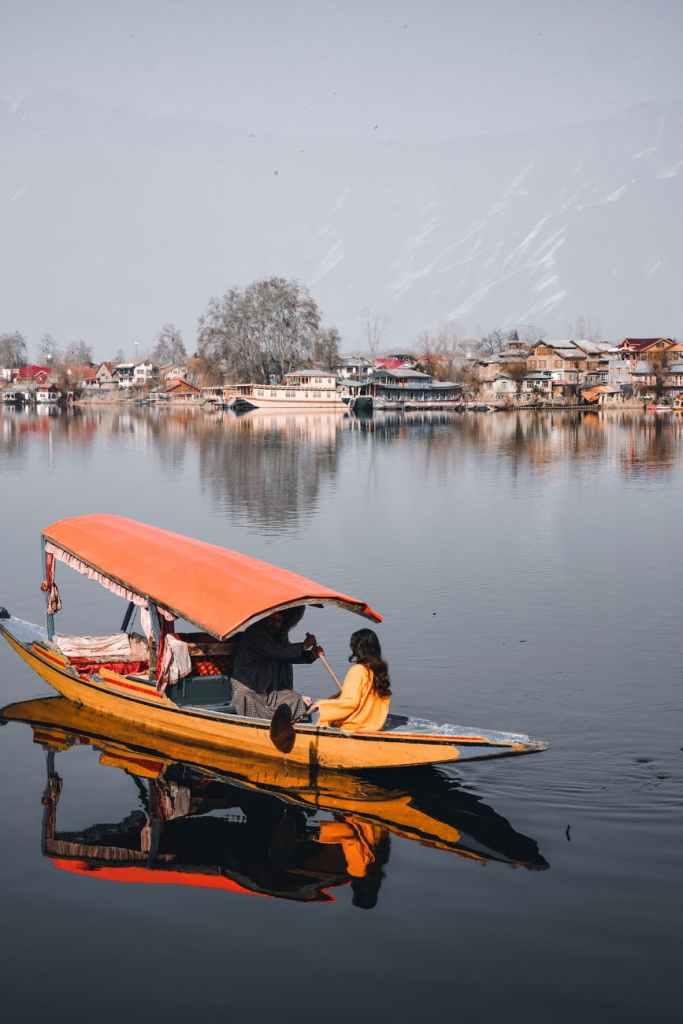
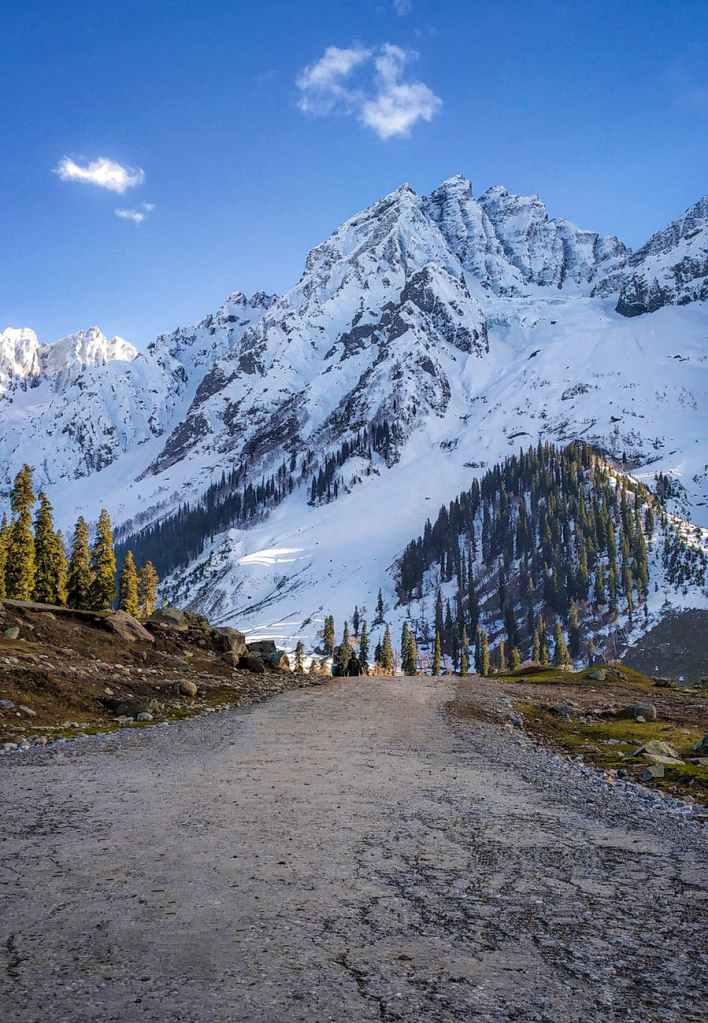
Popularly known as the “Paradise on Earth”, Jammu and Kashmir is world famous for its scenic splendour, snow-capped mountains, plentiful wildlife, exquisite monuments, hospitable people and local handicrafts.

Jammu and Kashmir is a region administered by India as a union territory and consists of the southern portion of the larger Kashmir region, which has been the subject of a dispute between India and Pakistan since 1947, and between India and China since 1962. The Line of Control separates Jammu and Kashmir from the Pakistani-administered territories of Azad Kashmir and Gilgit-Baltistan in the west and north. It lies to the north of the Indian states of Himachal Pradesh and Punjab and to the west of Ladakh, which is also subject to the dispute as a part of Kashmir, and administered by India as a union territory.

Provisions for the formation of the union territory of Jammu and Kashmir were contained within the Jammu and Kashmir Reorganisation Act, 2019, which was passed by both houses of the Parliament of India in August 2019. The act re-constituted the former state of Jammu and Kashmir into two union territories, Jammu and Kashmir and Ladakh, with effect from 31 October 2019.

The state of Jammu and Kashmir was accorded special status by Article 370 of the Constitution of India. In contrast to other states of India, Jammu and Kashmir had its own constitution, flag and administrative autonomy. Indian citizens from other states were not allowed to purchase land or property in Jammu and Kashmir.

Jammu and Kashmir had three distinct areas: Hindu-majority Jammu region, Muslim-majority Kashmir Valley and Buddhist-dominated Ladakh. Unrest and violence persisted in the Kashmiri Valley and, following a disputed state election in 1987, an insurgency persisted in protest over autonomy and rights.

The Bharatiya Janata Party (BJP) came to power in the 2014 Indian general election and five years later included in their 2019 election manifesto the revocation of Article 370 of the Constitution of India, in order to bring Jammu and Kashmir to equal status with other states.

A resolution to repeal Article 370 was passed by both the houses of the Parliament of India in August 2019. At the same time, a reorganisation act was also passed, which would reconstitute the state into two union territories, Jammu and Kashmir and Ladakh. The reorganisation took effect from 31 October 2019.

In September 2019 nearly 4,000 people, including two former Chief Ministers and hundreds of other politicians, were arrested by the Indian authorities in Kashmir; the state was put under a lockdown and communication and internet services were suspended.

Jammu and Kashmir is home to several valleys such as the Kashmir Valley, Chenab Valley, Sindh Valley and Lidder Valley. Some major tourist attractions in Jammu and Kashmir are Srinagar, the Mughal Gardens, Gulmarg, Pahalgam, Patnitop and Jammu. Every year, thousands of Hindu pilgrims visit holy shrines of Vaishno Devi and Amarnath which has had significant impact on the state’s economy.

The Kashmir valley is one of the top tourist destinations of India. Gulmarg, one of the most popular ski resort destinations in India, is also home to the world’s highest green golf course. The decrease in violence in the state has boosted the state’s economy, specifically tourism.

Jammu and Kashmir is also famous for its scenic beauty, flower gardens, apple farms and more. It attracts tourists for its unique handicrafts and the world-famous Kashmiri Shawls.

Culture and tradition of TAMILNADU

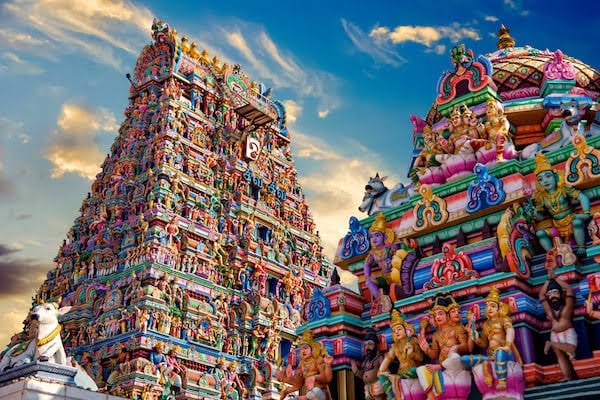
Tamil Nadu is a southern state of India which is supremely rich in culture and heritage. Known to be one of the oldest civilisations in the world, the people of Tamil Nadu belong to the prestigious Dravidian Family. Tamilians also, like other South Indians, take much pride in their rooted Tamil culture and make great efforts to protect their 2000 years old history. The state has been ruled by the Cholas, Pandyas and the Pallavas and has been flourishing since. The art and architecture have been their creations which are used and maintained even today.

Out of 74 million Tamil people in the world, around 62 million live in Tamil Nadu. Rest of the Tamilians are scattered in different parts of India and the world, mostly in the northeast of Sri Lanka. People who live in the state understand the ethnicity of their culture and how it marks their identity in the world. They are very adherent towards their rituals and traditions like following the caste system, religion and community traits, etc.

Tamil is the official language of the state. It is a derivative of Brahmi script, and the letters represent sounds, much like the Mandarin language. Not only most of the people in Tamil Nadu speak Tamil, but it is also spoken by many in Sri Lanka, Mauritius, Singapore, and Malaysia.

RELIGION –
A great amount of relevance is given to a person’s religion when it comes to personal identity. Although four-fifths of the population of the state are Hindus, rest of them are divided in Islam, Christianity, and Jainism. Their rituals include deity worship and animisms like tree worship, animal worship and stars and planets worship. Many Hindus are followers of different religious institutions called ‘Matha’ which are the centres of Monastic studies.

MUSIC AND DANCE –
Tamil Music has evolved over the years. The most important form of music was the Carnatic music which considered only for the elite who could understand the intricacy of music. For others, Telugu songs and a mix of traditional numbers from a source of entertainment.

Bharatnatyam is the official dance form of Tamil Nadu, recognized all over India and the world. It’s a complicated dance form with subtle moves of body parts and expressions. Some other folk dances like Parai, Villuputtu Karakaatam, and Kuthu are also performed by local people including tribal people.

TRADITION AND ARCHITECTURE –
Most traditional art are religious in some form and usually centres on Hinduism, although the religious element is often only a means to represent universal—and, occasionally, humanist—themes.

The most important form of Tamil painting is Tanjore painting, which originated in Thanjavur in the 9th century. The painting’s base is made of cloth and coated with zinc oxide, over which the image is painted using dyes; it is then decorated with semi-precious stones, as well as silver or gold thread. A style which is related in origin, but which exhibits significant differences in execution, is used for painting murals on temple walls; the most notable example are the murals on the Kutal Azhakar and Meenakshi temples of Madurai, the Brihadeeswarar temple of Tanjore.

Tamilnadu sculpture ranges from elegant stone sculptures in temples, to bronze icons with exquisite details. The medieval Chola bronzes are considered to be one of India’s greatest contributions to the world art. Unlike most Western art, the material in Tamil sculpture does not influence the form taken by the sculpture; instead, the artist imposes his/her vision of the form on the material. As a result, one often sees in stone sculptures flowing forms that are usually reserved for metal.

CULTURE AND TRADITION OF WEST BENGAL

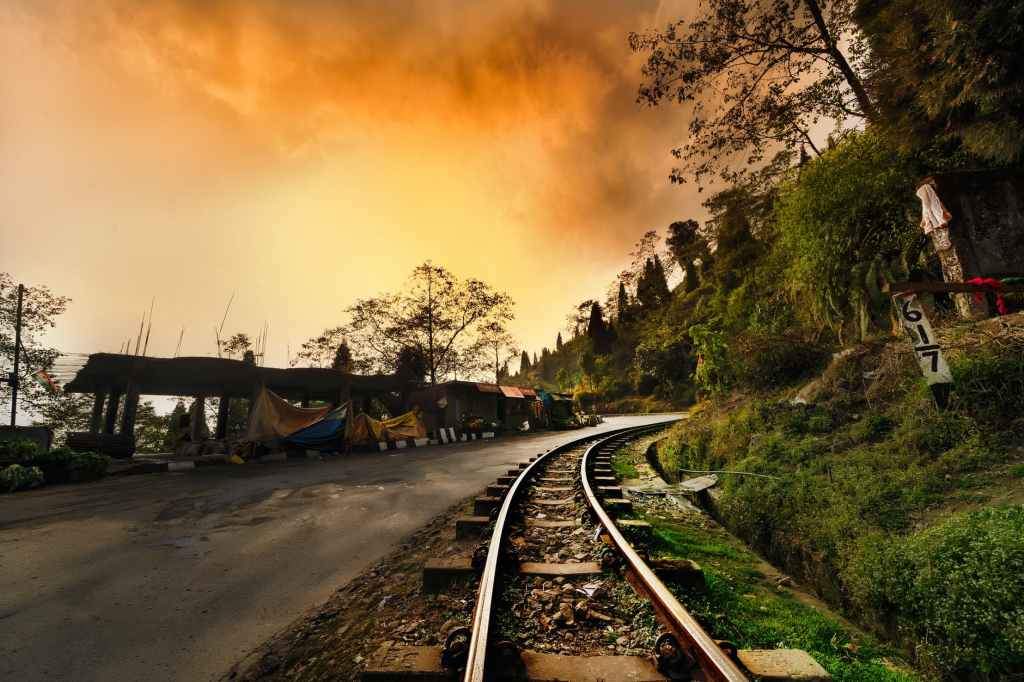
The culture of West Bengal is an Indian culture which has its roots in the Bengali literature, music, fine arts, drama and cinema. Different geographic regions of West Bengal have subtle as well as more pronounced variations between each other, with Darjeeling Himalayan hill region and Duars showing particularly different socio-cultural aspects.

West Bengal’s capital Kolkata—as the former capital of India—was the birthplace of modern Indian literary and artistic thought, and is referred to as the “cultural [or literary] capital of India”. The presence of paras, which are cluster of neighbourhoods that possess a strong sense of community, is characteristic of West Bengal. Typically, each para has its own community club and, on occasion, a playing field. Residents engage in addas, or leisurely chats, that often take the form of freestyle intellectual conversation. However, with the growth of apartments, expansion of neighbourhoods and rapid urbanization, this culture is on decline.

LITERATURE –

The Bengali language boasts a rich literary heritage, shared with neighbouring Bangladesh. West Bengal has a long tradition in folk literature, evidenced by the Charyapada, Mangalkavya, Shreekrishna Kirtana, Thakurmar Jhuli, and stories related to Gopal Bhar. In the nineteenth and twentieth century, Bengali literature was modernized in the works of authors such as Bankim Chandra Chattopadhyay, Michael Madhusudan Dutt, Rabindranath Tagore, Kazi Nazrul Islam, and Sharat Chandra Chattopadhyay. Coupled with social reforms led by Ram Mohan Roy, Swami Vivekananda, and others, this constituted a major part of the Bengal Renaissance. The middle and latter parts of the 20th century witnessed the arrival of post-modernism, as well as literary movements such as those espoused by the Kallol movement, hungryalists and the little magazines.

THEATRE AND FILMS –

West Bengal has a tradition of folk drama known as jatra. Kolkata is the home of the Bengali cinema industry, dubbed “Tollywood” for Tollygunj, where most of the state’s film studios are located. Its long tradition of art films includes globally acclaimed film directors such as Academy Award-winning director Satyajit Ray, Ritwik Ghatak, Mrinal Sen, Tapan Sinha, and contemporary directors such as Aparna Sen, Buddhadeb Dasgupta, Goutam Ghose, Koushik Ganguly, Rituparno Ghosh, Anjan Dutt, Kamaleswar Mukherjee, Sandip Ray.

MUSIC –

The Baul tradition is a unique heritage of Bengali folk music, which has also been influenced by regional music traditions. Other folk music forms include Kabigaan, Gombhira, Bhawaiya, kirtans, and Gajan festival music. Folk music in West Bengal is often accompanied by the ektara, a one-stringed instrument. West Bengal also has a heritage in North Indian classical music. The state is recognised for its appreciation of rabindrasangeet (songs written by Rabindranath Tagore) and Indian classical music. Nazrul Geeti is another classical music of Bengal, which is written and composed by poet Kazi Nazrul Islam. He was person in Bengal music who created the first Bengali ghazals.

Popular music genres include adhunik songs. Since the early 1990s, new genres have emerged, including one comprising alternative folk–rock Bengali bands. Another new style, jibonmukhi gaan (“songs about life”), is based on realism.[16] UNESCO selected The Rural Craft Hub of Bengal to showcase their artwork in Paris in 2015.

FESTIVAL AND CELEBRATIONS –

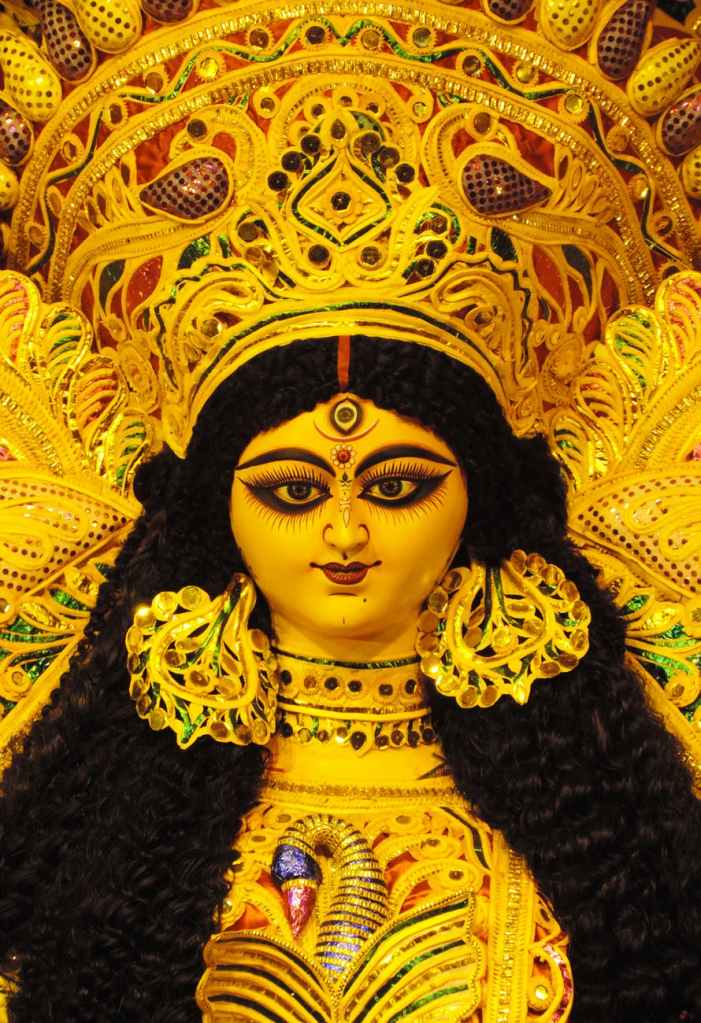
West Bengal is famous for its culture and festivals are an inevitable part of this culture. Some festivals are celebrated statewide, while others are local in nature. There are also various other village fairs and seasonal tribal festivals. Durga Puja is the biggest and most important festival of West Bengal, and it features colourful pandals, decorative idols of Hindu goddess Durga and her family, lighting decoration and immersion processions. Other major festivals are Kali Puja, Diwali, Holi, Saraswati Puja, Jagaddhatri Puja, Rath Jatra, Kojagori Lakshmi Puja, Vishwakarma Puja, Poush Parbon, Poila Boishakh, Christmas. Kolkata Book Fair, Kolkata International Film Festival and Dover Lane Music Festival are major annual cultural events of Kolkata, whereas Poush Mela, Ganga Sagar Mela, Jhapan are some of the major annual fairs of the state.

FOOTBALL

Football is a family of team sports that involve, to varying degrees, kicking a ball to score a goal. Unqualified, the word football normally means the form of football that is the most popular where the word is used. Sports commonly called football include association football (known as soccer in North America and Oceania); gridiron football (specifically American football or Canadian football); Australian rules football; rugby union and rugby league; and Gaelic football. These various forms of football share to varying extent common origins and are known as football codes.

There are a number of references to traditional, ancient, or prehistoric ball games played in many different parts of the world. Contemporary codes of football can be traced back to the codification of these games at English public schools during the 19th century. The expansion and cultural influence of the British Empire allowed these rules of football to spread to areas of British influence outside the directly controlled Empire. By the end of the 19th century, distinct regional codes were already developing: Gaelic football, for example, deliberately incorporated the rules of local traditional football games in order to maintain their heritage. In 1888, The Football League was founded in England, becoming the first of many professional football associations. During the 20th century, several of the various kinds of football grew to become some of the most popular team sports in the world.

Several of the football codes are the most popular team sports in the world. Globally, association football is played by over 250 million players in over 200 nations, and has the highest television audience in sport,  making it the most popular in the world. American football, with 1.1 million high school football players and nearly 70,000 college football players, is the most popular sport in the United States, with the annual Super Bowl game accounting for nine of the top ten of the most watched broadcasts in U.S. television history . The NFL has the highest average attendance (67,591) of any professional sports league in the world and has the highest revenue out of any single professional sports league. Thus, the best association football and American football players are among the highest paid athletes in the world.

Australian rules football has the highest spectator attendance of all sports in Australia. Similarly, Gaelic football is the most popular sport in Ireland in terms of match attendance, and the All-Ireland Football Final is the most watched event of that nation’s sporting year.

HERITAGE OF UTTAR PRADESH

The Culture of Uttar Pradesh is an Indian Culture which has its roots in the Hindi and Urdu literature, music, fine arts, drama and cinema. Lucknow, the capital of Uttar Pradesh, has several beautiful historical monuments such as Bara Imambara and Chhota Imambara. It has also preserved the damaged complex of the Oudh-period British Resident’s quarters, which are being restored.

Uttar Pradesh attracts large number of visitors, both national and international; with more than 71 million domestic tourists (in 2003) and almost 25% of the All-India foreign tourists visiting Uttar Pradesh, it is one of the top tourist destinations in India. There are two regions in the state where a majority of the tourists go, viz. the Hindu pilgrimage circuit and the Agra circuit.

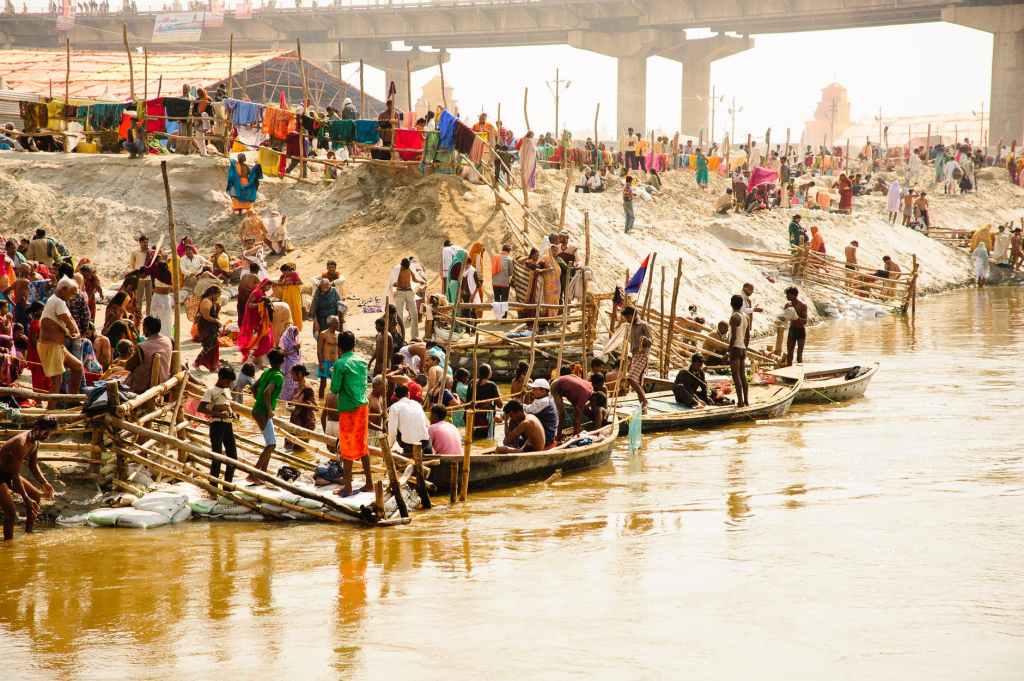
The pilgrimage circuit includes the holiest of the Hindu holy cities on the banks of sacred rivers Ganges and the Yamuna: Varanasi (also considered world’s oldest city), Ayodhya (birthplace of Lord Rama), Mathura (birthplace of Lord Krishna), Vrindavan (the village where Lord Krishna spent his childhood), and Allahabad (Prayagraj) (the confluence or ‘holy-sangam’ of the sacred Ganges-Yamuna rivers).

The city of Agra, gives access to three World Heritage Sites: Taj Mahal, Agra Fort and the nearby Fatehpur Sikri. Taj Mahal is a mausoleum built by Mughal Emperor Shah Jahan in memory of his beloved wife, Mumtaz Mahal. It is cited as “the jewel of Muslim art in India and one of the universally admired masterpieces of the world’s heritage”. Agra Fort is about 2.5 km northwest of its much more famous sister monument, the Taj Mahal. The fort can be more accurately described as a walled palatial city. Fatehpur Sikri was the world-famous 16th-century capital city near Agra, built by the Mughal emperor Akbar the Great, whose mausoleum in Agra is also worth a visit. Dayal Bagh in Agra is a modern-day temple and popular tourist sight. Its lifelike sculptures in marble are unique in India.


MUSIC AND DANCE –
The state is home to a very old tradition in dance and music. During the eras of Guptas and Harsh Vardhan, Uttar Pradesh was a major centre for musical innovation. Swami Haridas was a great saint-musician who championed Hindustani Classical Music. Tansen, the great musician in Mughal Emperor Akbar’s court, was a disciple of Swami Haridas.

Kathak, a classical dance form, involving gracefully coordinated movements of feet along with entire body, grew and flourished in Uttar Pradesh. Wajid Ali Shah, the last Nawab of Awadh, was a great patron and a passionate champion of Kathak. Today, the state is home to two prominent schools of this dance form, namely, Lucknow Gharana and Banaras Gharana.


LANGUAGE –
The common state-language of Uttar Pradesh is standard Hindi. While standard Hindi (Khari boli) is the official language, several important regional Hindi ‘dialects’ are spoken in the state and among these are: Awadhi, Bhojpuri, Braj, Kannauji, Kaurvi, Gurjari, Bagheli and Bundeli, besides several local dialects that do not have a formal name. Urdu is prominent in Uttar Pradesh as Lucknow was once the centre of Indo-Persianate culture in north India.

AQUAPHOBIA

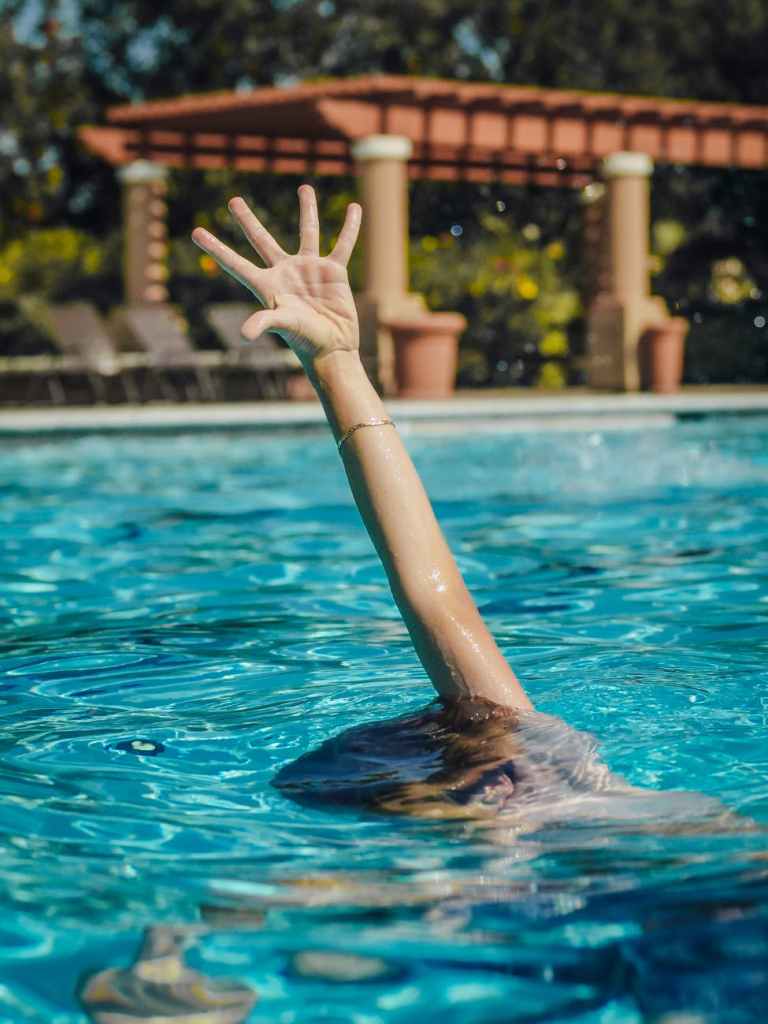
People face an extreme, irrational and persistent threat of water known as ‘aquaphobia’. It’s a fairly common fear which differs in severity from person to person. Traveling through waterways, going near swimming pools, water bodies or even entering a bathtub might seem life threatening to some people.

Aquaphobia is a specific phobia. This is an irrational fear of something that doesn’t cause much danger. You may have aquaphobia if you find that any source of water causes you an excessive amount of anxiety. This can include a swimming pool, a lake, an ocean, or even a bathtub.

The most common cause of aquaphobia is a previous negative experience. If you have been through a near-drowning experience, shipwreck, or even a bad swimming lesson, you are more likely to develop a phobia of water. Learning to swim is a rite of passage for many children, and frightening experiences are common.

The word “thalassophobia” refers to a fear of the ocean or other large, deep bodies of water. Thalassophobia is different from aquaphobia, which is a fear of water itself. Aquaphobia can include a fear of being in any body of water, including small ones.

Some of the more common symptoms of aquaphobia include: an immediate feeling of intense fear, anxiety, and panic when thinking about water. a persistent, excessive, or unreasonable fear when exposed to water. recognizing that the fear of water is excessive or out of proportion to the actual threat.

Aquaphobia is highly treatable. Exposure therapy and CBT are effective treatments that help reduce feelings of fear, anxiety, and panic in people with specific phobias.