On Easements and Essentials of a Valid Easement

The Indian Easements Act, 1882 defines the concept of easement under section 4. According to Section 4 of the Indian Easements Act, 1882, easement is a right of the owner or occupier of the land that enables the person to enjoy the land. The section 4 of the Easements At, 1882 provides the definition of easements as “ a right which the owner or occupier of certain land possesses as such for the beneficial enjoyment of that land, to do and to continue to do something or to prevent and continue to prevent something being done in upon or in respect of certain other land not is own”. In the case of an easement, there is absence of conveyance and this disqualifies it from being called a transfer of property. With easement rights the person gets to enjoy the benefits of the land. In the absence of this right, the owner is not in a position to enjoy the rights of the land.

Photo by RODNAE Productions on Pexels.com

 The interpretation of easement also includes the right or capacity to act or not refrain the activities or stop the activities or opting to stop the activities continually in a different land, which does not belong to him, so that he can continue to enjoy the land in his ownership. Here, the understanding of the word ‘land’ includes all the things fixed to the earth. The understanding of the term ‘beneficial enjoyment’ is that it means necessities, amenities, convenience and other advantages. 

The Easement Act in India can be dated back to 1882. This allowed all the citizens to exercise the right to an easement. This makes easement come under the bracket of the rights granted to the citizens. It tells that the right of easement allows the possessor of the land or citizens who occupy the land for enjoying the benefits of the land. This ownership allows the people who own or occupy to do the activities or continue to do or to not allow or to opt to continually forbid some activities done on the concerned land that does not belong to the person. Law requires the fulfilment of certain conditions for the qualification of a valid easement. In this context the possessor of the land or the person who is presently occupying the land, according to law, is called as the Dominant Owner. The concerned land for which there are easementary to protect the benefits is called Dominant Heritage.The person or the possessor on whom there is an imposition of the liability is called as the Serviant Owner. The land concerned in the above situation on which there is an imposition of liability is called as Servient Heritage.

Section 5 of the The Indian Easements Act, 1882 deals with the classification of easements. Easements can be classified as continuous and non continuous. Continuous easements can be defined as the ones that can be enjoyed without any human intervention and any action on the part of a human. This is seen as a special quality to the property. Whereas, in discontinuous easements human interventions is necessary to enjoy the right of easement. The right of easement which is discontinuous requires the owner to perform certain actions on the land of the other person. The right of easement can also be classified as apparent or non – apparent. An apparent easement has certain permanent signs to prove its existence. Reasonable foresightedness and thorough examination shows these signs. The other name for this type of easement is express easement. 

Essentials of Easement

Law requires fulfilment of certain conditions for a valid easement. One essential is that there has to be a dominant and a servient heritage. This is an important and mandatory condition. For a person to enjoy or have the right of easement there has to be two properties called dominant and servient heritage. There has to an owner who imposes the liability and another person on whom it is imposed. There has to be a property on which the liability is imposed and a property for the enjoyment of which the liability is imposed. The presence of dominant heritage and servient heritage is the first and a compulsory element of easement. The heritage or property which is vested with certain privileges is called dominant heritage, and the person who owns the property is called the dominant owner. The property being subjected to certain liabilities is called as servient heritage. According to the definition, the possessor for his own benefit exercises the right of easement over another person. These concepts of dominant and servient heritage are opposites and cannot be one. This makes it a must for two completely different properties to exist in order to claim a right of easement. This understanding makes us deduce the requirement of two different owners for the right of easement. The right of easement is not required if the owner is one person. There have to be two people, so that the owner gets to exercise the right of easement over another. 

The goal of right of easement is to benefit the dominant owner. It is to enable him to enjoy the land he owns. Expressed benefits and implied benefits are included in it. The right of easements can be either positive or negative or both. Positive easement right refers to an act through the performance of which the dominant owner gets to exercise over servient owner. Negative easement involves an act performed to prevent something or the act of preventing itself. This involves the restriction or forbidding the servient owner to do certain things. One important thing to be understood here is that the dominant owner does not have the right to ask or legally bind the other person to do something. Another mandatory condition is the adjacent existence of the concerned heritages. The right of easement is also a right in rem. The right of easement is claimable against the entire world. The right of easement is tied to the dominant tenement. The right of easement is also a right of re-aliena. It is a right that exists over a servient tenement and is not applicable to one’s own land. Another mandatory element is separate existence of both these properties. They have to be separate and owned by different people as an easement is not granted or vested on the happening of one property in two properties. 

Section 4 explains this concept using these words “Which is not his own”. In the casw case Radhika Narayan VS. Chandra Devi, the High Court of Delhi said that the beneficial enjoyment should be on the land of a person who is not the owner or possessor of the occupied property for an easement to exist. This is essential for an easement to exist. 

Another essential element is using easement as a status of power of land. It means that the person or dominant should exercise the right of easement as a status of power. It can be exercised only by the owner. As easement is attached to the property, without there is no easement. It is also necessary that the owner uses it for his own beneficial enjoyment. He has to utilise the right of easement to derive beneficial enjoyment from his property. Here the term ‘beneficial enjoyment’ can be interpreted as things like facilities, profits etc. In  the case of Ramchandra VS. Diwakar, the High Court of Madhya Pradesh declared that the easement can be awarded only to the actual owner and not others. 

The right of easement can be enjoyed only by the dominant owner and not by serivitude owner. It is not available to others.Another important essential of easement is that it is tied to the respective property. The right exists only if the property exists. It is related to the property and is not dependent on the person. It is transferred to another person after the transfer of property. Any act committed as a part of his right (owner of the property) is a positive easement. Any action or other things being forbidden by the owner is a negative easement. The right of easement is not only available against the owner of the adjacent land but against everyone. The dominant owner has the right to sue other if they interfere in the beneficial enjoyment of his land. Remedial action is available for such interferences. In the case of Mohammad VS. Anantehari, the High Court of Kerala gave out the essentials of an easement. According to the judgement dominant heritage and servient heritage is necessary, land has to be used for the beneficial enjoyment of the owner, it is necessary that the properties are owned by different people, the owner’s right of action and prevention, easement has to be definite and clear, and finally accommodation of easement along with the dominant property. In Laxman Patnayak VS. Cuttack Municipal Council, the court gave the three essentials of easements. They are: two different kinds of properties namely dominant heritage and serivient heritage have to exist, the properties to be owned by different people, and beneficial enjoyment as the motive to exercise the right of easement by the owner.
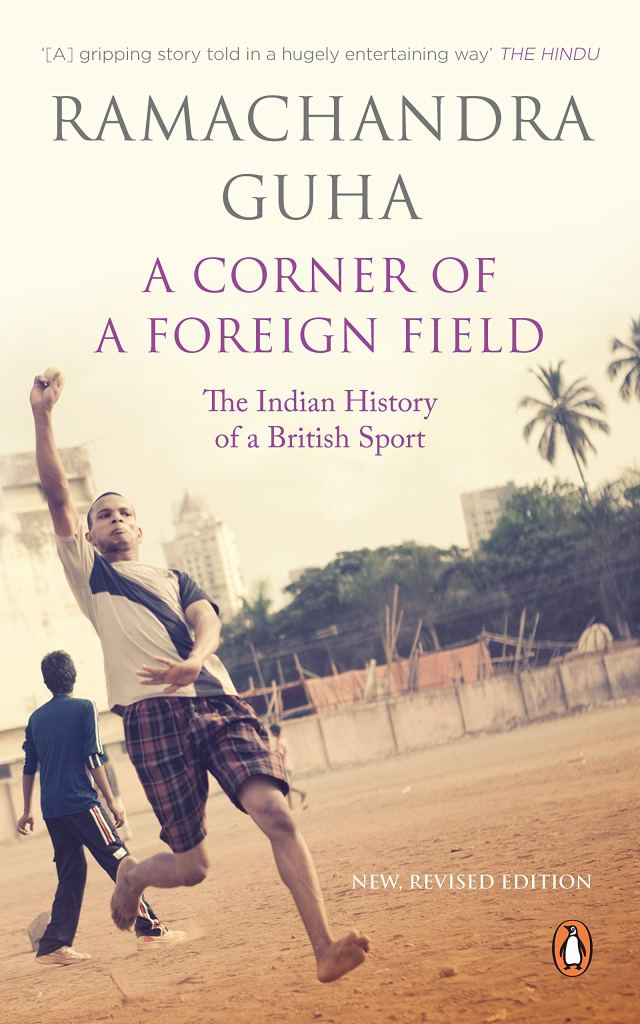
A Corner of a Foreign Field by Ramachandra Guha – Book Review

Ramachandra Guha is an Indian Historian and a columnist. His notable works include India After Gandhi and Gandhi: The Years That Changed the World. He has been awarded with several accolades for his achievements in the field of history. He has experiences of teaching at Yale University, the Indian Institute of Science and the University of California at Berkeley. He was also the Indo – American Community chair professor in 1997 and 1998. 

A Corner of a Foreign Field is a fascinating fusion of Indian history and Indian cricket.The book is divided into four chapters titled Race, Caste, Religion and Nation respectively. The first three chapter greatly benefit from thorough research and the skill of a great historian. The last chapter contains more of the authors feeling and opinion. Nevertheless, the book does not suffer from the personal feeling of the author. Throughout the book, the reader can experience the author’s love for the game. 

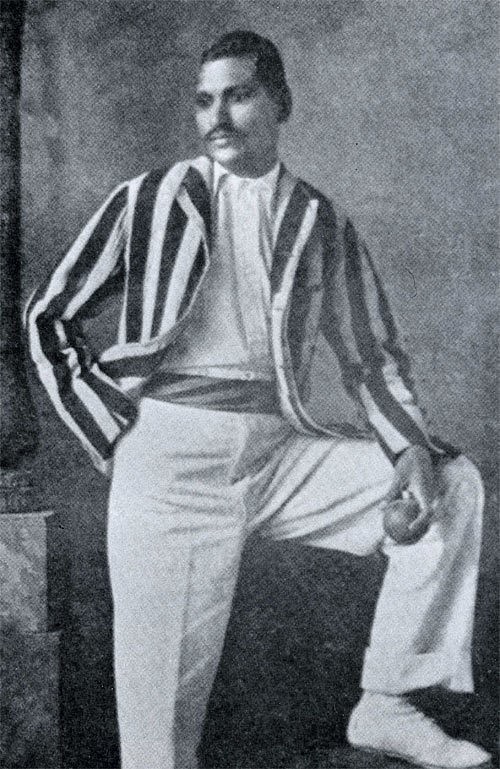
Palwankar Baloo

A Corner of a Foreign Field: The Indian History of a British Sport is a book about, one feels, the life of cricket in India so far. It is not just a history of the sport, but also a as much objective document of the sport as is possible. Cricket in India, as it is often said, is more than a sport. It evokes strong feelings from the audience and it won’t be an exaggeration to say that the team carries the burden of expectations of a billion people. Every on and off the field happening related to cricket is closely watched and excites opinions from all. This book views the unique sport through the lenses of race, religion, caste and nation. It speaks about the beginnings of cricket in India, how people reacted to this sport, its growth, impact and reception, BCCI, politics and much more. The book also gives insights into lives of people connected to the sport in one way or the other. The tales of cricketers like C. K Nayudu, Vijay Merchant, Palwankar Baloo and his brothers, Vijay Hazare makes it an interesting experience. It is astonishing how the game reflects the society at that point of time and the impacts each have had on one another throughout their history. It portrays the socio-cultural, political, economical aspects of the society by placing cricket at its centre. The book reflects the feelings of both an enthusiastic admirer of the sport and a historian keen on the socio-political happenings. The tales about cricketers are also good character sketches of the person. Not surprising, the story of Palwankar Baloo and his family is at the heart of this book as this originally began as a book about the life of Baloo. The book draws information heavily from newspapers of the day and the author uses this information beautifully to breathe life into the stories. The responses of various presses to the sport make for an interesting read. The knowledge of the author is seamless woven into the narrative. The writing of this book makes it an engaging experience even for a person not acquainted with the sport. Even for a fan of cricket, the book has much to offer and provide a great experience. It provides a whole lot new information and perspective even to a devoted follower of the sport.

Night by Elie Wiesel – Book Review

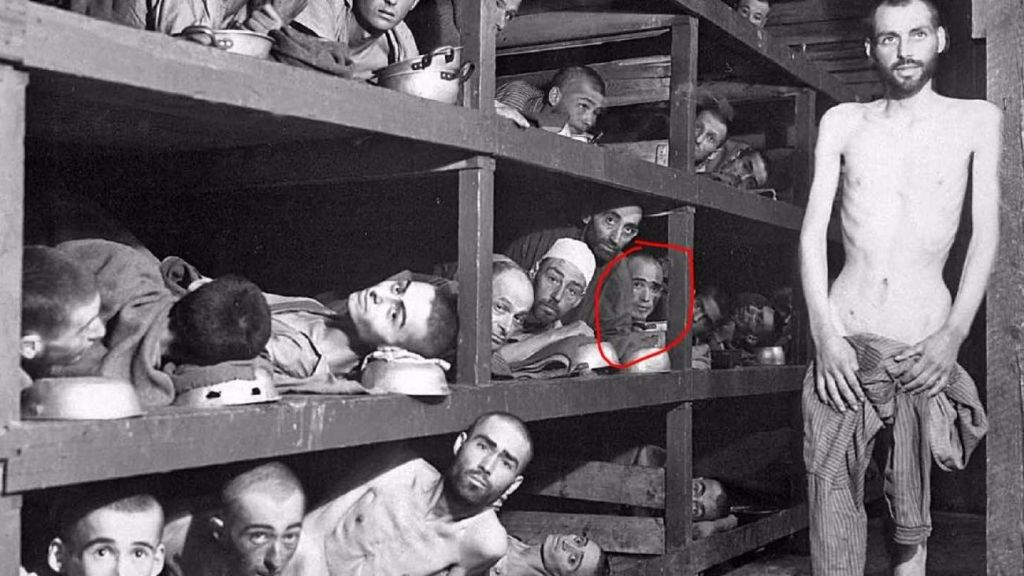
Elie Wiesel’s Night is a personal account of the Holocaust. It narrates the experiences of a  schoolboy in the camps of Auschwitz and Buchenwald. It is a poignant account of the cruelties imposed on man by man.

Elie Wiesel was a schoolboy who was born in Sighet and spent his life with his family. In 1944, he was taken to Auschwitz and then to Buchenwald. Immediately separated from his mother and sister, he is left with his father to work in the camp. The rest of the book recalls his experiences in the camp until he was released a year later. The book voices out the grief and despair of the inmates of the camp. The author successfully manages to express himself and provide a disturbing account of the Holocaust.

Eliezer Wiesel was a Holocaust Survivor who later became a writer, professor and an activist. He was born on September 30 in the year of 1928. He authored several book that bear witness to the experiences of concentration camps. He was honoured with the Nobel Prize for Peace in the year 1986. He dedicated his whole life for Jewish causes and human rights causes. He died in the year 2016. 

“Then came the march past the victims. The two men were no longer alive. Their tongues were hanging out, swollen and bluish. But the third rope was still moving: the child, too light, was still breathing…
And so he remained for more than half an hour, lingering between life and death, writhing before our eyes.
And we were forced to look at him at close range. He was still alive when I passed him. His tongue was still red, his eyes not yet extinguished.

Behind me, I heard the same man asking:
“For God’s sake, where is God?”
And from within me, I heard a voice answer:
“Where He is? This is where–hanging here from this gallows…”

That night, the soup tasted of corpses.”

Forced out of silence by experiences such as these, the author manages to create an enduring account of what an inmate went through in the camp. Though the book is short and the writing sparse, it makes the reader relive the suffering experienced by the people in the camp. It makes the reader empathize with the author and feel his disgust at humanity after reading the book. 


Never shall I forget that smoke.
Never shall I forget the small faces of the children whose bodies I saw transformed into smoke under a silent sky.
Never shall I forget those flames that consumed my faith forever.
Never shall I forget the nocturnal silence that deprived me for all eternity of the desire to live.
Never shall I forget those moments that murdered my God and my soul and turned dreams to ashes.
Never shall I forget those things, even were I condemned to live as long as God Himself.
Never.

The pain that is contained in the words alone is sufficient to make one ponder about the absurdity and meaninglessness of inflicting pain upon fellow humans in the name of race, caste, or gender. 

“If only I could get rid of this dead weight … Immediately I felt ashamed of myself, ashamed forever.” 

 “Here there are no fathers, no brothers, no friends”, a Kapo tells him. “Everyone lives and dies for himself alone.”

The book captures, with precision, the emotions of the human mind in the face of extreme suffering. Events such as doctors pulling out gold crown tooth, people who enjoyed watching people fight for a loaf of bread, a father abandoned by his son make one question about Faith and God just like the author. 

“One day when I was able to get up, I decided to look at myself in the mirror on the opposite wall. I had not seen myself since the ghetto. From the depths of the mirror, a corpse was contemplating me. The look in his eyes as he gazed at me has never left me.”

After reading the last lines of this book, the reader’s mind is sure to be purged of trivialities and filled with a deep sense of empathy.

Section 309 IPC

The World Health Organisation defined suicidal act as “the injury with varying degree of lethal intent” and that suicide may be defined as “a suicidal act with fatal outcome”. Suicidal acts with non fatal outcome are called as “attempted suicide.” In recent times, attempted suicide has gained more importance than the suicide which is the successful act because for this there is no offender who can be brought within the purview of law. In India, attempt to suicide is made punishable under section 309[1] of Indian Penal Code, 1860. A lot of conflicting opinions have generated on retaining or deleting Section 309 of Indian Penal Code because of some differing judgments by the judiciary about whether right to life includes right to die within the meaning of article 21 of the Constitution of India.

One side is of the opinion that Article 21 of the Constitution of India is a provision guaranteeing protection of life and personal liberty and by no stretch of the imagination can extinction of life be read to be included in protection of life. By declaring an attempt to commit suicide a crime, the Indian Penal Code upholds the dignity of human life, because human life is as precious to the State as it is, to its holder and the State cannot turn a blind eye to a person in attempting to kill himself. Another set of people are of the opinion that the Section 309 of Indian Penal Code is cruel and irrational because it provides double punishment for a troubled individual whose deep unhappiness had caused him to try and end his life. It is cruel to inflict additional legal punishment on a person who has already suffered agony and ignominy in his failure to commit suicide.

Section 309 of the IPC was daunted with many controversies regarding its validity over the decades on the grounds of legality and morality. Finally, giving approval to the various Law Commission Reports and judgments of the Hon’ble High Courts and the Supreme Court, attempted suicide is de-criminalized (not punishable) after passage of The Medical Health Care Act, 2017.

 Section 309 of Indian Penal Code, 1860

Suicide has not been defined anywhere in the IPC. However briefly defined, ‘suicide’ is the human act of self-inflicted, self-intentioned cessation. It has been defined by various sociologists and psychologists in different ways. Suicide is killing oneself intentionally so as to extinguish one’s life and to leave this world. 

Suicide as such is no crime under the code. It is only attempt to commit suicide that is punishable under this section. If the person succeeds, there is no offender who could be brought within the purview of law. The section is based on the principle that the lives of men are not only valuable to them but also to the state which protects them.

Section 306

If any person commits suicide, whoever abets the commission of such suicide, shall be punished with imprisonment of either description for a term which may extend to ten years, and shall also be liable to fine.

S. 309 – Attempt to commit suicide: “Whoever attempts to commit suicide and does any act towards the commission of such offence shall be punished with simple imprisonment for a term which may extend to one year or with fine, or with both.”

Attempt must be intentional- The essence of suicide is an intentional self destruction of life.. Similarly, if a person because of family discord, destruction, loss of a near and dear relation or other cause of a like nature overcomes the instinct of self- preservation and decides to take his life, he should not be held guilty for attempt to suicide. In such a case, the unfortunate man deserves indulgence, sympathy and consolation instead of punishment. It is under very compelling adverse circumstances that a person resorts to taking the extreme step of attempting to commit suicide. Some of them are depressive illness, schizophrenic attitude, physical illness which is intolerable, poverty, unemployment, frustration, disappointment, dowry problems etc.

There are many ways in which suicide can be committed. The known methods are by drowning, hanging, poisoning, cutting throat, burning, shooting oneself, hunger strike etc. But it is difficult to generalize any and conceptualize particular theory because whenever we hear news about individuals committing suicide, we immediately come up with a conclusion that these people are depressed, dissatisfied, and unhappy with their lives. However, when popular and rich people commit suicide, we are left in confusion. Why would someone who is loved and idolized by many decide to kill himself? Depression may be the main culprit, but there are a lot of things to consider as well. These include overwhelming pain, grief, and stress; some use it as an escape for their failure and shortcomings like criminals who are about to be sentenced or caught. However, there are cases where suicide is an option that is mandatory or required. Thus, most people end up sacrificing themselves to save the lives of others in unbelievable circumstances. Heroes during the wartime generally belong to this category. 

The Indian constitution under Article 21 confers the right to Life as the fundamental right of every citizen. The Right to Life enriched in Article 21 have been liberally interpreted so as to mean something more than mere survival and mere animal existence. The Supreme Court has asserted that Article 21 is the heart of the fundamental Rights provided under part III of the constitution. The Supreme Court has clearly stated that in order to treat a right as a fundamental it is not mandatory that it should be expressly stated as a fundamental right. In India “The right to life” under Article 21 of the Constitution has received the widest possible interpretation under the able hands of the judiciary and rightly so. On the grounds as mentioned, Article 21 does not have a restrictive meaning and needs to be interpreted broadly. This affirms that if Article 21 confers on a person the right to live a dignified life, it should bestows the “Right to Die” also, but the inclusion of Right to die under Article 21 contradict the provision of Indian Penal Code under section 309. As according to section 309 of the I.P.C. “Whoever attempts to commit suicide and does any act towards the commission of such offense, shall be punished with simple imprisonment for a term which may extend to one year or with fine, or with both”. This section is based on the principle that lives of men are not only valuable to them but also to the state which protects them.

Section 309, Indian Penal Code [“IPC”] criminalises an attempt to suicide by any person. However, Section 115, Mental Healthcare Act, 2017 [“MHA, 2017”] states that any person who attempts to commit suicide shall be presumed, unless proved otherwise, to have severe stress and therefore, shall not be punished under the IPC.Therefore, Section 115, MHA, 2017 imposes a rebuttable presumption that the person who commits suicide is suffering from severe stress and, therefore, shall not be punished under Section 309, IPC. The result of the abovementioned provision of the MHA, 2017 is that Section 309, IPC is otiose. However, if the presumption of severe stress is rebutted, then such a person may be punished under Section 309, IPC. The MHA, 2017 has made Section 309, IPC redundant unless the presumption of severe stress is rebutted. However, there has been widespread use of the provision regarding cases of “hunger strikes” and “fasts unto death”, and to coerce public authorities. Nonetheless, retaining the provision to serve this purpose under its current language has unnecessary implications.The costs of retaining the provision is that there are several instances of police charging persons under the provision due to a lack of legislative awareness. The retention of the provision also makes attempted suicide a medico-legal case and prevents effective treatment to the person who has attempted such suicide at the “golden hour” for providing effective treatment.Since there is a clear intention of the Legislature to make Section 309, IPC redundant, its practical unwanted implications shall be done away with by removing such provision from the statute book. However, there is a need for a provision to take action against those who either intend to coerce public authorities by threatening to commit suicide, or attempt suicide to evade public authorities altogether. Nonetheless, since the cost of retaining the provision in its current form creates an unnecessary burden, the recommendation along the lines of the 42nd Law Commission Report to add Section 506A, IPC seems to be valid even now.

The Red Market by Scott Carney – Book Review

The Red Market: On the Trail of the World’s Organ Brokers, Bone Thieves, Blood Farmers, and Child Traffickers is a non fiction book about organ trade. The author of this book, Scott Carney, an American investigative journalist and anthropologist, was born on the 9th of July, 1978. He has authored four books – The Red Market, The Enlightenment Trap, What Doesn’t Kill Us and The Wedge. Scott Carney has also worked as a contributing editor at Wired magazine and contributes stories on various issues to Mother Jones, Men’s Journal, Playboy, Foreign Policy, Discover, Outside and Fast Company. Several radio and television programmes including National Geographic TV have covered his works.

This book is an account of various organ trade practices prevalent in the world. The title of the book ‘The Red Market’ – a term coined by the author – refers to a black market place for trafficked human body parts. 

“I weigh just a little under two hundred pounds have brown hair blue eyes and a full set of teeth. As far as I know my thyroid gland pumps the right hormones into the twelve pints of blood that circulate in my arteries and veins. At six feet and two inches I have long femurs and tibias with solid connective tissue. Both my kidneys function properly and my heart runs at a steady clip of eighty-seven beats per minute. All in I figure I’m worth about 250 000.”

It contains accounts of an Indian village – nicknamed ‘Kidneyvakkam’ – notorious for its citizens selling their kidney to meet ends, grave robbers in remote villages, a temple that sells the hair of its devotees, child kidnappers who sell kids to adoption centres, and the practice of surrogacy and surrogate mothers. His book provides a detailed and informative account on numerous ways by which the trade of organs is carried out. His information is backed by a thorough research that spanned for years. 

“our appetite for human flesh is higher now than at any other time in history.”

This author manages to capture the plight of people forced by their fate to sell their organs to sustain their livelihood, how the anonymity of the buyers is maintained, how the trade is carried out through agents, the economics of the red market and how it is affected by various laws in different countries. The writing style is clear and makes one feel like an observer of the events being narrated making the book an insightful one.

“People don’t go to a transplant center to buy medical services: They go to buy organs.”

The book manages to paint a sufficiently clear enough picture of things that benefits even a person not acquainted with the subject. The book benefits from the background research and the experiences of the author. The interviews of various people involved in the practice helps in better understanding of the events and supplying contextual facts. Despite all this, some parts and arguments advanced by the author tend to feel vague. 

On Liberty

The word liberty is derived from the Latin word ‘liber’(free from all restraints). There are two views of liberty – positive and negative. Positive approach views liberty as the freedom to do anything. Negative approach views liberty as the freedom to be not forced to do anything.

Some definitions of liberty are:

Seeley:

 “Liberty is the opposite of over-government”. 

McKechnie: 

“Freedom is not the absence of all restraints but rather the substitution of irrational ones for the rational”.

According to this definition, absolute freedom cannot exist in practice and liberty can exist only with certain restrictions on freedom. This is a practical perspective of liberty. 

Burns: 

“Liberty means the liberty to grow to one’s natural height to develop one’s abilities.”

According to this definition, the end of liberty is an opportunity for the individual to develop himself personally and become better. 

Gettell: 

“Liberty is the positive power of enjoying and doing those things which are worthy of enjoyment and work”.

There are certain types of liberty. One type is natural liberty which is the absolute, unrestricted freedom to do anything at all. People enjoyed this kind of liberty in a “state of nature”(life of people before societies came into existence without any social or political institutions and laws). According to the social contract theory, people enjoyed natural liberty in the state of nature. It is to be noted that, natural liberty is inapplicable in a civil society. Practically speaking, natural liberty does not exist. Therefore, it is necessary to restrict absolute liberty with certain reasonable restrictions to ensure an orderly and harmonious existence. Civil liberty answers this need and grants a reasonable degree of freedom to every person forming the society without any discrimination. The obvious problem here is the determination of how much liberty to allow without any arbitrariness and selfishness. According to jurist Dicey, Rule of Law, referring to the restriction of the arbitrary exercise of power by subjecting it to established, well-defined rules applicable to everyone or laws, is the solution . 

 The third type of liberty is political liberty. Scholars soon realised that mere recognition of civil rights alone was not sufficient as it did not guarantee protection against tyrannical and despotic authority. Even the Rule of Law, seemingly a proper guarantee against arbitrariness of rulers, was not a complete guarantee against rulers imposing unpopular measures against the citizens. This led to the perspective that people must also possess the power to convince the government to recognize their views and problems and replace the plans. This was the origin of politcal liberty. Political liberty, in its core, refers to the freedom of an individual to play an active part in the politics and governance of the State. According to Laski, political liberty is “the power to be active in the affairs of the State”. Practically, political liberty includes freedoms and rights like the right ot vote, free and fair elections, right to dissent etc. Civil liberty and political liberty combined was a severe blow to the arbitrariness and despotism of rulers, a major problem in the past. Another type of liberty is economic liberty. It refers to the freedom of individual to be involved in economic action and make economic choices. 

The next type of liberty is personal liberty. Personal liberty refers to the freedom of the individual to make personal choices. For example, decisions regarding clothing, food, religion etc. Just like an individual even the State yearns for liberty. National liberty refers to a position where the State has external sovereignty which means freedom from external control from other states and external pressure. 

 Apart from this, there are certain safeguards to protect liberty from denigration and ensure it is practised properly. One such safeguard is the Rule of Law developed by the English jurist Dicey. It refers to imposing check on the arbitrary usage of power by subjecting it laws. At its core, lie the ideas of society ruled by law, equality before law and obligations. It acts as a check against arbitrary restrictions on liberty by those in power. Next important safeguard is the Independence of the Judiciary. All the states in the modern era are built on the idea of separation of powers amongst the Legislature, Executive, and Judiciary. Independence of the judiciary is necessary for it act without being influenced by fear from the executive. This acts as a check on the executive and prevents arbitrary usage of power. The next safeguard is democracy. Liberty is possible only in a democratic set up. It is unimaginable in a monarchic or authoritative state. Democracy is sine qua non for liberty to exist. Liberty is also safeguarded by the Constitution. The Constitution forms the supreme law to which everyone in the State is subject. It reigns supreme even over everyone and even the most powerful in the State. This makes it an effective check on despotism and arbitrariness in the exercise of power, thus protecting liberty. Then, liberty is safeguarded by rights sanctioned, guarded and enforced by law form the basis for liberty in practice. Another important safeguard in economic security. When people’s basic needs are unfulfilled they can think about higher causes like liberty. This makes it an important condition to exercise liberty.

Socialism

Socialism is both a political and an economic theory that was developed between 1750 1850 as a reaction and response to capitalism. It advocates for a system where the community as a whole owns and regulates the means of production, distribution and exchange.It aims to a build a new social order and remove the maladies of the capitalistic system. The chief proponents of socialism are Robert Owen, Sismondi, Saint-Simon and Charles Fourier.

Throughout history, there has always been a big gap between the rich and the poor due to monopolization of the means of production by a few people. The select few have constantly exploited the poor to amass wealth and to retain power. The poor barely meet the necessities of life and do not control any means of production. During the industrial stage, the gulf between the poor and the rich widened unlike before. Post the Industrial Revolution, the introduction of machines increased the divide and led to the concentration of the means of production in the hands of an even more select few. They took advantage of their position and churned out illegitimate profits. This exploitation was the reason the idea of socialism was developed.

Definitions:

Some definitions of socialism are:

Humphrey:

“ Socialism is a system of society in which means of life belong to the community as a whole, and are developed and operated by the community.”

Here, means of life refers to things like land, capital, implements and other such things which help humans to earn a living. 

Hugham:

 “Socialism is the political movement of class which aims to abolish exploitation by means of the collective ownership and democratic management of basic instruments of production and distribution.” 

Socialism developed as a response to capitalism and its primary aim was to create a new social order that eliminates the drawbacks of capitalist system. According to the proponents of socialism, capitalism fosters competition among citizens, as a result making them egoistic and immoral. It also leads to needless expenditure. It encourages a certain few to monopolise means of production and allows them to exploit other people. So the proponents propose a certain way to eliminate the miseries caused by capitalism. They propose that the factors of production be controlled by the community as a whole and not allow individuals to control the means of production. This idea formed the crux of socialism.

There are certain general principles to this theory. According to C. E. M Joad, socialism is “like a hat which has lost its shape, because everybody wears it.” Socialism as an idea has gone through many changes and one exact definition cannot be agreed upon. Nevertheless, some general principles can be seen as its distinguishing features. Socialism opposes capitalism because it believes it to be the cause of exploitation of resources. It aims to protect the common population from the select few. It advocates for social ownership of material resources and that the community should own all the factors of production like land, other property industries, etc. The motive behind production should be social necessity and not profit making for the benefit of one. Its action should at the end benefit the society. Some proponents of socialism have advocated for absolute economic equality where everyone is given the same rewards and other proponents have advocated for proportionate economic equality where people are given rewards to fulfil their basic needs. It is completely opposed to laissez-faire economy and favours the establishment of a planned economy. It is for the abolition of the institution of private property to bring about social equality. It believes in the widening of democracy, and is of the view that socialism and not capitalism can help further this end. 

Socialism has been subjected to criticism for certain of its aspects. The most important criticism of all about socialism is that it crushes the very spirit of the individual. Socialism establishes an order where there is no scope of incentive for people to work, as everyone is distributed the same or similar rewards and there is no scope for any additional incentive as a result of the individual’s hard work. Another major criticism of socialism is its impracticality. It cannot be implemented in a real world scenario as it does not provide people any incentive to work. Perfect socialism has not existed anywhere and even the countries that proclaim themselves as socialist are not completely socialist. In this theory, the State overburdened with too many functions like distribution of resources, controlling of  production, distribution of rewards, etc. This will lead to inefficiency. One other major criticism is that the State interferes with everything. Socialism kills individual freedom.

Man’s Search for Meaning by Viktor E. Frankl – Book Review

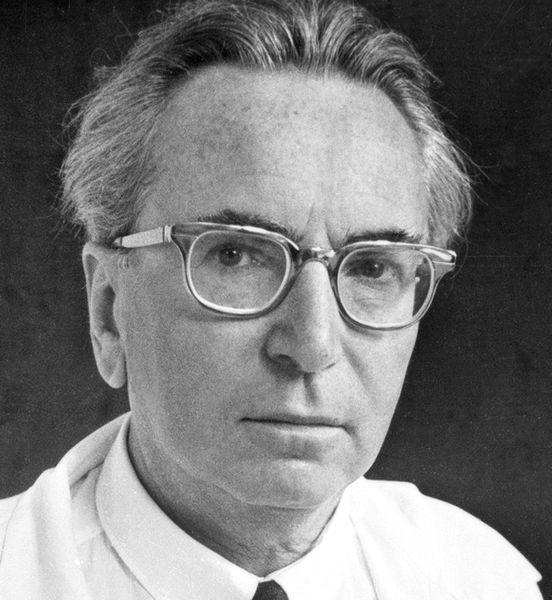
Man’s Search for Meaning by Viktor E. Frankl, originally written in German and translated to other languages, is a part memoir of the author’s experiences in concentration camps part non-fiction on psychology. It was first published in 1946 in its original language and English version was published in 1959. The book is divided into two parts – Experiences in a Concentration Camp and Logotherapy in a Nutshell – the first talks about his experiences in camps and explains the basis of his findings, and second part is completely about logotherapy(“meaning”). Viktor E. Frankl, an Austrian psychiatrist, was born on the 26th of March, 1905 in Vienna, Austria. He was a psychiatrist and psychotherapist and also a philosopher and Holocaust survivor. He developed “Logotherapy” – a psychological approach. His developments and findings are categorised as the third school of Viennese psychotherapy. The works of Sigmund Freud and Alfred Adler belong to first and second school of Viennese psychotherapy. His primary focusses in university, where he was a student of psychiatry and neurology, were the areas of sucide and depression. He received his MD and PhD from the University of Vienna. He based his works on his experiences in concentration camps. He breathed his last on 2nd September, 1997 in Vienna.

This work is based on Frankl’s own experiences and observations of other inmates in four different concentration camps(between 1942 and 1945). He lost his parents, brother and his pregnant wife in concentration camps.The book is written in a lucid manner and explains the concepts clearly. Based on his experiences and observations in the camp, Frankl argues that man by nature is not a pleasure seeking animal and his primary is motivation is to search for meaning in his circumstances. He states that only when man falls into a gulf devoid of meaning he resorts to seeking pleasure in immediate pleasure providing activities and needs.His concept logotherapy focusses on helping an individual find meaning in his circumstances. He quotes his experiences to show that man can find strength even in seemingly hopeless situations. His concept logotherapy focusses on helping an individual find meaning in his circumstances. Finding that meaning can help an individual bear suffering and find hope. 

“Those who have a ‘why’ to live, can bear with almost any ‘how’.”

His work on logotherapy and his existential analysis is mostly based on finding meaning and free will. In this work, he also explains certain techniques to deal with life. He uses the concept ‘paradoxical intention’ – practising contrary and humorous thoughts – to deal with anxieties and other problems. He also introduces the concept of dereflection – diverting the concentration of a person from his symptoms to other things – as a technique of logotherapy. Another of his techniques is about questioning the patient in a way to help him find meaning.  

“But there was no need to be ashamed of tears, for tears bore witness that a man had the greatest of courage, the courage to suffer.”

“Everything can be taken from a man but one thing: the last of the human freedoms—to choose one’s attitude in any given set of circumstances, to choose one’s own way.”

Throughout his book, the author emphasises on the human capability to deal with even the most challenging circumstances. He states that man can find courage and strength no matter what the circumstance. His views, in certain aspects, echoes the teachings of religions.

“Ultimately, man should not ask what the meaning of his life is, but rather must recognize that it is he who is asked. In a word, each man is questioned by life; and he can only answer to life by answering for his own life; to life he can only respond by being responsible.”

Liberalism

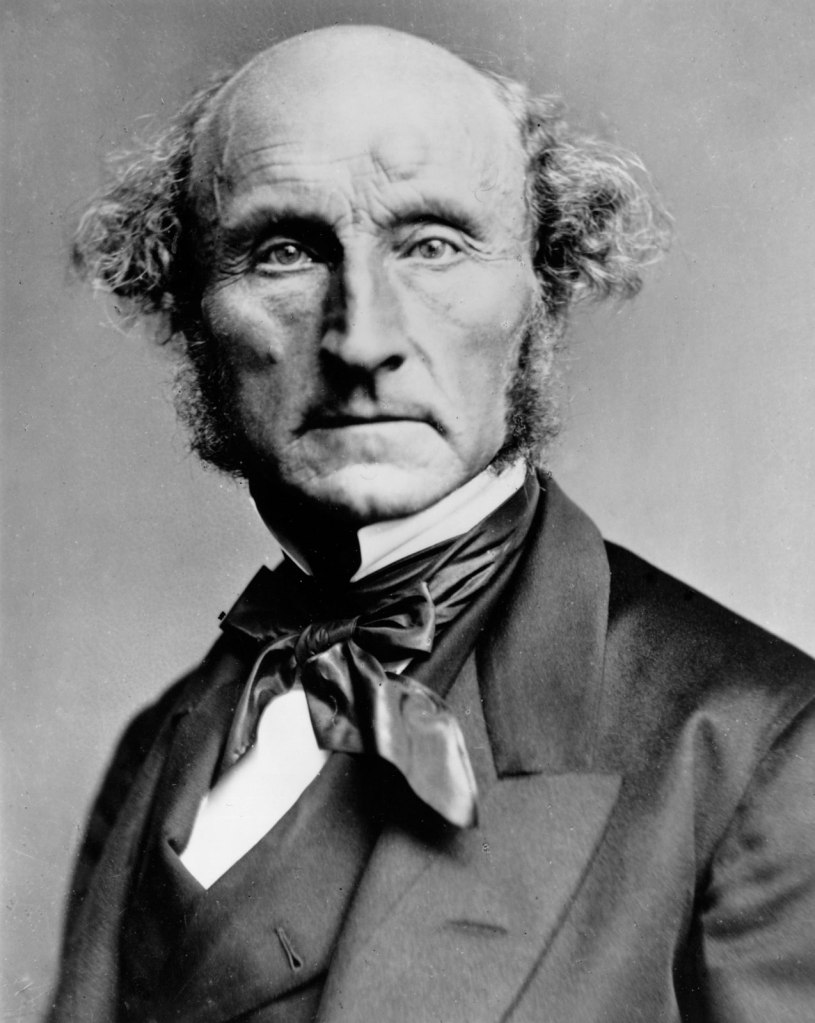
The concept of liberalism is a combination of different ideas of a common nature developed by different thinkers over time. There is no one exact definition of liberalism. It is based on the idea that people have the right to exercise liberty and government has to impose only less restrictions on them. John Stuart M, an English philosopher and political economist, was a proponent of liberalism. His opinion was that the State should exercise minimal control over a citizen. The theory of liberalism was a response to the unjust authority of the State and the Church.

John Stuart Mill

According to proponents of liberalism, State is a necessary evil. It is regarded as evil as power is vested in this institution and can use coercive force. They accept state as a necessary evil regardless of this drawback or evil. State is necessary for the existence of an ordered society. According to David G. Smith, “Liberalism is the belief in, and the commitment to, a set of methods and policies that have, as a common aim, greater freedom for individuals.” According to Sartori, “ Very simply, liberalism is the theory and practice of individual liberty, judicial defence, and the constitutional State”.

There are certain general principles that stand out in different varieties of liberalism. Liberalism is opposed to all artificial pressures and regulations on the liberty of a citizen. This theory believes that traditions and social institutions no longer hold any relevance in the development and progress of an individual. Economically, liberalism favours laissez-faire economics where the market is not restricted and is guided by market factors alone. It advocates for free trade and production without restrictions. It is opposed to restrictions on imports and exports. The proponents believe that the individual must be allowed to use and allocate resources according to their wishes.

Politically, the theory advocated for a complete restriction on the State for imposing restriction on an individual in the initial stages. It believes in the theory of separation of powers to curb arbitrary use of power. It supports for the existence of judicial review to monitor and ensure the executive is acting according to the Constitution. It favours parliamentary democracy and advocates for the Rule of Law(Law is supreme). it is against concentration of power in a few hands and favours decentralisation of power. It strongly believes that the power is with the people and the government must be made accountable through regular elections. It favours equality before law. It strongly supports the freedom of speech and expression. It is for Secularism. The state has to use its authority and power for the welfare of people and protection of their natural rights. 

Liberalism of early days differs a lot from today’s liberalism. Liberalism can be classified into two types – Classical and Modern Liberalism. 

Classical Liberalism

Classical liberalism is political ideology that advocates civil liberties. It is in the form it was originally conceived. The major proponents of classical liberalism are Adam Smith, Thomas Malthus, and David Ricardo who advocated for economic natural liberty and Jeremy Bentham and John Stuart Mill who advocated for political natural liberty. Classical liberalism was seen as fundamentally negative in nature as it advocated individual liberty without any restrictions. According to Prof. Hallowell, the basis of classical liberalism is in the rationality and good faith of man – that man, left to himself without any restrictions or shackles, is inherently good, and demonstrates positive behaviour. As a result, it advocated for minimal interference on the part of the Station in the matters of individual. It supports for inalienable natural rights for man like the right to life, freedom to own property, etc. It believes in the Rule of Law and not men or rulers. It advocates for political, economic, social, cultural, moral, and spiritual freedoms. It also emphasizes equality in matters of faith and personality.

According to Leonard Hobhouse – civil liberty, political liberty, social liberty, personal liberty(personal choices like food, clothin, religion), fiscal liberty(people representation in framing fiscal policies and no taxation), domestic liberty(rights to women and children), administrative(free to administer one’s own territory), geographic(all regions should be treated equally) and racial liberty and international(freedom of state with no external control from other states) liberty are the essential components of classical liberalism.

Modern Liberalism

Modern liberalism is the form as we know it today. Liberalism went through several changes during the 19th century. Modern liberalism departs from the classical form and its ideas. The proponents of modern liberalism understood the importance of the state and developed a concept called welfare state. Welfare state is the concept that the State exists not just to perform police functions, but its ultimate goal is to protect people and ensure development. 

Modern liberalism believes that the State is not a necessary evil and regards it as a moral institution. The State should promote the intellectual and moral faculties of the citizens and work to ensure their welfare. For this purpose, it encourages increased participation of the State for welfare of people. It advocates for the formation of welfare state. It advocates the need for collective responsibility of the State and its citizens in ensuring healthcare, education, welfare of children and women, etc. According to this theory, rights are not sacrosanct or natural. They exist by virtue of their sanction by the State. It believes in humanism and secularism as the principal goals to promote harmony and peace. It supports for regulation and control of the economic life of the society. It encourages for some degree of public control in industrial matters. It is for protecting a state from external threat and ensuring autonomy at all level of administration. It advocates for a constitutional, democratic, and parliamentary system of government.

Constitution and Constitutionalism

Constitution

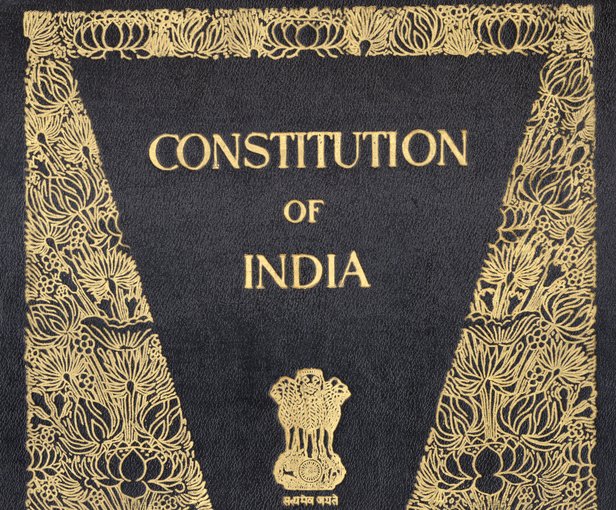
Constitution is a document with legal force that contains a set of fundamental principles and laws of a state. The concept of constitution is connected with the philosophy of constitutionalism. The government of a state has to conduct itself according to this document. Legally, it is the supreme law of the land and above everyone including the government. Constitutions have been classified into certain types by different scholars. They are:

Evolved/Cumulative Constitution: Evolved or Cumulative constitution is not a constitution created through a national convention. It is a product of evolution of many years. It has not come into force suddenly. The elements of this type of constitution have been cumulatively added over a period of time. For example, the Constitution of the UK is a cumulative constitution.  

Enacted/Conventional Constitution: Enacted or Convention Constitution is a document which has been  developed and framed by a Constituent Assembly.  It has come into force at a specific date.

For example: The US Constitution, and the Indian Constitution. 

Legal Constitution: Legal Constitution is nothing but the bare text of the written Constitution. 

Real: This type of Constitution also includes, in addition to Legal Constitution, conventions and judicial decisions relating to it form the real Constitution. 

Other types of Constitution include written and unwritten and rigid and flexible. According to the opinion of Dr. Garner, a written and enacted Constitution, and an unwritten and evolved Constitution, is essentially the same. Rigid Constitution refers to a type in which the provisions are difficult to amend and can be done only through a complicated procedure. Example: the US constitution. Flexible Constitution refers to a Constitution whose provisions can be easily amended. Example: the Swiss Constitution. 

There are certain features of an ideal Constitution. A good constitution has to be clear and should not be ambiguous. All the provisions contained in it have to unambiguous. Secondly, there has to be a balance between precision and comprehensiveness. It should not be verbose and must be precise in its expression. While achieving preciseness, it must not sacrifice comprehensiveness. It has to comprehensive to account for all possibilities. An ideal Constitution should aim for a balance between precision and comprehensiveness. It should also aim for a balance between rigidity and flexibility. Though rigidity makes a Constitution stable, there is a disadvantage of becoming unresponsive to changing circumstances. Flexibility allows to introduce changes to meet the changing requirements. Therefore, a right balance between rigidity and flexibility has to be achieved.

Constitutionalism

Constitutionalism is the philosophy that there must exist a Constitution that guides the government of a state how to and how not to act. According to this philosophy, every citizen of a state and the government itself must obey the Constitution. An ideal Constitution has to reflect the ideals and desires of the state’s citizens. The goal of constitutionalism is to prevent arbitrary usage of power and abuse of power. According to Don E. Fehrenbacher, constitutionalism is “a complex of ideas, attitudes, and patterns of behaviour elaborating the principle that the authority of government derives from, and is limited by, a body of fundamental law.” According to constitutional scholar David Fellman, the touchstone of constitutionalism is the concept of limited government under a higher law. 

The roots of constitutionalism can be traced back to Athens, Greece. Athens was a well-known city state in its time. The state was run on the basis of Constitution built on the basis of direct democracy.

Between 624 – 404 BCE, there existed 11 Constitutions which governed Athens. Aristotle has studied and described a large number of Constitutions in his seminal work ‘Politics’. In this work, he discusses about constitutional government. Plato also regarded a constitutional government the best form of government. According to Plato, the philosopher-king is the best king, but even such a king should be subject to restrictions. 

Marxism

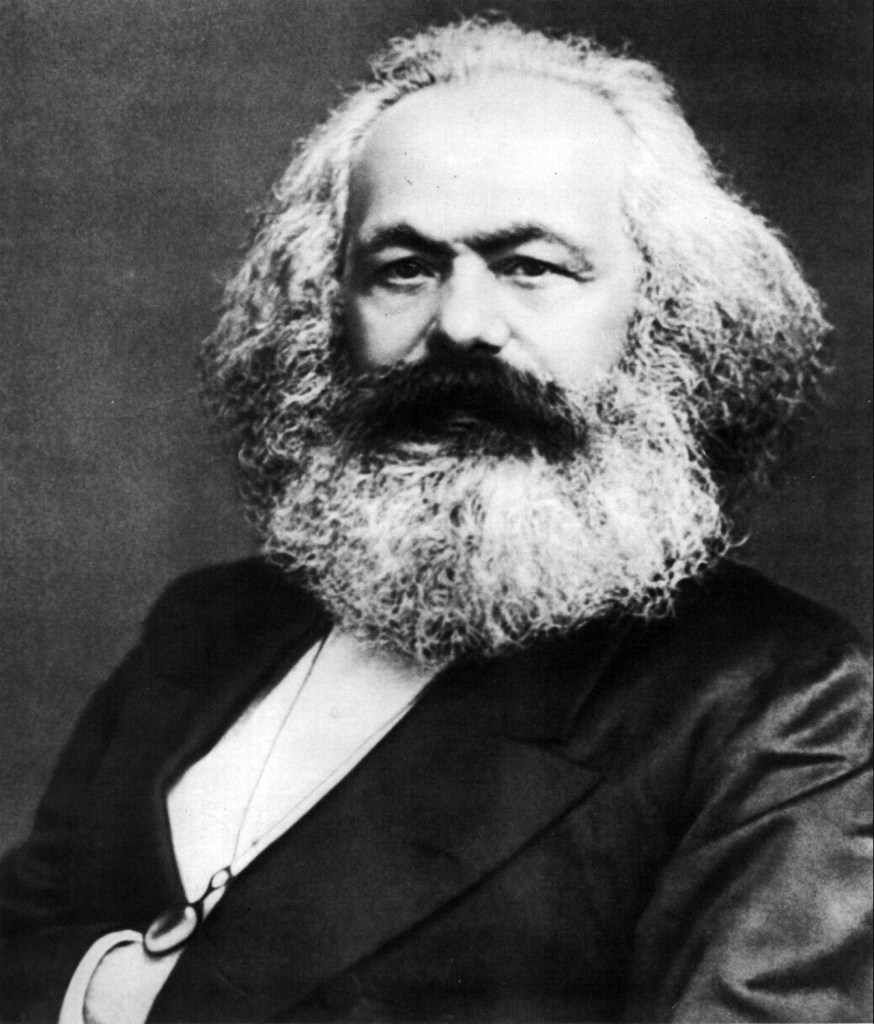
Marxism, also referred to as communism, is a political ideology,philosophy and a body of doctrine which was developed by Karl Marx and Freidrich Engels. Major contributor to the philosophy of Marxism, Karl Marx, was born in Trier, Rhine province, Prussia in 1818. He was born to a Jewish family, which later converted to Christianity. Marx was awarded a Doctorate of Philosophy for his essay on materialism of the Epicurus, a famous Greek Philosopher. He joined as an Assistant Editor at the Rhenish Times and was promoted to the position of Chief Editor. He left this job due to differences between him and the owner. In 1843, he moved to France. He became the editor of the Franco-German Yearbook and continued until it went out of business. Here, he became acquainted to French and German extremists like Proudhon, Mazzini, and Engels. The Communist Manifesto was jointly released by Karl Marx and Friedrich Engels in 1848. Marx published the first volume of Das Capital in 1867 and the remaining volumes were published posthumously by his friend Friedrich Engels. He spent his final years in exile and poverty in London

Marxism uses historical materialism to explain class relations and social conflict. The philosophy of Marxism was greatly influenced by Friedrich Engels who was an idealist. This led to the the concept of dialectical materialism. According to dialectical materialism, the prominent ideas that originate in the human mind at a particular point in time are called the thesis. Certain ideas, then, emerge as a response to these prominent ideas which are called as the anti-thesis. Ultimately, there is a conflict between thesis and anti-thesis, which leads to the formation of the synthesis. For example, the synthesis of the thesis of importance of capital and anti-thesis of importance of labour is class war. 

According to materialistic interpretation of History, throughout history a man pursues his material needs, which in turn creates history, and only after fulfilling his material needs he shifts his focus to higher goals. Using this interpretation, Marx classifies history into four stages based on modes of production. The first one is the Primitive Communist Stage. In this stage, the factors of production were meagre and were shared among the people of the community. The next stage is the ancient stage. The class structures had developed during this period. Slaves were owned by certain masters and these people controlled the factors of production. Being the master, their needs were fulfilled and possessed a surplus and denied benefits to workers. In a similar manner, the feudal lords exploited the landless serfs in the feudal stage and capitalist exploit the workers in the industrial stage.

Another important principle of Marxism is the theory of surplus value. According to this theory, the value of a commodity is equated to the wages paid to the labourer. Any value above the commodity value is regarded as surplus value, which is both needless and exploitative. According to this philosophy, the surplus value results in the exploitation of the labourer as the producer extracts illegitimate profits. The next principle is the theory of class war. According to Marx, two classes of people exist in all stages of history – the bourgeoise and the proletariat. The bourgeoise refers to people who are in control of the factors of production and pay for the labour of other people. The proletariat refers to people who are workers and do not own any or control any factors of production. History is nothing but a clash between these two classes where the former has always exploited the latter – master-slave, landlord-serf, capitalist-worker. The interests of these two classes are, au fond, in conflict with each other. This results in a continuous conflict called class war.

By exploiting the labour of the proletariat, the rich manage to build vast amounts of wealth. The concentration of wealth in their hands increases and the poor become poorer. This enlarges the gulf between the rich and the poor. Only a few people end up controlling most of the resources. This is called concentration of capital. The continuous exploitation of the proletariat by the bourgeoise forces them to rebel against the controllers of production. Therefore, revolution by the proletariat against the bourgeoise becomes inevitable. 

According to Marx, after the revolution by the proletariat, the capitalists will be removed from the position of power and the dictatorship of the proletariat will be established. The proletariats after the revolution will wipe out the capitalists. This is the dictatorship of the proletariat. This will lead to the formation of a classless society where there is no conflict between people. In a classless society, there is no more any need for the state to maintain order and harmony amongst people. This is the end goal of communism. According to Karl Marx, religion is the opium of the people. It makes people sway to sentiments and is used as a tool of exploitation by the capitalists. However, Karl Marx did not advocate the abolition of religion. Socialism, which is considered peaceful and evolutionary, was a prelude to Marxism, which is violent and revolutionary. Marxism took hold of Russia during the World War 11. After the fall of the Soviet Union, the popularity and influence of Marxism has waned.

The Legal Practitioner’s (Women) Act, 1923.

The Legal Practitioner’s (Women) Act was passed in the year 1923. it was only in 1846 that all duly qualified irrespective of nationality or religion were able to enter into the legal profession. Women were still excluded from the profession at this stage, to be thereafter admitted through the Legal Practitioner’s (Women) Act, III of 1923. The act regarding practising law profession still excluded women from entering the profession as it did not make any reference to women in the act. The Legal Practitioner’s (Women) Act formally allowed women entry into the profession. It abolished the bar on women from practising law. The Indian women were granted the right to choose legal profession and practice as Advocates in the Courts of Law. This fight was pioneered by Cornelia Sorabji. Prior to this, women due to their illiteracy and ignorance were easily duped by the legal people or their touts. Their reserve nature was inculcated and strengthened by customs and culture. They were not able to exercise their right over their own properties. Though initially only a handful of women joined the profession as Advocates this reformative measure ignited the spirit of pleading for the cause of another before the Courts. That the laws could be utilised for obtaining social justice and repressive laws could be overthrown for further development, and that women could do it for themselves and others as well was an eye-opener to the Indian society of pre-independence times. 

The challenge before women to enter into legal profession was significant and made a case for their entry to heal Indian women. They wanted to represent the Indian women. In many cases, judges opined that women were not ‘persons’ for the purpose of entering the legal profession. Regina Guha’s case was the first woman’s case. After obtaining a Bachelor of Law degree, Guha applied for admission to be enrolled as pleader in the Alipore district court. The application was examined by the court. Regina contended that since under the General Clauses Act, “words importing the masculine gender shall be taken to include female”, the rules under the Legal Practitioners Act, although referring in terms to men, would include women.In response, barrister Eardley Norton, a civil rights advocate, the bench responded that at the time the Legal Practitioners Act was passed, “there had never been a case of a lady being allowed to practice in the Indian courts”. The Legal Practitioners Act made no reference to women. In another case, Hazra applied to Calcutta University, seeking permission to appear as a private candidate in the preliminary examination of law.  Calcutta University transferred her application to Patna University. Her application was refused on the ground that she had not attended regular law lectures.Calcutta University finally granted her permission to appear as a private candidate in the preliminary law examination. In 1921, after obtaining a Bachelor of Law degree from Calcutta University, she applied to be enrolled as a pleader in the Patna district court.  The Patna high court judges delivered upholding the position in Regina Guha that in spite of the provisions of the General Clauses Act of 1868 and 1897, a woman, although fully qualified, was not entitled to a certificate under the Legal Practitioners’ Act to act as a pleader because of her sex. She was not a ‘person’.

By this time, the Sex Disqualification (Removal) Act 1919 was passed in England that allowed women to enter the legal profession.  At the same time, the Allahabad high court allowed Cornelia Sorabji to be enrolled as a vakil. With the Patna high court judgment, a concerted campaign to amend the Legal Practitioners’ Act began. In 1922, Narayan Malhar Joshi moved a resolution proposing amendment of the Legislative Assembly Electoral Rules to remove sex disqualification in the matter of registration on the electoral roll, Gour introduced a resolution to remove sex-based disqualification in the legal profession as an amendment to Joshi’s resolution.The Legal Practitioners (Women) Act was finally passed in 1923, removing the disqualification affirming that “no woman shall, by reason only of her sex, be disqualified from being admitted or enrolled as a legal practitioner or from practising as such”. 

Brian Lara

Brian Lara(Full Name: Brian Charles Lara)  is a former Trinidadian cricker and is regarded as one of the greatest to have ever graced the game. He was a prolific run scorer in both one day internationals and test cricket. He was born on 2nd May, 1969 in Cantaro, Trinidad. He batted left hand and is known in the cricket world for his knock of 400 not out versus England in 2004 – a record for most runs scored by a batsman in one innings. He also scored a score of 501 not out, which is also a record for the highest first class individual score in an innings, for Warwickshire against Durham at Edgbaston in 1994.

Brian Lara was a prodigy who picked up a cricket bat at an age of three. He was one of eleven children(tenth child) in his family.His parents were Bunty and Pearl Lara. His talent was first identified by his sister, Agnes Cyrus, who wanted him to attend cricket training at the Harvard cricket clinic. He was attracted by the game of Colin Cowdrey after watching bat in a live match at the age of five. As he grew up, he idolised Roy Fredericks, who was a left handed batsman. Roy Fredricks was an opening batsman who represented West Indies cricket team. As a kid playing street cricket, he was nicknamed Roy Fredricks by his friends in the locality. Being unusually talented, he was also a member of the national football team for the below 14 age group. He was touted be the next great cricketer since his early days. During his career, he was ofted compared with another great batsman Sachin Tendulkar. He inspired a whole lot of cricketers of later generation.  

He did not take much time to impress others at Harvard cricket clinic. Spotting his talent, his coach soon made him play against cricket balls. West Indain cricketer Carlisle Best was impressed with the boy after seeing him bat at the club and presented him a bat as a gift. He loved both cricket and football as a kid. When he confronted with a situation to choose one, it was his father who played a role in Lara’s decision. 

He made his debut for the national cricket team of West Indies when he was just 21 in the year 1990. It took him a bit longer to create an impression at the top level, it was not until 1994. In 1994, he broke the records of highest individual score in test cricket after score 375 runs versus England and the record of highest individual score in first class cricket after scoring 501 not out in county cricket. He later bettered his personal best score by scoring 400 not out against the same opposition and broke the record that belonged Mathew Hayden ( Mathew Hayden 380). 

He raised curtains to his international career after 2007 ICC Cricket World Cup. He finished his career as one of the most prolific run scorers in the history of cricket. He scored 11, 953 and 10,405 in test cricket and one day cricket respectively(including 53 centuries) – one of the few to do so. Called as ‘Prince of Trinidad’, he was inducted to the ICC Hall of Fame in 2012.

Reference:

Cricbuzz

The Best Days of My Life by Scharda Dubey

Britannica.com/biography/ Brian Lara

Kapil Dev

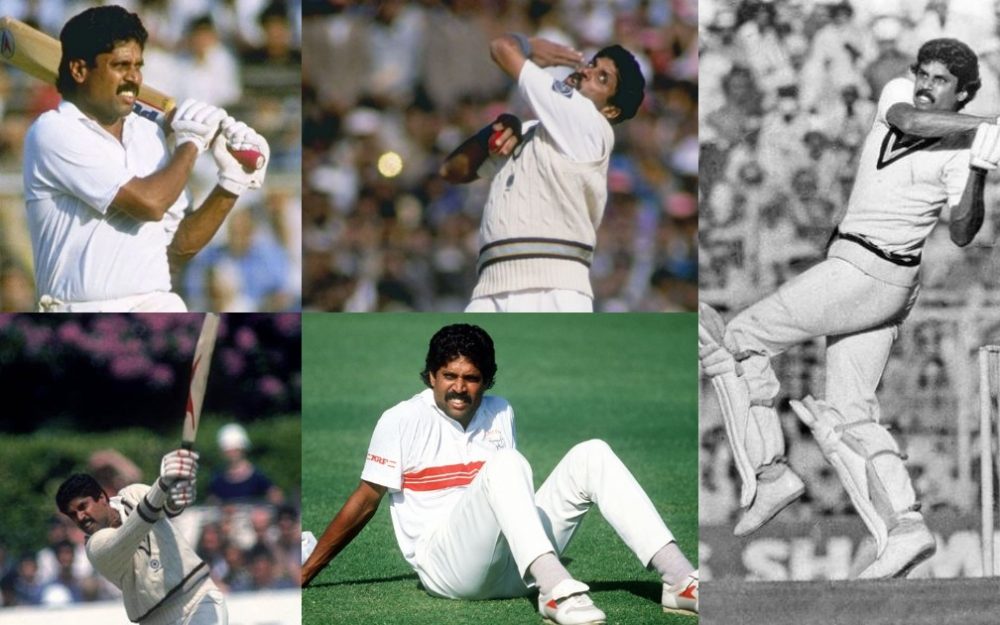
Kapil Dev(Full Name:Kapil Dev Ramlal Nikhanj), regarded as the greatest Indian all-rounder and one of the best all-rounders in the history of cricket, was born on 6th of January, 1959 in Chandigarh, India. He represented India and Haryana at national and state level respectively. He also played for Northamptonshire and Worcestershire during his career. He is known for being the only cricketer to have scored more than 5000 runs and picked over four hundred wickets. His greatest achievement was leading an underdog Indian to glory in the 1983 ICC Cricket World Cup.  

Kapil Dev entered the scene of professional cricket with his debut for his state team Haryana in first-class cricket. His debut match was against Punjab in the Ranji Trophy in 1975-76. He impressed by picking 6 wickets for 39 runs in this match. He started bowling as a spinner in this match and later switched to fast medium bowling. He batted right-arm and bowled right-arm fast medium pace. He was a middle-order batsman with tremendous power and was known for power hitting. His ability to bowl and bat fast racked to the national team. He made his debut for the Indian national cricket team during the 1978-79 series against Pakistan. In his debut appearance, he picked seven wickets in the series. He was nicknamed as ‘Haryana Hurricane’.

Kapil Dev was the sixth child in his family. His parents were Ram Lal Nikhanj and Raj Kumari Lajwanti, who had moved from Rawalpindi to Chandigarh during the Partition. His father ran a construction and timber business. Right from a young age he was interested in games than academics. He gained attention at a higher level when he was just thirteen years old. He asked to fill up a spot in one of Chandigarh sector teams. His performances led to repeated call ups. This attracted selectors from the state level and was picked in the state team. At his time, he was the only true fast bowler India possessed. Throughout his career, he played with aggression and matchless passion. He was filled with energy and self reliant even when he was young. Kapil Dev regards his father as his role model and idolised G. R. Vishwanath when growing up. G. R. Vishwanath was a match winner in those days and is regarded as one of the greatest Indian batsmen. The Indian team never lost a match whenever Vishwanath scored a century. 

There were many highlights during his career: leading the Indian to victory in 1983 World Cup, his match saving knock of 175 not out including 22 boundaries against Zimbabwe, becoming the youngest player to score two thousand runs and pick two hundred wickets. At the end of his international test career, he boasted a record 434 wickets including 23 five-fors (which was later broken by Courtney Walsh) and 5000 runs with the bat. In one day internationals, he managed to score 3783 runs and pick 253 wickets which consisted of one hundred and one five wicket haul. His first class record is equally impressive with the numbers of 10,800 runs including sixteen centuries and 815 wickets. He was declared as the Indian cricketer of the century by Wisden magazine in 2002. Since his retirement, he has been involved in cricket administration and broadcasting roles.

References:

Cricbuzz

On Translation

Translation is defined as the rendering of something into another language from another language.

The purpose of translation, as opposed to the general conception, is not to make it accessible to a new reader base or cater it to the people of a different region. It must not limit itself to a mere identification of the substitute words. The purpose is not to translate the literal meaning to the targeted language but to convey the intention. The purpose of translation is to express the commonalities that connects the original language and the targeted language. It’s purpose is to express the relationship between languages. Translation has the potential to convey a ‘pure language’ and to harmonize the languages. The languages are interrelated in what they want to express and the translation has to identify it. Language, like all things, is affected by time and translation helps it evolve from time to time. The perfect translation is like a tangent, it has to touch the original text and move away from it infinitely. Translation has to broaden the targeted language by coming in contact with the original language. Translation is an artistic revival of the mode of intention that the original text intends to convey.

Translation is widely misinterpreted as a straightforward process of substituting words in the original text with equivalent words in the targeted language. It is often seen as an imitative process lacking creativity and a process incapable of conveying the intention of the original text. However, it is to be understood that literal translation of a text (especially literary text) renders the translation useless. The role of a translator is not just substituting words but involves creativity and creative decision making. A good translator has to identify the correct intention of the original text and has to rewrite accurately in the targeted language. A proper process of translation has to find the effect the mode of intention has on the targeted language. Thus, it becomes an echo of the original. Literal translation is not effective as literal words might convey a different meaning. A good translator reveals what is hidden in the languages in his language or translation. The process of translation is derivative, ideational and ultimate and the process is unique. The translator must allow the targeted language to be affected by the original language and broaden his own language. Hence, it can be concluded that translation is a creative activity and not a linguistic imitation.

Equivalence in translation means that the targeted text has to recreate the same effect of the source text. It has to try to achieve optimal equivalence. The problem of equivalence arises because of differences between the original language and the targeted language(especially cultural differences). If a translation ignores equivalence, it can lead to misinterpretation and might not convey the intention of the original text. Equivalence should been seen as an important criteria to evaluate a translation. Ignoring equivalence might result in spoiling the essence of the original text and creating the same effect is sometimes as important as conveying the meaning. Since a language represents its people, history, culture etc… it is important to achieve equivalence. Considering equivalence as a parameter will result in retaining the originality of the source language and helps in better communication. It helps in understanding the contextual meaning of a text. So, equivalence is an important factor in translation.