A Corner of a Foreign Field by Ramachandra Guha – Book Review

Ramachandra Guha is an Indian Historian and a columnist. His notable works include India After Gandhi and Gandhi: The Years That Changed the World. He has been awarded with several accolades for his achievements in the field of history. He has experiences of teaching at Yale University, the Indian Institute of Science and the University of California at Berkeley. He was also the Indo – American Community chair professor in 1997 and 1998. 

A Corner of a Foreign Field is a fascinating fusion of Indian history and Indian cricket.The book is divided into four chapters titled Race, Caste, Religion and Nation respectively. The first three chapter greatly benefit from thorough research and the skill of a great historian. The last chapter contains more of the authors feeling and opinion. Nevertheless, the book does not suffer from the personal feeling of the author. Throughout the book, the reader can experience the author’s love for the game. 

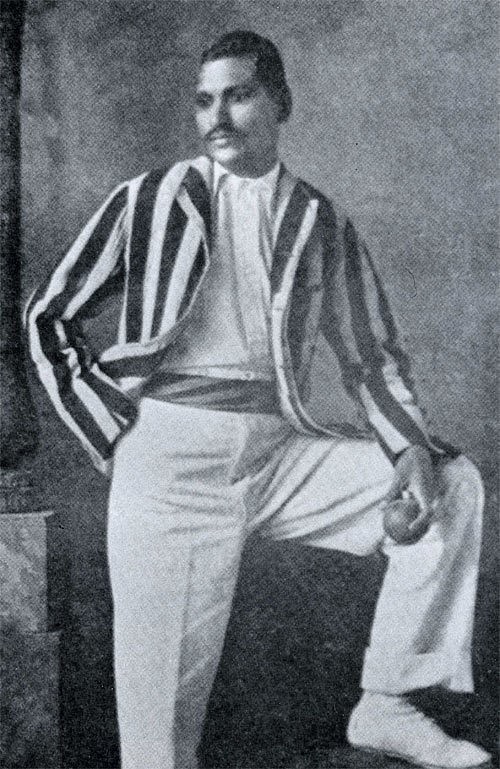
Palwankar Baloo

A Corner of a Foreign Field: The Indian History of a British Sport is a book about, one feels, the life of cricket in India so far. It is not just a history of the sport, but also a as much objective document of the sport as is possible. Cricket in India, as it is often said, is more than a sport. It evokes strong feelings from the audience and it won’t be an exaggeration to say that the team carries the burden of expectations of a billion people. Every on and off the field happening related to cricket is closely watched and excites opinions from all. This book views the unique sport through the lenses of race, religion, caste and nation. It speaks about the beginnings of cricket in India, how people reacted to this sport, its growth, impact and reception, BCCI, politics and much more. The book also gives insights into lives of people connected to the sport in one way or the other. The tales of cricketers like C. K Nayudu, Vijay Merchant, Palwankar Baloo and his brothers, Vijay Hazare makes it an interesting experience. It is astonishing how the game reflects the society at that point of time and the impacts each have had on one another throughout their history. It portrays the socio-cultural, political, economical aspects of the society by placing cricket at its centre. The book reflects the feelings of both an enthusiastic admirer of the sport and a historian keen on the socio-political happenings. The tales about cricketers are also good character sketches of the person. Not surprising, the story of Palwankar Baloo and his family is at the heart of this book as this originally began as a book about the life of Baloo. The book draws information heavily from newspapers of the day and the author uses this information beautifully to breathe life into the stories. The responses of various presses to the sport make for an interesting read. The knowledge of the author is seamless woven into the narrative. The writing of this book makes it an engaging experience even for a person not acquainted with the sport. Even for a fan of cricket, the book has much to offer and provide a great experience. It provides a whole lot new information and perspective even to a devoted follower of the sport.

Ecology and Equity by Madhav Gadgil and Ramachandra Guha – Book Review

Madhav Gadgil is an Indian ecologist and the founder of the Centre for Ecological Sciences, Indian Institute of Science. He is know for heading the Western Ghats Ecology Experts Panel (WGEEP) of 2010, also known as Gadgil Commission. He was awarded with the Padma Shri in 1981 and the Padma Bhushan in 2006. Ramachandra Guha is an Indian Historian and a columnist. His notable works include India After Gandhi and Gandhi: The Years That Changed the World. He has been awarded with several accolades for his achievements in the field of history. 

Ecology and Equity is principally a book about the history of resource use in India after post-independent India. The second part of the book certain schematic solutions based on the findings of the authors. It is a book that caters to both people who are alien to environmental issues and people already informed on this subject. The writing is lucid and precise which makes the reader curious on this subject. 

In this book, too, the authors present a original analytic framework to classify the huge population of India. The theoretical framework is based on the idea of a ‘resource catchment’ – the place from which resources are collected for use by people. Using the example of the current Indian society, it divides population into three categories: omnivores, ecological refugees, and ecosystem people. The first category, omnivores(includes businessmen and entrepreneurs), uses most of the resources. They are the section that really benefits from economical development. Displaced peasants and tribal groups comprise ecological refugees. Development plans devoid of   ecological consideration have resulted in their displacement. They are victims of overexploitation of resources by omnivores. The last category, the ecosystem people, consists the most of the Indian population. This category relies on resources within their space for fulfilling their requirements. They are dependent on the natural resource base in their living area and have been dependent on these resources traditionally. They grow their own crops to meet their food requirements. Though the classification of more than a billion people into three categories seems too simple and insufficient, it serves the purpose of the authors. The book offers a new development agenda after considering the ecological factors, that could benefit the majority. The authors propose for a development mission on the basis of local communities under a decentralized political system.

The authors describe the disruptive use of natural resources in the current era and shortcomings of the ideologies followed in the current society. Theories that existed before 1970s tell very little of man’s interaction with nature. Growing ecological threats have necessitated the requirement for new framework. The authors have developed this framework for better understanding of ecological problems and history of resource use, and to make the readers conscious of environmental problems from its roots. The book stresses the need for development strategies to be ecologically prudent. It shows the relationship between social conflicts and ecological factors. They hope to build a country based on decentralization of power and increasing the participation of communities in the matters of resources. After reading this book, one begins to look at environmental problems from a different perspective. 

Night by Elie Wiesel – Book Review

Elie Wiesel’s Night is a personal account of the Holocaust. It narrates the experiences of a  schoolboy in the camps of Auschwitz and Buchenwald. It is a poignant account of the cruelties imposed on man by man.

Elie Wiesel was a schoolboy who was born in Sighet and spent his life with his family. In 1944, he was taken to Auschwitz and then to Buchenwald. Immediately separated from his mother and sister, he is left with his father to work in the camp. The rest of the book recalls his experiences in the camp until he was released a year later. The book voices out the grief and despair of the inmates of the camp. The author successfully manages to express himself and provide a disturbing account of the Holocaust.

Eliezer Wiesel was a Holocaust Survivor who later became a writer, professor and an activist. He was born on September 30 in the year of 1928. He authored several book that bear witness to the experiences of concentration camps. He was honoured with the Nobel Prize for Peace in the year 1986. He dedicated his whole life for Jewish causes and human rights causes. He died in the year 2016. 

“Then came the march past the victims. The two men were no longer alive. Their tongues were hanging out, swollen and bluish. But the third rope was still moving: the child, too light, was still breathing…
And so he remained for more than half an hour, lingering between life and death, writhing before our eyes.
And we were forced to look at him at close range. He was still alive when I passed him. His tongue was still red, his eyes not yet extinguished.

Behind me, I heard the same man asking:
“For God’s sake, where is God?”
And from within me, I heard a voice answer:
“Where He is? This is where–hanging here from this gallows…”

That night, the soup tasted of corpses.”

Forced out of silence by experiences such as these, the author manages to create an enduring account of what an inmate went through in the camp. Though the book is short and the writing sparse, it makes the reader relive the suffering experienced by the people in the camp. It makes the reader empathize with the author and feel his disgust at humanity after reading the book. 


Never shall I forget that smoke.
Never shall I forget the small faces of the children whose bodies I saw transformed into smoke under a silent sky.
Never shall I forget those flames that consumed my faith forever.
Never shall I forget the nocturnal silence that deprived me for all eternity of the desire to live.
Never shall I forget those moments that murdered my God and my soul and turned dreams to ashes.
Never shall I forget those things, even were I condemned to live as long as God Himself.
Never.

The pain that is contained in the words alone is sufficient to make one ponder about the absurdity and meaninglessness of inflicting pain upon fellow humans in the name of race, caste, or gender. 

“If only I could get rid of this dead weight … Immediately I felt ashamed of myself, ashamed forever.” 

 “Here there are no fathers, no brothers, no friends”, a Kapo tells him. “Everyone lives and dies for himself alone.”

The book captures, with precision, the emotions of the human mind in the face of extreme suffering. Events such as doctors pulling out gold crown tooth, people who enjoyed watching people fight for a loaf of bread, a father abandoned by his son make one question about Faith and God just like the author. 

“One day when I was able to get up, I decided to look at myself in the mirror on the opposite wall. I had not seen myself since the ghetto. From the depths of the mirror, a corpse was contemplating me. The look in his eyes as he gazed at me has never left me.”

After reading the last lines of this book, the reader’s mind is sure to be purged of trivialities and filled with a deep sense of empathy.

This Fissured Land by Madhav Gadgil and Ramachandra Guha – Book Review

This Fissured Land is a book that provides an ecological interpretation of Indian history and a fresh theory of resource use. It is a book about the interaction between human and nature. Written by eminent scholars like Madhav Gadgil, an Indian Ecologist, and Ramachandra Guha, an Indian Historian, the book offers fresh insights and a different perspective on the history of India and environmental issues. The book is a compilation of the lifetime works of Madhav Gadgil and Ramachandra Guha. 

Madhav Gadgil is an Indian ecologist and the founder of the Centre for Ecological Sciences, Indian Institute of Science. He is know for heading the Western Ghats Ecology Experts Panel (WGEEP) of 2010, also known as Gadgil Commission. He was awarded with the Padma Shri in 1981 and the Padma Bhushan in 2006. Ramachandra Guha is an Indian Historian and a columnist. His notable works include India After Gandhi and Gandhi: The Years That Changed the World. He has been awarded with several accolades for his achievements in the field of history. 

This book This Fissured Land looks at Indian history through an ecological lens and provides a proper account of environmental history. It studies the interaction between humans and nature and natural resources and the consequences of these interactions. It introduces us to an environmental dimension of history. 

The book studies the conditions under which humans excercised prudence or profligacy in their use of nature. It classifies human habits under the categories of prudence and profligacy. The book also offers a new sociological framework for the analysis of resource use. It presents the theory of ‘modes of resource use’. 

The theory of ‘modes of resource use’ classifies human societies based on their interaction with nature and natural resources. Understanding the shortcomings of Marx’s mode of production when trying to classify societies based on resource use and ecological context, the authors introduce the concept of modes of resource use. Their  major criticisms of Marx’s mode of production are that it ignores natural contexts within which field and factory exist, places less importance on political structures and struggles, its lack of applicability outside Europe, and its little value when interpreting religious, ideological and cultural values of various societies and differences in them. 

This concept of ‘modes of resource use’ includes natural resources in its domain of production. This concept is developed so that finding the characteristics of different modes, and estimates the environmental impact of different modes, and estimates the effects of these modes on the ecosystem and availability of natural resources become easier. When it comes to relation of productions, this concept inquires the types of property, control and management and forms of allocation and distribution. All these factors influence and guide the human societies and the periods of history in utilisation of natural resources. Regarding productive forces, it investigates the different technologies of resource exploitation, conversion and transportation that are typical of these human societies. This concept does not consider the socialist and capitalist societies as there are more similarities between them than differences in the ecological context. According to modes of resource use, human societies are classified into four historical modes. These are gathering(including shifting cultivation), nomadic pastoralism, settled cultivation or agriculture, and industrial mode of society. Each historical mode of society has a set of unique characteristics with respect to the aspects of technology, economy, social organization and ideology. 

After introducing this concept of ‘modes of resource use’, the next section of the book focusses on the ecological history of India. It studies historical events from an environmental perspectives and offers its opinion regard the practices followed in the past by Indians. The theory of ‘modes of resource use’ is applied to Indian history prior to British rule. It explains the origins and the practice of caste system and religions from an ecological context. The next part part of the book analyses the impact after the advent of the British. It focusses on the use and abuse of forests under colonial rule. It is a history of Indian forest using the perspectives of the authors. It points the flaws in our current mode of resource use and provides the basis for creating a sustainable mode of resource use. 

Criminal Conspiracy

According to criminal law, an act of criminal conspiracy is said to to be committed when two or more people come together to form an agreement between them to carry out a criminal activity in foreseeable future. In some countries across the world, the act of criminal conspiracy is completed only when an explicit action is carried out. Only the commission of an explicit or overt action constitutes a crime, according to law prevalent in those countries. However, law does not place a cap on number of participants. Some countries do not even require any commission of overt act. It is counted as an attempt. For the sake of unanimity, the act is a continuing process and complete involvement or partial involvement at any stage makes the participants jointly liable. It can be charged even in the cases of acquittal. Repentance does not affect their liability. It may help in reduction of the sentence. Repentance before the commission of the act may help the participants. 

Criminal Conspiracy

The act of criminal conspiracy was seen as a civil offence in its nascent stages. The act of criminal conspiracy came under two sections of the law. These sections are – Abetment in any offence and conspiracy with criminal intent. Slowly, it came to be recognised as a criminal offence. The Criminal Law Amendment Act (8 of 1913) added Chapter V – A to the Indian Penal Code. 

Conspiracy Definition: The section 120 – A of Chapter V – A (Indian Penal Code, 1860) defines criminal conspiracy. When two or more persons decide to execute or cause an act, which is illegal, or a legal act by illegal means, such act is called as criminal conspiracy. Perpetrators of this act can be convicted for criminal conspiracy. They are culpable of criminal conspiracy. This is given in Section 120 – A. In other words, concurrence of minds for committing an illegal act, or legal act by illegal means is called as criminal conspiracy. Mere agreement is not sufficient to accuse one guilty of criminal conspiracy. Agreement of minds for commission of an illegal act, or legal act by illegal means is called criminal conspiracy.  Meeting of minds is an essential and important aspect of conspiracy. All the concerned persons part of the act should be aware of the nature and consequence of the act. They should understand the objective and motive behind the act and are ready to achieve the act. This constitutes as an important part of criminal conspiracy. The act is deemed as an offence of criminal conspiracy only when any act is committed to execute the agreement. As discussed above, actus reus and mens rea are two essential of a crime. According to the Indian Penal Code, ill motive and conduct are necessary constituents of a crime. There is an exception to this rule. Criminal conspiracy is punishable at the phase of mens rea. The act of criminal conspiracy in planned in secret and executed surreptitiously. This makes proving the act with evidence difficult.The explanation given under section 120 – A says clearly that the nature of the act committed in furtherance of the agreement is immaterial. Even if such act is accidental it is regarded as an offence of criminal conspiracy. In  Rajiv Kumar v. State of U.P, the judiciary interpreted Section 120-A as follows

“The essential ingredients of the offence of criminal conspiracy are: (i) an agreement between two or more persons; (ii) the agreement must relate to doing or causing to be done either (a) an illegal act; or (b) an act which is not illegal in itself but is done by illegal means. It is, therefore, plain that meeting of minds of two or more persons for doing or causing to be done an illegal act or an act by illegal means is sine qua non of criminal conspiracy.”

A bare discussion or awareness or possessing wrong intentions alone is not sufficient enough to constitute the crime or offence of conspiracy. Any act in pursuance of the things listed above is necessary to constitute the offence of conspiracy. Consensus ad idem is a necessary aspect of conspiracy. The explanation to the provision clearly explains that just an agreement between the concerned persons to act shall not require performance of an act as a part of the agreement. A legal act performed through illegal means, however, requires performance of an explicit act in pursuance of the agreement to constitute the crime of criminal conspiracy. The core of criminal conspiracy is an unlawful amalgamation or legal act by illegal means. The offence qualifies as a crime as soon as the combination is complete. This makes criminal conspiracy an incomplete offence. Illegal agreement to perform an illegal act makes it an offence of criminal conspiracy. The core is what the persons involved agree to perform and not the crime itself. Mere awareness or plain discussion to commit an act does not amount to conspiracy. The Supreme Court observed that-

“For a person to conspire with another, he must have knowledge of what the co-conspirators were wanting to achieve and thereafter having the intent to further the illegal act takes recourse to a course of conduct to achieve the illegal end or facilitate its accomplishment.” This explains that knowledge of the nature and consequence of the act is must for that act to be considered as criminal conspiracy.

The Supreme Court clarifies on the part played by each partner in conspiracy. “The agreement is the gist of the offence. In order to constitute a single general conspiracy there must be a common design and a common intention of all to work in furtherance of the common design. Each conspirator plays his separate part in one integrated and united effort to achieve the common purpose. Each one is aware that he has a part to play in a general conspiracy though he may not know all its secrets or the means by which the common purpose is to be accomplished. The evil scheme may be promoted by a few, some may drop put and some may join at a later stage, but conspiracy continues till it is broken up. The conspiracy may develop in successive stages. There may be a general plan to accomplish the common design by such means as may from time to time be found expedient. New technologies may be invented and new means may be devised for advancement of the common plan. A general conspiracy must be distinguished from a number of separate conspiracies having a similar, general purpose. Where different groups of persons cooperate towards their separate ends without any privity with each other, each combination constitutes a separate conspiracy. The common intention of the conspirators is then to work for the furtherance of the common design of his group only.”

References:

https://indiankanoon.org/

Political Obligation and the Five Grounds for Political Obligation by D. D. Raphael

Political Obligation: Political obligation is a duty of citizens to obey the laws of the state for their own benefit and common welfare. It is also a moral requirement from the citizens to the obey the law of their nation.

These are the five grounds for political obligation by D D Raphael: 

State rests on social contract.

The State rests on consent.

The State represents the general will.

The state secures justice.

The state pursues the general interest or common good.   

The Theory of Social Contract: It tries to justify political obligation being based on implicit promise, like the obligation to obey the rules of a voluntary association. There are three kinds that imply promise: contract of citizenship, contract of community and contract of government. Citizenship has been compared to getting membership of a voluntary association. It is formed on the basis that state provides benefits to citizens and citizens therefore have to fulfill their obligations. Contract of community means man egoistic by nature tends to cause harm. In order to prevent this, he makes an agreement with community. This was done for the mutual benefit of all. Contract of government means men contract with the state and society. In the first contract, he agrees to form a society and in the following contract he agrees to obey laws.

The Theory of Consent: This means the authority of the state is based on the consent. That notion is a basis of political obligation is a principle of John Locke. The state is bound to ensure welfare, protection and fulfillment of promises of people. In return, people are to fulfill the obligations of the state. According to this theory, consent has to be understood and accepted. It is based on a mutual promise. This means that a form of consent is essential for the authority of a particular law.

The Theory of General Will: It is based on the belief that a collectively held will aims at the common good or common interest and collective welfare. It was criticized for being vague and obscure. This theory states that the state represents the collective will of all the citizens. Hence, citizens are expected to oblige. Collective interest of the society is given priority over individual interest. It is based on an assumption that general will is always right. Rousseau was of the opinion that the solution was direct democratic self legislation in which each citizen, as a member of the sovereign, makes laws that apply equally to all. His general will was confined to the limits of the state. It aims to show that state is a voluntary association.

The Theory of Justice: It is based on the belief that it is the duty of the state to ensure people’s obligation to the state. In principle, therefore, the theory of justice and general interest take the same sort of form. People are given both certain natural rights and duties. The state undertakes  the function of granting and protecting our natural rights and hence we are obliged to fulfill our duties. This is a ground of political obligation. It is based on morality and justice. It depends on our moral obligation to pursue justice

The Theory of General Interest or Common Good: It is of the view that it depends on our utility for promoting the general happiness or interest. The state is a necessary means to a moral end. The state forms rules that the citizens are bound to follow. This requires people to lead a crime free life by following the laws. The government, it it causes harm instead of promoting welfare, loses its right to obedience. Here, it is similar to the theory of justice. This helps the state to focus on the greater good rather than concentrating on individual interest. This theory of General Interest is held by Utilitarians. 

Hindu Succession Act

The Hindu Succession Act, 1956 is an act that codifies the laws relating to intestate succession. It is applicable to all people who are are Hindus, and also includes Jains, Sikhs, Buddhists and Sikhs. The Hindu Succession Act continues with the dual mode of devolution of property under the Mitakshara. The Hindu Succession Act is based on the principle of propinquity. It gives preference to the heirs on the basis of proximity of relationship. Heirs are categorised into Class I heirs (Immediate family members) and Class II heirs (In the absence of Class I heirs, the property goes to them). This act was amended in 2005. 

The Hindu Succession Act, 1956

Post independence, a significant change was introduced to Hindu succession laws. This was a revolutionary considering the position at that point of time. The Hindu Succession Act was enacted in 1956. This act granted right to inheritance to females. Section 6 gave women the right to inherit property like a son. It categorised people with right to inherit as class I heirs, class II heirs, agnates, cognates and others. This act was based on the principle of propinquity. That is, to grant a share of property to the nearest relatives. This act assumed a hypothetical situation of the way it would have been shared before the death of the coparcener. This act did not grant rights to people who had left the group of coparceners. Section 6 of this act talks about devolution of interest in joint Hindu family. It says that after the death of a Hindu male, the property will pass on by survivorship. This means the surviving heirs will get the share. In the presence of female heirs, the interest will devolve by succession. In such a scenario, the survivorship mode of devolution will not be followed. There is an exception to provision that states the property shall pass on by survivorship. If a coparcener dies, leaving behind female heirs the property shall pass on by intestate or testamentary succession. The survivorship mode of devolution will not followed in this case. The survivorship mode of devolution is applicable only to cases in which, the coparcener dies, without leaving behind female heirs. This is also applicable when the coparcener has not made any wills.


The most important section of this section talks about the devolution of interest and interest in coparenery property. This is done on the basis of notional partition. Every surviving member receives a share. It divides property as if the property had been divided before the death of the coparcener. The person who has left the coparcenery cannot claim his share of property. He loses his right to claim property the moment he quits coparcenery. In Shyama Devi v Manju Shukla, it was clearly explained that the share would be divided assuming the divison had happened during the life of the coparcener. After the death, the property devolves to surviving heirs. The sons get their share before others and then for others. One major drawback was the law did not deal with the exclusive rights of members of coparceners. This act codifies and forms uniform law for all who were practising different laws. This act applies to all Hindus. Hindu is defined in section 2 of the act. At that time, proposal to provide equal share for women received a lot of criticism and opposition. As a result, females were not included as coparceners. It denied admission of women to the group of coparceners. This meant that they did not have right to inherit ancestral property. Even after providing property rights to women, this act was still discriminatory.

This act introduced some major changes regarding intestate succession among Hindus. It was to improve the social status of a woman. This act governs all the people who previously followed Mitakshara and Dayabhaga schools and other schools in different parts of the country. This act governs all Hindus. This law is not applicable to people married under the Special Marriage Act 1954. Section 4 repeals all previously existing customs and laws related to interstate succession by force of law. This act abolished unbiased estate. The method of substituting unbiased estate was also abolished. According to this act, the land devolved through the husband’s descendants. The husband did not have any position. Rule of survivorship has little applicability in this act. This principle or rule can be applied if there are surviving coparceners. After the death of Mitakshara coparcener, the property will not devolve according to rule of survivorship.

The principle on which the law is based is called the doctrine/principle of propinquity. The nearest blood relation. As discussed above, there are four categories. Each category excludes the other. The heirs in Class I inherit simultaneously. They are preferential sharers. They share property along with each other. The second class heirs get property only in the absence of first category. Similarly, the other categories get property only in the absence of the preceding category. Hindu women’s restricted property was abolished by this act. This act is also known for granting women the right to dispose of their property in the way they desire. This act brought order to women’s succession of property. If she dies intestate, the property will pass on to her children and spouse. The parents and their heirs come later in the order. If her share is not issued the parent and their heirs will get the property on her death. This act introduces general rules for succession. It deals with things like preference of heirs of executors to half blood (only in the case where the nature of relationship is the same). It deals with case where two or more heirs succeed to land of the intestate. In this case, they are forbidden to receive their portion. This act dismissed exclusion on the basis of defects or deformity. Restriction of property to a widow of a late son who remarries, widow of a brother and widow of late son’s son is not touched upon by this act. There is no change regarding this. This act denies right to criminals. This act introduced a change in laws relating to converts. According to this law, convert who previously were denied share got rights to property. However, the heirs of the convert are not eligible to inherit property.

 The Hindu Succession (Amendment) Act, 2005

The need to bring amendment to the previous act was understood and this resulted in the amendment act. The Hindu Succession (Amendment) Act, 2005 was passed in 2005.  The main issue in the previous act was Section 6. The major drawback of this act was it did not include women as coparceners. It did not grant women the right to ancestral property. The amendment act introduced changes to this section. 

The second major change was omission of Section 23. The section 23 of the previous act did not allow women to claim right to partition of dwelling house. Other major changes introduced by this are Section 4(2). This section was omitted. This section was criticised as partial. This section did not permit the division of agricultural land. It forbade tenancy rights. The agricultural land was exempted from the scope of law. This did not allow women to claim a share in such property. Again this act was discriminatory in nature.  So, the amendment act omitted this section. This enables women to claim a share in agricultural land. 

The most important change was change in Section 6. The amendment act deleted the previous provisions in this act. This act included women to the group of members called coparceners. Making women coparcener allowed them to claim equal share to all kinds of property. Now women, by birth, acquired rights similar to that of a man. Until this point, a female was treated like an alien to the joint Hindu family property. This enabled her to claim interest in the undivided property. The right to property indicates the social status of a person. This amendment act by quashing this discriminatory section elevated the status of women. Right to property allows a woman to be independent. The kind of property she is allowed to inherit also matters. 

Prior to this act, women’s property was strictly restricted to donated property called Stridhan. When it came to other kinds of property, she was not allowed to get a share without the permission of the husband. She had limited or restricted rights when it came to other kinds of property. This restricted her to a limited owner. This was recognised in 1937 act. But this recognition was restricted to widows. This also forbade her to individually dispose of the property. She needed permission from other male members to transfer property. This act is considered as major leap towards equality. 

The changes or regulations introduced by the 1956 act wasn’t sufficient. Even after 1956, women were not treated as equals. The amendment act, by including women as coparceners, achieved what previous laws failed to achieve. The group of coparceners was no longer an exclusive group. This group lost its relevance as all could inherit now. The amendment act allowed women or granted her rights to seek partition. This allowed her to claim her due share of property. Now, she had a right in joint Hindu family property. This act is not applicable to testamentary succession. The next change introduced by this act was in Section 23. Section 23 of the previous act forbade women to claim a share in the dwelling house. Dwelling house is her birth house, to which she became an alien after her marriage. After her marriage, the dwelling house was occupied by male heirs. They were the exclusive owners of this property. The amended acted deleted this section. Women now were able to seek partition of the dwelling house. Married women could claim their share in the property. Another major change was in section 24. This section was omitted in the amendment act. This section was discriminatory towards widow of a predeceased son, widow of a predeceased son of a predeceased son and widow of a brother after another marriage. This was based on the reason that a widow ceases to to be a surviving partner after her marriage with another man. So, she was not granted right to property. This section was particularly discriminatory towards these women alone. When it came to the widow of the intestate, it took a different stance. Widow of an intestate was allowed to claim a share in the property. This right existed even after another marriage. This again manifested the partial and unequal nature of laws. This was contradictory to the spirit of the constitution. This fault was corrected in the amendment act of 2005. The first two types of widows, mentioned above, were included in class I heirs. The third type of widow was included as an agnate. They were invested with property rights immediately after the death of the intestate according to the amendment act. The amendment act makes her an absolute owner. This is mentioned in Section 15 of the Hindu Succession (Amendment) act, 2005. Section 25 of the Hindu Succession Act, 1956 was omitted in the amendment act. The next major change introduced in the amendment act was with regards to Section 30 of the Hindu Succession Act. The amendment act brought changes to the previous section that was discriminatory. This act replaced the words “disposed by him” with the words “disposed by him or by her”. The discriminatory nature of the previous law was changed. 

Other minor changes introduced by the amendment act was with regards to things like adding extras to the schedule of class I heir. This gave equal rights the descendants of daughters. The new version treated the descendants of the daughters equally like the descendants of the sons. This was major change. This changed the gender discriminatory nature of Hindu laws.

On Research: Practical Issues of Social Research

A properly planned research is necessary to collect data and analyse it. Framing a proper research plan does not always guarantee its smooth execution in practice. When it comes to social research, the practicalities of doing a research is different from the textual model. It is not possible to always adhere to the normative text. For example, text book model suggests not to collect data before planning(for surveys & experiments).However, it is not possible to follow this suggestion in long and complex projects. Text model suggests a linear procedure to conduct researches. However, this is an ideal way and cannot be followed always. The way of doing research in real world differs a lot from the normative approach. Practical alternatives for researching in real world include methods like garbage can model. This methods suggests a messy way of doing things or randomly following the combination of theory, method, resources, solutions etc. Research paper often does not represent the actual idea of research.

Access needs to be negotiated: It is important to have people supporting throughout the research. Research is a time consuming process, and it is necessary to allow time for it.  Friends, relatives, etc… can be used to gain access to data. When conducting researches, it is important to use alternative vocabulary for normal research terms according to different people. It is important to explain the work to people. It is important to negotiate with right people and prepare an outline of study. Formal request and discussion with gatekeepers about your study is important to gain access to data.  Another practical issue is to discuss the study with participants and that will help one to modify his study. It is advisable to use fully informed consent form(with all details regarding the study)

External vs Internal Access: Insiders have a prior knowledge about the organisation they are intending to study. They possess historical knowledge, political knowledge, about people in the organisation etc. It minimizes cost and burden as there is no travel. Insiders have the credibility among people in the organisation and that helps in collecting data. There are also disadvantages of insider access like additional burden of research to actual job. Insiders also have the problem of communicating freely with people in different order of hierarchy. Prior knowledge among people in the organization about the insider may hinder the conversation. Insider researches also face the problem of insider bias. It is difficult to maintain objectivity in such researches. The insider has to live with consequences in case of disappointing parties involved. 

Other issues: Other practical issues include organizing(meetings,arranging equipments), piloting designs(for questionnaires aand surveys), working on one’s relationships etc. It is important to revisit the place in cases of inadequate data, mistakes etc. It is important to be prepared to modify the model and get some data(in case of not matching with model).

Writing Up Research

It is important that the study conducted takes the form of a write up. It is important to report the research to make it public. The format of research depends on nature and purpose(it has to be catered to the intended audience). Examples include scientific journal format, technical report(for a client), poster, pamphlet, press release etc. Other ways of reporting research incude alternative literary presentations like portrayal, adversarial, dialogue etc..(interesting to read). It is important to consider the needs of the project and formatting it accordingly. In all cases, it is important to adhere professional standards(grammar, spelling, layout, design). 

Typical Scientific Journal Format

Each journal has a different format. For example, one journal follows the format of title, abstract(short summary of the project), introduction, methods, results, discussion, and bibliography. Introduction tells the need of the project and our current knowledge of the field. Method explains how the research was done. Result states the outcome of the study. Discussion section deals with the actual study done with research conclusion of the study. It is important to give references in the bibliography section. Language of such journals is in the impersonal, past tense and passive voice. However, some recent journals use active voice. 

Tehcnical Report

In technical reports(for clients), it is important to conform to the expectations(imp. to. meet proffesional standards). It is advisable to refer to other good reports. This format requires an executive sumary(conveys more than an abstract). It is important to fill it with details(methods) in appendices. Revising the draft helps in rewriting and restructuring. This helps in the overall quality of the report. This process includes rereading and asking questions to oneself. Asking others(colleagues, students) for comments can help in this correcting errors. 

Ethics of Doing Research

The purpose of doing a research is for better understanding of the world of we live in. A research has to be considering its benefits and harms. The basic ethics of research include involving people after getting their consent(random observation is an exception,informed consent is important not just mere consent), not coercing people into participation), not being redundant in informations etc. Other unethical activities include doing covert research(deceiving participants), inducing people to commit acts(degrading their self esteem), manipulating people’s behaviour(studies seeking individual change), putting people in risks(physical or mental), fair treatment of people, forcing people to participate even if they unwilling, withholding benefits from some people, not allowing them to act freely etc. Some of these ethics can be sacrificed to a certain extent in case of greater good. It is important to adhere to the codes of practice. People can be given benefits to balance the costs they incur. 

Ethics of Publication 

The legitimate expectation is that the findings get published. It is important to change the names of sources by using pseudonyms. It is important to consider this fact when giving the rights to a different publisher. Interests of the sponsors and gatekeepers before publishing. 

On Warren Hastings and His Reforms

The  East India company, in 1765, acquired the diwani rights of three provinces by signing an agreement with the Emperor. These provinces were Bengal, Bihar and Orissa. These provinces were wealthy provinces. Warren Hastings was appointed as the governor general of Bengal. The dual system of government was a failure and Hastings was asked to consolidate the Company’s rule in Bengal. He was also given the task of judicial reformation. 

Warren Hastings and Judicial Reforms

Warren Hastings was an English statesman and the the first Governor of the

Presidency of Fort William (Bengal). He was the head of the  Supreme Council of

Bengal and also the first de facto Governor-General of Bengal. He exercised this position from 1772 to 1785. Hastings is seen as an important reformer who, during his tenure, brought many reforms. He first came to the country in 1772. 

One of his observations was that the though the Company enjoyed the right of Diwani(Since 1765) of the wealthy provinces(Bengal,Bihar and Orissa), it had hit the rock bottom to become financially bankrupt. He also noticed that the Dual Government had failed to succeed. Influenced by these observations, he wanted to correct the administrative system. He is praised and known for laying the foundation of the English administration in India. The Council replaced certain measures introduced by Warren Hastings. This was established by the Regulating Act. Two years post this incident, he was in a position to assert himself and introduce his plans freely. 

 After the acquisition, the concept of Mofussils was beginning to be used. The concept of Mofussils was used to denote the territories surrounding the Presidency towns. There was already a properly established and well established judicial establishment in the Presidential towns like Calcutta, Bombay, and Madras under the appearance of Mayor’s court and court of Governor-in-council. It was clear that a similar set up was urgently needed in these areas called Mofussils(Areas adjoining Presidential towns).These reforms were seen as beneficial. For this reason, it is widely opined that  “Hastings attempted to establish a just judiciary administration in India.” 

During this time, a Supreme Court was also established at the town of Calcutta. This was established after the enactment of the Regulating Act of 1774 by the British Parliament. The jurisdiction of this court and relations with the Sadar Nizamat Adalat and the Sadar Diwani Adalat, however, remained unclear and undefined. The laws followed by this court also remained unclear. As an expected result, this had an adverse impact on the judicial administration in Bengal. These impacts were clearly visible for a period of time. 

 The reforms were to be aimed at correcting the defective system. This was to be advantageous to the Company and save the ryots from oppression in the hands of Zamindaars and other tyrants. Hastings proceeded to reform the administration of justice.  His reforms can be seen as a division of four stages. 

 Hastings understood the relationship between revenue and the administration of justice. The administration of revenue in  these was seen as an important activity and function for the rulers. This was because of the fact that the activity generated a lot money and was a significant contributor to total revenue. As it was necessary to have lands and private property and these could be made prosperous only when there was proper maintenance of peace. Social order was a significant factor for prosperity as it affected the occupational work of people and the quality of the work. Peaceful society was a must to prevent unnecessary distractions affecting economical activities of the people. As the society was mostly agrarian, the need for order became even more important. It was obvious that life security and security of property was essential to bring order in the society. Ensuring peace would act as a boost for economical activities which in turn would generate sufficient revenue. This will enable the people to pay taxes properly. All these scenarios and requirements demanded an effective judicial system which was exactly what the society then lacked. 

Warren Hastings also understood that there was the lack of central authority that exercised power, dispensed justice, and controlled other authorities. The Mughal empire was dissolved at this point of time and the Nawabs were also significantly weakened in the concerned areas. The then existing judicial system was also improper and broken down. This made the system inefficient and ineffective. The appointed candidates were inefficient and lacked in required skills. They started to abuse their power and there was no system in place to check the corrupt activities of the officials. Another prevalent scenario that necessitated judicial reformation was the corruption prevalent in the centres of justice. 

According to the reforms, many courts were introduced. The other type of courts that were introduced was the Mofussil court or district court. These courts were also called as Mofussil Diwani Adalats. Each district got one of these courts. The jurisdiction of these courts extended over the the civil and revenue case. This court also dealt with cases relating to marriages,contracts, property inheritance, disputed accounts, private properties, inheritance, partnership and rent related issues. The pecuniary limit of these courts were capped at five hundred rupees. Composition of this court included Governor as the President and minimum two members of the council who were assisted by Diwan Treasury and Chief Kanungo. The judgements given in this court was the final one in cases of value upto five hundred rupees. This court was presided over by the Collector of the district. The collector worked with the native judicial officers called Kazis and Pundits. The collector or the judge of these courts required the assistance of native law officers as the collector was not versed with the personal laws of the Hindus and the Muslims based on which certain cases were to be handled. The native law officers helped the collector with their knowledge of the personal laws of native communities. 

The other type of courts were known as Mofussil Nizamat Adalat. The other name for these courts was Fauzdari Adalats. Every district got a Fauzdari Adalat. These courts, unlike other courts discussed above, dealt with  criminal cases alone. This court did not have the jurisdiction to try cases that were about capital punishment and issues related to forfeiture of property. These cases were required to be submitted to Sadar Diwani Adalat for judgements. One unique thing to these courts were that these courts were presided over by Muslim law officers alone. The Moulvi was involved involved in the process of expounding the law. Fatwa was given by the Kazi and the Mufti. These officers gave the judgements accordingly. The officers of law and the collectors of the district were allocated with important roles. These officers and the collectors were required to supervise the courts. The supervision job included the checking of witnesses involved in the case and hearing of all witnesses. The other function of this role was to try cases properly and regularly, and to impart justice impartially. 

The other type of courts was called Sadar or Provincial courts. This case acted as the central and apex court for civil cases in the area of the province. This case was empowered with both the appellate and orginal jurisdiction. It exercised this jurisdiction by hearing appeals from Mofussil Diwani Adalat. This court also tried cases that were related to or involved disputes of rupees five hundred. This court had the practice of charging up to five percent as a commission. This commission was charged on the amount involved in the dispute. This commission was charged on each petition or appeal. This court was presided over by the governor and the council. This court was located in the town of Calcutta. The first sitting of this court was held on 17th March of 1773. The next type of court was called as Sadar Nizamat Adalat. Sadar Nizamat Adalat was also the central and apex court for criminal cases within the provincial area. It is similar to Sadar Diwani Adalat in certain ways. This court had the jurisdiction and was empowered to decide issues related to capital punishment and forfeiture of property. In capital punishment cases, this court had the task of preparing death warrant. This warrant had to be signed by the Nawab (the head of the Nizamat). 

 Governor in Council acted as the supervisor and had the functions to supervise the functions of the court. This was similar to Mofussil Nizamat Adalat. The location of the court was moved Murshidabad (the residence of the Nawab). This location shift was due to the fact that his signature was required for all capital punishment cases. The office of Naib Nazim was developed later. Mohammed Reza Khan was appointed to assist instead of the Nawab. 

Several provisions were introduced, as a part of the judicial plan, to promote fair and impartial justice in the area. Open observation was made possible by conducting the judicial process and trials in the open court. This was done to gain the trust of people and ensure transparency. Adalats at district and village level were asked to maintain a register of all the cases. These records had to be sent to the Sadar Adalats. This was a move towards curbing power abuse and checked the activities of the court regularly. As a part of the reforms, already existing and rough civil procedures for civil cases was used. 

According to this procedure, the defendant had to reply after the filing of petition by the petitioner. After the hearing of the defendant, the Adalat and heard the concerned parties and examined the evidence presented. After completing all the these procedures, the court passed the decree. A time period rule was introduced, according to which a case had to be filed within 12 years of the dispute. All the cases exceeding this time limit were considered time barred. Another important feature was the introduction of arbitration for providing assistance to the civil court. When it came to laws and procedures related to crimes, the attention was given to laws and procedures to curb the activities like dacoity and remove mutilation as a method of punishment. 

 Warren Hastings did not believe in mutilation as an effective punishment and the convicted would become a dependent person and increase the burden on the society. However, mutilation as a punishment was not removed the codes of law and was its usage was refrained in practice. This was done lest resistance by the Muslim law officers who were not open to change and adhered to the texts. 

Making certain corrections to the earlier reforms,  collectors were asked to resign and other appropriate people were being searched. The new plan came into effect in January, 1774. The suitable personnel were found in Amils or Diwans. Amils were appointed in each district. Amil was given the role of revenue collector and he had the role of judge of Mofussil Diwani Adalat. The Presidencies of Bengal, Bihar, and Orissa were divided into six and headquarters were set up at Calcutta, Murshidabad, Dinajpur, Dacca, and Patna. Each division had several districts under the authority of the headquarters. Provincial councils were set up in each headquarters. Five Covenanted servants were appointed for each council. The function of the provincial councils were supervision of revenue collection. Amils were given the duty of tax and revenue collection. These courts were allotted the function of hearing appeals from Mofussil Diwani Adalat. The appeals of pecuniary value above thousand rupees would go to Sadar Diwani Adalat. These courts became an amalgamation of Mofussil Diwani Adalat and Sadar Diwani Adalat. Now cases of all value and appeals could be heard in the Provincial Council. This became a court of first instance. It was empowered with original jurisdiction. The court heard the cases from the division or headquarters. These cases could be heard directly at these courts. 

On Productivity and It’s Determinants

Productivity refers to the ratio between the volume of output and volume of inputs. Inputs here refer to factors of production like land, labor, capital etc. According to definitions, productivity is the residual output that is not explained by the direct contribution of input resources. It refers to goods and services produced in relation to resources used in their production. High productivity indicates that the resources are being used efficiently. If resources are economically the overall production will increase. This also decreases cost of production. It leads to higher production using minimal resources. It is an important critical indicator of economic performance. Residual output is called as Total Factor Productivity (TFP). Increase in productivity benefits the economy by making it possible to start new industrial units and generating more employment opportunities. Higher productivity is necessary for the growth of any nation.

Higher productivity helps in producing quality goods at lower cost. This will lead to lower prices increasing the standard of living.  Profit maximization is possible because of higher productivity. This facilitates internal financing of expansion programmes. Factors of production can be used efficiently. This also increases income for workers. Higher productivity determines the standard of living. Lower productivity means low standard of living. GDP measures the total output. So, the total output is equal to the economy. This is the reason why American workers are richer than workers of any other developing nation. For example, let us consider Munro as  an  economy. He catches his own fish, grows his one vegetables, and makes his own clothes. His production and consumption can be considered as a simple economy. If he is bad at doing these things, he lives poorly. The standard of  living of his economy depends on productivity. A country’s standard of living depends on its ability to produce goods and services.

The two variants of productivity are labor productivity and total factor productivity. Labour productivity measures the amount of output per worker. Total factor productivity measures the amount of  output per unit of  total input. Total factor productivity is total product output divided into index of all inputs like land, labor, capital etc. Output growing faster than inputs is higher productivity. Productivity increases as a result of advancement of technology, invention of new methods, newer processes etc.  Increasing returns to scale, larger inputs and production will lead to higher productivity.  Even with other factors remaining constant, economies of scale would contribute to productivity. If a product can be produced more efficiently when produced together than apart it creates a different kind of efficiency. It happens in the presence of economies of scope. For example, this happens in the software industry.  When consumers buy software to prepare their federal income taxes the CD-ROM usually contains several other modules, including a link to a Web page, government documents, and a tax preparation manual. This shows economies of scope because the different modules can be more inexpensively produced, packaged, and used together than separately. Economics of scope are like the specialization and division of labor that increase productivity as economies become larger and more diversified. Economies of production and scope are also reasons for increasing productivity. Economies of scale and mass production have been important elements of productivity.

There are other factors that determine Robinson Crusoe’s standard of  living other than productivity. From the example mentioned above we can call other determinants as physical capital, natural resources, and technological knowledge. These factors have a role in real economy.  

Physical capital: physical capital per worker is important as workers will be more productive if they are provided with proper tools. Tools, equipment and structures used in the process of production of goods and services is called physical capital. The processes become easier and simpler with more tools and equipments. A worker with basic tools cannot produce more. Inputs to production are called factors of production. Physical capital is produced factor of production. Capital is an input into the production process that in the past was an output from the production process. Capital is a factor of production that is used to produce all kinds of goods.

Human capital: It includes the knowledge and skills that workers acquire through education, training and experience. The skills and experiences are a result of time spent in schools, programs, colleges, job trainings etc. It is an intangible capital. Like other determinants human capital also contributes to nation’s productivity. Human capital is a produced and completed determinant of productivity. Proper human capital which has effective and efficient workers requires proper educational facilities, teachers and institutions etc. Students are the future workers. They are the human capital that will be used in future production. 

Natural Resources: Natural resource is another determinant of productivity. It includes rivers, land, minerals and other resources provided by nature. Natural resources are of two types: renewable sources and non renewable resources. Renewable resources are sources that can be created again or replaced easily. The supply is infinite. Examples include trees, fresh water, solar energy, biomass etc. Non renewable resources are sources that cannot be created again or replaced. The supply is limited. Examples include oil, gas, coal etc. Natural resource disparities are responsible for some of the differences in living standards around the globe. The historical success of USA was driven in the part by the large supply of land well suited for agriculture. Other examples are countries like Kuwait and Saudi Arabia. They are well off because of oil resources. Though natural resources are important, they are not solely responsible for higher productivity. Japan is a good example for this. Despite having low natural resources, it is one of the richest countries in the world. It imports many natural resources from other countries and exports manufactured goods to those countries.

Technological knowledge: Another important determinant of productivity is technological knowledge. It simply means using the best ways to produce goods. Technological advancements have made production process simpler. Once farming required a high input of labor to produce food for the entire population. Now, it has been made possible to produce for the entire population by employing a small proportion of the population. This has allowed labor to focus on other sectors. Technological knowledge has many forms. Common knowledge spreads to everyone after one uses it. For example, Henry Ford introduced production in assembly lines, other carmakers followed it. Rest is proprietary. Only the company that discovers or invents it knows it. Example: Coco Cola recipe. Some inventions are proprietary for short time. They become available to everyone after the patent expires. These forms of are important for the production of goods and services. Important difference between human capital and technology is technological knowledge refers to society’s understanding about how the world works. Human capital refers to the resources expended transmitting this understanding to the labor force.

Let us discuss about other determinants for better understanding of this. Other determinants of productivity are innovation, education, market efficiency and institutional infrastructure.

Innovation: Invention of new technology leads to development of high value added activities and improves the performance of existing economic activities. When we look back at the past we can know that only few countries have created new technology. They have invested heavily in research and development (R&D). Studies have revealed that creation of new technology is associated with higher TFP. 

Education: There is a positive relationship between productivity and education. It is evident when we look at developing and developed countries. Studies show that the number of schooling years and completion rate of secondary and tertiary education is important in explaining the improvement of TFP for many countries.

Market efficiency: Studies have shown that market efficiency s related to variation in productivity across countries. Inefficiency in the allocation of human and physical capital is the main explanation for a low income among many countries. Estimates reveal that if capital and labor had been allocated at the same level as USA productivity in India and China could have been 1.6 times and 1.3 times higher than USA respectively.

Institutional infrastructure: Quality of governance that includes political stability, rule of law, the absence of corruption and so on is positively related to TFP and economic growth. Governance works as a channel for geographical endowments, such as temperate locations and proper growing environment for grains, to contribute to the growth of economy. Government size is also related to economic growth. It paves way for well executed government investment.

By studying productivity and its determinants we can understand the importance of productivity to an economy. Productivity ensures higher standard of living. It improves the income of labors and helps in developing the economy of a country. Determinants should be strengthened to increase productivity. Government should invest on infrastructure and education. Resources should be used properly. Higher productivity is essential for all nations.

FARMER SUICIDES

Farmer suicide is the intentional taking of one’s life by a person who relies on farming to earn a living. Farmer suicide is a serious issue in many states. Surveys reveal that suicide rate in farming is forty seven percent higher than any other profession. Farming was once considered a prosperous and peaceful way of living but now things have changed.Farmers` suicide rate varies with countries. 

In recent years, farming has become a vulnerable livelihood option.  According to reports, one farmer dies in every thirty minutes. By looking at the plight of farmers, it won’t be wrong to say that farmers are on the verge of extinction. Of late, it has become a global concern. According to statistics, more than three lakh farmers have killed themselves since 1995. Farmer suicide rate (FSR) was 16.3 which is almost 5 more than the suicide rate for the rest of the population in 2011.The phenomenal increase in the suicides committed by the farmers is becoming a social calamity and a drag on the quality of life of the farmers and their dependents. Various reasons attributed to farmer suicides are: indebtedness, poverty, natural calamities, low produce prices, marriage related issues etc. Surveys reveal that only twenty five percent of the suicides are due to farm related issues.In agrarian countries like India, important reasons are monsoon failure, unseasonal rains, lack of irrigation etc. Three important characteristics of high risk farmers are cash crop cultivators, people that own small lands(less than one hectare) and those who have debts with informal sources. These reasons cause seventy five percent of the suicides. The suicide rate among agricultural workers is also high due to low wage rate growth.  In countries like India, the majority of the population is dependent on agriculture. Agriculture is the primary source of livelihood in India. So, government policies that are ineffective affects people. The declining rate of agriculturalist population shows the lack of profits and support by government. These negative stats and reports question the effectiveness of government plans and highlights the flaws in policies framed by policy makers. Surveys reveal that small land owners are the most vulnerable ones.

Failure to fix proper produce prices, inefficient policies, loan waivers have resulted in the decline of farming as an occupation and it has also caused an increase in farmer suicide rates. This shows how the state has failed to concentrate on an important occupation like farming. Lower levels of the farmers welfare and prosperity shows the failure of a welfare state. Misconception of technology contributing to increased outputs has also been a factor. Over emphasis on technology has made no change. This shows the poor understanding of farmers issue by the policy makers and the government. Technology helped in increasing the output in earlier years but technology’s contribution in recent years has not been great.

Important reasons causing the decline in farmers and increased suicide rates of farmers are low produce price, indebtedness, ineffectiveness of loan waivers, inefficient policies, lack of profits, mental disorder, drug use, physical illness etc.  Indebtedness and deterioration in economic status were stated as the major reasons in recent studies. The reasons are context specific.  The agrarian crisis has had a huge impact on landless farmers and small farmers. The output from farming related activities has also decreased. The beginning of controlling seed supply has also been a reason. Seed monopoly robs farmers of life. The shift from farm saved seeds to corporate monopolies of seed supply is also a shift from biodiversity to monocultures in agriculture. This increases the risk of crop failure. 

Various attempts by the Government to understand the issue and implement policies have been ineffective. These policies have focused on credit and loan rather than improving the livelihood of farmers. Farmers not only borrow for meeting the cost of production but also for meeting the cost of living. They borrow from both formal and informal sources. Victim farmers have borrowed mostly from informal sources such as money lenders, land lords, relatives etc.  Studies reveal that victim farmers were pressurized by both formal and informal sources. Farmers avoid banks due to lengthy procedure.

Farmers have lost faith in the government due to its failure to make policies that support the poor. Policies implemented by the government have failed to reach farmers in many cases. The public investment on agriculture has decreased from thirty seven percent in first plan to seventeen percent in tenth plan in India.  Economic reforms have failed to fulfill their motives. Farmers have struggled to avail loans despite government’s action to increase credit to farmers and decreasing interest rate to nine percent from fourteen percent. Many farmers are not aware of availability of credit. Banks and cooperatives have also failed in lending money to farmers. Banks have decreased interest rates for car and home loans and have kept it high for agriculture. Despite government’s measures to increase rural credit, farmers borrow money from money lenders. Rural investment has also declined over the years. There is a requirement of for a strong and flexible structure of rural banks still exists. 

The burden of indebtedness is high in India.  The situation has not changed much even after structural changes in credit institutions. Minimum Support Prices have increased steadily on par with the inflation rate in recent years. But the prevailing market structure has several inadequacies and various interlocking process leaving a majority of farmers selling the agricultural produce at a lower price than expected.

The agriculturalist to total population ratio has declined from twenty three percent to seventeen percent from 1951 to 1991.  Farmers are selling their lands to other farmers as the occupation is becoming unviable. The implementation of policies has been pathetic.  This indicates the need for innovative agricultural development policies to solve this issue.  Loan waivers have been identified as the worst solution for decreasing farmer suicides.

RBI recently said that loan waivers can also effect credit culture.  Loans and loan waivers in no way increase the income of farmers. The first loan waiver was announced in 1990. Loan waivers prove to be a burden on banks and economy.  Loan waivers are announced with the motive of eliminating indebtedness and helping farmers.  It is announced to help farmers cope up with the situation due to lack of monsoon rains.  It is also seen as an initiative to retain the farmers. Loan waivers affect the discipline of the financial system. Farmers begin to expect loan waivers due to continuous announcements of loan waivers. Loan waiver also affects the tax payers. Loan waivers do not solve the fundamental problems causing farmer suicides. Lack of accountability and transparency affects the effectiveness of loan waivers.It is being used as a mere political strategy than a proper measure.

Recent studies have raised doubts over National Policy on Farmers 2007 and four percent agricultural growth solution. These policies aim to increase the net income of farmers and improve their economic status. The combined budgetary allocation for agriculture was 20,874 crores in 1990 and it has become 4,35,689crores in 2015-16. These policies have failed to reach the poor. The policies focus on urban farmers than rural farmers. Imposing price controls during price rise and its withdrawal during price stability is an example to this. 

Agriculture became a burden due to poverty. Liberalization of the economy shifted the focus to industrial development from agricultural development. The government increased agricultural imports, reduced rural credit and stopped subsidies contributing to poverty. Agricultural sector is being neglected by the policy makers. Policies are framed without consulting farmers. There are no farmers present in the policy making committee. It was found that the state governments in states like Kerala had adopted neo liberal policies. These policies had decreased institutional credit, reduced public investment on agriculture, avoided irrigation facilities, commercialized agricultural inputs and increased the non-institutional credit.

Farmers are not able to recover their investments due to low produce price. “The WPI (wholesale price index) of food articles was lower than that of agricultural inputs for most years, indicating that farmers received lower market prices for agricultural commodities than the prices paid for the inputs,” according to the report, based on analysts of data from 1981-82. This is a result of increase in input costs like irrigation, electricity, pesticides and fertilizers. The rates of food articles have increased at a faster rate since 2008-09. This explains why farmers are making less money.

Loan waivers introduced by government regularly have failed to reach the needy. Reports reveal that actual sufferers have not benefitted from these waivers. Majority of farmers borrow from informal sources even today. These loan waivers are of no use to farmers who have borrowed from informal sources. Large land owners benefit from subsidies. Minimum prices have caused over-supply. Despite perks like loan waivers, low interest loans, high taxes to block food imports, seeds, fertilizers etc farming as an occupation has declined. Agriculture’s contribution to the GDP has reduced. It is mainly because of  low produce prices. The tax exemption is not useful as many farmers earn less than the taxable income. 

Agricultural development in economic theory has been regarded as a prerequisite for rapid economic transformation of the capitalist  economy.  Seventy percent of the population of the country is involved in agriculture. So, the per capita income of the country will increase significantly only when net income of farmers increases. Agricultural sector contributes about 17-18% to the GDP. It provides employment oppurtunities to 60% of the population. 

Agricultural sector is the source of raw materials for many large scale industries. Many small scale industries depend on this sector for raw materials. Agriculture contributes significantly to the country’s exports. So, agricultural development is vital for a country like India’s development. 

The government should frame effective policies to support agriculture. It should make provisions for easy availability of loans. It should recommend proper fertilizers according to the nature of soil. It should ensure just prices for produces that gives profits for farmers. Introduction of technology and awareness about modern farming can also help farmers.  

 Suicide of farmers has become an alarming and sensitive issue. Agriculture plays a major role in economic development. For a sector which provides sixty percent job opportunities and contributes significantly to the GDP proper government attention is necessary. Proper policy measures should be taken to curb this issue. Policies should aim to solve fundamental issues. Infrastructure and technology in rural areas should be developed. This projects shows the failure of implantation of policies. It also shows how improper policies fail to solve the core problem. Many suicides are due to indebtedness, low produce prices and lack of profits. Reliance on non formal sources for credit is also an issue that needs to be addressed. Efforts should be taken to increase the net income of farmers. Improper policy making and poor implementation is also a concern.

On Easements and Essentials of a Valid Easement

The Indian Easements Act, 1882 defines the concept of easement under section 4. According to Section 4 of the Indian Easements Act, 1882, easement is a right of the owner or occupier of the land that enables the person to enjoy the land. The section 4 of the Easements At, 1882 provides the definition of easements as “ a right which the owner or occupier of certain land possesses as such for the beneficial enjoyment of that land, to do and to continue to do something or to prevent and continue to prevent something being done in upon or in respect of certain other land not is own”. In the case of an easement, there is absence of conveyance and this disqualifies it from being called a transfer of property. With easement rights the person gets to enjoy the benefits of the land. In the absence of this right, the owner is not in a position to enjoy the rights of the land.

 The interpretation of easement also includes the right or capacity to act or not refrain the activities or stop the activities or opting to stop the activities continually in a different land, which does not belong to him, so that he can continue to enjoy the land in his ownership. Here, the understanding of the word ‘land’ includes all the things fixed to the earth. The understanding of the term ‘beneficial enjoyment’ is that it means necessities, amenities, convenience and other advantages. 

The Easement Act in India can be dated back to 1882. This allowed all the citizens to exercise the right to an easement. This makes easement come under the bracket of the rights granted to the citizens. It tells that the right of easement allows the possessor of the land or citizens who occupy the land for enjoying the benefits of the land. This ownership allows the people who own or occupy to do the activities or continue to do or to not allow or to opt to continually forbid some activities done on the concerned land that does not belong to the person. Law requires the fulfilment of certain conditions for the qualification of a valid easement. In this context the possessor of the land or the person who is presently occupying the land, according to law, is called as the Dominant Owner. The concerned land for which there are easementary to protect the benefits is called Dominant Heritage.The person or the possessor on whom there is an imposition of the liability is called as the Serviant Owner. The land concerned in the above situation on which there is an imposition of liability is called as Servient Heritage.

Section 5 of the The Indian Easements Act, 1882 deals with the classification of easements. Easements can be classified as continuous and non continuous. Continuous easements can be defined as the ones that can be enjoyed without any human intervention and any action on the part of a human. This is seen as a special quality to the property. Whereas, in discontinuous easements human interventions is necessary to enjoy the right of easement. The right of easement which is discontinuous requires the owner to perform certain actions on the land of the other person. The right of easement can also be classified as apparent or non – apparent. An apparent easement has certain permanent signs to prove its existence. Reasonable foresightedness and thorough examination shows these signs. The other name for this type of easement is express easement. 

Essentials of Easement

Law requires fulfilment of certain conditions for a valid easement. One essential is that there has to be a dominant and a servient heritage. This is an important and mandatory condition. For a person to enjoy or have the right of easement there has to be two properties called dominant and servient heritage. There has to an owner who imposes the liability and another person on whom it is imposed. There has to be a property on which the liability is imposed and a property for the enjoyment of which the liability is imposed. The presence of dominant heritage and servient heritage is the first and a compulsory element of easement. The heritage or property which is vested with certain privileges is called dominant heritage, and the person who owns the property is called the dominant owner. The property being subjected to certain liabilities is called as servient heritage. According to the definition, the possessor for his own benefit exercises the right of easement over another person. These concepts of dominant and servient heritage are opposites and cannot be one. This makes it a must for two completely different properties to exist in order to claim a right of easement. This understanding makes us deduce the requirement of two different owners for the right of easement. The right of easement is not required if the owner is one person. There have to be two people, so that the owner gets to exercise the right of easement over another. 

The goal of right of easement is to benefit the dominant owner. It is to enable him to enjoy the land he owns. Expressed benefits and implied benefits are included in it. The right of easements can be either positive or negative or both. Positive easement right refers to an act through the performance of which the dominant owner gets to exercise over servient owner. Negative easement involves an act performed to prevent something or the act of preventing itself. This involves the restriction or forbidding the servient owner to do certain things. One important thing to be understood here is that the dominant owner does not have the right to ask or legally bind the other person to do something. Another mandatory condition is the adjacent existence of the concerned heritages. The right of easement is also a right in rem. The right of easement is claimable against the entire world. The right of easement is tied to the dominant tenement. The right of easement is also a right of re-aliena. It is a right that exists over a servient tenement and is not applicable to one’s own land. Another mandatory element is separate existence of both these properties. They have to be separate and owned by different people as an easement is not granted or vested on the happening of one property in two properties. 

Section 4 explains this concept using these words “Which is not his own”. In the casw case Radhika Narayan VS. Chandra Devi, the High Court of Delhi said that the beneficial enjoyment should be on the land of a person who is not the owner or possessor of the occupied property for an easement to exist. This is essential for an easement to exist. 

Another essential element is using easement as a status of power of land. It means that the person or dominant should exercise the right of easement as a status of power. It can be exercised only by the owner. As easement is attached to the property, without there is no easement. It is also necessary that the owner uses it for his own beneficial enjoyment. He has to utilise the right of easement to derive beneficial enjoyment from his property. Here the term ‘beneficial enjoyment’ can be interpreted as things like facilities, profits etc. In  the case of Ramchandra VS. Diwakar, the High Court of Madhya Pradesh declared that the easement can be awarded only to the actual owner and not others. 

The right of easement can be enjoyed only by the dominant owner and not by serivitude owner. It is not available to others.Another important essential of easement is that it is tied to the respective property. The right exists only if the property exists. It is related to the property and is not dependent on the person. It is transferred to another person after the transfer of property. Any act committed as a part of his right (owner of the property) is a positive easement. Any action or other things being forbidden by the owner is a negative easement. The right of easement is not only available against the owner of the adjacent land but against everyone. The dominant owner has the right to sue other if they interfere in the beneficial enjoyment of his land. Remedial action is available for such interferences. In the case of Mohammad VS. Anantehari, the High Court of Kerala gave out the essentials of an easement. According to the judgement dominant heritage and servient heritage is necessary, land has to be used for the beneficial enjoyment of the owner, it is necessary that the properties are owned by different people, the owner’s right of action and prevention, easement has to be definite and clear, and finally accommodation of easement along with the dominant property. In Laxman Patnayak VS. Cuttack Municipal Council, the court gave the three essentials of easements. They are: two different kinds of properties namely dominant heritage and serivient heritage have to exist, the properties to be owned by different people, and beneficial enjoyment as the motive to exercise the right of easement by the owner.

Environmental Sociology: The Perspectives of Madhav Gadgil

Introduction 

The aggregate of all animate beings and inanimate objects surrounding a living organism is defined as environment. The environment of a being is an important factor in its growth and development. Throughout history, all human societies have been dependent on the ecosystem for fulfilling their needs and wants. The use of nature, the working of which during the initial stages was considered capricious, has changed significantly over time. From considering himself a part of nature and using natural resources prudently to believing him to be apart from nature and conqueror of nature, man’s interaction with the environment has undergone a drastic shift. 

Environmental sociology is a study of human behaviour towards nature. It focusses on the nature of interaction between man and the ecosystem. Environmental sociology has now solidified its position as an interdisciplinary study.Madhav Gadgil is an India ecologist known for his contribution towards the preservation of ecology in the country. His researches played a major role in identifying Nilgiris as the first biosphere reserve in India. In his works, he focusses on the ecological and historical aspects of man’s interaction with nature and natural resources. His works detail the role of humans in causing environmental destruction and also focusses on prudent use of natural resources by humans. He understands environmental problems through environmental history. His works study the conditions under which humans preserve or exploit natural resources. He analyses human actions that are prudent and profligate in use of natural resources. 

From a sociological point of view, he presents a new framework called ‘modes of resource use’. This framework analyses how different societies interacted with nature and classifies them based on their interactions with nature and natural resources. He finds the need for this classification as the classical Marxian concept of ‘modes of production’ does not consider the realms of natural resources. He also explains the role of environmental factors in conflicts within groups and conflicts between groups. In one of his important works, he focuses on the history of resource use and abuse in post independent India. In this work, he proposes a programmatic agenda for renewal of environment. He proposes another framework on ecological consumption, which classifies human populations based on their consumption of natural resources. He retains the essence of both sociology and ecology in his works by explaining the reciprocal relationship between nature and man and nature’s influence on the relationship between humans. This paper aims to analyse the perspectives of Madhav Gadgil and the theories proposed by him in his works. 

Theory of ‘Modes of Resource Use’

Understanding the shortcomings of Marx’s mode of production when trying to classify societies based on resource use and ecological context, Gadgil introduces the concept of modes of resource use. His major criticisms of Marx’s mode of production are that it ignores natural contexts within which field and factory exist, places less importance on political structures and struggles, its lack of applicability outside Europe, and its little value when interpreting religious, ideological and cultural values of various societies and differences in them. The concept introduced by Gadgil ‘modes of resource use’ includes natural resources in its domain of production. 

According to Gadgil, the concept of modes of resource use helps in finding the characteristics of different modes, and estimates the environmental impact of different modes, and estimates the effects of these modes on the ecosystem and availability of natural resources.

 According to the theory of modes of resource use, human societies are classified into four historical modes. These are gathering(including shifting cultivation), nomadic pastoralism, settled cultivation or agriculture, and industrial mode of society. Each historical mode of society has a set of unique characteristics with respect to the aspects of technology, economy, social organization and ideology. The nature of ecological impact varies from one historical mode to other. In the gathering mode of society, hunting wild animals and gathering of vegetable matter are the main activities for survival. The practices or characteristics of gathering is prevalent even in the time of shifting cultivation. Humans in this mode relied mostly on human muscle power and wood fuel as energy sources. 

For fulling their needs and wants, they are dependent on plants, animals and stones. In this mode, man’s knowledge of nature is narrow and considers the working of nature as capricious. There are no efforts to   dominate nature and believe nature to be beyond man’s control. The capacity to store food and transportation of resources during this period is also limited. The economy is constructed mostly around the resources gathered within small spaces. The range of resources that is possible to transport is limited(shells, peacock feathers and such things). The variety of species, considering restrictions of space, is high. The consumption is based on subsistence needs in this mode. These societies are vulnerable to changes in the availability of resources. Their response is fine tuned adaptations to these conditions. Their abilities to transform resources is also basic and rudimentary. The social organization is restricted to tiny social groups and territories are restricted. Relationship with people from outside these territories are rare. There is no division of labour present in this mode and when there is division of labour it is based on age and sex. Their accessibility to resources are restricted due to spatial restrictions and lack of transport. There are no ideas of personal property and nobody is in a position to dominate others. In this mode, man is considered as one of other beings in the community. There are several practices like restriction of fishing in some ponds in the name of sacred ponds that aimed at sustainable resource. The impact of human activities on environment is minimal in this period. 

The next mode of society is nomadic pastoralism. In this mode, humans additionally start using animal power as a source of energy. Societies are dependent on plant and animal materiel for satisfying their material requirements. Domestic animals served as meat supply on hooves. Their ability to store resource is better than gatherers. They use domestic animals for transport purposes. Since they travel from one locality to another, their resource base is extensive. Their rate of consumption is moderate. They do hold the beliefs of gatherers and started using natural resource without the prudence of hunters and gatherers. 

The mode of society slowly progressed to settled cultivation. This became possible after the development of farming or agricultural techniques and animal husbandry. In this mode, societies begin to use human and animal muscle power, fuelwood, coal and water power to certain extent. For fulfilling material requirements, they are dependent on stone, plant, animal and some metals. Their ability to store resource is high compared to previous modes. This is made possible by grains and domestic animals. Domestic animals are used for transportation purposes. Their ability to transform resources sees a shift as these societies begin involving in the practice of metal making and weaving. Their accessibility to resources is moderate and higher compared to gatherer mode of society. Some elites begin dominating others and notions of personal property start emerging during this phase. The rate of consumption by elites is higher than other. Overall consumption, however, remains moderate during this phase. 

Invention of tools leads to the evolution of much advanced society called industrial mode of society. The sources of energy used is extended to fossil fuels, hydro-electricity, nuclear power, fuelwood, and human and muscle power. The reliance on human and animal power is much less compared to previous modes. There is an extensive use of resources for fulfilling material requirements. Societies use metals and synthetic materials extensively for fulfilling material requirements. The ability to store is very high as  even perishable goods(like meat and fruits) are stored for longer durations. The usage of fossil fuels as an energy source makes transportation over large distances possible. The time of transporting is also drastically reduced. The ability to transform resources is extensive in this mode. There is no spatial or territorial restriction for accessibility of resources. Resources through world are transported to all parts and consumed. The rate of consumption is also high. Societies consume enormous quantities of resources. Division of labour is considerable is based on knowledge and skills. The extent of kinship and attachment to societies are also weak. Transactions, unlike previous societies, are codified with legal sanctions. The sense of personal property is high. Resources are owned by individual, states and corporates. Community ownership is delegitimized in this mode of society. 

In this mode, man begins to dominate nature and is seen as apart from nature. The earlier modes of resource use followed practices, in the name of religion or customs, that were ecologically prudent. There were several social practices which guided the society towards sustainable use of resources. For example, gatherer societies and other communities followed practices like sacred groves and sacred ponds that prohibited usage of certain resources keeping in mind the sustainability of resources. There are several practices that regulated their behaviour. Man is the only who is cognitively able to exercise prudence in the use of nature and practice restraints. Old practices, studied by several anthropologists and ethnobiologist, have been proved to be beneficial in the long run. These practices involve different types of restrictions on harvesting, quantity, locality, season, and life history stages. There are also certain practices that do not contribute to sustainable resource use. These practices were guided by social beliefs and customs and may have been developed on the basis of their experience. In the modern industrial mode, such practices are not followed and practices guided by science have had several consequences. It is difficult to ascertain precise prescriptions, but simple methods could be followed to avoid resource collapse.

Ordinance Making Power of the President

One of the important provisions in the Constitution of India is regarding the ordinance making power of the executive. The nature of the Indian Constitution can be called exhaustive citing the example of the above provision. The President is the Head of the State acting on the advice of the Council of Ministers. He can exercise the executive powers allotted to him either himself or through subordinates. The legislative power to promulgate ordinances is granted to the President under Article 123. The Indian Constitution clearly differentiates the powers and functions of the Parliament and the State Legislatures, providing no room for each to encroach upon the powers and functions of the other, in accordance with the theory of separation of power. To achieve the separation of power, the government is divided into three branches, namely The Legislative, The Executive, and The Judiciary. The powers and functions of these organs are sufficiently differentiated. The motive is to ensure a fair democracy through checks and balances.   

     The President is empowered to pass ordinances when the circumstances make it necessary. It is passed by the President to deal with emergency situations or unforeseen circumstances. These have the same legal status as that of laws passed by the Parliament. This power helps the government in urgent times. For example, the recent   Epidemic Act 1897 (Amendment) Act Ordinance, 2020. Any attack or abetment of violence against healthcare workers was made an offence. This paper explores the nature of ordinance making power, whether it is subject to judicial review, its usage over the years, its limitations and trends in promulgation of ordinances. This paper aims to critically analyse the power of ordinance promulgation granted to the executive by the Constitution.

Ordinance Making Power of the President

The ordinance making power of the President is explained under Article 123. Though India follows the theory of separation of powers and powers and functions are sufficiently differentiated, it is not incorporated in its strictest sense. The ordinance making power can be seen as an overlapping of executive and legislative. Article 123 explains the ordinance making power as follows:

(1) If at any time, except when both Houses of Parliament are in session, the President is satisfied that circumstances exist which render it necessary for him to take immediate action, he may promulgate such Ordinance as the circumstances appear to him to require

(2) An Ordinance promulgated under this article shall have the same force and effect as an Act of Parliament, but every such Ordinance

(a) shall be laid before both House of Parliament and shall cease to operate at the expiration of six weeks from the reassemble of Parliament, or, if before the expiration of that period resolutions disapproving it are passed by both Houses, upon the passing of the second of those resolutions; and

(b) may be withdrawn at any time by the President Explanation Where the Houses of Parliament are summoned to reassemble on different dates, the period of six weeks shall be reckoned from the later of those dates for the purposes of this clause

(3) If and so far as an Ordinance under this article makes any provision which Parliament would not under this Constitution be competent to enact, it shall be void.

This allows the President to promulgate ordinances during an emergency when the Parliament is not in session. The President can pass ordinances if one house is not in session. The nature of the ordinances is temporary. These ordinances have the legal force similar to any law passed by the legislation. Similarly, the Governor of an Indian state is empowered to pass laws under Article 213. Article 213 deals with the law making powers of the Governor of a state. These laws can be promulgated only when the legislative assembly is not in session and are temporary in nature. In the cases of states following bicameral form of legislature, the Governor can pass an ordinance if any one house is not in session. According to the Constitution, the ordinance may have a retrospective effect and may be passed to repeal other acts and ordinances. This power, however, cannot be used to amend the Constitution. This granting of legislative power was seen as a necessity during the drafting of the Constitution and the opinion is shared by many other experts and jurists. The ordinance making power of the President was justified by Dr. Ambedkar in the constituent assembly. 

“It is not difficult to imagine cases where the powers conferred by the ordinary law existing at any particular moment may be deficient to deal with a situation which may suddenly and immediately arise, what is the executive to do. The executive has got a new situation arisen, which it must deal with. Ex hypothesi it has not got the power to deal with that in the existing code of law. The emergency must be dealt with and it seems to me that the only solution is to confer upon the President the power to promulgate a law which will enable the executive to deal with that particular situation because it cannot resort to the ordinary process of law because, again ex hypothesi , the legislature is not in session. Therefore it seems to me that fundamentally there is no objection to the provisions contained in article 102.” 

To this, B. N. Rau observed that:

“The ordinance-making power has been the subject of greater criticism under the present Constitution. It must, however, be pointed out that the circumstances may exist where the immediate promulgation of a law is absolutely necessary and there is no time in which to summon the Union Parliament. . . .The President who is elected by the two Houses of Parliament and who was normally to act on the advice of ministers responsible to Parliament is not at all likely to abuse any ordinance-making power with which he may be invested.”

The article concerning ordinance making power drew inspiration from the previous The Government of India Act, 1935. Another appropriate could not be thought of at that time.

The Government of India Act, 1935 had two provisions dealing with the ordinance making power of the Governor General. According to Section 42 of this act, the Governor General had the power to introduce ordinances when the legislature was not in function. The Governor General could promulgate ordinances on his own or by following the advice of the ministers. The consultation with ministers was mandatory. According to Section 43 of this act, the Governor General could issue ordinances to carry out his functions or under the act which required him to act in his discretion. This can be seen as a parallel legislative power with a lifespan of only six months. The lifespan could be extended with the consent of the Crown. This act was also a source for the ordinance making power provided in the Indian constitution. In India, this provision has been met with mixed response. While some have supported the power citing emergency as a reason, others opposing the provision have reasoned that the power is undemocratic and an encroachment upon the legislative. 

The power vested in the executive is not without limitations. The president is empowered to pass legislation only in certain scenarios. He can pass legislations only when the Parliament is not in session. He can pass legislations even if one house is not in session. The President is allowed to legislation only when situation demands immediate action. Another necessary element, according to the Constitution, is that the President should be satisfied as to the circumstances that necessitate action. The legislation thus passed has to be approved within the prescribed time limit of six weeks after the reassembling of the Houses of the Parliament.  

ON SOCIAL RESEARCH

The Nature of Social Research 

Research means a reliable systematic approach that is approved by a community of social researchers, to extend our knowledge of the outside world. It aims to create new ideas and understandings.The fact that social research involves people at both ends is what differentiates it from other kinds of research. The research object is a person(single person or a group or society) in social research, and there is an interaction between the person and the object. A proper research design(explaining the research problem) has to consider this fact carefully to be accurate. The one advantage of this fact is the researcher’s prior insight of the research object. This type of research is used in various disciplines such as psychology, sociology, history, politics, accountancy, nursing, medicine, and subjects involving people. Design is the key to systematic approach, and it has to start with a research question. Strategy and method has to be decided based on the research question. 

Research Strategy

According to Catherine Hakim, design deals with aims and plans within practical constraints such as time, money and staff availability. It is also about style(different styles that researchers prefer and each produces a different result. Two philosophies of research are positivist approach and interpretive approach. Positivist approach relies on scientific evidence and tries to emulate or copy the methods of natural sciences. It uses experiments and survey. It is scientific, hypothetico-deductive(deducing consequences from policies that can be tested), quantitative, and extensive. Interpretive approach is concerned more about language and meanings, and interpreting the world by studying humans as social animals. It does not treat beings independently rather studies human experiences and contexts. It is ethnographic, explanatory, hermeneutic(works by humans that can be interpreted), qualitative, and intensive. It uses case study, participant observation, and interviews. In real world, the research is either positivist or interpretive. However, one can collect a mixture of both data. 

Types of Research Strategies

Survey: It is collection of information in standardized form from groups of people. Here, a sample of population is studied to determine its characteristics. Then, it is inferred from the study that the population has similar characteristics. One can either select samples from known population or survey everyone on a smaller scale. Data from each individual is collected through a questionnaire or structured interview(same for all). The practice of distributing questionnaires in person or web questionairres are common methods, and however, the usage of questionairres is not compulsory. Examples include studying diet habits of teenagers, taste preference surveys etc.

Case Study: It involves complete observation of a social unit. It is usually an in depth study about a single complex object, or of a small number of related objects. It emphasizes on individual events. Robert Yin suggests that a wide range of research is best understood as case studies. It sometimes involves direct participation and study documents to relate an event to a broader issue or aspect, or social context. Examples include case study of E commerce business in India, case study investigating the process of planning and implementing a service in Primary Care Organisations etc.

Experiment: Alteration of one variable can lead to different results, and new relationships. Experimentation measures the effect of manipulating one variable on another. It is done to test hypotheses and discover new relationships. It involves selection of representative samples from known population(rare). Then, it is allocated randomly to different conditions. The next step involves introducing planned changes(manpulation of a variable like trying it with different age groups or people in different conditions), and its effect on the population is measured. Examples include employee skill evaluation, evaluating teaching methods etc.