
BORED at Hostel?, Watch these web-series with your friends.

In this Pandemic, People are afraid to go out in public places especially students who are living in Hostels and PGs. They have no options other than to stay in the hostel. I assure you in this post you will come to know about some of the best web-series to watch and add some spice and flavors to the boring hostel life.

Photo by Adrienn on Pexels.com

Bored at hostel? Here are some of the shows which you can watch with your friends.

1.Hostel Daze
Images @Primevideo.com

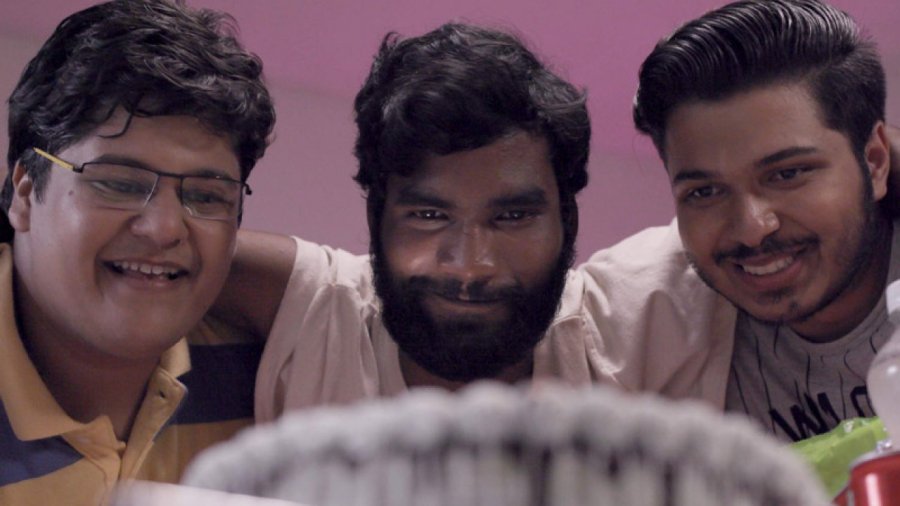
Hostel Daze is the Accurate Depiction of Hostel Life. It is a comedy genre series which is available to watch on Amazon Prime. Hostel Daze is a story which connects us to the life of Three hostel inmates who have just joined the college. Hostel Daze Shares with us challenges of freshers which they face from seniors , Believe me your stomach will hurt a lot from laughing right from the first episode. The First Season revolves around Ankit who struggles and wants to create an identity of himself in the college. In the second season, All the MCs Ankit, Chiraag and Jaat become seniors and go to their home for Vacations and miss having fun with each other. It received huge love from the audience when it was released. There are 2 seasons to this incredible show and has 9 episodes in total for 2 seasons and You can watch it on Amazon Prime.

2. College Romance

College Romance | TVF

COLLEGE ROMANCE, Another treasure from the house of TVF Originals. College Romance is not any ordinary story about falling in love or falling out of love. College romance is a package which includes comedy, serious drama, suspense and perfect characters for their roles. It is a story about 5 friends who pull pranks on each other get into fights with and for each other but ultimately choose to stay together like real friends would. There is a lot of cussing and swearing in it and this is the best part about this show. A character from the show ‘Bagga’ is the center pillar of this show. The show can be watched on TVF Originals and on Sony Liv. It has 2 seasons.

3. Immature
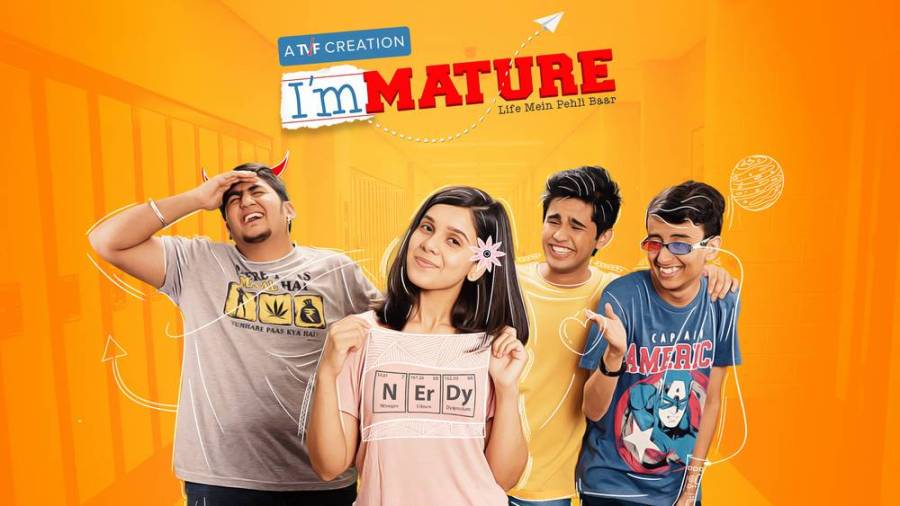
TVF has mastered the art of making eminently watchable shows. Immature is like an instant noodles formula: quick to make, easy and scrumptious . Immature follows the story of a boy in his adolescence who has a crush on a girl from her class. It depicts the teenage years of the boys where Parents are the obstacle to fun and Bunking and Bike riding with friends is freedom. This show will guarantee you lots of laughs. Each episode is like a door which opens a new set of challenges in his life as the show progresses towards end. This show can be watched on Mx player for free.

THE END..

At the end I would just like to say Life can get pretty boring but do not let it keep you from sharing loud laughs with your friends…
Growth Profile of an Indian Startup- CRED

CRED is an Indian Fintech Company which offers rewards to customers who use its platform to pay their bills of credit card.

CRED is a Bengaluru Based startup found by Kunal Shah who also happens to be the CEO of the Company. Kunal is an Indian Entrepreneur who has been recognized for launching new ventures for the second time. Kunal graduated in Philosophy from Wilson College and later pursued MBA from Narsee Monjee Institute of Management Studies, but he had to drop in the middle to pursue his dreams as an Entrepreneur. Kunal started his entrepreneurial journey with PaisaBack, a website for cashback, coupons, and other offers for the users along with Sandeep Tandon. However, They had to shut down its operations in order to find FreeCharge in 2010. FreeCharge was acquired by Snapdeal in April 2015 but the company still continued as an independent entity led by Shah. He left the firm the next year and eventually founded Cred in 2018, which has successfully turned into an unicorn on April 6, 2021.

BUSINESS MODEL – CRED

The plan of action of the organization comprises of four sections :

•   The Cred application

The Cred application is a flawless looking, wonderfully planned application, which the clients can visit assuming they need to go through the offers that are accessible after they cover their charge card bills. They can without much of a stretch sign up on the application and view every one of the offers that they can profit.

Businesses that give offers on the application

The clients of Cred can likewise track down a wide scope of offers from various organizations. For this, CRED carries organizations locally available and works together with them. Alongside helping CRED and its clients, who can benefit of the restrictive offers given by the organizations, it is likewise a mutually beneficial arrangement for the organizations. This is on the grounds that they are likewise immensely profited from the perceivability they get.

• Users who take care of their Mastercard bills –

CRED additionally fills in as a smooth and remunerating stage for the clients who use it to take care of their Visa bills. In contrast with banking or other applications, the end-clients can pick CRED as an application to take care of their charge card bills and get various offers and advantages. Then again, the clients who like the application likewise share CRED with their loved ones.

Cred Mint

Cred uncovered its new element, Cred Mint on August 20, 2021, which is planned as a distributed loaning stage assist that with willing assistance Cred clients loan their inactive cash to trustworthy individuals. It is a somewhat straightforward interaction that just permits the dependable Cred individuals bragging an insignificant FICO rating of 750 or higher to be the borrowers. Besides, the banks can likewise pull out their cash at whatever point they need with the premium that they have aggregated for the period.

GROWTH OF CRED-

Cred has shown a consistent development consistently. Being a startup that was established in 2018, it effectively joined the unicorn club on April 6, 2021, shutting its Series D round where the organization had wiped up $215 million. CRED controls “22% of all charge card installments in India consistently,” said Kunal Shah in his assertion delivered in April 2021.

Kunal Shah further took to his Linkedin profile on July 10, 2021, and shared features of the achievements came to by CRED in the long stretch of June:

Cred presented Cred Mint on August 20, 2021, which will fill in as a distributed loaning highlight that can be utilized by the clients of CRED. Cred Mint has been dispatched by Cred in a joint effort with RBI-supported P2P Non-Banking Financial Company.

With this component, the Cred individuals would now be able to loan cash to the reliable individuals from Cred dependent on the predefined financing costs. Cred Mint can be utilized to loan one more reliable client to assist them with acquiring around 9% per credit. In any case, it is likewise announced that Cred Mint may be accessible for clients with nice FICO assessments.

CONCLUSION-

Cred is one of the best examples of this how a brand born in India of an idea to provide users to make credit card payments through its app for which they get rewarded. Others have also been able to provide value to other countries, This is the power of globalization and this was achieved because of an entrepreneur who had a vision in his mind.

Understanding Pubs – Decoding the Spaces We Love

Going out after a day of stress or during the weekends has never been a more integral part of human history, or at least that is what we think now. On the contrary, pubs have been around for a very long time, functioning as the pivoting point for communities and socializing. Casual and welcoming these spirited social spaces have evolved into what we see now as ‘PUBS’. Once humble places with the sole intention to provide basic alcoholic beverages with a skewed food offering they have now been transformed into their new polished, glossy, gourmet avatars. Looking at the historical aspects and tracking its evolution through the changing markets and preferences adds a fresh perspective of differentiating them from Bars & Restaurants. 

Creating a pub is a meticulous affair with many design, market, and business considerations. The book aims to ease the process of ‘Understanding Pubs’ by highlighting the concept of such a distinct space with various requirements and a clear focus on setting up some standards that can be handpicked in various permutations to result in a pub space that people are going to love coming to, repeatedly. The further decoding of the elements necessary to execute these spaces from a design point of view i.e. elements and themes, space planning, technical considerations, business considerations, etc. will be value addition.

Right to Education

By – Supriya

The Right to Education is a fundamental right and is accepted the same legal status as the right to life as provided by Article 21A of the Indian Constitution . The Right of Children to Free and Compulsory Education Act,2009 is ” An act to provide for free and Compulsory Education to all children of the age of six to fourteen years”. The right of children to free and compulsory education came into force from April 1,2010. According to the act, every child in the age group of 6-14 years will be provided 8 years of elementary education in an age appropriate classroom in the vicinity of his/ her neighbourhood. According to the act , any cost that prevents a child from accessing school will be borne by the state which shall have the responsibility of enrolling the child as well as ensuring completion of 8 years of schooling. No child shall be denied admission for want of documents ; or shall be turned away if the admission cycle in the school is over and no child shall be asked to take an admission test. Section 2(o) along with section 13(2)(b) prohibits any of these screening procedures and calls for only random procedures to be used for admitting a child to school. This prohibition would apply to all schools , private or even Navodaya schools . The act restricts schools to claim special category status because it indulges in screening procedures at the elementary level. Moreover, if the number of children applying to a school exceeds the available seats, an open lottery system shall be used to fill the seats. This applies to all categories of schools. Children with disabilities will also be educated in the mainstream schools. Section (10) of the Act makes it the duty of the parents to ensure that their children go to schools, without prescribing any punishment . Special provisions are laid for children not admitted to or who have not completed elementary education; a child so admitted to elementary education will be entitled to completion of elementary education even after fourteen years. However, the implementation of the act will be arduous one as the promise to ensure education for all the children between 6 and 14 , would mean educating a whopping 22 crore children ,out of which nearly 1.1 crore are out of school. For child labour and Street children, the government would have to ensure that they are not compelled to work and provide schools for them, along with residential facilities to provide them with an appropriate environment to enable them to continue their education. This means parents and communities who traditionally forbid their adolescent girls from going to school , or indulge in child marriage would have to be persuaded , or the child marriages act would need to be invoked against them.
On the basis of the Act, no school , governmental or private , can detain , fail or expel any child at the elementary stage. On April 7,2010 , the Delhi High Court gave a verdict against St. Xavier’s School , Delhi , which had to take back all the children they had declared failed and expelled from the school. Moreover, all private schools shall be required to enroll children from weaker sections and disadvantaged communities in their class to the extent of 25% of their enrollment , by simple random selection. While no seats in this quota can be left vacant , these children will be treated on par with all the other children in the school and would be subsidized by the state at the rate of average per learner costs in the government schools. The National Commission for Protection of Child Rights (NCPCR) has been mandated to monitor the implementation of this right. As per Model Rule 25, The State Commission for Protection of Child Rights (SCPCR) shall set up child helplines , accessible by SMS , telephone and letter for receiving and registering complaints . NCPCR also welcomes the formal notification of this Act and looks forward to playing an active role in ensuring its successful implementation. NCPCR is also expected to carry forward its initiatives of linking and networking with civil society organisations for monitoring , appointing state commissioner for the enforcement of the Act, networking with other Commission like Human Rights , Women and Minorities ,to set up helplines and set up a separate division for enforcing the Right to Education. It is important for the country to nurture their children and young talent with the right education, so that India emerges as a strong and prosperous country.

THANKYOU !

Developing audio and talking books scheme under new education policy

 The National Education Policy – 2020 has mentioned the role of Technology in Education. NEP – 2020 envisions that a rich variety of educational software, for the purposes of teaching-learning and evaluation will be developed and made available for students and teachers at all levels (para 23.4, NEP-2020). All such software will be available in all major Indian languages and will be accessible to a wide range of users including students in remote areas and Divyang students (NEP 2020 23.6, Chapter 23).

The CIET-NCERT is providing books in multiple formats, such as audio, video and accessible format for Divyang students that includes text books in Indian Sign Language (ISL) and talking books. Till date 3211 audio book chapters from NCERT text books for classes 1 to 12 have been developed as audio/talking books and are uploaded on DIKSHA portal, for wider dissemination, free of cost. In addition, the audio content is also available on 230 audio stations (Gyanvani FM stations – 18, Community Ratio Stations – 80, All India Radio Stations – 132 and Internet Radio).

Vocational education to increase employability of students

 Education being in the concurrent list of the Constitution, majority of the schools are under the domain of the respective State and UT Governments. Hub and Spoke model of vocational education has been introduced under the Centrally Sponsored Scheme ‘Samagra Shiksha’ from the year 2021-22. A total number of 136 hub schools and 241 spoke schools have been approved during 2021-22. Under this model, it has been envisaged to utilize the existing vocational infrastructure of hub schools for providing vocational education in nearby spoke schools. No targets were set during the last three years as the hub and spoke modelhas been introduced from the year 2021-22. Employability skills module has been made an integral part of vocational courses.

Free Coaching for Competitive Exams

 In order to help the students to practice well for NEET (UG) and JEE (Main) entrance examinations, National Testing Agency (NTA), has launched a Mobile App ‘National Test Abhyas’ to facilitate candidates’ access to high quality mock tests online free of cost. For NEET (UG), 14.11 lakh students have registered in this mobile app for test practice and 81.24 lakh Sessions of Mock Test have been conducted. For JEE (Main), 9.59 lakh students have registered for test practice and 50.73 lakh Sessions of Mock Test have been conducted. In the interest of students including the most disadvantaged, Government has launched Study Webs of Active Learning for Young Aspiring Minds (SWAYAM), which offers interactive course content such as video lectures, reading material, self-assessment through tests and quizzes and online discussion forum for clearing doubts for students from Class 9 to Post-Graduation. The content can be accessed free of cost by anyone, anywhere at any time. Another initiative of the Government called Indian Institute of Technology – Professor Assisted Learning (IIT-PAL) provides video content in Biology, Chemistry, Mathematics and Physics prepared by IIT Professors for Class XI and Class XII students aspiring to join IITs and other Institutions. The content is available free of cost on dedicated DTH channels of SWAYAM PRABHA.

Young and Budding Authors

 As per the announcement of the Prime Minister in the ‘Mann kiBaat’ Talk on 31st January 2021, the ‘Young, Upcoming and Versatile Authors’ (YUVA) scheme, a mentorship programme to train young authors, was launched by the Ministry of Education on 29th May 2021 as part of the “AzadikaAmritMahotsav” programme.

The launch of PM-YUVA is in tune with the vision to encourage young writers to write about India’s freedom struggle.  In the scheme, the young generation authorswrite about freedom fighters, incidents associated with freedom, the saga of valour during the period of freedom struggle in their respective areas – as the best tribute to the heroes of India’s freedom – as we celebrate 75 years of Indian Independence.

The scheme is aimed at training 75 aspiring writers below 30 years, who are ready to express themselves and project India and its culture and literature globally. A consolidated scholarship of Rs 50,000 per month for a period of six months per author will be paid under the mentorship scheme in addition to being mentored by eminent authors.

The first edition of the 75 books selected under PM-YUVA Scheme will be published in their original language only.  The books will be translated into other languages on case-to-case basis after publication of first edition, ensuring the exchange of culture and literature, thereby promoting ‘Ek Bharat Shreshtha Bharat’.

Safety of Students in Schools

 Education is a subject in the concurrent list of the Constitution and therefore safety and security of the school children come under the purview of the respective States and UTs.Department of School Education and Literacy (DoSEL), Ministry of Education has developedGuidelines on School Safety and Security, which, interalia, contain provisions for fixing the accountability of the school management in the matter of safety and security of children studying in Government, Government-aided and Private Schools. These guidelines have been circulated to all States/UTs/Autonomous Bodies of DoSEL and Stakeholder Ministries on 01.10.2021. The guidelines detail the accountability of various stakeholders and different departments in ensuring the safety and security of children in schools.The guidelines issued by the center are advisory in nature and States/UTs are expected to implement them and they may incorporate additions/modifications to them, if deemed necessary, according to their specific requirements. These guidelines are uploaded on the website of DoSEL at

https://dsel.education.gov.in/archivesupdate?title=&field_update_category_target_id=All.

Conducting all national level examinations in scheduled languages

 The Government has established National Testing Agency (NTA) as an autonomous and self-sustained premier testing organization to conduct entrance examinations for higher educational institutions in the Country. NTA has conducted major competitive exams in the following scheduled languages:

  1. NEET (UG) 2021 in Hindi, Assamese, Bengali, Gujarati, Kannada, Malayalam, Marathi,  Odia, Tamil ,Telugu, Urdu & Punjabi;
  2. JEE (Main) 2021 in Assamese, Bengali, Kannada, Malayalam, Marathi, Odia, Punjabi, Tamil, Telugu, Urdu, Hindi, and Gujarati;
  3. All India Sainik School Entrance Examination (AISSEE) 2021 for Class VI in Hindi, Assamese, Bengali, Gujarati, Kannada, Malayalam, Marathi, Odia, Tamil, Punjabi, Telugu & Urdu.

It has also been decided to conduct Common University Entrance Test (CUET) for Central Universities in the above mentioned scheduled languages.


The translation of the Question Papers in NEET (UG) had been done properly, from source to target and target to source, in 12 scheduled languages.

Training to teachers on new education policy

 A teacher’s fest ‘ShikshakParv’ was organized from8thto 25thSeptember 2020for discussing various recommendations of National Education Policy (NEP) 2020 and its implementation strategies. This year also ShikshakParv was organized from 5th to 17th September, 2021 through virtual mode. Policy makers, administrators, academicians, experts, school principals, head-teachers and teachers participated in the ShikshakParv to share their experiences, learnings and discuss the way forward to realise the aspirations of NEP-2020.

In addition, the National Mission to improve learning outcomes at the Elementary level through an Integrated Teacher Training Programme called NISHTHA – National Initiative for School Heads and Teachers Holistic Advancement was launched by the Department of School Education and Literacy.The teacher training modules of NISHTHA have been aligned with the recommendations of NEP 2020.

Further, an online consultation process to invite suggestions from teachers to implement NEP 2020 was initiated at http://www.MyGov.in portal. Around 15 lakh suggestions were received from teachers which were forwarded to NCERT, CBSE and States/UTs.

Developing world-class higher education institutes and Universities

 The Government of India has launched the World Class Institutions Scheme in the year 2017 to enable ten institutions each from the public and private category to have world class academic & research facilities and grant them the status of Institution of Eminence (IoE). So far, notifications have been issued for eleven institutions (08 public & 03 private). Significant amount of autonomy in academic, administrative & financial matters has been provided under the regulatory framework to these institutions so that they can emerge as global educational institutions. Financialassistance of uptoRs. 1000 Crore (over a period of five years) is provided by the Government to each of public Institutions of Eminence.

DIKSHA for children with disabilities

 DIKSHA is the platform for providing quality e-content for school education in States/UTs and QR coded Energized Textbooks for all grades (one nation, one digital platform). DIKSHA complies with World Wide Web Consortium (W3C) Web Content Accessibility Guidelines (WCAG) 2.0 level AA. This enables people with visual impairments to access the website using assistive technologies, such as screen readers.

Special e-content for visually and hearing impaired developed on Digitally Accessible Information System (DAISY) and in sign language on NIOS website/ YouTube.  In all 767 textbook based ISL videos have been recorded. Out of these 510 textbook based on ISL videos are uploaded on DIKSHA. The 10,000 word ISL dictionary has been uploaded on DIKSHA. 3,142 audio books chapters are also uploaded on DIKSHA.

67th Convocation of IIT Kharagpur

 The determination of our new generation, spirit of enterprise & innovation and strength of educational institutions has resulted in India achieving many remarkable feats in the 21st century, including administering more than 130 crore COVID jabs, said Union Education and Skill Development Minister Shri Dharmendra Pradhan at the 67th Convocation of IIT Kharagpur.

Shri Pradhan said as we celebrate Amrit Mahotsav, he feel privileged to be at the temple of learning, a place where many of our freedom fighters, including the great Jayee Rajguru fought for freedom. IIT Kharagpur has shaped the national discourse and contributed to India’s growth since inception, he added.

The Minister stated that there are more than 50 crore children between the age of 3 and 23 and there is an enormous opportunity in equipping this population with the right education & skills. Critical mindset, qualitative workforce will help India to drive the global economy in the 21st century,he added.

Shri Pradhan expressed that low-cost innovative alternative energy models, innovation in specialised areas of semiconductor chip manufacturing will not only lead to economic empowerment and job creation, it will also lead to Purvodaya and a self-reliant India. He further said that life is unimaginable without ‘Energy & Internet’, a fact further accentuated in the present times. By 2035 India will be the number one energy consumer. India’s climate leadership has resulted in our country having the most conducive alternate energy business climate, he added.

Reiterating Prime Minister Shri Narendra Modi’s call for innovation during the inauguration of Kashi Vishwanath Dham, the Minister encouraged the students to ‘Innovate to empower the marginalised’ and to ensure developmental strides in every sphere.

The Minister expressed his confidence that IIT Kharagpur will be the epicentre in adding momentum to the spirit of Aatmanirbhar Bharat and in placing India at the top of the emerging new world order. The intellectual prowess and excellence of students here will make them pioneers of new thought leadership.He extended his best wishes to the students who have graduated today and all the students & distinguished alumni who have received medals and awards.

Scheme for attracting children towards school

 The Government of India launched Samagra Shiksha– an Integrated Scheme for school education, w.e.f. 2018-19, as an overarching programme for the school education sector extending from pre-school to class XII, which aims to ensure inclusive and equitable quality education at all levels of school education, across the country including the rural areas. The scheme provides support to States and UTs for strengthening of infrastructure in schools, universal access, bringing gender equality, promoting inclusive education, quality of education, financial support for teachers’ salary, digital initiatives, implementation of the Right of Children to Free and Compulsory Education (RTE) Act, 2009, provision of free uniforms and textbooks, pre-school education, vocational education, sports and physical education, setting up and running of Kasturba Gandhi Balika Vidyalayas and strengthening of teacher education institutions. Under Samagra Shiksha, an estimate of Rs.1173.37 crore has been approved for various interventions in Punjab during 2021-22.

Under PM POSHAN Scheme, noon meal is provided to students at the elementary level to enhance enrolment, retention and attendance and simultaneously improve their nutritional levels.

Under National Means-cum-Merit Scholarship Scheme scholarship is awarded to meritorious students of economically weaker sections of classes IX-XII to prevent their dropout and encourage them to continue to study at the secondary stage.

Further, Jawahar Navodaya Vidyalayas (JNVs) are set up with the objective of providing good quality modern education to the talented children predominantly from rural areas. Around 75% seats are filled by the candidates selected from rural areas.

The information was given by the Minister of State for Education, Smt. Annpurna Devi in a written reply in the Rajya Sabha today.