Tips to stop mobile addiction

Pause to think before picking up your phone

Every time you’re about to unlock your phone, take a moment to think about why you are doing this right now. Because sometimes the reasons for checking your phone are much deeper than you think.

Analyze how you use your phone and set limits

With iOS 12, Apple has introduced the Screen Time feature which shows how much time you spend on your phone, what apps you use the most, and how often do you pick up your device. To see the report, go to Settings > Screen Time. Android users can try digital wellbeing which works similarly.
If particular apps take too much of your time, you can set daily limits for them. When you reach a limit, your iPhone notifies you about it.

Get rid of distracting apps

Sometimes you just can’t resist tapping a colourful icon on the Home screen. This is usually the case for games and social media apps. How can one avoid this temptation? Move all addictive apps to the second page where it’s harder to open them spontaneously. You can also group such apps in folders like Games or Social so they’re always one extra tap away from you.

Minimize notifications

When a new app asks if it can send me notifications, I usually say, ”No.” I only turn on notifications for messaging apps and email. If your app has flexible notification options, it’s a good idea to play around with them.

Keep your phone away

It’s easier to forget about checking your phone when it’s physically out of sight and reaches.

Don’t use your phone before going to bed

Constantly checking your phone throughout the day ruins your productivity, while staring at the screen before bedtime can affect the quality of sleep.

Kick your device out of bed

Don’t let your phone be the last thing you see at night and the first thing you check in the morning. By using a regular alarm clock and charging your phone out of reach, you won’t be tempted to start your day by getting vortexed into an avalanche of messages and updates.

Use speaker

One of the most valuable things about smart speakers such as the Amazon Echo or Google’s Home products is that they help you live a more screen-free life.
Since I got one, I’ve stopped turning on music or podcasts on my phone and will try to answer all basic questions via voice. Generally, using my smart speaker for as many things as possible has kept my smartphone out of my hands for long periods.

HUMAN RIGHTS IN INDIA

Human rights day celebrated in 10th December.The National Human Rights Commission of India defines human rights as provided under the Protection of Human Rights Act (PHRA), 1993, as Rights Relating To Life, liberty, equality and dignity of the individual guaranteed by the constitution or embodied in the international covenants and enforceable by courts in India.Human Rights Day is observed on December 10 every year, since it was on this very day in 1948 that the United Nations General Assembly (UNGA) adopted the Universal Declaration of Human Rights, a milestone document that enshrines the rights and freedoms of all human beings.The international document also commits nations to recognise all humans as being “born free and equal in dignity and rights” regardless of “nationality, place of residence, gender, national or ethnic origin, colour, religion, language, or any other status

7 human rights in India:-

* Origins.


* Significance and characteristics.


* Right to equality.


* Right to freedom.


* Right against exploitation.


* Right to freedom of religion.


* Right to life.


* Cultural and educational rights.

An Act to provide for the constitution of a National Human Rights Commission, State Human Rights Commissions in States and Human Rights Courts for better protection of human rights and for matters connected therewith or incidental thereto. Ministry: Ministry of Home Affairs. Department: Department of States.Protection of human rights is essential for the development of the people of the country, which ultimately leads to development of the national as a whole. The Constitution of India guarantees basic human rights to each and every citizen of the country.The Constitution of India guarantees to all Indian women equality (Article 14), no discrimination by the State (Article 15(1)), equality of opportunity (Article 16), equal pay for equal work (Article 39(d)) and Article 42.

Human rights are important because no one should be abused or discriminated against, and because everyone should have the chance to develop their talents. Unfortunately, many people around the world don’t have these basic rights and freedoms.It is constitutional mandate of judiciary to protect human rights of the citizens. Supreme Court and High Courts are empowered to take action to enforce these rights. Machinery for redress is provided under Articles 32 and 226 of the constitution.

The most significant human rights issues included police and security force abuses, such as extrajudicial killings, disappearances, torture, arbitrary arrest and detention, rape, harsh and life-threatening prison conditions, and lengthy pretrial detention.

In India, a child has the right to be protected from neglect, exploitation, and abuse at home and elsewhere. Children have the right to be protected from the incidence of abuse, exploitation, violence, neglect, commercial sexual exploitation, trafficking, child labour, and harmful traditional practices.

Liberalism

Introduction
The most keenly debated issue in international relations has been the pessimistic view of realism and the optimistic view of liberalism. Realism is regarded as the dominant theory of international relations, while liberalism has a strong claim to being the historic alternative. Comparing the two to the main political parties in a democracy, Timothy Dunne wrote, ‘Rather like political parties, realism is the natural party of the government, and the liberalism is the leader of the opposition.’

The liberal tradition in international relations in its is closely connected with the emergence of the modern liberal state. The focus of liberalism has been on freedom, cooperation, peace and progress. It has often been identified with individualism, as it insists on freedom of the individual, his rights and property. It is also closely associated, mainly by its critics, with capitalism. Liberalism is sometimes associated with the views of Mo Ti, who was a contemporary of realist Chinese scholar Sun Tzu. Both gave their opposing views more than 2,000 years ago.

Basic Assumptions Of Liberalism
Liberalism assumes instead portraying lust of power as the international conflict liberalism fights for the basic rights of the people. It insists on pursuing the political reforms establish democracies. It emphasizes on the value of the free trade on the basis that it will help in preventing the conflicts between nations as it reduces the national selfishness and enhances the communication.

Liberalism advocated the formation of the global institutions such as the United Nations which sees any threat to any individual nation as a threat to everyone. The institutions help in resolving the conflicts by mediating the conflicts in the event of any misunderstanding.

Basically liberals assume that states will act in a rational manner and they are a unitary actor.

The liberalists fell into three different groups as classified by the realists: The first group advocated league of the nations was formed with the objective to consider the attack on the nation as an attack on all. The second group formed the Permanent Court of International Justice that would lead to formation of judicial body capable of issuing justices to the disputes. The third group sort to avoid war by advocating “Disarmament“ in order to reduce the international tension.

Neoliberalism
Neoliberalism is a policy model that encompasses both politics and economics and seeks to transfer the control of economic factors from the public sector to the private sector. Many neoliberalism policies enhance the workings of free market capitalism and attempt to place limits on government spending, government regulation, and public ownership.https://a6c140989941be06481216af16f29a9b.safeframe.googlesyndication.com/safeframe/1-0-38/html/container.html

Neoliberalism is often associated with the leadership of Margaret Thatcher–the prime minister of the U.K. from 1979 to 1990 and leader of the Conservative Party from 1975 to 1990–and Ronald Reagan, the 40th president of the U.S. (from 1981 to 1989). More recently, neoliberalism has been associated with policies of austerity and attempts to cut government spending on social programs.

Liberalism VS Neoliberalism
At its core, liberalism is a broad political philosophy; it holds liberty to a high standard and defines all social, economic, and political aspects of society, including–but not limited to–the role of government. The policies of neoliberalism, on the other hand, are more narrowly focused. They are primarily concerned with markets and the policies and measures that influence the economy.

Avoid sleeping in class

Bring a water bottle to class

Every time you get that tired feeling or you start to zone out, drink some water. Drinking cold water helps keep you hydrated to keep you focused. If you don’t drink enough water, your body doesn’t function as well as it could.

Sit at the front of the class

Being closer to the teacher is a great motivator to stay awake in class. Studies have also proven that sitting in the front of the classroom, leads students to receive higher grades on exams. Win-win, am I right?
Be active
Interact with your professor! Even if they don’t provide engaging activities, you can make them. Don’t be afraid to ask questions.

Chew gum/bring a snack

Chewing something activates specific regions of the brain meaning your brain become more active and you stay more awake!

Take deep breaths

By taking deeper breaths, you raise your oxygen levels, slowing your heart rate, lowering your blood pressure, and improving circulation.

Go to bed early

So you can wake up early and feel well-rested.

Get some exercise before class

The adrenaline from working out, taking a stroll, stretching, or doing some jumping jacks before class will help you stay awake.

Keep a good posture

If you focus on sitting straight up in your seat, you won’t be able to fall asleep. You rest your head and you will crash and burn.

Take notes (or doodle if it helps)

It keeps you active and it helps you focus on what you’re learning in class. Even if it’s random scribbles, it’s better than being asleep.

Walkabout in the back of the classroom

If you get tired, just find a spot in the classroom where you are not distracting anyone and walk about back and forth or take notes while standing.

Reference

https://jsom.utdallas.edu/blog/sleeping-in-class-dos-donts

The Alienation Of The Majority

Majority wins. This concept has been etched into our thinking. Right vs wrong is too abstract, but majority vs minority is appropriate as it is quantifiable. Democracy, data analysis, judicial verdicts, and other forms of decision making all function using this concept. If there’s a majoritarian will, there is a way. This is the power we have assigned to majorities. However, they sometimes feel disempowered and alienated. 

“The browning of America” is the phrase being used to describe the increasing non-white population in the USA, while the white population is decreasing. According to the 2020 census, the Whites still make up 59.7% of the population; however, this was the first time the White population, in absolute numbers, declined. The next largest group is the Hispanics (18.7%). Projections show that Whites will make up less than 50% of the population by 2045. In the same year, Hispanics will reach 24.6%, Blacks 13.1%, Asians 7.9%, and other multi-racial populations 3.8%.  The perceived effacement of the Whites has had significant consequences. Feelings of insecurity and disempowerment have made the whites resent the non-whites and has led to an increase in racism and xenophobia. Other effects include voter suppression, limiting immigration, and mass incarceration. The most prominent effects can be seen in the rise of Donald Trump, the rightward shift of the Republican party, and pernicious white nationalism. 

In a country that accepted white supremacism as the norm for decades, the effects of these drastic changes were predictable. But why does a country that shows no signs of a diminishing majority suffer through a similar predicament?  

India is a diverse country. We are home to a multitude of cultures, languages, and religions. But, we do have a clear majority. According to the latest national census, Hindus make up 79.8% of India’s population. In comparison, Muslims make up 14.2%, Christians 2.3%,  and the remaining is mostly comprised of Buddhists, Sikhs, and Jains. This division is predicted to remain stable. The Pew Research Centre has projected that in 2050, Hindus will make up 77% of the population, Muslims 18% and Christians 2%. Despite this overwhelming majority, Hindus often feel threatened by minorities and this has had devastating effects on our country. 

The perceived marginalisation of Hindus is not due to changing demographics, it stems from the fear of losing identity and power. In 1947, partition divided the subcontinent into Islamic Pakistan and secular India. Attempts to make India a theocratic state failed. While most Indians cherished secularism, certain right wing organisations hoped to accrue support for the creation of a “Hindu Rashtra”. Consecutive liberal and centrist governments ennobled this secularism that served athwart communal and divisive forces. Successive governments’ focus on welfare schemes and social justice and failure to implement a Uniform Civil Code were interpreted as minority appeasement. Coupled with propaganda created by right wing organisations, the feeling of neglect in the Hindu population led to an increase in animosity and a need to protect one’s Hindu identity at all costs. Hindus were seen as victims, not beneficiaries of secularism. The culmination of these feelings was the election of Narendra Modi and the BJP. 

The BJP is an openly Hindu nationalist party. This can be adduced by public hate mongering by BJP members, lack of condemnation for hate crimes against minorities, and active association with right wing organisations. The Babri Masjid demolition in 1992  and the Gujarat riots in 2002 were harbingers for the destructive communalism that would plague our country. Yet, Hindus felt that they needed to be protected from “the other” and elected Modi and the BJP. The ruling party has astonishingly managed to instil fear in the majority. The misrepresentation, even rewriting of history, is used to propound the need for revenge against Muslims and Christians for harm caused by the Mughal and British empires. Canards are used to arrogate that Hinduism could become a minority religion in the near future. The politics of polarisation is a tactic used by the BJP to evade responsibility for an economy that is in free fall, increasing unemployment rates, rising inflation, widespread income disparity, dismantling of democracy, and mismanagement of the COVID situation. “Sabka Saath Sabka Vikas” does not advocate for a society and economy that works for every Indian, but imbues a reassurance that Hindus will be empowered by the government. 

Sadly, state supported Hindu extremism has sown seeds of intolerance in all parts of society. There is growing hate in this country. I am going to focus on three aspects of this hatred: violence against minorities, rise of Islamophobia and misuse of anti conversion laws. 

India under the BJP has witnessed a rise in threats, harassment, harm, and murders of minorities. Events that have taken place recently are paragons. In Gurgaon (Haryana), Muslims are prevented from publicly praying on Fridays by right wing organisations. The way this is done is truly abhorrent — cow dung is spread throughout the prayer ground and chants of “Jai Sri Ram” are used to disrupt prayers. Muslims who wish to pray are continuously intimidated and those who wish to help are threatened. In Haridwar (Uttarakhand), Hindutva leaders called for a Muslim Genocide. Members of the BJP were present. The speeches made were disturbing, but the applause and cheering after each speech were sickening. India’s police have had no qualms in misusing anti terrorism and sedition laws to arrest minorities — often with no proof. However, no arrests of these chauvinists have been made yet. This inaction valorises the reprehensible hate spewed by these individuals. There was no condemnation or calls for arrest from the powers that be. Complete silence while real threats are made to Muslims proves, beyond doubt, who the BJP really serves —  Hindi, Hindu, Hindustan. 

Violent right wing organisations — such as the Rashtriya Swayamsevak Sangh (RSS), Vishva Hindu Parishad (VHS), and Bajrang Dal — are not treated as national security threats, but are seen as nationalists. Lynching of Muslims occur in broad daylight and with complete impunity. Muslims are underrepresented in our government, but overrepresented in our jails. They are also disproportionately affected by police brutality. This behaviour has infected the youth as well, as seen by the attacks on JNU conducted by the Akhil Bharatiya Vidyarthi Parishad (ABVP) — a right wing student organization affiliated with the RSS  —  in January 2020. Our cricket team members and TV advertisements aren’t safe from this Islamophobia either. Another concern is mainstream media’s deliberate ignorance of Islamophobia. Violence against Muslims is usually reported by a handful of investigative journalists and independent media houses. Reports by the mainstream media use euphemisms to avoid reporting the truth; for instance: the word “right wing activists” is used instead of violent right wing organisations or domestic terrorists. Labelling of protesting farmers as “Khalistanis”, the Citizenship Amendment Act, cow vigilantism, reprisals for violence against Hindus in other countries, the baseless arrest of Muslim journalist Siddique Kappan and Muslim comedian Munawar Faruqui are few other examples of state supported discrimination against minorities. 

Arunachal Pradesh, Chhattisgarh, Gujarat, Himachal Pradesh, Jharkhand, Madhya Pradesh, Odisha, Uttar Pradesh, and Uttarakhand are states that have laws restricting religious conversion. This article will focus on the irrationality and effects of the anti-conversion law proposed in Karnataka, my home state. The proposed bill, ironically called the Karnataka Protection of Right to Freedom of Religion Bill, 2021, passed the Legislative Assembly (lower house) by voice vote on 23rd December. The bill is expected to pass the Legislative Council (upper house) in January 2022.   

Under the ostensibly innocuous guise of protecting vulnerable Hindus, the provisions of the bill blatantly attack religious freedom. The vagueness of the bill will make it prone to radical interpretations and loopholes: Should charity be considered goodwill or allurement? Will children from marginalised sections of society be denied opportunities to create a better life for themselves at Christian educational institutions? What specific criteria must be satisfied to determine if a conversion is legal or illegal? The bill also entices public vigilantism as it allows “…any other person who is related to him [the converted] by blood, marriage or adoption or in any form associated or colleague…” to lodge complaints of such conversions. The bill oddly does not criminalize re-conversion — a provision that codifies the wishes of right wing organisations. According to section 12 of the bill, the burden of proof is on the accused, and not the prosecution — this violates traditional judicial norms. The entire bill violates the right to profess one’s chosen religion as enshrined in the constitution. The notion that the poor and marginalised sections of society convert only due to force — and not because they find the message of a different religion more meaningful — is demeaning. 

Even though the implementation of this bill has not started, its devastating effects are conspicuous. A report by the United Christian Forum (UCF), Association for Protection of Civil Rights (APCR), and United Against Hate notes that there have been 32 incidents targeting Christians and their places of worship in Karnataka this year. Karnataka ranks third among the states, after only Chhattisgarh (47) and Uttar Pradesh (66). There is a high possibility that the actual number is much higher than these reports. Since the government announced its intention to pass an anti conversion law, 5 attacks against Christians have occurred in quick succession. The People’s Union for Civil Liberties (PUCL) has also documented 39 attacks on churches in Karnataka between January and November 2021. Disruption of worship, burning of the Bible, vandalisation of worship places, threatening of priests,  prevention of Christmas celebrations in schools by right wing Hindu organizations have taken place recently. 

Karnataka is the only southern state where the BJP is in power; it therefore experiences the domineering tactic of divide and rule. It should be noted that the government did not wait for the report of the Legislative Committee to survey all Christian churches in preparation for an anti-conversion law.  Moreover, a Pew Research Centre survey found that “religious switching has a minimal impact on the size of religious groups”. With a population that comprises only 1.87% of the state’s population, claims that Christians engage in “mass conversions” that threaten the Hindus, who make up 84% of the state population are inane. The lack of data on these “mass conversions” should have halted the government’s plans to pass such a dangerous bill. The government chooses to deny Christians their fundamental right to worship just to appease right wing organisations. This divisive agenda will damage the state’s progressive reputation and enmesh the citizens in a cycle of hate. Forceful conversions are wrong, but they need to be solved through education and socio-economic empowerment, not violent mobs. 

Can we reverse the damage done? Considering recent events, it’s easy to believe that we’ve crossed the point of no return, but we must not give up. We must acknowledge that bigotry is no longer individual action, but is a part of the structural systems of our country. We must focus less on isolating and containing a few “bad apples” and more on reducing the fertile ground in which intolerant and hateful ideologies thrive. As an Op-ed argued, we are entering the Jim Crow era of Hindutva, as seen by lynchings and the notion that minorities are second class citizens. Our complicity will lead to the Nazi era of Hindutva, in other words, the fruition of the plans discussed in Haridwar.  Waiting for legislative action to counter intolerance is infructuous. There is also the possibility that this hatred does not stop with the Prime Minister — as seen by the backlash he received for his Eid greetings on Twitter. Opposition parties are also unlikely to fight for the protection of minorities in fear of alienating the majority. Only joint action by ordinary citizens of India can bring real change. 

Sadly, we’ve been desensitized and have accepted this changing social fabric as normal. The government may have legalised mob violence against minorities, but we cannot afford to remain indifferent to the current and potential sufferings that India’s minorities face. This need to establish supremacy, at all costs, does not reflect the aspirations of the Indian Hindu. However, their silence only fuels the hatred espoused by these domestic terrorists. Denying the existence of this problem is a privilege that many can ill-afford. As Martin Luther King Jr said: “In the end, we will remember not the words of our enemies, but the silence of our friends”. In the name of “protecting Hinduism”, right wing organisations propagate their vile agenda that repudiates the true values of Hinduism.  Insecurity and fear — sustained by constant propaganda — must be fought with fact and reason. We must actively speak out against hate, while overcoming the prejudices we may hold ourselves. The belief that we’re too far gone must be countervailed with hope. The fragility and impermanence of our secularism have never been this exposed. We must resist divisive powers by building a resilient unity that does not depend on the government in power.  

As a society, we must introspect and combat bigotry from the grassroot level. It is becoming increasingly difficult to live in India as a minority; the constant fear of violence and threats causes harmful emotional distress and fatigue. This new normal of division, intolerance, and hate must be replaced with a better normal of empathy, compassion and love. These may seem like naive emotions, but they are the only solutions to hate that have ever worked. 

We must realise that anti nationals are not those who oppose the policies of a temporary government, but those that threaten the very idea of India that has thrived for more than 70 years. An egalitarian society protects democracy and the rule of law; a majoritarian one produces authoritarianism and violence. The survival of our country needs every Indian. Belonging to a minority religion does not make anyone less Indian. We must not confuse chauvinism with patriotism. Our constitutionally protected diversity will help us move forward as a country, homogeneity is nothing but regressive. The government must stop focusing on the othering of Muslims and Christians and instead focus on the achievements in education, healthcare and social welfare of institutions run by minorities. Us vs them is nothing but a distraction and an attempt to paint a narrative in which minorities are disloyal to India. We must work together to save India, so that future generations can witness the plurality that we took for granted. The vestige of inclusivity we enjoy must be preserved by all of us. 

The majority is winning. The cost of this victory? The very idea of India. 

“Differences are not intended to separate, to alienate. We are different precisely in order to realize our need of one another.”

Desmond Tutu

How was your 2021?


Since we all are dealing with the pandemic since 2020, it has been almost two years that most of us are not that social. There has not been much communication with most of the people that we used to before the pandemic. Follow these tips to spread happiness among those who put efforts to make your 2021 a year:

  1. Greet: Make a greeting card for one of your friends, or family members. you can also make a colllage of your pictures that represents the best moments together. If you are not much good at making cards then you can do these online as there are some websites that provide customized greeting cards.
  2. Show Gratefulness: Be grateful to those who always have put effort into your relationship. It can be anyone your parents, siblings or friends. Thank them for being always there for you.
  3. Surprise: you can plan gifts for anyone. It can be the people who have been always happy to help you like watchmen, milkmen, vegetable sellers etc.
  4. Plan a trip: It would have been a lot many days that you went out with one of your family members or friends so plan a trip or a nightout or a party at home to recollect all the memories together.
    Likewise you can enjoy the last days of the year and refresh yourself before your the new year starts and be ready for the new challenges to face!!

Scope of Teacher Education in India

Teacher Education is one of the important components to determine the quality of a teacher. Untrained teachers remains deprived of becoming aware realising many good qualities of a teacher. Teaching is a profession which requires the development of typical the feelings and skills of harnessing the good qualities in a learner. To ensure that all untrained teachers acquire the requisite qualifications, SSA provides for 60 days of training for teachers who have not received any training before their recruitment. But this training cannot be deemed to be equivalent to requisite training qualification as prescribed by the NCTE. However, after the notification of the ” Right of Children to Free and Compulsory Education Act 2009 effective from 1st April 2010, it is imperative that all teachers teaching at the elementary level, if not trained, shall have to acquire training qualification within a period of five years. 

The number of untrained teachers is so large that it may not be possible to train all of them through face to face formal system. Alternative strategies like Open & Distance Learning system is considered to be an effective strategy to complete this gigantic task. With this backdrop, it has been decided to develop and implement an elementary teacher training programme through Open & Distance Learning mode for untrained teachers teaching in elementary schools. The entire training strategies for in-service untrained teachers need to be based on the basic principles enumerated below:
i. Promotion of child friendly and barrier free education for all children,
ii. Promotion of child centred pedagogical processes leading to more of activities for experiential learning, exploration, inquiry, discovery, etc.
iii. Based on NCF 2005 and to guide all our plans for facilitating teaching-learning processes in different subject areas. It centers around five key guiding principles:
· Connecting knowledge to life outside the school;
· Ensuring that learning shifts from rote methods;
· Enriching the curriculum so that it goes beyond textbooks;
· Making examinations more flexible and integrating them with classroom life;
· Nurturing an overriding identity informed by caring concerns within the democratic polity of the country.
iv. Promoting a non-threatening assessment system with in-built process for a continuous assessment system. Teacher preparation needs to look at CCE as an important area of learning for the teachers.
v. RTE Act 2009 bans corporal punishment and private tuitions by teachers. Accordingly the teacher preparation plan also will provide ways and means of making the classrooms more child friendly for children so that every child learns well as desired under the Act.
The objectives of the Programme are to :
· enable teachers to understand and address diversity in their context;
· empower them to improve quality of classroom processes/transaction;
· develop capacity in them to promote child friendly, child cantered processes in school;
· familiarize them with appropriate teaching learning processes;
· facilitate them to develop leadership & problem-solving skills among children;
· sensitize them to contribute towards safeguarding child rights

Types of note taking

Outline note-taking method
Outline note-taking

The outline method of note-taking uses indentation to store information in a clear hierarchy. When applicable, the outline method is one of the most efficient note-taking formats as it creates meticulously well-organized notes. The method can also be used in both deductive and inductive order.

Outlined notes are some of the easiest to review, as it’s one of the few systems that allow you to see space relationships between topics. However, the method is not always suitable for taking notes during a live lecture and outlining requires a clear lesson structure to work.

Cornell note-taking method
Cornell note-taking

The Cornell method of note-taking, developed more than half a century ago, is a tried-and-true strategy for taking effective notes. It uses two top columns (the “cue” and “note” columns), together with a single bottom row (the summary section) to record notes.

The method is very versatile, usable for most subjects, and one of the simplest yet most effective note-taking methods out there. By mastering the Cornell system, you’ll always have at least one solid note-taking skill under your belt. The Cornell system is one of the most popular note-taking strategies in the world for good reason.

Box note-taking method
Box note-taking

The boxing method of note-taking uses boxes to visually separate topics within a page. While the boxing method was designed to be used for digital devices, it’s a technique that can be easily adapted to handwritten notes.

Using the boxing strategy results in notes that are visually pleasing and easy to review. The method also takes full advantage of digital-only features such as lassoing, resizing, and moving notes after writing. Together with mind mapping, it’s one of the most effective note-taking strategies for visual learners.

mappIng note-taking method
Mapping note-taking

The mapping method of note-taking connects different thoughts, ideas, concepts, and facts together through visualization. Both Leonardo Da Vinci’s and Albert Einstein notebooks reportedly contained mapping style notes that connected drawings to words and notes.

The mapping method starts with a main topic in the center of the page, before branching out into smaller subtopics, supporting topics, and smaller details. The method provides a one-of-a-kind graphical overview of lecture content that is irreplaceable for visual learners.

Mapping is best used in content-rich college classes where the information is structured. However, it’s very rarely possible to take notes of a live class with this method due to its time-consuming nature.

Reference

https://e-student.org/note-taking-methods/

Interview preparations

What are your goals? Where do you see yourself in five years?

An interviewer will be impressed if you have considered your short-term and long-term goals. Talk about the kind of job you’d eventually like to do and the various steps you will take to get there.

Show that you have the ambition and determination to make the most of every job you have held to get where you want to be.

Always relate this back to the position you’re interviewing for and be realistic in terms of your aspirations. Avoid telling the interviewer that you want their job.

What are your strengths/weaknesses?

This question is often seen as challenging by many candidates, even those with significant experience. However, if approached correctly it is easily possible to avoid ‘bragging’ when discussing your strengths or seeming excessively negative when talking about your perceived weaknesses.

Strengths

Based on the job description, choose three examples of traits the employer is looking for and give examples of how you have used these strengths in a work situation. Ideally, include a mixture of tangible skills, such as technical or linguistic abilities, and intangible skills, such as management experience.  

Weaknesses

The best approach here is to pick a trait that you have already made positive steps to address.

“Consider how you have approached your perceived weaknesses in the past and what you have done to address them,” commented Janine Blacksley, associate director at Robert Walters.

“If your IT ability is not at the level it could be, state this as a weakness before telling the interviewer about training courses or time spent outside work hours you have used to improve your skills.”

Why should I hire you?

Focus on your assets – what makes you different and where do your major strengths lie? Outline what you can offer in terms of experience, personality and enthusiasm.

“The job description should give you a good indication of what they are looking for,” added Janine Blacksley. 

“Make sure you address the particular qualities the employer has stated they are looking for and provide specific examples of what you have done so far in your career that demonstrates how you are particularly suited for the role.” 

Tell me about yourself / your work experience

This is usually the opening question for most interviews and can be one of the most important. First impressions are key, so keep it brief – know your CV inside out and focus on delivering a one to two minute advertisement for yourself, highlighting the key achievements in your employment history. Know what you want to say and how you are going to say it beforehand.

“Begin your answer with an overview of your highest qualification then run through the jobs you’ve held so far in your career,” added Janine Blacksley.

“You can follow the same structure as your CV, giving examples of achievements and the skills you’ve picked up along the way. Don’t go into too much detail – your interviewer will ask you to expand on any areas where they’d like more information.”

Why do you want this job?

Do your research – this gives you the chance to discuss all you know about the job and the company and why you are a good match for them. The interviewer is listening for an answer that indicates you’ve given this some thought, so do your homework properly.

“You should have a good inside knowledge of the company’s values, mission statement, development plans and products. Describe how your goals and ambition match the company ethos and how you would relish the opportunity to work for them,” advised Janine Blacksley.

What are your salary expectations?

While you should never mention salary unless asked or prompted, it’s important to understand the value of someone with your skills. Be flexible – indicate that you are willing to negotiate for the right opportunity and confirm that you value the position strongly.

“All too often, problems arise from pricing yourself out of the position or stating a figure less than the company is willing to pay. If a guideline salary has been provided with the job description, you could mention this and say it’s around the amount you’re looking for,” Janine Blacksley continued. 

What skills or experience do you offer that will help you succeed in this role? 

You should use the interview as an opportunity to say something interesting about your skills and experiences that relate back to the role at hand. Remember that interviewers will be looking for you to demonstrate key skills, so prepare examples in advance that you can call on when required.

Examples of the key attributes employers look for include:

  • Project management skills
  • Problem-solving
  • Managing stakeholders
  • Demonstrating sound technical knowledge, backed up by good business understanding
  • Delivering on targets or goals

Reference

https://www.robertwalters.co.uk/career-advice/interview-tips/seven-killer-interview-questions.html

ONLINE EDUCATION

WHAT IS ONLINE EDUCATION:-

A classroom is method of using cell phones and computers to make teacher and student in connection.This method of education is popularized during the corona.

ONLINE EDUCATION IS EFFECTIVE:-

In my perception online education is not that much effective when compare to the offline classes.Because we started schooling in offline class,Immediate change in method is not acceptable.In offline class we can ask doubts.But in online classes some not get good network.

ADVANTAGES OF ONLINE EDUCATION:-

* It reduce financial costs for students in transportation,meals.

* we can feel more comfortable than offline class.

* Another advantage of online education is that it allows students to attend classes from any location of their choice.

* online lectures can be recorded, archived, and shared for future reference.


DISADVANTAGES OF ONLINE EDUCATION:-

* Little or no face-to-face interaction.

* In online education we have to see screen more time cause headache,damage eyes.

* Another disadvantage is some have network issues unable to ask questions.

* Online courses require more time than on-campus classes.

* Online courses may create a sense of isolation.


HOW WE CAN MAKE ONLINE EDUCATION EFFECTIVE:-

* By Creating shorter content.

* Assign group and pair work.

* Take care in setting up your home environment.

* By giving break or reducing time of class.

* By creating individual learning plans.

The problem of poverty in India

In India, poverty is presently estimated by fixing a poverty line based on a differentiated calorie-norm. This means that the level of poverty depends upon the capacity of a person to purchase food and a person who can buy specific amount of food to cross the poverty line margin for nutrients and calorie intake is above the poverty line. Whereas, the person who cannot buy enough food to meet the required nutrition value of calories and carbohydrates is below the poverty line. This level is not the correct parameter to check the level of poverty.

A task force of the Planning Commission in 1979 defined the poverty line as that per capita expenditure at which the average per capita per day calorie intake was 2400 calories in rural areas and 2100 calories in urban areas. Average per capita expenditures incurred by that population group in each State which consumed these quantities of calories, as per the 1973-74 survey of NSSO, were used as the poverty lines.

The debate on the extent of poverty in India has been a matter of global interest in the recent years. The primary reason for the global interest in the debate is that the levels of poverty in India and China have come to exert significant influence over the trends in world poverty itself.

Within India too, there has been growing contestation around poverty estimates, particularly in the period of economic reforms. First, there are persistent disagreements among economists on whether the rate of poverty decline after economic reforms was slower than in the preceding period. Secondly, the shift to targeted, rather than universal, welfare schemes has witnessed the use of poverty estimates to decide on the number of households eligible to access these schemes. The report of the Expert Group on the estimation of poverty, chaired by Suresh Tendulkar, is the latest input to the “Great Indian Poverty Debate.”


It is to be noted here that many subsidies and programs are launched by the government but these additional increments do not reach the actual people that are in need of them. Instead it is sent back to the businessman and thus a lot of profit is earned on these subsidized goods. Thus, to lower the level of poverty in India, schemes have to be launched in order to directly benefit the people in need.

The Hindu states that, “A final issue with the report, of much long-term consequence, relates to the wisdom of abandoning the calorie norm. It is indeed true that the levels of calorie intakes are not well correlated with nutritional outcomes. However, abandoning the calorie norm altogether and taking solace from the fortuitous fact that calorie intakes appear adequate at the new poverty lines is an arbitrary proposition. It is unclear whether there is any basis, theoretical or empirical, for this relationship to hold true across time.”

the Tendulkar Committee has pitched for a policy position that is stranded between the harsh realities of poverty in India and the fiscal conservativeness of a neo-liberal framework. The real challenge lies in preserving the positives from the report, and strongly persisting with the demand for a universal social security system.

The Gift Of Sharing and Giving

The year is coming to an end and we can all say it is nothing less than a roller coaster ride of so many different things. If we look back, we all have had our share of happiness, grief, excitement, anger, joy, blues, and so many more things. Each one has had it just in different quantities. Before we start our New Year and new adventures, we all have one small thing to do so that there is the hope of change and betterment when we move forward. The small thing I am referring to is sharing and giving. As Leonard Nimoy says and I quote “The more we share, the more we have”  

During this festival celebration of the year let it be it Christmas, Diwali, or Eid it is time that we all spread our hands forward to help by sharing and giving to those people in need. By doing this we not only make our lives better but also the people whom we are helping and also the society and the world. When we share and give, we make the world a happier, peaceful, and joyous place to live. When a festival is celebrated, it should not be limited to those just of a better class but also to the people who are trying to make their lives better by working hard every single day and trying to meet with the fast-growing world. Let us understand this on a more detailed note.

Why is it important to share and give?

The first and foremost thing that one should understand is that when a person shares or gives one should do it selflessly. There should not be any ulterior motive or expectation of any kind of praise, reward, or anything else in expectation of return. The other thing that people should keep in mind while sharing and giving is to do it with all their heart. It should be done out of kindness and happiness not because there is a requirement or just for the sake of it. This might sound very typical but when children see their parents share and give then they learn a lot and even make it their habit. Sharing and giving is not something that kids should learn and leave it aside rather it is a thing that a child should learn, imbibe, and make use of it in their lives at the very end. The contentment and the joy and happiness that one feels from within are very powerful and can even influence the way a person sees and behaves positively. The importance of sharing and giving cannot come at a better time when the world is slowly becoming mechanic, selfish, and greedy. It is the process of sharing and giving that makes us human beings more humane and evolved than other species. The idea of sharing and giving should remain intact until the very end of everything if we want to have a better future not just for the future generation but also for ourselves

Tech pitches in to fight COVID-19 pandemic | Computerworld

Sharing and giving during the pandemic.

The pandemic is not over yet and it managed to put a big pause on our robotic life. The pandemic made us realize the amount of destruction and pain we have caused to nature and other living creatures in the name of development and progress. It is not that development and progress are bad but it will be harmful if we lose the very essence of living and being ourselves. The pandemic created havoc, something that nobody expected or was ready for the destruction that it is causing. It was this very pandemic that made us realize the importance of humanity and the importance of sharing and giving during tough times. By sharing and giving, we were uniting as one and made us realize that only through togetherness and hard work will we be able to fight the virus. We realized during this time that sharing and giving was not just related to materializing things but rather more important things such as sharing our thoughts, feelings, and emotions so that more people could open up and acknowledge their feeling and emotions as well and give so much more important to mental health than we ever did.  We realized that when many people come forward to give the pressure of it reduces and the quantity and quality of things get better and thereby we can help more and more people are safe and secure. When scientists, doctors, and other front line workers shared their ideas and perspectives and also made sure to give their hundred percent by constantly working hard day and night that it was possible to reduce the death toll, bring down the positive cases and get back some sense of normalcy back. I can go on and on about how sharing and giving have had a major positive impact during the pandemic. Let us all go back to the memory of the very first year of the pandemic and the present. So That we can see and understand how we have had so many small and big instances of our lives where you have shared or given to someone or someone has shared and given something to you. This is when we understand that these actions have not only made each other’s lives better but also strengthened the relationships with people around us.

All of these things being said we also need to remember and make sure to follow that we do not need a major event or anything big to happen to share and give. Rather I think it should come from the space of responsibility and duty towards the society and the world that is constantly playing a role in our growth and development. When a person truly with a good heart and mind without any motive shares and gives then it speaks a lot about their personality and their character. One does not have to do many things to share and give. They can just spend their weekend in an orphanage enjoying and playing with the children there or one can go to the orphanage and spend some peaceful and fun time with all the people there. Even giving your toys and clothes that you do not use to someone who requires them can make such a big difference and impact.

In the end when someone does something big or small towards a positive change then it always makes an impact and difference in the whole world. It will always be there. To conclude with a thought-provoking quote by Robert Brault where he says and I quote “The willingness to share does not make one charitable rather it makes one free”

References

  1. Google searches for images and quotes.

True Love

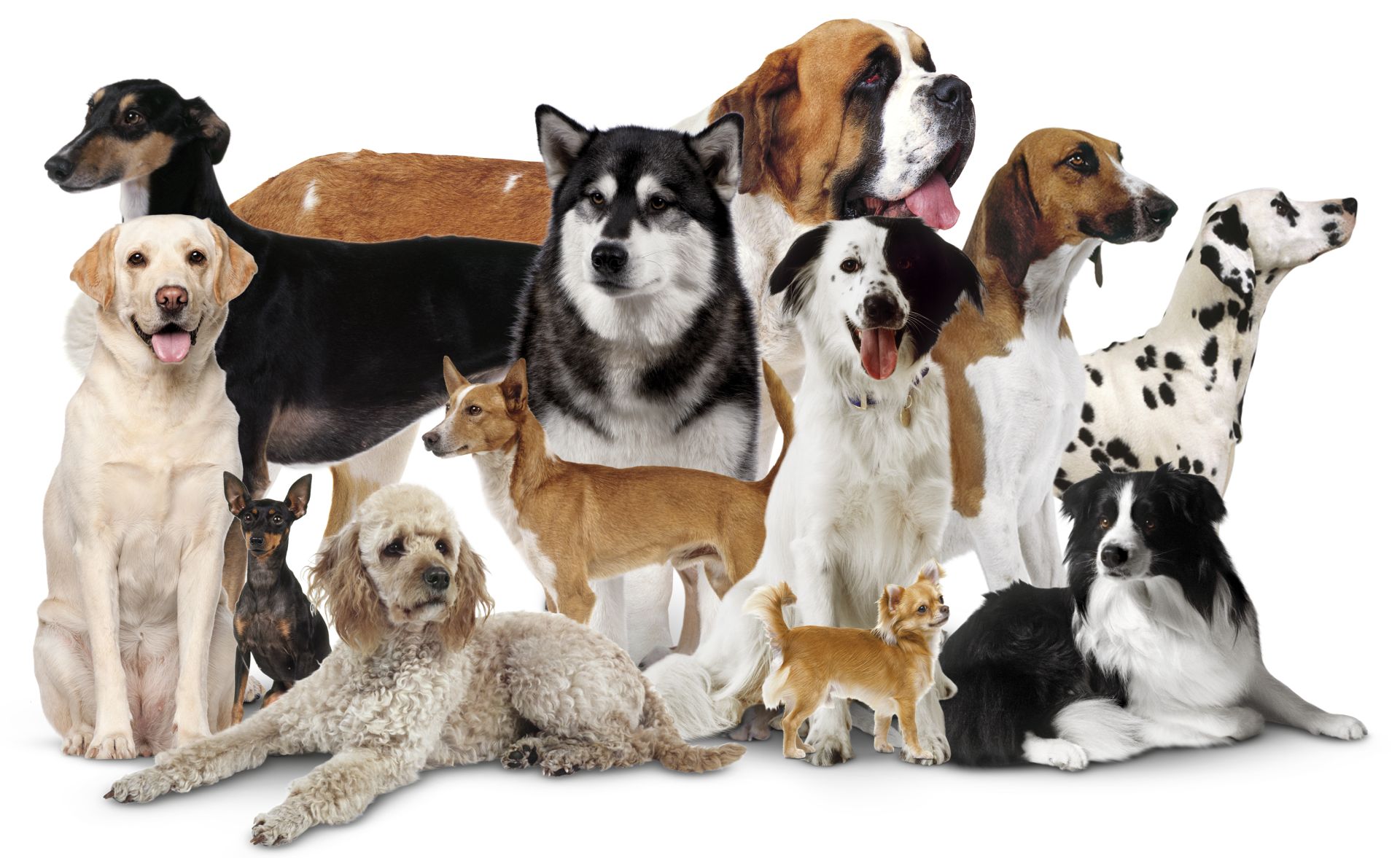
Domestic Dogs | Different Types of Dogs | DK Find Out

 As Jill Abramson rightfully says and I quote, “A dog can span you out of any bad kind of mood that you are in faster than you can think of”. This article is going to be a joyous treat to all animal lovers, dog lovers, dog parents who own a dog or not, and I hope this article encourages everyone out there to have a dog at least once in their lifetime. The joy, happiness, love, and trust one receives from a dog whether it is a street dog or even their pet is beyond one’s imagination and belief.

The fruitfulness and contentment that one receives through a dog’s love make us truly wonder whether these beautiful animals are a gift to humankind. One will understand the true meaning of love and compassion through a dog. A dog never sees which religion, caste, class, or hierarchy humans with whom they try to be friends. Dogs only see the goodness and good heart inside a person. Dogs are the most selfless animals that we can ever find on this planet. Sometimes it honestly mind boggles me how dogs descend from the most ferocious and dangerous animal like wolves. A dog’s love will always be unconditional and pouring whether they belong to large breeds or small breeds. Dogs are those creatures that do not need words or sentences to show us what they feel and what they want. They just do things that make us happy without saying a single word. That is their hidden beauty and strength. Let us understand more about dogs through this article.

Are dogs ferocious?

Well according to me, the answer would be a no. However, dogs descend from the wolves they are said to be more accommodative and accustomed to the human habitat. Then you must all be wondering how we have cases of dogs getting ferocious and angry. The answer to this query is very simple. It is mostly how a person trains their dog. If the dogs are trained to react with bites to a threat then they may be very ferocious and dangerous to strangers even if the family members know them. There is also special training that is given to police and other force-related dogs so that they are trained in the right way for all the unexpected situations these dogs need to handle during their service. There is also this constant myth and belief that large breed dogs like the German Sheppard, Bull Dog, Rottweiler, and Pit Bulls are ferocious and dangerous dogs. This cannot be considered true under all circumstances because it all depends on the kind of environment, people, and the way these dogs are taught to behave which also needs to be highly considered. Another reason why dogs do get ferocious is their experiences whether they are street dogs or even pet dogs. If they have been abused or hurt by other people the dogs are ferocious and dangerous. They use their instincts as a means of defense mechanism to protect themselves and keep themselves safe. In short, dogs are not ferocious it is how they are trained and exposed to different factors that play a major role in their behavior.

Role of a dog in a family

The role of a dog in a house is not just looking after and safeguarding the house. It is much more than that. For instance during the pandemic when we all were locked and cooped up in our house and couldn’t go out it was not just dogs but all those people who had pets in their house who had so much more love, compassion, and enjoyment than houses without pets. Even people who were staying alone decided to get small or large breed according to their requirements and are showing better mental health and positivity around them rather when they were alone. A dog can make anyone and everyone happy by just existing around them. Several reports and research done have shown that dogs have a positive impact on the environment, feelings, thoughts, and emotions of all the family members of the house. Several reports have also shown that when children grow and develop around dogs they learn things like love, compassion, trust, friendliness, which all play a very important role in the proper growth and development of a child. Dogs tend to teach things to children things that often are looked over or difficult to teach as human beings.

I have mentioned just a few examples of how important the role of a dog is in a family but there is so much more that one will discover when they have a dog around them. I have just managed to mention the role of a dog in a family; however, there is so much more these beautiful animals do in our society and world, which is beyond comparison.

Home - Homeward Bound Pet Adoption Center

Should one adopt or buy a dog?

This question has also always been there and asked so many times by so many people to other people. My answer to this question is very simple. ALWAYS CHOOSE TO ADOPT RATHER THAN BUY. When a person adopts a dog, they are not just doing a good thing for the dog but also for themselves. When you adopt a dog, you consider them more than a pet. Their value is not just limited to money but to so much more of feelings, emotions, and love that are needed in this industrialized world. Yes, the fact that when you adopt a dog the process can be tedious and even requires a lot of effort but once the connection has been made all the effort and struggle will be so fruitful that you will always cherish it for life. You can always choose to adopt an indie dog or a specific breed dog; there is no harm in doing both. If you choose to buy a dog then it is always recommended to look at these loving animals beyond their monetary value.

One of the most important thing that everyone need to keep in mind is, there is much more to do for these animals than just adopting them or buying them and giving them food and shelter. A pet parent has to be very responsible, dedicated to looking after their dogs or any other animal for that matter, and must keep a check on even the tiniest thing about these animals that are not looking for anything more than love, trust, and compassion.

One can go on and on about dogs who are like disguised angels from heaven who have come to look after us humans and provide an emotional sense to this materialized world. To conclude with a beautiful quote by M.K Clinton where he says and I quote “The world would be a nicer place if everyone had the ability to love as unconditionally as a dog”  

References

  1. Google searches for images and quotes.

BYZANTIUM : A SYMBOLIC ANALYSIS

Among the 20th century poets, Yeats is considered as the craftsman in the use of symbols and images. His poems are filled with complex system of symbols. The poem Byzantium is also rich with various symbols and images. The poem consists of five stanzas and each stanza carries a key image and symbols. Through this key image Yeats portrays the theme of the poem. The title of the poem itself do not stand for the real Byzantine Empire. It is the country or Empire of the mind which is a transcendental place out of the constraints of Time and Space. Here the empire stands for Purgation and Paradise. The poem focuses on the eternity of art and is contrasted with the sensual elements of the physical world. Through the use of complex symbols Yeats successfully presented this idea.

The poem begins with the unpurged images of the natural world. The starlit and moonlit dome of the cathedral looks down with disdain on the complexities of man.The dome is the powerful symbol used by the poetic personae. The dome is symbolic of the perfection and eternity which is opposed to the natural world of passion. The dome can also be considered as the symbol for the permanence of art. As Keats used the ‘grecian urn’ as a symbol for the eternity of art, the dome stands for the same and it scorns the complexities of man.

On another level this dome has another symbolic significance. This can also be relate to the creation of poem or art. According to Richard Ellmann Byzantium is a description of th act of making a poem. While analyzing on the basis of this, the poet is the Emperor and Byzantium is the ideal place for the poet, where all the unpurged realities disappear. The church gong is the premonition of death. As the gong sounds the realities disappear and the poet begins writing the poem. And the dome is the tower of the poetfrom where he is looking as a spectator to the world. The conflict between the real and the ideal is powerfully portrayed through the symbol of dome.

The next key symbol of the poem is the superhuman figure. This is the soul of the dead and is unwinding the memories of earthly existence. Actually the dead is the living. After death the soul liberates from the constraints of body and is living forever. So the dead is the actual living and living is really the death. The superhuman figure signifies imagination. As said before the poem can also be analyzed on the basis of creation and process of making a poem. The superhuman figure is the poet’s imagination. This purified soul will teach the poet wisdom and take him to heaven, Byzantium. In the process of creation of the poem poet attains perfect bliss. This imagination gives coherence to things and resolve all differences. What the poet saying is that the artist has to exploit the tension between the physical and spiritual worlds.

Among all the symbols used in the poem, golden bird is the most important one. Like the dome, the golden bird sitting in the golden bough also symbolizes perfection in the creative process. Through this symbol poet celebrates artificiality and changelessness of art. The golden bird is opposed to the living things and it scorns the common birds. So the perfected art looks down the nature which is subjected to time and emotions.

The flames represents spiritual realization. They are purgatorial fire. On the emperor’s pavement, fire fed by no fuel is burning and the souls of the dead purify themselves by dancing. They are ideal flames. Apart from spiritual realization the flames and purgatorial dance als represents the process of making poem. As Richard Ellmann says this poem is about the creation of art and each stanza depicts the image of imagination and art. So here the emperor’s pavement is the poet’s tower and the flames are the imagination of the poet. The blood begotten spirits are the raw material for the poem and dance is the process of creation. The raw materials gets purified and the imagination cannot be disturbed because it is independent. So here also the symbol stands for the creative genius. The golden smithies, dolphins and sea are the symbols presented in the final stanza. Dolphins are the images for resurrection and it guides to enlightenment. The poet describes the shore of ocean of life in the last lines. On the level of creation the dolphin and goldensmithies represents duality and craftsmanship of the poet respectively and it gives order to flesh and passion. Marble of the dancing floor is the imagination of the poet and it breaks the chaos.

Apart from these major symbols, Yeats presents certain images. The moon presented in the beginning stands for cycle of time and different phases in the man’s life. Mire is the cycle of birth and death. The “mummy cloth” which is unwinding clearly signifies what is inside beyond the question of life and death.Yeats used four elements of creation as symbols in the poem. The empire stands for earth, heaven for air, sea for water and flames for fire. Here Yeats attempted to bring together spiritualism, symbolism, aesthetics and mysticism. Thus he powerfully brought the themes of battle between immortality and creation, nature v/s art, human imperfection and perfected form of art and tension between life of senses and soulful life. Through the symbolic analysis of the poem it can be understood that Yeats is a craftsman in the use of symbols and images.