Digital And Text Based Literacy

Meaning And Introduction

The field of literacy studies has made many of us take a deeper look into the similarities and differences between text based and digital literacy. It seems not only through the literature but also by observation as a classroom practitioner that there are certain elements and conflicts between digital literacy and text based literacy that need to be combed through by educators in the field.

One of the most powerful lessons we’ve learned through our work with schools is the importance of doing the work we ask our students to do. Nothing helps us anticipate misunderstandings or understand the strategic support our students will need as much as stepping into their shoes, and doing the reading, writing, and thinking they will do as part of upcoming instruction. The approach to these said instructions is what one may categorize into digital literacy and text based literacy.

Similarities And Dissimilarities

There are a number of similarities between digital and text based literacy, one of them being, both have a common goal, which is, to gather information and communicate effectively. Digital literacy means having the skills you need to live, learn, and work in a society where communication and access to information is increasingly through digital technologies like internet platforms, social media, and mobile devices. While, text literacy is the ability to gather information to communicate using text. The common goal in both the cases is clearly somewhat similar, just the catalyst is different.

From school to the workforce, digital literacy is vital in many areas of life — but simply, having it is an absolute necessity for anyone who uses the internet. Sometimes forms and applications are only available online, so you’ll need to be comfortable accessing and using them. In short, digital literacy is a necessary skill for navigating in our modern, digital world.

Advantages And Disadvantages

Text based literacy has many advantaged over digital literacy. Text based materials are available all the time, regardless of not being in a good internet zone. Text based materials are not as expensive, But its limitation says, they are not as interactive as digital literacy might be. Also, text based literacy works merely on facts and memorization and has zero scope of innovations and ideas, unlike digital literacy.

Importance Of Effective Communication Skills

Contemporary World

People feel generally competent and confident when discussing matters of communication. Some perceive communication as one of the fundamental differences between human and other animal species, and as the very element that led to human change, development, adaptation, and domination. But to try and define such a broad term is a difficult task – one that many scholars have undertaken. The essence of communication though can be expressed in simple words: communication is the transfer of thoughts, feelings, ideas, and opinions from one person to another (or to a group of others) through specific channels.

The Virtual Scenario

Virtual communication clearly has many advantages including increased productivity, reduced business costs and a better work/life balance of the workforce. However, virtual communication also entails numerous challenges and obstacles which are often neglected in light of the benefits.

When communication is effective, it leaves all parties involved satisfied and feeling accomplished. By delivering messages clearly, there is no room for misunderstanding or alteration of messages, which decreases the potential for conflict. In situations where conflict does arise, effective communication is a key factor to ensure that the situation is resolved in a respectful manner. How one communicates can be a make or break factor in securing a job, maintaining a healthy relationship, and healthy self-expression.

In contemporary virtual  scenario, effective communication  fosters trust with others. Your ability to listen attentively and embrace different points of view helps others trust that you are making optimal decisions for everyone in the group. The ability to communicate effectively plays a large role in resolving conflicts and preventing potential ones from arising. The key is to remain calm, make sure all parties are heard and find a solution that is ideal for everyone involved. With people feeling more confident in their work and in their understanding of what they need to do, they become more engaged with their work as a whole. To cite a day-to-day example, video-conference with clients on another continent or even replying to a flood of emails for that matter, can be two of the very prominent instances, one may come across quite frequently.

A video-conference with clients on another continent, can be best accomplished only with one’s spontaneous communication skills, virtually. It is definitely not as easy as it may seem in an authentic face-to-face scenario.

The same holds true for online classes as well. Communicating with teachers, and students, virtually, isn’t as fun as it used to be in the past in a non-virtual scenario. To make situations like these more welcoming. One must have good communication skills and must know the right way to make use of it too. Being able to communicate effectively is one of the most important life skills to learn.

DEFORESTATION

Deforestation is the process of removal of trees from forest for the human purposes.Deforestation has greatly altered landscapes around the world.Deforestion is one of the major threats to the environment.Deforestation refers to the decrease in forest areas across the world that are lost for other uses such as agricultural croplands, urbanization, or mining activities.Deforestration cause landfall,soil erosion and drought.

The loss of forest is an issue that predominantly affects tropical areas, regions with the highest biodiversity on Earth. In 2018 alone, 30 million acres of tropical rainforest were destroyed, with more than a third of the Earth’s land now being used for agriculture, a process that involves the clearing of woodland to create pasture.Most of this loss has been focussed around the Amazon, a rate of destruction that has only increased in recent years with policy shifts in Brazilian government – 3,769 square miles of Amazonian forest cover was lost between 2018 and 2019.Southeast Asia that has seen the greatest rate of forest loss of anywhere in the world, losing 30% of its forest surface in the last 40 years.

Coupled with huge population growth – with the region’s population forecast to rise by almost 250 million by 2030 – human settlements are increasingly coming into contact with animals that had previously been naturally contained in woodland habitats.The increase of disease linked to deforestation and increased contact between humans and tropical animals speaks to the risks involved when ancient natural ecosystems are disrupted.The loss of trees and other vegetation can cause climate change, desertification, soil erosion, fewer crops, flooding, increased greenhouse gases in the atmosphere, and a host of problems for indigenous people.

MISSILE MAN – DR.A.P.J.ABDUL KALAM

Abdul Kalam is the Indian aerospace scientist.He was born in Rameswaram in Tamil Nadu at 15 October 1931.His full name was Avul Pakir Jainulabdeen Abdul Kalam.He studied schooling in manadapam panchayat union middle school and Schwartz higher secondary school.He did college in st. Joseph,Trichy and Madras institute of technology, chennai.He was also the President of India in 2002-2007.

He played a leading role in the development of India’s missile and nuclear weapons programs. He called as missile man of india for the development of ballistic missile and launch vehicle technology.He lived a simple living and high thinking. He was a true patriot, a man who believed in the empowerment of students and made missiles but talked of peace. He firmly believed that educational opportunities should be provided to all children as that was the only way to remove poverty.

HONORS FOR DR.A.P.J.ABDUL KALAM:-

* 2014- Honorary professor.

* 2014 Honorary professor Beijing University, China.


2014 Doctor of Science Edinburgh University, Uk.


2013 Von Braun Award National Space Society.


2012 Doctor of Laws (Honoris Causa) Simon Fraser University.


2011 IEEE Honorary Membership IEEE.


2010 Doctor of Engineering University of Waterloo.


2009 Honorary Doctorate Oakland University.


2009 Hoover Medal ASME Foundation, USA.


2009 International von Kármán Wings Award California Institute of Technology, USA.


2008 Doctor of Engineering (Honoris Causa) Nanyang Technological University, Singapore.


2008 Doctor of Science (Honoris Causa) Aligarh Muslim University, Aligarh.


2007 Honorary Doctorate of Science and Technology Carnegie Mellon University.


2007 King Charles II Medal Royal Society, UK.


2007 Honorary Doctorate of Science University of Wolverhampton, UK.


2000 Ramanujan Award Alwars Research Centre, Chennai.


1998 Veer Savarkar Award Government of India.


1997 Indira Gandhi Award for National Integration Indian National Congress.


1997 Bharat Ratna Government of India.


1995 Honorary Fellow National Academy of Medical Sciences.


1994 Distinguished Fellow Institute of Directors (India).


1990 Padma Vibhushan Government of India.


1981 Padma Bhushan Government of India.

HIS GOAL:-

* Planting trees.

* Educating students.

” Dream comes in sleep is not a Dream Dream which not let you to sleep is a dream”.

– DR.A.P.J.ABDUL KALAM

TAJ MAHAL

15,936 Taj Mahal Photos - Free & Royalty-Free Stock Photos from Dreamstime
TAJ MAHAL

The Taj Mahal is not merely an architectural marvel. Moreover, it also portrays an emperor’s heartfelt passion for the memories of his beloved, embodied in living stone. The grand mausoleum was built between 1631 and 1648 under the orders of the great Mughal Emperor Shah Jahan. This architectural wonder, one of UNESCO’S World Heritage Sites, is situated on the right bank of the Yamuna River in the Agra District of Uttar Pradesh. It is surrounded by expansive Mughal gardens, and occupies an area of almost 17 hectares of land. The Taj Mahal is perhaps the finest example of Indo-Islamic Architecture, and is world renowned for its aesthetic appeal and architectonic beauty. The structure of the Taj Mahal comprises a complex complementary interplay of domes and arches, concave and convex surfaces, solids and voids, and light and shadow. Externally, the lush green gardens, brick red pathway, and the azure canopy garland the pristinely shimmering whiteness of the Taj Mahal, augmenting its halo to a divine level.

HISTORY

About 20,000 workers, including architects, masons, horticulture planners, artists, and carvers, each excelling in their respective fields of work, were employed by the Emperor Shah Jahan in building the Taj Mahal. The cenotaphs of Shah Jahan and his beloved wife, Mumtaz Mahal, lie side by side. The cenotaphs are richly decorated with inlay work and a marble lattice framework, which exhibit the expert workmanship and skill of the craftsmen who put their best into this historical monument. The cenotaphs are primarily for ornamental purposes, as the real graves lie in the crypt at a level lower than them. Decorations with inlaid semiprecious stones, the life-like bas reliefs, calligraphical representations of Koranic verses on the walls, the arch and dome profile of the marble building, and the perfect architectural symmetry of the entire monument are all listed among the features that make the Taj Mahal one of the most unique examples of architectural genius in the history of mankind. The Taj Mahal truly has earned its position among the greatest man-made wonders of our world.

Uniqueness

The Taj Mahal is located in the heart of the busy and densely populated historical city of Agra. Agra lies at one corner of the famous Golden Triangle of tourist destinations in India, which includes Jaipur and Delhi as its other two points. Besides the Taj, Agra has a lot more to offer to its visitors. The city also hosts two other UNESCO World Heritage Sites, namely the breathtaking Agra Fort and Fatehpur Sikri, as well a number of other historical sites. Visitors to the Taj Mahal can enjoy an enriching and unique experience when they visit this destination, both historically and culturally. Shopping is a popular activity among the tourists to Taj Mahal, as the streets leading to this picturesque monument are dotted with souvenir shops selling vibrant and unique north Indian handicrafts, jewelry, sarees, and other items. One must also not forget to try out the delectable local cuisine of the area, especially the Mughlai dishes and north indian sweets

THREATS

Taj Mahal, being one of India’s greatest prides, is afforded great precaution. Especially stringent protective measures were taken during World War II and the India-Pakistan wars in 1965 and 1971 by enclosing the building in scaffolding to protect it against the potential attacks of rival forces. Currently, however, even greater threats to this picturesque monument arise from environmental pollution. The effects of acid rain, caused by emissions from nearby factories, threaten to damage the marble of the building, yellowing it in the process. Recently, the Indian government set up the Taj Trapezium Zone to limit air pollution in the area in and around the Taj Mahal. The decline in the water levels of the Yamuna River also spells bad news for this historical monument, as the lack of moisture has led to the development of cracks and crevices in many parts of the building. The danger persists to this date, and protective measures are continuously being undertaken to improve the structural integrity of this marvellous building. Tourist footfall to the Taj Mahal has also declined in the recent years due to a rise in criminal activities in the area, and the constant hassles faced by the tourists at the hands of touts and hawkers in the streets are real concerns as well. It is thus important that tourists to the Taj Mahal remain cautious and aware of their surroundings, and avoid falling into local sellers’ traps of any kind.

TOURISM

The Taj Mahal has attracted millions of tourists for many years, due to its enchanting beauty and intriguing historical significance. According to recent statistics, about 6.9 million tourists visited this World Heritage Site in 2014 alone. The Taj Mahal is easily accessible via a variety of conveyance services, such as buses, trains, and cars. Air service to nearby Agra is limited, but tourists usually arrive at the Delhi airport in India and then travel to Agra by road or rail. Most travel itineraries of northern India include Taj Mahal on their listed agenda items, and numerous tour operators offer visitors attractive packages to this historical monument. The best time to visit the Taj Mahal is during the months stretching from October through March. Access to the site remains partially restricted on Fridays, when only Muslims are allowed to enter for attending prayer ceremonies. Most people recommend visiting the Taj during sunrise and full moon nights, as these times are when the beauty of the white marble mausoleum is said to be most fascinating, in all of its spectacular appearance.

“THERE ARE TWO KINDS PEOPLE IN THE WORLD.THOSE WHO SEEN THE TAJ MAHAL AND LOVE IT AND THOSE WHO NOT SEEN THE TAJ MAHAL AND LOVE IT”

GLOBAL WARMING

WHAT IS GLOBAL WARMING:-

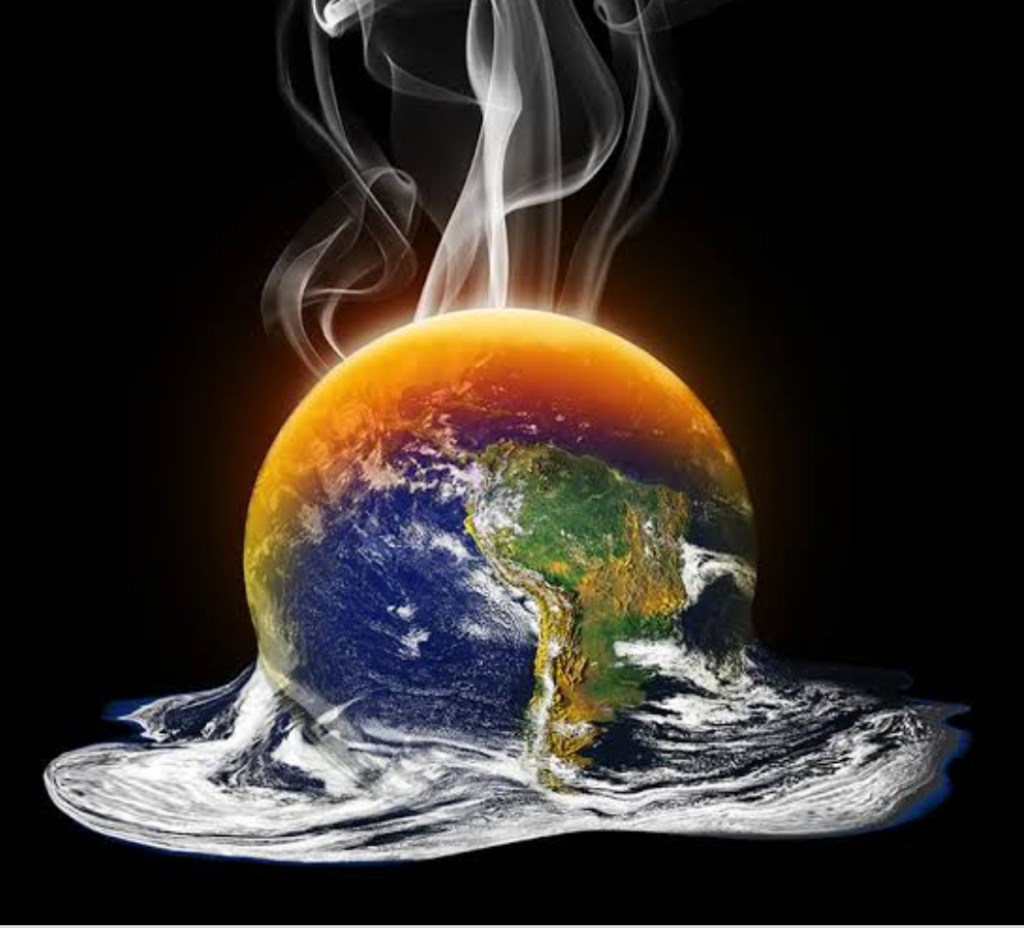
Global warming is defined as the global annual temperature has increased in total by a little more than 1 degree Celsius, or about 2 degrees Fahrenheit. Global warming is mainly because of the industrial revolution, burning plastics.

CAUSES OF GLOBAL WARMING:-

* Greenhouse Gases Are the Main Reasons for Global Warming.

* Another main reason for global warming is the industries.

* Deforestation is one of the reason for global warming.

* The smoke from vehicles.

EFFECTS OF GLOBAL WARMING:-

* Global warming cause increase in temperature that raises sea level can cause flood.

* Global warming raises temperature in the atmosphere.

* Melting of glaciers are one of the most threat for the earth

* If global warming cause increase in temperature then there is threat for availablity of water.

* It also cause some diseases like allergies,chest pain etc.

CONTROLLING MEASURES OF GLOBAL WARMING:-

* By decreasing deforestation and encouraging affrostration

* By making awareness programmes.

* By using natural products instead of plastics.

* By reducing burning of fossil fuels.

* By recycling the products.

DR. A. B. J. ABDUL KALAM

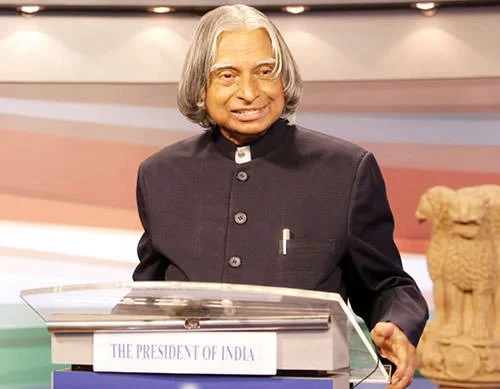
 Dr. APJ Abdul Kalam is a motivation for the individuals of India. Individuals regarded him with great respect and used to call him Sir APJ Abdul Kalam. Indeed, even a child younger than ten knows who APJ Abdul Kalam is. He was an Indian aerospace researcher who filled in as the eleventh president of India.People consider him the ‘Rocket Man of India’. Dr APJ Abdul Kalam was a significant believer of ‘Simple Living High Thinking’.Sir Abdul Kalam has faced numerous problems throughout his life. His youth was full of struggles, and he wanted to become a fighter pilot. He was firm on his hard work and commitment and he, at last, turned into a famous scientist of India. His life is a motivation for us.

A.P.J. Abdul Kalam, scientist and former president of India, dies at 83 -  The Washington Post
MISSILE MAN OF INDIA

ACHIEVEMENTS

1.HE HELPED TO BUILD A FIRST INDIGENOUS HOVERCRAFT

Abdul Kalam joined the Aeronautical Development Establishment of the Defense Research and Development Organization (DRDO), right after graduating from the Madras Institute of Technology in 1960. As a young scientist, he was assigned his first project to design and develop a hovercraft for the country’s defence applications. A hovercraft is an amphibious craft capable of travelling over land, water, mud, ice and other surfaces. After days of hard-work, Kalam and his team were successful in developing India’s first indigenous hovercraft which was named Nandi, the impressive white bull who acts as the vehicle of the Hindu deity Lord Shiva. Project Nandi received massive applause from the then Defense Minister, V.K Krishna Menon, and encouraged Kalam for his future endeavours. However, Project Nandi was shelved as the new government in power didn’t show any interest in the invention.

2.HE WAS A PART OF TEAM WHICH SET UP TERLS

Though Project Nandi was put in cold storage, due to it Kalam got a call from the Indian Committee for Space Research (INCOSPAR) to attend an interview at the Tata Institute of Fundamental Research (TIFR). At the time, INCOSPAR was formed out of the TIFR talent pool. Among the members of the selection panel who interviewed Kalam was Dr. Vikram Sarabhai, the father of the Indian Space Programme and the founder of Indian Space Research Organisation (ISRO). Dr. Sarabhai took a deep interest in Kalam and selected him as a rocket engineer in INCOSPAR. The team of rocket engineers of which Kalam was a part, set up the Thumba Equatorial Rocket Launching Station (TERLS) in 1963. TERLS is used by ISRO to launch sounding rockets even today.

3.HE WAS PROJECT DIRECTOR FOR INDIA’S FIRST SLV

In 1969, when INCOSPAR led to the birth of the ISRO, Kalam was transferred there and was initially involved in research about building rockets. In the early 1970s, ISRO introduced its own Satellite Launch Vehicle program owing to geopolitical and economic considerations. It was a program to develop the technology needed to launch satellites. Dr. A. P. J. Abdul Kalam was made the project director of the program. Beginning with mechanical designing to electrical integration, Kalam single-handedly supervised every aspect of the project, which was a massive success. On July 18, 1980, Satellite Launch Vehicle-3 (SLV-3) was successfully launched from Sriharikota range in the Nellore district of Andhra Pradesh. It deployed the Rohini satellite in near-earth orbit. It was the first successful satellite launch that took place on Indian soil and thereby made India the seventh member of an exclusive club of space-faring nations in international society.

4.HE WAS RESPONSIBLE FOR THE SUCCESSFUL LAUNCH AGNI AND PRITHIV MISSILES

After the huge triumph of SLV-III and dedicating the paramount years of his life to ISRO, Dr. Kalam was issued transfer orders to DRDO, where he was given the responsibility to lead the Integrated Guided Missile Development Program (IGMDP). According to the instructions of then Defence Minister R. Venkataraman, four missiles were to be developed simultaneously as part of the program. After years of consistent hard work and immense dedication, India got her first range of ballistic missiles, the Prithvi, the Agni, the Aakash, and the Nag. Out of the four, two missiles, namely, Prithvi, the tactical surface-to-surface missile; and Agni, an intermediate-range ballistic missile; were launched successfully. Due to this mammoth achievement under his leadership, India became a major military power and Dr Kalam became popularly known as the “Missile Man of India” .

5.HE SERVED AS A FIRST PRINCIPAL SCIENTIFIC ADVISOR TO THE GOVERNMENT OF INDIA

After his retirement from DRDO, Kalam was appointed as the first-ever Principal Scientific Advisor (PSA) to the Government Of India from November 1999 to November 2001. Principal Scientific Advisor was a Cabinet rank position at the time and was largely created to assist scientific cross-sectoral synergy across ministries, institutions and the industry. During his service period, Dr. Kalam supervised committees making master plans regarding defence, agriculture, healthcare and information technology. Under this esteemed post, he was also responsible for evolving policies, strategies and missions for many developmental applications.

6.DR. A. P. J. ABDUL KALAM SERVED AS THE 11th PRESIDENT OF INDIA

President APJ Abdul Kalam
DR. A. P. J. ABDUL KALAM

On June 10, 2002, the National Democratic Alliance (NDA), the then ruling party expressed their will to nominate Dr. Kalam for the post of President. On June 18, Kalam filed his nomination papers in the Indian Parliament. He went on to win the 2002 Indian presidential election with an electoral vote of 922,884 as compared to 107,366 votes won by Lakshmi Sahgal. Kalam was the first scientist to become the president of India. During his term as president, he was fondly called the People’s President because of his humility, integrity, vision; and his immense contribution to inspire and nurture the young minds of the nation. Dr. Kalam’s guidelines under the scheme of “Vision of 2020” to make India a developed country has been incorporated under plans of the Indian Government. After the expiry of his term and his unwillingness to contest the election for the second term, Pratibha Patil became his successor as the 12th president of India. Dr. A. P. J. Abdul Kalam served as the 11th President of India from July 25, 2002 to July 25, 2007.

Dr.APJ.Abdulkalam Official Website | Dr.Kalam Speeches | Dr.Kalam Thoughts

AWARDS

Dr Kalam was awarded the Padma Bhushan in 1981 and the Padma Vibhushan in 1990 by the Government of India. These are the third highest and the second highest civilian awards in India respectively. He received the Padma Bhushan after the successful launch of SLV-III; while he received the Padma Vibhushan after the successful completion of the Integrated Guided Missile Development Programme. In 1997, Dr. A. P. J. Abdul Kalam received India’s highest civilian honour, the Bharat Ratna, for his contribution to the scientific research and modernization of defence technology in India. Kalam has received numerous other honours including Veer Savarkar Award (1998); Ramanujan Award (2000); King Charles II Medal (2007); International von Kármán Wings Award (2009); Hoover Medal (2009); and Von Braun Award (2013). Moreover, he has received 7 honorary doctorates from 40 universities. Apart from these prestigious accolades, in 2010, the United Nations declared October 15 as World Students’ Day to commemorate the birthday Dr. Kalam.

MS DHONI

Mahendra Singh Dhoni or MS Dhoni is an Indian International Cricketer who has retired from International Cricket. MS Dhoni is the only captain in the history of Cricket to win all the ICC trophies. An everyday man who went on to be popularly known as the ‘Captain Cool’ is none other than our very own Indian Men’s (ODI & T20Is) Cricket Team Captain, Mahendra Singh Dhoni or simply known as Dhoni.

12 Ms dhoni wallpapers ideas in 2021 | ms dhoni wallpapers, dhoni  wallpapers, dhoni quotes

MS DHONI ACHIEVEMENTS

IN TEST CRICKET

1- In 2009, under Dhoni’s captaincy, India topped the ICC Test Cricket rankings for the first time. 

2- He is the most celebrated Indian Test Captain with 27 Test wins. 

3- He has 15 overseas Test defeats, the most by an Indian captain. 

4- He became the first Indian wicket-keeper to complete 4,000 test runs.

5- Dhoni scored 224 against Australia. This is the highest score by a wicket-keeper–captain and the third-highest score by an Indian Captain. 

6- His maiden century against Pakistan is the fastest century to date scored by an Indian wicket-keeper and fourth overall. 

7- Dhoni completed 50 sixes as a captain. 

8- With 294 dismissals in his entire career, he tops the list in all-time dismissals list by Indian wicket-keepers.

IN ODI CRICKET

1- Third and First Indian Captain to win 100 games. 

2- Fourth Indian Cricketer to reach 10,000 ODI runs after Sachin Tendulkar, Sourav Ganguly & Rahul Dravid. He is also the second wicket-keeper to reach this milestone. 

3- With a career average of over 50, he is the first player to achieve 10,000 runs. 

4- Among cricketers with more than 5,000 runs, he has the 5th highest batting average and the 2nd highest batting average among players with an aggregate of over 10,000 runs– 51.09. 

5- With 4031 runs in his entire career, he scores the most runs in ODI history at number 6. 

6- While batting at number 7, only cricketer to score centuries in ODI history– 2 centuries at number 7. 

7- He has 82 Not Outs in ODIs. 

8- He scored 183* against Sri Lanka– the highest score by a wicket-keeper. 

IN T20 CRICKET

1- He holds the record of most wins as a Captain– 41. 

2- He played most matches as a captain and wicket-keeper– 72.

3- He played most consecutive T20I innings without a duck– 84. 

4- Dhoni played the most T20I innings– 76. 

5- He holds the record of most dismissals as wicket-keeper in T20Is– 87. 

6- He holds the record of most catches by a wicket-keeper in T20Is– 54. 

7- He holds the record of most stumpings as a wicket-keeper in T20Is– 33.

8- He holds the record of most catches as wicketkeeper in a T20I inning– 5. 

AWARDS

1- In 2018, he received India’s third-highest civilian award– Padma Bhushan. 

2- In 2009, he received India’s fourth-highest civilian award– Padma Shri. 

3- For 2007-2008, he received  India’s highest honour given for achievement in sports– Rajiv Gandhi Khel Ratna. 

4- In 2008, 2009, he was awarded the ICC ODI Player of the Year. 

5- In  2006, 2008, 2009, 2010, 2011, 2012, 2013, 2014; he was awarded the ICC Wolrd ODI XI. 

6- In 2009, 2010 and 2013; he was awarded the ICC World Test XI. 

7- In 2011, he was awarded Castrol Indian Cricketer of the Year. 

8- In 2006, he received the title of MTV Youth Icon of the Year. 

9- In 2013, he received the LG People’s Choice Award. 

10- In August 2011, he received an honorary doctorate from De Montfort University. 

“SUCCESSFUL ARE NOT GIFTED; THEY JUST WORK HARD THEN SUCCEED ON PURPOSE”

“FIELD IS NOT A MATTER,YOU GIVE YOUR EFFORT YOU WILL DEFINITELY GET REWARD”

Anthropology And Its Relation With Allied Disciplines

Anthropology And Social Sciences

1. Sociology

Sociology is a science of society that studies human behaviour in groups. Anthropology is a science of man and studies human behaviour in social surroundings. Thus it is clear that the subject matter of sociology and social anthropology is common to a great extent. Anthropologists and sociologists share an interest in
issues of race, ethnicity, social class, gender, and power relations in
modern nations.

2. Psychology

For the psychologists the focus of study is upon all aspects of human behaviour: and its personal, social and cultural dimensions which will never be complete without having the knowledge of social anthropology. Therefore, for understanding the social processes and
meanings in the world around us one has to study social anthropology.
Both Psychology and Anthropology deals with the manifold relations between individuals on the one hand and groups, communities, societies and cultures on the other hand.

3. History

History may be important to social anthropologists in the sense, that is, not only as an account of past events leading up to and explaining the present, but also as the body of contemporary ideas which
people have about these events, people’s ideas about the past are an intrinsic part of the contemporary situation which is the anthropologists immediate concern and often they have important implications for existing social relationships.

4. Folklore

Folklore has an important place in every primitive culture. It
is through the medium of folklores that the culture of a primitive society is
transmitted from one generation to the next generation. Folklores contain
the philosophy of the primitive people. How the world was evolved is a
theme of many folklores of existing tribes. In most of the folklores, a reference to the mutual relation of the people and their gods is given.

Anthropology And Biological Sciences

1. Zoology

In terms of the relationship to other animals and the overall places of the human species in the process of evolutions.
Anthropology has a sort of specialization or sharpening of certain aspects of general biology, more specifically, zoology.

2. Botany

No matter what the time period or geographical area, plants played an important role in human culture. Plant remains enable us to assess human impact on the environment. As direct, site-specific
evidence of agricultural and culinary activities, they enrich our understanding of how people lived.

3. Genetics

Genetic anthropology is the branch of scientific study which deals with combining genetic data with available physical evidence and past history. Genetic anthropology is an important branch
of anthropology. The relevance of genetics in anthropology has slowly been reinforcing the importance of nature (biology) in culture, and also
emphasises on the phenomena of variation. To study evolution, understanding genetics and variation in the anthropological context is
highly vital.

4. Medical Sciences

Quite a few things are common in
anthropology and medicine. In the proper study of mankind, anthropology aims at discovering man as a human being, so it should be the case with a physician. Anthropology can assist more clearly and
satisfactorily in identifying the health needs, and in clarifying factors influencing acceptability and utilisation of health services, and can also assist in showing how these health needs can be most appropriately
solved.

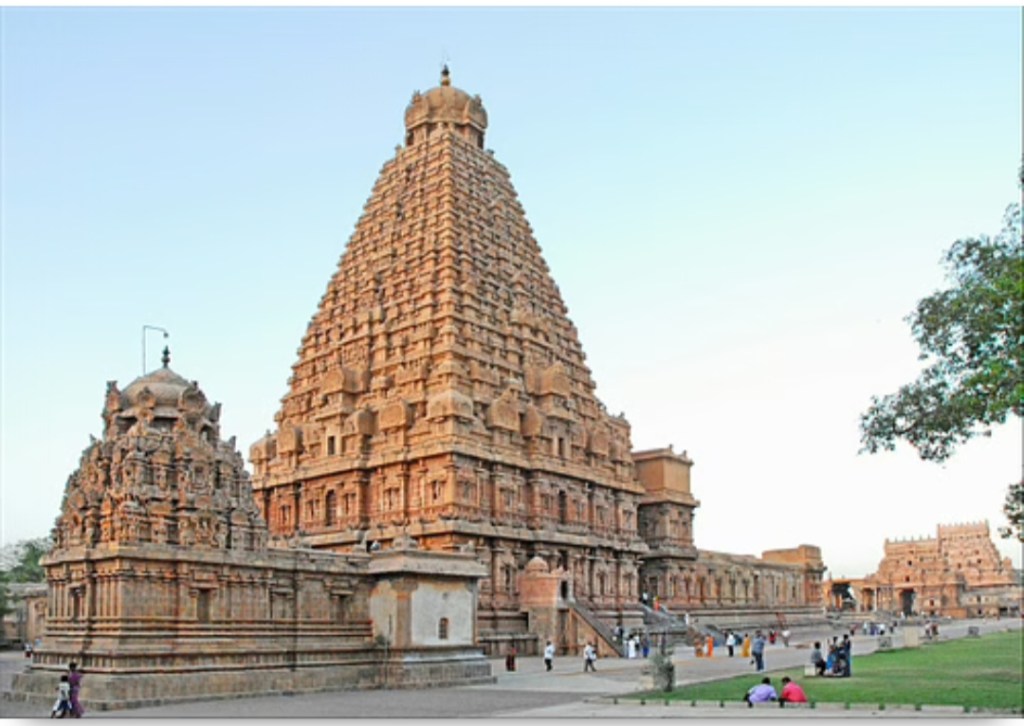
THANJAVUR-BIG TEMPLE

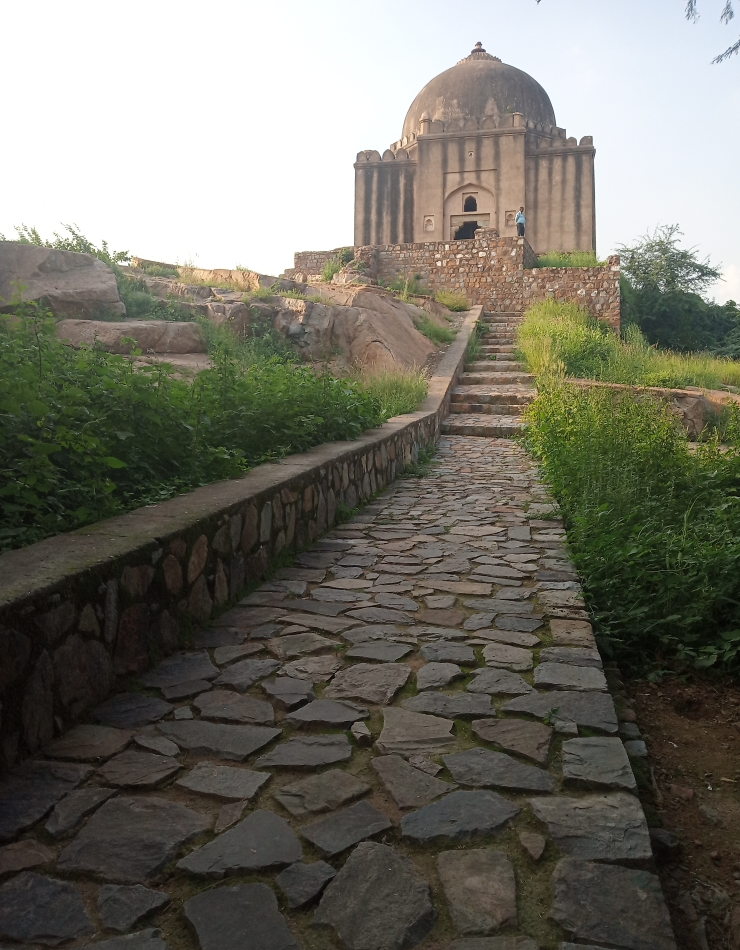
This Temple is situated in Thanjavur Tamil Nadu.It is constructed by Raja Raja chola in 1003 and 1010 A.D. This temple is originally known as Peruvudaiyar Kovil locally known as Thanjai Periya Kovil, and also called Rajarajeswaram, is a Hindu temple dedicated to Shiva located in South bank of Cauvery river in Thanjavur, Tamil Nadu, India. It is one of the largest Hindu temples and an exemplary example of a fully realized Tamil architecture.[4] It is called as Dakshina Meru.In top of the temple they built the vimana which is one of the highest in South India.

The main temple along with its gopurams is from the early 11th century. The temple also saw additions, renovations, and repairs over the next 1,000 years. Because the kings who made wars caused damaged to the temple And it is renovated by the Hindu dynasty.The main temple-related monuments and the great tower is in the middle of this courtyard Around the main temple that is dedicated to Shiva, are smaller shrines, most of which are aligned axially. These are dedicated to his consort Parvati, his sons Subrahmanya and Ganesha, Nandi, Varahi, Karvur deva As a world heritage monument, the temple and the premises comes under the Archaeological Survey of India (ASI) which falls under the Ministry of Culture of the Government of India, to ensure safety, preservation and restoration.The lighting of the monument is designed to enhance the natural color of the stone along with the sculptural forms adorning all corners of the temple. The restoration has been undertaken by the Archaeological Survey of India.

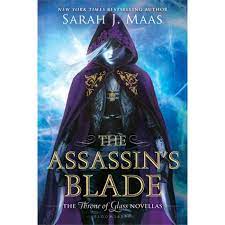
Throne of Glass Novellas: The assassin’s blade

The first book in the 8-booked series of Throne of glass novellas, it is epic. Way beyond epic. It tells us a story of a mere 16-year old, yeah! you probably are thinking, “what a bore”. NOT. This 16- year old, believe it or not, is WAAYYY cooler than us, she’s an assassin. Well, you ask me what’s new? for there are one or two assassins in every fantasy book, I’ll tell ya what’s new, that girl is nothing like it. She is kind, generous, lovable, likable, and most of all gorgeous. Do you remember that 1 girl in school who had it all? good looks, good personality, good brains? yeah, she’s that. And much much more. She is a bibliophile, which shows the ability of Sarah to relate with all her readers as she knows we are massive bibliophiles if we chose to read such a long string of novels as entertainment.

It all starts, with Celeana Sardothien, That 16-year old have-it-all I told you about. Well, it seems she is NOT the have it all right now, for she trying to solve every problem happening in the Assasin’s guild, starting with beating Sam Cortland. Then the news of ben, and then the scene in skull’s bay. that’s where the actual story begins.

A LOT happens in this fairly thin book, but I am not giving you any spoilers, you have to read it yourself. Give it time, and it will be your paradise. Published in 2014, 2 years after the publish of Throne of Glass, the first book which gave its name to the series, It is phenomenal. You can’t get enough of it. ever.

The story is not of this world, not even of the FANTASY world. It is something you’ve never read before. Something you’re not familiar with, and still, somehow, you find a home in it.

What is Employment Screening and How to Do Employment Screening

Admin's avatarTrack2Training

Employment screening enables you to verify the skills, experience and qualifications of a candidate to assist you in making your hiring and recruitment decisions. This provides you with all of the available information about a candidate to make the most accurate decision and safeguard your hiring process. Employment screening also helps to protect your company’s reputation and ensure that your financial and people risk is minimised.

Photo by Edmond Dantu00e8s on Pexels.com

Many employers will conduct pre-employment screenings before they send you a job offer. Potential employers will typically perform a screening sometime during the interview process to assist in their hiring decision. There are a variety of screenings potential employers can use to get a thorough understanding of your background. In this article, we will explain what pre-employment screening is and how you can prepare for it.

What is pre-employment screening?

Also sometimes called a “background check,” a pre-employment…

View original post 1,687 more words

What is Employment Screening and How to Do Employment Screening

Admin's avatarTrack2Training

Employment screening enables you to verify the skills, experience and qualifications of a candidate to assist you in making your hiring and recruitment decisions. This provides you with all of the available information about a candidate to make the most accurate decision and safeguard your hiring process. Employment screening also helps to protect your company’s reputation and ensure that your financial and people risk is minimised.

Photo by Edmond Dantu00e8s on Pexels.com

Many employers will conduct pre-employment screenings before they send you a job offer. Potential employers will typically perform a screening sometime during the interview process to assist in their hiring decision. There are a variety of screenings potential employers can use to get a thorough understanding of your background. In this article, we will explain what pre-employment screening is and how you can prepare for it.

What is pre-employment screening?

Also sometimes called a “background check,” a pre-employment…

View original post 1,687 more words

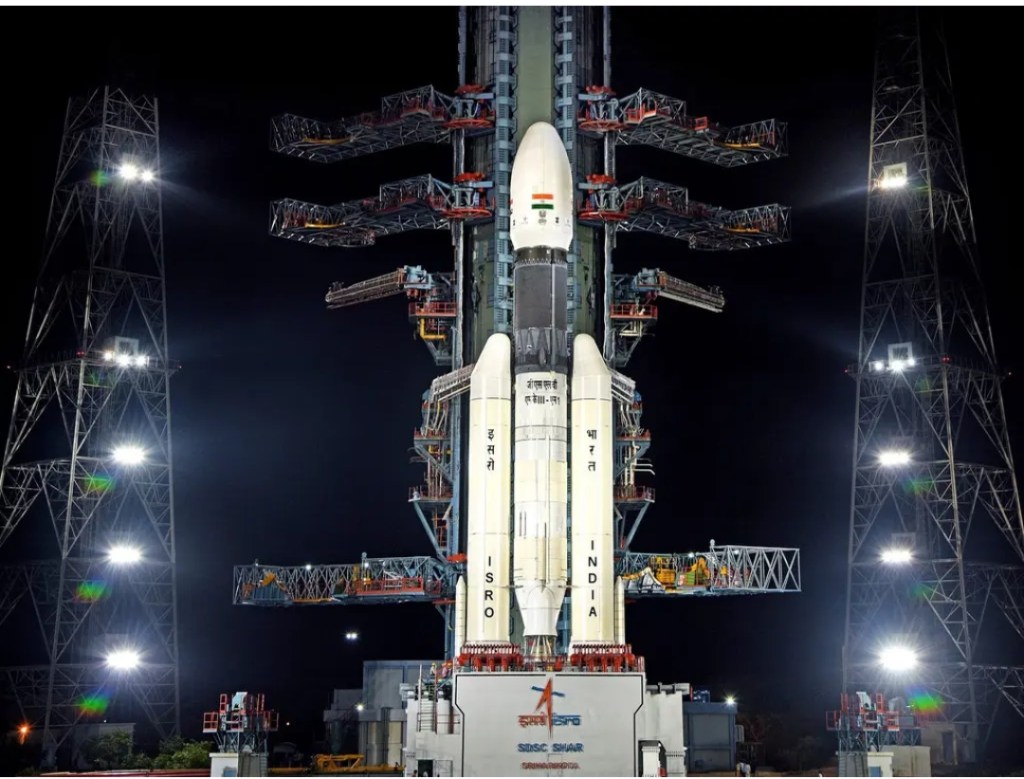
CHANDRAYAN-II

CHANDRAYAN-II is one of the successful satellite in CHANDRAYAN-II is the second lunar exploration mission developed by the Indian Space Research Organisation (ISRO), after Chandrayaan-1. It consists of a lunar orbiter, and also included the Vikram lander, and the Pragyan lunar rover, all of which were developed in India. CHANDRAYAN-II launched in 22 July 2019 in GSLV Mark III M1 rocket launched from Satish Dhawan Space Centre Second Launch Pad.

Isro chief K Sivan said that the spacecraft has completed 9,000 revolutions of the Moon during a workshop. Two years after its lander, rover combination crash-landed on the far side of the moon, the Chandrayaan-2 mission is still delivering critical observations to India as it completes 9,000 orbits around the Moon.06-Sept-2021.

Chandrayaan-2 Orbiter continues to orbit the Moon in an orbit of 96 km x 125 km and both the Orbiter and Lander are healthy. The first de-orbiting maneuver for Chandrayaan-2 spacecraft was performed successfully today (September 03, 2019) beginning at 0850 hrs IST as planned, using the onboard propulsion system.

Six Reasons Why You Should Start Using A To-Do List

In a world full of distractions, with beeps and pop-ups ruling  most parts of your day and dozens of thoughts floating in your head, staying focused is a herculean task. Amidst all the chaos, one thing that can help you stay sane is the good old productivity tool – To-Do List.

Having said that, you should also know that it is a double edged sword. This age-old technique has a reputation of hurting productivity. The key however is in knowing how to use it effectively

With a lot of speculation and confusion doing the rounds about this tool, it’s natural that you may end up being double minded about whether or not to use it. Listed below are 6 points which can aid you in your decision making process.

Frees up a hell lot of space in your brain

Whether it’s the list of items you need to buy, the ideas that popped up while you were doing laundry or the schedule of the meetings you need to attend, cramming your brain with a hundred thoughts is definitely not something it would appreciate. By doing so, you are not only overwhelming the brain but also using up the energy and space that could otherwise have been used for more productive stuff. So please do yourself and your brain a favour – get it all out of your head, put it on a list and thank me later !

Photo by Monstera on Pexels.com

Throws the ‘Oops ! I Forgot’ excuse out of the window

As much as we all would like to remember every single detail about everything, let’s face it, not many of us have that extraordinary memory power. So if you don’t have it written down somewhere, it’s only natural that you may forget some of the things that you really wanted to remember. To-Do lists are visual reminders of all the tasks that you wanted the brain to remember and when you have it right in front of you, it’s impossible to miss any.

Helps you to organise and prioritise the tasks

Prioritising the tasks and focusing on the most important ones can be challenging when you have a lot going inside your head. Without that clarity, instead of sending out that important email to your client, you may end up decluttering your closet. When you have all the tasks listed out right in front of you, it becomes much easier to analyse and sort out what needs to be done right away and what can wait.

Photo by Sajith R on Pexels.com

Acts as a roadmap to your long term goals

Suppose you are travelling from Chennai to Kolkata.You know your starting point and also your destination. But without knowing how to proceed and which route to take do you think you’ll ever reach Kolkata ? In the same way your long term goals are the end results that you want to achieve and the tasks act as your milestones which give you an idea about the route that you need to take in order to reach your end goal. By breaking down the long term goals into tiny actionable steps and putting them on your list, you get a clear idea on the course of action you are supposed to take.

Helps calm your monkey mind

There may be times when your mind suddenly decides to remind you about the gift that you need to order for your friend’s birthday while you are trying hard to focus and complete the article due for the day. It now becomes the responsibility of the brain to remember this and in an attempt to do so it loses focus on the task at hand. Putting this newly popped up task on your list takes the weight off the brain and gives your restless mind an assurance that it will eventually be taken care of.

Checking off an item on your list gives you that daily dose of dopamine

When you finish a task and check it off your list, your brain feels a certain sense of success. And as a reaction to it, it releases a small amount of dopamine which in turn makes you feel happy and good about yourself. Crossing out an item from your list is something that can instantly make you feel good and motivates you to take action on the remaining tasks.

Bottom Line

Your To-Do List should be something that motivates you to get up each day and work hard to crush those goals that you have set for yourself.It is supposed to elevate your overall happiness and not pull you down. Instead, if you find your list giving you nightmares or panic attacks, chances are that you might not be using it the right way. Figure out strategies on how to effectively make and use a To-Do List and try incorporating them in your process and I’m sure with the right strategies and complete dedication to the process you will definitely see the results. Good luck !