EduPub (Edupedia Publications Pvt Ltd) is a company dedicated to the development of the education, learning, research and innovation in the field of the research and books publication. We are pioneer in providing wide range of services to educational institutions, government agencies, individuals and corporates in the field of training and education, research and development, research and innovation. research and publication.
Radio is a means of mass communication. It is one of the cheapest media of entertainment and information. It is still a popular means of mass media. Both old and young, educated and uneducated, rich and poor listen to the radio with great interest. It is equally popular in villages and metro cities.
Radio is a powerful means of information and entertainment. We have speeches, songs, news and debate and discussion. Even a poor man can have a radio set. It is a very cheap and so everybody can afford it. It helps to create public awareness. A village farmer gets information about latest technology of farming through radio. Radio helps him to learn about the weather condition. An illiterate woman can learn through radio about her household activities. Radio is important for students. They learn new things with the help of radio. Thus, radio holds great importance for a country like India.
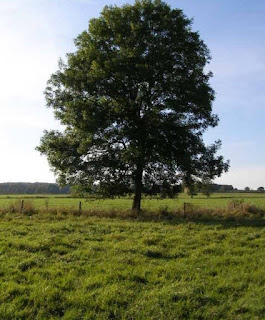
Trees are valuable natural resources. They are the gift of nature. They provide shelter. They give us fruit. They are the source of herbs and medicine. Trees give us wood also.
Trees are very helpful to man. They control pollution. They prevent soil from erosion. They maintain the fertility of soil. They bring rains. Rains are very important for India. India is an agricultural country. They give us food, fruits, etc. Papers are made from wood pulp. We write on the papers. Rubber, lac, silk, etc. are produced from the trees. These things have great commercial value.
Trees give us fresh air. Fresh air is good for health. They absorb the carbon dioxide and give out oxygen. We breathe in oxygen. Trees provide shelter to birds and animals. Trees help to check floods. Floods are great natural calamity. So, we should protect trees. We should plant more and more trees.
Some trees like mahogany, sal and rosewood give us hard timber to make furniture and doors, etc. Some trees like poplar give us soft wood to make corks. Leaves, branches and fruits of many trees have medicinal value.
Telephone is a gift of science. It is the fastest means of communication. We can talk to a person sitting thousands of kilometres away. The communication is held with the help of wires. There is a wide network of wires. Telephone is becoming very popular. Today, even a common man can afford this.
Telephone was invented by great scientist Alexander Graham Bell in 1875. This invention proved to be a great boon to mankind. It became popular all over the world. Communication became fast. Before it’s invention, communication was very difficult. It took many days for the message to reach its destination. But telephone has reduced the time of giving and receiving messages. Within a minute, a man can have a contact with a person sitting too far.
Telephone has greatly helped people. It has helped in trade and business. It has contributed to the growth of education. Now the telephone facilities are available in the remote villages.
Computer is an electronic machine. It is very common these days. It can be seen everywhere. It is widely used in banks, post offices, offices, factories, schools, colleges, shops and malls.
Computer works very fast. It’s results are very quick. Computer is superior to human brain. It remembers masses of data and performs calculations at lightning speed. It is highly efficient. Life cannot be imagined without computer.
Computers are very useful to school students. They help students learn new techniques of study, graphic designs, games and other useful applications. They are also helpful for office executives and college students. They help the librarians in efficient management of libraries. They are used in space science and laboratories. Any information can be found by surfing internet. Computers have become a necessity today.
Students should learn computers. They are easy to learn. They help in their education. They enrich their knowledge.
Pollution is a serious problem. It is a cause of great concern for mankind.
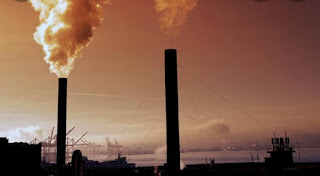
Pollution is of many kinds. They are air pollution, water pollution, noise pollution and soil pollution. With the growth of population, pollution is also increasing. Industries have added greatly to pollution. The air we breathe is filled with smoke. Water is polluted.
Towns and cities are growing fast. Population is increasing. New factories are being set up. Trees are being cut. The wastes of the factories go into the rivers. They cause water pollution. Household wastes also fall in the rivers. They also make source of water dirty.
The number of buses, cars, scooters and motorcycles is multiplying. They emit poisonous gases. The smoke of factories also adds to the air pollution. Uses of loudspeakers and DJs create noise pollution.
We should be aware of these problems. We should plant more and more trees and eco-friendly habits. Lf we do not pay proper attention to the problem of pollution, the life on this Earth will become difficult. Health standard of people will fall.
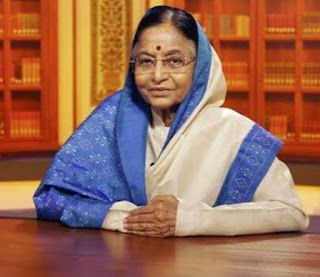
India is a democratic country. As per the constitution, the rank of President is the highest. Smt Pratibha Patil is the first woman President of India.
Smt Pratibha Patil was born on 19 December, 1934 in a small village of Jalgaon district in Maharashtra. She received her education in Maharashtra. She was married to Sh. Devi Singh Shekhawat of Rajasthan.
Smt Pratibha Patil has been a successful advocate. Later she joined politics. She became an MLA in Maharashtra first in 1962. She remained MLA till 1985. She served the Maharashtra government as urban development, education, tourism, health, cultural and social welfare minister. She also became the leader of opposition in Maharashtra assembly. In 1985, she was elected the member of Rajya sabha. She was elected deputy chairman in the rajya sabha also. She was appointed governor of Rajasthan in 2004. She is a dedicated and hardworking politician.
On 25th July 2007, Smt Pratibha Patil created history. She was sworn in as the first Indian woman President. At the age of 72, she became the 13th President of India. Under her experienced leadership, the country will make great progress.
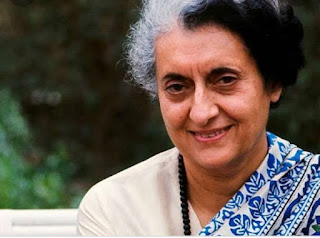
Indra Gandhi was the first woman prime minister of India. She was the daughter of the first prime minister of India, pandit Jawaharlal Nehru. She was born on 19th November 1917. She was a great leader. She led the nation to the path of progress.
Her childhood name was Indira Priyadarshini. She was born in Anand Bhawan. At that time Anand Bhawan was the centre of political activity. She received education both in India and Europe. She was very active from her early childhood. She took part in the freedom struggle of India. She was put to jail in 1942 during the Quit India Movement.
Indira Gandhi worked for Hindu Muslim unity. She solved many problems at home and abroad. She nationalised banks in India. Bangladesh was created during her time. She defeated Pakistan in 1971 war. She was a courageous leader. She was a great patriot. She improved the image of India in the world.
More than fifty years ago, traveling was dangerous and difficult because modern means of transport such as trains, buses, cars and aeroplanes were very rare. But with the advancement in the means of transport, traveling has become a means of education, and is no longer limited to books or the teachers.
Education here does not mean purely bookish knowledge. Education here is referred to in its wider sense. It means the complete understanding of the different ways in which our society and the world work. It includes the field of industry, commerce, agriculture and thousands of other skills. It is only by coming in contact with larger sections of humanity, in different parts of the world, that we can receive the right type of education.
Bookish knowledge has its own importance. It give us the basic knowledge of human activities. We learn the theoretical details. But that knowledge becomes complete by gaining practical knowledge. It is, therefore, quite essential that we move from place to place. Only traveling can help us give a practical shape to the knowledge we have obtained from books. Therefore traveling is essential for the development of intellectual, moral and even commercial aspect of our life.
Students must travel now and then to know for themselves how the world is going. Businessman also have to travel to acquire knowledge of the business techniques. It also helps them to establish contacts with their colleagues at other places. Even doctors and lawyers must travel to improve the quality of their work.
There is a great controversy going on in the world now a days about peace in the world. Some people believe that there can be permanent peace in the world. On the other hand some think that permanent peace is an impossibility. Let us examine these views critically.
There are some thinkers who believe that the world can have permanent peace, because science has developed to such an extent that the only alternative to peace is the total extinction of the world. As war will be suicidal to human race, there will not be any world war.
This view is based upon the sincere desire for living and letting others live. These people say that a man is a social being. Somehow or the other, the leaders of the world will not commit the folly of leading the world towards destruction.
These are some thinkers who are of the opinion that in our world permanent peace is not possible. According to professor C.E.M. Joad, our world has reached that stage, where even a single event may blaze the whole of it. The antagonistic attitude of the democratic world towards the communist block and vice versa resulted in the mad race of armaments. Various kinds of destructive weapons like atom bombs, hydrogen bombs and rockets are manufactured on such a wide scale that even rich countries have now no money left for useful, social, and political works.
In the UNO issues are discussed and voted on the basis of groupism. None cares for the honest, sincere and practical solution of the problem. Hence, it is foolish to think that there will be cessation of war. And if once there is a war, it will surely develop into a world war which means the destruction of the world.
If we think over these views seriously, we come to know that there is a particle truth in each of them and each view is one sided, as it is impossible to believe that balance of power will always remain with two antagonistic blocks. In the same way, it is also unbelievable that politicians of the world are so insane that an ordinary fighting between any two countries will lead to a world war. For example, in the case of Korea, Iran, Iraq, and Kuwait, the situation was not allowed to take a serious turn, though it is also true that the division of the world into two camps is certainly not in the interest of permanent peace.
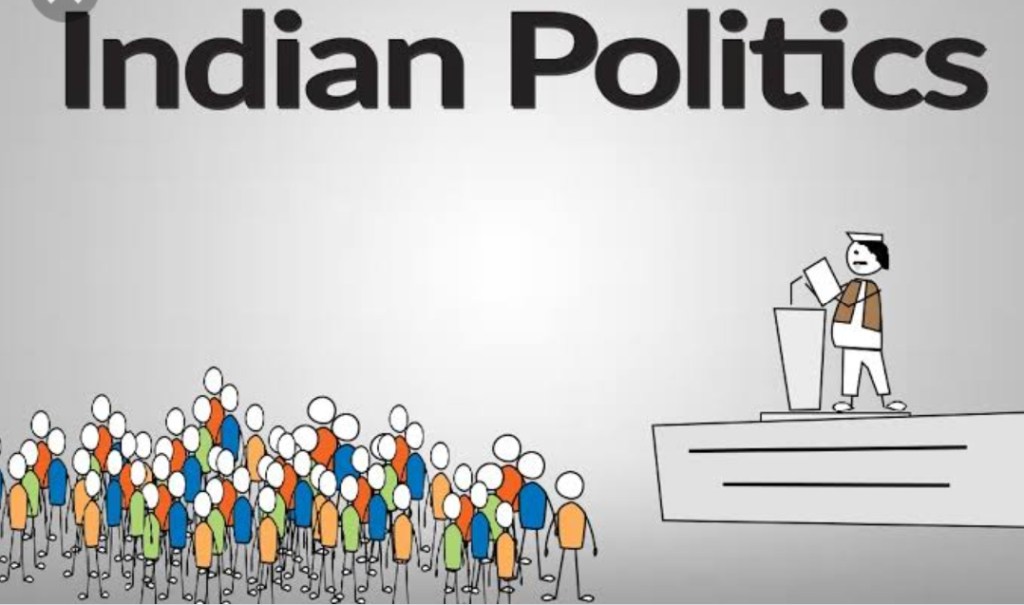
Politics work with inthe constitution of India.India is a parliamentary democratic republic in which the president of India is the head of state and the prime minister of India is the head of government.
POLITICAL PARTY IN INDIA:-
As per 23, September 2021 the election commission of India total number of parties registered was 2858, with 8 national parties, 54 state parties and 2796 unrecognised parties.
THREE BRANCHES OF INDIAN GOVERNMENT:-
* Executive.
*Legislative.
* Judiciary.
EXECUTIVE:-
Executive type of Indian government include,
* president of india.
* prime minister of India.
* union cabinet.
* council of ministers.
* Bureaucrats.
PRESIDENT OF INDIA:-
President of India is the highest post and is the constitutional head of the country. According to our constitution, President is the first citizen of our country and a symbol of unity and integrity.President is also responsible for appointing other executives and judicial members in the country like the Chief Justice of India, Judges of all the High courts, the Election Commissioner of India and states too. President of India is also the Commander in Chief of all the Indian forces i.e. Indian Army, Indian Navy, and Indian Air force.
PRIME MINISTER OF INDIA:-
Prime Minister is the chief of the Central government of India and also acts as the advisor of President. He is also head of the Council of Ministers and is responsible for appointing or dismissing any minister from the council. In case Prime Minister resigns from his office or dies during his tenure then the cabinet will automatically dissolve.
UNION CABINET:-
Union Cabinet consists of the Prime Minister and Cabinet Ministers. This is the decision making body in the central government.The Cabinet Minister cannot make a law concerning his department on its own, he can only propose the decision and then the Union Cabinet will make the final law.
COUNCIL OF MINISTERS:-
Council of Ministers works under the Union Cabinet. All the members of the Union Cabinet are members of the Council of Ministers and here the Minister of States appointed by the President on the advice of the Prime Minister.
BUREAUCRATS:-
Bureaucrats are selected and appointed by Union Public Service Commission and for states there is a State Public Service Commission. They are responsible for implementing the laws and all the other functions of government. Bureaucrats consist of IAS, IPS, IFS and other officials leading various government agencies.
LEGISLATIVE:-
Legislative type of government include president,lok sabha also known as lower house,Rajya sabha also known as upper house.
LOK SABHA:-
Lok Sabha is more powerful in both the houses. Members of Lok Sabha are elected directly by citizens of India. There are total 530 members from the states and 20 members from the union territories. They are elected in general election. Their term is five years.
RAJYA SABHA:-
There cannot be more than 250 members in the Rajya Sabha. Members of Rajya Sabha are elected by state legislative assemblies out of which 12 members are directly appointed by President who come from different backgrounds like Literature, Art, Social Services etc.
JUDICIARY:-
Judiciary type of government includes supreme court,high court and district court.
SUPREME COURT:-
Supreme Court is the highest judicial body of the country. The decision by Supreme Court of India is acceptable by all judicial bodies and no other judicial body has the power to change a decision by Supreme Court. Indian judiciary is an independent body and is not affected by Legislature or Executive. Supreme Court has the power to question any decision made by Legislative Bodies or Executive if the decision is not in accordance with the Constitution of India.supreme court of india consists of 34 judges maximum in which there can be a Chief Justice and 33 other judges.
HIGH COURT:-
The High Court is the highest judicial body of a state. High court functions under Supreme Court. High court maintains the rule of law in the particular state and in case of two small states there can be one common High court.
DISTRICT COURT:-
District court or sub-ordinate courts function under High court. They maintain rule of law in a particular district or locality in which they function. They look after the civil and criminal matters of that particular region.
There are many problems before our country today. The problem of unemployment is one of them. It is a serious problem. It implies an involuntary idleness. The individual who has no means of earning his bread by means of labour becomes a nuisance to the society. Unless every one is given work, the problem cannot be solved.
There are many causes of unemployment. The first cause is that the system of our education is defective. Much importance is given to theoretical and literary education. The practical side is almost neglected. The result is that the schools and colleges have become machines producing unemployed persons. When boy comes out of the school, he find himself unemployed. Whenever he goes, he finds the doors closed for him. In the end, he becomes desperate.
Machines are also responsible for unemployment. They have destroyed cottage industries which were a source of income to poor people. The result is that a man gets lesser amount of acres of land than his father used to have. Generally, it is seen that in villages there is no work to do when the farmers are unoccupied.
In order to remove unemployment, our government should do her best; as unemployed citizens generally become a prey to the informal ways of living. The state which cannot provide employment to her people can never claim to be a welfare state.
The system of education should be changed. Emphasis should be laid on the importance of manual labour. Special attention should be paid to technical education. Cottage and small industries should be encouraged and money should be made available to the villagers on a nominal interest to run their industries. Some sort of arrangement should be made so that the landless workers must have some land to cultivate. Import of foreign goods should be stopped and Indian industries should be patronised.
Though our government is fully alive to the problem, yet any immediate solution is nowhere in sight. Unless the problem is solved satisfactorily, all talks of welfare state and Ramraj are meaningless.
Reading is an immersive experience that often rewards you with a great story and good vocabulary. There are books across several genres one can choose from to indulge in a wonderful reading experience. But there are some books that fall under the category of ‘classics’ as their themes, characters, and plot lines become relevant for ages to come. These are written by some of the brilliant literary minds that became popular and they went on to influence many modern works of literature.
The story begins with a typical farm being run by a human with a variety of animals living in it. The farm animals are often mistreated, overworked and ignored by the human which agitates them. Hoping to overthrow the human race and reaping all the benefits of their work, they drive the human out of the farm. What follows is a satirical allegory to the events that happened during and after the Russian Revolution of 1917.
Although the story revolves around farm animals, its themes of corruption, slavery, dicatorship, class distinction, and characters, makes the readers draw parallels with the current political scenario. It is a must-read for a better understanding of the Russian revolution and an engaging experience.
The Great Gatsby- The Jazz age novel
The Great Gatsby is a 1925 novel written by F. Scott Fitzgerald. It follows the life of a self-made millionaire named Jay Gatsby who is in pursuit of his long lost lover named Daisy Buchanan. The novel however, has little scope for romance and represents America in the 1920s. It highlights the era of unrivalled wealth and materialistic access.
The novel upon its release didn’t gain commercial success. Critics believed that it did not amount to Fitzgerald’s earlier novels. However, it began to gain popularity during World War II as free copies were distributed among American soldiers who were serving overseas. The Great Gatsby went on to become an important part of America’s educational curriculum and pop culture.
The novel continues to attract scholarly attention and is a contender for the title of ‘The Great American Novel’.
Harry Potter and the Philosopher’s stone- You Know Who
This book can be considered as J.K Rowlings’ stepping stone to success. After being rejected by 11 publications and finally being published by Bloomsbury publication, upon the request of the chief executive’s 8 year old daughter. Harry Potter and the Philosopher’s stone went on to be translated into 73 languages and sold 120 million copies. Becoming the second best-selling novel of all time.
The story follows Harry Potter and the readers’ introduction to the world of magic, following Harry’s discovery of his magical heritage and acceptance into the Hogwarts School of Witchcraft and Wizardry. As the readers alongside Harry manage to grasp the revelation of a whole new world of possibilities, worthy opponents and dangers show up on whom magic must be used to defeat and protect.
Reading is an immersive experience that often rewards you with a great story and good vocabulary. There are books across several genres one can choose from to indulge in a wonderful reading experience. But there are some books that fall under the category of ‘classics’ as their themes, characters, and plot lines become relevant for ages to come. These are written by some of the brilliant literary minds that became popular and they went on to influence many modern works of literature.
The book thief is a 21st century novel that uses the Nazi regime in Germany as its background. Although it has its fair share of horror and despair. The Book Thief delivers hope to its readers through love and tranquility among family and friends.
The novel follows the life of Liesel, who moves into her new foster parents’ home following her brother’s death. As she goes on to witness the dangers posed by the Nazi regime, Liesel adopts her newly found passion for reading by stealing books from the rubbles and also the Mayor’s house. One of the pivotal characters in the novel is death itself as it narrates the entire story.
The Lion, The Witch, and The Wardrobe- A world of fantasy
Open the book to a whole new world of fantasy, mythical creatures and magic. When 4 siblings are relocated to a large house in the countryside due to wartime evacuation. They discover a wardrobe in the house which had more than just clothes hanging inside. The 4 siblings venture into the world of dreams upon entering the wardrobe. They go on to encounter the witch and the lion, and participate in an impending war to end the evil’s oppression over the good.
This fantasy novel was the first to be published among the 7 volumes known as The Chronicles of Narnia. C.S Lewis wrote this novel as a dedication to his goddaughter named Lucy Barfield.
Here are some of the classic novels from the 20th century across different genres to enhance your reading pleasure.
India became free on 15th August, 1947. Since the dawn of independence, we have been facing many problems. The problem of rapid increase in population is one of them. Ten million are added to our population every year. We are more than one hundred crore ill-fed, ill-nourished and ill-housed human beings. Packed class rooms, over crowded compartments and a heavy traffic on the road are a common sight.
The effect of over population is that it has caused a number of difficulties. It has made the daily life of a common man full of worries. The problems of housing, unemployment, under employment and scarcity of foodgrains are connected with it. Population would not be a problem if we have enough jobs, enough schools and houses as well. They are increasing daily. Labourers agitate. There is a call for strike. Mill owners lock out. So, there is a conflict between the employers and employees.
The best solution of these problems is to keep the population under control. We cannot improve in general without limiting the size of the family. This is known as family planning. It is curse to have a big family now a days. A couple should have two or three children. In these days of soaring prices, a man does not earn enough to support a big family. We have no right to have children whom we cannot bring up with love and care. It is the duty of wise parents to give a proper education and nourishing food to their children.
There are many methods of birth control. The best method is to lead a controlled life. We should lead a pious life. The second way is the operation, use of medicines and contraceptives. Generally, people do not like to undergo operations. Right type of education is very necessary.
Our government is paying full attention to it. Family planning centres, where we can get all sorts of advice on family planning, have been started.
Health is very necessary for success. If a man is unhealthy, he cannot work well. No body likes a sick man, as he cannot work hard. Constant pouring over books is hard and weary. It makes a man dull. Games are a part and parcel of education. Games and education must go hand in hand. A sound mind resides in a sound body.
Games are of two kinds. Indoor games, such as, chess and playing cards are played inside the house. Outdoor games, such as hockey, football, and cricket are played in the open field.
Outdoor games are very useful. They are a part of our education. Without them no education is complete. They are us strong, active and healthy.
They help us to form good habits. We learn to obey the captain. We observe discipline in the field. We are prompt and active in the field. When we get interest in them, we become regular and punctual. We do not puff up at the victory and are not nervous at the defeat. All these things help us to form a good character.
Over indulgence in games is positively harmful. Games at the cost of studies is ruinous. Games are good when they are well regulated and played within a reasonable limit. Over-exercise damages our physical and mental system and consequently impairs our health and shortens our life.
Games provide re-creation to the mind. When we are tired of our work, they refresh us. They remove the dullness. We also learn the spirit of team work. We learn to work together for a common cause. A true player is never selfish. He plays for the team. He looks to the interest of the team.
The importance of games cannot be over emphasized.
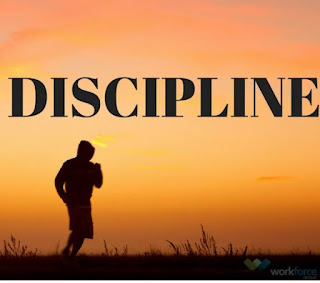
Indiscipline is the most pressing problem of our country. Corruption comes in when there is no discipline. Aristotle once said,”Discipline is, therefore, the habits of acting according to rules. It is a prompt obedience to the orders of the authority. Whenever we go, we have to follow certain rules.
Man lives in society. He can make progress only in the society. So the well being of society must be the good of an individual. Sometimes an individual has to sacrifice his personal interest for the good of the society. This is done by discipline.
Discipline is necessary in every field of life. Without it, there will be chaos in life. If the members of a family do not obey the head of the family, they will never be happy. They will not decide anything as everyone of them will like to force his choice.
Discipline is necessary in the playground. Players must obey the captain, if they want to win. If every player plays according to his own will then the team will easily lose the game. They can put up a good fight if they remain united and act as a single unit. They can put up a good fight if they remain united and act as a single unit. This is only possible when there is discipline.
Discipline is very necessary in schools and colleges. If the students do not obey the rules of the school framed by the headmaster, in consultation with the teachers, for the common good, results cannot improve. In the long run, the students will suffer. In my opinion, such education is useless which does not inculcate discipline.
Discipline is very essential in an army. Military discipline is known to everybody. A soldier has to obey his commander. He cannot argue and reason. It is his duty to obey and die, if necessary.
In the administrative sphere, the value of discipline is no less important. It is the duty of the peon to obey the clerk who has to obey his immediate officer. In this way, the whole system works and runs, everybody has to follow certain rules.
Today we find the condition of our country pitiable. The officers do not care for government property. The clerks have no time to work honestly and sincerely. Markets are full of adulterated goods. Villages have been deserted and cities are overcrowded. All these are the result of indiscipline. Unless it os checked, unless the people are disciplined, all talks of a better world are meaningless.










 Eduindex
You must be logged in to post a comment.