The Transit

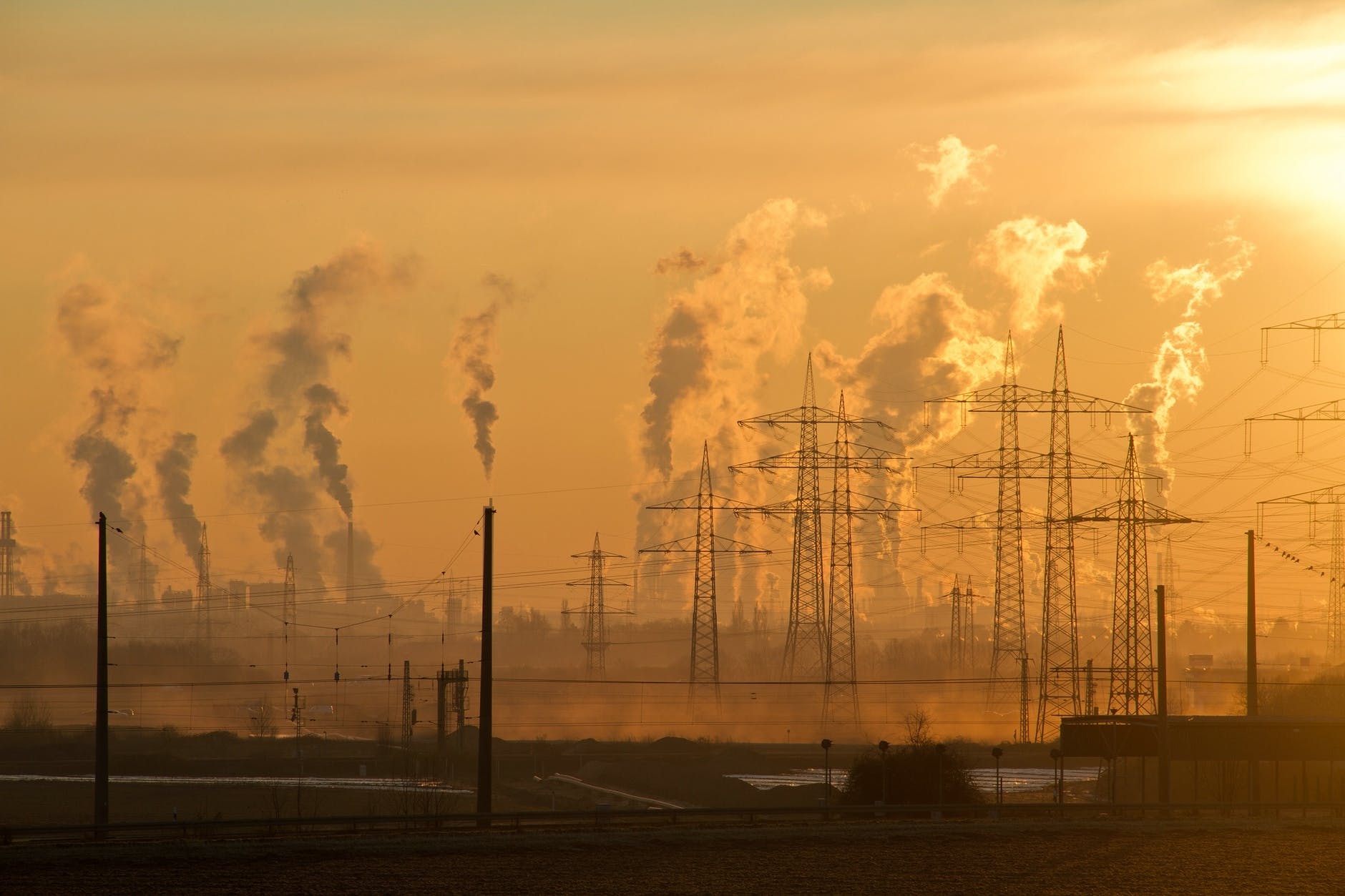
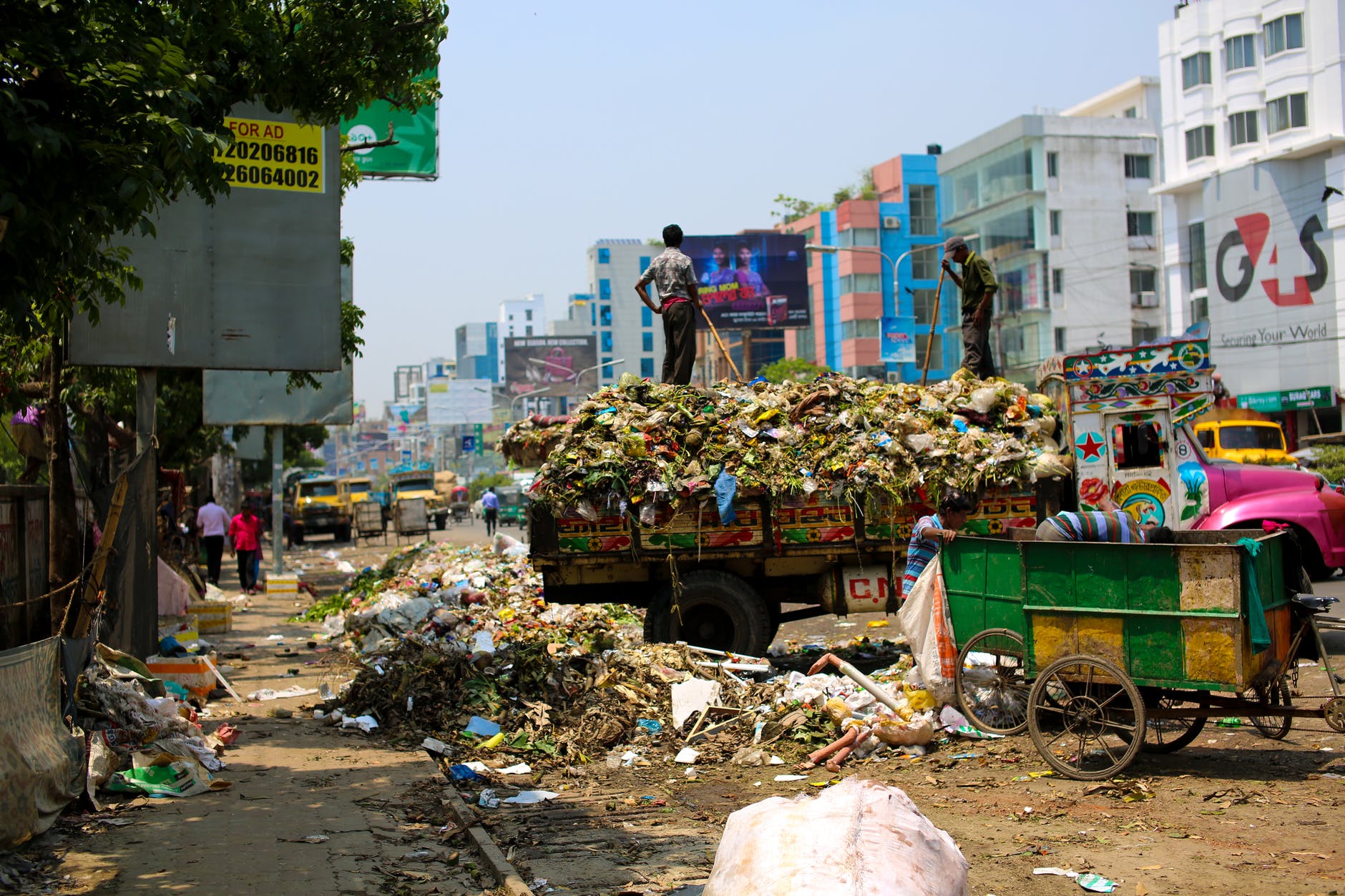
Moving out, has to be a difficult choice especially if you live in a small town, moving to a big, metropolitan city could be one hell of ride. These metropolises can have a toll on the new, moved in person’s mind as they entail the feeling of racing through the life for a goal so far away to reach. The kid of 16-17 that moves out having a different perspective for everything that came across them changes as soon as that teenager finds himself/herself walking on the streets of a totally unknown place all alone. The innocence and purity that small town had taught to a person is soon discovered to be a fragile characteristic for a person who needs to compete in the rat race with other strong headed people. This rat race robs the person’s inner capability that was enlightening enough to him/her but not for others. The difference in lifestyle varies on whole new level and adjusting to that can be a sport in itself.

The Problems

Whenever a person from a small town moves into a different city there are a number of problems that they have to face and difficulties that they have to go through. These problems as some might feel hinder the development as compared to the natives. For a person moving into a new city, leaving behind the comfort home, living away from their beloved has to be a different sport altogether. They are on their own for at least three years, adjusting to the situations and circumstances all alone. The fear of uncertainty and aloofness stares right into the eyes of the migrated. The difference in culture, lifestyle, sometimes language and ethnicity is something that may further make the migrated anxious the fear of unknown. Further, for someone coming from a middle class of a small town shifting to a big city might become a financial constraint, a thing that definitely affects their overall development and growth for what they actually shift or migrate. The most important issue that the migrated ones face is discrimination. They are treated with the stereotypes that have existed for forever now. The immigrants aren’t treated with equal respect and dignity sometimes because of the small town origin. Immigrants are offered low-paying jobs because of the thinking that the standard of education is not so up to the mark that they might fit in the top positions.

The Bright Side

Though all these problems might be prevalent in the big cities even today but there have been a change in attitude in past few years. Today, globalization has reduced all sorts of gaps and hence, the standard of living in small towns has come near close to that of big cities. The settlers in new cities are judged for their capabilities and talents rather than their original cities. Although financial constrain still poses a big problem for the immigrants but the promise of a better and bright future makes them take the risk and mostly succeed in it. The peace that they find at home and among the people they love still might be missing in the new city but they do get the peace that they always aspire for. The rat race they become part of unknowingly might not be as beneficial as they believe it to be but it could still open the door to the illuminated path which turns out to be their real passion and the better career.

Squid Game (2021)

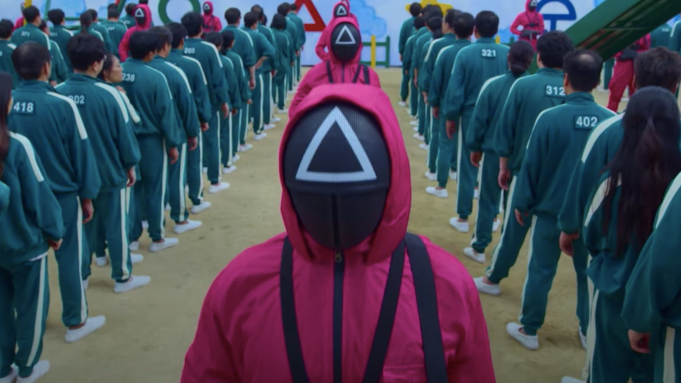
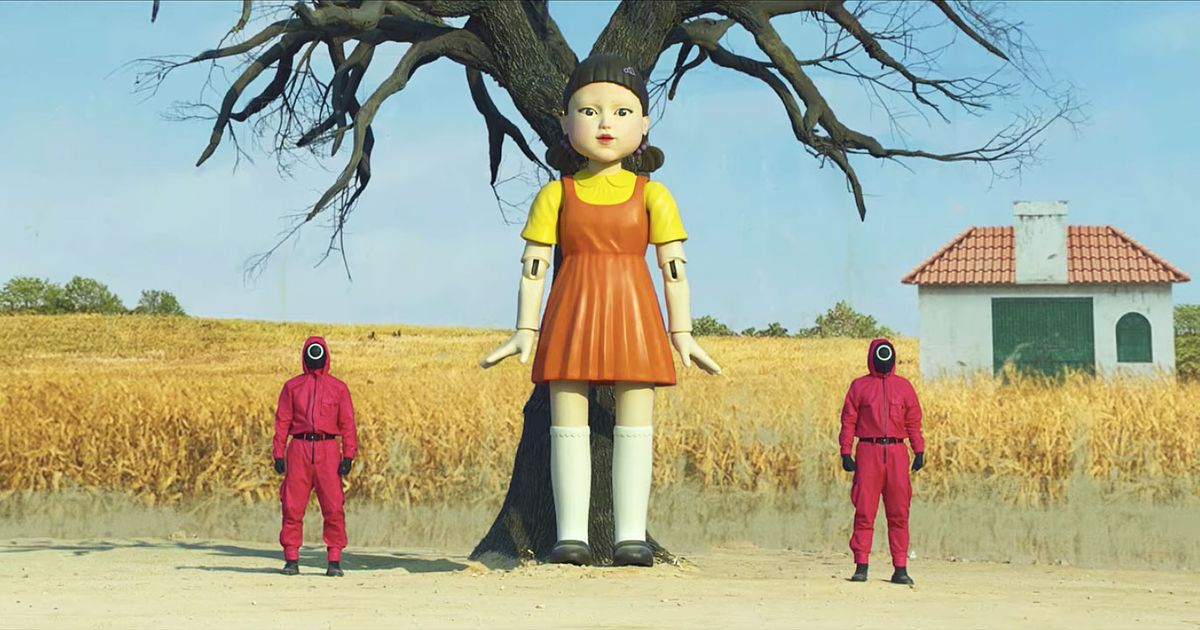
Squid Game is a highly bingeable nine-episode show that can be described as a variation of the Hunger Games series (albeit better, less generic, and even more brutal). It is a dystopian flick that nobody wanted until everybody did—with this ruthless South Korean hit trending as on Netflix. I can’t say that it is one of my all-time favorite shows, nor would I necessarily consider it to be “high art” per se. But I do recommend it. To me, it seems that there are two main types of popular television: the cheesy shows that consist mostly of instant gratification, and the anomalies that not only generate insane traffic but are also well-done. Moreover, the show features some scintillating social commentary on the rich vs. the poor. This—combined with equally striking action—renders a scrumptious blockbuster.


The pilot episode takes a while to draw viewers in, with some backstory that dragged at times. But once you’re in, you will remain on the edge of your seat. The central plot is as follows: 456 people (particularly people facing insurmountable debt) are lured into an elaborate game on a secret island with a prize of nearly $40 million. The rules are simple. 1. Contestants play children’s games. 2. There are six rounds, each containing its own game. 3. Each round, those who lose will be eliminated until only one winner emerges from the final round. The assumption is that losers will simply leave. Little did they know that “elimination” entails something far more nefarious: death, which they don’t discover until over 200 people are killed in cold blood. Another interesting facet is the guards. They too are moved around like cannon fodder by the elites who run this sick, elaborate spectacle.


Squid Game has plenty of redeeming factors. The quality of the acting, which I found too histrionic in the beginning, is ultimately believable. The screenwriting is as sharp as it is creative. The cinematography paints a surreal, colorful world that feels like the backdrop of a video game, all exaggerated shapes, sizes, and harsh edges. Also, the characters are compelling; you find yourself rooting for some to win triumphantly and others to fail dramatically. Many of them undergo enormous trauma and transformation, and the actors rise to the challenge of portraying believable emotions in an unbelievable setting. To be fair, this show will not go down in my head as a “classic,” but it was enough to lure me into devouring all nine episodes in less than 24 hours. Granted, Squid Game is too graphic for even some of you who tolerated the Hunger Games series. Otherwise, this is truly an immersive and stupendous experience with some crazy twists that will leave you shocked.

Rating: 10/10

Written by : Ananya Kaushal

How GST on Petrol, Diesel will bring down prices

The soaring prices of petrol and diesel has time and again highlighted the question of whether bringing it under the goods and services tax (GST) regime will prove beneficial for the consumers.
The much debated and speculated issue might finally come to a conclusion on Friday when the 45th GST Council meets in Lucknow.
For the first time in 20 months, the GST council will be conducting a physical meeting. After December 18, 2019, all the GST Council meetings were done in virtual mode.

“We are not saying that we should bring petrol and diesel under GST immediately, we are basically asking states to suggest a timeline,” a government source told TOI ahead of the crucial meeting of the GST Council on Friday.
When GST was introduced in July 2017, five commodities — crude oil, natural gas, petrol, diesel and aviation turbine fuel (ATF) — were kept out of the GST purview, considering the revenue dependence of the central and state governments on them.


As demand recovered, the spike in global oil prices pushed petrol and diesel prices to an all-time high, leading to demand for bringing it under GST.
Fuel prices have been hovering at record levels on account of 41 increases in its retail rates since April this year.
However, since the past 11 days there has been no revision in prices of petrol and diesel as oil marketing companies (OMCs) kept a tab on global oil prices.
Accordingly, in Delhi a litre of petrol costs Rs 101.19 and diesel costs Rs 88.62.
Similarly, price of petrol in Mumbai, Chennai and Kolkata stood unchanged at Rs 107.26, Rs 98.96, Rs 101.62 per litre, respectively.

Diesel price also remained unchanged. In Delhi, Mumbai, Chennai and Kolkata, the fuel was sold for Rs 88.62, Rs 96.19, Rs 93.26 and Rs 91.71 per litre respectively.

Prices are largely going to remain unchanged or get some relief by way of a cut in days ahead as global oil is expected to soften again.
Oil cartel Opec and its allies have agreed to gradually raise production levels that should prevent upward price movement.

Written by : Ananya Kaushal

The Journey of rocket science from 900 A.D till Now

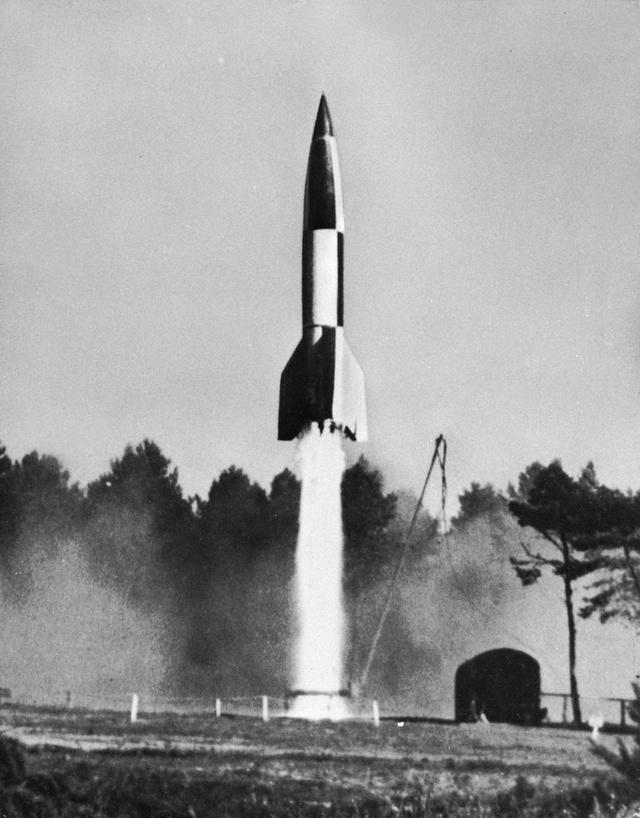
The history of rocketry dates back to around 900 C.E., but the use of rockets as highly destructive missiles able to carry large payloads of explosives was not feasible until the late 1930s. War has been the catalyst for many inventions, both benevolent and destructive. The ballistic missile is intriguing because it can be both of these things. It has made possible some of the greatest deeds mankind has ever achieved, and also some of the worst. German Walter Dornberger and his team began developing rockets in 1938, but it was not until 1944 that the first ballistic missile, the aggregate-4 or V-2 rocket, was ready for use. V-2 was used extensively by the Nazis at the end of World War II, primarily as an error weapon against civilian targets. They were powerful and imposing: 46 feet (14m) long, able to reach speeds of around 3,500 miles per hour (5600 kph) and deliver a warhead of around 2,200 pounds (1000 kg) at a range of 200 miles (320 km).

The German V-1 of World War II was the world’s first guided missile.

Ballistic missiles follow a ballistic flight path, determined by the brief initial powered phase of the missile’s flight. This is unlike guided missiles, such as cruise missiles, which are essentially unmanned airplanes packed with explosives. This meant that the early V-2 flew inaccurately, so they were of most use in attacking large, city sized targets such as London, Paris, and Antwerp. The Nazi ballistic missile program has had both a great and a terrible legacy. Ballistic missiles such as the V-2 were scaled up to produce intercontinental ballistic missiles with a variety of warheads, but also the craft that have carried people into space. Ballistic missiles may have led us to the point of self destruction, but to venture beyond our atmosphere.

The intercontinental ballistic missiles (ICBM)

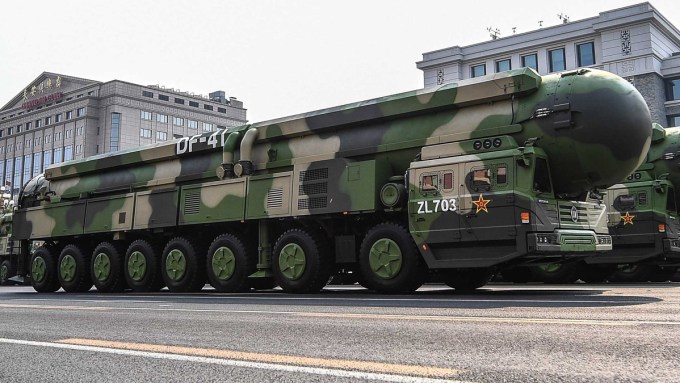
 Intercontinental ballistic missiles (ICBM) were first developed by the United States in 1959. It is a guided ballistic missile with a minimum range of 5500 kilometres primarily designed for nuclear weapon. United States, China, France, India, United Kingdom and North Korea are the only countries that have operational ICBMs. The ICBMs has a three stage booster, during the boost phase the rocket get the missile airborne, this phase last around 2 to 5 minutes until the ICBM has reached space. ICBMs have up to three rocket phases with each one ejected or discarded after it burns out.

The DF-41 is currently the most powerful Intercontinental Ballistic Missile (ICBM), developed in China

They use either liquid or solid propellant. The Liquid fuel rockets tend to burn longer in the boost phase than the solid propellant. The second phase of the ICBMs is the point where the rocket has reached space, here it continues along is ballistic trajectory. At this point the rocket will be travelling anywhere from 24,140 and 27,360 kilometres an hour. The final phase is the ICBM’s final separation and re- entry into earth’s atmosphere. The nose cone section carrying the warhead separates from the final rocket booster and drops back to earth. If the ICBM has rocket thrusters, those will be used at this point to orient itself towards the target. It is important that ICBMs have adequate heat shields to survive reentry, if not they burn up and fall apart. It’s important to note that although countries have ICBMs, none have ever been fired in anger against another country.

“This third day of October, 1942, is the first of a new era in transportation that of space travel.” –  Walter Dornberger

THE COBRA EFFECT

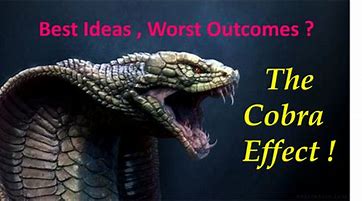
The economic term ‘The Cobra Effect’ was coined by German economist Horst Siebert. The Cobra Effect refers to a situation where in, an attempted well planned and intended solution given to any problem makes the problem worse. This leads to an unintended negative consequence. This term is used to illustrate the causes of incorrect solutions in economy and politics.

This term was coined with regards to a real situation that occurred in Colonial India. There was an alarming increase in the number of venomous cobras in the city of Delhi. The British government expressed their concern regarding this issue. The government planned to offer a sum to the public for killing the cobras. A large number of venomous snakes were captured and killed by people in order to earn the reward. This served as a very successful strategy initially. But, over a period of time, people began to trick the officials by breeding cobras, expanding their numbers and later killing them to continue getting the reward from the government. Ultimately, the government became well informed about the ill happenings in hunger for the reward. Hence, they scrapped this entire plan. After scrapping of the scheme, people were no more interested in capturing, breeding and killing cobras. Therefore, they set all their wild cobra population free in the city. This in turn, increased the population of venomous cobras in the city. Thus, a planned solution to the problem lead to the problem worsening.

A similar instance occurred in Hanoi, Vietnam during the French Colonial rule. The officials designed a scheme in which people would earn a bounty upon killing rats. In order to earn the cash reward, people had to kill a rat, chop off it’s tail and provide it to the responsible officials. Over a span of time, the government noticed rats wandering in places without tails. They were surprised on being aware of the fact that, rat catchers were collecting rats, chopping off their tails and later leaving them into sewers where breeding would take place. This produced a humongous number of rats. The idea of offering a bounty on exchange of dead rat tails failed miserably.

Airbus Airlines, formally suggested their design engineers to make it’s airplane cabins quieter to ensure a pleasant travel experience. The idea was executed and cabins were made more silent than usual. Instead of making the travel more peaceful, it worsened the travel experience of the passengers onboard. People could easily eavesdrop on other people’s conversations, could hear louder noises of food and beverage trollies rolling in the aisle, babies crying on board and restroom doors opening and shutting throughout the journey. This economic decision of Airbus did not succeed.

In 1989, Mexico proposed a plan of action called – ‘Hoy No Circula’ . According to this scheme, people were debarred from using their private vehicles from 5:00 a.m to 10:00 p.m depending on the last digit of their vehicle’s number plate. This was in context of odd and even numbers. The scheme was introduced to limit the number of vehicles on road which in turn would cut down release of pollutants in the atmosphere. Instead of abiding by the norms in a fair manner, people began purchasing two vehicles in the same household, one with an even number plate and another with an odd one. This particular scheme did not serve very fruitful in the longrun.

Perverse Incentive or better known as Cobra Effect may not always be an outcome of poorly planned modules or shortsighted decisions. It may cause due to unpredictable behaviors of the recipients. A strategy planned to curb anything may cause adverse outcomes when people find the same strategy rewarding. In such contrast outcome scenarios, planning authorities may either scrap the plan or re-design it in order to get constructive outcomes.

Sustainable Development Goals

Times are not just difficult but also alarming for every sphere of our existence. At first glance, it might appear that the raging pandemic has temporarily paused climate action and initiatives related to other environmental issues. Sustainability, it appears, may have taken a back-seat too. However, with a decade left for the end of ‘Agenda 2030’, achieving sustainable development has become even more important.


A significant feature of the raging pandemic is that it has disrupted the hyper-interconnected world characterized by globalization. Supply chains are badly affected and global markets are under severe stress. Evidently, the virus has laid bare the vulnerabilities and risks of a globalized world order. In fact, it has put under scanner not just globalization but also the Sustainable Development Goals. Nevertheless, this could be a turning point for the international community to unlearn and revamp its basic conduct on global governance and make it more inclusive in nature. Besides, the pandemic has also thrown open an opportunity to give impetus to a glocalized framework of global governance to protect the ‘global commons’ in the light of the broader debate on sustainability.

This is where glocalization can fill the gap. Simply put, glocalization refers to the interpretation, representation and replication of the global elements at the local level.

The term, glocalization, is used quite frequently in business parlance but it has begun to gain momentum in cultural, social and political arenas too. Utilizing it appropriately in the environmental domain is the need of the hour.

The term, glocalization, is used quite frequently in business parlance but it has begun to gain momentum in cultural, social and political arenas too. Utilizing it appropriately in the environmental domain is the need of the hour.


Covid-19 has brought about the necessity of refining and revising globalization. This can be done by integrating glocal elements to achieve global good, be it sustainable development or climate action, by roping in local actors, such as subnational agencies, grassroots bodies, non-governmental organizations and other relevant non-State actors in the discussion on sustainability. Localizing economies would provide leverage to the development targets of those like India. This can help attain the much-needed balance between ecological equity and economic growth. Additionally, it is hard to overlook the expertise and knowledge offered by local populations that are located at ground zero and are in tune with ground realities. This kind of resource efficiency could prove to be useful in operationalizing the potential glocal elements of global governance. Factors like accountability, transparency and trust-building among the State and non-State actors are also vital in this context.


Considering the changes in modern living, starting from working remotely to radically cutting down on carbon footprints, glocalization could turn out to be a viable alternative to globalization, thereby creating innovative pathways for sustainable development in the near future.

Written by : Ananya Kaushal

The James Webb Space Telescope- World’s most powerful telescope

The James Webb space telescope or JWST will replace the Hubble space telescope. It will help us to see the universe as it was shortly after the big bang. It was named after the second head of NAS James Webb. James Webb headed the office of space affairs from 1961 to 1968. This new telescope was first planned for launch into orbit in 2007 but has since been delayed more than once, now it’s been scheduled for 18 December 2012. After 2030 the Hubble will go on a well deserved rest since its launch in 1990 its provided more than a million images of thousands of stars, nebulae, planets and galaxies. The Hubble captured images of stars that are show about 380 million years after the big bang which supposedly happened 13.7 billion years ago. These objects may no longer exist, we still see their light. Now we expect James Webb to show us the universe as it was only 100 to 250 million years after its birth. It can transform our current understanding of the structure of the universe. The Spitzer space telescope and Hubble telescopes have collected data of gas shells of about a hundred planets. According to experts, the James Webb is capable of exploring the atmospheres of more than 300 different exoplanets.

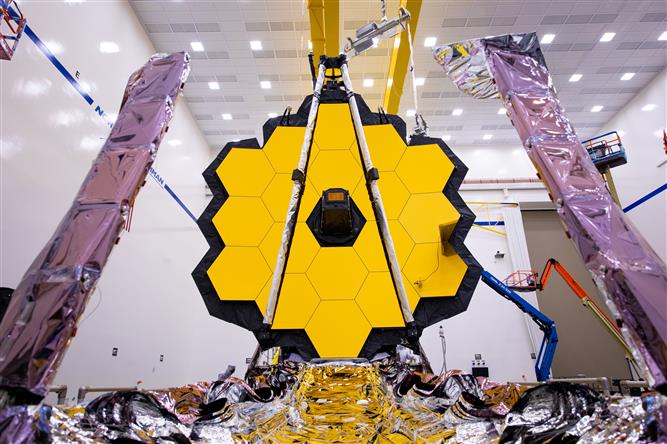
The main mirror- A giant honeycomb consisting of 18 sections.

The working of James Webb space telescope

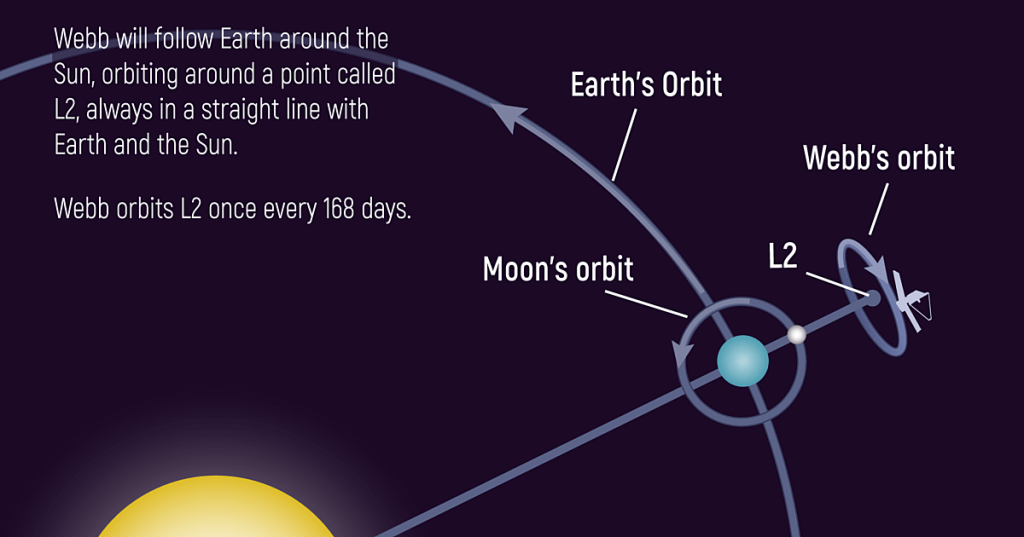
The James Webb is an orbiting infrared observatory that will investigate the thermal radiation of space objects. When heated to a certain temperature, all solids and liquids emit energy in the infrared spectrum; here there is a relationship between wavelength and temperature. The higher the temperature, there will shorter the wavelength and higher the radiation intensity. James Webb sensitive equipment will be able to study the cold exoplanets with surface temperatures of up to 27° Celsius. An important quality of this new telescope is that it will revolve around the sun and not the earth unlike Hubble which is located at an altitude of about 570 kilometers in low earth orbit. With the James Webb orbiting the sun, it will be impossible for the earth to interfere with it, however he James Webb will move in sync with the earth to maintain strong communication yet the distance from the James Webb to the earth will be between about 374,000 to 1.5 million kilometers in the direction opposite of the sun. So its design must be extremely reliable.

The James Webb telescope weighs 6.2 tones. The main mirror of the telescope is with a diameter of 6.5 meters and a colleting area of 25 square meters, it resembles a giant honeycomb consisting of 18 sections. Due to its impressive size, the main has to be folded for start up; this giant mirror will capture light from the most distant galaxies. The mirror can create a clear picture and eliminate distortion. A special type of beryllium was used in the mirror which retains its shape at low cryogenics temperature. The front of the mirror is covered with a layer of 48.25 grams of gold, 100 nanometers thick; such a coating best reflects infrared radiation. A small secondary mirror opposite the main mirror, it receives light from the main mirror and directs it to instruments at the rear of the telescope. The sunshield is with a length of 20 meters and width of 7 meters. It composed of very thin layers of kapton polyimide film which protects the mirror and tools from sunlight and cools the telescope’s ultra sensitive matrices to 220° Celsius.

The NIRCam- Near Infrared Camera is the main set of eyes of the telescope, with the NIRCam we expect to be able to view the oldest stars in the universe and he planets around them. The nurse back near infrared spectrograph will collect information on both physical and chemical properties of an object. And the MIRI mid-infrared instrument will allow you to see stars being born many unknown objects of the Kepler belt. Then the near infrared imager and sliteless spectrograph or NIRIIS camera is aimed at finding exoplanets and the first light of distant objects. Finally the FGS- Fine Guidance Sensor helps accurately point the telescope for higher quality images updates its position in space sixteen times per second and controls the operation the steering and main mirrors. They are planning to launch the telescope with the help of the European launch vehicle Ariana 5 from the kourou Cosmodrome in French Guiana space center. The device is designed for between 5 to 10 years of operation but, it may serve longer. If everything goes well, $10 billion worth of construction and one year of preparation will have finally started in orbit.

दिल्ली को अगले 3 साल में प्रदूषणमुक्त कर देंगे: गडकरी

सड़क परिवहन मंत्री नितिन गडकरी ने गुरुवार को कहा कि केंद्र सरकार अगले तीन साल में दिल्ली को वायु, जल और ध्वनि प्रदूषण से मुक्त करेगी। उन्होंने कहा कि मौजूदा समय में प्रदूषण देश के लिए सबसे बड़ी चिंता की बात है।


इंडस्ट्री पीएचडी चैंबर ऑफ कॉमर्स के सालाना कार्यक्रम में गडकरी ने कहा कि उनके मंत्रालय ने सड़क बुनियादी ढांचा विकास पर 60,000 करोड़ रुपये खर्च किए हैं। इस प्रयास से दिल्ली में वायु प्रदूषण को कम करने में भी मदद की। वायु प्रदूषण, जल प्रदूषण और ध्वनि प्रदूषण देश के लिए चिंतित करने वाले मुद्दे हैं। हम दिल्ली को अगले तीन वर्षों में वायु, जल और ध्वनि प्रदूषण से मुक्त कर देंगे।


गडकरी ने कहा कि सरकार सुप्रीम कोर्ट से मंजूरी मिलने के बाद सभी वाहन निर्माताओं के लिए फ्लेक्स फ्यूल के अनुकूल इंजन बनाना अनिवार्य कर देगी। फ्लेक्स-फ्यूल, पेट्रोल और एथेनॉल को मिलाकर बनने वाला एक वैकल्पिक ईंधन है। अब एक एथेनॉल अर्थव्यवस्था विकसित करने पर काम किया जा रहा है। गडकरी ने सुझाव दिया कि सेना को डीजल इंजन वाले वाहनों के इस्तेमाल पर प्रतिबंध लगाना चाहिए और एलएनजी, सीएनजी और एथनॉल पर चलने वाले ट्रकों का उपयोग करना चाहिए। मंत्री ने कहा कि इथेनॉल, पेट्रोल और डीजल की तुलना में काफी सस्ता है।

अनन्या कौशल द्वारा संपादित।

देश में आसमान छू रहा ईंधन का भाव !

देश में ईंधन की कीमतों में लगातार बढ़ोतरी देखने को मिल रही है। लागतार बढ़ रहा रेट थमने का नाम नहीं ले रहा, जिससे जनता काफी परेशान है। कच्चे तेल के दामों में जिस तरह से अंतरराष्ट्रीय बाजार में तेजी देखने को मिल रही है,वैसे ही घरेलू बाजार में पेट्रोल और डीजल के दाम भी आसमान छू रहा है। भारत में ईंधन की कीमतें रिकॉर्ड स्तर पर है।

5 अक्टूबर 2021 यानी कि मंगलवार को 1 दिन की स्थिरता के बाद भारतीय तेल कंपनियों ने डीजल और पेट्रोल के रेट में इजाफा कर दिया है। बात करें पेट्रोल की तो 25 पैसे प्रति लीटर एवं डीजल 30 पैसे प्रति लीटर और अधिक महंगा हुआ है। वहीं अक्टूबर में हरदिन भाव बढ़ता रहा है। अब तक केवल 1 दिन डीजल और पेट्रोल का रेट स्थिर रहा है।

इंडियन ऑयल कॉर्पोरेशन के मुताबिक़, ईंधन के दामों में वृद्धि के बाद दिल्ली में पेट्रोल की कीमत 102.64 रुपए प्रति लीटर एवं डीजल 91.07 रुपए प्रति लीटर तक पहुंच गया है। हालांकि,देश के चारों महानगरों की तुलना करें तो मुंबई में डीजल-पेट्रोल सबसे अधिक महंगा है। बता दें, जुलाई एवं अगस्त के महीने में कच्चे तेल के दामों में कुछ खास बदलाव नहीं आया था। इसलिए 18 जुलाई से 23 सितंबर तक तेल कंपनियों ने मूल्य वृद्धि नहीं की थी। इस दौरान पेट्रोल 0.65 और डीजल 1.25 की कीमतों में कटौती की गई थी। फिर अंतर्राष्ट्रीय बाजार में निरंतर बढ़ती कीमतों के कारण 28 सितंबर से पेट्रोल और 24 सितंबर से डीजल की कीमतों में बढ़ोतरी की गई है।

अंतरराष्ट्रीय बाजार में पेट्रोल और डीजल की कीमत क्रूड की कीमत के आधार पर प्रतिदिन अपडेट होती है। कीमतों की समीक्षा करने के बाद ऑयल मार्केटिंग कंपनियां रोज डीजल और पेट्रोल के दाम निर्धारित करती है।

अनन्या कौशल द्वारा संपादित।

Child Labour

By – Supriya

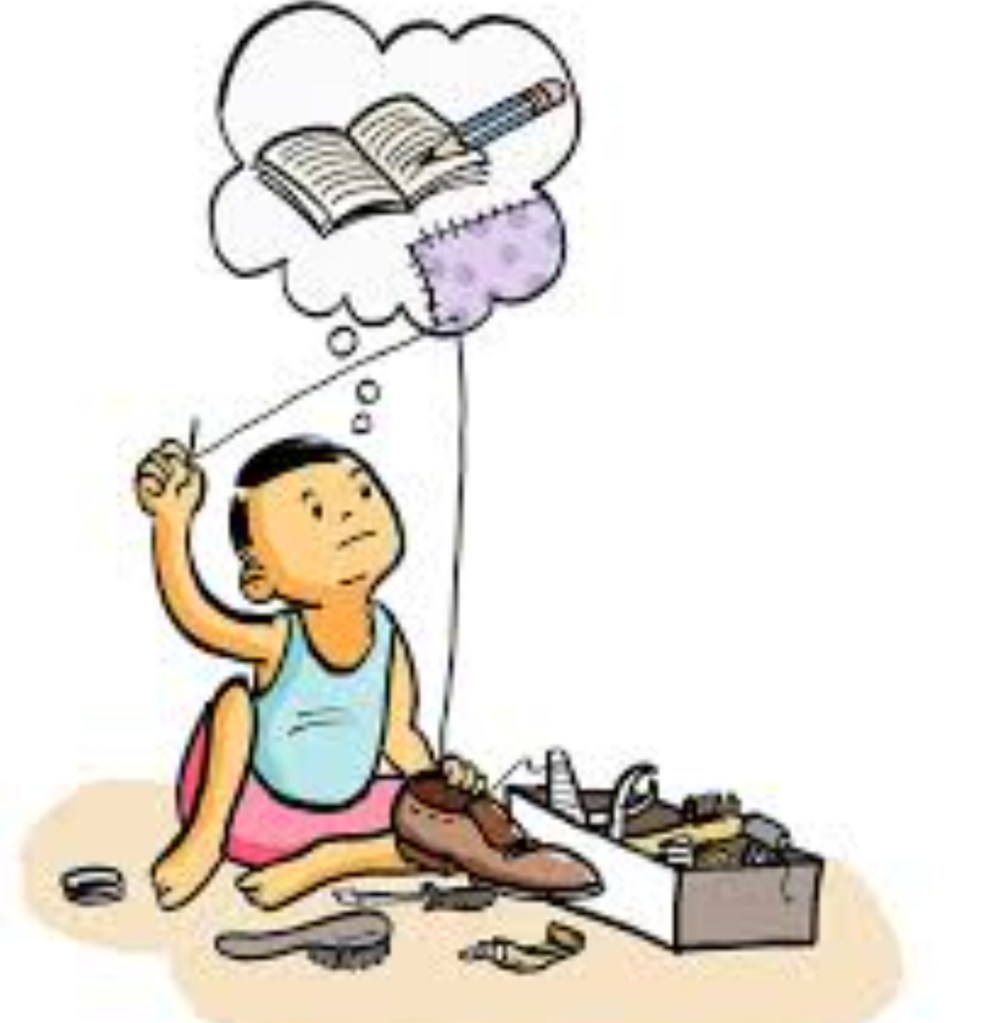
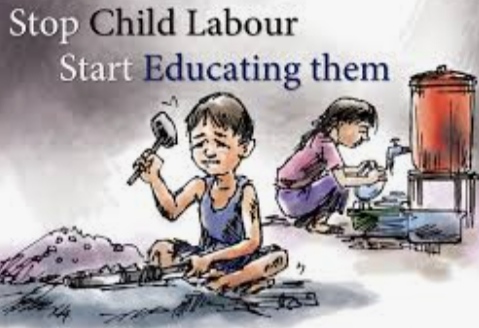
Today’s child is a citizen of tomorrow . The condition of a child foretells the future of any society or nation. Children are the real mirrors of the society – the quality of life of a child reflects how progressive a society is. With the dawn of the twenty first century, one of the problems prevalent globally is the problem of child labour. Millions of children in the world have been forced into child labour owing either to non – schooling or due to dropping out from the school at an early age. Child Labour may be defined as one who has not yet attained the age of 14 years and whose physical, mental and social development has suffered due to his pre – mature employment. Children make up 36% of the country’s total population. We might boast of being the largest democracy on account of numbers , but we definitely don’t seem to be the greatest one. Due to various circumstances , young children are exploited and are forced to forget the pleasures of childhood. At the age when children should be going to schools or playing at playgrounds they are burdened with the hardships of life and denied their childhood. According to the National Child Labour Project 2001 census, there are 12.6 million working children in India. Uttar Pradesh tops this list as 1.9 million innocents are employed in this state alone in various hazardous and non- hazardous activities in agricultural sector, glass factories , carpet industry, brass industries , March-  box factories, on streets as beggars and hotels. However, the fact is that not only in a few selected states but across the length and breadth of the country, a large number of childhood is in a pathetic condition.

According to a recent ILO report, about 80% child labourers in india, and are employed in the agriculture sector. The children are generally sold to the rich moneylenders to whom borrowed money cannot be returned. More than 60,000 children work in extremely inhospitable conditions in the glass and bangle industry under conditions of excessive heat. Almost 4,20,000 children are employed in the carpet industry of India, and than 70,000 work in match-box factories.

Child labour is one of the social evils that has been crippling the Indian society since a very long time.Its presence can be felt everywhere – be it a rural village or a metropolitan city. The small scale industries or Karkhanas are the breeding grounds for child labour.These children are in almost every sector of the economy – both organized and unorganised . Even though child labour is illegal large number of children are found working in factories or Karkhanas, or are working in mines,bidi, carpet , match, fireworks, brass and pandaan, agarbathi and automobiles industries . In urban areas many children work as shoeshine boys, newspaper hawkers, domestic servants and work in hotels, autoshops and plastic recycling factories. The automobile repair- shop industry is one that every one sees in his daily life. We can see these shops in every nook and corner. Young children are being illegally employed in such professions as they can be paid less. Poverty, illiteracy and insufficient resources in family , force the parents to send their children to work . Sometimes , brokers lure parents to force their children into child labour by making false promises.

Elimination of child labour is undoubtedly one of the biggest challenges facing our country. Various articles of the Constitution prohibit the employment of children in factories . Under Article 24, it has been stated that no child below the age of 14 shall be employed in any factory or mine or any other hazardous occupation or work. Similarly, Article 31 provides that the state shall ensure that adolescent children are not forced to accept an employment detrimental to their age and physical ability owing to economic compulsions. Children should be provided opportunities to develop in a healthy manner and in a free and respectful environment in which they are protected against exploitation of their childhood and adolescence. Under the schedules of the Child Labour ( Prohibition and Regulation) Act,1986, employment of children is prohibited in 12 occupations and 51 hazardous processes. The Government of India formulated the National Child Labour Policy in 1987 to tackle this problem . It aims at rehabilitation of child labour, implementation of the National Child Labour Projects, grants-in-aid to the voluntary agencies and promoting international programmes for the elimination of Child Labour. For the rehabilitation of working children, special schools and rehabilitation centres have been established where there is a provision of informal education , vocational training and nutrition for the children relieved from work.

On reviewing the factors behind the prevalence of child labour, we find that the social structure , poverty, family size, poor income, and lack of education are some of the major factors that have intensified the problem of child labour in India. The Gurupadswami Committee report shows that problem of child labour is a direct result of poverty whose elimination in itself is a great problem. Government has been taking proactive steps to tackle this problem through strict enforcement of legislative provisions along with simultaneous rehabilitative measures. The strategy for implementing the scheme under the 5- year plan aims at greater convergence with the other developmental schemes to bring about qualitative changes. The plan intends to focus and reinforce action to eliminate child labour in the hazardous occupations. Through expansion of National Child Labour Projects to additional 150 districts , it is focusing towards linking the child labour elimination efforts with the scheme of Sarva Shiksha Abhiyan to ensure that children in the age group of 5-8 years get directly admitted to regular schools and that the older working children are mainstreamed to the formal education system through special schools functioning under the NCLP scheme . Its other objective is convergence with other schemes of the Departments of Education, Rural Development , Health , and Women and Child Development for the ultimate attainment of the objective in a time – bound manner. However, the problem of child labour is an intense socio- economic issues in India that requires long – term multi – pronged strategies to be carried out on a continuous basis. These strategies should include enforcement of Child Labour Act, strengthening of primary education in rural areas, rehabilitation of child labourers, improvement of economic conditions of child’ s parents through poverty alleviation and employment generation programmes. A strong enforcement of the labour acts may be done to ensure legal action against those who employ children at work. The child labour is an evil that requires awareness and change of approach among all sections of the society. The government , media and NGOs have to unite to play their respective roles in this demanding task – only then the evil of child labour will get effectively curbed.

Thankyou!

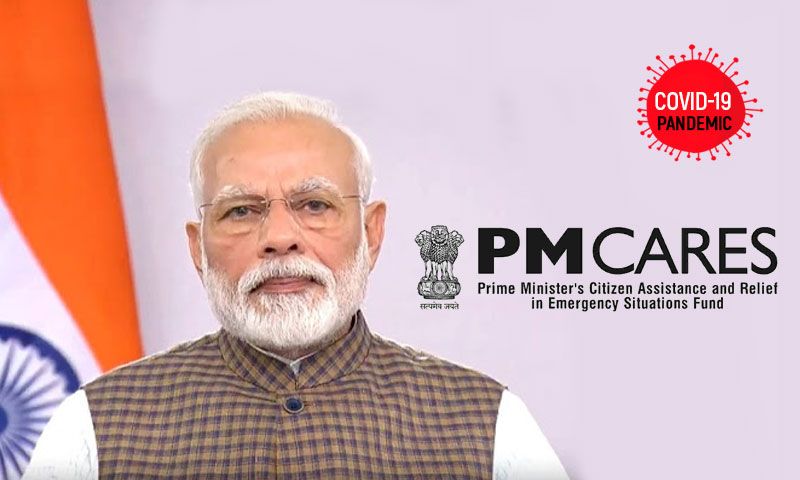
प्रधान मंत्री ने पेश किया पीएम केयर्स फंड का नया संशोधन।

प्रधानमंत्री नरेंद्र मोदी ने कहा कि उनकी सरकार का उद्देश्य देश के हर जिले में कम से कम एक मेडिकल कॉलेज खोलना है। वह गुरुवार को अखिल भारतीय आयुर्विज्ञान संस्थान (एम्स) ऋषिकेश में 35 राज्यों को 35 प्रेशर स्विंग ऐडसोरप्सन(पीएसए) ऑक्सीजन संयंत्र समर्पित करने के लिए आयोजित एक समारोह में बोल रहे थे।

ये प्लांट पीएम केयर्स फंड के तहत स्थापित किए गए हैं। उन्होंने कहा कि कुछ साल पहले देश में बहुत कम एम्स थे लेकिन अब हर राज्य में एक एम्स खोलने का प्रयास किया जा रहा है।

उन्होंने कहा कि नवरात्रि पर्व के पहले दिन के अवसर पर उत्तराखंड आना उनके लिए सौभाग्य की बात है। पीएम ने कहा कि उन्होंने 20 साल पहले इसी तारीख को गुजरात के सीएम के रूप में शपथ ली थी और कहा कि इस यात्रा की शुरुआत उत्तराखंड के गठन के साथ हुई थी।

उन्होंने प्रसन्नता व्यक्त की कि जिस धरती से योग और आयुर्वेद जैसी जीवनदायिनी शक्तियों को बल मिला, उसी धरती से आज ऑक्सीजन प्लांट समर्पित किए जा रहे हैं। महामारी की अवधि के दौरान अपनी सरकार की उपलब्धियों की सराहना करते हुए, पीएम ने कहा कि महामारी से पहले सिर्फ एक परीक्षण प्रयोगशाला से लगभग 3,000 परीक्षण प्रयोगशालाओं का एक नेटवर्क बनाया गया था। उन्होंने कहा कि भारत ने दुनिया का सबसे बड़ा और सबसे तेज टीकाकरण अभियान लागू किया है।

उन्होंने कहा कि पहले देश में एक दिन में 900 मीट्रिक टन लिक्विड मेडिकल ऑक्सीजन का उत्पादन होता था, लेकिन जैसे-जैसे मांग बढ़ी, भारत ने मेडिकल ऑक्सीजन के उत्पादन में दस गुना से अधिक की वृद्धि की।

पीएम ने यह भी कहा कि कोविड -19 वैक्सीन की लगभग 93 करोड़ खुराक दी गई है और जल्द ही देश 100 करोड़ का आंकड़ा पार कर जाएगा।

पीएम ने कहा कि अब सरकार इस बात का इंतजार नहीं करती कि नागरिक अपनी समस्याएं लेकर उसके पास आएं और फिर कोई कदम उठाएं, लेकिन अब सरकार नागरिकों तक पहुंच रही है।

अनन्या कौशल द्वारा संपादित।

नितिन अग्रवाल को राहत, बने रहेंगे विधायक

हरदोई।

सदर विधायक नितिन अग्रवाल को बड़ी राहत मिली है. विधानसभा सदस्यता रद्द करने के लिए सपा नेता द्धारा दाखिल की गई याचिका को विधानसभा अध्यक्ष हृदय नारायण दीक्षित ने खारिज कर दिया है। इसकी जानकारी मिलते ही सदर विधायक के समर्थकों में खुशी की लहर दौड़ गई।


विधानसभा में नेता प्रतिपक्ष रामगोविंद चौधरी ने 11 नवंबर 2019 को विधानसभा अध्यक्ष के सामने याचिका दाखिल की थी। इसमें कहा था कि सदर विधायक नितिन अग्रवाल 2017 में हुए विधानसभा चुनाव में सपा के टिकट पर निर्वाचित हुए थे। 2019 में गांधी जयंती के मौके पर हुए मैराथन विधानसभा सत्र के दौरान सपा ने विह्प जारी की थी कि सपा का कोई भी विधायक उक्त सत्र में शामिल नहीं होगा।

इसके बावजूद नितिन अग्रवाल सत्र में शामिल हुए। विह्प का उल्लंघन किए जाने का आरोप लगा उनकी सदस्यता रद्द करने की मांग की गई थी। पूरे मामले पर चली सुनवाई के बाद विधानसभा अध्यक्ष हृदय नारायण दीक्षित ने रामगोविंद चौधरी की याचिका खारिज कर दी है। सदर विधायक नितिन अग्रवाल ने इसकी पुष्टि करते हुए बताया कि गुरुवार को ही इस संबंध में विधानसभा अध्यक्ष ने आदेश पारित कर दिया था

बता दें कि हरदोई सदर विधानसभा पर कई पंचवर्षीय से नितिन अग्रवाल के पिता नरेश अग्रवाल का दवदवा रहा है. इस सीट पर हमेशा से ही नरेश ही जीतते आये हैं. 2017 के विधानसभा चुनाव में बेटे नितिन अग्रवाल सपा की टिकट पर विधानसभा पहुंचे थे. बाद में वे सत्ताधारी पार्टी भाजपा में शामिल हो गए थे।

अनन्या कौशल द्वारा संपादित।

About that author- Edgar Allan Poe

Edgar Allan Poe established his name in literature majorly as a short story writer and poems with his great command in writing. He is also considered as the architect of the modern short story. Edgar Allan Poe, often discussed through his writing which was usually in the horror genre.

Early Life 

Edgar Allan Poe was born in 1809 in Boston, Massachusetts, U.S. his parents were both actors. He was very young when he lost both his parents and was then taken care of by John Allan and his wife. In 1824 Poe got into the University of Virginia and was doing well academically but had to leave due to financial stress. 

Early career 

After living with Allan for sometime Poe went to Boston and published a collection of poems Tamerlane, and Other Poems in 1827. He also was forced to join the army, because of his poverty. 

He published his next collection of poetry Al Aaraaf, Tamerlane, and Minor Poems in 1829. Both of the collections that were published did not receive much attention. The same year Poe’s father helped him secure him an appointment at the U.S. Military Academy at West Point.

About 2 years later Poe moved to New York  , where he published another collection of his works, Poems.

He later went back to Baltimore to his aunt and began writing stories. His stories were getting published in newsletters, he also won a 50 USD cash prize for one of his short stories MS. Found in a Bottle involving an unnamed narrator who sails a ship and encounters a bunch of terrifying situations along his journey.

Poe was offered the position of an editor at Southern Literary Messenger in Richmond where he married his 13 year old cousin, which is bizarre but it was 1836. 

Poe established himself as a fine literary critic over the years although his writing did not grab people’s eyes until the late 1930s. 

Later Years 

His career was going well but he was still not earning enough, his jobs were not getting him enough money so he went to New York again, where he was often seen drinking. In 1838, he published The Narrative of Arthur Gordon Pym, the only complete novel by him.

A year later, he was the editor of Burton’s Gentleman’s Magazine in Philadelphia and after that he was the editor of Broadway Journal in New York City. While editing in Philadelphia and New York he published several stories like Broadway Journal in New York City. which was published in Burton’s Gentleman’s Magazine while he was editing there, Burton’s Gentleman’s Magazine, his first detective story published in 1842 in Graham’s magazine.

Poe’s work grabbed national attention after the publishing of his poem The Raven which led him to become an editor of the Broadway Journal. Virginia, Poe’s wife passed away due to tuberculosis in 1847 after which he was involved romantically with multiple women. 

Poe moved to Baltimore in 1849, where one morning Poe was discovered lying, almost unconscious and a few days later, he died. The cause of his death is still not known  

Sigmund Freud

One day, in retrospect, the years of struggle will strike you as the most beautiful– Sigmund Freud.

Sigmund freud one of the most influential neurologists known to us

An Austrian neurologist and founder of psychoanalysis. He conducted a lot of research throughout his life, and was wrong about a lot of his studies but he still managed to leave a mark in the science textbooks

Made a profound impact on psychology even though he faced a lot of criticism for a lot of his studies. He had a lot of unconventional ideas, he was filled with them. It is known that he studied and pushed the use of cocaine, this also led to one of his close friends getting addicted to the drug.

Sigmund Freud was born in 1856, Freiberg, Moravia, Austrian Empire

At the age of 17, he went to study medicine in the University of Vienna where he studied physiology under Ernst von Brücke. He spent about 6 years in Brücke’s lab where he compared brains of different animals. 

In 1882 After graduating from The University of Vienna, he started working in the General Hospital in Vienna as a clinical assistant under the psychiatrist Theodor Meynert and Hermann Nothnagel.

In 1885, went to Paris to study neuropathology at a clinic where he also worked under  Jean-Martin Charcot, charot used to work with patients with hysteria which exposed him to psychological disorders and the possibility that psychological disorders might be linked with the mind and not the brain. Charot’s technique of hypnosis left freud quite impressed and was intrigued by the idea of hypnosis 

After his return from Paris he established a clinic for neuropsychology for his clinical practice and this could also be termed as the beginning of his psychoanalytic theories. Freud was partners with the physician Josef Breuer for a long time and also published their work together in 1895 Studien über Hysterie (Studies in Hysteria) which was a result of some previous research conducted and their clinical experience.

The next year in 1886 he married  Martha Bernays with whom he had 6 children, one of being Anna Freud who followed her father and studied psychoanalysis just like him.

Freud’s psychoanalytic theories further  gave birth to multiple concepts. Psychoanalysis is a collection of theories associated with psychology and a group of techniques that deal with the unconscious mind with an attempt to cure mental disorders. It basically involved trying to make the unconscious thoughts of the patient conscious by various methods and when these thoughts were made conscious, they showed improvement. The development of these concepts and techniques were a result of Freud’s working with people and his own clinical experiences.

Now, psychoanalytics is a vast subject and everything mentioned in the article about his contributions was just the tip of the iceberg. It is impossible to cover the whole subject here,it is almost impossible to study and understand all of his work, that is the quality and quantity of work he has done for science and this article doesn’t  justice to his work, so I hope it is at least encouraging enough to get you to read more about his studies.

PETS – A BOON TO HUMAN RACE

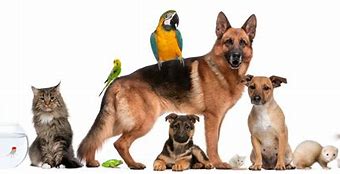
Domesticated animals or birds kept with oneself for companionship are called as pets. These animals are not made to work forcibly and are not tamed for consumption purpose. According to the history of tamed species, dogs are the most likely to be kept as pet animals. A person must be committed enough to nurture the animal lifelong. There is a plethora of pet animals which can be opted as companions but with appropriate research, one can opt a pet suitable to his/her lifestyle, without causing any harm to the pet. Research proves how beneficial pets are to humankind. Let us have a look at why a pet is said to be a boon to humans.

HELPS ONE TO MAINTAIN FITNESS

Nurturing a pet includes a lot of physical activity. Regular walks and playtime with a four legged will ensure that the owner steps out of his/her house. Pets increase the chances of a better exercise routine for the owner. Indulging in physical activity with the pet helps decrease cholestrol, cut down on extra calories and maintain a proper BMI. Walking lowers the risk of diseases related to the heart, hence increases life expectancy.

STATS – Dog owners on an average walk 22 minutes more per day compared to people without dogs.

SOCIALIZING

Pets are ice-breakers to socializing. Psychologically, the human community feels more secured to be around people who own pets. They can serve as great conversation starters. While taking a furry friend for a walk, several pet lovers approach to spend time with the pet. This does improve interaction with people from the neighborhood and friends. Companion animals keep the atmosphere calm and hep build social relations.

STATS – Pet owners are 60% more likely to interact with others than those who do not own pets.

PSYCHOLOGICAL MERITS

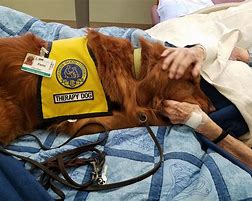
Pet help keep loneliness at bay. They act as great stress boosters due to their lively nature. They unsurprisingly increase dopamine (feel good hormone) levels in the body and alleviate cortisol (stress hormone). Furry friends help you deal with negativity and stress causing disorders such as Depression, Anxiety, PTSD, etc. Recovering from adversities is slightly easier with pets alongside than otherwise. They help in lifting up spirits and causing happiness. Hospitals and psychological clinics appoint Therapy Pets to soothe patients during the course of their treatment.

STATS – Research says, 9/10 people experience psychological well-being in presence of their pet.

DEVELOPMENT OF CHILDREN

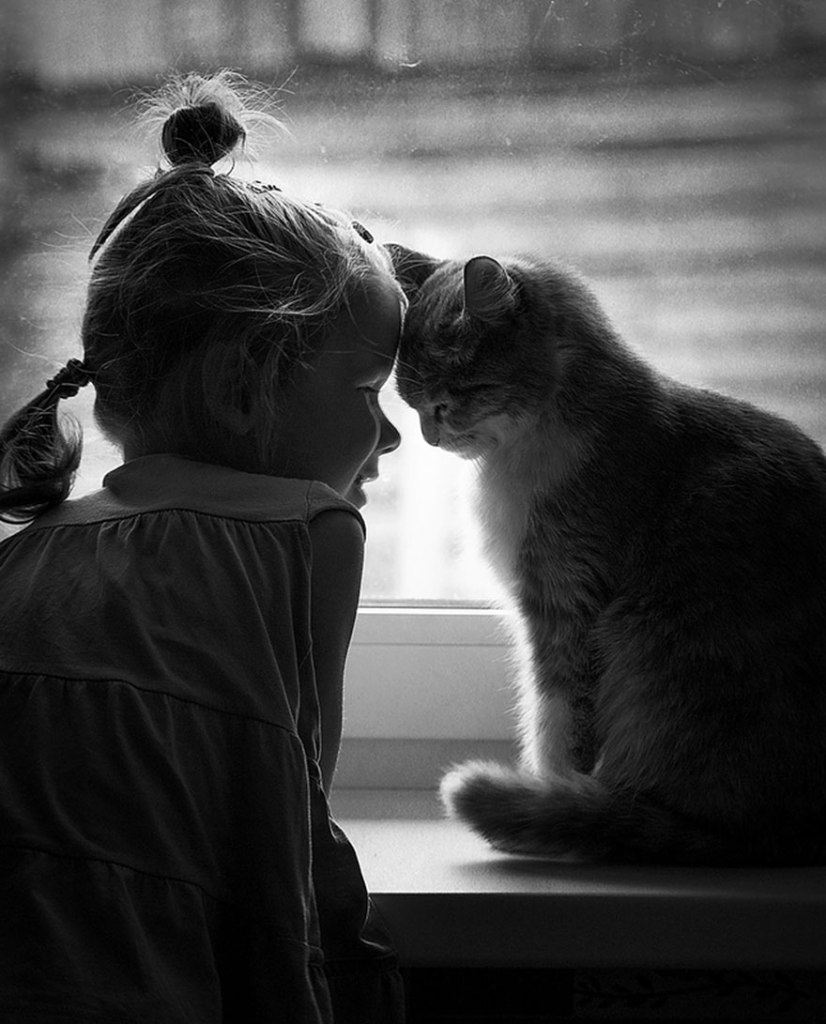
While children grow with pets at their home, they tend to learn about the ‘trust’ factor. Children often look out for their pets when in need of emotional support. Animals at home unintentionally teach children about compassion, responsibility and non-verbal communication. All this leads to higher self esteem and confidence among these children. Such children generally tend to grow up as responsible adults. Children with ADHD and Autism feel immensely supported by their pets.

STATS – According to a questionnaire presented to 1600 households, children from dog owning houses, had 30% less chances to engage in anti-social behaviours and 34% more likely to engage in considerate behaviours.

In conclusion, pets are certainly a boon to mankind. Household pets may include cats, dogs, parakeets, budgies, rabbits, hamster, and so on. Pets help people appreciate true friendships. It is true that, we can judge the heart of a person by his treatment of animals. Welcoming a furry friend at home is not the only act of consideration but taking proper care without abandoning it is also necessary.