International collaboration for sustainable growth of fisheries, aquaculture

 An International Round Table Meet led by Union Fisheries Minister Shri Parshottam Rupala at the Global Fisheries Conference India 2023 has called for cooperation and collaboration between countries for a sustainable growth of the fisheries and aquaculture sector.

Partnering with other countries and organisations that have advanced technologies and expertise in fisheries and aquaculture to facilitate the transfer of technology and knowledge would greatly help to enhance the Indian fisheries sector, the meet suggested.

Speaking at the session, Union Minister Shri Parshottam Rupala said that the GPS system should be made user-friendly to the fishermen, utilising the global expertise and technologies. Cost-effective and reliable technologies are essential for marine navigation to be truly beneficial to fishermen venturing into the sea, the Minister said.

“Global exchange programmes in data collection and data sharing can play a major role to improve the fisheries sector, Shri Rupala said. By fostering collaboration and knowledge exchange, these programmes can facilitate the adoption of best practices, promote sustainable resource management, and develop effective mitigation strategies in response to climate change. This collective approach can play a pivotal role in safeguarding the livelihoods of traditional fishermen, who are particularly vulnerable to the escalating impacts of climate change.

Global data exchange programmes can significantly enhance the quality and availability of fisheries data, providing a comprehensive understanding of fish stocks, migration patterns, and ecosystem dynamics”, the Union Minister said.

In his address, Mr. DimitriousIoannou, Ambassador of Greece, underscored the critical need to harmonize fishing and aquaculture practices with environmental sustainability. He advocated for a multifaceted approach that encompasses both domestic and international strategies.

This high-level dialogue was attended by Ministers of State for Fisheries, Animal Husbandry and Dairying  Sanjeev Kumar Balyan and Dr L Murugan,  Union Fisheries Secretary, Dr Abhilaksh Likhi, Ambassadors  from Greece, Angola and diplomatic delegation from  Australia, Brazil, France, Norway, Russia, Zimbabwe and; State Fisheries Ministers of Uttar Pradesh, Haryana, Himachal Pradesh, Arunachal Pradesh, Meghalaya, Nagaland and Tripura; representatives of international organisations such as Food and Agriculture Organisation  (FAO) of the United Nations , Bay of Bengal Programme Inter-Governmental Organization (BOBP-IGO), GiZ; Asian Development Bank (ADB); senior officials of the Department of Fisheries, Govt of India; senior officers of State Fisheries Departments and Heads of various research and development agencies.  Dr Abhilaksh Likhi, Union Fisheries Secretary welcomed the gathering.

The forum underscored the need of exchange of adequate technology expertise to tap the unexplored deep-sea resources in India. The country has vast unexplored deep-sea resources and equipping the fishermen and the vessels with adequate technologies and training could utilise these untapped resources, it observed.

The speakers at the Round Table Meet identified four major areas which require international collaboration. They are enhancing fisheries production targeting food and nutritional security, strengthening of aquaculture to combat human hunger, sustainable utilisation of the resources in the fisheries sector, and development of deep-sea fishing.

Shri Sanjay Kumar Nishad, Minister of Animal Husbandry, Dairying and Fisheries of Uttar Pradesh emphasised the importance of collective efforts and advanced technologies to boost fish production and secure the livelihoods of fishermen and aqua farmers.

Highlighting the potential for growth in the fisheries sector, Shri Jai Prakash Dalal, Minister of Animal Husbandry, Dairying and Fisheries of Haryana announced plans for an Aqua Park, and he invited investors to participate in this development.

Shri Chander Kumar, Minister for Agriculture and Animal Husbandry of Himachal Pradesh, Shri A L Hek, Minister of Fisheries of Meghalaya, Shri Pangjung Jami, Minister of Fisheries of Nagaland, Shri Sudhangshu Das, Minister for Fisheries, Animal Resource Development of Tripura and Shri Nilkanth Halarnkar, Minister for Fisheries of Goa also spoke at the meet.

Foreign diplomatic delegations expressed their keen interest in fostering collaboration with India in several key areas, including research, data collection, resource monitoring and technology backstopping.

Discussions on expanding market access for Indian fishery products, collaborating with research institutions, universities and international organisations to conduct research on sustainable fishing practices, aquaculture technologies and resource management were also held during the session.

Mr. Clemente Pedro Francisco Camenha, Ambassador of Angola, Mr Peter Hobwani, Deputy Ambassador of Zimbabwe, Mr. Sergey Muratov, Head of National Research Institutions for Preservation and Safety of Fisheries Sources and Aquaculture, Russia, Mr. Monique Tran, Counsellor for Agricultural Affairs, France, Mr. Christian Valdes Carter, Commercial Counsellor, Embassy of Norway, Mr. Wagner Antunes, Head of the Trade Promotion Department, Embassy of Brazil and Dr Richard Niall, First Secretary (Agriculture), Australian High Commission spoke at the International Round Table Meet.

Joint Secretary, Department of Fisheries, GoI, Ms Neetu Kumari Prasad gave the summary of the discussion and the vote of thanks.

******

15th annual convocation of Veer Surendra Sai University of Technology at Burla, Sambalpur, Odisha

 The President of India, Smt Droupadi Murmu graced and addressed the 15th annual convocation of Veer Surendra Sai University of Technology at Burla, Sambalpur, Odisha, today (November 21, 2023).

Speaking on the occasion, the President said that the development of our country depends on the contribution of youth. Students graduating from this university will be responsible for constructing roads, buildings, dams and factories using the latest technologies. As engineers, they will be the architects of progress. As innovators, they will be bridges between imagination and reality. She stated that in the rapidly progressing world, the skill and knowledge that they have acquired in this institution are going to be the bedrock upon which their future as well as the future of the nation will be built.

The President was happy to note that a special Satellite Launch Vehicle developed by the students of the Veer Surendra Sai University of Technology has been successful on an experimental basis. It received appreciation from ISRO and a Memorandum of Understanding has been signed between the University and ISRO for further research. She also noted that an Innovation and Incubation Center has been established in the campus of this university. She appreciated students and faculty members of the University for their Creative Work.

The President said that we have set a target to make India a developed country before 2047. She added that technology can accelerate the pace of development. Therefore, technocrats and engineers will play an important role in making India a developed nation.

The President advised students to be mindful of the fact that their success will not solely be measured by their personal achievements. She said that it will also be measured by the positive impact they will make on the lives of others. She urged them to make every effort for excellence, not just for personal gain, but also for the progress of the Nation. She also urged them to strive to become agents of positive change, advocates of diversity and champions of integrity.

The President said that we should not forget our traditional values while embracing technical advancements. The National Education Policy – 2020 focuses on mother tongue, tradition and culture. She emphasised that the development of the country should be inclusive and dedicated to the entire humanity. She said that we must always remember the values inherent in our culture to make development humanity friendly.

***

Successful Teacher Training Workshop on "Nano Quest

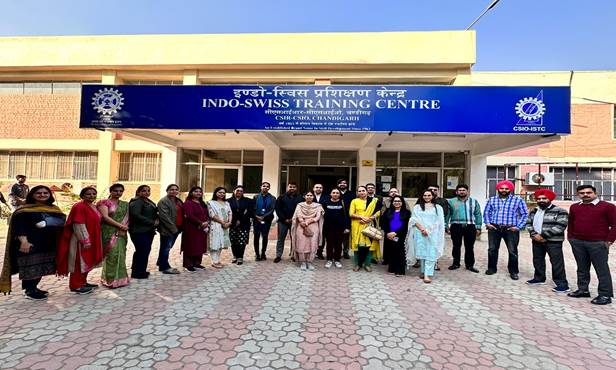
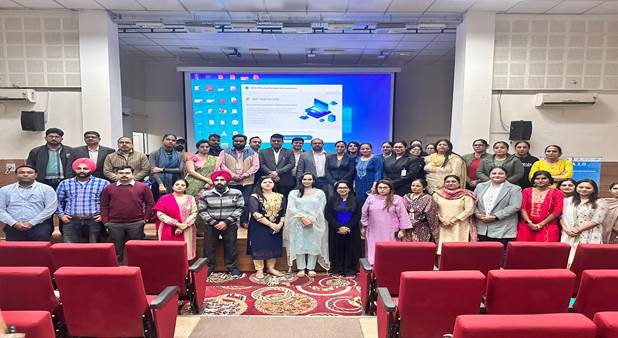
 A specialized Teacher Training Workshop convened at CSIR-CSIO in Chandigarh on November 20th, 2023 marked a significant milestone in the realm of science education. The workshop, organized as part of Knowledge and Awareness Mapping Platform (KAMP)’s third Continuous Professional Development (CPD) program for educators in collaboration with the CSIR – Central Scientific Instruments Organization (CSIO) and Central Board of Secondary Education (CBSE), brought together over 40 enthusiastic teachers from diverse schools.

The central theme of the workshop, “Nano Quest – A Journey of Exploration through Nanoworld,” underscored the commitment of educators to enhance their knowledge and teaching skills in the field of science education. The diverse training modules covered various facets of science education, providing a unique opportunity for educators to learn from esteemed scientists and experts associated with CSIR-CSIO, Chandigarh. 


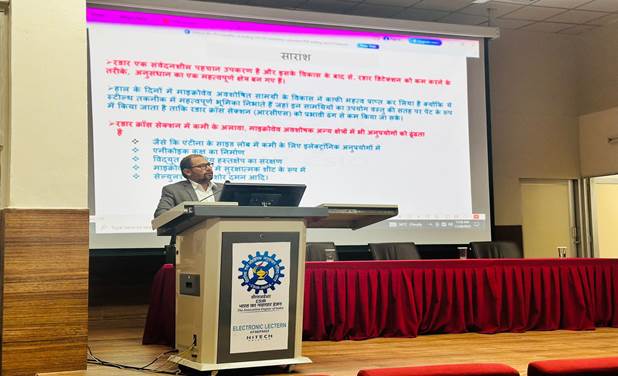
Dr. Sachin Tyagi, Principal Scientist at CSIR-CSIO, delivered an enlightening technical session on “माइक्रोवेव अवशोषण अनप्रयोग – “माइक्रोवेव अवशोषण अनुप्रयोग – चुभंकीय सामग्री आधारि त समिश्रण” which translates to “Microwave Absorption Applications – Magnetic Material Based Composites.” The workshop also featured a session by Dr. Abhay Sachdev, Senior Scientist at CSIR-CSIO, exploring the “Prospects and Applications of Nanomedicines.” In a practical turn, Dr. B. Sreekanth and Dr. Inderpreet Kaur, scientists from CSIR-CSIO, guided teachers on Environmental Monitoring, providing insights into skill development in a scientific context.

Mr. Dhiraj Singh Rajput, Regional Head of KAMP and Mr. Kaushal Payal, Regional Manager of KAMP captivated the audience with an in-depth presentation on the KAMP, an initiative of CSIR-NIScPR and NCPL. Stressing the importance of science education beyond textbooks and classrooms. Mr. Dheeraj emphasized the need for a dynamic and immersive experience that encourages students to question, explore, and innovate.

The workshop served as a platform for educators and administrators to gain fresh perspectives on science education, exchange ideas on effective teaching strategies, and align with the latest developments in the field. The collective knowledge and experience shared by the scientists promise to leave a lasting impact on the future of science education.

Continuous Professional Development programs of this nature play a vital role in equipping teachers with the latest tools and knowledge to enrich the learning experiences of their students. Beyond enhancing educators’ understanding of scientific concepts, these initiatives aim to spark a profound enthusiasm for scientific exploration in students.

About CSIR-CSIO:

CSIR-Central Scientific Instruments Organisation (CSIO) is a premier national laboratory dedicated to the research, design, and development of scientific and industrial instruments. As a multi-disciplinary and multi-dimensional apex industrial research & development organization, CSIO stimulates the growth of the Instrument Industry in India.

About CBSE (Training/Capacity Building Programmes):

CBSE is committed to addressing quality concerns in school education, prioritizing the development of teachers and principals. The Board provides various training programs to enhance their understanding of curriculum, delivery mechanisms, and other professional qualities.

About KAMP:

KAMP is an Initiative and Knowledge Alliance of CSIR-National Institute of Science Communication and Policy Research (NIScPR) and industrial partner M/S Nysa Communications Pvt. Ltd. (NCPL). It aims to develop creativity, meaningful learning, critical reading, and thinking skills, bringing out the inherent abilities of students.

*****

4th Capacity Building Programme for Civil Servants

 The 2-week Capacity Building Programme (CBP) for civil servants of Arunachal Pradesh unveiled at the National Centre for Good Governance (NCGG) Mussoorie on 20thNovember, 2023. This is in furtherance to further improve the governance and public service delivery in North-East and Border States as per the guidance and directions of Honorable Dr. Jitendra Singh, Minister of State, Ministry of Personnel, Public Grievances and Pensions. An MoU was signed with NCGG in 2022 to train 500 officers of Arunachal Pradesh over the next five years. As part of the agreement, NCGG has already imparted training to 113 officers including the 30 participants of the ongoing 4thCapacity Building Programme.

The two-week capacity building programme has been scientifically tailored by the NCGG team and included the exchange of vast information, knowledge, new ideas, and best practices that promote citizen-centric governance. The sessions for each training programme were firmed up by the NCGG faculty based on the need of the state and in consultation with Government of Arunachal Pradesh. This capacity-building programme will help the civil servants in putting up dedicated efforts to fill in the gaps between policies and implementation in their respective work places.

The Inaugural session was presided over by Shri V. Srinivas, Director General, National Centre for Good Governance. He requested the participating officers to make full use of the exposure that they will have during the programme and take advantage of the opportunity and urged them to share knowledge and work in groups as effective team building is essential to foster good ideas which can be utilized to improve the quality of life of citizens. He appreciated the efforts in Arunachal Pradesh in implementation of government programmes. In his address he highlighted the importance of redressing citizen grievances in a time bound manner and also effective handlings of court related work as these are mechanisms of ensuring justice to people. He stressed on the importance of harnessing the programme’s maximum potential and learning from best practices, which can be modified to suit their own contextual settings. He emphasized on the pressing requirement for civil servants to fully capitalize on the digital revolution and embrace the latest IT innovations. He encouraged the officers to work in group activities and share experiences through presentations on saturation of priority sector programmes, how to be effective officers, Land reforms among other sectors.

Giving the welcome address and overview of the programme, Dr. B.S. Bisht, Course Coordinator of the programme said that in the 4th capacity building programme, NCGG will share various initiatives taken in the country such as equity and government intervention, public policy & implementation, fintech and inclusion, improving public service delivery, changing paradigm of good governance, ethical perspective in governance, disaster management: Indian and global practices, vision of India @2047: focus on civil services, executive judiciary interface,  digital governance: case studies of passport seva and MADAD, technology enabled governance, leadership coordination and effective communication skills, Public private partnership for infrastructure development, approach to achieve sustainable development goals by 2030, aspirational districts, behavioral change management, Digital India, Water conservation: a village creates magic, Education in tribal region-Eklavya model residential school (EMRS), saturation of basic services in villages/service plans in NE region, development and conservation, promoting the livelihood: a case of Himalayan state, tourism: potential for growth, rural housing, overview of rural development in context to watershed management, climate change & its impact on bio-diversity: policies and global practices, innovations in public administration, overview of national security scenario, project planning, execution and monitoring-JJM, centralized public grievance redressal & monitoring system among other important topics.

The participants will also be exposed to visits aimed at observing a diverse range of developmental projects and institutions. These visits offer invaluable insights and first-hand experiences of prominent initiatives and organizations, including but not limited to the Parliament of India, AIIMS, Paryavaran Bhawan, MDNIY, NDMC, Pradhanmantri Sanghralaya, among others. 

The overall supervision and coordination of the 4th capacity building programme is being carried out by Dr. B. S. Bisht, course coordinator for Arunachal Pradesh, along with Dr. Sanjeev Sharma, co-course coordinator, and the capacity building team of the NCGG.


Incentive for foreign film production will be increased to 40 % of the expenses

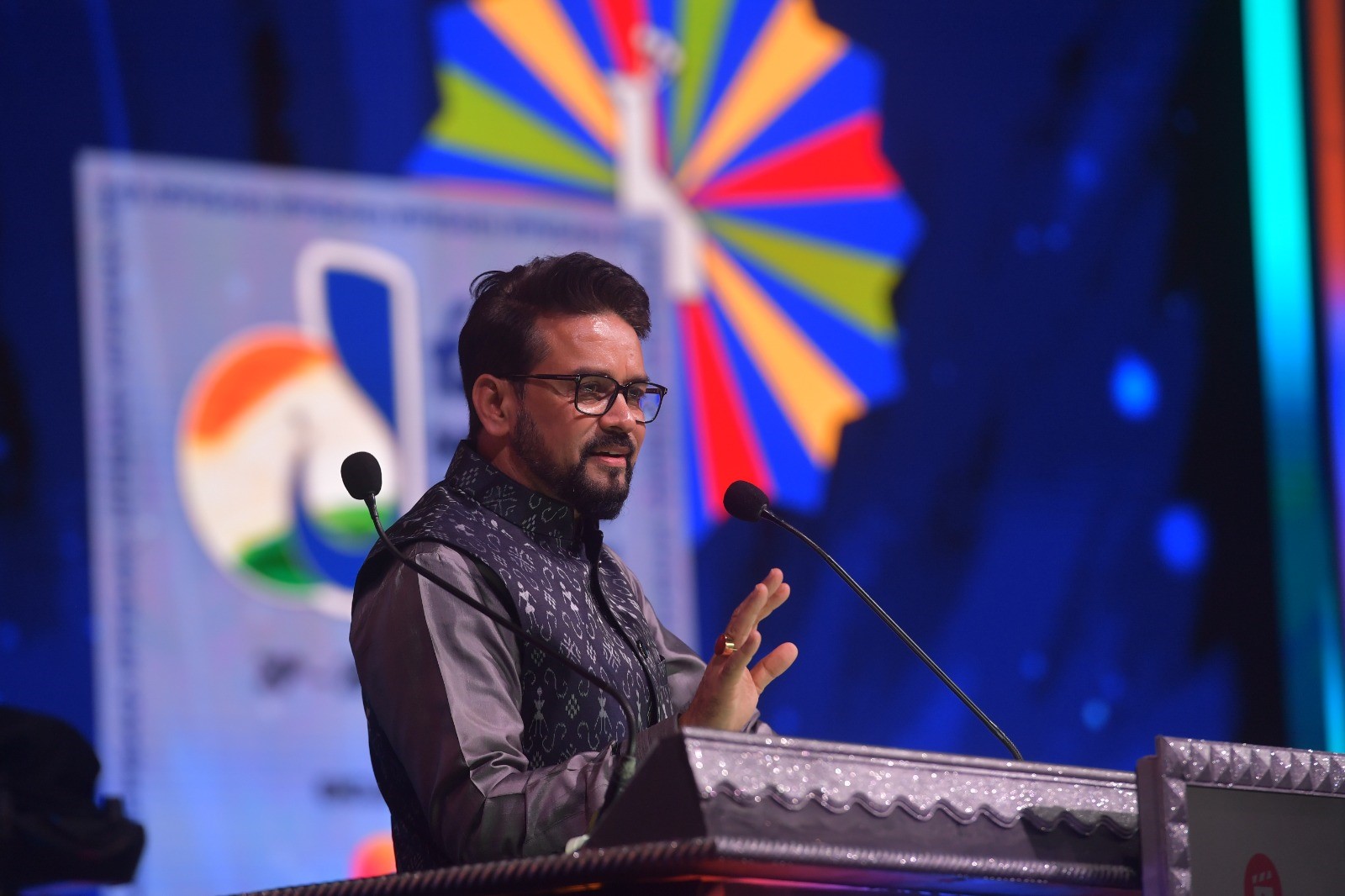
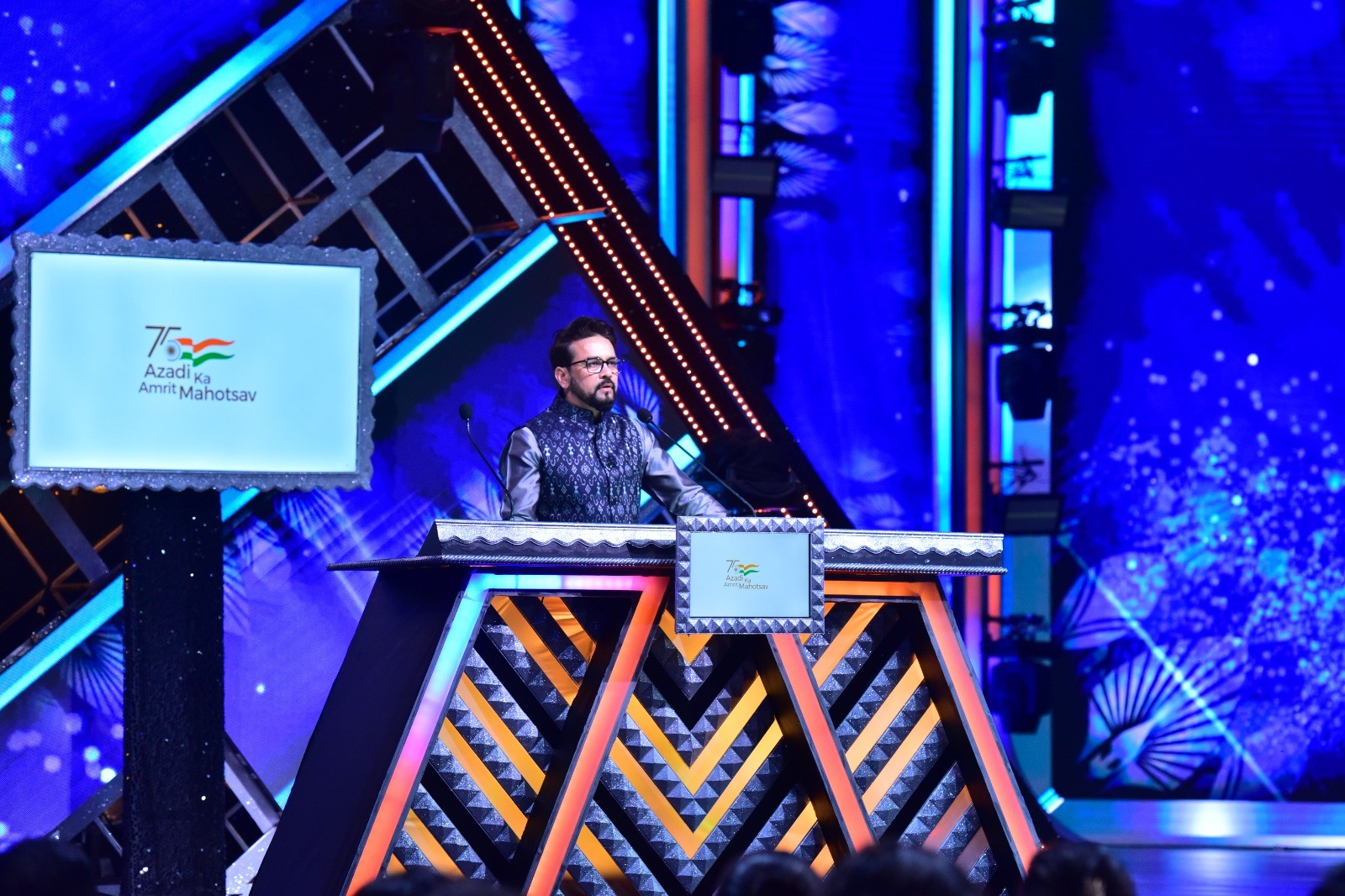
 Union Minister for Information & Broadcasting and Youth Affairs & Sports Shri Anurag Singh Thakur said that India will increase the incentive for foreign film production in the country to 40 % of the expenses incurred with an increased cap limit of Rs.30 crore (exceeding 3.5 million US Dollars). Earlier, the per project cap for the incentives only Rs 2.5 Crore. An additional 5% percent bonus for Significant Indian Content (SIC), in his inaugural address at the 54th International Film Festival of India at Panaji, Goa today. 

Shri Thakur said that there was a need for a higher incentive to attract medium and big budget international projects to the country considering India’s size and vast potential. “ This paradigm shift in incentivizing film production serves as a testament to India’s commitment and support for artistic expression and reinforces our position as a preferred destination for cinematic endeavors”, he added. 

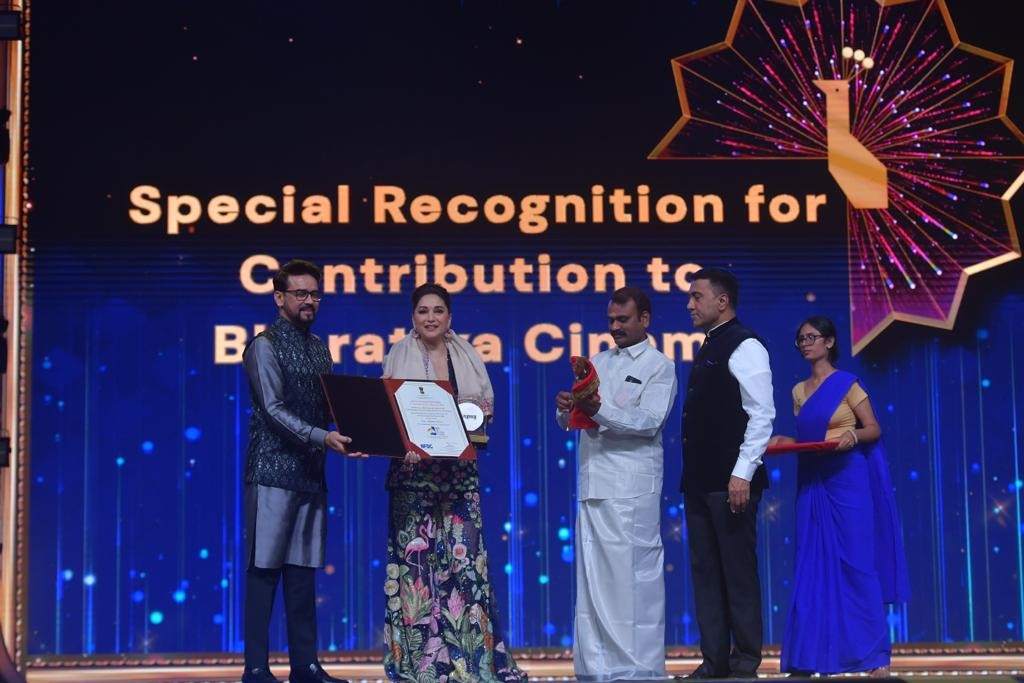
Further, in a glorious tribute to the legendary actress Madhuri Dixit, the 54th International Film Festival of India honoured her with ‘Special Recognition for Contribution to Bharatiya Cinema’ Award. “An icon across the ages, Madhuri Dixit has graced our screens with unparalleled talent for four incredible decades,” posted the Union Minister for Information & Broadcasting and Youth Affairs & Sports Shri Anurag Singh Thakur on X. 

The Union Minister also announced a recruitment drive for the young minds who were selected in the ’75 Creative Minds of Tomorrow,’ opening up doors to limitless opportunities for their blossoming talents and career trajectories. The ’75 Creative Minds of Tomorrow,’ now in its 3rd edition, was born in 2021 from the Prime Minister’s vision to provide the youth with a platform to showcase their creative expression through the medium of cinema. “This year, out of nearly 600 entries across 10 categories, 75 young filmmakers have been handpicked from 19 states, including remote areas like Bishnupur, Jagatsinghpur, and Sadarpur”, the Minister added.

The Minister also announced a new category of awards – Best Web Series (OTT) Category – being introduced in this edition of IFFI. Highlighting the new components in the festival, Shri Anurag Thakur said that IFFI will acknowledge and honour the transformative role of original content creators in India, celebrating their contributions to employment and innovation. The Minister emphasized that, “for the first time, IFFI has augmented the scope of Film Bazaar by introducing a well-curated ‘VFX & Tech Pavilion’ to showcase the latest innovations from the cinema world, and a documentary section to its co-production market to support non-fiction storytelling.” 

Confirming India’s commitment to the cause of women empowerment, Shri Thakur said that this year’s IFFI will feature films from 40 remarkable women filmmakers. “Their talent, creativity and unique perspectives promise to make the festival a celebration of diverse voices and narratives”, he highlighted. 

Prime Minister of India, Shri Narendra Modi, has consistently stressed the creation of an inclusive and accessible India through the mantra of ‘Sabka Saath, Sabka Vikas.’ Adding another dimension to the PM’s vision, the Minister emphasized that IFFI is upholding ‘Sabka Manoranjan’ i.e ‘Entertainment for all’ by making inclusivity a guiding principle. “All venues for this year’s festival will be equipped with facilities catering to the differently abled. There will be four additional special screenings for visually and hearing impaired delegates with embedded audio descriptions and sign language provisions”, he added.

The Minister also touched upon several measures taken by Government of India in the recent past to augment the Media & Entertainment Sector in India. “Recently, under the leadership of Hon’ble Prime Minister, Shri Narendra Modi ji, the Cinematograph (Amendment) Bill, 2023, received approval from both the Lok Sabha and Rajya Sabha. This legislation not only broadens the legal framework, shifting its focus beyond censorship to encompass copyright protection but also introduces rigorous measures against piracy”, he emphasized.

Underlining the significant role of Cinema as a uniting force, Shri Thakur said, “I strongly believe that, throughout its history, Cinema has captured and chiseled ideas, imagination and innovation such that it forms the driving force for peace, progress and prosperity in a world which is increasingly distressed with division.” 

Linking India’s successful Chandrayaan-3 Mission to the scientific possibilities offered by visionary works of art, the Minister said, “in 1902, long before space organizations were even conceived or conceptualized, a remarkable visionary work of art and a French Film by Georges Méliès, A Trip to the Moon spread the seeds of scientific possibility and progress in people’s minds.” The Minister said, “the power of cinema is incredible and it is fascinating how these ideas shape our world.”

Shri Anurag Singh Thakur congratulated Hollywood Actor/Producer Michael Douglas for having been conferred with the prestigious Satyajit Ray Lifetime Achievement Award for 2023. He also extended heartfelt gratitude to the esteemed Jury of the International Competition, the Indian Panorama, the Best Web Series (OTT), and the 75 Creative Minds of Tomorrow. 

Concluding his remarks, the Minister said that his vision for IFFI is not limited to one event, but what IFFI should be when India celebrates its 100th year of Independence once we transition from Amrit Mahotsav to Amrit Kaal. 


Global Fisheries Conference India 2023

 Union Minister for Fisheries, Animal Husbandry & Dairying Shri Parshottam Rupala will inaugurate Global Fisheries Conference India 2023 at Gujarat Science City, Ahmedabad on 21st November 2023. The concept has thus taken shape of a two-day conference from 21st to 22nd November 2023 on the occasion of World Fisheries Day being celebrated globally. The Global Fisheries Conference India 2023 was conceptualised by the Department of Fisheries with the aim of devising a way forward for the Indian Fisheries and Aquaculture sector in conjunction with the stakeholders from the fisheries’ value chain. 

The event will kick-start with the inauguration of the Exhibition by Union Minister Shri Parshottam Rupala and followed by the Inaugural session, Press Conference, International Round table and parallel Technical Sessions, Industry Connect Sessions and G2G/G2B and B2B Bilaterals. The exhibition stalls and food mela will be accessible to all visitors and participants throughout the two days, post inaugural ceremony.

One of the key event will be the International Roundtable led by Union Minister Shri Parshottam Rupala with the foreign missions of France, New Zealand, Norway, Australia, Russia, Spain, Zimbabwe, Angola, Brazil and Greece, International organisations namely Food and Agriculture Organisation (UN-FAO), Asian Development Bank (ADB), Deutsche Gesellschaft für Internationale Zusammenarbeit (GIZ), Bay of Bengal Program (BoBP), Marine Stewardship Council India (MSC India) among others, Ministers from the States/UTs of Arunachal Pradesh, Haryana, Uttar Pradesh, Himanchal Pradesh, Meghalaya, Nagaland, Tripura, Goa and Andhra Pradesh along with senior officials from Department of Fisheries (GoI), National Fisheries Development Board (NFDB), State/UT Fisheries Departments and Fisheries institutes. The objective of the International Roundtable will be to discuss collaborations with international organizations, Ministries, research institutions among others on sustainable fishing practices, aquaculture technologies and resource management. 

Global Fisheries Conference India 2023 is a unique opportunity that is expected to bring together varied stakeholders at one place platform. More than 5000 participants will be hosted during the two days for multiple sessions and engaged in thought provoking discussions and deliberations. In total a series of ten sessions have been planned for the Technical Sessions and the Industry Connect Sessions. Whilst open forums for Government-to-Government (G2G)/Government-to-Business (G2B) and Business-to-Business (B2B) Bilaterals will be simultaneously held.

The Technical Sessions have been planned with the objectives of fostering deeper understanding of trending topics in Fisheries sector pertaining to challenges and opportunities in Inland Aquaculture, Coastal Aquaculture and Mariculture, Deep Sea Fishing, sustainable aqua feed, fish health management, innovations & best practices, New and Emerging Technologies etc. 

The Industry Connect Sessions are also planned during event with focus on bringing together business and industrial organisations in the fisheries sector to share market insights, trends, opportunities and challenges while networking and foster collaborations/partnerships. 

The G2G/G2B/B2B bilaterals are also being facilitated to entail discussion and dialogues between policy makers, experts and industry for knowledge sharing, networking etc. This is an open format forum for stakeholders to freely explore opportunities for bilateral discussion and deliberations. 

The exhibition is also organized that hosts more than 200+ exhibitors, who are demonstrating a wide range of products, services and innovations by the start-ups, associations, co-operatives, SHGs, and small-medium enterprises from the sector. A special pavilion has been set up that exhibits chosen start-ups RAS, Artificial Reef, Seaweeds, Transponders, Raceways, Deep Sea Fishing Harbours etc.

At a macro level, all activities planned during the Global Fisheries Conference 2023 are expected to yield views and thought process of national and international stakeholders for identifying focus areas, gaps, opportunities, solutions and partnerships for the development of the Indian Fisheries sector.

*****

United Service Institution of India to organise Annual UN Forum 2023 on ‘International Humanitarian Law & Peacekeeping’ in New Delhi

 United Service Institution of India (USI), the country’s oldest think-tank established in 1870 for research and debate on national security and military affairs, is organising its Annual UN Forum 2023 in New Delhi in November 21-22, 2023. The forum on ‘International Humanitarian Law and Peacekeeping’ is being organised in collaboration with the International Committee of the Red Cross and the Centre for UN Peacekeeping Operations.

With contemporary UN peacekeeping missions increasingly being deployed in volatile environments characterised by asymmetric warfare, ensuring adherence to International Humanitarian Law (IHL) principles has become critical. However, applying IHL norms presents challenges arising from the complexity of modern conflicts, actions by non-state actors and blurred lines between combatants and civilians in urban battlespaces.

Against this background, the forum aims to discuss the applicability and limitations of implementing IHL frameworks in UN peace operations through an interactive, multi-stakeholder approach. The sessions will enable a deeper examination of some of the contemporary issues like the protection of civilians, accountability for crimes against peacekeepers, the role of women in peacekeeping operations, and leveraging technology for more effective operations.

The forum will involve insightful perspectives presented by both academicians and practitioners who have first-hand experience of peacekeeping challenges. Keynote addresses will be delivered by senior officials from the Indian Armed Forces and the Ministry of External Affairs. The forum will be held over two days as under:

  • Session 1 will discuss application of IHL principles to peacekeeping given situations involving non-state actors and urban warfare.
  • Session 2 will analyse constraints to protection of civilian mandates and overcoming them by integrating IHL norms.
  • Session 3 will examine legal frameworks to ensure accountability when peacekeepers are targeted, and measures to enhance their protection.
  • Session 4 will focus on the importance of gender-inclusive peacekeeping and challenges for women peacekeepers.
  • Session 5 will discuss utilising technology for more effective peacekeeping through data analytics, AI and advanced surveillance.

The event will conclude with a plenary session aimed at consolidating takeaways for peacekeeping practitioners and providing recommendations to further informed discourse on IHL and its integration into UN peace operations. The dialogues during the forum can contribute to developing training modules and policy frameworks to make peacekeeping more effective while ensuring the rights and safety of peacekeepers and civilians.

****

Jan Aushadhi Stall at trade fair

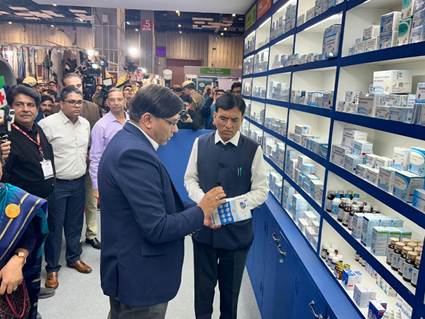
 Union Minister of Chemicals and Fertilizers and Health & Family Welfare, Dr. Mansukh Mandaviya visited Jan Aushadhi stall at the trade fair today to oversee the functioning of the stall. The Minister also appreciated that this stall is providing information about the noble project of the Government of India to make accessible and affordable Health Care throughout the country. 

42nd India International Trade Fair is being held from 14th to 27th November at Pragati Maidan, New Delhi. Being a part of this International Trade Fair, a demonstration stall has been set up by Pradhan Mantri Bharatiya Janaushadhi Pariyojana (PMBJP) in Hall No. 5 (Stall No. 8-B) where the general public is being made aware of the salient features of this noble project. Through this stall, information is being given to the public about the affordable and high quality medicines of Jan Aushadhi. 

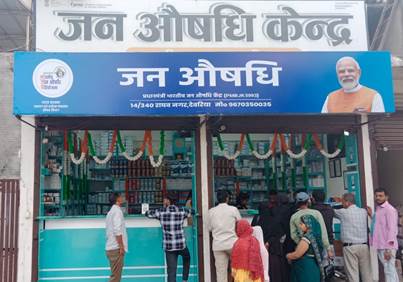
As we all are aware that with an objective of making quality generic medicines available at affordable prices to all, Pradhan Mantri Bhartiya Janaushadhi Pariyojana was launched by the Department of Pharmaceuticals, Ministry of Chemicals & Fertilizers, Government of India. Under this scheme, dedicated outlets known as Janaushadhi Kendras are opened to provide generic medicines. As on 31st October 2023, 9998 Janaushadhi Kendras are functional across the country. Product basket of PMBJP comprises 1965 drugs and 293 surgical equipment which are sold at retail shops at 50% to 90% cheaper than branded medicines. PMBJP has drastically brought down the prices of more than 1965 quality medicines and making these medicines available within the reach of large section of population, especially the poor and patients with chronic diseases. 

In last 9 years, there has been unprecedented growth in number of Kendras which were only 80 in 2014 and have now grown to more than 9998 Kendras almost all districts of the country. In the financial year i.e., 2022-23, PMBI has sold Jan Aushadhi Medicines worth Rs. 1236 Crore which has led to savings of approximately Rs. 7416 Cr. to the citizens. In last 9 years, the no. of Kendras have increased by 100 times and the sales have also increased by more than 170 times. In all, during the past 9 years, total savings of approximately Rs. 23,000 crores for the citizens have been possible due to this noble scheme.

****

Silver Jubilee Celebrations of Santhigiri Ashram

 Dr. Sashi Tharoor, Hon’ble Member of Parliament, Shri A.N. Radhakrishnan, State General Secretary, BJP, Prof. K.V. Thomas, Special Representative, Govt. of Kerala, Shri P.K. Das, National Executive Member, BJP, Swami Jnana Thapaswi, General Secretary, Santhigiri Ashram, Swami Chaitanya Jnana Thapaswi, President, Santhigiri Ashram, Shri Gokulam Gopalam, President of All India Malayali Association.

Let me indicate and unfold my heart, ever since I landed here, I cannot describe in words the kind of feeling I had. Sublimity in action. Every moment I spent so far here, will be etched in my memory forever.

Dear brothers and sisters, I would leave this place fully surcharged, energized, motivated and inspired to follow the principles that Santhigiri Ashram is following and espousing. I take it as a personal accomplishment and a matter of great honour, that I am associated with Santhigiri Ashram on this momentous occasion.

On the journey of 25 years, it has traversed so much, with so much impact and appreciation, changing lives of the people for the better. On this occasion of dedication of the Silver Jubilee Centre of Kerala-based Santhigiri Ashram in New Delhi, I congratulate everyone associated with the Organisation.

My good wishes on this auspicious occasion to every person associated with various centres, nationally and globally, of Santhigiri Ashram. I have gathered that it has been a remarkable journey. 25 years is not a long time to make that kind of impact but what I have gathered, what I have come to know and what I have seen myself is that you are catalysing a big social change and hand-holding those who need your assistance, giving succour to those who need it for sure.

In changing Bharat, home to 1/6th of humanity, you are playing a pivotal role by engaging in skill development that empowers the people.

Brothers and sister, you are an epicentre of wholesome change. What we need in this country today is a mind-set that reflects our civilizational ethos. Rather than empower the pocket of a person, it is required that we empower their minds, we empower their faculties and that you are doing imminently in a better fashion by empowering human resource through skill development. My congratulations to you!

Your recognition by Government of India as a social and scientific research organisation, is befitting. It also indicates that Government of India is acting on very objective parameters that it has chosen such an institute, such a place, for this recognition.

Brothers and sisters, while doctor Shashi Tharoor happens to be Member of Parliament from an area very close to the Ashram in Kerala, my home State also has a great connection with Ashram.

Parnasala-the monument in the shape of full bloomed Lotus in Makrana white marble, is a final resting place of the founder of Santhigiri Ashram. The marble is from my home State. It is a divine coincidence that lotus and marble from Makrana also came to be reflected globally during G20 and also that became motto of G20, widely claimed and enthused all Indians all over the world and carried to the world a message of which you happen to be an epicentre. Nothing is more important in life than to preserve our culture and contribute to the health of the people. If we go to our Upanishads, one of the Upanishads has plethora of information about health and no country in this world can have what we have, a civilizational ethos of thousands of years, uparalleled, for all to see.

What is required is that we all believe in them. This is a historic time for Bharat. The world is changing very fast, rise of Bharat is unstoppable, the rise is incremental, the rise has been acclaimed by global institutions. If IMF today says our Bharat is the rising economy among large economies, if it says India is a favourite destination of investment and opportunity, it is on the account of the action which you people have taken.

You have contributed spinally to the mood of the nation by arriving at situation. It is like endeavours of your kind, it is like a contribution of people at large that in a decade, Bharat traversed from fragile 5 to big five and in 2022, we have great distinction of becoming 5th largest global economy overtaking UK and France. In matter of time by 2030, we would overtake Japan and Germany to become the third largest global economy.

All this because of one aspect: there is emergence of an ecosystem that allows every person in the country to unleash his or her energy to fully exploit talent and potential to realise dreams and aspirations. It is gratifying to note that you are massively contributing by skill development to help people realise their dreams and aspirations, to help a person who might have lost hope, is a divine activity, you are engaged in this divinity.

Brothers and sisters, no culture in the world can take pride in that kind of sublimity of civilizational growth that we in Bharat can take. Our spine is our culture ‘Vasudhaiva Kutumbakam’ the word, the expression defines our philosophy over the ages and we treat the world as one family.

In this perspective, very rightly the theme of India G20 Presidency reflecting ‘One Earth, One Family, One future’, this was highly impactful and applauded by one and all.

We are a country that not only just preaches, we preach after practicing and that happened when we faced pandemic COVID. Your Ashram was engaged 24×7 to help people who need assistance but at a global level, our Bharat assisted with Vaccine Maitri about 100 countries and to many of them vaccine was given as a contribution to their health.

When we are 1/6 of humanity, it is our obligation that will keep this planet in a healthy state, a state which we can pass on to the future generation.

We are trustees but there are concerns that we overlook. I have been saying for a long time that nothing can be more inappropriate and condemnable that some informed minds, knowledgeable people, monetizing ignorance of people for political equity; that cannot be allowed. An informed mind has to be spiritual and an informed mind has to be nationalist, non-exploiter.

Your Ashram is engaged in empowerment of women. Empowerment of women is critical to growth of humanity. Empowerment of women is not an option, it is the only way and that is why on September 21, there was an epochal development. Several efforts were made over a period of three decades, for one reason or the other the efforts could not fructify. On 21st September, Bharat had one third reservation for women in Lok Sabha and State legislature. The reservation is horizontal and vertical indicating that it is socially equitable.

It is in that context, I said that some people who know when it can fructify, who knew that it cannot happen in 2024 elections, they have made an issue of it and therefore I say intelligent minds must not absorb silence. They must give befiting reply and neutralize such sinister narratives that seek to monetize ignorance of the people for getting petty political equity. I am sure what you are doing is full of sublimity and things will go in the right direction.

I have come to know another very important aspect. It fills me with honour and pride to acknowledge that new Sanyasins chosen to walk the enlightened path, this is not easy, this is a great sacrifice, this is a divine call and two of them hail from the daily Ashram.

Brothers and sisters, in an era where life pace is relentless and materialism pervasive and who knows better than people around. They have lost all sense of being humane, of being kind, reflecting compassion. They are engaged in materialism, reckless exploitation of natural resources. They think their political empowerment, their fiscal power can determine how much natural resources they need to consume.

I have no hesitation in saying that to be a good Indian, to be a good member of this planet, we have to realize the planet is not only for human beings, it is for all living beings, it is not exclusive to us. There has to be optimum utilisation of natural resources. Your pocket, your fiscal power, your fiscal muscle cannot determine how much gas, petrol you will use. That sense has to be inculcated.

I am at the right place to make this point and I am sure message going from this place will carry greater credibility and conviction.

We remember Eklavya because Eklavya could not find a Guru, so he had a Guru, the guru was not aware of it. By merely having that situation he could go to that height. We have to re discover Guru- Shishya Parampara. गुरु बिना कोई ज्ञान नहीं है, गुरु बिना ज्ञान होकर भी हम अज्ञानी रहते हैं.

I travelled to Kerala where there is primary Santhigiri Ashram, to pay my regards to my teacher Miss Ratnavali Nair. I have no difficulty in saying that my biological birth was in a village but my real birth was handled by my Guru. That is the capacity of the gurus.

Another aspect is that we had forgotten the kind of reservoir we have, the depth we have in health management. It is soothing to know that on a very wide scale this is being globally accepted now. The efforts of the Santhigiri Ashram when it operates Ayurveda Panchkarma training centres are indeed notable. These centres are not limited to the benefit of some. The messages are taken across to the millions, it’s a game changer and will define our future healthcare.

A country can rise not only on the strength of industries or infrastructure. We are having world class infrastructure but our country will attain great heights when its youth have an ecosystem which provides them level playing field, which provide them with opportunities that allow them to channelise their energy by acting in a manner that their aptitude is translated into ground reality. That is the situation we are bringing in the country today. Our rise is expandable on this account. The kind of contribution that Ashram is making is commendable. I congratulate everyone associated with the Ashram that such an effort must get widely disseminated and it is emulative for others.

True progress is not to be reckoned in terms of wealth, your big house, your big car. True progress is happiness, joy and that comes when you are healthy. A healthy mind is essential for doing anything which is great. You may be possessed of great attitude, talent, skill, but if you are not healthy, you can’t contribute.

These days increasingly we are having another facet of health and that is mental health. Ashram is doing a good job but I would urge the Ashram that mental health issue is staring us in the face. It is writing on the wall. We need to be innovative to find solutions to that by serious counselling and hand holding so that people don’t lose hope.

In a society where people lose hope, the society cannot rise like a plateau it rises like a pyramid.  In a country what we are having is inclusive development that includes all.

Can you imagine in a country where 400 million people could not think of having a bank account, are having functional bank accounts. Can you imagine a country where every household that is in a need of gas connection and the number runs into more than 100 million, the government has made available. Dr Shashi will find out that in 1989 when I was elected to parliament in Lok Sabha I had great power in my hand because I could give 50 gas connections to individuals in a year. Look what the government has done and therefore let us not have the approach, to see everything from political stance. When there are issues of governance we have to dictate our actions with high degree of objectivity.

As Vice-President of the country it is my obligation to be part of Rajya Sabha, the Upper House. What would you expect of that house is that we engage in dialogue, debate, deliberation and discussion, that will be your expectation. But when I see with my own open eyes, with pain and anguish, that disruption and disturbance has been weaponised.

There will have to be a narrative in society to neutralize such kind of tendencies and nation has a role to play. Your silence will resonate in the ears of future generation, if you don’t break it and tell the people to do the duty for which they have been sent to Parliament.

Progress blossoms only with holistic development. I see that all around. I am son of a farmer, I could not imagine all my life that in a country like ours there will be farmers, number being more than 110 million, who will be receiving thrice a year benefit of government installments. Government giving instalments is not my concern, government being fully equipped to send money is not my concern, my pride is that the farmer in a distant village is fully technology-equipped to receive the benefit.

We have some of the finest brains in Parliament, they have seen the world. They know global developments. They know that in 2022 per capita data consumption of Internet in Bharat was more than that of USA and China taken together. Why should they be on back foot? A political commitment or belief in a political ideology cannot bind you to that level, that you don’t recognise nationalism, that is very fundamental to imagine the kind of revolution that has taken in this country technologically to every village. That is why in 2022, 46% of digital transactions were in Bharat. Our digital transactions were four times the combined transactions of USA, France, Germany, UK.

I would therefore appeal to political fraternity, it is good to be in politics, it is good to play politics as your party demands. Be a stakeholder in politics but also keep nation above politics. We cannot allow narratives that demean, taint, tarnish our country on untenable grounds. People leave this country only to demean us. Our country has had enough of people with iconic status on parameters which are baffling. You have to work for a system where only the deserving ones get that slot.

Brothers and sisters, I take great pride in sharing with you that Padma awards have been awarded for the last few years. The awardees were not known. But everyone after the award has been given has only one thing to say: the award has been given to the right person. Recognition of the right person in society is fundamental. You are doing a great job. We owe it to the nation. We owe it to humanity to appreciate your work. I know you don’t want appreciation. You can continue without appreciation. But the failure of the concerned people to appreciate good work is not a good thing in society. We must appreciate everything that is taking place in the national interest, in the interest of humanity, and in the welfare of needy people. And that is what you are doing.

Friends, this centre is a testament to comprehensive care. I have seen it during my brief interaction. I got surcharged. I am profoundly moved to dedicate the Silver Jubilee Centre to humanity. A sanctuary where professional training and spiritual growth converge, promising a future illuminated by holistic well-being and enlightened progress. Brothers and sisters, this stands as a poignant testament to the Ashram’s enduring commitment to serve and heal the wounded hearts of humanity.

I once again wish Santhigiri Ashram and all the well-wishers the best in their endeavours. In the time I had, I offer my sincere prayers for one nation, one world. I conclude—I’m emotive. What I have seen with my eyes, what I have felt—everything was pristine, sublime, authentic, with full commitment, no self-interest, only giving to society at large. Please continue with it.

Thank you.

****

36th Annual Conference and Literary Festival of All India Santali Writers’ Association at Baripada, Odisha

 The President of India, Smt Droupadi Murmu graced the inaugural session of the 36th Annual Conference and Literary Festival of All India Santali Writers’ Association at Baripada, Odisha today (November 20, 2023). 

Speaking on the occasion, the President appreciated writers and researchers who are contributing to the Santhali language and literature. She appreciated that All India Santali Writers’ Association has been promoting Santhali language since its establishment in 1988. She noted that use of Santhali language has been increased in government and non-government sectors, after its inclusion in the Eighth Schedule of the Constitution on 22 December, 2003. She remembered former Prime Minister, Shri Atal Bihari Vajpayee, on the occasion, during whose tenure Santhali language was included in the Eighth Schedule.  

The President said that most of the Santhali literature was available in the oral tradition. Pandit Raghunath Murmu has not only invented the Ol Chiki script, but he has also further enriched the Santhali language by composing plays like ‘Bidu Chandan’, ‘Kherwal Bir’, ‘Darege Dhan’, ‘Sido- Kanhu – Santhal Hool’. She highlighted that many Santhali writers are enriching Santhali literature with their works. She said that it is a matter of pride that Damayanti Besra and Kali Pada Saren – popularly known as Kherwal Saren – have been honoured with Padma Shri in 2020 and 2022 respectively for education and literature. 

The President said that authors are vigilant watchdogs of society. They make society aware and guide it through their work. Many litterateurs showed path to our national movement during the freedom struggle. She urged writers to continuously create awareness in the society through their writings. She stressed that creating awareness among the people of tribal communities is an important task. She said that building a strong and vigilant society is possible only through continuous awareness. 

The President said that literature is a mirror of the culture of a community. She said that natural co-existence of humans with nature is seen in the tribal lifestyle. She added that the tribal communities believe that the forest does not belong to them but they belong to the forest. She highlighted that today climate change is a huge problem and nature-friendly living is very important to tackle this issue. She urged writers to write about the lifestyles of tribal communities so that other people could know about the life values of tribal society. 

The President said that India is a beautiful garden of different languages and literatures. She added that language and literature are the subtle threads that bind the nation together and literature is enriched by extensive exchange between different languages which is possible through translations. She said that readers of Santhali language should also be introduced to the literature of other languages through translation. She underlined the need for similar efforts to make Santhali literature reach the readers of other languages. 

The President said that there is a need to keep children engaged in self-study right from the beginning. She added that that anyone can become a good reader by doing self-study since childhood. She highlighted the need to create entertaining and comprehensible children’s literature. She stated that emphasis should be laid on creating interesting children’s literature not only in Santhali literature but in all Indian languages.

***

Eklavya Model Residential School at Kuliana, district Mayurbhanj, Odisha

 The President of India, Smt Droupadi Murmu, inaugurated an Eklavya Model Residential School at Kuliana, district Mayurbhanj, Odisha today (November 20, 2023).

Speaking on the occasion, the President said that during her childhood there was no school near her home; therefore, she had to go away from home for study. She said that many children were deprived of education at that time due to non-availability of a nearby school which is not the case today. She expressed confidence that with the opening of the Eklavya Model Residential School, local children will now have more opportunity for education.

The President said that education is the key to economic and social well-being. She advised parents to educate their children.

Addressing the children, the President said that she also comes from a humble background like them. She got the opportunity to serve the citizens, because of her education. She said that education can make them successful. Being an educated person, they can contribute to the progress of the country and society along with their own development.

The President said that the Government of India has started multi-pronged schemes through various ministries to provide railways, national highways, education, health and other such basic amenities in tribal dominated areas. She was happy to note that more than 700 Eklavya Model Residential Schools are being established across the country for education of tribal children. She said that in these schools more than 3.5 lakh tribal students across India will be able to get quality education and be able to contribute to the development of society and nation.

***

DS/AK

CITI Informed Consent SBE FAQ

 This page will answer the most popular questions of the CITI Informed Consent SBE.

There is general consensus on the importance of informed consent in research for treating individuals with respect, autonomy, and the right to decide.

<img alt="" class="wp-image-95818" data-attachment-id="95818" data-comments-opened="1" data-image-caption="

Photo by Matthias Zomer on Pexels.com

” data-image-description=”” data-image-meta=”{“aperture”:”0″,”credit”:””,”camera”:””,”caption”:””,”created_timestamp”:”0″,”copyright”:””,”focal_length”:”0″,”iso”:”0″,”shutter_speed”:”0″,”title”:””,”orientation”:”0″}” data-image-title=”person signing document paper” data-large-file=”https://eduindex.org/wp-content/uploads/2023/02/pexels-photo-618158.jpeg?w=667&#8243; data-medium-file=”https://eduindex.org/wp-content/uploads/2023/02/pexels-photo-618158.jpeg?w=300&#8243; data-orig-file=”https://eduindex.org/wp-content/uploads/2023/02/pexels-photo-618158.jpeg&#8221; data-orig-size=”1880,1060″ data-permalink=”https://edupediapublications.org/2023/02/17/citi-informed-consent-sbe-faq/pexels-photo-618158-2/&#8221; height=”1060″ sizes=”(max-width: 1880px) 100vw, 1880px” src=”https://eduindex.org/wp-content/uploads/2023/02/pexels-photo-618158.jpeg&#8221; srcset=”https://eduindex.org/wp-content/uploads/2023/02/pexels-photo-618158.jpeg 1880w, https://eduindex.org/wp-content/uploads/2023/02/pexels-photo-618158.jpeg?w=150&h=85 150w, https://eduindex.org/wp-content/uploads/2023/02/pexels-photo-618158.jpeg?w=300&h=169 300w, https://eduindex.org/wp-content/uploads/2023/02/pexels-photo-618158.jpeg?w=768&h=433 768w, https://eduindex.org/wp-content/uploads/2023/02/pexels-photo-618158.jpeg?w=1024&h=577 1024w” style=”border: 0px; box-sizing: border-box; display: block; height: auto; max-width: 100%; vertical-align: bottom;” width=”1880″ />

Photo by Matthias Zomer on Pexels.com

However, obtaining and documenting consent can be a complex process, with certain challenges like potential subjects not being literate in the language of the study or the need to deceive to obtain valid data.

The federal regulations provide flexibility for cases with minimal risk of harm, allowing waivers or alterations to the requirements for consent and documentation processes.

The Process

Informed consent is a process that begins with recruitment and screening and continues throughout the subject’s involvement in the research. It involves providing specific information about the study in an understandable way, answering questions to ensure understanding, giving subjects time to consider their decision, and obtaining voluntary agreement to enter the study (subjects may withdraw or decline to answer at any time).

Popular Questions

Question 1: A therapist at a free university clinic treats elementary school children with behavior problems who are referred by a social service agency. She is also a doctoral candidate who proposes using data she has and will collect about the children for a case-based research project. Which of the following statements about parental permission is correct?

Answer: The parents of the children might feel pressure to give permission to the therapist to use their children’s data so that she will continue to provide services to their children. [Quizzma]

In this case, the researcher must make sure to provide additional information about the research to balance out any potential benefit of participation against any risks or harms. The parent should also be informed that there is an option for their child not to participate in the study, and all reasonable efforts should be made to ensure that the parent’s permission is voluntary.

Question 2: A criterion for waiving informed consent is that, when appropriate, subjects are provided additional pertinent information after the study. In which of the following studies would it not be appropriate to provide subjects with information about missing elements of consent?

Answer: A study in which subjects were assigned to study activities based on an undesirable or unflattering physical characteristic as assessed by members of the research team.

In this case, providing additional information after the study would potentially cause greater harm than good and is likely inappropriate. The research team should ensure that subjects are fully informed of all elements of the consent process prior to the study.

Question 3: A researcher leaves a research file in her car while she attends a concert, and her car is stolen. The file contains charts of aggregated numerical data from a research study with human subjects but no other documents. The consent form said that no identifying information would be retained, and the researcher adhered to that component. Which of the following statements best characterizes what occurred?

Answer: There was neither a violation of privacy nor a breach of confidentiality.

In this case, since no identifying information was retained and all data was stored in an aggregated form, there is likely no violation of privacy or breach of confidentiality. However, the researcher should still take appropriate steps to investigate the theft and file a police report if necessary.

Question 4: When a focus group deals with a potentially sensitive topic, which of the following statements about providing confidentiality to focus group participants is correct?

Answer: The researcher cannot control what participants repeat about others outside the group.

In this case, the researcher should make clear to participants that confidentiality is expected and enforced within the focus group.

The researcher should also do their best to ensure that all information shared remains confidential by setting ground rules for discussion and by limiting access to the recordings or transcripts of the group discussion. However, it is ultimately up to each participant to keep any shared information confidential outside of the focus group setting.

Overall, informed consent is an important process in research involving human subjects and must be adhered to carefully. It involves providing relevant information about the study clearly and accurately, answering questions as needed, giving sufficient time for consideration of participation, and obtaining voluntary agreement from participants.

In order to ensure that informed consent is obtained appropriately, researchers must be familiar with the principles of informed consent and their legal obligations.

Question 5: A general requirement for informed consent is that no informed consent may include any exculpatory language. Exculpatory language is that which waives or appears to waive any of the subject’s legal rights or releases or appears to release those conducting the research from liability for negligence. Which of the following statements in a consent form is an example of exculpatory language?

Answer: Participation in the research is voluntary, but if you choose to participate, you waive the right to legal redress for any research-related injuries.

This statement is an example of exculpatory language as it releases those conducting the research from any liability for negligence. Informed consent forms should not contain any exculpatory language and must be reviewed and approved by an Institutional Review Board. In addition, informed consent forms should clearly state that participation in research activities is voluntary, without coercion or undue influence. It is important to ensure that all potential risks and safeguards associated with the study are outlined clearly in the informed consent form before a participant agrees to participate in a research study.

The CITI Informed Consent SBE provides useful guidance on informed consent processes in research. Questions like these can help researchers understand their obligations regarding informed consent and ensure that they carry out their research ethically and humanely. Ultimately, informed consent helps protect the rights of participants while allowing for meaningful science that responds to real-world challenges.

In conclusion, CITI offers a comprehensive FAQ section on informed consent which can help researchers understand their legal obligations when obtaining informed consent from participants in a research study. The FAQs provide detailed answers to common questions about informed consent that researchers should consider when designing their research.

Familiarity with the principles of informed consent and understanding one’s legal obligations is critical to ensuring that research is conducted ethically and responsibly. By following best practices, researchers can ensure a responsible research process while protecting the rights of participants.

Sergey Tokarev from Roosh: AI HOUSE Camp 2023 for Ukrainian IT specialists

 The Ukrainian IT sector needs strong support and assistance, especially after the full-scale invasion of Russia. With this in mind, many companies, organizations, and entrepreneurs, in particular international ones, gathered their forces to create powerful supportive IT communities. AI HOUSE is one of those initiatives that has actively operated since the war started. Sergey Tokarev, the co-founder of the tech company ROOSH, comments on the forthcoming event for IT specialists in Ukraine.

<img alt="" class="wp-image-96542" data-attachment-id="96542" data-comments-opened="1" data-image-caption="

Photo by Pavel Danilyuk on Pexels.com

” data-image-description=”” data-image-meta=”{“aperture”:”0″,”credit”:””,”camera”:””,”caption”:””,”created_timestamp”:”0″,”copyright”:””,”focal_length”:”0″,”iso”:”0″,”shutter_speed”:”0″,”title”:””,”orientation”:”0″}” data-image-title=”a couple walking in the office” data-large-file=”https://eduindex.org/wp-content/uploads/2023/09/pexels-photo-8112154.jpeg?w=667&#8243; data-medium-file=”https://eduindex.org/wp-content/uploads/2023/09/pexels-photo-8112154.jpeg?w=300&#8243; data-orig-file=”https://eduindex.org/wp-content/uploads/2023/09/pexels-photo-8112154.jpeg&#8221; data-orig-size=”1880,1255″ data-permalink=”https://edupediapublications.org/2023/09/12/sergey-tokarev-from-roosh-ai-house-camp-2023-for-ukrainian-it-specialists/pexels-photo-8112154/&#8221; height=”1255″ sizes=”(max-width: 1880px) 100vw, 1880px” src=”https://eduindex.org/wp-content/uploads/2023/09/pexels-photo-8112154.jpeg&#8221; srcset=”https://eduindex.org/wp-content/uploads/2023/09/pexels-photo-8112154.jpeg 1880w, https://eduindex.org/wp-content/uploads/2023/09/pexels-photo-8112154.jpeg?w=150&h=100 150w, https://eduindex.org/wp-content/uploads/2023/09/pexels-photo-8112154.jpeg?w=300&h=200 300w, https://eduindex.org/wp-content/uploads/2023/09/pexels-photo-8112154.jpeg?w=768&h=513 768w, https://eduindex.org/wp-content/uploads/2023/09/pexels-photo-8112154.jpeg?w=1024&h=684 1024w” style=”border: 0px; box-sizing: border-box; display: block; height: auto; max-width: 100%; vertical-align: bottom;” width=”1880″ />

Photo by Pavel Danilyuk on Pexels.com

A new project of AI HOUS

AI HOUSE initiative is launching a five-day camp for IT specialists in Ukraine. The organizer prepared a fruitful time for different specialists to improve their products and generate innovative ideas to put into practice. The camp is to be held offline in Lviv from 11 to 15 September.

According to Sergey Tokarev, the candidate selection is going to be pretty tough. The camp invites engineers, researchers, marketing specialists, project managers, and enthusiasts in Machine Learning and Artificial Intelligence. People who want to build their careers in this area also have an opportunity to participate. But only 35 candidates are eligible to join the camp. The key criteria in candidate selection are their ideas and experiences.

“AI HOUSE Camp 2023 is an important initiative to achieve our mission to promote creating new AI product companies and developing artificial intelligence in Ukraine. We want to combine AI and ML enthusiasts from all over the country with experienced mentors to create new Generative AI solutions and implement ideas that will shape the future,” says the AI HOUSE team.

AI HOUSE Camp 2023: What to expect?

The project’s objective is to help specialists and startups generate innovative ideas and level up their skills in the IT area. The participants have time to apply for it till 28 August 2023.

The selected candidates will receive a range of tasks to do. Together, they will group seven teams, and each team will have to develop a particular idea with the mentor’s assistance. The best teams with the best technological solutions will be rewarded. The reward involves being considered by the tech company ROOSH  for further investment and scaling.

Sergey Tokarevnotes that special guests will evaluate every work created by each team. Among them are CTO and co-founder of Reface Oles Petriv, Investment Analyst at Roosh Ventures Anna Melnychuk, Head of Research at SQUAD Oleksandr Zarechkovy, and co-founder and Head of R&D of ZibraAI startup Vlad Zavadsky.

Does the initiative offer a fixed prize?

The AI HOUSE Camp 2023 organizer does not offer any fixed prize for participating. They encourage candidates to donate 1000 hryvnia or more, as they cover the rest of the expenses. Sergey Tokarev mentions that all proceeds are going to be transferred to Reaktivna Poshta. It is a charitable organization that has been operating since 2014. It has provided gunners with spare parts, equipment, and other necessary materials.

The leading partner of the event is ROOSH. The Faculty of Applied Sciences of the Ukrainian Catholic University and one of the largest R&D centers in Ukraine SQUAD are among other partners.

Things to expect in a counselling session

  A counselling session is meant to help a person with certain problems and giving them advice and suggestions on how to cope with them. Counselling is done primarily for the purpose of solving issues related to mental health . 

In a counseling session, you can expect a safe, confidential, and non-judgmental space where you can openly discuss your concerns. Here’s what typically happens in a counseling session:

  1. Establishing Rapport: At the beginning, the counselor will aim to create a comfortable atmosphere and build rapport. They may introduce themselves, explain the counseling process, and discuss confidentiality.

  2. Discussion of Concerns: The counselor will invite you to talk about the issues or challenges you’re facing. They may ask open-ended questions to understand your situation better.

  3. Active Listening: Expect the counselor to actively listen to you without judgment. They’ll pay attention to your thoughts, feelings, and experiences to gain insight into your concerns.

  4. Goal Setting: Together with the counselor, you’ll identify goals or outcomes you wish to achieve through counseling. These goals will guide the sessions and focus on areas you want to work on.

  5. Exploration and Reflection: The counselor might explore your thoughts, emotions, and behaviors related to your concerns. This exploration can help gain insights and offer different perspectives on the issues.

  6. Skill Building and Strategies: Depending on your needs, the counselor may teach coping skills, relaxation techniques, or offer strategies to manage emotions and situations more effectively.

  7. Feedback and Insights: The counselor might provide feedback or insights based on what you’ve shared. They may offer interpretations, reflections, or observations to help you gain a deeper understanding.

  8. Homework or Follow-Up: You might be given tasks or exercises to practice between sessions. These could be reflective journaling, practicing relaxation techniques, or implementing new coping strategies.

  9. Closure and Future Sessions: Towards the end of the session, there will be a discussion about progress made, any new insights gained, and plans for future sessions if needed.

Remember, counseling sessions vary based on the counselor’s approach, the specific issues being addressed, and your preferences. It’s essential to feel comfortable and safe with your counselor, so don’t hesitate to communicate your needs or concerns during the session.

ESG INVESTING

ESG investing also called socially responsible investing and impact investing is a type of investment made by large corporates which prioritizes environmental, social, and governance outcomes. This type of investment is the need of the hour, which highlights sustainable investment. The investment is based on the universal fact that organizational growth and financial performance is due to environmental and social factors. 


ESG investing has started to gain popularity in India. This is a way of investing in companies based on their commitment to the ESG factors. 

ESG (Environmental, Social, and Governance) investing is an approach that considers not only financial returns but also the impact of investments on society, the environment, and corporate behavior. Here’s a breakdown of each component:

  1. Environmental Factors (E): This includes considerations related to a company’s impact on the environment. ESG investors look at how a company manages its carbon footprint, energy efficiency, waste management, water usage, and its overall environmental sustainability practices.

  2. Social Factors (S): Social considerations involve how a company manages relationships with its employees, communities, customers, and suppliers. It includes aspects like labor standards, diversity and inclusion, human rights, employee relations, and the company’s impact on local communities.

  3. Governance Factors (G): Governance focuses on the leadership, structure, and policies that guide a company. It includes issues such as board diversity, executive compensation, transparency, ethical business practices, and the presence of anti-corruption measures.

ESG investing aims to align investments with ethical and sustainability goals while seeking competitive financial returns. Investors choose companies or funds based on their ESG performance, seeking those with strong sustainability practices, ethical business conduct, and positive societal impacts.

The growth of ESG investing reflects a shift in investor preferences, with more individuals and institutions seeking to support companies that align with their values and contribute positively to society and the environment.

However, challenges exist, including the lack of standardized ESG metrics, varying definitions and interpretations of ESG factors, and the need for more comprehensive and transparent reporting by companies regarding their ESG practices.

Overall, ESG investing represents a growing trend where financial decisions are influenced not just by potential returns, but also by a company’s impact on the world around it.