MUSIC HEALS EVERYTHING

The idea of music as a healing modality dates back to the beginnings of history. Mythology is full of stories suggesting that music is balm for the soul. The Bible talks of how David played the harp to help ease his despair against King Saul’s tyrannies. In Greek mythology, there is the story of Orpheus—the musician who could soothe savage beasts and move rocks with his lyre.

Music therapists in India derive a lot of their knowledge from the science of yoga. Physicians of the ancient Muslim world treated mental illness with music therapy. Special choirs and live music bands entertained patients and there were comic performers as well.

Some of the earliest notable mentions are found in the writings of ancient Greek philosophers. Robert Burton wrote in his 17th century classic, The Anatomy of Melancholy, that music and dance were critical in treating mental illness, especially melancholia.

Backed by research

Contemporary research seems to suggest that music therapy benefits patients with stress, psychological and psychiatric problems because it brings about a sense of well-being.

Researchers at the University of Sydney found that singing in groups for at least 30 minutes a day helped people cope better with low moods caused by chronic pain.

Another study by researchers at Cleveland Clinic in the US found that music helps ease unrelenting, non-malignant pain in adults who “hurt” for at least six months.

Music has also been found effective in managing pain caused by cancerous conditions in the body and procedural pain.

Studies have also shown that music reduces pain during dental procedures. Playing soft music in the background while working at one’s desk has also been found to reduce stress. Reduced heart rates and higher body temperatures are said to indicate the onset of relaxation.

Positive experiences

T.V. Sairam, a New Delhi-based music therapist, says that music could help him cope better with life’s stresses. “Right from childhood, I was interested in music. I then discovered that listening to music or singing could help me overcome difficult situations in life,” he says. Based on these experiences, he became interested in studying the therapeutic aspects of music in a more serious way. Having benefited from music therapy, Sairam has become an active proponent.

A Mumbai-based psychiatrist, Rajan Bhonsle, claims music has helped to cure many stress-related illnesses in his patients, including one who had a bad case of psoriasis, a skin condition. The patient had consulted several specialists but nothing had worked. “I told him that he should listen to his favourite music every day. Sure enough, over a period of time, the psoriasis was cured,” he claims.

A sexual-health expert, Dr Bhonsle says: “Music relaxes the mind and the body so it works very well in conditions that are anxiety related, such as performance anxiety.” He believes that music can even help counter other marital problems that may have their genesis in work-related stress. “Just helping the body produce some of the feel-good hormones, such as serotonin, can alleviate many stress-related illnesses, and can also go a long way in improving a person’s relationship with his family,” he says.

It starts in the womb

Snehalata Deshmukh, a paediatric surgeon and former vice-chancellor of the University of Mumbai, says she has done several studies on the subject. In one study, she compared two groups of premature infants, both of which were given all the necessary care in terms of nutrition and medication. Music was played to infants in one group, but not to the other. “We saw that infants in the group that heard music every day gained weight faster than the ones that did not,” she says.

The same study was then extended to pregnant women, and the results were positive. “In ultra-sounds, we have seen that babies make a happy face when they listen to certain kinds of music, especially in the last trimester of pregnancy,” she says. According to Dr Deshmukh, babies even seem to have preferences in their choice of music. “We have observed that most of them like Beethoven’s symphonies, or Omkar, or raga Yaman, or Shivkumar’s santoor, because some of these rhythms are similar to the mother’s heartbeat,” she says.

A PRESCRIPTION THAT WORKED

When Jamuna Balamurugan’s sister recommended music therapy to help her cope with stress during her first pregnancy, she was a bit sceptical. “I wasn’t exactly sure how it would help, but I was also beginning to worry about how work pressures would affect my baby,” says this Chennai-based homemaker. Signing up for a music therapy programme conducted by T. Mythily at Chennai’s Apollo hospital, she was initially “prescribed” some instrumental music which, she says, made her relax almost immediately. The bigger benefits, however, were evident in her baby. Balamurugan claims her daughter is much ahead of her age in analytical and communication skills, and even in creative thinking.

Dr Mythily, head of the music therapy department at Apollo Hospital in Chennai and Balamurugan’s therapist, says: “Music is being tried in many areas, sometimes as a supportive element to conventional therapy and at other times, as an alternative therapy in itself.”

According to Dr Mythily, music therapy is of two types. One is passive, which involves only listening, and the other one is active, which involves participation. “The passive form is beneficial in enhancing concentration and memory, reducing stress, heart problems and hypertension,” she says. “The active form is of immense help in treating neurological problems, such as neurological aphasia, receptive aphasia, expressive aphasia—speech problems—and it enhances speech fluency, especially in hyperactive children,” she adds.

For some time now, Balamurugan has been recommending music therapy to scores of expectant mothers. In fact, about two years ago, when she was expecting her second baby, she signed up for the programme again. And as she sees her baby thrive, she is once again happy to give the credit to music therapy.

Sporadic efforts

There are more than 5,000 music therapists registered with the American Music Therapy Association and more than 300 registered music therapists in the UK. In India, there appear to be a handful , who are self-trained. Much of the work in this area is driven either

by doctors who have a penchant for music or by musicians.

Across India, efforts to include music therapy in mainstream medicine have been very limited and sporadic. Notable exceptions are a few health care institutions such as Apollo Hospitals, Northern Railway Central Hospital in New Delhi and Hamidia Hospital in Bhopal, Madhya Pradesh.

In recent years, a few centres of training for music therapists have been set up. Apollo Hospital in Chennai is training psychology postgraduates and doctors in music therapy. The Indian Music Therapy Research and Development Foundation and the Swathi Thirunal Music Therapy Research Centre, both in Kerala, offer short-term courses in music therapy.

CURATIVE AND REHABILITATIVE POWERS

Vivek Joshi, a sarod player who has been performing at various hospitals, vouches for the calming effect of music.

Because the concert was beneficial to so many, the hospital started playing piped music in all its wards a few months ago. This was to determine if music would help accelerate the rehabilitation process of patients with mental illnesses, says Sanjay Kumawat, member secretary, State Mental Health Authority, government of Maharashtra. “We have a variety of patients with different mental illnesses—so we were keen to assess the impact of using music as therapy. We found that patients respond well. It helps to soothe their minds,” claims Dr Kumawat.

The hospital authorities are so enthused by the success of their programme that they are planning some more sessions of live classical music for patients. In addition, they are proposing similar programmes at other government-run mental institutions in Pune, Ratnagiri and Nagpur.

CONCLUSION

Music has the Power to Heal. It helps us to get rid of the anxiety and stress of our everyday life. Music is undoubtedly a great way of healing the pain. It makes us forget about unpleasant and disturbing thoughts by taking us in the world of melody. Music can bring the back old memories in our present time.

How to separate our personal and professional life

After passing some years of our life we come in professional life. Now every one who are in professional life they think about how to manage their life. Because for a new person which newly joined their professional life they are not able to maintain their personal life as well as their professional life. Sometimes it is seen that the person who are doing job they are busy in her work they does not have time for their personal life.

We are humans beings nothing is impossible for us. If we try to manage then it can be. But now the question is arising that how to managed these two things. For my point of view –

We can to that when we are in office or at the work place at that time we think only about our professional life and if we are at home then we think only about the personal life. Don’t should be mixed them. In your home also you do your work. If we have lots of office work and you are not able to complete it during office time then you do the rest of work at night if it is very important then only do it and otherwise do the next day.

The most important thing the person who are working outside or lives away from their house they take vacation and own vacation time they will gave all his/her time to their parents or family.

Another important thing that if you have stress related to their profession or their personal try to don’t express their stress to any one of them. It is found that if a person have some issues regarding to their work they started to express their stress. For this reason relation started breaking down. It is also found that a person who are in meeting and they think about her personal life. So always try to not do this.

Always try to give time both in equally. Separate them and try to solve the problem of office in office time or personal issues in their house only don’t mix up it. Because both of them are important for any person.

Important Landmarks of Indian Freedom Struggle

A freedom movement is any organized effort within a society to promote, or attain, liberation or independence, based on social, political, economic, religious, or other ideological grounds. The Indian independence movement was a series of historic events with the ultimate aim of ending the British rule in India. The movement spanned from 1857 to 1947. The first nationalistic revolutionary movement for Indian Independence emerged from Bengal.

In ancient times, people from all over the world were keen to come to India. The Persians followed by the Iranians and Parsis immigrated to India. Lastly, the Britishers came and ruled over India for nearly 200 years. After the battle of Plassey in 1757, the British achieved political power in India.

Revolt of 1857

The Revolt of 1857 is also known as The Great Revolt of 1857 or the Sepoy mutiny of 1857. The sepoys of India who were oppressed by the British for a long time revolted. The 1st initiative was taken by sepoy Mangal Pandey . He had shot a British general. The British had ordered to arrest Mangal Pandey but the Indian sepoys did not follow his instructions. Under the leadership of Mangal Pandey on 29 March 1857 the Indian sepoys marched to Delhi and made the nawab of Delhi the emperor of India. After that many revolts broke out in India. But the British had been successful In suppressing all of them. The Bengali middle class people were however apathetic to the revolt of 1857. Even they did not want the revolt to be successful. This was because they feared that if the British would go back then India would return to Its age of darkness again .the little money and status that they had acquired during the British rule would be lost. Although the Revolt of 1857 was unsuccessful It is in some cases identified as the First War of Independence.

Indian National Congress Formed 1885

The Indian National Congress is a broadly based political party in India . Founded in 1885, it was the first modern nationalist movement to emerge in the British Empire in Asia and Africa . From the late 19th century, and especially after 1920, under the leadership of Mahatma Gandhi, Congress became the principal leader of the Indian independence movement. After India’s independence in 1947, Congress formed the central government of India, and many regional state governments. Congress became India’s dominant political party; as of 2015, in the 15 general elections since Independence, it has won an outright majority on six occasions and has led the ruling coalition a further four times, heading the central government for 49 years. There have been seven Congress Prime Ministers, the first being Jawaharlal Nehru (1947–1964), and the most recent Manmohan Singh (2004–2014). Although It did not fare well in the last general elections in India in 2014, it remains one of two major, nationwide, political parties In India, along with the right-wing, Hindu nationalist, Bhartiya Janata Party (BJP).

Partition Of Bengal 1905

Bengal was partitioned in 1905 by Lord Curzon, based on the Riley Report of 1904 which stayed that ‘ Bengal United is a power : Bengal divided will pull in several different ways.’ East Bengal was given to the Muslims and West Bengal to the Hindus. The reason given to the people was that the partition was necessary for administrative convenience. But the real reason was because Bengal was the center of all Revolutionary activity. The Partition of Bengal created widespread education among the people of Bengal. Hindus and Muslims came out Into the street singing Vande Mataram. The movement soon spread to other parts of India. People decided to Boycott foreign goods and Institutions and use Indian goods. Thus the movement came to be called the Swadeshi Movement. The success of the movement led some National leads to advocate ‘revolutionary terrorism’ as a means to end British rule. Bengal was reunited In 1911.

Formation Of Muslim League 1906

After the Revolt of 1857, the British government followed a policy of ‘divide and rule’. In the beginning, Muslims were discriminated against. They were kept out of the army and the services. However, when the nationalist movement started, the policy of the government underwent a change. The government branded the Congress as a Hindu dominated Party and encouraged the upper class Muslims to start their own organization against the Congress. The partition of Bengal led to a united protest movement. At the Calcutta session of the congress in 1906, a large number of Muslim delegates participated. Mohammad Ali Jinnah moved an amendment opposing reservation of seats, which was accepted. Any-how the Influence of the communal elements among Muslims became strong. The Muslim leadership feared that, by opposing the British government, the Muslim middle and upper class’s economic interests would suffer. The encouragement given to upper class’s Muslims led to the formation of the Muslim League. On 30th December 1906, the Muslim League was formed.


The main objects of the Muslim League were :
(I) To create feeling of loyalty to the British government.
(ii) To protect and advance the political rights and interests of the Muslims of India.
(Iii) To prevent the rise among Muslims of India of any feelings of hostility towards other communities.

Split of Congress 1907

The Indian National Congress (INC), which was established in 1885 by A.O Hume, was divided into two groups(in the year 1907) mainly by extremists and moderates at the Surat Session of the Congress. The period of 1885-1905 was known as the period of the moderates as moderates dominated the Indian National Congress. These Moderates used petition, prayers, meetings, leaflets and pamphlets memorandum and delegations to present their demands in front of the British government. Moderates were not able to achieve notable goals other than the expansion of the legislative council by the Indian Council Act of 1892. This created dis-satisfaction among the people. In 1907 the INC meeting was to be held In Nagpur and the extremists wanted Lala Lajpat Rai and Bal Gangadhar Tilak as president. But moderates wanted Rash Bihari Ghosh to be president. Gopal Krishna Gokhale changed the meeting place from Nagpur to Surat fearing that If Nagpur was to be held as meeting place then Bal Gangadhar Tilak would become President. The partition of Bengal became the rise of extremism In INC.

India’s Capital shifted From Kolkata to Delhi  1911

Calcutta (now Kolkata) was the capital of India during the British Raj until December 1911. Calcutta had become the epicenter of the nationalist movements since the late nineteenth century led to the Partition of Bengal by then Viceroy of British India Lord Curzon. This created massive political and religious upsurge Including political assassinations of British officials in Calcutta. The anti-colonial sentiments amongst public leading to complete boycott of British goods forced the colonial government to reunite the Bengal partition and Immediate shift of the capital to New Delhi. 

Delhi-Lahore Conspiracy 1912

The Delhi Conspiracy case, also known as the Delhi-Lahore Conspiracy, refers to a conspiracy in 1912 to assassinate the then Viceroy of India, Lord Hardinge, on the occasion of transferring the capital of British India from Calcutta to New Delhi. Hatched by the Indian revolutionary underground in Bengal and Punjab and headed by Rash Behari Bose, the conspiracy culminated on the attempted assassination on 23 December 1912 when a homemade bomb was thrown into the Viceroy’s Howdah when the ceremonial procession moved through the Chandni Chowk suburb of Delhi. Although injured in the attempt, the Viceroy escaped with flesh wounds, but his Mahout was killed In the attack. Lady Harding was unscathed. Lord Harding himself was injured all over the back, legs, and head by fragments of the bomb, the flesh on his shoulders being torn in strips. In the aftermath of the event, efforts were made to destroy the Bengali and Punjabi revolutionary underground, which came under Intense pressure for some time. Rash Behari successfully evaded capture for nearly three years, becoming Involved in the Ghadir conspiracy before it was uncovered, and fleeing to Japan In 1916.

Formation of Ghadir Party 1913

The Ghadir Movement was an important episode in India’s freedom struggle. A ship named Komagata Maru, filled with Indian immigrants was turned back from Canada. As the ship returned to India several of its passengers were killed or arrested in a clash with the British police. This incident made the Ghadir Party proclaim war and inspired thousands of Indian immigrants to come back and organize an armed rebellion against British Imperialism. However, this movement was crushed. This article deals with the important events of Ghadir Movement. Original name of Ghadir Party was Pacific Coast Hindustan Association. The founding president of Ghadir Party was Sohan Singh Bhakna and Lala Hardayal was the co-founder of this party. Headquarters of the movement were set up at Yugantar Ashram In San Francisco.

Hindu-German Conspiracy 1914-1917

The Hindu–German Conspiracy was a series of plans between 1914 and 1917 by Indian nationalist groups to attempt Pan-Indian rebellion against the British Raj during World War I, formulated between the Indian revolutionary underground and exiled or self-exiled nationalists who formed, in the United States, the Ghadir Party, and in Germany, the Indian independence committee, in the decade preceding the Great War. The conspiracy was drawn up at the beginning of the war, with extensive support from the German Foreign Office, the German consulate in San Francisco, as well as some support from Ottoman Turkey and the Irish republican movement. The most prominent plan attempted to foment unrest and trigger a Pan-Indian mutiny In the British Indian Army from Punjab to Singapore. This plot was planned to be executed in February 1915 with the aim of overthrowing British rule over the Indian subcontinent. The February mutiny was ultimately thwarted when British Intelligence infiltrated the Ghadarite movement and arrested key figures. Mutinies In smaller units and garrisons within India were also crushed.

Rowlett Satyagraha  1919

Rowlett Acts, (February 1919), legislation passed by the Imperial Legislative Council, the legislature of British India. The acts allowed certain political cases to be tried without juries and permitted internment of suspects without trial.
Sedition Act 1870. The Sedition Act, allowed the government to arrest or detain any person without a fair trial In the court who was seen protesting or criticizing the British authority. In 1919 Gandhiji gave a call for a Satyagraha against the Rowlett Act, passed by the British. The Act restricted the freedom of expression and strengthened police powers. Mahatma Gandhi, Mohammad Ali Jinnah and others strongly opposed this Act.

Jallianwala Bagh Massacre 1919

The Jallianwalah Bagh Massacre, also known as the Amritsar Massacre was a massacre that happened in Amritsar, in 1919. It is named after the Jallianwala Bagh [Temple] in the northern Indian city of Amritsar. On April 13, 1919, British Indian Army soldiers started shooting at an unarmed gathering of men, women and children. The person in charge was Brigadier-General Reginald Dyer, the military commander of Amritsar. The shooting lasted about ten minutes. According to official British Raj sources, 379 people were killed. According to other sources, there were over 1,000 deaths, with more than 2,000 wounded, and Civil Surgeon Dr. Smith said that there were 1,526 casualties.

The Khilafat Movement 1919-1924

The Khilafat Movement was organized by the Ali brothers – Mohammed Ali and Shaukat Ali in protest against the injustices done to Turkey (which had fought against Britain) after the First World War. Turkey was important to the Indian Muslims as the Sultan of Turkey was also the ‘Caliph’ (or Khalifa) and was the head of the Muslims throughout the world. The Khilafat leaders put pressure upon the British government to give better treatment to Turkey. Through this demand, Muslims were drawn Into the national movement in large numbers. The movement become a part of the national movement. The Congress leaders joined In the agitation and helped in organizing It throughout the country.

Non-cooperation Movement 1920-1922

In the year 1921 M.K. Gandhi launched the non-cooperation Movement in India. He made an appeal to the Indian people that since the rule of Britishers in India came with the cooperation of Indians, thus, the only way to end the British rule in India is non-cooperation. This movement was launched in different phases. In the first phase, the Indian people who were awarded by the British government In their field began surrendering their titles of honors. The second stage included the boycott of civil services,  congressional assemblies, courts, foreign goods and schools. In the third stage, It was believed that if the administration practiced suppression, a complete civil disobedience drive would be launched by the nationalist leaders.

Chauri Chauri Killing 1922

The Chauri Chauri incident occurred at Chauri Chauri in the Gorakhpur district of the United Province, British India on 4 February 1922, when a large group of protesters, participating in the Non-cooperation movement, clashed with police, who opened fire. In retaliation the demonstrators attacked and set fire to a police station, killing all of Its occupants. The incident led to the deaths of three civilians and 22 or 23 policemen. the Indian National Congress halted the Non-cooperation Movement on the national level as a direct result of this Incident.

Rastriya Swayamsevak Sangh (RSS) was founded 1925

Rastriya Swayamsevak Sangh, abbreviated as RSS “National Volunteer Organisation” or “National Patriotic Organisation”, is an Indian right-wing, Hindu nationalist, paramilitary volunteer organisation that is widely regarded as the parent organisation of the ruling party of India, the Bhartiya Janata Party. The RSS is one of the principal organizations of the Sangh Parivar group. Founded on 27 September 1925, and claiming a commitment to selfless service to India. The organisation Is the world’s largest voluntary missionary organization. The initial impetus was to provide character training through Hindu discipline and to unite the Hindu community to form a Hindu Rashtra (Hindu nation). The organisation promotes the Ideals of upholding Indian culture and the values of a civil society and propagates the ideology of Hindutva, to “strengthen” the majority Hindu community.

Simon Commission 1927

Simon commission is one of the factors leading to the civil disobedience movement. This commission was appointed in November, 1927. It is named after Sir John Simon, who was the chairman of the commission. It was appointed by the British Government to investigate the need for further constitutional reforms. The commission had seven British members but no Indian members. This was seen as a deliberate move to insult the self-respect of Indians ◦In 1927, the Congress decides to boycott the commission ‘at every stage and In every form’. Even the Muslim League agreed to boycott the commission. Next year, an ‘All India Hartal’ was organized by the people. When the commission reached Mumbai, people greeted the commission with slogan “Simon Go Back”. During these protests and hartals. Lala Lajpat Rai was arrested and beaten up. Finally, the commission was sent back with some suggestions and recommendations. 

Declaration of Poorna Swaraj 1929

The Purna Swaraj declaration ( or Declaration of the Independence of India, was promulgated by the Indian National Congress on 19 December 1929, resolving the Congress and Indian nationalists to fight for Purna Swaraj, or complete self-rule independent of the British Empire. ◦The flag of India was hoisted by Jawaharlal Nehru on 31 December 1929 on the banks of Ravi river, In Lahore, modern-day Pakistan. The Congress asked the people of India to observe 26th of January as Independence Day(see Legacy). The flag of India was hoisted publicly across India by Congress volunteers, nationalists and the public. But Bhagat Singh was the first person who gave call to purna swaraj (total Independence).

Beginning of Civil Disobedience Movement 1930

Launched on April 6, 1930, the Civil Disobedience Movement was the most significant movement in the freedom struggle of India. The formation of the Simon Commission, Demand for Dominion Status and Protests against the arrest of social revolutionaries was the three most important causes of this movement. Moreover, the newly introduced salt laws played an important role in launching the Civil Disobedience Movement. According to the new laws the Indian people were required to buy the vital mineral salt, on which the British government was practicing a monopoly. As salt was the basic need for all the sections of the society people under the leadership of M.K. Gandhi launched a March known as the “Dandi March” against the unjust laws of the British government.
This march was joined by thousands of Indians. Therefore, on April 6, 1930, Gandhi formally launched the Civil Disobedience Movement. The main objective of the Civil Disobedience movement Is that the people wanted to break the unjust laws such as the salt tax law. In support of this movement, Indian people continued the production of salt and boycotted foreign clothes and goods. Farmers of India denied paying revenue and Chowkidari taxes. Indian administrators quit their jobs and In many states, tribal people violated forest laws.

The First Round Table Conference was held in London 1930

First Round Table Conference was first among the three such conferences organized between 1930 and 1932 by British government towards constitutional reforms in India. These conferences were conducted as per 1930 report of Simon Commission. First Round Table Conference was held between November 1930and January 1931. It was officially inaugurated on November 12, 1930 at House of Lords at London by the British King (George V) and was chaired by then British Prime Minister, Ramsay MacDonald.

Participants The participants of the First Round Table conference Included :

  1. Total 16 delegates from three British Political Parties
  2. Total 74 delegate from India comprising 3.58 delegates from political parties In India 4.16 delegates from princely states

Second Round Table Conference was held 1931

The second round table conference was held in London (September 1931 – December 1931). Gandhiji represented the Indian National Congress. Gandhiji said that congress alone represented the political India. The untouchable of India are Hindus and does not need label of minorities and there is no need for spate electorate or special safeguard for Muslims or other minorities. This was rejected by other Indian participants. Gandhiji returned back empty handed, disappointed from the proceedings. However, the discussions lead to the passing of Government of India Act, 1935.

The Gandhi-Irwin Pact 1931

After the failure of First Round Table Conference efforts were made by the Government to make an agreement that  the congress  would attend the next Round Table Conference. The Viceroy, Lord Irwin, was authorised to hold talks with Mahatma Gandhi. Finally, Gandhi and Irwin made an agreement on 5 March 1931. The agreement is called Gandhi-Irwin pact. By this pact Government agreed to release most of the civil disobedience volunteers, against whom there was no allegation of violence. The Congress suspended the Civil Disobedience Movement and agreed to participate In the second Round Table Conference.

Poona Pact 1932

The Poona Pact refers to an agreement between B. R. Ambedkar and Mahatma Gandhi on behalf of depressed classes and caste Hindu leaders on the reservation of electoral seats for the depressed classes in the legislature of British India government. Contrary to popular belief, Mahatma Gandhi was not involved in signing the pact. It was made on 24 September 1932 at Yerwada Central Jail in Pune, India. It was signed by B.R Ambedkar on behalf of the depressed classes and Madan Mohan Malviya on behalf of the Caste Hindus as a means to end the fast that Gandhi was undertaking In jail as a protest against the decision by British prime minister Ramsay MacDonald to give separate electorates to depressed classes for the election of members of provincial legislative assemblies In British India. They finally agreed upon 148 electoral seats.

Government of India Act was passed 1935

In August 1935, the British gove3rnment announced the Government of India Act.

The main provisions of this act were :

  1. India was to become a federation if more than 50 per cent of the Princely States decide to join it.
  2. Provincial autonomy was granted. The ministers of provincial government s were to be responsible to the legislature. The power of the legislature was also increased. But the right to vote remained limited (only 14 per cent people had voting rights).
  3. Diarchy was abolished at the provincial level but Introduced at the Centre. The Viceroy became more powerful and was not to be responsible to the legislature.

The Act was rejected by the Congress. It, however, decided to contest the elections of the provincial legislative assemblies In AD 1937. The Muslim League also contested these elections.

Quit India Movement 1942

In August 1942, Gandhiji launched the Quit India Movement (“Bharat Chhodo Andolan”).
A resolution was passed on 8 August 1942 in Bombay by the All India Congress Committee, declaring its demand for an immediate end of British rule. The Congress decided to organize a mass struggle on non-violent lines on the widest possible scale. Gandhiji’s slogan of ‘Do or Die’ (‘Karo ya Maro’) inspired the nation. Every man, women and child began dreaming of a free India. The government’s response to the movement was quick. The Congress was banned and most of its leaders were arrested before they could start mobilizing the people. The people, however, were unstoppable. There were hartals and demonstrations all over the country. The people attacked all symbols of the British government such as railway stations, law courts and police stations. Railway lines were damaged and telegraph lines were cut. In some places, people even set up their Independent government. The movement was most widespread in Uttar Pradesh, Bihar, Bengal, Bombay, Odisha and Andhra Pradesh. Places such as Ballia, Tamluk, Satara, Dharwar, Balasore and Talcher were freed from British rule and the people there formed their own governments. The British responded with terrible brutality. The army was called out to assist the police. There were lathi-charges and firing at the unarmed demonstrators.

Cripps Mission 1942

The Cripps Mission was a failed attempt in late March 1942 by the British government to secure full Indian cooperation and support for their efforts in World War II. The mission was headed by a senior minister Sir Stafford Cripps, Lord Privy Seal and leader of the House of Commons. Cripps belonged to the left-wing Labour Party, traditionally sympathetic to Indian self-rule, but was also a member of the coalition War Cabinet led by the Prime Minister Winston Churchill, who had long been the leader of the movement to block Indian independence. Cripps was sent to negotiate an agreement with the nationalist Congress leaders, who spoke for the majority Indians, and Muhammad Ali Jinnah and the Muslim League, who spoke for the minority Muslim population comprising 35% of the total population. Cripps worked to keep India loyal to the British war effort In exchange for a promise of elections and full self-government (Dominion status) once the war was over. Cripps discussed the proposals, which he had drafted himself, with the Indian leaders and published them. Both the major parties rejected his proposals, and they were also unacceptable to Churchill; no middle way was found and the mission failed. Congress moved towards the Quit India movement whereby it refused to cooperate In the war effort; in response, the British imprisoned practically the entire Congress leadership for the duration of the war. Jinnah and the Muslims, to whom Cripps had offered the right to opt out of a future Union, supported the war effort and gained In status in British eyes. He was surprised to see that the right to opt out of a future Union was Included.

The great Bengal Famine 1943

The Bengal famine of 1943 was a major famine in the Bengal province in British India during World War II. An estimated 2.1–3 million, out of a population of 60.3 million, died of starvation, malaria and other diseases aggravated by malnutrition, population displacement, unsanitary conditions and lack of health care. Millions were Impoverished as the crisis overwhelmed large segments of the economy and social fabric. Historians have frequently characterised the famine as “man-made”, asserting that wartime colonial policies created and then exacerbated the crisis. A minority view holds that the famine arose from natural causes.

India gained its freedom from British rule  1947

India got its freedom from the British Rule on 15th August, 1947. Hence, we celebrate our Independence Day on 15th of August every year. There is national holiday on Independence Day. We all know that Freedom is not free. It took years of efforts, non-violence and other movement by our national freedom fighter to attain Freedom. On 15th of August, 1947, Pandit Jawaharlal Nehru raised the tri-color national flag of India at Red Fort, Delhi. There the National Flag Is hoisted and the National anthem is sung in chorus. Everybody takes a new oath to serve the country and to do everything to uplift her glory. The elders remember the martyrs who sacrificed their lives in the struggle for independence. They pay homage to the great leaders who suffered a lot to win our freedom. This day also Inspires us to follow the teaching of peace and non-violence that was preached by Mahatma Gandhi, the father of our nation.


Drug Addiction

Drug addiction, also known as substance–use disorder, refers to the dangerous and excessive intake of legal and illegal drugs. This leads to many behavioral changes in the person as well as affects brain functions. Drug addiction includes abusing alcohol, cocaine, heroin, opioid, painkillers, and nicotine, among others. Drugs like these help the person feel good about themselves and induce ‘dopamine’ or the happiness hormone. As they continue to use the drug, the brain starts to increase dopamine levels, and the person demands more.

Drug addiction has severe consequences. Some of the signs include anxiety, paranoia, increased heart rate, and red eyes. They are intoxicated and unable to display proper coordination and have difficulty in remembering things. A person who is addicted cannot resist using them and unable to function correctly without ingesting them. It causes damage to the brain, their personal and professional relationships. It affects mental cognition; they are unable to make proper decisions, cannot retain information, and make poor judgments. They tend to engage in reckless activities such as stealing or driving under the influence. They also make sure that there is a constant supply and are willing to pay a lot of money even if they are unable to afford it and tend to have erratic sleep patterns.

Drug addiction also causes a person to isolate themselves and have either intense or no food cravings. They stop taking care of their hygiene. Drug addiction affects a person’s speech and experience hallucinations. They are unable to converse and communicate properly; they speak fast and are hyperactive. Those addicted have extreme mood swings. They can go from feeling happy to feeling sad quickly and are incredibly secretive. They begin to lose interest in activities they once loved. Substance abusers also undergo withdrawal symptoms. Withdrawal symptoms refer to the symptoms that occur when they stop taking the drug. Some withdrawal symptoms include nausea, fatigue, and tremors. They stop and starting using again, an endless cycle that could be life-threatening. Drug addiction can be fatal if not treated timely. It can cause brain damage and seizures as well as overdose, heart diseases, respiratory problems, damage to the liver and kidneys, vomiting, lung diseases, and much more.

Though chronic, treatment is available for drug addiction. Many techniques are used, such as behavioral counseling, medication to treat the addiction, and providing treatment not just for substance abuse but also for many factors that accompany addiction such as stress, anxiety, and depression. Many devices have developed to overcome addiction. There are rehabilitation centers to help people. After treatment, there are numerous follow-ups to ensure that the cycle does not come back. The most important is having family and friends to support the effect. It will help them build confidence and come over their addiction.

The United Nations celebrates International Day against Drug Abuse and Illicit Trafficking on the 26th of June. Drug addiction impacts millions and needs to be treated carefully to prevent further harm to the individual and letting them live a better life.

The Secret

By : Rhonda Byrne

Hello readers.

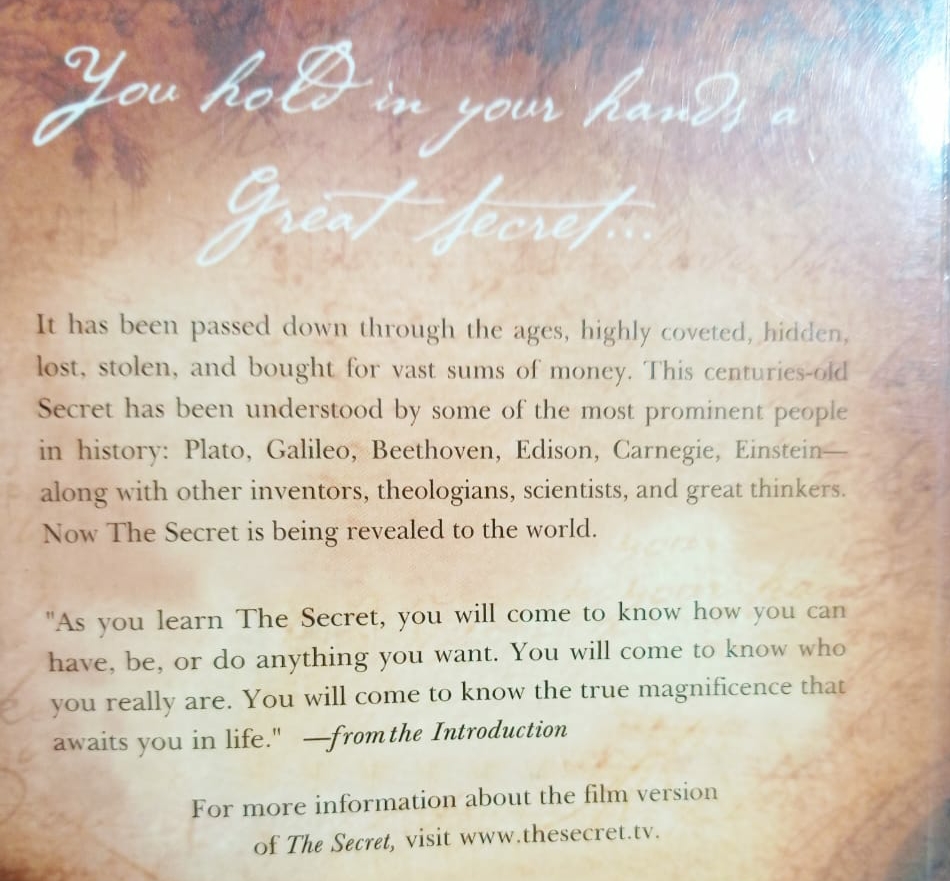
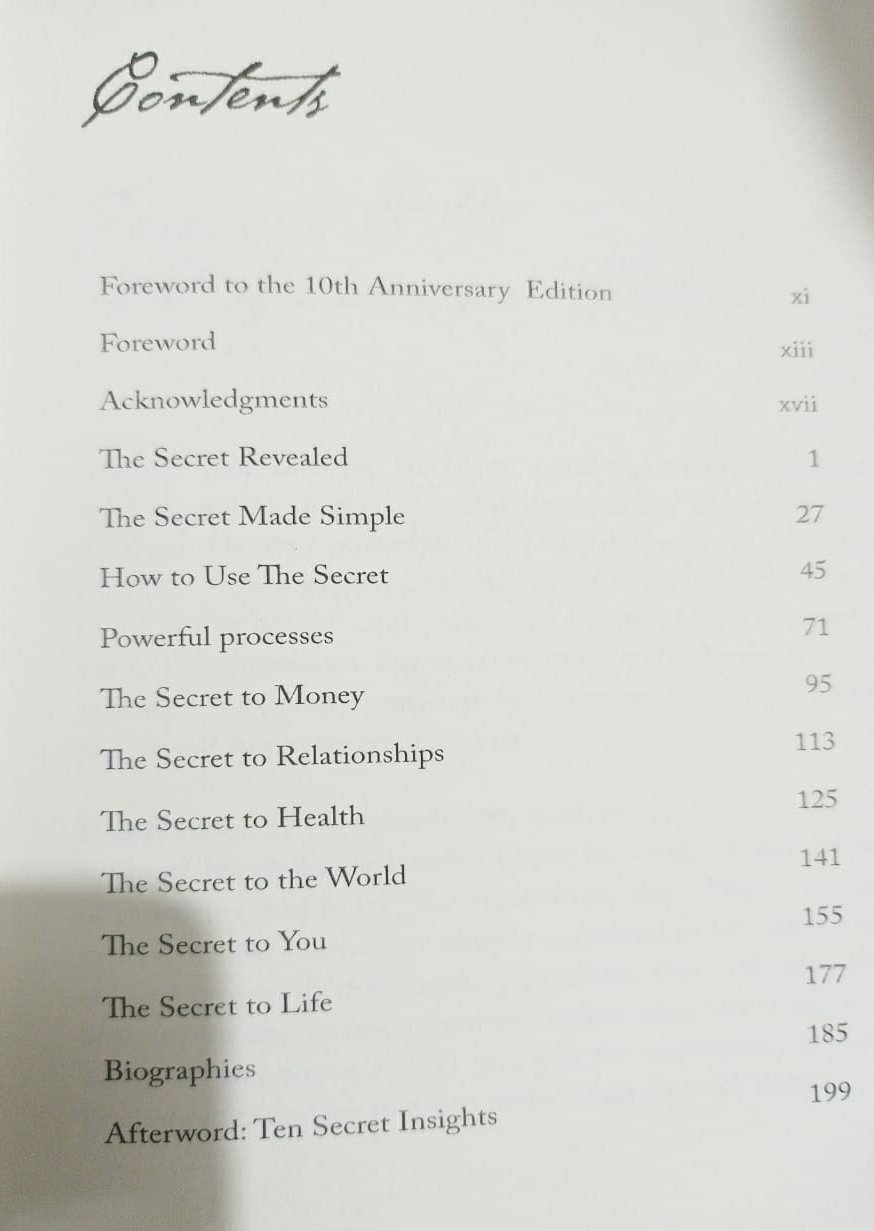
The Secret, there is a movie (specifically documentry) that goes by this name. The movie is based on this book. As the title says, it spills the secrets. All that we are is the result of what have thought. We are made of our thoughts; we are moulded by our thoughts.Change your life by changing your thoughts. It is as simple and as complicated. Because our thoughts become our words, words become actions, actions become habits, habits led you to your destiny.

This book, is a bit complicated for beginners. This book awakens the positivity in you. The hope on the goodness of universe will become more stronger than usual. It speaks about the law of attraction. The title itself attracts readers. At few movements you may feel you know those but by reading those facts from The Secret, will make your will to follow them stronger.

In the era of finger taps, following the tricks and methods mentioned may seem a difficult task. But it is worth every difficult step you take. You will find the new you a lot more happier and energetic than usual. A wonderful recommendation for all those who are not afraid of changing themselves.

Like I say : Reading books is magic, it makes you live hundreds of lives in a single one. Or atleast that’s what I believe. Hopefully this book will have an impact and magic you are/ were waiting for. I’ll take a leave.

And Thanks.😇

A Street Hawker

A street hawker goes from one street to another and from one locality to another selling his ware. A street hawker is a common sight in all the Indian towns and villages.

A street hawker usually comes with a cart or a basketful of goods, placed on his head. He carries a variety of things and eatables. Usually, in the morning, street hawkers come with vegetables and fruits in their baskets. They sell fresh fruits and vegetables and earn their livelihood.

Those people, who live in villages and towns, hear the call of the street hawkers early in the morning. He brings plenty of fruits and vegetables with him. Upon hearing his voice, people flock around him to buy fruits and vegetables. Sometimes street hawkers have to face very odd customers who go on arguing (bargaining) about the prices of various commodities. Sometimes. they have to bow to the wishes of the customers by reducing their rates.

There are other Street hawkers who come on bicycles, loaded with clothes, utensils and other articles of daily need and consumption.

All these are, no doubt, tough jobs. A street hawker has to labour a lot in order to earn his living. His profits are very meagre. He is generally a poor man. With this small income, he tries to make both ends meet. Normally, a street hawker has a cart with three or four wheels. Poor street hawkers have to carry their goods on their heads.

The street hawkers mostly carry inexpensive things. By selling their complete stock, they earn a very small amount of money.

On the whole, a street hawker’s condition is pitiable because he wanders all day to earn his meagre living. But, at least he tries to make an honest living and not begging or stealing. We should give due respect to the dignity of labour which a street hawker does.

WHAT!! FACTS????

. PANDORA’S BOX

According to Greek mythology, Pandora was the first ever women created by Zeus as a punishment for humankind after Prometheus stole fire for human use. Zeus then asked all the other gods and goddesses to shower gifts on her. She was also presented with a jar which contained all the evils & illness which she was not suppose to open. However she couldn’t resist the urge to open the container which resulted in unleashing evils into the world. Then onwards Pandora box signifies as the origin of troubles or complications. Morden generation criticised the myth an example of misogyny.

. HAPLODIPLOID SEX DETERMINATION

What does halpodiploid sex determination means? This type of sex determination is scene in honey bees. I’m this the sex of an individual is determined by the number of set of chromosomes received. An offspring formed from the the union of sperm and an egg developed into a female (queen or worker) and the unfertilized egg is developed into a male by parthenogenesis, which implies males have half the number of chromosomes that of a female. The female gets differentiated on the basis of food they consume during the development. The female that consumes royal jelly grows into a queen bee and others developes into a worker bees(sterile). The males produces sperms by mitosis so they do not have father and thus cannot have son’s but have a grandfather and can have grandsons.

. LIFE WITHOUT STOMACH?

Do you know that it’s possible to live without stomach? Let’s understand how; suppose a person is having a stomach cancer the recommended treatment would be partial or total removal of stomach termed as gastrectomy. When a person’s stomach is removed completely the esophagus is directly connected to intestine. A person is advised to consume a lot of calories in small bites/meals more times a day to prevent weight loss. A person may experience Dumping Syndrome (experience of nausea, diarrhoea, vomiting, sweats) as the the work of stomach is transfer to intestine, so a person is suggested to sit upright after having their food for sometime. It is difficult to adjust to changes but this is how a human tendency to survive.

Disaster & Disaster Management

A disaster is a sudden, calamitous event that seriously disrupts the functioning of a community or society and causes human, material, and economic or environmental losses that exceed the community’s or society’s ability to cope using its own resources. Though often caused by nature, disasters can have human origins.

The word disaster implies a sudden overwhelming and unforeseen event. At the household level, a disaster could result in a major illness, death, a substantial economic or social misfortune. At the community level, it could be a flood, a fire, a collapse of buildings in an earthquake, the destruction of livelihoods, an epidemic or displacement through conflict. When occurring at district or provincial level, a large number of people can be affected. Most disasters result in the inability of those affected to cope with outside assistance. At the household level, this could mean dealing with the help from neighbours. At the national level, it could mean assistance from organizations, various non-governmental organizations (NGOs) and government agencies themselves. As the limiting factor in disaster response is often the coping capacity of those affected, improving their resilience when responding to disasters is a key approach to lessening the consequence of a disaster.

There is no single measure of a disaster that can capture the full scope of a disaster. A common measure is the number of people killed or affected. The individual will consider the impact on his or her family and livelihood. Disaster managers will assess the speed and success of the disaster response. Economists will measure physical loss to houses and buildings and loss of production. Politicians will assess political damage from a poor response by state agencies. Health workers will consider the resources required to contain an outbreak of Ebola or Coronavirus. Others may focus on the nature of the hazard, the social consequences and the impact to specific elements of the infrastructure. To think seriously about a disaster means we must consider all affected and their losses both in the immediate and the longer term.

A disaster may occur with or without a warning phase. A response is made following a disaster. The response may be helped substantially by any preparedness actions which were made before the disaster occurred. Relief activities occur during the emergency phase, which follows the impact of the disaster.

General Effects of Disasters

 The typical effects of disasters may be one or more of the following :

  • Loss of life
  • Injury
  • Destruction of property, plantations and crops
  • Disruption of production, lifestyle & transport
  • Loss of livelihood and occupation to people
  • Disruption to essential services like electricity, water supply and gas supply
  • Damage to national infrastructure
  • Disruption of communication and other networks
  • Disruption to government systems and schemes
  • Shortage of food resources
  • Spreading of diseases
  • National economic loss
  • Sociological effects
  • Psychological after effects.

Types of Disasters

There are 2 major types of disasters :

1. Natural Disasters

A natural disaster can be defined as a major event brought about by the natural processes of the Earth that causes widespread destruction to the environment and loss of life. The list of natural disasters include weather phenomena such as tropical storms, extreme heat or extreme cold, winds, floods, earthquakes, landslides and volcanic eruptions.

Management of Natural Disasters

  • Early warning systems can alert costal populations of approaching tsunamis and they can give populations time to be evacuated from danger areas.
  • Responsible land use can reduce the risk of landslips caused by unchecked felling of trees. For other events classified as natural disasters, risks can be dramatically reduced through careful planning.
  • Construction codes when enforced can reduce loss from earthquakes. Governments can institute measures to assist in extreme cold and extreme heat.
  • Food security programmes can protect a population against food crisis arising from pests and failed crops.
  • Surveillance systems and high coverage by routine immunization programmes can help prevent outbreaks of disease.
  • Social programmes can reduce vulnerability to disasters which otherwise could not be controlled.

Types of natural disaster

Natural disasters may be broadly grouped into major and minor types depending upon their potential to cause damage to human life and property. The disasters like earthquakes, volcanic eruptions, droughts, floods and cyclones could be regarded as major types. The disasters like hailstorms, avalanches, landslides, fire accidents, etc. whose impact is localised and the intensity of the damage is much less than the others may be categorized as minor disasters.

Natural disasters can be categorised into 4 parts :

  • Geophysical (e.g., Earthquakes, Landslides, Tsunamis and Volcanic Activity)
  • Hydrological (e.g., Avalanches and Floods)
  • Climatological (e.g., Extreme Temperatures, Drought and Wildfires)
  • Meteorological (e.g., Cyclones and Storms/Wave Surges)

2. Man-Made Disasters

Man-made disasters are extreme hazardous events that are caused by human beings. Some examples of man-made disaster emergencies include chemical spills, hazardous material spills, explosions, chemical or biological attacks, nuclear blast, train accidents, plane crashes, or groundwater contamination.

Man-made disasters have an element of human intent, negligence, or error involving a failure of a man-made system, as opposed to natural disasters resulting from natural hazards. Such man-made disasters are crime, arson, civil disorder, terrorism, war, biological/chemical threat, cyber-attacks, etc.

Man-made disasters can be caused by :

  • Environmental Degradation
  • Pollution
  • Accidents (e.g., Industrial, Technological and Transport usually involving the production, use or transport of hazardous materials)

Though weather and geologically related disasters are considered to have generated the greatest number of deaths and economic loss, disasters generated by humans are increasing in importance. As society has become more complex, it is evident that people are increasingly responsible, directly or indirectly, for the consequences of events previously ascribed to forces beyond their control. Globalization is now carrying industrial production to previously agrarian societies. The risk from the unintended release of hazardous materials is becoming ever more widespread. Potentially hazardous products are now available in communities and populations which do not have adequate regulations governing their use and, in fact, may not even be aware of their presence or health risks. Rapidly increasing transport of people and commodities across continents means that transportation disasters pose increasing threats to millions.

Disaster Management

Disaster Management can be defined as the organization and management of resources and responsibilities for dealing with all humanitarian aspects of emergencies, in particular preparedness, response and recovery in order to lessen the impact of disasters.

Disaster management conveys the important idea that protecting populations and property also involves the estimation of risks, preparation, activities which will mitigate the consequences of predictable hazards and post-disaster reconstruction in a way that will decrease vulnerabilities. An important goal is building a culture of awareness that preparation is not only possible, but also will greatly reduce the consequences from disasters in terms of human and economic loss.

An effective response to disaster begins with effective planning, but must include many other steps. Each of these steps depends on the strength of other links in the disaster management chain. While no one organization or group ‘owns’ a disaster, the ultimate responsibility rests with governments to protect its people against disaster. No government can carry out these responsibilities without cooperating with many other groups in a country. Disaster management planning is often seen as a separate activity from the main functions of governments and organizations.

Conclusion :

Disaster management is the only way to mitigate the effects of all these hazards. Advance planning is always needed to keep the items of emergency for any disaster. Guidelines are also to be prepared in the form of booklets and circulated to the educated individuals. Awareness camps are to be organised for public. Training is yet another initiative. Training involves the duties and responsibilities, efforts to sustain, role of employees/NGOs, risks, errors, behavioural patterns, recovery techniques, communication channels, safety rules, priorities and security measures. Knowledge of water quality, sanitation, first aid, emergency medicines, electricity controls and gas usage are needed. Evacuation, reporting and alert procedures, are the other major initiatives. Proper insurance policies, alterations to existing buildings, changes in business locations and other resources are to be planned, for future disaster mitigation.

Book review: A novel: It ends with us

BOOK:- It ends with us

AUTHOR:- Colleen Hoover

GENRES:- It is a standalone contemporary romance novel, fiction.

RELEASE DATE:- 2nd August, 2016.

ADAPTATIONS:- It ends with us (play) and It ends with us (movie).

MAIN CHARACTERS:- Lily Bloom ( female protagonist), Ryle Kincaid ( Lily’s husband, a surgeon) & Atlas Corrigan ( Lily’s teenage love interest, a homeless boy later owner of a restraunt). And many supporting characters like Lily’s father, her mother, ryle’s sister, his sister’s husband, ryle’s mother.

Fifteen seconds, That’s all it takes to completely change everything about a person. Fifteen seconds that we’ll never get back.”

– Line said by the protagonist Lily in the book.

SUMMARY:-

The book starts with introducing the female protagonist Lily Bloom. Lily is a twenty-three year old business graduate. She has grown up in an abusive family where her father was usually abusive towards her mother. At the age of fifteen she fell in love with Atlas, a eighteen year old homeless boy from her neighbourhood. She cares for Atlas. She loved him so much. But he left her promising to come to her when he will join military. She was all alone at this time but she didn’t loose hope. She left her past life and started her own flower business in Boston.

In Boston, she met Ryle, a neurosurgeon and soon fall in love with him. But he was not ready to be in a relationship and they parted their ways. After six months, Lily hired an employee named Allysa, who was Ryle’s sister. After many encounters Ryle finally realised that he can’t live without Lily so decided to marry her. Everything was perfect, the romance between Ryle and Lily was increasing day by day. One day Ryle decided to meet Lily and her mother, there she encounters Atlas, and was not able to control her feelings, which was not loves by Ryle for sure. Slowly he started to abuse her,Whenever he can. Lily always told herself that she was not like her mother and Ryle was not like her father.

She started to live with Ryle and she found a deep dark past of Ryle and was shocked. His behaviour towards Lily was being more and more abusive day by day until one day when he can’t control himself and almost raped her. She asked Atlas help in that situation and found that she was pregnant. She doesn’t know whether to love Ryle or hate him for his behaviour. After two months she witnessed a knock on her door and she was sacred to find that he was none other than Ryle. He told her that he just came to talk to her and he did so, but she wasn’t happy with it. She missed him. But also she cannot forget what he did to her. And the story continues how ryle’s sister and Lily’s mother help her, how she allowed Ryle to be with her in her pregnancy dates, how she told Ryle what she felt about him.

BOOK REVIEW:-

Overall the book is just beyond fabulous The characters, the narration and everything seems to be perfect. I personally loved the character of Lily and Atlas. Lily’s strong decision and ability to do justice to herself and her daughter was remarkable. The narration was so strong that you will personally think of yourself in the characters place.

Firstly while reading the book I thought it will be just an average but as soon the book started every single page hooked me to read more and more. Especially I loved the narration it was just awesome. The character of Lily was so very incredible. Atlas has great chemistry with Lily like after so long they had the same feelings for each other.

This is the must read book though sometimes the story didn’t bother me but it was such a great piece of writing that can’t be expressed in words. I hadn’t given the spoiler because it would be far better to read and enjoy it at the same time.

Organ Donation Live Life.Give Life.

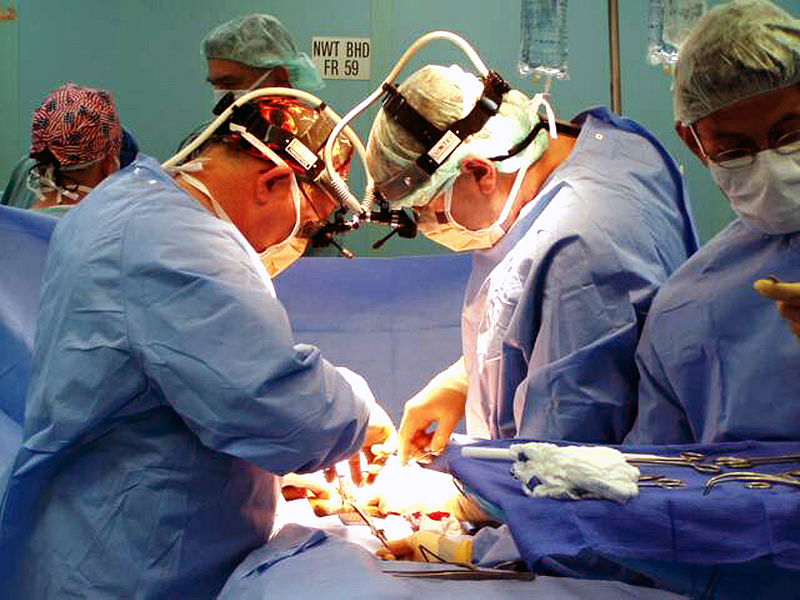
Organ donation is a process in which a person willingly donates an organ of his body to another person. Furthermore, it is the process of allowing the removal of one’s organ for its transplanting in another person. Moreover, organ donation can legally take place by the consent of the donor when he is alive. Also, organ donation can also take place by the assent of the next of kin of a dead person. There has been a significant increase in organ donations due to the advancement of medical science.

Organ Donation in Different Countries

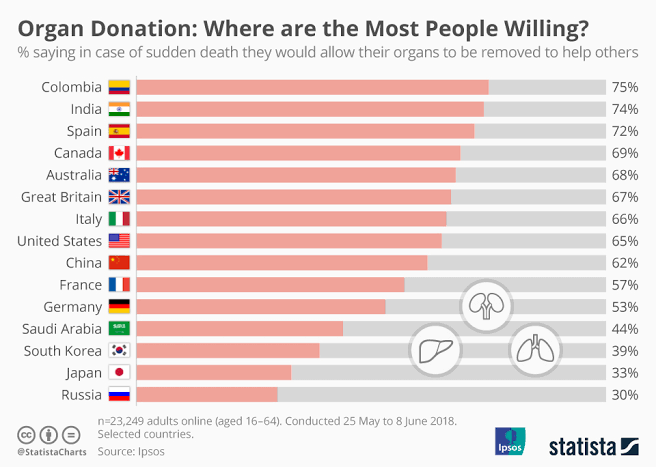
First of all, India follows the opt-in system regarding organ donation. Furthermore, any person wishing to donate an organ must fill a compulsory form. Most noteworthy, this form is available on the website of the Ministry of Health and Family Welfare Government of India. Also, The Transplantation of Human Organs Act 1994, controls organ donation in India.

The need for organ donation in the United States is growing at a considerable rate. Furthermore, there has also been a significant rise in the number of organ donors in the United States. Most noteworthy, organ donation in the United States takes place only by the consent of the donor or their family. Nevertheless, plenty of organizations are pushing for opt-out organ donation.

Within the European Union, the regulation of organ donation takes place by the member states. Furthermore, many European countries have some form of an opt-out system. Moreover, the most prominent opt-out systems are in Austria, Spain, and Belgium. In England, no consent is presumed and organ donation is a voluntary process.

Argentina is a country that has plenty of awareness regarding organ donation. Most noteworthy, the congress of Argentina introduced an opt-out organ donation policy. Moreover, this means that every person over 18 years of age will be a donor unless they or their family state their negative. However, in 2018, another law was passed by congress. Under the new law, the family requirement was removed. Consequently, this means that the organ donor is the only person who can state their negative.

Benefits of Organ Donation

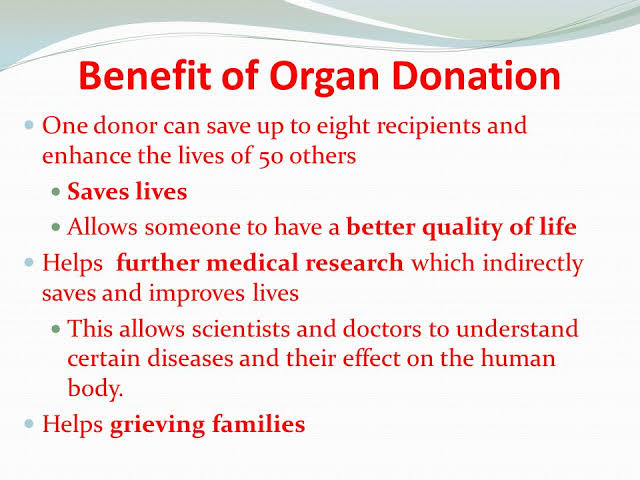
First of all, organ donation is very helpful for the grieving process. Furthermore, many donor families take relief and consolation due to organ donation. This is because they understand that their loved one has helped save the life of other people. Most noteworthy, a single donor can save up to eight lives.

Organ donation can also improve the quality of life of many people. An eye transplant could mean the ability to see again for a blind person. Similarly, donating organs could mean removing the depression and pain of others. Most noteworthy, organ donation could also remove the dependency on costly routine treatments.

Organ donation is significantly beneficial for medical science research. Donated organs offer an excellent tool for conducting scientific researches and experiments. Furthermore, many medical students can greatly benefit from these organs. Most noteworthy, beneficial medical discoveries could result due to organ donation. Organ donation would also contribute to the field of Biotechnology.

To sum it up, organ donation is a noble deed. Furthermore, it shows the contribution of an individual even after death. Most noteworthy, organ donation can save plenty of lives. Extensive awareness regarding organ donation must certainly be spread among the people.

“THE GIFT THAT HAS BEEN GIVEN TO ME SAYS MUCH ABOUT OUR CAPACITY FOR GREAT COMPASSION AND GENEROSITY, AND I HOPE IT SENDS AN INSPIRING MESSAGE TO OTHERS ABOUT THE IMPORTANCE OF ORGAN DONATION.”

. —STEVEN COJOCARU

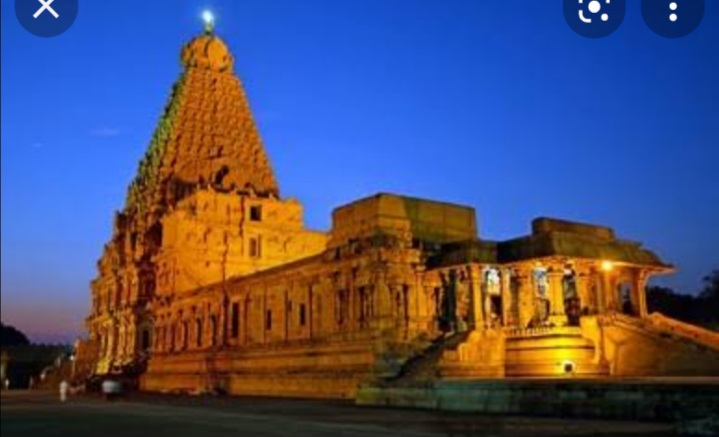
THANJAVUR TEMPLE

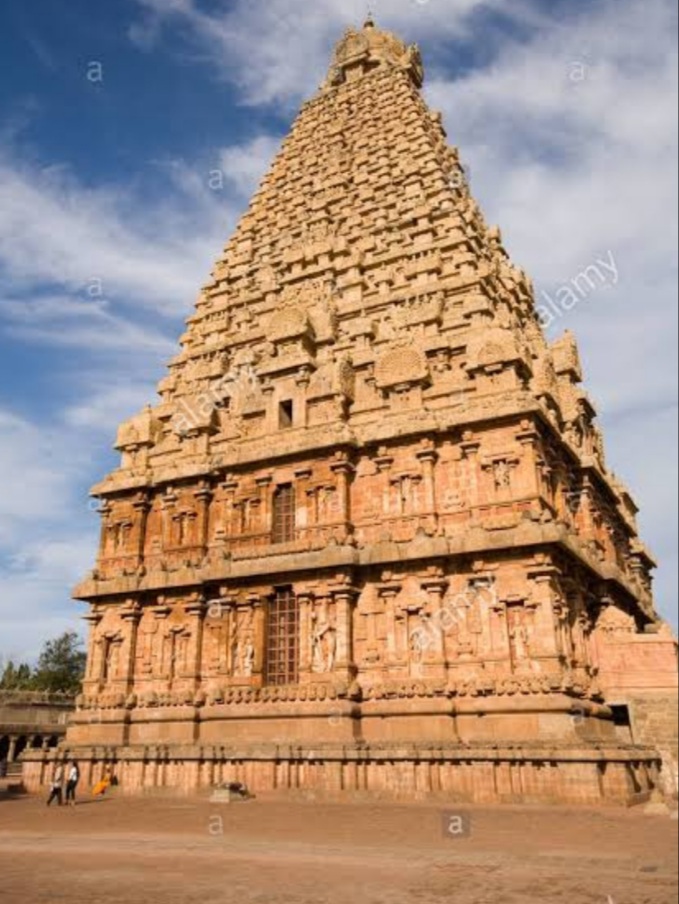
Brihadishvara temple, also called Rajarajeswaram or peruvudaiyar kovil, is an Hindu temple dedicated to Shiva located in south Bank of cauvery River in Thajore,Tamil Nadu,India. The closest airport are Thiruchirappalli and Madurai and closest seaport is the karaikal port.

How was Thanjavur Temple built?

Built on the banks of the river cauvery, where the water was diverted to the moat,this temple is made entirely to granite,and it stands tall amidst fortified walls .

5000 elephants were used for this temple construction. It took 30 years for the completion of the construction and all the worker’s name,the prime sculptor to water boy,are carved on the stones. It took five years to take an 80000 kg stone from the floor to the top of the temple.

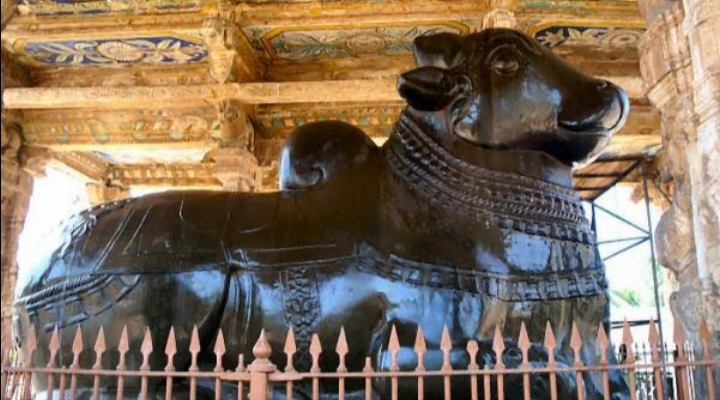
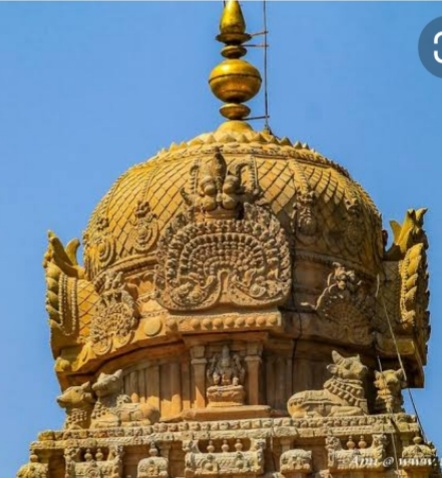
This temple is fully constructed with the balance to the gravity of the earth. Only one stone is used to make the Nandi of the temple and it is the second largest in India. Another interesting fact about its architecture is that the vimana (tower above the sanctum sanctorum) of the temple does not cast a shadow at noon.

Speciality of Thanjavur Temple

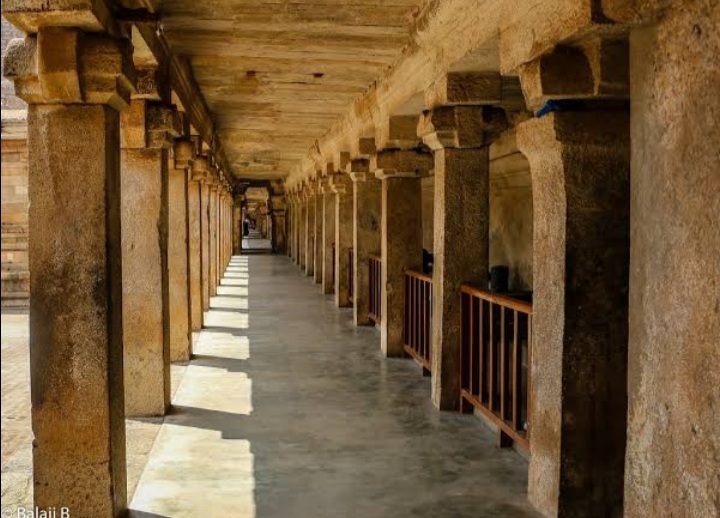
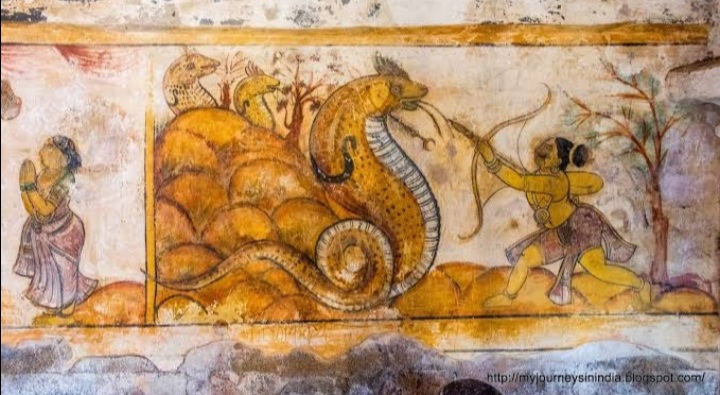
The temple has massive colonnaded prankara (corridor) and one of the largest Shiva lingas in India. It is also farmed for the quality of sculpture as well as being the location that commissioned the brass nataraja -shiva as the lord of Dance,in 11th century.

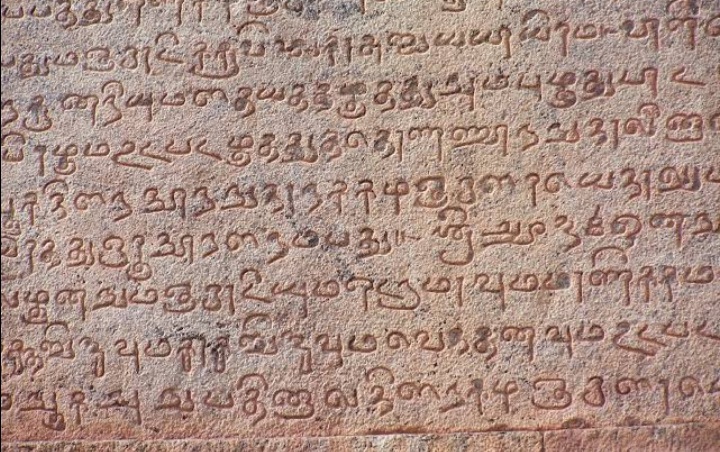
Thanjavur Temple related to Tamil letters

The height of the lingam in the sanctum of the temple is 12 feet which is equal to the number of Tamil vowels. The height of the linga pedestal is 18 feet which is equal to the number of Tamil consonants. The height of the temple gopuram is 216 feet which is equal to the number of consonant-vowels. The distance between the lingam in the sanctum of the temple and the Nandi (Bull) is 247 feet which is equal to the total number of Tamil characters.

Things to buy in Thanjavur

○ Silk weaves.

○ Thanjavur paintings.

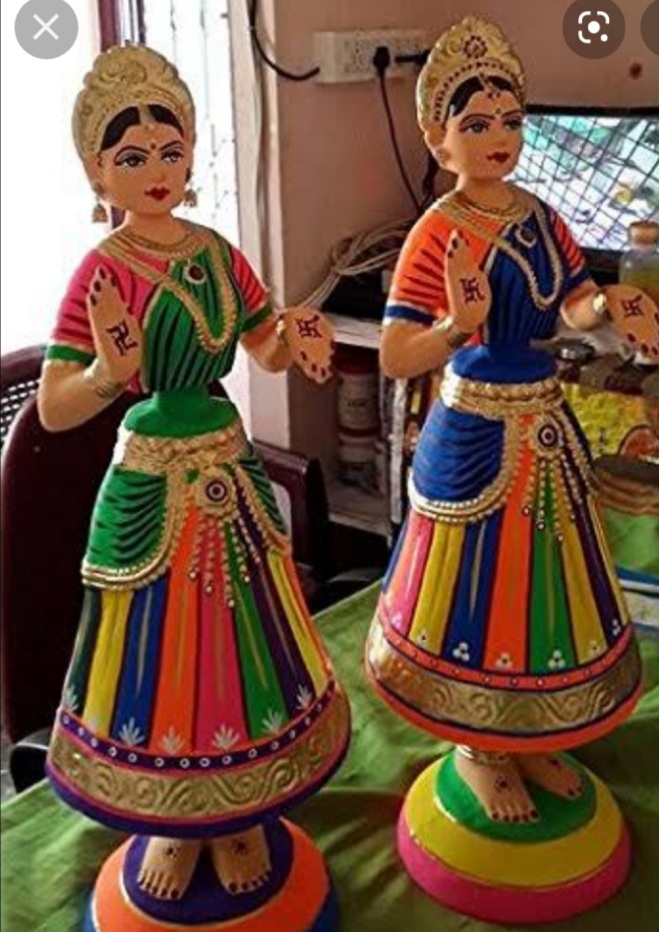
○ Dancing dolls .

○ Traditional crafts.

Dancing Dolls

Thanjavur is also well known for thalaiyatti bommai nodding dolls made of clay. They come in different colors and shapes and slightest brush of breeze makes their heads go up and down. These dancing dolls not only make for a great souvenir but also give you a sneak-peek into Thanjavur artistic talents.

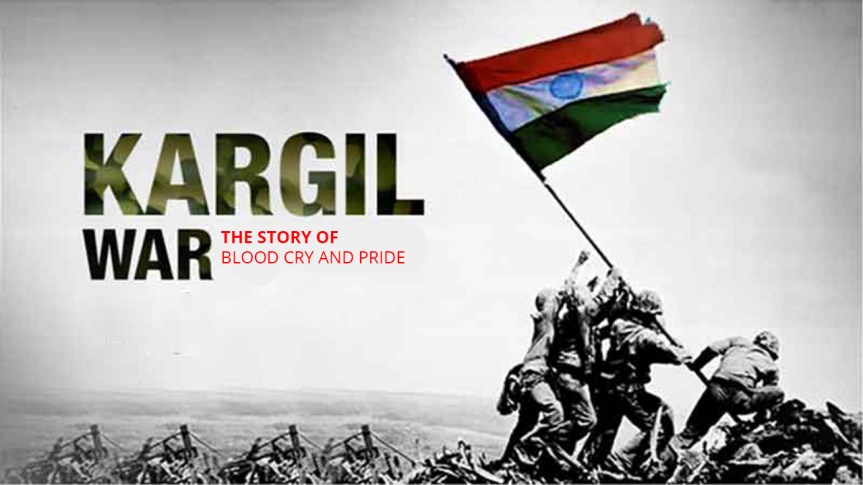
Kargil war

Kargil Vijay Diwas 2020: Brief Rundown of 1999 Kargil War And How India  Emerged Victorious | All You Need to Know

Kargil war was a very difficult time that our country went through. Furthermore, it was a crisis situation that ensued a feeling of nationalism, patriotism, and unity among every Indian. This essay on Kargil War will throw light on the various developments of the war and its after-effects.

Background of the War

Kashmir is a beautiful region that resides in an extremely mountainous area, containing some of the highest peaks in the world. Unfortunately, this amazing land has remained a constant battleground between the two countries of India and Pakistan.

The dispute began from the First Kargil War in 1947-1948 which led to the establishment of the LOC, line of control. The LOC still divides the land of Kashmir between India and Pakistan.

As part of the Simla Agreement in 1972, there was an agreement that neither India nor Pakistan would contest the border by making use of military means. Since the agreement, both countries began guarding the border heavily for the majority of the year. During the exceedingly cold winter months, both the Indian and Pakistani guards abandon their posts, only to return back in the spring.

All About Kargil War | When was Kargil Vijay Diwas? Who Win the Conflict?

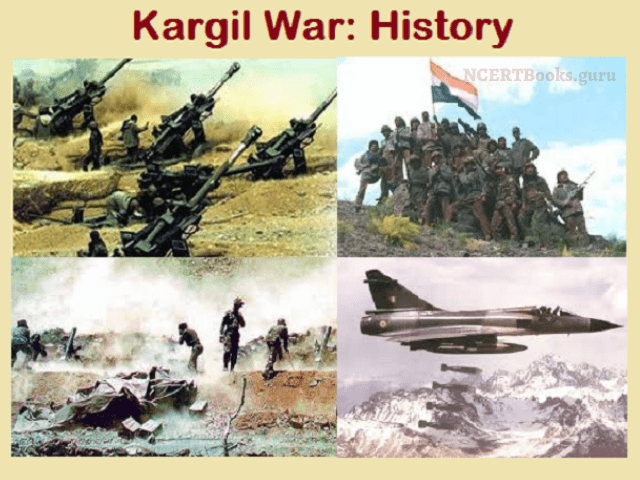
However, during the winter of 1998-1999, a surprise attack took place from the Pakistan army and it became successful in crossing the LOC and into India’s portion of Kashmir. Moreover, slowly and gradually, they went on capturing one Indian outpost after another and held their position in Kargil.

In February 1999, at the same time as the winter invasion, the Lahore Declaration was being signed between India and Pakistan which was based on peace. After a few months, the Kargil war began between the two countries. Furthermore, a series of bloody battles were fought between the two nations of India and Pakistan.

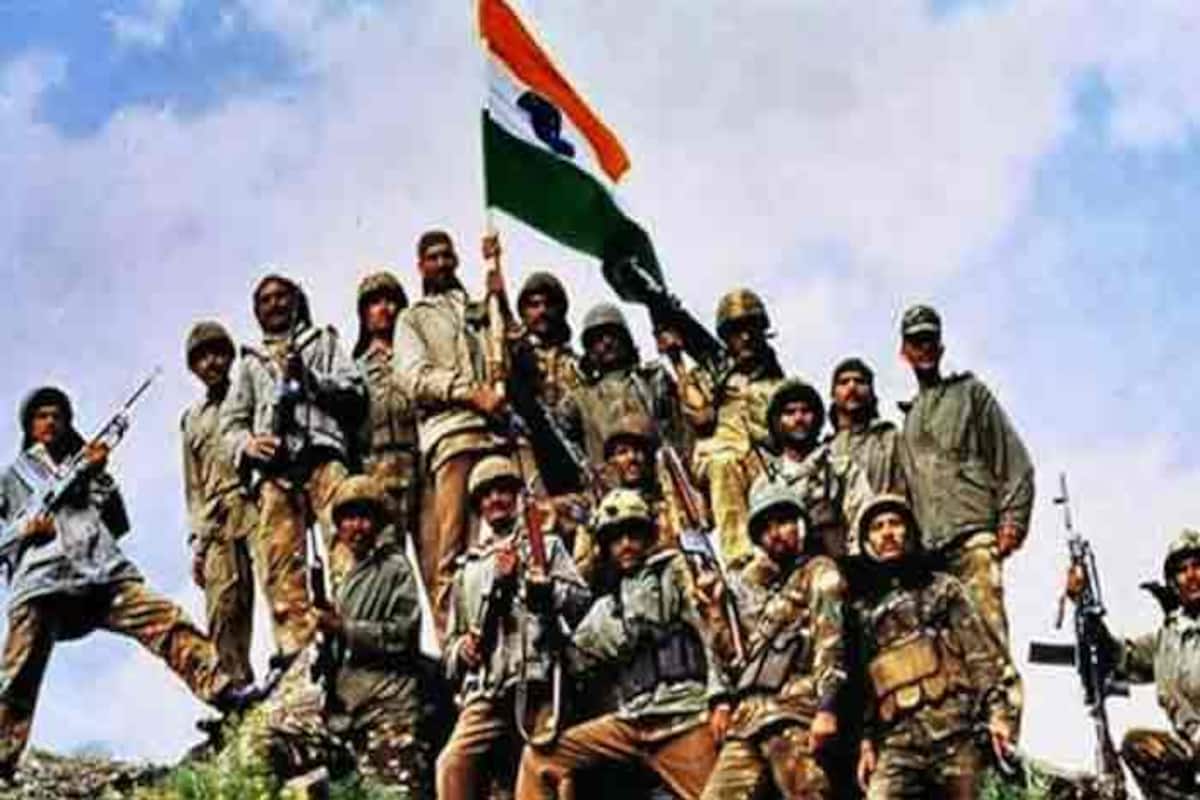
The battles posed a huge challenge for the Indian forces as they had to fight on difficult mountainous terrain.  In spite of this challenge, the Indian soldiers showed amazing bravery. After a long struggle, the Indian army became successful in pushing back the Pakistani forces across the line of control.

Rise of Nationalism

By July 14, 1999, there were heavy causalities on both sides. However, the sacrifice of Indian soldiers was not in vain. This great struggle of the Indian army has carved a place in the heart of every Indian.

The entire Kargil war was a time of tension and nervousness for the Indian people. It infused the spirit of national pride in every Indian. Most noteworthy, it served as an opportunity of unifying all the Indians together irrespective of caste, colour, religion, language etc.

Kargil Diwas 2021: Here Are 20 Kargil War Heroes You Should Know About

Conclusion of the Kargil War 

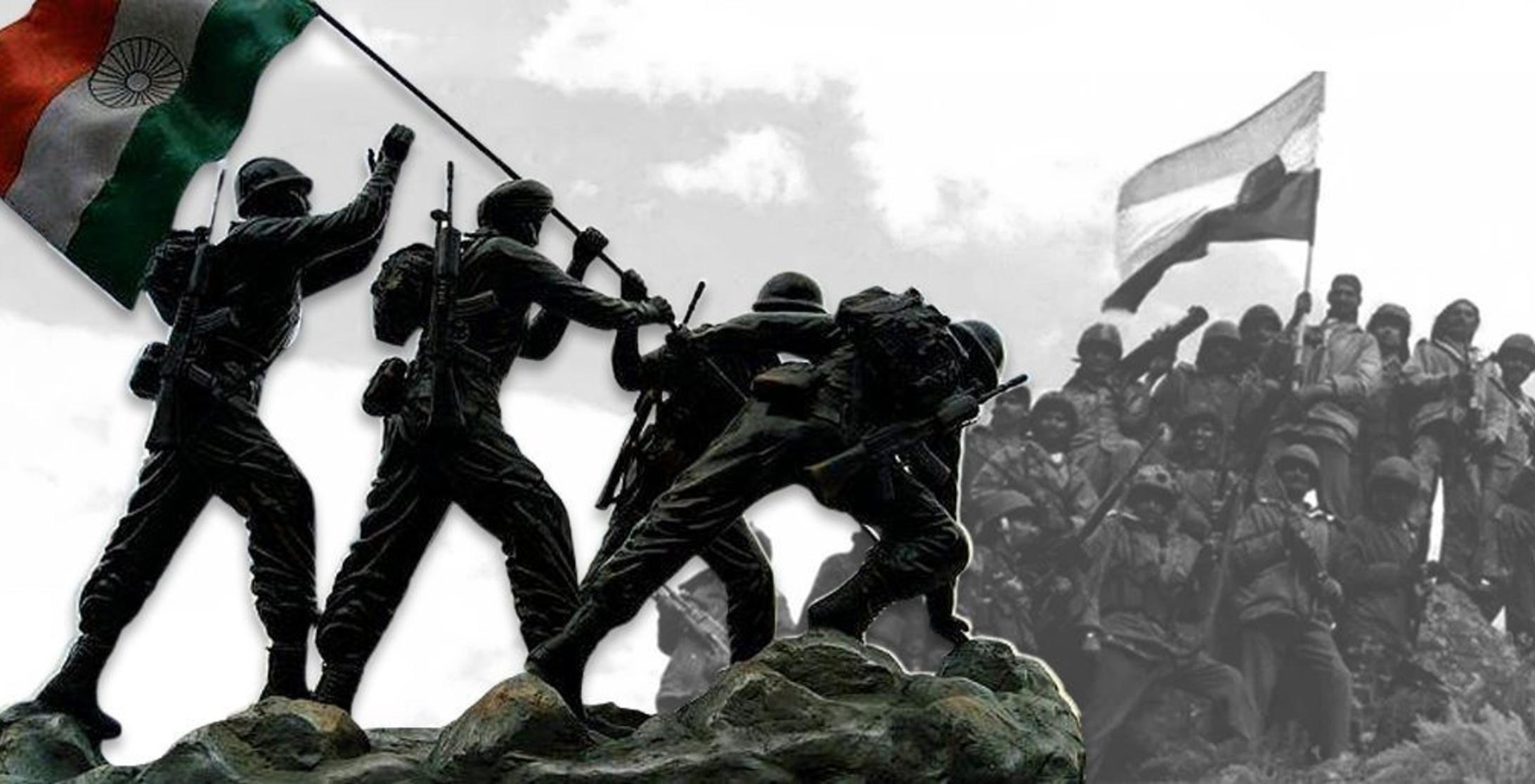
The Kargil war has become an unforgettable event in the history of India. Nevertheless, this was an event that brought about feelings of patriotism in the hearts of every Indian like never before. The brave struggle of the Indian soldiers will continue to be an inspiration for all the citizens of this country.

Some Golden Thought and Why?

Don’t Promise , When you are happy . Don’t Reply , When you are angry. Don’t decide , When you are sad.

It is said that time and dicision are the two most important factor in life and should be taken care of .They not only determine the quality of our lives but also help in bettering them and teach us valuable lessons in life . Life is nothing but an assembly of uneven spaces , events and lessons.

We should not promise someone in a hurry and in excitement because it can let you in trouble .For instance whenever are so happy there won’t be any balance of emotion to ensure our decision and anger is never good in any situation,and we should also avoid being angry.This will not only ruin the situation but also make things worse for us in the future.Similarly, we should not decide anything when we are sad or created a sad mindset for something.

Concludes that balance of emotion is quite essential to ensure dicision making in every sphere of life.

Everything will workout in the end , you don’t need to know how , you just have to trust that it will,Never let a bad situation bring out the worst in you .Be strong and choose to be positive.

Things always have a way of working out because your problems are temporary and don’t judge your life based on your current circumstances since, this is one facet of it .Instead of dwelling on unfortune conditions see them as obstacles that provide inner wisdom and personal growth.

Mistakes are very painful ,when they happen , but years later a collection of mistake is what is called experience.

As we all know that mistakes give us immense pain but we doesn’t realise that these mistakes are going to help us in future .The experience which we will get from mistake will always help us to choose right path for us as well as we can give advice to others on the basis of experience .So, we can say that mistakes gives us experience and that will help us to lead success in future.

Instead of worrying about what you cannot control, shift your energy to what you can create.

It is habit of humans that instead of working on our strengh ,we generally worry about its result but we should not do this .Instead of thinking about result we should shift our energy towards our work.

Enjoy the little things, in life for one day you will look back and realise they were the big things.

Once you take a moment to appreciate an act of kindness coming from someone you love or a person you don’t even know , you’ll become more aware of your belonging to a community of people who care about each other. This type of positive emotion has been linked to physical health as well . These emotions simply help people to cope with difficult situations.

How to improve your vocabulary: 7 ways to expand your vocabulary

One of the easiest ways to bolster your existing writing skills is to add new words to your written vocabulary. The English language is among the most voluminous of all languages, and this means that you’ll never run out of vocabulary words to learn and use. All forms of the written word—from fiction to journalism to essay writing to poetry—benefit from a strong vocabulary. To that end, the time you spend improving your vocabulary skills is actually time invested in your writing skills.

7 Ways to Improve Your Vocabulary

Most of us have not spent much time learning new vocabulary since we were high school or college students. Thankfully you can always pick up where you left off. Here are some tips to help you start learning new vocabulary words:

1. Develop a reading habit

Vocabulary building is easiest when you encounter words in context. Seeing words appear in a novel or a newspaper article can be far more helpful than seeing them appear on vocabulary lists. Not only do you gain exposure to unfamiliar words; you also see how they’re used.

2. Use the dictionary and thesaurus

Online dictionaries and thesauruses are helpful resources if used properly. They can jog your memory about synonyms that would actually be better words in the context of what you’re writing. A full dictionary definition can also educate you about antonyms, root words, and related words, which is another way to learn vocabulary.

3. Play word games

Classic games like Scrabble and Boggle can function as a fun way to expand your English vocabulary. Crossword puzzles can as well. If you really want to be efficient, follow up rounds of these word games with a little note-taking. Keep a list of the different words you learned while playing the game, and then study that list from time to time.

4. Use flashcards

 A quick way to build a large vocabulary is to study a number of words via flashcards. In today’s digital age, a wide array of smartphone apps make flashcards convenient and easy to organize. Aiming for one new word a day is reasonable. You can always go for more, but it may not be reasonable to assimilate dozens of English words every single day.

5.Practice using new words in conversation

It’s possible to amass a huge vocabulary without actually knowing how to use words. This means you have to take it upon yourself to put your personal dictionary into use. If you come across an interesting word in your reading, make a point of using it in conversation. By experimenting in low-stakes situations, you can practice the art of word choice and, with a little bit of trial and error, hone in on the right word for a particular context.

6.Use mnemonics

A mnemonic device is a form of word association that helps you remember words’ definitions and proper uses. For instance think of the word obsequious which means “attempting to win favor from influential people by flattery.” Break down that word into components: “obse” is the beginning of “obsessed,” “qui” sounds like the French word for “yes” (oui), and “us” is like the word “us.” So you can think of that big word obsequious as “obsessed with saying yes to us”—which is kind of what it means!


Right to Information in India

All you need to know about filing an RTI - iPleaders

The right to information, as enshrined in the Right to Information (RTI) Act of 2005, marks the end of a phase in human civilisation. It is the personification of one of the most mature faces of the country’s thriving democracy. This right is also a barometer of the expansion of human rights and liberties in their vital aspects, which naturally stem from the country’s democratic credentials. With the expansion of science, technology, and industry, a greater awareness of human rights and liberties prepared the path for democratic government. Almost every living being has an innate need for freedom. As a result of the growing awareness of diverse liberties, revolutions against autocracies and monarchs occurred in many areas of the world, and the political scene was visited by democracy, which grew and flourished in many countries. One of democracy’s key goals was to promote the advancement of human liberties and dignity.

People had high hopes and dreams for the new structure because our independence was the outcome of decades of struggle and sacrifice. As a result, the Indian Constitution established appropriate provisions in the form of fundamental rights and state policy direction principles.

What exactly does the term “information” imply?
Under the Act, the idea of information has been given a broad definition. The many modes and formats of information that can be accessed under the right to information have been specified in detail. Because it is the Act’s central theme, it has been included in all of its connotations, forms, and dimensions.

Any material in any form, including records, documents, manuscripts, files, memos, e-mails, opinions, advices, press releases, circulars, orders, logbooks, contracts, reports, papers, samples, models, data material held in any electronic form, and information relating to any private body that can be accessed by a public authority under any other law currently in force, is referred to as “information.”

What does the term “Right to Information” mean?
“Right to Information” refers to the right to inspect work, documents, and records held by or under the control of any public authority, as well as the right to take notes, extracts, or certified copies of documents or records, and to take certified samples of material; and to obtain information on diskettes, floppies, tapes, or video cassettes.

It is the right to access information from a public authority that the authority owns or controls. This right applies to every item of information with a public purpose. For example:

Inspection refers to looking over a work document or record closely, carefully, and for a specific purpose.
Taking notes: this could entail jotting down specific details from the documents being examined.
Certified samples of material: in order to promote transparency and prevent corruption, it allows citizens to take samples from the material acquired or utilised by the government.

What method do you use to gather information?
Citizens who wish to acquire information under the RTI Act should submit a written request to the Public Authority’s Public Information Officer in English, Hindi, or the official language of the area in which the request is made. The application must be detailed and precise. He must pay the application fee as specified in the Fee Rules at the time of submission of the application. The applicant has the option of sending the application via mail, email, or personally delivering it to the public authority’s office. An Assistant Public Information Officer can also submit the application.

This application may be written or electronic, and it may be written or printed, or it may be sent electronically, such as via e-mail or fax. Any mode may be chosen by the applicant depending on the circumstances and his convenience. The choice of the language would be that of the applicant and the SPIO and ASPIO concerned cannot force the applicant to use a particular language. However, the SPIO may decide the mode of supply of information as per availability of the resources.