Water quality monitoring

 Government of India, in partnership with States, is implementing Jal Jeevan Mission (JJM) since August, 2019 to provide potable tap water supply in adequate quantity, of prescribed quality and on regular & long-term basis to every rural household in the country. Drinking Water being a state subject, the responsibility of planning, approval, implementation, operation, and maintenance of drinking water supply schemes, including those under the Jal Jeevan Mission, lies with State/UT Governments. The Government of India supports the States including Assam by providing technical and financial assistance.

As per operational guidelines for the implementation of the Jal Jeevan Mission up to 2% of the allocation to States/ UTs under JJM can be utilized for carrying out water quality monitoring and surveillance activities. The water quality monitoring and surveillance is done through testing of water samples in Labs as well as testing through field testing Kits (FTKs) by community.

As reported by States/UTs, so far 2,118 drinking water quality testing laboratories (including 83 laboratories in Assam) at different levels viz. State, regional, district, sub-division and/or block level, have been set up in the country. To encourage water quality testing to ensure potable drinking water supply, these laboratories have also opened for general public for testing of their water samples at a nominal rate.

In order to empower the communities to monitor the water quality, States/ UTs have also been advised to identify and train 5 persons, preferably women, in every village to conduct water quality testing using Field Testing Kits (FTKs)/ bacteriological vials at village level and report the same on the WQMIS portal. So far, as reported by States/UTs, more than 22.98 lakh women (including 1.08 lakh in Assam) have been trained for testing water using FTKs.

To enable States/ UTs to test water samples for water quality, and for sample collection, reporting, monitoring and surveillance of drinking water sources, an online JJM – Water Quality Management Information System (WQMIS) portal has been developed. As reported by States/UTs on WQMIS portal, as on 30/01/2024, more than 60.93 lakh water samples have been tested in the water testing laboratories and more than 99.99 lakh water samples using Field Testing Kits, during 2023-24. As reported by Assam, as on 30/01/2024, more than 2.23 lakhs water samples have been tested in water testing laboratories and more than 10.04 lakh water samples using Field Testing Kits, during 2023-24.

Under the Jal Jeevan Mission, priority is accorded to make provision of tap water supply in drought-prone & desert areas, water quality-affected habitations, villages in Aspirational & JE–AES affected districts, Saansad Adarsh Gram Yojana (SAGY) and SC/ ST majority villages. Under JJM, 0.5% of annual allocation is earmarked to States having Japanese Encephalitis-Acute Encephalitis Syndrome affected districts. Due to priority given to JE-AES affected districts (61), the tap water supply to households has increased from 8.01 lakh (2.71%) HHs in August 2019 to 216.04 lakh (72.99%) as on 30.01.2024.
Status of Jal Jeevan Mission

 Government of India is committed to make provision for safe & potable tap water supply in adequate quantity, of prescribed quality and on a regular & long-term basis to all rural households in the country. Towards this end, the Government of India launched the Jal Jeevan Mission (JJM), to be implemented in partnership with states, in August 2019. Drinking Water is a state subject, and hence, the responsibility of planning, approval, implementation, operation, and maintenance of drinking water supply schemes, including those under the Jal Jeevan Mission, lies with State/UT Governments. The Government of India supports the States by providing technical and financial assistance.

Significant progress has been made in the country since the launch of Jal Jeevan Mission, towards enhancing access to tap water to rural households. At the start of Jal Jeevan Mission in August 2019, only 3.23 Crore (16.8%) rural households were reported to have tap water connections. So far, as reported by States/ UTs as on 30.01.2024, more than 10.98 Crore additional rural households have been provided with tap water connections under JJM, out of these around 2.58 Crore have been provided in 2023-24. Thus, as on 30.01.2024, out of 19.27 Crore rural households in the country, more than 14.21 Crore (73.76%) households are reported to have tap water supply in their homes.

In the current financial year i.e. 2023-24, an amount of Rs. 70,000 Crore have been allocated under the Mission. Out of the allocated fund, an amount of Rs. 54,635.51 Crore has already been released to the eligible States/UTs. Further, from the total available fund with the States including their matching States share, as on 30.01.2024, amount of Rs. 1,13,670 Crore has been reported as utilized by the States.

Progress Report on Implementation of Jal Jeevan Mission

 Government of India is committed to make provision for safe & potable tap water supply in adequate quantity, of prescribed quality and on a regular & long-term basis to all rural households in the country. Towards this end, the Government of India launched the Jal Jeevan Mission (JJM), to be implemented in partnership with states, in August 2019. Drinking Water is a state subject, and hence, the responsibility of planning, approval, implementation, operation, and maintenance of drinking water supply schemes, including those under the Jal Jeevan Mission, lies with State/UT Governments. The Government of India supports the States by providing technical and financial assistance.

Significant progress has been made in the country since the launch of Jal Jeevan Mission, towards enhancing access to tap water to rural households. At the start of Jal Jeevan Mission in August 2019, only 3.23 Crore (16.8%) rural households were reported to have tap water connections. So far, as reported by States/ UTs as on 30.01.2024, more than 10.98 Crore additional rural households have been provided with tap water connections under JJM. Thus, as on 30.01.2024, out of 19.27 Crore rural households in the country, more than 14.21 Crore (73.76%) households are reported to have tap water supply in their homes.

As JJM follows a universal approach for coverage of rural households, caste-based details of beneficiaries of tap water connections are not maintained at Government of India level. However, under the mission, priority has been given to SC/ ST majority villages and villages in Aspirational districts to provide tap water connections for clean tap water supply. Further, a 10% weightage is assigned for population residing in SC/ ST dominated areas, while allocating the fund, to prioritize the coverage in these areas. Further, Government of India has also approved Pradhan Mantri Janjati Adivasi Nyaya Maha Abhiyan (PM-JANMAN) for development of Particularly Vulnerable Tribal Groups (PVTG) aiming at the targeted development of 75 Particularly Vulnerable Tribal Groups (PVTGs).

Har Ghar Jal Initiative

 Government of India is committed to make provision for safe & potable tap water supply in adequate quantity, of prescribed quality and on a regular & long-term basis to all rural households in the country. Towards this end, the Government of India launched the Jal Jeevan Mission (JJM), to be implemented in partnership with states, in August 2019. Drinking Water is a state subject, and hence, the responsibility of planning, approval, implementation, operation, and maintenance of drinking water supply schemes, including those under the Jal Jeevan Mission, lies with State/UT Governments. The Government of India supports the States by providing technical and financial assistance.

Significant progress has been made in the country since the launch of Jal Jeevan Mission, towards enhancing access to tap water to rural households. At the start of Jal Jeevan Mission in August 2019, only 3.23 Crore (16.8%) rural households were reported to have tap water connections. So far, as reported by States/ UTs as on 30.01.2024, more than 10.98 Crore additional rural households have been provided with tap water connections under JJM. Thus, as on 30.01.2024, out of 19.27 Crore rural households in the country, more than 14.21 Crore (73.76%) households are reported to have tap water supply in their homes.

As per Operational Guidelines of JJM, after making provision of tap connections to all rural households in a village, the Department implementing the scheme provides completion certificate to Gram Panchayat and marks the village as ‘Har Ghar Jal’ village on JJM-IMIS. Subsequently, Gram Panchayats in its Gram Sabha meeting after reading out aloud the work completion report, formally passes resolution certifying itself as ‘Har Ghar Jal’ village. The copy of certificate provided by implementing department, resolution passed by Gram Sabha, and a small video capturing the Gram Sabha is reflected on JJM Dashboard and village is marked certified in JJM-IMIS. As such, due to time lag in the two processes, the difference exists in Har Ghar Jal reported and certified villages.

As reported by States/UTs, as on 30.01.2024, out of around 2.02 lakh villages reported as ‘Har Ghar Jal’, more than 1.01 lakh villages have been certified by the respective Gram Sabha.

States/ UTs, are being regularly advised during various review meetings, field visits, conferences, etc. to provide tap water connections to all households and complete the HGJ certification.  Moreover, time and again States are advised to organize special Gram Sabha meetings for Har Ghar Jal certification after completion of tap water supply works in the village.

Reinventing Township Model to Conserve Water

 Implementation of measures pertaining to water conservation and zero-waste water discharge in the country are a continuous process and it is the constant endeavor of the Government to strive towards water conservation and zero-waste water discharge in both the urban and rural areas of the country. Government of India in 2015 launched Atal Mission for Rejuvenation and Urban Transformation (AMRUT) in 500 selected cities (485 cities including 15 merged cities) across the country covering around 60% of the Urban Population. AMRUT focuses on development of basic urban infrastructure in the selected cities in the sectors of Water Supply; Sewerage & Septage Management; Storm Water Drainage; Non-Motorised Public Transport; and Permeable Green Spaces & Parks.

To carry forward the objective of universal coverage of water supply from 500 cities to about 4,900 statutory towns, AMRUT 2.0 has been launched on 1st October 2021. AMRUT 2.0 focuses on making the cities ‘self-reliant’ & ‘water secure’. Providing universal coverage of sewerage & septage management in 500 AMRUT cities is other major focus of AMRUT 2.0. Under AMRUT 2.0, rejuvenation of water bodies and wells is one of main components. The admissible elements include harvesting the rainwater through storm water drains into water body (which is not receiving sewage/ effluent).

National Water Policy, 2012 advocates rainwater harvesting and de-salinization in urban and industrial areas, wherever techno-economically feasible, to increase availability of utilizable water.

Further, Ministry of Housing & Urban Affairs has also formulated guidelines for the States to adopt measures suitable to local conditions, such as Unified Building Bye Laws (UBBL) of Delhi, 2016, Model Building Bye Laws (MBBL), 2016 and Urban and Regional Development Plan Formulation and Implementation (URDPFI) Guidelines, 2014. Adequate focus has been given on requirement of rainwater harvesting and water conservation measures in these guidelines.

In order to make urban water management and urban river management as important aspect of urban planning, the National Mission for Clean Ganga (NMCG) in association with National Institute of Urban Affairs (NIUA) has started River Cities Alliance (RCA) in November, 2021 with 30 cities on banks of River Ganga, now has 142 river cities as members.

RCA is a platform for building capacities of municipal officials and stakeholders by way of a platform for sharing best practices in urban water management like Catch The Rain, treating sewage, reuse of treated water etc. Under this, the officials are trained in preparing urban river management plans for protection of water bodies in India.


Per Capita Water Availability

 The average annual water availability of any region or country is largely dependent upon hydro- meteorological and geological factors, however, water availability per person is dependent on population of a country. The per capita water availability in the country is reducing due to increase in population. Based on the study titled “Reassessment of Water Availability in India using Space Inputs, 2019” conducted by Central Water Commission, the average annual per capita water availability for year 2021 and 2031 has been assessed as 1486 cubic meter and 1367 cubic meter respectively. Annual per-capita water availability of less than 1700 cubic meter is considered as water stressed condition whereas annual per-capita water availability below 1000 cubic meters is considered as a water scarcity condition.

‘Water’ being a State subject, steps for augmentation, conservation and efficient management of water resources which positively impact over the issue of per capita water availability are primarily undertaken by the respective State Governments. In order to supplement the efforts of the State Governments, Central Government provides technical and financial assistance to them through various schemes and programmes.

Government of India, in partnership with State, is implementing Jal Jeevan Mission (JJM) to make provision of tap water supply to every rural household of the country by 2024.

Government of India has launched AMRUT 2.0 on 1st October 2021, covering all the statutory towns of the country to ensure universal coverage of water supply & make cities ‘water secure’.

To ensure optimum utilization of water, Government of India has been implementing Pradhan Mantri Krishi Sinchayee Yojna (PMKSY) from 2015-16 onwards. Under PMKSY-Accelerated Irrigation Benefit Programme (AIBP), 99 ongoing major/medium irrigation projects and 7 phases were prioritized during 2016-17, in consultation with States, out of which AIBP works of 58 prioritized projects have been reported to be completed as on date. The extension of PMKSY for the period 2021-22 to 2025-26 has been approved by Government of India, with an overall outlay of Rs. 93,068.56 crore.

The Command Area Development and Water Management (CADWM) Programme has been brought under PMKSY – Har Khet Ko Pani from 2015-16 onwards. The main objective of taking up CAD works is to enhance utilisation of irrigation potential created and improve agriculture production on a sustainable basis through Participatory Irrigation Management (PIM).

The Bureau of Water Use Efficiency (BWUE) has been set up for promotion, regulation and control of efficient use of water in irrigation, industrial and domestic sector. The Bureau will be a facilitator for promotion of improving water use efficiency across various sectors namely irrigation, drinking water supply, power generation, industries, etc. in the country.

“Sahi Fasal” campaign was launched to nudge farmers in the water stressed areas to grow crops which are not water intensive but use water very efficiently; and are economically remunerative; are healthy and nutritious; suited to the agro-climatic-hydro characteristics of the area; and are environmentally friendly.

The Mission Amrit Sarovar was launched on National Panchayati Raj Day on 24th April 2022 as a part of celebration of Azadi ka Amrit Mahotsav with an objective to conserve water for future. The Mission is aimed at developing and rejuvenating 75 water bodies in each district of the country.

Jal Shakti Abhiyan: Catch the Rain” (JSA: CTR) – 2023 campaign, the fourth in the series of JSAs, was launched by Hon’ble President on 04.03.2023 in all districts (rural as well as urban areas) across the country for implementation from 04 March 2023 to 30 November 2023 – the pre-monsoon and monsoon period. The campaign was implemented across the country with the main theme “Source Sustainability for Drinking Water. The focused interventions of the campaign include (1) water conservation and rainwater harvesting (2) enumerating, geo-tagging & making inventory of all water bodies; preparation of scientific plans for water conservation based on it (3) Setting up of Jal Shakti Kendras in all districts (4) intensive afforestation and (5) awareness generation.

The other important steps taken by the Central Government to control water depletion and promote rain water harvesting/conservation are available at the URL:

https://cdnbbsr.s3waas.gov.in/s3a70dc40477bc2adceef4d2c90f47eb82/uploads/2023/02/2023021742.pdf

This information was given by the Minister of State for Jal Shakti, Shri Bishweswar Tudu in a written reply in Rajya Sabha today.

****

Safety Reviews of Aging Dams in the Country

 As per the National Register of Large (Specified) Dams, 2023 compiled by the National Dam Safety Authority, there are 234 number of large dams in India, which are more than 100 years old. State/UT-wise list of these dams is enclosed as Annexure.

Responsibility for safety of dams, including its operation and maintenance rests primarily with dam owners which are mostly the State Governments and Central/State Public Sector Units. At present dam owners generally carry out the safety audit in terms of periodical pre-monsoon and post-monsoon inspection of their dams. States have also constituted Dam Safety Review Panels for comprehensive audit of their dams. As per the compliance of Dam Safety Act 2021, dam owning agencies have reported the pre-monsoon & post-monsoon inspections of about 6414 and 4150 dams respectively during the FY 2023-24.

Government of India is also implementing the externally funded Dam Rehabilitation and Improvement Project (DRIP) for improving the safety and operational performance of some of the selected dams across the country with accompanying institutional strengthening for dam safety. Under the externally funded DRIP, Phase-I programme which was completed in March 2021, a total of 198 dam projects in seven states were comprehensively reviewed for its safety conditions and rehabilitated and strengthened. After completion of DRIP, Phase-I programme, Government of India has taken up DRIP, Phase-II & III scheme, wherein about 736 dams will be comprehensively audited and rehabilitated with financial assistance from the World Bank and the Asian Infrastructure and Investment Bank. Under this scheme, comprehensive inspection and review of about 408 dams have been completed by the Dam Safety Review Panels constituted by the States.

Further, Union Government has enacted the Dam Safety Act 2021, which became effective from 30th December 2021. The Act provides a comprehensive frame work for proper surveillance, inspection, operation and maintenance of all the large dams of the country for ensuring their safe functioning and to avoid dam failure related disasters. There is a provision for comprehensive dam safety evaluation for each specified dam under Section 38 of the Dam Safety Act 2021.

However, here it is important to mention that aging of dams is not detrimental to its overall health, provided it is maintained properly and timely repairs are carried out in the structure, ensuring its structural integrity, safety features and operation.

This information was given by the Minister of State for Jal Shakti, Shri Bishweswar Tudu in a written reply in Rajya Sabha today.


ANNEXURE

State-wise list of Large dams as per NRLD-2019

Sl No.

State/UT

No. of Large dams more than 100 years old (constructed in or before 1922)

1

Andaman and Nicobar

0

2.

Andhra Pradesh

6

3.

Arunachal Pradesh

0

4.

Assam

0

5.

Bihar

1

6.

Chhattisgarh

7

7.

Goa

0

8.

Gujarat

30

9.

Haryana

0

10.

Himachal Pradesh

0

11.

Jammu & Kashmir and Ladakh

0

12.

Jharkhand

0

13.

Karnataka

15

14.

Kerala

1

15.

Madhya Pradesh

63

16.

Maharashtra

44

17.

Manipur

0

18.

Meghalaya

0

19.

Mizoram

0

20.

Nagaland

0

21.

Odisha

3

22.

Punjab

0

23.

Rajasthan

25

24.

Sikkim

0

25.

Tamil Nadu

1

26.

Tripura

0

27.

Telangana

21

28.

Uttar Pradesh

17

29.

Uttarakhand

0

30.

West Bengal

0

Total

234


****

Amendments to streamline Food Safety and Standards Regulations

 In a move that would facilitate ease of doing business through the concept of ‘One Nation, One Commodity, One Regulator’, the Food Safety and Standards Authority of India (FSSAI) in its 43rd meeting held recently  in New Delhi under the chairmanship of Union Health Secretary, Shri Apurva Chandra, approved various amendments to streamline food safety and standards regulations.

WhatsApp Image 2024-02-05 at 5.jpeg

Various amendments across different Food Safety and Standards Regulations were approved in the meeting to do away with Bureau of Indian Standards (BIS) or AGMARK certification for food products. After the amendments are finalised, food businesses would not have to go to different authorities for mandatory certification with only FSSAI certification being made mandatory for food products.

Other approvals include standards of Mead (Honey wine) and Alcoholic Ready-to-drink (RTD) beverages, revision of standards of milk fat products, standards for Haleem etc.

The Food Authority also approved a first-of-its-kind and comprehensive manuals of methods of analysis for ensuring regulatory compliance of the food products.

The amendments across different Food Safety and Standards Regulations were approved in the meeting for draft notification to invite stakeholder comments before finalisation. These regulations included the revision of standards of Milk Fat Products, as part of which the fatty acid requirements for Ghee will also be applicable for other milk fat products.

The Food Authority is also going to set standards for ‘Haleem’ as part of standards for meat products. Haleem is a dish made of meat, pulses, grains and other ingredients, which currently don’t have any set standards.

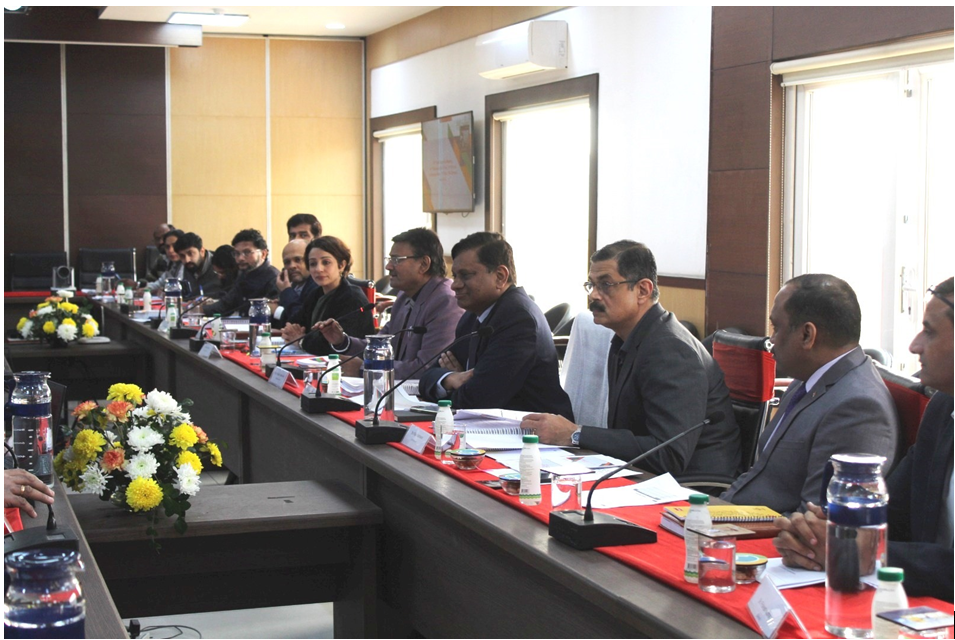
Shri G. Kamala Vardhana Rao, CEO, FSSAI; officials from the Ministry of Health and Family Welfare, Ministry of Commerce, Ministry of Consumer Affairs, Food and Public Distribution, Ministry of Law and Justice, Ministry of Micro, Small and Medium Enterprises; States and Union Territories attended the meeting. Representatives from industry associations, consumer organizations, research institutes and farmers’ organisations were also present in the meeting.

****

National Dental Commission

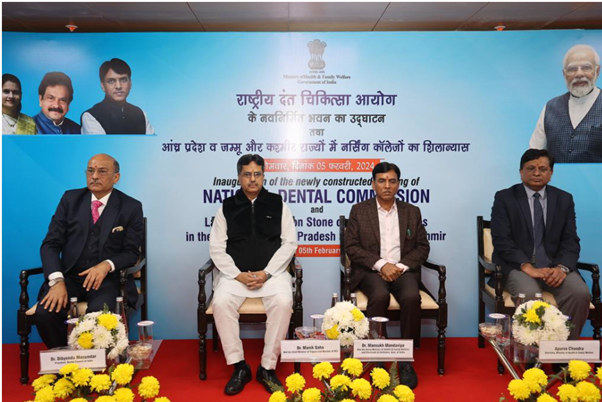
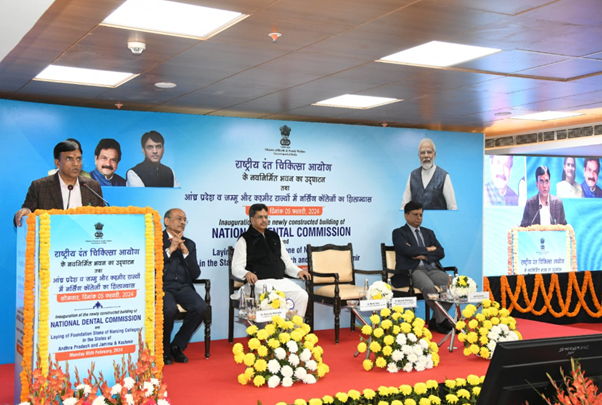
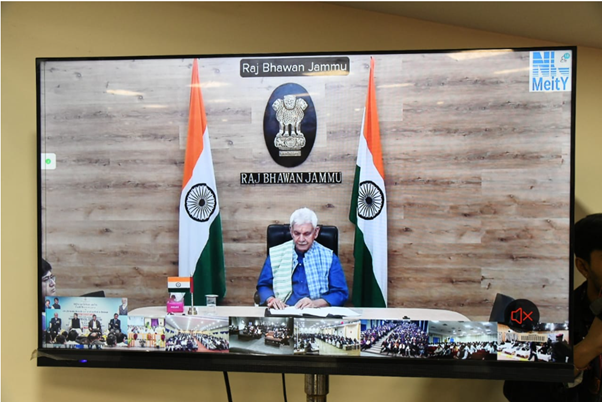
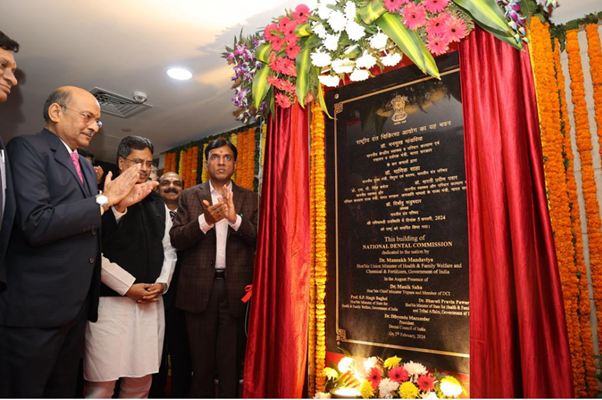
 In a significant step towards dental healthcare, the Union Minister of Health and Family Welfare Dr. Mansukh Mandaviya inaugurated the new headquarters of the National Dental Commission (NDC) and laid the foundation stones for three Nursing Colleges in Andhra Pradesh and one in Jammu and Kashmir virtually, here today. Additionally, Dr. Mandaviya presided over the MoU between the Dental Council of India and Quality Council of India for the assessment and rating of undergraduate dental colleges and launched the National Dental Register under the National Health Digital Mission. Dr. Mandaviya was joined by Dr. Manik Saha, Chief Minister of Tripura and Shri Manoj Sinha, Lieutenant Governor of Jammu and Kashmir joined virtually.

Dr. Mandaviya stated “the advent of Dental Commission heralds marking a new era in dental education and administration.” He further added “Through the Dental Commission Act, the government has made an effort to make dental education more practical, affordable and bring transparency in the entire system, simultaneously providing patients with affordable and good treatment.” Dr. Mandaviya declared “It is imperative to create awareness regarding oral hygiene enabling us to tap into the immense opportunities in this domain benefitting our nation.” Praising the vision of the Prime Minister, Shri Narendra ModiDr. Mandaviya lauded the proactive approach to health underscoring the magnitude of change ushered in for the benefit of all enhancing the accessibility and availability of healthcare services.

Addressing the gathering, the Union Health Minister emphasized with the launch of National Dental Register (NDR) created under One Nation One Register, the people of the country will get the identity and qualification of dentist in a transparent manner. He further added “NDR will provide Unique Identification (DCI ID) to all dentists practicing in India after verification from the respective State Dental Council. The NDR will also help citizens identify dentists verified by state dental councils.”

Highlighting the government’s commitment to strengthen the nursing workforce and mitigate healthcare disparities across regions, Dr. Mandaviya stated “this ceremony is a part of government’s scheme to establish 157 new nursing colleges co-located with existing medical colleges.” He further added “the advancements made in the sphere of health and medical infrastructure will provide quality and affordable healthcare and open many opportunities in the healthcare sector, vastly benefitting the nation.” He further added “with the increasing demand of trained Indian nurses abroad, the government has incorporated foreign language courses in medical education institutes providing an additional advantage to the students in capturing opportunities abroad citing the example of the foreign language course in Japanese that has been initiated in two of the nursing colleges in Assam.

Shri Manik Saha applauded the transformation taking place in the health sector and stated “the establishment of these institutions will benefit the common man enabling easy accessibility of affordable healthcare services.”

Addressing the gathering, Lieutenant Governor of Jammu and Kashmir, Shri Manoj Sinha, emphasized the pivotal role of nurses in healthcare delivery and stated that the establishment of nursing colleges is a significant step towards building qualified human resources in healthcare, aligning with national mandate for universal healthcare.

The event was attended by­­­­­­­­­­­­­­­­ Shri Apurva Chandra, Secretary, Ministry of Health and Family Welfare, Dr. Vipul Aggarwal, Joint Secretary, Ministry of Health and Family Welfare, senior government officials, Padmashri (1992), Padma Bhushan (2005) (HONY) BRIG. Dr. Anil Kohli, Padmashri Dr. R.K Bali, Dental Council of India, Dr. Dibyendu Majumdar, Chairman of Dental Commission of India, Dr. Montu M. Patel, President, Pharmacy Council of India, Dr. T Dileep Kumar, Indian Nursing Council, faculty and students of Sardar Patel PG Institute of Dental and Medical Science, Raj Bhawan Jammu, Buddha Dental Institute of Dental Sciences, Jammu and Kashmir Nursing College, Manchilpatam Nursing College Andhra Pradesh, Dental College, RIMS, Ranchi, Saveetha Dental College, Chennai, Siksha ‘O’ Anusandhan (IDS).

****

28th Session of the UN Climate Change Conference (COP28)

 An Inter-Ministerial delegation from India had attended the 28th Session of the UN Climate Change Conference (COP 28) held in Dubai, United Arab Emirates from 30th November 2023 to 13th December 2023.

 The subjects discussed at COP 28 included the First Global Stocktake, Global Goal on Adaptation (GGA), Loss and Damage Fund, Operationalisation of work programme on Just Transition pathways, Santiago Network for Loss and Damage and matters related to Article 6 of the Paris Agreement.

The First Global Stocktake (GST) decision calls on Parties to contribute in a nationally determined manner, taking into account the Paris Agreement and their different national circumstances, pathways and approaches to, inter alia, transition away from fossil fuels in energy systems, in a just, orderly and equitable manner, accelerating efforts towards the phase-down of unabated coal power, accelerating efforts globally towards net zero emission energy systems, utilizing zero- and low-carbon fuels well before or by around mid-century and to triple renewable energy capacity globally and double the global average annual rate of energy efficiency improvements by 2030. The decision commits to accelerate action on the basis of the best available science, reflecting equity and the principle of common but differentiated responsibilities and respective capabilities in the light of different national circumstances. The decision recognises the need to peak global emissions by 2025, and that time frames for peaking may be shaped by sustainable development, poverty eradication needs and equity and in line with different national circumstances. The decision stressed that Global Carbon budget is now small and rapidly depleting, and historical cumulative net carbon dioxide emissions already account for about four-fifths of the total carbon budget. The First GST also decided that any Unilateral measure should not constitute a means of arbitrary or unjustifiable discrimination or a disguised restriction on international trade. Developed countries have been asked to provide financial resources to the Developing countries for their climate actions. They have also been urged to fulfil the commitment of USD 100 billion per year through 2025.

In line with the mandate under the Paris Agreement to develop Global Goal for Adaptation, COP28 finalised the ‘Emirates Framework for Global Climate Resilience’, which gave Global targets in the areas of potable water supply, climate-resilient food and health services, resilient human settlement and culture. The targets also include the vulnerability assessment and establishment of multi hazard early warning systems.

The decision on the operationalization of the new funding arrangements, including a Fund, for responding to loss and damage,  promised at COP27, was adopted. The new fund is to be hosted by the World Bank for an initial period of four years. 19 countries made commitments totalling $792 million towards the fund and funding arrangements related to loss and damage.

COP28 delivered a Just Transition Work Programme. This programme will drive ambitious, equitable implementation across all pillars of the Paris Agreement. It encompasses pathways that include energy, socioeconomic, workforce and other dimensions.

On Santiago Network for Loss and Damage, the consortium of United Nations Office for Disaster Risk Reduction (UNDRR) and the United Nations Office for Project Services (UNOPS) were selected for hosting of the Santiago network secretariat for an initial term of five years.

Under the Article 6 decision, development of UNFCCC web-based platform for non-market approaches has been discussed. Parties will undertake identification, development and implementation of their non-market approaches once the UNFCCC web-based platform becomes fully operational.

This information was given by Union Minister of State for Environment, Forest and Climate Change Shri Ashwini Kumar Choubey in a written reply in the Lok Sabha today.

***

Compensation for Wild Animals Attacks

 Incidences of wild animal attacks have been reported from various parts of the country including from the state of Kerala. The steps taken by Government for protection of wildlife and management of human-wildlife conflict include the following:

A network of Protect Areas namely viz., National Park, Sanctuaries, Conservation Reserves and Community Reserving covering important wildlife habitat have been created all over the country under the provisions of the Wild Life (Protection) Act, 1972 to conserve wild animals and their habitats.

The Central Government provides financial assistance to State/Union Territory Governments under the Centrally Sponsored Schemes ‘Development of Wildlife Habitats, ‘Project Tiger’ and ‘Project Elephant’ for management of wildlife and its habitat in the country. The activities supported under the scheme include construction/erection of physical barriers such as barbed wire fence, solar powered electric fence, bio-fencing using cactus, boundary walls etc. to prevent the entry of wild animals into crop fields;

An advisory on dealing with human-wildlife conflict has been issued by the Ministry in February 2021. The Advisory recommends coordinated interdepartmental action, identification of conflict hot spots, adherence to Standard Operating Procedures, establishment of rapid response teams, formation of State and District level committees to review the quantum of ex-gratia relief, issuing guidance/instructions for expedited payments, and provision of adequate funds for suitable portion of ex-gratia relief to be paid within 24 hours to the affected persons in the case of death and injury to persons.

The Ministry of Environment, Forest and Climate Change has also issued Guidelines to States/UTs on 3rd June, 2022 on managing Human Wildlife conflict including damage to crops. It includes promotion of crops in forest fringe areas which are unpalatable to wild animals, agro forestry models which include cash crops like chillies, lemon grass, khus grass etc. suitably mixed with tree/shrub species. It also includes preparation and implementation of comprehensive long-term plan for alternate cropping by the state Agriculture/Horticulture Department under different schemes in vulnerable areas.

The Wild Life (Protection) Act, 1972 provides regulatory functions for dealing with human wildlife conflict situations.

The Ministry has provided financial assistance to Kerala under the Centrally Sponsored Schemes of Development of Wildlife Habitats for better protection of wildlife and improvement of habitat including for activities to curb human wildlife conflict. The details of funds released to Kerala under this scheme during last five years is as follows:

 (Rs. in lakh)


Name of the State/UTs

2019-20

2020-21

2021-22

2022-23

2023-24

Kerala

845.026

731.2845

295.7737

224.4735

921.0361


The States/Union Territories pay compensation as per their norms. The details of the number of persons who got injured or lost their lives due to attacks by wild animals and details of compensation provided by State Governments are not collated at the level of the Ministry.

The Ministry has recently, increased the ex-gratia payment in case of Human-Wildlife conflict. The revised rates of relief under ex-gratia are as follows:


S. No.

Nature of damage caused by wild animals

Amount of ex-gratia relief

(a)

Death or permanent incapacitation to human beings

10 lakh

(b)

Grievous injury

₹ 2 lakh

(c)

Minor injury

Cost of treatment upto Rs 25000/-per

(d)

Loss of property/crops

State /UT Government may adhere to the cost norms prescribed by them.


This information was given by Union Minister of State for Environment, Forest and Climate Change Shri Ashwini Kumar Choubey in a written reply in the Lok Sabha today.

***

Air quality grant to million plus cities

 The details of funds utilized under the Air Quality Grant sanctioned by 15th Finance Commission to Million Plus Cities/ Urban Agglomeration as aimed by the National Clean Air Program (NCAP) for performance-based grants for improvement in air quality for the period 2020-21 to 2025-26, city-wise;

The details of funds utilized under the 15th Finance Commission to support the implementation of City Specific Action Plans (CAPs) for improvement of Air Quality under the National Clean Air Programme along with the details for non-utilization of funds by non-attainment cities; and

The details of mobilization of City Specific Action Plans through the convergence of resources for Swachh Bharat Mission (Urban), Atal Mission for Rejuvenation and Urban Transformation (AMRUT), Smart City Mission, Sustainable Alternative Towards Affordable Transportation (SATAT), Faster Adoption and Manufacturing of Hybrid and Electric Vehicle – II (FAME), and other schemes?

Under the 15th Finance Commission air quality performance grant, an amount of Rs. 16539 crores has been allocated to 42 Million Plus Cities (MPCs) (including 7 Urban Agglomerations (UAs)) during FY 2020-21 to FY 2025-26 to implement city action plans to take measures to improve air quality. The details of city-wise utilization are provided at Annexure –I.

131 cities under NCAP have been requested to mobilize resources through convergence of various schemes for the implementation of city action plans. Action plans of all targeted cities under NCAP were approved under Swachh Bharat Mission 2.0 (Urban) for processing of solid waste, construction and demolition waste, remediation of legacy waste and procurement of mechanical sweepers. 107 cities have availed resources from the AMRUT 2.0 for developing green spaces, parks and non-motorised urban transport. 13,11,681 number of electric vehicles have claimed the benefit under FAME II in 20 States/UTs. Under SATAT, 27 Compressed Bio-gas (CBG) plants with the capacity of 146 TPD have been commissioned in NCAP cities.

Annexure-I


Details of release and utilisation of funds to Million Plus Cities under 15th Finance Commission- Air Quality Grant during FY 2020-21 to 2022-23


(amount in ₹ crore)


Sr. No.

City

Amount released

Amount utilisation

1

Vijayawada UA

124.35

27.61

2

Visakhapatnam UA

129.25

0.00

3

Patna UA

288.60

158.26

4

Durg Bhilainagar UA

112.35

31.66

5

Raipur UA

119.35

51.39

6

Ahmadabad UA

359.54

317.91

7

Rajkot UA

83.10

64.61

8

Surat UA

255.18

257.47

9

Vadodara UA

98.18

82.22

10

Faridabad UA

73.53

15.99

11

Dhanbad UA

63.09

53.21

12

Jamshedpur UA

116.85

38.14

13

Ranchi UA

93.50

48.25

14

Bruhat Bangalore UA

535.10

0.00

15

Bhopal UA

173.85

167.42

16

Gwalior UA

92.64

58.31

17

Indore UA

191.75

166.64

18

Jabalpur UA

112.25

108.65

19

Aurangabad UA

68.10

51.36

20

Greater Mumbai (GM) UA

929.09

604.64

21

Nagpur UA

132.60

17.71

22

Nashik UA

91.35

19.03

23

Pune UA

261.85

81.29

24

Vasai-Virar City UA

72.35

20.26

25

Amritsar UA

67.25

60.92

26

Ludhiana UA

91.75

54.94

27

Jodhpur UA

74.34

57.12

28

Jaipur UA

319.85

257.18

29

Kota UA

95.25

59.45

30

Chennai UA

367.00

367.51

31

Madurai UA

72.44

54.85

32

Tiruchirappalli UA

50.35

46.36

33

Hyderabad (HY) UA

443.50

377.35

34

Agra UA

166.47

130.52

35

Allahabad UA

171.33

132.93

36

Ghaziabad UA

136.25

114.57

37

Kanpur UA

239.89

211.48

38

Lucknow UA

376.38

226.26

39

Meerut UA

139.19

93.39

40

Varanasi UA

219.74

107.25

41

Asansol UA

67.60

42.55

42

Kolkata (K) UA

681.25

628.83


Total

8357.63

5465.49


This information was given by Union Minister of State for Environment, Forest and Climate Change Shri Ashwini Kumar Choubey in a written reply in the Lok Sabha today.

***

294 COMMERCIAL PILOT LICENSES ISSUED TO WOMEN CONSTITUTING 18 PERCENT OF TOTAL CPLs ISSUED

 There is a significant upswing in the enrollment of women pilots in India. In the year 2023, total number of commercial pilot licenses (CPL) issued are 1622 of which 294 CPLs were issued to women constituting, 18 percent of total CPLs issued.

There is an increase of 22 percent in number of CPLs issued to women in the year 2023 (294 CPLs) as compared to year 2022 (240 CPLs)

At present, the total number of women pilots employed with various Indian scheduled and non-scheduled operators is approximated at 14 percent of the total flight crew strength.

The Ministry of Civil Aviation and its associated organisations have taken steps to increase the number of pilots in the country, both women and men. These include issuing award letters by Airports Authority of India for nine new Flying Training Organisations (FTO) at five airports namely Belagavi, Jalgaon, Kalaburagi, Khajuraho and Lilabari in the first phase and six more FTOs at five Airports in the second phase namely Bhavnagar, Hubballi, Kadapa, Kishangarh and Salem.

In addition, the Women in Aviation International (WAI) – India Chapter conducts many awareness programmes across the country in collaboration with the Ministry of Civil Aviation, industry and leading women aviation professionals, with special focus on young schoolgirls, especially from low income families.

This information was given by the Minister of State in the Ministry of Civil Aviation Gen. (Dr) V. K. Singh (Retd) in a written reply to a question in Rajya Sabha today.

***

519 routes have been made operational under RCS UDAN scheme

 A total of 519 routes have been operationalised under the Regional Connectivity Scheme (RCS) – UdeDeshkaAamNagrik (UDAN) since its launch.

At present, 76 airports including 2 water aerodromes and 9 heliports have been operationalised under the UDAN scheme. 4 airports are ready for operation of RCS flights. Development works of the 09 airports/heliports have been completed and licensing is in progress. The development works of 17 airports/Heliports are in progress under the UDAN scheme. The development work of the remaining airports, is in the planning stage.

Presently 18 Airports, including 2 Water Aerodromes, are temporarily non-operational due to various reasons such as shut down of some airlines like Jet airways, Zoom air, TruJet, Deccan air, Air Odisha, due to higher maintenance costs, lower availability of trained pilots, lack of MRO facilities in the country, owing to completion of 3 years VGF tenure, shortage of aircraft, shortage of spare parts & engines & low PLF etc.

This information was given by the Minister of State in the Ministry of Civil Aviation Gen. (Dr) V. K. Singh (Retd) in a written reply to a question in Rajya Sabha today.

***

India Energy Week 2024

 Prime Minister Shri Narendra Modi will visit Goa on 6th February, 2024. At around 10:30 AM, Prime Minister will inaugurate ONGC Sea Survival Centre. At around 10:45 AM, he will inaugurate India Energy Week 2024. Thereafter, at around 2:45 PM, he will participate in the Viksit Bharat, Viksit Goa 2047 programme.

India Energy Week 2024

Achieving Aatmanirbharta in energy requirements has been a key focus area of the Prime Minister. In yet another step in this direction, India Energy Week 2024 will be held from 6 – 9 February in Goa. It will be India’s largest and only all-encompassing energy exhibition and conference, bringing together the entire energy value chain, and will serve as a catalyst for India’s energy transition goals. Prime Minister will hold a roundtable with Global oil & gas CEOs and experts.

Encouraging and fostering startups and integrating them into the energy value chain will be an important focus for India Energy Week 2024. It is expected to witness participation of around 17 Energy ministers from different countries, 35,000+ attendees and more than 900 exhibitors. It will have six dedicated country pavilions – Canada, Germany, Netherlands, Russia, UK and USA. A special Make in India Pavilion is also being organised to showcase innovative solutions which Indian MSMEs are spearheading in the energy sector.

Viksit Bharat, Viksit Goa 2047

Prime Minister will inaugurate and lay the foundation stone of projects worth over Rs. 1330 crores in the public programme in Goa.

Prime Minister will inaugurate the permanent campus of National Institute of Technology Goa to the nation. The newly built-up campus has various facilities such as tutorial complex, departmental complex, seminar complex, administrative complex, hostels, health centre, staff quarters, amenity centre, sports ground and other utilities to cater to the needs of students, faculty and staff of the Institute.

Prime Minister will dedicate the new campus of the National Institute of Watersports. The institute will introduce 28 tailor-made courses aimed at fostering the development of watersports and water rescue activities catering to both the public and the Armed Forces. Prime Minister will also inaugurate a 100 TPD Integrated Waste Management Facility in South Goa. It has been designed for the scientific treatment of 60 TPD wet waste and 40 TPD dry waste, while also featuring a 500 KW solar power plant that generates surplus electricity.

Prime Minister will lay the foundation stone for Passenger Ropeway, along with associated tourism activities, connecting Panaji and Reis Magos. Foundation stone for the construction of a 100 MLD Water Treatment Plant in South Goa will be laid by him.

Further, he will also distribute appointment orders to 1930 new Government recruits across various departments under Rozgar Mela and also hand over sanction letters to beneficiaries of various welfare schemes.

ONGC Sea Survival Centre

ONGC Sea Survival Centre has been developed as a one-of-a-kind Integrated Sea Survival Training Centre to advance the Indian sea survival training ecosystem to global standards. It is expected to train 10,000-15,000 personnel annually. Exercises in simulated and controlled harsh weather conditions shall enhance Sea Survival skills of trainees and thus potentially increase the chances of safe escape from real life disasters.


***