" TOP BOOKS REVIEWS"

                  RICH DAD AND POOR DAD

About author :Rich Dad Poor Dad is about Robert Kiyosaki and his two dads—his real father (poor dad) and the father of his best friend (rich dad)—and the ways in which both men shaped his thoughts about money and investing. You don’t need to earn a high income to be rich. Rich people make money work for them.

Short note about book : Rich Dad Poor Dad has sold over 32 million copies in more than 51 languages across more than 109 countries, been on the New York Times bestsellers list for over six years, launched a series of books and related products; and received positive reviews from some critics.

          It advocates the importantes of financial literacy,financial independence and building wealth through investing in assets,real estate Ingesting,starting owning business as well as increasing one’s financial intelligence.


DR. RAJENDRA PRASAD : the first president of Republic India

 Rajendra Prasad (3 December 1884 – 28 February 1963) was an Indian independence activist, lawyer scholar, and subsequently, the first president of India, 

In Office from 1950 to 1962. he was an Indian political leader and lawyer by training. Prasad joined the Indian national congress during the Indian independence movement and became a major leader from the region of Bihar. A supporter of Mahatma Gandhi, Prasad was imprisoned by British authorities during the salt satyagraha of 1931 and the quit India movement of 1942.

 After the constituent  Assembly 1946 elections, Prasad served as minister of food and agriculture in the central government. Upon independence in 1947, Prasad was elected as president of the Constituent Assembly of India, which prepared the Constitution of India and served as its provisional parliament. 

when India became a republic in 1950, Prasad was elected its first president by the Constituent Assembly. as a president, prasad established a tradition of non-partisanship and independence for the office-bearer. Although a ceremonial head of state, prasad encouraged the development of education in India and advised the Nehru government on several occasions.

" TOP BOOKS REVIEWS"

                  RICH DAD AND POOR DAD

About author :Rich Dad Poor Dad is about Robert Kiyosaki and his two dads—his real father (poor dad) and the father of his best friend (rich dad)—and the ways in which both men shaped his thoughts about money and investing. You don’t need to earn a high income to be rich. Rich people make money work for them.

Short note about book : Rich Dad Poor Dad has sold over 32 million copies in more than 51 languages across more than 109 countries, been on the New York Times bestsellers list for over six years, launched a series of books and related products; and received positive reviews from some critics.

          It advocates the importantes of financial literacy,financial independence and building wealth through investing in assets,real estate Ingesting,starting owning business as well as increasing one’s financial intelligence.


The Story of Spice King Of India From A Tonga Driver To A Millionaire

Hi everybody , one of the most iconic business Maharajas of India whose name was Mahashay Dharampal Gulati. This is a story of a man who went from being a tonga driver to building an empire with an operating revenue of 2000 crores. And the reason why his story is even more special is because he built a business during a time when people were struggling hard even to stay alive because back then India was still recovering from the massacres of partition.

 Dharampal Ji was born in the year 1923 in Sialkot, which today, falls in modern-day Pakistan in a Hindu family which had high ideals of honesty and simplicity. And since childhood, he was a carefree kid but with a sheer will to do something extraordinary. 

Gulati Ji, since childhood, experienced a lot of failures, he first dropped out of school in class 5 and tried doing several jobs where he couldn’t find any fulfilment. 

Then he tried selling Mehendi (Henna) from street to street. and even that did not work out. Then, his father tried to set up a separate shop for him and his brother and eventually, even that venture failed. So after spending years trying to do different kinds of jobs like selling wood, mirrors he finally decided to settle in and start running his father’s spice shop which at that time was named as Mahashian Di Hatti. 

But when he was just 25 years old and he began to settle down in his business and his business began to pick up the India-Pakistan partition happened. and within a midnight, the entire nation was in chaos. And because Sialkot became a part of Pakistan soon enough there was such a massive bloodshed that hundreds of innocent people were being killed due to the Hindu-Muslim riots. 

During that time they somehow managed to board a train that brought them to Amritsar and people, if you have seen the movie ‘Bhaag Milkha Bhaag’ you would pretty much have an idea of how terrible the situation of partition was. In fact, the very train that Gulati Ji’s family boarded had the dead bodies of the people who had been killed due to the massacres of partition.

 So, he stayed in the refugee camp of Amritsar for quite some time and then decided to move to Delhi wherein he became a tonga driver. Now people, back then he was already married for 7 years because he got married at the early age of 18. So he had responsibilities on his shoulders to provide good life for his family.

 But then after a few months he understood that tonga driver’s profession was not good enough to provide a good life for his family. And that is when he decided to restart his father’s business and set up a small spice shop in Delhi. And that is when he named his shop Mahashian Di Hatti which today is known by the name MDH

Now, people, even after partition India was still struggling hard to recover from the massacres of partition. There were millions of people who had lost their everything and India as a country was in a state of poverty wherein 80% of the entire country’s population lived below the poverty level. 

So, the markets, in general, never focused on quality because if you had to produce quality product during that time it would increase the cost of production, it would decrease your margins of profit and most importantly, because the cost of the product will increase majority of the peope will not be able to afford it eventually, resulting into decrease in sales. 

So running a viable business during that time by selling quality products was practically impossible. So, the majority of the poducts that were being sold in he market including milk and salt were being completely . 

For example, milk was being mixed with a lot of water to increase the quantity. And to compensate for the density, even harmful chemicals were used. Similarly, yellow soil was mixed with haldi (turmeric) and sawdust was being mixed with dhaniya (coriander) powder. And just like that, even spices were being adulterated to a large extent because it was practically impossible for a common man to be able to understand the difference between pure spices and adulterated spices.

But even during that time Gulati Ji poured his blood and sweat and always made sure that his shop always sold pure spices. Because he believed that the primary intent of any business should not be to make money but to do great service. And money should always be a bi-product of great service.

That is why Gulati Ji worked very hard to monitor every single process of the production of spices just so that he can give a common man of India, a taste of pure spices And people can you imagine how difficult it would have been ? 

He had to keep the cost low just so that he can match the cost of the adulterated spices. Number two, he had to keep his margins very thin because his cost of production was way higher as compared to adulterated spices. 

And most importantly he was making very less money, inspite of making the best product in the market. But all throughout these difficult times, this great man worked tirelessly with the hope that he’ll be able to build a brand one day that the mother of a common household can blindly trust upon when she makes a meal for her family. And guess what ? 

Slowly and steadily, people began to realize the differnce between Gulati Ji’s spices and the adulterated spices and soon enough people started to line up at his shop just to buy his products. And that is how Gulati Ji’s small shop- Mahashian Di Hatti Masale as in, MDH masale, became a popular brand in Delhi. 

And as his business started growing, he started to recruit his friends and family into his business with the hope that they will be able to stand by his belief of providing excellent quality spices to people. And he also started outsourcing a few processes like powdering turmeric. 

And yet again, when everything looked well, he faced even tougher challenges and here’s where ordinary people like you and me have something very important lesson to learn. 

People, Gulati Ji was a person who did every small thing in his shop starting from the raw material transportation to the grinding of spices, he participated in every single activity and that is the reason why he soon enough became an expert in finding out even a little bit of adulteration in his spices.

 So, when he was scaling up he was able to maintain the same excellent quality standards that he used to maintain while he was selling spices from his small shop. And because of his sharpness and diligence he was able to spot certain loopholes in his system which could have completely destroyed his business altogether.

 Because soon enough he discovered that the contractor who was powdering his turmeric was actually mixing Chana Dal to adulterate the turmeric powder. And when he spotted similar practices being followed in a lot of these outsourcing ventures.

 He understood that this loophole would betray the trust of his customers. And just to keep the trust of his customers he ended all of his outsourcing practices and poured in his entire life saving to open up his own factory wherein he could powder all the spices.

 And not just that. He was betrayed by his childhood friend who used to take a commission on every single material which used to come in from the supplier. And many of his friends and family who were supposed to help him grow, started causing a lot of troubles while this man was putting his blood and sweat just to make sure that he can sell pure spices to the mothers of India. 

And that is how, by facing a lot of hurdles Gulati Ji was able to establish a brand which the mothers of India could trust. And that is how due to the incredible hard work of Gulati Ji, today, people like you and me have the luxury of having mouth watering dishes like Chole Batture and Pav Bhaaji.

 And in this world where people talk about retiring at the age of 30 and people like you and me who often feel lazy inspite of achieving nothing. This legendary person was shooting for an advertisement even at the age of 97. 

So because of this incredible dedication and persistence combined with extraordinary business acumen today, MDH has reached a level wherein it exports its spices to US, China, Vietnam, UAE, Malaysia, Saudi Arabia, UK, Germany, Singapore, Sri Lanka with US exports alone valued at $351.6 million. And all of this put together, turned Gulati Ji into one of those icons because of whom India, today, is known for spices all across the world.

 Now the question is- What can we learn from this incredible story of the king of spice ?

 Lesson 1, we all need to realize that optimism is the faith that leads to greatness and the real test of optimism is how you choose to react even during the times of calamity just like partition in Gulati Ji’s life. While and optimist will try to see an opportunity in every difficulty, a pessimist will try to see difficulty even during the times of great opportunity. 

Lesson 2, while outsourcing is essential for scaling up of any business it is also important to note that outsourcing along with a lot of growth will also bring in a lot of loopholes. So, as a leader of a business organisation it is important that you do all the petty works in the beginning because what might look like petty experience in the beginning will eventually help you find the loopholes in your business which could potentially destroy your whole business. 

And last and most importantly, each one of us needs to understand that greatness comes at a cost that very few people can afford. For example, at that time, very few people could actually settle in for less profits by selling pure spices.

 Very few people had the ability to put in the hardwork to have a look at every single process just so that they could sell pure spices and keep the trust of an innocent mother when she wanted to make something tasty for her family because very few people understand that the cost of greatness cannot be paid with stacks of currency notes but with every ounce of blood and sweat that you put in to achieve it.

 Because at the end of the day, greatness comes at a cost of persistence. And once a great man said that “Nothing in this world can take place of good old persistence. Talent will not, which is why in this world there is nothing more common than unsuccessful men with talent. 

Genius will not, which is why unrecognised genius is practically a cliché. Education will not, which is why the world is full of educated fools. 

Persistence and determination alone are all powerful.” In our case they were powerful enough to turn an ordinary refugee into the spice king of India who will live in our hearts forever. Thank you.

The Broken Promise of Equality

Way back in July 2004, around 30 women walked naked in front of the army quarters in Assam with the slogan, “Indian Army, Rape us.” The movement was in protest of the death of Thangjam Manorama who was brutal ly raped, mutilated and killed by certain members of the Indian army. The army has wide powers under the Armed Forces Special Powers Act (AFSPA), 1958 including search and seizure and arrest and custody. Women have been major victims of sexual offences under this draconian legislation, in parts of the North East and in Kashmir, in particular.

Rape was also often used to shut down voices trying to resist human rights abuses. Sexual offences against women continue in different parts of the country, in different forms, both outside and inside the home. Although the constitutional guarantee of equality stays intact, the reality of gender relations in India is extremely unequal.

It goes without saying that Indian society is deep patriarchal. Women are by birth automatically at a disadvantage simply because our society treats its women much worse than it treats its men. There are different expectations from men and women in terms of behavioural pattern, conduct, mannerisms and actions. Chimamanda Ngozi Adichie, a feminist writer from Nige ria puts it quite neatly, “We teach girls shame. Close your legs, cover yourself. We make them feel as though being born female, they’re already guilty of something. And so, girls grow up to be women who silence themselves. They grow up to be women who cannot say what they truly think. And they grow up- and this is the worst thing we do to girls-they grow up to be women who have turned pretence into an art form.” Adichie is surely right. She indicates a phenomenon that is generally identified as ‘gender stereotyping’.

Gender stereotyping essentially is society’s expectations and beliefs about the behavioural patterns, roles, activities, characteristics, qualities about men and women and sometimes, the third gender. It focuses on what masculine and feminine qualities are expected of men and women. Society decides the type of toys boys and girls should play with, the kind of clothes they should wear and the kind of hobbies they should have and perpetuates the same through habituation. The role played by socialisation, religion, media and often the law in encouraging stereo types is problematic. Even in educated families, the pressure on Indian women to get married at an early age is a reality. Everybody in a given family gets to have a say in the matter of a girl’s marriage, except probably the girl herself. Quite undisputedly, the independence and career options offered for an Indian female is much less compared to that of men.

INDIA IN SOUTH-EAST ASIA AND THE SAARC

regional cooperation is needed for securing trade related benefits and for utilizing collective resources for mutual benefits. This objective is realized by establishing organisations by the countries having geographical affinity. Such organisation are based on a formal agreement signed by the concerned nations. The member countries utilize each others resources to solve common problems. To attain this two regional organization that work for the socio-economic integration of south-Asian region are such as ASEAN ( associations of south Asian nations ) and SAARC ( south association of regional cooperation ). SARRC is a major regional initiative undertaken by the South- Asian countries to evolve cooperation.

India have very close relations with south east Asians countries from very beginning. South – East Asia is composed of 10 nations, namely Brunei, Cambodia, Indonesia, Laos, Malaysia, Myanmar, Philippines, Singapore, Thailand and Vietnam. In the past , India’s engagement with the South East Asian was built on the shared experience of colonialism and culture ties. But at present it is linked to trade, investment and production. South Asian association for Regional Cooperation (SAARC) was established by seven South Asian Countries, Namely India, Bangladesh, Bhutan, Maldives, Nepal, Pakistan, and Sri lanka in December 1985 in Dhaka, the capital of Bangladesh. Afghanistan was included as the eighth member of SAARC. The concept of SAARC originally mooted by the former Bangladesh President Zia-ur-Rahman, with the aim of establishing economic and cultural cooperation among the people of south Asia. Its permanent secretariat at Kathmandu in Nepal was established in 1985.

The Charter of SAARC has laid down a number of objectives to promote the welfare of the people in South East Asian countries and to improve the quality of life. It accelerates the economic growth, social progress and cultural development. It promotes the mutual trust, understanding and appreciation of each other’s problems. It works to develop the mutual assistance in the economic, social, cultural and technical and scientific field. It also works for the cross border terrorism and smuggling.

India is largest and the most populous among the SARRC countries, it also occupies 72 percent of the South Asia and about 77 percent of the population. It is also the most advanced among SAARC nations. All the members states of SAARC are of strategies importance to India and share cultural and ethnic legacies. India has focused on strengthening its relations with these countries through economic cooperation. This includes grants of unilateral tariff concessions to Bangladesh, collaborative projects including implementation of infrastructures of development projects in Myanmar, cooperation in health, education and tourism sectors in Maldives and close economic integration with sri lanka. India has made substantial construction effort , which includes a wide range of humanitarian, financial and projects assistance.

To conclude India have played major role in forging closer links among then SAARC countries and promoting regional peace, economic growth, social progress and cultural development of the area.

SELF LOVE

Self Love
Do we love ourselves? Have you ever thought about loving yourself? It will be a big no because what we thinks is always about other. Even if we compare our self then it will be with any other person. Have we ever thought of competing with our self? That we will compete with our self and will be better than yesterday? Life always goes on it never stops for anyone. If we always thinks about any other person life will go ahead and we will be very steps backward. Self-love the meaning is clear in itself that is to love ourselves which we need to do. Love yourself and start experiencing the life. How it moves on? You will like it do you know why because at that time you will not loving someone else that if he/she leaves you. Or you will feel like a broken person or will depressed. If one starts to love himself or herself there is no power that could break him/ her.

Relax, and close your eyes and name the five people who are very important for you. Now, you have the five names that were important for you but wait was your name there in the list? If no, then why, are you not important for yourself? Are those people more important? It should be a no because if we don’t love our self then why will anyone else love you. Are you giving them any reason to love yourself? My dear, if you want that someone else love you then you should first love yourself. If you start loving yourself then I am damn sure anybody can love you. Do you know why? Because if you knows your quality and the reason to love yourself then the person also find the reason to love you.

We all are beautiful. We all have a different minds and different ideas. Always remember one thing that no one is you and that’s your power. No one is better than yourself only you can compete yourself.

When you wake up stand in front of mirror and say I will be better than that what I was yesterday? For sure, you will have a very better progress. Before starting anything what we thinks what people will say? Why are we thinking about them? Are they such important for us that they will decide what we have to do or what we have to not? No, never make someone such important that they apply their decision on us. If we start thinking what people will think than what will they do? Let them do their work and you start working on the dreams that you have plans. People are only for stopping us.

As I am a math student letting is the only thing we have taught. So, let if anyone is working hard to get above you will you let him do so? Telling the truth I will not like it because everyone wants the position one. It’s an example that you all can relate with. No one is going to always motivate you. You will have to be your own motivation. Start loving yourself. Start competing with you only that you will be better than yesterday.

Birth Chart – An insight into your spiritual life.

Birth Chart – An insight into your spiritual life.

What is the Birth Chart?

Every day in the newspaper article horoscopes attract most of your attention. You are always interested to know about your life and its relation to stars and moons. Astrologers know all the celestial bodies present in the universe. They spend most of their time reading and understanding birth charts. The birth chart is called by many names, horoscope, natal chart, astrological chart. It represents the details of planets, celestial bodies, stars, and moons.
The position of all the celestial bodies present in the sky at the time of a person’s birth plays a crucial role. The birth chart is the diagram portraying all the important aspects of one’s life.
In Hindu astrology, kundali is the term used for birth charts. In Hindu families, it is a tradition of matching the birth chart of boys and girls before their marriage. People believe that more matches of attributes are signs of a successful marriage. The purpose of reading birth charts is to know more about yourself and your position in the cosmos.

Benefits of Birth Chart

A birth chart is not a simple flowchart it enlightens you with deep insight into your spiritual life. Philosophers and Astrologers have been using it since ancient history for interpreting destiny. Saying it has one or two benefits will be incorrect. Birth charts have a lot of importance in everyone’s life. It not only recognizes your strengths but also strengthens your awareness of your weaknesses.

you have very little or no knowledge about who you are, where you come from. A birth chart helps you in gaining knowledge about your life and yourself. It makes you aware of who you are and for what you are here.

It helps to find ways for changing weakness into a strength.

A deep insight into yourself helps in the growth of your personality and modifies your life.

It gives you a new perspective to find your talents, strengths, and abilities.

It helps in foreseeing challenges and finding ways to deal with them. It also helps in recognizing opportunities and making the best use of them.

It helps in predicting your future, telling your field of interest. It also explains your career prospects, family relationships. Astrologers have been using birth charts for a long time for calculating marriage compatibility.

Most of your health factors and major life cycles are also depicted by birth charts. It is also used in foreseeing your financial status.

Every human being is different, and their birth chart is also distinct. Birth charts help in realizing your individuality. It helps in knowing you have your own remarkable identity.

Birth charts tell all aspects of your life. It portrays the honest information of your life, including positive and negative sides.

It is a great tool to grow your spirituality and beliefs.

It helps in guiding you with the secrets of your soul.

It makes you aware of experiences you need to encounter for your growth.

Reading your birth chart

A birth chart helps you in finding your sun sign. It is also known as the zodiac sign. The position of the star, moonRobert and other celestial bodies during birth depicts the zodiac. Besides telling your zodiac it also tells your rising sun sign and moon sign.

Moon sign – It tells about your instinctual side others are not aware of. Everyone has a shady part within themselves which they hide from others. Moon signs find you the side where you rely on when pressured by the world. It depicts your emotional level and honest behavioral report.

Rising sun – It sees you from the eyes of the world. It tells the world’s perception of you. Who you are and your appearance can be completely different. The rising sun tells about your first glance in front of the world. The rising sign can be the same as the moon sign or can be contradicting. It also tells us what actions we will take and how we can help others.

There can be a great variation between twins born even seconds later. The birth chart depicts a big soul lesson you will experience in life which will have a huge impact on growth. It will heal your past karmas and enlighten paths for others. It tells how you will be a ray of hope for people around you.

How to determine your zodiac sign?

The cycle you were born in plays the most important role in determining your zodiac sign. Whose birthday falls on the transition date should consult an astrologer for knowing the zodiac. A transition date or cusp is an imaginary line that separates two consecutive signs. People whose birthday lies on the edge of the two sun signs date range have transition dates.

Signs of the Zodiac
S.no.
Symbol
Signs
Approx Dates
1.

Aries, The Ram
March 21 – April 20
2.

Taurus, The Bull
April 21 – May 20
3.

Gemini, The Twins
May 21 – June 20
4.

Cancer, The Crab
June 21 – July 21
5.

Leo, The Lion
July 22 – August 22
6.

Virgo, The Virgin
August 23 – September 22
7.

Libra, The Scales
September 23 – November 21
8.

Sagittarius, The Centaur
November 22 – December 20
9.

Capricorn, The Goat
December 21 – January 20
10.

Aquarius, The Water Bearer
January 21 – February 18
11.

Pisces, The Fish
February 19 – March 20

Understanding your sign

Zodiac is a combination of polarity, element, and modality. It portrays the twelve primary energy patterns of our universe. All human beings have basic four elements in them. Fire consolidates plasma, water represents the liquid state, the air is the gases, and the earth is solid. These four elements are the building blocks of the living organism.
Different natures of human beings depict different elements. Fire represents the identity of the person. Earth depicts all the material substances. Air represents mental and intellectual growth and Water depicts feelings. These four elements combine to derive the zodiac sign.

Symbolisation of the elements

The Fire Signs: Identity

“Give me a spark of nature’s fire
That’s the learning I desire.”
– Robern Burm

Three signs, Aries, Leo, and Sagittarius symbolizes the fire sign. Fire is the sign of active life forces within you. It is the principle that keeps you energetic, lively, and enthusiastic. The zodiacs symbolizing this sign tend to have a high spirit. These are the people who are always motivated and willing to work hard. The vibes and energy of the people lying under this category are at their peak. People with Fire in their signs are born to inspire others. They express themselves with their remarkable actions. They are a great example of a motivator for people around them.

Surplus of fire in a person

Excess of anything can be harmful. Exaggeration of this principle can change the whole positive perspective into a negative one. Contrary to assertion it changes to aggression. The nature of Fire signs can highly influence and change enthusiasm into fanaticism. These people, if not paying attention, can transform their daring nature into recklessness.

Deficiency of fire in a person

A person who lacks fire has a lack of energy. They are lethargic people and need a lot of motivation to do their work. Opposite to the people with more fire, they lack joie de vivre and zest in them. They are not cheerful and happy people.

The Air Signs: Social and Mental

The Breath of Nature
When great nature sights we hear the winds
Which, noiseless in themselves
Awaken noises from other beings,
Blowing on them.
From every opening
Loud voices sound. Have you not heard
This rush of tones?
– Chang Tzu

Three signs portray the quality of air: Gemini, Libra, and Aquarius.
Air personifies the mental and intellectual ideas where thoughts become things. It also signifies the energy of breath in human beings. Individuals having the quality of air are good at communicating and sharing. They have conceptual knowledge and logical thinking. Signs lying under this category are social and friendly.

Surplus of air in a person

If a person has more air in their birth chart they become inconsistent. Inconsistency leads to scattered ideas. They are not able to bring their amazing idea into existence. They also turn out to be nervous.

Deficiency of air in a person

Lack of air in a person makes their perspective weaker. They don’t have an aim in their life. They face difficulties in learning and their communication skills suffer.

The earth sign: Material

That I am a part of the earth my feet know perfectly.
– D.H. Lawrence

Taurus, Virgo, and Capricorn personify the earth sign. Earth seeks to nourish you with material substances. They express themselves and have great common sense. They have the moon Robert Potential to actualize their dreams. They are practical people and others can depend on them. Because of their trustworthy nature, others consider them reliable. They are supportive. Their patient nature helps them to succeed.

Deficiency of earth in a person

If a person lacks earth in their horoscope they are irresponsible and do not meet the deadlines. They make delays in all the tasks assigned. You can expect these people to not complete the assigned work on time.

Surplus of the earth in a person

People with more emphasis on earth in their horoscope are overcautious. They are afraid to adopt new changes and their fear of change leads nowhere to them in life. They are the kind of people who are afraid to take risks.

A solid earth person

A person with the right amount of earth in their horoscope keeps their commitments. They never fail to meet deadlines and are responsible.

Water Signs: Emotional and Soul

The highest motive is to be like water.
Water is essential to all living things,
Yet, it demands no pay or recognition
Rather it flows humbly to the lowest levels.
Nothing is weaker than water,
Yet, for overcoming what is hard and strong
Nothing surpasses it.
-Lao Tsu

Cancer, Scorpio, and Pisces are part of water signs. With the emphasis on water, people have deep insight into their life. They have an unconscious power within them. The intuitive power motivates them to grow in life. People feel comfortable around them because of their compassionate nature. They can make others feel better with sympathy and intuitive awareness. They are the people who have emotion as well as an understanding of the soul.

Deficiency of water in a person

The deficiency of water in a person can lead to insensitive nature. They easily become cold and are unsympathetic. They have anger issues. They tie-up with other watery type people to bring sensitivity into consciousness.

Surplus of water in a person

A person with surplus water can be very emotional and sensitive. They face problems in dealing with their emotions and feelings. They ride on an emotional roller-coaster and have plenty of mood swings. They can be calm one day and can get anxious another moment. For inner peace, such people need to control their emotions. They need to bring their feelings into consciousness. They are weak, helpless, and needy people. They always search for protection from other people.
They can transform dependency by tapping their power and realizing their strengths.

Keywords of Signs
Attributes of Fire
(Aries, Leo, Sagittarius)

Skillful
Unskillful
Radiant, glowing, warm
Hot-headed, rash, impatient
Creative, aspiring, spontaneous, passionate, daring
Impulsive, uncontrollable, burns out.
Self-confident, assertive, individualistic, independent, active.
Aggressive, pushy, violent,
insensitivity.

Attributes of Air
(Gemini, Libra, Aquarius)

Skillful
Unskillful
Intellectual, logical, conceptual
Ungrounded, Intangible, over intellectual
Communicative, social, friendly
WendyThe, gossiping
Objective, impersonal, impartial, unbiased, fair, observant
Uncaring, detached, distant
Clever, versatile
Inconsistent, flighty, nervous

Attributes of Earth
(Taurus, Virgo, Capricorn)

Skillful
Unskillful
Practical, realistic, dependable, reliable, trustworthy, cautious
Overly conservative, unenterprising, afraid to take the risk, security-oriented, opportunistic
Grounded, solid, stable
Possessive. Narrow-minded, rigid, stubborn
Patient, enduring, persevering, plodding, persistent, productive
Inflexible, unchangeable, unbendings

Attributes of Water
(Cancer, Scorpio, Pisces)

Skillful
Unskillful
Nurturing, sustaining, shielding, retiring
Overprotective, smothering, needy
Feeling, emotional, sensitive, empathetic, compassionate, healing
Overemotional, fearful, insecure, thin-skinned, shy
Bonding, merging, unifying, dissolving, absorptive
Undefined, chaotic, disordered, lacks ego strength
Figuring, receptive, changing
Weak, helpless
Psychic, deep, hidden, mysterious
Secretive, deceptive, covert, uncommunicative, untruthful

The ancient history of Birth Chart
We can group fire and air. And water and earth go hand in hand. Fire and air are outgoing and they are self-expressive. The keyword of fire and air is freedom. Earth and water on the other hand are in-going and self-expressive. They are a magnet and can attract what they need. They conserve their energies within themselves. The keyword of earth and water is security.
According to ancient cosmology, there is a distinction between the two signs. Fire and Air differentiate from Earth and Water. Their characteristics are like north and south poles. They are two complete opposites of each other. Ancient cosmology describes them as two opposing forces or polarities. You can see one as light and the other as dark. One as positive and the other as negative.
Ancient Chinese philosopher’s active forces and positive forces as YANG. Whereas, they call negatively charged forces and receptive forces YIN.
Positive and active force yangs are fire and air. Whereas, negative and receptive force yins are water and earth.

Types of Birth Chart
There are different types of charts for reading and interpreting different things. Astrologers also combine two charts for analyzing a wider scope of understanding. For example, for studying the love life astrologer combines Natal, transits, and solar return charts. There can be different methods of reading birth charts. But the most common three methods are:-
1. Western Astrology
2. Vedic Astrology
3. Kabbalistic
The way of interpreting birth charts can be different but all the charts are the same. Charts don’t change.
There are five types of birth charts:-
1. Natal Chart
2. Transit Chart
3. Solar and Lunar return
4. Synastry
5. Composition

Natal Chart

The Natal Chart is a simple birth chart that shows pictures of the stars and signs in the sky. Astrologers make it based on stars, moon, and sun’s position during your birth. This is the basis for all other charts. This is a basic chart without which all aspects of astrology can not be accurate.

Transit Chart

This is a chart that predicts what is going on in one’s current life. What the person is in the current day and his family and other backgrounds. It can also show the status of a few years.

Solar and Lunar Return

This chart depicts what is going to happen in the next year. People have an interest in knowing what is going to happen next in their life. From your birthday or after your birthday’s future prediction takes place through this chart.

Synastry

This is a combined chart. Two natal charts are compared for a more in-depth comparison. Putting two personal natal charts in an overlapping manner shows different aspects.
It depicts the following things:
it shows how two people meet
it tells the reason for attraction between two people
it also depicts how much they affect each other
it tells how much another person helps their compatible one to grow.
it also portrays the supportive or unsupportive nature of two people.
This type of chart is considered a relationship road map. It not only tells the relationship bonding of a romantic couple but also portrays characteristics of other relationships. It interprets relationships like parent-child, husband-wife, mother-daughter, brother-sister, boss-employee.

Composition

It reveals how strong and compatible two partners are. It helps in analyzing the true essence of the relationship. Besides this, it also shows your reason for existence.
It is different from the synastry chart. Synastry chart compares a spiritual analysis of relationships. Whereas, the composition chart depicts the psychological aspect of the relationship.

Birth Chart Compatibility

“Birth charts are like individual fingerprints.”
– Stephaine Rowell

Understanding only the upper and common planets does not help in making a good prediction. A good examination of the birth chart takes place only when all the planets are considered. Inner planets of the solar system also play a crucial role in the analysis of in-depth truth. For the comparison of compatibility between two people, all the planets cover different aspects.
For understanding and reading birth charts you need real and exact details. Ask your partner’s birthplace, date, time, day, and every minute detail. Make sure all the details are exact and correct. Even the slightest change in the details can change your entire birth chart.
Different signs in your birth chart depict different characteristics. It should be analyzed adequately. Sun indicates temperamentally in your relationship. Moon indicates emotional stability. Mercury measures intellectual rapport between partners. Mars is for physical compatibility. Venus romanticizes your relationship. Jupiter deals with ideological agreeability. Saturn is for potential long-term unity and Ascendant sign is for social agreeability.

Same sun and moon sign

Since the sun sign depicts your outer self and the moon sign depicts your inner self. If both the partners have the same sun sign and same moon sign then they will be able to understand each other better. They will be more compatible as their emotional needs will be the same. Besides the emotional need, basic identity also matters. Partners with a basic identity that is the same sun sign can interact and understand each other’s intellect. The moon sign helps them to understand each other’s inner and hidden selves. It is a myth that opposites attract. For being compatible you and your partner need to understand each other. Understanding only happens when you two have something in common. Having the same sun sign and moon sign is like hitting a jackpot for couples. Whenever making a comparison between you and your partner, always look at your sun and moon signs.

Same moon and venus sign

Having the same moon and venus sign is like speaking a love language to your partner. Moon means your emotional needs, it shows your need to feel love. It depicts how your partner can make you feel important and worthy in their life. Making your partner feel important plays a major role in relationships. It nourishes your’s and your partner’s soul and makes the two of you feel alive. Having the same venus sign represents similar relationship needs. It portrays what you need and wants from your partner. If you have similar needs to your partner then you will easily be able to understand what your partner wants from you. Fulfilling the needs of your partner in this manner will be more possible. Thus having the same moon and venus is like drinking the coffee with the same straw with your partner. Both make you feel loved.

Same sun and venus sign

If your sun and venus sign is the same or lies in the same elements then you share similar interests with your partner. Having a similar taste in things makes relationships easier for you in the long run. As the sun depicts your outer self and venus depicts the way you show your affection it becomes very easy for you to love each other. The relationship goes in a flow and nothing is forced. You and your partner have a lively and fun relationship together. You two share a comfort zone. Your love flows naturally when we are together. This makes your relationship easygoing.

Same venus and mars sign

When the same venus and mars sign align the atmosphere gets spicier. Venus is the language of love and signifies a romantic relationship. Mars on the other hand rules sex life. When a couple of the same Venus and Mars sign align with each other their love life becomes spicier. Besides being good in bed they are amazing in understanding each other’s love language. But sometimes their compatibility can also turn out to be an argument.
Overall they have a relationship where the spark never dies and the relationship stays alive.

Supportive Saturn aspect

Saturn is the greatest teacher in our karmic world. This planet is known for its stability and structure. Your Saturn placements must be compatible with building a long-term relationship with your partner. In this case, having the same sign as your partner is not the best. It is important to share supportive aspects when looking for a long-term relationship with your partner. A Saturn sign is very good and can be very bad too. If it creates conjunction it can increase fear and restriction in your relationship. It is very important to analyze your Saturn sign by a professional when calculating compatibility. Having a strong karmic relationship is the true aspect of achieving success in your life as well as your love life.

There are various compatibility calculators available online for compatibility tests. It requires all your birth details. Birthchart.com, astrologija.com are some of them.

If not compatible!

If you and your partner’s birth chart is not 100% compatible or lacks compatibility it is not a major problem. You can always make things work out together. Getting demotivated and changing your partner just because you don’t match is not the right decision to take.
You should always try to trust your relationship and work on it.
When you are working on it and strengthening it with love, even the solar system will come together and work it out.

Summary
The birth chart is called by many names, horoscope, natal chart, astrological chart. It represents the details of planets, celestial bodies, stars, and moons.
The position of all the celestial bodies present in the sky at the time of a person’s birth plays a crucial role. The birth chart is the diagram portraying all the important aspects of one’s life. Birth charts have a lot of importance in everyone’s life. It not only recognizes your strengths but also strengthens your awareness of your weaknesses. You have very little or no knowledge about who you are, where you come from. A birth chart helps you in gaining knowledge about your life and yourself. It makes you aware of who you are and for what you are here. A birth chart helps you in finding your sun sign. It is also known as the zodiac sign. The position of the star, moon and other celestial bodies during birth depicts the zodiac. Besides telling your zodiac it also tells your rising sun sign and moon sign. The cycle you were born in plays the most important role in determining your zodiac sign. Whose birthday falls on the transition date should consult an astrologer for knowing the zodiac. Three signs, Aries, Leo, and Sagittarius symbolizes the fire sign. Fire is the sign of active life forces within you. Three signs portray the quality of air: Gemini, Libra, and Aquarius.
Air personifies the mental and intellectual ideas where thoughts become things. Taurus, Virgo, and Capricorn personify the earth sign. Earth seeks to nourish you with material substances. Cancer, Scorpio, and Pisces are part of water signs. With the emphasis on water, people have deep insight into their life. Positive and active force yangs are fire and air. Whereas, negative and receptive force yins are water and earth.
studying the love life astrologer combines Natal, transits, and solar return charts. There can be different methods of reading birth charts. But the most common three methods are:-
1. Western Astrology
2. Vedic Astrology
3. Kabbalistic
There are five types of birth charts:-
1. Natal Chart
2. Transit Chart
3. Solar and Lunar return
4. Synastry
5. Composition
For the comparison of compatibility between two people, all the planets cover different aspects. If you and your partner’s birth chart is not 100% compatible or lacks compatibility it is not a major problem. You can always make things work out together. Remember to never lose your hopes and trust your relationship.


Commerce 11th and 12th Subjects – CBSE Board

 Commerce 11th and 12th Subjects – CBSE Board


Introduction to Commerce Stream – Class XI and XII

According to the state, the Economic Survey portrayed enrollment of more than 2.73 lakh students in arts courses and more than 2.67 lakh students opted for commerce in 2017-18 all over Maharashtra. 

Commerce is a field that is gaining popularity. You can see its uses everywhere in your life.  Ration shops, banks, schools, advertisements on television. Everything today is a business. And thus, everything is commerce.


When you go from class X to XI you have a lot of pressure of choosing a stream. And what if you are giving a thought about opting for commerce as your stream? Chartered Commerce is a commerce coaching institution in Patna. It can help you to solve this problem of choice. It can help you with all the doubts related to the commerce stream. 


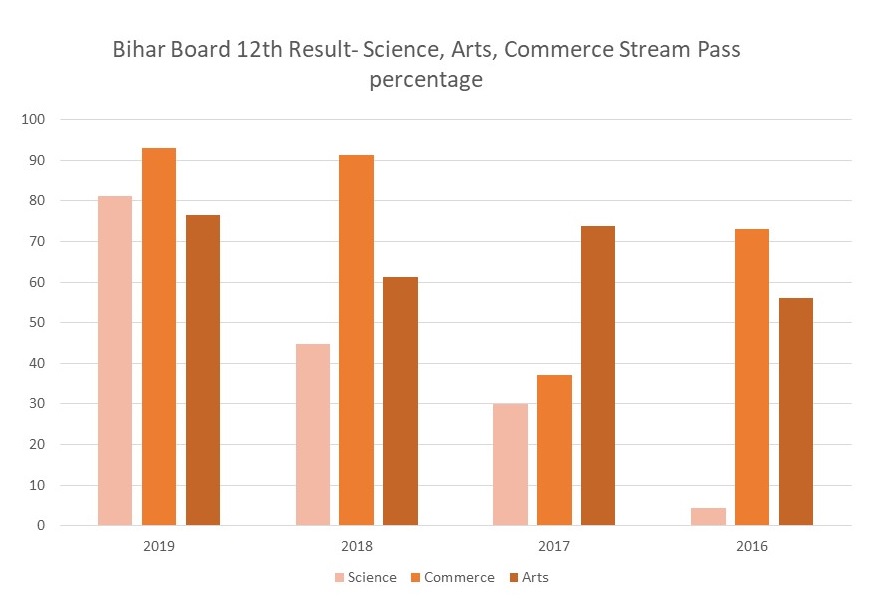
The Commerce stream has a lot of career options. It teaches marketing and can be a good choice for you. Its importance in the field of economic growth is remarkable. If you want to increase your knowledge about trading between the nations and within the nations, you can choose this stream. Also, the passing percentage of commerce students are higher than other stream students. According to BSEB, among all the students who gave the commerce examination, 91.48% passed. Whereas in the arts stream 77.9 percent of students passed, followed by the science stream 76.28%. 

The Commerce stream deals with the managing of the business, financing. Economic development is also a vast field of commerce. On a basic level, in class XI and XII commerce, you study the basics of all the 3 subjects of commerce:


  • Accountancy


  • Business Studies


  • Economics


Economics has subfields which are Statistics and Microeconomics in class 11. Macroeconomics and Indian Economy in class 12.


Subjects in Commerce Stream


Accountancy


Basic knowledge of mathematics, like addition, subtraction, percentage, Ratio is important in accounts. Accountancy focuses on making balance sheets of the companies. It allocates, records, and makes books of accounts of the company’s transactions. An accountant also keeps records of both inter-firms and Intra-firms transactions.


Accountancy manages and maintains the goodwill of the company. Goodwill is the hidden value of the non-materialistic value of the company. One of the fields of accounting is ‘financial accounting’. It takes the record of the information which may go outside the company.


It depicts the true image of the company’s financial position. Records make it easier to compare data and check the progress of the company. It also helps in finding the drawbacks of the company’s financial position. 


Business Studies


Business studies is a subject that polishes your management skills. It upgrades your knowledge about trending issues in the market. Its core topics are marketing, financial marketing, and in-depth study about organizational working. With the insight into the working of the business, it also enhances your leadership as well as communication skills.


The subject expands your knowledge about features of business firms. Not only with business, but it also develops your skills to deal with people. Dealing with people and motivating them to work better is an important part of a leader. The subject evolves your human management skill and makes you a people person. Thus, business studies help to make you a good leader.


Business is an art. How beautifully you manage it is your talent. Business studies as a subject develops this skill of managing a business like an art.


It builds discipline in students and trains them to work in a professional environment. 

Few people have the quality of being a good businessman. They just need to brush up on their skills and business studies give you that opportunity. It also develops the understanding of a business’s contribution to the economic growth of society.


Economics


The shortage of resources and their irresponsible use is causing loss to the environment. It is the responsibility of youth to carry sustainable development in the economy. Thus, this subject – economics, is important for students. It teaches you effective management of resources. In class XI commerce you will study statistics and microeconomics. Microeconomics deals with the problem and development of the economy at an individual level. It studies the effect of individuals on the economy.


Whereas, in class XII commerce you will study Indian economics and macroeconomics. The history of anything is important for a greater view of the subject. Indian economics covers the history of the Indian economy before and after 1947. Macroeconomics will be your second book. In this, you will study the effect of the whole on the economy.


You might be curious to know the budget plans and policies of the government. You might want to know how this policy formation happens. Economics helps to clear your doubts related to policy formation. It gives you broader learning of the government’s policy formation. It also determines coordination between different firms for greater profit.


Optional Subject


Schools offer many optional subjects with commerce like, physical education, tabla, vocal, mathematics, information technology, etc.


But choosing a good combination of subjects helps you in near future. Here are a few subjects you should consider opt for if available in your school.


Informatics Practices


Information practice can be a good option for you because of the rising trend in the IT sector. You can have a good career in this field as an alternative. IP as a subject has coding and teaches different computer languages, C++, JAVA, PYTHON, etc.


Mathematics


Mathematics can be a good optional subject for you as it is a good combination with commerce. Many universities applying criteria for BBA and B.com Hons have a compulsion of mathematics in classes XI and XII.


Entrepreneurship


Few schools are also offering entrepreneurship as a new optional subject. It goes hand in hand with the commerce stream. A good business demands a person who knows where to invest and how to invest. If you are studying this subject as your major it can help you a lot in the future.

Yoga – The state of liberation

 Yoga – The state of liberation

Introduction 

In our everyday life, we are rushing so fast that we don’t have a moment to relax and think about ourselves.


“Eating healthy is important for a good digestive system and,

practicing yoga is essential for avoiding unwanted symptoms.”


For developing a healthy body and mind it is crucial to practice yoga daily. Forty-five minutes from our life for ourselves will be mesmerizingly beneficial for us. Exercising yoga doesn’t need sophisticated arrangements and extensive equipment. It requires a commitment for blessing your life with more peace and making it blissful.

We can practice yoga at our home and the first step to begin is, waking up early in the morning. Waking early has many health benefits. We also get the opportunity to witness the beautiful sunrise. Yoga should always begin with the right frame of mind by calming it and chanting om for 2-3 minutes. Chanting om vibration helps you to concentrate and breathe properly. The next step for yoga is corpse posture or Shavasana. You can practice this by lying on the ground on your back. In this posture you resemble a corpse, thus it is called corpse posture. Remember to smoothly transpose from one posture to another and not hurt your muscles.

The second posture you can practice is Chakrasana, the wheel pose. It gives a great stretch to all the muscles of the body.

Then rise and perform the next asana, forward bending, and backward bending. In forward bending, bend your body from the waist and try touching your toes with your fingers. Remember to not bend your knees.

Then come back to a normal position and keep your hands on your waist and bend back as much as comfortable. Forward bending and backward bending helps to ease the lower back pain and tension and stress in the waist area.

You can perform several asanas or yoga for your neck and shoulders. Most of our time today is spent sitting in front of the phone or laptop. Our neck and shoulders are strained and we don’t pay careful attention to it.

Practice shoulder rotation and Lord Brahma’s pose for reducing tension and stress in neck and shoulder areas. You should always remember to end the yoga the way you begin it, that is by breathing correctly and chanting Om. Give yourself 5 minutes for meditating after performing yoga. This will help magically in calming your mind and enhancing concentration.


Yoga has several unbelievable medical benefits if practiced regularly. Self-love is very important for each one of us and self-care comes from yoga. Taking care of your body, mind, and soul should never be neglected.

Digging in the history of yoga


In the early days of yoga, scriptures and manuscripts were not found. Due to its oral transmission, its history has uncertain records. Writing of yoga took place on the flimsy palm leaves during ancient times. It was easily damaged and lost. Thus there is little or no proof and records of yoga during ancient history.


5000 years ago yoga came into existence. It’s debatable between researchers that yoga’s discovery took place 10,000 years ago. Yoga history has four main periods; Pre-Classical, Classical, Post Classical and Modern history.


Pre Classical


5000 years ago, yoga originated in Indus Sarasvati Civilization, Northern India. The word yoga was first written in Rig Veda. With time yoga kept refining and developing my brahmans and rishis. Bhagwat Gita is one of the holiest books representing the theme of yoga in 500 B.C.E. . We know Upanishad for its values and ideas of self-realization. It also portrays the idea of sacrifice, sacrificing ego by understanding ourselves. It tells us the importance of actions (karma-yoga) and wisdom (jnana yoga).

Classical Yoga – Patanjali


Classical yoga is primarily known as Patanjali’s yoga sutra. This represented a systematic form of yoga. Patanjali yoga portrayed the path of Raja yoga, thus being classical yoga. Besides doing yoga for keeping body fit, it also helped in learning to get samadhi. This type of yoga has 8 steps that guide us through the way of enlightenment and samadhi. This is the oldest form of yoga and is known as “Father of Yoga.”

Post-Classical Yoga


Post-classical yoga didn’t accept the teachings of Vedas. It says that the body is a medium to achieve enlightenment. This yoga is a practice to rejuvenate the body and show us a prolonged life. Tantra yoga made us realize the importance of separation from physical existence. This yoga helped in cleansing the body, mind, and soul and making us realize the purpose of our existence. It taught body is only the medium of connecting with the world. This led to the emergence of hatha yoga west.

Modern Period

Yoga masters were traveling to the different corners of the world, 1800-1900. Countries were showering flowers and respect on them. They were becoming the center of attraction for everyone. The promotion of hatha yoga begins in 1920-30 in India. India was under the embrace of yoga. Yogis such as Krishnamacharya and Sivananda inspired others to practice Hatha yoga. In 1924 Krishnamacharya opened the first known yoga school in Mysore. Sivananda initiated a divine life society on the banks of the holy Ganga river. Hatha yoga which was not known by many has many schools and training centers now.


Though yoga was popularizing at the time, Yoga sutras weren’t accepted universally. Women also practiced yoga but their names remain unsung. They were sexually objectified or invisible. There is no picture of women practicing yoga before the modern period. Yogis believed that women’s companies should not be included by men in yoga.  

Yoga and its types 

Hatha Yoga


It is the type of yoga that deepens the learning of balance in us. It enhances a balanced state of mind as well as body. “ha” means sun and “ta” means moon, Hatha is thus the art of balancing the sun and moon in you. Hatha yoga helps in preparing the body physically and consciously practicing the postures. It is the art of manipulating energy and moving the system in a particular direction.

Ashtanga Yoga


It is the art of moving the body smoothly and gracefully. Maintaining the force of breath is essential in this yoga. This is the second oldest system of yoga. It is the form of modern classical yoga. It is known as the eight-limb path of yoga attributed to Patanjali. This represents the guidelines to live life gracefully. They are the methods practiced by different practitioners to see what works for them. This yoga helps in achieving full self-realization.

Yin Yoga


Ancient Chinese philosophy talks about yin and yang. it intends towards discovering the negative and positive side of ourselves. Yin is for the dark side and yang for the lighter side. It signifies that we have both negative and positive sides us and both need to be found. Yin yoga is the slow form of yoga. The practice of yoga takes place slowly transforming from one posture to another. Yin means feminine form of yoga, which portrays gentleness and patience. Yang is the more masculine form of yoga teaching us forces. It is necessary for the body to be smooth and gentle as well as applying force. It tells that both feminine, as well as masculine aspects of life, is necessary for growth. Intimacy with ourselves is an important aspect of life. Yin yoga rejuvenates that intimacy within us.


Acro Yoga


Acro yoga is a combination of aerobics and yoga. The sublime combination of these two brings kindness towards others. It builds trust in others as well as ourselves. It involves a group of partners. One partner lifts another and this builds trust among them. It teaches us self-control and aware us of our body. It also teaches us how to make quick decisions. Acro yoga isn’t necessarily sexual, it is more of building trust in your partner. Trust deepens and strengthens the bond between you and your partner. This yoga is also known as couple yoga.


Kundalini Yoga


Kundalini Yoga brings energy in our spine into awareness. There is the divine energy that lies in the base of the spine. It involves various forms of asanas, meditations, and chanting om. This form of yoga increases energy in our body. An increase in energy can make our body hot, thus needs to practice with care arises. This yoga enlightens your spiritual self. People believe it as the power associated with the divine feminine. If not practiced with caution, the great energy created by this yoga can damage your physical body. It can result in physical as well as mental illness. It helps in reducing stress and anxieties, thus calms our mind. It is the form of yoga that helps in appreciating and appraising ourselves.

Throwing light on false beliefs 

For a long time, the culture of yoga is entrapped in a lot of myths. A lot of false beliefs are occupying people’s minds. There are many stigmas related to yoga that slows the spreading of a beautiful culture.


Yoga does not belong to one religion


People from ancient history believe that yoga belongs to a specific religion. The taboo is set that no other religion than specified can practice yoga. It is wrong to say that yoga is for only one religion or restricts to some people. Yoga is for everyone and contributes equal benefits for all. Everyone should enjoy and feel the immense befits of yoga. No one denies no one to practice yoga and stops them to grow. Yoga is very important for self-actualization and the realization of each one of us.


Yoga is not only bodily posture


People believe that yoga only means to transform from one body posture to another. Yoga is more than just postures. Breathing techniques play a crucial role in practicing yoga. Yoga also involves stillness and sitting quietly. It emphasizes focusing our mind inward and enlightening with self-awareness.


We can not learn yoga through books


Yoga is a broad topic and requires specialized training. Books can not help you a lot in learning the true essence of yoga. Though it can tell you the benefits of practicing particular types of yoga, it can not convey the right manner to practice it. Even the minute details are necessary for practicing yoga perfectly. If you are keen to learn the correct forms of yoga, you should always learn from professionals.


You need not be flexible


Flexibility comes from yoga itself. You need not be flexible before practicing yoga. Regular practice will bring flexibility to your body. We all are blessed with different types of bodies. We should always appreciate it and adore them. Yoga is done for bringing flexibility to your body. If you are not flexible at the beginning of yoga that does not mean you are not good.


Yoga does not mean being vegan


It is not true that for practicing yoga you need to change your complete lifestyle. Eating healthy is important for yoga but it doesn’t point towards complete change. It does not mean to sacrifice everything. You can eat junk (sometimes), drink milk, and your favorite things. Yoga does not point towards changing yourself into a yogi and making sacrifices. You can practice yoga as who you are, and change into the best version of yourself.


Yoga is for asthmatic patients


It is one of those taboos that yoga is not practiced by patients with asthma. Yoga teaches you different forms of breathing which increases the flow of oxygen. It is more beneficial for asthma patients than anyone. Your medical problems can also resolve by practicing yoga. It is a medication in itself.

Yoga practices in different countries 

Different type of yoga is popular in different regions. A single type of yoga has a variety of forms. Different countries explore a particular type of yoga completely and become famous.


  • Mysore and Kerala are popular for Hatha yoga, the type of yoga that deepens the learning of balance in us.

  • Mysore in India and Melbourne in Australia is popular for another type of yoga. Ashtanga Yoga, the eight-limb path of yoga is popular in these places.

  • Yin Yoga is a popular form of yoga in Bali. Bali is famous as a yoga destination.

  • Vancouver in Canada is famous for Acro Yoga.

Other Popular yoga destinations


  • Goa in India

  • Rishikesh, India

  • Ibiza in Spain

  • Koh Phangan, Thailand.

  • Koh Samui, Thailand.

  • Algarve, Portugal.

  • Costa Rica.

Benefits of yoga 

Yoga is a habit that can change us and our lives. It can have a great impact on us. It can change us into different people and help us to realize our true potential. Yoga has benefits for everyone, whether it’s a student, young adult, or old age people.


Benefits of yoga for students


  • Reduction in stress and anxiety

Yoga helps students to live in the moment. It calms their mind and diverts them from daily problems. The mind of a student is always working and learning new things. They are at the age when they shape their lives. And the pressure of shaping their life into the best brings a lot of anxiety and stress. Meditation and yoga postures help them to deal graciously with them.


  • Improves memory and attention

Meditation practiced in yoga helps in concentrating the mind in one direction. It helps students in paying attention in class. It increases the elaborative rehearsal power and techniques in students which strengthens memory. Yoga also helps to aid ADHD ( Attention deficit hyper disorder ) thus reducing impulsiveness. Increased concentration reduces the absence of mind in school.


  • Manage weight

Students have a lot of pressure of studies on them. They are not able to pay attention to their daily routine. This is also an age when they are developing taste and interested in tasting varieties of food. Eating more junk food can hamper their health. Yoga thus helps them to curb health problems.


Benefits of yoga for old age people


  • Flexibility and core balance

Yoga helps in strengthening the core of old age people. With the growing age, their bones become weaker. They are unable to follow daily routines and walk properly. Most old-age people suffer from pain in knee joints. Regular practice of yoga helps in healing pain and increasing flexibility. It makes their bones stronger. It makes them fit to do their work.


  • Deeper breathing

Old age people have breathing problems. Different pranayama and breathing techniques help them to breathe properly. Rapid exhalation and other forms of breathing help to increase the flow of oxygen in the lungs. It also increases blood circulation in the body. It is also helpful in curbing the blood pressure problems faced by old age people.


Conclusion

For developing a healthy body and mind it is crucial to practice yoga daily. 

5000 years ago yoga came into existence. It’s debatable between researchers that yoga’s discovery took place 10,000 years ago. Yoga history has four main periods; Pre-Classical, Classical, Post Classical and Modern history.


There are various types of yoga:-

1. Hatha Yoga

2. Ashtanga Yoga

3. Yin Yoga

4. Acro Yoga

5. Kundalini Yoga


Yoga can change us into different people and help us to realize our true potential. Yoga has benefits for everyone, whether it’s a student, young adult, or old age people.

IPC Section 100

  IPC Section 100

IPC Section 100 is the extension for the right of private defense causing death. In the case of private defense, it explains to which extent the law exempts the guilty to take the life of someone. The right of defense given in Section 100 of IPC is a subject of Section 99 of IPC. Section 100 doesn’t extend the right of private defense in the case of restrictions given in the preceding section.

This means under Section 100 in some cases assaulted persons can cause harm or death to the attacker.


Extended cases of IPC Section 100


  • Case 1 – the reason for death

Case 1 extends for any action by the attacker which causes death or can cause the death of a person. It permits the victim to take action which can cause harm or death to the attacker.


  • Case 2 – serious harm or injury

Case 2 extends to any attack which can lead to serious harm to the victim or causes any serious harm. The assaulted person can hurt the attacker in this situation for their safety. It can also lead to the death of the attacker.


  • Case 3 – intention to rape

Case 3 extends the law for the assault who are prone to get raped by the attacker. If the attacker intends to rape then the victim can harm the attacker. They can be the cause of the death of the attacker in this situation.


  • Case 4 – gratifying unnatural lust

The offense mentioned in Section 377 of unnatural lust signifies this. If an attacker tries to please his unnatural lust with the victim, they have the right to hurt or kill them. The victim can inflict any harm on the attacker in this case.


  • Case 5 – Kidnapping or abducting

If an attacker tries to assault by kidnaping or abducting they can suffer the consequence. The victim has the right to kill or hurt them.

  • Case 6 – Confinement 

An assault with the attacker confining the person in the wrong way. The attacker restricts the person in the wrong and they are not able to reach the public authorities. In this condition, the victim has the right to hurt or kill the attacker. 


  • Case 7 – Act of throwing Acid

If an attacker tries to throw acid on the person it will severely hurt the victim severely. In this case, the victim has the right to prevent themselves by killing or harming the attacker.


Purpose of IPC Section 100

Indian penal code has approved this law because they want us to stand for ourselves and for others. This act gives us permission to kill or harm any person who tries to hurt our privacy. It does not restrict to any one gender. It is the same for all. This law is for the provision of self-defense by providing us the right to private defense. The Constitution of India and the Indian Penal Code understand that a person needs to be brave. Though we have police constables and laws to punish, they might fail to be available sometimes. In those times we can be our own heroes and protect ourselves. The law permits us the right to take actions for ourselves and for others. This scares the attacker from taking harmful actions.

This law also states that people should stand for themselves first and then for others. When in a difficult situation one should first protect their lives and then others. It is important to be kind and helpful but not at the cost of your life. You can contribute to society in the long run only when you yourself are fit and fine.

What do you mean by the private defense?

Private defense means to protect one’s life, liberty, and property by taking action. It means to hurt the person who is trying to harm you for protecting yourself. IPC allows you to kill or harm the attacker if your life is at risk and threatened by the action of the attacker. The acts permitted by IPC under Section 100 might not permit killing or harming in any other situation. The law can consider those actions illegal if practicing otherwise. using self-protective force only permits in the case of an endangered life situation. 

Essential conditions according to law

A situation should meet the following conditions for invoking the IPC section 100:


  • It is necessary that there must be a serious threat to the life of a person. Not only life, if a person feels that an attacker can injure their body they can take actions to kill.

  • There must be no possible way to escape from the situation. If you find yourself stuck in the situation and there is no way to run you can kill the person. If there is a possible way and you are not using it then the law does not invoke.

  • If you don’t have enough time to convey the problem of threat to your life to authorities you can take action. It is not applicable if you have time and you are still not trying to contact the authorities. You can not try to take action on your own in this situation.

  • The death of the person should be the necessary reason for saving your precious life.

Can exercise against the person of unsound mind?

The law is the same for an unsound person attacking or trying to attack your body or property. It remains the same for everyone, a child, a person with special abilities, or an insane person. If you feel anytime that they are trying to hurt you or be the reason for your death, you can harm or kill them. Irrespective of gender, caste, religion this law implies every human being. No matter at which post or designation you are, if you try to harm or kill the body of a person, they can harm and kill you too.

If the attacker is attacking because of any misconception, an aggrieved person has the right to private defense. No one has an exemption from this law.

Summary

Indian Panel Code (IPC) enacted on 6 October 1860. Under IPC Section 100 in some cases, the assaulted person can cause harm or death to the attacker.

Case 1 extends for any action by the attacker which causes death or can cause the death of a person.  Case 2 extends to any attack which can lead to serious harm to the victim or causes any serious harm.  Case 3 extends the law for the assault who are prone to get raped by the attacker. Case 4  is when an attacker tries to please his unnatural lust with the victim. Case 5 is if an attacker tries to assault by kidnapping or abducting they can suffer the consequence.  The attacker restricts the person in the wrong and they are not able to reach the public authorities is the case 6. In case 7 it is invoked if an attacker tries to throw acid on the person it will victimize.

Irrespective of gender, caste, religion this law implies every human being. No matter at which post or designation you are, if you try to harm or kill the body of a person, they can harm and kill you too.


Mental Health is Important: We need help!

“It’s not an issue, just shake it off and get a good night’s sleep, you’ll be fine in the morning.”

Just because you can’t see it doesn’t mean that it’s not there. Mental Health is just as important as physical health!

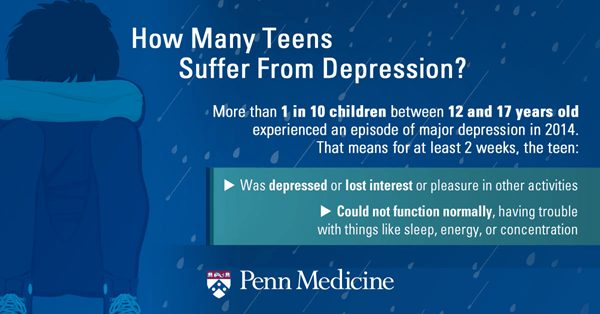
The change of phase from teens to youth and then adolescents is a very bumpy journey. While parents and mentors prepare you for the changes that happen to the body, they don’t give you even the slightest hint about the rollercoaster ride that your mind and emotions are going to take you for. People often think of it as something that will eventually return to ‘normal’ if you don’t give much attention to it.

Unfortunately, the struggle is real whether you are prepared for it or not.

Who Do the Youths Look to for Help?

There is no doubt that they keep such things hidden from their parents. But why is that you ask? Well, the reason being that ‘you’re not expected to have such issues and it’s just a phase. There is no need to make a big deal about it.

Many parents don’t understand what you’re going through despite going through similar situations back when they were teens.

Eventually, teens and youths turn to their friends. Because they ‘understand’. Even though the advice of friends can be wrong at times, it is a huge relief to just speak to someone and let it all out.

Common Mental Illnesses in Teens

  • Generalized anxiety – Excessive worry about everyday matters

Ex. Feeling restless, fatigued, struggling with concentration, irritated, struggling with sleep, not able to control worry.

  • Social phobias – Severe feelings of self-consciousness and insecurity in social settings

Ex. Anxious and struggling to be around people, worry about being judged, struggling to make friends, feeling nauseated around people.

  • Depression – Persistent feelings of sadness, anxiety and emptiness

Ex. Sad, anxious and empty, feeling hopeless, irritability, guilty, worthless, restless, having thoughts of suicide and death, fatigue or lack of energy.

How to look after yourself?

It is important to look after your mental health because it’s a vital part of your life and it greatly impacts your thoughts, behaviours and emotions. Emotional health leads to productivity and effectiveness in activities. It will also help you adapt to changes and cope with adversity.

Steps that can be taken are:

  • exercising daily,
  • eating a balanced diet of healthy meals,
  • opening up to people in your circle,
  • taking a break when you need it,
  • getting a good night’s sleep, and most importantly
  • remembering that you are valued and amazing and strong.

**Tip — Getting up early in the morning and as soon as you wake up, proclaim it out loud that you are strong, confident, amazing, successful and so on….(add words of your choice that you want to be, or see happening in your life)

This can help the way you think and feel about yourself and in boosting your confidence and self-esteem.

Key Facts

  1. People affected are one in 6 people aged 10-19 years.
  2. Half of the mental health conditions start by the age of 14 years.
  3. Depression is one of the leading causes.
  4. Suicide is the fourth leading cause of death in 15–19-year-olds.
  5. As a result of not addressing the mental health issues in adolescents, the problems eventually have an impact on both their physical and mental health and has drastic effects in the long run.

BHARATHANATYAM- CLASSICAL DANCE

Bharatanatyam is an Indian classical dance that originated in the Hindu temples of Tamil Nadu and neighbouring areas. Let’s take a look at its history, costumes, and exponents.

Bharatanatyam, a pre-eminent Indian classical dance form presumably the oldest classical dance heritage of India is regarded as mother of many other Indian classical dance forms. Conventionally a solo dance performed only by women, it initiated in the Hindu temples of Tamil Nadu and eventually flourished in South India. Theoretical base of this form traces back to ‘Natya Shastra’, the ancient Sanskrit Hindu text on the performing arts. A form of illustrative anecdote of Hindu religious themes and spiritual ideas emoted by dancer with excellent footwork and impressive gestures its performance repertoire includes nrita, nritya and natya. Accompanists include a singer, music and particularly the guru who directs and conducts the performance. It also continues to inspire several art forms including paintings and sculptures starting from the spectacular 6th to 9th century CE temple sculptures. 

History & Evolution

According to the Hindu tradition the name of the dance form was derived by joining two words, ‘Bharata’ and Natyam’ where ‘Natyam in Sanskrit means dance and ‘Bharata’ is a mnemonic comprising ‘bha’, ‘ra’ and ‘ta’ which respectively means ‘bhava’ that is emotion and feelings; ‘raga’ that is melody; and ‘tala’ that is rhythm. Thus, traditionally the word refers to a dance form where bhava, raga and tala are expressed. The theoretical base of this dance form, which is also referred as Sadir, trace back to ancient Indian theatrologist and musicologist, Bharata Muni’s Sanskrit Hindu text on the performing arts called ‘Natya Shastra’. The text’s first complete version was presumably completed between 200 BCE to 200 CE, however such timeframe also varies between 500 BCE and 500 CE. According to legends Lord Brahma revealed Bharatanatyam to the sage Bharata who then encoded this holy dance form in Natya Shastra. The text that consists of thousands of verses structured in different chapters divides dance in two specific forms,namely ‘nrita’ that is pure dance comprising of finesse of hand movements and gestures, and ‘nritya’ that is solo expressive dance that comprises of expressions. According to Russian scholar Natalia Lidova, ‘Natya Shastra’ elucidates several theories of Indian classical dances including that of Tandava dance, standing postures, basic steps, bhava, rasa, methods of acting and gestures.

 One of the five great epics of Tamil Literature, ‘Silappatikaram’ (~2nd century CE) has a direct reference to this dance form. The Shiva temple of Kanchipuram that is decorated with carvings dating back to a period between 6th to 9th centuries CE manifests the development of this dance form by around the mid first millennium CE. Many ancient Hindu temples are embellished with sculptures of Lord Shiva in Bharatanatyam dance poses. The eastern gopuram of the 12th century Thillai Natarajar Temple, Chidambaram, of Tamil Nadu dedicated to Lord Shiva bears sculptures depicting 108 poses of Bharatanatyam, referred as karanas in ‘Natya Shastra’, that are intricately carved in small rectangular panels. Another notable sculpture can be seen in the Cave 1 of Karnataka’s Badami cave temples dating back to the 7th century where a 5 feet tall sculpture of Lord Shiva is depicted as Nataraja doing Tandava dance. The 18 arms of the Shiva sculpture expresses mudras or hand gestures that are part of Bharatanatyam.

Association with Devadasi Culture

Originating in Hindu temples of Tamil Nadu and nearby regions, Bharatanatyam soon prospered in other South Indian temples. According to some sources the Devadasi culture dating back to 300 BCE to 300 CE evolved under the auspices of the royals that saw the temple dancers called Devadasis, who were dedicated to serve the Lord as dasis or servants, performing the dance form. Eventually the Devadasi culture became an integral part of rituals in South Indian temples. Although ancient texts and sculptures indicate existence of such culture and presence of dancing girls as also exclusive quarters for women in temple compound, there is no concrete evidence either archaeological or text-based that can manifest  the Devadasis as prostitutes or courtesans as accused by some colonial Indologists. After analysing evidences, Davesh Soneji, a historian on performance arts and an expert on Bharatanatyam, concluded that courtesan dancing phenomenon commenced during the Nayaka period of Tamil Nadu sometime around late 16th or 17th century.

Shruti Iyer: Bharatanatyam performance mermerised audience at Venkat  Sabhagruha | Events Movie News - Times of India

Opposition & Ban During Colonial Rule

The 18th century saw emergence of rule of the East India Company followed by setting up of British colonial rule in the 19th century. Such developments saw decline of various classical dance forms which were subjected to contemptuous fun and discouragement including Bharatanatyam that through the 19th century remained exclusive to Hindu temples. Eventually social and economic conditions associated with Devadasi culture added with contempt and despicable attitude from the Christian missionaries and British officials, who held the Devadasis of South India and nautch girls of North India as harlots, disgraced such systems. Furthermore the Christian missionaries launched anti-dance movement in 1892 to stop such practice. The Madras Presidency under the British colonial government banned the custom of dancing in Hindu temples in 1910 and with this the age-old tradition of performing Bharatanatyam in Hindu temples also came to an end.

Revival 

The Indian community disapproved such ban. The Tamilians were worried that such a rich and ancient custom of Hindu temple dancing was getting persecuted on the pretext of social reform. Many classical art revivalists like Indian lawyer, freedom-fighter, activist and classical artist E. Krishna Iyer questioned such discrimination. Iyer who became involved with the Bharatanatyam revival movement was incarcerated on charges of nationalism and imprisoned. During his prison term he convinced the political prisoners to advocate for this age-old classical dance form.  Iyer founded the ‘Madras Music Academy’ and along with Indian theosophist, dancer and Bharatanatyam choreographer Rukmini Devi Arundale, he strived to save Bharatanatyam from dying out. Despite the fact that Hindu temple dances were being suppressed due to laws enforced by the colonial British government, many artists like American dancer Esther Sherman came from the West to learn Indian classical dance forms. She came to India in 1930 and not only learnt classical dances but also adopted the name Ragini Devi and became a part of the ancient dance arts revival movement. As the Indian freedom movement progressed steadily during the early 20th century, an effort to revive Indian culture and  tradition seethed with excitement among Indians. Eminent Bharatanatyam dancers like Arundale and Balasaraswati expanded the dance form out of Hindu temples and established it as a mainstream dance form. Later the Tamil Hindu migrants revived this Hindu temple dancing custom in British Tamil temples during the late 20th century. Today this ancient classical dance form also includes technical performances as also non-religious and fusion based themes.

Classical Dance Photography | Bharatanatyam poses, Dance photography poses,  Indian classical dancer

Repertoire

The repertoire of this performance art are categorized into three brackets namely ‘Nritta’, ‘Nritya’ and ‘Natya’ mentioned in ‘Natya Shastra’ and followed by all major Indian classical dance forms. ‘Nritta’ is a technical performance where the dancer presents pure Bharata Natyam movements emphasising on speed, form, pattern, range and rhythmic aspects without any form of enactment or interpretive aspect. In ‘Nritya’ the dancer communicates a story, spiritual themes, message or feelings through expressive gestures and slower body movements harmonised with musical notes. ‘Natyam’ is usually performed by a group or in some cases by a solo dancer who maintains certain body movements for certain characters of the play which is communicated through dance-acting. The dance form typically comprises of certain sections performed in sequence namely Alarippu, Jatiswaram, Shabdam, Varnam, Padam and Thillana.

Costumes

The style of dressing of a Bharatanatyam dancer is more or less similar to that of a Tamil Hindu bride. She wears a gorgeous tailor-made sari that consists of a cloth specially stitched in pleats that falls in the front from the waist and when the dancer performs spectacular footwork that include stretching or bending her knees, the cloth widens up like a hand fan. The sari worn in a special manner is well complimented with traditional jewellery that include the ones that adorn her head, nose, ear and neck and vivid face make-up specially highlighting her eyes so that audience can view her expressions properly. Her hair neatly plaited in conventional way is often beautified with flowers. A jewellery belt adorns her waist while musical anklets called ghunghru made of leather straps with small metallic bells attached to it are wrapped in her ankles. Her feet and fingers are often brightened with henna colour so as to highlight gestures of her hands.

Instruments & Music 

The Bharatnatyam dancer is accompanied by a nattuvanar (or taladhari) that is a vocalist who generally conducts the whole performance, a part often executed by the guru. The person can also play the cymbals or any other instrument. The music associated with Bharatanatyam is in South India’s Carnatic style and instruments played comprise of cymbals, the flute, a long pipe horn called nagaswaram, a drum called mridangam and veena. The verses recited during performance are in Sanskrit, Tamil, Kannada and Telugu.

Famous Exponents

The four Nattuvanars namely Ponaiyah, Vadivelu, Sivanandam and Chinnaiya who are renowned as Tanjaore Bandhu and who thrived in the Durbar of Maratha ruler, Sarfoji-II from 1798 to 1832 shaped up the modern day Bharatanatyam. Meenakshi Sundaram Pillai, a dance guru from the village of Pandanallur was a noted exponent of Bharatanatyam who is predominantly known for his style referred as the Pandanallur school of Bharatanatyam. One of his students Rukmini Devi championed and performed the Pandanallur (Kalakshetra) style and also remained one of the leading proponents of the classical dance revival movement. Balasarswati who was regarded as child prodigy by Vidhwans and Pandits also joined hands in reviving the dance form. She was a virtuoso of the Thanjavur style of Bharatanatyam. Other imminent Bharatanatyam artists include Mrinalini Sarabhai, her daughter Mallika Sarabhai, Padma Subramanyam, Alarmel Valli, Yamini Krishnamurthy and Anita Ratnam among others.

CRED's Master Plan – CRED Business Study

Hello everybody, CRED is one of the most fascinating business case studies in the Indian start-up ecosystem. In just 2 years, CRED went from 0 to hitting a $2B valuation and became one of the youngest Indian startups to reach this milestone. Now, the peculiarity of CRED is that in 2020 alone CRED incurred a massive loss of ₹360 crores which is a massive increase of 492% from 2019. And for every rupee of revenue that CRED generated they spent ₹727 which is a massive cashburn. 

We all have seen the result of massive expenditure into creative marketing. *beating noises* So now the question is, even with such massive losses how is it that CRED is getting so much funding ? And what exactly is Kunal Shah’s strategy ? Well, the beauty of this case study is the that if you only understand what CRED is doing you will more or less understand a large chunk of the Indian startup ecosystem because most of the giant companies like Jio, Ola, PharmEasy also operate in a similar fashion. and the most important factor that is common in all of them is that they extensively work on altering the behavioural design of the society. And the anticipation of that behavioural design, is what makes them billion dollar companies. 

This golden strategy works out in 4 discrete steps The first phase is what we call cash burn and here’s where The company, first identifies a major problem in the society, Number two, it designs a system to fix that problem Number three, it raises a million dollars in funding and lastly it entices the customers to use the product by giving out unbelievable offers which are almost too good to be true.

 A very simple example of the same is Jio. First of all, Jio identified internet accessibility as a major problem in the Indian society and then Reliance spent about ₹1.5 lakh crores into building the infrastructure required for Jio. And then in 2016 when Jio got launched, they gave out offers that almost looked impossible. -free sim cards, free calls and free internet. And the moment this announcement happened, millions of people rushed to buy Jio sims. And Jio did everything in it’s capacity to maximise it’s number of it’s users without even bothering about profits. Which is why, on top of the heavy investment that they made they further incurred a loss of Rs. 31 crores in 2016.

 Just like this, when CRED rolled out in 2018 they identified 3 of the biggest pains of a credit card holder which are; number one, hidden charges Number two, late fees due to forgetfulness and number three is the extra interest. And they rolled out massive cashbacks and offers to incentivise the act of on-time payment. And these offers were as amazing as free flight tickets extremely lucrative discounts and ₹1000 cashbacks also Fast foward to 2021, CRED today, has over 30 lakh users and today, CRED is already processing 20% of all the premium credit card transactions. 

So this is how within a short span of time, in Phase 1, companies present incentives in order to get customers to use their product, eventually, to increase their user base. And this is what brings us to Phase 2. Phase 2 is all about habituation. Once you bought a Jio sim, you never bothered about talktime, you never bothered about data. And we all recklessly got habituated to this newfound luxury of Internet Similarly, in case of CRED, the people who have 2-3 credit cards found it so simple to use CRED that they stopped using their conventional method wherein they had to go through this long list of their statements or putting in effort to dig in and find out whether there are hidden charges, on each credit card As a CRED user myself, I can’t even tell you how amazing it feels as compared to having this terrible feeling wherein you have no idea where the hell your money is going. 

In fact, there was a time when I thought that some hacker is stealing my money, alright ? and I’m not even kidding about this. So, this is how in Phase 2, using their super efficient system companies seemlessly get us habituated to new normal wherein we are no longer used to adjusting to the ‘hurdles of the system’. Here’s where we enter the most crucial phase of all, that is, Phase 3 and Phase 3 is what we can call as Irreversibility. 

A classy example of the same is Google Maps Now you might have observed that most of the people of our generation never even bother to remember the name of a landmark, street or chowk In fact, I’ve got so used to Google Maps that in my own city, if you leave me in some street I will start wandering as if I am in some strange jungle. That is how much I have got habituated to Google Maps And by the way, this does not include those superhumans who have this amazing memory to remember any route, even if they have visited that place only once and you know which friend am I talking about… So the point is, 

Google Maps has made our lives so easy that finding a way to a place no longer occupies our headspace and in case of CRED, users no longer have to remember to pay their credit card bills, they no longer have to remember when exactly is their due dates or bother about late fees. Similarly in case of Ola, we are no longer used to finding taxi on the streets In case of Jio, when there is no Internet you all know how you feel So you see, once these companies came in there has been an irreversible change in our behaviour wherein the small acts of booking a cab or paying a credit card bill has changed to such a large extent that we will never ever go back to our past system. 

Now CRED is yet to complete this phase which is why all the numbers that you see about CRED is in the negatives now because CRED is yet to change a significant part of the consumer behaviour. After this we come to Phase 4. Now, this is the goldmine that every investor waits for wherein the company starts making profits and if you look at the numbers, it literally looks like a goldmine. For that matter look at the numbers of Jio. In just 1.5 years, Jio became profitable that is in the 3rd quarter of 2017 with a profit of ₹504 Crores From there onwards it has been on a magnificent run wherein in 2020, Jio has posted a net profit of ₹5,562 crore and the reason why CRED is also sitting on a similar goldmine is because the customers of CRED are by default the richest 1% of the country.

 These people are literally the dream customers of any company. Their incomes are high, so they make expensive purchases on a regular basis which results into massive profit margins for every company And my sense is that in the 4th phase, CRED could leverage it’s golden customer base in three very very powerful ways. 

Number one, CRED could become this must have expense management app which will also allow it’s users to file their income tax and just like it cured the headaches of the credit card users by saving their money from hidden charges. CRED might also might start saving it’s customers a ton of money through their income tax rebate filings by turning the entire process of income tax filing into a very simple and efficient process and if this happens, I don’t think any of us will ever leave the CRED club.

So, Kunal sir if you’re watching this please help us out over here. Number two, CRED has one of the most valuable customer data in terms of purchase preferences For example, CRED clearly knows that Parsh loves to spend ₹20,000 into sports. Ganesh loves to spend ₹10,000 in education and books. So CRED could use this data to show relevant advertisements with exclusive coupons to get people to spend heavily on the things they absolutely love eventually, to make a comission out of it. 

Lastly, CRED could also became a bank for the top 1% of India and the reason why I think so is because there are two important factors that are very very crucial for any bank’s existence.

 Number one, every bank wants customers who have a lot of money deposited in their bank account after all their investment and expenses. And this money is what the bank uses to lend to businesses and customers in the form of home loans, car loans etc. 

Number two, every bank needs borrowers who pay back their loans judiciously. So that they can charge an interest on top of it eventually to make money out of the lending business. And guess what ? CRED literally has these exact people in it’s customer base which is why my sense is, CRED could literally extend itself to become a full fledged bank or maybe even become a full fledged portfolio management system for the top 1%.

 Eventually to become the most revolutionary fintech start-up of India So to put that straight, for ordinary people like you and me CRED might look like a weird idea but in reality it is a revolutionary idea coming from one of the most amazing entrepreneurs in the Indian start-up space. 

And we must consider ourselves to be extremely fortunate that we are getting to witness their processes and we must learn from these revolutionary start-ups that are going to redefine 21st century India forever.  

CRED's Master Plan – CRED Business Study

Hello everybody, CRED is one of the most fascinating business case studies in the Indian start-up ecosystem. In just 2 years, CRED went from 0 to hitting a $2B valuation and became one of the youngest Indian startups to reach this milestone. Now, the peculiarity of CRED is that in 2020 alone CRED incurred a massive loss of ₹360 crores which is a massive increase of 492% from 2019. And for every rupee of revenue that CRED generated they spent ₹727 which is a massive cashburn. 

We all have seen the result of massive expenditure into creative marketing. beating noises So now the question is, even with such massive losses how is it that CRED is getting so much funding ? And what exactly is Kunal Shah’s strategy ? Well, the beauty of this case study is the that if you only understand what CRED is doing you will more or less understand a large chunk of the Indian startup ecosystem because most of the giant companies like Jio, Ola, PharmEasy also operate in a similar fashion. and the most important factor that is common in all of them is that they extensively work on altering the behavioural design of the society. And the anticipation of that behavioural design, is what makes them billion dollar companies. 

This golden strategy works out in 4 discrete steps The first phase is what we call cash burn and here’s where The company, first identifies a major problem in the society, Number two, it designs a system to fix that problem Number three, it raises a million dollars in funding and lastly it entices the customers to use the product by giving out unbelievable offers which are almost too good to be true.

 A very simple example of the same is Jio. First of all, Jio identified internet accessibility as a major problem in the Indian society and then Reliance spent about ₹1.5 lakh crores into building the infrastructure required for Jio. And then in 2016 when Jio got launched, they gave out offers that almost looked impossible. -free sim cards, free calls and free internet. And the moment this announcement happened, millions of people rushed to buy Jio sims. And Jio did everything in it’s capacity to maximise it’s number of it’s users without even bothering about profits. Which is why, on top of the heavy investment that they made they further incurred a loss of Rs. 31 crores in 2016.

 Just like this, when CRED rolled out in 2018 they identified 3 of the biggest pains of a credit card holder which are; number one, hidden charges Number two, late fees due to forgetfulness and number three is the extra interest. And they rolled out massive cashbacks and offers to incentivise the act of on-time payment. And these offers were as amazing as free flight tickets extremely lucrative discounts and ₹1000 cashbacks also Fast foward to 2021, CRED today, has over 30 lakh users and today, CRED is already processing 20% of all the premium credit card transactions. 

So this is how within a short span of time, in Phase 1, companies present incentives in order to get customers to use their product, eventually, to increase their user base. And this is what brings us to Phase 2. Phase 2 is all about habituation. Once you bought a Jio sim, you never bothered about talktime, you never bothered about data. And we all recklessly got habituated to this newfound luxury of Internet Similarly, in case of CRED, the people who have 2-3 credit cards found it so simple to use CRED that they stopped using their conventional method wherein they had to go through this long list of their statements or putting in effort to dig in and find out whether there are hidden charges, on each credit card As a CRED user myself, I can’t even tell you how amazing it feels as compared to having this terrible feeling wherein you have no idea where the hell your money is going. 

In fact, there was a time when I thought that some hacker is stealing my money, alright ? and I’m not even kidding about this. So, this is how in Phase 2, using their super efficient system companies seemlessly get us habituated to new normal wherein we are no longer used to adjusting to the ‘hurdles of the system’. Here’s where we enter the most crucial phase of all, that is, Phase 3 and Phase 3 is what we can call as Irreversibility. 

A classy example of the same is Google Maps Now you might have observed that most of the people of our generation never even bother to remember the name of a landmark, street or chowk In fact, I’ve got so used to Google Maps that in my own city, if you leave me in some street I will start wandering as if I am in some strange jungle. That is how much I have got habituated to Google Maps And by the way, this does not include those superhumans who have this amazing memory to remember any route, even if they have visited that place only once and you know which friend am I talking about… So the point is, 

Google Maps has made our lives so easy that finding a way to a place no longer occupies our headspace and in case of CRED, users no longer have to remember to pay their credit card bills, they no longer have to remember when exactly is their due dates or bother about late fees. Similarly in case of Ola, we are no longer used to finding taxi on the streets In case of Jio, when there is no Internet you all know how you feel So you see, once these companies came in there has been an irreversible change in our behaviour wherein the small acts of booking a cab or paying a credit card bill has changed to such a large extent that we will never ever go back to our past system. 

Now CRED is yet to complete this phase which is why all the numbers that you see about CRED is in the negatives now because CRED is yet to change a significant part of the consumer behaviour. After this we come to Phase 4. Now, this is the goldmine that every investor waits for wherein the company starts making profits and if you look at the numbers, it literally looks like a goldmine. For that matter look at the numbers of Jio. In just 1.5 years, Jio became profitable that is in the 3rd quarter of 2017 with a profit of ₹504 Crores From there onwards it has been on a magnificent run wherein in 2020, Jio has posted a net profit of ₹5,562 crore and the reason why CRED is also sitting on a similar goldmine is because the customers of CRED are by default the richest 1% of the country.

 These people are literally the dream customers of any company. Their incomes are high, so they make expensive purchases on a regular basis which results into massive profit margins for every company And my sense is that in the 4th phase, CRED could leverage it’s golden customer base in three very very powerful ways. 

Number one, CRED could become this must have expense management app which will also allow it’s users to file their income tax and just like it cured the headaches of the credit card users by saving their money from hidden charges. CRED might also might start saving it’s customers a ton of money through their income tax rebate filings by turning the entire process of income tax filing into a very simple and efficient process and if this happens, I don’t think any of us will ever leave the CRED club.

So, Kunal sir if you’re watching this please help us out over here. Number two, CRED has one of the most valuable customer data in terms of purchase preferences For example, CRED clearly knows that Parsh loves to spend ₹20,000 into sports. Ganesh loves to spend ₹10,000 in education and books. So CRED could use this data to show relevant advertisements with exclusive coupons to get people to spend heavily on the things they absolutely love eventually, to make a comission out of it. 

Lastly, CRED could also became a bank for the top 1% of India and the reason why I think so is because there are two important factors that are very very crucial for any bank’s existence.

 Number one, every bank wants customers who have a lot of money deposited in their bank account after all their investment and expenses. And this money is what the bank uses to lend to businesses and customers in the form of home loans, car loans etc. 

Number two, every bank needs borrowers who pay back their loans judiciously. So that they can charge an interest on top of it eventually to make money out of the lending business. And guess what ? CRED literally has these exact people in it’s customer base which is why my sense is, CRED could literally extend itself to become a full fledged bank or maybe even become a full fledged portfolio management system for the top 1%.

 Eventually to become the most revolutionary fintech start-up of India So to put that straight, for ordinary people like you and me CRED might look like a weird idea but in reality it is a revolutionary idea coming from one of the most amazing entrepreneurs in the Indian start-up space. 

And we must consider ourselves to be extremely fortunate that we are getting to witness their processes and we must learn from these revolutionary start-ups that are going to redefine 21st century India forever.