Sovereign Gold Bond Scheme 2023-24

  The Government of India, in consultation with the Reserve Bank of India, has decided to issue Sovereign Gold Bonds (SGBs) in tranches as per the calendar specified below:

S. No.

Tranche

Date of Subscription

Date of Issuance

1.

2023-24 Series I

June 19 – June 23, 2023

June 27, 2023

2.

2023-24 Series II

September 11-September 15, 2023

September 20, 2023

The SGBs will be sold through Scheduled Commercial banks (except Small Finance Banks,  Payment Banks and Regional Rural Banks), Stock Holding Corporation of India Limited (SHCIL), Clearing Corporation of India Limited (CCIL), designated post offices, and recognised stock exchanges viz., National Stock Exchange of India Limited and Bombay Stock Exchange Limited. The features of the Bond are as under:


Sl. No.

Item

Details

1

Product name

Sovereign Gold Bond Scheme 2023-24

2

Issuance

To be issued by the Reserve Bank of India on behalf of the Government of India.

3

Eligibility

The SGBs will be restricted for sale to resident individuals, HUFs, Trusts, Universities and Charitable Institutions.

4

Denomination

The SGBs will be denominated in multiples of gram(s) of gold with a basic unit of  One gram.

5

Tenor

The tenor of the SGB will be for a period of eight years with an option of premature redemption after 5th year to be exercised on the date on which interest is payable.

6

Minimum size

Minimum permissible investment will be One gram of gold.

7

Maximum limit

The maximum limit of subscription shall be 4 Kg for individual, 4 Kg for HUF and 20 Kg for trusts and similar entities per fiscal year (April-March) notified by the Government from time to time. A self-declaration to this effect will be obtained from the investors at the time of making an application for subscription. The annual ceiling will include SGBs subscribed under different tranches, and those purchased from the secondary market, during the fiscal year.

8

Joint holder

In case of joint holding, the investment limit of 4 Kg will be applied to the first applicant only.

9

Issue price

Price of SGB will be fixed in Indian Rupees on the basis of simple average of closing price of gold of 999 purity, published by the India Bullion and Jewellers Association Limited (IBJA) for the last three working days of the week preceding the subscription period. The issue price of the SGBs will be less by ₹50 per gram for the investors who subscribe online and pay through digital mode.

10

Payment option

Payment for the SGBs will be through cash payment (upto a maximum of ₹20,000) or demand draft or cheque or electronic banking.

11

Issuance form

The SGBs will be issued as Government of India Stock under Government Securities Act, 2006. The investors will be issued a Certificate of Holding for the same. The SGBs will be eligible for conversion into demat form.

12

Redemption price

The redemption price will be in Indian Rupees based on simple average of closing price of gold of 999 purity, of previous three working days published by IBJA Ltd.

13

Sales channel

SGBs will be sold through Scheduled Commercial banks (except Small Finance Banks,  Payment Banks and Regional Rural Banks), Stock Holding Corporation of India Limited (SHCIL), Clearing Corporation of India Limited (CCIL), designated post offices (as may be notified) and recognised stock exchanges viz., National Stock Exchange of India Limited and Bombay Stock Exchange Limited, either directly or through agents.

14

Interest rate

The investors will be compensated at a fixed rate of 2.50 per cent per annum payable semi-annually on the nominal value.

15

Collateral

The SGBs can be used as collateral for loans. The loan-to-value (LTV) ratio will be as applicable to any ordinary gold loan, mandated by the Reserve Bank from time to time.

16

KYC documentation

Know-your-customer (KYC) norms will be the same as that for purchase of physical gold. KYC documents such as Voter ID, Aadhaar card/PAN or TAN /Passport will be required. Every application must be accompanied by the ‘PAN Number’ issued by the Income Tax Department to individuals and other entities.

17

Tax treatment

The interest on SGBs shall be taxable as per the provision of Income Tax Act, 1961 (43 of 1961). The capital gains tax arising on redemption of SGB to an individual is exempted. The indexation benefits will be provided to long term capital gains arising to any person on transfer of the SGB.

18

Tradability

SGBs shall be eligible for trading.

19

SLR eligibility

SGBs acquired by the banks through the process of invoking lien/hypothecation/pledge alone, shall be counted towards Statutory Liquidity Ratio.

20

Commission

Commission for distribution of the bond shall be paid at the rate of one per cent of the total subscription received by the receiving offices and receiving offices shall share at least 50 per cent of the commission so received with the agents or sub agents for the business procured through them.

****

PPG/KMN


Developing Tribal human resource with a holistic approach

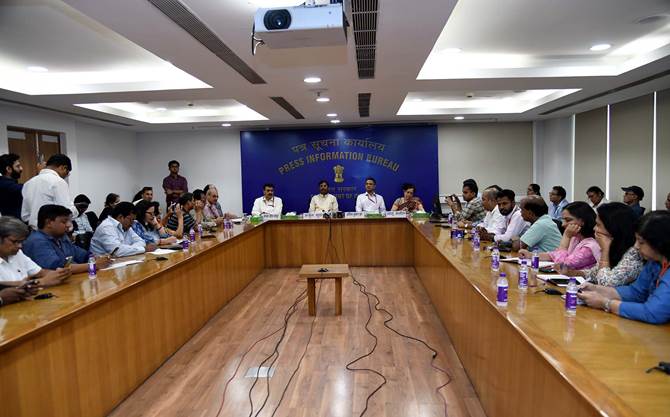
Government has  focused on developing tribal human resource with a holistic approach over  the last 9 years. Briefing mediapersons on 9 year achievements and Transformational initiatives of the Ministry of Tribal Affairs in New Delhi today,  Union Minister for Tribal Affairs Shri Arjun Munda said that Development of Particularly Vulnerable Tribal Groups (PVTGs) in mission mode has been  taken up as focus area for the first time ever.

The Minister explained  that Pradhan Mantri PVTG Development Mission will saturate PVTG families and habitations with basic facilities and stressed on education for PVTG’s. A fund of Rs 15,000 crore for the next three years has been allocated for the socio-economic development of the group. He said that this is the first time a special scheme for PVTGs has been formulated to have holistic development with a  data centric human development indexing for the PVTG groups.

Shri Arjun Munda said that it was an historic occasion that recently on 12th and 13th June ,  the President of India, Smt Droupadi Murmu invited 20 members each from 75 PVTGs communities at Rashtrapati Bhavan, and  Lok Sabha Speaker Shri Om Birla addressed them in Central Hall of Parliament. The PVTGs attired in their traditional dresses brought their culture to the capital and got a first hand feel of being in the capital of their country where for the first time in 75 years after independence that the President of the country met them in Rashtrapati Bhawan, he said.  

Giving details of the strides made in the education of tribal people, Sh Arjun Munda said that the Government is setting up 740 Eklavya Residential Model Schools(EMRS) which will serve 3.5 lakh tribal students with quality education. Over the next three years, 38,800 teachers and support staff will be recruited centrally for the 740 EMRSs. These schools will also lay emphasis on local  languages to ensure that the students are not detached from  their roots, he added.

The Minister said that Tribal Affairs Ministry implements 5 scholarship schemes under which scholarship is given to more than 30 lakh students every year with annual budget of more than Rs. 2500 cr.  These scholarships are disbursed in DBT mode to ensure transparency and timely hassle free disbursals.

 Shri Arjun Munda also said that financial and technical support to strengthen health care systems  to provide affordable healthcare to the poor and vulnerable population in the tribal areas is being taken up under National Health Mission. Government has targeted to eliminate sickle cell anemia by 2047 and under the Mission to eliminate Sickle Cell Anaemia by 2047 , steps will be taken for awareness creation, universal screening of 7 crore people in the age group of 0-40 years in affected tribal areas, and counselling through collaborative efforts of central ministries and state governments.

Shri Arjun Munda said that Ministry of Tribal Affairs is working to develop over 36000 villages with at least 50% tribal population and 500 STs across the country into model tribal villages under Pradhan Mantri Adi Adarsh Gram Yojna to provide basic amenities to tribal villages , and under which various ministries are now required to focus implementation of their schemes in these identified villages.

Union Minster Shri Arjun Munda informed that  Pradhan Mantri Janjatiya Vikas Mission (PMJVM) seeks to achieve livelihood driven tribal development across the country by providing forward and backward linkages by setting up Van Dhan Vikas Kendras / Van Dhan Producer Enterprises apart from assisting the States to make procurement of Minor Forest Produce(MFP) at Minimum Support Price(MSP). The mandate for implementing the same lies with TRIFED. As a result of its efforts, 77 MFPs have been added since 2014-15 to be covered  under MSP for MFP scheme. Total MFPs being covered under MSP as on date are 87.

TRIFED also started a new concept of organizing ‘Aadi Mahotsav’ – Festival of Craft, Culture, Cuisine and Commerce in all major cities across the country in the year 2017-18, the Minister explained. Keeping in line with the mission of “Be Vocal for Local”, TRIFED organized Aadi Mahotsav at Major Dhyan Chand National Stadium, New Delhi from 16th -27th February, 2023 which was inaugurated by Prime Minister Shri Narendra Modi and became a roaring success all over.

In another historic occasion for the tribal people, 15th November has been declared as “Janjatiya Gaurav Divas” on the Birth Anniversary of Bhagwan Birsa Munda to celebrate tribal pride and pay tribute to tribal freedom fighters, he said.

Speaking on the Forest Rights Act Union Minster informed that 21.99 lakh Individual titles and a total of 1.08 lakh Community titles have been distributed till date.

For the development of ST communities across the country, the annual budget of Ministry of Tribal Affairs has been on continuous increase. In 2023-24, a budget of Rs. 12461.88 Crores has been allocated to the Ministry which is 3 times compared to the budget in 2013-14 of Rs. 4295.94 Crore.

Massive 5 times increase has been made in the Budget allocation under Scheduled Tribe Component Funds. The allocation during 2013-14 was Rs. 24,598 Crores, which has been increased to Rs 1,19,509 Crores during 2023-24 across Union Ministries/Departments.

Shri Arjun Munda said an amount of more than Rs 25,000 cr has been released to states under Article 275(1) in last 9 years for more than 5000 projects under different schemes and states have been directed to ensure  implementation of schemes/projects under it with proper planning and monitoring.

Click here for more details

*******

Cruise Tourism and Global Tourism Plastics Initiative

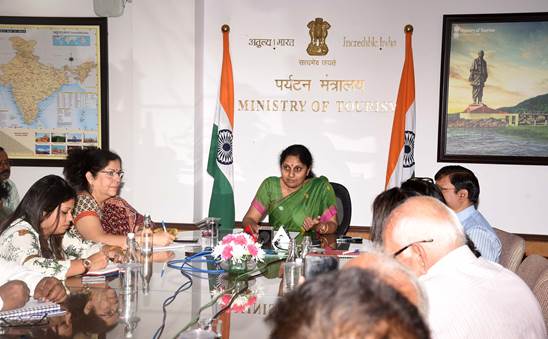
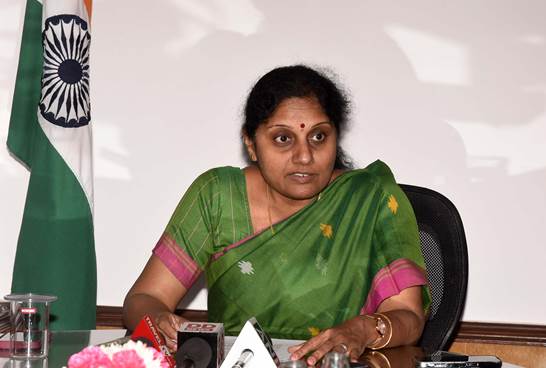
The Ministry of Tourism is organising the fourth G20 Tourism Working Group meeting and Tourism Ministerial Meeting from 19th to 22 June 2023 in Goa. Briefing media in New Delhi today, Secretary Tourism, Smt  V. Vidyavathi said that under India’s G20 Tourism Track, the Tourism Working Group is working on five inter-connected priority areas, which are Green Tourism, Digitalization, Skills, Tourism MSMEs, and Destination Management. Giving more details, the Secretary said that there are two key deliverables of the Tourism Working Group, which are GOA Roadmap for Tourism as a vehicle for achieving sustainable development goals and G20 Tourism Ministers’ Declaration both of which will be finalised shortly. During the meeting, G20 member countries, invited countries, and international organizations will welcome and endorse both the documents.

She also added that the G20 Tourism Working Group meeting and Tourism Ministerial Meeting in Goa aims to strengthen economic growth, preserve cultural heritage, and promote tourism and sustainable development of the region.

The Ministry of Tourism, Government of India, welcomes the participation of Tourism Ministers, Heads of Delegations and delegates from G20 member countries, invited countries, and international organizations to collectively work towards advancing the tourism sector and achieving the UN sustainable development goals 2030.

A side event on ‘Making Cruise Tourism a Model for Sustainable & Responsible Travel’ will be  organized , focusing on strategies to promote cruise tourism. The event will see the participation of G20 member countries, invited countries, international organizations, and industry stakeholders. The event will witness deliberations on the challenges and opportunities in the growth of cruise tourism globally. A panel discussion featuring esteemed speakers from G20 Member countries and guest countries will shed light on country specific policies and initiatives on varied aspects of cruise tourism, its growth and need to make cruise tourism sustainable and responsible.

Smt  V. Vidyavathi said that, along the sidelines of the main event , a national level side event is also being organized which will focus on ‘Making India a Hub for Cruise Tourism’, to deliberate on various challenges and opportunities for developing Cruise Tourism in the country following the principles of sustainability.

The deliberation upon Multi Facets of Cruise Tourism (Coastal, Island, Regional and Yachting), perspectives from Coastal States, private and public stakeholders in inland waterways, perspectives from Riverine States will be the focus areas of discussion during the event. The event will see the participation of key States and Union Territories, Industry Stakeholders, national and international experts.

She also informed that “The Ministry of Tourism is also organizing a side event ‘Towards a circular economy of plastics in tourism – the Global Tourism Plastics Initiative’ in collaboration with the United Nations Environment Programme (UNEP) and United Nations World Tourism Organization (UNWTO).

This  side event will focus on encouraging engagement of tourism stakeholders to address plastic pollution through circular approaches across the tourism value chain. The event will encompass high-level introductory remarks and a keynote presentation on the action framework proposed by the Global Tourism Plastics Initiative (GTPI). These interventions will be followed by a panel discussion with tourism stakeholders and a signing ceremony to welcome the adherence of several organizations to the GTPI.

Further, a ‘Public Private Dialogue: Importance of Travel & Tourism to the G20 Economies’ is also being co-organized by the Ministry of Tourism in Goa on 21st June 2023 in association with World Travel and Tourism Council (WTTC) and United Nations World Tourism Organization (UNWTO). The Dialogue is an opportunity for participants to share their priorities and concerns and identify opportunities for mutual support and greater public-private partnership. This discussion will align and provide a private sector perspective on the 5 priority areas set out for the G20 tourism track. The Dialogue will start by opening the conversation on the respective importance and relevance of these priorities to the private sector and potential areas of support and collaboration from the public sector.

The Secretary informed that good practices and case studies on sustainable tourism by participating countries will be shared on a Dashboard which is being created for the purpose.It will be a dynamic dashboard which will serve as a learning platform for various countries and these case studies will continue to be uploaded on it for coming next three years, she added. 

Secretary Tourism also remarked that to celebrate   the ‘International Day of Yoga’ on June 21, which coincides with the G20 4th Tourism Working Group Meeting and Tourism Ministerial Meeting, a special yoga session has been organized by the state government of Goa.

This session will offer an enchanting experience of yoga to all G20 Tourism Ministers and delegates, providing them with a moment of serenity and mindfulness amidst the busy proceedings of the meeting. It highlights the significance of incorporating wellness practices in the tourism sector and emphasizes the importance of holistic well-being.

On the occasion, Additional Secretary, Shri Rakesh Verma gave a presentation highlighting the important events and schedule of the meeting.

Various cultural programs will be organized to highlight and showcase the rich cultural heritage of Goa to the international G20 delegates. Some of the choreographed programs planned are: Lamp Dance, Kathak Dance, GoanMandoMusic  and Dance presentation, Dekhni Dance, Mussal Khel (Pastel Dance) and Gomant Rang. Delegates will also have the opportunity to experience the local attractions of Goa. Excursion visits have been planned to Lower  Aguada Fort and Jail Museum, and experiencing the UNESCO World Heritage Site:  Churches and Convents of Goa viz. the Basilica of  Bom Jesus, Church of St Francis of Assisi and Se  Cathedra land Archaeological Museum.

During the meeting, the delegates will also be visiting the Art and Craft Bazaar organized by the State Government showcasing local handicrafts, work of artisans, signifying the importance of community participation. DIY Activities at the Craft Bazaar have been planned to have hands on experience.

The Ministry of Tourism is promoting local products of Goa by handing below souvenirs to the delegates:

  • Embroidered Stole/Scarf (Made from Handmade Kunbi Fabric)
  • G.I. Cashew Feni Miniature
  • Terracotta Lotus shaped Incense Stick Holder
  • Upcycled Natural Scented Candle made using discarded bottle
  • Roasted Organic Goan Cashew Nuts
  • Recycled wood Tray with Azulejo Tiles inlay
  • Goan House Window

Click here for more details and schedule

Harmonised Guidelines and Space Standards for Universal Accessibility in India is now available on India

Under the provision of section 40 of RPwD Act 2016, the Central Government in consultation with the Chief Commissioner formulate rules for persons with disabilities laying down the standards of accessibility for the physical environment, transportation, information and communication, including appropriate technologies and systems and other facilities and services provided to the public in urban and rural areas.

Harmonised Guidelines and Space Standards for Universal Accessibility in India-2021 prepared by Ministry of Housing and Urban Affairs has been amended in RPwD (Amendment) Rules, 2023 vide notification G.S. R. 413 (E) dated 05.06.2023.  

The detailed status of these guidelines/standards is as follows:

Standards/Guidelines notified in RPwD Rules under Rule 15
1.Accessibility for the ICT products and services (Part I and II)
2.Harmonised Guidelines and Space Standard for Universal Accessibility in India-2021
3.Standard for Bus Body Code for Transportation system,
Guidelines under Draft notification in RPwD Rules and inviting public and other stakeholder comments
4.Accessibility standards for Health Care by 02.07.2023
5.Accessibility Standards and Guidelines for Civil Aviation by 10.06.2023
6.Accessibility standards and guidelines for the Culture sector (monuments/sites/museums/libraries by 10.06.2023
7.Accessible Sport complex and residential facilities for sports person with disabilities by 10.06.2023
Guidelines awaited for notification in Gazette of India by concerned Ministry/Department
8.Ministry of Home Affairs
9.Guidelines on accessibility of Indian Railways stations and facilities at stations for differently abled persons and passengers with reduced mobility
10.Accessibility Guidelines and Standards for Higher Education Institutions and Universities
11.Accessibility Guidelines for Bus Terminals and Bus Stops
12.Department of Drinking Water and Sanitation 
Guidelines at various stages in the concerned Departments
13.Ministry of Rural Development
14.Ministry of Port, Shipping and Waterways
15.Ministry of Tourism
16.Department of Financial Service
17.Ministry of Information and Broadcasting
18.Department of School Education and Literacy

All the information is regarding the harmonized guidelines is available in the website of DEPwD department disabilityaffairs.gov.in

***

Forbes’ “The Global 2000” List of top companies

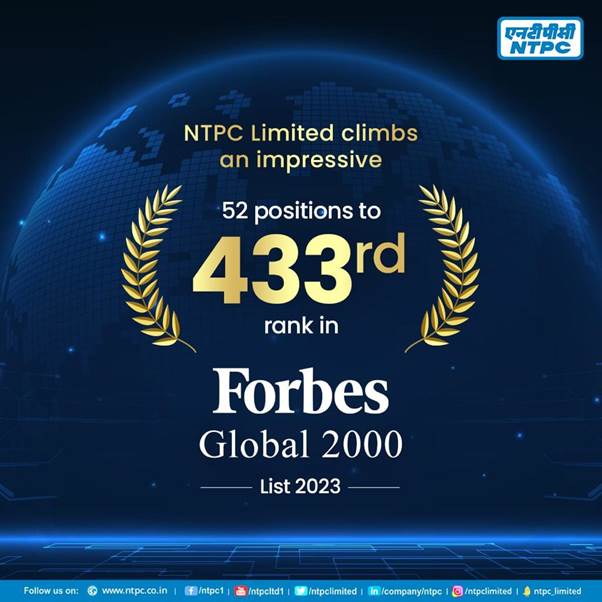
 NTPC Limited, India’s largest power generation company, has climbed 52 positions to secure the 433rd rank in Forbes’ “The Global 2000” List for 2023. Rising from 485th rank in the list in the year 2022, the climb of 52 positions in just one year demonstrates NTPC’s emergence as a strong force in the global market. It is evidence of the company’s steady expansion, sound financial condition, and persistent dedication to excellence.

“The Global 2000” List recognizes the world’s largest companies based on four key metrics: sales, profits, assets and market value.
Considering Indian companies, NTPC has climbed up one place to secure the 10th rank among the largest Indian companies in the 2023 List. This ranking further solidifies NTPC’s status as a leading player in India’s corporate sector.

***

Urban Co-operative Banks (UCBs) in the country

  To realise Prime Minister Shri Narendra Modi’s vision of ‘Sahakar se Samridhi, four important initiatives have been taken to strengthen 1,514 Urban Co-operative Banks (UCBs) in the country. Pursuant to detailed discussions held by Union Home Minister and Minister of Cooperation Shri Amit Shah, with Finance Minister Smt. Nirmala Sitharaman and Governor, Reserve Bank of India, the RBI has notified these vital measures to strengthen Urban Co-operative Banks.

1. In order to expand their business, Urban Cooperative Banks (UCBs) can now open new branches.

UCBs can now open new branches up to 10% (maximum 5 branches) of the number of branches in the previous financial year without prior approval of RBI in their approved area of operation. In order to avail this facility, UCBs have to get the policy approved by their board and comply with the Financially Sound and Well Managed (FSWM) Norms.

2.      UCBs can also do One Time Settlement at par with Commercial Banks

RBI has notified a framework governing this aspect for all regulated entities including Urban Co-operative Banks. Now co-operative banks through board-approved policies may provide process for technical write-off as well as settlement with borrowers. This has brought cooperative banks at par with other commercial banks now.

3.      Revised timelines for PSL targets given to UCBs

The Reserve Bank of India has decided to extend the timeline for UCBs to achieve Priority Sector Lending (PSL) targets by two years i.e. up to March 31,2026. Deadline of March 31, 2023 to achieve PSL target of 60% has now also been extended to March 31,2024.The excess deposits, if any, after clearing the shortfall of PSL during FY 2022-23 will also be refunded to UCB.

Since UCB work in urban areas unlike commercial banks who have branches in rural areas as well, they were facing hardships on this score.

4.      Designating a Nodal Officer in RBI

    In order to meet the long pending demand of the cooperative sector for closer coordination and focused interaction, RBI has recently notified a nodal officer as well.

The above initiatives will further strengthen the Urban Co-operative Banks. Under the leadership of Prime Minister Shri Narendra Modi, the Ministry of Cooperation is committed to strengthen cooperatives and treat them at par with other forms of economic entities, both as beneficiaries and participants.

*****

UPSC Exam

 The UPSC (Union Public Service Commission) exam is one of the most prestigious and challenging competitive exams conducted in India. It serves as the gateway for recruiting individuals into various prestigious government services and positions, including the Indian Administrative Service (IAS), Indian Police Service (IPS), Indian Foreign Service (IFS), and several other Group A and Group B central services.

The UPSC exam process consists of three stages:

  1. Preliminary Examination (Prelims): This stage comprises two objective-type papers – General Studies Paper I and General Studies Paper II (CSAT – Civil Services Aptitude Test). Paper I covers subjects such as history, geography, economics, science & technology, environment, and current affairs, while Paper II tests comprehension, analytical abilities, and decision-making skills.

  2. Main Examination (Mains): Candidates who qualify the Prelims move on to the Main examination, which consists of nine descriptive papers. These include Essay writing, General Studies (four papers), Optional Subject (two papers), and a qualifying language paper. The Main exam assesses candidates’ in-depth knowledge, critical thinking, and analytical skills.

  3. Personality Test (Interview): Candidates who clear the Main examination are called for the Personality Test, commonly known as the Interview. This stage evaluates candidates’ personality traits, communication skills, knowledge depth, and overall suitability for the civil services.

Key Features of the UPSC Exam:

  • Tough Competition: The UPSC exam witnesses fierce competition, with thousands of aspirants appearing for a limited number of vacancies. The selection process is known for its high standards and rigorous evaluation.

  • Comprehensive Syllabus: The syllabus covers a wide range of topics, including current affairs, history, geography, polity, economy, science & technology, environment, and more. Aspirants need a comprehensive understanding of these subjects to excel.

  • Long Preparation Duration: Aspirants often start preparing months or even years in advance due to the vastness of the syllabus and the depth of understanding required.

  • Optional Subject Choice: Candidates can choose an optional subject for the Main examination, allowing them to specialize in a field of their interest, such as literature, science, history, etc.

  • Merit-Based Selection: The final selection is based on a candidate’s performance in all three stages – Prelims, Mains, and the Interview. Merit and individual performance play a crucial role in the final selection.

The UPSC exam demands dedication, perseverance, and a well-rounded understanding of various subjects and current events. Success in this examination opens doors to a challenging yet rewarding career in public service, allowing individuals to contribute significantly to the nation’s governance and development.

Lateral Recruitment for Joint Secretary Level/ Director/ Deputy Secretary Level Posts on Contract Basis

In continuation to Union Public Service Commission’s advertisement No. 52/2023, dated 20.05.2023, inviting applications against 20 posts of the level of Joint Secretary/ Director/ Deputy Secretary on contract basis, as per the requisition received  from the Department of Personnel & Training (DoP&T), Government of India, applications are invited against additional 17 posts of the level of Joint Secretary/ Director/ Deputy Secretary on contract basis in the following Departments/Ministries of the Government:

  1. Department of Health and Family Welfare, Ministry of Health and Family Welfare
  2. Ministry of Power
  3. Department of Rural Development, Ministry of Rural Development
  4. Ministry of Agriculture and Farmers welfare
  5. Department of Financial Services, Ministry of Finance
  6. Ministry of Statistics and Programme Implementation

Three Joint Secretaries and 14 Directors/ Deputy Secretaries will be inducted through lateral recruitment in the above Ministries/Departments.

The detailed advertisement and instructions to the candidates will be uploaded on the Commission’s website on 3rd June, 2023. Interested candidates can apply from 3rd June, 2023 to 3rdJuly 2023.

Candidates will be short-listed for Interview on the basis of the information provided by them in their online application. They must ensure that such information is correct.

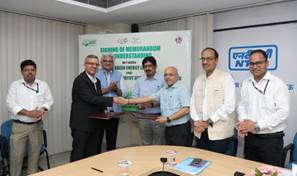
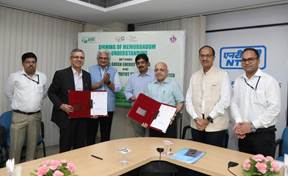
NTPC Green Energy Ltd. (NGEL) and Uttar Pradesh Rajya Vidyut Utpadan Nigam Limited (UPRVUNL)  to collaborate for development of Renewable Energy Power Parks and Projects

NTPC Green Energy Limited (NGEL) and Uttar Pradesh Rajya Vidyut Utpadan Nigam Limited (UPRVUNL) signed a Memorandum of Understanding (MoU) in Lucknow yesterday with an aim to collaborate in the development of Renewable Energy Parks and Projects and to facilitate in Government of India’s efforts towards energy transition. The MoU was signed by Shri Mohit Bhargava, CEO (NGEL) and Shri Nidhi Kumar Narang, Director (Finance), UPRVUNL in the presence of Shri P. Guruprasad, MD (UPRVUNL), Shri Praveen Saxena, Regional Executive Director (NR) of NTPC. Shri V V Sivakumar, GM (NGEL) and other senior officials of NTPC, NGEL and UPRVUNL were present during the occasion.

The MoU envisages the two organizations to collaborate through setting up of floating and ground mounted Solar Projects in the Rihand reservoir, other water bodies and any available vacant land, development of solar PV Project dedicated for solarization of Ayodhya city and setting up of Renewable energy Parks and Projects wherever land is made available. NGEL and UPRVUNL shall jointly work for formation of Joint Venture Company (JVC) to meet the Renewable Generation Obligation, Flexibility in Generation and Scheduling of Thermal/Hydro Power Stations through bundling with Renewable Energy and Energy Storage.

NTPC is India’s largest Power Utility, with a total installed capacity of about 72 GW (including JVs and subsidiaries). As part of increasing its renewable energy portfolio, a fully owned subsidiary “NTPC Green Energy Limited” (NGEL) has been carved out which shall take up Renewable Energy Parks and Projects including development in the areas of Green Hydrogen, Energy Storage Technologies and Round the Clock RE Power.

UPRVUNL was constituted to set up and operate Power-generating stations in the state of Uttar Pradesh. At present UPRVUNL is having four Thermal Power Stations within Uttar Pradesh with an installed capacity of 5820 MW and one Thermal Power Station with installed capacity of 1320 MW under JV with NTPC. UPRVUNL is in the process of adding further 3300 MW capacity with super critical technology on its own and another 1980 MW in Joint Venture with CPSEs. At present, UPRVUNL is looking to diversify into Renewable Energy and Energy Storage sectors.

*****

“Suvidha, Suraksha, Samman” to women

Last 9 years the Union Government under Prime Minister Narendra Modi has provided “Suvidha, Suraksha, Samman” to women. Thoughtfully planned schemes like Ujjwala for Gas connections, Swachhta for female toilets and Jal Jeevan for tap water in households not only provided Ease of Living to women but also gave them a sense of self-confidence with self-esteem.

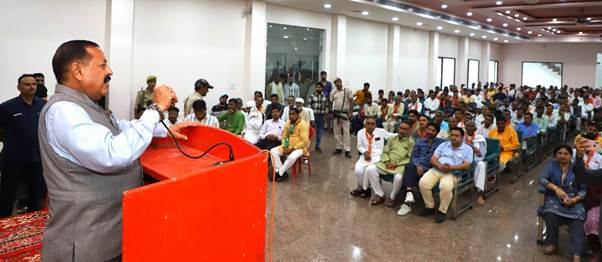
This was stated by the Union Minister of State (Independent Charge) for Science and Technology, MoS PMO, Department of Atomic Energy and Department of Space and MoS Personnel, Public Grievances and Pensions, Dr Jitendra Singh at Sambhal, Uttar Pradesh while addressing a congregation of Modi scheme beneficiaries, majority of whom comprised women.

The Minister said there has been a paradigm shift in Public Service Delivery and the implementation of Government schemes in the last 9 years. “Be it DBT, or provision of basic facilities like electricity, water, toilets to poor people, all these have brought a revolution at the grassroots level,” he said.

Dr Jitendra  Singh said Prime Minister Narendra Modi has put Nari Shakti at the forefront of India’s development journey. Mission Shakti comprises two sub-schemes ‘Sambal’ and ‘Samarthya’ for the safety, security and empowerment of women. The impact of this approach has been evident in the outcomes, such as an improved sex ratio at birth which is now for the first time 1020 women per 1000 men, a rise in institutional deliveries, declining infant mortality, and a lower maternal mortality rate.

With a promise to remove drudgery from the daily life of Women, Dr Jitendra Singh said the increased usage of LPG cylinders under the Ujjwala Yojana has saved crores of women from chronic respiratory disorders through smoke-free kitchens. With the success of Swachh Bharat Abhiyan, crores of women are now able to access toilets in their homes without any fear of safety or violation of dignity. Walking long distances to fetch water for daily consumption is becoming a thing of the past as households across the country are getting tap water connections under the Jal Jeevan Mission. Over 27 crore sanitary pads have been sold at One Rupee at Jan Aushadhi Kendras.

He said Women Empowerment is contingent upon the economic empowerment of women. Programmes such as MUDRA Yojana in which 68% of loans have been extended to more than 27 crore women, have enabled crores of women across the country to pursue micro-level entrepreneurship and become financially independent. 3.18 crore Sukanya Samriddhi Yojana accounts have been created. To promote financial inclusion among women, Mahila Samman Savings Certificate was introduced as part of the Union Budget 2023-24, which is a small savings scheme exclusively for female investors.

Under PM Awas Yojana, women are being made owners of the family home thus becoming active participants in household decision-making. In the 9 years of the Modi government, women have grown from strength to strength. Their success can be seen in the significant increase in the numbers of female police personnel, laurels won by sportswomen for the country and enrolment of women in the fields of Science, Technology, Engineering & Maths.

The government has transformed Women from being targets of welfare to agents of empowerment. “Today it is no longer women development, but women-led development,” he said.

*******

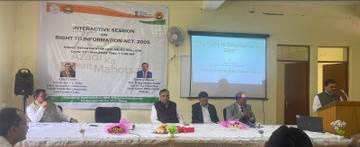
Enlightening session  on RTI Act, of 2005 organized by Pro Bono Club

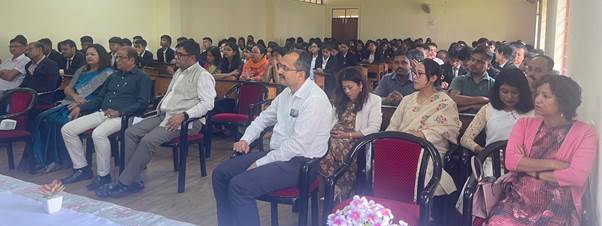
Under Department of Justice’s Nyaya Bandhu, the Pro Bono Club of NEHU, Shillong organised an enlightening session on the RTI Act, of 2005. It highlighted the significance of the Act, educating citizens about their right to access vital public information.

Image

Led by Dr. Ravi Kant Mishra, the esteemed guests Heimonglang Nongpluh & Prof. Prabha Shankar Shukla stressed the importance of employing this right when necessary, empowering individuals, and  promoting awareness in rural Meghalaya. It shed light on the Act’s numerous benefits and  its role in ensuring public authorities’ accountability.

Image

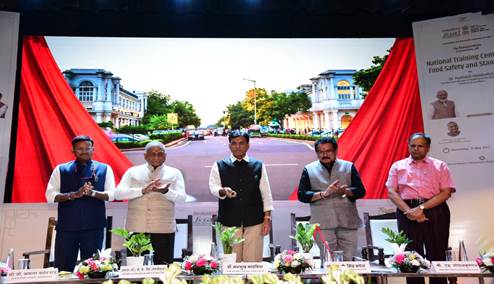
National Training Centre for Food Safety and Standards Authority of India

 “As we aim to become a developed nation in our Amrit Kaal, it is essential that our citizens are healthy. Swasth Nagrik creates a Swastha Rashtra, which leads to a Samruddha Rashtra.” This was stated by Union Minister for Health and Family Welfare, Dr Mansukh Mandaviya at the inauguration of the state-of-the-art National Training Centre for Food Safety and Standards Authority of India (FSSAI) at Ghaziabad, Uttar Pradesh yesterday. Prof. S.P. Singh Baghel, Minister of State (HFW) and General (Dr.) V.K. Singh, Minister of State (Civil Aviation, MoRTH) were also present at the event.

Reiterating Prime Minister Shri Narendra Modi’s focus on wellness and preventive healthcare, the Union Minister said that India’s traditional food habits and way of life should be adopted as ‘our kitchen is our hospital’. “Good quality nutritious food can go a long way in keeping diseases at bay”, he emphasized. Dr Mandaviya spoke of India’s rich heritage of health and wellness whether it was in preventive healthcare, consumption of millets, or in practicing Yoga. Highlighting the value of wellness and lifestyle as important components in health, he said, “The people who will train at the National Training Centre of FSSAI will play a significant role in creating healthy citizens in the country, as they will ensure quality standards for food are followed in the country.”

Talking about the challenge posed by food adulteration in the country, Dr Mandaviya said that FSSAI has formed a team along with State Authorities to crackdown on those who indulge in such malpractices. “There will be no tolerance to food adulteration in the country”, he stressed. He stated that large scale testing would be carried out across the country and action would be taken as per Food Safety and Standards (Act 2006) against those found guilty.

Terming the training centre as “Lok Swasth Arpan Bhawan”, Prof. S. P. Singh Baghel said that FSSAI has got a great responsibility of setting food standards in the country which touches everyone’s life. He added that it is also our responsibility to ensure that the food we eat follows these standards.

The National Training Centre of the Food Safety and Standards Authority of India (FSSAI) at Ghaziabad, Uttar Pradesh is an essential initiative aimed at providing structured instruction, practice, and learning experiences to bridge the gap between existing knowledge or skills and desired knowledge or skills in the field of food safety and standards. As mandated by the FSS Act 2006 and the Food Safety and Standards Rules, 2011, FSSAI is responsible for providing training to individuals involved in food businesses, including food business operators, employees, Food Safety Officers, and designated officers. Recognizing the importance of continuous skill upgrading for officials, food business operators, and other stakeholders, FSSAI has established the National Training Centre to offer various training programs. This dedicated center fills the void that previously existed, ensuring the development of a future-ready workforce committed to ensuring safe and wholesome food for the citizens of India.

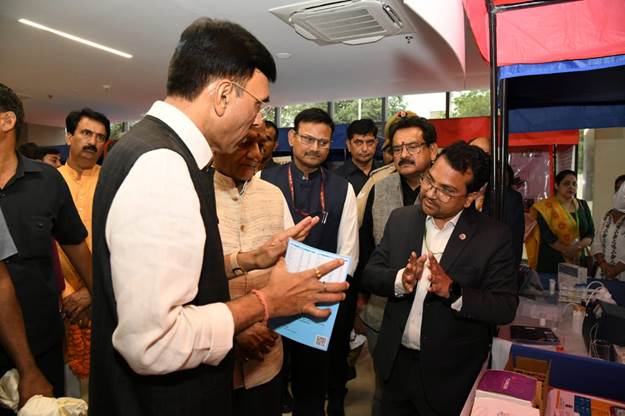
On this occasion, an e- learning app- Food Safety and Certification (FoSTaC) developed by FSSAI that contains learning and training modules about food safety guidelines, such as proper food handling, storage, and hygiene practices etc., for street vendors was also launched.

Dr. Mandaviya also released two books developed by FSSAI – Millets (Shree Anna) Recipes- A Healthy Menu for Mess/Canteens and Healthy Gut, Healthy You – Traditional recipes with potential probiotic benefits.

The event was also attended by Shri S Gopalakrishnan, Special Secretary, Ministry of Health and Family Welfare, Shri G. Kamala Vardhana Rao, CEO FSSAI and other senior officials of the Food Safety and Standards Authority of India.

******

Government Jobs Notification

  Food Corporation of India (FCI), one of the largest Public Sector Undertakings under the Ministry of Consumer Affairs, Food and Public Distribution for ensuring the food security of the nation has been one of the leading recruiters in recent years, recruiting a large number of youth every year.

The recruitment process of FCI is conducted only through online mode of examination and is widely advertised in the Employment News as well as leading National/Local Newspapers. The selection is done through open competition and is on a purely merit basis. FCI ensures utmost transparency and genuineness by strictly adhering to the Rules and Regulations of the Corporation / Government of India.

Posts under various categories (Category I, II, III and IV) are being regularly advertised. FCI has successfully recruited 3687 Category III officials during the year 2020, 307 Category II and 87 Category I officers during the year 2021.

Currently, FCI has advertised 5159 posts of Category II & III in the year 2022. 11.70 lakhs candidates have participated in the recruitment process. The online exams in two phases have already been completed. Further, the recruitment process is in its final stage and is likely to be concluded shortly.

Instead of downsizing, FCI is filling up the existing vacancies in the Corporation for efficient operations and to meet the human resource shortage.

*****

Story of a Old Man

Once upon a time, in a small village nestled amidst rolling hills, there lived an old man named Ramdas. Ramdas had spent his entire life as a shepherd, tending to his flock of sheep on the lush green pastures. But with age catching up to him, he found it increasingly challenging to continue his demanding work.

One day, as Ramdas sat under the shade of a towering oak tree, feeling a sense of melancholy, he noticed a peculiar little goat grazing nearby. The goat had a mischievous glint in its eyes and a playful bounce in its steps. Intrigued by the lively creature, Ramdas approached it cautiously.

To his surprise, the goat seemed to understand him as it responded with gentle bleats. Ramdas felt an instant connection and decided to bring the goat home. He named her Lila, which means “playful” in the local language.

As days turned into weeks, Ramdas and Lila formed an unbreakable bond. Lila would accompany him everywhere, her hooves echoing beside his weary footsteps. The villagers marveled at the sight of the old man and the goat, for they had never witnessed such a unique companionship.

Lila, though small, possessed an extraordinary talent. She had a knack for finding the juiciest patches of grass, the sweetest leaves, and the most fragrant herbs. Ramdas would sit back and watch as Lila grazed, her delicate munching filling the air with a sense of tranquility.

One fateful day, a great drought struck the village, leaving the pastures barren and dry. Ramdas, with a heavy heart, knew that his sheep would suffer. He worried about their survival as they depended on the pastures for their sustenance. But Lila, being the resourceful creature she was, had a different idea.

One evening, Lila led Ramdas up a steep mountain path, her nimble steps guiding him with unwavering confidence. At the mountaintop, they discovered a hidden oasis, a secret haven untouched by the drought. The lush greenery and gushing waterfall were a sight to behold.

With Lila’s guidance, Ramdas brought his flock of sheep to this newfound sanctuary. The sheep feasted on the abundance of fresh grass, regaining their strength and vitality. The villagers were astounded by Ramdas and Lila’s discovery, and word of their miracle spread far and wide.

As the years passed, Ramdas grew frail, his once-strong body weakened by time. But Lila remained by his side, her unwavering loyalty comforting him in his twilight years. They had become legendary figures in the village, symbols of resilience, companionship, and the indomitable spirit.

When Ramdas eventually passed away, Lila mourned his loss, her bleats echoing through the hills. The villagers erected a statue in their honor, a testament to the extraordinary bond between a humble old man and his remarkable goat.

And so, the story of Ramdas and Lila continued to be shared by generations, a tale of love, courage, and the extraordinary things that can be achieved when two souls find solace in each other’s company.

G20 Anti-corruption Working Group Meeting

    The Second meeting of the G20 Anti-corruption Working Group that was inaugurated on May 25 by Union Minister of State for Defence & Tourism, Shri Ajay Bhatt, concluded today in Rishikesh (Tehri).

             The meeting had wide participation from 90 delegates of 20 member countries, 10 Invitee countries and 9 International Organisations including UNODC, OECD, Egmont Group, INTERPOL and IMF. It  was chaired by Mr. Rahul Singh, Additional Secretary, DoPT & Chair, G20 ACWG and co-chaired by Mr. Giovanni Tartaglia Polcini, Head of Task Force, Co-chair, G20 ACWG, Italy and Mr. Fabrizio Marcelli, Minister Plenipotentiary, Ministry of Foreign Affairs and International Cooperation, Italy.

    Over the past three days, there have been intensive and productive deliberations on several key focal areas pertaining to Asset recovery, Fugitive economic offenders, formal and informal channels of cooperation for information sharing, institutional frameworks for combating corruption and mutual legal assistance, among others. The delegates agreed upon the three High Level Principles on ‘Promoting Integrity and effectiveness of Public Bodies and Authorities responsible for Preventing and Combating Corruption’; ‘Strengthening Law Enforcement related International Cooperation and Information Sharing for Combating Corruption’ and ‘Strengthening Asset Recovery Mechanisms related to Corruption’.  

          On the first day of the ACWG, a unique Side Event was held on ‘Gender and Corruption’. Hon’ble Minister of State for External Affairs and Culture, Smt. Meenakshi Lekhi delivered the keynote address. During this event, national and international experts and practitioners deliberated on the gendered aspects of corruption, the ways in which women’s empowerment is intrinsically linked with anti-corruption initiatives and the need for gender sensitive governance and policy making.

          The delegates got a flavour of India’s rich culture, heritage and cuisine during their stay at Rishikesh. India looks forward eagerly to hosting the delegates again at Kolkata from August 9-11 for the Third ACWG meeting. India will also host the first ever in-person Anti Corruption Ministerial Meeting to provide further impetus to the G20 agenda of bolstering the international fight against corruption.

******