National Human Trafficking Awareness Day

On January 11, National Human Trafficking Awareness Day, the ongoing problem of human trafficking is brought to light. Even though January is already designated as National Slavery and Human Trafficking Prevention Month, this particular day is devoted to raising awareness and stopping this illicit practice. Additionally distinct from the UN-designated World Day Against Trafficking in Persons is this celebration. Since the Senate declared this day to be observed in 2007, it has attracted a lot of popular support in the form of private donations to events that the government has planned. On this day, we are all urged to oppose human trafficking wherever it occurs because it affects people of all races and backgrounds horribly.


HISTORY OF NATIONAL HUMAN TRAFFICKING AWARENESS DAY

human trafficking is defined as the use of another person for labor, domestic servitude, or commercial sexual activity by coercion, fraud, or force. It also refers to the practice of using others against their will as slaves or labor. Unfortunately, slavery has persisted today even though many people are unaware of it for hundreds of years.

Most people are aware of the slave trade that existed in the 1400s and later. The slave trade was started by Europeans, who enslaved and sold millions of Africans from all over the continent for labor or sexual exploitation. For centuries, this method was popular in nations like Spain, the developing United States, Holland, France, Sweden, and Denmark.

Governments did not start to outlaw the Transatlantic slave trade until the late 1700s and early 1800s, with Great Britain establishing the standard in 1807 and the United States following in 1820. At that point, the slave trade was a capital offense, but it took decades for more people to be free. Slavery was largely abolished by the Emancipation Proclamation of 1863 and the Thirteenth Amendment of 1866.

Governments only began to talk about “white slavery,” the name used at the time for sexual human trafficking, after the Transatlantic Slave Trade was condemned as immoral. Twelve nations signed the International Convention for the Suppression of the White Slave Traffic in 1904, the same year that the International Agreement for the Suppression of the White Slave Trade was passed into law by European monarchs. White slavery was soon renamed “trade in women and children” by the League of Nations.

WHY NATIONAL HUMAN TRAFFICKING AWARENESS DAY IS IMPORTANT

1. Knowing the Signs Can Save Lives

The ability to suspect or locate a human trafficking victim or offender can help save lives. Millions of people who are directly harmed by the sector include their families, friends, and other loved ones. Online tools exist that can assist you in identifying and preventing human trafficking.

2. It is a Growing Global Problem

It’s difficult to comprehend that there are potentially over 30 million slaves alive today, and it’s much more difficult to accept that the number is rising. The sooner awareness is raised, the sooner we can address the problem because this lucrative illicit sector relentlessly targets more vulnerable people for kidnapping and victimization
for both personal and monetary gain.

3. It Can Affect Anyone

Slavery is a global issue that affects people of all ages and continents, contrary to popular belief. We must all work together to eliminate the hazards we all face, even though some groups, such as women and people from underprivileged areas, are more at risk than others.


Banking Exams

 Banking exams in India are crucial for those aspiring to build a career in the banking sector, offering opportunities to work in esteemed public sector banks, private banks, and regional rural banks. Here are some key points about banking exams in India:

  1. Popular Banking Exams:

    • IBPS Exams (Institute of Banking Personnel Selection): IBPS conducts various exams such as:
      • IBPS PO (Probationary Officer): For recruiting Probationary Officers in public sector banks.
      • IBPS Clerk: For recruitment of Clerical Cadre in public sector banks.
      • IBPS Specialist Officer: To hire candidates for specialized roles like IT Officer, Marketing Officer, HR Officer, etc.
    • State Bank of India (SBI) Exams: SBI conducts its exams for positions like SBI PO, SBI Clerk, and Specialist Officers.
    • RBI Exams: Reserve Bank of India conducts exams for recruitment in various roles including Grade B Officers, Assistants, etc.
  2. Exam Structure:

    • Preliminary Examination: Usually a multiple-choice format assessing candidates’ proficiency in English, Quantitative Aptitude, Reasoning Ability, and General Awareness.
    • Mains Examination: A more in-depth test covering similar subjects but with higher difficulty levels. This phase might also include sections on Descriptive English, Data Analysis & Interpretation, Financial Awareness, etc.
    • Interview/Group Discussion: Candidates who qualify in the Mains are usually called for a final round of interviews or group discussions, depending on the exam.
  3. Preparation and Competition:

    • Intensive Preparation: Aspirants often prepare through rigorous study plans, solving mock tests, and practicing previous years’ question papers to improve speed and accuracy.
    • High Competition: Banking exams witness high competition due to the large number of aspirants vying for a limited number of vacancies.
  4. Eligibility Criteria:

    • Educational qualifications, age limits, and other specific requirements vary for different banking exams.
  5. Career Opportunities:

    • Successful candidates secure positions as Probationary Officers, Clerks, Specialist Officers, etc., in various banks, providing opportunities for career growth, stability, and skill development.
  6. Job Benefits:

    • Banking jobs offer several perks such as job security, attractive salary packages, allowances, healthcare benefits, and opportunities for career advancement through promotions and transfers.
  7. Role in Economic Development:

    • Employees in the banking sector play a vital role in the nation’s economic development by facilitating financial transactions, providing banking services, and supporting financial inclusion initiatives.

Banking exams provide a gateway to a promising career in the financial sector, offering candidates a chance to contribute to the country’s banking and economic landscape.

International World Braille Day

In honor of Louis Braille, who was born on January 4, 1809, the world observes International World Braille Day every year. The United Nations General Assembly established World Braille Day in 2019 and it serves as the opening ceremony for Braille Literacy Month, a campaign in January that strives to increase public awareness of the value of braille and braille literacy.

Braille is useful for many people, even though it is most often associated with people who are completely blind and who use it as a reading medium. This includes people with severe disabilities, visual impairments, and dual sensory loss.


HISTORY OF WORLD BRAILLE DAY

After its inventor, “Braille,” the term was given. When Louis Braille was a young child, he inadvertently injured himself in the eye with his father’s awl, which caused him to lose his vision. He spent time at the Royal Institute for Blind Youth in France starting at the age of 10 when he developed and improved the raised-dot technique that eventually became known as Braille.

Braille finished his work by creating a code based on cells with six dots that allowed a fingertip to quickly go from one cell to the next while still feeling the full unit with one touch. Braille eventually gained acceptance as the primary method of written information for blind people on a global scale. Unfortunately, Braille was unable to witness the usefulness of his creation. Two years before the Royal Institute started teaching Braille, in 1852, he passed away.

The United Nations General Assembly recognized Braille as a wonderful tool that gave the blind and visually handicapped access to a wide range of opportunities (UNGA). The date January 4 was designated as World Braille Day in November 2018. The next year, the first-ever World Braille Day was marked and recognized as a global holiday.

Six fun facts about braille

1. There is a braille code for practically every language, and braille is used in almost every nation in the globe.

2. The braille’s creator has a fascinating tale to tell. Louis Braille was 3 years old when he accidentally poked his eye with a leather embosser, causing a severe infection that eventually led him to lose eyesight in both eyes. Ironically, a stylus, a device used nowadays to emboss braille by hand, is comparable to an awl.

3. There are numerous ways to type in braille. It can be printed using a braille typewriter or embossed using a slate and styles, which is usually regarded as braille handwriting.

4. Popular tourist destination Castle Sant’Elmo provides more than just a panoramic view of the Italian city of Naples from its vantage point. The stronghold is home to Paolo Puddu’s “Follow the Shape” art project, a braille-embossed railing with a poetic description of the scene. The photo for this blog was taken from an image of this installation.

5. In recent years, more toys—including a Rubik’s Cube, the well-known card game UNO, and LEGOs—have become accessible in braille.

6. A conventional typewriter is not like a braille keyboard. In addition to a space key, enter button, and backspace button, braillers feature six keys, one for each of the six dots in a braille cell.


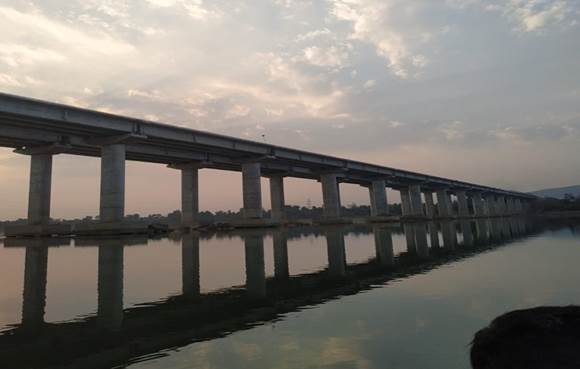
Section of NH-69, stretch between Obedullaganj to Itarsi constructed and upgraded in Madhya Pradesh

 Union Minister for Road Transport and Highways Shri Nitin Gadkari said in a series of tweets that stretch between Obedullaganj to Itarsi, a section of NH-69 has been constructed and upgraded under NHDP Phase-3 in the state of Madhya Pradesh. The investment in this 46 km National Highway project is worth Rs. 600 Crores, he said.

Image

Shri Gadkari informed the stretch connects the capital city of Madhya Pradesh with Narmadapuram and Itarsi. He said this project is also helpful for passengers to reach Bhopal faster by reducing travel time.

Image


Image


MJPS

Users are getting advertisements based on their phone conversations

Today we are living in an era in which there is constant surveillance on us through various sources. Among these, there are satellites and various other electronic equipment that we use daily. Some of those apps collect our data in the background.

The Internet has oven us many things but along with that, there are also some scary consequences. Among those consequences, there is also a breach of our privacy. Especially, smart devices are the main culprits that help in such breaches of trust. We are using them daily. We are also giving consent to various apps to access our microphones as well as our contact list as a whole. This data is then sold to advertising companies, who then show advertisements relevant to us on our devices.

These findings have been proved recently by some recent research. During the research, the users were asked whether they see advertisements based on their conversations or not. In return, several users admitted to getting ads based on their conversations, during phone calls. Several users even admitted to getting emails with the relevant products of their choice. On the other hand, some users did not see any such advertisements. Then some users had no opinion on such matters and some did get such ads some and some very times.

https://unsplash.com/photos/XIVDN9cxOVc

The above problem now needs some strict rules or regulations. This can only happen when the government will pass the Personal Data Protection Bill 2019. Once this will gets passed then people will have control over their privacy. The bill will also ensure that the apps need to specify the data which they are accessing. There also needs to be some clarification about the collection of data and their transactions with third parties.

These changes will make sure that the companies whose apps we are using are alert to the way our data is being used by them. They will also need to be careful with the way they handle our data. Then our data will get some protection om the wrong hands. These changes will also bring about some much-needed changes in the data field. The companies will focus more on the protection of the privacy of data. The data will also need some serious protection from outer elements. It is because various attacks are happening nowadays which are affecting various big organizations. In recent times, AIIMS servers were also hacked and there is a demand for 200 crore rupees in cryptocurrencies from hackers to give back control of servers to the major medical organization.

The recent attacks on the data of such major organizations are also asking for some data-related laws in the country. The changes will pave way for the implementation of some better rules for future generations so that their privacy remains in their own hands. These data-related issues will also safeguard the future of the country. Nowadays, data is the real gold. Data now paves the way for development shortly as technology is getting more dependent on the data being collected from users like us.

Scheme for Intellectual Property (IP) protection revised to upgrade the professional charges of the facilitators

 To protect and promote Intellectual Property Rights (IPR) of Startups and to encourage innovation and creativity among them, Government of India had launched a Scheme for facilitating Start-Ups Intellectual Property Protection (SIPP) in 2016. The scheme facilitated startups in filing and processing of their patent, design or trademark application through the assistance of IP Facilitators, whose fee was borne by the Office of the Controller General of Patents Designs and Trademarks, Department for Promotion of Industry and Internal Trade, Government of India. After its successful implementation resulting in a significant increase in IP fillings by Startups the Scheme was extended for a period of three years till 31st March 2023. 

To further encourage the IP facilitators to provide quality services to Startups in order to increase the number of IP Applications filed by startups, the scheme has now been revised and facilitation fees has been notably increased by at least 100%. The revised scheme is applicable from 02 November 2022 and revised fees structure vis-à-vis the old scheme is as under:

Stage of Payment

Patents

Trademarks

Designs

FEE (in INR)

2016

2022

2016

2022

2016

2022

At the time of filing of Application

10,000

15,000

2,000

3,000

2,000

3,000

At the time of final disposal of Applications

Without Opposition

10,000

25,000

2,000

5000

2,000

5,000

With Opposition

15,000

35,000

4,000

10000

4,000

10,000


In addition to above scheme, IP filling by startups are also encouraged by providing with fee rebates under respective IP legislations. Startups are provided 80% fee rebate in filing patent applications and 50% fee rebate in filling trademark application. In addition, there are also provisions for fast-track examination of patent applications.

Resultantly, there has been a significant increase in IP activities by Startups in last 6 years:

  • Patent applications filed by Startups have increased from 179 in 2016-17 to 1500 in 2021-22;
  • Trade Mark applications filed by Startups have increased from 4 in 2016-17 to 8649 in 2021-22;
  • From 2016-17 to October 2022, 7430 patent applications and 28749 Trade mark applications have been filed by Startups.

As on 30 September 2022, INR 380.81 Lakhs have been disbursed as fees to the facilitators assisting the Startups in IP fillings. The revised fee structure will further augment the filing of IP applications by the Startups through the assistance of IP facilitators offering effective and quality service.

************

Republic Day 2023

The Azadi Ka Amrit Mahotsav celebration honors 75 years of India’s progress, as well as the illustrious past of its people, culture, and accomplishments. Every year on January 26th, India celebrates Republic Day with great fanfare. On this day, it is customary to hoist national flags across India and hold grand parades at Janpath, New Delhi, including the Indian National Army. In 2023, India will celebrate her 74th Republic Day.


Significance of Republic Day

A new constitution was approved by a drafting committee headed by Dr. BR Ambedkar Written after India’s independence from British rule. The Indian Constitution, which confirmed India’s status as an independent republic, went into effect on January 26, 1950. Since the Indian National Congress issued Purna Swaraj, declaring India’s independence from colonial authority, on this day in 1930, January 26 was chosen as the date for the event.

Republic Day Holiday 2023- Theme 


According to reports on Tuesday, the government has proposed three distinct themes for the tableaux of the Republic Day Parade in 2019: India@75, the International Year of Millets, and Nari Shakti. Several state governments, central ministries, and departments, according to sources, have been invited to take part in the Republic Day Parade on January 26 by developing a tableau using one of these three themes, or a mix of the three.

The government has suggested that India@75 tableaux highlight India’s freedom struggle, its accomplishments, its deeds, and its commitment throughout the previous seven decades. This is in honor of India marking 75 years since its independence.

The idea for a millets day originated in 2021 when India asked the UN to designate 2023 as the International Year of Millets (IYOM). The United Nations General Assembly (UNGA) declared 2023 to be the International Year of Millets after 72 nations backed India’s request.

How is Republic Day celebrated?

India celebrates Republic Day with enthusiasm and passion. It is a day dedicated to the Sovereign Constitution of India. It is common for schools and colleges to display national flags. National cultural activities are held to support India’s struggle for independence. The President of India raises the national flag at the India Gate in New Delhi.

The largest parade is held in Rajpat, New Delhi. The Ministry of Defense organized a parade led by the President of India. The event not only showcases military prowess but also promotes India’s rich cultural diversity.

The occasion also honors those who have given their lives as martyrs for the nation. By placing a wreath at the Amar Jawan Jyoti at India Gate, the Indian Prime Minister pays tribute to the martyrs. The national song, national flag raising, and 21-gun salute come next. The Paramvir Chakra, Ashok Chakra, and Vir Chakra are awards given to heroic troops. Awards are given out to people of all ages who have shown fortitude in the face of hardship.

In military jeeps, the recipients of the heroism medals greet the president. India then shows off its military prowess after that. Police, National Cadet Corps, and military parades are also held and the President of India receives salutes from various regiments. The Indian Air Force fighter jets pass over Janpath to end the show.

Although the holiday is observed across the nation, Delhi—the capital—sees India’s largest Republic Day celebrations.


National Milk Day

The day commemorates Dr. Verghese Kurien’s 100th birthday and is referred to be the “Father of the White Revolution.”

On November 26, National Milk Day is marked to raise awareness of the value and advantages of milk.

India is the largest milk producer. Animals eat milk, so it is a food consumed by both humans and animals. World Milk Day, established by the Food and Agriculture Organization of the United Nations, is also celebrated on June 1st each year.


National Milk Day: History

The National Dairy Development Board (NDDB), the Indian Dairy Association (IDA), and 22 State Dairy Associations have jointly decided to commemorate Dr. Celebrating his Verghese Curiae on November 26, 2014. Dr. Curia is considered the father of India’s White Revolution. As a result, on November 26, 2014, the first National Milk Day was celebrated.

Do you know about the White Revolution and Operation Flood?

India’s National Dairy Development Board (NDDB) initiated a rural development program, Operation Flood, in 1970. It is one of the largest programs aimed at building a nationwide milk network. As a result, milk traders and merchant fraud has decreased and India is now one of the largest producers of milk and dairy products. Hence the White Revolution is another name.

Dr. Verghese Kurien, then Chairman of the NDDB, provided the management know-how and necessary impetus for the cooperative sector. He is credited with being the driving force behind Operation Flood, also known as White Revolution in India.

Operation Flood was implemented in three phases.

Phase I (1970-1980): It was paid for by the European Union’s World Food Program donations of skimmed milk powder and butter oil. Connected with consumers in Mumbai, Kolkata, and Chennai.

Phase II (1981-1985): Between 18 and 136 dairy stalls were added during this time. A total of 290 urban markets also increased milk distribution. And he said that by the end of 1985, 4.25 million milk producers were part of a self-sustaining network of 43,000 village cooperatives. By 1989, 22,000 tons of domestic milk powder had been produced for his 140,000 tons.

Phase III (1985-1996): Dairy cooperatives expanded and strengthened their infrastructure during this time to increase the supply of milk to the market. This phase strengthened the Indian dairy cooperative movement by adding 30,000 new dairy cooperatives to the 42,000 dairy cooperatives already established in Phase II. Women’s participation in the milk shed increased from 1988 to 173 in 1989, and women’s milk cooperatives also increased dramatically.

research and developments in animal nutrition and animal health were also highlighted during this period. Innovations such as vaccination against atherosclerosis, avoidance of protein diets, and urea molasses mineral blocks have helped dairy cows produce more milk.

About Dr. Verghese Kurien

1. He resigned from his position with the government and coerced Tribhuvandas Patel and the farmers to launch the Kaira District Cooperative Milk Producers Union Ltd (KDCMPUL), subsequently known as “Amul,” as the region’s first milk cooperative movement.

2. He carried out the “Operation Flood” scheme and attempted to bring the White Revolution to India. He was responsible for planning India’s White Revolution.

3. He contributed to India being the world’s top producer of milk.

4. He contributed to setting the groundwork for democratic initiatives at the local level.

5. He founded several organizations, including the National Dairy Development Board (NDDB) and the Gujarat Cooperative Milk Marketing Federation Ltd (GCMMF), and he had a considerable impact on the development of the dairy cooperative movement in the nation.

6. He also oversaw the replication of the cooperative dairy Anand model, which is used throughout India. He received 15 honorary degrees over his nearly fifty years of service from various international universities because he insisted that learning should never end.

7. He will always be known for changing the definition of milk to make it a potent tool for economic growth.


India supports UAE’s proposal to include digitization in IMO Strategic Plan

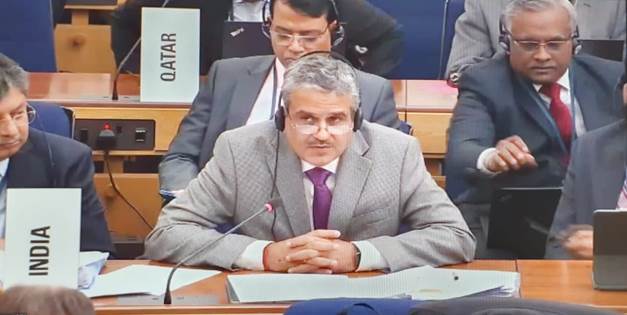
 During the ongoing 128th Session of the Council of International Maritime Organisation (IMO) being held at London Dr. Sanjeev Ranjan, Secretary Ministry of Ports, Shipping and Waterways (MoPSW) said, ‘India supports UAE’s proposal to include the element of digitization in the next Strategic Plan as well as the adoption of a maritime single window system as a part of the digitization initiative, since it will help in resolving the regulatory bottlenecks faced in the maritime industry. Time bound action plans for digitization should be part of the IMO strategic directions’.

Dr. Sanjeev Ranjan, further emphasized on India’s statement at COP 27 that the journey towards a planet safe for humanity is a collective journey to be undertaken with equity with climate justice as our guiding principles. He also put across India’s stand that decarbonization and funding for the same may be included as a separate strategic direction with the principle of common but differentiated responsibilities and respective capabilities (CBDR-RC) as its cornerstone for the way forward.

India appreciates the proposal of UAE on ‘Capacity-Building Decade 2021-2030’ strategy including the concept of ‘no one should be left behind’. India has noted that this element does not appear to be comprehensively absorbed within the ambition of the 8 strategic directions under the existing Strategic Plan. India, therefore, considers this aspect as crucial for the effective usage of financial and technical resources available with IMO through Technical Cooperation Committee’s work to assist developing states. 

IMO is working to ensure shipping can embrace the digital revolution – while ensuring safety, boosting environmental protection and managing cyber security risks. Cooperation between all relevant stakeholders, from shipping, ports and logistics, will be vital to drive the digitalization of shipping, enhance its efficiency and sustainability, and therefore facilitating trade and fostering economic prosperity.


Ministry of Information and Broadcasting Issues Guidelines for Platform Services offered by Multi-System Operators

 1.         The Cable Television Networks Rules, 1994, permit Multi-System Operators (MSOs) to transmit their own programming service, either directly to their own subscribers or through one or more Local Cable Operators. These own programming services referred to as ‘Platform Services (PS)’, which also include most ‘local-channels’, are exclusive programming services being generated at local level offered by MSOs. 

2.         In accordance to the Rule 6(6) of the Cable Television Networks Rules, 1994; this Ministry on 30.11.2022 has issued the guidelines in respect of ‘Platform Services’ provided by MSOs in India. These Guidelines provide the definition for the ‘platform services’ and lay down the norms for the MSOs in running the platform services which inter-alia include:

  • Simple online registration process for PS channels by MSOs at nominal fees of Rs 1,000 per PS channel. The online registration portal for this purpose is under preparation and shall be notified shortly. 
  • Only entities registered as Companies are allowed to provide local news and current affairs. MSOs not registered as “company” and desirous of providing local news and current affairs are mandatorily required to apply within 3 months with Ministry of Corporate Affairs for conversion into “company”. 
  • Total number of permitted PS channels per operator is to be capped at 5% of the total channel carriage capacity. 
  • To cater to the need of the local language and culture of the subscribers, this cap on PS channels shall be computed at the level of State/Union Territory. Also, additionally, 2 PS channels shall be permitted at the level of each District to cater to the need of local content at the District level. 
  • All PS channels to carry a caption as ‘Platform Services’ to distinguish them from the registered TV channels.
  • The Content of the PS to be exclusive to the platform and is not to be shared directly or indirectly with any other Distribution Platform Operator. However, sharing of live feeds from the religious places like Temples, Gurudwaras etc. shall be permitted.  
  • All PS channels to be placed together under genre ‘Platform Services’ in the Electronic Programme Guide (EPG) along with their Maximum Retail Price and option for activation / de-activation of PS as per the applicable orders / directions / regulation(s) of TRAI.
  • MSOs offering PS, to retain, recording of all PS channel programs for a period of 90 days. 
  • Any content related complaint shall be examined by the Authorised Officer prescribed under the CTN Act, 1995, and the State/ District Monitoring Committee.
  • MSOs have been granted a period of 12 months to comply with the guidelines issued on 30th November, 2022.

3.         Cable Operators are granted registration for the distribution of Registered TV Channels. The above guidelines have been issued to ensure that network capacity of Cable Operators is utilised primarily for the same. Also, sufficient provisions have been made in the guidelines for MSOs to cater to the demand of local contents by their subscribers. Further, these guidelines mandate the adherence to Programme Code and Advertisement Code in respect to content on PS channels, keeping of recording for 90 days etc. and shall help in combating the menace of Piracy. 

*****

Republic of Korea’s Economic Development Cooperation Fund (EDCF) loan to India

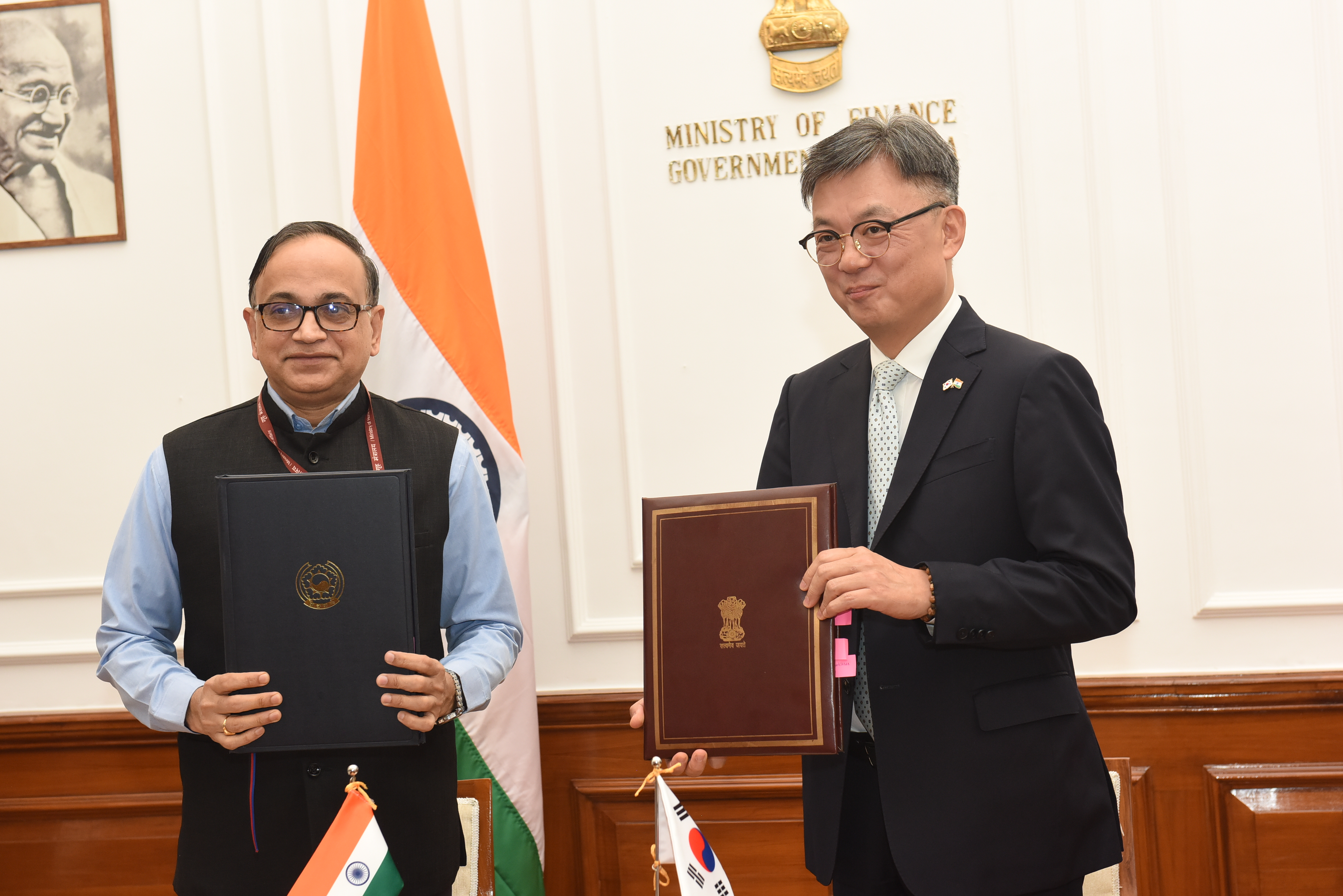
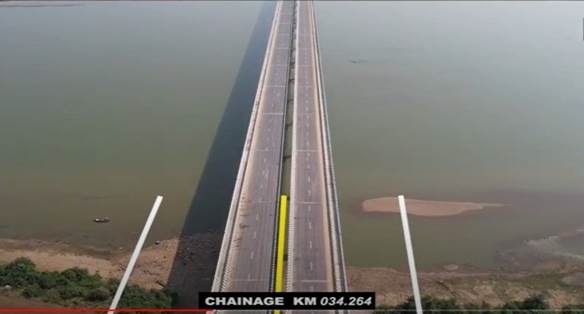
 The arrangement between Government of India and Government of Republic of Korea regarding the Economic Development Cooperation Fund (EDCF) loan of Korean Won 245.081 billion (approx. Rs. 1,495.68 crorefor Establishment of Intelligent Transport System on Nagpur-Mumbai Super Communication Expressway Project was signed here today.

The objectives of the project are to enhance the efficiency in traffic management through establishment of the Intelligent Traffic Management System (ITMS) and traffic centre, to improve the efficiency in toll management through the establishment of the Toll Collection System (TCS) and to establish a sustainable model of ITS and its O&M through transfer of technology from the Republic of Korea.

Republic of Korea was designated as India’s Official Development Assistance (ODA) partner for development cooperation in October, 2016. This is the first project funded by EDCF loan by the Government of Republic of Korea.

The bilateral relationship between the two countries was upgraded to ‘Special Strategic Partnership’ in the year 2015. This further consolidates and strengthens the Special Strategic Partnership between India and Republic of Korea.

[Exchange Rate : 100 Won = Rupees 6.12]

****

Google RCS gets a new update

Google is trying to make its RCS functionality better. It is trying to implement some well-deserved features that are otherwise available in other instant messaging services.    

For the unknown, the features include the option to reply to any message with an emoji. This feature has been created to tackle the similar feature that is present in Apple iPhone iMessages users.

But this feature is still in the testing phase, as it is available for very few users currently. This feature will gradually make it to your phone if you are using the RCS feature. But there are still some disruptions that can be due to some bugs. The disruptions are in the sense that responses from some iPhone users will still show up as a separate message in the chat history.

Google has been trying to make RCS the default choice for its users for quite some now, but it has not been able to succeed in its efforts. The main reason for such a situation is the fact that other instant messaging services can implement any new feature very quickly. There is also the introduction of new features for the engagement of users regularly on other instant messaging platforms.

On the contrary, there have been some drastic changes to social media websites, especially Twitter after the famous billionaire Elon Musk took over its top position. There will be some changes in the social media company also. Now, various ex-employees have been fired right after Musk took over the office. These layoffs are being seen as a sign of some difficult times ahead for the social media company.

https://unsplash.com/photos/zhZydTyNMPg

These layoffs are also being followed by some employees being called back to the office. So there is much confusion regarding the current scenario of the jobs in the tech field. 

On the other hand, there is also speculation that Google will lay off 10000 employees from its team. All of these changes are being seen as steps to tackle the slowdown.

Apart from all this, there are also changes in the Pixel line-up which are witnessed in the market. First of all, the Google flagship lineup has changed from Qualcomm chipset to its very own Tensor chipset.

This has created questions in various minds that what will be the next step that will make Google more independent of its suppliers. The in-house development also means that future google products will make them more Google-centric. The devices will have more professional support. The ecosystem that Google is struggling to maintain within itself will become possible as more devices will fall in line with Google guidelines.

All of these changes are going to bring about some much-needed change in the Google ecosystem. The software part of the Google Android OS will become better. The software part will become more user-friendly. The changes will keep on improving as more updates arrive, and it may also encourage more users to accept the RCS as a new member of the technology world. It can also make the SMS chapter more interesting for the users.

WORLD KINDNESS DAY

World Kindness Day is an international holiday recognized yearly on November 13 as part of the World Kindness Movement. It is observed in several nations, including the United States, Canada, Japan, Australia, and the United Arab Emirates. On this day, we can emphasise one of the most fundamental and unifying human traits. Try to spread the word about this crucial quality that unites people of all backgrounds on this day honouring the positive possibilities of both significant and minute acts of kindness.


HISTORY OF WORLD KINDNESS DAY

World Kindness Day was established as an awareness day by the World Kindness Movement. The organization was officially recognized as an NGO under Swiss legislation in 2019, but its origins date back to a convention held in Tokyo in 1997. A number of institutions and groups from countries including Australia, Thailand, the United States, and the United Kingdom met at this conference due to their dedication to fostering kindness in society.

The Society Kindness Movement was established as a result of this incident, and their written founding statement contained a commitment to “join together to build a kinder and more compassionate world.” To make this possible, they would allow the inaugural World Kindness Day to be established in 1998.

The mission of World Kindness Day is to “encourage acts of compassion in the community, focusing on the positive force and the common thread of kindness which binds us,” according to the World Kindness Movement. Since it was founded more than 20 years ago, the day has earned genuine global recognition; events related to the day have attracted participants from every continent with a population. These include events like dance parties, concerts, and the distribution of “kindness cards.”

The World Kindness Movement still aspires to receive official UN recognition even though the day is now observed on an unofficial basis. World Kindness Day would join the ranks of recognized holidays like the International Day of Peace, Human Rights Day, and World Health Day if the group is successful in its endeavors.

5 FACTS ABOUT KINDNESS

1. National Day of Unity

World Kindness Day is celebrated in over 28 countries, even though it is not linked with any religion or political movement.

2. Being kind pays off

People who are always kind create 23% less cortisol, the stress hormone; as a result of decreased stress levels, people who practice kindness age slower than the general population.

3. Generosity spreads.

According to Stanford Social Neuroscience Laboratory researchers, people are more likely to treat others kindly when they observe others behaving kindly.

4. Blood pressure is reduced.

When you experience emotional warmth, your body releases the hormone oxytocin, which dilates your blood vessels and lowers your blood pressure.


Relevance of cricket throughout the year

Gone are the days when we had the opportunity to watch our favourite national cricket team play a game or a series in a year. Now, we have cricket throughout the year. Teams visit different countries and play several series in a year. Now the series also have various duration. Some are very short and some are of very long duration. It appears as if cricket has lost its shine.

Now, players play throughout the year. If they are free, then they take part in some domestic tournaments all over the globe. IPL has been one of the biggest influencers in such a manner. It gives the players a platform to showcase their skills and also provides them with a chance to earn big amounts. They are also paid handsomely in such tournaments and sometimes. Even get recognition in their respective countries. 

But all of this is slowly creating problems. Now, the question arises that how can this round-the-clock behaviour be stopped. Is there any way that can ensure that cricket stays relevant for a longer duration? The new format of T20 is also taking the shine off the test matches.

With the exit of India, in T20 World Cup the talks are on several sections of society giving their opinion. The team reached the semi-final and then aced a 10- wicket defeat from the England cricket team.

https://unsplash.com/photos/oDs_AxeR5g4

After this defeat, questions are raised about the performance of the team. A blame game is also going on. Some blame the batsmen, some blame the bowlers, some blame the lack of experience and some even blame the coach.

But at the core, there is also some positive result in this year’s performance. The younger lot of the team has performed well to some extent. The team did reach the semi-final and this is a good sign. It can give some confidence to the team before they proceed to the ODI World Cup in 2023. 

For the preparation part, the Indian team which is playing in NZ currently, has some changes. For starters, Dravid has been replaced by Laxman as the new head coach of the Indian cricket team.

For the time being, the team has been able to win the T20 series against the NZ team. There were three matches, out of which the first one was washed out. The second one was won by the Indian team. Then the third match ended in a tie. So, this results in the Indian team winning the series. Now, it’s time for the ODI series. The series will better prepare the team for the next year’s ODI World Cup. 

After this series, there is also a series against the Bangladesh team in Bangladesh. It will also be helpful as the series will be played in friendly conditions. Another plus point is that as the next year’s World Cup will be played in India, so familiar conditions will give more exposure to the youngsters to play in the single-day format of the popular game.

Air India introduces new flights

Air India is one of the most talked about airlines in India. After the takeover by the Tatas, the airline is being put on a road to revival.

The first signs regarding the recovery of this airline are showing up. In October, the airlines got the top spot in terms of punctuality. Tata has three airlines all of which are occupying the top three slots in the punctuality index. Other than that, AI Express is not on the chart because it generally operates on international routes.

In recent developments, Air India is also planning to introduce some international flights to some important destinations.

Flights to New York, Paris and Frankfurt have already been announced. These flights were new on the route chart. Other than these, some non-flights have been introduced on other routes also Vienna, Milan and Copenhagen.

All the new flights are taking the tally of regular flights between India and the US to 47 and it will be around 79 to European countries and including Britain.

The new flights have been introduced and they will be using the new Dreamliners from Boeing. These introductions will ensure that the major cities in India get more connectivity with the other major cities of the world. It will also give people from other countries the to experience the hospitality and the friendly nature that Indians have.

https://unsplash.com/photos/0dvPFzubryE

Apart from all these, there has also been some news that Air India is also planning to hire more foreign pilots to fly its fleet of Boeing 777. It has come as a setback for the Indian-origin pilots who claim that India has sufficient skilled widebody aircraft pilots. A senior pilot also argued that India has no scarcity of able pilots and the pay the Indian pilots get is also lower than the global average.

The new hiring offer is also going to be costlier for the airlines as the foreign pilots usually get 40% extra that their Indian counterparts. According to the latest developments, the offer will be $11500 for a month of service. There will also be an extra payment of $134 for every hour flown above the stipulated limit of 70 hours on ultra–long–haul flights.

It has come at a point when Air India is planning to acquire more flights on lease from other airlines. These flights will ensure to fulfil of the long-haul-flight plans of the Maharaja. There are also some speculations that the prestigious airline is also on the lookout for some well-trained cabin crew for its long-haul- flights.

All of these are coming as a welcome change for the Maharaja. The airlines are currently going through a transition phase. The changes have been planned by keeping in mind a 5-year cycle. These changes will bear fruits for the airline in the long run. But in recent times. These changes will be difficult for some. There have also been some positive changes. For example, the airline is planning to retain some of these experienced pilots for a longer duration. Currently, their pilots retire at the age of 58. But some will be offered to extend their services until the age of 65.