Pharmacopoeia Commission for Indian Medicine

 The Government of India has established Pharmacopoeia Commission for Indian Medicine & Homoeopathy (PCIM&H), as a subordinate office under Ministry of Ayush by merging Pharmacopoeia Commission of Indian Medicine & Homoeopathy (PCIM&H) and the two central laboratories namely Pharmacopoeia Laboratory for Indian Medicine (PLIM), Ghaziabad and Homoeopathic Pharmacopoeia Laboratory (HPL) vide gazette dated 6th July, 2020).


The Commission is engaged in development of Pharmacopoial Standards for Ayurvedic, Unani, Siddha & Homoeopathic drugs.  Further, PCIM&H is also acting as Central Drug Testing cum Appellate Laboratory for Indian systems of Medicine & Homoeopathy.


After re-establishment, a total of 1483 samples of ASU&H drugs have been tested during 6th July, 2020 to till date and 03 Pharmacopoeial monographs along with  their formulary specifications for AYUSH Kwath related formulation has been published.  Apart from Pharmacopoeial Monographs, National Formulary for Unani Medicines, Part-IV (2nd Edition) comprising formulary specifications of 166 formulations have also be published.  


50 monographs of single drugs of Ayurveda along with 51 monographs of formulation of Ayurvedic drugs, 1 monograph of formulation of Siddha drug and 101 monographs of formulation of Unani drugs have been published during the last five years . 


However, since inception of PLIM & HPL (now PCIM&H w.e.f. 6th July 2020), a total number of 2199 quality standards on raw materials (Single Drugs of plant/animal/mineral/metal/ Chemical origin) used in ASU&H systems of medicines have been  published in various Pharmacopoeias and also 405 quality standards of ASU formulations also been published in respective pharmacopoeias.


As prescribed in Drugs and Cosmetics Act 1940 and Rules 1945 made thereunder, enforcement of the legal provisions pertaining to Quality Control and issuance of drug license of Ayurveda, Siddha, Unani, is vested with the State drug Controllers/ State Licensing Authorities appointed by the concerned State/ Union Territory Government. Rule 158-B in the Drugs and Cosmetics Rules, 1945 provides the regulatory guidelines for issue of license to manufacture Ayurvedic, Siddha, Unani medicines. It is mandatory for the manufacturers to adhere to the prescribed requirements for licensing of manufacturing units & medicines including proof of safety & effectiveness, compliance with the Good Manufacturing Practices (GMP) as per Schedule T of Drugs and Cosmetics Rules, 1945 and quality standards of drugs given in the respective pharmacopoeia.


As prescribed in Drugs and Cosmetics Act 1940 and Rules 1945 made there under, enforcement of the legal provisions pertaining to Quality Control and issuance of drug license of Ayurveda, Siddha, Unani, is vested with the State drug Controllers/ State Licensing Authorities appointed by the concerned State/ Union Territory Government. As per the information received from States/ UTs, action taken by State drug Controllers/ State Licensing Authorities regarding production/sale of sub-standard Ayurvedic medicines/formulations  is as follows –

S. no.

Name of the State/UTs

Action taken

  1.  

Tamil Nadu

92 license suspended/ cancelled since 2017 to 2021

  1.  

Odisha

13 license of cancelled since 2017-18  to 2022-23

  1.  

Maharashtra

Since 2016-17 to 2022, 84 prosecution orders issued, 38 prosecutions filed and 46 are pending.


1. This Ministry has issued Gazette notification no. G.S.R 716 E for Amendment in the Drugs Rules, 1945 related to licensing process of ASU drugs on 01.10.2021. The amendments have been done with a view to reduce the compliance burden and facilitate ease of doing business. The process to grant license to manufacture Ayurveda, Siddha and Unani (ASU) drugs has been made swift, paperless and more transparent the license application system through online e-aushadhi.gov.in portal. The license of the ASU drugs have been made perpetual i.e. with one time registration fee the license of the product will be valid lifetime with no further retention or renewal fees thereafter. The maximum time in granting the license to manufacture ASU drugs has been reduced from three months to two months.       


In addition to the above, for facilitating exports, Ministry of Ayush encourages following certifications of AYUSH products as per details below:-

•           Certification of Pharmaceutical Products (CoPP) as per WHO Guidelines for herbal products.

•           Quality Certifications Scheme implemented by the Quality Council of India (QCI) for grant of AYUSH Premium mark to Ayurvedic, Siddha and Unani products on the basis of third party evaluation of quality in accordance with the status of compliance to international standards.           


(3.) Ministry of Ayush has implemented Central Sector Scheme AYUSH Oushadhi Gunvatta Evam Uttpadan Samvardhan Yojana (AOGUSY). The objectives of the Scheme are as under;

i. To enhance India’s manufacturing capabilities and exports of traditional medicines and health promotion products under the initiative of Atmanirbhar Bharat.

ii. To facilitate adequate infrastructural & technological upgradation and institutional activities in public and private sector for standardization, quality manufacturing and analytical testing of Ayush drugs & materials.

 iii. To strengthen regulatory frameworks at Central and State level for effective quality control, safety monitoring and surveillance of misleading advertisements of Ayush drugs.

iv. To encourage building up synergies, collaborations and convergent approaches for promoting standards and quality of Ayush drugs & materials.

The components of the AYUSH OushadhiGunvattaEvamUttpadanSamvardhanYojana (AOGUSY) Scheme are as under;

A. Strengthening and up-gradation of Ayush Pharmacies and Drug Testing Laboratories to achieve higher standards.

B. Pharmaco vigilance of ASU&H drugs including surveillance of misleading advertisements.

C. Strengthening of Central and State regulatory frameworks including Technical Human Resource & Capacity Building programs for Ayush drugs.


D. Support for development of standards and accreditation/ certification of Ayush products & materials in collaboration with Bureau of Indian Standards (BIS), Quality Control of India (QCI) and other relevant scientific institutions and industrial R&D centres.
Pan India Drive under ‘Operation Yatri Suraksha’ to enhance security of passengers

 Railway Protection Force (RPF) is an Armed Force of the Union under Ministry of Railways entrusted with the responsibility of security of railway property, passenger area and passengers. With the aim of improving the security of passengers travelling by Indian Railways, RPF has launched a Pan-India Operation under the code name “Operation Yatri Suraksha”. As part of this initiative, several steps are being taken to provide foolproof security to passengers i.e. Train Escorting, visible presence on stations, Surveillance through CCTV, Surveillance on active criminals, collection of intelligence about the criminals and action thereupon, identifying black spots and crime prone trains/sections and enhancing security thereat among others to formulate an actionable strategy to reduce crime against passengers. Regular coordination is being made with all the stake holders and joint action is planned to improve passenger security regularly.

In order to give an impetus to Operation Yatri Suraksha, a month long pan India drive was launched against criminals targeting passengers in July 2022 by RPF. During the drive, 365 suspects were nabbed by RPF personnel and were handed over to the concerned GRPs for legal action based on which 322 cases of Passenger Crime i.e. theft of Passenger Belongings, Drugging, Robbery, Chain Snatching etc. were detected.  Stolen property of passengers worth more than Rs. 1 Crore was recovered either from the possession of these criminals or in course of investigation of these offences.

RPF will continue its efforts to enhance security of passengers over Indian Railways in future too by launching drives, improving response, infusing technology and innovation in its working to enhance its response, effectiveness and reach and to realize its objective of SEWA HI SANKALP.

****

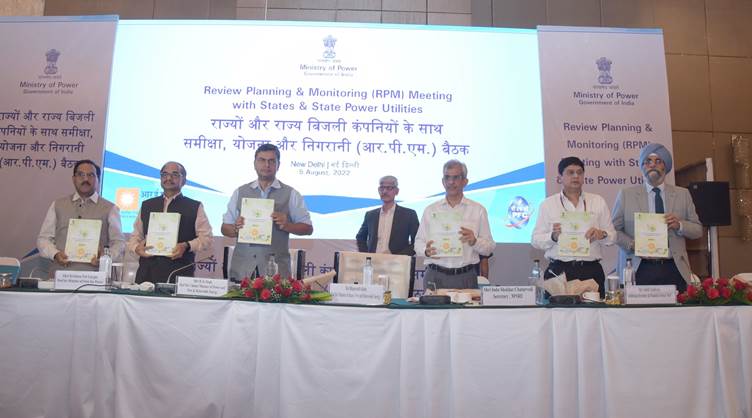
Review Planning & Monitoring (RPM) meeting held with States and State Power Utilities

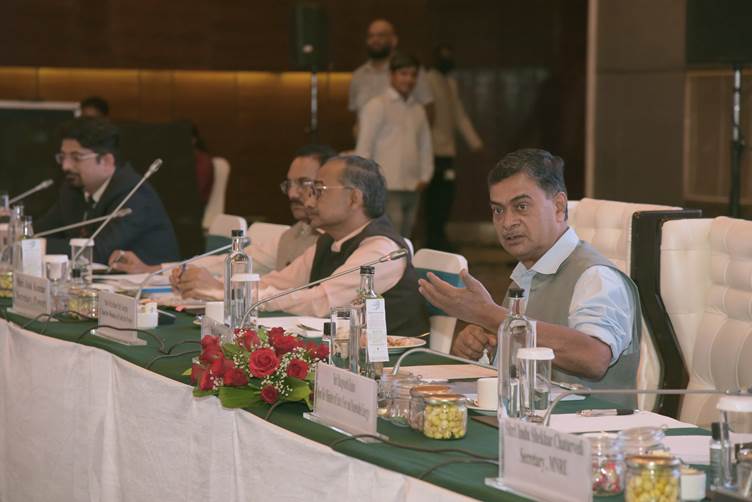
 The Review Planning & Monitoring (RPM) meeting with States and State Power Utilities was held on 05.08.2022 at New Delhi, under the chairmanship of Hon’ble Union Minister of Power and New & Renewable Energy Sh. R. K. Singh in presence of Hon’ble Minister of State for Power and Heavy Industries Shri Krishan Pal Gurjar. Secretary (Power), Secretary (New & Renewable Energy) along with other senior officials from Ministry of Power, Ministry of New & Renewable Energy, Power Sector CPSEs and Power / Energy Departments of various States and State Power Utilities were present in the meeting.

The meeting deliberated on several issues of national importance in the Power Sector with underpinnings of Sectoral viability and Sustainability, building upon Hon’ble Prime Minister’s address on 30th July, 2022 on the occasion of Ujjwal Bharat Ujjwal Bhavishya celebrations. These included liquidation of Government Department electricity dues and subsidy dues; progress on prepaid Smart metering in Government departments; establishing robust systems of Energy accounting and subsidy accounting and timely and advance payments thereof; timely fixation of regular and true-up tariffs; timely finalisation of Utility accounts; Progress of Feeder & DT metering; progress on Revamped Distribution Sector Scheme (RDSS); and compliance in regard to Electricity (Late Payment Surcharge and Related Matters) Rules, 2022.

During the meeting, Hon’ble Union Minister launched the (i) 10th Integrated Rating of Power Distribution Utilities, (ii) 1st Consumer Service Rating of DISCOMs and (iii) Bharat eSmart Mobile Application (BeSMA).

Integrated  Rating  exercise  is  being  carried  out annually since 2012 with the aim of evaluating performance of utilities on a range of parameters covering financial sustainability, performance excellence and external environment and their ability to sustain improvements year over year. The methodology for the rating has been comprehensively reviewed and revised in the current rating exercise, which is the 10th one in the series. The rating now lays a higher emphasis on financial performance, while also assessing operational efficiencies and external ecosystem of DISCOMs. The rating will now be dynamic in nature based on triggers having impact on DISCOM financials. Private DISCOMs and State Power Departments have also been included for comprehensive sectoral coverage. The details can be been accessed at urjadrishti.com.


Taking forward the multiple reform measures centred around ensuring the best-in-class services to electricity consumers across the country, Hon’ble Union Minister also launched the first ever Consumer Service Rating of DISCOMs (CSRD) for the FY 2020-21. The report captures the current status of consumer services across various DISCOMs. It delves into key parameters of consumer services such as operational reliability, connection services, metering, billing and collection services, fault rectification and grievance redressal. The DISCOMs have been rated across various identified parameters on a seven-point scale. The intent is to enable sharing of best practices of top performing DISCOMs as well as to help other DISCOMs in identifying critical areas for enhancing performance. The report is available at recindia.nic.in.

As a step towards enhancing consumer empowerment, a free-to-use Mobile app for prepaid smart meters was also launched for the nationwide rollout of smart metering. This mobile App would build up on the data of the Smart meters and would provide essential information to consumers in regard to their usage and balance electricity remaining, both in terms of Units and Monetary terms. The App would enable consumers to access real time information pertaining to their electricity usage and receive alerts & notifications. The App provides multiple options and gateways like UPI, net banking, credit & debit card etc. for payment and recharge through Mobile phones with ease. This mobile app is aimed at achieving consumer delight by enabling them achieve a command over their electricity usage in almost real time, while also helping them in electricity usage as per their needs, altering consumption behaviour to achieve energy efficiency, as well as help them in lowering their bills. This App would be available to all the Distribution Utilities free of charge once they place a requirement to the Ministry of Power. While the App is amenable to a top level customisation as per specific Utility needs, O&M for 10 years would also be free for the DISCOMs. The mobile app is built on strong security measures and is adequately equipped to protect individual data.


These initiatives would pave the path towards an efficient and sustainable power distribution sector.

****

NG

What is Book Review

 A book review is a form of literary criticism in which a book is merely described or analyzed based on content, style, and merit. A book review may be a primary source, opinion piece, summary review or scholarly review.

Other readers will always be interested in your opinion of the books you’ve read. Whether you’ve loved the book or not, if you give your honest and detailed thoughts then people will find new books that are right for them.

If you’re stuck on what to say in a review, it can help to imagine you’re talking to someone who’s asking you whether they should read the book.

1. Start with a couple of sentences describing what the book is about

But without giving any spoilers or revealing plot twists! As a general rule, try to avoid writing in detail about anything that happens from about the middle of the book onwards. If the book is part of a series, it can be useful to mention this, and whether you think you’d need to have read other books in the series to enjoy this one.

2. Discuss what you particularly liked about the book

Focus on your thoughts and feelings about the story and the way it was told. You could try answering a couple of the following questions:

  • Who was your favourite character, and why?
  • Did the characters feel real to you?
  • Did the story keep you guessing?
  • What was your favourite part of the book, and why?
  • Were certain types of scene written particularly well – for example sad scenes, tense scenes, mysterious ones…?
  • Did the book make you laugh or cry?
  • Did the story grip you and keep you turning the pages?

3. Mention anything you disliked about the book

Talk about why you think it didn’t work for you. For example:

  • Did you wish the ending hadn’t been a cliffhanger because you found it frustrating?
  • Did you find it difficult to care about a main character, and could you work out why?
  • Was the story too scary for your liking, or did it focus on a theme you didn’t find interesting?

4. Round up your review

Summarise some of your thoughts on the book by suggesting the type of reader you’d recommend the book to. For example: younger readers, older readers, fans of relationship drama/mystery stories/comedy. Are there any books or series you would compare it to?

INDIAN CONSTITUTION

INDIAN CONSTITUTION:
The Indian Constitution is the supreme law of India. India, also known as Bharat, is a Union of States. It is a Sovereign Socialist Secular Democratic Republic with a parliamentary system of government. The Republic is governed in terms of the Constitution of India which was adopted by the Constituent Assembly on 26th November, 1949 and came into force on 26th January, 1950. At the time of its adoption, the Constitution contained 395 Articles and 8 Schedules and was about 145,000 words long, making it the longest national Constitution to ever be adopted. Every Article in the Constitution was debated by the members of the Constituent Assembly, who sat for 11 sessions and 167 days to frame the Constitution, over a period of 2 years and 11 months.
The Constitution provides for a Parliamentary form of government which is federal in structure with certain unitary features. The constitutional head of the Executive of the Union is the President. As per Article 79 of the Constitution of India, the council of the Parliament of the Union consists of the President and two Houses known as the Council of States (Rajya Sabha) and the House of the People (Lok Sabha).

Article 74(1) of the Constitution provides that there shall be a Council of Ministers with the Prime Minister as its head to aid and advise the President, who shall exercise his/her functions in accordance to the advice. The real executive power is thus vested in the Council of Ministers with the Prime Minister as its head.
This section contains every Article in the amended Constitution of India (as of 2020), with its corresponding Article in the Draft Constitution of India, 1948. Each Article also contains a summary of the debates on that Article in the Constituent Assembly. The Articles are grouped into 22 different parts, which reflects how they are organized in the text of the Constitution of India, 1950
The Schedules to the Constitution, which are now 12 in number, elaborate on government policy or rules in relation to specific Articles of the Constitution.

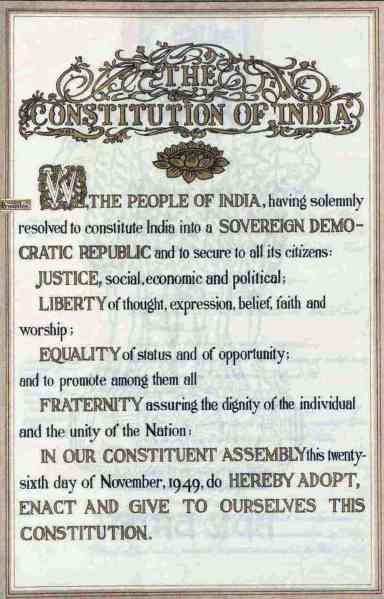
The constitution of India says “THE PEOPLE OF INDIA, having solemnly resolved to constitute India into a SOVEREIGN DEMO

CRATIC REPUBLIC and to secure to all its citizens: JUSTICE, social, economic and political;

LIBERTY of thought, expression, belief, faith and

worship; EQUALITY of status and of opportunity; and to promote among them all FRATERNITY assuring the dignity of the individual and the unity of the Nation;

IN OUR CONSTITUENT ASSEMBLY this twenty sixth day of November, 1949, do HEREBY ADOPT, ENACT AND GIVE TO OURSELVES THIS CONSTITUTION”.

POPULATION AND ITS EXPLOITATION

POPULATION:
Population typically refers to the number of people in a single area, whether it be a city or town, region, country, continent, or the world. A population is the complete set group of individuals, whether that group comprises a nation or a group of people with a common characteristic. In everyday use the word population refers a group of people or a group of living beings.

Population definition in statisticians perspective:
In statistics, a population is the pool of individuals from which a statistical sample is drawn for a study. Thus, any selection of individuals grouped by a common feature can be said to be a population. A sample may also refer to a statistically significant portion of a population, not an entire population. For this reason, a statistical analysis of a sample must report the approximate standard deviation, or standard error, of its results from the entire population. Only an analysis of an entire population would have no standard error.
Statisticians refer to whatever group they are studying as a population. Statisticians and researchers prefer to know the characteristics of every entity in a population to draw the most precise conclusions possible. This is impossible or impractical most of the time, however, since population sets tend to be quite large.
the term world population is often used to refer to the total number of humans currently living, and was estimated to have exceeded 7.9 billion as of November 2021. It took over two million years of human prehistory and history for the human population to reach one billion and only 207 years more to grow to 7 billion.

POPULATION EXPLOSION:
There has been a rapid growth of the human population in the last century due to the difference in the birth rate and the mortality rates. In the next one decade, the population of the world is expected to grow by another billion. The impact of uncontrolled population growth impacts not just a section of the society, but the entire population suffers from its infinite impact on the economy and the environment.

REASON FOR POPULATION EXPLOSION:
The human overpopulation or population explosion is caused when the ecological footprint of humans in a particular region crosses the actual carrying limit of the place with regards to space and the resources available. A place is considered to be overpopulated if the existing population in the area can no longer be maintained due to the constant depletion of the non-renewable resources or the natural resources leading to a degradation of the environment. However, a change in the lifestyle and the consumption and the use of renewable resources can help reverse the effects of population explosion without an actual or substantial decrease in the population.
The population of the world has increased exponentially in the past few decades. Around the year 1810, the population of the world was 1 billion. Just about a century later the population doubled to 2 billion, it increased to 4 billion in the next 45 years (1975) and by January 2019 the current population has reached 7.7 billion. The carrying capacity of the earth is 4 billion to 16 billion. It can be said that population explosion or human overpopulation may have already occurred on the Earth. According to the recent estimates, the world population would have reached somewhere around 10-11 billion between the years 2014 and 2050.

EFFECTS OF POPULATION EXPLOSION:
The effect of population explosion is multi-layered. It not only impacts the environment and the availability of resources but it also impacts the health of individuals within the population.
Natural resources are depleting constantly with the increasing demand and consumption. Fossil fuel which is the primary source of energy that drives the technology-driven world is fast depleting. Which poses a very important question on what do we depend on once this natural resource has exhausted. Although there is growing awareness on the use of renewable energy like biofuels, solar, wind and tidal energy and others there is still a long way to go where these renewable resources can actually replace the use of fossil fuels.
With the increasing population and the rising demand, there is an increased level in the air, water and soil pollution. This is not only impacting the lives of humans but has also affected the lives of many animals resulting in the endangering of many species and the extinction of many. The high levels of pollution have resulted in contamination of water and soil that has rendered many patches of land and water bodies unfit for use. Drinking water is fast becoming inadequate to support the needs of millions of people. With the increase the demand for crops to meet the global food requirements there has been an increase in deforestation to provide for agricultural land. This has led to a significant contraction in the biodiversity of many regions. Deforestation, on the other hand, has serious repercussions on the climatic condition of the planet. It leads to an increased level of carbon dioxide which is one of the contributing factors to global warming.
Apart from the environmental effects there is a huge socio-economic impact as the countries resources become inadequate to support the needs of a growing population. Countries with high population have high unemployment percentages as well which means that a greater number of people live in poverty, incapable to support the needs for sanitation and health care. It not only means malnutrition but it also leads to increased incidences of epidemics and pandemics.
Living conditions become increasingly compact and crowded which is detrimental to a thriving society and good mental health. It breeds crime and antagonism and higher mortality rates. Overpopulation impacts the entire biosphere as it impacts the environment in multiple levels.

CONTROL OF POPULATION:
The most important way to control a steady rise in population is by education and empowerment. The impact of population rise awareness should be created among the people.Awareness about the available sources and its consumption, also its concern about providing a quality life to the current and future generations. Birth control and family planning is the first step that needs to be taken to ensure a gradual decline in the growth rate of the population. About 40% of worldwide pregnancies are unintentional which can be avoided by the use of oral contraceptives or other birth control devices like condoms or intrauterine device. About 350 million women in the developing countries of the world are unaware of birth control options or the possibilities for family planning. Educating these women and making access to the birth control devices affordable can help in not only controlling the population growth but also help to improve the quality of life for these women and their children. Many countries promote small size families limiting the number of children per family to two or fewer. Male sterilization is also promoted to help in birth regulations. This has been made effective in a number of countries and a positive impact has been seen in the growth rate of the population of those countries.
Urbanization is another proposed method to help combat over population. According to the United Nations Human Settlements Program (UN-Habitat), urbanization may be an effective option for controlling the population growth. It suggested that cities tend to concentrate human activity with a limited area thus substantially reducing the breadth of environmental damage that is caused by a growing population. This can be achieved by efficient urban planning and proper maintenance of city services assuring an acceptable quality of life to its dwellers.

CONCLUSION:
The overpopulation may exploit the extraterrestrial settlements or space habitats that could support life forms.It is our responsibility to save,protect and provide our future generations a better life so we need to control the poluation in order to reduce the overusage of resources.

ECONOMIC DEVELOPMENT

What is Economic development? Economic developmentis a process through which the overall education, well-being, health, income and living standards of the general population improves. This is where the economy will gradually grow, change and become advanced.
Economic development is the priority of local, state and federal government as it will lead towards an upgrading in innovation and new ideas, higher literacy rates, creation of jobs, improved environment, creation of higher wealth, labor support and better quality of life.

Development economic is the study of economic development.

Difference between Economic development and Economic Growth

Economic Growth:
Economic Growth is all about expanding the size of the economy bigger.
Here GDP is the sum of all economic activity in a nation over a specific period.

Economic Development:
Economic Development look into how the citizens are affected in a country.Apart from the living standards it also look into the freedom to enjoy their living standards.
Here GDP is divided by the total population.

Important perspectives in Economic development are:
*Average life expectancy
*Education Standards
*Literacy rates
*Environmental standards
*Availability of houses for living and their quality
*Health care. It also includes the number of doctors available and the affordable medicines for their treatments.
Income per capitaEconomic growth is a crucial condition for development. However, just growth is not enough because it cannot guarantee development.
Amartya Kumar Sen, an Indian economist and philosopher, who received the Nobel Memorial Prize in Economic Sciences, once said:
“Economic development is about creating freedom for people and removing obstacles to greater freedom. Greater freedom enables people to choose their own destiny.”
“Obstacles to freedom, and hence to development, include poverty, lack of economic opportunities, corruption, poor governance, lack of education and lack of health.”

Policies of Economic development:
It can be encompass into three major cases:
• Governments undertaking to meet broad economic objectives such as price stability, high employment, and sustainable growth. Such efforts include monetary and fiscal policies, regulation of financial institutions, trade, and tax policies.
• Programs that provide infrastructure and services such as highways, parks, affordable housing, crime prevention, and K–12 education.
• Job creation and retention through specific efforts in business finance, marketing, neighborhood development, workforce development, small business development, business retention and expansion, technology transfer, and real estate development. This third category is a primary focus of economic development professionals.
Contractionary monetary policy is a tool used by central banks to slow down a country’s economic growth. An example would be raising interest rates to decrease lending. In the United States, the use of contractionary monetary policy has increased women’s unemployment.
One growing understanding in economic development is the promotion of regional clusters and a thriving metropolitan economy.
International trade and exchange rates are a key issue in economic development. Currencies are often either under-valued or over-valued, resulting in trade surpluses or deficits. Furthermore, the growth of globalization has linked economic development with trends on international trade and participation in global value chains (GVCs) and international financial markets. The last financial crisis had a huge effect on economies in developing countries. Economist Jayati Ghosh states that it is necessary to make financial markets in developing countries more resilient by providing a variety of financial institutions. This could also add to financial security for small-scale producers .

Organisations of Economic Development:
Economic development has evolved into a professional industry of highly specialized practitioners. The practitioners have two key roles: one is to provide leadership in policy-making, and the other is to administer policy, programs, and projects. Economic development practitioners generally work in public offices on the state, regional, or municipal level, or in public–private partnerships organizations that may be partially funded by local, regional, state, or federal tax money. There are numerous other organizations whose primary function is not economic development that work in partnership with economic developers. They include the news media, foundations, utilities, schools, health care providers, faith-based organizations, and colleges, universities, and other education or research institutions.

Economic Indicators: An economic indicator is a metric used to assess, measure, and evaluate the overall state of health of the macroeconomy. Economic indicators are often collected by a government agency or private business intelligence organization in the form of a census or survey, which is then analyzed further to generate an economic indicator. Financial analysts and investors keep track of macroeconomic indicators because the economy is a source of systematic risk that affects the growth or decline of all industries and companies
Primary Economic Indicator:
Gross Domestic Product (GDP)
The Gross Domestic Product (GDP) is widely accepted as the primary indicator of macroeconomic performance. The GDP, as an absolute value, shows the overall size of an economy, while changes in the GDP, often measured as real growth in GDP, show the overall health of the economy.

Main Indicators of economic development:
1) National Income Index
Economic development takes place if real national income increases over time.
2)Per Capita Income Group
The national income indicator does not reflect the true picture of the development of the economy.
3)Physical Quality of Life Index
In many developing countries despite economic development, no improvement has taken place in the quality of life.
The physical quality of life index into consideration the non-income elements of life.
The country has a high life expectancy, the lowest infant mortality and the highest literacy is considered to be superior to other countries.
This index of development is superior to the per capita income index because it reveals the end result of the use of National Income in the country concerned.
4)Basic Needs Approach
ccording to this indicator of economic development, the development of an economy is judged in terms of the extent to which the basic needs of the masses are satisfied.
The components of basic needs are food, pure drinking water, sanitation, health, and education, etc.
The index of development is useful especially from the common man’s point of view as he is more concerned with his basic needs rather than the total production in the country.
5)Human Development Index: This index of economic development has been prepared by the United Nations called the Human Development Index (HDI).
It consists of per capita income, educational attainment, and life expectancy. The index does not measure the absolute level of human development. It ranks countries in relation to one another.
The index is superior to other indicators of economic growth as it takes into consideration both income and non-income factors.

Indian army

The Indian Army does not need any introduction, we all have love, respect and appreciation for our soldiers and the Indian Army.As we all know that the Indian Army has a long and glorious history, therefore, it is difficult to talk about everything in such a confined space.The Indian Army is a land-based unit, while the Indian Air Force works in air defense and the Indian Navy is a naval unit.Our Indian Army is the second largest army in the world with about 1.23 million personnel on active rolls and another 9.6 lakh in reserves.The Indian Army is primarily responsible for defending the country against land-based attacks.It also helps other agencies to deal with terrorism, to deal with emergency situations in the country and to save people in case of natural disasters like floods, earthquakes etc.The current Chief of Army Staff (COAS) is General Bipin Rawat (as of 2018). As the Indian Army is very large, it is divided into regiments.
Some important regiments are Punjab Regiment, Madras Regiment, Rajputana Rifles, Sikh Regiment etc.It also has its own intelligence unit, abbreviated as “military intelligence” or “MI”.The Indian Army (under British rule) participated in World War I and II before independence. After independence, it has fought several full-fledged wars like Kargil War (1999), Bangladesh Liberation War (1971), India-Pakistan War (1965), Indo-China War (1962) and First Kashmir War (1947).
Apart from these, the Indian Army has also handled some minor conflicts like Siachen struggle (1984), Operation Polo (1948), Indo-China conflict (1967) etc.
There is no doubt that our Indian Army is one of the best armies in the world.

The main role of the Indian Army is to protect our country from external and internal threats, it has proved its subtly many times.It has fought five major wars since independence and has successfully handled many smaller conflicts and won wars even when enemies had better weapons.For example, in 1965 there were Patton tanks (gifted to them by the US) in Pakistan, it was considered invincible at the time.India had nothing that could compete with those Patton tanks, but the Indian Army was able to defeat the Pakistani tanks in the Battle of Asal North.
Hawaldar Abdul Hameed mounted his jeep and destroyed six Pakistani tanks with a rifle in the back and was killed in an attempt to destroy the seventh.
For this he was awarded India’s highest military honor – Paramveer Chakra. It is believed that the Americans came to India to learn the methods and equipment by which their invincible Patton tanks were destroyed.It is believed that India rejected his request.The Indian Army also successfully handled many riots, for example the Godhra riots, 1992 Mumbai riots, 1984 riots etc.It is also currently dealing with terrorism in Jammu and Kashmir and some North Eastern state currently has around 1.23 million people on active rolls, while others have 9.6 lakh rupees.It has also produced many notable sports persons, who have brought it to our country. Some of them are Milkha Singh, Rajyavardhan Rathore, Vijay Kumar, and Major Dhyanchand etc.The Indian Army is one of the best armies in the world. It has the capability to handle any external and internal threat. Overall, we can say that the Indian Army is the soul of our country.


“There will be no withdrawal
without written orders and
these orders shall never be
issued.”

-Field Marshal Sam Manekshaw as core Commander in 1962.

Horticulture

The word horticulture is derived from Latin word -‘ hortus’ meaning garden and ‘ cultura’ meaning culture or growing.

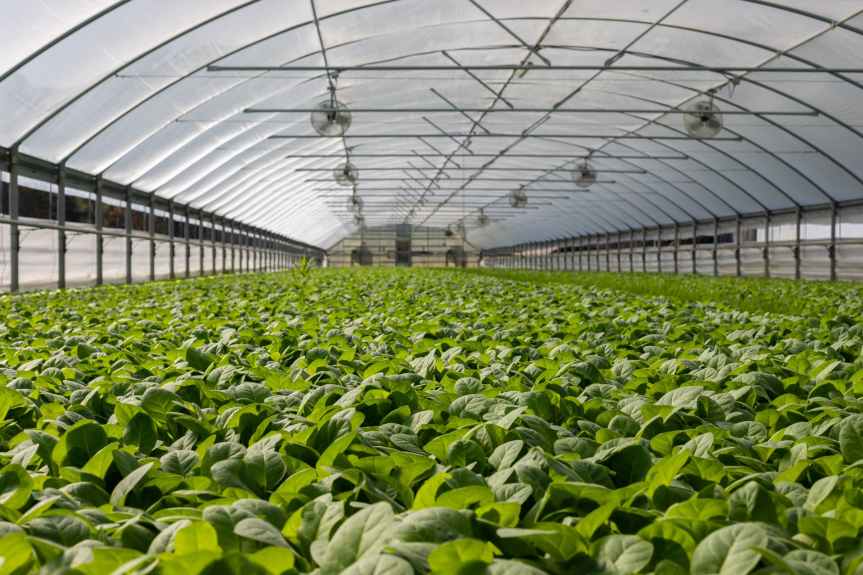
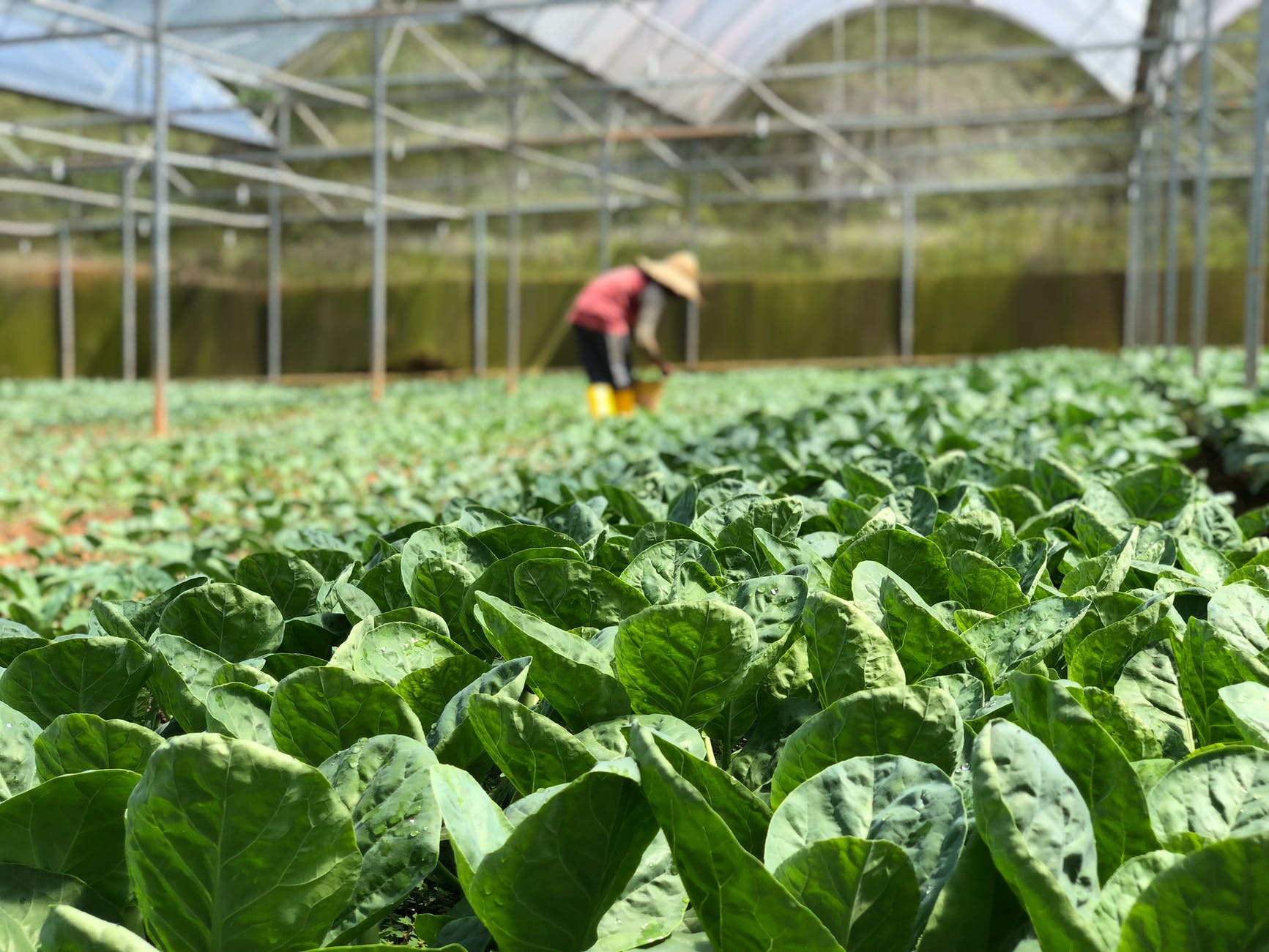
Horticulture is the branch of plant agricultural science involving cultivation of fruits, vegetables, flowers, ornamental plants, medicinal plants, gardening etc. It even involves landscaping and gardening.

It includes components like:

Olericulture : production of vegetables; Pomology: production of fruits ; viticulture: growing of grape vines for wine making and good quality grapes production; Floriculture: production of flowers and ornamental plants; production of aromatic plants, spices, medicinal plants , Arboriculture: cultivation of herbs, shrubs, woody plants for landscape and beautification. It even involves nursery management of plants by using techniques like grafting, cutting, pruning etc, bonsai etc..

Fruits

Scope of horticulture:

It involves propagation of plants, landscaping and garden designing, cultivation of exotic and indigeneous fruits and vegetables, nursery production, topiary { it is an art of training, cutting, trimming trees or shrubs into various shape for ornamental purpose}, growing plantation crops like rubber, tea, coffee, coconut etc, production of spices like black pepper, cardamom, ginger, turmeric etc ,cultivation of aromatic and medicinal plants like patchouli, stevia, aloe vera, tulsi, lemon grass, rosemerry etc. , cultivation of flowers, involves greenhouse cultivation of crops too, bonsai ( Japanese art to cultivate small tree that mimicss large tree) , turf and lawn preparation etc.

Importance of Horticulture:

It helps us to meet the nutritional aspects through consumption of fruits and vegetables.

It provides us medicinal plants, herbs to cure ailments. It too provides spices that adds aroma and flavour.

It increases asthetic value through landscaping and beautification.

Gardening helps us to destress and relax and can be done as a habit too.

Urban gardening through use of nursery and kitchen gardening to meet everyday kitchen needs.

It can be used to beautify our indoor places in house and adds asthetic value to it.

Helps to increase income and generate employment opportunities through value addition and food processing industry.

So, it serves as an all purpose as well as recreational activities in our daily life.

Business Application Software to automate your business.


Many companies use various types of
business application software to automate processes, improve operational
efficiency, and gain actionable insight into front and back office functions.


An Adobe study found that 30% of business
owners adopting automated technology prioritized saving time, and 25% wanted
big data analytics. By saving time on standard procedures, employees can focus
their efforts on more demanding tasks and streamline their workflow. This
increased productivity and access to data reports allows companies to focus on
increasing and expanding their profits.


There are many types of business software,
each offering unique benefits to businesses for improved data management and
access to insights.


Advantages of Business Application Software


business software is used by organizations
to streamline communications, improve workflows, and save time, allowing
employees to invest their skills in more complex projects. The advantages of
using various business application software are as follows-


Quality and Consistency System software ensures that all operations are performed
in a consistent manner, delivering consistent results. As a result,
organizations can ensure workflow consistency and expect the same results every
time. By eliminating the time spent actively monitoring processes,
organizations can focus on more demanding tasks.

Time Savings
By automating repetitive procedures, this software allows employees to
focus their manual work on more complex tasks, reducing time and human error.

Metric Availability This software uses real-time data from various operations.
You can collect this data and generate reports and analytics to monitor key
performance indicators (KPIs).

Optimize Operational Efficiency – Significantly improve operational efficiency by reducing the time,
labor and effort required to perform standard procedures.

Minimized turnaround Times Software solutions ensure consistent results through
automation, process streamlining, and reduced cycle times for employees and
consumers. This drives company growth and employee satisfaction both internally
and externally.

Reduced labor costs – Performing tasks manually can be time consuming, costly, prone to
human error, and often requires additional costs to accommodate discrepancies

Therefore, project management software
allows companies to minimize the resources required to carry out basic
processes.

Types of Business Application Software

Studies show that multitasking is actually
counterproductive to operations and can reduce business productivity by up to 40%.
With an automated operating system, business owners can ensure that their
employees are getting things done efficiently by freeing them up to focus on
more focused tasks, Whatever your organization’s goals,


1. Human Resource
Information System (HRIS)


There is a software solution to streamline
almost any process, including your Human Resources Information System (HRIS).
About a management process that costs companies about $5 trillion a year. HR is
one of the most important departments in any company, so implementing an HR
software program can streamline some office tasks. Recruitment, employee
onboarding, recordkeeping, training, and payroll can all be monitored and
automated via HRIS that processes digital documents.


2. Inventory
Control System

As one standardized business solution, the Inventory
Management System monitors inventory levels, updates, turnover rates and
automates cycle counting. Integrate with inventory systems and replenishment
solutions to view real-time quantities of all items with automatic reorder
points and point-of-sale (POS) systems.

This software application saves time and
money by eliminating the need for staff to manually count, record and verify
inventory at multiple locations. Inventory management solutions can also notify
users immediately if they detect errors or discrepancies, so warehouse managers
can quickly correct the situation.


3. Communication
Software

To properly exchange data, companies need to ensure
that communication works smoothly between all departments and locations.
Web-based e-mail and communication software such as Microsoft Office are
commonly used to enhance information sharing both inside and outside the
company.

However, organizations can also use
cloud-based system integrators to connect all their existing software. This
creates a centralized database where verified users can access reports at any
time and collaborate seamlessly with other departments.


4. Accounting
Software

Accounting Software helps financial advisors monitor
performance by tracking expenses, income and earnings in real time. Up-to-date
information allows accountants to ensure that their books contain relevant data
and keep their business profitable.


5. Service
Management Solution

Customer Relationship Management Systems enhance every
interaction between businesses and consumers, such as, Transactions and
Customer Service. Effective solutions not only improve the customer experience
and save customers time, they also address their concerns in an appropriate and
methodical manner.


6. Reservation
Software

Cloud Computing Appointment System enables
appointment-based businesses such as clinics, salons and restaurants to
integrate in-person and online appointments. By consolidating bookings from all
platforms, businesses can avoid understaffing shifts and overbooking customers,
hurting customer satisfaction and loyalty.


7. Schedule
Management System

State-of-the-art cloud-based management software allows
store managers to access and modify their schedule anytime, anywhere. Some
providers offer web-based interfaces and mobile apps, as well as on-site
monitors that allow management and employees to interact and review shift
changes and vacations. This accessibility allows users to change schedules on
the fly to avoid employee confusion and absenteeism. 
Scheduling software manages work budgets
and salaries, monitors pay cycles and identifies top talent.

8. Demand
Forecasting Software

with the help of POS and inventory systems, demand
forecasting software can examine historical and real-time sales and inventory
data to forecast future customer demand. The data is then automatically
consolidated and generated into detailed reports and analytics to provide
actionable insights. Forecasting allows businesses to prepare for spikes and
slowdowns in demand through proper inventory management, saving inventory and
labor costs.

Regardless of company size or industry,
there are many different types of application software available to meet
different business needs. An automated project management solution saves
organizations time, capital, and effort from standard processes.

3 important railway projects recommended by Network Planning Group

 Network Planning Group constituted under the institutional framework of ‘PM GatiShakti National Master Plan’ has examined and recommended 3 important railway projects on 3rd August, 2022. These are Doubling of Gorakhpur Cantt – Valmikinagar rail line, Katihar – Mukuria and Katihar – Kumedpur Doubling and Pachora – Jamner Gauge Conversion & Extension upto Bodwad. All 3 projects are extremely important with a view to ensure faster movement of goods in the hinterland which will accelerate the logistics efficiency and bring reduction in logistics costs. 

MoR has identified ‘high density network’ of railway lines to achieve target of 3000 million metric tonne of freight movement. As part of that mission, 3 critical important projects have been identified as follows:

I.          Doubling of Gorakhpur Cantt – Valmikinagar rail line :

            To ensure freight flow, particularly food grain movement from western India to North Eastern States, Gorakhpur Cantt – Valmikinagar (95 km.) is an important stretch which was having only single railway line affecting the freight movement. From Valmikinagar  upto Muzaffarpur, work on doubling is already going on. This proposed doubling project with the cost of Rs. 1120 Crore is expected to improve the logistics efficiency significantly. 

II.        Katihar – Mukuria and Katihar – Kumedpur Doubling

 Katihar – Mukuria and Katihar – Kumedpur are extremely busy sections. Currently  this is single line and it is a Rajdhani train route. This is important link to connect  Northeast and also Howrah. Doubling of these sections will significantly help     movement of cargo from Kolkata Port to Virat Nagar. The cost of this project is Rs.942   Crore.

III.       Pachora – Jamner Gauge Conversion & Extension upto Bodwad

            This project is in the State of Maharashtra. Pachora to Jamner Gauge Conversion and extension of railway line of Bodwad. This project would be 84 km. long at an anticipated cost of Rs.955 Crore. This project will provide bye pass double line railway connectivity for Jalgaon and Bhusawal. It will provide faster freight movement from JNPT to Nagpur and eastern region of the country. 

Network Planning Group has recommended all 3 project proposals. The members of the Network Planning Group have further suggested certain components from integrated planning and synchronized implementation concept. M/o Environment, Forests & Climate Change has assured faster clearances. All these projects have been mapped on PM GatiShakti NMP. Through PM GatiShakti NMP it shall be possible to implement these projects in the next five years within estimated cost  

The Network Planning Group has the head of Planning Divisions of the infrastructure Ministries including M/o Railways, MoRTH, Power, MoPNG, MNRE, DoT, MoCA, MoPSW with special representative from NITI Aayog and MoEF&CC. Logistics Division, DPIIT functions as secretariat of PM GatiShakti. 

***

National Intellectual Property (IP) Awards 2021 & 2022 and WIPO Awards

 Applications have been invited for National Intellectual Property (IP) Awards 2021 & 2022 and WIPO Awards in different categories. National Intellectual Property (IP) Awards are conferred to recognize and reward:

The WIPO Global Awards Program recognizes the central role of innovative and creative activities of SMEs and recognizes those that have used IP rights to develop solutions that have made a positive contribution to society, economically, socially, or culturally.

1. Contribution of individuals, companies, R & D Institutions, academic institutions, MSMEs, Start-ups, and organizations for their IP creations and commercialization of IP, which have contributed to harnessing the country’s intellectual capital and creating an IP ecosystem that boosts creativity and innovation and

2.  Law enforcement agency to ensure effective implementation of the IP laws and create a healthy IP ecosystem

Applications are invited for National Intellectual Property (IP) Awards 2021 & 2022 and WIPO Awards in different categories as below: 

  1. Top Indian Individuals for Patents Filing, Grant & Commercialization introducing Child (< 18 years) & Third gender also.
  • Top Indian Academic institution for Patents Filing, Grant & Commercialization
  • Top R & D institution/organization for Patents Filing, Grant & Commercialization
  • Top Public Limited Company / Private Limited Company for Patents Filing, Grant & Commercialization in India
  1. Manufacturing sector
  2. Others
  • Top Indian Private Company (MSME) for Patents Filing, Grant & Commercialization
  • Top Start-up for IP Filing, (Grant/Registration) and Commercialization
  • Top Indian Company /Organization for Designs
  • Top Indian Company for creating Global brands in India & abroad
  • Introducing Most Popular Geographical Indication (GI) in India in each of the five (05) categories by Public Opinion Poll through online voting on the official website
  • Best Police Unit (District / zone in a commissionarate) for enforcement of IP in the Country
  • Best Incubator for Nurturing the IP

Applicants are required to submit details in prescribed application forms available on https://ipindia.gov.in/newsdetail.htm?816/ on or before 31/08/2022 for consideration. The applications shall be sent electronically to the e-mail address: ipawards.ipo[at]gov[dot]in and by post to: Dr. Suneeta Betgeri, Assistant Controller of Patents and Designs, Boudhik Sampada Bhavan, SM Road, Antop Hill, Mumbai-400037 (Phone No: 022-24144127)

Notably, these awards have been given since 2009. The award carries a cash Prize of Rs. One lakh and a citation, which is conferred by the Minister of Commerce and Industry in an event organized by the Office of Controller General of Patents, Designs and Trademarks on the birth anniversary of Late Dr A. P. J. Abdual Kalam, Former President of India on October 15, 2022. 

***

India’s satellite-based navigation system, NavIC, is as good as GPS of the United States

 Government says, India’s satellite-based navigation system, NavIC, is as good as GPS of the United States in terms of position accuracy and availability in its service region.

The Indian Regional Navigation Satellite System, with an operational name of NavIC, is an autonomous regional satellite navigation system that provides accurate real-time positioning and timing services. It covers India and a region extending 1,500 km around it, with plans for further extension.


Replying to a question in the Rajya Sabha, Union Minister of State (Independent Charge) Science & Technology; Minister of State (Independent Charge) Earth Sciences; MoS PMO, Personnel, Public Grievances, Pensions, Atomic Energy and Space, Dr Jitendra Singh said, 

NavIC can help in navigation on land, air, sea and also in disaster management.

NavIC satellites are placed at a higher orbit than the GPS of United States. NavIC satellites are placed in geostationary orbit (GEO) & geosynchronous orbit (GSO) with an altitude of about 36,000 km; GPS satellites are placed in medium earth orbit (MEO) with an altitude of about 20,000 km.

NavIC uses dual frequency bands, which improves accuracy of dual frequency receivers by enabling them to correct atmospheric errors through simultaneous use of two frequencies. It also helps in better reliability and availability because the signal from either frequency can serve the positioning requirement equally well.

At the time of inception, an indigenously developed satellite navigation system was conceptualized to cater to requirements of critical national applications, including those of defence and commercial establishments. Hence the coverage area was designed to cover Indian Territory and surrounding 1500 km of Indian borders. The needs of critical national applications do evolve with time and efforts are continuously made to meet these requirements, including from the point of view of coverage.

Ultimate aim of governance should be to empower the people

 The Vice President, Shri M. Venkaiah Naidu today emphasized that the ultimate aim of governance should be to empower the people and to move towards minimum government, which according to him, will happen only when the last mile has been traversed and the people at the bottom of the pyramid have been reached. He also said that the success of good governance lies in including and making the toiling masses equal stakeholders in the process of development.

Addressing the participants of 48th Advanced Professional Programme in Public Administration (APPPA) conducted by Indian Institute of Public Administration in New Delhi today, the Vice President said that the key to good governance lies in inclusivity, use of technology and maintaining high moral standards. “Technology fosters transparency and hence accountability, which is the basic feature of good governance, while moral standards impart legitimacy,” he added. He hoped that these two together will usher in a new political culture preparing the ground for bringing in transformational reforms.

Underlining that people’s participation is very important for inclusive and responsive governance, Shri Naidu said that reforms are only initiated by the Government but actually bear fruit only when people proactively work for the future of their country. Referring to the ongoing celebrations of Azadi ka Amrit Mahotsav, the Vice President urged every Indian to work with an aim of building a happy, healthy, prosperous and developed nation when we enter the 100th year of our Independence.

Observing that the focus today is shifting from government to governance, the Vice President said that India is on the move, shedding the baggage of its past and embarking on a journey towards hope and the fulfilment of its ultimate destiny which is to lead the world.

On this occasion, Shri Naidu also stressed the need to get out of the colonial mindset and asked the administrators to use people’s language while discharging their official duties. “You should interact with the people in their own language,” he told them. Referring to the adage — ‘service to man is service to God’, the Vice President wanted all officials to make ‘people’s service’ their main motto.

Lauding IIPA’s contribution to national development, Shri Naidu said that he is happy to see IIPA today is adapting itself to the needs of a dynamic and fast changing era, and to the rapidly changing socio-economic milieu. Calling for arresting the trend of falling standards in public life, he wanted the administrators and leaders to set examples in integrity and ethics.

Referring to the concept of Ram-Rajya, so often espoused by Mahatma Gandhi, he said that in Indian tradition, it is a metaphor to define how a well governed welfare state should look like and exhorted the administrators to follow these lofty ideals to build a society free from poverty, discrimination and inequality.