RAMSAY HUNT SYNDROME

Ramsay Hunt Syndrome is neurological disease in which a virus – Varicella Zoster – causes inflammation of the nerves involved in facial movements.

When the nerves get inflamed, they lose their ability to function, leading to temporary facial palsy or paralysis. Facial muscles in the infected person cannot receive necessary signals to function properly. There are 12 cranial nerves in the body. Ramsay Hunt Syndrome is the viral infection impacting the 7th cranial nerve that is involved in facial movements. The inflammation caused by the Varicella Zoster Virus makes the nerve ineffective.

The symptoms include painful, red rash and blisters in and around the ear, and facial paralysis on the same side. Patients also report hearing loss in the ear that has been impacted apart from Tinnitus or ringing sounds. Inability to close the eye causes dryness. A rash on the eardrum, the ear canal and the earlobe. Rashes can also appear inside the mouth, on the tongue. There is hearing loss, vertigo or spinning sensation. It causes weakness of one side of the face and causes difficulty in closing one eye and eating as food falls off from the affected side. There is drooping of the face.

The Varicella Zoster Virus (VZV) is the same virus that causes chickenpox and shingles.
This virus belongs to the Herpesvirus group and can stay in the body as a latent infection.
The virus can stay dormant in a person’s body and can reawaken to attack the nerves.
VZV can get reactivated due to weakening of the immune system. Stress is also considered a trigger, according to some studies, as it depresses the immune system. Some reports also suggest that T-cell dysfunction caused by coronavirus infection can reactivate VZV.

The disease is reversible. Patients get cured within 15 days to three months of starting the treatment.

Organisation of Islamic Cooperation (OIC)

The OIC is the second largest intergovernmental organisation after the United Nations with a membership of 57 states. It is the collective voice of the Muslim world.These are countries with Islam as the state religion, but also those in which Muslims form the majority of the population. Occasionally, members would also be admitted in which Muslims are only a minority but play a significant role for the country.The OIC’s 57 current members are located primarily in North Africa, the Near East, and South Asia. Together they cover an area of 31.66 m km² with a population of about 1.89 bn. This corresponds to about 24.35% of the world’s population.

The organisation of Islamic Cooperation was established by First Islamic Summit Conference held in Morocco in September 1969 , to marshal the Islamic world after an act of arson at the Aqsa Mosque in Jersualem by a 28 year old Australian in 1969.Its headquarters is in Jeddah, Saudi Arabia. The organisation plans to permanently move its headquarters to East Jerusalem once the disputed city is liberated. It aspires to hold Israel accountable for war crimes and violations of international laws.

Objective of the OIC :

The main objective of the Organization of Islamic Cooperation is to promote cooperation between Muslim states in the fields of culture, science, social cooperation and the economy. It endeavors to safeguard and protect the interests of the Muslim world in the spirit of promoting international peace and harmony among various people of the world , prevent growing dissention in muslim societies and work to ensure that member states take united stand at UN General Assembly, Human Rights council and other international fora. An essential part of its work is also the protection of the Islamic faith and the holy sites. It has consultative and cooperative relation with UN and other intergovernmental organisation to protect the interests of Muslims and settle conflicts and disputes involving member states eg. , territorial conflict between Armenia and Azerbaijan.

OIC Functioning :

The membership is to be ratified with full consensus at the OIC’s Council of Foreign Ministers. UN members with a Muslim majority can join the organization. All decision-making in the forum requires a quorum defined by the presence of two-thirds of the member states and complete consensus.In case a consensus cannot be reached, decisions shall be made by a two-thirds majority of members present and voting.The Council of Foreign Ministers is the chief decision-making body and meets annually to decide on how to implement the OIC’s general policies. The OIC is financed by the member states proportionate to their national incomes.Islamic Summit is the supreme authority of the organisation.Convening every three years, Islamic Summit deliberates, takes policy decisions, provides guidance on issues relevant to the organisation and considers issues of concern to the member states.

Status of India’s relationship with OIC as an organisation :

Islam is the second-largest religion in India after Hinduism, with over 200 million Muslims making up approximately 15% of the country’s total population.India has the largest Muslim population outside of Muslim-majority or Islamic states. However, India’s relationship with Pakistan, the latter being an Islamic state, has been riddled with hostilities and armed conflict since the 1947 Partition of India. The poor relationship between the two states has had a direct impact on India–OIC relations due to Pakistan’s status as a founding member of the organization. India has pushed for the OIC to accept it as a member state, arguing that Indian Muslims comprise 11% of the world’s total Muslim population; Pakistan has staunchly opposed the entry of India into the organization.Pakistan has cited its conflict with India over the Kashmir region as the reason for its opposition, and frequently accuses India of perpetrating widespread human rights abuses against Kashmiris in the Indian-administered territory of Jammu and Kashmir, which has witnessed an ongoing militant uprising since the 1980s.The OIC has been urged to press India on the Kashmir dispute, and has faced pushback from Indian officials for occasional references to Jammu and Kashmir as territory that is militarily occupied by India. The Muslim world has largely lent its support to Pakistan over India during any armed conflicts between the two states.

Criticism of the  OIC :

• Prioritise Rights of Muslim Minorities: The OIC had become a premise for ‘window dressing’, more interested in the rights of Muslim minorities in places such as Palestine or Myanmar than the human rights violations of its member states.

• Incompetent at investigating Human Rights Violations: Thebody lacks power and resources to investigate human rights violations or enforce its decisions through signed treaties and declarations.

• Centred around Quranic Values: The organisation is largely restricted toarbitrating in conflicts where both parties are Muslims.This is because the organisation is centred around Quranic values which believes to make it a qualified arbitrator.

• Failed to Establish a Cooperative Venture: The OIC has failed to establish a cooperative venture among its members, who were either capital-rich and labour-scarce countries or manpower-rich and capital scarce.The organization has not evolved to become a significant player either in international politics or in the area of economic cooperation.

Sources : The Hindu, The Indian Express and Drishti IAS

Indian National Space Promotion and Authority Centre (IN-SPACe)

IN-SPACe is an independent nodal agency under the Department of Space to prioritize the launch manifest along with allowing the use of DOS-owned facilities by space activities and NGPEs (Non-Government Private Entities).

Its function is to: encourage, promote and handhold the private sector for their participation in the space sector;
1. To prepare an integrated manifest considering the requirements of ISRO, New Space India Limited (NSIL) and private companies based on priorities and readiness level:-

  • Currently, there are more than 500 private companies which partner with the Indian Space Research Organisation (ISRO) in carrying out various space activities.
  • They provide materials used in manufacturing, mechanical fabrication, electronic fabrication, system development, integration, etc.

2. To work out suitable mechanisms to encourage private companies to offer free sharing of technology, expertise and facilities wherever possible or on a reasonable cost basis:-

  • After these reforms are implemented fully, the role of NSIL would be to build launch vehicles, provide launch services, build satellites, provide space-based services, technology transfers, etc.

3. Allow setting up of facilities within ISRO campuses based on safety norms and feasibility assessment:-

  • The government will allow utilising those infrastructures of ISRO which are otherwise not available elsewhere in India.

4. Permit establishment of facilities, within ISRO premises, based on safety norms and feasibility assessment.

Scientists dicovered “Fast Radio Burst”-

According to radio astronomy, a fast radio burst is transient radio pulse of length ranging from fraction of millisecond to few milliseconds. Astronomers detected a signal from galaxy believed to a nearly 3 billion light years away called fast radio burst. This radio burst is said to be “co-located with compact , persistent radio source with dwarf host galaxy of high specific star- formation”.

It estimate the average FRB releases much energy in millisecond as sun put out in 3 days.The first FRB was discovered by Ducan Loriner and his student David Warkenic in 2007 when they were looking through archieval pulsar survey data, and it is therefore commonly referred to as the Loriner . Only a handful of emissions have been traced to specific areas of the sky, most indicating sources in other galaxies.In 2020, a source within the Milky Way – most likely belonging to a type of neutron star called a magnetar – was confirmed to be a fast radio burst emitter.The flash of radio waves is incredibly bright, if distant, comparable to the power released by hundreds of millions of suns in just a few milliseconds. This intensity suggests powerful objects like black holes and neutron stars could be involved, with highly dense bodies such as magnetars and pulsars as likely culprits.The events were once considered to be largely transient – they seemed to happen once, without obvious signs of a repeat emission. In fact, it was only in 2016 that astronomers found any evidence of multiple bursts from the Locate the perfect prospect with real-time Linked in Sales Navigator.

The events were once considered to be largely transient – they seemed to happen once, without obvious signs of a repeat emission. In fact, it was only in 2016 that astronomers found any evidence of multiple bursts from the same source.A number of ‘repeaters’ have been identified since then, with some researchers venturing that many, if not all FRB sources could routinely emit bursts in sequences too difficult to detect using current instruments. This hypothesis was supported when that a FRB observed three years previously had since repeated faintly on two more recent occasions scientists reported . Shortly after this report, astronomers with the Canadian Hydrogen Intensity Mapping Experiment (CHIME) Collaboration published findings of the first FRB we know of that’s repeating in a distinct pattern. The FRB has a predictable pattern of hourly activity over the course of four days, followed by 12 days of quiet.With much still to learn about FRB, their mechanism is one of the biggest mysteries in modern astronomy.

India-Iran relations

India-Iran ties are shaped around energy, Central Asia and security. These are currently being influenced by hostile relations between the US and Iran. The US has imposed sanctions against Iran in response to the Iranian nuclear program and Iranian support for Hezbollah, Hamas, and Palestine Islamic Jihad, that are considered terrorist organizations by the US. The US has recently imposed sanctions through the Countering America’s Adversaries Through Sanctions Act (CAATSA), which imposes unilateral sanctions against Iran, Russia and North Korea.

Iran’s economy is largely dependent on its oil exports; with the sanctions in place, the country is cut off from its main source of revenue. India has steadily cut imports from Iran as sanctions from the US and other Western countries blocked payment channels and crippled shipment routes. To offset the reduction in Iranian oil imports, India has turned to countries such as Saudi Arabia, Kuwait, Iraq and Azerbaijan, which have sufficient crude capacity to replace Iranian crude oil imports.

Iran is a geopolitical entity in its own right. Iran has borders with a large number of countries that India could not access because of the barrier that Pakistan posed to India’s overland connectivity plans. India’s relationship with Iran has been built carefully and thoughtfully by all past governments as Iran for India is not just an energy supplier from the Persian Gulf regions. Infrastructure building activities in Afghanistan are done with support from Iran. India is worried about the situation in Afghanistan because of the larger national security concern attached to the region : Possibility of dominance by Taliban, Rise of extremist threats to India, Pakistani influence and Strategic encirclement by China. Afghanistan is particularly important for both India and China as there is a possibility of a power vacuum in the country after the US’ withdrawal. So, Iran is vital for India to secure its interest in Afghanistan and Central Asia as it can connect India to these regions.

Iran’s Chabahar port is vital for India’s geopolitical and economic interests in West Asia, Afghanistan and Central Asia, which is a part of India’s extended neighbourhood.The trade and transit corridor allows India to access these regions over land by bypassing Pakistan.The significance of this port has risen in recent years because of China’s bid to increase its influence in India’s immediate and extended neighbourhood via BRI and ‘cheque book’ diplomacy and investments in ports like Gwadar.Chabahar’s location as a gateway to the Indian Ocean makes it ideal and lucrative regional shipping hub.It offers India a geopolitical vantage point from which it can keep an eye on Pakistan’s Gwadar port. Located barely 90 km away, Gwadar port is being developed by China as the pivot of its investment in Pakistan and a key juncture in its ambitious BRI. Iran recently announced that it would initiate work on a crucial rail link between Zahedan and Chabahar Port alone. India had earlier committed to jointly develop the rail track in 2016. Iran justified this move by stating funding delays from India.India’s External Affairs Ministry clarified that it had been left to Tehran to nominate an authorised entity to finalise outstanding issues – technical and financial – after the meeting between two sides in December 2019 to review the railway project.India being kicked out of this important project may be due to India’s close ties with the US and China’s growing influence in Iran, which is facing increasing economic crisis because of sanctions.

India’s relations with Iran are often under duress due to US pressure and sanctions that are blocking legitimate financial highways to and from Iran.India is facing difficulties in balancing its relations with Iran and US as most suppliers for projects in the sanction-hit country fear their names featuring in US blacklists.It is also forced to take sides with the US despite numerous issues because it is facing an almost-war like the situation with China in Ladakh.The US is motivated primarily to protect its own interests in India and India’s neighbourhood, with little to benefit for India.Yet, India seems to be reluctant to improve its ties with Iran after the US’ withdrawal from the nuclear deal. This convinced Iran that India would not collaborate to its needs to counter the US sanctions.This makes an alliance with China more advantageous, though Beijing would not endanger its already tense relations with the US.

Iran knows the risk of close ties with China and is wary about it. However, it has a limited choice as US’ aggressive foreign policies has isolated it from the world and crippled its economy. Iran is against India’s decision to abrogate Article 370 and 35A.It has called on India and Pakistan to show restraint and prevent the killing of innocent Kashmiris, revealing possible close ties between Pakistan and Iran.Iran also voiced against extremist Hindus and their parties during the 2020 Delhi riots.Apart from these issues, Iran also sidelined India’s ONGC from exploration rights at its Farzad B Gas field, stating that it will engage the company at a later date.

As India is treading a fine line in balancing relations with the US, China and Iran while striving to augment its political influence in West Asia, embracing one country over the other is not an option for India.Therefore, a multilateral foreign policy is a way forward.India must retain its involvement in the Chabahar port development because of the geostrategic significance. In the immediate term, India should improve its multi-alignment credentials to absorb investments into the port projects from the public and private sector, boost maritime cooperation among littoral countries to enhance the transit of goods, and foster regional partnership for the Chabahar port development.Based on the mutual geostrategic and energy interests, India could collaborate with Japan under the Asia-Africa Growth Corridor.Japan’s participation would enhance the multilateral characteristics of the transit hub in the region, unlike the China-owned Gwadar port. This will further enhance multilateral investments to solidify regional economic partnerships that enable the sustainability of the port. In conclusion, India-Iran relations are economically and geostrategically important for New Delhi. A new multilateral foreign policy strategy is vital for India to maintain strategic autonomy that favours inclusive growth and national interests.

Sources: The Hindu, The Indian Express , The diplomat and IAS express.

“Rolls-Royce”- The expensive Cars maker

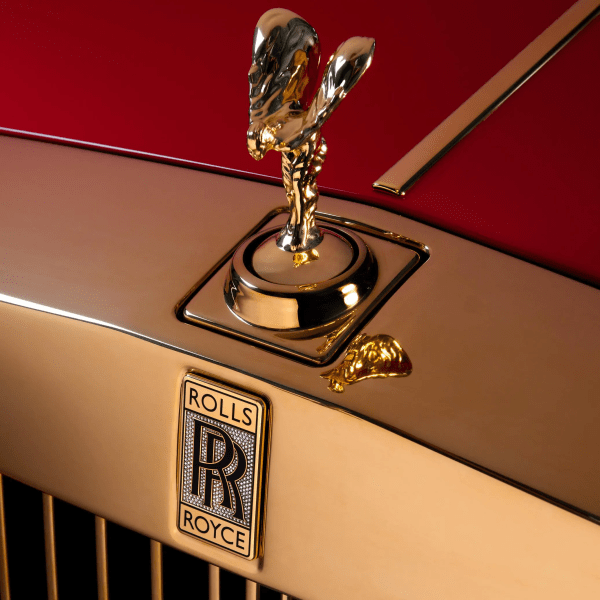
Rolls Royce makes some of the worlds most luxurious and expensive cars, which are known for producing hand crafted automobiles that promises a seamless ” magical carpet ride” for it’s customers. Rolls Royce cars do not come cheap. With virtually unlimited optional extras, upgrades and customizations, the true cost of a bespoke Rolls Royce has no limits. So, what are some of the bespoke extras? And what is it that makes Rolls Royce so expensive?

One of the first thing is probably the color. They have a palette of 44000+ colors. they replicatre peoples lipsticks, something from their house or something they own, something they like, they see. The best example of what they have done is, they have replicated the color of the dog, the shades in it through DNA testing and found the exact same color. Then the color will be registered as the owners color, and if someone wants the same shade, then they should take permission from the owner.

They have a paint service which they call it the surface finish Centre. They provide the car with at least seven layers of coat. there is primers, base coats, colors and they put them on two clear coats of Lacquer.

The coating they provide alone is equating to about 45 kilograms. In addition to the endless variations of color, the customers can infuse their paint with materials to create special effects. The paint work of Rolls Royce car was done by just one person by hand i.e., by Mark Court, Coach liner of Rolls Royce Cars. A Coach liner means, they are able to put the pinstripe onto the side of the car. The uniqueness is, the fact that the person do that with completely free hand and he is the only one in the Rolls Royce who is capable of doing this.

There are several unmistakable features of every Rolls Royce exterior. The handmade pantheon grille, the self righting wheel centers that ensure the RR logo is never rotated and the spirit of Ecstasy ornament . In fact in 2003, BMW paid $65 million to acquire the rights to the Rolls Roycs name, symbol and the spirit of Ecstasy. But it’s inside the car where luxury and cost dramatically increased. To create virtually silent ride, they had approximately 300pounds of acoustic insulation around the cabin. Its tire manufacturer continental, even developed special foam filled tires which reduced the noise of the roads by 9 decibels.

The dashboard of the Rolls Royce phantom can even become a bespoke art gallery. another shining feature is the star light headliner an intricate series of fiber optic roof lights that recreate the night sky.

Also, there are many other features like hand made logo embroidery, starlight designs which make them unique.

What is Cannibalism? Is it still happening?

Did you know that cannibalism used to be a popular medical remedy???

Cannibalism the eating of human flesh by another human being or the act of consuming another individual of the same species as food.

That’s right. In 17th century, Europeans would ingest ground up mummies for headaches, human fat, blood and bones were used to treat everything from Gout to nosebleeds. Yet, cannibalism is largely absent and morally frowned upon today.

Lets forget the social quagmire. there are plenty of reasons why you shouldn’t eat people. For the basics to be touched, we know that human meat is surprisingly low source of calories compared to other red meats.

According to one random study, human muscle contains about 1300 calories per kilogram. That’s less than a beef and nothing compared to Bear and Boar meat. now, people might think that, this would actually make human burgers a great low calorie alternative, untill you remember that you are probably trying to eat humans because you are starving to death. So, low calorie is the opposite of what you want.

It turns out we carry some pretty nasty diseases that make 24hour food poisoning look like the sniffles. eat someone raw and you risk contracting any bloodborne diseases they carry. But even if you cook the meat, it still wont always go so well for you.

case in point are the Fore people of Papua New Guinea. These people would eat the body, brain of the deceased family members out of cultural tradition. But gratefully this practice stopped after hundreds of people died in and around 1950’s and 60’s from an otherwise rare neurological disorder which they’ve contracted from eating the infected human brains.

The brain tissue contained prions, deadly misfolded proteins that form spongy holes in your brain. They survive the cooking process and if eaten are highly contagious. On the legal side of things, cannibalism falls into a gray area. Oddly enough, cannibalism itself isn’t illegal in the US or UK, but you probably committed some crime along the way to get that slab of meat. Grave robbing, desecration of corpse, murder and maybe all. One exception that won’t put you behind the bars is….if you eat yourself. Also, they gave the name for this self eating process too. This auto eating/ self eating process is called, AutoCannibalism. The most common example today is called Placentophagy, is when a women eats her placenta after giving birth . the idea is that it could raise energy levels and reduce the risk of postpartum depression by stabilizing harmones. But it’s still under process, because the science is still out there looking for the actual answers.

But regardless, this ancient practices have found a new life in western culture. Kim Kardashian and Alicia Silverstone have reportedly done it and there are numerous US companies that will grind your placenta into powder, so that you can take it like a vitamin supplement.

So, this is all i know and mostly you should know about Cannibalism

“Education”-A Weapon For Developing Nation

The process of receiving or giving an sysmatic instruction, especially at a school or university. Education originated as transmission of cultural heritage from one generation to the next.

The formal education is usually in school, where a person may learn basic, academic, or trade skills. Small children often attend a nursery or kindergarden but often formal education begins in elementary school & continuous with secondary school.

Types of Education- Formal education- This is also known as formal learning which usually takes place within the premises of the school. It refers to the basic academic knowledge that a child learns in a formal manner.This continues from an elementary school to secondary school and further on to colleges. Such an education is provided by specially qualified teachers who are efficient enough with the art of instruction.The student and the teacher are both aware of the facts and engage themselves through a process of education. Some of the examples formal education are classroom lea Institute grading/certification, or planned education of different subjects with a proper syllabus acquired by attending an institution.

Informal education-This is the type of education wherein a parent is teaching a child things that are beyond academics like preparing a meal or riding a bicycle.People can also get informal education through books or educational websites. This is an education that is not derived in schools through a proper learning method. It is not pre-planned nor deliberate.It is an experience that an individual garners by undergoing regular pra and observing others. Some of the examples may be teaching a child witn some basic personality traits, learning a mother tongue, performing certain extracurricular activities, etc. Non-formal education – It refers to adult basic education, adult literacy education, or skill development. It can take different forms of learning, which is consistently and systematically provided in order to develop a particular skill or ability in an individual.This type of education is highly flexible and includes a wide range of activities. Some of the examples may be fitness programs, community-based adult education courses, and free course different platforms. Splato’s academy, mosaic from Pompeii Education began in prehistory, as adults trained the young in the knowledge and skills deemed necessary in their society. In pre literate societies, this was achieved orally and through imitation. Story-telling passed knowledge, values, and skills from one generation to the next. As cultures began to extend their knowledge beyond skills that could be readily learned through imitation, formal education developed. Schools existed in Egypt at the time of the Middle Kingdom. Matteo Ricci and Xu Guangqi in the Chinese edition of Euclid’s Elements published in 1607.

Chinese edition of Euclid’s Elements published in 1607Plato founded the Academy in Athens, the first institution of higher learning in Europe. The city of Alexandria in Egypt, established in 330 BC, became the successor to Athens as the intellectual cradle of Ancient Greece. There, the great Library of Alexandria was built in the 3rd century BC. European civilizations suffered a collapse of literacy and organization following the fall of Rome in CE 476.In China, Confucius (551-479 BC), of the State of Lu, was the country’s most influential ancient philosopher, whose educational outlook continues to influence the societies of China and neighbours like Korea, Japan, and Vietnam. Confucius gathered disciples and searched in vain for a ruler who would adopt his ideals for good governance, but his Analects were written down by followers and have continued to influence education in East Asia into the modern era. The Aztecs had schools for the noble youths called Calmecac where they would receive rigorous religious and mi The Aztecs had schools for the noble youths called Calmecac where they would receive rigorous religious and military training. The Aztecs also had a well-developed theory about education, which has an equivalent word in Nahuatl called tlacahuapahualiztli. It means “the art of raising or educating a person”,or “the art of strengthening or bringing up men”. This was a broad conceptualization of education, which prescribed that it begins at home, supported by formal schooling, and reinforced by community living. Historians cite that formal education was mandatory for everyone regardless of social class and gender. There was also the word neixtlamachiliztli , which is “the act of giving wisdom to the face. These concepts underscore a complex set of educational practices, which was oriented towards communicating to the next generation the experience and intellectual heritage of the past for the purpose of individual development and his integration into the community.After the Fall of Rome, the Catholic Church became the sole preserver of literate scholarship in Western Eurono.

Elsewhere during the Middle Ages, Islamic science and mathematics flourished under the Islamic caliphate which was established across the Middle East, extending from the Iberian Peninsula in the west to the Indus in the east and to the Almoravid Dynasty and Mali Empire in the south.The Renaissance in Europe ushered in a new age of scientific and intellectual inquiry and appreciation of ancient Greek and Roman civilizations. Around 1450, Johannes Gutenberg developed a printing press, which allowed works of literature to spread more quickly. The European Age of Empires saw European ideas of education in philosophy, religion, arts and sciences spread out across the globe. Missionaries and scholars also brought back new ideas from other civilizations – as with the Jesuit China missions who porgmissio s who played a significant role in the transmission of knowledge, science, and culture between China and Europe, translating works from Europe like Euclid’s Elements for Chinese scholars and the thoughts of Confucius for European audiences. The Enlightenment saw the emergence of a more secular educational outlook in Europe. Much of modern traditional Western and Eastern education is based on the Prussian education system.In most countries today, full-time education, whether at school or otherwise, is compulsory for all children up to a certain age. Due to this the proliferation of compulsory education, combined with population growth, UNESCO has calculated that in the next 30 years more people will receive formal education than in all Education . Importance of Education- It helps a person to get knowledge and improve confidence in life. It can help you improve in your career and your personal growth. An educated person can become a great citizen in society. It helps you to take the right decisions in life.The modern, developed and industrialised world is running on the wheels of education. To be able to survive in the competitive world, we all need education as a torch that leads the way. Mentioned below are the various features of education which outline the importance of education in human life. Safety Against Crime: The chances often educated person getting involved in crime or criminal acts are very low. An educated person is well aware of his/ her surroundings and is less susceptible to getting cheated or be fooled Women Empowerment: The empowerment of women is an essential and important pillar to optimize the good functioning .

Women Empowerment: The empowerment of women is an essential and important pillar to optimize the good functioning of our society and nation as a whole. We can break old customs like child marriage, sati, dowry, etc only by educating the men and women of our nation. The fundamental right of Right to Freedom and Expression can only be achieved if the women of our country are educated and empowered. We can win the fight against the many social evils. Removing Poverty: Education is pivotal in removing our poverty from our society and our country. The clutches of poverty are very harsh and one of the main factors behind all the problems of our society. If a person if well educated, he/she can get a good job and earn money to sustain his/her family Preventing War and Terrorism: Education teaches everyone the importance of peace and Brother, the importance of staving united and Talk to a expert.

Preventing War and Terrorism:Education teaches everyone the importance of peace and brotherhood. The importance of staying united and spreading love is the need of the hour. To achieve world peace and prevent war and terrorism, education is important. Maintaining Law and Order: A good political ideology can only be developed if the citizens of our country are educated and taught the importance of following and respecting the law and order of our country. Law abiding citizens contribute majorly in improving and sustaining the law and order of the country and the world.Importance of Education for a Country below are the reasons why education is important for our country, as well as any country in the world.Citizens of a country understand true potential through the means of Talk to an expert.

Education is always remains the backbone of the nation and the government also made changes in education policy 2020 for development of the country.

Bad Bank

A bad bank is a financial entity set up to buy non performing assets (NPAs), or bad loans, from banks. It is not involved in lending and taking deposits, but helps commercial banks clean up their balance sheets and resolve bad loans.It buys bad debtors of a bank at a mutually agreed value and attempts to recover the debts or associated securities by itself.

The aim of setting up a bad bank is to help ease the burden on banks by taking bad loans off their balance sheets and get them to lend again to customers without constraints. After the purchase of a bad loan from a bank, the bad bank may later try to restructure and sell the NPA to investors who might be interested in purchasing it. A bad bank makes a profit in its operations if it manages to sell the loan at a price higher than what it paid to acquire the loan from a commercial bank. A supposed advantage in setting up a bad bank is that it can help consolidate all bad loans of banks under a single exclusive entity. The one time transfer of assets out of the balance sheets will relieve banks of their assets out of bank’s balance sheets will relieve banks of their stressed assets and allow them to focus on their core business of lending. Banks with clean balance sheets can mobilize fresh capital from the market and improve their credit growth, which is crucial for spurring investments. Bad banks would also give an impetus to India’s economic growth , which has been affected by heightened risk aversion arising from the unbridled growth in NPAs . And the bad bank will unlock trapped capital, which will be a net positive for the economy in the long term. The idea of a bad bank has been tried out in countries such as the U.S.,Germany, Japan and others in the past. Some experts believe that by taking bad loans off banks, a bad bank can free capital of over ₹ 5 lakh crore that is locked in by banks as provisions against these bad loans. This will give banks the freedom to use the freed customers.

It is argued that creating a bad bank is just shifting the problem from one place to another.Without fundamental reforms to solve the NPA problem, the bad bank is likely to become a warehouse for bad loans without any recovery taking place. An important concern is regarding mobilizing capital for the bad bank. In an economy hit by the pandemic, it is hard to find buyers for distressed assets and the Government is also in a tight fiscal position. There is no clear procedure to determine at what price and which loans should be transferred to the bad banks.

Former RBI Governor Raghuram Rajan was cautious about the idea of a bad bank in which banks held a majority stake. In his book ‘I Do What I Do,’ the celebrated economist and banker had pointed out that if a bad bank was in the public sector, the reluctance to act would merely be shifted to the bad bank.

Sources : The Hindu, Drishti IAS , Wikipedia

The Radium Girl- Marie Curie

One of the most recognizable figures in science, “Madame Curie” has captured the public imagination for more than 100 years and inspired generations of women scientists.

Marie Sklodowska Curie (1867–1934) was the first person ever to receive two Nobel Prizes, the first person to win in two different fields. The first in 1903 in physics, shared with Pierre Curie (her husband) and Henri Becquerel for the discovery of the phenomenon of radioactivity, and the second in 1911 in chemistry for the discovery of the radioactive elements polonium and radium.

Curie was best known for her work in radioactivity which had saved a millions of lives during the first world war and ultimately led her own death.

Mary Curie was born in Warsaw, Poland under the control of the Russian Empire on November-07,1867. She was the youngest child of teachers. Her mother, Bronislawa Sklodowska was the head teacher of the prestigious boarding school specially for girls. Her father, Wladyslaw Sklodowski taught physics and Mathematics and was proud of his Polish heritage. As a result of his patriotism, his russian supervisors forced him into lower-paying positions. He also lost his savings through a bad investment

Maria finished her class, but wasn’t allowed to attend university because she was a woman. The Russian empire banned women from getting a university education. She and her sister registered themselves in a secret university named Flying university or Floating university in Warsaw .

She enrolled her in University of Paris known as the Sorbonne, where she studied Physics and mathematics. She earned a degree despite of her difficulties in Mathematics and Physics.

Marie Curie would earn her Doctorate/Doctor of Science degree from the Sorbonne in 1903. She did her thesis on radiation, which was recently discovered in Uranium by henry Becquerel. Curie was interested in Becquerel’s discovery and investigated further. She used an electrometer invented by her husband and his brother to measure radioactivity in many substances and minerals. She then realized through her experiments that, radiation was a property of the element in uranium, yet she observed the mineral pitchblende which primarily contains Uranium. She noticed it was far more radioactive than Uranium could explain. She was intrigued about the self questions and then he dropped of his own work and join his wife in her research. they grounded up tons of pitchblende and discovered an element that was 400times more radioactive than uranium, and then they named the element after her country of birth as polonium and then they discovered another element that gave off 900times more radiation than polonium and then came into the picture “RADIUM”– the unglamorous work of extracting and isolating the elements took place in a leaky and drafty shack near Pierre’s work as they didn’t have a dedicated lab space.

Their efforts got paid off. The Nobel prize in Physics in 1903 went to Marie, Piere and Becquerel for their research in radiation. This left a mark as Marie Curie was the first woman to win the Nobel Prize.

The origin of “monkey pox”-

The monkeypox is a rare and dangerous viral disease which is found in Europe and US, has raised red flags in several countries. It is rare, usually mild infection as it is contaminated from infected wild animals in Africa.

It was discovered in 1958 when two- pox like outbreaks occurred in colonies of monkey kept for research, thus leading in its name says US centres for disease controla and prevention (CDC).

It is caused by monkeypox virsuses, a type of orthopoxvirus.One of two types in humans the one is African type causes a less severe disease than central African type.This may be spread from handling bushmeat, animal bites or scratches, body fluids, contaminated objects or other than less contact with infected persons.

Symptoms-. It includes headache, muscle pains ,fever and fatigue.It may intially appar like flu.

It can resemble an chickenpox, measles and smallpox, but it is distinguished by presence of swollen glands.

They appear behind the ear, below the jaw, in neck or in groin before onset of rash.

Many cases in 2022 monkeypox an outbreak presented with genital and penianal lesions, fever , swollen lymph.

How To Prevent-

Smallpox vaccine has been reported to reduce risk of monkeypox among previously vaccinated person in Africa.

The (CDC) recommends that person who investigating monkeypox outbreak and involved in caring for infected persons should receive smallpox vaccination.

The (CDC) does not recommends pre- exposure vaccination for unexposed veterinarian, veterinary staff, or animal control officers.

The( CDC) recommends that healthcare providers done a full set of personal protective equipment.

The disease is rare and dangerous so the people must be aware of the infection and should be vaccinated timely to avoid the chance to get infected.

Does language affect thought?

What is language? Linguists, psycholinguists, neurologists, evolutionary biologists, and philosophers have all tried to answer this question. ‘Language’ is often used interchangeably with ‘communication’, but they are not the same. Animals can communicate with each other, but they can’t be said to have language. Language, especially human language is unique and radically different from other types of tools of communication because of its immense vocabulary, ordered structure, use of metaphor and analogy, and syntactic flexibility. Human language can, thus, be broadly defined as an amalgam of lexicon, syntax, and semantics. Our identity is influenced by the language we speak. Identity can be broadly classified into ‘personal’ and ‘collective’ identity. Personal identity is, basically, a definition of yourself, and collective identity is how you define yourself in relation to others. Our identity is defined by myriad factors such as our beliefs, cognition, perception, culture, and tradition. The language we speak influences these factors and thus influences and cultivates our personal and collective identity.

Language affects the way we think. There is a hypothesis in linguistics known as linguistic relativity, also known as the Sapir-Whorf or the Whorf hypothesis. It concerns the relationship between language and thought. According to the Whorfian hypothesis, the language one speaks influences one’s cognition and perception of the world and thus people’s perception is relative to their spoken language. Nuances and idiosyncrasies in our language affect the way we communicate with and perceive the world, thus influencing our perception and cognition. There is empirical evidence available that establishes a link between language and thought, for example, the study of Chinese bilinguals and dialectical thinking. Eastern cultures and languages are proven to promote dialectical thinking. A group of researchers conducted a study in 2013 to see if Chinese bilinguals displayed different levels of dialectical thinking when communicating in different languages. The study concluded that the Chinese bilinguals displayed higher levels of dialectical thinking when primed by the Chinese language than with the English language (Chen et al., 2013).

The study regarding the gender of words and their effect on the speaker’s perception and cognition also helps establish a link between language and thought. The study conducted in 2003 asked German and Spanish speakers to describe objects that have opposite gender assignments in those 2 languages. When the speakers were asked to describe a “key” which is masculine in German and feminine in Spanish, German speakers used words like “hard”, “jagged”, “heavy” whereas Spanish speakers used words like “delicate”, “intricate”, and “lovely”. When asked to describe a “bridge”, feminine in German and masculine in Spanish, German speakers used words like “elegant” and “fragile” whereas Spanish speakers used “strong” and “sturdy” (Boroditsky 6).

These studies, to some extent, prove the Whorfian hypothesis. We think in our primary language, and we alter our thinking to fit our language. We can think without language, but we need language to know that we are thinking. Language thus influences our cognition and thought processes.

Language affects the way we perceive the world. Perception is subjective. The same objects evoke different meanings for different people and thus the way we experience the environment around us also differs from person to person due to different individual values, beliefs, culture, and language. Lera Boroditsky’s work with the Pormpuraaw community shows how language can influence a person’s perception of the world. The pormpuraaw community of aboriginal Australia think about time and space very differently. Their language does not use relative spatial terms like ‘left’ and ‘right’ but instead uses absolute directional terms like ‘north’, ‘south’, ‘south-east’. When asked to arrange cards that depicted temporal progression in the correct order, the Pormpuraawans sometimes arranged the cards from right to left and sometimes left to right. Their decision was not random but was instead dependent on their spatial orientation. If they were facing south the cards would be arranged from left to right and when facing east the cards would come towards the body and so on, thus always arranging the cards from east to west. The Pormpuraawans superior knowledge of spatial orientation stems from their immense vocabulary dedicated to describing time and space (Boroditsky and Gaby, 2010).

Another study was conducted in 2007 that establishes a link between language and perception. The study tested Russian speakers and English speakers on their ability to discriminate between different shades of blue. The result of the 2007 study indicated that the Russian speakers were faster to discriminate between the 2 shades of blue than the English speakers because the Russian language describes a clear distinction between light blue and dark blue unlike the English language (Winawer et al., 2007).

Thus, a person’s language can immensely influence how he views objects, colours, and even fundamental concepts like time and space.

Language is a carrier of culture and tradition. You communicate through language and when you communicate you pass and receive information that reflects your upbringing, your culture, history, and tradition. In a community, the history and culture of that community are passed down generation after generation through a shared language. This fact makes the task of preserving and saving language even more cardinal. When a language dies, it’s not just mere words that go out of existence. The history, heritage, tradition, and culture attached to that language also cease to exist. The Mahabharata and Ramayana were oral stories before they were written, same with the Iliad and Odyssey. The accumulated body of knowledge of a community dies when its language dies. If you lose your language, you also lose a sense of your personal and collective identity because “language carries culture, and culture carries the entire body of values by which we come to perceive ourselves and our place in the world” (Thiong’O, 118).

Humans are social creatures. We have an innate need to communicate with others and it is through communication that we come to define ourselves, our personal identity, and our place in the world, our collective identity. Language is located at the epicentre of our identity as it is through language we communicate with others. Our attachment to language thus cultivates our identities. Our personality, our individuality, our ego, and our existence are defined by the mere words we utter.

Works cited

Chen, Sylvia Xiaohua, et al. “Does Language Affect Personality Perception? A Functional Approach to Testing the Whorfian Hypothesis.” Journal of Personality, vol. 82, no. 2, 2013, pp. 130–43. Crossref, doi:10.1111/jopy.12040.

Boroditsky, Lera. “HOW DOES OUR LANGUAGE SHAPE THE WAY WE THINK? | Edge.Org.” Edge, 09–11-06, http://www.edge.org/conversation/lera_boroditsky-how-does-our-language-shape-the-way-we-think.

Boroditsky, Lera & Gaby, Alice. (2010). Remembrances of Times East. Psychological science. 21. 1635-9. 10.1177/0956797610386621.

Winawer, J., et al. “Russian Blues Reveal Effects of Language on Color Discrimination.” Proceedings of the National Academy of Sciences, vol. 104, no. 19, 2007, pp. 7780–85. Crossref, doi:10.1073/pnas.0701644104.

Thiong’O, Wa Ngugi. “The Language of African Literature.” Decolonising the Mind: The Politics of Language in African Literature, James Currey Ltd / Heinemann, 2011, pp. 109–27.


CAG : Chief guardian of public purse

The Comptroller and Auditor General of India is the Constitutional and Independent Authority in India, established under Article 148 of the Constitution of India.
He is the head of the Indian audit as they are authorized to audit all receipts and expenditure of government of India and state governments,including those of autonomous bodies and corporations substantially financed by the Government. 
They are entitled to audit the Consolidated fund of India, Contengency fund of India and public account so it is said to be chief guardian of public purse.

CAG is appointed by the President by warrant under his  hand and seal and provided with tenure of 6 years or 65 years of age,  whichever is earlier. They can’t be appointed twice.
CAG can be removed by  the President only in accordance with the procedure mentioned in the Constitution that is the manner same as removal of a Supreme Court Judge.
He is ineligible to hold any office, either under the Government of India  or of any state,once he retires/resigns as a CAG.

As per the provisions of the constitution, the CAG’s (DPC) (Duties, Powers and Conditions of Service) Act, 1971 was enacted. As per the various provisions, the duties of the CAG include the audit of:
• Receipts and expenditure from the Consolidated Fund of India and of the State and Union Territory having legislative assembly.
• Trading, manufacturing, profit and loss accounts and balance sheets, and other subsidiary accounts kept in any Government department; Accounts of stores and stock kept in Government offices or departments.
• Government companies as per the provisions of the Companies Act, 2009 Corporations established by or under laws made by Parliament in accordance with the provisions of the respective legislation.
• Authorities and bodies substantially financed from the Consolidated Funds of the Union and State Governments. Anybody or authority even though not substantially financed from the Consolidated Fund, the audit of which may be entrusted to the CAG.
• Grants and loans given by Government to bodies and authorities for specific purposes.
• Entrusted audits e.g. those of Panchayati Raj Institutions and Urban Local Bodies under Technical Guidance & Support (TGS)

.Limitations of CAG :
• The CAG officials only see accounts that government departments want them to see.
• The CAG cannot call for particulars of expenditure incurred by the executive agencies but has to accept a certificate from the competent administrative authority that the expenditure has been so incurred under his authority.
• The CAG officials are often under pressure of time and the concerned officers says the related files are lost.

The solution to the problem is to digitize the receipts and expenditure to be audited, make government accountable for transparency and CAG get as much time as needed to make adequate audit report.

Sources : The Hindu, Wikipedia

“I am of the opinion that this dignitary or officer is probably the most important officer in the Constitution of India. He is the one man who is going to see that the expenses voted by Parliament are not exceeded, or varied from what has been laid down by Parliament in the Appropriation Act.” — Dr. B.R Ambedkar

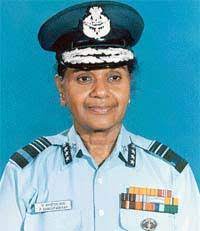
India’s First women Air Marshal- Padma Bandopadhyay

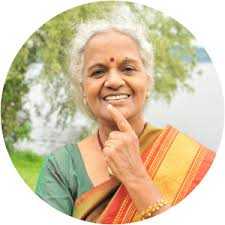
Padmavathy Subramaniam Iyer, popularly known as Padma Bandopadhyay, was born in November 1944 (77 years old as of 2021) in Tripathi, Andhra Pradesh, to a Tamil-speaking family.

She was at the age of three when her mother got Tuberculosis. Her father worked to support his family. At an early age she started doing household work. She learned to cook rice, fetch water and clean. After some years, her mother got fully recovered from severe Tuberculosis. From that, Padma got inspiration to become a medical doctor.

She studied at Delhi Tamil Education Association Senior Secondary Schools in the humanities stream. After graduating from school, she made the difficult and uncommon transition from humanities to the science stream in Delhi University. She studied pre-medical at Kirori Mal College and then joined the Armed Forces Medical College, Pune, in 1963.

She joined Indian Air Force in 1968. Bandopadhyay was promoted to Wing Commander, and was posted to DIPAS (Defence Institute of Physiology & Allied Sciences ), where she did outstanding research work in high altitude. She helped produce the new acclimatisation program for Indian Soldiers at high altitudes. And developed precautionary steps to High Altitude Pulmonary Oedema (HAPO) and High Altitude Cerebral Oedema (HACO).

She is the first Indian female to have administered scientific study at the North Pole.
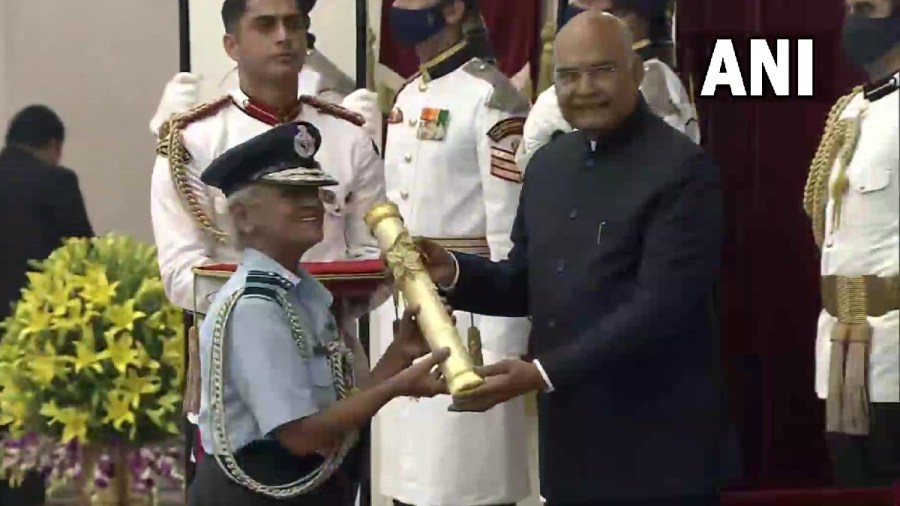
On her arrival in India, she received the Indira Priyadarshini Award for being an outstanding lady with so many accomplishments to her name. This was a first for any lady in uniform. She was bestowed the Air Force Wives Welfare Association Trophy by AFWWA. Promoted to become the First Lady Air Vice Marshal of the Indian Air Force, she was the first of all the Air Forces of the world. Padma also took over as the Additional Director General Armed Forces Medical Services. Padmavathy also became the first Lady Director General Medical Services of the forces.

A ” Palace of Winds”

Hawa Mahal was built by Maharaja Sawai Pratap Singh which was located in heart of the pink city of jaipur, rajasthan.This beautiful pink structure is predominantly a high screen wall made up of pink and red sandstone that denotes to a royal women to get an eyeful of street festivals and busy. It was built in 1979 as he was so impressed with the khetri mahal built in the town of jhunjhuna, rajasthan that he embarked constructing Hawa Mahal. It is extention of royal City palace and leads to Zenana or woman’s chambers to facilitate royal rajput woman.

Intersting Facts You Must Know About Hawa Mahal- Hawa Mahal has about 953 windows which keep the palace cool. All the Jaipur royals utilized this building as their summer retreat.The building was specially erected for the royal ladies of Jaipur.The meaningful purpose of this building was to allow Royal ladies watch the street festivals.

There is no front entrance to the Hawa Mahal. If you want to get in, you have to enter from the rear side.The Hawa Mahal has only ramps, instead of regular stairs to reach the upper floors of the building. In the present day, the “Hawa Mahal” has become a famous tourist spot and one of the spectacular sights in Jaipur.The palace has become a famous spot for the shooting of several Indian and international films.Architecture Famous for its Architectural facts “Hawa Mahal” was designed like a beehive.

As Hawa Mahal has its own significance and it is shown that how royal woman is lived in ” purdah”.