SALIENT FEATURES OF INDIAN SOCIETY,DIVERSITY OF INDIA

Indian society is a pluralistic society with a complex social order characterized by a multitude of ethnic, linguistic, religious, and caste divisions. It comprises people living in rural, urban, tribal setting and all sections which carry the ethos of Indianness.Amid the complexities and so much diversity among the nation, widely accepted cultural themes, the feeling of oneness, brotherhood, and values of constitution binds individuals and enhance social harmony and order.

MEANING OF SOCIETY-

Sociologist Peter L. Berger defines society as “a human product, and nothing but a human product, that yet continuously acts upon its producers.”It consists of groups of human beings who are linked together utilizing specific systems and customs, rites, and laws and have a collective social existence.

INDIAN SOCIETY AND ITS FEATURES-

1). Indian culture has been modified continuously, with times making India a composite culture.

2).Indian society was a stratified society from ancient times.The division of society into Aryans and non-Aryans was mentioned in Rig Veda. The Aryan society was further divided into four groups based on the pursuit of occupations.

3). The confrontation of Hindu and Muslim culture led to a synthesis with interesting results and mixed culture as a result of Sufi writings, the bhakti movement, Kabir Panth.

4).India today (after independence) amalgamated different caste groups religions, race tribes, linguistic groups. It glorifies the ideals of liberty, equality, fraternity as its goals in a secular, socialistic framework.

SALIENT FEATURES OF INDIAN SOCIETY-

1). Multi-Ethnic Society

An ethnic group or ethnicity is a category of people who identify with each other, usually based on a common language or dialect, history, society, culture or nation.A society with the co-existence of a wide variety of racial groups is a Multi-ethnic society. India is home to almost all racial profiles.

2). Patriarchal Society

Patriarchy is a social system in which men hold primary power and enjoy greater status than women.In this system, men make all decisions in both society and their family unit, hold all positions of power and authority and are considered superior.

3). Family-

The family forms the basic unit of social organization.It is the most immediate group a child is exposed It is in the family a child learns language, the behavioural patterns, and social norms in his childhood.

Family is a basic, definite, and enduringFamily is formed by the companionship of the husband, the wife who procreate children.

DIVERSITY-

Diversity is differences in racial and ethnic, socioeconomic, geographic, and academic/professional backgrounds. People with different opinions, backgrounds (degrees and social experience), religious beliefs, political beliefs, sexual orientations, heritage, and life experience.

India is the oldest civilization in the entire world. In this long journey of 5000 years, we were ruled by many rulers, belonging to different religions and cultures. Further, a lot of people migrated from other countries, and India accepted them with open hearts. Due to this exchange, we can observe a lot of diversity in terms of religion, culture, race, and religion in our country. However, despite all these diversities, India remained united even in dark hours and faced all the crises with a united spirit. The thread which binds all Indians together is known as “Unity among diversity”. In this article, we will explore the meaning of Unity in diversity in India, the types of diversity in India, what is diversity, provisions of unity in the constitution, its importance and the hurdle in achieving unity.

The unity in diversity is defined as the spirit of brotherhood without any discrimination.The term “Unity in diversity” implies the feeling of oneness or togetherness even after having a lot of diversity. Its spirit unites the people together and this bond shows the path of righteousness. This Diversity can be in the form of religion, colour, caste, creed, cultural practices, etc. In our country, these diversified traits are not seen as a conflict, but they are the varieties that enrich our society and the nation. It is used as a symbol of harmony and unity among people belonging to different religions or cultural backgrounds.
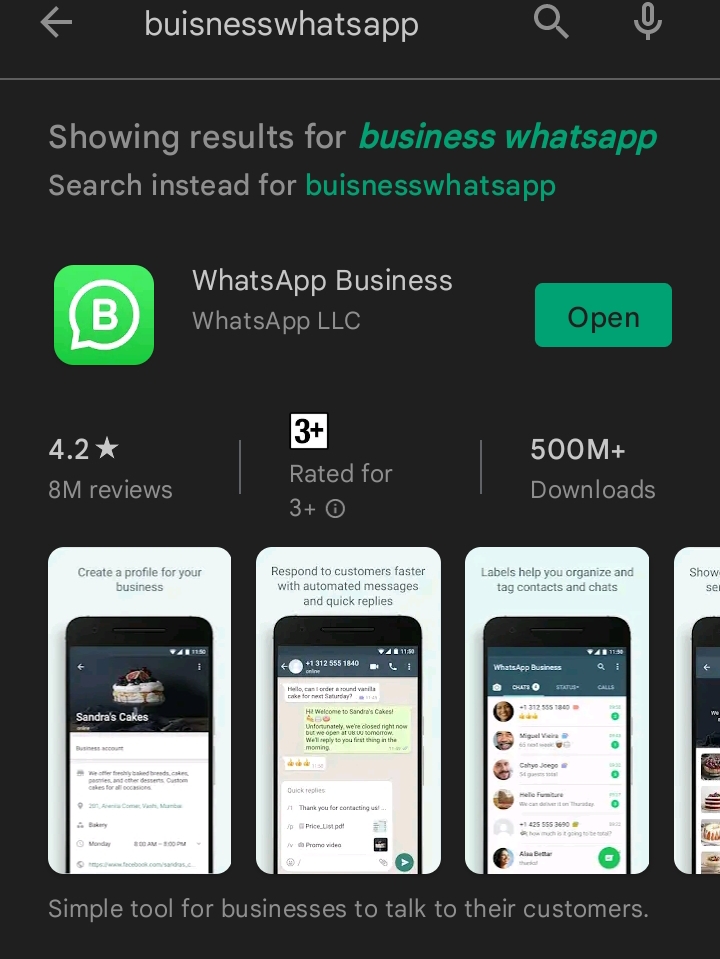
Features of buisness watsapp

watsapp which well known to people of all generations including kids,now a days it is main source of communication or intraction between people’s.

Now a days buisness are going online so meta company also introduced a best application for buisiness it is watsapp buisines, although everyone who are reading this blog are familiar with this application but please spend some of your valuable time in reading this in which we know best updated buisines watsapp Together with WhatsApp chatbot, WhatsApp Business is a very powerful tool for commerce. Thanks to many new features that the platform keeps on releasing, WhatsApp is becoming a great retail place, especially during remote times. Even if you are not going to build a WhatsApp chatbot, there

Let’s look closer at WhatsApp Business app features that you might enjoy as much as we do:

1. Business Profile
2. Quick Replies
3. Automatic Greeting Message
4. Automatic Away Message
5. Contacts Labels
6. Message Statistics
7. Catalogs

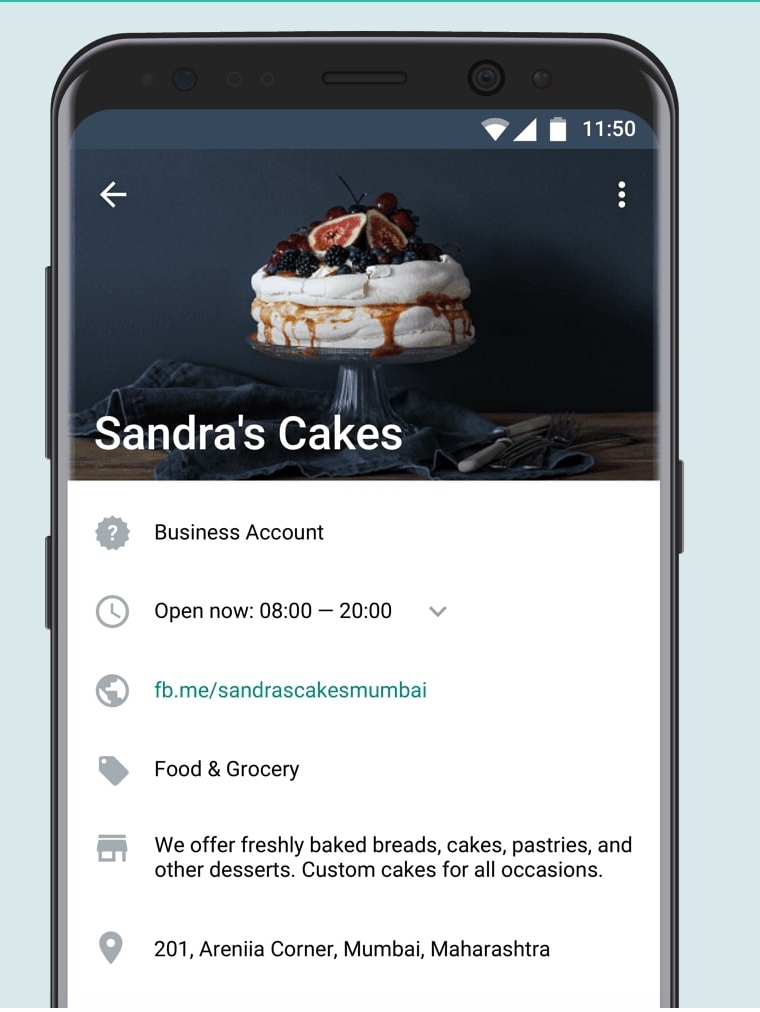
1.Business Profile

Create a business profile with helpful information for your customers, like your address, business description, email address, and website. Business accounts help brands to gain a user’s loyalty. A business profile gives the company a familiar “face” and identity. To have a “Verified” badge next to your company name, WhatsApp has to confirm that this is a verified business account.

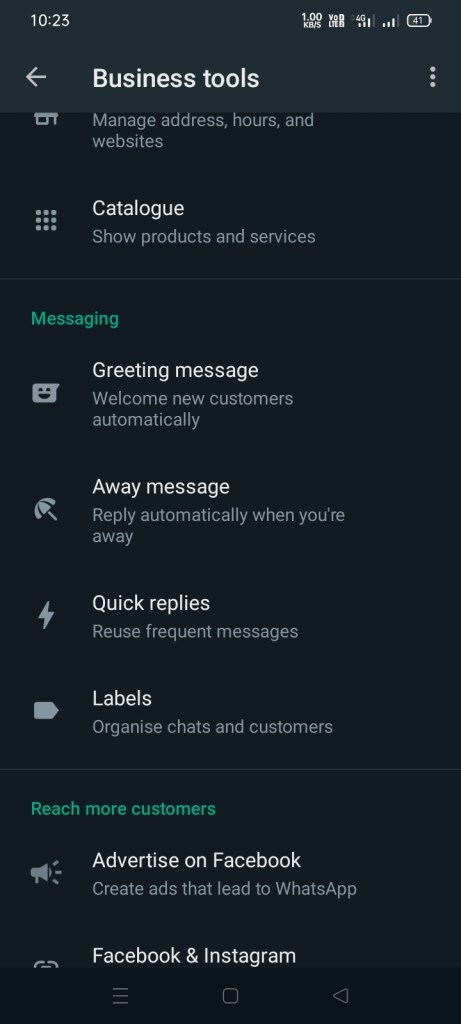
Steps to add details about your business: Go to WhatsApp Business app – Open Settings > Business settings > Profile.

3.Quick Reply

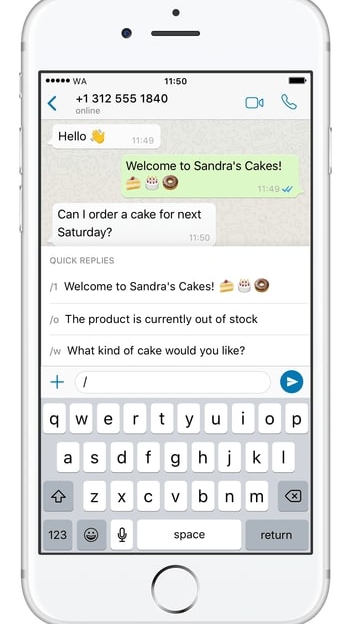
These are frequent messages to answer common questions. Quick replies let you save and reuse messages you frequently send so you can easily answer common questions in no time. Simply press the “/” on your keyboard to select a quick reply and send.

3.Automatic Greeting Message

WhatsApp for business enables you to create a greeting message that users will receive when they start a dialog with your company or after 14 days of inactivity. By sending an instant message, you welcome and introduce a company to a new potential customer with no delays and waiting time.

Steps to set up a greeting message: Settings > Business settings > Greeting message. From here, you can create a new greeting message or edit an existing one.

4.Setting Away Message

Away messages are like greeting messages. They send a custom message to people who are trying to connect with the company after your working hours. You can write a custom message or send your working hours. You can set up for them to activate at the chosen time.

Steps to set up an away message: Settings > Business settings > Away message > “Activate away message                                     

You can also edit your away message from here and schedule when you want to send this message. You can choose from Always send, Custom schedule, or after your work hours

5.Label Contacts

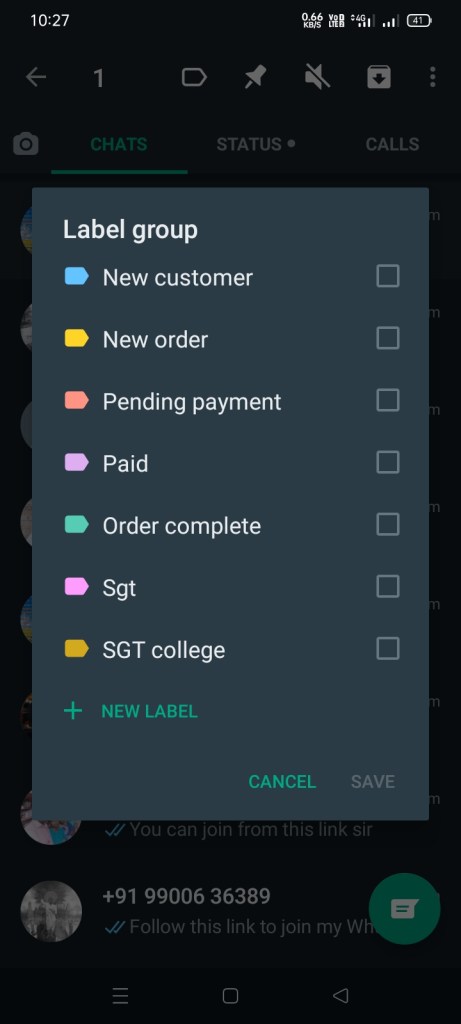
Businesses can organize their contacts and categorize them with labels for easy access. This way, you can easily search through your contacts and keep them grouped and organized.

Steps to add a label to a new contact: Click the menu button on the client’s chat page > choose a label and then save.

Steps to add a new label: Click the menu button on the client’s chat page > click “ New label” > click save

6.Access Message Statistics

WhatsApp for Business lets you access vital metrics like how many of your messages were sent, delivered, and read.

Steps to access statistics: Tap the Menu button > Settings > Business Settings > Statistics

7.Catalogs and Collections

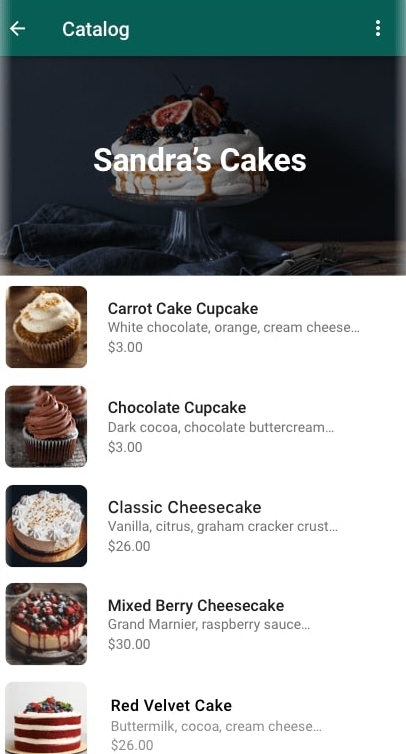
The other feature that will be beneficial for your business is Catalogs. They look like this:

Catalogue for bakery

For each item in your catalog, you can add information, including price, description, and product code. This is so much easier for your customers than having to ask you about each item separately or go from WhatsApp to the website.

In October 2021, WhatsApp added Collections to make shopping even easier. They will act as folders to group items inside a business account. Users can navigate to the category they’re looking for right away without scrolling through the whole product list.Once added, you’re free to modify the Collection just like items to keep the information up to date.

Pro Tip: think of collections as categories on ecommerce websites. “Last chance” or “Sale” could be as converting in WhatsApp as they are on the website. Using these on WhatsApp Business account means providing similar well-paved shopping experience.

@channa2021

Thank you for reading this blog i believe this is helpful to you

DO YOU WHAT IS ZOOLOGY?

Zoology, the branch of biology that studies animals, seeks to understand the sum total of all the properties of animals and animal populations. As a discipline, zoology is similar to others with major subdivisions that include anatomy, physiology, genetics, and interrelation.

JOB FOR AN ZOOLOGY STUDENT:

Photo by David Selbert on Pexels.com

Academic researcherAnimal nutritionistEcologistEnvironmental consultantEnvironmental education officerHigher education lecturerMarine scientistNature conservation officerScience writerZookeeperZoologist

Animal physiotherapist

Environmental managerField trials officerMarine biologistResearch scientist (life sciences)

Toxicologist

Veterinary nurse

Veterinary surgeon

•Not only by studying the subject of zoology make us a zoologist, we have work on that field study about animals and their behaviour, go for the internships Learn how to work gain advance knowledge make us a good zoologist.

How Traditional Publication and Self Publication Differs

The business world is continuously evolving, with competition increasing each day. Advancements in technology trigger market change more frequently than ever. This results in milestone evolutions of business strategies. Most companies spend a huge amount of funds on staying updated with these changes.  

Source: https://pixabay.com/it/photos/libro-business-college-concept-4966982/

But what about unconventional businesses like a mystery room Bangalore or a luxury thrift shop in LA? How do they prosper and expand their circles without the backing of huge investments? Finding out the right marketing channels for unconventional businesses can often be quite challenging. But provided companies can figure out suitable strategies, spreading their business globally is no longer a fool’s dream.  

Similarly, while publishing your books, you must also opt for the right kind of publication to cater to a global audience. The two main modes of publishing, traditional publication, and self-publication, come with their own set of pros and cons. 

So, to make it easy for you to make the right choice, this article is here for you. Make sure to read this article till the very end to gather a comprehensive understanding of how traditional publication and self-publication differ from one another.   

What are the basic steps of traditional publication?  

The basic steps of the traditional publication are as follows: 

  • Make a query with a suitable agent who you think will publish your book 
  • The agent needs to accept your book and agree to take it to a suitable publishing house  
  • The publishing house works on selling your book 
  • As the writer, you are paid an upfront price as advance 
  • Often, you might have to pay back your advance based on your book sales to equate the money before you finally start to make a new income 
  • As the writer, you have the right to rewrite, write or edit your already published book 
  • The publishing house reserves all rights to your book 
  • The publishing house will create an appropriate cover to go with your book and edit it using professionals  
  • Your book might be formatted in all versions 
  • As the writer, you are paid 10% – 12.5% as royalties  

What are the basic steps of self-publishing?  

The basic steps concerning self-publishing are as follows: 

  • As a self-publishing author, you can publish your book any time you want! 
  • You have to pay for designing the cover of your book as per your desires 
  • You have to pay to get a professional to edit your book 
  • You have to pay for formatting your book 
  • You have to upload and publish your book 
  • As a self-publishing author, you get full royalties  
  • You reserve all the rights to your book 
  • You can update, modify, edit or republish your book whenever you want to 
  • As per your desires, you can publish as many numbers of books as you want, even as quickly as you want! 
  • With self-publishing, you can even write and publish your book in 90 days if you desire it! 


If you are still at loggerheads thinking which of these two modes of publishing would be beneficial for you, read on.   

What should I consider before choosing between traditional publishing and self-publishing? 

The following factors can probably help you decide which model of publishing would be the most suitable for your cause: 

1. Distribution  

i. Traditional Publishing: Traditional publishing has the upper hand over self-publishing when it comes to distributing your book. Book stores are spread all across the world, wherein your book can be easily circulated by the publishing house. Thus, in this way, your book can easily reach far and wide across the globe. Other than distributing via physical stores, your book can also be sold in various online bookstores! 


ii. Self-Publishing: You can still avail all the online book distribution options that you had with traditional publishing. All you have to do is decide on which of the online book distribution portals you want to sell your book. Although, there is no doubt that in the case of self-publishing, the chances of circulating your book are lower.   

2. Royalty Rates 

i. Traditional Publishing: Most newbie traditionally publishing authors tend to secure approximately 10% per book sold as their income till the advance is paid out. After that, the payment can increase up to approximately 12.5% per book sold.  


ii. Self-Publishing: Considering the rates of Amazon as the standard, you get a 60% of your book’s retail rate minus the MRP as royalty. Thus, there is no doubt that in terms of royalty rates, self-publishing authors can secure more income in one go.    

3. Cost of publishing 

i. Traditional Publishing: As a traditionally published author, you have to entail zero cost of production, for it is the publishing house itself that takes care of this. 


ii. Self-Publishing: Being a self-publishing author, there is a huge bill that you need to pay. It starts from editing and formatting to even cover design; there are several factors that you need to spend your money on.    

4. Time required 

i. Traditional Publishing: To get your book published in the traditional book can take an unprecedented amount of time, considering it takes longer to find a suitable agent. Even if you do find a good agent, it might still take a couple of years before your book is published in the market. 


ii. Self-Publishing: As soon as you are done with the process of editing, formatting, and customizing your book cover, you are ready to publish it!  


To sum up, the idea of self-publishing vis-à-vis traditional publishing, let us now understand the advantages and disadvantages of each comprehensively: 

Pros of Self-Publishing:  

Own full ownership rights of your book 

Possess the right to completely customize your book 

Exercise complete control over marketing your book 

Exercise and control the creativity over your book 

Possess a higher profit potential   

Cons of Self-Publishing:  

You alone have to ensure whether your book is professional and good in every way 

It’s a lengthy and time-consuming process to do all by yourself 

Hiring professionals to ease the process can be expensive   

Pros of Traditional Publishing:  

You receive financial advances even before your book is published   

The publishing house invests their money to get your book published 

High chance of book distribution in various stores 

High potential of media coverage   

Cons of Traditional Publishing:  

It is very tough to find the right agent who is ready to take up your book 

A lot of time is required before your book is published 

You exercise no control in the marketing or creativity 

You have no ownership over your book. The publishing house owns your book 

Conclusion

This detailed understanding of traditional publishing as against self-publishing should now be sufficient for you to make your choice. So, what are you waiting for? Don’t let your manuscript gather any more dust as it sits idly on your desk. Publish it today, and let the world step into a universe you created!  


<

p dir=”ltr” style=”line-height: 1.38;margin-bottom: 0pt;margin-top: 0pt;text-align: justify”> 

7 Effective Hacks to Improve Productivity

Whether it is education or work, every one of us strives to be productive. It gives us a sense of accomplishment and meaning in life. It helps us achieve our goals. However, being focused on your work and staying away from the many distractions around us like the internet and social media is not always easy. There are a lot of us who feel that we could have done more than we did after leaving work. If you are looking for ways to improve your productivity and efficiency, here are a few hacks you could make use of:

Plan your Day in Advance

Write down everything you need to do in a day the night before or the morning. This helps you get a good idea of what you have to do every day, at what time, and for how long. Making a schedule of the day also prevents you from missing out on any of your tasks or appointments, making you alert enough to not waste any of your time accidentally. Start by writing down your morning routine and then move on to all the tasks you have to do in a day (meetings, submissions, working hours, doctors’ appointments, etc).

Wake Up Early

This is something a lot of us find difficult to do, but practicing waking up early and making it a routine can be very beneficial. Start the day early with a fresh, energized mind and body. You can get a lot of your work done because of the head start you get in the morning. Working early in the morning also means fewer distractions. A productive start to your day makes you feel positive and you carry that momentum for the rest of the day.

Prioritize your Tasks

When you have planned your schedule for the day in the morning, take some time to write down the three most important tasks of the day. We may have several jobs to complete, but not all of them will have the same priority. To ensure that we use our limited time and energy to complete them, note down the three tasks with the greatest outcomes or significance in detail. For example: – Instead of writing down –“Review literature source”, make it- “Review the literature sources on the topic Preserving Indian culture and submit the report before 5 pm”.

Take Regular Breaks

Just because you have a daily schedule and a prioritized to-do list does not mean you can easily work non-stop for hours. You may have noticed that you are usually able to remain fully concentrated on your work for a maximum of 90 minutes. The best way to manage time for work is by giving yourself regular breaks between tasks. There is a popular technique called the Pomodoro technique in which work is divided into time intervals of 25 minutes with a 5-minute break in between. After 4 such consecutive intervals, there is a longer break of 20 or 30 minutes. Taking breaks helps us re-focus and re-energize, improving our productivity.

Learn to Say No

Being helpful and enthusiastic with your co-workers and boss is good, but it could lead to you having to handle a large number of tasks and responsibilities. These may be more than you can handle. Do not be hesitant to say no to people who are trying to place too many responsibilities on your shoulder. If it is your boss explain to them professionally how you would have to delay some of your other work or show them your task list. Such extra work can reduce the quality of your work and cause a lot of stress.

Avoid Multitasking

Juggling a lot of tasks at once may look like a good idea as you get to save time doing multiple jobs done. But it is not always as efficient as you think. When you multitask, you do not get to put your full attention to anything. None of the tasks you completed will be a job well done. So, it is better to focus on one task at a time and complete it to perfection.

Manage your Work Environment

The environment in which we work can have a major effect on our productivity. Messy desks, noise and other distractions can waste a lot of our time. Make sure your tables and shelves are organized, and your desks and chairs are comfortable enough for your work. You get more time for work if you are not spending a portion of it searching for something at your table.

Women and Financial Independence

A lot of things have changed for women in our country over the years. Women have overcome a lot of barriers and stereotypes. They have broken out of their shell and taken up challenges. Unlike a few decades back, many women now have jobs, contributing to their family’s earnings. Financial independence is a concept every child –boys and girls; must be made aware of in this day and age. Financial independence refers to the ability of a person to decide what to do and how to spend their money. Whether she is a working woman or a housemaker, financial independence enables a woman to sustain herself financially. Even if she does not have a career to be earning from, she need not be dependent on someone else to pay for her needs.

Photo by RODNAE Productions on Pexels.com

Many of the financially independent women around us would agree that being independent makes them feel respected and boosts their morale. It gives them the confidence to face various situations and challenges in their life. For many young women, it allows them to fulfill their dreams and aspirations without depending on anybody for money. Sometimes it is as simple as being able to buy the dress or shoes they like. It is necessary to understand that earning a fixed amount of money each month does not guarantee you every single thing you desire. It is the proper management of your savings and money that enable you to work towards achieving all of your wishes.  Financially independent women pose a challenge to the age-old belief that only men can handle money matters. Even today, there are a lot of women who completely depend on their guardian or husband for money, or hand over their earnings to their husband to handle. We still see women putting a stop to their education or career once they get married or have kids.


Everybody is aware of how inconsistent life can be. Jobs are not always secure. With unprecedented situations like the Covid-19 lockdowns, layoffs have become more frequent. In such situations, if a family is completely dependent on the sole wage-earner (the husband, in most cases) things can quickly turn stressful. So, women having a job provides an extra layer of financial security for the whole family. Situations of crises like medical expenses and job loss are almost always unexpected. Even if the woman is a homemaker, saving a part of one’s earnings and investing in the right place is always a good practice. The cost of living is also constantly on the rise. Financially independent women are able to contribute to the family’s daily expenses and ensure their family members get to live in a good house and acquire quality education.

Self-dependent and financially independent women are the mark of a non-prejudiced, progressive society, a society that is safe, equal and healthy. We must teach young girls the value of money and explain to them the importance of being financially secure. Financially independent women act as role models to young girls in their families, encouraging them to follow in their footsteps.

Why You Should be Getting into Podcasts

Of all the different types of media available to us today, podcasts may be the ones we have the least exposure to. Even while podcasts are less popular compared to other media forms like videos and blogs, the number of podcast listeners has risen steadily each year since it started in 2004. The Covid-19 pandemic and the worldwide lockdowns are what kickstarted my habit of listening to podcasts. Whether the episode features experts’ advice on topics like mental health and exercise, celebrity interviews, or film and TV show reviews, listening to podcasts has been both educational and entertaining for me.

When I talk to people about podcasts, a lot of them are confused about what it is. A podcast refers to a series of digital audio files prepared and distributed through RSS feeds or apps (Spotify, Apple Podcasts, etc), that can be accessed through the internet or downloaded. The audio files can be about anything – you name it, you can probably find podcast episodes on it. It can be news, comedy, science, and niche topics. You can find great reviews of new and old films, TV shows and series. Podcasting initially started as an easy and inexpensive way for individuals like bloggers and musicians to communicate their ideas and opinions and build a close community of similar-minded people. Comedian Joe Rogan’s The Joe Rogan Experience is the most popular podcast globally. Dear Hank and John by authors and YouTubers John and Hank Green discuss almost everything their listeners want answers to.  Podcasts today have also been adopted by large and small companies, radio networks (BBC, for example), and media organizations like NPR and New York Times. For a lot of businesses, it is an effective content marketing technique for cultivating brand loyalty and customer relationships.

One of the greatest advantages of listening to podcasts is how easy it is to access. Users can listen to any podcast from their mobile phones at any time of the day. If you are like me, you will appreciate how it makes a lot of your daily chores like cleaning or washing dishes fun. It makes multitasking so much easier. You can listen and learn new things while you go through your daily chores or travelling to work/class. It is also a very effective way of reducing the time you spend looking at the laptop or mobile phone screen. Listening to podcasts is a great way of learning and unlike visual media, it doesn’t exert strain on your eyes. It also keeps your brain active as you use your imagination more with podcasts. The vast variety of topics on which podcasts are made also means you get to learn unique stuff often directly from the subject experts. That is a lot of education and entertainment guaranteed.

Many popular podcasts have seasons with a series of episodes in each season. These episodes may be released daily, weekly, or at any time the podcaster wishes. You can subscribe to podcasts and get notified when a new episode is posted. People get into podcasting because it is a comparatively easier and cheaper way of producing your own show. You do not need to depend on radio broadcast stations and can talk about anything you like. You just have to make sure you have the right audio recording equipment and audio editing software, and choose the right topic to talk about. Podcasts can go as short as a few minutes or be longer than an hour. You can use any of the popular podcast hosting websites and apps to search for podcasts on the topics you like.

Forms of Content Marketing

As regular consumers of the media and the internet, all of us must have come across some form of content marketing at some point. Content marketing refers to the creation and distribution of valuable, relevant content for a clearly defined audience to cause a profitable customer action. The goal of content marketing is to provide valuable information to the audience through content such that they willingly consume it rather than avoiding it. We build brand loyalty and trust by providing solutions to problems faced by them.

There are mainly 5 forms of content marketing we can see today. They are:

Blogging

Many brands use blogs, often including it as part of their website. It is one of the most popular forms of content marketing techniques, being very cost-effective for small businesses. Blog posts usually contain written material about useful information on topics related to your product or service. When the written material provides relevant knowledge and effective solutions to customers’ problems, they earn an audience and build good customer relationships. The length of the post depends on the topic of the blog, audience demographics and the writer’s unique writing style. Whether it is long or short in length, make use of catchy headlines and simple language. Search Engine Optimization (SEO) also comes into play in driving web traffic to the blog.

Podcasts

The immersive field of podcasting has seen a rise in its number of listeners every passing year. Podcasts are audio content posted on topics ranging from interviews, discussions to reviews on the internet. Even though it is a smaller market compared to blogging, it still garners a loyal group of listeners because of how easy it is to indulge in podcasts. Unlike blogs and videos, the audience can listen to podcasts while doing anything else like travelling or cleaning. Listening to the podcaster’s voice, the information they give and their opinions on stuff builds a stronger relationship with the audience, They choose topics closely related to their product or service and post content consistently to various podcast hosting platforms like Spotify, Google Podcast, Apple Podcast, etc. Quality audio recording equipment and software are also important for good podcasts.

Videos

Nobody can deny how popular videos are among the general public. All of us watch YouTube at least once a day and short-form videos on platforms like TikTok and Instagram are all the rage. Videos could be vlogs, reviews for products, step-by-step guides or even animated/sketched whiteboard videos. While it is expensive and time-consuming, it is also very efficient as it can communicate quicker than any other form of content marketing, provided it is produced in the right setting with good characters and equipment. Whether they are product reviews or instructional videos, they are the closest you get to having real contact with someone. The video content you created can also be used in other forms, like in social media and blogs.

Infographics

Infographics refer to long representations of graphs, statistics, and other relevant information. You may have across interesting graphical representations of information and statistics related to various interesting topics. These simple, valuable graphics are useful in summarizing and breaking down the important points of a complicated, large area of study or a survey. A well-made infographic can grab a lot of attention. It usually gets shared a lot on the internet and on social media. They can be supporting content for blogs or standalone content.

Social Media

Everybody has social media these days and it goes without saying that it is one of the easiest and most effective forms of content marketing. Posting consistently and making relevant and shareable content is essential for social media marketing. When you have such a large amount of people online exposed to your content, you need to make sure your content is relatable and engaging with the audience. Make use of social media analytics to figure out which social media platform and what kind of content (written, videos, etc) works best with your audience.

Guide to Choose the Best School ERP Software?

 Due to the pandemic, there was a complete turn of events, and the children are attending classes online at peak times. Though the situation is getting normal these days, it is essential and beneficial to have a school ERP software that helps maintain accurate academic and operational excellence information.


What is School ERP Software?

A school ERP is an advanced technology where you can perform a set of programs specially made to perform administrative tasks of a school in an appropriate manner. This is also known as school management ERP software that can manage all the tasks without the presence of a person, pen, and paper. 

This is a software platform where all the people, including students, teachers, principals, parents, and management, can access the software to know vital information.

Uses:

      Teachers can spend their most time teaching and progress of the student

      Parents get aware of their child’s performance

      Easy to handle all the administrative tasks

      Principals can observe and take action, respectively

Different modules are present in the ERP software, do consider while choosing the best one for your school.

1. Online Registration:

A student can get registered on a school database by filling out all the details like date of birth certificate, Aadhar card, parents information, etc. This is a kind of eligibility, where schools allow admission from any side of the world. Parents have to fill out the form about the student details and then submit the form.

Benefits:

This process is time-saving; you can access it globally and eco-friendly.

2. Student Information Module:

This is the primary and most significant module and acts as a central part of the entire software. This is the main part of the software where all the modules are interlinked to this module to check all the data with just one click. Any information can generate in the software system, including fees due, attendance, etc.

Benefits:

It is easy to use, simple to get the details, and a hassle-free process. Some divisions are separated session-wise to simplify the process.

3. School Fee Management:

It helps every school collect the school fees online, and the software can also maintain an accurate database of every transaction. There is a process where notifications can be sent to parents in case of late payment, due fees, etc.

Benefits:

It is a simple process for both parents and school management; the benefits include no late fees, online payment, reconciliation, and checking for defaulters.

4. Exam and Result Management:

This module can present wonderful report cards and check them with just one click. Parents can view these report cards using the school ERP software, and it is a great advantage for parents as they cannot visit the school frequently. 

Benefits:

The software is simple and easy to analyze student performance by comparing the past and present results. There are no irrelevant results or misprinting; it is highly reliable and shows accurate results.

5. School Library Management:

This is an excellent module as the software can handle a lot of books, magazines, textbooks, videos, newspapers, school albums, etc., by an automated process.

Benefits:

No need to worry about issuing the books; you can check the database for a specific book that is available or not. No delays while you are issuing the book.

Bottom Line:

<

p class=”MsoNormal” style=”line-height: 15.693333625793457px;margin-bottom: 8pt”>You can easily select the best ERP software for your school by considering all the modules, making things and processes more simple for your convenience.

Writing for the Web

Writing a copy for a company’s website can be quite different from other copies. Not only do you need to communicate your message clearly to the readers, but you also need to do it most quickly and interestingly as possible. Here are some points to keep in mind when writing for the web:

Get the Reader to Stay:

Web visitors are usually looking for some information and decide if your website is useful swiftly. We can say people scan, rather than read web pages. The visitor needs to get the message of the copy at a glance. How do we get our message across so quickly?

  • Make use of headings that clearly communicate what the whole website and each of its sections are about.
  • The sub-headlines should summarize the key points
  • Improve readability using bullet points
  • Give an informative caption for the images used

If the web visitors scan the web page and find the information they need, they will stay on the website instead of closing it and opening another.

Most Important Information Comes First:

Writing for scanners also means you need to put the most valuable information at the front of the website. Writing an essay or article would require you to include an introduction and a conclusion before and after the main content. But when writing for the web, present the main point first, and then provide additional information. This makes it possible for readers to leave the website at any point while still having an idea about the main point of the page.

Use Familiar Words:

When writing a copy for the web, use familiar words which are easy to understand for readers. Readers are looking for these familiar words, also called “carewords”, and if they do not spot them quickly, they can leave the page. Avoid being too fanciful or scientific with your word choices. Visitors are more likely to look for the word “cheap” than something more complicated like “cost-efficient” when trying to buy a product.

Keep it Short and Simple:

Use short paragraphs and simple sentences in your web copy. Paragraphs should contain a maximum of four sentences and sentences should have twelve words on average. Do not use jargon. Wordy, complicated text can turn off your visitors. Readers simply do not have the time to go through lengthy paragraphs and decipher complex phrases. Avoid the passive tense when writing and address the web visitors directly, use “you” to refer to them.

Maintain Visual Appeal:

When writing for the web, you have to make sure that your copy goes well with the visual design of the page. This means that the copy matches with the theme of the website. Choose the font types and colours carefully. Play around with highlights, italics and bold text. Include lots of photos and videos. Most importantly, maintain spacing and reduce noise. Adding white space improves readability and increases perceived trust.

Expect People to Arrive Anywhere on your Website:

Unlike a book in which people usually start reading from page 1 and then move through the book, visitors can arrive on any of the pages of your website. This means that they should be able to understand where they are, what the site is about and what it does from any web page they open. Each page of the website should be easy to scan and should have a call to action telling people where to go next. Other than the navigation bar, include buttons or links to guide people to the next step or next page.

Techniques to Manage Time Efficiently

Time and tide wait for none and that is why time management is such an essential skill to possess. It is useful in planning and organizing activities and being productive, both at work and in your personal life. It helps you reach your goals, reduce stress and remain motivated. So, time management is basically about managing yourself efficiently in the time available to you. There are a lot of tips and tricks you can use to improve your time management skills. Here are some of the most popular and effective time management techniques:

Keep a To-do-list:

A to-do list is one of the simplest yet most useful ways to manage your time. Whether you write down in a notebook or make notes in mobile applications, this habit helps you be aware of all the tasks you have to complete. You can plan your tasks daily, weekly, or monthly, and ensure productivity. These tasks may be quick jobs completed in minutes or bigger ones that could take days or weeks. Striking away the tasks you have completed at the end of the day is very satisfying and also gives you an idea of how productive you have been.

Set Goals:

Having set goals in your work and personal life is one of the most important steps to achieve success in life. When you have a goal to reach and stick to it, you automatically get all the motivation you need. Your main goal can be broken down into smaller goals or steps which would eventually lead you to the final aim. Things get done faster and more effectively. For an organization, goals determine its vision, and priorities.

Prioritize your Work:

Prioritizing your tasks and goals makes you a lot more efficient and productive. Keep the most important and valuable work at the top of the list so that they are dealt with first. Prioritizing helps you take care of the tasks that matter the most and not put too much effort into tasks that are not as important. Allocate time for performing these tasks and activities according to their priority.

Take Regular Breaks:

Remember to give yourself regular breaks between your work to make sure you do not feel too tired or unmotivated. Breaks help you refresh and boost your productivity. You can spend your breaks reading, watching films, listening to music, walking, or indulging in any other fun and enjoyable habits. As an employee, you are entitled to regular breaks between your working hours. So, make sure your organization provides it.  

Exercise Regularly:

Exercising regularly is a sure way to maintain your health as well as reduce stress. Spending some time in a day jogging, working out or doing yoga helps you clear your mind of distractive thoughts and increase your energy levels. So, make sure to spend some time on exercise.

Maintain a Routine:

Nothing helps you manage your time and stay motivated as maintaining a good routine, particularly in the morning. Try not to open social media first thing in the morning, focusing instead on better practices like exercising, cleaning, meditating and eating a healthy breakfast.

Be aware of when you are the most productive in a day and allocate more work for those hours. If you are a morning person, schedule your work hours in the morning. If you are a night owl, spend time working at night. Manage your work and time according to your preference to be the most productive.

Reward Yourself:

Once you have finished a major task or achieved a goal on your to-do list, do not forget to reward yourself. Reward your hard work and dedication by taking some time for yourself and doing what you like. You can talk with your friends, eat food you like, or read your favourite book!

What You Should Know About Media Consolidation

As consumers of various media, have you ever questioned who owns most of the media you come across? With some quick research, you will be able to learn that a lot of the media companies you know belong to the same group of media owners. This phenomenon of media companies falling into the control of fewer individuals and organizations is known as Media Consolidation. We also call it Media Conglomeration or Concentration of Media Ownership. Comcast, The Walt Disney Company, AT&T, and Paramount Pictures are the largest media conglomerates in the world today.

The media industry can be a monopolistic or oligopolistic structure. If it is a monopoly, a single firm dominates a particular industry. Microsoft had an antitrust suit filed against it in 1998, accusing it of monopolistic practices that made it very difficult for users to uninstall Internet Explorer and use any other browser on their computer, monopolizing the personal computer market. Google has also faced lawsuits against its monopoly over all other search engines. Oligopoly, on the other hand, refers to a few firms dominating an industry. When a few firms control the media industry with large-scale companies getting rid of competitors by buying or forcing them out, it is known as media oligopoly. In such an industry structure, a lot of mergers occur. When a media company buys out another company for control of their resources to increase revenue and viewership, it is a media merger.

Many consider the increasing media consolidation to be a threat to media pluralism. As media ownership gets concentrated, it reduces the plurality of political, social and cultural points of view. A lot of these commercially-driven media care more about their advertisers than their viewers. Their focus tends to be on facilitating maximum profits than on public affairs or true journalism. In a lot of cases, powerful corporations have a great influence on mainstream media. In fact, many multinational corporations own media outlets and stations. These media outlets can be greatly affected by various corporate interests. Large media houses also come under attack for their biased political views. Media companies may act biased towards particular political parties and it can affect the content they show the viewers. They may choose to omit or not cover stories and events that can offend their political views, advertisers or owners. This means that there are less diverse voices and opinions available in the media for the general public. The concentration of media ownership thus opposes the opportunity of citizens to make an informed decision and provides fewer opportunities for minorities and others to voice out their opinions.

The well-known American multinational company, Disney or The Walt Disney Company, is one of the largest conglomerates, owning numerous film studios (Walt Disney Pictures and Animation Studios, Pixar, Marvel Studios, Searchlight Pictures, 20th Century Studios), broadcasting networks (ABC Network, Disney Channel, ESPN, National Geographic, FX), streaming services (Disney+, Star+, ESPN+, Hotstar, Hulu), publishing, merchandising, music and theme parks.

In India, Zee Entertainment Enterprises is a large media conglomerate, operating 45 channels worldwide. Its subsidiaries include the film production and distribution studio, Zee Studios, the music label, Zee Music, the news and regional entertainment channel, Zee News, and a Spanish-language Bollywood film channel targeting Latin America, Zee Munda. The company merged with Sony Pictures Network India in September 2021, which itself is a subsidiary of the mass media conglomerate, Sony Pictures Entertainment.     


PR in the Age of Social Media

Long gone are the days when companies and PR professionals stuck to making announcements via press releases to be aired on TV channels and printed on newspapers. Social media is a valuable asset for everyone and Public relations professionals have also realized these platforms are useful for managing communication and information between a client or company, and the public. Here are 5 ways social media is utilized by PR professionals these days:

To Spread Information:

As previously mentioned, press releases and other traditional forums are not the only channels for spreading news. PR professionals make use of social media platforms like Twitter and Facebook to make announcements about product launches, brand updates, etc. In this increasingly connected world, with platforms like Twitter where news travels at the speed of light, these announcements reach a much wider audience than with traditional media channels.

Crisis Management:

With social media, PR professionals can effectively understand what the public opinion is regarding their client or company. Since users can engage directly with brands online, professionals can identify and respond to customer conversations and online threats, in an effort to avoid negative reputation for the company. In situations of crisis or when negative claims are made against a company, the PR professionals also make use of social media to swiftly provide an apt response and relevant information to the public. This reaches a much wider audience.

To Connect Online with Journalists and Media:

Interacting with journalists on social media is a sure way of increasing the chances of media coverage for a company. Journalists these days make use of social media platforms to see what the public thinks about current news and trending events. PR professionals try to develop a professional relationship with journalists of relevant media outlets, sharing useful information and extending conversations with them, without being annoying or spamming them with data.

To Collaborate with Influencers:

Influencers are celebrities and personalities who have a large following on social media platforms and possess a great influence over their audience. Many companies now maintain connections with major influencers, global and regional, to promote the company and protect their reputation. A lot of brands invite influencers to their events and programs. Influencers are also invited to red carpet events, interviews and other promotional events of major films by their studios. The sway of these personalities is huge, particularly on Instagram, where influencers are the most active.

Campaign Hashtags:

Brands now use specific hashtags to promote their PR campaigns on social media platforms. These hashtags are a very strategic tool that allows companies to observe the conversations surrounding their campaign online. The campaign and brand content becomes easy to find and the company can effectively engage customers online. These catchy, easily recognizable hashtags also help the brand survey how well the campaign is working among the intended audience.

Copywriting Tips to Keep in Mind

An eye-catching copy is guaranteed to pull in customers for your brand or product. But possessing good creative writing skills is not just enough to create interesting copies. Here are a few useful tips to keep in mind when writing a copy:

Don’t Miss Out on Research:

Before you start your work, do not forget to read and find out as much as possible about the product, brand and target audience. Have a clear idea regarding the objectives of the company and the benefits they are offering the consumers. Who is your target audience and how would this product or service solve their problems? Gather information about the target audience demographics – their age, job title, income range and other general information. Create a profile of a typical user persona and use it to guide you in copywriting.

Bring in your Unique Style and Tone:

You want your copy to grab the attention of the audience and potential consumers. For this, your copy needs to have its distinct tone and style. Prior research on the audience and company also helps you decide on the tone of your copy. Brand personalities would have to be taken into account when writing the copy. This means the copy of a high-class premium brand like Titan would need to maintain the classy, refined style while brands like Zomato adopt a friendlier, humorous approach.

Focus on your UVP:

One of the most important things to highlight when advertising a product or service is its Unique Value Proposition (UVP) To get ahead of your competitors, you need to communicate to your audience exactly what sets you apart. This is the brand’s UVP. It should be included in the copy, explaining to the audience why they should choose your brand.

Keep it Concise and Short:

While including everything needed in the copy, make sure that it doesn’t get too wordy or lengthy. You need to get the message across as quickly as possible, so making it longer would only make your customers impatient and eventually lose interest. Having a short attention span also means you have to use simple, uncomplicated words which people would find easy to understand. Including unfamiliar words and jargon would simply irritate the readers. Too many adjectives and imperatives should also be avoided. Filling your copy with a lot of meaningless adjectives which would also require the audience to take extra effort to understand the meaning is not recommended.

Prove your Claims:

Providing proof for your claims with significant data can be useful in building credibility and trust in the brand. People tend to believe a familiar person or even a celebrity when they talk about how useful a product has been for them. These proofs could be presented in the form of customer testimonials, facts and statistics, case studies and success stories. But avoid making the testimonials appear too sweet and sugar-coated. Also, give specific numbers when presenting data and statistics.