Keeping Pace with the Web Designing Industry

Whether it is graphic designing, animation, or web designing, the designing field is one of the most in-demand industries to be working in right now. One of the unavoidable truths about working in the field of web designing is how quickly everything seems to change. Something new always comes up. So, it would be difficult to sustain yourself as a professional in this industry if you are not up-to-date with the relevant technical updates and improvements. Keeping yourself updated would help you perform better at your job and against the competition. Not to forget, it helps make your clients satisfied and happy. Even if your clients may not necessarily know what the new frameworks and their technical names are, they probably want their website to have all the good features and designs as other trending web pages at the time.
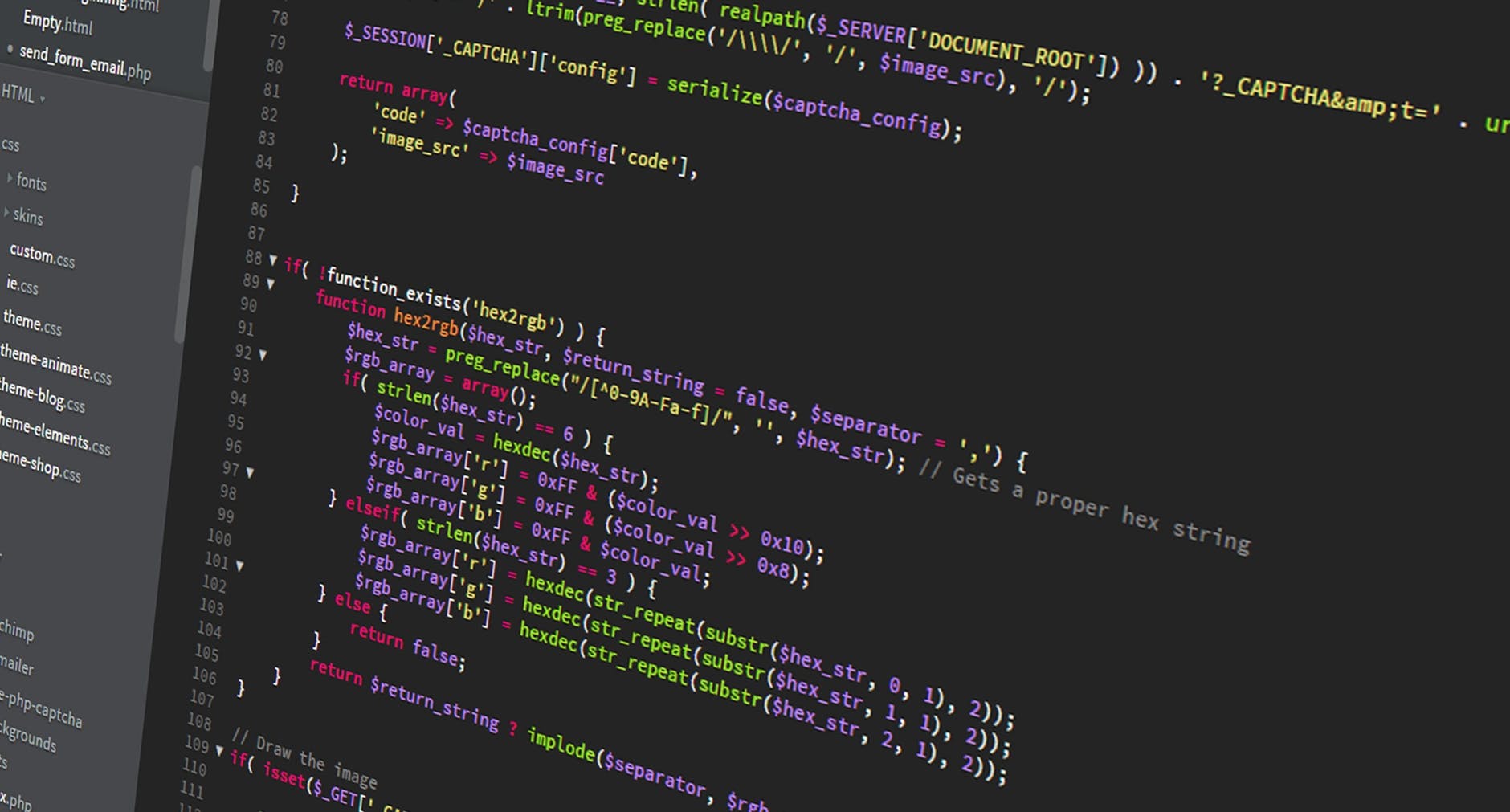
Here are some tips on how to be up-to-date with the fast-changing web designing industry:

Be Curious:

As a designing professional, you should always be curious and open to learning something new at any given opportunity. It is probably impossible to learn every new technical update. It is okay not to know absolutely everything in this field. But change is constant and having an open mindset to change is essential.

Get Your Fundamentals Right:

Having a good idea of your fundamentals and maintaining your basic skill sets is one of the most useful practices you can do. Your core programming language skills such as JavaScript, HTML and CSS can make it easier for you to learn a new framework or library. Even if you do not need code in your UI/UX design, it is beneficial to maintain a bit of your programming skills.

Do Not be Too Eager with New Technology:

Just because you should be curious and open-minded does not mean that you have to necessarily jump in with the new techniques and tools immediately when they come out. Instead of getting into it immediately, give it some time for others to figure it out and see if it sticks or goes out of the market as quickly as it came. If it looks like it is going to be stable and relevant, you can then learn that tool or framework. Otherwise, you are probably wasting a lot of your time learning something that is not about to be used by anyone for long.

Have Side Projects:

Having a little side project other than your company’s/client’s works will help you explore your creative potential and hone your skills. You can take up some volunteer work or maybe even do something just for fun if there is nothing on your mind.

Networking and Resources:

Just like any other field, keeping in contact with and meeting new people in the design field is always advantageous. You get more insight into the designing industry and get to find like-minded people this way. Connecting digitally on platforms like Twitter, Facebook and LinkedIn also helps you learn about the latest news and trends from other designers and design companies.

Design professionals can make use of books, websites, newsletters, podcasts and other resources to learn new skills and know what is going on in the designing field. You can also gain inspiration from others’ works shared on amazing platforms like Behance and Dribble.

If you start feeling bored at your designing job, it might just be because you are not finding any new or challenging techniques to learn. In the rapidly changing web designing world, maintaining a lot of interest in the field is key to keeping up-to-date with it.


THE CURSE OF DEPRESSION

For some people, depression may mean showing a sad face all the time, not responding to anyone, sitting in a room all day, and more. Depression is not always a combination of all these symptoms, some people are depressed but still, show happy faces. We must clearly understand what it actually means and must get out of it before it is too late.

Photo by Fredrick Eankels on Pexels.com

Common Symptoms of Depression

  1. Trouble in Concentrating : People with depression may feel difficulty or trouble in concentrating on their jobs. They even feel extremely hard to even take simple decisions due to lack of concentration.
  2. Insomnia : Insomnia is one of the most common symptoms of depression. They either sleep for long number of hours or never sleep at all. It varies with person to person. Even sometimes they wake at early morning without knowing.
  3. Guilty Feeling : Depressed state can also happen due to inability or failure to do an important job. It starts with feeling guilty all the time thinking about the work and stressing themselves too much. It makes them feel helpless and alone all the time even they are always being surrounded by friends , family or relatives.
  4. Lose of Interest : People start to lose interest over things that are once their favourite one. It may be hobbies like drawing, dancing, singing or even visiting places that are their favourite ones initially.
  5. Restlessness : Inability to relax or inability to make your mind calm and peace is called Restlessness. It happens due to over stress, thinking about something all the time and excess usage of devices like Mobile Phones, Laptop and television etc.
  6. Overeating/ Appetite Loss : It happens in two ways , either feeling of hunger at all times or feeling full at all time. It is also a symptom of depression which most people fail to address it at early stages of their life.
  7. Unbalanced feelings : Sometimes they feel too happy, sometimes too sad, sometimes too anxious with no meaning, sometimes too angry without knowing. Their feelings become unpredictable and meaningless during their depressed state of mind.
  8. Digestive problems : Even stomach ache for a long period of time , without reacting to medicines is a symptom of depression.

Most of these symptoms are the common ones, the failure to address them for a long period may lead to suicidal thoughts or suicidal attempts.

Ways to overcome depression

  1. Surround yourself with motivation
  2. Do yoga and meditation
  3. Always ask for help without hesitation.
  4. Go out to new places for refreshment.
  5. Take breaks during job to avoid stress.
  6. Eat healthy food like fresh fruits and vegetables.
  7. Create new hobbies
  8. Do activities that keeps both our mind and body calm.
  9. Focus on people who will be there for you during both good and bad times.
  10. Always get minimum six hours of sleep daily.
  11. It’s okay to say ‘no’ to works which is either stressful or not possible.

“Don’t let life discourage you everyone who got where he is had to begin where he was.”

Richard L. Evans

Social Media Management

In this highly digital era that we live in, every company is trying to make use of social media to increase its presence and gain clients. At this point, social media management is something every management student and prospective job seeker should be knowing about.

Social Media Management is the process of using social media platforms like Twitter, Facebook and Instagram to create, publish and then analyze content for a company. It includes analyzing social media audiences and developing a strategy to create and distribute content for social media profiles, and engage with users. Efficient and well-organized management of social media actually gives many good opportunities for companies to profit more. Brands and companies can use social media to increase brand awareness and store visits. In a company, a Social Media Manager takes on the task of social media management. Social media managers need to be skilled professionals at social media marketing, management and advertising so that the company can reach its goals such as increasing social media revenue and user engagement. They could be working as a consultant or an in-house employee.

  • Social media helps brands engage with users all over the world. This is something traditional marketing and advertising cannot achieve as well as social media networks. Certain platforms like Instagram and Pinterest also help brands connect with niche audiences.
  • With this kind of extensive reach, the brand can now align their marketing initiatives with user behaviour.
  • Not to mention how convenient and cost-effective a social media initiative is. Setting up an account, posting content and engaging with users through chats and comments are all free of cost. Advertising on social media is a very profitable way of building a strong online following.

Major social media platforms used by brands and companies include Facebook, Twitter, Instagram, LinkedIn and Pinterest. There are several paid and unpaid tools that help in managing social media networks by scheduling posts, content, responding to inquiries and comments, etc.  

Photo by Kaboompics .com on Pexels.com

Here are 3 essential steps that will help a brand gain useful information about its social media strategy and direct it through the right path:

Reviewing the company’s social media through an audit:

Conducting a social media audit will help a company understand how effective its marketing strategy is. The audit would include listing all the social media profiles of the company and reviewing social media analytics regarding top-performing posts, engagement, publishing frequency follower growth, traffic sources, average response time, audience interests and demographics. Analyzing this data and reviewing competitor’s social media presence aids the brand in improving its social media management and identifying where it might be wasting its resources.

Researching Target Audience:

Having a good idea about who your audience is, is essential for efficiently managing social media. It helps in creating relevant content and boosting customer relationships. Without knowing your target audience you are basically wasting a lot of time, money and resources.

Determining the Right Social Media Platforms:

While a company should definitely have social media profiles on top networks like Facebook, Twitter and LinkedIn, it should put most effort on networks that is used most by its audience. Not every platform may work well for the brand’s vision and marketing strategy. It should prioritize and put in effort for every platform according to how frequently its audience uses them. Brands that cater to a niche audience can also make use of such platforms that connect with its specific audience demographics.    

Ballistic missiles – History, Application and Working

The history of rocketry dates back to around 900 C.E., but the use of rockets as highly destructive missiles able to carry large payloads of explosives was not feasible until the late 1930s. War has been the catalyst for many inventions, both benevolent and destructive. The ballistic missile is intriguing because it can be both of these things. It has made possible some of the greatest deeds mankind has ever achieved, and also some of the worst. German Walter Dornberger and his team began developing rockets in 1938, but it was not until 1944 that the first ballistic missile, the aggregate-4 or V-2 rocket, was ready for use. V-2 was used extensively by the Nazis at the end of World War II, primarily as an error weapon against civilian targets. They were powerful and imposing: 46 feet (14m) long, able to reach speeds of around 3,500 miles per hour (5600 kph) and deliver a warhead of around 2,200 pounds (1000 kg) at a range of 200 miles (320 km).

Ballistic missiles follow a ballistic flight path, determined by the brief initial powered phase of the missile’s flight. This is unlike guided missiles, such as cruise missiles, which are essentially unmanned airplanes packed with explosives. This meant that the early V-2 flew inaccurately, so they were of most use in attacking large, city sized targets such as London, Paris, and Antwerp. The Nazi ballistic missile program has had both a great and a terrible legacy. Ballistic missiles such as the V-2 were scaled up to produce intercontinental ballistic missiles with a variety of warheads, but also the craft that have carried people into space. Ballistic missiles may have led us to the point of self destruction, but to venture beyond our atmosphere.

 Intercontinental ballistic missiles (ICBM) were first developed by the United States in 1959. It is a guided ballistic missile with a minimum range of 5500 kilometers primarily designed for nuclear weapon. United States, China, France, India, United Kingdom and North Korea are the only countries that have operational ICBMs. The ICBMs has a three stage booster, during the boost phase the rocket get the missile airborne, this phase last around 2 to 5 minutes until the ICBM has reached space. ICBMs have up to three rocket phases with each one ejected or discarded after it burns out. They use either liquid or solid propellant. The Liquid fuel rockets tend to burn longer in the boost phase than the solid propellant. The second phase of the ICBMs is the point where the rocket has reached space, here it continues along is ballistic trajectory. At this point the rocket will be travelling anywhere from 24,140 and 27,360 kilometers an hour. The final phase is the ICBM’s final separation and re- entry into earth’s atmosphere. The nose cone section carrying the warhead separates from the final rocket booster and drops back to earth. If the ICBM has rocket thrusters, those will be used at this point to orient itself towards the target. It is important that ICBMs have adequate heat shields to survive reentry, if not they burn up and fall apart. It’s important to note that although countries have ICBMs, none have ever been fired in anger against another country.

“This third day of October, 1942, is the first of a new era in transportation that of space travel.” –  Walter Dornberger

Optics – Application, Laser optics, Fiber optics communication

The formal study of light began as an effort to explain vision. Early Greek thinkers associated with a ray emitted from the human eye. A surviving work from Euclid, the Greek geometrician, laid out basic concepts of perspective, using straight lines to show why objects at a distance appear shorter or slower than they actually are. Eleventh-century Islamic scholar Abu Ali al Hasan Ibn Al-Haytham known also by the Latinized name Alhazen revisited the work done by Euclid and Ptolemy and advanced the study of reflection, refraction, and color. He argued that light moves out in all directions from illuminated objects and that vision results when light enters the eye. In the late 16th and 17th centuries, researches including Dutch mathematician Willebrord Snel noticed that light bent as it passed through a lens or fluid. Although he believed the speed of light to be infinite, Danish astronomer Ole Romar in 1676 used telescopic observations of Jupiter moons to estimate the speed of light as 140,000 miles a second. Around the same time, Sir Isaac Newton used prisms to demonstrate that white light could be separated into a spectrum of basics colors. He believed that light was made of particles, where as Dutch mathematician Christiaan Huygens described light as a wave.

The particle versus the wave debate advanced in the 1800s. English physician Thomas young’s experiments with vision suggested wavelike behavior, since sources of light seemed to cancel out or reinforce each other. Scottish physicist James Clerk Maxell’s research united the forces of electromagnetism fell along a single spectrum. Te arrival of quantum physics in late 19th and early 20th century prompted the next leap in understanding light. By studying the emission of electrons from a grid hit by a beam of light known as the photoelectric effect Albert Einstein concluded that light came from what he called photons, emitted as electrons changed their orbit around an atomic nucleus and then jumped back to their original state. Through Einstein’s finding seemed to favor the particle theory of light, further experiments showed that light and matter itself behave both as waves and as particles.

How do lasers work?

Einstein’s work on the photoelectric effect led to the laser, an acronym for “light amplification by stimulated emission radiation.” As electrons are exited from one quantum state to another, they emit a single photon when jumping back. But Einstein predicted that when an already excited atom was hit with the right type of stimulus, it would give off two identical photons. Subsequent experiments showed that certain source materials, such as ruby, not only did that but also emitted photons that were perfectly coherent-not scattered like the emissions of a flashlight, but all of the same wavelength and amplitude. These powerfully focused beams are now common-place, found in grocery store scanners, handheld pointers, and cutting instruments from the hospital operating room to the shop floors of heavy industry.

Future trends in fiber optics communication

Fiber optics communication is definitely the future of data communication. The evolution of fiber optic communication has been driven by advancement in technology and increased demand for fiber optic communication. It is expected to continue into the future, with the development of new and more advanced communication technology.

Another future trend will be the extension of present semiconductor lasers to a wider variety of lasing wavelengths. Shorter wavelength lasers with very high input powers are of interest in some high density optical applications. Presently, laser sources which are spectrally shaped through chirp managing to compensate for chromatic dispersion are available. Chirp managing means that the laser is controlled such that it undergoes a sudden change in its wavelength when firing a pulse, such that the chromatic dispersion experienced by the pulse is reduced. There is need to develop instruments to be used to characterize such lasers. Also, single mode tunable lasers are of great importance for future coherent optical systems. These tunable lasers laser in a single longitudinal mode that can be tuned to a range of different frequencies.

“Music is the arithmetic of sounds as optics is the geometry of light.” – Claude Debussy

Does sneezing stops your heart?

Most of us have experienced it while in our class, meeting or at any other important commitments. Yes, sneezing, especially when we were suffering from some allergies, we can’t control it, but why do we sneeze? What’s the reason behind it? Well a sneeze is officially called as Sternutation. Sneezing is an involuntary activity of our body to clear our nose. Whenever a foreign matter such as dust, dirt, germs or anything that shouldn’t be there enters your nostrils, the nose get irritated and it sends a message to your brain. Then to remove the particle your brain sends a message to all of your muscles for a sudden exhalation process called a sneeze, and it would take only milliseconds for your brain to process this. In 2002, a study at Denmark’s department of Otorhinolaryngology at Rigshospitalet showed that 95% of people sneeze four times or less each day. Worldwide, we could be sneezing upwards of 7.8 billion times a day.

Shot of an attractive young woman feeling ill and blowing her nose with a tissue at home

Cultural beliefs about sneezing

          Many people think that sneeze is a sign of good luck, while others think it’s a bad sign. People in ancient Greece, 400BC believed these sneezes are favorable sign from the gods. During the 6th century, the plague killed 200 million people all over the world; sneeze is also one of the symptoms of this disease. So people started to believe that sneeze is a sign of death and by saying “bless you” they thought it may prevent them from being infected and some used to consider as a final blessing. That’s why still some people say “God bless you” when someone sneeze.

Does really sneeze stops our heart?

        Do you know? Your sneeze can create 100,000 droplets and it can travel up to 160 kilometers (100 miles) an hour. Yes it’s more likely a faster way to spread diseases than a cough. So while sneezing, our heart stops for a second and start after that? Well it seems like it takes a break but, it’s not the case. Usually we inhale deeply before sneezing; this increases the pressure in your chest and slows down the blood flow to your heart. The heart compensates this by changing to its regular beat right after we sneeze. So it only reduces the heart rate for a short period of time rather than stopping it. Do you know? The heart can continue to beat for a short time after being removed from the body because; it has its own electrical system that can pump blood as long as it gets oxygen. So a sneeze won’t stop the electrical activity of our heart.

Is holding your sneeze dangerous?

       Most of us hate sneezing in awkward situations, it makes us embarrassed. Did you ever tried to hold your sneeze? If you did, the following incident will show why you should not. A 34 year old man has admitted to a hospital in the UK for serious neck infection. Doctors found that the pressure built from the sneeze cant able to escape as he blocked his nose and mouth. It causes rupture in the cavity that connects our nose and mouth called pharynx. It seems that he is trying to hold his sneeze every time for the last 30 years because, he feels that it would be unhygienic to sneeze into the atmosphere. He was hospitalized for a week and doctors treated him with the necessary antibiotics to cure the infection.

      Sneezing is one of the primary defense systems in our body to get rid of harmful irritants in our nose. The entered irritant somehow should have to go out. So, don’t try to hold it, just let it happen.

“I used to wake up at 4 AM and start sneezing, sometimes for five hours. I tried to find out what sort of allergy I had but finally came to the conclusion that it must be an allergy to consciousness”.     – James Thurber.

Time and Tide wait for none

The first thought that comes to our mind when thinking about time is it can’t be changed. But we are not trying to understand the wastage of time in our day-to-day life. We know the benefits of it, but we don’t realize its importance in our life. The reasons we gave to waste time are infinity.

Photo by Taryn Elliott on Pexels.com

There are many reasons for wasting time we would have come across in our daily routine. Some of them are :

  1. Addiction over small tasks : This type of time wastage occurs when we get addicted to small tasks that surrounding us neglecting the big tasks that are important and urgent. It is caused due to the need of perfection in our simple task, but the cost of this addiction is realised later.
  2. Procrastination : It happens every time when we lost our focus on the current work and started thinking about something else without knowing. It is the most common and dangerous reason that finally leads to jeopardise our job.
  3. Wrong priorities : We must prioritise our works correctly before involving in it. The more time we give to priorities our works, the more jobs we can finish. Wrong prioritising of jobs leads to losing of important and urgent work.
  4. Multitasking : The tendency to do everything at once is the way to finishing none at last. Initially it may look like doing all at once and saving time. But eventually it makes our easy jobs more complex and atlast completing no tasks. The amount of time we take to do all simultaneously is more than the cumulation of time taken to do all jobs each at a time.
  5. Disorganised : The surrounding of our work bench also influence our time. If it were too clumsy, the time to find something important is also comes under time wastage. The place we work must be clean and organised to make our jobs easier.

METHODS TO SAVE TIME

  1. Eliminate Distractions : There must be no distractions during our work time. It must be eliminated as far as possible to finish the task quickly. Distractions took large amount of time and it results in postponing of jobs.
  2. Creating a To-Do List : A To-Do list can help us prioritise our jobs and it is a easy way to work on our tasks in an proper order. To-Do List must be created either during day before night or early morning. The important point in creating a To-Do list is it must be minimum and must be possible schedule.
  3. Take a Break : A small break between task keeps us productive during the task and motivate us to do other jobs as well. The best way to schedule breaks is pomodoro technique. Pomodoro is a technique which involves 25 minute work – 5 minute break. This break time must be used for our hobbies and favourite tasks instead of using smart phones and televisions.
  4. Reduce social media Time : The time spend in social media must also be scheduled otherwise it will consume large amount of time. It can be used for some time and must be thrown away. Sometimes logging out of social media might help, since the next time we go to social media the lazyness of logging in again may tempt us to see it afterwards.

The more productive we are, the more achievements we can we do in our life.
Stay productive!!

The Indus Valley Civilization

It was in 1921 and 1922 that archaeologists discovered remains of an ancient civilization after distinct stone seals from around the Indus river valley perked their interest. This civilization which flourished around the Indus river was termed the Indus Valley civilization or the Harappan civilization and it was found to be one of the earliest civilizations along with the Mesopotamian and Egyptian civilizations. But what makes Indus valley civilization intriguing for many is that this civilization, unlike its counterparts in Egypt, China and Mesopotamia, had no evidence of war, conquests, or the existence of armies or slaves. It had some of the most impressive city planning and sewage systems. So, what is the story of this civilization and how did it come to an end?

source: wikipedia.org

Indus Valley Civilization existed from 3300 BC to 1300 BC. Archaeologists first identified the civilization at Harappa in the Punjab region of Pakistan in 1921 and then at Mohenjo-Daro in the Sindh region in 1922. These two sites were found to be the 2 major cities of the civilization. It is the most extensive of the world’s 3 earliest civilizations, covering an area of 1 million square kilometers. Like many other civilizations, this one also developed around river valleys. The people set up farming and grew crops along the banks of 2 rivers – the river Indus and the Ghaggar river. A larger number of settlements were found along the Ghaggar than the Indus and it appears to have been more productive too. The river Ghaggar has presently almost completely dried up, however, and flows only during the monsoon season. Many even believe that this is the lost river Saraswati which is mentioned in the Rig Veda as a big river located between the Indus and the Ganges.

Agriculture was the main source of livelihood while trade was also an important part of the economy. People grew wheat, barley, mustard field peas and spices like turmeric, ginger, cumin and cinnamon. Cattle, water buffalos, sheep, goats, chickens and even elephants were domesticated. Figurines of dogs with collars and paw prints suggest that dogs and cats were kept as pets too. . The Harappans also practiced extensive trade with the Mesopotamians, Central Asia and Iran, with Mesopotamian records calling the land of Harappans “Meluha”. Gold, silver, lapis lazuli, copper, timber etc. were exported to Mesopotamia probably in exchange for luxury or manufactured goods.

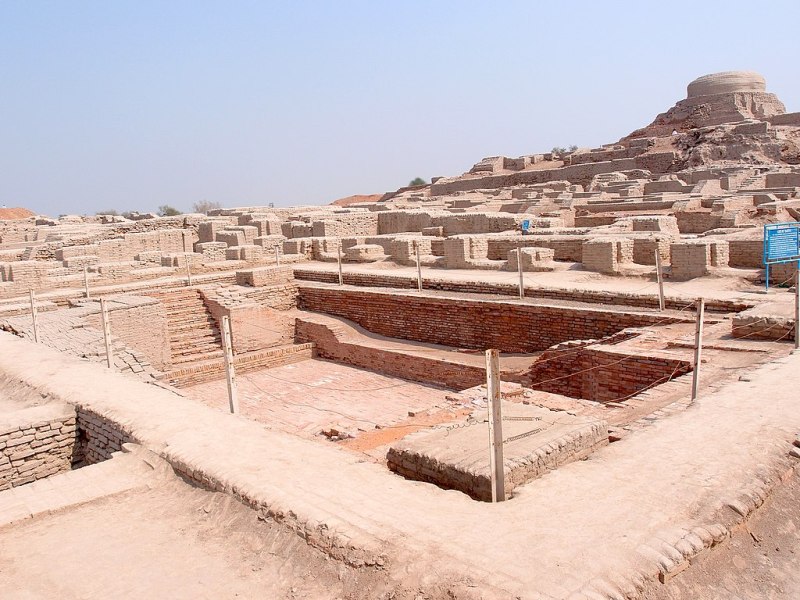
One of the most impressive discoveries about this civilization was how well planned their cities and sewage systems were. It seems water, drainage and bathing were held in high significance by the people. There was a brick-lined sewage system below the main streets that channeled water out of the city. Every house had a bathroom and toilet from where the used water flowed into a small drain cut into the house wall which brought it to the brick-lined sewage system. The public bath in Mohenjo-Daro called “The Great Bath” is one of the earliest instances of water-proofing in the world. This stately multistoried building had a 2.4m deep bathing pool in the center made of specifically-fitted burnt bricks coated with a layer of tar. Every brick found in these sites has the exact same ratio of 1:2:4. They also had a well-formed regular system of weights and measures. Harappan settlements were walled and important buildings like the granaries, warehouses and the Great Bath were separately walled and built on a mound to protect them at the time of floods.

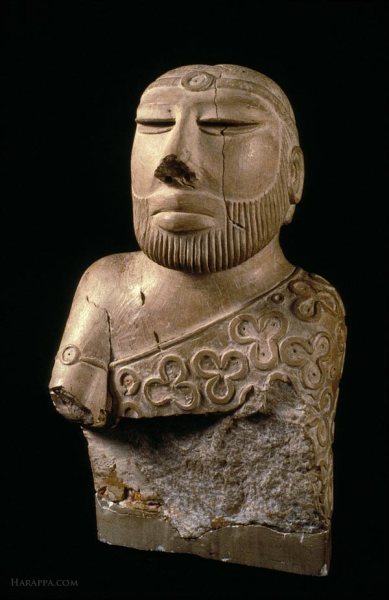
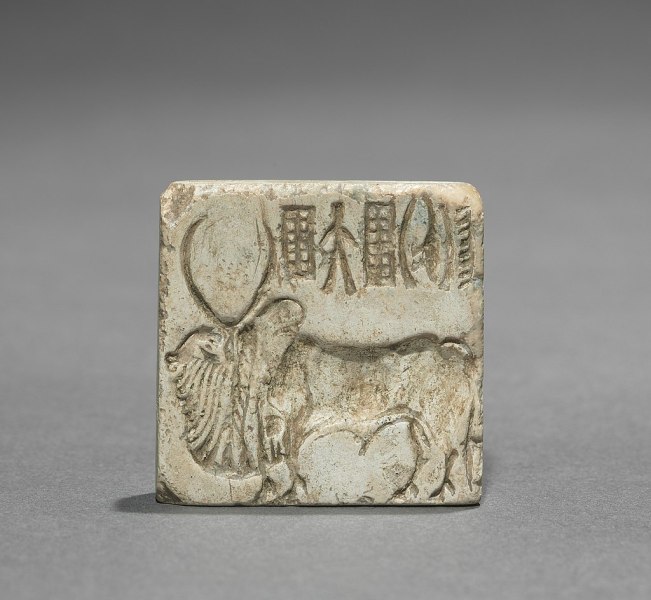
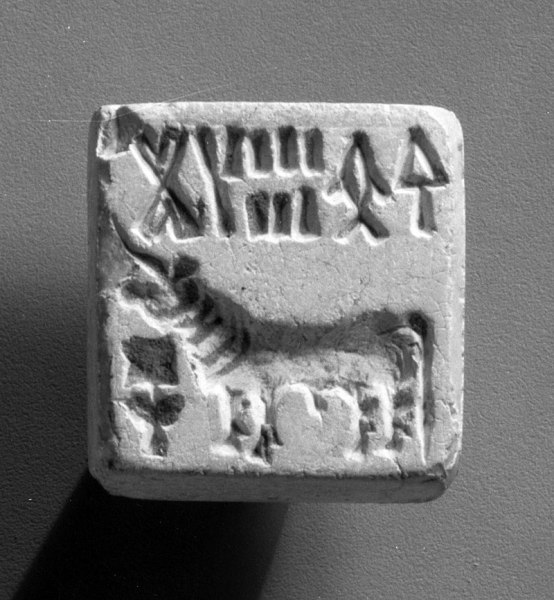
A number of statues and terracotta figurines have been excavated, most of which were probably intended as images for worship. There were figures of seated men, a standing nude male, a dancing girl, small chariots, and kids and animals which appear to be toys. All of them are of excellent quality, signifying that it was a highly developed art in the Harappan culture. Thousands of small Harappan seals are the best-known artifacts from these sites. These seals show an animal such as a “humpless unicorn”, buffalo, elephant, bison, rhinoceros or tiger, with some kind of inscription on top. Around 450 signs or symbols have been identified from these seals which are the only proof that the Harappans had a written language. These seals were could have been used as stamps, identity cards or passports.

This rich and prosperous civilization went into a sudden decline around 1900 BC. It is said that in over a century, the urban social and political system collapsed, and the use of seals and writing disappeared. The Ghaggar or the Saraswati river started to dry up, causing many of the Harappans living in its banks to move in search of greener pastures. Some of them moved to the Ganges which would become the center of North Indian civilization. By 1300 BC, this majestic civilization was completely gone, leaving no traces of its written language or beliefs.   

Evolution of Indian agriculture

India is the second largest producer of wheat and rice, which are the most widely used staple food. India also plays a major role in producing dry fruits, raw materials for textile industries, roots, tuber crops, pulses, coconut, sugarcane and various other vegetables. Agriculture plays a vital role in Indian economy. According to the sources, Indian agriculture began by 9000 BCE on north west India. Indians considered agriculture as their major survival and they even worshiped it and we still do.

Rise and Fall of agriculture

Farmers used to cultivate their lands with completely natural seeds and fertilize them using bio fertilizers, that is manually prepared fertilizers which consists of cow dung, dry leaves, vegetable and fruit waste and farmers even used earthworms to decompose the organic matter. Earthworms have the ability to eat and mix large amount of soil and organic matter and deposit it in the form of casts. The crops that are obtained as a result of natural organic forming were healthy but the yield was less. In order to increase the yield, nowadays lot of chemical fertilizers, pesticides are used, which increases the yield but the quality of the crop is a question mark. Over the years, the dependency on agriculture has declined to 50 percent as per the latest round of the periodic labor force survey for 2018-19, also the lockdown has severely disrupted India’s agriculture.

The journey of college life

Hello & welcome all the dear readers . I am hoping this article will be mostly viewed by the students who are in college or going to join college very soon .

As a 12th passout student after getting out from that hectic board exams pressure many students imagines that they do not need to study in colleges but that isn’t correct . College life is something where you can learn a lot of new things you can acquire lot of new skills that will going to help you in future times . Till class 12th you are not aware about many things but during college life you are going to face lot of new challenges . Till class 12th as a student your first priority is to score goods marks in your boards examination but that is not similar in the college life. Because going ahead in your life your skills will matter more than your professional degrees . And in colleges the syllabus are also not that much broad (except few courses like medical )you can easily learn new skills if you have dedication towards that .

Now lets talk about that 1st day of college . After getting marks in boards examination if a student gets admission in top universities like delhi university then they thinks that 1st day when he/she will go college they will have a great welcome as they are toppers of their respective colleges/state/district and many students will come and they are going to feel like a celebrity as they have scored that much amount of marks but beleive me nothing happens like that . No one going to ask you about your marks & percentages specially in top universities like du & bhu .your first day is going to be very normal .so never be in that imaginary situation like you are going to have a celebrity like feeling or something like that .

You can explore your college life by meeting new peoples in your college from different states by knowing about them , their cultures their traditions & lot more . In colleges like Du there are societies to enhance your skills so join societies according to your interest. Next way is to do internships so that you can gain practical knowledge & also can earn something so that you can manage your expenses . It is also an important part of college life that you must have to earn by your own so that you can learn new new things & get prepared/awarded about challenges that you might face in future.

Now moving ahead I would must say that you must have to explore your college life. Learn as many skills as you can . Be the best version of yourself . This 3 or 4 years of college life cannot Destroy your whole life but if you want than you can do something very very extraordinary by utilising these 3 or 4 years whatever you have . Simply you don’t have something to lose but you have many many things to win . & At last best of luck for your college life.

THE HEAVEN ON EARTH – SHIMLA

Shimla is among the one of the greatest tourist spot in India. It is a hillstation lies in northeast of Chandigarh on a ridge of the Himalayas foothills at an elevation about 7100 feet (2200 m) . In this article I am going to tell you about the beauty of this place & the places where you can visit in shimla.
Shimla is popularly known as “The queen of hills” Mainly shimla is famous for its beautiful environment (natural beauty), snowfall, Toytrains, several tourist places and many more. Shimla is also considered as great vacation spot. It is all season famous hill station because in winter season it is famous for heavy snowfall & in summer it looks even more beautiful.

Various places to visit in shimla
Now I am going to talk about various places where you can visit whenever you go to shimla.
• Green valley
• Annandale
• Kuffri
• Viceregal lodge
• Christ church
• Himachal state museum
• The Ridge
• Jakhoo temple
• Toy train
Green valley
It is just 7km away from shimla bus stand. It lies on national highway 22, on the way to kufri from shimla. Green valley is famous for its elite beauty that’s why it is also considered as one of the best places for photography. It is surrounded by verdant hills that are covered with dense forests of pine and deodar. You will also find some local shacks and markets here. Sometimes rare animals like yaks can be seen wandering and grazing here.
Annandale
It is locality of shimla city which is just 2km away from shimla railway station. Annadale has a very beautiful army heritage museum. Due to its lush green environment, historical importance and first seen place by every VVIP visit, it is also known as the “HEART OF SHIMLA”. The area of Annandale is situated between lush green mountains and deodar trees. It is often used as picnic sports by visitors.
Kufri
It is a tiny hill station located near shimla. It is famous for snowfall and adventurous sports like ice skating, horse riding and also famous for nature parks and picnic sports. Kufri is situated just 14 km away from shimla. Kufri is also known as “Switzerland of east” and “Shimla ki barfili topi”. While coming back from kufri to shimla you can also visit jakhoo temple which is very famous place in shimla.
Jakhoo Temple
It is an ancient temple situated in shimla dedicated to lord hanuman. Because this temple is situated on the height so, views are really amazing from this site. Recently in Jakhoo temple rope way are created due to which the numbers of people visiting shimla are getting very much attracted towards jakhoo temple. The ticket price of rope way is RS500.
Mall Road
It is the major hangout point and shopping center in shimla. It is located a level below the Ridge. Tourists can visits mall road for shopping the things which they want to buy but at mall road he/she have to show their bargaining skills. It has a number of showrooms, departmental stores, shops, Restaurants and cafes. Some of the attractions points on mall road are scandal point, Gaiety Theatre, Kali Bari temple, Town hall etc.
Viceregal Lodge
It is located on the observatory Hills of shimla. It is formally the residence of the British viceroy of India. The viceregal lodge was designed by British architect Henry Irwin. It is also known as “rashtrapati niwas”. Visitors can visit rashtrapati niwas between 10.00 am to 5.00 pm. This viceregal lodge has its own history taking the help of guide will be benefital for you while visiting this amazing place.

Himalayan Bird Park
It is situated near viceregal Lodge. If you are a nature lover then definitely you must have to visit Himalayan Birds Park. The park was established in 1984 and is spread over an area of 1171km2, altitude within the Park Range between 1500 and 6000 meter. This park contains numerous flora and more than 375 fauna species. Then after a drive of 20 minutes you can visit Tara Devi Temple which is surrounded by beautiful mountains of Himalayas.
So,
These are the details about the places where you can visit in shimla. Personally I will definitely recommend you all to visit shimla at least once in your life time. After reading all these things you all have already understood why shimla is the heaven on the earth.
Now if I talk about staying in shimla then there are number of hotels available where you can stay as shimla is very famous and commercialized hill station there are all kinds of hotels are available . Generally if you take a normal room then cost will be around 1500 to 2000. Snowfall lovers can visit shimla during winter season (Nov to March) and even in summers you can visit here because it is among the one of the best places to visit in summer.
Dear readers hope this article will be helpful for you all and you have acquired important information’s about shimla the heaven on earth.

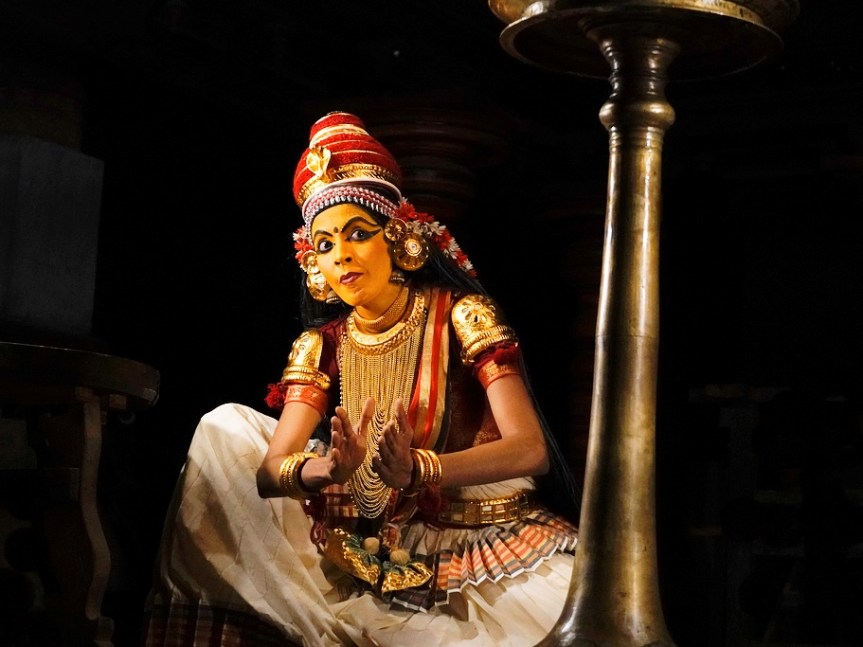
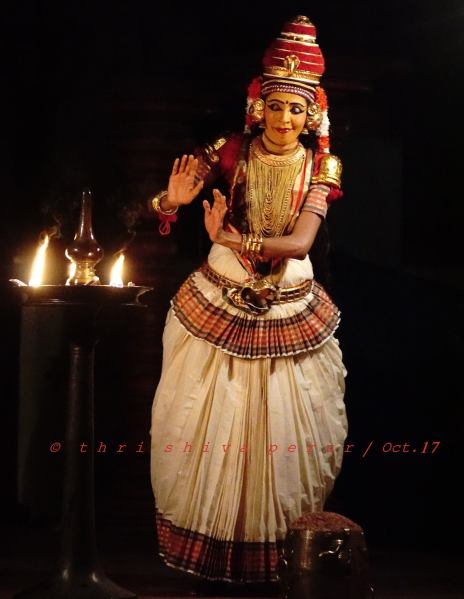
Nangiar Koothu: Exclusive Domain of Female Artists in Kerala

Kerala is home to several fascinating traditions and art forms. There is the graceful Mohiniyattam, the enigmatic Kathakali and the amusing Ottan Thullal. As we celebrate International Women’s Day this year, let us look at one such dance form that is interestingly, only performed by women.

Nangiar Koothu is an art form that evolved from Koodiyattam, an ancient Sanskrit drama tradition. Koodiyattam is performed by Chakyars (a Hindu ‘ambalavasi’ or ‘temple-dwelling’ community) and Nangiars (women of the Hindu “Nambiar” community) together on stage. The Nangiars or ‘Nangiarammas’ as they are called, performed Nangiar Koothu as solo performances purely as a ceremonial ritual in a few temples in Kerala. These performances are staged in a special theatre that forms a part of temples in Kerala called “Koothambalams”. During the 1990s, Nangiar Koothu also experienced a cultural revival much like many other classical art forms in Kerala. The dance form which was until then performed only by a few Nambiar women in some temples across Kerala gained traction after an old acting manual of Sri Krishna Charitam called “Attaprakaram” was discovered in 1982 by Nirmala Paniker and G. Venu. This manuscript which contained 208 slokas dealt with women’s roles in Koodiyattam. Ammanur Madhava Chakyar, a Koodiyattam exponent re-worked the manuscript and made it more popular. It was after this that Kerala Kalamandalam and other training institutions began to witness an increasing number of girl students in the Koodiyattam genre and its offshoots like Nangiar Koothu. This dance form is nowadays no longer restricted to just the Nambiar community. In 1971, Kalamandalam Girija was the first woman from outside the community to learn and perform Nangiar Koothu. Kalamandalam Shylaja, Margi Sathi and Usha Nangiar are other exponents in this field.

source: nangiarkoothu.com

Nangiar Koothu presents stories from Sri Krishna Charitam, which depicts the life of Sri Krishna. The dancer is accompanied by the vocal artist and percussion instruments such as the Mizhavu (pot drum), Idakka and Thimila. Traditionally, this dance goes on for 12 consecutive days. It has its foundations based on the ancient treatise Natya Shastra by Bharatamuni.

Nangiar Koothu is ‘abhinaya’ or acting-centric, the dancer expressing emotions with her eyes and hand gestures. ‘Nritta’ or pure dance is in focus only during the entry rituals (‘Purappad’). This dance at the beginning is called “Purvaranga Nritta”. During the performance, the Nangiar usually sits on a stool behind an oil lamp and acts out stories using intricate hand gestures, body movements and expressions. The dancer wears a red blouse and a white or cream-coloured skirt laced with gold or “kasavu” embroidery. She also wears red and white flowers in her hair and a distinct red headgear, with a hooded serpent on it probably symbolizing Anantha, the 1000-headed serpent.

This captivating dance form is still performed as a ritual offering in the Trissur Vadakkunathan Temple, Ambalapuzha Sri Krishna Temple, Irinjalakkuda Koodalmanikyam Temple, Tripunithara Poornathrayeswara Temple and Kottayam Kumaranellore Bhagavathy Temple. The performance begins on the day before Ashtamirohini, i.e. Sri Krishna’s birthday, in the Vadakkunathan temple and Ambalapuzha temple. Even though Nangiar Koothu is performed in the daytime, on Ashtamirohini day, it is held at night to match up with the time when Sri Krishna was born. The Koothu starts on the festival day in the Malayalam month of Chingam in the Poonathrayeswara temple and goes on for 8 days. It goes on for 12 consecutive days from the star-day ‘Uttram’ in the month of Medam in the Koodalmanikyam temple.

There is a variant form of Nangiar Koothu known as Dasamam Koothu or Chudala Koothu which is performed after an Akkithirippad has passed away. Akkithippad is a brahmin who has qualified himself to perform yagas including the athirathram, the most intricate of the yagas. The Nangiaramma performs on the ‘Sanjayanam’ day in a temperory koothambalam-like set-up, to help the deceased soul and his wife attain moksha. Though it is a rarely-performed dance form, artists like Aparna Nangiar have performed Dasamam Koothu in the last few years, even as recent as in 2021.

Over time, this art form which has historical antiquity of over 1500 years has also seen innovations in its story content. Dancers like Margi Sathi have introduced stories from Ramayana and the Kannaki Charitha into the performances. For art lovers and others alike, Nangiar Koothu is a very alluring dance form to witness and enjoy.        

Start-up to Success: Ola Cabs

Gone are the days when commuting without a personal vehicle, used to be an issue for city dwellers. Either they had to resort to public transport which is not always the safest option, or book rental car services way before the trip for enormous amounts. Now with the coming up of app based cab riding services, voyaging has become easier for city dwellers.

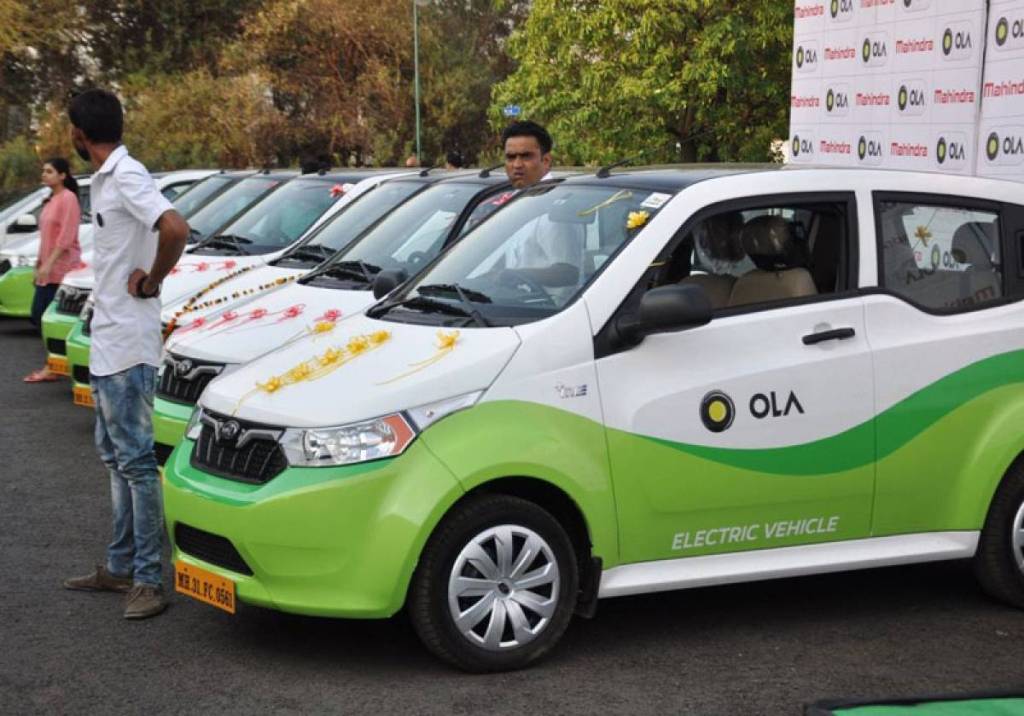
And Ola is one of the key players in the market in regard to cab services. It is the first Indian cab aggregator company. Ola has made it much easier for the public to book cab at their own convenience. The company started in 2010 by Bhavish Aggarwal and Ankit Bhatia, and since then it has been bridging the gap between cabs and commuters.

Ola partners with a number of taxi drivers and owners, and with the help of their app they allows people to book cabs by entering their pick up location and destination. Ola has users in over 250 Indian cities and employs more than 2.5 million driver-partners.

How did it start ?

It all started when Bhavish Aggarwal while journeying from Bandipur to Bangalore, was left abandoned in his journey by his driver. This was because the driver was renegotiating the already decided payment. This unfortunate incident lead him to come up with a economical and satisfying cab service. And thus, Ola cabs was born.

The founders of Ola, Bhavish Aggarwal and Ankit Bhatia are both IIT Mumbai graduates, and launched Ola in December 2010. Both of them became the youngest billionaires of India, at the age of 25 and 26.

The name of the company is driven from the Spanish word ‘Hola’ that translates to ‘Hello’. The name ‘Ola’ probably indicates their services as easy and simple to use. Their logo is simple yet elegant and has the ‘O’ in the shape of a tyre.

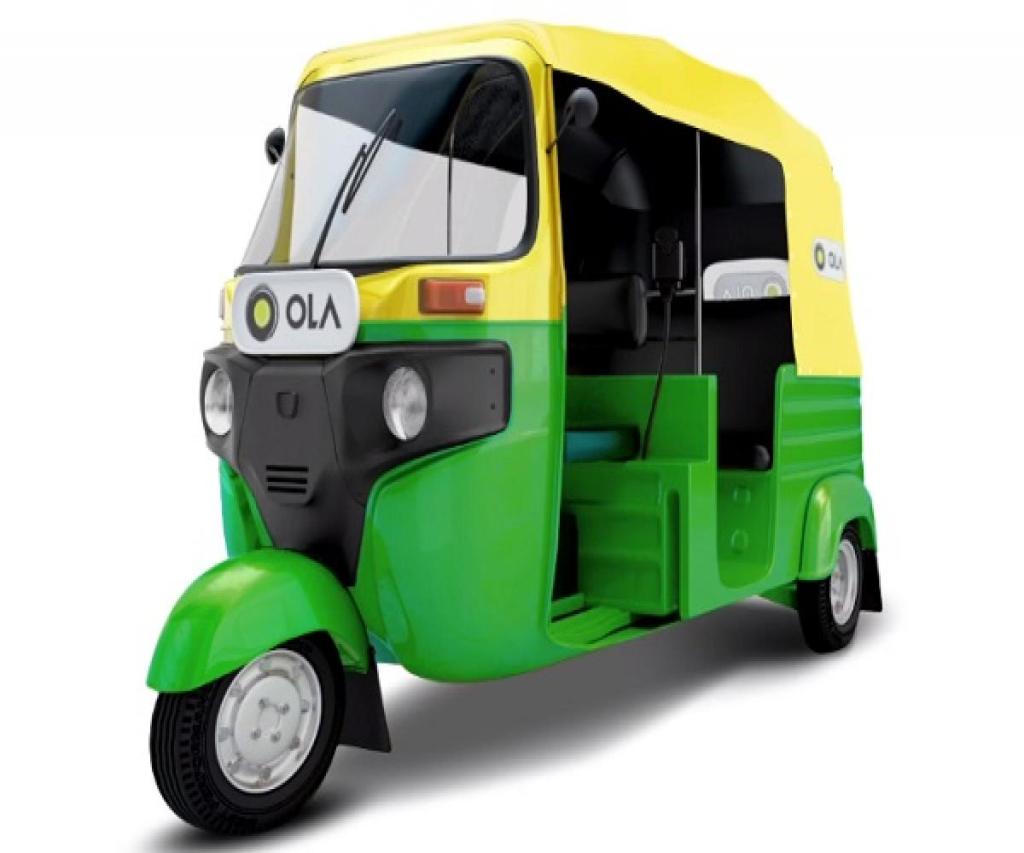
Ola has a wide range of car categories to choose from, such as hatchback, sedan, SUV and more. Travellers choose them depending on their budget and number of people travelling. For travelling within the city, people can hire cabs, bikes, autos and even e-rickshaws through Ola.

Challenges and Competitors

In the initial day of the start up they had to code for long hours and sometimes 48 hours straight. They even had to drive customers to their desired locations at times because the drivers did not show up. As much as Ola wanted to spread their services across India, they faced the issue of internet connectivity in smaller town. Thus, they designed the app so that I could accommodate network connectivity in smaller towns. However, after bagging an investment worth 2 crores, things were finally in track and there was no looking back.  

Every business has its fair share of competitors and so does Ola. Uber is Ola’s biggest competitor. There are other players in the Indian market such as, Meru Cabs, Zoomcars, PeIndia Cabs, Carzonerent and more. Rapido is increasing taking over the bike taxi segment as well, which is the competitor to Ola’s bike services.

Needless to say, just like most businesses, Ola too had to bear the burnt of the COVID-19 pandemic. The travel and transport sector was hit severely with the pandemic as there were repeated lockdowns and curfews affecting its revenue generation. However, with the upliftment of lockdowns and curfews, it is believed that Ola will regain its revenue generation soon.  

Addition and Expansions

In spite of facing ups and downs through out the years Ola manages to sail through smoothly. Over the years Ola introduced new services in ‘Ola pedal’, which is a huge success in IIT Kanpur and IIT Madras campuses. They have also introduced the option to book cabs on an hourly basis to travel out of the city and have named the segment ‘Ola outstation’.

‘Ola money’ was also introduced and the product includes Ola money credit card, Ola money post-paid, Ola money mobile wallet and Ola money hospicash. Ola launched ‘Ola corporates’ in 2016, where employees book their rides through Ola, and the fare is deducted from the company’s Ola corporate prepaid account.

In March 2015 Ola acquired ‘TaxiForSure’, another taxi aggregator for $200 million, and maintained its stand in the country’s cab hailing market. Another impressive deal was when Ola acquired Foodpanda-India, an food delivery aggregator in 2017 at a valuation of $40-$50 million. In 2018 onwards, Ola expanded its services overseas in countries of New Zealand, Australia and United Kingdom.

                     Clocking more than 150,000 bookings per day, Ola holds a little less than half of the Indian market (as of the Uber’s 2020 report). The CEO of Ola Bhavish Aggarwal has disclosed that the company is planning on initiating an IPO in the coming years. Ola plans on further expanding their services in remote areas, making India travel luxuriously on a budget.  

Women in The Indian Film Industry

The Indian film industry is enormous, with more than 1800 movies being released every year in over 20 languages. In fact, Bollywood is the largest film industry in the world! With top movies like Baahubali and Dangal earning a box office collection of over 300 crore Rs, it is evident that films are a big deal in India. People flock to theatres to see their favourite movie stars and enjoy their films. For years, the film industry has been considered a male-dominated workspace. But there have been several women who have broken through this pre-conceived barrier and risen to become some of the best in the industry. Fatma Begum is credited as the first woman feature director in India for her work in the silent film Bulbul-e-Paristan (1926). She was a director, actor and writer who established her own production company Fatma Films in 1926. Jaddam Bai, Protima Dasgupta and Shama Zaidi are some of the pioneering women directors and screenwriters in India. Women directors were not under the spotlight for a lot of years after then till unique and creative women started gaining attention for their directing and screenwriting skills in the last few decades.

A lot of female filmmakers and producers are going mainstream these days, many of them bringing their own fresh and interesting takes on filmmaking and storytelling. Anjali Menon films like Manjadikuru (2008), Bangalore Days (2014) and Koode (2018) are some of the most heartfelt and warm films in Mollywood. Soorarai Pottru in Tamil was also directed by the talented Sudha Kongara. Meghna Gulzar’s work in Raazi (2018) and Chaapak (2020) has been impressive as well. Gauri Shinde brought back the legendary actress Sridevi on screen in 2012 with the highly acclaimed English Vinglish. Rima Das is a director and screenwriter whose film in Assamese, Village Rockstars (2017) won many national and international awards. Zeenat Lakhani was the co-writer for the 2017 Hindi comedy-drama Hindi Medium. Mira Nair (Monsoon Weddings, 2001) and Gurinder Chadha (Bend it Like Beckham, 2002) are directors who found fame outside of India for their work. Zoya Akhtar, the daughter of poet and screenwriter Javed Akhtar, has directed and produced several hugely popular and commercially successful films. Her most recent work was with Gully Boy (2019) and she has announced a road-trip movie, Jee Le Zara featuring some of the female superstars of Bollywood like Alia Bhatt, Priyanka Chopra and Katrina Kaif. This has been planned as a sequel to Zindagi Na Milegi Dobara (2011) which was such a big success on its release it remains one of the most loved films in Bollywood by the masses. Top actresses in Bollywood like Priyanka Chopra, Anushka Sharma and Deepika Padukone have also taken up producing, with many of them establishing their own production houses.

Some of the most significant evolutions can be seen in the depiction of female characters in Indian cinema. For ages, these characters were simply the side pieces, simply pretty, too emotional and dependent on the male characters in the movie. Oftentimes, she was the “damsel in distress”, needing the “hero” to save her from the villains so that he could show off how strong and cool he is. Over the last 2 decades, there have been several films that showcased strong women characters – both physically and mentally. More female-oriented movies are being made like Kahaani (2012), Queen (2013), Raazi (2018) and the recently released Gangubai Kathiawadi (2022), which showcase the diverse personalities and strengths of women. Even in some male-oriented films, women are represented as strong-minded individuals in their own right. Their characters no longer lack substance. Take the 2020 Tamil film Soorarai Pottru for example. Even though Surya’s Maaran is the central character, the character of his wife Bommi, played by Aparna Balamurali, is one of the highlights of the film. With her strong principles and ambitious personality, she impresses the audience by standing up for herself and supporting her husband. Films have a lot of influence on the socio-political stance of society regarding various issues. When there are movies like Kabir Singh (2019) still garnering a huge fan following for their depiction of toxic masculinity and abusive relationships, stories like that of Soorarai Pottru are required for providing a good example of what a healthy relationship should look like and how women are just as strong, funny, ambitious and efficient as men. Filmmakers these days understand how impactful cinema is as a communication medium and try to bring attention to the various issues faced by women like discrimination, abuse and acid attacks through their films.

Women have come a long way in Indian Cinema. Here’s to hoping we get to see more of their work and a lot more real and relatable female characters on screen in the coming years.

The Origin of Glass – Unknown facts

Archeological findings suggest that glass was first created during the Bronze Age in the Middle East. To the southeast, in Egypt, glass beads have seen found dating back to about 2500 B.C.E. Glass is made from a mixture of silica sand, calcium oxide, soda, and magnesium, which is melted in a furnace at 2,730°F (1,500°C). Most early furnaces produced insufficient heat to melt the glass properly, so glass was a luxury item that few people could afford. This situation changed in the first century B.C.E. when the blowpipe was discovered. Glass manufacturing spread throughout the Roman Empire in such quantities that glass was no longer a luxury. It flourished in Venice in the fifteenth century, where soda lime glass, known as ‘cristallo’, was developed. Venetian glass objects were said to be the most delicate and graceful in the world.

How glass was made?

It all begins in the earth’s crust, where the two most common elements are silicon and oxygen. These react together to form silicon dioxide, whose molecules arrange themselves into a regular crystalline form known as quartz. Quartz is commonly found in sand, where it often makes up most of the grains and is the main ingredient in most types of glass. You probably noticed that glass isn’t made of multiple tiny bits of quartz and for good reason. The edges of the rigidly formed grains and smaller defects within the crystal structure reflect and disperse light that hits them. But when the quartz is heated high enough, the extra energy makes the molecules vibrate until they break the bonds holding them together and become a flowing liquid, the same way that ice melts into water. Unlike water, though, liquid silicon dioxide does not reform into a crystal solid when it cools. Instead, as the molecules lose energy, they are less and less able to move into an ordered position, and the result is what is called an amorphous solid. A solid material with the chaotic structure of a liquid, which allows the molecules to freely fill in any gaps, this makes the surface of lass uniform on a microscopic level, allowing light to strike it without being scattered in different directions.

How glass is transparent?

Why light is able to pass through glass rather than being absorbed as with most solids? You may know that an atom consists of a nucleus with electrons orbiting around it, but you may not know that an atom has a lot of empty space. So, light passes through these atoms easily without hitting any of these particles. Then why aren’t all materials transparent? This is because, the different energy levels those electrons in an atom can have. Consider an atom of an iron, an electron in it initially assigned to move in a certain orbit. But if it had the enough energy; it could reach the exited state and jump to a closer orbit. So, one of the light photons passing through can provide the needed energy. But there is one thing; the energy from the photon has to be the right amount to get an electron to the next orbit. Otherwise, it will just let the photon pass by, and it just so happens that in glass, the electrons are placed so far from each other, that the photons of visible light can’t provide enough energy for an electron. Photons from ultra violet light give just the right amount of energy, and are absorbed. That’s why you can’t get a suntan through glass. This amazing property of being both solid and transparent has given glass many uses throughout the centuries.

 In the 1950s Sir Alastair Pilkington introduced ‘float glass production”, a revolutionary method still used to make glass. Other developments have included safety glass, heat resistant glass, and fiber optics, where light pulses are sent along thin fibers of glass. Fiber optic devices are used in telecommunications and in medicine for viewing inaccessible parts of the human body.