STRESS AND ITS STRESSORS

Stress can be characterized as a change that causes physical, emotional, or mental strain. Stress is your body’s reaction to attention or activity. Everybody encounters stress to some degree. The manner in which you react to stress, has a major effect on your general well-being. Stress happens when an occasion or stimulus expects us to change somehow or another. Stress fluctuates in view of an individual and their circumstance. Most stress is impermanent, in spite of the fact that there are circumstances where stress can keep going for quite a while.

At a point when we experience stress, our body is stimulated to deliver stress hormones that trigger a ‘fight or flight’ reaction and activate our immune system. This reaction assists us with reacting rapidly to hazardous circumstances. Some of the time, this stress reaction can be a suitable, or even advantageous response. The subsequent sensation of ‘pressure’ can assist us with pushing through circumstances that can be nerve-wracking or extreme, such as running a long-distance race, or giving a speech to a huge group.

However, there can be times when stress becomes extreme and an excessive amount to manage. Assuming our stress reaction is enacted more than once, or it continues over the long run, the impacts can bring about wear and tear on the body and can cause us to feel permanently in a state of ‘fight or flight’. Rather than assisting us with pushing through, this tension can cause us to feel overpowered or incapable to adapt.

Feeling this staggering stress for an extensive stretch of time is frequently called chronic, or long-term stress, and it can affect on both physical and psychological health. Stress is a reaction to a danger in a circumstance, while anxiety is a response to the stress.

STRESSOR

A stressor is a chemical or biological agent, environmental condition, external stimulus or an event seen as causing stress to an organism. Psychologically, a stressor can be an event or conditions that individuals might consider demanding, challenging, and/or threatening individual safety.

Various Stressors are: Environmental, Social, Psychosocial and Developmental.

1. ENVIRONMENTAL STRESSOR

Stressors that are found in our environmental elements are called environmental stressors. Everyday life is filled   with environmental stressors that cause minor disturbances. Assuming that you use a morning alarm to get up in the morning, the noise from your alarm is an environmental stressor. Extreme temperatures are additionally environmental stressors and can prompt uneasiness. Other normal environmental stressors include:
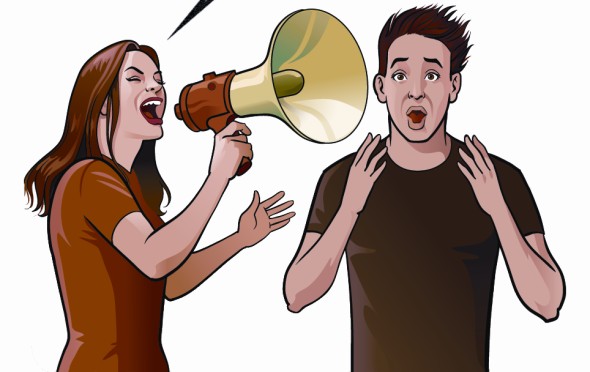
•        Noise

•        Crowding

•        Air quality

•        Colors

•        Tornadoes and other natural disasters

•        War and other manmade disasters

•        Light

•        Insects

2. SOCIAL STRESSOR

Social stress is a stress that stems from one’s associations with others and from the social environment overall.

There are three main categories of social stressors:

a) Life occasions are characterized as sudden, extreme life changes that require a person to adjust rapidly (ex. rape, unexpected injury).

b) Chronic strains are defined as persistent events which require an individual to make adaptations over an extended period of time (ex. separate, joblessness).

c) Daily issues are characterized as minor occasions that happen, which require variation over the course of the day (ex. terrible traffic, conflicts).

At a point when stress becomes constant, one encounters emotional, behavioural, and physiological changes that can put one under more serious danger for developing a psychological problem and actual sickness.

3.PSYCHO-SOCIAL STRESSORS

A day-to-day existence circumstance that makes a unusual or serious degree of stress that might add to the development of events or disturbance of mental problem, disease, or maladaptive conduct.

4. DEVELOPMENTAL STRESSORS

One class of stressors is called developmental or normative stress. Developmental stress accompanies the normal growing experiences of childhood.   A few instances of this kind of stressor are dealing with strangers as an infant: , being isolated from guardians, beginning or changing schools, and adjusting to puberty.

SPIRITUALITY

Spirituality is the expansive idea of faith in something beyond self. It might include religious practices focusing on the belief in a higher power, yet it can likewise include holistic faith in an individual association with others and to the world overall.

All things being equal, it recommends that there is something more that associates all creatures to one another and to the actual universe. It likewise suggests that there is continuous presence after death and strives to address inquiries regarding the significance of life, how individuals are associated with one another, facts about the universe, and different secrets of human life.

SIGNS

Spirituality is not a single path or belief system. There are numerous ways of encountering spirituality and the benefit of a spiritual encounter. For certain individuals, this may include the confidence in a higher power or a particular religious practice.

For other people, it might include experiencing a feeling of association with a higher state or a feeling of inter- connectedness with the rest of humankind and nature. A few indications of spirituality can include:

Extending connections with others
Encountering empathy and compassion for other people
Encountering sensations of interconnectedness
Looking for importance and reason
Asking deep questions about topics such as suffering and what happens after death
Wanting to make the world a better place
Seeking happiness beyond material possessions or other external rewards
Feelings of awe and wonder

 Not every person encounters or expresses spirituality similarly. Certain individuals might look for spiritual experiences in every aspect of their lives, while others might be bound to have these sentiments under specific conditions or in specific areas.

TYPES OF SPIRITUALITY

There are various types of spirituality, going from religious practices to more secular approaches. A portion of the significant types of spirituality include:

  • Buddhism
  • Christianity
  • Hinduism
  • Humanism
  • Islam
  • Judaism
  • New age spirituality
  • Sikhism

There are various reasons for why individuals might turn to spirituality:

1.To track down reason and meaning: Exploring spirituality can assist people observe replies to questions they have about philosophical inquiries, for example, “what is going on with life?” and “what purpose does my life serve?”

2. To cope up with the feeling of stress, depression, and tension: Spiritual experience can be useful when adapting to the burdens of life.

3. To re-establish trust and good faith: Spirituality can assist individuals with fostering a more confident point of view.

ADVANTAGES OF SPIRITUAL ACTIVITY

Coming up next are a couple of positive discoveries connected with spirituality and its effect on physical and emotional well-being:

1. Research has shown that religion and spirituality can assist people to adapt with the impacts of regular pressure. One investigation discovered that regular spiritual encounters assisted more seasoned grown-ups with better adapt to gloomy sentiments and upgraded good sentiments.

2. Research shows that aged women are more appreciative to God than older men, and they get more stress because of this appreciation.

  • Individuals who feel great and console while involving spirituality as a survival technique for stress can have confidence that there’s significantly more proof that this a good idea for them. Prayer works for youthful and old the same. Prayer and spirituality have been connected to:

1.Better wellbeing

2.More mental prosperity

3. Less depression

4. Less hypertension

5. Less pressure, in any event, during troublesome times

6. More good sentiments

7. Better capacity than handle pressure

Aggression in Sports

Aggression is inherent in animals and in human beings because biologically it serves an important purpose of facilitating organisms struggle for existence.

Aggression is a part of human behaviour and is accepted as social phenomenon to some extent but beyond that aggression becomes an anti social behaviour intended to harm others. 

Types of Aggression

  1. Hostile aggression: intent to harm, goal to harm, anger
  2. Instrumental aggression: intent to harm, goal to win, no anger
  3. Assertive aggression: no intent to harm, legitimate force, unusual effort and energy expenditure

Reflections of Aggression in Various Sports

In sports, the following five levels of aggression are recorded:

1) Direct and strong aggression in boxing, wrestling, American football.

2) Limited aggression in football, hockey, water polo etc.

3) Indirect aggression in handball, volleyball, tennis, table tennis etc.

4) Aggression directed only against objects in golf, throwing events in track & field.

5) Little observable aggression in gymnastics, figure skating, aesthetic events etc.

Effect of Aggression on Performance

  1. Aggression results in a decrement in performance of individual as well as team as whole. 
  2. The level of frustration produced by the particular situation usually determines the amount of aggression.
  3. There are some factors that influence aggression in sports are:
    • Win-at-all-cost
    • Perceived intention of the opponents
    • The reinforcement of violent behaviour by the coach
    • Spectators effects
    • Maturity and standard of players
    • High incentives
    • Rise of professionalism

How to Reduce Aggression in Sports

1) Most influential people actually promote rather than discourage violence because they believe it sells tickets. If this attitude is curtailed then it is possible to minimize aggression.

2) Anger behaviour and feelings can be modified through anger awareness training and role playing.

3) Athletes can learn to control their feelings of hostility and anger.

4) Athletes who engage in aggressive act must be severely penalised. 

5) Coaches who encourage should be fined or suspended from their coaches duty.

6) External stimuli capable of evoking hostile aggression on the field of play should be removed.

7) Coaches and referees should be encouraged to attend in-service training workshops on dealing with aggression on the part of players.

8) Social interaction between members of opposing teams should be encouraged by coaches and managers.

LONELINESS

Loneliness is a universal concept which is complex and which is unique to each and every human being or individual.For example, a lonely child at school struggling to make friends is different from an adult who feels lonely because his/her spouse is dead.

MEANING:

The common definitions of loneliness describes it as a state of solitude or being alone whereas loneliness is a state of mind.Loneliness leads to feelings such as alone, unwanted and empty.People who are lonely usually crave for human attention but its also difficult for them for form connections.

Different studies and research state that loneliness is associated with social isolation, poor social skills and depression.According to many experts, Loneliness is not necessarily a state of being alone.Instead the feeling of being alone and isolated creates loneliness.

LONELINESS VS SOLITUDE:

Being alone is not as same as being lonely. Researches therefore say that the feeling of loneliness and being isolated leads to both physical and mental despair.Solitude is actually important for many health benefits including allowing people to better focus and recharge.
  • LONELINESS

It’s the feeling of isolation despite wanting social connections. It is often perceived as an involuntary separation, rejection, or abandonment by other people.

  • SOLITUDE:

Solitude on the other hand explains people who enjoy spending time by themselves. Its voluntary. This group of people also spends time with others but they balance it off by spending some alone time with themselves.

HEALTH RISK ASSOCIATED WITH LONELINESS:

Well, Loneliness has a wide range of negative effects on both physical and mental health of an individual.

  • Alcohol and drug misuse
  • Altered brain function
  • Antisocial behaviour
  • Cardiovascular disease and stroke
  • Decreased memory and learning
  • Depression and suicide
  • Increased stress levels
  • Poor decision making capabilities

These are not the only areas where loneliness takes a toll. It also disrupts the regulation of cellular processes deep within the body which predisposes lonely people to premature aging.

People who are less lonely are more likely to be married, having high incomes and have higher educational qualifications.People who have higher level of loneliness are usually found living in small cities with small social networks and low quality social relationships.

CLOSE FRIENDSHIPS HELP COMBAT LONELINESS:

Statistics states that Loneliness is becoming quite prevalent especially among the younger generations. According to a study conducted in 2019, 25% adults between 18 to 27 age groups have no close friends while 22% reportedly have no friends at all. The rise of internet and social media are partially to be blamed.Study says that it’s not the quantity of social interactions but the quality which helps combat loneliness.

Having just a few close friends is more than enough to combat loneliness and reduce the negative health consequences associated with this state of mind. Research says that the experience of actual face to face contact with friends helps boost peoples sense of well-being.

WAYS TO OVERCOME LONELINESS:

Loneliness can be overcome but with a conscious effort to make a change. In the long run it helps with your physical health makes you feel happier and leather and enables you to impact around you in a positive way.

  • EXPECT THE BEST:

Lonely people often expect rejection so instead try to focus on the positive thoughts and attitudes in your social relationships.

  • FOCUS ON DEVELOPING QUALITY RElATIONSHIPS:

Seek people who share similar thoughts and ideas, interests and values within you.

  • STRENGTHEN CURRENT RELATIONSHIP:

Yes, it’s true that building new relationships are important but improving the current relationships are also important in a great way to help combat loneliness. Try talking to a friend or family member whom you haven’t spoken to in a while.

  • TALK TO SOMEONE YOU TRUST:

Reaching out to somebody in your life is very important and talking about what you feel is equally important. This could be a family member, a friend or your therapist.

  • REALISE THE EFFECTS OF LONELINESS:

There are physical and mental repercussions to loneliness. If you recognise some of these symptoms affecting how you feel, make a conscious effort to combat them.

CONCLUSION:

Loneliness can have a serious effect on your health so it is important to be able to recognise signs that you are feeling lonely. It is also important to remember that being alone isn’t the same as being lonely.If loneliness is affecting your well being then there are things that you can do that can help you form new connections and find the social support that you need.Work on new connections and develop the current relationships, spend time in talking to people. If you’re still struggling consider therapy but always remember that there is the right help and right way to deal with it.

DEATH PENALTY IN INDIA

A number of dynasties have risen and fallen with the course of centuries. But in order to administer justice, the use of death penalty was common. Though the termination of death penalty was protested by many organizations yet it is practiced in different countries. Capital punishment or death sentence has been prescribed as a crime against humanity in the Charter of Rights by the UN and also requested its members to terminate the same. However, India being one of its member has still not abolished the death penalty even though under the Article 21, the Constitution of India has stated that the government has no right to take away an individual’s life. As a result, the international stand of India on the death sentence both at the Human Rights Council and the General Assembly has always been against the resolution that stating that is goes against the country’s law statues where an in the rarest of rare cases, a capital punishment is carried out.

Crimes Punishable by Death Penalty in India:

  • Murder- Murder is regarded as an offence to be punishable under the Article 302. A death sentence can be awarded to a group involved in robbery and in the process even one member commits murder, when an individual is abducted in exchange of ransom and the person gets killed, being engaged in any unlawful association or criminal activities which results in an individual’s death as well as the act of assisting and committing Sati, under all these situations one shall be punished with death penalty.
  • Rape- Under the Criminal Law (Amendment) Act, 2013, a rapist who during the course of crime causes the victim’s death or the victim is left in the vegetative state of persistent shall be held punishable. Capital punishment shall be imposed for rape of girls below 12 years and punishment also includes a minimum imprisonment of 20 years including fine.
  • Offence related to terrorism- Any unlawful act involving the usage of any sort of special category of explosives which is probable of causing imperil to human life or property is considered as an death penalty offence.
  • Abduction- The act of kidnapping is also punishable under law even if the kidnapper only threatens to cause harm to the victim.
  • Treason- The act of attempting to wage or carrying on a war in opposition to the government, soldiers, Army or Navy members or even Air Forces in committing mutiny are liable to be punished under death penalty.

In India, the rate of execution have decreased significantly in the past 20 years. The Article 21 of the Indian Constitution assures its citizens the right to life as well as personal liberty including the right to live with dignity. As stated in the article, no person shall be impoverished of his personal liberty and life except in accordance to the established law procedure. This implies that an individual’s personal liberty and life can only be argued if that individual commits a crime. Therefore, by means of public order and law, the state can curtail or take away the right to life following the law established procedure.

However, in India, a number of NGOs are fighting in opposition to the cruel and inhuman punishment and perseverance of human rights. Although judiciary has evolved the principle of “rarest of rare cases” and has indicated that it is with special reasons that death penalty must be imposed in cases of exceptional and aggravating circumstances where offenses are very grave in nature, the application of the principle itself, as evident from a plethora of cases, is in violation of Constitutional provisions. According to Justice V.R. Iyer who was against the death penalty, God has given us life and thus, He only has the right to take it away. The state has no right to take away any individual’s right to life. This is mere inhumanity from the State’s side. Thus, the death penalty procedure must be prescribed as an offense in opposition to human rights as well as it is unconstitutional. It must be taken into consideration by the government, the negative aspects of sentencing to death and must take steps to delete such provisions relating to death sentence away from the law. Although actual executions of convicts punished with death penalty are decreasing in number, yet a lot has to be done to fasten the procedure for those waiting on death row and also comply with India’s international commitments.

Development

Development has been a topic of discussion and debate since several decades. It has a very deep meaning. When we talk about development of a particular thing, we should know it’s roots first. We need to understand 3 aspects of that object:-

  1. First existence:- where or how it came into existence?
  2. How it evolved with the passage of time? 
  3. It’s current stage.

These are the three aspects that determines rate of development. 

Development at personal level:-

Self development and analysis plays a cruicial role in personality development. It means evolution of our understanding and knowledge. When we were kids, we were dumber and easily manipulated. But as of now, we know what’s for our well being and what’s not. This growth is defined as development. There’s an ethical side of development too. For instance, if someone act rudely unnecessarily, we should confront them straight in the most decent way possible rather than abusing them, no matter what, we should not be unnecessarily cruel to anyone. This understanding can be a part of development as well. 

Development as a whole:-

The term national development is very comprehensive. It includes all aspects of the life of an individual and the nation.It is holistic in approach. It is a process of reconstruction and development in various dimensions of a nation and development of individuals. It includes full-growth and expansion of our industries, agriculture, education, social, religious and cultural institutions. Moreover, national development implies development of a nation as a whole. It can be best defined as the all-round and balanced development of different aspects and facets of the nation viz. political, economic, social, cultural, scientific and material. 

John Vaizey, noted economist defines:

“National development is the total effect of all citizen forces and addition to the stock of physical, human resources, knowledge and skill.”

Broadly, development of the nation encapsulates such parameters as:

(i) Development through a planned national economy

(ii) Increase in agricultural production through application of modern technical 

(iii) Harnessing industrial production

(iv) Development of human resource

(v) Application of science and technology in production sector

(vi) Provision of mass education and

(vi) Provision of various facilities to meet the needs and aspirations of disadvantaged, deprived and poorest of the poor segments of population.

IMPACT OF FAMILY ENVIRONMENT ON CHILD’S PERSONALITY

Family plays a very significant role in all round development of a child. Parent- child interaction and parent’s way to deal with their children, develop certain attitudes among the children towards their home environment. The word climate is more comprehensive one. It includes within itself the word ‘environment’. The human element around the child is called’ environment’. It embraces the social, physical and emotional activities of the family. All these combined together constitute the ‘family climate’. Thus, family climate means an interpersonal relationship between the parents and child.

The family environment has a big impact on the quality of life of adolescents. The family environment can be a strong source of support for developing adolescents, providing close relationships, strong parenting skills, good communication, and modeling positive behaviors. It can also be a problematic environment when these supports are lacking, or when negative adult behaviors like smoking and heavy drinking are present. Where adolescent health is concerned, clearly the family matters, and parents’ matter.

CLOSENESS AND COMMUNICATION

Close connections, healthy communication, and perceived parental help are particularly significant during puberty, as youngsters experience numerous physical and emotional changes. For instance, research shows youngsters who have positive associations with their parents represent less chances of participating in different risky practices, including smoking, fighting, and drinking. They are also less chances of showing indications of depression and bound to report undeniable degrees of well-being. Young people who report trouble chatting with their parents are bound to drink liquor every now and again, smoke, and feel miserable (particularly young ladies).

  • Numerous 15-year-olds report trouble talking with their moms and fathers about things that truly trouble them.

Information from 1998 demonstrate that 32% of 15-year-olds explained experiencing issues consulting with their moms about things that truly trouble them. Parent-youngster communication issues are significantly more normal with fathers, where 53% of females and 42% of guys announcing that it is troublesome or extremely challenging for them to examine issues that truly trouble them with their dads. While general communication is vital, parents can also help prevent certain risk behaviours by specifically taking steps to discuss these behaviours with their adolescents.

PARENTAL MONITORING

Parental checking incorporates knowing youngsters’ whereabouts after school, just as knowing kids’ companions and exercises. These practices, when joined with parental help, have been demonstrated to be decidedly connected with higher young adult confidence, higher GPAs in school, and more prominent scholastic achievement. Furthermore, parental checking has been related with less disguising practices, like withdrawal and sorrow, and externalizing conduct issues, like battling and upsetting others, just as a lower probability of drinking, smoking, and taking part in other dangerous practices.

Most teenagers report that their parents know where they are after school. In 2004, 88% of 10th graders detailed that they accept their parents know where they are after school mostly or constantly. Rates were comparable among eighth graders. Detailed degrees of parental mindfulness varied fairly by race and family structure. Among 10th graders in 2004, white understudies were more probable than dark understudies to report that their parents knew where they were after school mostly or constantly (90% versus 83% individually). Understudies who resided with two guardians were almost certain than those in single parent families to report that their parents knew where they were after school mostly or constantly.

EATING MEALS TOGETHER

Family dinners fill in as a significant time for youths to speak with and invest energy with their parents, and have been related with less substance use, misconduct, depressive symptoms, self-destruction, and with better grades and scholastic performance. Teenagers who eat dinners consistently with their parents are additionally bound to eat natural products, vegetables, and dairy food sources and less inclined to skip breakfast. More successive family dinners, a more organized family supper climate, and a positive air at family dinners are related with a lower probability of disordered eating.

PARENTAL HEALTH BEHAVIOUR

Parents’ health related practices can influence young adult well-being in more than one way including giving positive (or negative) good examples and by adding to healthy or unfortunate physical and social conditions. Parental habits can likewise shape young adult wellbeing practices by expanding simple access to cigarettes or liquor in the home, or, on the positive side, expanding admittance to quality food varieties.

Kids who live with somebody who smokes are probably going to breathe in recycled smoke, which builds their danger of creating medical conditions like pneumonia, bronchitis, and other lung sicknesses, just as increased asthma assaults and ear diseases.

  • Teenagers with better-instructed parents are more averse to be presented to smoking and weighty drinking by their parents.

Youngsters who can undoubtedly get to liquor or who have alcoholic parents have a more serious danger of developing their own concerns with liquor misuse, although other factors such as one’s peers also play a large role in determining whether an adolescent will abuse alcohol

  • Teenagers whose parents exercise are less inclined to be inactive themselves.

Almost 3/4 (72%) of teenagers have a parent who revealed practicing intensely somewhat recently. Parents with more significant levels of training are bound to report practicing intensely. In 2003, 77% of adolescents with a parent who had more than a high school degree reported exercising heavily in the last month, compared with 54% of adolescents whose parents had less than a high school degree. Adolescents living with two parents are also more likely than adolescents living with single mothers to have a parent who exercises heavily (79% compared with 54%, respectively).

NETIQUETTE

The vast majority know about the term etiquette and what it conveys. From a young age, we are educated to act appropriately and have great habits. Presently, with many pieces of our lives moving web based, including even instruction, a need has emerged for a bunch of specific internet-based etiquette rules that apply to digital conduct.

Netiquette rules are a bunch of guidelines that direct what classy and conscious internet-based conduct is. Instructions to talk consciously without participating in disrespect or bullying is among the fundamental motivations behind why we want these principles. Thus, Netiquette is a blend of the words network and decorum and is characterized as a bunch of rules for satisfactory online behavior.

These standards will quite often change after some time because of the changing idea of the online-based space. For online children, all of the correspondence happens online which is the reason these guidelines are particularly vital to them. The following are a couple of ground netiquette decides for online classes that students ought to know about.

Be Careful with Your Tone

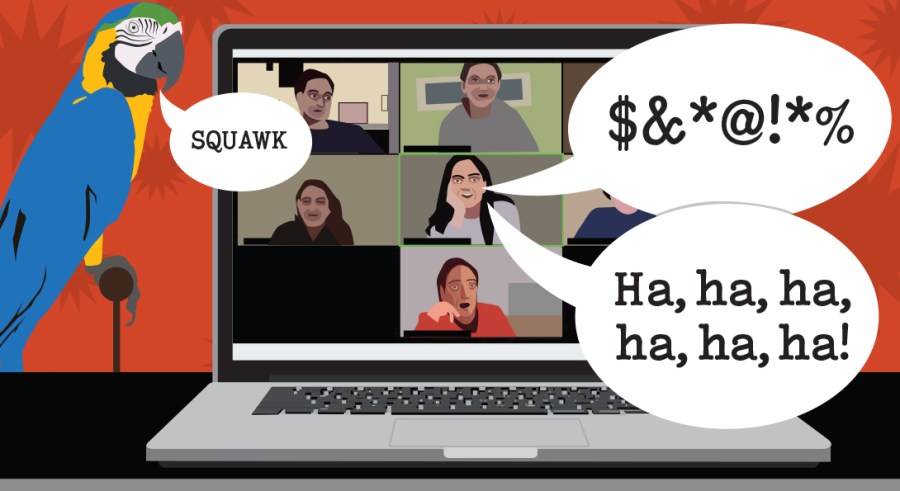
While an online discussion with companions doesn’t really need a lot of thought, the equivalent doesn’t go for when you are having a discussion with educators. You ought to be cautious with capitalization, as writing in ALL-CAPS can be viewed as YELLING!  not only that, it will also be considered discourteous. Likewise, a joke in many cases be seen as an inconsiderate comment. Therefore, you need to ensure that your point doesn’t lose all sense of direction in interpretation.

Be Accurate and Factual

The internet is a tremendous spot with data coming from a wide range of sources. To this end you ought to be cautious while giving data. It’s essential to check all that you read and incorporate sources when offering guidance or data.

Try not to Use Sarcasm Freely

While face to face, we speak with the assistance of looks and signals. Passing on a similar message online can be more challenging. This is particularly evident with regards to sarcastic humour, as it is ordinarily unimaginable to expect to send the tone of voice when sending message. A cheerful joke can be seen diversely in the text. You should be cautious with regards to making the goal behind your words as clear as could be expected, which is the reason sarcasm is forbidden in most occasions. Emojis and smileys can be useful when passing on sarcasm or humour.

Be Polite as You Seem to be In Person

Being polite on the internet ought to be pretty much as normal as, all things considered. Sadly, that isn’t true as a rule. Countless individuals will more often utilize the internet as a cover and their showcase as a safeguard, which prompts them composing what they could never say out in the open.

A critical piece of netiquette is just typing what you would be alright with expressing to somebody’s face. Thus, being aware and polite to others ought to be essential for your communication online. Furthermore, if you wouldn’t say it to somebody’s face, don’t say it online either.

Use Proper Grammar and Punctuation

Many individuals will generally fail to remember the guidelines that apply when conveying message online. Further, falling back on appropriate language and punctuation can cause the message to appear to be more professional and thought out. In addition to the fact that it makes your text more readable, yet it can likewise set you up for professional writing that you may do later on. Contemplate what you might want to understand yourself.  It should be easy to read and comprehensible. That way, you will save valuable time for somebody perusing your email, message, remark, or post. Thus, make sure to keep your composed correspondence formal and professional, and save alternate ways and text speak for your companions.

Remember That Nothing Is Private Online and Respect People’s Privacy

Online protection is something you should remember when composing anything. Most things you post and offer are likely to be there for quite a while. This implies that you should avoid anything considered improper and inconsiderate. Also, never forward private messages or photographs without the consent of those associated with the correspondence.

Treat others’ protection the same way you would need others to deal with your private data. You shouldn’t give the individual data of your colleagues and educators online to anybody. This implies being cautious with passwords, whereabouts, private discussions, and pictures. The equivalent goes for both your and others’ data, as it tends to be dangerous to circulate any of it without caution.

Respect Others’ Opinions

You ought to know that you’re not continuously going to agree with the assessments of your friends or teachers. In any case, remember that you have to be respectful in conversations. You can contradict somebody and regard their perspectives simultaneously. In this way, regard others’ perspectives and avoid putting down assessments that are unique in relation to yours. You can differ or talk about with somebody, obviously, however be sensitive and do that consciously.

ONLINE SHOPPING: ADVANTAGES AND DISADVANTAGES

These days, the vast majority incline toward online shopping. Some utilize the conventional approach of shopping, and some are utilizing the online based strategy to shop.

The Internet has altered the manner in which we shop. As a result of the various benefits and advantages, an ever-increasing number of individuals these days incline toward purchasing things online over the customary technique for going into stores.

BENEFITS

Convenience

Convenience is the greatest advantage. What other place would you be able to easily shop at 12 PM while in your night wear?

There are no lines to stand by in or cashiers to find or assist you with your buys, and you can do your shopping in minutes. Online shops offer us the chance to shop every minute of every day, and furthermore reward us with a ‘no pollution’ shopping experience. There could be no greater spot to purchase enlightening items like digital books, which are accessible to you immediately, when the installment goes through. Downloadable things bought online kill the requirement for any sort of actual material whatsoever, also, which helps the climate!

Better costs

Modest arrangements and better costs are accessible on the online, since items come to you direct from the producer or merchant without including brokers. In addition, it’s simpler to look at costs and track down a more ideal arrangement. Numerous internet-based locales offer markdown coupons and refunds. In addition to the fact that prices are better, you can save money on taxes too, since online shops are possibly needed to gather a sales tax assuming they have an actual area in your state. Factor in the saved cost of gas and parking and you have saved yourself truckload of cash!

More choices

The decisions online are astonishing. You can observe practically any brand or thing you’re searching for. You can get in on the most recent worldwide patterns without burning through cash on airfare. You can shop from retailers in different parts of the state, country, or even world as opposed to being restricted to your own place. A far greater selection of colors and sizes than you will find locally are at your disposal. Additionally, the stock is substantially more ample, so you’ll forever have the option to track down your size and shading. A few online based shops even acknowledge orders for unavailable things and ship when they come in.

No crowds

Particularly during occasions, celebrations, or the weekends, there can be a particularly immense headache. Additionally, being squashed in the crowd of customers in some cases causes us to feel hurried or rushed. You don’t need to fight for a parking place. These issues can be stayed away from when you shop online.

No pressure

Periodically when we’re out shopping, we wind up purchasing things that we don’t actually require, because shopkeepers pressure us or use their selling abilities to urge us to make these buys.

DISADVANTAGES

Negative environmental impact of packaging

Having your purchased item packed in few layers of plastic and cardboard packing and conveyed right to your front door is really great for you, yet not completely ideal for the climate. Regardless of whether you attempt to reuse the cardboard, you’re making waste by shopping online.

Transporting issues and delays

 Indeed, even the greatest and best transportation organizations and online retailers have their awful days, so it’s absolutely impossible to guarantee that you’ll get your hands on your purchase in time except if you get it from a store. Things get lost, bypassed, harmed, or conveyed to some unacceptable location more regularly than you can envision.

Risk of fraud

 Assuming you’re shopping online, there’s a bigger danger of fraud: Visa tricks, phishing, hacking, data fraud, fake items, fake sites, and different tricks are normal.

Investing a lot of time online

Particularly assuming your occupation necessitates that you check out a PC the entire day, you may get worn out during that screen time. Shopping online can transform into a long-distance race of looking over and clicking down deep, dark holes and in no time, you’ve been online for the majority of the day. The internet is a great spot to visit, yet you likely don’t have any desire to live there.

You don’t know precisely the thing you’re getting

 Except if you are personally acquainted with a brand or item, purchasing online requires an act of pure trust, one that doesn’t generally end in support of yourself. Sizes are regularly uncertain. You can’t decide surface, texture, fit, cut, quality, haul, or durability just by checking out a photograph. Items that looked incredible may feel shoddy, awkward or modest when you grasp them.

TIME MANAGEMENT

Time management is the most common way of arranging and controlling how long to spend on specific task. Further, it empowers a person to finish more in a limited timeframe, brings down pressure, and prompts career achievement.

Time management is the most common way of getting sorted out and arranging how to split your time between specific task and needs. The advantages of time management incorporate better habits and more productivity. Furthermore, it expands your concentration, assembles certainty, and permits you to design your time more effectively. Powerful time management helps leaders, business people, and entrepreneurs accomplish their objectives. Dealing with your time effectively further develops balance between fun and serious activities and builds joy. Additionally, it diminishes pressure and permits you to accomplish your objectives quicker and more straightforward.

Time management benefits you in each aspect of your life. It is essential to help you to focus on better. Good time management likewise makes you more deliberate with regards to how to contribute your time. Dealing with your time, assists you with working more efficiently, so you can accomplish more quicker than expected and catch more opportunities. Thereafter, it also assists you with augmenting your assets and plan your day effectively. Not only that, time management helps you with working more efficiently, guaranteeing you accomplish more useful work significantly quicker.

ADVANTAGES

1. Diminished pressure

Figuring out how to deal with your time can decrease your feelings of anxiety. Since you can plan more smaller pieces of your day, you can leave space for inconsistencies or issues that may cause pressure.

2. Expanded efficiency

When you ace time management, you’ll be better prepared to follow through with jobs or activities more rapidly, expanding your productivity. You might see that you’re wrapping up a job quicker than expected and stressing less with regards to deadlines. By following a schedule, tracking deadlines in management programming or keeping a daily agenda of approaching deadlines, you are more likely to arrange your work around those deadlines.

3. Positive reputation

At a point when you stay updated about your work and stay on a timetable, your associates and manager are probably going to acknowledge as they can depend on you and hold you in higher respect. You will be known as somebody who doesn’t hesitate or push undertakings off on others since you’re not sure about achieving them. A positive reputation in the working environment can prompt professional success, expanded acquiring potential, more obligations and better working environment.

4. More energy for free time

Successful time management procedures make you aware when an assignment will be finished, lessening how much energy you may spend stressing whether you can complete all of your work for the afternoon. All things being equal, you can design time for a break from your standard everyday practice. Since time management permits you to arrange when your work will be done before you start it, you can save energy for your leisure time. Having more spare energy can further develop your balance between fun and serious activities and guarantee you’re saving some time for yourself.

5. Clear day by day objectives

By using time management to organize what you need to do each day, you can simplify your day and spend less time deciding what to do or how to do it.

CONSEQUENCES OF POOR TIME MANAGEMENT

Poor reputation
Wasted time
Low quality of work
Loss of control
Helpless work process

Bridge to Terabithia by Katherine Paterson

Bridge to Terabithia is one of the most classic books you may ever read about friendship, imagination, and loss. And, with all of these elements, the book won Katherine Paterson her first Newbery Medal in 1978 (she won another for Jacob Have I Loved in 1981). The novel won a lot of other honors, too, including being named an ALA Notable Children’s Book in 1977 and a School Library Journal Best Book of 1977.

Summary

This is a story about a boy named Jessie who lives with his family in a small town called Lark Creek and has a hard family life. He likes to draw and to run, and is kind of lonely; he’s out-of-place in his family and the only person he really gets along with is his little sister May Belle. He’s about to enter the fifth grade and has been training all summer to be the fastest runner in school.  

The Burke family moves in next door.  Their daughter, Leslie, is creative and smart and becomes Jessie’s classmate.

When the big day of the race arrives at school, however, Jessie gets beaten by Leslie. And, at first Jess is crushed, but later he and Leslie end up becoming good friends.

Since they’re both outcasts, Jess and Leslie spend a lot of time together. They take over a part of a nearby forest that’s only accessible by swinging on a rope over the creek, and name it Terabithia. In this imaginary land, they are king and queen. They can escape from the bullies and the boredom of fifth grade, and dream all they like. When Janice Avery, the resident bully, takes May Belle’s Twinkies, Jess and Leslie get revenge by writing her a fake love note and humiliating her.

The most of the school year has passed. Jess gives Leslie a puppy for Christmas, and she becomes a member of their Terabithia kingdom. They also assist Leslie’s father with the construction of their new home. When they discover Janice the bully is truly upset, they work together to comfort her.

By Easter, it’s been raining continuously for a month and crossing the creek to Terabithia has gotten more difficult. Leslie attends Easter service with Jess’s family. After the service, Leslie and Jess, along with May Belle, debate whether people who do not believe in the Bible go to hell.

One day after Easter, Jess thinks it’s too dangerous to go to Terabithia, with all of the rain that’s been coming down. But he forgets about it when Miss Edmunds, the school music teacher, calls and invites him to a museum with her. He goes and has one of the best days of his life. However, when he returns home, he discovers that Leslie had gone to Terabithia without him and died while attempting to cross the creek.

At first, Jess refuses to believe it. In meeting with Leslie’s parents and spending time with her dog, he slowly begins to understand what he’s lost…but also what he gained by having Leslie in his life at all.

He goes to Terabithia to try to figure out what’s going on, but his younger sister follows him and nearly drowns in the water. In rescuing her he realizes that  he has gained some of Leslie’s bravery.

Later, Jess returns to Terabithia and constructs a bridge across the creek. When May Belle follows him again, he welcomes her to Terabithia and guides her across the bridge.

Review

Despite portraying the power of imagination and the innocence of childhood, this is not really a children’s book in my opinion as it touches upon various adult-related themes and challenges many of the social conventions established in society.  It displays unusual relationships that children may not understand.  Of course, by that fact alone, it does not make the book false or bad, just, shall we say, unique.  

And of course, there is death.  One of the main characters in the story dies.  How is a child supposed to react to this?  How do children react to the death of someone they know?  There doesn’t seem to be a real answer presented to us from the author, but maybe the lack of an answer through Jessie’s struggles to come to understand his situation is relatable enough for children. 

All of these may fly over the heads of children. I do not know how children would take the book or what they would think but other than that it is a great read!

MENTAL HEALTH AWARENESS

Mental illness affects 19% of the adult population, 46% of teenagers, and 13% of children each year.There could be people struggling with their mental health right around you. It could be your family member, friend, teacher. However, only few of them receive thew right kind of help whereas the others don’t because of the stigma attached to it.Mental health is as important as our physical health.I causes disturbances in thinking, behaviour, energy or emotion which make it difficult to cope with the regular activities of life.

COMMON MENTAL HEALTH CONDITIONS:

  • ANXIETY DISORDERS:According to certain studies and statistics, more than 18% of the adults go through this every year. It also includes post traumatic stress disorder(PTSD), obsessive compulsive disorder(OCD), panic attacks, generalised anxiety disorder and specific phobias.
  • MOOD DISORDERS: Mood disorders usually includes depression and bipolar depression.Statistically, it affects around 10% pf adults each year and are characterised by difficulties in regulating ones mood.

STIGMA AROUND MENTAL HEALTH:

The general perception of mental health has improved over the past few decades but studies show that the stigma around mental health is still powerful largely due to lack of education and stereotypes.People happen to attach more negative stigma to mental health than other way more serious diseases. The stigma around it not only affects the number of people seeking treatment but also number of resources available for proper treatment.

WAYS TO HELP:

  • SHOWING INDIVIDUALS RESPECT AND ACCEPTANCE removes a significant barrier which helps in coping with the illness.Its important for them to feel like they are one among us.The best way to help them is to make them feel normal and not be treated like they are ill.
  • ADVOCATING WITHIN OUR CIRCLES OF INFLUENCE is ensuring that these individuals have the same rights as you or any other person.
  • STAYING POSITIVE
  • HELPING OTHERS
  • DEVELOPING COPING SKILLS
  • GETTING ENOUGH SLEEP

EARLY WARNING SIGNS:

  • Eating or sleeping too much or too little
  • Pulling away from people and usual activities
  • Having low or no energy
  • Feeling numb or like nothing matters
  • Feeling helpless or hopeless
  • Feeling unusually confused, forgetful, on edge, angry, upset, worried or scared
  • Yelling or fighting with family and friends
  • Experiencing severe mood swings that cause problem in relationships
  • Hearing voices or believing things that are not true
  • Having persistent thoughts and memories you can’t get out of your head
  • Inability to perform daily tasks like taking care of your kids or getting to work or school.

Appropriation in mental health affects how we think, feel and act. It also helps determine how we handle stress, relate to others and make choices. Mental health is important at every stage of life from childhood and adolescence through adulthood. People with mental health problems can getter and many recover completely.

Juvenile Justice System In India

Juvenile offending is the act of participating in some unlawful behavior against the society by the persons young in age. The term Juvenile Justice refers to fair and just treatment to youth or children in shaping their personality in the society. Juvenile Justice System means a procedure to tackle with the issues related to minors with respect to society. The main purpose of the system is to protect the minors by applying effective treatment and creating a positive human developing environment. The main aim of the system is to adopt measures that are rehabilitative in nature instead of being punitive. If any means a young individual commits or minor turns lawbreaker, then the Juvenile courts takes up the duty to foster delicate treatment and care through special institutions. Thus, it would encourage the Juvenile delinquents to find their path to lead a much better and decent life. The system of Juvenile Justice is considered as one of the most enlightening and developing system worldwide, focusing on the children’s growth. The central focus is to provide proper care to the unprotected child and the reformation of deviants.

Earlier there was no separate system for the juveniles. They were held into prison without trials and were even locked behind the bars accompanied by the desensitized criminals. It was prescribed by the penologists in the nineteenth century that punishment should be equal for both juveniles and adults. As per the history records, juveniles were treated similar to the adult criminals and were imprisoned, hanged and even transported.

In India, the Juvenile Justice System (JJS) aroused during the British rule. Prior the rule of the British, the juveniles were treated either by the family or society in general. Gradually, the Indian Constitution provided distinct treatment for children and women. The issue of juvenile lawbreakers were given separate treatment. The light was thrown on the Juvenile Justice System aftermath the Nirbhaya case, 2012 Delhi gang rape and murder when people expressed their hostile nature attitude and sentiments towards the court’s decision. The minor who was involved in the brutal case was demanded for death sentence by the public. There was chaos and roaring in the Indian parliament, as a result of which new law came into existence. The Juvenile Justice Care and Protection of Children 2015, was a provision of comprehensive nature for minors found and reported guilty of conflict with the law. The law also deals with minors in need of protection and care. This was implemented taking into considerations the conventions of the rights of the child along with other related international instruments. The conception that the children are not mature compared to adults and are not aware of the nature and post effects of their acts led to the development of the Juvenile Justice System worldwide. The idea is based on the principle of doli incapax i.e. children are off the capacity to form intentions of criminal nature. Hence, a minor cannot be held liable for any unlawful act. It should be noted that there is no general consensus about the definition of youth and child. In the matter of age or adultery, different statutes have different mandates. The new act is seemingly a progressive one and a policy shift is observed in the legislation of Juvenile Justice. It was mainly designed to adopt the parens patriae philosophy and prescribe institutionalized care and protection. Punishment of delinquents in case of serious offence is the only shift observed. The socialization and reformation policy of the young individuals with punishment as an exception is being adopted by the Juvenile Justice System. It can also be distinguished from the general criminal courts as in adopting informal hearing. In the existing Juvenile Justice act of 2015, significant amendments were made last year.

The principle on which Juvenile Justice System is based is rights of the child and welfare of the society. It’s main center of focus is rehabilitation and reformation. The aim is to maintain equality and opportunities available to the minors for their personality development. There should be personality transformation from negative to positive. However, taking into account the former experiences, it is necessary to bridge the broad gap between the practice and theory. In order to do so, we have to build an efficient and good infrastructure Juvenile Justice Administration. The dreams are carried by the new legislation and it is our duty to make those dreams reality.

TRICHOPHOBIA: FEAR OF HAIR

Phobias are outrageous fears of specific items or circumstances.

The term trichophobia comes from the Greek words that signify “hair” (trichos) and “fear” (phobia). An individual who has trichophobia has a constant fear of hair, especially seeing or contacting free hairs on the body, clothing, or somewhere else. This fear can prompt various side effects that might disrupt regular daily existence.

SYMPTOMS

The side effects of trichophobia are different for every individual and fluctuate according to the degree of severity. Likewise with different fears, individuals experience both physical and emotional responses because of the cause of their fears.

PHYSICAL SYMPTOMSEMOTIONAL SYMPTOMS
Increased heart rateA need to get away
Rapid breathingA feeling of fear
SweatingFeeling helpless
TremblingExcess tension or panic situation
DizzinessSensations of falsity
Difficulty breathingfeeling you might die

Children frequently experience an alternate arrangement of side effects with fears. They will most likely be unable to communicate their fear as promptly as grown-ups. Therefore, a youngster might cry, have a fit, or stick to their guardian when apprehensive.

CAUSES

Pinpointing the specific reason for trichophobia might be troublesome. The fear might come on unexpectedly or foster bit by bit over the long run. Some researchers think that it might emerge from:

  • stress or nervousness
  • depression or other mental health conditions, like trichotillomania
  • OCD (obsessive compulsive disorder)
  • Other danger elements might make an individual more vulnerable to specific fears. They include:
  • An individual might have an awful involvement in hair, hair styles, or other traumatic circumstance connected with hair, like patterned hair loss.
  • Fears are known to influence youngsters and grown-ups the same. Some might appear as soon as age 10 or have a later beginning.
  • Having a direct relation who likewise manages fears or nervousness may likewise put you at higher danger for creating fears yourself. This can be hereditarily acquired or a learned conduct.
  •  Individuals with more delicate personalities might be at a higher danger of creating fears.
  • Individuals may likewise foster fear by learning about or catching wind of awful circumstances that include the feared object.

DIAGNOSIS

In view of the symptoms depicted above, you might have the option to decide whether you have trichophobia. On the off chance that your symptoms are gentle, you may feel like the condition is sensible. For more serious symptoms that are impeding your capacity to work regularly in your day-to-day existence, it is essential to converse with your doctor. While trichophobia isn’t officially perceived by the DSM-5 as a different condition, your primary care physician might determine you to have a particular fear in view of your symptoms. The indicative rules for specific phobias are:

  • Absurd, unnecessary fear
  • Quick nervousness reaction to the source of the fear (for this situation, hair)
  • A critical effect on an individual’s life and capacity to work
  • Analysis likewise requires the symptoms to have been available for no less than a half year and not be brought about by another condition.

TREATMENT

For trichophobia, you may start by learning and rehearsing various relaxation methodologies like profound breathing and moderate muscle relaxation. Whenever you have taken in these, you may begin simply by envisioning yourself close to free hair while rehearsing those relaxation methodologies.

Then, you may continue on to a photo of free hair before dynamically working up to definitely seeing free hair or really having it on your skin or apparel. After some time, blending the relaxation reaction with the source of your fear can assist you with figuring out how to deal with your tension at whatever point you experience the feared object.

Cognitive-behavioral therapy (CBT) may likewise be useful to address the fundamental considerations, sentiments, and practices that can add to phobic responses.

While prescriptions are not normally demonstrated in the treatment of explicit fears, they may at times be utilized related to conduct medicines to deal with a portion of the indications of uneasiness.

SUICIDE: HOW TO PREVENT?

In most of cases, individuals who are feeling self-destructive are managing conditions that can be reduced if they can get the guidance that they require. Meanwhile, there are lot of things that loved ones can do to assist masses who are discouraged or thinking about self-destruction.

Helping someone involves the ability to look for warning signs of suicide, which consist of:

  • Outrageous emotional episodes
  • Sensations of sadness
  • Offering assets
  • Losing interest in different activities
  • Discussing demise or suicide
  • Bidding farewell to loved ones
  • Saying that they are a burden
  • Pulling out from loved ones

Suicide is a serious issue and any suicide danger or endeavor ought to be approached in a serious way. As indicated by the Centers for Disease Control and Prevention, there were in excess of 47,000 suicides in 2017.Coming up next are some suicide counteraction tips suggested by the non-benefit association Suicide Prevention Resource Center.

TIPS

1.On the off chance that the individual requests that you not tell anybody, know that you might need to break your guarantee to help them. Having your companion or cherished one alive yet angry with you is desirable over keeping a guarantee that prompts them ending their life.

2. It might take some tolerance and determination, however encourage them to make a meeting with a mental health professional. Whenever they have made the arrangement, keep in touch to urge them to finish with arrangements and treatment plans. There are likewise mental health associations you can contact for more data.

3. While you might be reluctant to raise the subject of suicide for fear of giving them thoughts, the truth of the matter is that those thoughts and sentiments are there paying little mind to what you may say. How you are truly treating and bringing the subject up is offering them a chance to communicate with you and this permit you to help them.

4. Assuming they appear to be in imminent danger of harming themselves, don’t let them be. Step forward and remove any means of weapon that they could use to hurt themselves, like weapons or pills.

5. Despite the fact that a few suicides might appear to emerge suddenly but there are chances that the individual had been upset or depressed for quite a while. Attempting to remove the disgrace around discouragement and empowering individuals who are harming to get the assist that they with requiring immediately can go far in saving lives in light of the fact that the issue is managed before it gets really awful.

6. Having the option to converse with a mindful companion and unburden yourself from your difficulties can go far in reducing the tension that can prompt a suicide attempt. Being a decent listener doesn’t need any unique abilities. Be patient and tolerating, however escape from getting into argument or attempting to offer shortsighted arrangements.

7. At a point when an individual commit suicide, this isn’t really a sign that they need to pass on. All things being equal, it’s a pointer that they are in extraordinary emotional pain, yet don’t have the idea how to manage it. Suicide has begun to resemble their main choice to get away from a circumstance that they don’t have the idea how to deal with. If they are alive, in any case, they are looking for an option in contrast to death and attempting suicide might be their approach to connect and say that they need assistance.

8. While you might imagine that their concerns aren’t sufficiently significant enough to warrant suicidal considerations or practices, the main thing is the manner by which they see them to be. In the event that it feels essential to them, then, suicide might appear to be a valid choice.

Above all, never ignore suicidal talk or dangers. Assuming an individual is offering remarks that appear to demonstrate that they are discouraged or considering ending their own life, you ought to consistently treat them in a serious way