GIAN (Global Initiative of Academic Networks) courses

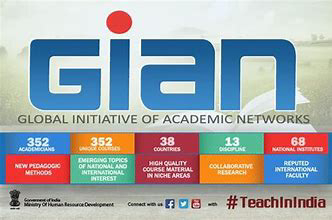
GIAN (Global Initiative of Academic Networks) courses are a program initiated by the Indian government to promote international collaboration and academic exchange. Here’s a detailed overview:
_Objective:_
GIAN aims to facilitate international faculty and scholar participation in Indian educational institutions, promoting global perspectives and expertise.
_Course Structure:_
– Short-term courses (1-2 weeks)
– Taught by international faculty and scholars
– Interdisciplinary and cutting-edge topics
– Hands-on training and workshops
_Subject Areas:_
– Engineering
– Science
– Humanities
– Social Sciences
– Management
_Benefits:_
– Exposure to global perspectives and expertise
– Enhanced research collaborations
– Networking opportunities
– Access to international resources and funding
– Certification and credits
_Eligibility:_
– Indian students, researchers, and faculty
– International students and scholars (in some cases)
_How to Apply:_
– Check the GIAN website for course announcements
– Register and apply online
– Meet the course-specific eligibility criteria
_Funding:_
– Government funding for course fees and logistics
– Scholarships and travel grants available
_Implementation:_
– Courses are conducted in Indian educational institutions
– International faculty and scholars are invited to teach
– Local faculty and experts also participate
_Impact:_
– Enhanced global competitiveness of Indian education
– Increased international collaborations and research
– Exposure to new ideas and pedagogies
– Capacity building and skill development
By participating in GIAN courses, students, researchers, and faculty can gain valuable international exposure, expertise, and networking opportunities, contributing to India’s global academic and research landscape.

Contributor Role Taxonomy (CRediT)

 CRediT is a community-owned 14 role taxonomy that can be used to describe the key types of contributions typically made to the production and publication of research output such as research articles.

Conceptualization

Ideas; formulation or evolution of overarching research goals and aims.

Software

Programming, software development; designing computer programs; implementation of the computer code and supporting algorithms; testing of existing code components.

Resources

Provision of study materials, reagents, materials, patients, laboratory samples, animals, instrumentation, computing resources, or other analysis tools.

Data curation

Management activities to annotate (produce metadata), scrub data and maintain research data (including software code, where it is necessary for interpreting the data itself) for initial use and later re-use.

Formal analysis

Application of statistical, mathematical, computational, or other formal techniques to analyse or synthesize study data.

Supervision

Oversight and leadership responsibility for the research activity planning and execution, including mentorship external to the core team.

Validation

Verification, whether as a part of the activity or separate, of the overall replication/reproducibility of results/experiments and other research outputs.

Visualization

Preparation, creation and/or presentation of the published work, specifically visualization/data

 presentation.

Writing – original draft

Preparation, creation and/or presentation of the published work, specifically writing the initial draft (including substantive translation).

Methodology

Development or design of methodology; creation of models.

Project administration

Management and coordination responsibility for the research activity planning and execution.

Writing – review & editing

Preparation, creation and/or presentation of the published work by those from the original research group, specifically critical review, commentary or revision – including pre- or post-publication stages.

B.Ed (Bachelor of Education)

The B.Ed (Bachelor of Education) entrance exam is a competitive examination conducted by various universities and institutions to select candidates for admission to their B.Ed programs. Here’s a detailed overview:

_Objective:_
The B.Ed entrance exam assesses a candidate’s aptitude, knowledge, and skills to become a teacher.
_Eligibility:_
– Candidates must have a bachelor’s degree (or equivalent) in any discipline with a minimum of 50% marks.
– Some institutions may have additional eligibility criteria.
_Exam Pattern:_
– The exam pattern varies across institutions, but typically includes:
    – Multiple Choice Questions (MCQs)
    – Short-answer questions
    – Essay questions
– Sections:
    – General English
    – General Knowledge
    – Teaching Aptitude
    – Subject-specific knowledge (depending on the institution)
_Syllabus:_
– General English: Grammar, Vocabulary, Comprehension
– General Knowledge: Current Affairs, History, Geography, Science
– Teaching Aptitude: Pedagogy, Child Development, Educational Psychology
– Subject-specific knowledge: Varies depending on the institution and program
_Scoring:_
– Marks vary across institutions, but typically:
    – 1 mark for each correct answer
    – 0.25 marks deducted for each incorrect answer
_Result:_
– Candidates are ranked based on their scores.
– Cut-off marks vary across institutions.
_Admission Process:_
– Candidates must apply to B.Ed programs separately, using their entrance exam scores.
– Counseling and admission processes follow.
_Important Dates:_
– Registration starts: March-April
– Exam date: May-June
– Result declaration: July-August
_Tips and Preparation:_
– Focus on general knowledge and current affairs.
– Improve English language skills.
– Study teaching aptitude and pedagogy.
– Practice with sample papers and online resources.
By understanding the B.Ed entrance exam pattern, syllabus, and preparation tips, candidates can prepare effectively for this competitive exam.

Cochin University of Science and Technology (CUSAT) conducts the CUSAT Common Admission Test (CAT)

The Cochin University of Science and Technology (CUSAT) conducts the CUSAT Common Admission Test (CAT) for admission to various undergraduate and postgraduate programs. Here’s a detailed overview:

_Objective:_
CUSAT CAT assesses candidates’ knowledge, skills, and aptitude for admission to programs like engineering, law, and management.
_Eligibility:_
– Candidates must have passed or be appearing in the 10+2 examination with relevant subjects.
– Specific eligibility criteria vary depending on the program.
_Exam Pattern:_
– CUSAT CAT consists of multiple sections:
    1. Mathematics (60 questions)
    2. Physics (60 questions)
    3. Chemistry (60 questions)
    4. English (60 questions)
    5. General Knowledge (20 questions)
– Duration: 3 hours
– Type: Multiple Choice Questions (MCQs)
_Syllabus:_
– Mathematics: Algebra, Calculus, Geometry, Trigonometry
– Physics: Mechanics, Thermodynamics, Electromagnetism, Optics
– Chemistry: Organic, Inorganic, Physical Chemistry
– English: Grammar, Vocabulary, Comprehension
– General Knowledge: Current Affairs, History, Geography, Science
_Scoring:_
– 1 mark for each correct answer
– 0.25 marks deducted for each incorrect answer
_Result:_
– CUSAT CAT scores are used for admission to CUSAT programs.
– Rank lists are prepared based on scores.
_Admission Process:_
– Candidates must apply to CUSAT programs separately, using their CAT scores.
– Counseling and admission processes follow.
_Important Dates:_
– Registration starts: February
– Exam date: April
– Result declaration: May
_Tips and Preparation:_
– Focus on core subjects (Mathematics, Physics, Chemistry).
– Practice with sample papers and online resources.
– Improve English language skills.
– Stay updated on current affairs.
By understanding the CUSAT CAT exam pattern, syllabus, and preparation tips, candidates can prepare effectively for this entrance exam.

National Aptitude Test in Architecture (NATA)

The National Aptitude Test in Architecture (NATA) is a national-level entrance exam conducted by the Council of Architecture (CoA) for admission to undergraduate programs in architecture. Here’s a detailed overview:

*Objective:*
NATA measures the aptitude of candidates in the field of architecture, assessing their drawing, creativity, observation, and critical thinking skills.
*Eligibility:*
– Candidates must have passed or be appearing in the 10+2 examination with mathematics as a subject.
– There is no age limit for appearing in NATA.
*Exam Pattern:*
– NATA consists of two parts:
    1. Part A (Multiple Choice Questions): 120 questions, 2 hours duration
    2. Part B (Drawing Test): 3 questions, 2 hours duration
– The exam is conducted online, and candidates can take it from anywhere.
*Syllabus:*
– Part A:
    – Mathematics (30 questions)
    – General Aptitude (30 questions)
    – Drawing and Visual Composition (60 questions)
– Part B:
    – Drawing and Sketching (3 questions)
*Scoring:*
– Part A: 1 mark for each correct answer, 0.25 marks deducted for each incorrect answer
– Part B: 70 marks for each question
*Result:*
– NATA scores are valid for one year.
– Candidates can appear for NATA multiple times to improve their scores.
*Admission Process:*
– Candidates must apply to participating institutions separately, using their NATA scores.
– Institutions may conduct their own counseling and admission processes.
*Important Dates:*
– Registration starts: March
– Exam date: April-May
– Result declaration: June
*Tips and Preparation:*
– Practice drawing and sketching regularly.
– Focus on mathematics and general aptitude.
– Use online resources and coaching classes for preparation.
– Time management is crucial; practice solving questions within the given time frame.
By understanding the NATA exam pattern, syllabus, and preparation tips, candidates can better prepare themselves for this crucial entrance exam.

Top Exam for Medical Entrance in India

Here are the top medical entrance exams in India:

1. *NEET (National Eligibility cum Entrance Test)*: NEET is the most prominent medical entrance exam in India, conducted by the National Testing Agency (NTA). It is a prerequisite for admission to undergraduate medical courses such as MBBS, BDS, and AYUSH programs.
2. *AIIMS (All India Institute of Medical Sciences)*: The AIIMS entrance exam is conducted for admission to the prestigious All India Institute of Medical Sciences (AIIMS) and other affiliated colleges.
3. *JIPMER (Jawaharlal Institute of Postgraduate Medical Education and Research)*: The JIPMER entrance exam is held for admission to the Jawaharlal Institute of Postgraduate Medical Education and Research (JIPMER) and its affiliated colleges.
4. *AFMC (Armed Forces Medical College)*: The AFMC entrance exam is conducted for admission to the Armed Forces Medical College (AFMC), Pune.
5. *State-level exams*: Some states in India conduct their own medical entrance exams for admission to undergraduate medical courses. Examples include the Maharashtra Common Entrance Test (MHT-CET), the Karnataka Common Entrance Test (KCET), and the Tamil Nadu Professional Courses Entrance Examination (TNPCEE).
These exams are highly competitive, and students must prepare thoroughly to secure a good rank. It is essential to check the eligibility criteria, exam dates, and syllabus for each exam before applying.

Top Business Schools in Africa

Here are some of the top business schools in Africa ¹ ² ³:

– *University of Cape Town*: Located in South Africa, this university is a top choice for business education.
– *University of Pretoria*: Also located in South Africa, this university’s Gordon Institute of Business Science is a highly-ranked business school.
– *University of the Witwatersrand*: Located in South Africa, this university’s Wits Business School is a top choice for business education.
– *University of Stellenbosch*: Located in South Africa, this university’s business school is triple-accredited and offers a range of programs.
– *University of Ghana*: Located in Ghana, this university is a top choice for business education in West Africa.
These schools offer a range of programs, including MBAs, postgraduate diplomas, and doctorates, and are recognized for their academic excellence and strong alumni networks.

Top Business Schools in Australia

Here are some of the top business schools in Australia ¹ ² ³:

– *University of Melbourne*: Ranked number one in Australia, the University of Melbourne is a public research university in Melbourne, Australia. Melbourne Business School is the University of Melbourne’s graduate school in business and economics.
– *Monash University*: Ranked number two, Monash University was founded in 1958 and is the largest university in Australia in terms of student numbers. It is a member of the Group of Eight, an organisation of Australia’s leading research universities.
– *Australian National University*: Ranked number three, the Australian National University (ANU) is a national research university located in Australia’s capital city, Canberra. The ANU College of Business and Economics offers research and education across four research schools: accounting, economics, finance, actuarial studies and statistics and management.
– *University of Sydney*: Ranked number four, the University of Sydney Business School was established in 2011 and was formed from the School of Business within the previous Faculty of Economics and Business.
– *UNSW Sydney*: Ranked number five, UNSW Business School has been ranked the number one business school in Australia by AFR BOSS for the second consecutive year.

Top Business Schools in USA

Here are some of the top business schools in the United States ¹ ² ³:

– *Stanford Graduate School of Business*: Ranked number one in the US and globally, Stanford Graduate School of Business offers the best full-time MBA program.
– *The Wharton School*: Regaining its number one position, The Wharton School is one of the top business schools in the US.
– *University of Chicago Booth School of Business*: Ranked eighth in the US, the University of Chicago Booth School of Business offers one of the best MBA programs.
– *Yale University*: The best MBA for consulting, Yale University is one of the top business schools in the US.
– *New York University*: The best MBA for finance, New York University is one of the top business schools in the US.
– *MIT Sloan*: One of the top five best US MBA programs, MIT Sloan is a top business school in the US.
– *Harvard Business School*: One of the top business schools in the world, Harvard Business School is a top choice for business education.
– *Columbia Business School*: One of the top business schools in the world, Columbia Business School is a top choice for business education.
– *University of Michigan Ross*: One of the top business schools in the US, University of Michigan Ross offers a top MBA program.
– *Dartmouth Tuck*: One of the top business schools in the US, Dartmouth Tuck offers a top MBA program.

Top Business Schools in Europe

Here are some of the top business schools in Europe ¹:

– *HEC Paris*: Ranked number one for the fifth consecutive year, HEC Paris is a leading French business school.
– *London Business School*: Ranked number two, London Business School is a top choice for business education.
– *IESE Business School*: Located in Spain, IESE Business School is ranked number three.
– *ESCP Business School*: Ranked number four, ESCP Business School is another top French business school.
– *SDA Bocconi*: Located in Italy, SDA Bocconi rounds out the top five.
These rankings are based on the combined performance of Europe’s leading schools across the Financial Times’ individual program rankings ¹.

IBPS PO/Clerk (Institute of Banking Personnel Selection) Exams

 The Institute of Banking Personnel Selection (IBPS) Exam is a series of competitive exams in India designed to recruit candidates for various positions in public sector banks, regional rural banks (RRBs), and other financial institutions. IBPS was established in 1975 as a Personnel Selection Services (PSS) organization and became an independent entity at the behest of the Reserve Bank of India (RBI) and public sector banks in 1984. It is governed by a board consisting of representatives from various banks, the Ministry of Finance, and other stakeholders.

IBPS Exams Overview

The IBPS conducts several exams annually, catering to different positions within the banking sector. The most prominent exams are:

  1. IBPS PO (Probationary Officer) Exam
  2. IBPS SO (Specialist Officer) Exam
  3. IBPS Clerk Exam
  4. IBPS RRB Exam (for recruitment in Regional Rural Banks)

Each of these exams targets different roles within the banking industry, from entry-level clerks to managerial positions like Probationary Officers and Specialist Officers.

IBPS PO Exam

The IBPS PO Exam is one of the most sought-after exams for candidates aspiring to secure a managerial position in public sector banks. The exam is conducted in three stages:

  1. Preliminary Exam: This is the first stage, consisting of three sections—English Language, Quantitative Aptitude, and Reasoning Ability. The exam is of 100 marks, and candidates are given 60 minutes to complete it.

  2. Main Exam: Candidates who qualify in the preliminary exam move on to the main exam. This stage includes sections on Reasoning & Computer Aptitude, General/Economy/Banking Awareness, English Language, and Data Analysis & Interpretation. There is also a descriptive paper where candidates have to write an essay or letter.

  3. Interview: Candidates who clear the main exam are called for an interview conducted by the participating banks. The interview carries 100 marks, and the final merit list is prepared based on the scores of the main exam and interview.

IBPS SO Exam

The IBPS SO Exam is conducted for recruiting Specialist Officers in various public sector banks. These roles require specialized knowledge, and the exam is held for various positions like IT Officer, Agriculture Field Officer, Rajbhasha Adhikari, Law Officer, HR/Personnel Officer, and Marketing Officer.

The selection process consists of:

  1. Preliminary Exam: Different for each role, focusing on relevant professional knowledge along with general sections like English Language, Reasoning, and Quantitative Aptitude.

  2. Main Exam: A professional knowledge test specific to the role applied for.

  3. Interview: Candidates who pass the main exam are called for an interview. The final selection is based on the performance in both the main exam and the interview.

IBPS Clerk Exam

The IBPS Clerk Exam is for recruiting clerical staff in public sector banks. This is an entry-level position, and the exam is conducted in two stages:

  1. Preliminary Exam: Similar in structure to the IBPS PO preliminary exam, focusing on English Language, Numerical Ability, and Reasoning Ability.

  2. Main Exam: It includes sections on General/Financial Awareness, General English, Reasoning Ability & Computer Aptitude, and Quantitative Aptitude. Unlike the PO exam, there is no interview stage for the Clerk exam.

IBPS RRB Exam

The IBPS RRB Exam is conducted to recruit candidates for various positions in Regional Rural Banks. The exam is held for the following posts:

  1. Office Assistant (Multipurpose)
  2. Officer Scale I (Assistant Manager)
  3. Officer Scale II (Manager)
  4. Officer Scale III (Senior Manager)

The selection process for RRBs is similar to that of the PO and Clerk exams, with preliminary and main exams, followed by interviews for Officer posts.

Eligibility Criteria

The eligibility criteria for IBPS exams generally include:

  1. Educational Qualification: Candidates must have a bachelor’s degree from a recognized university. For Specialist Officer positions, specific qualifications are required based on the role (e.g., a degree in Law for Law Officers).

  2. Age Limit: The age criteria vary slightly between different exams:

    • IBPS PO and Clerk: 20 to 30 years
    • IBPS SO: 20 to 30 years (varies based on the post)
    • IBPS RRB: Varies depending on the post (e.g., 18 to 28 years for Office Assistant, 21 to 40 years for Officer Scale III)

    Age relaxation is provided to candidates belonging to reserved categories as per government rules.

Exam Pattern

The IBPS exams follow a common pattern with a focus on:

  1. Reasoning Ability
  2. Quantitative Aptitude/Numerical Ability
  3. English Language
  4. General Awareness with special reference to Banking
  5. Computer Knowledge

For Specialist Officers, additional sections related to their specific fields are included.

Syllabus

The syllabus for IBPS exams covers a wide range of topics, including:

  • Reasoning Ability: Puzzles, seating arrangement, syllogism, coding-decoding, inequalities, and logical reasoning.
  • Quantitative Aptitude: Data interpretation, simplification, number series, quadratic equations, and arithmetic topics like percentage, profit & loss, and time & work.
  • English Language: Reading comprehension, error detection, cloze test, fill in the blanks, and vocabulary.
  • General Awareness: Banking and financial awareness, current affairs, and static general knowledge.
  • Computer Knowledge: Basics of computer operations, software & hardware, internet, MS Office, and other fundamental concepts.

Preparation Tips

  1. Understand the Exam Pattern: Familiarize yourself with the structure and marking scheme of the exam.
  2. Study the Syllabus: Cover all the topics in the syllabus systematically.
  3. Practice Regularly: Solve previous years’ question papers and take mock tests to improve speed and accuracy.
  4. Stay Updated: Regularly read newspapers and banking awareness material for the General Awareness section.
  5. Time Management: Develop the skill to manage time effectively during the exam.

Significance of IBPS Exams

The IBPS exams are highly significant for aspirants looking to secure a stable and prestigious career in the banking sector. Public sector banks offer good remuneration, job security, and numerous growth opportunities, making these exams highly competitive.

Challenges

  1. High Competition: With millions of candidates appearing every year, the competition is intense.
  2. Extensive Syllabus: The vast syllabus requires focused and consistent preparation.
  3. Evolving Patterns: The exam patterns and difficulty levels can change, requiring adaptability.

Conclusion

The IBPS exams play a crucial role in filling the vacancies in India’s public sector banks. They offer a systematic, transparent, and efficient method of recruitment, ensuring that only the most capable candidates are selected. For aspirants, cracking these exams opens the door to a rewarding career in the banking sector, contributing to the financial backbone of the country.