5 things to expect in any Online Counseling Session


Often, in our lives, we experience some happy moments,
confusing moments, nostalgic moments, regret, disappointment, frustration,
success etc.

Even though one may have lots or few friends and a
loving and supporting family, sometimes some people still feel very
uncomfortable in sharing their deep-rooted problems with their loved ones and decide
to take help from counselors.

About Personal Counseling

Personal counseling is
a one-to-one session between a client and a trained therapist, in a safe,
caring, and confidential environment. The client expresses whatever personal
problem he or she is facing be it anxiety, lack of self-love, heartbreak,
discrimination etc to the therapist.

They help their clients
in facing their problems and helps them in dealing with their emotions by
suggesting simple things such as diary writing, taking a walk, listening to
instrumental music, role -playing etc.

Introduction
to Online Counseling

During tough times like
pandemic, the mental health of the people is severely affected.

 Recently, a new method called online counseling
has been introduced to help people address their mental or personal problems
just by sitting at home.

Online counseling is an
online method wherein, professional counseling services are provided
through the use of emails, real-time chat, and video conferencing. This model
is becoming popular among young people who are in need of personal help.


Expectations
from Online Counseling:

Many people who go for their
first online session have certain expectations which are according to me are as
follows:

1.   
Patience

The counsellor should
be very good at being patient. Every client as a human being would expect their
therapist to patiently listen to them.

 Some people are affected so much by their
trauma that they tend to say same things repeatedly. They feel insecure about
it too and tend to restrict themselves from sharing everything.

So, counsellors need to
exhibit a lot of patience while dealing with such situations especially in
online counseling.

They should not get
irritated if their client is not able to see or follow their perspective. This
is because a person who is already stressed or feeling sad may have thousands
of negative thoughts going in their mind and any signs of anger and irritation
would make them even more insecure, worthless and helpless.

Sometimes, all we want
is a crying shoulder and a listening ear rather than a solution!


2.   
Comfort

The therapist,
especially when they are providing their counseling services in an online
platform, needs to create a comfortable environment for their clients.

The clients too feel
very uncomfortable or anxious while sharing their life story to a third person.
They might feel that a third person too would laugh at them or be disgusted by
them.

So, If I was the
client, I would expect my therapist to make me feel comfortable and assure me
that he/ she won’t judge me and the information shared would be confidential.

3.   
Gentle Tone

Clients generally
expect their therapist to be gentle towards their pain and problems when they
first approach online counseling sessions.

In online sessions, the
therapist should also take care that their tone is not misinterpreted by the
client. It is just like misinterpreting any message sent on the phone.

 If the client misinterprets the tone, he or
she might be uncomfortable in sharing things with the therapist. So, if such
things happen, the therapist should clear the misunderstanding as soon as
possible.


4.   
Understanding

Sometimes people feel
uncomfortable in sharing their feelings or pain with their family and close
friends because they feel that their friends and family are not on the same page
and cannot understand them intellectually and emotionally in certain aspects.

 The person feels that he or she doesn’t “belong”
anywhere. So, it may feel like the person gets along with everyone but inside
no one would have the idea that the person feels suffocated and depressed from
inside.

So, the people who opt
for online sessions expect that their therapist understand them intellectually
and emotionally with an open mind, acknowledging their pains and letting them
know that they are not “abnormal” and they do “belong in the world”.


5.   
Will to live


Often, the people who
are suffering from traumas think that they have no reason to exist or their
existence doesn’t matter.

While taking online
sessions for the first time, the clients expect their therapist to act as their
crying shoulder who allow them to let out all their emotions, stay by their
side each time in their need and assure them that their existence does matter.

The therapist is too
expected to go out of their way and act like their client’s night in the
shining armor where they understand and find problem in depth and help the
client to build a new and positive perspective where the client feels free and
loves themselves even more and finds many reasons to live again.


Manage Your Personal Energy To Improve The Quality Of Life

Many things in life always sound better in theory.

  • “I’m going to save my money, buy real estate, and live off the rent money.”
  • “I’m going to start a blog, sell courses, and live off the passive income.”
  • “I’m going to open a yoga school and only work a few hours a day.”

Alright, that’s great. I’ve talked about putting in the work many times before. I’m not going to do that again. We know that by know.

So let’s assume you are putting in the work. And to be honest, I’m pretty sure you’re taking your career seriously. Why else would you read these types of articles, right?

However, we also want to live a good life. I believe that life is meant to be enjoyed. Richard Koch, the author of the seminal book The 80/20 Principle, said it best:

“Do the things that you like doing. Make them your job. Make your job them.”

Let’s be honest here. If you’re currently not enjoying your life, and you’re not waking up every morning with a sense of excitement, you need to do something about it.

You deserve to live a good life. The people in your life deserve that as well. In fact, we all deserve that. No one wants to live or work with a pessimist.

And in this article, I want to share one idea with you that has made a tremendous impact on the quality of my life. In his book, Richard Koch talks about how 20% of activities result in 80% of our happiness.

It’s a term, originated from the economist Vilfredo Pareto, that was coined by Joseph Juran. Pareto found that 80% of the land in most countries was owned by 20% of the population.

But that idea goes beyond wealth distribution. Richard Koch applied it to everything, from business to happiness. And not everything has to be distributed 80/20. Some things are distributed 90/10 or even 99/1. The point is that cause and effect is not a 50/50 relationship.

For example, 100% of my happiness comes from only one measure: My personal energy.

Understanding the impact of mood on happiness

I’ve been thinking about this concept for a long time. I always want to know how and why things happen. So I ask myself things like:

  • Why am I in a good mood today?
  • Why am I in a shitty mood today?
  • Why am I happy in this moment?
  • Why am I stressed right now?

To answer those questions, I keep a journal. If you’re a regular reader of my blog, you know I’m a big advocate of journaling. I also wrote an article about my journaling system.

And recently, I finally discovered a pattern. How I feel is determined by my personal energy.

  • High energy? Good mood, feeling confident, looking forward to the future, chest up, smiling, enjoying myself, and doing whatever I like.
  • Low energy? Bad mood, sad, afraid of the future, timid, shying away from eye contact, worrying, etc, etc.

Now, you might think that’s pretty obvious. But no one ever taught me to manage my energy. Not in school, not at work, and not in business. But managing it has made a big impact on the quality of my life.

“So how do you manage your personal energy?”

In practice, it looks like this. Ask yourself:

  1. “What activities destroy my mood and drain my energy?”
  2. ”What activities make me feel good and give energy?”

Before the childish folks go out and say, “I love partying and spending all my money,” I want to say that if you want to be smartass—go and do that somewhere else.

Here’s an example of what I mean. I think writing is a hard and tedious activity. I don’t enjoy it at all, to be honest.

However, after I do it, I feel good about myself, and it gives me a lot of energy. So that makes it worth it to me. So it’s not about avoiding hard things. It’s about looking at the results activities have on your mood.

Here are two other things I’ve learned about managing your personal energy.

  • Identify 20% of the activities that bring you the most results for every aspect of your life.
    Look at your relationships, business, health, money. Then, focus on doing more of the activities that improve those aspects.
  • Continuously re-evaluate.
    Get feedback. Journal. And always ask yourself whether you’re on the right track. Life is not static. You must adjust your course manually. There’s no autopilot. So always take time every day to reflect and look forward.
  • You don’t have to be in a good mood all the time.
    That’s not realistic. I aim for being in a good mood 95% of the time. Also, you can be in a good mood and go through difficulty. Life is tough. So It’s better to be in a good mood to make it easier.

Look, life is long. And if you play it right, you can do most of the things you always wanted. You just need to have patience and manage your energy so you can ENJOY the things you do.

Start now by asking yourself: “What’s the one thing I can do today to improve my mood?”

Ask yourself the same question tomorrow.

And the day after that.

And so forth.

7 Productivity Apps That Shave 10 Hours Off Your Week

I need tools and resources

My general opinion about productivity apps, tools, and resources is this: It doesn’t matter. I say that because most people hide behind their apps. We’re always looking for the ONE app that will turn us into a productivity monster.

Or we believe that tools or other resources will help us do better work. YouTuber and filmmaker Casey Neistat makes this point very clear, he says:

“The gear never matters. Tell a great story really well, and people will forgive whatever gear you shoot it on.”

When it comes to writing, Stephen King has a similar approach. Whenever he’s asked about tools, he doesn’t even answer. If you want to become a better writer, he says:

“You learn best by reading a lot and writing a lot, and the most valuable lessons of all are the ones you teach yourself.”

I’m sure you know there’s only one way to get things done: Put your head down and work hard. But often, we still think these type of thoughts:

  • “A new laptop makes me more productive.”
  • “This app helps me to get more done.”
  • “The newest DSLR camera makes me a better photographer.”

These are all reasons we procrastinate. Now, of course, tools matter. But they are not the determining factor. You are.

It’s not about the resources you have; it’s about what you do with them. Life is about resourcefulness. And that’s the point people like Casey Neistat and Stephen King want to make.

What you’ll find next is a list of 7 of my favorite apps and how I use them. When you use the tools in the right way, you can easily save 10 hours per week.

1. Grammarly

If you’re reading this, you’re probably a knowledge worker. And a knowledge worker’s primary weapon is her words.

I strongly believe that if you want to become a better communicator, it all starts on paper. Learn how to think and write well, and you will ultimately become better at speaking, sales, copywriting, programming, doing interviews, leading, etc.

The very words you use are EVERYTHING in how you conduct yourself. Especially in an increasingly digital world where people shy away from face-to-face contact.

And Grammarly is the best productivity app to help you with communicating. Most people think a grammar checker is only for writers.

But I mainly use Grammar’s browser extension for daily use. I use it for writing emails in Gmail, responding to comments, or any other site I have to write something.

I also edit my articles with Grammarly (they also have an MS Office add-on). It checks for passive voice, grammatical, spelling, and punctuation mistakes.

All in all, this app saves me about 30 minutes a day in sheer brainpower. With Grammarly, I can just focus on writing and communicating my message; they do the rest.

2. Blinkist

Reading improves focus, productivity, creativity, and it reduces stress. The benefits are so great that it makes you think everybody should be reading books like crazy.

Nope.

23% of Americans have not read a single book in the past year. And the number of books people read per year are also not pretty. Only 28% reads more than 11 books per year.

And I get it. Reading takes time. Plus, one of my main challenges is to select which books I’m going to read.

In the past, I’ve often bought books, and quit them half-way through because they were not useful or interesting. That costs me time and money. That’s frustrating, especially because you can only read so many books every year.

If you’re like me, your reading list grows faster than you cross off books, and that’s a problem. Why? You want to read the RIGHT books. You want to read books that make you grow; personally, professionally, financially.

And I’ve finally found a solution to the question of: “What book should I read next?”

Blinkist creates quality summaries of non-fiction books. Every day I read one book summary, and if I want to learn more, I get the actual book. If not, I just eliminate the book from my reading list.

You have to be realistic; you just can’t read all the books in the world. And it’s important to figure out how you decide which books you’re going to read.

Also, I don’t rely on reviews to select books because a book that’s useless to you can be valuable to me.

3. Trello

  • “What should I do next?”
  • “I’m bored.”

You should eliminate those two thoughts from your head. Why? Because they plant the seeds of something that’s called: WASTING TIME.

I use this productivity app as a backlog of tasks that I have to do. If you don’t know Trello; it’s a versatile project management tool that can be used in many ways.

With Trello you can create ‘boards’ for every project you have. And on every board, you can list all the actions you have to complete for that project.

Every week I take some time to update my projects. That helps me to improve my focus, so I know what I have to do.

Whenever I don’t know what to do, I open Trello: There’s ALWAYS something to do.

4. Feedly / Medium

Browsing blogs remains one of the main sources of wasting time for most of us. I have a simple tip for you: Stop clicking on articles you see in your social feeds.

Most people open Facebook, Twitter, or even news sites, and they click on anything thing that looks slightly interesting.

DON’T.

Instead, make a list of 5–10 blogs/authors you love to read. Then, add them to Feedly or follow the bloggers/publications on Medium. Every day, only read your articles through Feedly and Medium.

This saves at least 1 hour of mindless browsing per week.

5. Office 365 / Google Docs

I still meet a lot of entrepreneurs and freelancers who don’t work in the cloud. If you’re one of them, you’re wasting a lot of time.

Just the few minutes it takes to open files from folders, save them on external drives, or share your documents with others, adds up quickly.

A few minutes here and there become a few hours a week, and hundreds of hours per year.

I use Office 365 because I like to work offline too (plus, I’m a little old school — I’m used to Office). But Google Docs also works well.

Let’s keep this short: If you’re not working in the cloud, it’s time to move there.

I save about 1 hour per week by having easy access to all my documents (on all my devices) in the cloud. I only focus on working and sharing documents, spreadsheets, and presentations.

I don’t want to think about anything else that’s involved with productivity. And that’s what these productivity apps are great at.

6. The Free Calendar App On Your Phone

Forget about to-do lists, fancy productivity apps, or anything else that promises you to get shit done.

There’s only one thing that helps you to get things done: Your calendar.

It’s so obvious that most of us ignore it. We prefer fancy looking to-do lists with all colors of the rainbow, and that make sounds when you check off an item.

The research is clear: To-do lists don’t work. And yet, most people stick to them.

Ditch the to-do list and use your calendar as your number one productivity tool. Take some time to plan your week. Ask: When will I do what? Then, schedule it in your calendar. I do this exercise every day.

I promise that it will save you at least 15 minutes a day of updating your to-do list.

7. Tomighty

I love working with the Pomodoro method. Research shows that it improves focus and the quality of your output.

Whenever I don’t use an app like Tomighty, I just waste hours every day. This app can easily save you one hour per DAY.

How? When you work in intervals, you get more done in less time because of the improved focus.

In total, these 7 productivity apps will shave at least 10 hours off your week. And with practice, you can even double your time savings.

As you might have noticed, productivity is all about eliminating time-wasting activities, and improving your focus.

In that way you get the RIGHT things done, and you ultimately save a lot of hours every week.

Start living more consciously of your time and productivity: Save your time for other, more important, things.

If you do that, you can use those precious hours with your family, friends, spouse. Or you can spend the time to improve your skills.

Because at the end of the ride, when you’re on your deathbed, you won’t think about all apps, tools, or resources you used. No, you’ll reflect on all the great things you did with them.

So what are you waiting for? You have the tools you need to be successful. Only thing left is this: Go out and DO things with the resources you have.

Goals Don’t Replace Systems – And Vice Versa

People who claim that setting goals are a bad thing are out of their minds. They probably set some goals in the past, failed, and never set a goal again.

I know there’s a lot of confusion about goals and systems these days. I’ve contributed to the confusion as well.

A lot of us share the idea that you either have a system or set goals.

But thinking “this or that” is not helpful because it limits our beliefs. I know this because I used to think that way too. But then, I learned that many things in life could be this and that.

So in this article, I’ll explain why goals and systems complement each other, and why I have both.

But first, let’s start with the definitions.

  • goal tells you where you’re going tomorrow
  • system tells you what to do today

Makes sense? There is a clear difference. A system is a collection of tasks and strategies that help you to function. And setting goals can be part of that system.

1. Why you need goals

Every time I read about people who claim you shouldn’t set goals, I get upset. It’s possibly the worst advice one could receive.

When someone is telling you not to set goals, they are essentially saying you should stop moving forward.

Goals are inherent to human nature. We thrive on progress. We need something to strive for. If we don’t have a vision of what our future could look like, why would we do anything at all?

It’s the classic question that philosophers and scientists have examined since the start of modern civilization. Over and over again, we’ve learned that we need goals to grow.

Let’s stop and think about that for a second. Why are we alive? I say we’re here to live a useful life. That’s what makes us happy; as a result, it makes our life good.

However, setting goals is not an easy skill. In the past, I would set goals that I had zero control over.

“I want to make a million bucks,” you might think.

Alright, great. But here’s the thing, you don’t control the rewards you get. What do you control? Your effort. So, it’s better to set goals that are related to your effort.

  • How many books are you going to read?
  • What degrees will you get?
  • How many potential mentors will you reach out to?
  • How many articles/books/videos/songs will you create?
  • How much of your money are you going to invest?

You see, these types of questions are related to goals that you can influence. That’s the way to go.

2. Why you need systems

Systems have different meanings to people. For example, Scott Adams, the author of How to Fail at Almost Everything and Still Win Big, did a great job explaining how systems work for him. He doesn’t set goals and only has systems. That’s not how I look at it.

Once we set goals, we know that we have to put in the work to achieve them. That’s when systems come into play.

It comes down to this: What do I need to do EVERY DAY to achieve the goals I desire?

Let’s say you want to become financially independent by age 50. You might think:

  • I need to save at least 30% of my income
  • I need to increase my income yearly
  • I need to be mentally strong so that I can do my job
  • I need to be in good shape, so I don’t get ill and have high energy
  • I need to learn every day, so I get better at my job
  • I need to look at my goals every day to remind myself of where I’m going
  • I need to reflect on the past to learn and be grateful for where I am

Alright, congratulations. You have created a system. When you do the above things, you will make progress, no matter what.

One thing we must be aware of is that we keep an open mind: Goals and systems change all the time. Don’t fixate on one thing for a long time. Change your goals and systems as your priorities change.

3. Why you need higher goals

We’ve established that we need both goals and systems to live a good life. Here’s what I’ve learned over the past few years.

Set higher goals!

No, you don’t need to make 10 million bucks. That’s just your superficial brain speaking for you.

Set the bar higher for yourself.

  • Become the best at your job.
  • Become stronger, fitter, and smarter than ever
  • Have divine relationships

Go beyond where you currently are. I like how Jordan Peterson puts it in his immensely popular book, 12 Rules For Life:

“You should never give up the better that resides within for the security you already have.”

Yes, why would you deserve anything but the best? Because you’re afraid of losing what you have? That’s not a good reason to live a timid and mediocre life.

When we aim low, we deserve to receive low. When we aim high, we might fail, but we still have a better life than people who aim low. Because of the failure of someone who aims high is much more profound than the life of someone who aims low.

“Yeah, but I don’t need much.”

Well, that sounds like a pretty high aim for me. It’s funny to me that people pretend like “being content” is easy.

Being grateful and content is the highest aim in life.

You know what’s low? Complaining, being ungrateful, consumerism, anger, doing nothing, etc.

Aim high. Live a life of contribution. Dedicate yourself to knowledge and self-study. Help yourself, your family, and your community. That’s the highest goal one can set.

So, do yourself a favor, sit down for 10 minutes, and think about this:

  • What are your goals for this week?
  • What are your goals for this month?
  • What are your goals for this year?
  • What are your goals for next year?
  • What are your 3-year goals?
  • What are your 5-year goals?

I guarantee that you will feel ecstatic about life after you’ve done this little exercise. Go!

I’ve also published a podcast episode, where I talk about 2 books that I recommend reading about goals and systems. 

Love or friendship

Love is an intense feeling towards someone but as a science student I call it just hormonal action.

Friendship is the purest love…

– osho

Friendship is the sweetest form of love. Try to find love and friendship both in same person.

It is an intense affection towards a person or thing. It maybe anything like if a person read the novel and their hobby is to read a novel. By doing this he or she is just forget everything what is happening in this whole world. They can do anything just to read the next part of the book. Their mood is depend on what is going on in that novel.

Like if a person attracted towards someone, then the person sacrifice their own happiness for them.

As parents sacrifice their happiness just for the sake of their child’s happiness. They do everything just to see a smile on our face. that

Mother’s and father’s love is very different as we see mother’s love everyday Like- how can she make good meals for us, she make us feel good when we at our worst.

If we need something we don’t directly go to the Dad, we just say that to the mom and as a postman mom deliver our messages to the Dad. And she convinces the dad for doing that.

Dad don’t show us that how much they love us, how much day care for us. But he do every single thing everyday just to give us some comfort.

I Remember one thing in when my mom was admitted to the hospital, my dad has a bicycle there was a little seat on its rod and where I used to sit and a seat is also on back of the bicycle where my brother was used to sit. Dad take us to the hospital by bicycle and we used to talk all over the way to the hospital and it is best my memory of life.

My Dad was dropping and picking me up after school is my best memories of school time.

Dad work all the day just for us. So that we spend time with mom. And that is another way of showing love.

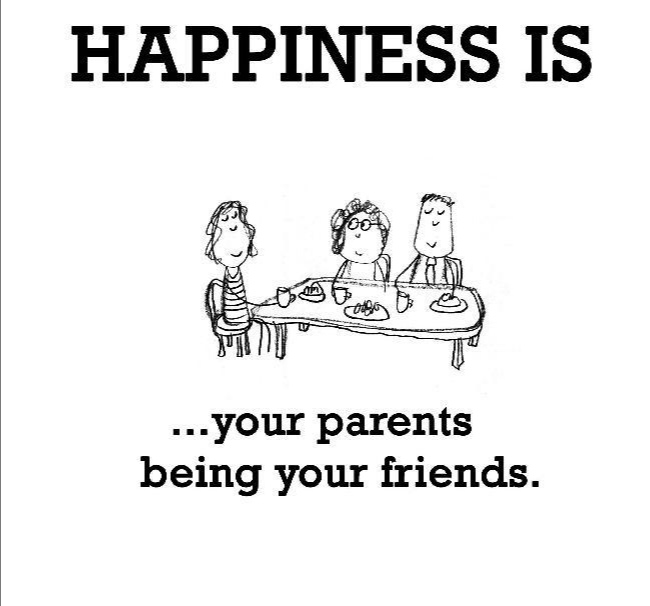
Dad was always doing things for me we talked like friends. And also my mom behave like a friend to me. We always share our feelings, everything. Mom never judge me what I say. She always understands my intentions. She always wants me to do right. She motivates me.

Whenever I think of that time, Nostalgia hit me like a truck.

In today’s world everyone thought love is just only between two couples.

Love has no limitations. It may be started from a little child’s affection towards their toy to a various sacrifices of our parents.

Pure love has sacrifices, trust, affection, care, mutual understanding. There is no space for selfishness.

Friendship is very important in every single relationship.

If there is no friendship in between parent – student, teacher – student, 2 couples or every single relationship then that relationship has to end at last.

Like we observe the relationship between 2 best friends are unbroken. No matter what happens between them their bond always remains same.

So only love is not necessary for a relationship, friendship is more important.

In every relationship, love and friendship both is very important.

India's performance in Tokyo Olympics so far

We are in day 5 of Olympics and toady I will discuss about the performances of Indian athletes so far. India had sent 127 athletes in Tokyo Olympics 2021. but performance so far is as usual its not been up to the mark and according to expectations of fans.

India got a perfect start on day 1 of the Tokyo Olympics as weightlifter Mirabhai chanu won Silver medal and created history of become just 2nd women weightlifter to win a medal in Olympics for India after Karnam Malleswari. there were many events but some of them were as:- After winning qualification round easily, Saurabh Chaudhary finished seventh in the 10m air pistol final. In archery, the pair of Deepika Kumari and Pravin Jadhav qualified for the finals but lost the next round from south korean archers. Our Mens hockey team won the first match of Olympics and defeated New Zealand by 3-2.

On day 2, India could not improve their medal tally. However, it was a good day for the Indian rowing team of Arjun Lal and Arvind Singh that were qualified for the semifinals. Shuttler PV Sindhu won her opener in a perfect start to better Rio campaign. Paddler Manika Batra moved to the third round.later, Mary Kom opened her Tokyo 2020 campaign with a round of 32 win in the 51kg category but all o us were shocked by India’s disappointment in shooting as Manu Bhaker, Yashaswini Deswal and Deepak Kumar, Divyansh Panwar failed to qualify for 10m air pistol in their respective categories. senior tennis player Sania Mirza and Ankita Raina were knocked out of the women’s doubles after losing 6-0, 6-7(0), 8-10 to the Kichenok twins of Ukraine. and India’s lone gymnast Pranati Nayak also failed to qualify.

Day 3 also didn’t bought any smile on Indian fans as Indian shooters dissapointed again and the hockey team were hammered by australia 1-7 but badminton star player P V Sindhu, boxing great M C Mary Kom and table tennis star Manika Batra won their respective matches. The 38-year-old Mary Kom, who is already an 2012 Olympic bronze-medallist, prevailed 4-1 against a rival who is 15 years her junior to start her pursuit of a second medal but apart from these 2-3 small success other athletes dissappointed.

on day 4,Team India had a heartbreaking day in Badminton and Shooting on Tuesday. Initially the day was good for India as Indian shooters Manu Bhaker, Saurabh Chaudhary topped their mixed team air pistol qualification Stage 1 but were unable to go ahead after that. The day then continued to worsen for Indian shooting as Divyansh/Elavenil and Anjum/Deepak also failed to make it to rifle final. but it was not enough as Divyansh/Elavenil and Anjum/Deepak also failed to make it to rifle final. Indian men hockey team made a terrific comeback and defeated Spain 3-0 after getting hammered by Australia. Meanwhile, boxer Lovlina Borgohain made indian fans smile was qualified to quarterfinals and is a step away from winning a medal. She will face Nien-Chin Chen of Chinese Taipei in the quarterfinal on Friday (July 30). (Stats source: https://indianexpress.com/article/olympics/tokyo-olympics-2020-day-4-live-updates-7423748/)

Apart from weightlifter Mirabhai chanu, India had really disappointed so far but we will continue to support our athletes and will expect a medal very soon. as many events our still remaining.

Social media's co-relateion with anxiety.

Individuals utilize online media with fluctuating amount, enthusiastic, and social attachment that might have differential relationship with mental wellbeing results. In this examination, we tried to distinguish unmistakable examples of web-based media use (SMU) and to survey relationship between those examples and despondency and nervousness indications.

In October 2014, a broadly agent test of 1730 US grown-ups ages 19 to 32 finished an online overview. Group examination was utilized to distinguish examples of SMU. Discouragement and uneasiness were estimated utilizing individual 4-thing Patient-Reported Outcome Measurement Information System (PROMIS) scales. Multivariable calculated relapse models were utilized to survey relationship between bunch enrollment and sorrow and anxiety.The online media stage Instagram stood out as truly newsworthy last year for stifling preferences with an end goal to check the examinations and hurt sentiments related with joining prevalence to sharing substance. However, do these endeavors battle mental medical problems, or would they say they are just applying a bandage to an injury?

It’s a little positive development, an analyst at McLean Hospital who works with youth who experience uneasiness problems, about Instagram’s new limitation. “Regardless of whether you eliminate the preferences, there keep on being openings for examinations and input. Individuals actually can contrast themselves with others, individuals actually can post comments.”

To help confidence and feel a feeling of having a place in their groups of friends, individuals post substance with the expectation of getting good criticism. Couple that happy with the design of possible potential compensation, and you get a formula for continually checking stages.

While assessing others’ social movement, individuals will in general make correlations, for example, “Did I get however many preferences as another person?,” or “For what reason didn’t this individual like my post, yet this other individual did?” They’re looking for approval on the web that fills in as a replacement for significant association they may somehow make, all things considered.

FOMO—dread of passing up a major opportunity—likewise assumes a part. In the event that every other person is utilizing online media locales, and in the event that somebody doesn’t participate, there’s anxiety that they’ll miss jokes, associations, or solicitations. Missing encounters can make uneasiness and sorrow. At the point when individuals look on the web and see they’re avoided from a movement, it can influence contemplations and sentiments, and can influence them truly.

A 2018 British examination tied web-based media use to diminished, upset, and deferred rest, which is related with wretchedness, cognitive decline, and helpless scholastic execution. Web-based media use can influence clients’ actual wellbeing much more straightforwardly. Analysts know the association between the brain and the gut can transform uneasiness and misery into queasiness, cerebral pains, muscle pressure, and quakes.

KARGIL WAR

Kargil war was a very difficult time that our country went through. Furthermore, it was a crisis situation that ensued a feeling of nationalism, patriotism, and unity among every Indian. Kashmir is a beautiful region that resides in an extremely mountainous area, containing some of the highest peaks in the world. Unfortunately, this amazing land has remained a constant battleground between the two countries of India and Pakistan.

The dispute began from the First Kargil War in 1947-1948 which led to the establishment of the LOC, line of control. The LOC still divides the land of Kashmir between India and Pakistan. As part of the Simla Agreement in 1972, there was an agreement that neither India nor Pakistan would contest the border by making use of military means. Since the agreement, both countries began guarding the border heavily for the majority of the year. During the exceedingly cold winter months, both the Indian and Pakistani guards abandon their posts, only to return back in the spring.

However, during the winter of 1998-1999, a surprise attack took place from the Pakistan army and it became successful in crossing the LOC and into India’s portion of Kashmir. Moreover, slowly and gradually, they went on capturing one Indian outpost after another and held their position in Kargil.

In February 1999, at the same time as the winter invasion, the Lahore Declaration was being signed between India and Pakistan which was based on peace. After a few months, the Kargil war began between the two countries. Furthermore, a series of bloody battles were fought between the two nations of India and Pakistan.

The battles posed a huge challenge for the Indian forces as they had to fight on difficult mountainous terrain. In spite of this challenge, the Indian soldiers showed amazing bravery. After a long struggle, the Indian army became successful in pushing back the Pakistani forces across the line of control.

RISE OF NATIONALISM

By July 14, 1999, there were heavy causalities on both sides. However, the sacrifice of Indian soldiers was not in vain. This great struggle of the Indian army has carved a place in the heart of every Indian.

The entire Kargil war was a time of tension and nervousness for the Indian people. It infused the spirit of national pride in every Indian. Most noteworthy, it served as an opportunity of unifying all the Indians together irrespective of caste, colour, religion, language etc.

CONCLUSION

The Kargil war has become an unforgettable event in the history of India. Nevertheless, this was an event that brought about feelings of patriotism in the hearts of every Indian like never before. The brave struggle of the Indian soldiers will continue to be an inspiration for all the citizens of this country

PARTNERSHIP ACT

INTRODUCTION

The Indian Partnership Act, 1932 came into effect on the 1st day of October 1932 and was passed in 1931. This Act replaces the previous Indian Contract Act, Chapter XI, 1872.

It’s not comprehensive legislation. It is aimed at defining and amending the law of partnership. A partnership arises from a contract and thus the partnership agreement is not only governed by the provisions of The Indian Partnership Act, 1932 in that context, but also by general contract law in cases where no specific provision is made under The Indian Partnership Act, 1932. The Indian Partnership Act, 1932 expressly provides that unrepealed provisions of the Indian Contract Act, 1872, remain in force except in cases where it is inconsistent with express provisions under this Act. The provisions of the Indian Contract Act also apply for a partnership contract, hence the provisions on offer and acceptance, consideration, free agreement, legality, etc. On the other hand, the minor’s position is governed by the provisions of The Indian Partnership Act, 1932, a special provision is contained in Section 30 of the Indian Partnership Act, 1932.

SCOPE OF THE INDIAN PARTNERSHIP ACT

 the scope of a partnership is primarily a matter of partners’ intentions. The application of the powers it chooses to exercise at any time is not restricted except prohibition on illegal, immoral or fraudulent behavior that applies equally to individuals.

  1. If consent is given by the constituent company’s partners, a partner may itself be a member of another company.
  2. If the contract appears to be authorized or ratified by all partners, there usually is no further question as to its validity.

The cases where the partnership contract validity issue arises is where one partner made the contract without specific authority from his co-partners. Their implicit scope of partnerships may be divided into non-trading and commercial classes. Partners of either type can exercise certain powers in partnership. A partner can thus retain a lawyer to safeguard the interests of the company.

ESSENTIAL ELEMENTS OF PARTNERSHIP ACT

he essential elements of a partnership are the features that must be present to validate a partnership:

  • Association of two or more persons

To form a partnership, there must be at least two people. All partners must be contractually competent. Therefore, the company is said to be dissolved if the number of partners in a company is reduced to one.

There are no limitations on the maximum number of companies in The Indian Partnership Act, 1932. Nevertheless, the Indian Companies Act 2013 establishes a limit on the number of  partners in a company as follows:

  • For banking business, partners must be less than equal to 10.
  • For any other enterprise, partners must be less than equal to 20.
  • The partnership becomes illegal if the number of partners exceeds the limit.
  • Agreement among the Partners

Section 5 of The Indian Partnership Act, 1932 states that “The partnership does not arise from the status of the law or the operation of the law but is the result of the agreement”.

The partnership is established by an agreement between two or several persons, i.e. a partnership agreement. An agreement may be either express (oral or written) or implied. Therefore, a partnership does not exist by status but by agreement. Rights and Duties of partners are defined as per agreement.

  • Existence of Business Activity

The business has to be ongoing and legally binding. The partnership’s main motto is to operate and make profits. Partnerships are therefore not considered for people who work together for social or charitable work.

  • Sharing of Profits

The main goal of a company is to earn a profit. These profits are shared in a pre-decided ratio among the partners.

If a person is not entitled to share income, he cannot be called a partner. But a partner is not liable according to an agreement to share the losses.

  • Mutual Agency

Relations with a mutual agency means that all or any partner must conduct a company’s business. A partner is an agent of the other partner and can thus bind another partner through his act. A partner is also principally responsible for the actions of the other partners of the company

  Types of partnership

  • Partnership at Will

If there is no clause to establish a partnership at the expiry of such a partnership, it is referred to as a partnership at will. In accordance with Section 7 of The Indian Partnership Act, 1932, two conditions have to be met for a partnership to be a partnership at will and they are:

  • There is no agreement on a fixed period for the existence of a partnership.
  • No provision is made for establishing a partnership.

If a partnership has been established and continues to operate beyond the fixed period, the partnership will become a partnership at will after the end of that term.

  • Particular Partnership

A partnership can be formed for ongoing business or for a particular purpose. If the partnership is only formed to carry out one company or complete one undertaking, it is known as a particular partnership.

The partnership will be dissolved after the completion of the said venture or activity. The partners may, however, come to an agreement to continue the said partnership. But in the absence of this, when the task is complete, the partnership ends.

  • Partnership for a Fixed Term

Now, during the establishment of a partnership, the partners may agree on the duration of this arrangement. This would mean that the partnership was established for a fixed period of time.

Therefore, such a partnership will not be called a partnership at will, it will be a partnership for a fixed term. The partnership ends after the expiration of such a duration.

However, there may be cases where the partners continue their business even after the expiry of the duration. They continue to share profits and there is a component of a mutual agency. Then in such a case, the partnership will be at will.

  • General Partnership

When the purpose of forming the partnership is to carry out the business in general, it is said to be a general partnership.

Unlike a particular partnership, in a general partnership, the scope of the business to be carried out is not defined, so all the partners are accountable for all the actions of the partnership.

NATURE OF PARTNERSHIP

When two or more people join hands to set up an enterprise and share its gains and losses, they are said to be in partnership. Section 4 of the Indian Partnership Act 1932 states partnership as the ‘association between people who have consented to share the profits of an enterprise carried on by all or any of them acting for all’.

People who have entered into a partnership with one another are independently termed as ‘partners’ and comprehensively termed as ‘firm’. The name under which the trade is carried is called the ‘name of the firm’. A partnership enterprise has no distinct legal entity, apart from the partners comprising it. Hence, the vital features of the partnership are:

  • Two or More Persons: In order to manifest a partnership, there should be at least two persons possessing a common goal. To put it in other words, the minimal number of partners in an enterprise can be 2. However, there is a constraint on their maximum number of people. By the uprightness of Section 464 of the Companies Act 2013, the Central Government is authorised to stipulate a maximum number of partners in an enterprise; however, the number of partners cannot exceed 100. The Central government has stipulated the maximum number of partners in an enterprise to be 50, under Rule 10 of the Companies (Miscellaneous) Rules, 2014. Hence, a partnership enterprise cannot have more than 50 people (partners)
  • Agreement: It is the outcome of an accord between 2 or more people to regulate business and share its gains and losses. The agreement (accord) becomes the basis of the association between the partners. Such an agreement is in the written form. An oral agreement is evenhandedly legitimate. In order to avoid controversies, it is always good if  the partners have a copy of the written agreement.
  • Sharing of Profit: Another significant component of the partnership is, the accord between partners has to share gains and losses of a trading concern. However, the definition held in the Partnership Act elucidates – partnership as an association between people who have consented to share the gains of a business, the sharing of loss is implicit. Hence, sharing of gains and losses is vital.

Drip Irrigation System

Micro Irrigation has gained attention during recent years because of its potential to increase yields and decrease water , fertilizer and labour requirements if managed properly.

Principal characteristics distinguishing the micro Irrigation with other pressurized technologies are:

  • Low flow rate
  • Localized , partial wetting of the soil volume
  • Frequent water application due to the limited wetted volume
  • Low operating pressure ,compared to sprinkler irrigation

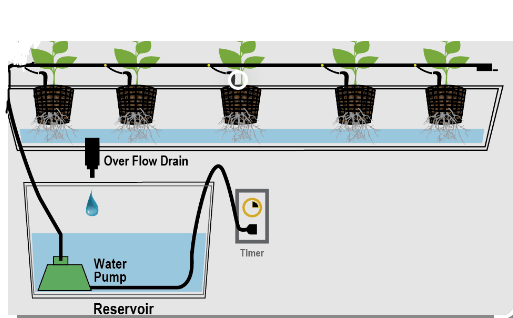
Drip Irrigation involves technology for irrigating plants at the root zone through emitters fitted on a network of pipes( mains ,sub-mains and laterals). The emitting devices could be drippers ,micro sprinklers, mini sprinklers ,micro jets, misters ,fan jets, micro sprayers, foggers and emitting pipes, which are designed upon specific requirements , which may vary from crop to crop . Water requirement, age of plant spacing ,soil type , water quality and availability are some of the factors which would decide the choice of the emitting system .

In cases where the water sources is an open well or tubewell / borewell , then for assessment of water availability and pumping power requirement it is necessary to compute the following:

  • Depth of the water table
  • Discharge of the well
  • Total pumping level
  1. The depth of water level below the ground level, before pumping begins ,is the depth of the water table . It can be measure by a simple procedure using a rope with a stone tied at one end .
  2. The discharge of the well / tubewell is measured after running the pump for a period of 30 minutes to 1 hour . It can be measure by adopting volumetric measure.Under this method , the discharge is emptied into a ditch of container of know dimensions for a certain length of time . the rate of discharge is calculated by dividing the total volume of water discharged by the time taken. This method works for low discharge say upto 5 litres per second. For higher discharges volumetric measurement may be difficult and therefore standard devices like water meter/c.notch/flume may be used.
  3. Total pumping level includes the depth of the water level, drawdown and height of the outlet above the ground level. To measure the drawdown the pump installed over the well/tubewell is run for a period of 30 minutes to one hour so that constant water level is attained in the well/tubewell. The new depth of the water level is measured. The difference between the depth and level above the ground level is also to be measured . Once the total pumping level is determined , the horsepower .

HP= Q*H/75*n

where Q = Discharge ,Ips

H=Total head ,m

n = Efficiency of the pump and motor

Depending up on the water availability and water requirement of the crop (as given in the table ) for the entire area in calculated .Then the piping network and number of sections will be decided accordingly.

SCHOOL LIFE: THE GOLDEN PERIOD OF A CHILDS LIFE

” As a child we always to grow up fast, but now we realize that incomplete homework and broken toys were far better than unfilled dreams and the world outside”. As a child grows so do his tension and responsibilities. Well this cannot define the difference between the school life and collage life but provide us a sufficient outline. We always wanted to grow up fast like our parents so that no one can scold us or instruct us to do anything.

In school life there are tension of studies rather I would suggest that if we take up studies as daily routine like bathing, eating etc. then we would feel relieved of this tension. In school we have teacher to support us like a mother and expects u to be disciplined so that we are on the right path of a bright future. We enjoy a lot under the motherly warmth of our teachers at school.

we always wanted freedom, we used to think it exist. Does it? Yes it does. it exist in the frank discussion with our teacher in school. It exist in the fight over over stupid matter with friends in school. It exist in playing pranks with friends and teachers in school. It exist in passing a lovely smile to teachers for even the gravest mistake in school.

when at school, we feel that we are bound by many rules and regulations and once we will reach college we will be free bird, no teacher will force us to attend classes, no uniforms etc. But no, we are under a false notion. At college we may be misguided and go astray without the supervision of teachers. There the students who care for studies have to keep themselves updated and are bound to attend classes whether they wish to or not because attendance does matter and carries marks! In collage you are best judge of good and bad. The so called freedom is a merge because responsibility of your actions lies in you. I am in college and I know the freedom out here it is illusion.

However it is school life which gives us the real freedom to live in cocoon of care, concern and commitment of our teachers. The best phrase to sum up school life would be free life.

Weed! A Multi-Billion Business?


Uploading: 222308 of 222308 bytes uploaded.


Weed ,Marijuana are current the most hottest topic on the internet and in the world as we look in Vedic times in India Weed was used as ayurvedic aushadi for treatment of various diseases like panic attacks, seizures as it helps in calming those symptoms,

Cannabis in India

Cannabis in India has been known to be used at least as early as 2000 BCE. In Indian society, common terms for cannabis preparations include charas (resin), ganja (flower), and bhang (seeds and leaves), with Indian drinks such as bhang lassi and bhang thandai made from bhang being one of the most common legal uses.

Then, why it was banned in India, if it has such good benefits??

In India, at the time of Rajiv Gandhi Government, USA Put CBD In the group of artificial drugs which led to total ban of weed all over the world, but as the time passed USA Started to remove restrictions for his own greed. USA Started to legalize weed as medical marijuana and edibles in 18 states of America

Due to which in current time Marijuana revenue in alone 18 states is approx-

And as per reports it’ll skyrocket more than 60% in 10 yrs.

The U.S. cannabis industry is worth $61 billion

Every year, analysts predict what the cannabis industry is worth. And every year that number exceeds expectations.

The U.S. cannabis industry is now projected to be worth $100 billion USD by 2030.

For reference, in 2019, Wall Street’s top cannabis analyst, Cowen Vivien Azer, predicted it’d be $80 billion by 2030

In India

“Magnitude of Substance Use in India 2019” survey found that 2.83% of Indians aged 10–75 years (or 31 million people) were current users of cannabis products in form of Bhaang(prasad of Lord Shiva) or Gaanja 


But why there is such demand of weed,if it is so good why there is no upliftment in ban?

In some research it was stated that consumption of weed in a controlled manner can suppress certain types of cancer, brain damage, bronchitis and also act as stress removal even CBD oil and soaps are available in market as it helps in body relief

*In 2015, the first organised efforts to re-legalise cannabis in India appeared, with the holding of medical marijuana conferences in Bangalore, Pune, Mumbai and Delhi by the Great Legalisation Movement India.[44] Many articles and programs in the popular media have also begun to appear pushing for a change in cannabis laws

*In March 2021, the Chief Minister of Himachal Pradesh, Jai Ram Thakur, said that the state government is coming up with a policy to allow controlled cultivation of hemp or cannabis in the state. The motivation behind this change is reported to be to boost the local economy of Himachal Pradesh.[58][59][60]

*In March 2021, The State Government of Tripura announced it would form an expert panel to examine the viability of legalizing cannabis cultivation.

Improving 'syllabus' at school- Part II

“Education is the key to success”. But is it actually providing knowledge to the extent that it makes everyone better off ? Do the lessons taught in schools really matter in our lives ? Is the education system well-established keeping in mind the needs of the times ?

We need to accept that our education system is ruined by some corrupt people hindering the growth and success of the country. Somehow we all know that the training techniques in our schools is old style now and that it requires improvements.

It also becomes a burden for students when they are loaded with tests, assignments and project besides getting regular homework. The classrooms too get filled with only subject-related matter and less care is taken for extra-curriculum.

However there is more scope for extra-curriculum as compared to competitive and corrupt field of academics. It has become corrupt since leverage is being given to some sections or some particular people are being favored in terms of marks(/quotas) or job posts, allocation of funds, etc.

Instead of the regular pattern of teaching, the focus should be made on skill development of students. They acquire more importance in life. Now we see that students lack even the basics of what the corporate world demands of them. From there arises the need to join paid courses after school. You sacrifice peak time for decision making of your life in learning something that should have been the syllabus in the schools! Isn’t it frustrating for someone who holds personal responsibilities and obligations already and had been dreaming of placements and other great opportunities to come on way after education ? Shouldn’t our system be wide enough to support growth and development of individuals, accepting it as their duty towards the nation ?

But the need of the hour is to take action. We can’t continue blaming others’ unless we put forward a step by ourselves. As it has been well said “Be the change you want to see”. The schedule needs to be changed. There is a need for addition of classes for upskilling of students by professionals in the schools itself as there is no time left afterwards, as many say.

There should be attention towards holistic development of a child from the very beginning by arranging music classes, sports period, and other possible skill enhancement classes in schools. This would ensure inclined growth of the child towards his/her area of interest. The students will have knowledge of various fields from the very beginning and this will help them decide early what do they wish to pursue as a career. This is the major problem now-a-days that the youth is not sure of their future goals. They surely have the spark to do wonders but don’t have the correct guidance as to what is best for them or how can they achieve their aims in between the complexities of the world.

The academics should be limited now, to the extent of its feasibility in life and higher studies be offered with a wider choice so that the focus is narrowed upon the future without compromising with present. Knowledge and practical-ability should be given priority over marks and grades. There are innumerable examples of people who were weak in studies but their practical approach proved beneficial for the world. Therefore the students should be taught the practical aspects more than the bookish language and terms.

Coming back to skills, there are a variety of fields where interests of a student can be drawn upon. Painting or sketching, writing, dance and singing, sports(basketball, relay race, badminton), etc. should not be limited to a single period in a week. They should be emphasized as much as academics’ competitions. Training should be provided to those who are keen about such extra activities which are actually, not “extra”.

The Elephant Rope

As a man was passing the Elephant , He suddenly stopped , confused by the fact that these huge creatures were being held by only a small rope tied to their front leg . No chains, no chains . It was obvious that the elephants could ,at anytime , break away from their bonds but for some reason , they did not. He saw a trainer nearby and asked why these animals just stood there and made no attempt to get away .” Well” , trainer said , “when they are very young and much smaller we use the same size rope to tie them and at that age , it’s enough to hold them. As they Grow up, they are conditioned to believe the rope can still hold them , so they never try to break free .” The man was amazed . These animals could at any time break free from their bonds but because they believed they couldn’t , they were stuck right where they were . Like the Elephants , how many of us go through life hanging onto a belief that we cannot do something , simply because we failed at it once before? Failure is part of learning ; we should never give up the struggle in life . A short motivational and short epic story ………..

The climate is changing , why aren't we ?

Our climate is changing around us faster than predicted. From more frequent and extreme storms to unprecedented heatwaves, from landslides to earthquake , we’re feeling the impacts of human-caused global warming. Global warming is the long-term heating of Earth’s climate system observed since the pre-industrial period (between 1850 and 1900) due to human activities, primarily fossil fuel burning, which increases heat-trapping greenhouse gas levels in Earth’s atmosphere. Certain gases in the atmosphere block heat from escaping. Long-lived gases that remain semi-permanently in the atmosphere and do not respond physically or chemically to changes in temperature are described as “forcing” climate change. Gases, such as water vapor, which respond physically or chemically to changes in temperature are seen as “feedbacks.”

SOME OF THE GASSES THAT CONTRIBUTE TO CLIMATE CHANGE ARE :

  • Water vapor. The most abundant greenhouse gas, but importantly, it acts as a feedback to the climate. Water vapor increases as the Earth’s atmosphere warms, but so does the possibility of clouds and precipitation, making these some of the most important feedback mechanisms to the greenhouse effect.
  • Carbon dioxide (CO2). A minor but very important component of the atmosphere, carbon dioxide is released through natural processes such as respiration and volcano eruptions and through human activities such as deforestation, land use changes, and burning fossil fuels. Humans have increased atmospheric CO2 concentration by 48% since the Industrial Revolution began. This is the most important long-lived “forcing” of climate change.
  • Methane. A hydrocarbon gas produced both through natural sources and human activities, including the decomposition of wastes in landfills, agriculture, and especially rice cultivation, as well as ruminant digestion and manure management associated with domestic livestock. On a molecule-for-molecule basis, methane is a far more active greenhouse gas than carbon dioxide, but also one which is much less abundant in the atmosphere.
  • Nitrous oxide. A powerful greenhouse gas produced by soil cultivation practices, especially the use of commercial and organic fertilizers, fossil fuel combustion, nitric acid production, and biomass burning.
  • Chlorofluorocarbons (CFCs). Synthetic compounds entirely of industrial origin used in a number of applications, but now largely regulated in production and release to the atmosphere by international agreement for their ability to contribute to destruction of the ozone layer. They are also greenhouse gases.

The consequences of changing the natural atmospheric greenhouse are difficult to predict, but some effects seem likely:

  • Earth becomes warmer .
  • Stronger green house effect will warm the earth , melt the glaciers , increasing sea levels
  • Outside of a greenhouse, higher atmospheric carbon dioxide (CO2) levels can have both positive and negative effects on crop yields. Some laboratory experiments suggest that elevated CO2 levels can increase plant growth. However, other factors, such as changing temperatures, ozone, and water and nutrient constraints, may more than counteract any potential increase in yield.