9 tourists killed as boulders hit vehicle in Himachal landslide

Nine tourists were killed after heavy boulders fell on their tempo traveller in a landslide near Basteri in Kinnaur district of Himachal Pradesh on Sunday.

Multiple landslides triggered by recent rains occurred near Basteri on the Sangla-Chitkul road at 1.25 p.m., resulting in a bridge collapse and damage to some vehicles, police said. A video of the incident, which has gone viral on social media, shows several boulders rolling downhill and smashing into the bridge, causing it to collapse.

According to the police, nine people died and two others were injured after heavy boulders fell on a tempo traveller. The passengers were going to Sangla from Chitkul. In a similar incident, a pedestrian was injured in another landslide in Kinnaur district, they added.

President Ram Nath Kovind and Prime Minister Narendra Modi expressed condolences over the death of people due to the landslides in Kinnaur.

“Deeply saddened by the news of the death of many people in a landslide in Kinnaur, Himachal Pradesh. Express my deepest condolences to the bereaved families and wish the injured people a speedy recovery,” Mr. Kovind tweeted in Hindi.

Mr. Modi said all arrangements are being made for the treatment of those injured and announced an ex gratia of ₹2 lakh each for the next of kin of the deceased and ₹50,000 to the injured from the Prime Minister’s National Relief Fund.

Chief Minister Jai Ram Thakur also expressed grief over the deaths and asked the district administration to ensure immediate relief and rescue operations.

A Reliable Learning Via Robotics and machines….

                                    IMPORTANCE OF STEM EDUCATION FOR AN ENHANCED LEARNING

  • Definition Of Stem

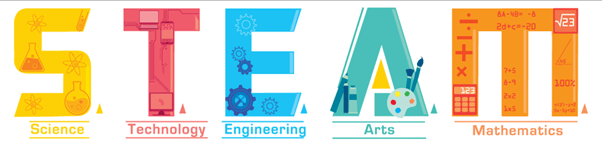
STEM is an artificial intelligence related to Science, Technology, Engineering and mathematics but it is a vast concept of more than these. It integrates and builds an advanced system of education taking into account every individual’s attention. STEM kind of learning needs to be paid attention as it has an improved technology with enclosing subjects that teaches moral values and discipline in inter-relating one another.

The main motive is to build advanced geniuses in the teenage able to tackle subject and real-time oriented issues. This tech unites with pupils making them to be well-versed and multi-talented in all occasions.

  • Benefits of STEM related education

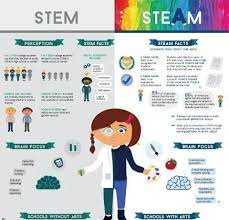
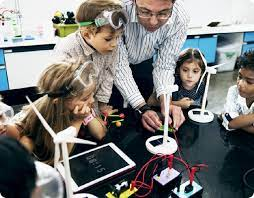
This kind of learning is focused on building higher order of thinking among students by connecting them a classroom experience to the modern world. A future model is built under campuses for upgrading their problem-solving ability, thinking skill, communication skills and creativity to sort out various critical circumstances in reality.

Generally, focuses on practical experience with real-time applications that gradually builds the skills ability level and shaping them to utilize a sense od outstanding creativity in a competitive world of 21st century.

The students brought up from this kind of teaching can tackle the reality as well as social media/virtual world simultaneously with their brilliance and social skills that comprises of curiosity, social skills, leadership, management and acceptance of up and downs in life.

In a specific period of life people will undergo circumstances where they become puzzled to take decision as choices will cause effects on their career which has to be made wisely. At that stage without realizing they randomly choose a false decision making them fall in a pit, which will be realized on later times by the same individual after which nothing can be undone.

This system basically concentrates on those kinds of cases so the growing kids can be exclusively intelligence while handling such experiences. This AI creates a similar kind illusion to make them think and decide their choices accordingly so they can adopt to changes or select a decision more preciously.

  • Differences from normal learning and AI integrated learning

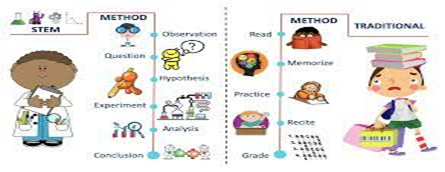
In a standard learning taught by faculties they can give you their knowledge ask them to explore it on your way but mostly pupils memorize concepts that will be totally vanished in this type of system where a machine will broaden every word and concept of subject and explaining the facts deeper by triggering your anxiety to grasp the entire knowledge.

They also become as Book-worms instead of knowing the working behind every concept thus it becomes like mugging/memorizing and vomiting/producing in exam papers just for marks rather than knowledge or skill developed education.

STEM education is the path of future learning making upcoming generation as innovative ones.

These AI models create crucial real-time happenings thus testing their initial level of thinking and providing solutions to the same. By doing this they actually promote their working of brain at a younger age which we call as maturity and experience at small ages.

It is also a known to contribute steps towards economic growth by this deep level thinking knowledge (innovation) which is unique in every kid. That is why each one is special but as they discover their innovative skill it becomes too late for individuals so by enhancing them to bring up their key skills so they are ready to face out life and unavoidable circumstances.

  • Ways to spread an idea to enlarge the importance about it to the Society

There are various ways through which you can advertise and spread the initiative taken by you. The only thing you require is an account in media platforms that will enroll your ads in various random posts that people may be searching for.

 The only purpose of using social media is because the reach is tremendous while compared manually or just by recommendations. You need to focus on how you can market them by discussing their features and how it helps in the improvement of a teenager.

By adding relevant pictures or short clips of the same, people can get to know about the functionalities and capabilities of the system and the working.

Awareness can also be made and posters shall be published to keep a track of viewers and connect with them mutually to improve a knowledge of better learning among several institutions in exploring the skills of a teenager in their adolescent ages that support them vitally.

The base of any product to be recognized is how you explain and elaborate the advantages and benefits that grasps attention to every single student in a whole crowd or in a classroom.

If you are self-motivated to prove and provide minute specifications for the useful machine integrated model (AI/STEM education) it can be an added information for users so they support and promote in various different ways.

  • Social Media Channels

The enlarged platform of these trending applications has several unique features under each portal those are different from one another. From audience till owners of some companies have adopted to this virtual world that helps growing merchants to develop and stand tall of their product.

The only difficulty is not all the things are encouraged in these sites, if you want a product to be wide-spread then its uniqueness and features must grab the reader/visitor’s attention in such a way so they start marketing your brand as an affiliate or recommend your goods in some required places.

 You as a producer can share things that will be helpful for any individual before trying it out. Social platforms like helps you to enrich with the fruitfulness of customers especially YouTube. There are millions of people from various continents utilizing this open platform for various entertainment.

From this article you can get to know some ideas and the importance of the STEM education as an effective way of building up the mental thinking ability by teaching them in a provoking way that enhances of building an IQ that is an advanced level for teenagers to think in a multi-tasking way.

WINDMILLS

What is a Windmill?

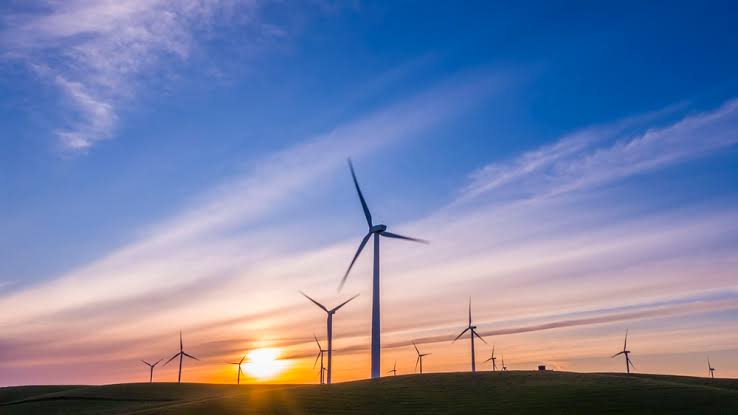
Up until recently, people still only had visual impressions of what a windmill is, often associating it with the past and particularly before the industrial revolution. Today, things have come full circle, if you will and there is now a growing demand for large, technologically advanced windmills across the world. The term wind energy or wind power describe the process through which wind turbines convert the kinetic energy in the wind into electrical energy by the use of generator.

What this introductory guide seeks to do is describe the apparatus in layman’s terms and also outline how they work and what they were intended for originally and the purposes for which they are used today. We begin with a brief definition of what a windmill is.

•It was originally a structure with sails, much like that on pre-industrial ships, and was originally used to produce flour from corn. In order to do this, the wind would have to prompt the sails to turn. They were also originally built by master craftsmen.

•A dictionary definition explains it thus; it is a machine which is propelled by the wind from a horizontal shaft which extended onto sails. Windmills still used today, mainly in parts of the world which have traditionally relied on them, are powered by electricity or water.

•The dictionary expounds this definition further by relating it to a human physical exercise technique which replicates the symbolism and movement of the original windmill. It is also famously symbolic in Cervantes’ classic of Don Quixote. This definition reminds readers that the original mill was also used to pump water and generate power.

•In modern terms, the advanced windmill operates with just three blades mainly to generate sustainable sources of electricity and energy. Today, these windmills are also referred to as wind turbines.

•According to Wikipedia, “A windmill is a mill that converts the energy of wind into rotational energy by means of vanes called sails or blades.”

How Does a Windmill Work?

Winds are produced due to uneven heating of the atmosphere by the sun, the rotation of the earth and the irregularities of the earth’s surface. Wind flow patterns differ from place to place and are modified by bodies of water, vegetation, and differences in terrain. This next section explains briefly but accurately how windmills work. Sourcing more extensive information, readers will learn that understanding technical processes initiated in wind turbines will be easy to follow because the manner in which windmills work follows a simple process. Here we continue to rely on layman’s terms.

•A number of different options were tried when modern wind turbines were first built. Today, the universal mechanizing principle is to operate the turbine by using just three blades placed around a rotor which is connected to a shaft. Note that number of variations have been tried, two blade and even one blade. But, three blades works the best.

•As its name states, the windmill’s only source of energy is derived from the wind. The wind turns the blades which spins a shaft, in turn, prompt a generator to produce electricity. These blades are connected to a generator, sometimes through a gearbox and sometimes directly. In both the cases, the generator converts the mechanical energy into electrical energy. Interestingly, most modern turbines turn in a clockwise direction. Depending on wind speed, most modern turbines can operate at speeds from as little as four meters per second to as much as 15 mps.

•Quite a number of green energy advocates and NGO’s describe the wind-generator process more succinctly by correlating it closely with the environmental sustainability initiatives.

•Once the turbine’s blades turns a shaft located inside of a box placed on top of the turbine, gearbox mode is propelled and more speed rotation is given off. A transformer within the turbine then converts electricity into a voltage suitable for distribution to a national grid.

Positive Effects of the Wind Turbine:

Finally, it is incumbent to emphasize the importance of wind turbines where environmental sustainability is concerned and as a rapid but highly effective response to global warming and climate change.

The exponential benefits are not only crucial but already evident where wind turbines are used increasingly, mainly in developed and developing nations. To finish this guide on windmills and its natural successors, wind turbines, we highlight some positive effects they have on humankind and the environment.

No more greenhouse gases – Turbines do not emit carbon dioxide.

Power is free – No government agency can presently regulate wind. So they cannot charge fees to those who choose to use it as an alternative source of life-sustaining and life-saving energy.

Versatility – There is a perception in some areas that the only modern day wind turbines you are likely to see are giant monstrosities hovering over your home. Not the case, because smaller wind turbines, small enough and perfectly equipped, are being manufactured for you today. All you need do is talk to the farmers who are already utilizing customized turbines for their own agricultural needs.

Positively speaking, this may have been a whirl-wind tour of processes, purposes, features and just causes along with some historical anecdotes on ancient windmills and the modern day equivalent of the wind turbine. The main purpose here was also to stimulate increased awareness and interest in this important piece of humankind’s legacy for the future.

Man Utd nearing Varane deal with Real Madrid

Manchester United are closing in on an agreement to sign Real Madrid defender Raphael Varane, Goal can confirm.

While the two sides were not close to agreeing terms at the start of the week, much work has been done to bridge the gap, with a deal now expected to take place for between €45m (£39/$53m) and  €55m (£47m/$65m).

Varane has been one of Man Utd’s top summer transfer priorities since they completed a deal to sign Jadon Sancho from Borussia Dortmund.

In recent hours, negotiations have sped up for the World Cup-winning defender, who appears Old Trafford bound

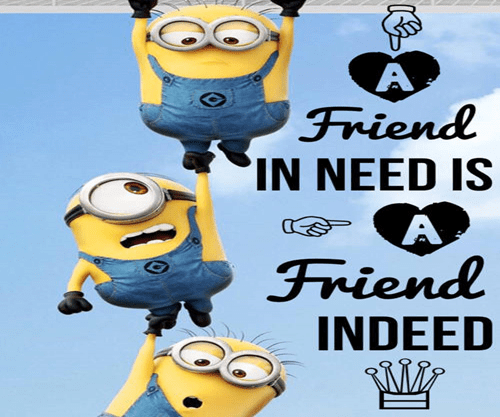
A Friend In Need Is A Friend Indeed

A friend plays the most important part in everyone’s life. Every life is incomplete without a proper comradeship. This is a fact that no one can survive without making friends. Life is full of ups and down and we all need someone to support us mentally and emotionally. A friend is the one with whom we share a bond which is rooted by trust, respect, affection, etc. Tackling problems become much easier when you have good friends beside you.

“A friend in need is a friend indeed” this is one of the most popular proverb which we all have heard at least once in our life. This phrase summarizes the eternal essence of the word friendship i.e., the friends who help at the time of need are considered as true friend. Getting a true friend is not only good luck but it’s like a blessing and such people are meant to be nurture with proper care. Place which a friend holds in each one of our life is impossible to express via words. When we have our comrade with us tackling problems becomes very much easy. Life is full of ups and down, pain and heartbreak, suffering and loss and because of all these people ends up going in depression or facing anxiety and mental issues plus any psychological disorder thus in such circumstances a friend plays a vital role in coping up. Healthy and good friendships help in overcoming the negativity of mundane life. Friendship is based on a give and take relation where one needs to give equally love and respect only then the root of such bond will be strong. Friendship must be carryout from the heart not with the intension of profits. True friends help in growing and increasing self-confidence as well as boost immunity. Francis Bacon mentioned on his essay of “Of Friendship” that every human being requires company and social contact and the one who does not believe in this and live a life with isolation is considered either as a wild breast or heavenly God. Human beings require other human beings and if someone ignores interaction are doing unfair with natural state. He also says that “a true friend acts a secondary valve for the heart to [pump life into a sick person.”

Friends do not believe in discouraging rather than they help in reaching the goals of life. But what is important is the bond should be carried out equally by both the parties. Both the parties should be equally loyal to one another if a person is not loyal than he should not expect the other person to be kind and loyal towards him. It is well said that “YOU REAP WHAT YOU SOW”, therefore first we should be ourselves ready to follow the simple code of friendship. The key success of successful friendship is good communication among each other. The base of every friendship is communication. Summing up that friendship is vital in each one of lives love, respect and proper communication can build up a good bond.

Ratan Tata

Ratan Tata (born 28 December 1937) is an Indian industrialist, philanthropist, and a former chairman of Tata Sons. He was also chairman of Tata Group, from 1990 to 2012, and again, as interim chairman, from October 2016 through February 2017, and continues to head its charitable trusts. He is the recipient of two of the highest civilian awards of India, the Padma Vibhushan (2008) and Padma Bhushan (2000).

Born in 1937, he is a scion of the Tata family, and son of Naval Tata who was later adopted by Ratanji Tata, son of Jamsetji Tata, the founder of Tata Group. He is an alumnus of the Cornell University College of Architecture and Harvard Business School through the Advanced Management Program that he completed in 1975. He joined his company in 1961 when he used to work on the shop floor of Tata Steel, and was the apparent successor to J. R. D. Tata upon the latter’s retirement in 1991. He got Tata Tea to acquire Tetley, Tata Motors to acquire Jaguar Land Rover, and Tata Steel to acquire Corus, in an attempt to turn Tata from a largely India-centrist group into a global business.

Ratan Tata was born in Bombay, now Mumbai, on 28 December 1937, and is the son of Naval Tata (born in Surat). His biological maternal grandmother had been the sister of Hirabai Tata, wife of group founder Jamshedji Tata. His biological grandfather, Hormusji Tata, had belonged to the broader Tata family; Ratan therefore was a Tata by birth. Parents Naval and Sonoo separated in 1948 when Ratan was 10, and he was subsequently raised by the widow of Sir Ratanji Tata, his grandmother, Navajbai Tata, who formally adopted him through the J. N. Petit Parsi Orphanage. He has a half-brother, Noel Tata (from Naval Tata’s second marriage with Simone Tata), with whom he was raised. His first language is Gujarati.

He studied at the Campion School, Mumbai till the 8th class, followed by Cathedral and John Connon School, Mumbai and at Bishop Cotton School in Shimla, and, in 1955, graduated from Riverdale Country School in New York City. In 1959, he then received a degree in Architecture from Cornell University, and in 1975, attended the seven-week Advanced Management Program of Harvard Business School — an institution which he has since endowed.

Promoted to management during the 1970s, Ratan achieved initial success by turning Group company National Radio and Electronics (NELCO) around, only to see it collapse during an economic slowdown. In 1991, J. R. D. Tata stepped down as chairman of Tata Sons, naming him his successor. When he settled down into the new role, he faced stiff resistance from many companies heads, some of whom had spent decades in their respective companies and rose to become very powerful and influential due to the freedom to operate under JRD Tata. He began replacing them by setting a retirement age, and then made individual companies report operationally to the group office and made each contribute some of their profit to build and use the Tata group brand. Innovation was given priority and younger talent was infused and given responsibilities. Under his stewardship, overlapping operations in group companies were streamlined into a synergised whole, with the salt-to-software group exiting unrelated businesses to take on globalisation.Ratan Tata (right) in Bangladesh, 2005

During the 21 years he led the Tata Group, revenues grew over 40 times, and profit, over 50 times. Where sales of the group as a whole, overwhelmingly came from commodities when he took over, the majority sales came from brands when he exited. He boldly got Tata Tea to acquire Tetley, Tata Motors to acquire Jaguar Land Rover and Tata Steel to acquire Corus. All this turned Tata from a largely India-centric group into a global business, with over 65% revenues coming from operations and sales in over 100 countries. He conceptualised the Tata Nano car. In 2015, He explained in an interview for the Harvard Business School’s Creating Emerging Markets project, the development of the Tata Nano was significant because it helped put cars at a price-point within reach of the average Indian consumer.

Ratan Tata resigned his executive powers in the Tata group on 28 December 2012, upon turning 75, appointing as his successor, Cyrus Mistry, the 44-year-old son of Pallonji Mistry of the Shapoorji Pallonji Group, the largest individual shareholder of the group and related by marriage. On 24 October 2016, Cyrus Mistry was removed as the chairman of Tata Sons and Ratan Tata was made interim chairman. The decision went through intense media scrutiny that made many scrutinize the root causes of the sudden removal, and the resultant crisis. A selection committee was formed to find a successor. The selection committee consisted of Mr. Tata, TVS Group head Venu Srinivasan, Amit Chandra of Bain Capital, former diplomat Ronen Sen and Lord Kumar Bhattacharya. All of them, except Mr. Bhattacharya, were on the board of Tata Sons. On 12 January 2017, Natarajan Chandrasekaran was named as the chairman of Tata Sons, a role he assumed in February 2017.

Tata invested personal savings in Snapdeal – one of India’s leading e-commerce websites –and, in January 2016, Teabox, an online premium Indian Tea seller, and CashKaro.com, a discount coupons and cash-back website. He has made small investments in both early and late stage companies in India, such as INR 0.95 Cr in Ola Cabs. In April 2015, it was reported that Tata had acquired a stake in Chinese smartphone startup Xiaomi. In October 2015, he partnered with American Express, investing in Bitcoin venture Abra. In 2016, he invested in Nestaway an online portal to find fully furnished flats for bachelors which later acquired Zenify to start family rental segment and online pet care portal, Dogspot. Tata Motors rolled out the first batch of Tigor Electric Vehicles from its Sanand Plant in Gujarat, regarding which Ratan Tata said, “Tigor indicates a willingness to fast-forward India’s electric dream. The government has set an ambitious target to have only electric cars by 2030.

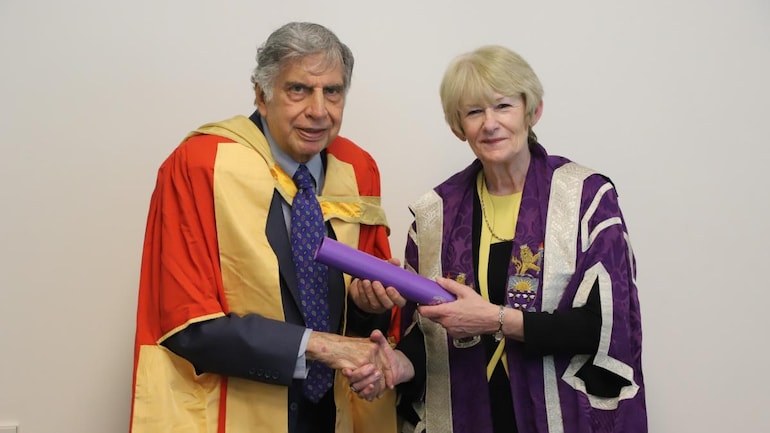
Ratan Tata awarded honorary doctorate by UK university.

STRATEGY PLANS FOR THE DEVELOPMENT OF INDIA AND ITS ACHIEVEMENTS:

India has achieved self-sufficiency in almost all basic and capital good industries and consumer good industries. There is a considerable rise in net domestic product, saving and investment. Self sufficiency in food grain production is achieved. There is a good deal of diversification in industrial structure.

STRATEGY PLANS :

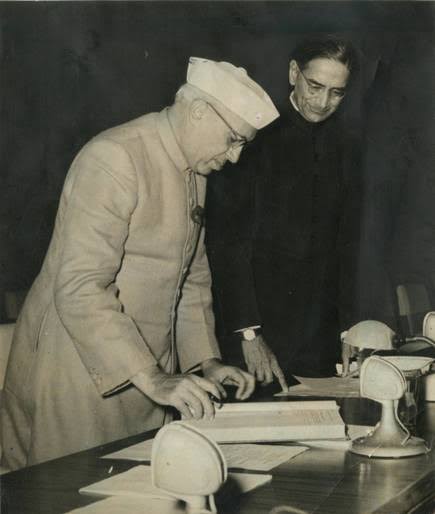
1. Nehru-Mahalanobis Model of Growth: Prof. P.C Mahalabonis is under the guidance of Prime Minister Jawaharlal Nehru developed the heavy industry model based on the Soviet experience. This model is popularly known as Nehru-Mahalanobis model formed the basis of the second plan. Jawaharlal Nehru emphasised that “The development of heavy industry in synonymous with industrialisation”. Mahalanobis was of the opinion that without adequate investment in basic heavy industries, it would not be possible to achieve a rapid self reliant economic growth. to achieve rapid economic growth and self reliance, it is necessary to give the highest priority to basic capital goods industries in the development strategy of a plan. It was during the second plan major steel plants were set up at Durgapur, Bhilai and Rourkela. ONGC, Ranchi Heavy Engineering Corporation, Neyveli Lignite Corporation were also set up during this plan.

JAWAHARLAL NEHRU AND MAHALABONIS

2. Gandhian Model of Growth: Gandhi called his ideal society Sarvodaya. It is a society that ensures the welfare and well-being of all its members. It emphasizes is on all the three components of well being material, mental and more spiritual he believed that “India lives in its villages”. This plan was based on truth and nonviolence. village is considered as the focal point of development and it is considered to be self-sufficient and self regulating economy. Importance given to small scale and cottage industries to reduce unemployment. Mechanization was opposed as it would displaced people out of employment.

3. Wage Goods Strategy of Growth: According to Vakil and Brahmananda, for removal of poverty, promotion of economic growth or capital accumulation alone in is not enough. “The way out of poverty is, therefore, to pay immediate attention to making good the capital gap in respect of wage goods capacity.

4. Rao- Manmohan Model of Growth: This growth model was introduced in 1991 with emphasis on privatisation and globalisation. There was severe economic crisis since 1990 in the Indian economy issues such as low foreign exchange reserves, balance of payments problem, public sector undertaking losses compelled the then Finance Minister Manmohan Singh and Prime Minister P.V Narasimha Rao to initiate various reforms. A market driven and pattern of development was adopted. Manmohan model of development in emphasized a bigger role for the private sector. A strategy of export led growth was propagated rather than import substitution.

5. Providing Urban-Amenities in Rural Areas: A strategy of developing rural areas this model of development was initiated by the former President APJ Abdul kalam. His vision was to transform rural areas and bring it on par with urban areas. Dr. A.P.J Abdul kalam visualised for connectivities namely physical electronic knowledge that would lead to economic connectivity of rural areas. In the first phase The ministry of Rural development implemented seven pirate projects from 2004 to 2005 and 2006 to 2007 with a total outlay of rupees three billion in the states of Assam, Andhra Pradesh, Bihar, Maharashtra, Rajasthan, Orissa and uttar Pradesh. The scheme was also relaunched as a central government scheme during the remaining period of Eleventh five- year plan.

6. Five year plans: From 1947 to 2017, the Indian economy was premised on the concept of planning. This was carried through the Five-Year Plans, developed, executed, and monitored by the Planning Commission (1951-2014) and the NITI Aayog (2015-2017). With the prime minister as the ex-officio chairman, the commission has a nominated deputy chairman, who holds the rank of a cabinet minister. The first year plan was Harrod – Domar model of development economics. FYP had a target of 2.1% PA growth in national income. Top priority was given to the development of agricultural sector. The idea was agricultural development would lead to higher rate of economic growth.

ACHIEVEMENTS:

1. A Higher Growth Rate: The Indian economy has reached rapid development in all sectors. India’s macroeconomic performance has been only moderately good in terms of GDP growth rates.

2. Increase in National Income: The national income of India has increased manifold. The average annual increase in national income was registered to be 1.2% from 1901 to 1947, 3% in 1950-70, 4% in 1970-80, 5% in 1980-90 and 5.8% in 1980-81 to 2000-01. the Gross income is estimated to have risen by 7% during 2016-17 in comparison to the growth rate of 8% in 2015-16.

3. Increase in per capita: Before independence increase in per capita income was almost zero. But after the adoption of economic planning in free India per capita income has continuously be increased.

4. Growth of Economic infrastructure: India’s performance in building up the necessary economic infrastructure is really praiseworthy At the Inception of economic planning, road kilometre was 4 lakh km. India has now more than 3 million km of road network making it one of the largest in the world.

5. Development of Basic and Capital Goods Industries: Major area of success of Indian planning is the growth of basic and capital goods industries. With the adoption of the Mahalanobis strategy of the development during the second plan period some basic and capital good industries like iron and steel witnessed spectacular growth.

6. Higher Growth of Agriculture: The most significant aspect of India’s five year plans is that their overall rate of growth of food production has now exceeded the rate of growth of population. Although in the early years of planning agricultural performance was measurable resulting in the emergence of food crisis.

7. Savings and Investment: The rise in the domestic savings rate from 10 % of GDP (Gross Domestic Capital) at the initial stages of planning to around 19% in 1980-81 is definitely impressive. The GDP of India has started to increase step by step in the following years and it rose to 36% in 2006 to 2007.

Those strategy plants also faced major failures, in spite of planning, poverty also exists and unemployment has risen. Inequalities of income have not been reduced. There is unequal land ownership, land reforms are inadequately implemented.

Constitutional provisions in education system

Constitutional provision in education

Introduction

India got independence on 15 august 1947 at midnight. There was an urgent need for a constitution to lead the nation. Dr. Rajendra parsad was elected as the president of the constitutional committee. Dr. B. R . Ambedkar was the head of the drafting committee. Our constitution was enacted on 26 november 1949 and enforced on 26 January 1950. It took 2 years 11 month and 18 day to make our constitution. Our constitution has 6 fundamental rights and 20 directive principles in itself.  There were 365 articles and 6 seven fundamental rights initially. 

Our constitution has a preamble. It contains the summary of our whole constitution. 

Constitutional provision: The constitution provision is important for the recognition of access to information as a fundamental right. 

There are many constitutional provisions in the constitution which promote education in India. These constitutional provisions act as security for the people about the access of the rights related to education. There are mainly 11 constitutional provisions.  These articles are 45, 21A, 15(1) (3), 46, 25, 28 (1) (2) (3), 29, 30, 350-A, 351, 239 and  51(A). 

The constitution of India provides free and compulsory education till the age of 14. The 86th amendment of the constitution created the right to education. There would be no discrimintation on the basis of gender (article 15 (1). The constitution also promotes the education for women of weaker sections (46).  Article  21, 28 , 29 and 30 promotes religious education too. Article 51 states that minorities have the right to education. Noone will be discriminated against on the basis of religion, caste , gender or birth place. Article 350-A states that instruction would be in the mother tongue at primary stage. Article 351 promoted Hindi for its development and propagation. 

The government of India provided many provisions to frame a strong structure for the school environment. The aim of these provisions are holistic development of the people of India. The government of India wants to provide inclusive education to all. Many administrations were made for the development and watch out on the education system.  Education is also included in the concurrent list. 

There is a separate ministry for education at centre as well as state level.. The ministry works over the education structure, setting goals and achieving the aims by planning organisation and direction. The ministry of education at centre level directs, controls, and plans for the ministry at state level. The state level ministry works with the guidelines provided by the central government.

The central government also controls the action of private institutions.  The central government shares their funds on education with the state government. There are many pilot projects such as rural education, regional institutions for education and sarva shiksha abhiyan. 

There are three lists in the constitution which are divided as the concurrent, union and states list. The list consists of subjects. Every list has some entity about education. 

The whole constitution promotes education at every level. The preambles, articles and lists promote education at states and union territories level. 

Causes for increases divorce rate

The times of Indian relationships enduring over 25 years and couples working things out are currently a relic of times gone by.

Marriage is a demonstration of holy observance in India. What’s more, finishing this marriage on at all ground is as yet not thought about ordinary. However, in ongoing many years we can see an increment in the separation rate in India. There is a typical thought that the justification the expanding divorce rate is a result of an increment in affection marriage. We should break that thought for you. The expanding divorce rate is identified with different social perspectives. Orchestrate marriage is as yet common in India. Furthermore, separates in orchestrate marriage arrangement are just about as normal as adoration relationships.

Both a couple have duties to construct marriage and give a steady climate to their kids. In my accept, the two or three should be completely advised on the demonstration preceding marriage advantages and disadvantages. Both a couple need to mindful their obligations in regards to their connections. For keeping away from separate from the couples ought to get what the greatest issues in their marriage.

We should walk you through the 6 normal purposes behind expanding divorces in India

1. Women’s freedom

The situation with ladies has changed throughout the long term. They are as of now not simple housewives. Ladies today are monetarily, socially, genuinely, and intellectually free. This comes in the method of a well established mind-set where ladies’ just job was to sustain families

Also, society is as yet reluctant to see ladies improvement. Consequently, even the purported reformist ones lose their cool when the ladies are showing improvement over their companion. This is especially obvious about the monetary viewpoint. Men actually can’t process it when their spouses procure better compared to them.

Personality conflicts lead to disappointment from marriage. This thus prompts separate. Ladies these days are prepared to stroll off a marriage that isn’t working for them. Expanding ladies’ freedom has a lot to do with expanding divorce rates. In any event, when it can’t be clarified on paper.

2. Trauma.

This incorporates both, physical and mental injury. Actual maltreatment by men on their spouses is a deep rooted issue. We will not say, there aren’t any instances of actual maltreatment on men. However, as a rule, ladies are abused by their spouses for a very long time. Aggressive behavior at home is a significant justification expanding divorce cases.

Mental injury is less talked about however it unquestionably prompts marriage disappointment. The informed and present day companion approves of working ladies. Be that as it may, they disapprove of shared duties with regards to family errands. Working ladies are required to oversee occupations, families, youngsters viably with no assistance from spouses. Henceforth, ladies leave such relationships that are intellectually awful.

3. Relations with parents in law.

Almost 68% of wedded couple stays with the guardians. As is commonly said, marriage in India is with families. While the families can assist with supporting a marriage, they additionally are the main driver of separation much of the time. The corrupting relations inside laws frequently lead to separate. The most well-known reason being the connection between relative and little girl in law.

At the point when the relations decline and become poisonous, relationships break up. There are numerous situations where outrageous inclusion from a young lady’s family has brought about separate.

4. Dominance.

As referenced before, ladies these days are monetarily, intellectually, genuinely, and socially free. Ladies should have a decision and voice in their relationship. However, strength actually exists. The man of the family actually takes every one of the significant choices

A similar situation applies to men. A manipulative hold of spouses would regularly prompt separation. Present day relationships look for equity. Also, when that isn’t the situation, relationships disintegrate.

5. Adultery.

Issues outside marriage are very normal. Be that as it may, hello since it’s normal it’s not the proper thing to do. Prior, ladies use to relinquish their better half’s issues since they were Subject to them. Furthermore, society wasn’t tolerating of divorced person ladies in those days. Very little has changed even today.

However, accomplices these days would commonly end the marriage as opposed to extending it. The level of ladies undermining their accomplices is just about as high as the other. In this way, in any case, anybody can leave the marriage, when the accomplice is surprised.

6. Lack of correspondence.

Numerous cutting edge relationships flop on the grounds that both the accomplice becomes far off with time. Every day life negatively affects the nature of marriage. Correspondence stops and rather than settling the issues, accomplices and marriage. As it’s been said, correspondence is a higher priority than affection in marriage. The individuals who know it, protect it.Is expanding divorce rate a question of stress?

Indeed, unquestionably if the underlying driver of marriage disappointment is something that can be figured. In other words, the vast majority of the relationships end for unmerited reasons. Marriage like each and every other connection requires endeavours. At the point when the endeavours stop, connection kicks the bucket. In conclusion, separate doesn’t mean the finish of life.

As the statement says, “Separation isn’t such a misfortune. The misfortune is remaining in a despondent marriage.” You can generally remarry. Or on the other hand you can remain single. Life is delightful

TRUE MEANING OF HARD WORK:-

                                                                                                                                                                                                                      BY SAHIL VASHISTHA

SAHIL 

 A young man went to seek an important position at a large printing company. He passed the initial interview and went to meet the director for the final interview. The director looked at his resume, and asked, “Have you ever received a
scholarship for school?” “No,” the man replied. 


“It was your father who paid for
your studies?” “Yes.” “Where does your father work?” “My father is a blacksmith.”
Then, the director asked the young man to show him his hands. They were soft and perfect. “Have you ever helped your parents at their job?” the director asked. The young man said I never helped as they wanted me to study more books all the time. 


Director requested him to go home and wash his father’s hands and asked him to come back tomorrow. That night, when he returned home, he asked his father if he would allow him to wash his hands. His father felt rather strange about the request but agreed. The young man washed his father’s hands, little by little. It was the first time that he noticed all the wrinkles and scars on his father’s hands.
Some bruises on his hands were so painful that his skin shuddered upon being touched. It was the first time that the young man recognized what it meant for this pair of hands to have worked every day to be able to pay for his studies.
After cleaning his father’s hands, the young man stood in silence, then began to tidy up his father’s workshop. 


That night, the father and son talked for a long time.
The next morning, the young man returned to the director’s office. The director noticed the tears in his eyes.“Can you tell me what you did, and what you learned yesterday?” he asked the young man. “I washed my father’s hands. 


When I
finished, I stayed and cleaned his workshop.” He continued, “Now I know what it is to appreciate and recognize that, without my parents, I would not be who I am today. By helping my father, I now realize how difficult it is to do something on my own. I have come to appreciate the importance and the value in helping the
family.” The director looked at him with an earnest expression.
“This is what I look for in my people.


I want to hire someone who can appreciate the help of others, a person who knows the hardship of others. You are
hired.”
A dream doesn’t become reality through magic; it takes sweat,
determination, and hard work.


THANK YOU 

HAVE A NICE DAY

HimAGee


JAI BABA KI

🙏🙏🙏🙏🙏🙏🙏🙏


NOTE:- FOR MORE STORIES DM ME ON MY EMAIL.


The Dangerous World of E-Waste

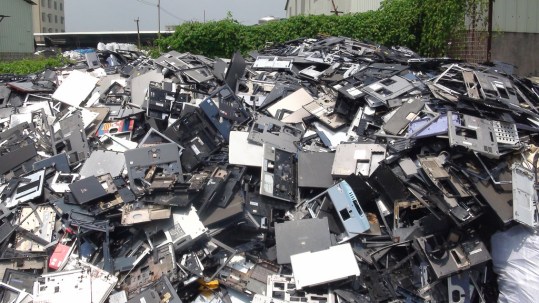
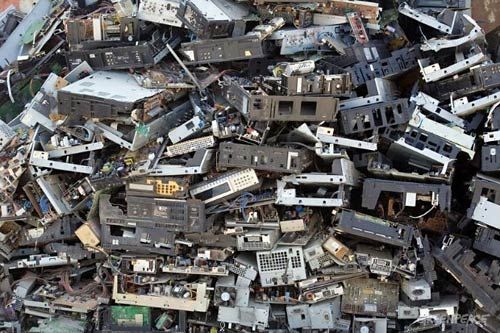
E-waste is any electronic equipment that’s been discarded. If an item goes unsold in an electronic store, it will be thrown away. E-waste is especially dangerous due to toxic chemicals that naturally emit from the metals inside it when the electronic device is buried or left in landfills.

The common things found in an e-waste landfills are smartphones, computers, microwaves, fans, televisions, printers, and countless others.

Technological advances are coming at us with a rapid speed that a lot of electronic devices that still work fine are the ones considered waste. For instance, VCR players got replaced when the DVD player hit the market, and then the DVD players got replaced by Blu-ray players, which soon after got abandoned with the introduction of streaming sites. These days every year smartphone improves drastically from the previous year that the only one year old phone is simply discarded to buy the newer model. And because everyone wants the latest tech gadget, there isn’t much possibility of finding buyers when someone tries to sell their old device.

When E-waste gets buried at a landfill, it dissolves in microscopic traces into the gross sludge that permeates at the landfill. Eventually, these traces of toxic materials pool into the ground below the landfill. This is known as leaching. The more E-waste and metals at the landfill, the more of these trace toxic materials show up in the groundwater.

Not only is this bad for anyone using a natural well, but it also hurts the nearby wildlife. This, in turn, causes the wildlife to get sick from lead, arsenic, cadmium, and other metal poisonings due to the high concentration of these minerals.

There are various ways E-waste can harm the environment, the following being some of the major ones:

  • Air Pollution: Burning of wires release hydrocarbons in the atmosphere.
  • Water Pollution: Electronic devices contain toxic metals like mercury, lead and lithium, which when disposed of improperly, mixes with ponds, lakes and groundwater. Communities that directly depend on these sources of water then consume it unknowingly. These heavy metals are hazardous for all forms of living beings.
  • Soil Pollution: These heavy metals enter the food chain as they are absorbed by plants from the soil. These metals not only destroy the plants, but also are then consumed by other living beings, leading to a poisonous food chain.

The majority of the world’s e-waste is recycled in developing countries, where informal and hazardous setups for the extraction and sale of metals are common. Recycling companies in developed countries face strict environmental regulatory regimes and an increasing cost of waste disposal and thus may find exportation to small traders in developing countries more profitable than recycling in their own countries.

There are some ways to reduce E-Waste and the dangers that come with it. The following are some of them:

  • Donate old Electronics

Donating electronics to the needy is also a practice followed by many. It not only gives the gadget a new life, but also makes someone else’s lives better.

  • Recycle and Dispose of E-Waste Properly

Recycling old electronics allows the expensive electronic parts inside to be reused. This can save a lot of energy and reduce the need for mining of new raw resources, or manufacturing new parts.

  • Maintain your Electronics

One of the best ways to save money and reduce e-waste is to keep your electronics well-maintained, with good care, to increase its life.

E-waste is the largest form of waste on the planet and one of the most dangerous for the environment and all its habitants. Therefore, there is a need for public awareness regarding the hazards of electronic waste and to take steps to prevent the same.

" HOW I LEARNT KINDNESS " based on true incident .

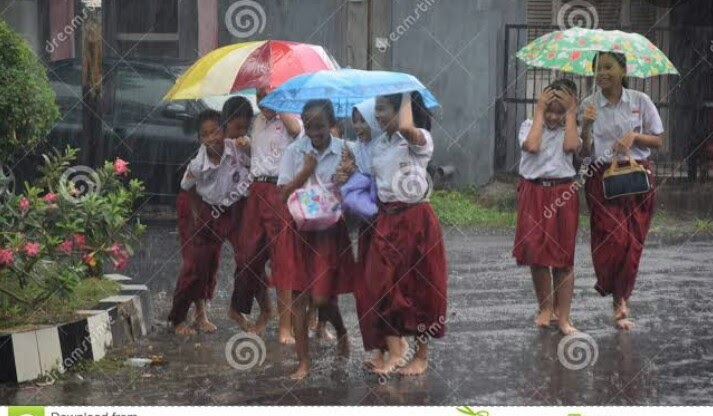
It was a rainy day . The monsoon was on its peak , I was getting ready for my school as it was my economics exam . I need to reach at my school campus at 10:00 O’clock & my school was 3 km away. At 9:45 , I asked my father to drive me to my school as fast as he could . My father took his bike & asked me to come fast . I took my umbrella , we were just crossing our flooded streets , my father stopped hi bike , & asked me to see a girl . I saw that girl , she was from my school only . Dad said she was waiting for rikshaw & every one listening to me right now can imagine how difficult is to get rickshaws in rainy season. I was getting angry because I was getting late for my exam as i can’t afford to leave my exam . I asked him to leave that place. He said , if you are so much concerned about your exam she would also be . He stopped his bike in front of her , asked her to come with us . She got scared . I could feel what what she was feeling . Everybody’s parents aske them the same thing ” DON’T TALK TO STRANGERS”. I looked at her face , I was angry , but could feel that she want some assurance , I asked her to come with us , she hesitated , I said politely ” come ! we are from same school & your security is in my hand “. she smiled . she sat with me, I put my umbrella on her head .

i reached at my school gate at 10:10 , i came off from the bike , so did she . She ran towards the school gate as it was about to close. While she was running , she turned towards us & said ” Thankyou uncle , thankyou Didi ” . On that day I learnt kindness from my dad . Smile on her face can clearly tells us how grateful she was to us or she would have left her exam . If I would be at my dad’s place. I would never stop my bike as it was raining heavily & her daughter is continuously shouting on him to drive fast . But he did , I learnt a lesson that in this world which is full of people who care for themselves , we should be the one who care for others , we should be the one who care for others , we should be the one who have to look & sense others problem . I learnt that people are always concerned about their own problems like me , I was concerned about my exam only , but their are people who are looking at others & their are people who are concerned about others . We should devote few hours of our day to look for others problem , this is what I learnt on that day .

Olympics

The modern Olympic Games or Olympics (French: Jeux olympiques) are leading international sporting events featuring summer and winter sports competitions in which thousands of athletes from around the world participate in a variety of competitions. The Olympic Games are considered the world’s foremost sports competition with more than 200 nations participating. The Olympic Games are normally held every four years, alternating between the Summer and Winter Olympics every two years in the four-year period.

Their creation was inspired by the ancient Olympic Games (Ancient Greek: Ὀλυμπιακοί Ἀγῶνες), held in Olympia, Greece from the 8th century BC to the 4th century AD. Baron Pierre de Coubertin founded the International Olympic Committee (IOC) in 1894, leading to the first modern Games in Athens in 1896. The IOC is the governing body of the Olympic Movement , with the Olympic Charter defining its structure and authority.

The evolution of the Olympic Movement during the 20th and 21st centuries has resulted in several changes to the Olympic Games. Some of these adjustments include the creation of the Winter Olympic Games for snow and ice sports, the Paralympic Games for athletes with disabilities, the Youth Olympic Games for athletes aged 14 to 18, the five Continental games (Pan American, African, Asian, European, and Pacific), and the World Games for sports that are not contested in the Olympic Games. The IOC also endorses the Deaflympics and the Special Olympics. The IOC has needed to adapt to a variety of economic, political, and technological advancements. The abuse of amateur rules by the Eastern Bloc nations prompted the IOC to shift away from pure amateurism, as envisioned by Coubertin, to the acceptance of professional athletes participating at the Games. The growing importance of mass media has created the issue of corporate sponsorship and general commercialisation of the Games. World wars led to the cancellation of the 1916, 1940, and 1944 Olympics; large-scale boycotts during the Cold War limited participation in the 1980 and 1984 Olympics; and the 2020 Olympics were postponed until 2021 as a result of the COVID-19 pandemic.

The Olympic Movement consists of international sports federations (IFs), National Olympic Committees (NOCs), and organising committees for each specific Olympic Games. As the decision-making body, the IOC is responsible for choosing the host city for each Games, and organises and funds the Games according to the Olympic Charter. The IOC also determines the Olympic programme, consisting of the sports to be contested at the Games. There are several Olympic rituals and symbols, such as the Olympic flag and torch, as well as the opening and closing ceremonies. Over 14,000 athletes competed at the 2016 Summer Olympics and 2018 Winter Olympics combined, in 35 different sports and over 400 events. The first, second, and third-place finishers in each event receive Olympic medals: gold, silver, and bronze, respectively.

The Games have grown so much that nearly every nation is now represented. This growth has created numerous challenges and controversies, including boycotts, doping, bribery, and a terrorist attack in 1972. Every two years the Olympics and its media exposure provide athletes with the chance to attain national and sometimes international fame. The Games also provide an opportunity for the host city and country to showcase themselves to the world

Ancient Olympics

The Ancient Olympic Games were religious and athletic festivals held every four years at the sanctuary of Zeus in Olympia, Greece. Competition was among representatives of several city-states and kingdoms of Ancient Greece. These Games featured mainly athletic but also combat sports such as wrestling and the pankration, horse and chariot racing events. It has been widely written that during the Games, all conflicts among the participating city-states were postponed until the Games were finished. This cessation of hostilities was known as the Olympic peace or truce.[7] This idea is a modern myth because the Greeks never suspended their wars. The truce did allow those religious pilgrims who were travelling to Olympia to pass through warring territories unmolested because they were protected by Zeus.[8] The origin of the Olympics is shrouded in mystery and legend; one of the most popular myths identifies Heracles and his father Zeus as the progenitors of the Games.According to legend, it was Heracles who first called the Games “Olympic” and established the custom of holding them every four years. The myth continues that after Heracles completed his twelve labours, he built the Olympic Stadium as an honour to Zeus. Following its completion, he walked in a straight line for 200 steps and called this distance a “stadion” (Greek: στάδιον, Latin: stadium, “stage”), which later became a unit of distance. The most widely accepted inception date for the Ancient Olympics is 776 BC; this is based on inscriptions, found at Olympia, listing the winners of a footrace held every four years starting in 776 BC.[14] The Ancient Games featured running events, a pentathlon (consisting of a jumping event, discus and javelin throws, a foot race, and wrestling), boxing, wrestling, pankration, and equestrian events. Tradition has it that Coroebus, a cook from the city of Elis, was the first Olympic champion.

The Olympics were of fundamental religious importance, featuring sporting events alongside ritual sacrifices honouring both Zeus (whose famous statue by Phidias stood in his temple at Olympia) and Pelops, divine hero and mythical king of Olympia. Pelops was famous for his chariot race with King Oenomaus of Pisatis. The winners of the events were admired and immortalised in poems and statues. The Games were held every four years, and this period, known as an Olympiad, was used by Greeks as one of their units of time measurement. The Games were part of a cycle known as the Panhellenic Games, which included the Pythian Games, the Nemean Games, and the Isthmian Games.

The Olympic Games reached the height of their success in the 6th and 5th centuries BC, but then gradually declined in importance as the Romans gained power and influence in Greece. While there is no scholarly consensus as to when the Games officially ended, the most commonly held date is 393 AD, when the emperor Theodosius I decreed that all pagan cults and practices be eliminated Another date commonly cited is 426 AD, when his successor, Theodosius II, ordered the destruction of all Greek temples.

Modern Games

Forerunners

Baron Pierre de Coubertin

Various uses of the term “Olympic” to describe athletic events in the modern era have been documented since the 17th century. The first such event was the Cotswold Games or “Cotswold Olimpick Games”, an annual meeting near Chipping Campden, England, involving various sports. It was first organised by the lawyer Robert Dover between 1612 and 1642, with several later celebrations leading up to the present day. The British Olympic Association, in its bid for the 2012 Olympic Games in London, mentioned these games as “the first stirrings of Britain’s Olympic beginnings”.

L’Olympiade de la République, a national Olympic festival held annually from 1796 to 1798 in Revolutionary France also attempted to emulate the ancient Olympic Games. The competition included several disciplines from the ancient Greek Olympics. The 1796 Games also marked the introduction of the metric system into sport.

In 1834 and 1836, Olympic games were held in Ramlösa (Olympiska spelen i Ramlösa), and an additional in Stockholm, Sweden in 1843, all organised by Gustaf Johan Schartau and others. At most 25,000 spectators saw the games.

In 1850, an Olympian Class was started by William Penny Brookes at Much Wenlock, in Shropshire, England. In 1859, Brookes changed the name to the Wenlock Olympian Games. This annual sports festival continues to this day. The Wenlock Olympian Society was founded by Brookes on 15 November 1860.

Between 1862 and 1867, Liverpool held an annual Grand Olympic Festival. Devised by John Hulley and Charles Melly, these games were the first to be wholly amateur in nature and international in outlook, although only ‘gentlemen amateurs’ could compete.The programme of the first modern Olympiad in Athens in 1896 was almost identical to that of the Liverpool Olympics. In 1865 Hulley, Brookes and E.G. Ravenstein founded the National Olympian Association in Liverpool, a forerunner of the British Olympic Association. Its articles of foundation provided the framework for the International Olympic Charter. In 1866, a national Olympic Games in Great Britain was organised at London’s Crystal Palace.

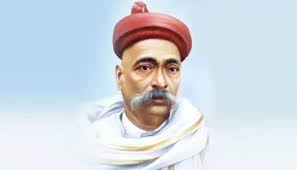
BALGANGADHAR TILAK

Independence has been a great achievement for our nation. But any great task requires sacrifice and hard work coupled with grit determination. Independence was much needed but this would not have been possible without our respectable freedom fighters.

Freedom fighters worked sweat blood to free the nation from the pangs of invaders. Some believed in peaceful protest and revolution such as the father of the nation Mahatma Gandhi while others like Khudiram Bose and Subash Chandra Bose believed in the supremacy of armed rebellion.

Among the many great warriors of India, one name holds a great and respectable position. The name is Bal Gangadhar Tilak, also called Lokmanya Tilak. It is very important that we know about the lives of our leaders and cherish their struggles because of whom we live freely.

Bal Gangadhar Tilak was born of 23rd July,1856. His real name was Keshav Gangadhar Tilak. He was a teacher and also an Indian nationalist and independent activist. He was born in a Marathi Hindu Brahmin family. His father, Gangadhar Tilak was a school teacher and Sanskrit scholar who died when Tilak was sixteen years old. After his father’s death, at the age of sixteen, he was married to Tapibai.

His educational qualifications included a Bachelor of Arts in first class in Mathematics from Deccan College of Pune in 1877 and L.L.B. degree from Government Law College in 1879.

Political Career– He had a long political career. Before the advent of Mahatama Gandhi, he was the most known political leader. Tilak was considered a radical nationalist but a social conservative. He joined the Indian National Congress in 1890. He opposed its moderate attitude, especially towards self-government. Tilak also played a key role in promoting the Swadeshi Movement and the Boycott Movement after the Partition of Bengal. Tilak opposed the moderate views of Gopal Krishna Gokhale and was supported by fellow Indian nationalists Bipin Chandra Pal in Bengal and Lala Lajpat Rai in Punjab. They were referred to as the Lal-Bal-Pal triumvirate. During his lifetime among other political cases, Tilak had been tried for sedition charges three times by the British Indian Government—in 1897, 1909, and 1916. In 1897, Tilak was sentenced to 18 months in prison for preaching disaffection against the Raj. In 1909, he was again charged with sedition and intensifying racial animosity between Indians and the British. The Bombay lawyer Muhammad Ali Jinnah appeared in Tilak’s defense but he was sentenced to six years in prison in Burma in a controversial judgment. In 1916 when for the third time Tilak was charged for sedition over his lectures on self-rule, Jinnah again was his lawyer and this time led him to acquittal in the case.

Tilak strictly opposed trends of liberal nature such as women’s rights, educating girls, and inter-caste marriage. He was particularly opposed to a form of marriage that involved a high caste girl and a boy of lower caste.

Also, Tilak started two weeklies Kesari ( in Marathi) and Mahratta in English. For this, he was recognized as the ‘awakener of India’. He appreciated the importance of identity issues in Modern India and motivated people to join the struggle for independence.

All in all, contributions made by Tilak were of significant importance and he is a leader to be remembered profoundly and a lot needs to be learned from him.

Sources- Wikipedia, Britannica, and Various News Articles

Do you know what you are?!

“You are the most unique person in this world because; there was no one like you, there is no one like you and there would be no one like you”. No matter wether you are good or bad, kind or wild, intelligent or ignorant and fame or adverse! Defenitely there is no one, right now; who exactly resembles each of your features. It’s impossible to recognise who you are, without the knowledge of what you are! This post doesn’t unleash the miracle of your biology such as your blood vessels spans 100 km or the length of your nerves covers many a miles. But this would try to bring out your inherent potential.

We are created with the ability to generate many number of ideas which would exceed the number of all molecules known, in the universe. All the creations and technological development that we see around us, is created with the 2% of the mental ability. The highest level of the mental ability that a person could use is near to 5%. If cent percent of the brain is used, then the consequences is unpredictable, and it would be miraculous. Each of the persons have their own perspectives, and their implantation into their action is definite to teach something; irrespective of the outcomes. As Henry Ford said, “Failure is merely an opportunity to more intelligently begin again”; every failure indeed becomes a step stone to success.

According to the saying of Jim Rohn, “Everything you have in your life, you have attracted to yourself by the person you are”, we become what we think about ourselves, for most of the time. Our beliefs, either positive or negative, helpful or hurtful, largely determine everything we do and how we do it. According to the law of correspondence, the outer life will begin to correspond and respond or reflect the inner life. It is evident that, it is possible and also necessary to transform the inner self and we are flexible enough to adapt oneself as the different personality. We also possess the ability to turn control of your emotions over someone or something we tend to blame. Even if, not everyone is born with emotional intelligence, we can acquire it in our life time.

Most importantly we are born with our own self by defeating many other selves; and right from the birth we have tasted the huge victory. I have listed a few but, it takes infinite words to define what are we. Our life is in the race to explore ourself and to become a star. To accomplish our aim it is necessary to recognise what we are. It could unleash the imprisoned splendor of ourselves! Thus the reason behind every perplex of our life and circumstances, is inherent inside yourself.

“If you tend to acknowledge what you are, then you shall decide who you should be and this is better than predicting who you are”!