Department Consumer Affairs meets Automobile Associations and partner companies to Onboard them on Right to Repair Portal India

 The Department of Consumer Affairs (DoCA) under Ministry of Consumer Affairs, Food and Public Distribution, Government of India has launched the Right to Repair Portal India (https://righttorepairindia.gov.in/) to provide consumers with an easy access to information for repairing their products and enabling them to reuse it, thereby contributing to the circular economy as well as reduction of e-waste in a hassle-free manner.

In an effort to uphold consumer rights and respond to evolving concerns regarding hassle free product repairs, a meeting was convened under the Chairmanship of Smt. Nidhi Khare, Secretary, Department of Consumer Affairs (DoCA) with Automobile Associations and their partner companies in the Automobile Sector. The objective was to onboard companies onto the Right to Repair Portal India.

In the meeting, it was emphasized that products that cannot be repaired or are subject to planned obsolescence—designed with an artificially limited lifespan—contribute to e-waste and compel consumers to purchase new products due to lack of repair options or extremely expensive repair options for reuse. Therefore, the goal is to eliminate obstacles such as restricted access to tools or repair information, ensuring that consumers have complete ownership of the products they purchase.

Over time, it has been noted that repair services are increasingly constrained due to significant delays in service and absence of repair documentation for vehicles. Additionally, products are sometimes repaired at excessively high costs, leaving consumers dissatisfied with repair services which often delays repairs, even if necessary, due to limited repair options. A major constraint is also the availability of genuine spare parts at affordable prices. Often their unavailability   at affordable prices, forces consumers towards purchasing counterfeit spare parts from the grey markets. Further, lack of accessible information for minor repairs or Do it yourself guides, exacerbates consumer distress, adding to their financial burden and overall dissatisfaction.

Secretary, Smt. Khare emphasized the need to enhance efforts towards democratization of repair manuals/videos accessible to all, fostering a robust ecosystem for third-party repair services, and establishing standards for them. She also laid stress on offering roadside assistance to consumers, esp. on highways and introducing a repairability index of the automotive that provide information on the life of the product, easy repair ecosystem, availability of spare parts, detailed manual on self-repair, warranty on different parts etc. These measures aim to empower consumers with informed choices regarding the post-sales service of their products, besides ease in enjoying their products fully. The meeting concluded with the consensus on to on board the Right to Repair Portal and adopting a greater collaborative approach in providing a vibrant post sale services to the consumers.

The discussions also covered topics such as aligning standardization of parts along with standardization of skilled workmanship, companies developing catalogs that should benefit consumers for post-purchase service and longevity of products life, and measures for addressing deceptive practices in repair workshops in the name of motor insurance that contribute to unnecessary generation of plastic waste.

In this regard, all companies were urged to on board on the unified Right to Repair Portal India which encompasses to facilitate and works as catalyst for providing relevant repair associated information between the consumers and companies. The information includes:

  1. Access to product manuals/ repair videos (by linking the websites and youtube channels of the companies);
  2. Address the concern on the price and warranty of spare parts;
  3. Explicit mention on differences in liability covered guarantee, warranty and extended warranty;
  4. Details of Companies Service Centre across India and Recognition third-parties repairers, if any, by the companies and
  5. Information on country of origin to be explicitly mentioned.

Some companies like TVS have shared their post-onboarding experiences on the portal. Companies including TATA Motors and TVS discussed how, based on complaints received from the National Consumer Helpline, they identified key repair issues and subsequently created repair videos accessible to consumers via their official YouTube channels. Additionally, associations like ACMA emphasized the Automotive Skill Development Council’s role in facilitating and supporting training youth for automotive skills in the dynamic and innovative market landscape.

The meeting was attended by various representatives of  Automobile Associations like ACMA, SIAM, ATMA, EPIC Foundation and Companies including TATA Motors, Mahindra, TVS, Royal Enfield, Renaulds and Bosch, Yamaha Motors India, Honda Car India were also present.

****

'Sahkar se Samriddhi' program in Gandhinagar, Gujarat

 Union Home Minister and Minister of Cooperation Shri Amit Shah addressed the ‘Sahkar se Samriddhi’ (Prosperity through Cooperation) program organized on the occasion of 102nd International Day of Cooperatives in Gandhinagar, Gujarat today. Many dignitaries including Gujarat Chief Minister Shri Bhupendra Patel, and Secretary, Ministry of Cooperation were present on the occasion.
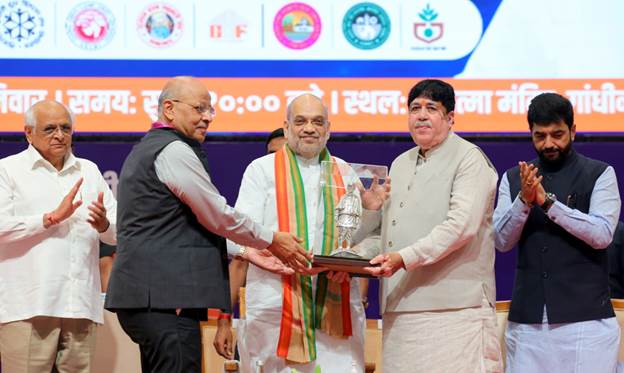
In his address, Shri Amit Shah said that today is the birth anniversary of Dr. Shyama Prasad Mukherjee and we owe to him for making Bengal and Kashmir integral parts of India today. He said that it was Dr. Mukherjee who led the movement against having two legislations, two heads at the top and two flags in one country and sacrificed his life fighting for this cause. Shri Shah said that today under the leadership of Prime Minister Shri Narendra Modi the duality of having two legislations (Vidhan), two heads at the top (Pradhan) and two flags (Nishaan) has ended in Kashmir and the tricolour is flying there high with great pride. He said that today is also the death anniversary of Babu Jagjivan Ram ji, who initiated and took forward many development programs for the Dalits of the country and laid the foundation of social harmony and opposed religious conversion.


The Union Minister of Cooperation said that today is a very important day in many ways for all the people and workers associated with the cooperative sector. He said that on this day, Prime Minister Shri Narendra Modi had established an independent Ministry of Cooperation. He said that previous governments never paid heed to the demand of a separate Cooperation Ministry. He said that Shri Narendra Modi, who comes from the land of Gujarat, after becoming the Prime Minister, established an independent Ministry of Cooperation by understanding the need for cooperation in today’s time.
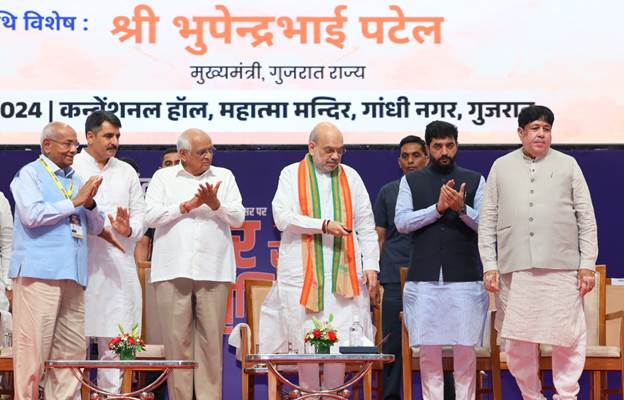


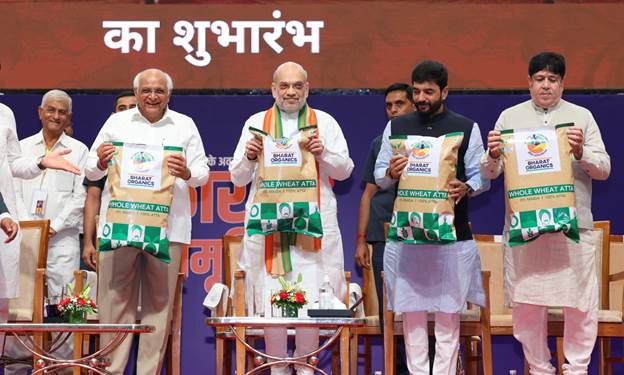
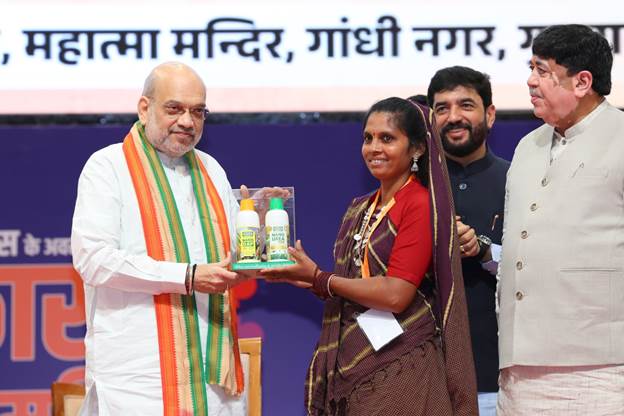
Shri Amit Shah said that today the Government of Gujarat has taken a very important decision and announced a subsidy of 50 percent on Nano-Urea and Nano-DAP. He thanked the Gujarat government for the decision and said that farmers need to spray Nano-Urea only once and that there is no need to add Urea to the fields later during the crop’s growth. Shri Shah said that spraying Nano-Urea and Nano-DAP in the field is sufficient for increased production and will also save the soil. He said that the Modi government has made them cheaper and farmers should use them. He said that the Government of India has established National Cooperative Organic Limited (NCOL) to promote organic products and ensure fair price for their produce to farmers practising organic farming. Shri Shah said that today Bharat Organic Atta has also been launched by NCOL. Shri Shah said that Amul has also launched a shop of Organic products in Delhi. He said that both Bharat Organic and Amul are reliable and 100 percent organic brands. Shri Shah said that the Bharat brand stamp is put on organic products only after testing them using the world’s most modern technology.


Union Home Minister and Minister of Cooperation said that cooperation is not a new idea in India and our forefathers had adopted this 125 years old idea. He said that many great personalities like Sardar Patel, Mahatma Gandhi, Gadgil ji, Vaikunthbhai Mehta and Tribhuvandas Patel started it. He said that a time came when this idea started weakening gradually. Shri Shah said that Prime Minister Modi established a new and independent Ministry of Cooperation recognizing the relevance of cooperation. He said that today we are at an important juncture and the 125 years old cooperative movement is making a big contribution in various areas of the country. He said that the cooperative sector is contributing 20 percent in the distribution of agricultural loans, 35 percent in the distribution of fertilizers and 21 percent in production, 31 percent in sugar production, 13 percent in the purchase of wheat and 20 percent in the purchase of paddy. He said that the cooperative sector is making a very important contribution in the rural and agricultural economy. He said that we have to lay such a strong foundation of cooperation in the next 5 years so that cooperation can reach every village and household for the next 125 years.


Shri Amit Shah said that the Modi government has come up with two new schemes through cooperatives. He said that the government has taken important steps to promote Ethanol and for the prosperity of the farmers producing Maize. He said that the government have made arrangements that two big cooperative institutions of the government will buy Maize produced by the farmers online at the minimum support price (MSP) and Ethanol will be made from it. He said that this will not only make the farmers prosperous but will also help in increasing the country’s foreign exchange reserves by reducing the import of Petrol. Shri Shah said that similarly, now National Agricultural Cooperative Marketing Federation of India (NAFED) and Consumer cooperative institutions will also procure 4 types of Pulses at 100 per cent MSP. He said that we should promote ‘Cooperation among Cooperative’ institutions. He said that if we do all the economic transactions of the cooperative sector within the cooperative sector itself, then we will not need to bring a single penny from outside the cooperative sector. The Minister of Cooperation urged National Bank for Agriculture and Rural Development (NABARD) and all the State Cooperative Banks across the country that every Primary Agriculture Credit Society (PACS) and other cooperative institutions should open their account in the District Cooperative Bank or State Cooperative Bank, which will not only strengthen the cooperative sector but will also increase capital and confidence.


Union Home Minister and Minister of Cooperation said that Prime Minister Shri Narendra Modi has given the slogan of ‘Sahkar se Samriddhi’ to the cooperative sector of the country. He said that in the last 10 years, Prime Minister Modi emancipated 30 crore people from poverty and freed them of their worries of daily needs. He said that PM Modi has provided facilities like house, electricity, toilet, drinking water, 5 kg free food grains and gas cylinder to crores of poor people of the country. Shri Shah said that now these crores of poor people want to contribute to the development of the country but they do not have capital. He said that the only way to contribute to the development of the country and to develop oneself without capital is cooperation. Shri Shah said that the only objective behind the mantra of ‘Sahkar se Samriddhi’ given by Prime Minister Shri Narendra Modi is to bring confidence, happiness and prosperity in the lives of these 30-crore people who are backward even after 75 years of independence.


Shri Amit Shah said that the Union Ministry of Cooperation has taken many important steps for the cooperative sector. He said that the government has set a target that there should not be any state or district in the country where there is not a viable district cooperative bank and a viable district milk producer union. He said that only by doing this we will be able to expand the cooperative sector and make every rural and poor person prosperous. Shri Shah said that for this we have envisioned a Cooperative Panchayat. He said that even today there are 2 lakh panchayats in the country where there is not a single cooperative institution. He said that we have set a target that in the next 5 years we will work to create multipurpose PACS in these two lakh panchayats. Shri Shah said that the government has also made model bylaws for PACS and despite PACS being a state subject, every state from Kashmir to Kanyakumari and Assam to Dwarka has accepted these model bylaws. Shri Shah said that the Government has also worked towards making PACS multi-purpose and today, out of 65,000 functional PACS in the country, 48,000 have taken initiatives towards becoming viable by adding some new activity to themselves.


Union Minister of Cooperation said that the central government has also formed three multi-state cooperative institutions – Organic Committee, Export Committee and Seed Committee – through which the path has been paved to enrich the lives of farmers. He said that the government will soon bring a National Cooperative Policy. Shri Shah said that 1100 new Farmer Producer Organisations (FPOs) have been formed in the country, more than 1 lakh PACS have accepted the new bylaws and now with the issuance of bonds worth Rs 2000 crore to National Cooperative Development Corporation (NCDC), this institution will be able to work for the welfare of more cooperative institutions. Along with this, the urban cooperative banks have got the target of opening new branches, the limit of personal housing loan given by cooperative banks has been doubled, both the income tax benefits and the limit of cash withdrawal have been increased and Prime Minister Shri Narendra Modi, by enacting a law, has done the work of cancelling the income tax liability of Rs 15000 crore of sugar cooperative mills. The IT liability was pending for many years.
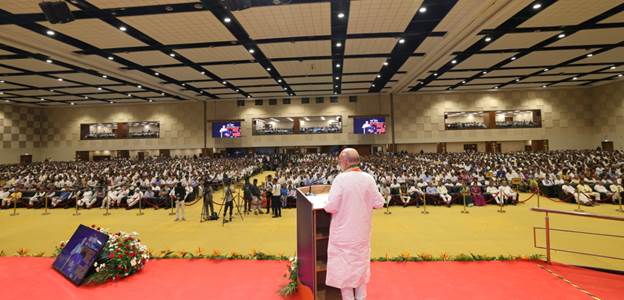


Shri Amit Shah called upon the workers of the cooperative sector across the country and asked them to make cooperatives a strong pillar of the country’s economy. He said that we not only have to make cooperatives a strong pillar but also work to instil facilities, prosperity and self-confidence in the lives of crores of poor people of the country through this sector. Shri Shah expressed confidence that on the day when International Day of Cooperatives will be celebrated in 2029, there will not be a single Panchayat in the country where there will not be a PACS. He said that we all have to come together to make Prime Minister Shri Narendra Modi’s dream come true and take cooperatives forward to serve the poor.

*****

12th convocation of Indian Institute of Space Science and Technology (IIST) in Thiruvananthapuram

 The Vice-President, Shri Jagdeep Dhankhar today, without taking the name, condemned the remarks by a senior parliamentarian and former finance minister who said that “New laws were drafted by part timers.” Describing his words as inexcusable insult to the wisdom of parliament, VP questioned “Are we part timers in parliament?”

Taking strong exception to the senior parliamentarian remarks to an English daily, VP further said. “I do not have words strong enough to condemn such a kind of narrative being set brough. A member of parliament being labelled as a part timer, ultimately it is a parliament that is a last source of law formulation.”

Appealing to the aforementioned leader to withdraw his “derogatory, defamatory and highly insulting observations to the Members of the Parliament,” VP asked him to hold himself accountable to his conscience.

Wishing that such a thing had never been said, Shri Dhankhar cautioned that we need to be on guard “when informed minds knowingly lead you astray.” If you say something different which you don’t believe in, everyone will believe you because you are having elevated position, he added.

Addressing the 12th convocation of IIST in Thiruvananthapuram, Kerala today, Shri Dhankhar remarked, “This morning when I read a newspaper, an informed mind who has been finance minister of this country, a parliamentarian for long and a Member of Rajya Sabha currently, he stunned me because I took great pride that this parliament has done a great thing. It had unshackled us from colonial legacy by giving three laws that are of epochal dimension. From “Danda Vidhan” we have come to “Nyaya Vidhan”.

Highlighting that every Member of Parliament had the opportunity to contribute when these three laws were being debated in the House, Shri Dhankhar lamented, “This honourable gentleman, a distinguished member of parliament has a great background as finance minister. But with heavy heart, I am sharing with you, he did not use his lung power, he gave total rest to his vocal chords while debate was going on.”

Disapproving the non-participation of other legal luminaries in Parliament during the debate on the three laws, VP said, “Not only he, his distinguished colleagues from my legal fraternity, senior advocates did not come forward to help the nation. They had an opportunity to make this point in the parliament. It was a failure on his part to perform his constitutional duty and obligation and how can we count on such a man, speaking in high decibel trying to seek resonance from people only to unsettle mechanism.”

Shri Dhankhar said that he was “shocked beyond words” and asked everyone to beware of minds that deliberately run a narrative trying to run down our nation, demean our institutions and taint our progress. They don’t see the writing on the wall, they engage in criticism for the sake of criticism, he added.

Lauding the success of missions led by the Indian Space Research Organisation, Shri Dhankhar underscored that these missions have contributed significantly to India’s diplomatic soft power and enhanced the quality of life of millions.

Congratulating the graduating students, Shri Dhankhar advised them to keep learning in their lives. Describing the education as the most impactful transformational mechanism, he said “It fosters equality& antidotes inequities.It’s a mechanism of positive change.”

Recalling his visit to ISRO, VP said that he was inspired, motivated and enthused, energized by the work being done by the people there.

Shri S Somnath, President, Governing Body IIST, Secretary, Deptt of Science, Shri Dr. B.N. Suresh, Chancellor ISD, Dr Unnikrishnan Nayyar
Director, Vikram Sarabhai Space Centre, faculty, staff, graduating students and their parents were present.


Read Full Text here :https://pib.gov.in/PressReleasePage.aspx?PRID=2031214

 *****

Utkalamani Pandit Gopabandhu Das: A Biography


Early Life and Education

Pandit Gopabandhu Das, often revered as “Utkalamani” or “The Jewel of Odisha,” was born on October 9, 1877, in the village of Suando in Puri district, Odisha, India. His parents, Shrimati Swarnamayee Devi and Shree Daitari Dash, instilled in him a strong sense of morality and a commitment to social service from a young age. Gopabandhu’s early education took place in his village, after which he attended Puri Zilla School. Demonstrating academic brilliance, he continued his education at Ravenshaw College in Cuttack, where he earned a degree in Arts. He later pursued law at Calcutta University, which equipped him with the knowledge and skills to advocate for social justice and reform.

Political and Social Activism

Gopabandhu Das was not just a scholar but a passionate activist committed to the upliftment of the downtrodden. His foray into politics was driven by a deep desire to fight against the oppressive British colonial rule and to work for the socio-economic betterment of his fellow Odias. He became a prominent leader in the Indian National Congress and participated actively in the freedom struggle, advocating non-violent resistance and civil disobedience.

However, his contributions extended far beyond the political arena. Gopabandhu was deeply concerned with the social and educational upliftment of Odisha. He believed that true freedom could only be achieved through education and social reform. To this end, he founded the Satyabadi Bana Bidyalaya at Sakshi Gopal in 1909, which became a beacon of progressive education, focusing on the all-around development of students, blending traditional and modern methods of learning.

Literary Contributions

Gopabandhu Das was also a prolific writer and poet, using his literary talents to inspire and mobilize the masses. His works are marked by their patriotic fervor, social consciousness, and simplicity, making them accessible to a broad audience. His notable literary contributions include:

  • “Kara Kabita”: A collection of poems written during his imprisonment, reflecting his indomitable spirit and love for the nation.
  • “Bandira Atmakatha”: His autobiography, providing deep insights into his life, struggles, and philosophy.

Journalism and the Establishment of “The Samaja”

In 1919, Gopabandhu Das founded “The Samaja,” a newspaper that played a crucial role in awakening nationalistic sentiments among the people of Odisha. The newspaper became a powerful tool for disseminating information, promoting social reforms, and rallying support for the freedom movement. Under his stewardship, “The Samaja” advocated for the rights of the oppressed, exposed injustices, and fostered a sense of unity and pride among Odias.

Personal Life and Legacy

Gopabandhu Das was a man of profound humility and simplicity, characteristics that endeared him to people from all walks of life. Despite facing personal tragedies, including the loss of his wife and children, he remained steadfast in his commitment to serving humanity.

Pandit Gopabandhu Das passed away on June 17, 1928, but his legacy endures. He is remembered as a visionary leader, a compassionate social reformer, and a dedicated educator who laid the groundwork for modern Odisha. His life’s work continues to inspire generations to strive for a just and equitable society.

Conclusion

Utkalamani Pandit Gopabandhu Das’s life is a testament to the power of selfless service and the enduring impact of visionary leadership. His contributions to the freedom struggle, education, literature, and journalism have left an indelible mark on the history and culture of Odisha. Through his exemplary life, he showed that true greatness lies in serving others and working tirelessly for the betterment of society.

96TH DEATH ANNIVERSARY OF UTKALAMANI PANDIT GOPABANDHU DAS

 The President of India, Smt Droupadi Murmu graced the 96th Death Anniversary of Utkalamani Pandit Gopabandhu Das at Bhubaneswar, Odisha today (July 6, 2024). 

Speaking on the occasion, the President said it doesn’t matter how long a person lives; rather, what is important is the kind of life he or she lives. That is, the reputation of a person is evaluated based only on his/her contribution to society and country. She stated that it is amazing to think about the number of good deeds Pandit Gopabandhu Das did in his short lifespan. She said that his contribution to the fields of social service, literature, education, and journalism is unforgettable. She paid her tributes to Pandit Gapabandhu Das.

The President said that Pandit Gopabandhu Das knew very well that no society or nation can progress without proper education. That is why he established Muktakash School, also known as Van Vidyalaya, at Satyabadi in Puri district. His approach of introducing students to nature right from the beginning is very important. Pandit Gopabandhu emphasised on holistic development of students through Van Vidyalaya. In his view, education does not mean only bookish knowledge but, education should develop students physically, mentally, intellectually, and spiritually as well.

The President said that in the year 1919, Pandit Gopabandhu Das started the publication of the Samaj newspaper. Through this publication, he spread the message of freedom in Odisha. He also raised the problems of the people through this newspaper. His editorials in the Samaj have enriched Odia literature.

The President said that Pandit Gopabandhu Das believed in nationalism and democratic values. His poetries and prose give the message of patriotism and the welfare of the world. He was dedicated to Odia pride as well as Indian nationalism. Pandit Gopabandhu wrote ‘Wherever I am in India, I should believe that I am at home’. We should take inspiration from this pan-India thinking of Gopabandhu ji, the President stated.


***

Top Universities in Andhra Pradesh

 Andhra Pradesh is home to several prominent universities known for their academic excellence and research contributions across various fields. Here are some of the top universities in Andhra Pradesh:

  1. Andhra University, Visakhapatnam

    • One of the oldest and most prestigious universities in Andhra Pradesh, Andhra University offers a wide range of programs in arts, science, commerce, engineering, law, and management.
  2. Jawaharlal Nehru Technological University (JNTU), Kakinada

    • JNTU Kakinada is a well-known technical university offering undergraduate, postgraduate, and doctoral programs in engineering, technology, and management.
  3. Sri Venkateswara University, Tirupati

    • Located in the holy city of Tirupati, Sri Venkateswara University offers a variety of programs in arts, science, commerce, management, engineering, and law. It is known for its research contributions and academic excellence.
  4. GITAM (Gandhi Institute of Technology and Management) University, Visakhapatnam

    • GITAM is a private deemed-to-be university offering programs in engineering, technology, management, science, pharmacy, and humanities. It has a strong focus on research and innovation.
  5. Sri Venkateswara Institute of Medical Sciences (SVIMS), Tirupati

    • SVIMS is a renowned medical university offering programs in medicine, nursing, and allied health sciences. It is known for its high-quality medical education and research.
  6. Acharya Nagarjuna University, Guntur

    • Acharya Nagarjuna University offers a wide range of programs in arts, science, commerce, management, engineering, and law. It is recognized for its academic rigor and research initiatives.
  7. KL University (Koneru Lakshmaiah Education Foundation), Guntur

    • KL University is a prominent private university offering programs in engineering, science, management, humanities, and law. It is known for its quality education and research activities.
  8. Dr. NTR University of Health Sciences, Vijayawada

    • This university specializes in medical and health sciences education, offering programs in medicine, dentistry, nursing, and allied health sciences. It is named after the former Chief Minister of Andhra Pradesh, N.T. Rama Rao.
  9. Sri Padmavati Mahila Visvavidyalayam (Women’s University), Tirupati

    • A women’s university dedicated to the empowerment of women through education, it offers programs in arts, science, commerce, management, and engineering.
  10. Vignan’s Foundation for Science, Technology & Research (VFSTR), Guntur

    • Vignan University is a private deemed-to-be university known for its programs in engineering, science, management, and humanities. It emphasizes research, innovation, and holistic education.

These universities are recognized for their contributions to education, research, and development, and they offer a diverse range of programs to cater to the educational needs of students in Andhra Pradesh and beyond.

Top Universities in Karnataka

 Karnataka is known for its excellent educational institutions, especially in the fields of engineering, technology, management, and medical sciences. Here are some of the top universities in Karnataka:

  1. Indian Institute of Science (IISc), Bangalore

    • IISc is one of India’s premier institutions for advanced scientific and technological research and education. It offers undergraduate, postgraduate, and doctoral programs across various disciplines of science and engineering.
  2. National Institute of Technology Karnataka (NITK), Surathkal

    • NITK is a highly esteemed engineering institution that provides undergraduate, postgraduate, and doctoral programs in engineering, science, and management.
  3. Manipal Academy of Higher Education (MAHE), Manipal

    • MAHE, also known as Manipal University, is a leading private university offering a wide range of programs in medicine, engineering, management, humanities, and social sciences.
  4. Visvesvaraya Technological University (VTU), Belagavi

    • VTU is one of the largest technological universities in India, offering a vast array of undergraduate, postgraduate, and doctoral programs in engineering, technology, and management.
  5. Bangalore University, Bangalore

    • One of the oldest universities in Karnataka, Bangalore University offers a wide range of programs in arts, science, commerce, law, and education. It is known for its strong emphasis on research and quality education.
  6. Jawaharlal Nehru Centre for Advanced Scientific Research (JNCASR), Bangalore

    • JNCASR is a multidisciplinary research institute offering advanced research opportunities in various fields of science and engineering.
  7. Indian Institute of Management Bangalore (IIMB), Bangalore

    • IIMB is one of the top business schools in India, offering postgraduate, doctoral, and executive education programs in management.
  8. Christ University, Bangalore

    • A deemed-to-be university, Christ University offers a diverse range of programs in arts, science, commerce, management, engineering, law, and social sciences.
  9. JSS Academy of Higher Education & Research, Mysore

    • Known for its medical and health sciences programs, JSS Academy offers undergraduate, postgraduate, and doctoral programs in medicine, pharmacy, dentistry, and allied health sciences.
  10. University of Mysore, Mysore

    • Established in 1916, the University of Mysore offers a wide range of undergraduate, postgraduate, and doctoral programs in arts, science, commerce, law, and education.

These universities are recognized for their academic excellence, research contributions, and comprehensive educational offerings across various disciplines.

Top Universities in Tamilnadu

 Tamil Nadu is home to several prestigious universities known for their academic excellence and research contributions. Here are some of the top universities in the state:

  1. Indian Institute of Technology Madras (IIT Madras)

    • Located in Chennai, IIT Madras is one of the premier engineering institutions in India. It is renowned for its cutting-edge research and high-quality education in engineering, technology, and sciences.
  2. Anna University

    • Based in Chennai, Anna University is a well-known technical university that offers a variety of undergraduate, postgraduate, and doctoral programs in engineering, technology, architecture, and applied sciences.
  3. University of Madras

    • One of the oldest universities in India, the University of Madras in Chennai offers a wide range of programs in arts, science, commerce, management, and humanities. It is known for its distinguished faculty and rich academic heritage.
  4. Tamil Nadu Agricultural University (TNAU)

    • Located in Coimbatore, TNAU is a premier agricultural university that provides education, research, and extension services in agriculture and allied sciences.
  5. Vellore Institute of Technology (VIT)

    • VIT, located in Vellore, is a private university known for its high-quality engineering and technology programs. It has a strong focus on research and innovation.
  6. SRM Institute of Science and Technology (SRMIST)

    • Based in Kattankulathur, near Chennai, SRMIST is a prominent private university offering a wide range of programs in engineering, medicine, management, humanities, and sciences.
  7. Amrita Vishwa Vidyapeetham

    • With a campus in Coimbatore, Amrita Vishwa Vidyapeetham is a multi-campus, multi-disciplinary research university that offers programs in engineering, medical sciences, management, and social sciences.
  8. Sastra University (Shanmugha Arts, Science, Technology & Research Academy)

    • Located in Thanjavur, Sastra University is a well-regarded private university known for its programs in engineering, science, law, management, and arts.
  9. Bharathiar University

    • Situated in Coimbatore, Bharathiar University offers a variety of programs in arts, science, commerce, management, and social sciences. It is known for its research contributions and academic excellence.
  10. Alagappa University

    • Located in Karaikudi, Alagappa University offers diverse programs in arts, science, education, and management. It is recognized for its quality education and research initiatives.

These universities are known for their rigorous academic standards, state-of-the-art facilities, and contributions to research and development in various fields.

Policies


  1. Editorial Policy:

    • Accuracy and Integrity: Ensuring accuracy in reporting and maintaining the highest standards of journalistic integrity.
    • Fact-Checking: Verifying information from reliable sources before publication.
    • Balanced Reporting: Presenting diverse viewpoints and avoiding bias in coverage.
    • Corrections and Updates: Promptly correcting any errors and providing updates as necessary.
  2. Content Guidelines:

    • Relevance: Publishing content that is relevant to the portal’s focus areas, such as education, research, and current affairs.
    • Quality Standards: Upholding standards for writing, research, and academic rigor in articles and research papers.
    • Plagiarism: Strictly prohibiting plagiarism and ensuring all content is original or properly attributed.
  3. Privacy and Data Protection:

    • User Data: Safeguarding user information and adhering to data protection regulations.
    • Transparency: Providing clear information about how user data is collected, used, and stored.
  4. Community and User Engagement:

    • Comment Policies: Establishing guidelines for user comments to maintain a respectful and constructive dialogue.
    • Moderation: Monitoring user-generated content to prevent misuse or inappropriate conduct.
    • Community Guidelines: Setting expectations for user behavior and interaction on the platform.
  5. Ethical Standards:

    • Conflict of Interest: Disclosing any potential conflicts of interest involving contributors, authors, or editors.
    • Independence: Maintaining editorial independence from advertisers, sponsors, or external influences that could compromise journalistic integrity.
  6. Accessibility and Diversity:

    • Accessibility: Ensuring the website and its content are accessible to all users, including those with disabilities.
    • Diversity: Promoting diversity in content, perspectives, and voices represented on the platform.
  7. Copyright and Intellectual Property:

    • Copyright Compliance: Respecting copyright laws and obtaining necessary permissions for use of third-party content.
    • Attribution: Properly attributing sources and authors for all content published on the portal.

These policies are foundational to maintaining credibility, transparency, and trustworthiness in online journalism and academic publishing, which Eduindex News would likely adhere to in its operations.

About Eduindex News

 Eduindex News is a comprehensive online portal that provides news, articles, research papers, and information across various disciplines. Here’s an in-depth overview of Eduindex News:

Overview and Purpose

  • Website: Eduindex News
  • Founder: The specific founder details are not prominently listed, but the portal operates under the umbrella of Eduindex, which is known for its academic and research-oriented content.

Content and Coverage

  1. News and Updates:

    • Eduindex News covers a wide range of topics including current affairs, education news, scientific advancements, technology updates, and more.
    • It serves as a platform for keeping readers informed about global events and developments across different sectors.
  2. Articles and Opinions:

    • The portal publishes articles and opinion pieces contributed by experts, scholars, researchers, and academicians.
    • Topics covered include education policies, research findings, societal issues, health-related news, environmental concerns, and other relevant subjects.
  3. Research Papers and Journals:

    • Eduindex News also hosts academic research papers, journals, conference proceedings, and scholarly articles.
    • It provides a platform for researchers and scholars to disseminate their findings and contribute to the academic community.
  4. Educational Resources:

    • The portal offers educational resources such as study materials, educational trends, career guidance, and tips for students and educators.
    • It aims to support learning and academic growth by providing relevant and reliable information.
  5. Global Reach:

    • Eduindex News caters to a global audience, covering news and developments from various countries and regions.
    • It promotes international perspectives and fosters a global exchange of knowledge and ideas.

User Engagement and Community

  • Interactive Features: The website includes features for user engagement such as comment sections, forums, and opportunities for readers to contribute content.
  • Social Media Presence: Eduindex News maintains a presence on social media platforms to interact with its audience and share updates.

Mission and Impact

  • Educational Empowerment: The portal aims to empower readers with knowledge and information that can contribute to personal growth, professional development, and academic success.
  • Promoting Research and Innovation: By hosting research papers and academic journals, Eduindex News supports the dissemination of research findings and encourages innovation across disciplines.

Accessibility and Navigation

  • User-Friendly Interface: The website is designed to be user-friendly, with easy navigation and search functionalities to help readers find relevant content.
  • Mobile Compatibility: It ensures accessibility across devices, including mobile phones and tablets, for convenient access to information on the go.

Eduindex News

Eduindex News serves as a valuable resource for individuals interested in staying updated with current affairs, accessing academic research, and engaging with educational content. Its commitment to providing reliable information and promoting intellectual discourse makes it a significant platform in the realm of online news and education.

Top Schools in Tamilnadu

 Here are some of the top schools in Tamil Nadu, known for their academic excellence, infrastructure, and overall reputation:

  1. The Doon School, Dehradun – Established in 1935, it is one of India’s most prestigious all-boys boarding schools, known for its rigorous academic program and holistic development.

  2. Welham Girls’ School, Dehradun – Founded in 1957, it is renowned for its focus on academic excellence and the holistic development of girls.

  3. Woodstock School, Mussoorie – Founded in 1854, it is a co-educational international school known for its scenic campus and emphasis on global education.

  4. Mussoorie International School – Established in 1984, it offers a blend of academics, sports, and extracurricular activities in a picturesque setting.

  5. St. George’s College, Mussoorie – Founded in 1853, it is one of the oldest and most respected boarding schools in the region, known for its academic rigor and holistic education.

  6. Doon International School, Dehradun – Known for its modern infrastructure, quality education, and comprehensive development programs.

  7. The Heritage School, Dehradun – A co-educational day-cum-boarding school known for its academic excellence and emphasis on values-based education.

  8. Brightlands School, Dehradun – Known for its progressive approach to education and comprehensive development of students.

  9. Doon Cambridge School, Dehradun – Established with a commitment to providing quality education and nurturing talent in a conducive learning environment.

  10. Tula’s International School, Dehradun – Known for its emphasis on holistic education, including academics, sports, arts, and cultural activities.

These schools in Uttarakhand are recognized for their commitment to providing quality education and holistic development, making them top choices for students seeking a well-rounded educational experience in the region.

Top Schools in Karnataka

 Here are some of the top schools in Karnataka, known for their academic excellence, infrastructure, and overall reputation:

  1. The Valley School, Bangalore – Known for its progressive education philosophy and emphasis on holistic development.

  2. Mallya Aditi International School, Bangalore – A renowned international school known for its rigorous academic curriculum and global perspective.

  3. National Public School (NPS), Bangalore – With multiple branches in Bangalore, NPS is known for its academic excellence and holistic education approach.

  4. Inventure Academy, Bangalore – Known for its innovative teaching methods, emphasis on critical thinking, and holistic development of students.

  5. Bishop Cotton Boys’ School, Bangalore – One of Bangalore’s oldest and most prestigious schools, known for its academic rigor and rich heritage.

  6. Indus International School, Bangalore – A globally recognized school offering an international curriculum and state-of-the-art facilities.

  7. The International School Bangalore (TISB) – Known for its IB and IGCSE programs, TISB emphasizes global education and all-round development.

  8. The Cathedral High School, Bangalore – Known for its academic excellence, cultural diversity, and strong values-based education.

  9. Greenwood High International School, Bangalore – Known for its academic rigor, comprehensive curriculum, and focus on extracurricular activities.

  10. Ryan International School, Bangalore – Part of a renowned chain of schools, Ryan International School in Bangalore is known for its holistic education approach and modern infrastructure.

These schools in Karnataka are recognized for their commitment to academic excellence, innovative teaching methods, and comprehensive development of students, making them among the top choices for education in the state.

Top Schools in Kerala

 Here are some of the top schools in Kerala, known for their academic excellence, infrastructure, and overall reputation:

  1. The Lawrence School, Lovedale – Known for its excellent academic record and holistic development programs.

  2. St. Joseph’s Boys’ High School, Bangalore – Renowned for its high academic standards

Top Schools in Uttarakhand

 Here are some of the top schools in Uttarakhand, known for their academic excellence, infrastructure, and overall reputation:

  1. The Doon School, Dehradun – Established in 1935, it is one of India’s most prestigious all-boys boarding schools, known for its rigorous academic program and holistic development.

  2. Welham Girls’ School, Dehradun – Founded in 1957, it is renowned for its focus on academic excellence and the holistic development of girls.

  3. Woodstock School, Mussoorie – Founded in 1854, it is a co-educational international school known for its scenic campus and emphasis on global education.

  4. Mussoorie International School – Established in 1984, it offers a blend of academics, sports, and extracurricular activities in a picturesque setting.

  5. St. George’s College, Mussoorie – Founded in 1853, it is one of the oldest and most respected boarding schools in the region, known for its academic rigor and holistic education.

  6. Doon International School, Dehradun – Known for its modern infrastructure, quality education, and comprehensive development programs.

  7. The Heritage School, Dehradun – A co-educational day-cum-boarding school known for its academic excellence and emphasis on values-based education.

  8. Brightlands School, Dehradun – Known for its progressive approach to education and comprehensive development of students.

  9. Doon Cambridge School, Dehradun – Established with a commitment to providing quality education and nurturing talent in a conducive learning environment.

  10. Tula’s International School, Dehradun – Known for its emphasis on holistic education, including academics, sports, arts, and cultural activities.

These schools in Uttarakhand are recognized for their commitment to providing quality education and holistic development, making them top choices for students seeking a well-rounded educational experience in the region.

List of top schools in India

 Here is a list of some of the top schools in India, known for their academic excellence, infrastructure, and overall reputation:

  1. The Doon School, Dehradun – Founded in 1935, it is one of India’s most prestigious all-boys boarding schools.

  2. Welham Girls’ School, Dehradun – Established in 1957, it is renowned for its quality education and holistic development of girls.

  3. Mayo College, Ajmer – A prominent boys’ boarding school founded in 1875, known for its rich history and academic standards.

  4. Modern School, New Delhi – Founded in 1920, it is one of Delhi’s oldest and most prestigious co-educational schools.

  5. The Shri Ram School, Delhi and Gurgaon – Known for its innovative teaching methods and emphasis on holistic development.

  6. Cathedral and John Connon School, Mumbai – Established in 1860, it is one of the oldest and most respected schools in Mumbai.

  7. La Martiniere Schools, Kolkata and Lucknow – These schools are known for their rich heritage and academic rigor.

  8. Dhirubhai Ambani International School, Mumbai – Founded in 2003, it is known for its modern infrastructure and international curriculum.

  9. Bishop Cotton School, Shimla – Founded in 1859, it is one of Asia’s oldest boarding schools, known for its academic excellence and scenic location.

  10. The Lawrence School, Sanawar – Established in 1847, it is one of the oldest co-educational boarding schools in Asia.

These schools are recognized for their commitment to academic excellence, extracurricular activities, and overall development of students, making them among the top choices for education in India.
