“Yuga Yugeen Bharat Museum will stand as a testament to India’s rich heritage and it’s legacy as the mother of Democracy”

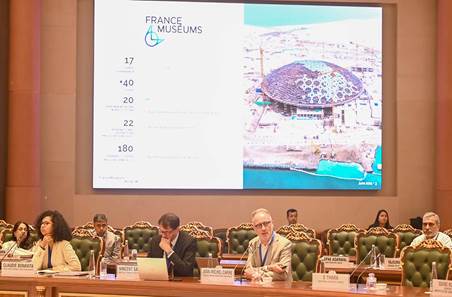
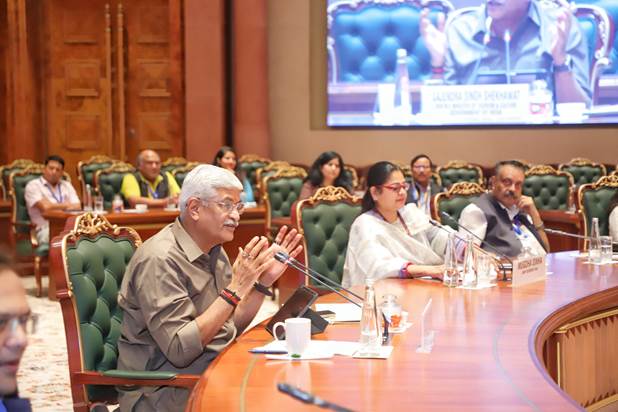
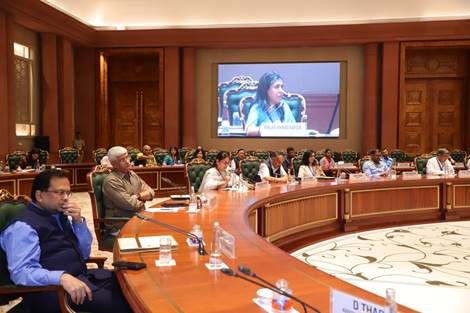
 Ministry of Culture organised a four-day inter-ministerial stakeholder consultation and capacity building workshop for upcoming Yuga Yugeen Bharat Museum, slated to be built in the North and South Block as part of the Central Vista Redevelopment Project. The workshop was held from 26th to 29th June 2024 at Bharat Mandapam in New Delhi. The final day of the deliberation was attended by the Union Minister for Culture and Tourism, Shri Gajendra Singh Shekhawat and senior Ministry officials such as the Secretary, Shri Govind Mohan as well as Dr. Thierry Mathou, French Ambassador to India.

The consultation engaged individuals from the museum ecosystem, both private and government to discuss the upcoming Yuga Yugeen Bharat (The timeless and eternal India) Museum. The Capacity Building was spearheaded by a team of experts from France Muséums, an international museum consultancy.
Image

IMG_5899.jpeg


Union Minister for Culture and Tourism, Shri Gajendra Singh Shekhawat, on the concluding day of the four-day Capacity Building Workshop said This museum will stand as a testament to India’s rich heritage and its unwavering spirit of progress, as it draws inspiration from its past as a blueprint. The Yuga Yugeen Bharat Museum will transcend the traditional museum experience, embodying the spirit of inclusivity. It will be a museum of the people, centring community narratives – a testament to India’s legacy as the mother of Democracy.

Image


The new National Museum of India is set to come up at North and South Block as part of the Central Vista Redevelopment project that seeks to revamp India’s central administrative area located near Raisina Hill, New Delhi. The museum will be spread over 1,54,000 sqm, making it the largest museum in the world. The video walk through for the museum was first unveiled by the Prime Minister Shri Narendra Modi at the inauguration of the first International Museum Expo organized by the GLAM (Galleries, Libraries, Archives and Museums) Division of the Ministry of Culture on 18.05.2023 and was reiterated during the inauguration of the Bharat Mandapam in July 2023.
IMG_5901.jpeg

The Museum will be developed through Adaptive Reuse, in collaboration with France owing to their expertise in similar projects such as the Louvre, which too housed the French Ministry of Finance. The French are partners for this project owing to the long-standing friendship between the two countries, which had contributed to a Letter of Intent being signed between both governments in 2020 that emphasised Museum & Heritage Co-operation.

Pursuant to this, the GLAM Division spearheaded a series of capacity building workshops that aimed to foster critical objectives: alignment amongst stakeholders and generation of synergy for a unified vision. The first of these was a brainstorming session held on the 14th of June, bringing together other ministries and departments of the Government of India. This not only fosters interdepartmental coordination but also ensures the project resonates with various facets of Indian society.

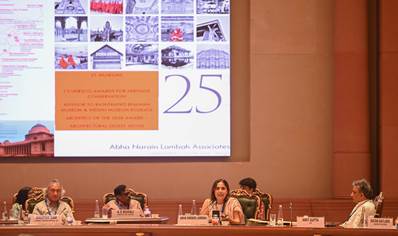
Following this, an intensive four-day brainstorming session was held at Bharat Mandapam from 26th to 29th June, amongst stakeholders of the museum ecosystem such as high-level management from government museums, private experts such as conservation architects, scenographers, exhibition designers, publishers, conservationists, educators and many others.
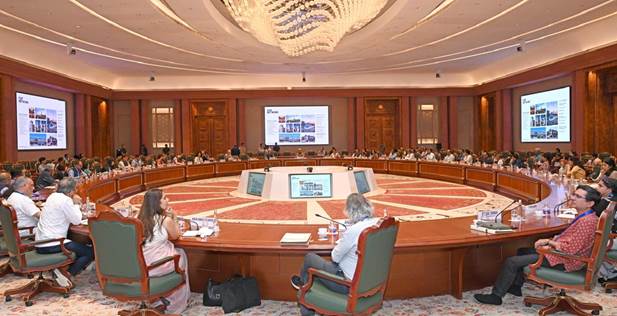
The intensive brainstorming session and workshops held over the past few days have provided invaluable insights into the core operational elements of a world-class museum. These sessions focused on critical areas such as collection management, curatorial practices, administrative best practices, and the strategic integration of technology. The knowledge gleaned will be instrumental in shaping the development of the Yuga Yugeen Bharat Museum.
 

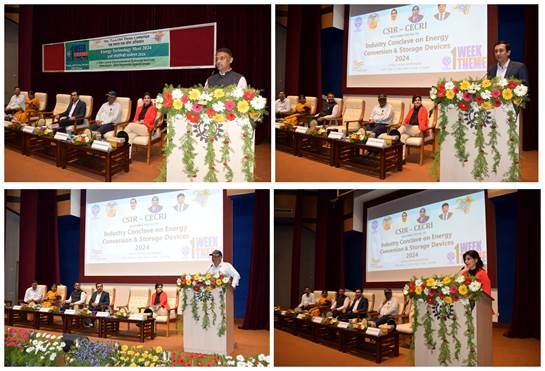
Seven CSIR labs inaugurated One Week One Theme Campaign on Energy and Energy Devices theme

 After the inaugural of One Week One Theme (OWOT) Campaign and its logo by Hon’ble Union Minister of State for S&T Dr. Jitendra Singh in the presence of DG CSIR Dr. N. Kalaiselvi at India habitat Centre, Delhi, all CSIR labs are organizing programs on OWOT (Energy and Energy Devices) at their respective institutes. On 27 June 2024, 7 CSIR labs has organized theme based activities. The OWOT campaign is based on 8 themes of CSIR in which all 37 CSIR labs will organize programs of particular themes.


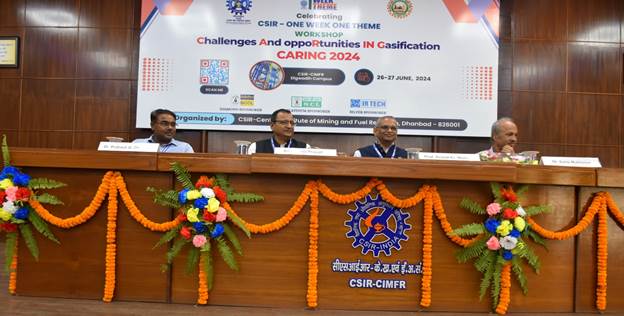
CSIR-Central Institute of Mining and Fuel Research (CSIR-CIMFR), Dhanbad has organized Two-Day Workshop on Challenges and Opportunities in Gasification CARING-2024 as a part of CSIR One Week One Theme programme-Energy and Energy Devices theme. It focused on the challenges and opportunities in gasification. This event, held on June 26-27, 2024, at the CSIR-CIMFR Digwadih Campus, brings together industry leaders, researchers, policymakers, and stakeholders to explore the complexities and potential of gasification technology. With over 75 participants from various organizations such as Coal India Limited (CIL), Steel Authority of India Limited (SAIL), Jindal Steel and Power Limited (JSPL) Angul, Hindalco Industries, Thermax, and others from across India, the workshop is set to be a significant event in the field of gasification.

CSIR-National Geophysical Research Institute (CSIR-NGRI), Hyderabad has organized an Interaction Meet on Geothermal Energy as a part of the One Week One Theme (OWOT) celebrations of CSIR under the theme Energy and Energy Devices (EED). The program is being organized in collaboration with Chhattisgarh State Renewable Energy Development Agency (CREDA), Pandit Ravishankar Shukla University (PRSU), and National Institute of Technology (NIT) Raipur. Experts from various organizations involved in geothermal exploration and development will be presenting a series of lectures. These presentations will cover the current status and future roadmap for harnessing geothermal resources in India, with a particular focus on the potential of the Tattapani Geothermal Province, Chhattisgarh.

CSIR- Central Salt and Marine Chemicals Research Institute, (CSIR-CSMCRI) Bhavnagar, hosted a showcase on the latest advancements in hydrogen, batteries, alternate fuels, and solar energy as part of the CSIR One Week One Theme programme focusing on Energy and Energy Devices. This event highlighted cutting-edge research and innovations driving sustainable energy solutions. Participants had the opportunity to explore technological developments and applications in these critical areas, fostering collaboration and knowledge exchange among scientists, industry experts, and stakeholders.

CSIR-Central Electrochemical Research Institute, (CSIR-CECRI) Karaikudi, has organized a display on hydrogen and batteries under the Energy and Energy Devices theme of the CSIR One Week One Theme programme. This event showcased innovative research and developments in hydrogen energy and battery technologies. Attendees gained insights into the latest trends and future directions in these fields, promoting discussions on sustainable energy solutions and the potential for large-scale implementation of these technologies.

CSIR -Central Mechanical Engineering Research Institute, (CSIR-CMERI) Durgapur, focused on hydrogen technology as part of the Energy and Energy Devices theme for the CSIR One Week One Theme programme. The event featured detailed presentations on hydrogen production, storage, and utilization technologies. Industry leaders, researchers, and policymakers came together to discuss the challenges and opportunities in the hydrogen sector, exploring its role in achieving a sustainable energy future.

CSIR-Central Glass & Ceramic Research Institute, (CSIR-CGCRI) Kolkata, showcased advancements in hydrogen – SOFC-SOEC, photo catalysis, and solid-state batteries under the Energy and Energy Devices theme of the CSIR One Week One Theme programme. This event highlighted the latest research and technological innovations in these areas, offering a platform for experts to share insights and explore collaborative opportunities. The focus was on the potential applications and impact of these technologies on sustainable energy solutions.

CSIR-National Chemical Laboratory, (CSIR-NCL) Pune, hosted a symposium on “Catalysis and Renewable Energy towards meeting Sustainable Development Goals (SDG)” under the Energy and Energy Devices theme of the CSIR One Week One Theme programme. This event concentrated on alternative fuels, featuring presentations and discussions on the latest advancements in catalysis and renewable energy technologies. The symposium promoted the exchange of knowledge and fostered collaborations to address global energy challenges and support sustainable development.

Next theme of CSIR’s OWOT campaign on ‘Chemicals and Petrochemicals’ will be organized from 15th to 20th July 2024.


****

“Electrical Safety handbook for Students” launched

 The Central Electricity Authority (CEA), Ministry of Power in association with National Federation of Engineers for Electrical Safety (NFEES) and supported by Bureau of Indian Standards (BIS) organized an All-India Electrical Safety awareness programme, especially designed for school students on 26th June, 2024, which is observed as “Electrical Safety Day”.

The subsequent week is observed as National Electrical Safety Week (NESW). The theme for this year Electrical Safety Awareness Programme was “Safety Starts from School”.

Over 150 representatives from Power CPSUs, District Administration, NPTI, Oil Manufacturing Companies, TPDDL, CPWD and other Stakeholders along with over 50 Students from different Schools of Delhi participated in the event. The All-India Electrical Safety Awareness Programme is significant in promoting a culture of safety and awareness among the masses. Also, for making our young generation aware about electrical fire safety.

Delivering a keynote address, Chairperson, Central Electricity Authority, Shri Ghanshyam Prasad said that the event was long awaited and important to raise awareness among general Public, especially students on Electrical Safety. By instilling a strong foundation of electrical safety knowledge and practices in schools, we empower our youth to make informed decisions and contribute to safer environments at home, school, and beyond.

Senior officers namely Sh. A Balan, Member (Planning), CEA, Sh A.K. Rajput, Member (Power System), Sh. Mahipal Singh, Principal Chief Engineer, CEA, Dr. Tripta Thakur, Director General, NPTI, Ms Rishika Sharan, CEI, CEA, Sh A K Maharana, Head, ETD, BIS and Sh Anil Jauhri, Adviser-NFE & Former CEO, NABCB also addressed the participants on importance of Electrical Safety.

The handbook titled “Electrical Safety handbook for Students” was launched in the event by the Chief Guest, Sh. Ghanshyam Prasad, Chairperson, CEA which is prepared by National Federation of Engineers for Electrical Safety (NFEES) that can serve as a valuable resource for students, educators, and parents alike. From understanding basic electrical principles to recognizing potential hazards and adopting best practices for prevention, this handbook covers a wide range of essential topics in an accessible and engaging manner.

****

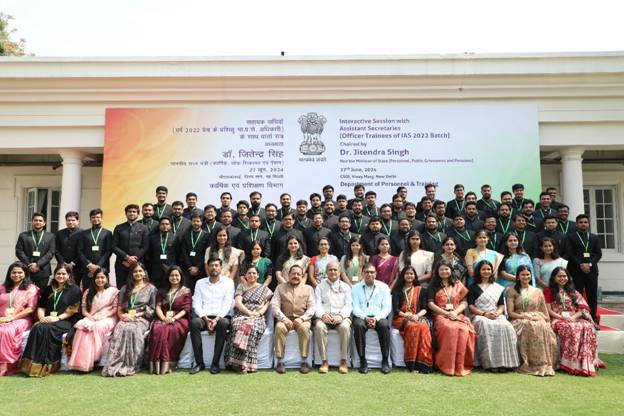
Assistant Secretaries (Officer Trainees of IAS 2022 batch

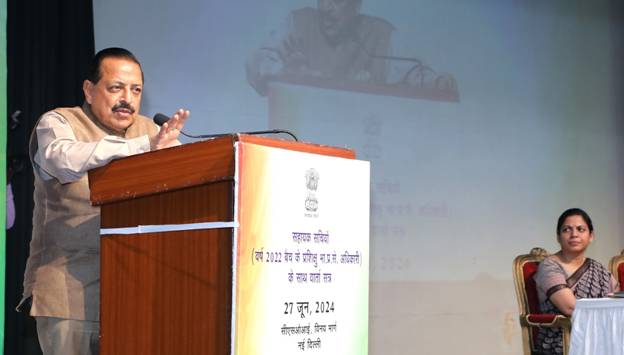
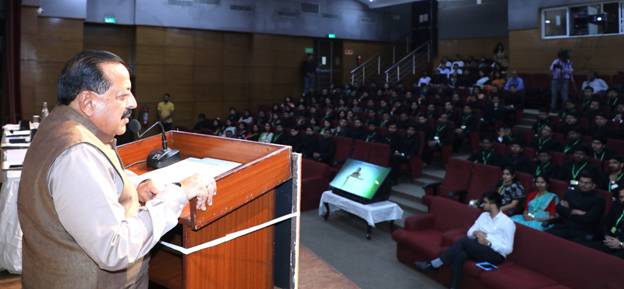
 Union Minister Dr. Jitendra Singh interacted with Assistant Secretaries (Officer Trainees of IAS 2022 batch) at the culmination of their attachment at union Ministries here today in New Delhi.

Speaking on the occasion Union Minister of State (Independent Charge) for Science and Technology, Minister of State (Independent Charge) for Earth Sciences, MoS PMO, Department of Atomic Energy, Department of Space, Personnel, Public Grievances and Pensions, Dr Jitendra Singh traced the beginning of this initiative in 2015 after Modi Government took the reins, to attach the new Officer trainees as Assistant Secretaries in various union Ministries post their district training to give an overall experience of functioning of ministries.

Dr. Jitendra Singh said “This initiative also allows them to interact and learn from people at the apex levels of policy making by identifying mentors who will guide them for the coming 30 years of service.”

Highlighting the benefits of this module, Dr. Jitendra Singh shared that during Covid Pandemic how the officers who had been Asst. Secretaries and were now DM in a district could communicate and offer day to day feedback to the Centre with confidence.

During the interactive session the union Minister of State for Personnel, Public grievances and Pensions heard the young bright officers and motivated them to suggest the changes they want to see in their training modules. He also gave a positive response on trying to inculcate as much as possible.

Dr. Jitendra Singh said, it is Prime Minister Narendra Modi’s Vision to make IAS officers future ready when India will attain its century year of Independence, you all will holding important public offices and it’s our responsibility to uphold integrity, accountability, empathy and compassion towards the people of India and have Citizen Centricity and good governance at the core of administration.

Expressing his confidence and happiness over the young talent pool, Dr. Jitendra Singh shared that a positive change is being witnessed with around 28 percent of female officers joining the Civil services, which was less than 10% in the earlier times. Even people from almost all states of India are part of the civil services increasing diversity which is a healthy sign, he added. Motivating and guiding the young officers

Dr. Jitendra Singh gave them a brief regarding mission Karmayogi and the intent of the government behind this mission. He said we want you to upgrade your skills, be future ready, be in sync with the changing technologies and karmayogi mission through I-Got Platform will provide the best avenue to do so.

Dr. Jitendra Singh said as the nature of duties is changing and getting more complex, we need experts and specialists to implement the flagship schemes of the government in terms of health, education, social sector, as well as in science and energy domains also. Thus, having a pool of such a diversified talent which is technology driven will be a boon for the country. He shared that we have tried to make certain values of accountability, transparency, communication skills and public dealing skills a part of your training through inhouse as well as specialized modules.

Towards the conclusion of his speech Dr. Jitendra Singh emphasized that for civil servants, integrity is the foremost quality and there can be no compromise with it. Going further he said that we need to develop indices for the future and keep working to attain them. He said “Prepare yourself for the vision 2047 and promote nation building.

The IAS officer trainees of 2022 batch expressed gratitude and felt motivated after the gracious interaction with the union Minister Dr. Jitendra Singh.

Shri. Sriram Taranikanti, Director LBSNAA, Ms. Nila Mohanan, Joint Secretary (Training) DoPT and Shri. S. D. Sharma Joint Secretary (ADMIN), DoPT were also present during the interaction.

*****

CLGF Annual Board in Colombo, Sri Lanka

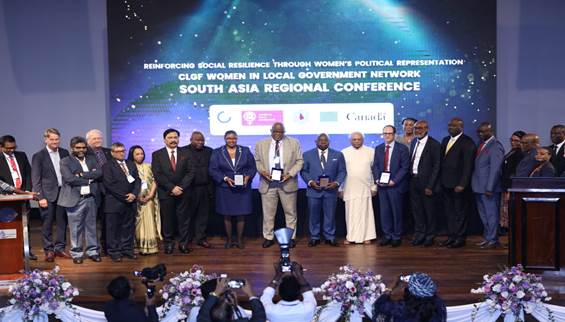
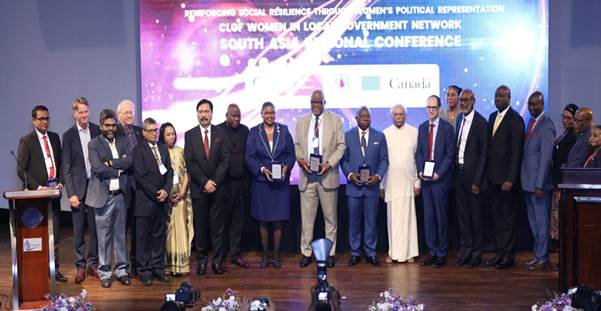
 Additional Secretary, Ministry of Panchayati Raj, Dr. Chandra Shekhar Kumar represented India at the three – day meeting of CLGF Annual Board in Colombo, Sri Lanka during 25th – 27th June 2024. The conference facilitated regional exchange and priority setting for ongoing initiatives in Commonwealth Asia. It also guided the future work of CLGF’s Commonwealth Women in Local Government Network. On 25th June 2024, Prime Minister of Sri Lanka, Shri Dinesh Gunawardena inaugurated CLGF’s Commonwealth Women in Local Government Network South Asia Regional Meeting on “Reinforcing Social Resilience through Women’s Political Representation”.


Addressing the CLGF conference, Dr. Chandra Shekhar Kumar requested to host the next CLGF meeting in India, the largest member country of the Commonwealth. This initiative aims to promote and strengthen democratic local governments across the Commonwealth and foster the exchange of best practices.

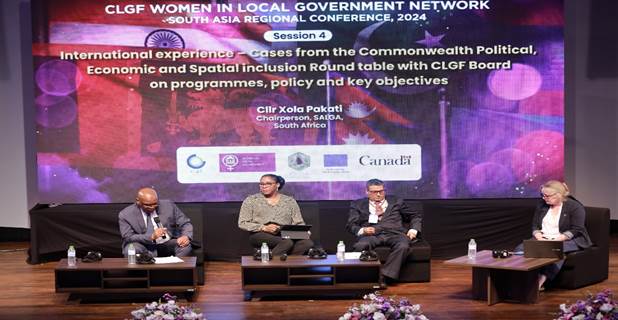
Dr. Chandra Shekhar Kumar shared insights and views during the session on “International Experience: Cases from the Commonwealth – Economic and Spatial Inclusion.” He highlighted the key role of India’s approximately 2.6 lakh Panchayati Raj Institutions (PRIs) in covering 60% of the population and contributing significantly to the GDP during the CLGF Conference on “Reinforcing Social Resilience through Women’s Political representation” in Colombo, Sri Lanka.

Emphasizing women’s crucial roles in development, Dr. Chandra Shekhar Kumar noted that women constitute 48% of the rural population with a labour force participation rate of 41.5% in 2022–23. The 73rd Constitutional Amendment mandates the devolution of powers to Panchayats, including “Women and Child Development,” to enhance local governance.

Additional Secretary, Dr. Chandra Shekhar Kumar emphasized that India takes pride in being a global leader in gender representation at the grassroots level, with 46% of local body positions held by women in Panchayati Raj Institutions/ Rural Local Bodies, compared to the global average of 36%. He highlighted that significant representation of women in decision-making processes and women-led development is crucial for achieving the United Nations 2030 Agenda for Sustainable Development. The Government of India supports women’s empowerment through various schemes, contributing a substantial amount towards education, health, economic empowerment, digital literacy, leadership skills, and security. As well, the Ministry’s e-Governance initiatives have made Panchayat representatives digitally proficient, with 90% of Gram Panchayats uploading online development plans and financial transactions.


Dr. Kumar also underlined the efforts of Ministry of Panchayati Raj in providing international exposure to Elected Women Representatives (EWRs) and adopting the Localization of SDGs (LSDGs) approach, including the “Women Friendly Panchayat” theme. He highlighted that the Ministry has provided opportunities and exposure for elected women leaders at international forums and events, such as “Localizing the SDGs: Women in Local Governance in India Lead the Way” on 3rd May, 2024, at the United Nations Headquarters in New York, and “Women Leaders as Change-makers: Gender Equality for Good Governance” in October 2019 at the United Nations.

Additional Secretary, Dr. Kumar mentioned that States and UTs, guided by the Ministry of Panchayati Raj, have implemented measures such as reservation for women, participation programs, and training initiatives to enhance women’s roles in local governance. Under the Ministry’s guidance, 23 States and UTs have adopted 50% reservation for women, exceeding the Constitutional provision of 33% reservation in PRIs/ RLBs.

India has emerged as a global leader in gender representation at grassroots levels, with 46% representation in local bodies, surpassing the global average of 36%. Key factors for increased women’s participation in PRIs include constitutional provisions, socio-economic improvements, and government support through various women-oriented schemes. Dr. Kumar also highlighted the Ministry’s initiatives in digital empowerment and international exposure for women leaders, alongside the adoption of Localization of SDGs for women’s empowerment in local governance.


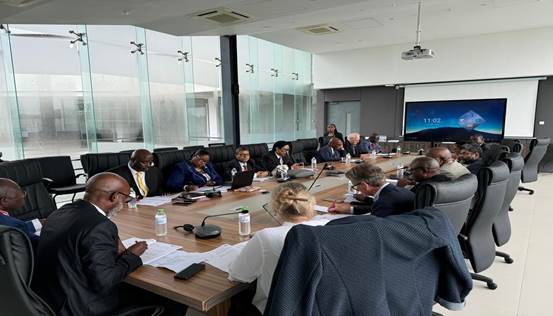
Dr. Chandra Shekhar Kumar discussed with colleagues from Commonwealth Local Government organizations from around the world at CLGF Annual Board Meeting in Colombo, exchanging insights and discussing strategies for enhancing local governance and community resilience. He reiterated India’s commitment to empower women and strengthen rural communities. The CLGF Forum brought together a diverse group of local government participants, including Ministries of Local Government, elected local mayors and leaders, permanent secretaries, officials from all spheres of government, academics and development partners.

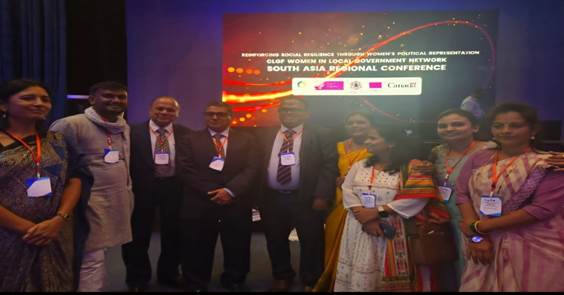
Three women Sarpanch from Maharashtra – Smt. Archana Pawar (Kumbhari Gram Panchayat, Yavatmal District), Smt. Sharda Gaydhane (Bela Gram Panchayat, Bhandara District), and Smt. Kavita Ware (Kisal Gram Panchayat, Thane District) – along with Smt. Chandrika Rangani from Gujarat (Kanakpar Gram Panchayat, Kachchh District), also participated in the CLGF Conference in Colombo, Sri Lanka during 25 – 27 June, 2024, which aimed to review and ratify a Charter for Gender Equality for Local Government in South Asia.

The four Sarpanch presented their case studies, best practices and success stories. Training in digital and social media was conducted for Local Self-Government delegates during the ComWLG- Commonwealth Women in Local Government Network South Asia Meeting. This forum provided women with an opportunity to share their experiences as grassroots leaders, discuss challenges faced by women in local government, agree on actionable points to strengthen elected women and women’s rights, and build capacity in specific focus areas for local leaders.


Background of CLGF:

Since its establishment in 1995, the Commonwealth Local Government Forum (CLGF) has actively worked in Asia to support decentralization and reforms that empower local governments, improving governance and service delivery. CLGF is unique as a membership organization that unites Local Government, Ministries of Local Government, national associations of local government, and individual councils from the 56 Commonwealth countries. It also includes research, training, and professional organizations as members.

CLGF’s work focuses on promoting local democracy, sharing experiences and good practices, and capacity building to enhance policymaking, strengthen local government institutions, and improve service delivery and democratic processes at the local level. CLGF is dedicated to supporting women’s full and active participation in public life, especially in achieving equal representation in local governance, aligning with SDG 5: Achieve gender equality and empower all women and girls.


***

MSMEs will be a key force in the movement towards Atmanirbhar and Viksit Bharat

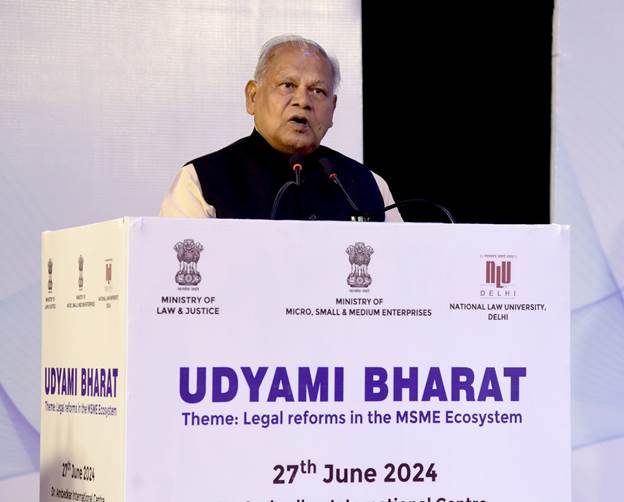
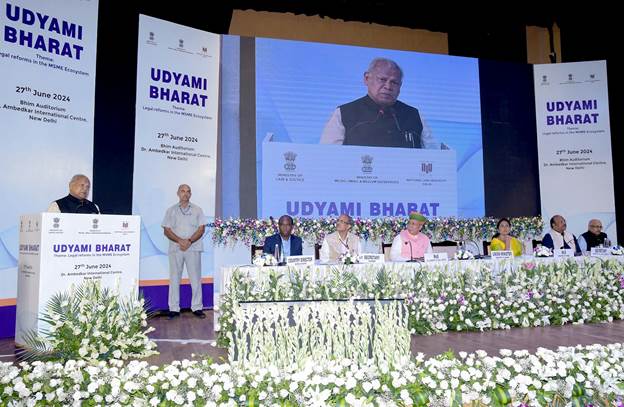
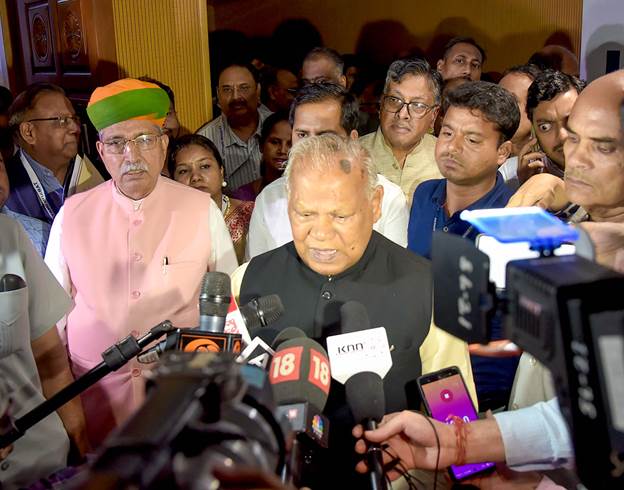
 Union Minister for MSME, Shri Jitan Ram Manjhi said that the MSMEs will be a key force in the movement towards Atmanirbhar and Viksit Bharat. Addressing the day long event of International MSME Day, ‘Udyami Bharat’  he emphasized the need to deepen and broaden the effort through an inclusive and focused approach, especially in the rural areas and hinterland as per vision of the Prime Minister Shri Narendra Modi. Shri Manjhi said in a fast-changing industrial landscape, the MSMEs need to align themselves to adopting digital and technological solutions. He said as part of the ongoing reforms of the government, legal reforms in the MSME sector will work as a force multiplier.

Shri Manjhi said  six pillars have been identified on which our endeavours would be built – (i) formalization and access to credit (ii) increased access to market  and e-commerce adoption (iii) increased productivity through modern technology (iv) enhanced skill levels and digitalization in the service sector (v) support to Khadi, Village, and Coir industry to globalize them (vi) empowerment of women, artisans, through enterprise creation. He said the work before us is clear-cut.  There is a great need to build upon these six pillars in a meticulous and yet smart way, he added.  


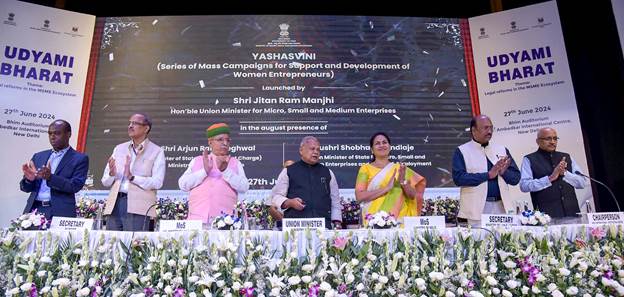
The Union Minister dedicated the MSME TEAM Initiative and Yashasvini Campaign to the MSMEs. The MSME TEAM Initiative aims at facilitating five lakh micro and small enterprises for onboarding on to the Open Network for Digital Commerce (ONDC) by providing financial assistance for onboarding, cataloguing, account management, logistics, packaging material and design. The half of these beneficiary MSEs will be women owned enterprises.

The Yashasvini campaign is a series of mass awareness campaigns for formalizing women owned informal micro enterprises and providing capacity building, training, handholding and mentorship to the women owned enterprises.  A series of campaigns will be organized by the Ministry of MSME in collaboration with other Central Ministries/ Departments/ State Governments and Women Industry Associations during the FY 24-25 in various parts, focusing Tier 2 and 3 cities in the country.

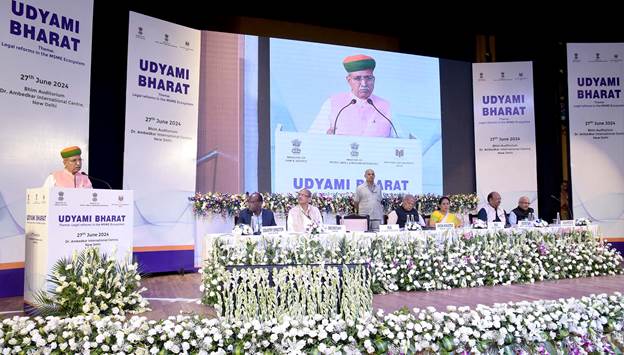
The Union Minister of State (Independent Charge) for Law and Justice, Shri Arjun Ram Meghwal spoke about the areas of reforms that would make the MSMEs globally competitive. Shri Meghwal said the Modi Government is ensuring ‘ease of doing business’ and ‘ease of living’ through legal reforms and technological innovations towards strengthening the micro, small and medium enterprises.

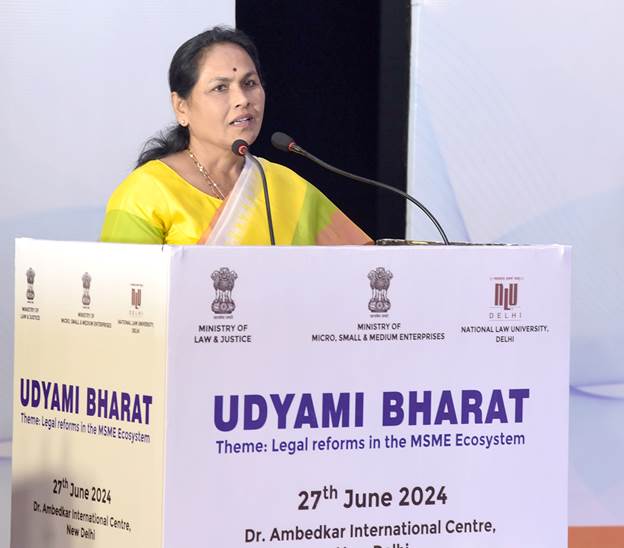
The Union Minister of State for MSME, Sushri Shobha Karandlaje outlined the contribution of the MSMEs to the country’s employment, manufacturing output, and exports and emphasised the need for MSMEs to focus on innovation, creativity, and sustainable development to remain competitive.


The event was also addressed by Mr. Auguste Tano Kouame, Country Director, The World Bank, Justice (Retd.) Hemant Gupta, Chairperson – India International Arbitration Centre, Delhi, Shri Rajiv Mani, Secretary – Ministry of Law and Justice and Shri S.C.L. Das, Secretary, Ministry of Micro, Small and Medium Enterprises.

The event saw the participation from Central and State Governments, legal fraternity, academia, the World Bank and other Multilateral agencies, and Industrial Associations.

****

New Criminal laws are for providing ‘justice’ in contrast to colonial legislations where focus was on ‘punishment’

 Ministry of Micro, Small & Medium Enterprises organised a day-long programme here today on the theme of ‘Legal Reforms in the MSME Ecosystem’ of Udyami Bharat – MSME Day event. Speaking on the occasion Union Minister of State (Independent Charge) for Law & Justice, Shri Arjun Ram Meghwal structured his deliberation on three vital points. He emphasises the new Criminal laws are for providing ‘justice’ in contrast to colonial legislations where focus was on ‘punishment’. He observed that amendments in laws have been done with complete consultation with stakeholders. He said, firstly, it is important to understand that India has entered the era of Industry 4.0, tracing the history of evolution from Industry 1.0 to its present stage, he reiterated that the present era’s latest technologies such as Artificial Intelligence, machine learning, 3D printing, Robotics and its effect on the legal parlance has to be understood while working on legal reforms in the Micro, Small & Medium Enterprises sector. Secondly, he underlined the growing importance of Alternate Dispute Resolution (ADR) and mediation in solving disputes. He asserted that having an amicable solution is the best solution for any legal issues and the Public Sector Enterprises could also benefit from such ADR mechanism of dispute resolution between parties. Thirdly, reinforcing on Prime Minister Shri Narendra Modi’s vision, he said that 21st century is going to be India’s one and, in this context, India has the requisite potential to be the hub of Arbitration.

Delving into the theme of the conference Dr Rajiv Mani, Secretary, Department of Legal Affairs, Ministry of law and Justice said that Institutional arbitration comes with the advantage of better streamlined faster disposal of issues and effective way to resolve legal issues. He asserted that the MSME sector is the backbone of the economy and then the lengthy dispute resolution in traditional legal system could be avoided if the parties wish to resolve their issues via Alternate Dispute resolution and mediation.

Union Minister for Micro, Small and Medium Enterprises, Shri Jitan Ram Manjhi presided over ‘Udyami Bharat – MSME Day event. The Minister of State for MSME, Sushri Shobha Karandlaje along with other dignitaries highlighted the growing role of micro, small and medium enterprises in the growth of the economy.


The senior officials of Ministry of Micro, Small and Medium Enterprises and Ministry of Law and Justice were also present on the occasion.

***

PK/SB

National Consultation on Legal Environment Assessment for One Health Activities in India

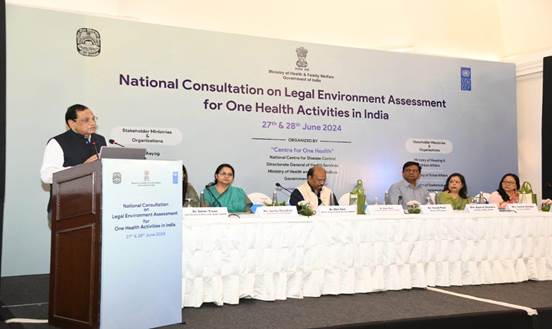
  “India is ahead of several countries in drafting the legal framework to support and strengthen the implementation of the One Health initiative. This represents India’s advanced thought process and leadership, and showcases our vision in this area. A national consultation with multi partners and stakeholders is not only important but very timely. COVID 19 has forced us to re-focus our attention on the importance of zoonotic diseases and the intricate linkages between the human, animal and plan eco-systems.” This was stated by Dr. Vinod Paul, Member (Health), NITI Aayog as he inaugurated a two-day National Consultation on Legal Environment Assessment for “One Health” initiative, here today.

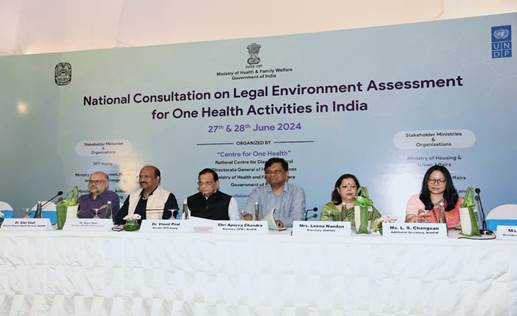
Shri Apurva Chandra, Secretary, Ministry of Health & Family Welfare (MoHFW), Ms. Leena Nandan, Secretary, Ministry of Environment, Forest and Climate Change (MoEFCC), and Shri Rajiv Mani, Secretary, Ministry of Law & Justice were also present.


Dr. Vinod Paul stated that the issues of critical health challenges posed by zoonoses, antimicrobial resistance (AMR), food safety, and climate change are interconnected and require a comprehensive, multi-sectoral approach to breaking down the silos between human health, animal health, and environmental sectors. He added that India has taken the lead in ensuring One Health goals that resonate with the Prime Minister’s vision of “One Earth, One Health” and “we are pushing frontiers for not just our nation but for the world”. Dr Paul said that in lined with the need of alignment of various frameworks, India has taken up framing of National Action Plan (NAP), 2.0 for addressing the issues raised due to Antimicrobial resistance (AMR), had conceptualised the One Health Mission, and working on the broader issues of climate change. He further stressed that to ensure the achievement of One Health goals, state engagement, alignment of Indian laws with international laws, and cross-sectoral response are required.

Highlighting that more than 75% of the diseases that affect humans are zoonotic diseases, Shri Apurva Chandra stated that the Ministry of Health & Family Welfare is committed to preventing and managing risks at the human-animal-plant interface through the One Health approach. “‘One Health’ is a multi-sector and multi-stakeholder initiative; collective and coordinated action needed for its success at the ground level”, he stated. He noted that under PM-ABHIM, states are being strengthened in surveillance, prevention and management of zoonotic and other diseases. He reiterated that India’s current legislative framework, with its separate laws for human health, animal health, and environmental protection, has some gaps and overlaps due to sectoral priorities. He also highlighted the importance of support from the line ministries and the States in implementing One Health goals.

In her address, Ms. Leena Nandan, Secretary (MoEFCC), stressed on the need for a commonality of approach among different ministries in ensuring the achievement of One Health goals. She assured that the Environment Ministry is committed to making necessary provisions under the existing Acts of wildlife and environment to ensure the health of human beings and the conservation and preservation of wild animals. She stated that the One Health initiative has been one of the main topics of discussion during the G20 under the One Earth, One Family, One Future umbrella. She emphasised on the need for capacity building of the on-ground functionaries and communities for successful implementation of the One Health initiative.

Shri Rajiv Mani re-iterated the support from the Ministry of Law and Justice to assist the stakeholders in making required amendments or changes in the existing laws and policy frameworks to align with the One Health principle and mandates of the country for the protection of the health of all species including animals and the climate.

The Centre for One Health, National Centre for Disease Control, and Directorate General of Health Services are organizing this two-day multi-stakeholder National Consultation on Legal Environment Assessment for One Health activities in India on 27-28th June 2024 at New Delhi. The consultation is being organized to brainstorm on the legal and policy perspectives on the core domains of One Health i.e., IHR, Biosafety & Security, Zoonoses, Anti-Microbial resistance, food-borne illness, and Climate change and Health, etc.  The ‘One Health’ approach, which integrates the health of people, animals and the environment, is crucial for addressing complex health challenges such as zoonotic diseases, antimicrobial resistance, and food safety.

The National Consultation for Legal Environment Assessment for One Health Activities aims to:

1) Assess the current legal framework: Identify strengths, gaps, and overlaps in the existing laws and regulations that impact One Health activities.

2) Foster multi-sectoral dialogue: Bring together stakeholders from government, academia, industry, and civil society to discuss legal challenges and opportunities.

3) Develop actionable recommendations: Formulate concrete proposals to enhance the legal environment, ensuring it is conducive to the integrated One Health approach.

4) Promote inter-sectoral collaboration: Strengthen partnerships among sectors responsible for human, animal, and environmental health.

Prof. (Dr.) Atul Goel, DGHS & Director, NCDC, MoHFW, Ms. L.S. Changsan, Additional Secretary, Ms. Sarita Chauhan, Joint Secretary, Ministry of Fisheries, Animal Husbandry and Dairying, Ms. Isabel Tschan, Resident Representative A.I. UNDP, Dr. Simmi Tiwari, nodal for One Health, NCDC and subject experts were also present on the occasion.

*****

Jai Prakash Narayan: The Architect of India’s “Total Revolution”

In the vast tapestry of India’s history, few figures stand out as boldly and courageously as Jai Prakash Narayan, affectionately known as JP. Born on October 11, 1902, in the humble village of Sitab Diara, straddling the states of Uttar Pradesh and Bihar, JP’s life journey from a rural boy to a revolutionary leader is a story that pulses with the spirit of resistance and the quest for justice.

The Formative Years: From Village Roots to American Shores

Jai Prakash Narayan’s early years were a blend of simplicity and intellect. His father, Harsu Dayal Srivastava, worked as a minor government official, while his mother, Phul Rani Devi, infused his upbringing with deep spiritual values. This grounding in moral ethics and the vibrant culture of rural India would later form the backbone of JP’s philosophical outlook.

In 1920, at the age of 18, JP embarked on a bold adventure that few of his peers would dare undertake. With a scholarship in hand and dreams of a better future, he set sail for the United States. Landing in the land of opportunity, he enrolled at the University of California, Berkeley. To support his studies, JP took on a variety of odd jobs—picking grapes, washing dishes, and even working as a railway ticket seller. These experiences not only shaped his character but also introduced him to the robust debates of socialist ideologies and social justice that were sweeping through American academia.

The Revolutionary Return: Joining the Indian Freedom Struggle

JP returned to India in 1929, armed with a degree in political science and sociology and a burning desire to liberate his homeland from British rule. He joined the Indian National Congress, quickly catching the attention of towering leaders like Mahatma Gandhi and Jawaharlal Nehru. His intellect, energy, and unwavering commitment to the cause made him an indispensable asset to the movement.

The 1942 Quit India Movement was a pivotal moment in JP’s revolutionary career. Leading the charge against British colonial rule, he was arrested and imprisoned. Yet, even from behind the bars, his fiery spirit could not be contained. His letters and messages continued to inspire thousands, turning him into a symbol of resistance and hope for a free India.

The Crusader for Socialism: A New Path Post-Independence

When India finally achieved independence in 1947, JP initially stayed with the Congress, but he soon found himself at odds with the party’s drift towards authoritarianism and centralized control. In 1952, taking a bold step, he left the Congress and co-founded the Praja Socialist Party (PSP). His vision for India was one of socialism and democracy, where power was decentralized and the government was truly by the people and for the people.

JP’s passion for social justice saw him advocating for the rights of the poor and marginalized. He believed in empowering communities at the grassroots level, a conviction that drove his push for land reforms and his fight against corruption and social inequality. His advocacy for a decentralized government was not just political rhetoric but a heartfelt plea for a more equitable and just society.

The Fire of Total Revolution: Challenging the Emergency

The 1970s were a tumultuous period in Indian politics, and JP’s role during this time cemented his place in history as a leader of extraordinary courage and conviction. In 1974, alarmed by the widespread corruption and political decay, JP launched what he called the “Total Revolution.” This movement was a clarion call for a complete overhaul of the political, social, and economic systems of India.

His rallies and speeches ignited a spark across the nation, mobilizing students, intellectuals, and ordinary citizens alike. JP’s demands for transparency, accountability, and ethical governance struck a chord with millions who were disillusioned by the state of the nation.

In 1975, in a drastic move to quell the growing unrest, Prime Minister Indira Gandhi declared a state of Emergency, suspending civil liberties and imprisoning opposition leaders, including JP. His arrest became a rallying cry for those opposing the authoritarian regime. Despite the harsh conditions of his imprisonment, JP’s spirit remained unbroken, and his calls for non-violent resistance continued to inspire the nation.

Legacy of a Hero: The Triumph of Democracy

The Emergency period is often seen as a dark chapter in India’s democratic history, but it also marked the triumph of JP’s ideals. His leadership was pivotal in the eventual defeat of the Congress party in the 1977 elections, leading to the formation of the first non-Congress government at the national level. This shift in power was a testament to JP’s influence and the deep-seated desire for change among the Indian populace.

JP’s life was a living embodiment of the Gandhian principles of non-violence and self-reliance. He championed the cause of the common man and stood unwaveringly for justice and democracy. His vision was not just of an independent India, but of an India that was just, equitable, and democratic at its core.

Personal Life: Simplicity and Dedication

JP’s personal life mirrored his public persona. He was married to Prabhavati Devi, a woman of equal dedication to social causes. The couple chose to live simply, dedicating their lives to public service and the pursuit of social justice. Their home was a hub of intellectual and political activity, where ideas for a better India were constantly being debated and nurtured.

Honors and Recognition: The People’s Hero

Jai Prakash Narayan’s contributions have been immortalized in Indian history. In 1999, he was posthumously awarded the Bharat Ratna, India’s highest civilian honor, acknowledging his monumental impact on the nation. Schools, roads, and numerous awards bear his name, ensuring that his legacy continues to inspire future generations.

Conclusion: The Eternal Revolutionary

Jai Prakash Narayan’s legacy is that of an eternal revolutionary, a man who dared to dream of a better world and worked tirelessly to make it a reality. His life is a beacon of hope and a reminder that one person’s courage and conviction can indeed change the course of history. JP’s story is not just the story of an individual, but the story of a nation’s quest for justice, democracy, and a brighter future.


JP’s journey from a small village to the forefront of a national revolution is a testament to his extraordinary spirit and unyielding commitment to the principles of justice and democracy. His life and legacy continue to inspire and guide those who strive for a more just and equitable world.

On the occasion of International Day against Drug Abuse and Illicit Trafficking, Department of Social Justice & Empowerment organizing a programme at Dr. Ambedkar International Centre in New Delhi today

 Each year, 26th June is observed as the “International Day against Drug Abuse & Illicit Trafficking. To commemorate the occasion of International Day against Drug Abuse and Illicit Trafficking the Department of Social Justice & Empowerment is organizing a programme today (on 26th June 2024) at Dr. Ambedkar International Centre, 15 Janpath, New Delhi in the presence of Dr. Virendra Kumar, HMSJE, MoSs (SJE), and Senior officers of the Department.

Earlier, the Ministry has organized weeklong online activities from 20.06.2024 to 26.06.2024 to commemorate International Day against Drug abuse and Illicit Trafficking. Some such activities organized are Essay Writing Competition, promoting Yoga, Meditation and Mindfulness for a drug free lifestyle, showcasing best practices under NMBA, engaging university students to lead the Drug-free campaign, Leading from margins: Role of women in making Drug-free India etc. With these programmes, Department of Social Justice & Empowerment will ensure to reach out the Abhiyaan in whole Country as Jan Andolan.

All the States/UTs and DCs/DMs across the country have also been requested to take necessary steps for conducting/ organizing various programmes/ events such as rallies, cultural events, seminars, workshops, pledge along with wide publicity through media including social media platform against drug abuse under NMBA at the State as well as district level.

Besides, above, National Institute of Social Defence (NISD), an Autonomous Body under the aegis of this Ministry, is also undertaking various activities from 24th to 28th June 2024 like live quiz, awareness programmes, discussion with experts, individuals and families of affected persons, sharing of experience, etc. to commemorate the occasion of International Day against Drug Abuse and Illicit Trafficking.

To ensure that the occasion is aptly utilized, all NGOs/VOs supported under NAPDDR by this  Ministry, also conducted/ organized shapath, painting competition, essay competition, tree  plantation, nukkad nattak competition, indoor games competition, marathon/ walkathon/ cycle/bike rally with wide publicity against drug abuse under NMBA from 20-26th June, 2024.

Nasha Mukt Bharat Abhiyaan  (NMBA)

This Ministry has initiated ambitious Nasha Mukt Bharat Abhiyaan  (NMBA) and currently operational in all districts of the country with an aim to create awareness about ill effects of substance abuse among the youth, with special focus on higher education institutes, university campuses, schools and reaching out into the community and garnering community involvement and ownership of the Abhiyaan.


Achievements of NMBA:

  • Till now, through the various activities undertaken on-ground, 11+ crore people have been sensitized on substance use including 3.50+ Crore Youth and 2.32+ Crore Women.

  • Participation of 3.35+ Lakh educational institutions has ensured that the message of the Abhiyaan reaches children and youth of the country.

  • A strong force of 8,000+ Master Volunteers (MVs) have been identified and trained.

  • Awareness through official Social Media accounts of the Abhiyaan on Twitter, Facebook & Instagram.

  • NMBA Mobile Application developed to gather and collect the data of NMBA activities and represent on the NMBA Dashboard at district, state and national level.

  • NMBA Website (http://nmba.dosje.gov.in) provides detailed information and insights to the user/viewer about the Abhiyaan, an online discussion forum, NMBA dashboard, e-pledge.

  • A National Online Pledge to be Drug Free had 1.67+ Crore students from 99,595 educational institutions pledging to be drug free.

  • Events like ‘Nashe se Azaadi- A National Youth and Students Interaction Programme’, ‘Naya Bharat, Nasha Mukt Bharat’, ‘NMBA Interaction with NCC’ are regularly organized to engage and connect with youth and other stakeholders.

  • MoUs have been signed with Spiritual/Social Service organizations like The Art of Living, Brahma Kumaris, Sant Nirankari Mission, Ram Chandra Mission (Daaji), ISKCON and All World Gayatri Parivaar to support to NMBA and conduct mass awareness activities.

  • Technology     and      Social  media  have been effectively   utilized to spread the message of the Abhiyaan online by creating handles on Facebook, Twitter & Instagram and sharing daily updates on them.

  • An Android based mobile Application has been developed to capture the data of activities happening on ground on a real-time basis by the districts and master volunteers. This App has been placed on the Google Play Store.

  • All the de-addiction facilities have been geo-tagged for ease of access by the public. 


The Ministry of Social Justice and Empowerment is the nodal Ministry for drug demand reduction in the country, which coordinates and monitors all aspects of drug abuse prevention, assessment of the extent of the problem, preventive action, treatment and rehabilitation of users, dissemination of information.

Substance use disorder is an issue, which is adversely affecting the social fabric of the country. Dependence to any substance not only affects the individual’s health but also disrupts their families and the whole society. Regular consumption of various psychoactive substances leads to dependence of the individual. Some substance compounds may lead to neuro-psychiatric disorders, cardiovascular   diseases, as well as accidents, suicides and violence. Therefore, substance use and dependence needs to be viewed as a psycho-social-medical problem.

**** 

Researchers at IISER Tirupati developed an efficient method of hydrogen generation from methanol and formaldehyde combination developed for moving towards ‘Hydrogen economy’

 Researchers have developed an innovative synthetic method to produce hydrogen gas from a mixture of methanol and paraformaldehyde under mild conditions. This method has proven particularly effective for the transfer hydrogenation of alkynes to alkenes and the combination could be a promising hydrogen carrier, paving the way for advancements in chemical synthesis and sustainable energy solutions.

The rapid depletion of fossil fuels has spurred the search for alternative energy sources, highlighting the need for sustainable and renewable resources. Hydrogen gas generation is particularly important due to its potential to replace fossil fuels in energy storage, transportation, and various chemical processes. Methanol and paraformaldehyde, both produced on a large scale, have emerged as viable candidates for hydrogen carriers. Their abundance and widespread manufacture make them valuable for the storage and transportation of hydrogen, offering significant advantages over free hydrogen itself.

The research led by Prof. Ekambaram Balaraman at IISER Tirupati has utilized commercially available nickel catalysts to produce hydrogen from methanol and paraformaldehyde without the need for bases or activators. This efficient catalytic system has demonstrated remarkable efficiency under mild conditions, and the generated hydrogen was successfully employed in chemo- and stereo-selective partial transfer hydrogenation of alkynes. This process enabled access to bioactive molecules with enhanced synthetic value. This research was supported by ANRF (erstwhile SERB, a statutory body of the Department of Science and Technology (DST).

This research, accepted for publication in the journal Catalysis Science & Technology, opens a new avenue for COx-free hydrogen generation, contributing to the advancement of a ‘Hydrogen economy.’ The ability to harness methanol and paraformaldehyde as hydrogen carriers offers significant potential to address the challenges posed by the increasing global energy demands. This development marks a significant step forward in the quest for sustainable energy solutions.

Publication link: https://pubs.rsc.org/en/content/articlelanding/2024/cy/d3cy01699d

****

'Mini RATNA' status (Category-1) for Central Electronics Limited (CEL)


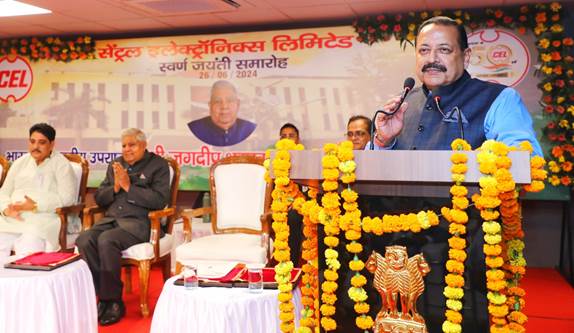
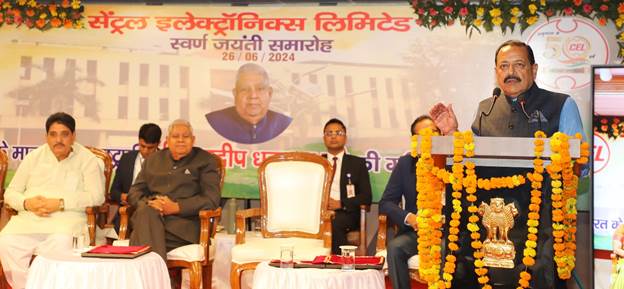
Union Minister Dr Jitendra Singh today announced the grant of “Mini RATNA” status (Category-1) for Central Electronics Limited (CEL) at its Golden Jubilee celebration at the Ghaziabad campus.

Union Minister of State (Independent Charge) for Science and Technology, Minister of State (Independent Charge) for Earth Sciences, MoS PMO, Department of Atomic Energy, Department of Space, Personnel, Public Grievances and Pensions congratulated CEL on completion of 50 glorious years in the service of the nation and now celebrating their Golden Jubilee on 26th June this year.

Speaking on the occasion, Dr. Jitendra Singh said “We feel proud that the Golden Jubilee Celebrations are being graced by the Hon’ble Vice President of India Shri. Jagdeep Dhankhar and his guidance and motivation will persuade us to contribute more for the betterment of the country. Adding further the Science and technology Minister said, “50 years of dedication, perseverance, and success is a testament to the hard work, commitment, and vision which propelled this journey of excellence.”

Dr. Jitendra Singh, while highlighting CEL’s performance, mentioned that over last few years, especially in the last 5 years, CEL’s financial stability, profitability, and operational excellence have touched new heights. CEL’s performance in terms of the numbers in turnover, net worth, reserves, net profit, etc. are also remarkable.

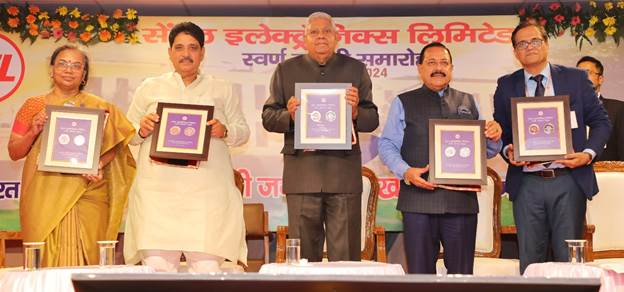
At centre Hon’ble Vice President of India Shri. Jagdeep Dhankhar; left 1. Union Minister Dr. Jitendra Singh 2. Chetan Jain CMD, CEL; right 1. Shri Sunil Sharma Cabinet Minister, Uttar Pradesh 2. Dr. N. Kalaiselvi, DG CSIR


The Minister shared that CEL has transformed from a loss-making PSU to a dividend paying PSU and this is the 3rd consecutive year that CEL has paid dividends, that too at increasing rate, to the Government of India. He also highlighted that Celebrating 50 years with attaining Net profit of approx. Rs 58 crore is commendable.

Recalling Prime Minister Narendra Modi’s Vision of Amrit kaal he said, our aim is to increase indigenization of technology and boost manufacturing by capacity building, skill development. Dr. Jitendra Singh lauded CEL’s contributions in the fields of Defence, Railway, Security, Surveillance and Solar energy shows its vital role in promoting indigenous technologies and manufacturing capabilities. Going further he said “Rolling out production of Smart Boards which shall not only diversify CEL’s product portfolio but also significantly impact implementation of smart education in schools in the country.”


Dr. Jitendra Singh expressed his satisfaction over the new initiatives taken by the CEL Management to strengthen Employee Engagement which led to outstanding performance over the last few years and an all-time high achievement in the last financial year. The minister affirmed that Central Electronics Limited has ticked the right boxes of performance parameters for grant of higher status of Mini RATNA (Category-1).

Shri Sunil Kumar Sharma, Cabinet Minister of Uttar Pradesh, Dr. N. Kalaiselvi, DG, Council of Scientific and Industrial Research (CSIR); Shri. Chetan Jain, Chairman and Managing Director, CEL; along with senior officials of Government of India were also present for the programme.

****

PM addresses Lok Sabha after election of the Speaker

 The Prime Minister, Shri Narendra Modi addressed the Lok Sabha after the House elected Shri Om Birla as the Speaker of the House. 

The Prime Minister welcomed Shri Birla taking over as Speaker for a second consecutive term. He conveyed the best wishes of the House to the Speaker. Noting the significance of Shri Birla taking over second time during the Amrit Kaal, the Prime Minister expressed the hope that his experience of five years and the members’ experience with him will enable the re-elected Speaker to guide the house in these important times. The Prime Minister noted the polite and humble personality of the Speaker and his winning smile that helps him in conducting the House.  

The Prime Minister expressed confidence that the re-elected speaker will continue to achieve new success. He noted that it was Shri Balram Jhakar who was the first Speaker to hold the post again after five successive years, and today it is Shri Om Birla who after the successful completion of the 17th Lok Sabha has got the responsibility to lead the 18th Lok Sabha to great successes. He also pointed out the trend of a 20-year period in the middle when those who were elected Speaker either did not contest elections or did not win an election after their appointment, but it is Shri Om Birla who has scripted history by returning as Speaker after emerging victorious again.    

The Prime Minister touched upon the working of the Speaker as a Parliamentarian. PM Modi mentioned the remarkable campaign of Healthy Mother and Healthy Child in the constituency of Shri Om Birla. He also remarked on the good work done by Shri Birla in taking health services to the rural areas of Kota, his constituency. He also praised Shri Birla’s promotion of sports in his constituency. 

Recalling Shri Birla’s leadership for the last Lok Sabha, the Prime Minister called that period to be a golden period in our Parliamentary history. Remembering the transformative decisions taken during the 17th Lok Sabha, the Prime Minister praised the Speaker’s leadership. The Prime Minister mentioned Nari Shakti Vandan Adhiniyam, Jammu Kashmir Reorganization, Bhartiya Nyay Samhita, Bhartiya Nagrik Suraksha Samhita, Samajik Suraksha Samhita, Personal Data Protection Bill, Muslim Mahila Vivah Adhikar Sanrakshan Vidheyak, Transgender Persons Protection of Rights Bill, Consumer Protection Bill, Direct Tax – Vivad se Vishwas Vidheyak; all landmark Acts that were passed under the Speakership of Shri Om Birla. 

The Prime Minister said the long journey of democracy witnesses various stopovers that provide the opportunity to create new records. He expressed confidence that the people of India will continue to cherish the 17th Lok Sabha in the future for its achievements as he lauded the work accomplished in the 17th Lok Sabha towards making India a modern nation. He assured the House that the new Parliament building will pave the way for Amrit Kaal’s future under the Hon’ble Speaker’s guidance. Shri Modi recalled the inauguration of the new Parliament building under the chairmanship of the present Speaker and also praised the steps taken towards strengthening the foundations of democratic methodologies. He also lauded the paperless workflow and the systematic briefing process initiated by the Speaker to boost discussions in the House. 

The Prime Minister also praised the Speaker for a very successful P-20 Conference of Presiding Officers of legislative bodies of G-20 nations which was attended by a record number of countries. 

The Prime Minister said that the Parliament House is not just walls but is the center of aspiration of 140 crore citizens. He emphasized that the functioning of the house, conduct and accountability deepen the foundation of democracy in our country. The Prime Minister mentioned the record productivity of the 17th Lok Sabha which stood at 97 per cent. Shri Modi also mentioned the personal touch and concern of the Speaker for the Members of the House during the Corona pandemic. He praised Shri Birla for not letting the pandemic stall the functioning of the House when productivity reached 170 percent. 

Prime Minister Modi lauded the balance shown by the Speaker in maintaining the decorum of the House which also involved taking several tough decisions. He expressed gratitude towards the Speaker for choosing to uphold the values of the House while maintaining the traditions. 

The Prime Minister expressed immense confidence in the 18th Lok Sabha becoming a success by serving the people and realizing their dreams and aspirations. Concluding his address, the Prime Minister conveyed his best wishes to Shri Om Birla for the pivotal responsibility enshrined upon him and to take the nation to new heights of success. 


***

No First Use & Massive Retaliation

 Chief of Defence Staff General Anil Chauhan has reiterated that the uniqueness of India’s nuclear trajectory is premised on the principle of ‘No First Use & Massive Retaliation’. Gen Anil Chauhan was delivering the keynote address on ‘Nuclear Strategy : Contemporary Developments and Future Possibilities’ in a seminar organised by Centre for Air Power Studies – IISS Seminar in New Delhi on June 26, 2024.

In his address, Gen Anil Chauhan highlighted the changing nature & characteristics of conventional warfare. He impressed that the threat from nuclear weapons has once again occupied centre-stage in the geopolitical landscape.

The CDS  stressed the need for a deeper thought, development of new doctrines, reimagning deterrence and safeguarding nuclear C4I2SR (Command, Control, Communications, Computers, Intelligence, Information, Surveillance and Reconnaissance) infrastructure.  

Gen Anil Chauhan also released the Asian Defence Review 2024 ‘Emerging Technologies and Changing Dimensions  of Threats to India’ at the CAPS – IISS Seminar.

***

Imposition of emergency had plunged world’s largest democracy into darkness

 Vice-President Jagdeep Dhankhar today said that in 1975 due to imposition of emergency, world’s largest democracy had plunged into darkness. Recalling the dark days of emergency, Shri Dhankhar asserted that the days of emergency will never be seen again as the constitutional democracy is very strong in Bharat and now constitutionally guaranteed at village, State and Union level.

Addressing at the golden jubilee celebrations of Central electronics Limited (CEL), Shri Dhankhar acknowledged the role of scientists and technologists of the country and called them as architects of new India. Applauding the turnaround of CEL from a loss making PSU on the verge of disinvestment to the conferment of ‘Miniratna’ status, Vice-President noted that CEL is a role model for other to energize themselves, motivate themselves so that they also grow in similar fashion.

“This story is not just about technological advancements; it is about transforming lives, empowering communities, and securing our nation’s strategic interests with innovation, resilience, and excellence”, he further added.

Noting the remarkable strides made by CEL in the field of solar energy, Shri Dhankhar underlined that renewable energy is not just an alternative; it is the future.  “By focusing on sustainable energy solutions, CEL is contributing to a greener, cleaner India. CEL’s innovations have brought sustainable energy solutions closer to the common man”, he added. He further called for promoting research to develop battery technologies and charging infrastructure to promote green mobility in the country.

Underlining the changing security landscape marked by electronic warfare techniques, artificial intelligence, reconnaissance, and surveillance, Shri Dhankhar highlighted the strategic importance of CEL in safeguarding national interests. “At the heart of all these [disruptive technologies] is electronics. Electronics forms the core, the base of any future technological development and expansion”, he stressed.

Lauding the recent steps taken in the country to support electronics manufacturing ecosystem, Shri Dhankhar said that the Indigenous capacity building for electronics design and manufacturing is significantly crucial to achieve ‘Aatmanirbharta’.

Earlier Vice-President, Jagdeep Dhankhar also unveiled the Golden Jubilee Logo of Central Electronics Limited and inaugurated the Multipurpose Hall ‘Swarn Mandapam’.

Dr Jitendra Singh, Hon’ble Minister of Science and Technology, Dr. N. Kalaiselvi, Secretary, DSIR & Director General, CSIR, Shri Chetan Prakash Jain, CMD CEL, members of CEL family and other dignitaries were also present on the occasion.

****