India’s Technical Textiles market has huge potential backed by a significant growth rate of 10%:

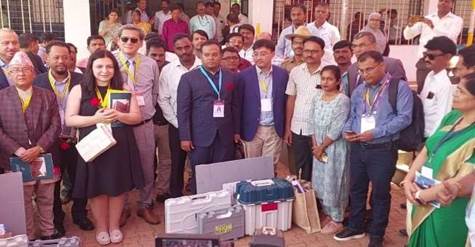
 The Ministry of Textiles in partnership with Confederation of Indian Industry (CII) and Ahmedabad Textiles Industries’ Research Associations (ATIRA) organized a National Symposium on Advancements in Composites, Speciality Fibres and Chemicals here in New Delhi today.

India’s Technical Textiles market has a huge potential backed by a significant growth rate of 10% and placement as the 5th largest technical textiles market in the world, said Mrs Rachna Shah, Secretary, Ministry of Textiles while addressing the symposium.

She further said that that composites has distinct structural and physical features, which make them suitable for specific applications across various sectors. For example, in infrastructure development, aerospace, automotive sector, Military and Defence sector, medical devices, composite materials, among others. She highlighted the significance and importance of institutional buyers, user Ministries and industries in the adoption of technical textiles and products made out of specialty fibres and composites.

 

A collaborative approach among stakeholders including industry representatives, policymakers, researchers, and investors is imperative to address the cost implications in the field of composites and specialty fibres and work together in increasing awareness and education for wider adoption by the larger community for the growth of the sector, she added.

Dr Vijay Kumar Saraswat, Member, NITI Aayog, highlighted that the specialty fibres are the building blocks of the advanced composites and its choice is a strategic decision on a blend of performance requirements and cost consideration.

He mentioned that specialty fibres like aramids, carbon fibre, zylon, ultra-high molecular weight polyethylene (UHMWPE), glass fibre, ceramic fibre can be tailored for diverse applications and strategic needs, such as Fire Retardant fabrics, Bullet Resistant Jackets, ropes and cables, windmills (renewable energy) and in gas and chemical filtration respectively. He highlighted the top trends in composite materials including but not limited to high performance resins and adhesives, carbon fibre based materials light weighting advanced polymer composites, biomaterials, nanocomposites, intelligence design and manufacturing.

He elucidated the advancements in material science are not just about creating stronger or lighter materials, but also about ensuring their sustainable use through material circularity. He also stressed that the demand for bio-composites is increasing due to growth in its adoption by construction, furniture industry and increased compatibility in medical applications.

Dr Saraswat also said advanced composites and specialty fibres are continuously evolving with research, pushing the boundaries of fibre performance. Future developments will include fibres with even greater strength and stiffness, enhanced thermal properties and even self-healing capabilities. He also emphasised that although composite materials have been around for many years, the industry is still amid innovation and evolution. There is a need to adopt sustainable practices which will be a key feature of the composites industry going forward.

Shri Ajay Kumar Rana, Director General, RDSO during his address talked about the use of geotextiles and geo-composites in the railways sector. He highlighted the use of geotextiles, geogrids, pre-fabricated vertical drains (PVDs) for load bearing applications, slope erosion protection control application, drainage, separation, filtration etc. He also stated RDSO is actively working in developing new guidelines and standards for use of geo-composites in railways sector, in association with BIS.

Shri Rajeev Saxena, Joint Secretary, Ministry of Textiles suggested technical textiles is one of the fastest growing segment with a strong global demand. The technical textiles industry holds immense potential to drive productivity, efficiency, cost-effectiveness, and innovative solutions across engineering and general applications. He highlighted that NTTM is a flagship mission with a view to position India as the Global Leader in Technical Textiles. During his speech, Shri Saxena elucidated various guidelines under the NTTM mission related to Research & Innovation, Start-up, machinery development, internship, education and skilling.

While deliberating on the importance of composites, he stated that textile composite materials are replacing the conventional materials in several fields.

Shri Nilesh M Desai, Director, Space Applications Centre (SAC/ISRO) said that SAC is the second largest research centre of ISRO with a long association with ATIRA. He said that space and aerospace is going to be a major area for composites applications, due to its light weight and durable properties. CFRP and Asto glass fibres are majorly used nowadays in space and aerospace sector.

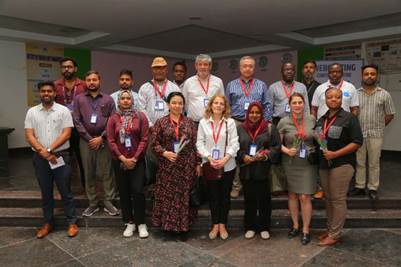
Around 150 participants attended the conference including Officials and Representatives from Central Ministries, user Departments of Central and State Governments, industry leaders, scientific experts, researchers, and professionals related to technical textiles.


***
Union Public Service Commission announces written results of National Defence Academy and Naval Academy Examination, (I) 2024

 On the basis of the result of the written part of the National Defence Academy and Naval Academy Examination, (I) 2024 held by the Union Public Service Commission on 21st April, 2024, candidates with the under mentioned Roll Nos. have qualified for interview by the Services Selection Board (SSB) of the Ministry of Defence for Admission to Army, Navy and Air Force Wings of the National Defence Academy for the 153rd Course and for the 115th Indian Naval Academy Course (INAC) commencing from 2nd January, 2025. The result is also available at Commission’s website www.upsc.gov.in.

2. The candidature of all the candidates, whose Roll Nos. are shown in the list is provisional. In accordance with the conditions of their admission to the examination, “candidates are requested to register themselves online on the Indian Army Recruiting website joinindianarmy.nic.in within two weeks of announcement of written result. The successful candidates would then be allotted Selection Centers and dates, of SSB interview which shall be communicated on registered e-mail ID. Any candidate who has already registered earlier on the site will not be required to do so. In case of any query/ Login problem, e-mail be forwarded to dir-recruiting6-mod[at]nic[dot]in.”

“Candidates are also requested to submit original certificates of Age and Educational Qualification to respective Service Selection Boards (SSBs) during the SSB interview.” The candidates must not send the Original Certificates to the Union Public Service Commission. For any further information, the candidates may contact Facilitation Counter near Gate ‘C’ of the Commission, either in person or on telephone Nos. 011-23385271/011-23381125/011-23098543 between 10:00 hours and 17:00 hours on any working day. In addition for SSB/Interview related matter the candidates may contact over telephone no. 011-26175473 or joinindianarmy.nic.in for Army as first choice, 011-23010097/ Email: officer-navy[at]nic[dot]in or joinindiannavy.gov.in for Navy/ Naval Academy as first choice and 011-23010231 Extn. 7645/7646/7610 or www.careerindianairforce.cdac.in for Air Force as first choice.

3. The mark-sheets of the candidates will be put on the Commission’s website within fifteen (15) days from the date of publication of final result. (After concluding SSB Interviews) and will remain available on the website for a period of thirty (30) days.

Click here for Complete Result.

***

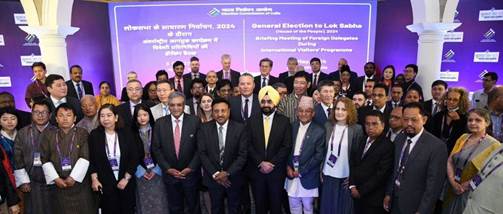
75 delegates from 23 countries witness the poll process first-hand in 6 States as part of IEVP

 International delegates have expressed their happiness at having witnessed the polling process first-hand in General Election 2024. While some of the delegates appreciated transparency others termed ECI’s initiatives such as Green Polling Stations as inspirational. Delegates also appreciated the use of technology at scale in the elections including during randomization of EVM-VVPATs. Some of the delegates also said that they were particularly struck by the unwavering faith and commitment of Indian voters towards strengthening democratic ideals. Overall, there was unanimity among the visiting members of the Election Management Bodies of these countries that the election process in India was a peaceful, inclusive and accessible and takes place in a festive mood.

These reactions came after largest ever contingent of international delegates experienced India’s General Elections first-hand in the recently concluded third phase of the elections as part of the International Election Visitors’ Programme (IEVP).

Polling was held in 93 Constituencies across 11 States/UTs in the third phase and the delegates watched the polling in 6 States/UTs including the preparatory work that goes into making what is arguably the largest logistical exercise involving movement of men and machinery in the world.

IEVP 2024 experiences from ground


Karnataka

Delegates from Cambodia, Tunisia, Moldova, Seychelles, and Nepal visited Belgaum Parliamentary constituency in Karnataka and interacted with polling officers and presiding officers inside the polling station, witnessed mock poll, visited command control center, media monitoring facilities. The delegates appreciated the transparency as underscored by mock poll, presence and involvement of candidates’ representative inside the polling station.


Goa

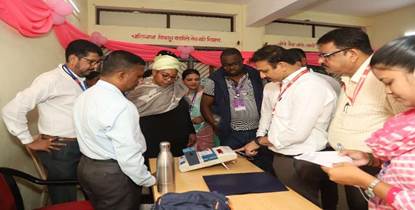
Delegates from Bhutan, Mongolia and a media team from Israel witnessed polling and related arrangements in both the constituencies in Goa. They were also exposed to mock poll, command control center, media monitoring facilities and dispatch centers. CEC Bhutan and Electoral officials of Bhutan & Mongolia appreciated transparency in involving political parties, media, candidates’ representative inside the polling station in conduct of elections. Admiration and surprise was expressed to see PwD managed Polling stations, and Pink Polling stations by the visiting delegates. Delegates appreciated the use of software for randomization of EVM-VVPATs.


Madhya Pradesh

A 11-member international team comprising delegates from Sri Lanka and Philippines visited polling stations across Bhopal, Vidisha, Sehore, and Raisen constituencies, gaining firsthand insights into the electoral process of the Lok Sabha elections. Interacting with voters, they observed the enthusiasm and active participation of Indian citizens in the democratic process. Reflecting on their experiences, the delegates expressed admiration for the vibrant democracy they witnessed in India. They were particularly struck by the unwavering faith and commitment of Indian voters towards strengthening democratic ideals.


Uttar Pradesh

Delegates from Chile, Georgia, Maldives, Namibia, Papua New Guinea and Uzbekistan witnessed the polling on 7th May, 2024 in Fatehpur Sikri and Agra Parliamentary constituency in Uttar Pradesh. Visiting dignitaries were taken to see architectural marvel of Taj Mahal and the Fatehpur Sikri falling in these two constituencies. They were exposed to the various arrangements/activities on the poll day and the day before the polling day. There was unanimity among the visiting members of the Election Management Bodies of these countries that the election process in India was a peaceful, inclusive and accessible.


Gujarat

Delegates from Fiji, Australia, Russia, Madagascar, Kyrgyz Republic witnessed pre- poll arrangements and polling process for the General Elections to the Lok Sabha, 2024 in Ahmedabad. The delegation was impressed with strong room(s) having double lock system and deployment of armed police personnel ensuring effective security for EVMs. Female managed polling stations in Assembly Constituency of Sanand in Ahmedabad East PC was also drew appreciation and invited comments that they boost confidence in women and increase their participation. Facility of ramp and wheelchairs in all places along with volunteers to help elderly voters was also highly appreciated. The concept of Braille ballot paper for blind voters was also liked as a good initiative to help blind people.


Maharashtra

Representatives from the Election Management Bodies of Bangladesh, Sri Lanka, Kazakhstan and Zimbabwe visited Raigad parliamentary constituency in Maharashtra and witnessed the pre-poll arrangements, dispersal of polling parties and other logistics. The group interacted with the District Election Officer, Returning Officer, Presiding Officers and other election related officials about the various facets of the Indian Elections. The delegates were impressed with the transparency measures at polling stations.


Background

Delegates from 23 countries namely Australia, Bangladesh. Bhutan, Cambodia, Chile, Fiji, Georgia, Kazakhstan, Kyrgyz Rep, Madagascar, Maldives, Mongolia, Moldova, Namibia, Nepal, New Guinea, Philippines, Russia, Seychelles, Sri Lanka, Tunisia, Uzbekistan, Zimbabwe arrived at New Delhi to witness the Elections in the third phase of polling on the 5th May 2024. They interacted with the Election Commission of India in the inaugural session presided over by the Chief Election Commissioner Sh. Rajiv Kumar along with Election Commissioners Shri Gyanesh Kumar and Dr. Sukhbir Singh Sandhu. Thereafter the delegates were divided into 6 smaller groups to visit different states viz. Karnataka, Maharashtra, Gujarat, Uttar Pradesh, Goa and Madhya Pradesh and visited polling stations in 13 constituencies for this purpose. The CEOs of the States organized the visit of the groups to see the poll preparedness, logistics and webcasting arrangements as well as engaging with polling officers and presiding officers on pre-poll day and to witness the mock poll, actual polling and to interact with voters on election day i.e.7th May 2024.

.

*****

Dubai to Abu Dhabi how NFTS are used in the UAE

  Non-fungible tokens (NFTs) are still in high demand in the area. They are employed by projects in several ways, despite the United Arab Emirates (UAE) continuing to offer a friendly legal environment for blockchain-based technology. To read more about Encryption and Decryption in cryptocurrency visit the page.

NFTs make it easier for doctors to get data about gamers

Photo by Jonathan Borba on Pexels.com

Researchers of Bitcoin smart may now utilize NFTs to obtain funds and data thanks to a project still in progress at Dubai’s Jumeirah Village Circle. Dmitry Mikhailov, an artificial intelligence expert from Farkana Laboratories, spoke with Cointelegraph about his organization’s use of NFTs in research during the recent AIBC Dubai symposium in Festival City.

NFT tickets from BnB Chain infiltrate a party concert in Abu Dhabi Ultra Abu Dhabi, an underground electronic dance music (EDM) extravaganza including appearances by well-known DJs like Calvin Harris and Skrillex, Fellaz, and Taste of Web3. The race was staged on Yas Island, home to several attractions, including Ferrari World and the Yas Marina Circuit, where the Formula One Abu Dhabi Grand Prix has been held annually since 2009.

NFT incentives are important for the charity.

The UAE has a strong tradition of civic engagement and philanthropic giving. The nation’s leaders lead several programs, and the government oversees social, philanthropic, and humanitarian activities inside and beyond the UAE. 

What are NFTs?

If you have been keeping up with recent technological advances, you have likely heard about NFTs or non-fungible currencies. Still, it might be difficult to grasp for someone with little or no technical experience. Here are my few bits on NFTs. This digital asset denotes ownership of an original piece of writing or material.

Consider it the digital equivalent of a collectible object like a rare baseball card or one-of-a-kind artwork.

The value of an NFt stems from its rarity and uniqueness, much like with these real works of art.

How are NFTs being adopted all over the world?

The United States, China, South Korea, and Japan are some of the nations that use NFTs in a significant way. Artists, singers, and even sports are utilizing NFTs in these nations to monetize their work and interact with their audience.

For its acceptance, the USA has seen a considerable increase in launching numerous NFT marketplaces & platforms. These nations are all leading the NFT revolution and advancing its growth and development.

NFTs adoption in Dubai, Abu Dhabi, or UAE at large:

As every nation has joined the NFT bandwagon or is about to, a significant global economic hub like the UAE, whose core economy is dependent on oil, doesn’t want to fall behind in the NFT adoption race. In the UAE, especially in Dubai & Abu Dhabi, there is a surge in the usage of NFTs. Individuals, companies, and governmental organizations are adopting this cutting-edge technology at an increasing rate.

Role of government & Industries in promoting the Usage of NFTs in UAE

Through several initiatives, including “The Dubai Future Foundation,” which is leading the Global Cryptocurrency Challenge and inviting start-ups and innovators to come up with solutions using blockchain and NFTs to address general challenges, the government of Dubai is actively encouraging the adoption of NFTs and blockchain technology. 

Some sectors in the UAE are already investigating the use of NFTs. For instance, the Dubai-based art marketplace Artify allows artists to sell their non-traditional works on its website, giving them a new method to reach a worldwide audience and profit from their works. Seeing the potential of NFTs, the UAE’s sports sector has introduced NFT collections for football clubs & leagues, giving fans a new opportunity to interact with their personal favorites & players.

The Abu Dhabi government is investigating the use of NFTs in the real estate industry with intentions to digitize land registration and issue NFTs as ownership verification. Such actions by the UAE government would undoubtedly increase its ability to compete in the global economy.

Conclusion:                                                          

In conclusion, the UAE’s ambitious goal and intention to become a major center for NFTs adoption through distributed ledger technology & innovation has fueled the acceptance of NFTs in the country, notably in Dubai & Abu Dhabi. 

3 Tokens to turn your $1 into $30 in a 2023 check

  Multiplying your dollar into a hundred dollars is everything that we need as investors. We turn saving into investments to generate a heavy flow of income. Acquiring profits by investing in cryptos is an easy way of intelligent earning. We long to invest more of our savings into places that potentially generate income In addition, you may improve your trading skills by using a reputable trading platform like www.immediateconnect-se.com

Photo by Jonathan Borba on Pexels.com

Yet, most of the middlemen infuse her wealth for unproductive purposes rather than inducing for their well-being. A general spread of awareness has to be attained to avoid this behavior. Enouage to save and invest in the best legitimate sources of earning should be an investor’s target. 

Cakes with a sweet frosting require more effort and time. Similarly, more returns might often take longer time but the wait is worthwhile. So, grab your cake in advance and enjoy your frosting when the trends shoot your way high. 

Let’s seize the golden chance to turn your dollar into thirty dollars by investing in the best-rated cryptos. There is no better opportunity to do so and build up your portfolio. Here are the 3 most incredible cryptos paving a new way of meaning opportunity: 

  1.  RenQ Finance (RENQ)

RENQ is a bridge to isolated blockchains on a decentralized Finance DeFi platform. Its mission is to resolve the ever-raging problem of liquidity. Innovation is the key intention of the platform and has placed it on its platter very precisely. 

Apart from the liquidity concept, it further emphasizes several other features. One of which is the scalability concept. The scalability is refurbished to promote a swift mode of transactions in a short time. Furthermore, its low transaction fees make RENQ the best choice for traders and investors. 

The wallet system is purely centralized with decentralized security set up to maintain transparency and uniformity. It further slaves the complexity issues that traders come across while dealing with DeFi exchanges. If you’re a trader of a basic level and have the least experience in managing DeFi networks then this is a perfect pick. 

It is a user-friendly platform that builds investors’ trust by resolving their issues. Traditional platforms have infused the scalability and liquidity concept but had a backlog in balancing the two. 

  • Shiba Inu (SHIB) 

Shiba Inu token is an inspiration from a dog breed that has a whole community-driven ecosystem. The meme crypto started its journey in the year 2020 in August. SHIB has a decentralized blockchain base that has come under the limelight recently. 

According to the resorts of the portal, the SHIB token is flaring remarkably. The initial price of one SHIB token in 2020 was $0.00000001 which has touched beyond the sky to $0.00001088. The reason behind this is the innovation and technology the model inhabits. 

The growth trajectory to Shiba Inu is bound to shoot up with no stop signs visibility. The meme coin is also framed as the “Dogecoin KIller” as it has been replacing it and setting its significant position. The SHIB token predictions reveal it will touch $30 by 2023 from a dollar investment to thirty. 

  • Cardano (ADA) 

The Cardano portal addresses interoperability on its front base. Additionally, it also aids the scalability issues by accessing faster transactions than Bitcoin and Ethereum. The blockchain platform aims at sustainability and an energy-efficient structure in its framework. To bring this into its model it runs on proof-of-stake consensus. 

On the other hand, well-known cryptos like BTC and ETH have a proof-of-work consensus. By market cap, Cardano ADA has touched the seventh-largest position in the galaxy of cryptos. Cardanoo has taken a steady climb from $0.18 in March 2020 to $3.10 in September 2021. 

The current price of Cardano is running at $0.414. Positive trends are favoring the Cardano portal which has highly friendly indications for its length as well as short-term investors. If ADA sets to rise at the same velocity then it is certainly bound to achieve $30.

Let us switch in to buy these cryptos and strengthen your portfolio and enhance your presence in the crypto industry.     For crypto trading and investment log onto Bitcoin smart 

What is Chainlink and How Does it Work? A Comprehensive Guide

  In the world of blockchain, smart contracts are becoming increasingly popular. These self-executing contracts allow for trustless transactions to take place without the need for intermediaries. However, one of the main challenges with smart contracts is accessing real-world data. That’s where Chainlink comes in. You can go for crypto trading and investment by Register Today and logging into Bitcoin smarter.

Chainlink is a decentralized oracle network that connects smart contracts to real-world data and events. In this comprehensive guide, we’ll explore what Chainlink is, how it works, and its many use cases.

What is Chainlink?

Chainlink is a decentralized oracle network that provides smart contracts with secure access to off-chain data. In simpler terms, it’s a bridge between blockchain and the real world.

Chainlink was founded in 2017 by Sergey Nazarov and Steve Ellis. Its native cryptocurrency, LINK, is used to incentivize the network’s nodes to provide accurate and reliable data.

Photo by Karolina Grabowska on Pexels.com

How Does Chainlink Work?

Chainlink works by using a decentralized network of nodes to retrieve data from various sources, such as APIs, websites, and other blockchains. These nodes are called oracles, and they are responsible for retrieving and validating the data before sending it back to the smart contract.

Here’s a step-by-step breakdown of how Chainlink works:

  • A smart contract requests data from Chainlink by creating a job.
  • The job is then assigned to one or more oracles.
  • The oracles retrieve the data from various sources.
  • The oracles validate the data to ensure its accuracy and reliability.
  • The oracles then send the data back to the smart contract.
  • The smart contract can then execute based on the received data.

Chainlink’s decentralized network ensures that the data provided to smart contracts is secure, reliable, and tamper-proof. It also allows for customization, as smart contract creators can choose which nodes to use and which data sources to access.

Why is Chainlink Important?

Chainlink is important because it solves a critical problem in the world of smart contracts. Smart contracts are only as good as the data they rely on, and Chainlink provides a reliable and secure way to access real-world data.

Without Chainlink, smart contracts would be limited to on-chain data only, which severely limits their potential use cases. With Chainlink, smart contracts can access data from virtually any source, opening up a world of possibilities.

Use Cases for Chainlink

Chainlink has many potential use cases across various industries. Here are just a few examples:

Finance

Chainlink can be used to provide secure and reliable price feeds for financial applications, such as decentralized exchanges and derivatives platforms. It can also be used to access credit scores and other financial data for lending platforms.

Gaming

Chainlink can be used to provide verifiable randomness for gaming applications, such as lotteries and online casinos. It can also be used to provide real-world data for sports betting platforms.

Supply Chain Management

Chainlink can be used to provide real-time tracking of goods and materials throughout the supply chain. This can help prevent fraud and ensure that products are authentic and ethically sourced.

Insurance

Chainlink can be used to provide real-world data for insurance applications, such as weather data for crop insurance and flight data for travel insurance.

Conclusion

Chainlink is a critical component of the blockchain ecosystem, providing reliable and secure access to real-world data for smart contracts. Its decentralized network and customizable options make it a powerful solution with many potential use cases.

Whether you’re a developer looking to integrate Chainlink into your application or a user curious about its potential, understanding what Chainlink is and how it works is essential. With this comprehensive guide, you’re now equipped with the knowledge to explore the world of Chainlink and its many possibilities.

FAQs about Chainlink

What is the difference between Chainlink and other oracle solutions?

Chainlink differs from other oracle solutions in several ways. First, it’s decentralized, which means that there’s no single point of failure. This makes it more secure and reliable than centralized solutions.

Second, Chainlink provides a wide range of customization options. Smart contract creators can choose which data sources to access and which nodes to use. This allows for greater flexibility and can result in more accurate and relevant data.

What is the LINK token used for?

The LINK token is used to incentivize nodes to provide accurate and reliable data. Nodes are paid in LINK tokens for their services, and smart contract creators must pay in LINK tokens to use the Chainlink network.

How does Chainlink ensure the security of its network?

Chainlink uses a combination of cryptographic protocols, secure hardware, and tamper-resistant software to ensure the security of its network. Nodes are required to stake LINK tokens as collateral, which incentivizes them to behave honestly.

Is Chainlink easy to use?

Chainlink can be complex for non-technical users, but there are tools and resources available to make it easier. The Chainlink documentation provides detailed instructions on how to use the network, and there are third-party tools available to simplify the process.

Understanding the Benefits of Chainlink for Decentralized Finance

  Blockchain technology has revolutionized the world of finance by creating a decentralized system that removes the need for intermediaries, reduces costs, and increases efficiency. One of the most exciting innovations in the blockchain space is decentralized finance (DeFi), which has seen explosive growth in recent years. In DeFi, smart contracts automate financial transactions, allowing for more transparent, secure, and accessible financial services. However, one major challenge for DeFi is the lack of reliable and secure data feeds, which are essential for executing smart contracts. This is where Chainlink comes in – a decentralized oracle network that provides a secure and reliable bridge between smart contracts and external data sources. In this article, we will explore the benefits of Chainlink for DeFi. If are you interested in bitcoins trading then Join Immediate Edge Trading Platform.

Photo by Anna Tarazevich on Pexels.com

What is Chainlink?

Chainlink is a decentralized oracle network that connects smart contracts with external data sources, such as price feeds, weather reports, sports scores, and more. In other words, it acts as a bridge between on-chain and off-chain data, allowing smart contracts to access and use information from the real world. Chainlink was founded in 2017 by Sergey Nazarov and Steve Ellis, and it has since become one of the most popular oracle networks in the blockchain space.

How does Chainlink work?

Chainlink works by connecting smart contracts with decentralized oracles, which are nodes that retrieve and verify data from off-chain sources. These oracles are incentivized to provide accurate and timely data through a system of staking and reputation. When a smart contract needs to access external data, it sends a request to the Chainlink network, which then selects a set of oracles based on their reputation and availability. The oracles retrieve the data from the external sources, verify its accuracy, and then send it back to the smart contract. This process ensures that the data used by smart contracts is reliable and tamper-proof.

Benefits of Chainlink for DeFi

Reliable Data Sources

One of the biggest challenges for DeFi is the lack of reliable and secure data feeds. Smart contracts rely on accurate and up-to-date information to execute financial transactions, such as trading, lending, and insurance. Chainlink solves this problem by providing a network of decentralized oracles that retrieve and verify data from multiple sources, ensuring that the data used by smart contracts is accurate and tamper-proof.

Decentralized Oracle Network

Chainlink’s decentralized oracle network is one of its key strengths. Unlike centralized oracles, which are controlled by a single entity and can be subject to manipulation or censorship, Chainlink’s oracles are distributed across multiple nodes, making it highly resistant to attacks and failures. This also ensures that there is no single point of failure, which makes the network more reliable and secure.

High Level of Security

Security is paramount in DeFi, as the value of assets at stake is often significant. Chainlink’s oracle network uses a combination of cryptographic techniques and economic incentives to ensure that data used by smart contracts is secure. The system uses a reputation-based model, where oracles with a good track record are rewarded, while those that provide inaccurate data are penalized. Additionally, the system uses advanced cryptography to ensure that the data is not tampered with or manipulated during transmission.

Flexibility and Customization

Chainlink is highly customizable, allowing developers to create their own oracle networks and customize them to their specific needs. This flexibility means that developers can design their own data sources and customize the parameters of their smart contracts to fit their requirements. This allows for more complex and sophisticated smart contracts, which can perform a wide range of functions.

Cross-Chain Interoperability

One of the most exciting features of Chainlink is its ability to work across different blockchain networks. This means that developers can create smart contracts that interact with multiple blockchains, which increases the flexibility and scope of DeFi applications. Additionally, Chainlink can integrate with traditional financial systems, providing a bridge between the old and new financial worlds.

Use Cases for Chainlink in DeFi

Chainlink has a wide range of use cases in DeFi, including:

Decentralized Exchanges (DEXs)

Decentralized exchanges (DEXs) rely on accurate and up-to-date price feeds to execute trades. Chainlink provides a reliable and secure source of price data, which ensures that trades are executed at the correct price.

Insurance

Insurance is an important application of DeFi, but it requires accurate and reliable data to assess risk and calculate premiums. Chainlink provides a secure and tamper-proof source of data, which can be used to create innovative insurance products.

Lending and Borrowing

Lending and borrowing are key functions of DeFi, but they require accurate and up-to-date information to assess creditworthiness and calculate interest rates. Chainlink provides a reliable source of data, which can be used to create sophisticated lending and borrowing platforms.

Prediction Markets

Prediction markets rely on accurate and timely data to make predictions about future events. Chainlink provides a secure and reliable source of data, which can be used to create prediction markets for a wide range of events.

Gaming

Gaming is an emerging application of DeFi, but it requires secure and tamper-proof data to ensure fairness and prevent cheating. Chainlink provides a reliable and secure source of data, which can be used to create innovative gaming platforms.

Challenges and Criticisms of Chainlink

While Chainlink has many benefits, it is not without its challenges and criticisms. Some of the key challenges include:

  • Centralization: While Chainlink is decentralized in theory, the reality is that a few large nodes control a significant portion of the network. This could potentially lead to centralization and reduce the security and reliability of the network.
  • Complexity: Chainlink is a complex system that requires significant technical expertise to understand and use. This could limit its adoption and make it less accessible to developers with limited experience.
  • Cost: Chainlink’s decentralized oracle network can be expensive to use, particularly for small-scale applications. This could limit its adoption and make it less accessible to developers with limited resources.

Conclusion

Chainlink is an important innovation in the DeFi space, providing a secure and reliable source of data for smart contracts. Its decentralized oracle network and reputation-based model ensure that the data used by smart contracts is accurate and tamper-proof, while its flexibility and customization allow for sophisticated and complex applications. While there are challenges and criticisms, Chainlink has the potential to transform the DeFi landscape and create new opportunities for financial innovation.

FAQs

What is Chainlink?

Chainlink is a decentralized oracle network that connects smart contracts with external data sources, allowing for more reliable and secure financial transactions in DeFi.

How does Chainlink ensure the security of its data feeds?

Chainlink uses a reputation-based model and advanced cryptography to ensure that the data used by smart contracts is secure and tamper-proof.

What are some of the use cases for Chainlink in DeFi?

Chainlink has many use cases in DeFi, including decentralized exchanges, insurance, lending and borrowing, prediction markets, and gaming.

What are some of the challenges facing Chainlink?

Chainlink faces challenges with centralization, complexity, and cost, which could limit its adoption and accessibility.

How does Chainlink compare to other oracle networks in the blockchain space?

Chainlink is one of the most popular and widely used oracle networks in the blockchain space, but there are other competing oracle networks, such as Band Protocol and API3.

Why Chainlink is Critical for the Future of Smart Contracts

  As the blockchain industry continues to grow, smart contracts have emerged as one of its most promising applications. These self-executing contracts allow for secure and automated transactions between parties, without the need for intermediaries. However, for smart contracts to reach their full potential, they must be able to connect to real-world data sources and external systems. This is where Chainlink comes in. If you are interested in bitcoin trading, then you can start your trading journey by (Official App)

Chainlink is a decentralized oracle network that provides reliable, tamper-proof inputs and outputs for smart contracts. In other words, it acts as a bridge between smart contracts and the outside world, enabling them to access real-world data and execute accordingly. In this article, we will explore why Chainlink is critical for the future of smart contracts, how it works, and what benefits it offers.

Photo by RODNAE Productions on Pexels.com

What is Chainlink?

Chainlink is a decentralized oracle network that provides secure and reliable inputs and outputs for smart contracts. Oracles are essential for smart contracts because they enable them to access data outside of the blockchain, such as stock prices, weather reports, and sports scores. Without oracles, smart contracts would be limited to executing only within the blockchain, which would significantly reduce their usefulness.

Chainlink is unique in that it is a decentralized oracle network, meaning that it is not controlled by a single entity or authority. Instead, it uses a network of nodes to provide inputs and outputs for smart contracts. These nodes are run by independent operators, who are incentivized to provide accurate data by receiving payment in LINK, Chainlink’s native cryptocurrency.

How Does Chainlink Work?

Chainlink works by connecting smart contracts to real-world data sources and external systems. It does this by using a three-step process:

  • Aggregation: Chainlink aggregates data from multiple sources to ensure accuracy and reliability. This helps to mitigate the risk of a single point of failure or a single source of data being compromised.
  • Validation: Chainlink validates the data using multiple nodes to ensure that it is accurate and tamper-proof. If a node provides inaccurate data or fails to respond, it is penalized by losing LINK.
  • Delivery: Chainlink delivers the data to the smart contract in a format that it can understand and execute accordingly. This enables the smart contract to execute autonomously and securely, without the need for intermediaries.

Why is Chainlink Critical for the Future of Smart Contracts?

Chainlink is critical for the future of smart contracts because it enables them to access real-world data and external systems. Without Chainlink, smart contracts would be limited to executing only within the blockchain, which would significantly reduce their usefulness.

Chainlink also offers several other benefits for smart contracts, including:

  • Security: Chainlink’s decentralized oracle network provides a high level of security for smart contracts. By using multiple nodes to validate data, Chainlink helps to mitigate the risk of a single point of failure or a single source of data being compromised.
  • Reliability: Chainlink’s aggregation process ensures that data is accurate and reliable. This helps to ensure that smart contracts execute correctly and as intended.
  • Flexibility: Chainlink can connect smart contracts to a wide range of data sources and external systems, making them more versatile and adaptable to real-world use cases.
  • Cost-effectiveness: Chainlink’s decentralized oracle network reduces the cost of accessing real-world data for smart contracts. This is because it eliminates the need for intermediaries and reduces the risk of data tampering.

Use Cases for Chainlink

Chainlink has a wide range of use cases in various industries. Some of the most promising use cases include:

Finance

Chainlink can be used in the finance industry to connect smart contracts to financial data sources, such as stock prices and interest rates. This can enable the creation of decentralized financial products, such as prediction markets, insurance products, and decentralized exchanges.

Supply Chain

Chainlink can be used in the supply chain industry to provide real-time data on shipments, inventory levels, and other key metrics. This can enable more efficient and transparent supply chain management, as well as reduce the risk of fraud and counterfeiting.

Gaming

Chainlink can be used in the gaming industry to provide real-time data on in-game events, such as scores, achievements, and rewards. This can enable the creation of more immersive and interactive games, as well as provide players with more control over their in-game assets.

Insurance

Chainlink can be used in the insurance industry to provide real-time data on weather events, traffic patterns, and other key metrics. This can enable more accurate and automated insurance products, such as parametric insurance and microinsurance.

Conclusion

Chainlink is critical for the future of smart contracts because it enables them to access real-world data and external systems. It offers several benefits, including security, reliability, flexibility, and cost-effectiveness. With its decentralized oracle network and wide range of use cases, Chainlink has the potential to revolutionize various industries, from finance to gaming to insurance. As blockchain technology continues to evolve, Chainlink will undoubtedly play a vital role in its development and adoption.

FAQs

What is the LINK token?

The LINK token is Chainlink’s native cryptocurrency. It is used to incentivize node operators to provide accurate data and penalize them for providing inaccurate data. It can also be used to pay for data feeds and other services on the Chainlink network.

How is Chainlink different from other oracles?

Chainlink is unique in that it is a decentralized oracle network, meaning that it is not controlled by a single entity or authority. This helps to ensure that the data provided to smart contracts is accurate and tamper-proof.

What are some examples of companies using Chainlink?

Several companies are currently using Chainlink, including SWIFT, Google, Oracle, and Web3 Foundation.

How can businesses integrate Chainlink into their operations?

Businesses can integrate Chainlink into their operations by using the Chainlink API or partnering with a Chainlink node operator. They can also develop their own Chainlink nodes if they have the necessary technical expertise.

How are NFTs different from traditional assets?

  NFTs differ from traditional assets because they represent digital titles rather than physical objects. While a traditional asset such as a stock certificate represents ownership of a company, an NFT represents ownership of the right to control that specific digital asset. Websites like Create Account offer trading features like artificial intelligence, trading bots, market analysis, live customer and much more for bitcoin traders.   The NFT is not the physical object itself but rather its title. Regardless of how often an NFT is traded, its title or ownership will not be affected unless there is a change in its underlying rights.

Photo by RODNAE Productions on Pexels.com

NFTs can change hands frequently without affecting their underlying value because they are not tied to physical objects that could wear out with use or be stolen/damaged by others. It can also make it easier to prove that you own an item because you have its digital proof on the blockchain rather than relying on now-ancient paper documents.

It means that once an NFT is ‘sold’, no one else has the right to sell it, trade it, or give it away. It prevents their value from going down in the case of downturns. One of the most popular applications for NFTs is collectables like card games; however, more applications for ownership rights and trading will follow as developers gain more experience with blockchain technology.

This freedom is also facilitated by the fact that each NFT is unique and can contain various information, such as its price/market value, supply and demand figures, and growth rate. In addition, every NFT has a verifiable identity that people on the blockchain can create. The data associated with it at the time of creation will remain unchanged on the blockchain. No one can change the original copy of that data; people could overwrite only an identical copy of the same data (if any) through forgery.

Are NFTS similar to cryptocurrencies?

What NFTs are not is a cryptocurrency or a digital currency. While many technologies associated with cryptocurrencies are compatible with NFTs, they are not identical. Cryptocurrencies are virtual currencies that use blockchain technology to ensure security and transparency. 

One of the reasons why NFTs can be used almost interchangeably is because they do not require any external third party to confirm the ownership of an item or rights over it. It makes them better suited for applications where a third party is needed or where there are a lot of trust issues (like in contracts). In addition, it means that users can use each NFT for a specific purpose, and no one else can use it similarly. Comparatively, cryptocurrencies like Bitcoin do not have this attribute; instead, all of them have a unique value attributed to them.

The uniqueness of NFTs: 

This uniqueness also makes NFTs resistant to fractional reserve banking as they cannot be created at zero cost, as explained here. Any NFT associated with a particular asset will only contain enough currency or value to cover the needs of its creator and any other owners at its launch date. Each NFT will have a much smaller circulation than that of cryptocurrencies. 

This lack of fractional reserve banking in using NFTs is also why their value is (currently) more stable. Cryptocurrencies, by comparison, continue to see wild price swings even after a decade in use.

Aside from this, there is another significant difference between NFTs and cryptocurrencies: ownership over an asset (NFT) cannot be transferred without the new owner changing every node on the blockchain network. Instead, it uses self-executing intelligent contracts – computer protocols that ensure transparency and trust between two parties while interacting.

Authenticity and preservation:

Blockchains support NFTs because they can make it possible for anyone to authenticate the authenticity of an item without having to rely on a third party. It also makes it easier to preserve the value of a particular item as the user can quickly transfer it from one owner to another.

With their ability to cut costs, eliminate third-party interference, and enhance security practices and their value preservation, NFTs will impact the financial, gaming and other industries in the foreseeable future. Furthermore, when you own an NFT, you do not need to trust the issuer or anyone else that it is safe. You are its sole owner; no one can change this unless you decide to alter the associated data. All of this makes using NFTs a significant improvement on traditional assets that users could lose – or damage by others – without your knowledge or consent.

Additionally, because no party has rights over any assets issued in the NFT standard, they have a limited supply in circulation (the ‘minting’ is hard-wired into every asset), and they cannot be counterfeited; meaning that each one is sure to hold its value as long as there are buyers who need it.

Everything You Need to Know About Ethereum

  Ethereum is a decentralized platform in the crypto world which has recently introduced the MERGE in the trade market. If you do not have much idea on Ethereum and other related cryptocurrencies then you can keep an eye on the following article to know more. Click to sign up & start trading ethereum. Learn more.

Photo by David McBee on Pexels.com

The Entire Background on Ethereum

Ethereum is an open-source, publicly accessible, and decentralized blockchain platform that is designed to support the development and deployment of decentralized applications, or dApps. This essay will provide a comprehensive overview of Ethereum, including its historical context, underlying technology, potential applications, and future potential. By delving into these critical aspects of the platform, readers will gain a deeper understanding of the unique features and capabilities of Ethereum, as well as the broader implications of this emerging technology for the world of blockchain and decentralized applications.

Ethereum’s Past

Vitalik Buterin, inspired by Bitcoin’s blockchain technology, introduced Ethereum in 2013. He saw a network capable of hosting both a digital money and a network of decentralized programmes. In 2014, the Ethereum platform was created after its creators successfully crowd funded $18 million. 

Ethereum’s Decentralized Technology

Ethereum is a blockchain-based distributed application (dApp) platform. Ethereum is a platform that allows developers to construct smart contracts and decentralised apps on top of its blockchain, whereas Bitcoin is mostly used as a digital money. They get rid of the need for middlemen like banks, brokers, and attorneys.

Proof of Stake (PoS), the consensus method used by Ethereum’s blockchain, is more energy-efficient than Bitcoin’s Proof of Work (PoW). In contrast to PoW, which relies on processing power, PoS enables validators to produce and verify new blocks on the blockchain depending on the number of coins they own. Since validators stake their bitcoin and stand to lose it if they engage in harmful activity, they have an incentive to keep the network secure.

Potential Applications of Ethereum

Ethereum’s blockchain is used to power dApps, or decentralized apps. Trust and security-critical use cases are well-suited to these open-source, transparent, and tamper-proof solutions. The most popular applications of Ethereum include:

Ethereum is the backbone of the DeFi movement, which seeks to build a global, borderless, decentralized financial system. 

With Ethereum, developers may create games that run on the blockchain and provide players the ability to purchase, sell, and trade virtual items. These items are kept on the distributed ledger and may be utilized in a wide variety of video games and app stores.

Ethereum’s identity tools may be used to build private, secure, and user-managed digital ID systems. These decentralised methods of identity verification remove the requirement for third parties like governments or companies.

Blockchain technology, such as Ethereum’s, makes it possible to construct an immutable log of a product’s travels through the supply chain. Businesses and customers alike will benefit from being able to verify the legitimacy and provenance of goods.

Ethereum may be used to build ad-hoc, censorship-resistant social networks without the need for a governing body or third-party moderators. Using these systems, individuals are in charge of their own information and may safeguard their own privacy.

What’s Next for Ethereum

The outlook for Ethereum is bright, owing in large part to the dedicated development team that is continuously striving to enhance the platform and introduce new features. Among the most eagerly anticipated updates is Ethereum 2.0, which promises to replace the existing Proof of Work (PoW) consensus mechanism with Proof of Stake (PoS), as well as incorporate novel features like sharding to improve the network’s scalability. As a result of these improvements, Ethereum is poised to become more robust and faster, capable of handling a greater volume of transactions and supporting a broader range of decentralized applications. These developments hold great potential for advancing the state of the art in blockchain technology and driving further innovation in the space. 

One of Ethereum’s primary benefits is that it can run smart contracts, which is a kind of computer programme. This implies that decentralized apps (including online marketplaces, voting systems, and more) may be built on the Ethereum blockchain and utilized for a wide range of purposes. A smart contract is a computer-generated agreement that is pre-set to go into effect under certain circumstances. The trust and openness it affords are unparalleled in the world of legal transactions.

Ethereum also has the added advantage of having speedier transaction times. In contrast to Bitcoin, where a transaction might take up to 10 minutes to complete, Ethereum transactions normally only take a few seconds. Due to the use of a distinct consensus technique called Proof of Stake, Ethereum is able to process transactions far more quickly.

Conclusion

Ethereum is a groundbreaking platform that has significantly advanced the cryptocurrency industry. Smart contract execution and reduced transaction times are only two ways in which it has the potential to transform the way we do business online. The hazards and difficulties associated with this new technology, however, must be overcome. Users may make well-informed judgments on whether or not to use Ethereum if they have a thorough grasp of the advantages and disadvantages of this cryptocurrency. Ethereum is a major development in the field of decentralized technology and has the potential to drastically alter the way we interact with one another in the digital sphere.

An Overview of the Rapidly Growing DeFi Ecosystem

  The DeFi (Decentralized Finance) ecosystem is a rapidly growing sector in the world of finance. DeFi refers to a new financial system built on top of Bitcoin Loophole  Technology, which operates without intermediaries or centralized control. DeFi has gained significant traction over the past few years, with the total value locked in DeFi protocols reaching an all-time high of over $80 billion in January 2021.

The Benefits of DeFi

Photo by RODNAE Productions on Pexels.com

Subtitle: Decentralization

One of the key benefits of DeFi is that it is built on decentralized networks, meaning that it operates on a peer-to-peer (P2P) basis without intermediaries. This makes DeFi more transparent, secure, and resistant to censorship or fraud, compared to traditional financial systems. Decentralization also means that DeFi users have control over their own financial assets, without the need for intermediaries such as banks or other financial institutions.

Accessibility

Another advantage of DeFi is its accessibility. Unlike traditional financial systems, which often require extensive documentation and can be difficult to access for people without bank accounts, DeFi is accessible to anyone with an internet connection. This makes DeFi a valuable tool for people in countries with underdeveloped financial systems, or for those who are unbanked or underbanked.

Innovation

DeFi is also driving innovation in the world of finance. DeFi protocols are being developed at an incredible pace, offering new financial products and services that were previously not possible. For example, DeFi protocols now offer P2P lending and borrowing, yield farming, stablecoins, and prediction markets, among other services. The DeFi ecosystem is also constantly evolving, with new protocols and products being developed all the time.

The Risks of DeFi

Security

While DeFi offers many benefits, it also comes with its own set of risks. One of the main risks is security. Because DeFi protocols operate on blockchain technology, they are vulnerable to hacking and other forms of cyberattacks. This can result in the loss of funds for DeFi users. To mitigate these risks, it is important for DeFi users to educate themselves on the security measures that are in place, such as multi-signature wallets and smart contract auditing.

Volatility

Another risk associated with DeFi is volatility. Because many DeFi protocols are built on cryptocurrencies, the value of these assets can be highly volatile. This can result in substantial losses for DeFi users if they are not properly hedged against the risks of volatility. To mitigate this risk, it is important for DeFi users to understand the nature of the assets they are holding and to have a solid risk management strategy in place.

Regulation

Regulation is another risk for the DeFi ecosystem. While DeFi operates on decentralized networks, it is still subject to the laws and regulations of the countries in which it operates. This can result in challenges for DeFi protocols and for users, who may be required to comply with various regulations and reporting requirements. To mitigate these risks, it is important for DeFi protocols to understand the regulatory environment in which they operate and to work closely with regulators to ensure that they are in compliance.

Conclusion

The DeFi ecosystem is a rapidly growing sector in the world of finance, offering many benefits such as decentralization, accessibility, and innovation. However, it also comes with its own set of risks, such as security, volatility, and regulation. To mitigate these risks, it is important for DeFi users to educate themselves on the security measures that are in place and to have a solid risk management strategy in place. This includes understanding the nature of the assets they are holding and being aware of the regulatory environment in which they operate. As the DeFi ecosystem continues to grow and evolve, it will be important for users to stay informed and to stay up-to-date with the latest developments in the sector. With the right knowledge and preparation, DeFi has the potential to revolutionize the world of finance and provide new and innovative financial services to people all over the world.

Cracking the Code: Exploring the Potential of SCRT in the Blockchain Space

  The blockchain space has witnessed significant growth and innovation in recent years. As new technologies and projects emerge, one platform that has gained attention is Secret Network (SCRT). In this article, we will delve into the potential of SCRT and how it is poised to revolutionize the blockchain industry. You may click here to start your trading journey now!

Understanding Secret Network

Secret Network is an open-source blockchain protocol that enables privacy-preserving smart contracts. Built on the Cosmos SDK, it provides developers with a secure and scalable platform to build decentralized applications (dApps) with enhanced privacy features. SCRT, the native cryptocurrency of Secret Network, powers the network and serves as a medium of exchange within the ecosystem.

Photo by Kevin Ku on Pexels.com

Enhanced Privacy and Confidentiality

One of the key features that sets Secret Network apart is its focus on privacy. Traditional blockchain networks lack privacy by default, as transaction details and smart contract data are visible to all participants. However, Secret Network employs a unique approach called “secret contracts” to address this issue.

Secret contracts enable encrypted inputs, outputs, and state within the smart contracts. This means that sensitive data remains hidden from validators and other network participants, ensuring confidentiality. This enhanced privacy feature opens up a wide range of possibilities for businesses and individuals looking to leverage blockchain technology without compromising sensitive information.

Use Cases and Applications

The potential use cases for Secret Network and SCRT are diverse and far-reaching. Let’s explore a few areas where this platform can make a significant impact:

  • Finance and DeFi

Secret Network can revolutionize the finance sector by enabling privacy-preserving decentralized finance (DeFi) applications. With Secret Network, users can engage in activities such as lending, borrowing, and trading without exposing their financial data to the public. This privacy-enhanced DeFi ecosystem can attract users who prioritize data confidentiality and security.

  • Supply Chain Management

Supply chains often involve sensitive data such as trade secrets, product formulations, and supplier details. By utilizing Secret Network, businesses can build secure and private supply chain management solutions. They can track and verify the authenticity of goods while maintaining confidentiality, protecting proprietary information from competitors and unauthorized parties.

  • Healthcare and Data Sharing

In the healthcare industry, data privacy is of utmost importance. Secret Network can enable secure and private data sharing between healthcare providers, researchers, and patients. Medical records, clinical trial data, and genomic information can be stored on the blockchain, allowing authorized access while preserving patient confidentiality.

  • Gaming and NFTs

The gaming industry has embraced blockchain technology, particularly in the realm of non-fungible tokens (NFTs). Secret Network can add an extra layer of privacy to NFTs, allowing gamers to retain ownership of their assets without revealing sensitive details. This can enhance the user experience and ensure the integrity of in-game assets.

Advantages of Secret Network

Now that we have explored the potential use cases, let’s highlight the advantages of Secret Network and why it stands out in the blockchain space:

  • Privacy by Design

Unlike many other blockchain networks, Secret Network prioritizes privacy from the ground up. By default, all transactions and smart contract inputs remain encrypted, ensuring that sensitive information is protected.

  • Scalability and Interoperability

Secret Network is built on the Cosmos SDK, which provides a scalable and interoperable framework for blockchain development. Developers can build their applications on Secret Network and easily integrate with other Cosmos-based chains, expanding the ecosystem’s potential.

  • Secure Computation

Secret Network leverages secure multi-party computation (sMPC) to perform computations on encrypted data. This allows for privacy-preserving data analysis and processing, enhancing the overall security of the network.

  • Community and Governance

The Secret Network community is vibrant and actively involved in the platform’s development. Through on-chain governance, token holders can participate in decision-making processes, ensuring a decentralized and inclusive ecosystem.

Conclusion

Secret Network and SCRT present a promising avenue for the future of blockchain technology. With its privacy-focused approach, Secret Network enables a wide range of use cases across various industries. From finance to supply chain management, healthcare to gaming, the potential for innovation is immense.As blockchain technology continues to evolve, it is crucial to explore solutions that prioritize privacy and confidentiality. Secret Network’s unique approach with secret contracts opens up new possibilities for businesses and individuals seeking secure and private blockchain solutions. Embrace the potential of SCRT and join the revolution in the blockchain space.

Mina and Cross-Chain Interoperability: Connecting Blockchains for Seamless Integration

  In the fast-paced world of digital marketing, staying ahead of the competition is crucial. As an SEO and senior copywriter, I understand the importance of creating high-quality English content that can surpass other websites. Today, I will delve into the topic of Mina and Cross-Chain Interoperability, exploring how it connects blockchains for seamless integration. This comprehensive article aims to provide valuable insights and rank high in Google search results. Let’s explore this exciting concept and its implications in the world of blockchain technology. Online Website for trading named Immediate Profit has revolutionized the way people trade crypto. Try now!

Photo by David McBee on Pexels.com

Understanding Mina and Cross-Chain Interoperability

What is Mina?

Mina is a groundbreaking cryptocurrency project that aims to revolutionize the blockchain industry through its unique approach to scalability and decentralization. Unlike traditional blockchains that face challenges as transaction volume increases, Mina maintains a constant blockchain size by leveraging zk-SNARKs, a cutting-edge technology. zk-SNARKs enable Mina to reduce the size of transaction data while preserving its integrity, resulting in faster transaction processing, lower fees, and an improved user experience. Moreover, Mina’s lightweight blockchain design promotes decentralization, allowing anyone to participate in the network and contribute to its security and consensus mechanisms. By addressing scalability issues and prioritizing decentralization, Mina paves the way for a more efficient and accessible blockchain ecosystem.

Mina’s groundbreaking cryptocurrency project aims to revolutionize the blockchain industry by focusing on scalability and decentralization. By employing the unique technology of zk-SNARKs, Mina maintains a constant blockchain size regardless of the number of transactions. This scalability breakthrough ensures faster transaction processing, lower fees, and an enhanced user experience. Additionally, Mina’s commitment to decentralization fosters a democratic and robust ecosystem, allowing anyone to participate in the network and contribute to its security. With its innovative approach, Mina sets the stage for a more efficient and accessible blockchain ecosystem that can drive the industry forward.

The Significance of Cross-Chain Interoperability

As the blockchain ecosystem continues to expand, the need for seamless integration between different blockchain networks becomes increasingly important. Cross-chain interoperability enables the transfer of assets and data across multiple blockchains, unlocking a myriad of possibilities for decentralized applications (dApps) and decentralized finance (DeFi).

Mina: Pioneering Cross-Chain Interoperability

Bridging Blockchains with Mina

Mina is at the forefront of cross-chain interoperability, providing a robust framework for connecting different blockchains. By leveraging its zk-SNARKs technology, Mina enables efficient and secure transfer of assets and data across various chains. This capability opens up endless opportunities for developers and users alike.

Advantages of Mina’s Cross-Chain Interoperability

  • Scalability: Mina’s zk-SNARKs technology ensures that the blockchain remains lightweight and scalable. This scalability is essential for accommodating the growing demands of decentralized applications and supporting increased transaction volumes.
  • Enhanced Privacy: Mina’s privacy-focused approach enables users to transact and interact with other blockchains while preserving their privacy. The integration of zk-SNARKs allows for secure and anonymous transactions, protecting sensitive user information.
  • Interconnectivity: By connecting various blockchains, Mina promotes collaboration and synergy between different decentralized ecosystems. Developers can leverage the unique features of different chains, leading to the creation of more powerful and versatile applications.
  • Reduced Complexity: Mina simplifies the process of interacting with different blockchains. Through its cross-chain interoperability framework, users can seamlessly access and utilize assets and functionalities from disparate networks, eliminating the complexities of managing multiple wallets and accounts.

Real-World Applications of Mina’s Cross-Chain Interoperability

DeFi and Mina

Mina’s cross-chain interoperability is particularly valuable in the decentralized finance (DeFi) space. DeFi protocols can leverage Mina’s technology to interact with multiple blockchains, accessing liquidity and assets from different networks. This interconnectivity enhances the efficiency and effectiveness of DeFi applications, unlocking new possibilities for users and developers.

Cross-Chain NFT Marketplaces

Non-fungible tokens (NFTs) have gained immense popularity in recent years. Mina’s cross-chain interoperability offers exciting opportunities for NFT marketplaces. Artists and collectors can showcase their creations across multiple blockchains, expanding their reach and audience. Mina’s technology ensures that the ownership and provenance of NFTs are securely preserved during cross-chain transactions.

Decentralized Exchanges (DEXs)

Decentralized exchanges play a pivotal role in the cryptocurrency ecosystem. With Mina’s cross-chain interoperability, DEXs can access liquidity and trading pairs from various blockchains, facilitating seamless asset exchange. This integration fosters a vibrant and diverse trading environment, enhancing liquidity and market efficiency.

Conclusion

Mina’s innovative approach to cross-chain interoperability has the potential to reshape the blockchain landscape. By connecting different blockchains and enabling seamless integration, Mina empowers developers and users to harness the full potential of decentralized applications. Whether in the realms of DeFi, NFTs, or decentralized exchanges, Mina’s technology paves the way for a more interconnected and efficient blockchain ecosystem.To stay ahead in the ever-evolving world of digital marketing, it’s essential to understand the latest trends and technologies. Embracing Mina’s cross-chain interoperability and staying up-to-date with emerging blockchain developments can help businesses unlock new opportunities and maintain a competitive edge.

Understanding MX Token: The Key to Unlocking Its Potential

  In today’s digital landscape, cryptocurrencies, including Bitcoin Era which is an online trading platform, have emerged as a revolutionary force, disrupting traditional financial systems and offering new opportunities for individuals and businesses alike. Among the vast array of cryptocurrencies, MX Token stands out as a formidable player with immense potential. In this article, we delve into the intricacies of MX Token, exploring its unique features, use cases, and the reasons why it holds the key to unlocking a world of possibilities. Looking for a safe cryptocurrency trading platform to invest in Bitcoin? Then have a look at this source

Photo by David McBee on Pexels.com

Introduction to MX Token

MX Token is a revolutionary form of digital currency built on the Ethereum blockchain. It leverages advanced technologies to facilitate secure, efficient, and transparent transactions. Functioning as a utility token, MX Token plays a vital role within the MXC ecosystem, providing users with access to a wide range of services, opportunities for governance participation, and the ability to take advantage of a flourishing digital economy.

Operating on the Ethereum blockchain, MX Token harnesses the power of decentralized technology to ensure the integrity and reliability of transactions. This blockchain-based approach eliminates the need for intermediaries, such as banks or financial institutions, resulting in faster and more cost-effective transfers.

As a utility token, MX Token serves as the foundation of the MXC ecosystem, a thriving digital network that encompasses various services and applications. Users can utilize MX Token to access services like data trading, IoT device connectivity, and asset digitization, among others. By holding and using MX Token, individuals can unlock the full potential of the MXC ecosystem, benefiting from its diverse offerings.

Furthermore, MX Token empowers token holders to participate in governance decisions within the MXC ecosystem. Through a decentralized governance model, users can contribute their opinions and ideas, and collectively shape the future development of the platform. This democratic approach fosters transparency and inclusivity, ensuring that the community’s interests are considered in decision-making processes.

In addition to its utility within the ecosystem, MX Token presents opportunities for individuals to thrive in the digital economy. By actively engaging with the MXC ecosystem and utilizing MX Token, users can explore avenues for investment, trading, and entrepreneurship. The token’s liquidity and market availability enable users to seize potential financial benefits and contribute to the growth of the ecosystem.

The Advantages of MX Token

  • Decentralization: One of the key advantages of MX Token lies in its decentralized nature. Powered by blockchain technology, MX Token eliminates the need for intermediaries, allowing for direct peer-to-peer transactions. This decentralized approach ensures transparency, security, and immutability, fostering trust among users.
  • Efficient Transactions: MX Token offers swift and seamless transactions, thanks to its integration with the Ethereum blockchain. With low transaction fees and rapid settlement times, MX Token enables users to transact with ease, facilitating speedy cross-border payments and reducing friction in financial transactions.
  • Liquidity Mining: MX Token provides an opportunity for users to engage in liquidity mining, a process by which individuals can earn additional tokens by providing liquidity to the MXC ecosystem. This incentivizes participation, boosts liquidity, and rewards users for contributing to the growth and stability of the network.
  • Governance and Voting Rights: Holding MX Token grants users the power to participate in the decision-making process within the MXC ecosystem. By staking MX Tokens, individuals can actively engage in voting for protocol upgrades, strategic partnerships, and other crucial matters, ensuring a democratic and community-driven governance structure.

Use Cases of MX Token

  • IoT Applications: MX Token finds significant utility in the Internet of Things (IoT) sector, enabling secure and efficient data transactions between connected devices. With the increasing prevalence of IoT devices in various industries, MX Token plays a pivotal role in fostering seamless communication and data exchange, revolutionizing sectors such as smart cities, agriculture, logistics, and healthcare.
  • Asset Tokenization: The flexibility of MX Token extends to the realm of asset tokenization, where real-world assets such as real estate, commodities, and intellectual property can be represented digitally. By tokenizing assets on the MXC platform, individuals gain access to fractional ownership, increased liquidity, and enhanced tradability, opening up new investment opportunities.
  • DeFi Solutions: MX Token serves as a catalyst for decentralized finance (DeFi) applications, offering users access to a wide range of financial services, including lending, borrowing, yield farming, and decentralized exchanges. The integration of MX Token within the DeFi ecosystem enables individuals to unlock the potential of their assets, earn passive income, and participate in the burgeoning DeFi revolution.

Unlocking the Potential of MX Token

MX Token possesses the inherent capability to unlock a multitude of opportunities in the digital landscape. Its decentralized nature, efficient transactions, and versatile use cases make it a formidable player in the cryptocurrency realm. By embracing MX Token, individuals and businesses can harness the power of blockchain technology, redefine traditional financial systems, and pave the way for a future where digital transactions are seamless, secure, and accessible to all.

In conclusion, MX Token represents a compelling investment opportunity and a gateway to the future of finance. Its potential to revolutionize various industries and empower individuals cannot be overstated. By understanding the intricacies of MX Token and exploring its vast array of use cases, individuals and businesses can position themselves at the forefront of the digital revolution.

Third G20 Finance Ministers and Central Bank Governors Meeting

 All G20 Finance Ministers and Central Bank Governors agreed to paragraphs 1, 4, and paragraphs 6 to 26 along with Annexes 1 and 2.

  1. We, the Finance Ministers and Central Bank Governors of G20 countries, met on 17-18 July 2023, in Gandhinagar, India. Under the Indian Presidency’s theme of “One Earth, One Family, One Future”, we pledge to prioritize the well-being of our people and the planet and reaffirm our commitment to enhancing international economic cooperation, strengthening global development for all and steering the global economy towards strong, sustainable, balanced, and inclusive growth (SSBIG).
  2. 1 2Since February 2022, we have also witnessed the war in Ukraine further adversely impact the global economy. There was a discussion on the issue. We reiterated our national positions as expressed in other fora, including the UN Security Council and the UN General Assembly, which, in Resolution No. ES- 11/1 dated 2 March 2022, as adopted by majority vote (141 votes for, 5 against, 35 abstentions, 12 absent), deplores in the strongest terms the aggression by the Russian Federation against Ukraine and demands its complete and unconditional withdrawal from the territory of Ukraine. Most members strongly condemned the war in Ukraine and stressed that it is causing immense human suffering and exacerbating existing fragilities in the global economy constraining growth, increasing inflation, disrupting supply chains, heightening energy and food insecurity, and elevating financial stability risks. There were other views and different assessments of the situation and sanctions. Recognising that the G20 is not the forum to resolve security issues, we acknowledge that security issues can have significant consequences for the global economy.
  3. It is essential to uphold international law and the multilateral system that safeguards peace and stability. This includes defending all the Purposes and Principles enshrined in the Charter of the United Nations and adhering to international humanitarian law, including the protection of civilians and infrastructure in armed conflicts. The use or threat of use of nuclear weapons is inadmissible. The peaceful resolution of conflicts, efforts to address crises, as well as diplomacy and dialogue are vital. Today’s era must not be of war.

1 China stated that the G20 FMCBG meeting is not the right forum to discuss geopolitical issues.

2 Russia dissociated itself from the status of this document as a common outcome because of references in paragraphs 2, 3 and 5.

  1. Global economic growth is below its long-run average and remains uneven. The uncertainty around the outlook remains high. With notable tightening in global financial conditions, which could worsen debt vulnerabilities, persistent inflation and geoeconomic tensions, the balance of risks remains tilted to the downside. We, therefore, reiterate the need for well-calibrated monetary, fiscal, financial, and structural policies to promote growth, reduce inequalities and maintain macroeconomic and financial stability. We will continue to enhance macro policy cooperation and support the progress towards the 2030 Agenda for Sustainable Development. We reaffirm that achieving SSBIG will require policymakers to stay agile and flexible in their policy response, as evidenced during the recent banking turbulence in a few advanced economies where expeditious action by relevant authorities helped to maintain financial stability and manage spillovers. We welcome the initial steps taken by the Financial Stability Board (FSB), Standard Setting Bodies (SSBs) and in certain jurisdictions to examine what lessons can be learned from this recent banking turbulence and encourage them to advance their ongoing work. We will use macroprudential policies, where required, to safeguard against downside risks. Central banks remain strongly committed to achieving price stability in line with their respective mandates. They will ensure that inflation expectations remain well anchored and will clearly communicate policy stances to help limit negative cross-country spillovers. Central bank independence is crucial to maintaining policy credibility. We will prioritise temporary and targeted fiscal measures to protect the poor and the most vulnerable, while maintaining medium-term fiscal sustainability. We will ensure the coherence of the overall monetary and fiscal stances. We recognise the importance of supply-side policies, especially policies that increase labour supply and enhance productivity to boost growth and alleviate price pressures. We reaffirm our April 2021 exchange rate commitments. We also reaffirm the importance of the rules-based, non-discriminatory, fair, open, inclusive, equitable, sustainable and transparent multilateral trading system with the World Trade Organization (WTO) at its core in restoring growth and job creation and reiterate our commitment to fight protectionism and encourage concerted efforts for reform of the WTO.
  2. While global food and energy prices have fallen from their peak levels, the potential for high levels of volatility in food and energy markets remains, given the uncertainties in the global economy. In this context, we welcome the G20 Report on Macroeconomic Impacts of Food and Energy Insecurity and their Implications for the Global Economy, informed by policy experiences shared by members and supported by analysis from the International Monetary Fund (IMF), World Bank Group (WBG), International Energy Agency (IEA) and Food and Agriculture Organisation (FAO) and take note of its voluntary and non-binding policy learnings. We look forward to an ambitious replenishment of the International Fund for Agricultural Development (IFAD) resources at the end of the year by IFAD members, to support IFAD’s fight against food insecurity.
  3. We also take note of the discussions on assessing macroeconomic risks to SSBIG, including those stemming from climate change and various transition policies considering country-specific circumstances and different levels of development. The macroeconomic costs of the physical impacts of climate change are significant at an aggregate level and the cost of inaction substantially outweighs that of orderly and just climate transitions. We recognise the importance of international dialogue and cooperation, including in the areas of finance and technology, and timely policy action consistent with country- specific circumstances. It is also critical to assess and account for the short, medium and long-term macroeconomic impact of both the physical impact of climate change and transition policies, including on growth, inflation, and unemployment. We endorse the G20 Report on Macroeconomic Risks Stemming from Climate Change and Transition Pathways that presents an evidence-based assessment informed by policy experiences shared by members and technical inputs from the IMF, IEA, and the Network of Central Banks and Supervisors for Greening the Financial System (NGFS). Building on analysis in this Report, we will consider further work on the macroeconomic implications, as appropriate, particularly as relevant for fiscal and monetary policies, drawing on the inputs from a diverse set of stakeholders.
  4. We remain committed to pursuing ambitious efforts to evolve and strengthen Multilateral Development Banks (MDBs) to address the global challenges of the 21st century with a continued focus on addressing the development needs of low- and middle-income countries.
  5. Following up on the mandate from our Leaders in Bali in November 2022 and based on the updates from MDBs in Spring 2023, a G20 Roadmap for Implementing the Recommendations of the G20 Independent Review of MDBs Capital Adequacy Frameworks (CAFs) has been developed. We endorse this Roadmap and call for its ambitious implementation, within MDBs’ own governance frameworks while safeguarding their long-term financial sustainability, robust credit ratings and preferred creditor status. We also call for a regular review of the progress of implementation on a rolling basis including through engaging with MDBs, subject experts and shareholders. We commend the MDBs for their progress in implementing the CAF recommendations, especially with respect to adapting definitions of risk appetite and financial innovation. At the same time, we emphasise the need to give an additional push to CAF implementation. We appreciate the ongoing collaboration among MDBs on the timely release of Global Emerging Markets (GEMs) data and the launch of GEMs 2.0 as a stand-alone entity by early 2024. Going forward, we also encourage MDBs to collaborate in areas such as hybrid capital, callable capital, and guarantees. We appreciate the enhanced dialogue between the MDBs, Credit Rating Agencies and shareholders and encourage continued transparency in the exchange of information and rating methodologies. We take note that initial CAF measures, including those under implementation and consideration, could potentially yield additional lending headroom of approximately USD 200 billion over the next decade, as estimated in the G20 CAF Roadmap. While these are encouraging first steps, we will need continued and further impetus on CAF implementation.
  6. Furthermore, we reiterate our call for the MDBs to undertake comprehensive efforts to evolve their vision, incentive structures, operational approaches and financial capacities so that they are better equipped to maximize their impact in addressing a wide range of global challenges, while being consistent with their mandate and commitment to accelerate progress towards Sustainable Development Goals (SDGs). Recognising the urgent need to strengthen and evolve the MDB ecosystem for the 21st century, we appreciate the efforts of the G20 Independent Expert Group on Strengthening MDBs in preparing Volume 1 of the Report, and we will examine it in conjunction with Volume 2 expected in October 2023. We take note of Volume 1’s recommendations and the MDBs may choose to discuss these recommendations as relevant and appropriate, within their governance frameworks, in due course, with a view to enhancing the effectiveness of MDBs. We look forward to a High-Level Seminar, on the sidelines of the Fourth FMCBG meeting in October 2023 on strengthening the financial capacity of MDBs. We encourage MDBs to update the International Financial Architecture Working Group (IFA WG) on their evolution efforts to better address global challenges. We welcome the March 2023 Report on Evolution of the World Bank Group and call on the World Bank to advance the implementation of the agreed actions and continue to develop further proposals that can contribute to significant progress of the Bank’s evolution exercise by the IMF/WBG 2023 Annual Meetings in Marrakech. Recognising other multilateral efforts in this area, we take note of the Summit for a New Global Financing Pact. We also look forward to an ambitious IDA21 replenishment. We acknowledge the concluding report on the 2020 Shareholding Review of the International Bank for Reconstruction and Development (IBRD) and look forward to the 2025 Shareholding Review.
  7. We reiterate our commitment to a strong, quota-based, and adequately resourced IMF at the centre of the global financial safety net. We remain committed to revisiting the adequacy of quotas and will continue the process of IMF governance reform under the 16th General Review of Quotas (GRQ), including a new quota formula as a guide, and ensure the primary role of quotas in IMF resources, to be concluded by December 15, 2023. In this context, we support at least maintaining the IMF’s current resource envelope. We welcome the landmark achievement of the global ambition of USD 100 billion of voluntary contributions (in SDRs or equivalent) and USD 2.6 billion of grants in pledges for countries most in need and call for the swift delivery of pending pledges. We welcome the progress achieved under the Resilience and Sustainability Trust (RST) and Poverty Reduction and Growth Trust (PRGT) with pledges for the RST amounting to about USD 45.5 billion and for the PRGT to about USD 24.2 billion in loan resources and nearly USD 1.9 billion in subsidy resources, respectively, through the voluntary channelling of Special Drawing Rights (SDRs) or equivalent contributions. We call for further voluntary subsidy and loan pledges to the PRGT by the IMF/WBG 2023 Annual Meetings in Marrakech to meet the first stage PRGT fundraising needs. We look forward to the IMF delivering a preliminary analysis, by the 2023 IMF/WBG Annual Meetings, of the range of options to put the PRGT on a sustainable footing with a view to meeting the growing needs of low-income countries in the coming years. The G20 reiterates its continued support to Africa, including through the G20 Compact with Africa. We will continue to monitor progress on channelling SDRs or equivalent contributions from countries with strong external positions and look forward to the IMF Ex-Post Report on the use of SDRs in September. We will continue to monitor the effectiveness of RST supported programs and look forward to interim review scheduled for April 2024. We look forward to further progress on the exploration of viable options for channelling SDRs through MDBs, while respecting relevant legal frameworks and the need to preserve the reserve asset character and status of SDRs. We look forward to the review of precautionary arrangements (FCL, PLL and SLL) and take note of the discussions held on the IMF surcharge policy.
  8. We welcome discussions on the potential macro-financial implications arising from the introduction and adoption of Central Bank Digital Currencies (CBDCs), notably on cross-border payments as well as on the international monetary and financial system. We welcome the BIS Innovation Hub (BISIH) Report on Lessons Learnt on CBDCs and look forward to the IMF Report on Potential macro-financial implications of widespread adoption of CBDCs to advance the discussion on this issue. We also look forward to continued discussions on the implementation of international frameworks for the use of different tools in addressing capital flow volatility based on the policy updates by the IMF, the OECD, and the BIS while being mindful of their original purpose. We reiterate our commitment to promote sustainable capital flows. To this effect, we note the OECD’s Report on Towards Orderly Green Transition – Investment Requirements and Managing Risks to Capital Flows.
  9. We re-emphasise the importance of addressing debt vulnerabilities in low and middle-income countries in an effective, comprehensive and systematic manner. We continue to stand by all the commitments made in the Common Framework for Debt Treatments beyond the DSSI, including those in the second and final paragraphs, as agreed on November 13, 2020, and step up the implementation of the Common Framework in a predictable, timely, orderly and coordinated manner. To this end, we ask the G20 International Financial Architecture Working Group (IFA WG) to continue discussing policy-related issues linked to implementation of the Common Framework and make appropriate recommendations. We welcome the recent agreement between the Government of Zambia and official creditor committee on a debt treatment and look forward to a swift resolution. We welcome the formation of an official creditor committee for Ghana and look forward to an agreement on a debt treatment as soon as possible. We also call for a swift conclusion of the debt treatment for Ethiopia. Beyond the Common Framework, we welcome all efforts for timely resolution of the debt situation of Sri Lanka, including the formation of the official creditor committee, and we call for the resolution as soon as possible. Noting the work in developing the G20 Note on the Global Debt Landscape in a fair and comprehensive manner, we ask the G20 IFA WG to continue the development expeditiously. We encourage the efforts of the Global Sovereign Debt Roundtable (GSDR) participants to strengthen communication and foster a common understanding among key stakeholders, both within and outside the Common Framework, for facilitating effective debt treatments.
  10. We welcome joint efforts by all stakeholders, including private creditors, to continue working towards enhancing debt transparency. We note the results of the voluntary stocktaking exercise of data sharing with International Financial Institutions. We welcome the efforts of private sector lenders who have already contributed data to the joint Institute of International Finance (IIF)/OECD Data Repository Portal and continue to encourage others to also contribute on a voluntary basis.
  11. We emphasise the need for enhanced mobilisation of finances and efficient use of existing resources in our efforts to make the cities of tomorrow inclusive, resilient, and sustainable. To this effect, we endorse the G20 Principles for Financing Cities of Tomorrow, which are voluntary and non-binding in nature and the G20/OECD Report on Financing Cities of Tomorrow, which provides a financing strategy as well as presents a compendium of innovative urban planning and financing models. We encourage stakeholders, including the Development Financial Institutions and the MDBs, to explore the potential of drawing upon these principles in their planning and financing of urban infrastructure wherever applicable and share experiences from early pilot cases. We note the progress in outlining the enablers of inclusive cities. We also note the customisable G20/ADB Framework on Capacity Building of Urban Administration to guide local governments in assessing and enhancing their overall institutional capacity for the effective delivery of public services. We note the ongoing pilot application of the voluntary and non-binding Quality Infrastructure Investment (QII) Indicators and look forward to further discussion on their application considering the country circumstances. We thank the Global Infrastructure Hub for supporting the G20’s multi-year infrastructure agenda since 2014. We note that the GIH Board and shareholders are currently engaged in exploring a way to best sustain the value created so far. We look forward to the outcome report of the 2023 Infrastructure Investors Dialogue focused on integrating the private sector perspective in designing policies for financing cities of tomorrow.
  12. We continue to reaffirm our steadfast commitment to strengthening the full and effective implementation of the United Nations Framework Convention on Climate Change (UNFCCC) and the Paris Agreement. We recall and reaffirm the commitment made by developed countries to the goal of mobilising jointly USD 100 billion climate finance per year by 2020, and annually through 2025, to address the needs of developing countries, in the context of meaningful mitigation action and transparency in implementation. Developed country- contributors expect this goal to be met for the first time in 2023. In this context, we also support continued deliberations on an ambitious new collective quantified goal of climate finance from a floor of USD 100 billion per year to support developing countries, that helps in fulfilling the objective of the UNFCCC and implementation of the Paris Agreement.
  13. We welcome the Sustainable Finance Working Group (SFWG) recommendations on the mechanisms to support the timely and adequate mobilisation of resources for climate finance, while ensuring support for transition activities in line with country circumstances. We also recognise the significant role of public finance, as an important enabler of climate actions such as leveraging much-needed private finance through blended financial instruments, mechanisms and risk-sharing facilities, to address both adaptation and mitigation efforts in a balanced manner for reaching the ambitious Nationally Determined Contributions (NDCs), carbon neutrality and net-zero considering different national circumstances. We welcome the recommendations for scaling up blended finance and risk-sharing facilities, including the enhanced role of MDBs in mobilizing climate finance. We underscore the importance of maximizing the effect of concessional resources, such as those of the multilateral climate funds to support developing countries’ implementation of the Paris Agreement and look forward to an ambitious replenishment of the Green Climate Fund (GCF) this year. Recognizing the importance of supporting the commercialization of early-stage technologies that avoid, abate and remove greenhouse gas emissions and facilitate adaptation, we note the recommendations on financial solutions, policies, and incentives to encourage greater private flows for the rapid development, demonstration, and deployment of green and low-carbon technologies. We reiterate the importance of a policy mix consisting of fiscal, market and regulatory mechanisms including, as appropriate, the use of carbon pricing and non-pricing mechanisms and incentives, toward carbon neutrality and net zero. We look forward to the early finalisation of the Compendium comprising the discussions on Non-Pricing Policy Levers to Support Sustainable Investment.
  14. We reiterate our commitment to take action to scale up sustainable finance. In line with the G20 Sustainable Finance Roadmap, we welcome the analytical framework for SDG-aligned finance, and voluntary recommendations for scaling-up adoption of social impact investment instruments and improving nature-related data and reporting, informed by the stocktaking analyses, considering country circumstances. We encourage all relevant stakeholders to consider these recommendations in their actions and support for the 2030 Agenda.
  15. We endorse the multi-year G20 Technical Assistance Action Plan (TAAP) and the voluntary recommendations made to overcome data-related barriers to climate investments. We encourage the implementation of TAAP by relevant jurisdictions and stakeholders in line with the national circumstances. We look forward to reporting on the progress made by members, international organisations, networks and initiatives in the implementation of the G20 Sustainable Finance Roadmap, which is voluntary and flexible in nature, and call for further efforts to advance the Roadmap’s recommended actions that will scale up sustainable finance, including among others the implementation of the Transition Finance Framework. We look forward to the finalisation of the 2023 G20 Sustainable Finance Report, including a review of the implementation of the G20 Sustainable Finance Roadmap. We welcome finalization of the sustainability and climate-related disclosure standards published by the International Sustainability Standards Board (ISSB) in June 2023, which provide the mechanisms that address proportionality and promote interoperability. It is important that flexibility, to take into account country- specific circumstances, is preserved in the implementation of those standards. When put into practice as above, those standards will help to support globally comparable and reliable disclosures.
  16. We remain committed to strengthening the global health architecture for pandemic prevention, preparedness and response (PPR) through enhanced collaboration between Finance and Health Ministries under the Joint Finance and Health Task Force (JFHTF). Under the JFHTF, we welcome the participation of invited key regional organisations in the Task Force meetings as they enhance the voice of low-income countries. We welcome the discussion on the Framework on Economic Vulnerabilities and Risks (FEVR) and the initial Report for Economic Vulnerabilities and Risks arising from pandemics, created through collaboration between World Health Organisation (WHO), World Bank, IMF, and European Investment Bank (EIB). We call on the Task Force to continue refining this Framework over its multi-year work plan in order to regularly assess economic vulnerabilities and risks due to evolving pandemic threats, taking into account country-specific circumstances. We welcome the Report on Best Practices from Finance Health Institutional Arrangements during Covid-19 that will contribute towards joint finance-health sector readiness to support our response to future pandemics. We welcome the Report on Mapping Pandemic Response Financing Options and Gaps developed by the WHO and World Bank and look forward to further deliberations on how financing mechanisms could be optimized, better coordinated and, when necessary, suitably enhanced, to deploy the necessary financing quickly and efficiently, duly considering discussions in other global forums. The analysis provided by these three reports will offer important inputs for discussion in the Joint Finance-Health Ministerial Meeting in August on global response to the next pandemic threat. We welcome the conclusion of the call for proposals by the Pandemic Fund and look forward to the first round of funding in the coming months.
  17. We reaffirm our commitment to continue cooperation towards a globally fair, sustainable and modern international tax system appropriate to the needs of the 21st century. We welcome the delivery of a text of a Multilateral Convention (MLC) on Amount A, significant progress of work on Amount B and the completion of the work on the development of the Subject to Tax Rule (STTR) and its implementation framework as set out in the July 2023 Outcome Statement of the OECD/G20 Inclusive Framework on BEPS (Inclusive Framework). We call on the Inclusive Framework to swiftly resolve the few pending issues relating to the MLC with a view to prepare the MLC for signature in the second half of 2023 and complete the work on Amount B by end of 2023. We welcome the steps taken by various countries to implement the Global Anti-Base Erosion (GloBE) Rules as a common approach. We recognise the need for coordinated efforts towards capacity building to implement the two-pillar international tax package effectively and in particular, welcome a plan for additional support and technical assistance for developing countries. We welcome the launch of the pilot programme of the South Asia Academy in India for tax and financial crime investigation in collaboration with OECD. We note the 2023 update of the G20/OECD Roadmap on Developing Countries and International Taxation. We note the Update on the Implementation of the 2021 Strategy on Unleashing the Potential of Automatic Exchange of Information for Developing Countries by the Global Forum on Transparency and Exchange of Information for Tax Purposes (“Global Forum”). We call for the swift implementation of the Crypto-Asset Reporting Framework (“CARF”) and amendments to the CRS. We ask the Global Forum to identify an appropriate and coordinated timeline to commence exchanges by relevant jurisdictions, noting the aspiration of a significant number of these jurisdictions to start CARF exchanges by 2027, and to report to our future meetings on the progress of its work. We note the OECD Report on Enhancing International Tax Transparency on Real Estate and the Global Forum Report on Facilitating the Use of Tax-Treaty-Exchanged Information for Non-Tax Purposes. We note the discussions held at the G20 High-Level Tax Symposium on Combatting Tax Evasion, Corruption and Money Laundering.
  18. We continue to closely monitor the risks of the fast-paced developments in the crypto-asset ecosystem. We endorse the Financial Stability Board’s (FSB’s) high-level recommendations for the regulation, supervision and oversight of crypto-assets activities and markets and of global stablecoin arrangements. We ask the FSB and standard-setting bodies (SSBs) to promote the effective and timely implementation of these recommendations in a consistent manner globally to avoid regulatory arbitrage. We welcome the shared FSB and SSBs workplan for crypto assets. We look forward to receiving the IMF-FSB Synthesis Paper, including a Roadmap, before the Leaders’ Summit in September 2023, to support a coordinated and comprehensive policy and regulatory framework taking into account the full range of risks, and risks specific to the emerging market and developing economies (EMDEs) and ongoing global implementation of FATF standards to address money laundering and terrorism financing risks. In this context, we note the Presidency Note as an important input for the Synthesis Paper. We also welcome the BIS Report on The Crypto Ecosystem: Key Elements and Risks.
  19. We continue to strongly support the work of the FSB and SSBs to address vulnerabilities and enhance the resilience of non-bank financial intermediation (NBFI) from a systemic perspective while monitoring evolving developments in NBFI. We welcome the FSB’s consultation report on revisions to the FSB 2017 recommendations on addressing liquidity mismatch in open-ended funds, and we support work to promote implementation of the FSB money market fund proposals, enhance margining practices, and address vulnerabilities from non-bank leverage. We welcome the FSB’s recommendations to achieve greater convergence in cyber incident reporting, updates to the Cyber Lexicon and Concept Note for a Format for Incident Reporting Exchange (FIRE). We look forward to the FSB’s work to identify the reporting needs and the prerequisites for and feasibility of the development of FIRE, and we ask the FSB to develop an action plan with appropriate timelines.
  20. We welcome the FSB’s consultation Report on Enhancing Third-party Risk Management and Oversight. We expect the toolkit to support efforts in enhancing the operational resilience of financial institutions, addressing the challenges arising from their growing reliance on critical third-party service providers including BigTechs and FinTechs, as well as reducing fragmentation in regulatory and supervisory approaches across jurisdictions and in different areas of the financial services sector. We reaffirm our commitment to the effective implementation of the prioritised actions for the next phase of the G20 Roadmap for Enhancing Cross-border Payments and welcome the initiatives undertaken by SSBs and international organisations in this direction. To that end, we look forward to the FSB’s progress report in October on the implementation of this roadmap. We look forward to the G20 TechSprint 2023, a joint initiative with the BIS Innovation Hub, which will promote innovative solutions aimed at improving cross-border payments. We welcome the annual progress Report on the FSB’s Roadmap for Addressing Financial Risks from Climate Change. We endorse the revised G20/OECD Principles of Corporate Governance with the aim to strengthen policy and regulatory frameworks for corporate governance that support sustainability and access to finance from capital markets, which in turn can contribute to the resilience of the broader economy.
  21. We welcome the progress made by the Global Partnership for Financial Inclusion (GPFI) towards the completion of the deliverables under the G20 2020 Financial Inclusion Action Plan (FIAP). We welcome the 2023 Update to Leaders on Progress towards the G20 Remittance Target and endorse the Regulatory Toolkit for Enhanced Digital Financial Inclusion of Micro, Small and Medium Enterprises (MSMEs). We endorse the voluntary and non-binding G20 Policy Recommendations for Advancing Financial Inclusion and Productivity Gains through Digital Public Infrastructure. We take note of the significant role of digital public infrastructure in helping to advance financial inclusion in support of inclusive growth and sustainable development. We also encourage the continuous development and responsible use of technological innovations including innovative payment systems, to achieve financial inclusion of the last mile and progress towards reducing the cost of remittances in line with the G20 Leaders’ directions. We also support continuous efforts to strengthen digital financial literacy and consumer protection. We endorse the G20 2023 FIAP, which provides an action-oriented and forward-looking roadmap for rapidly accelerating the financial inclusion of individuals and MSMEs, particularly vulnerable and underserved groups in the G20 countries and beyond. We also endorse the 2023 Updated GPFI Terms of Reference.
  22. We recognise the importance of delivering on the strategic priorities of the Financial Action Task Force (FATF) and FATF Style Regional Bodies. We commit to supporting their increasing resource needs and encourage others to do the same, including for the next round of mutual evaluations. We remain committed to the timely and global implementation of the revised FATF Standards on the transparency of beneficial ownership of legal persons and legal arrangements to make it more difficult for criminals to hide and launder ill- gotten gains. We welcome the ongoing work of the FATF to enhance global efforts to recover criminal proceeds, in particular, the progress made by the FATF towards revising its standards on asset recovery and reinforcing global asset recovery networks. We reiterate the importance of countries developing and implementing effective regulatory and supervisory frameworks to mitigate risks associated with virtual assets in line with FATF Standards especially for terrorism financing, money laundering, and proliferation financing risks. In this regard, we support the FATF’s initiative to accelerate the global implementation of its standards, including the “travel rule”, and its work on risks of emerging technologies and innovations, including decentralised finance (DeFi) arrangements and peer-to-peer transactions. We look forward to the completion of FATF’s work on the use of crowdfunding for terrorism financing and on money laundering related to cyber-enabled fraud.
  23. With a vision reminiscent of Mahatma Gandhi’s teachings, we, the Finance Ministers and Central Bank Governors of G20 countries, envisage a future in which every nation thrives, prosperity is widely shared, and the well-being of humanity and the planet are harmoniously intertwined.


Annex I: Issues for further work

This Annex lists the deliverables from various G20 Finance Track workstreams following the July FMCBG meeting.

Framework Working Group

  • G20 IMF Report on Strong, Sustainable, Balanced and Inclusive Growth, October 2023, in the context of increasing vulnerabilities associated with macroeconomic instabilities and financial globalisation.

International Financial Architecture Working Group

· Volume 2 of the Report of G20 Expert Group on Strengthening MDBs

  • Regular review of the progress of implementation of CAF recommendations on a rolling basis including through engaging with MDBs, subject experts and shareholders

· Updates from IMF on the progress of the 16th General Review of Quotas

  • Update from the IMF on the ex-post assessment of 2021 SDR allocation
  • Continued exploration of opportunities for a “User manual” for the Common

Framework presenting the experience of the first cases.

  • G20 IFA WG to continue developing expeditiously the G20 Note on the Global Debt Landscape in a fair and comprehensive manner.
  • IFA WG to continue discussing policy-related issues linked to implementation of the Common Framework and make appropriate recommendations
  • Technical workshops to be held under the ambit of GSDR, such as the one on Comparability of Treatment (CoT).
  • Improvements to sovereign debt restructuring by continuing the discussion on some specific debt instruments, including potential best practices for LICs on collateralised financing practices, exploring ways to increase private sector involvement, in particular regarding the restructuring of syndicated loans, collective action clauses, assessing the benefits and complications of state- contingent debt instruments (SCDI), and climate-resilient debt clauses in international sovereign bonds and in official bilateral lending.
  • IMF Report on the potential macro-financial implication of widespread adoption of CBDCs, in September 2023.

Infrastructure

  • Continuation of the InfraTracker 2.0 to track planned infrastructure investments across G20 member economies using publicly available sources and transition it to an online tool.
  • Compilation of the scope and taxonomies related to infrastructure across G-20 economies and International Organisations.

Sustainable Finance Working Group

  • Monitoring and reporting of progress on G20 Sustainable Finance Roadmap on the SFWG online dashboard.
  • Finalisation of the 2023 G20 Sustainable Finance Report.
  • Compendium of case studies for financing SDGs.

International Taxation

  • A Handbook by the OECD on Pillar Two to facilitate implementation through a common approach, especially to assist capacity-constrained jurisdictions and present the Handbook by October 2023.

Financial Sector Issues

  • A joint synthesis paper by the IMF and the FSB integrating the macroeconomic and regulatory perspectives of crypto assets to be submitted in September 2023.
  • An interim report by the BIS Committee on Payments and Market Infrastructures (CPMI) on Fast Payment Systems (FPS) interlinking governance, risk management and oversight considerations; and the final report on ISO 20022 harmonisation requirements for cross-border payments in October 2023.
  • FSB to provide a report on the financial stability implications of leverage in NBFI in September 2023.
  • FSB to provide an overall progress report on enhancing the resilience of NBFI in September 2023.
  • FSB to provide its Annual Report on Promoting Global Financial Stability in October 2023.
  • FSB to report in October 2023 its progress on the implementation of the G20 Roadmap for Enhancing Cross-Border Payments.
  • FSB, in coordination with the ISSB and IOSCO, to prepare a report on the progress of jurisdictions and firms on climate-related financial disclosures by October 2023.

Global Partnership for Financial Inclusion

  • GPFI will continue work to complete the Second Update of National Remittance Plans and present a case-study on the impact of digital remittances in reducing the cost of remittances.
  • GPFI will report on progress in implementing the G20 GPFI High-Level Principles on Digital Financial Inclusion.
  • GPFI to work on SME best practices and innovative instruments to overcome common constraints in SME financing based on GPFI SME living database.


Annex 2: Reports and Documents received

  1. G20 Report on Macroeconomic Impacts of Food and Energy Insecurity and their implications for the global economy
  2. G20 Report on Macroeconomic risks stemming from climate change and transition pathways
  3. G20 Roadmap for implementing the recommendations of the G20 Independent Review of MDBs Capital Adequacy Frameworks (CAFs)
  4. Volume 1 of the G20 Expert Group on Strengthening MDBs
  5. BIS Innovation Hub (BISIH) Report on “Lessons learnt on CBDCs”
  6. OECD’s report on “Towards Orderly Green Transition – Investment Requirements and Managing Risks to Capital Flows
  7. G20 note on the total global ambition of USD 100bn of voluntary contributions for countries most in need
  8. G20 Principles for Financing Cities of Tomorrow: inclusive, resilient and sustainable
  9. G20/OECD Report on Financing Cities of Tomorrow
  10. G20/ADB Framework on Capacity Building of Urban Administration
  11. G20 Sustainable Finance Working Group Deliverables
  12. Framework on Economic Vulnerabilities and Risks (FEVR) and the initial Report for economic vulnerabilities and risks arising from pandemics
  13. Report on Best Practices from Finance Health Institutional Arrangements during Covid-19
  14. Report on Mapping Pandemic Response Financing Options and Gaps developed by the WHO and World Bank
  15. G20/OECD Roadmap on Developing Countries and International Taxation Update 2023
  16. OECD Report on ‘Enhancing International Tax Transparency on Real Estate’
  17. Global Forum Report on ‘Facilitating the Use of Tax-Treaty-Exchanged Information for Non-Tax Purposes’
  18. Global Forum Update on the implementation of the 2021 Strategy on Unleashing the Potential of Automatic Exchange of Information for Developing Countries
  19. FSB Chair’s Letters to G20 Finance Ministers and Central Bank Governors, April and July 2023.
  20. FSB’s global regulatory framework for crypto-asset activities: Umbrella public note to accompany final framework
  21. FSB’s high-level recommendations for the regulation, supervision, and oversight of crypto-asset activities and markets
  22. FSB’s high-level recommendations for the regulation, supervision, and oversight of global stablecoin arrangements
  23. BIS Report on “The crypto ecosystem: key elements and risks”.
  24. FSB Consultation report on addressing liquidity mismatch in open-ended funds-Revisions to the FSB 2017 policy recommendations
  25. FSB Report on Enhancing Third-Party Risk Management and Oversight: A toolkit for financial institutions and financial authorities
  26. FSB Roadmap for Addressing Financial Risks from Climate Change: 2023 Progress Report
  27. FSB Recommendations to Achieve Greater Convergence in Cyber Incident Reporting: Final Report
  28. FSB Concept Note on Format for Incident Reporting Exchange (FIRE) – A possible way forward
  29. Revised G20/OECD Principles of Corporate Governance
  30. G20 Policy Recommendations for Advancing Financial Inclusion and Productivity Gains through Digital Public Infrastructure
  31. 2023 Update to Leaders on Progress towards the G20 Remittance Target
  32. Regulatory Toolkit for Enhanced Digital Financial Inclusion of Micro, Small and Medium Enterprises (MSMEs)
  33. G20 2023 FIAP
  34. 2023 Updated GPFI Terms of Reference.
  35. 2023 GPFI Progress Report to G20 Leaders
  36. G20 Financial Inclusion Action Plan Progress Report 2021-23
  37. FATF Report- Countering Ransomware Financing Report (March 2023)
  38. Targeted Update on the Implementation of the FATF Standards for Virtual Assets (June 2023)
  39. FATF Report on Guidance on Beneficial Ownership Transparency for Legal Persons (March 2023)

****