Time for cultural understanding as a priority – and Tomorrows School Review


Readings 22nd March 1980

It’s a week from the tragedy of Christchurch. So much has

been said but what is that schools can do to develop greater cultural awareness, understanding and respect?

This is a wakeup call to move away from the technocratic approach of the past decades towards a focus on developing a more humanitarian appreciation of the different cultures that are part of our New Zealand society – ‘cultural literacy’.  It is obvious that racism, prejudice, and intolerance underlies many of the problems we face in New Zealand and this has been amplified by the inequality created by three decades of a neo-liberal politics with its emphasis on ‘me first’ individual rights over community obligations.
The New Zealand Curriculum is light in respect to this area particularly in the second half where the curriculum

defines the expectations for the various levels. All that is provided is a list of bullet points. All other learning areas provide greater definition.

Is it time to return to the older term Social Studies – the term used prior to Tomorrows Schools? This older syllabus provided broad directions of cultures past and present for students to study leaving plenty of room for teacher choice.
One practical recommendation is for principals and teachers to read the publications and writings of the late Kelvin Smythe and reintroduce his ‘feelings for’

approach to respect and value other cultures past and present. Kelvin wrote powerfully about the need to appreciate the attitudinal aspects of education in contrast to the current one dimensional achievement bias.

The following links will download eight articles on ‘feelings for’ Social Studies that Kelvin reworked for his legacy publication:  The File
If you want to explore more of Kelvin’s writings, check out these two websites:
Bruce  Hammonds and Allan Alach

Opinion Piece: Tomorrow’s School Review – little to lose and much to gain
‘The only real concern is we are not brave enough nor selfless enough to support changes that might benefit our entire educational system for fear of relinquishing

Claire Amos

perceived notions of control. Of course no report is perfect, and with 32 recommendations to consider the devil will be in the detail and the proof will be in the pudding. There is always the risk of unintended consequences (as there was with the Picot Report in 1988) and there is the very real risk of some of the richness of these recommendations being lost in implementation and any plans being so slow to roll out that little, if any, gain is seen or felt for years to come. But on reflection, even when we consider all of these factors, the Tomorrow’s School Report creates a vision for tomorrow where there is little to lose and much to gain’ Claire Amos

The Tomorrow’s School Review – A Quiet Optimism – Part One
This is the first post in a series, and seeks to look at some of the things that concern me with the TSR.  The things that give me cause for concern. Going forward, I am cautiously optimistic.  Whilst I have concerns, I am heartened by the Minister who informed leaders at

Time for fresh thinking

the NZPF Moot that he was genuine in wanting to work in collaboration with the sector.  There is an opportunity here to be innovative and futures focused, and most importantly, better equipped to resource schools and ensure there is equity in the system! I think there is potential here.  If the sector is fully engaged, and collaborative co constructors in the architecture of this re imagined new educational landscape, then we have the opportunity to create something quite amazing. To do this, we need to leave our mistrust, our cynicisms and our hurts from the dark days of educational persecution, behind us.  We cannot let the bad experiences of our yesterday colour us into a foul mood for today and the educational future of tomorrow.’

Strong panel drives debate on Tomorrow’s Schools Review
Prof. Peter O’Conner

Education Central ChalkTalks panel discussion on the Tomorrow’s Schools Review last night was one of the most robust debates on the proposed reforms to date. The debate darted across various aspects of the report, but most attention was given to the issues at the heart of the review: essentially tackling the inequality in our education system.

How to Develop a Greater Sense of Motivation in Students
Teachers can know their content backwards and forwards. They might have put

hours into their lesson plans. But if their students aren’t motivated, learning won’t happen. Often, childhood experiences may make motivation harder for students, according to a new working paper . The paper takes a look at the machinery of motivation: what’s going on in children’s brains when they’re motivated, and what’s holding them back? The researchers identify two types of motivation: approach motivation, which steers us toward a reward, and avoidance motivation, which prompts us to avoid damage. Ideally, they balance each other out.’
The Absurd Structure of High School
We are married to a system that has not been properly re-evaluated for 21st-century capabilities and capacities.’
How Algebra Ruins Lives
‘Raise your hand if your child feels tyrannized by abstract math. Raise your hand if you think our society would be better served if we spent more time learning skills that solve real-life problems — like finance, budgeting, and the ultimate life-skill: How not to be an asshole.’
#3quotes from Papert
Saymour Papert

Steve Wheeler:

‘MIT professor Seymour Papert wanted to turn education on its head. He was disillusioned with the idea that we should ‘instruct’ children and that they would learn solely from content delivery. He was particularly critical of the use of computers as ‘replacements’ for teachers.’
The growth mindset problem
‘Despite extraordinary claims for the efficacy of a growth mindset, however, it’s increasingly unclear whether attempts

Carol Dweck

to change students’ mindsets about their abilities have any positive effect on their learning at all. And the story of the growth mindset is a cautionary tale about what happens when psychological theories are translated into the reality of the classroom, no matter how well-intentioned.’

Stimulate Wonder: Make Curriculum Strange

‘The sense of wonder is a powerful learning tool that fuels creativity and innovation. Find out how to engage it in teaching to maximize student learning.’

The Key To Raising A Happy Child
‘For much of the past half-century, children, adolescents

and young adults in the U.S. have been saying they feel as though their lives are increasingly out of their control. At the same time, rates of anxiety and depression have risen steadily.What’s the fix? Feeling in control of your own destiny. Let’s call it “agency.”’

Why schools don’t educate – from  John Gatto a US  Teacher of the Year
Gatto concludes saying we have to bi pass the vested interests that support the

status quo and get grass roots thinking to demand that ‘new voices and new ideas get a hearing’; that, ‘we have had a bellyful of authorized voices’. That, ‘we need a decade long free-for-all debate…not more “expert” solutions’; “experts” in education have never got it right’. ‘Enough’ he says, ‘time for a return to democracy, individuality, and family.
 Savants : Beautiful minds – ‘in a world of their own’
Savants are   special individuals that have one amazing passion. Possibly the most

well known savant was featured in the film ‘Rain man’ portrayed by Dustin Hoffman. Based on a particular individual who had an amazing mind for mathematics and, in common with other savants, was very limited in social and relationship areas.The programme made viewers wonder about the amazing potential that lies within us all.

Time to think of the ‘big picture’ about the purpose of education

Time for new thinking

 Educational Readings 15 March 1980
Collated by Allan Alach and Bruce Hammonds
 Introductory thoughts
Just listened to an economist Kate Rayworth on National Radio about the purpose of the economy. Currently it’s about unlimited growth with minimal concern with the effect it has on the sustainability of our environment nor with the problems of inequality that the current emphasis on unlimited growth has created.
The purpose of the economy, she believes, should now focus on meeting the needs of all people and the sustainability of the planet rather than growth and self-interest.
We now need an economy that focuses on helping all people thrive and one that sustains the environment for future generations; an economy based on ‘wellbeing’ and an economy that faces up to the massive ecological and inequality crisis created by the ‘growth at all costs’ economy. We now need an economy, she says, that is premised on ensuring all people thriving in a regenerating environment.
In this ‘new’ economy what then is the purpose of education?
 Currently, as a result of Tomorrows Schools, education is based on schools competing with success being measured by growth in achievement in a narrow range of metrics.  As a result we have developing ‘winner and loser’ schools with little thought to the wellbeing of all schools.
The Tomorrows Schools Review gives us an opportunity to think beyond current narrow school

self-interest and to consider ensuring the success of all students in all schools. An education that ensures all students leave able to make a better job of sustaining the environment than the current generation.

This week young people are marching in an effort to raise our consciousness of the dire straits current economic policies, based on unlimited and narrowly conceived growth have created.

Bruce Hammonds
Learn about Kate Rayworth
Eight ways of teaching  creativity.
Mia O’Brien, a lecturer at Queensland University, knows about the importance of teaching creatively. This excerpt is from her 2012 study Fostering a Creativity Mindset for Teaching (and Learning):
“In order for creativity to be a priority within schooling, we need teachers who understand the nature of creativity and appreciate its pedagogical value. However, creativity is not usually high on the list of reasons for choosing teaching.”
What this tells us is that teachers have an interesting challenge with creativity. Not only must they inspire it in their learners, but they must also give themselves full permission tobe creative as well. After all, teaching creatively means considering how creativity can apply to every responsibility a teacher has.’
Educating students for their future not our past
It’s so much easier to educate students for our past, than for their future. Schools are inherently

conservative social systems, as parents we get nervous when our children learn things we don’t understand, and even more when they no longer study things that were important for us.

Teachers are more comfortable teaching how they were taught than how they were taught to teach. And politicians can lose an election over education issues but rarely win one over education, because it takes way more than an election cycle to translate good intentions into better results.
The biggest risk to schooling today isn’t its inefficiency, but that our way of schooling is losing its purpose and relevance.’
 The value of the Education Hub proposal

‘Perhaps having access to an Education Hub at the time would have helped resolve current issues? A perfect mix of paid education professionals and locals that had the time and energy and emotional detachment to go through parent and teacher  could  make a huge difference.’

Why Playfulness Is the Key to Success in the 21st-Century

‘“I do not know what I may appear to the world, but to myself I seem to have been only like a boy playing on the seashore, and diverting myself in now and then finding a smoother pebble or a prettier shell than ordinary, whilst the great ocean of truth lay all undiscovered before me.Isaac Newton I like this because it shows you the child in him, the one we can recognize in our own reflection if we pay attention. But more so, I like it because, from this human image, we can take out something for ourselves, something that I think is becoming more relevant today.’

Why Teachers Must Become Change Agents
Michael G. Fullan

Teacher education programs must help teaching candidates to link the moral purpose that influences them with the tools that will prepare them to engage in productive change.

Teaching at its core is a moral profession. Scratch a good teacher and you will find a moral purpose.’
#3quotes from Bruner
Steve Wheeler:
‘In my #3quotes series I have been citing directly from the texts of education thinkers, because it is

Jerome Bruner

important to apply ideas and theories in context. Too often, writers cite from theorists using secondary sources instead of delving into the original texts. In this post I will featuring direct quotations from legendary American psychologist Jerome S Bruner, whose work focused on the psychology of learning, pedagogical methods such as instructional scaffolding and the spiral curriculum, as well as social constructivist learning methods.’

Lies You Have Been Told About Educational Technology

‘When it comes to educational technology, we are all being lied to. Educational policy-makers, teachers, students, and parents have been made to believe that modern technology is “transforming the way students learn,” and “revolutionizing education.” Schools issue tablets and laptops instead of textbooks. Students spend much of their school day and night tied to screens for schoolwork and homework. The ed-tech companies have successfully crafted, packaged and sold to schools many myths masquerading as facts. These are spun in such a way that we are made to feel bad for questioning them. However, once parents and decision makers see the truth, they will demand change.’ 

The Key to Effective Classroom Management
‘A three-phase process helps build strong teacher-student bonds, which can reduce disruptive behavior.’
Peter Gray

Children’s Freedom: A Human Rights Perspective

‘For most people human rights have increased, but for children they have shrunk. In fact, children today are far more deprived of liberty than they were when I was a child more than 60 years ago, or when my parents were children 90 years ago.  And children are suffering because of that deprivation.  As I’ve documented elsewhere, children today are suffering at record levels from anxiety, depression, and even suicide.’
Dawn of a new creative era / Tomorrows Schools Review
Bali Haque

‘The Tomorrow’s Schools Independent Taskforce spent almost six months looking at the evidence and held over 200 meetings all over the country. So is our current education system still relevant? Does it work for you as a parent or school board member? Does it meet the needs of our children today?’

Sir Ken Robinson’s book is a must read if we want to bring education into the 21stC.

‘Our plea is for creative teachers, particularly those in New Zealand, to share Sir Ken Robinson’s book with as many teachers and schools as they can because the message is so important. If we really believe in giving every student the opportunity to leave formal education with their love of learning intact  and with all their unique interests, gifts and talents identified and amplified then we really have no choice.’

Guy Claxton : What is the Point of School

‘Anyone who has attended one of Guy Claxton‘ presentations ought to buy his book ‘What’s the Point of School’. This book is powerful and timely examination of why our schools are built to fail, and how to redesign them to meet the needs of the modern world.’ The challenge of redesigning schools is a big ask but the book gives lots of very practical advice about how to create enthusiastic learners and more effective teaching. In particular the ‘learning power’ ideas gives guidance to how New Zealand teachers can implement the ‘key competencies’ of the new curriculum.’
Teaching and Learning Quotes

‘For too long schools have had to comply with endless bureaucratic top down edicts, confusing curriculums and associated accountability demands which have taken the focus away from

learning and teaching. As these imposed technocratic systems falter it is now time for creative teachers to also add their voices to the debate.

Students are born with a powerful desire to learn. Everything we do as parents and teachers must ensure that this powerful desire is kept alive. If there were to be one thing to be continually assessed it would be this desire… too many students leave with little to show for their time at school. Too many leave alienated and powerless.’

Innovative Learning Environments – and the need for imagination and creativity

Education Readings
Introduction to readings
It would seem many schools are still locked into the assessment and associated documentation required by National Standards and as a result are dedicating too much of their time to literacy and numeracy – as important as they are. Bruce and I have long believed that the most important thing is to expose students to a rich thinking curriculum – a curriculum that integrates areas

of the curriculum as required. Nothing new in this. Elwyn Richardson in his wonderful book In theEarly World (available NZCER) written in the 60s saw his students as a community of artists and scientists exploring their environment and   their personal concerns. More recently Professor Peter O’Conner has expressed the need to develop programmes to develop student creativity (November 2018 NZPF Magazine) and quoted John Dewey, ‘the arts are tools by which we train the imagination…its only when we imagine that we can be better, that we can really change’.

Time now for some creativity and imagination in our schools.
Allan Alach
Bruce Hammond
Innovative Learning Environments – where’s the evidence?
In an open letter to Education Minister Chris Hipkins, parent Kia King outlines her concerns that there is no evidence to show that innovative learning environments can support enhanced teaching and learning.’
Innovative Learning Environments – here’s the evidence
Educational Consultant and Director of Leading Learning Mark Osborne responds to two big questions: Why is the design of classrooms changing? And how can we be sure that ‘innovative learning environments’ are actually leading to better teaching and learning?’
Inside an ‘Innovative Learning Environment – for and against
One of the great advantages touted is that ILEs create

collaborative teaching. Staff, from the same or different departments, must work together. They share the space. There are no walls, every move is under examination not only by their students but also by their peers. It’s the complete deprivatisation of practice. Proponents say that it allows weaker practitioners to learn from their stronger counterparts – to observe teaching techniques and behaviour management in action.’ Others have their doubts.

Tomorrow’s Schools Review: Winner vs Loser Schools!
Maurie Abrahams
One innovative principal’s view. ‘I have been emotionally shaken by what I heard about the willingness of some school leaders to adopt the position that everything is OK for us so leave it as it is! So much so that I carefully chose the discussion tables I went to so that I could avoid hearing this position being promoted. I failed!Yet, despite that experience I still feel optimistic. The generational shift occurring across many professions and institutions will not bypass education and school leadership.’ By Maurie Abrahams – Hobsonville Point School
What Makes a Good School Culture?
Most principals have an instinctive awareness that organizational culture is a key element of school success. They might say their school has a “good culture” when teachers are expressing a shared vision and students are succeeding — or that they need to “work on school culture” when several teachers resign or student discipline rates rise. But like many organizational leaders, principals may get stymied when they actually try to describe the elements that create a positive culture.’
Russell Bishop: Who’s to blame for Māori failures at school?
Russell Bishop
In 1998, I wrote a book Culture Counts, where I suggested that the most important thing teachers could do, before they could do the job of teaching, was to establish figurative whakapapa-type relationships with Māori students and their families. This would let the students and their families know that you were serious and in your classroom, Māori could succeed. That’s what was missing from the schools and the classrooms where Māori kids weren’t achieving at the level they should — a base of whanaungatanga.’
The Artistry of Teaching
There is one goal [of education] that, if not achieved, makes the

Seymour Saraon

achievement of all other goals very unlikely. That goal is to create those conditions that make students want to learn; not have to learn but want to learn more about self, others, and the world. The overarching purpose of schooling and its governance is to support that goal, i.e., to create and sustain contexts of productive learning supportive of the natural curiosity and wonder with which children start schooling.’ Seymour Sarason

Imagination, Inquiry, and Agency
Finish this sentence…“Imagine a place where students could…”Is that place your school? What would it take for that place to be a reality for your students? What do you think school could, and should be? That question is the focus of thousands of conversations in school communities today. It’s a sign of the concern, the angst, and for some even the desperation to better understand how we can more relevantly prepare our students for the rapidly changing modern world we all now live in.
Article: ‘If all of that testing had been improving us, we would have been the highest-achieving nation in the world.’ Here’s what does work in school reform
‘So what should this country be doing to improve public schools? For one thing, pay attention to the social and emotional needs of students so that they are prepared to tackle academic work at school, Darling-Hammond said. Darling-Hammond cited these policies in high-performing countries: Equitable resources to schools. Major investments in educator preparation and ongoing support Schools designed to support teacher and student learning. Equitable access to a rich, thinking curriculum. Performance assessments focused on higher order skills that are used to guide learning.’
5 reasons why data is a waste of everyone’s time
‘Why do we put so much focus on data? It’s unreliable, confuses pupils and teachers, and takes up far too much time, writes one teacher.’
Simple Tips for Boosting Teacher Resilience
‘Try these quick and easy ways to build resilience and relieve stress.’
Deconstructing “Scaffolding”
By Alfie Kohn
But as I’ve thought more carefully about scaffolding — and watched as it, like so many other promising terms, has been appropriated by non- and even anti-progressive educators – I’ve become increasingly skeptical. Here are some questions I think we might want to ask when the word is casually tossed around.’

http://bit.ly/2XGKXyd

A couple of Bruce’s Oldies
Transforming Secondary Education – the most difficult challenge of all. Thoughts from a past age – ‘Young Lives at Stake’ by Charity James
Charity James believed it was important to get secondary education right if all students were to leave able to take advantage of the exciting opportunities the future might offer.  The challenge remains. Secondary schools need a radical reappraisal to ameliorate the effects of obvious social and cultural disadvantages and also to develop the needs, talents and gifts of all students.’
‘A World of Difference’: the philosophy of a Taranaki pioneer creative teacher – Bill Guild
The ideas that Bill developed 1970- 1986 may be useful for today’s teachers and they return their focus to developing students creativity and imagination.’

Developing creativity and imagination in your class/school

Education Readings
The new term is underway and hopefully teachers now have some time for some reflective reading? Establishing a new class is a challenging experience and, under pressure, it is easy to fall back to doing what has always been expected. It was John Dewey

Still worth a read

who wrote that you don’t learn from experience but rather by reflecting on experience.  Asking what things went well and what might need to change- and if change is required,where to find the relevant information are important questions? This is where our readings might be of use.

This set of readings focus on the importance of creativity and the development of every student gifts and talents. Now that National Standards have gone we think it is an important issue.
Allan Alach and Bruce Hammonds
How Do You Discover and Develop Talent in Your School?

‘Today companies are realizing that they need to develop employees talent … to  attract, retain and build talent. So what does this mean for schools? Surely our first task in schools should be to identify what each one of our students can do. What talents do they have?  There’s increasing evidence that suggests that if students show a preference, passion or natural aptitude for a certain area, then ultimately, despite what “school” might think, there’s a very good chance that it will be those areas that will provide them with their best career and life choices.’

The 5 stages of the creative process

‘Many teachers talk about creativity but what does being creative mean? I don’t believe there is any one way to be ‘creative’. There aren’t five stages you need to go through to be creative.  I do think there’s some value in understanding what is considered ‘the five stages of the creative process, I’m just not sure I believe them…’
4 Ways to Develop Creativity in Students
Creativity is a valuable skill, and there are common strategies teachers can use to help students develop it Creativity is the most difficult thinking skill to acquire, and also the most sought-after. We value it in our music, entertainment, technology, and other aspects of our existence.  This article suggests ideas for teachers to use to encourage creativity.
School Kills Creativity?
Think! Figuring out that schools kill your creativity actually stimulates your inner self to be more creative. A short and creative read. Take a look.
The need to place creativity central to all learning -reflecting on the consequences of three decades of standardised teaching.
There is now a strong sense that creativity should be nurtured in classroom settings yet there is little understanding how effective and creative teachers function.  After three decades of standardised education, since the introduction of Tomorrow’s Schools, now is the time to place the focus on creativity.’
Creativity can’t be left to chance – it must be taught
Innovation often isn’t about acquiring new knowledge, but by seeing the knowledge you already have from fresh perspectives; or even through conflict and argument. Sometimes, innovation occurs through a lone genius with incredible insight, but not often. It’s collaboration that usually gets the job done.’
Observation Skills May be Key Ingredient to Creativity
The benefits of mindfulness, or being fully conscious and aware of one’s actions and surroundings, have been well documented. Studies show that only certain mindfulness traits are linked to increased creativity.  Studies would suggest, they should focus on sharpening powers of observation’

Building a Positive Staff Culture Takes Work
Culture is always at play in a school’s success or failure, whether members of that culture realize it or not.  If leaders want more collaboration, they must allot time to build trust and mutual respect.’


Are We Innovating, or Just Digitizing Traditional Teaching?

‘What has been gained through the introduction of modern information technology into our classrooms – and what has been lost? Blended learning has the potential to transform the way teachers teach and students learn—if we take advantage of all that it offers. While blended learning brings with it the promise of innovation, there is the peril that it will perpetuate and replicate existing practices with newer, more expensive tools.

Nurturing Habits of Mind
Many New Zealand teachers are aware of the work of Art Costa and Bena Kallick and their wrings about ‘habits of mind’ – these dispositions have much in common with the New Zealand Curriculum’s Key Competencies. Take the time to read the introduction to their new book. A ‘habit of mind’ means having a disposition toward behaving intelligently when confronted with problems to help student find the answers which are not immediately known.
Some good advice for school principals – what teachers want you to know
‘It’s because I talk to teachers every week I see how many of them are struggling. Some are engaged in a healthy struggle, the “good stress” of working at a challenging job. If we think of teacher stress as a continuum, I would put these teachers at the healthy end. At the other end, the struggle has a different character, a kind of desperation that goes beyond “good stress.” After listening to thousands of teachers tell their stories, I have reached the conclusion that there is one deciding factor that determines whether the teachers in any given school will lean toward positive and productive or desperate and crushed: That element is the principal.’
Modern classrooms won’t fix education – something to think about
‘Teachers in a traditional classroom setting can still use collaborative and flexible processes, utilise the physical space to maximise learning time, and employ technology to enrich the learning experience of students. . So, why the need for a makeover? Are we just equating ‘modern’ with new and effective, and ‘traditional’ with old and ineffective, in the hope that the new will overcome the old.’
Kids Spend Less Time Outdoors Than Prisoners
‘With the rise in ‘learning’ through screens this is worth thinking about. Is virtual reality excluding experiences in the real world?’
Earlier postings by Bruce on the creativity/talent theme
 
Schools for talent development
‘Something is rotten in the state of education. Shouldn’t an education system be about helping every learner develop their particular talents, passions and dreams? Shouldn’t teachers see their role as developing an individual learning pathway for every learner one based on their passions, interests, dreams or talents?
Asterix theory of talent development
‘Children do not see themselves as apprentice adults but rather they

try to be as good as they can be whatever their age. What they want to do is to find a niche within their group of peers, conforming to expectations on one hand, while at the same time differentiating themselves on the other. Developing this balance is a continuing universal challenge for us all.’

Time to place creativity central to learning

Education Readings
By Allan Alach
The new term is underway we wonder how many schools, now that the National Standards have gone, have begun the vital transformation to place the 2007 New Zealand Curriculum centre stage and, as part of this shift, have re-imagined literacy and numeracy as ‘foundation skills’ vital to enable student inquiry and creativity? As one commentator wryly said about past practice ‘the

Guy Claxton – ‘Learnacy’

evil twins literacy and numeracy have gobbled up the whole curriculum’. The future is about developing students’ gifts and talents in tandem with the learning dispositions to be lifelong learners. As Sir Ken Robinson has said ‘creativity is as important as literacy and numeracy’ and this is echoed by educator Guy Claxton who says ‘learnacy is more important than literacy and numeracy’. Are schools listening?

Bruce Hammonds and I collect article to share to encourage a creative approach to education. Take a quick look – some might appeal to you. Please feel free to share with anyone you might think interested.
Stop Calling Them Soft Skills; they’re Essential Skills
‘We need to call them what they really are: essential skills; skills that are absolutely necessary to

thrive in the modern world. We need to change things up. And I think that starts with us stop calling communication, collaboration, critical thinking, work ethic, and confidence “soft skills.” How about instead, they’re called “essential skills.” Because they are essential, arguably more essential than your ability to memorize facts and equations.’

What Makes a Good School Culture?
Most principals have an instinctive awareness that organizational culture is a key element of school success. They might say their school has a “good culture” when teachers are expressing a shared vision and students are succeeding — or that they need to “work on school culture” when several teachers resign or student discipline rates rise.But like many organizational leaders, principals may get stymied when they actually try to describe the elements that create a positive culture.
What will education in Australia look like in 1980?
The start of a new school year is a time of excitement and curiosity as new students, parents and

teachers wonder what they can expect from the classroom. More broadly, there are a lot of questions about what’s in store for the education sector as new teaching methods emerge and ever-present technological disruption and innovation continues.’

Big Picture Learning
Big Picture Learning was established in 1995 with the sole mission of putting students directly at the center of their own learning. BPL co-founders Dennis Littky and Elliot Washor merged their thirty years of experience as teachers and principals and their distinct national reputations to launch this new innovation in education. With an intention to demonstrate that schooling and education can and should be radically changed, Big Picture Learning was born.
Teacher Tom’s School
‘I strive for Woodland Park to be a place where children are as free as possible to create, explore, study, and play with as little adult judgement as possible. I am not there to critique their work or to teach them tricks, but rather to be the resident expert on safety, schedules, and courtesy, while providing the time and space for children to ask and answer their own questions about their world.’
Tomorrows Schools Review proposals will make schools better, says John O’Neill
‘Right now, we have a once-in-a-generation opportunity to address systemic barriers to student success. The Independent Taskforce to Review Tomorrow’s Schools recently published its report, “Our Schooling Futures: Stronger Together – Whiria Ngā Kura Tūātinitini”. We believe that its more than 30 recommendations will transform our schooling system, and that we will be stronger together as a consequence.’
Rediscovering Our Nature Instinct
The most powerful parts of “The Nature Instinct” are its many examples of how to correct our present-day nature deficit. By undertaking the exercises he describes — using Orion to tell direction and time, creating maps from the wind, or identifying trees by their sounds — the book “gently” hammers our brains “into a new pattern of thought,”
Everyone Can Learn Mathematics to High Levels: The Evidence from Neuroscience that Should Change our Teaching
Very important article by Jo Boaler:
‘For it is only when we combine positive growth messages with a multi-dimensional approach to teaching, learning, and thinking, that we will liberate our students from fixed ideas, and from math anxiety, and set them free to learn and enjoy mathematics.
#3quotes from Vygotsky
Steve Wheeler:
Russian psychologist Lev Vygotsky is revered as a notable pioneer of research into learning and cognitive development. Although his writings were suppressed in the West for several decades, they eventually emerged in the 70s, representative of a progressive view of constructivism, in which the social was seen as a major influence on learning.’
Extra arts education boosts students’ writing scores — and their compassion, big new study finds
It’s just the latest study to find that giving students more access to the arts offers measurable benefits. And adding time for dance, theater, or visual arts isn’t at odds with traditional measures of academic success, according to the research — which amounts to one of the largest gold-standard studies on arts education ever conducted.’
From Bruce’s ‘goldie oldies’ file:
Advice from David Perkins to make learning Whole – how to integrate skills into inquiry.
‘The problem Perkins says is there is too much problem solving ( teachers problems ) and not enough problem finding – or figuring out often ‘messy’ open ended investigations. ‘Playing the whole game’ is the solution resulting in some sort of inquiry or performance. Student are withdrawn individually or in groups to be given necessary help to return to the game of learning..’
Importance of observational drawing
Drawing is an ideal way to break through habitual ways of thinking. All too often our students see but they do not look. Observational drawing has long been an important means for some teachers to develop deeper consciousness

in students – to assist students see through their habitual ways of seeing and to develop new awareness.’

Interactive teaching- the Learning in Science Project (LISP)
If we really believe students ‘construct’ their own ‘meanings’ from any experience then teachers need to value the ‘prior ideas’ , questions and theories their students have. Only then can they set about to challenge and help students change what they know and can do. Some of the best research in this process was completed in NZ in the 80s by researchers at Waikato University but has been, more or less, ignored by those in authority since.’
Organising the school day for 21st Century Teaching – the Craft of Teaching
‘Ideally classroom organisation should be based on helping students achieve in depth quality learning across the curriculum amplifying or uncovering, every student’s unique gifts and talents to ensure they have the skills to become lifelong learners.A close look at the daily classroom organisation/timetable is a sure way to get an idea of what is seen as important by the teacher – or the school.’
Valuing the individual differences and talents of all learner

Out with the National Standards and in with creativity! Creativity rules !!

Education Readings
By Allan Alach
Now that the National Standards emphasis on literacy and numeracy, and the onerous associated assessment and

documentation are no longer required, it’s time for a new emphasis – a return to a creative holistic and personalised approach to education.  With this in mind Bruce Hammonds and I search out readings to encourage teachers to develop activity based programmes that are premised on developing the gifts and talents of all students- programmes that as much as possible integrate literacy and numeracy as and when required.

Time to re-read John Holt’ book ‘How  Children Learn’ again

John Holt – a brilliant writer

Here, summed up, are John Holt’s great insights about children’s learning. If Holt were alive today he might be optimistic because even though the percentage who understand that children learn best when allowed to control their own learning remains small, that percentage is growing.’

Social Studies were once a feature of earlier integrated learning. .
The below article may be useful.
‘The basic idea is that students ask or are given compelling questions and then investigate those questions, evaluate and find evidence to answer them, and communicate their answer. An inquiry model is outlined and related to project based learning.’
 Advice for beginning teachers. ‘Surround yourself with good people’.
‘By finding the positive, supportive, energetic teachers in your school and sticking close to them, you can improve your job satisfaction more than with any other strategy.’
Every Kid Can Do Amazing Things – an important read
‘I’m not talking about the child genius, who can spell, read and write before he goes to school and gets all the school accolades that make her, and importantly her parents, proud as punch. We see enough of them to know that school knows how to respond to their talent. I’m talking about thother kids. The vast majority.’
Debating the Best Way to Teach a Child to Read – not phonics!
‘We are not supportive of systematic phonic based teaching we believe It’s all about meaningful contexts.Phonic enthusiasts blatantly disregards hundreds of studies that show the merits of a rich, comprehensive literacy approach that includes phonics but not to the exclusion of authentic, experiential reading (and writing) experiences that will ensure that every child becomes a successful reader inside and outside of school.’
For the love of learning – stop writing learning intentions!
‘How often have you been told that writing the lesson’s objectives on the board is best practice? Can

you think of even one reason why doing this might be a bad idea? Because the prevailing wind of conventional wisdom consistently blows in favour of content-bloated, prefabricated externally mandated standardized standards, it takes courage to pause and reflect.’

Project-based Learning: Are You Focused on the Project or the Learning?
‘I think it is important to highlight that if students aren’t motivated and inspired to solve authentic and meaningful problems, it’s not just them that misses out. It’s all of us.  In case you haven’t been paying attention, we have some very real and challenging problems that we continue to face in our world. Much of this is a result of a focus on short-term, extrinsic rewards to coax kids through low-level tasks and provide technology as games or rewards to motivate learners instead of designing authentic and personal learning experiences that draw on learner’s curiosity, passions, and interests.’
Just in case you missed our advice to begin the school year.
Teaching is one profession where there is no shallow end. From day one you are presented with up to thirty plus young individuals for you to shape into a learning community; and every class community will be different. Even experienced teachers have Here are some ideas to select from.’
Ken Robinson: Government “Standardization” Blocks Innovative Education Reform
There can be few NZ teacher who have not heard or read the ideas about creativity of Sir Ken Robinson – now it time to put them into action.
“I never blame teachers or schools… But there is this deadly culture of standardizing, that’s being pushed on them, politically. My core message here is that we have to personalize education, not standardize it. That all children are different, and we have to find their talents and cultivate them.” ~Ken Robinson
Quotes from  John Dewey
Steve Wheeler is publishing sets of quotes from significant educators – this week he features

John Dewey.

‘One of the most valued books in my personal library was first published over a hundred years ago, in 1916. It’s by John Dewey and is called Democracy and Education. One of the first things I learnt from reading Dewey, is that we don’t teach subjects, we teach people. Dewey opposed the mechanistic methods of education that were prevalent in his day, proposing (then) radical solutions. His thoughts about the nature of education extend to what cannot be taught, but is learnt by experience.’
From Bruce’s ‘goldie oldies’ file:
Developing talents – what role for school? Benjamin Bloom’s research
Benjamin Bloom
‘In the future schools will need to focus on developing the talents of all students rather than academic success for those students who are best suited to the current education.. An emphasis on a personalised talent based education would dramatically transform education and would result in less students leaving feeling failures, or worse still alienated, as at present.’
Howard Gardner’s book  ‘Five Minds for the Future’.
‘Howard Gardner is well known to many teachers but he is the first to worry that his ideas about multiple intelligences have not always been introduced in ways that he approves. In his 2006 book ‘Five Minds for the Future’ he introduces readers to the ‘five minds’ that will be vital in the 21st.
Experience and Education -John Dewey 1938

Such a lot of the ideas expressed today have their genesis in the ideas of John Dewey. That Dewey’s ideas have yet to be fully realised says something for the power of conservatism in education. ‘Experience in Education’ is Dewey’s most concise statement of his ideas written after criticism his theories received. In this book Dewey argues that neither ‘traditional ‘ nor ‘progressive ‘ ideas are adequate and he outlines a deeper point of view building on the best 

Now is  the time for creative thinking

Activities to start the school year

Beginning the year in style
Teaching is one profession where there is no shallow end.
 From day one you are presented with up to thirty plus young individuals for you to shape into a learning community; and every class community will be different. Even experienced teachers have 

No shallow end for new teachers.

 second thoughts about starting a new class .

This blog shares some ideas to select from – select only what makes sense to yo
Develop a class treaty

Treaty of Waitangi

 One good idea is to undertake a mini unit around the Treaty of Waitangi and use this as an opportunity to develop a class treaty outlining behaviors required of both students and the teacher.

There is a new School Journal that provides an excellent reference

My goals for the year.

An idea some teachers use is a letter to parents about your goals for the year – but if this is done it needs to be done with input from your team leader or principal. At least have something prepared to introduce yourself to your class . Students will be very curious to learn about their new teacher

Catching an eel

Best holiday experience – language activity

Another  idea is to share with your class one of your holiday experiences and then get them to do the same.  They could ‘mind-map’ or list all the neat things they did and pick one to expand on. This activity will give you an idea of their writing and handwriting skills

If you do the above them students could add a drawing – one again get them to focus on exciting event.

Crossing the wire bridge


Observational task – the power of drawing

Learning to observe is an important and overlooked skill. You could bring in a simple leaf for the class to draw. This is an ideal means to encourage the class to work carefully – many children spoil work by rushing.

Nature walk – take advantage of the good weather

With the weather so great do some nature walks.

What are your new classes attitudes towards areas of learning?

The first few days are a good time to assess your new classes attitudes towards areas of learning. Prepare a list of learning areas of aspects of learning and get  individual class members to indicate their attitudes towards items with a 1 to 5 scale – from 1 love it to 5 dislike it.. This would best be drawn up by all teachers. The results will give you an idea of areas you need to change for various individuals. Be interesting to use the same survey at the end of the year.  Do the survey with your class as if you were their age – and tell them how you have improved your attitudes since then – or areas you still want to improve.

Exploring your students; mindsets

If you know about the mindset research of Carol Dweck you could add to your survey  add : 

Well worth the read

1 Do you think were are born as smart as you are ever going to be ( ‘brains’ or sports ability) and there are some things you just can’t do ? Or 

2 Do you think you can get better at anything if you try hard and practice? 

The first is a ‘fixed mindset’.Low ability students get their lack of ability affirmed at school ( through ability grouping, national testing or streaming) and high achievers ( often girls) do not risk their status by new areas of learning becoming risk averse. Those with a ‘growth mindset’ just have a go at anything believing in effort and focused practice and see not succeeding as a challenge.This ‘growth mindset’ underpins the New Zealand Curriculum; ‘ have a go kids’ 

Share your stance as a teacher with your class.

An idea to work on is to  ensure your class appreciate your stance as a teacher – what you stand for as a teacher.

How do children in your class think they learn?

What are your strengths


Discuss with your class how they think they learn. Discuss with your class what they have learnt recently and how they went about it.

What talent do individual bring to the class?

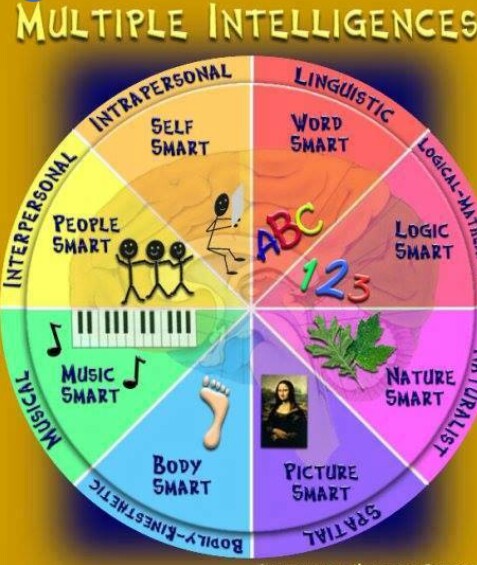
Take the opportunity to find out the range of talents class members bring to the class – and share the ideas about Multiple Intelligence of Howard Gardner.

Using group work in the class

A study based on sport

Personalizing learningis the ideal but the best way to get to the individual is by using group work. Most teachers use group work as part of their literacy and numeracy programmes but group work also works well for study ( inquiry) work as well.

(A link to some advice on classroom management )

Plan out a simple study unit.

Plan out a study unit to introduce to the class to introduce an inquiry approach to learning . TheTreaty of Waitangi might be 

Great mini study

one. Two good mini unit to make use of might be a study based on cicadas or aflax bush in flower. Develop a model of inquiry teaching to make use of during the year.

The units above, or any idea you have chosen, will provide ideas to introduce as part of your language programme – and, if appropriate, maths as well.

Few thought about presentation

Whatever is chosen it is worth helping students present their ideas well – and to encourage them to show gradual improvement  as the year unfolds. Encourage them to improve on their ‘personal best’ in all they do.

Teach simple layout skills

At first students may have little skill in presenting their work well but with time they will gain skill through your teaching ( if you think this is important) and as work is completed display it well. With time create a powerful learning environment.

All students buy a set of exercise books to begin the year. Some schools I know have reinvented these books as portfolios as they ought to show qualitative improvement (the Japanese call this continual small improvement ‘kaizen’). The first days of school is the time to introduce students to this expectation. It is a good idea to 

Simple powerful display

introduce them to simple graphic presentation ideas. It is also a good idea to aim, by Easter, for all books to show improvement.In the schools that have developed their books as portfolios all books are sent home before parent interviews for their comments and later to discuss during interviews.

I appreciate that the ideas presented  above reflect my own teaching beliefs and as such  my advice is to take only ideas that make sense to youI see the classroom as a community of young scientists and artists exploring ideas they want to learn more about – with an emphasis on the immediate environment. 

Think about the ‘message’ your students will take home after the first day


First impressions count and the students’ parents will be waiting to hear from their children what their teacher is like so it is important not to leave it to chance. Put a few good thoughts in their head in the last five minutes of the day!

Have fun during your first week

Teaching the Best Practice Way – Methods That Matter

Its been a while since I’ve posted on my blog but I thought the below was worth sharing – Bruce

Teaching the Best Practice Way
By Harvey Daniels and Marilyn Bizar.
A valuable book for teachers wanting to develop a modern learning environment.

The other day I heard an interview on National Radio expressing the sad fact that a great number of students leave school with no idea about what they want to do.
It made me wonder about what’s the point of school? For me, school ought to be premised on developing the gifts, talents and interests of all students.
Sadly, primary education is still centred around literacy and numeracy, all too often taught as self-contained subjects, and most secondary schools are still based on fragmented subject centred timetables. No wonder so many students leave without know the direction they want to head when they leave school!
 With this in mind I thought it might be useful to share the Seven Best Practices presented in the book ‘Teaching as Best Practice’. by Daniels and Bizar (Stenhouse Publishers USA).
 The books great strength is that it combines a progressive education philosophy (in line with the intent of the NZC) with practical examples of the philosophy in action across all levels of school. The book relates to the ideas of such educators as John Dewey, Jean Piaget, James Beane, William Glasser, Howard Gardner etc. and the examples are based on experiential hands on learning fuelled by the passion of extraordinary teachers. The book is antidote to the standards movement and hyper accountability of past decades.
The Seven Best Practices.
1 Reading as thinking.
 Reading is seen as transcending debates about phonics and is more about reading as thinking embedded in the context of broad and interesting integrative units where students are continually representing to learn in writing, art, and performance. 
Since reading is thinking students need to be provided with rich text worth thinking about, and strategies to help them think. Proficient readers are seen as ‘co-creators of meaning’ Context is everything; it’s about getting students ‘to think like historians, mathematicians, and scientists.  Practical classroom examples in the book clarify the approach.
2 Representing to Learn.
This method is based on the premise that humankind has always had an impulse to represent experience and that this goes beyond using words including strategies that are commonly classified as art, drama, dance and music, and today multimedia

experiences.

There are a range of genres to explore and opportunities to extend and amplify a full range of intelligences (as researched by Howard Gardner). A range of practical examples are covered in the book.
3 Small group Activities.
Students need to be given opportunities to practice democracy and work together to solve problems (the writings of John Dewey). Many structures are provided, and practical classroom examples given to ensure groups work productively.
 Group tasks must be ‘have enough inherent structures to operate automatically, to remain engaged, on task and relevant’.
4 Classroom Workshop.
The authors see the classroom as a workshop a useful metaphor or ‘working laboratories or studios, where genuine knowledge is created, real products are made. and authentic inquiry is pursued.’ 
 In the workshop, learning laboratory classroom students choose individual or small group topics for investigation, inquiry, and research using long chunks of classroom time to do this.
 Teachers take on new roles modelling thinking, conferencing, offering well timed compact mini lessons and providing help as required. In the early days of workshopping teachers keep the time short lengthened as students become more independent. In workshops students learn to act, plan and question like a scientist. Classroom examples clarify the approach.
5 Authentic Experiences.
For many students schools need to get real and many people from John Dewey onwards have argued for school to be more lifelike, more genuine, more authentic.
 Just as in real life these experiences are inherently multi-disciplinary and messy problems; these problems need to be identified, complexity needs to be faced, and solutions found. Inquiry into authentic questions need to be generated from student experiences. Students need to become researchers, gathering data, asking questions, conducting experiments, recording information and discovering

answers.

This kind of inquiry becomes possible when the conditions that support Best Practices are in place; when the classroom is a community with students eager to take responsibly for hands on experiential learning and with opportunities to express what they are thinking,  and able to use technology to advance their inquiries. 
The authors believe ‘that technology can leverage some of the best teaching if used widely ‘and that it can ‘play a lead or supporting role’ once the appropriate pedagogy is in place.
 Once again a range of practical examples are provided.
6 Reflective Assessment.
Students need to be helped become self-monitoring, self-regulating, able to be in control of their own learning, able to set ambitious goals, keep their own records, adjust their efforts, make good decisions and grow by healthy and measured feedback.
This is in contrast to the toxic current accountability movement which the authors state simply correlates to student socioeconomic status of students, is inconsistent with what is known about how students learn and distort teaching often resulting in streaming, tracking and ability group segregation. A range of practical alternatives are provided.
7 Integrative Units
The writers save the best for last. 
The last best practice blends all the other six methods into days or weeks of rich, cross disciplinary investigations driven by student interest and scaffolded by teachers who model, coach, and manage the inquiry process
With integrative units teachers step emphatically out of single subject instruction and

lead their students into inquiries as complex and multi-disciplinary as the real issues grown-ups face as workers, parents and citizens.

Teachers believe that students can learn subject matter (including basic skills) amid holistic, integrated experiences. This approach doesn’t mean that traditional subjects are disrespected or abandoned. On the contrary, as James Beane writes, ‘the disciplines of knowledge are useful and necessary allies of curriculum integration with knowledge being called upon to support student investigations as required.
Conclusion.
Nome of the above will be new to progressive primary teachers and those secondary teachers busy transforming their schools, often in new purpose built environments.
 For many the book will be a practical inspiration to confirm or transform their teaching.
If widely applied in our school system students will leave with their talents, interests and passion tapped and amplified, equipped with appropriate learning skills, and will not leave schools not knowing what to do with their future – they will have seen the point of their schooling.

A lost voice for creative education – time to call it a day?

Time to call it a day?
Readings week 2 July 1980
Our Leading-Learning blog has a long history.
 It began as Primary Arts Magazines set up by Wayne Morris and Bruce in 1980. Over 25 editions were printed. They were hand compiled and posted and when subscribers got over 500 it was all too much.

Some of the 25 Primary Art Magazines


The premise of the magazine was to share the ideas of creative teachers – teachers who were developing student centred programmes with an emphasis on using the local environment, the importance of the creative arts and develop stimulating room environments featuring student work.

Wayne and Bruce then developed a website in the 90s with an associated e-zine which was sent out to 4000 members – this worked well until, with a change of web master the e-zines were rejected as spam by many schools.
At this stage Bruce established the Leading–Learning blog in 2004 and in later years Allan Alach joined him in this. 1569 blogs have been posted with a total of 2 million visits.

Let’s do it!


Tomorrows Schools have had a corrosive effect on school collaboration
End of sharing

Public schooling has been distorted by the competitive ethic of self centred Tomorrows Schools and, in particular the corrosive effect of National Standards.

We now feel that it’s time to call it a day as we no longer have any real contact with schools and we also feel that schools have been hi-jacked by standardised teaching, an over emphasis on literacy and numeracy (nine years of National Standards has all but killed real creativity in primary schools). We wrote about this sharing Professor Peter OConner’s view in our last blog.

The last straw.Above a impersonal school report with a antiquated narrow focus from a large school. The sign of a system gone terribly wrong. What gifts and talents have been developed? What key competencies have been identified and amplified?

Matt Damon teacher mother – see report above!!!
It is an interesting challenge to reflect on the influences that have contributed to your educational philosophy – this would make an interesting staff meeting topic?


 Bruce’s creative education journey

Bruce has had a long career as a school adviser beginning in the 60s – first in science then in art. Bruce and Allan Alach were both influenced by philosophy expressed in the inspirational book In the Early World written by Elwyn Richardson.  Thankfully the book has been recently reprinted by the NZCER and we recommend all schools buy a copy.
Some of Bruce’s publications

As an adviser, in the mid-sixties, Bruce was influenced by teachers, mainly in small rural schools, who were implementing similar ideas to those written about by Elwyn. Central to this creativity (it was the 60s!) was the influence of Dr Beeby who had introduced a developmental teaching philosophy post WW2.  Also behind such ideas was the philosophy of American educator JohnDewey.

TheArt Advisers, established by Dr Beeby, assumed an important role in spreading the ideas of creative teachers. The art advisers ran related arts programmesthroughout New Zealand, one of which Bruce attended. The arts are vital to ensure students a positive sense of self – through art, language, music and dance.
Teachers in rural schools introduced the first integrated programmes moving away from the heavily timetables programmes, with an emphasis on literacy and numeracy, of the day. Schools, under the pressure of National Standards, have move back to these programmes.


Four other influences.
The Taranaki Findings

Firstly, the English child centred primary schools (sadly lost under the pressure of the National Curriculum, testing and league tables) that Bruce experienced while teaching in England in 1969. This experience taught Bruce about the importance of slowing the pace of student work to develop quality, teacher displays to attract student curiosity and of displaying students work.  Bruce worked with a group of Taranaki teachers in the 70sintroducing the open ended integratedinquiry programmes using the Nuffield Junior Science Project as a resource.

The second influence was the open education movement from the United States which had a similar student centred inquiry philosophy and led to the development of open plan schools. John Holt’s books HowChildren Learn and How Children Fail were key books and more relevant than ever.

 The third influence came from the lateKelvin Smythe and his holistic developmental approach. Kelvin believed strongly in the importance of the affective in education and deplored the current fetish of objectivity.

The final influence was Bruce’s involvement with the University of Waikato School of Education Learning in Science Project – essentially an inquiry model that valued students’ prior ideas and set out to challenge them.
It was an amalgam of the above ideas that Bruce developed as a classroom teacher, school principal and later working as a school adviser for Massey University School of Education and then independently throughout NZ and internationally. At this point Bruce met up with Allan Alach, then a school principal, who shared similar ideas. 


The centrality of the creative classroom teacher.
John Holt gives up on schools

Central to this philosophy is the centrality of the creative classroom teacher to any real lasting innovation – a position that has become almost untenable under the last decades of compliance and standardisation. Time to call it a day?

In the late 70s one of our open education ‘gurus’John Holt, (author of How Children Learn and How Children Fail), disappointed us by giving up on schools ever being transformed in his book ‘Instead of Schools’.
It didn’t deter us them but we have now almost reached the same conclusion. Almost, because we know there are still teachers out their battling on, and with the change ofgovernment, maybe the spirit of the 2007New Zealand Curriculum will be implemented. Maybe? We have done our best.

What has really changed the past three decades – not much in our opinion – that is if you ignore the false promise of modern technology which is no ‘silver bullet’ and more often a distraction an also the recycling of open plan schools of the 70s with modern learning environmnts.

Not Literacy and numeracy and not tiresome assessment


The other day Bruce was asked what would he do
if he had a magic wand to transform schools?


The first thing would be to ask the question of what’s the point of school? And what teaching beliefs would underpin such a school?

Bruce has always believed the challenge of schooling was to identify, develop, amplify and enhance to gifts and talents of all students.  The word education comes from ‘to bring the gifts out’. This view is reflected by Sir Ken Robinson’s quote ‘creativity is as important as literacy and numeracy’ and also Guy Claxton who has said ‘learnacy is as important as literacy and numeracy’. 
Making certain students’ developed positive attitudes towards all areas of learning would need to be assured.
The role of school is to create those conditions that make students want to learn; not have to learn but want to learn more about self, others, and the world. The teacher’s role is to help the learner

forge connections between what he or she wants to know and what a learner wants to learn.

What if we started with the premise that school could be the most interesting place in a young person’s life? The challenge is to create experiences and contexts in classrooms where students can discover things they don’t know they love by implementing project that spur creativity, ownership and relevance.
Learning experiences would need to feature real experiences

through the senses and that information technology can be integrated in such learning but that it is no ‘silver bullet’ in itself. 

Projects would be based around students’ questions, value their current theories, and challenge

Valuing student questions and theories

them to consider new views. This does not leave studies to students to decide – the teacher’s role is best summed up by Jerome Bruner ‘teaching is the canny art of intellectual temptation’.

Literacy and numeracy would be learnt through real contexts and help given as an when necessary.The current emphasis has not improved our reading scores on international tests and maths still creates a feeling of maths anxiety. So much current teaching is based on the premise that without teachers students wouldn’t learn – time to create the conditions and trust students do what they do naturally – learn!

Literacy and numeracy need to be re-imagined as foundation skills best learnt in real contexts .

The artistry of a creative teacher.

Bruce believes that the feeling from completing an excellent piece of learning – exceeding ones personal best – in any Learning Area is the most powerful motivation of all.  Helping students who exhibit lack of ability/interest achieve a sense of pride in any activity is the artistry of a creative teacher – a teachers who is able to slow the pace of work to allow positive interactions


Bruce also believed we do not have an ‘achievement gap’ but more an ‘opportunity gap’ – the school’s role is to create the conditions to give every learner the opportunity to learn through having positive experiences (this would mean the banning of ability grouping). 
The teachers appointed would need to align all their interactions with their students behind such ideas. Teachers would be selected also for their diverse set of interests because Bruce believes that we learn from the company we keep areas of learning would need to be assured.

An exciting room
The total environment is the ultimate teacher.
Bruce sees the total culture developed as the best teacher. Establishing a ‘tempting’ environment to attract students’ curiosity is the challenge for teachers.  To achieve this the schools needs to be envisaged as an amalgam of an artist’s studio, a science/technology lab, a media centre, drama and music areas, and plentiful areas to exhibit and display student creativity – an educational Te Papa – where students and teachers work together in teams solving problems and displaying their results for all to see.
And as for assessment – just check out the portfolios of the students’ involved. The concept to be valued is for every student to better their own ‘personal best’.


Imagine how schools would be transformed if such ideas were implemented?
Bruce Hammonds
Allan Alach
Current education


Display of work

This week’s Readings
Professor Peter O’Connor’s article about the killing of creativity.
Educational Transformation.
The importance of the arts in the development of the self
Most important question 

http://bit.ly/2r1R539   

Helping the students answer the question who am I?
How to organize the school day in a 21st Context

The need to slow the pace of work the key to quality
It’s our responsibility to keep the creative arts alive
Schools must ensure that the creative arts aren’t squeezed out and that the temptation to narrow the curriculum doesn’t win
Schools are rethinking classroom design to encourage collaboration, creativity
In which Pooh looks for a 21st Century Education Part 3
Another instalment from Kelvin Smythe’s ATTACK series that he completed just before he died:
The pure, uncomplicated expression of education values that follows has its origin deep in our

culture. But, particularly from the mid-thirties, there was a coming together of events, ideas and people including the depression, the election of a Labour government, the political education leadership of Peter Fraser, the ideas of John Dewey, progressive education thinkers from England, the influence of New Zealand educationists like Clarence Beeby and, tellingly for what follows, Gwen Somerset, a New Zealand-born primary teacher and infant mistress.’

http://bit.ly/2XEC2QF

Maybe, one day,  all schools will truly be student centred and creative – developing the gifts and talents of all students.


The need for creativity in our schools – time to be centre stage again

Real creativity
 – the missing element in education
Readings 24th June 1980

We are coming to the thought that we are speaking to a minority in our efforts to encourage an education system that places creativity and the creative arts central  to teaching and learning.

Confirmed by views seen recently on TV

The views of classrooms on show (with a couple of exceptions) through the teachers’ strike

indicated to us a system featuring an emphasis on literacy and numeracy with work on display more to do with teachers than celebrating student creativity.

 As well, postings on the Teachers’ Facebook page seem to illustrate creativity more as decoration often clone like in appearance.  And the issue of workload seems to relate to an obsession with testing, assessment and associated documentation once again focused around literacy and numeracy – areas that seem to take up most of the morning leaving little time for equally important Learning Areas. And to make it worse associated with demeaning ability grouping.

Let’s leave current formulaic teaching models.

Formulaic teaching

Formulaic teaching seems entrenched. WALTs, learning intentions, success criteria, the over use of feedback, the growing emphasis on phonics indicates a teacher orientated approach to learning, one in which creativity is at risk.

Where is the emphasis on developing the gifts and talents of students?

We do recognize areas that value student creativity such as: play based learning (with its similarity to 1950/60s developmental teaching); the concept of student agency; place based learning; Project Based Learning; and personalized learning (which, however, has been captured by ‘thin’ or fragile’ learning via Google) and the potential of Flexible Learning Environments.

Where has the creativity gone?

Professor Peter O’Connor (Faculty of Education Auckland University) has written “Schools as we know them were originally designed at the same time as mass industrialization began. Not

Prof Peter O’Conner

surprisingly factories and schools centre around the testing and standardization of the products they make and value conformity and uniformity.

The need to take risks

Creativity in these environments shrivels because its fundamental includes a willingness to take risks, to be curious, to be playful with ideas and to consider possibilities to make something not seen or imagined before. This approach has never been a feature of New Zealand schools except in isolated instances and for a brief period in the 1950s, when progressive education philosophies were introduced.

Art and well being

The vitality of schools at the time was based on the twin ideas that the arts train the imagination, and the social imagination is vital for social progress, social justice and national wellbeing. There was a belief that the arts and education were a strong foundation stones for a strong democracy.

The need for creative empathetic citizens

It was understood that one of the school’s primary functions was to create critical, creative empathetic citizens as a safeguard against the rise of extremism.”

Creativity killed by National Standards and STEM

O’Connor continues, “I believe nine years of National Standards essentially killed off creativity in New Zealand schools. The overriding focus on science, technology, engineering and maths (STEM) was highly effective in dismantling the arts across the whole education system…”.

“The arts curriculum is the vital tool for teachers to be creative with their children and be creative themselves.”

We couldn’t agree more with ProfessorO’Connor
.
Sir Ken Robinson – a similar challenge

Sir Ken Robinson writes a similar story about the need to move away from current standardization. He writes one role of education is to help people develop their natural talents and abilities’. ‘We have the opportunity to rethink the whole ecosystem of education. We need to reinvent schools…..We need to stir the motivation , vision, optimism and political commitment’.

The Modern Learning site – and Seymour Sarason

The Modern Learning site always provides valuable inspiration for teachers willing to move into creative teaching. Their writers often quote Seymour Sarason about his need for the artistry of teaching who says teachers need to create ‘those conditions that make students want to learn;

not have to learn but want to learn more about self, others, and the world…..you seek to help the child forge connections between what he or she wants to know and what the child wants to learn’.

What if ….

So, the Modern Learners write ‘what if we started with the premise that school could be the most interesting place in a young person’s life given our curious, connected, self-directed modern learners are truly capable of doing what was previously unimaginable.’

 From a New Zealand site: Number Agents

In contrast New Zealand site Number Agents write, ‘we need to stop constantly measuring children against so called benchmarks. Measuring and gathering data does nothing to help the child’s growth, but does take up time that could instead be used for fostering and inspiring the joy of learning.

An old Rural Adviser once said ‘teachers have two important attributes, their energy and their time and if they waste in on b/s they can’t teach’.

The artistry of the creative teacher – Modern Learning site

‘The question is’, Gary Stager writes in a Modern Learning posting, ‘how can we create

experiences and context in classroom where kids can discover things they don’t know they love? This is done by implementing good projects that spur creativity, ownership and relevance’

One of our favourite quotes comes from Jerome Bruner, who says ‘teaching is the canny art of intellectual temptation’.


.Another favourite writer of ours is Frank Smith who writes, ‘we become like the company we keep, we learn to be like them .. the identification creates the possibilities of learning. All learning pivots on who we think we are, and who we see ourselves as capable of becoming’.

A metaphor for a classroom.

We see classrooms as an amalgam of a museum, art studio, media centre, laboratory and exhibition gallery populated by interesting talented teachers


In such a rich and challenging environment students will learn – it’s what they do.

No need for the current tiresome assessment models – the work the students complete, their portfolios, will be evaluation enough.

Bruce Hammonds and Allan Alach


This weeks readings


Professor Peter O’Connor – the killing of creativity in our schools

THIS IS A MUST READ ARTICLE.

‘I believe nine years of National Standards essentially killed off creativity in New Zealand schools. The overriding focus on science, technology, engineering and maths (STEM) was highly effective in dismantling the arts across the whole education system.’
Sir Ken Robinson – time to personalize education

Standardisation broke education. Here’s how we can fix our schools. “The movement towards personalisation is already advancing in medicine. We must move quickly in that direction in education, too”’
Critically Endangered: The Art of Teaching from Longworth Education site ( NZ)

In the face of so much science, a critical but overlooked, component to teaching is becoming increasingly rare in the classroom – creativity.  An area that is not easily quantified into numerical data, inputs and outputs, the use of creativity by a classroom teacher to ensure a level of joy in learning and teaching extends the science of teaching into the art of it.’
The Benefits of Cultivating Curiosity in Kids

‘Despite the centrality of curiosity to all scientific endeavors, there’s a relative dearth of studies on the subject itself.

Fortunately, scientists are actively unraveling this concept and, in the process, making a convincing case that we can and should teach young minds to embrace their inquisitive nature.’

Teachers need to get students involved in open studies with no known answers

Here are ten criteria for ‘wicked problems’”.
This is Why We Must Be Teaching With Imagination, and How to Do It

‘Imagination is what stays when teachers are gone from their students’ lives. It’s what students have taken from a creative classroom and into real life. While basic knowledge and facts are important building blocks, imagination is the synthesis of that knowledge. It’s the vehicle that gets learners from point A to point B on their own.’

In which Pooh looks for a 21st Century Education Part 2

Another instalment from Kelvin Smythe’s ATTACK series that he completed just before he died:
‘Except as a chronological expression, 21st century education is nothing special, remaining part of a continuity that, despite considerable twisting and turning, remains just that, a continuity; the technological disruption predicted for that chronological expression being just a further example of ideological disruption that is always there or near in the sensitive and value-laden area of school education.’
Children need art and stories and poems and music as much as they need love and food and fresh air and play.

‘But if you don’t give a child art and stories and poems and music, the damage is not so easy to see. It’s there, though. Their bodies are healthy enough; they can run and jump and swim and eat hungrily and make lots of noise, as children have always done, but something is missing.’
For more information about the need for educational transformation, creativity and talent development in earlier blogs:

https://leading-learning.blogspot.com/search?updated-max=1980-06-03T16:30:00%2B12:00

Activities to begin the school year

Teaching is one profession where there is no shallow end.
 From day one you are presented with up to thirty plus young individuals for you to shape into a learning community; and every class community will be different. Even experienced teachers have 

No shallow end for new teachers.

second thoughts about starting a new class .

This blog shares some ideas to select from..
The challenge for teachers is to think up ways to tap into their students innate sense of curiosity. of curiosity. Educationalist Jerome Bruner has written that teaching is ‘the canny art of intellectual temptation.Thankfully students are easily trapped by their innate 
curiosity if what is put in front of them appeals
First impressions count and the students’ parents will be waiting to hear from their children what their teacher is like so it is important not to leave it to chance. Dress well!
Develop a class treaty


Teachers will be planning their first few days now. Wondering about routines to establish and behaviours they want to establish.

Treaty of Waitangi

 One good idea is to undertake a mini unit around the Treaty of Waitangi and use this as an opportunity to develop a class treaty outlining behaviors required of both students and the teacher.

There is a new School Journal that provides an excellent reference

My goals for the year.

An idea some teachers use is a letter to parents about your goals for the year – but if this is done it needs to be done with input from your team leader or principal. At least have something prepared to introduce yourself to your class . Students will be very curious to learn about their new teacher

Catching an eel

Best holiday experience

Another  idea is to share with your class one of your holiday experiences and then get them to do the same.  They could ‘mind-map’ or list all the neat things they did and pick one to expand on. This activity will give you an idea of their writing and handwriting skills

If you do the above them students could add a drawing – one again get them to focus on exciting event.

Crossing the wire bridge


Observational task – the power of drawing

Learning to observe is an important and overlooked skill. You could bring in a simple leaf for the class to draw. This is an ideal means to encourage the class to work carefully – many children spoil work by rushing.
Nature walk

With the weather so great do some nature walks.

What are your new classes attitudes towards areas of learning?
The first few days are a good time to assess your new classes attitudes towards areas of learning. Prepare a list of learning areas of aspects of learning and get  individual class members to indicate their attitudes towards items with a 1 to 5 scale – from 1 love it to 5 dislike it.. This would best be drawn up by all teachers. The results will give you an idea of areas you need to change for various individuals. Be interesting to use the same survey at the end of the year.  Do the survey with your class as if you were their age – and tell them how you have improved your attitudes since then – or areas you still want to improve.

Exploring your students; mindsets

If you know about the mindset research of Carol Dweck you could add to your survey  add : 

Well worth the read

1 Do you think were are born as smart as you are ever going to be ( ‘brains’ or sports ability) and there are some things you just can’t do ? Or 

2 Do you think you can get better at anything if you try hard and practice? 

The first is a ‘fixed mindset’.Low ability students get their lack of ability affirmed at school ( through ability grouping, national testing or streaming) and high achievers ( often girls) do not risk their status by new areas of learning becoming risk averse. Those with a ‘growth mindset’ just have a go at anything believing in effort and focused practice and see not succeeding as a challenge.This ‘growth mindset’ underpins the New Zealand Curriculum; ‘ have a go kids’ 

Share your stance as a teacher with your class.

An idea to work on is to  ensure your class appreciate your stance as a teacher – what you stand for as a teacher.

How do children in your class think they learn?

What are your strengths


Discuss with your class how they think they learn. Discuss with your class what they have learnt recently and how they went about it.

What talent do individual bring to the class?

Take the opportunity to find out the range of talents class members bring to the class – and share the ideas about Multiple Intelligence of Howard Gardner.


Using group work in the class

A study based on sport

Personalizing learningis the ideal but the best way to get to the individual is by using group work. Most teachers use group work as part of their literacy and numeracy programmes but group work also works well for study ( inquiry) work as well.

(A link to some advice on classroom management )

Plan out a simple study unit.
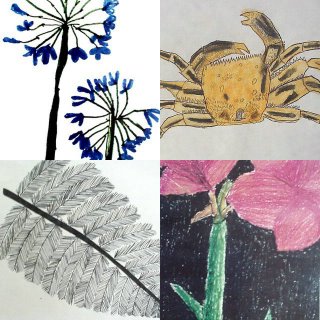
Plan out a study unit to introduce to the class to introduce an inquiry approach to learning . TheTreaty of Waitangi might be 

Great mini study

one. Two good mini unit to make use of might be a study based on cicadas or aflax bush in flower. Develop a model of inquiry teaching to make use of during the year.

The units above, or any idea you have chosen, will provide ideas to introduce as part of your language programme – and, if appropriate, maths as well.

Few thought about presentation

Whatever is chosen it is worth helping students present their ideas well – and to encourage them to show gradual improvement  as the year unfolds. Encourage them to improve on their ‘personal best’ in all they do.

Teach simple layout skills

At first students may have little skill in presenting their work well but with time they will gain skill through your teaching ( if you think this is important) and as work is completed display it well. With time create a powerful learning environment.

All students buy a set of exercise books to begin the year. Some schools I know have reinvented these books as portfolios as they ought to show qualitative improvement (the Japanese call this continual small improvement ‘kaizen’). The first days of school is the time to introduce students to this expectation. It is a good idea to 

Simple powerful display

introduce them to simple graphic presentation ideas. It is also a good idea to aim, by Easter, for all books to show improvement.In the schools that have developed their books as portfolios all books are sent home before parent interviews for their comments and later to discuss during interviews.

This last link provides a summary of the ideas presented above.

Advice – only use the ideas that make sense to you.

I appreciate that the ideas presented  above reflect my own teaching beliefs and as such  my advice is to take only ideas that make sense to youI see the classroom as a community of young scientists and artists exploring ideas they want to learn more about – with an emphasis on the immediate environment. My emphasis is on inquiry learning with literary and numeracy as much as is possible seen as ‘foundation skills’. I am not sure many school have the same emphasis.

The class as a learning community

Developing this learning community is the real challenge for any teacher. Good schools will provide structures, organisations and curriculum guidance to assist but it always worth having ideas up your sleeve.

Think about the message your students will take home after the first day


First impressions count and the students’ parents will be waiting to hear from their children what their teacher is like so it is important not to leave it to chance. Put a few good thoughts in their head in the last five minutes of the day!

It is worth keeping in mind that the New Zealand Curriculum has its vision for all students to be ‘confident life long learners’, for them to have the necessary key competencies to do so – to be ‘seekers, users and creators of their own knowledge’.

Advice for new teachers!


Have fun during your first week

A link to some quotes about learning to reflect on.

Good advice is regularly visit other classrooms to see what they are doing. They will be pleased to assist you and you will soon find teachers with experience and ideas to help – you need to ‘seek, use and create your own knowledge’ as it says in the NZ Curriculum.

Some quotes to think about before beginning the school year.


Something to think about before you return to school

Short quotes I’ve collected using the screensaver facility on my smart phone I think they are worth a quick read – they may confirm ( or challenge ) your teaching philosophy.  Obviously I’ve chosen quotes that  reflect my own view. Unfortunately I didn’t think to note the authors or source of the quotes. The Modern Learners site is a great source of quotes.


About current assessment

There are those that seem to think that knowledge is no longer important as it can be accessed through the internet but I, for one, don’t agree.
Many current ideas have a long history. For me John Dewey is as relevant as ever and possibly the best book on children learning as a community of scientists and learners is Elwyn Richardson’s In the Early World first published in the 60s and recently republished by the NZCER
Now is the time to see the schools role as one of identifying and nurturing student talent 
Time to see identifying and nurturing of student talent as the number one role of the school
Giving the students’ voice and choice
What happens to students’ innate curiosity – their desire to make sense of their world?
An excellent quote from Modern Learners. The teachers’ role is to create the conditions for students to do their own learning. As Jerome Bruner says  the teachers’ role is ‘the canny art of intellectual temptation’
How might we  provoke learning?
Promoting and provoking curious minds.
The inquiry model – it’s not ‘rocket science’


When teachers push kids too far, when it makes no sense to the learners, they learn to dislike what is being taught.

Learning from traditional Maori culture.

Traditional Maori approach to learning
Time to leave pre-determined formulaic  teaching of the past decades – time to implement the spirit of the 2007 New Zealand Curriculum and , as it says, to ensure all students are ‘ active seekers, users and creators of their own knowledge’
Great teaching according to Seymour Papert
Learning out of school   (WEIRD Western education)
An inquiry class without explicit literacy and numeracy teaching. Yes!