Explanation of Mediation and Mediation Studies for Early Academic Researchers

Mediation is a statistical concept that plays a crucial role in understanding causal mechanisms that underpin relationships between variables. Early academic researchers need to understand the nuances of mediation to enhance their research rigour and depth. Mediation studies examine how one variable (the mediator) transmits the effect of an independent variable (predictor) on a dependent variable (outcome). This relationship can be visualized through a simple model where:

Independent Variable (X): The variable that is manipulated or categorized; Mediator (M): The variable that explains the process through which X influences Y; and Dependent Variable (Y): The outcome variable affected by both X and M.
Mediation studies are vital for several reasons:
1. Causal Inference: By identifying mediators, researchers can draw more informed conclusions about causal pathways, moving beyond mere correlation to establish potential mechanisms.
2. Theory Development: Mediation analyses can support or refine existing theories by demonstrating how specific processes contribute to observed relationships.
3. Intervention Design: Understanding mediators can inform the development of interventions aimed at changing an independent variable to produce desired outcomes. For example, if income is identified as a mediator between education and job satisfaction, interventions aimed at increasing income could be strategically targeted at those with lower educational attainment.
There are several methodologies for conducting mediation analyses, including the Baron and Kenny (1986) method, the Sobel test, and modern approaches using structural equation modeling (SEM). The Baron and Kenny Approach involves a series of regression analyses to establish mediation, while the Sobel Test calculates the standard error of the indirect effect and tests whether this indirect effect is significantly different from zero.

Skill Development in a Theoretical Framework for Early Academic Researchers

 Skill development is a crucial aspect of the academic journey, especially for early-stage researchers who are navigating the complexities of their fields. A theoretical framework that encompasses skill development provides a structured approach to understanding how various competencies can be cultivated, assessed, and applied in academic research. Theoretical perspectives on skill development include Constructivist Learning Theory, situated Learning Theory, and Competency-Based Education. Constructivist learning theory emphasizes the importance of active engagement with new information, integration with existing knowledge, and application in practical scenarios. This approach emphasizes the importance of mentorship, collaboration, and active participation in research activities. Situated learning theory suggests that learning occurs within a specific context and is inherently tied to the social and physical environment. For early researchers, engaging in collaborative projects, attending conferences, and participating in research groups can provide rich contexts for skill acquisition.

Competency-based education focuses on the mastery of skills and competencies rather than the mere completion of coursework. In the context of early academic research, this framework encourages researchers to identify specific skills necessary for their fields and seek out opportunities to develop and demonstrate these competencies. Assessment methods, such as portfolios or performance evaluations, can help track progress and ensure that researchers are adequately prepared for their academic careers. Practical applications of the framework include skill assessment and identification, targeted training and workshops, and mentorship and collaboration. Self-assessment helps early academic researchers identify their current skill levels and areas for improvement, while targeted training programs and workshops address the specific needs of early researchers. Mentorship relationships with experienced researchers offer guidance, insights, and constructive feedback, enhancing the learning process and exposing researchers to diverse methodologies and perspectives. In conclusion, a theoretical framework for skill development in early academic researchers is essential for fostering a supportive environment that encourages continuous learning and growth. By prioritizing skill assessment, targeted training, and mentorship, academic institutions can empower early researchers to thrive in their academic pursuits.

Unlocking Potential: The Power of Education

Education is the cornerstone of personal, social, and economic development. It empowers individuals, fosters growth, and transforms lives. In today’s rapidly changing world, the importance of education cannot be overstated.
Benefits of Education:
1. _Personal Growth_: Education helps individuals develop critical thinking, problem-solving, and communication skills, leading to increased confidence and self-awareness.
2. _Economic Opportunities_: Education opens doors to better job prospects, higher earning potential, and economic mobility.
3. _Social Mobility_: Education bridges the gap between social classes, promoting equality and social justice.
4. _Innovation and Progress_: Education drives innovation, creativity, and technological advancements, propelling societies forward.
5. _Improved Health and Well-being_: Education leads to better health outcomes, reduced poverty, and increased life expectancy.
6. _Empowerment and Autonomy_: Education enables individuals to make informed decisions, take control of their lives, and participate in their communities.
7. _Social Cohesion and Understanding_: Education promotes tolerance, empathy, and global citizenship, fostering a more harmonious and interconnected world.
Investing in Education:
1. _Individual Investment_: Prioritize education for personal growth and development.
2. _Societal Investment_: Governments and organizations must allocate resources to support education infrastructure, teachers, and programs.
3. _Global Investment_: International cooperation and funding can bridge educational gaps and promote global progress.
Conclusion:
Education is the key to unlocking human potential, driving progress, and creating a better world. By recognizing its importance and investing in education, we can empower individuals, transform communities, and shape a brighter future for all.

Understanding Empirical Study Research as Earlier Researchers

 Empirical studies are crucial in early research as they provide a robust framework for gathering data and drawing informed conclusions. They are grounded in observation and experimentation, allowing researchers to gather data through various means such as experiments, surveys, and direct observations. This reliance on data drives the inquiry process, fostering a cycle of hypothesis formulation, testing, and revision based on the results obtained. The role of empirical studies in early research is to establish credibility, which is essential for gaining acceptance within the academic community and influencing policy or practice. It also helps in refining research questions and hypotheses, identifying gaps in knowledge, and formulating specific, testable hypotheses. This iterative process enhances the quality of research design and ensures that investigations are directed toward answering pertinent questions that address real-world issues. Empirical studies also facilitate generalization, allowing researchers to identify patterns and trends within data that can be generalized to broader populations. This is especially important in fields like social sciences, where understanding human behaviour in diverse contexts is critical. Early empirical research helps delineate the parameters of these generalizations, ensuring that subsequent studies build on a solid empirical foundation. Cultivating methodological rigour is vital in the early stages of research, as it sets a precedent for maintaining high standards throughout the investigation. Adhering to empirical methods fosters an environment of accountability and transparency, which is indispensable in scholarly work. Lastly, empirical studies illuminate practical challenges that may arise in real-world applications. By engaging directly with the subject matter, researchers can identify obstacles and limitations that theoretical frameworks might overlook, ensuring that research outputs are relevant and can effectively inform practice, policy or further inquiry.  

Understanding Position and Discourse Research: A Necessity for Early Researchers

 Position and discourse research are two distinct methodologies in academia that significantly impact the outcomes and implications of scholarly work. Position research emphasizes the researcher’s stance or perspective concerning the subject matter, exploring how their background, experiences, values, and beliefs inform their understanding and interpretation of a given topic. This approach is particularly important in fields such as social sciences, humanities, and qualitative research, where the subjective nature of knowledge production is acknowledged. In position research, the researcher explicitly states their positionality, which can include their cultural, social, and academic backgrounds, as well as their motivations for engaging with the topic. This transparency allows readers to critically assess how the researcher’s biases may influence the research findings and conclusions. By acknowledging their position, researchers can foster a more nuanced and reflexive understanding of their work, enriching the overall discourse. Discourse research focuses on how language and communication shape social realities. It examines how language constructs meaning, influences perceptions, and reflects power dynamics within a society. Discourse researchers analyze texts, spoken communication, and various forms of media to uncover underlying ideologies and social structures. This research approach is often employed in fields such as linguistics, sociology, and media studies, where understanding the interplay between language and society is paramount. Key differences between position and discourse research include focus and objectives, methodology approaches, and implications for interpretation. Position research encourages researchers to reflect on their biases and how these may shape their interpretations, while discourse research demands an analysis of how language constructs meaning and power, leading to insights into societal norms and hierarchies. Recognizing these distinctions will empower early researchers to produce meaningful and impactful research.  

Understanding the Differences Between Theoretical and Positional Research: A Necessity for Early Researchers

Understanding the differences between theoretical and positional research is crucial for early researchers as it enhances the quality of research and helps develop a solid foundation for future investigations. Theoretical research focuses on developing, testing, and refining theories, often grounded in existing literature and seeking to expand upon established paradigms or concepts. It employs various methodologies, such as literature reviews, conceptual analysis, and mathematical modelling, to analyze existing theories and frameworks to identify gaps or inconsistencies. The outcomes of theoretical research typically manifest as new theories, models, or frameworks that can be tested through empirical research. This type of research provides a theoretical basis for understanding complex phenomena. On the other hand, positional research is more focused on applying theories to specific contexts, often driven by the researcher’s perspective or stance on a particular issue. It aims to understand and interpret specific situations or phenomena within a particular context, often influenced by their values, beliefs, or experiences. Positional research often employs qualitative methodologies, such as case studies, interviews, and ethnographic studies, to immerse researchers in the context they are studying, gathering insights and perspectives that inform their understanding of the phenomenon. Understanding these differences is vital for early researchers as it helps select the appropriate research method for a given study, aids in the critical evaluation of existing literature, and fosters a more nuanced understanding of the research process. Both theoretical and positional research contribute to the advancement of knowledge in different yet equally important ways. In conclusion, understanding the differences between theoretical and positional research is essential for early researchers to effectively navigate the landscape of academic inquiry, contribute meaningfully to their fields, and lay the groundwork for future exploration.  

Excellence in Education: Top Universities in Africa

Africa is home to some of the world’s most prestigious and renowned universities, offering high-quality education and research opportunities. Here are some of the top universities in Africa:
1. University of Cape Town (South Africa) – Ranked in Africa, known for its academic excellence and research output.
2. University of the Witwatersrand (South Africa) – A leading research university, recognized for its contributions to science, technology, and the humanities.
3. University of Pretoria (South Africa) – A top-ranked university, offering a wide range of academic programs and research opportunities.
4. University of Nairobi (Kenya) – A premier institution in East Africa, known for its strong programs in technology, engineering, and agriculture.
5. University of Ghana (Ghana) – A leading university in West Africa, recognized for its academic excellence and research output.
6. Cairo University (Egypt) – A prestigious institution in North Africa, offering a wide range of academic programs and research opportunities.
7. University of Dar es Salaam (Tanzania) – A top-ranked university in East Africa, known for its strong programs in science, technology, and the humanities.
8. Stellenbosch University (South Africa) – A leading research university, recognized for its contributions to science, technology, and the humanities.
9. University of Ibadan (Nigeria) – A premier institution in West Africa, known for its academic excellence and research output.
10. Addis Ababa University (Ethiopia) – A leading university in East Africa, recognized for its strong programs in science, technology, and the humanities.
These top universities in Africa offer world-class education, cutting-edge research opportunities, and a platform for students to excel and make a positive impact on the continent and globally.

Empowering African Learners: 10 Popular Online Education Sites

Introduction
Africa’s education landscape is transforming, and online learning is at the forefront. With the continent’s growing internet penetration and mobile adoption, online education platforms are bridging the knowledge gap and expanding access to quality learning resources. Here are 10 popular online education sites in Africa:
1. _Coursera_: Partners with top universities to offer courses and degree programs.
2. _edX_: Provides massive open online courses (MOOCs) from leading institutions.
3. _Udemy_: Offers a vast array of courses on various subjects, including business, tech, and creative skills.
4. _Khan Academy_: Free online resources for subjects like math, science, and programming.
5. _OpenLearn_: The Open University’s platform for free online courses and degree programs.
6. _FutureLearn_: UK-based platform offering courses from top universities worldwide.
7. _Eneza Education_: Kenyan-based platform providing interactive learning materials and assessments.
8. _Andela Learning_: Nigerian-based platform offering courses and mentorship in tech skills.
9. _Tuteria_: Nigerian-based platform connecting learners with qualified tutors for online lessons.
10. _Varsity Tutor_: South African-based platform providing online tutoring and academic support.
Conclusion
These online education sites are revolutionizing learning in Africa, providing accessible, affordable, and quality educational resources. As internet access continues to grow, online education will play an increasingly vital role in empowering African learners and bridging the skills gap.

Media's role in spreading awareness about energy rating,

*Media’s Role:*
– Raising awareness: Media campaigns can increase public awareness of energy ratings and their importance.
– Educating consumers: Media can explain the benefits of energy-efficient appliances and how to read energy labels.
– Influencing behavior: Media can encourage consumers to make informed purchasing decisions.
– Promoting policy: Media can support policy initiatives and regulations related to energy efficiency.
*Data:*
– A study by the International Energy Agency (IEA) found that media campaigns can increase awareness of energy ratings by up to 50%.
– In the EU, media campaigns led to a 10% increase in sales of energy-efficient appliances (European Commission, 2020).
– A survey in the US found that 70% of consumers consider energy efficiency when purchasing appliances, thanks to media awareness (ACEEE, 2019).
– In India, a media campaign by the Bureau of Energy Efficiency (BEE) led to a 20% increase in sales of 5-star rated appliances (BEE, 2018).
*Media Channels:*
– Television: Reaches a wide audience, ideal for mass awareness campaigns.
– Social Media: Targets specific demographics, effective for engaging younger audiences.
– Print Media: Provides in-depth information, suitable for educating consumers.
– Online Advertising: Targets consumers during the purchasing process.
By leveraging various media channels, awareness campaigns can effectively educate consumers about energy ratings, influencing their purchasing decisions and contributing to a more energy-efficient future.

Commemorative postage stamps on Paris Olympics

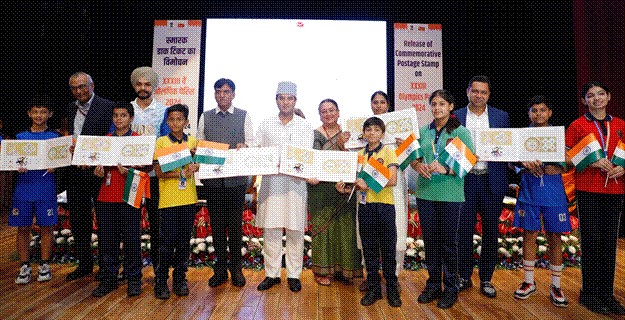
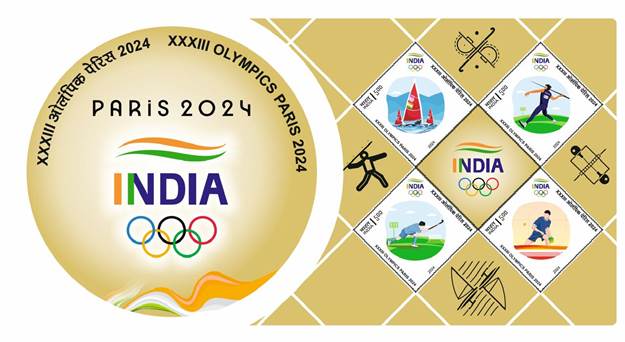
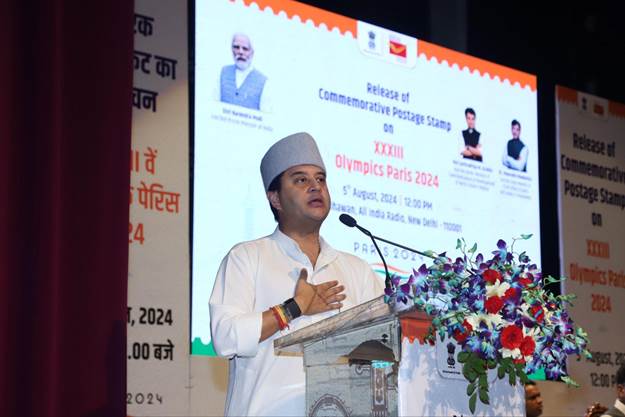
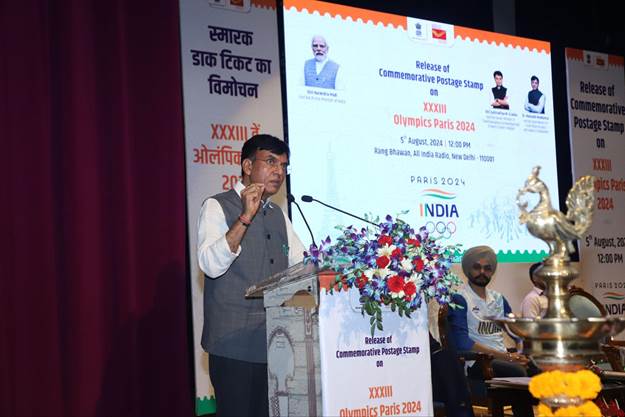
 Union Minister of Communications & Development of the North Eastern Region, Shri Jyotiraditya M Scindia, and Union Minister of Youth Affairs & Sports and Labour & Employment, Dr Mansukh Mandaviya, unveiled a set of commemorative postage stamps today to celebrate the XXXIII Paris Olympics. The event was held at Rang Bhawan, All India Radio, New Delhi, and featured the participation of esteemed dignitaries and renowned athletes, marking a significant moment in India’s support for the Olympic Games.

The event was further enriched by the presence of distinguished sports icons, including recent bronze medal winner Sarabjot Singh, who excelled in the 10m Air Pistol Mixed Team event at the Paris 2024 Olympics. Other notable attendees included former cricketer Aakash Chopra and steeplechase athlete Sudha Singh.

The commemorative stamp has been designed to capture the spirit of the Olympics, symbolizing unity among nations through sports and reflecting India’s rich sporting heritage. This special stamp is now available for purchase online at the e-Post Office (https://www.epostoffice.gov.in/). Collectors and enthusiasts are encouraged to grab a copy and own a piece of history.


Shri Jyotiraditya M Scindia and Dr Mansukh Mandaviya officially unveiled the commemorative stamp, expressing their pride in India’s Olympic legacy and the role of sports in promoting global unity. The ministers and athletes shared insights into the importance of sports in fostering international cooperation and friendship, emphasizing the Olympics as a platform for showcasing talent and dedication.

Shri Jyotiraditya M Scindia remarked, “The new stamp honoring the Olympics 2024 celebrates our sports heroes who have made India proud on the global stage. This tribute will inspire young talents and strengthen our nation’s sports ecosystem. I congratulate our Department of Posts, which through several initiatives has always promoted sports culture and with the launch of this stamp has added to its legacy of celebrating the achievements of India through philately. I also extend my best wishes to the Indian contingent in the Paris Olympics 2024.”


Addressing the gathering, Dr Mansukh Mandaviya said, “Sports is not just competition; it is a way of living. The release of postage stamps reflects India’s commitment to sports, serving as a symbol of national pride and encouragement for athletes.” Dr Mandaviya further articulated that sports foster a healthier nation, essential for wealth and prosperity, and bring people together, enhancing both individual fitness and national well-being.


This initiative underscores India’s commitment to promoting sports and honoring its athletes on the international stage.


Social Media Links:

https://x.com/JM_Scindia/status/1820377309905666264

https://x.com/JM_Scindia/status/1820426966690079140

https://x.com/IndiaPostOffice/status/1820418701025255885

https://x.com/mansukhmandviya/status/1820397272083087774

https://x.com/mansukhmandviya/status/1820396169996247465

Overview of the National Education Policy 2020

The National Education Policy 2020 (NEP 2020) is a comprehensive framework for transforming India’s education system by 2030 ¹. It replaces the previous National Policy on Education, 1986, and aims to increase state expenditure on education from around 3% to 6% of the GDP ¹.
*Key Features of the National Education Policy 2020*
– *Language Policy*: The policy emphasizes the use of the mother tongue as the medium of instruction till Class 5, with the option to continue till Class 8 and beyond ¹. It also recommends the study of three languages, with at least two being native to India ¹.
– *School Education*: The policy focuses on achieving universal foundational literacy and numeracy by 2025 ¹. It proposes a new structure of 5+3+3+4, replacing the existing 10+2 structure ¹. Board exams will be re-designed, and students will have the option to take exams twice a year ¹.
– *Higher Education*: The policy proposes a 4-year multi-disciplinary bachelor’s degree with multiple exit options ¹. It also aims to increase the gross enrollment ratio and proposes the establishment of a Higher Education Commission of India (HECI) ¹.
– *Internationalization*: The policy allows foreign universities to set up campuses in India and proposes the internationalization of education ¹.
– *Teachers*: The policy emphasizes the importance of teachers and proposes a 4-year Bachelor of Education as the minimum requirement to become a teacher by 2030 ¹.
– *EdTech*: The policy provides guidelines and support for EdTech companies and startups to develop learning management systems and other educational technologies ¹.
*Reception of the National Education Policy 2020*
The policy has received both praise and criticism from various stakeholders ¹. Some have appreciated the policy’s focus on foundational literacy and numeracy, while others have raised concerns about the implementation and potential commercialization of education ¹.

Top Research projects for PhD funded by universities

– *PhD in Anthropology*: The University of Chicago offers funding for up to eight years of study, including a full-tuition scholarship, health insurance and a living stipend.
– *PhD in Biological Sciences in Public Health*: Harvard University offers tuition, a stipend and health insurance for five years, as long as the student maintains satisfactory academic progress.
– *PhD in Business*: Massachusetts Institute of Technology offers a full-tuition scholarship, a monthly stipend, medical insurance, new laptops and $4,500 over five years for conference travel expenses.
– *PhD in Chemical Engineering*: Cornell University offers a full tuition waiver, health insurance and a stipend.
– *PhD in Computer Science*: Many universities offer fully funded PhD programs in computer science, including tuition waivers and stipends.
Please note that these are just a few examples, and there are many other universities and programs offering funding for PhD research projects.

STEPS TO STRENGTHEN COUNTRY’S POSITION IN GLOBAL STEEL MARKET

 Steel is a de-regulated sector and the Government acts as a facilitator, by creating conducive policy environment for development of the steel sector. The measures taken by the Government to improve production and consumption of steel in the country are as under:-

  1. Implementation of Domestically Manufactured Iron & Steel Products (DMI&SP) Policy for promoting Made in India steel for Government procurement.
  2. The Government has launched the Production Linked Incentive (PLI) Scheme for specialty steel to promote the manufacturing of ‘Specialty Steel’ within the country and reduce import by attracting capital investments. The anticipated additional investment under PLI Scheme for specialty steel is Rs. 29,500 crores and an additional capacity creation of around 25 million tonnes (MT) for specialty steel.
  3. Ministry of Steel has launched 16 process based safety guidelines on 25.07.2024, which in result help the steel industry to improve the productivity by standardising the safe practice in operations.
  4. Steel Import Monitoring System (SIMS) has been revamped and SIMS 2.0 was launched on 25.07.2024 for more effective monitoring of imports and to address the related concerns of domestic steel industry.
  5. Make in India initiative and the PM Gati-shakti National Master Plan with further engagement with potential users, including from Railways, Defence, Petroleum and Natural Gas, Housing, Civil Aviation, Road Transport and Highways, Agriculture and Rural Development sectors to enhance the steel usage, overall demand for steel and investment in the steel sector in the country.
  6. Coordination with Ministries and States, besides other countries for facilitating the availability of raw material for steel making on more favourable terms.
  7. Notification of Steel Scrap Recycling Policy to enhance the availability of domestically generated scrap.
  8. Notification of 145 numbers Steel Quality Control Orders to prevent manufacturing and import of non-standardized steel and to make available quality steel products to the public at large.


India became the world’s second-largest steel producer in 2018 surpassing Japan and remained so since then.

The steps taken by Government to reduce carbon footprint of the steel industry are as under:-

  1. 14 Task Forces had been constituted with engagement of industry, academia, think tanks, S&T bodies, different Ministries and other stakeholders to discuss deliberate and recommend upon different levers of decarbonisation of steel sector. 
  2. Steel Scrap Recycling Policy, 2019 enhances the availability of domestically generated scrap to reduce the consumption of coal in steel making.
  3. Ministry of New and Renewable Energy (MNRE) has notified National Green Hydrogen Mission for green hydrogen production and usage. The steel sector has also been made a stakeholder in the Mission.
  4. Motor Vehicles (Registration and Functions of Vehicles Scrapping Facility) Rules September 2021, envisages to increase availability of scrap in the steel sector.
  5. National Solar Mission launched by Ministry of New and Renewable Energy in January 2010 promotes the use of solar energy and also helps to reduce the emission of steel industry.
  6. Perform, Achieve and Trade (PAT) scheme, under National Mission for Enhanced Energy Efficiency, incentivizes steel industry to reduce energy consumption.
  7. The steel sector has adopted the Best Available Technologies (BAT) available globally, in the modernization & expansions projects.
  8. Japan’s New Energy and Industrial Technology Development Organization (NEDO) Model Projects for Energy Efficiency Improvement have been implemented in steel plants.

National Federation of Information Commissions of India

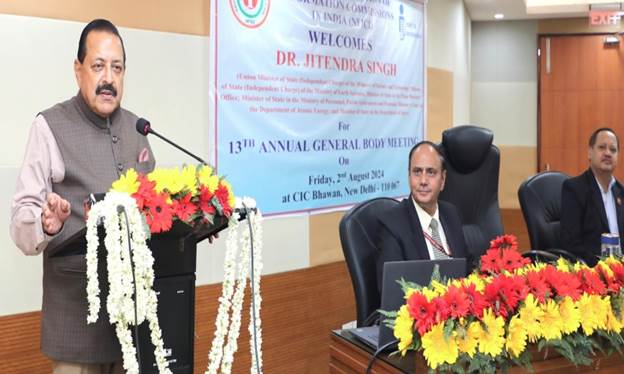
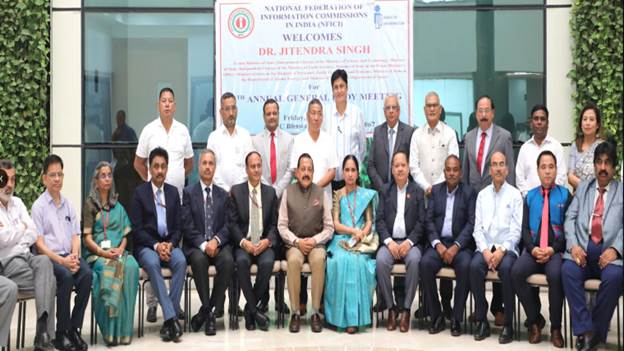
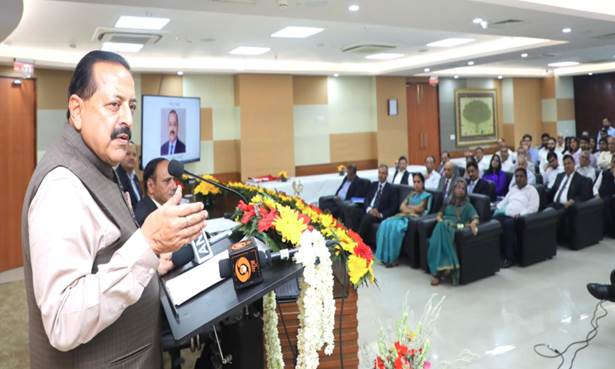
 Union Minister Dr. Jitendra Singh today addressed and later interacted with Central and State Information Commissioners at the 13th Annual General Body Meeting of the “National Federation of Information Commissions of India” (NFICI) at the Central Information Commission headquarters here today.

Addressing the annual meeting, Dr Jitendra Singh said “NFICI has been instrumental in advancing the cause of the Right to Information Act, 2005. Ever since Sh Narendra Modi took over as Prime Minister in 2014, transparency and citizen-centric governance have been central to the Government’s model of governance.”

Referring to RTI Act as a provision to ensure maximum disclosure and minimum exemptions, consistent with Prime Minister Narendra Modi’s Vision of “Maximum Governance Minimum Governance”, Dr Jitendra Singh shared that India’s CPRAMS is now a role model on Grievance Redressal for many other nations of the world who are keen to emulate the same. He shared that the effective time for redressal is as less as 5 days due technology linked solution and flagging of grievances.

Dr. Jitendra Singh directed the Information Commissioners to integrate Artificial Intelligence and new age tools to increase efficiency in public disclosure of Information. The Minister at the same time underscored the importance of Human Intervention by recalling the setting up of the Human Desk to take feedback from citizens after disposal of the grievances. The Minister reiterated the Modi Govt.’s driving principle of boosting transparency, Accountability and Citizen Centricity in the working of the Government. During The interaction he also heard the State Information commissioners noted their grievance and suggestions and assured a positive response to them.

Dr. Jitendra Singh appreciated Central Information Commission’s efforts in increasing efficiency and emphasized on almost 100 percent disposal of Right to Information (RTI) appeals with pendency coming down every year. The Minister also highlighted the exemplary work done by CIC during Covid pandemic as they were functional throughout. He categorically mentioned the ease to residents of J&K after opening a branch in the union territory.

Dr. Jitendra Singh recalled that the CIC got its independent office complex after 2014 when the new Government came, before that CIC was operated from a rented place. In an inspiring message to young officers of CIC, he called them torch bearers and conscience keepers of VISION 2047.

Chief Information Commissioner of India, Heeralal Samariya informed the minister about the steady progress and said the second appeals reaching to the CIC nearly 17000 appeals are disposed of every year.